Mount Fuji Travel Guide: Best Views, Fuji Five Lakes & Things to Do in Japan
Few destinations on earth carry the kind of weight that Mount Fuji does not just physically, as Japan’s tallest peak at 3,776 meters, but spiritually, culturally, and emotionally. I still remember standing at the edge of Lake Kawaguchi just before dawn, watching the mountain sharpen itself against an ink-blue sky, and thinking no photograph ever does this justice. Travelers from across the world arrive in Yamanashi and Shizuoka prefectures chasing that same feeling: something ancient, something that makes modern life feel briefly irrelevant. 富士山, or Fujisan, isn’t just a volcano it’s a living landmark that has captivated poets, artists, pilgrims, and wanderers for centuries.
What surprises most first-timers is just how much the region offers beyond the summit. Scenic lakes, traditional villages, outdoor adventures, quiet spiritual sites, and peaceful countryside experiences a multi-day stay rewards just as richly as a well-planned day trip. Whether you’re after breathtaking scenery, a meaningful cultural deep-dive, or simply a memorable morning with a thermos and a view, the Fuji area delivers in ways that feel both iconic and deeply personal. The history, the grandeur, the beauty all of it earns its place on the World Heritage site list, registered globally as a source of artistic inspiration and a sacred place that continues drawing first-time visitors and returning travelers alike.
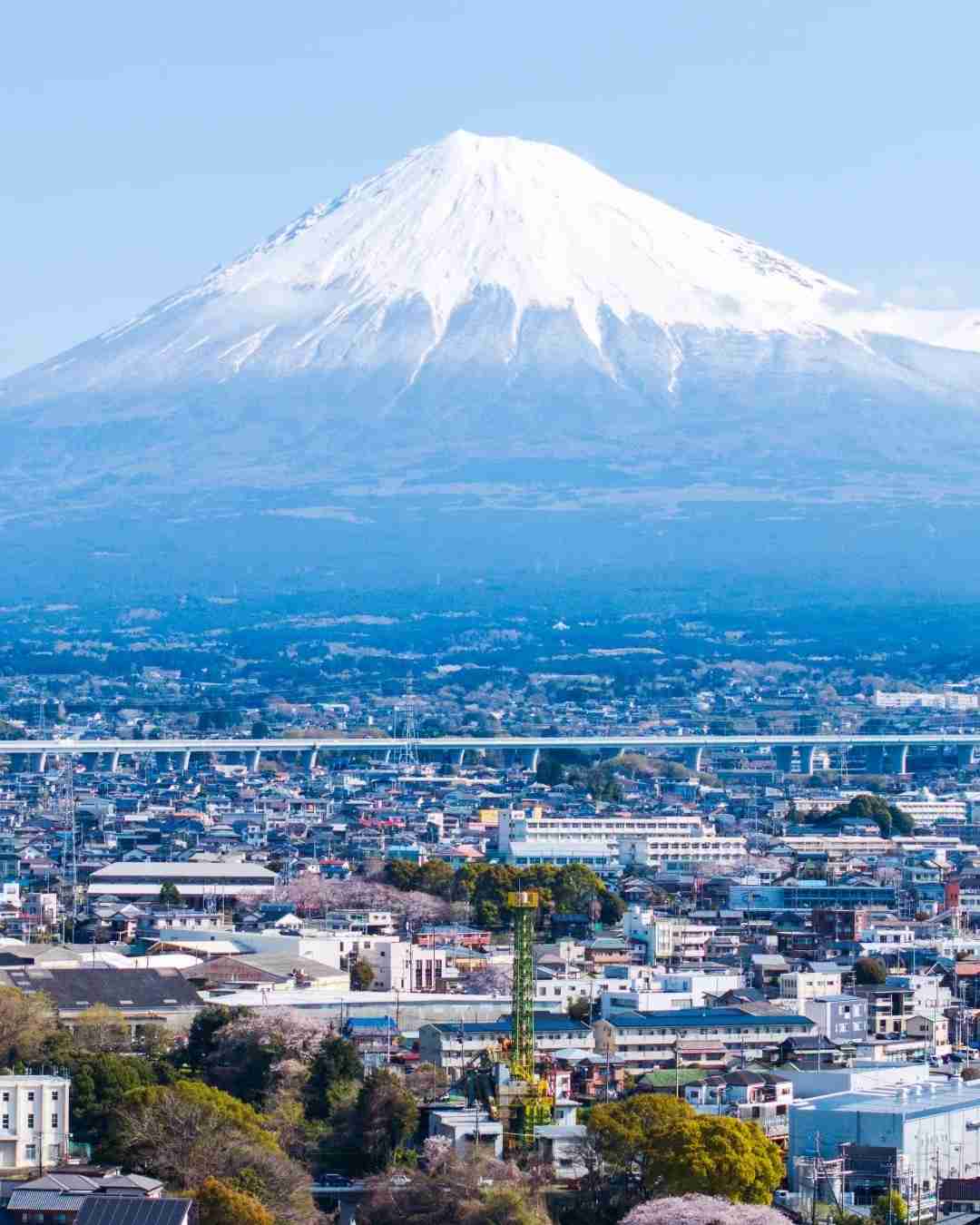
The Tokaido Shinkansen from Tokyo toward Nagoya, Kyoto, or Osaka offers a sneaky first glimpse roughly 40-45 minutes into the journey, Shin-Fuji Station slides past and there it is, on the right hand side of the train, framed like a painting. Clouds and poor visibility can steal the moment, so colder seasons and early morning windows remain your best bet. For a more leisurely pace, head directly to the Fuji Five Lake (Fujigoko) region at the northern foot of the mountain, or swing toward Hakone, the beloved hot spring resort town that keeps Yokohama day-trippers coming back season after season. The sightseeing spots, climbing routes, and hidden-away viewpoints all of it layers into a destination that reveals itself slowly, generously, and always on its own terms.
What Is Mt. Fuji & Why It’s Worth Visiting
Sitting roughly 100 kilometers southwest of Tokyo on the island of Honshu, Mount Fuji straddles the border between Yamanashi and Shizuoka prefectures like it was placed there deliberately a symbol so perfectly proportioned it almost looks rendered rather than real. That symmetrical shape is no accident of perception; geologically, the mountain built itself through layered volcanic eruptions over 100,000 years, each one adding to what eventually became the highest point in Japan at 3,776 meters. Beyond the number, though, it’s the rich surroundings lakes, shrines, forests, small towns that give Fuji its diversity and make it genuinely worth visiting for nature lovers, photographers, families, and cultural travelers of all types.
In 2013, Fuji was registered as a World Heritage site under the name Fujisan, sacred place and source of artistic inspiration a designation that recognizes 25 sites as component assets, including surrounding shrines, climbing trails, and lava tree molds. This speaks to the real history and faith the mountain commands. Artists like Katsushika Hokusai (his Thirty-Six Views) and Utagawa Hiroshige (Fifty-three Stations of the Tokaido) turned its image into global art, influencing western painters and composers Vincent Van Gogh and Claude Debussy among them. Standing at the summit or along any of the walking paths, the torii gates, the Sengen Shrine, the sea of clouds, and the lava flows below all reinforce what the mountain has always been: a place where terrain, weather phenomena, devotion, and scenery converge into something that simply cannot be replicated.
Best Time to Visit Mount Fuji
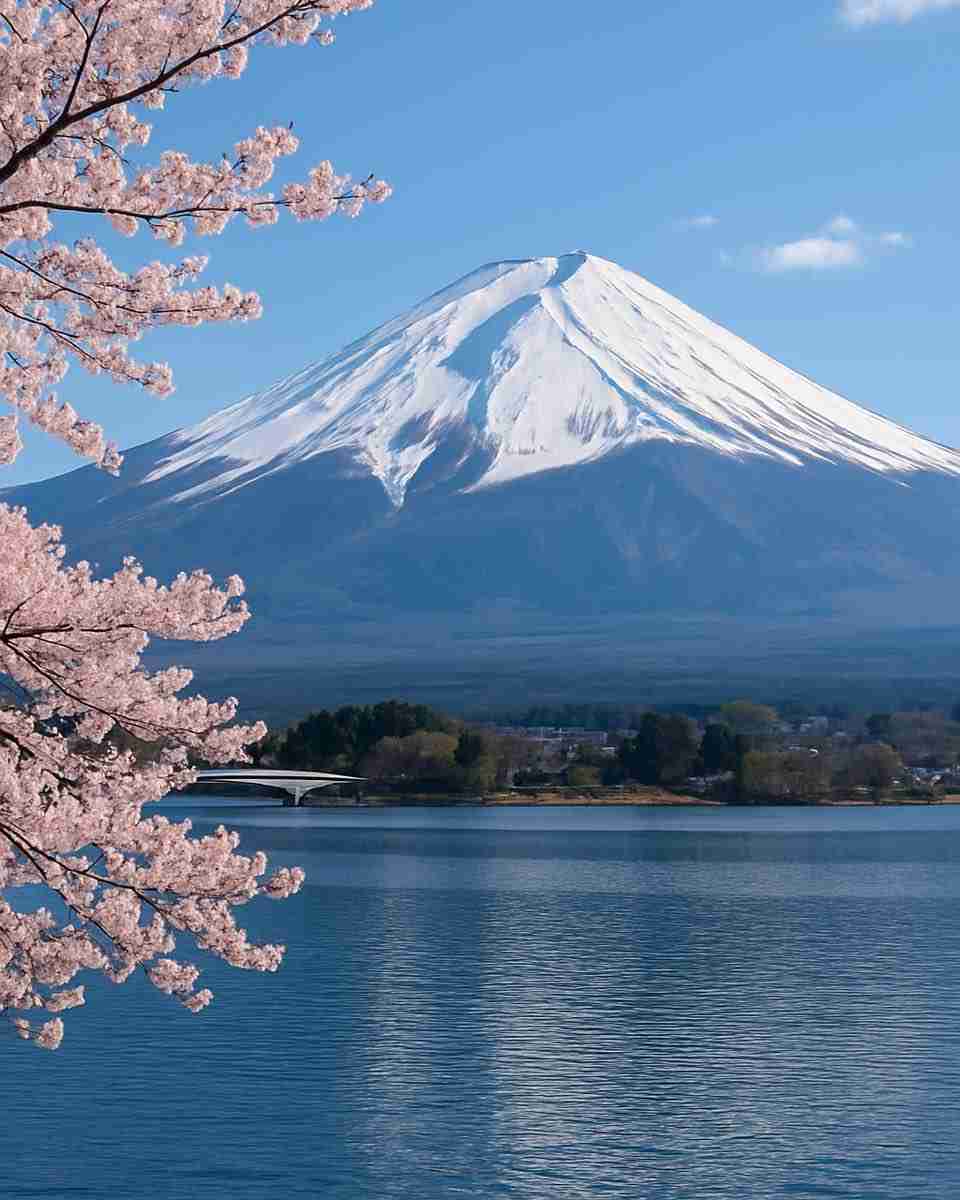
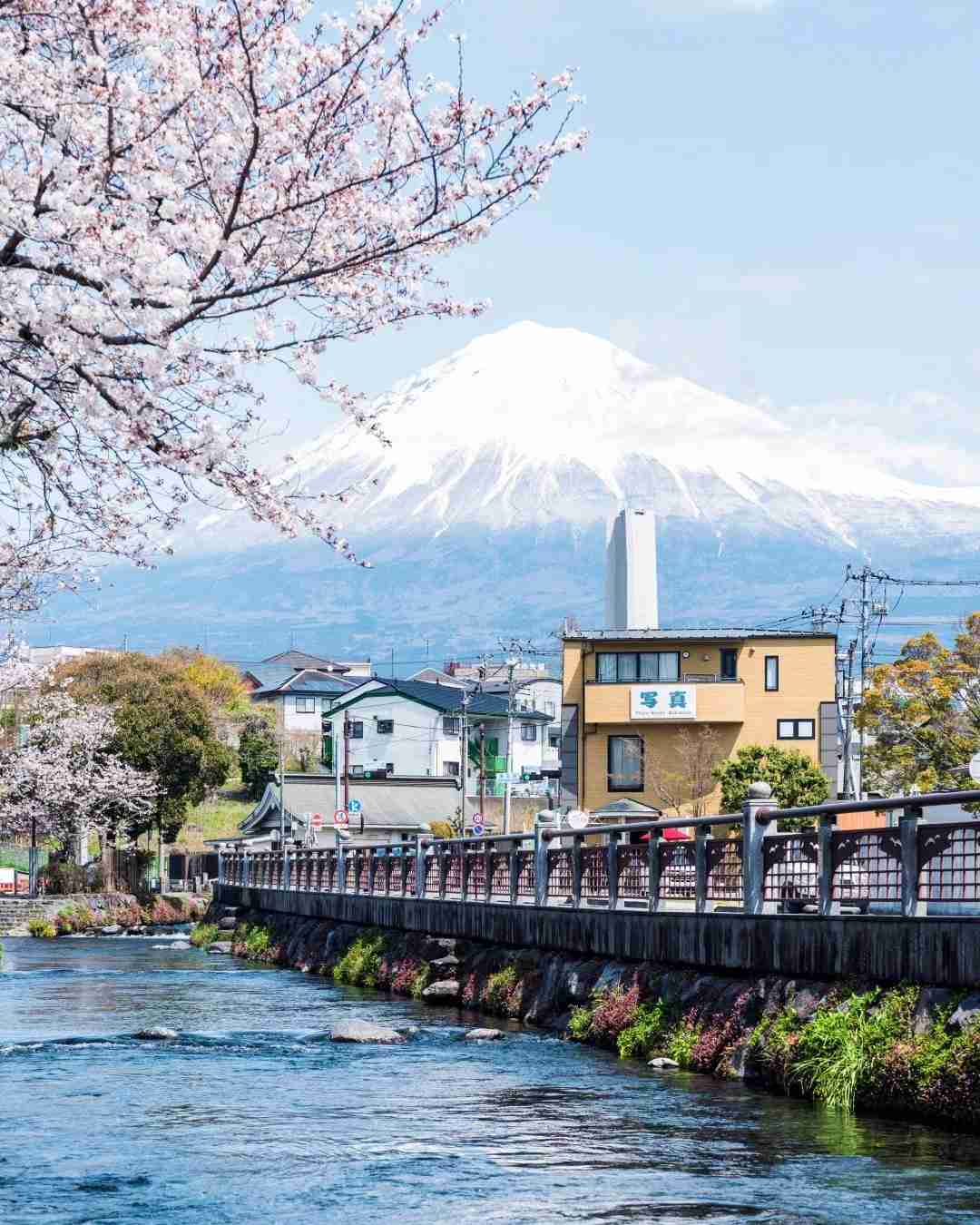
The honest answer on best time to visit is: it depends entirely on what kind of experience you’re after, and how much visibility matters to you. From October through February, the air turns crisp, skies stay reliably cloud-free, and clear views of the peak are almost guaranteed especially if you’re out before the city wakes up. Spring pulls its own crowd with cherry blossoms framing the lakeside in pink, while autumn delivers colorful foliage that wraps the scenery in amber and rust. Summer months run greener and warmer, but hazy skies can obscure the mountain entirely for days at a stretch a genuine risk if you’ve flown across the world for that one perfect shot.
My personal rule has always been: whatever season you visit, treat the early morning as sacred. The clearest views almost always appear before 9am, when mist sits low and the mountain stands sharp above it. Late afternoon light in autumn and winter (November to February) adds warmth and depth to photographs that midday simply can’t match. Winter brings those dramatic snow-covered compositions, though some access points and smaller attractions may have limited access worth checking in advance. The strongly recommended combination, if flexibility allows: arrive the night before, wake before dawn, and give yourself that first hour undisturbed.
Spiritual & Cultural Significance of Mt. Fuji
Long before Instagram made Fuji a travel cliché, the mountain was a place people came to for something far less casual worship. The Japanese have maintained a spiritual bond with this peak across centuries, and the story of Hasegawa Kakugyo (born 1541, died 1646), who reportedly summited the mountain over 100 times and whose feats inspired the formation of Fuji-ko a group of dedicated worshippers who built shrines, carved rock monuments, and fasted as acts of dedication captures just how deep that connection runs. The Tokugawa Shogunate eventually moved to ban the religion, but no edict ever truly severed Japan’s tradition of mountain worship. The mountain remains revered and respected as a site of genuine spiritual importance to this day.
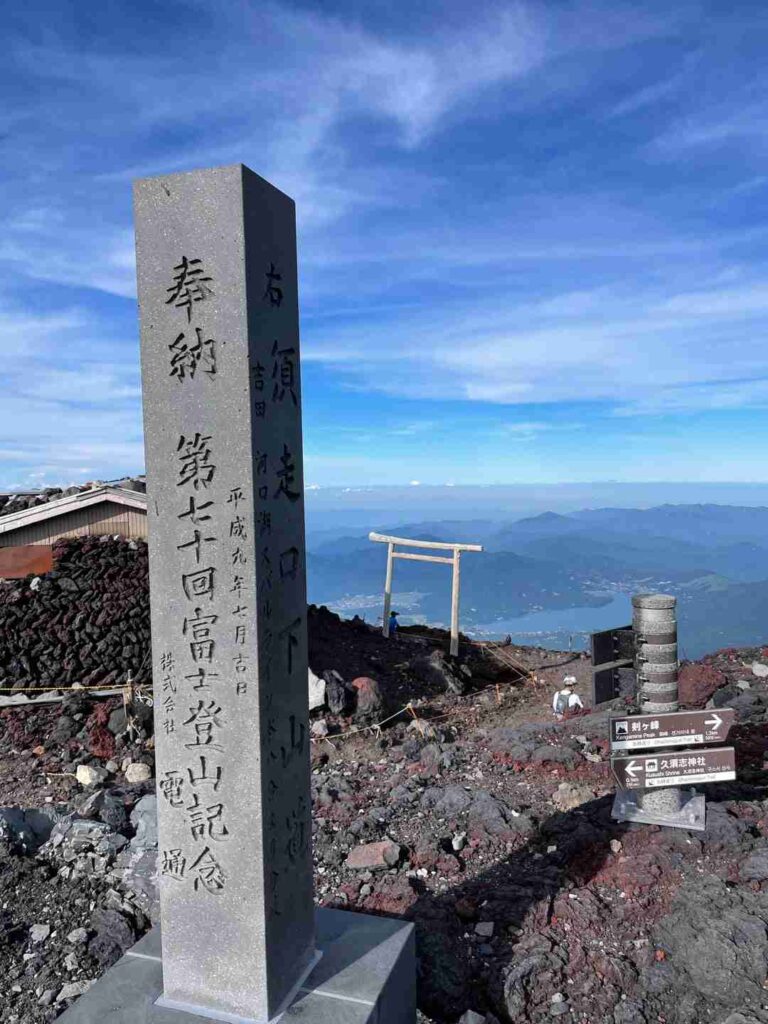
Between 200,000 and 300,000 people climb Fuji every summer, many timing their ascent to catch sunrise from the summit. The classic approach: begin the previous day, spend an overnight stretch at a mountain lodge or hut, then push for the summit in the early morning hours to watch the sun rise over the horizon. This rhythm echoes pre-modern pilgrimages, when shugenja practitioners of Shugendo, an ascetic mountain faith used the climb as a form of training, and even lower classes made pilgrimages here. The shrines at the base of the mountain still carry that historical significance, offering a quiet counterpoint to the crowds above.
Fuji’s cultural reach extends well beyond its borders. During the Edo period (1603–1867), woodblock print artists Katsushika Hokusai and Utagawa Hiroshige chief among them produced series of pieces capturing the mountain from countless vantage points and settings, giving the wider world a glimpse into the region and its ways of life. That artistic legacy eventually reached western audiences: Vincent Van Gogh drew direct influence from Hokusai, and Claude Debussy reportedly found inspiration in the same views. The picturesque imagery popularized in that era locked in Fuji’s legacy as a global attraction and it has never let go. The final layer is geological: volcanic eruptions over 100,000 years built the mountain to its current 3,776 meters, with the last major eruption in 1707 lasting 16 days and sending volcanic ash as far as Tokyo. That event created Hoeizan one of Fuji’s secondary peaks and the five lakes at its base, while also carving out the caves near Aokigahara Forest. The mineral-rich hot springs that dot the surrounding area are a direct gift of that same volcanic activity making this region a genuine paradise for both outdoor recreation and relaxation.
Top Scenic Places & Best Views Around Mt. Fuji
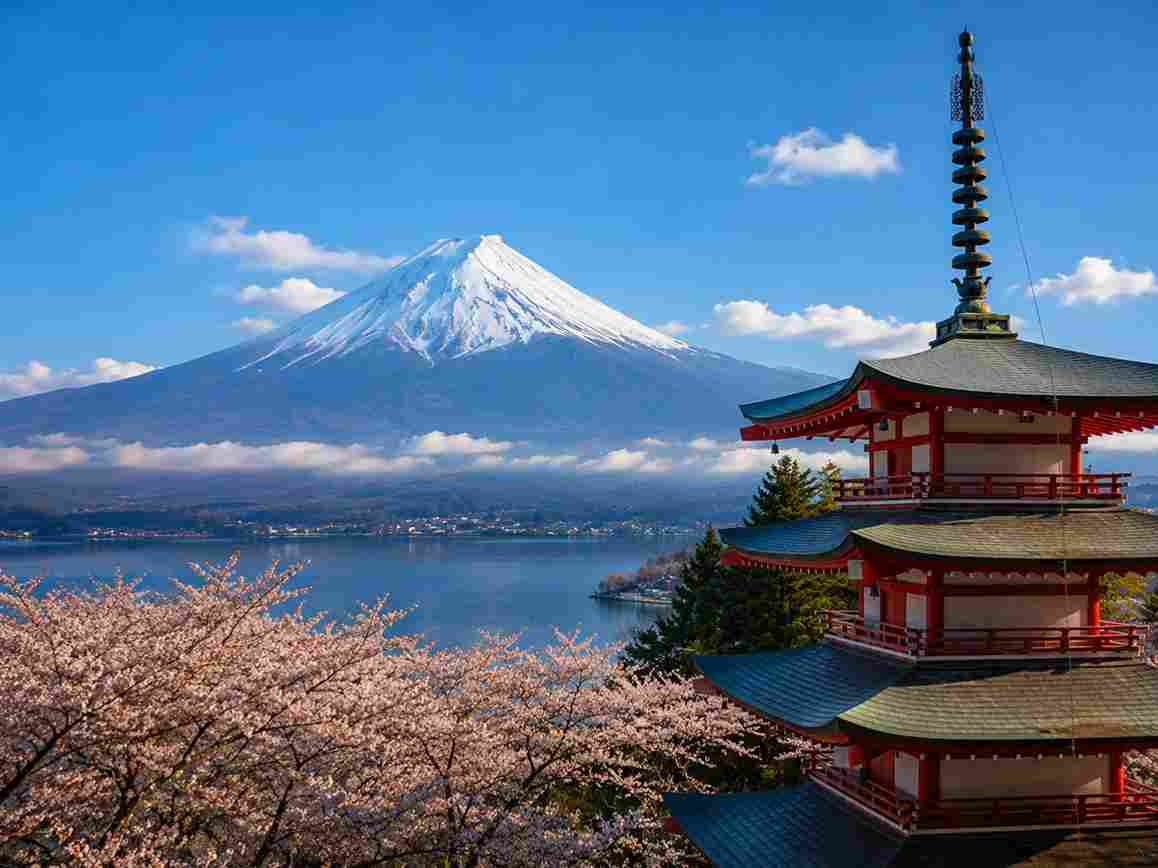
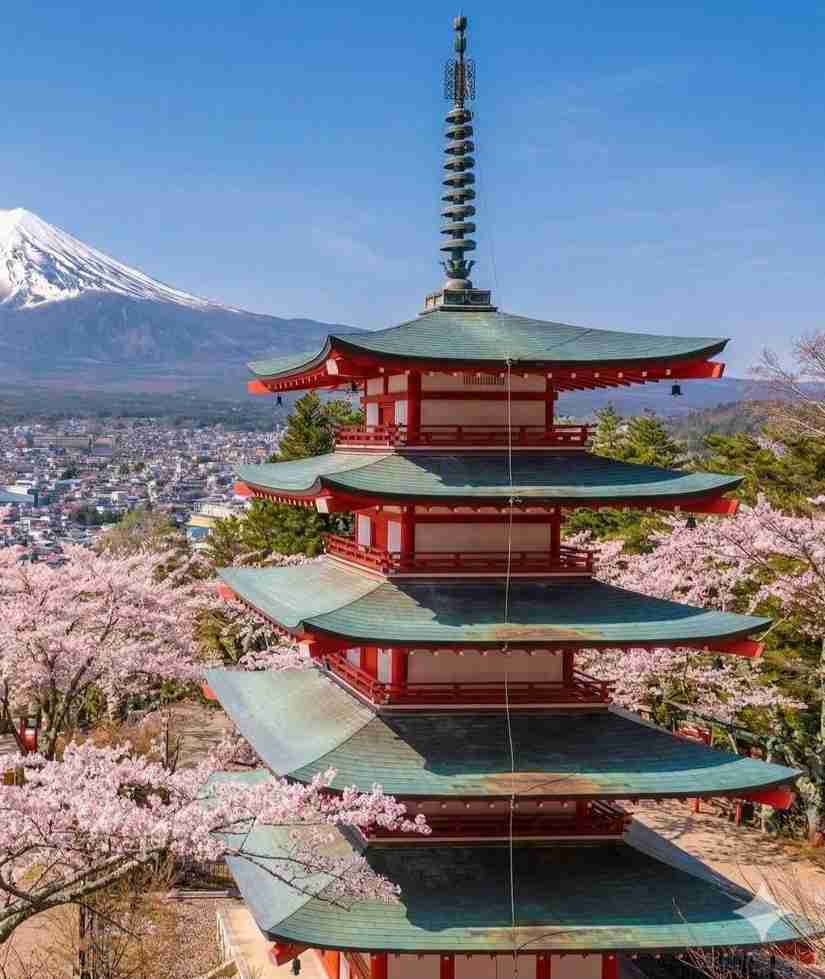
Some views earn their reputation honestly. Chureito Pagoda is one of them a classic composition with a red pagoda anchoring the foreground and Mount Fuji rising in the background, the kind of famous viewpoints shot that appears in every Japan travel guide for good reason. Getting there demands a climb of several hundred steps, and early morning arrivals avoid both crowds and flat light arrive at golden hour during cherry blossom season or autumn, and you’ll understand immediately why this spot exists in so many guidebooks. Just below, Arakura Shrine creates its own quiet frame around Mount Fuji and tends to feel noticeably quieter than the Pagoda platform above worth pausing there before continuing up.
Arakurayama Sengen Park brings those elements together in their most majestic form. Roughly 650 cherry trees fill the park in spring, creating that quintessentially Japanese tableau of blossoms, pagoda, and peak simultaneously. The 398-step Sakuya-hime Stairway leads from Arakura Fuji Sengen Shrine to the five-story Chureito Pagoda viewpoint comfortable walking shoes are non-negotiable. Walking 15 minutes uphill from the Arakura Pagoda rewards the effort with one of the most ultimate, dramatic, and symbolic views in the entire region, particularly beautiful in both winter snow and spring bloom. For something altogether different, Mishima Skywalk opened in 2015 stretches 400 meters as Japan’s longest pedestrian suspension bridge, spanning the western foothills of Hakone at an elevation of approximately 415 meters, with a sheer drop of 70 meters beneath your feet. From there, Mt. Fuji, Suruga Bay (Japan’s deepest bay), and on clear days the mountains of the Izu Peninsula and cityscapes of Mishima and Numazu combine into three of Japan’s most spectacular views at once a genuinely rare convergence of Japan’s natural number ones.
Lake Kawaguchi (Kawaguchiko)
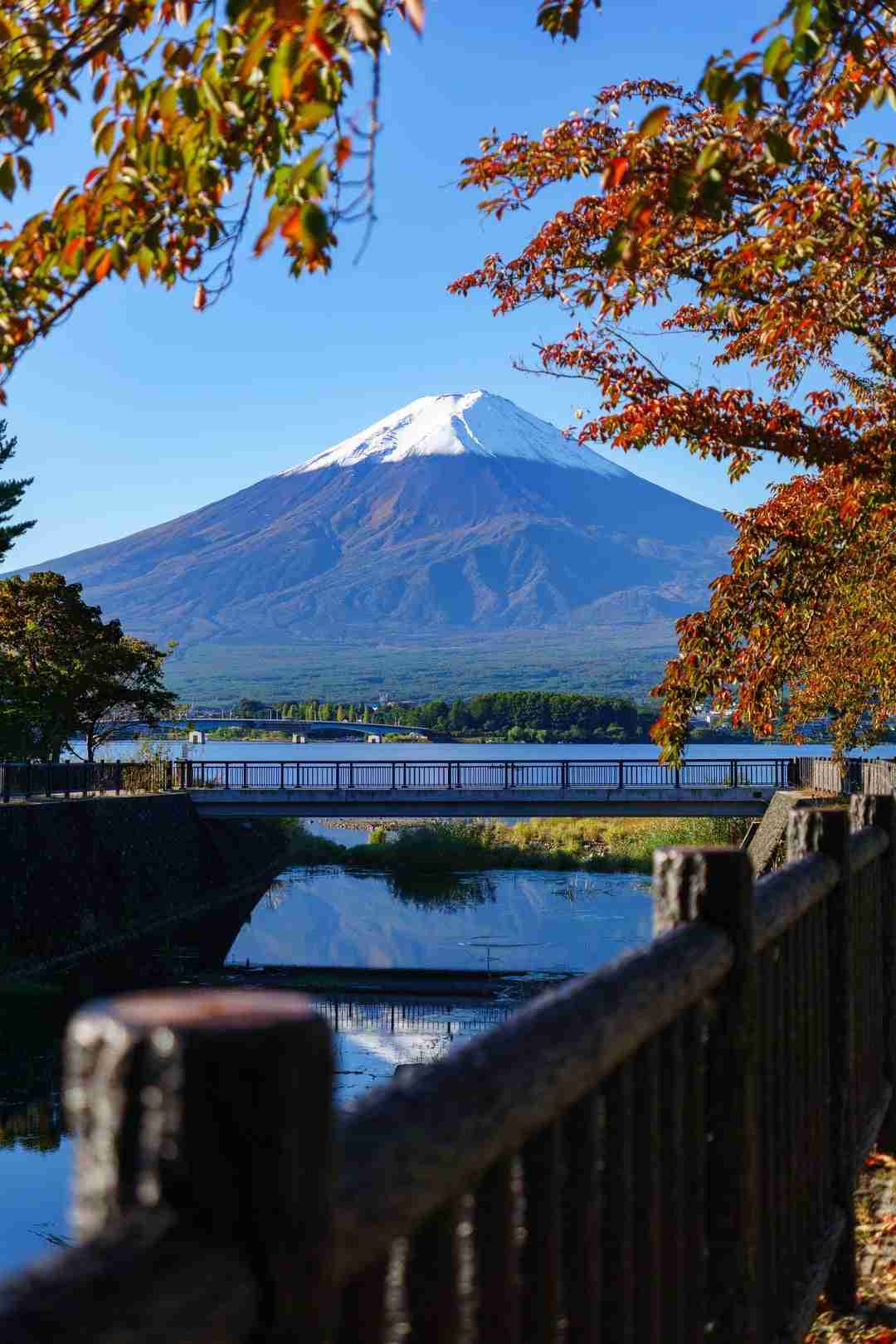
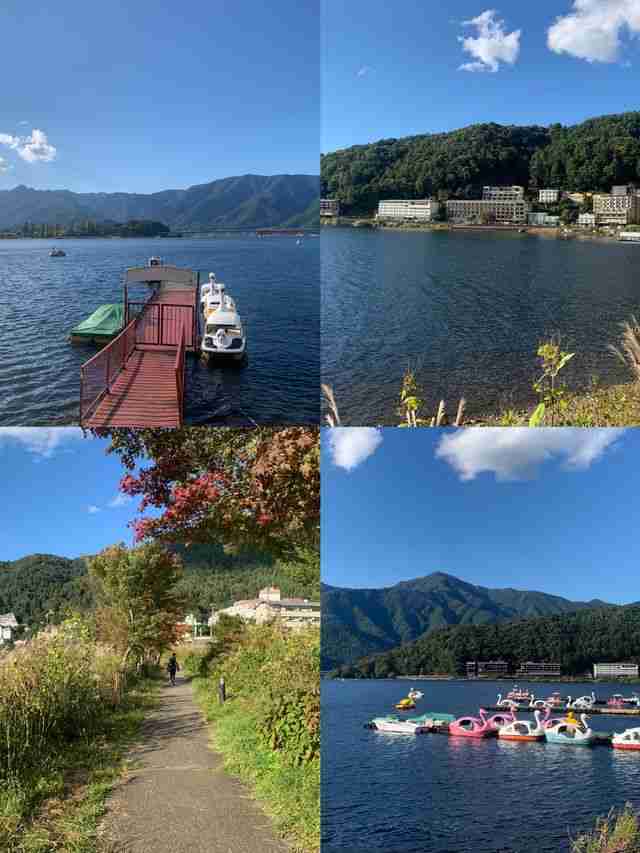
If you only have one day and one lake, make it Lake Kawaguchi the most accessible and popular of the Fuji Five Lakes, and for good reason. On clear days, the calm waters produce that striking reflection of the mountain’s surface that appears on half the travel posters you’ve ever seen. The options here are genuinely varied: boat rides, lakeside walks, museums, and cafés with front-row scenic views of the peak. The area doubles as a major transportation hub, making it the most excellent base for exploring nearby attractions everything fans out logically from here.
Walking the lake circuit reveals layers that sitting in a café misses. The Kawaguchiko Natural Living Center delivers open, sweeping lake views with Fuji rising behind it their ice cream selection is genuinely worth stopping for (the seasonal fruit flavors sell out fast). Continuing along, Stop 17 along the lakefront offers a fence-lined herb garden view that photographs beautifully, and the Maple Corridor runs right across the road a tree-lined lane with a beautiful market selling local goods and crafts, particularly atmospheric in the late afternoon when golden light filters through the leaves. From there, the path meanders toward the Music Forest, where the free garden access includes a lovely rose garden and unobstructed Fuji sightlines. By the time the sun begins to set, the sky fills with beautiful colours that reflect across the snow-covered surface of the lake in winter one of the most particularly beautiful moments this region offers. For Fujisan lovers, it is simply irreplaceable.
Oishi Park
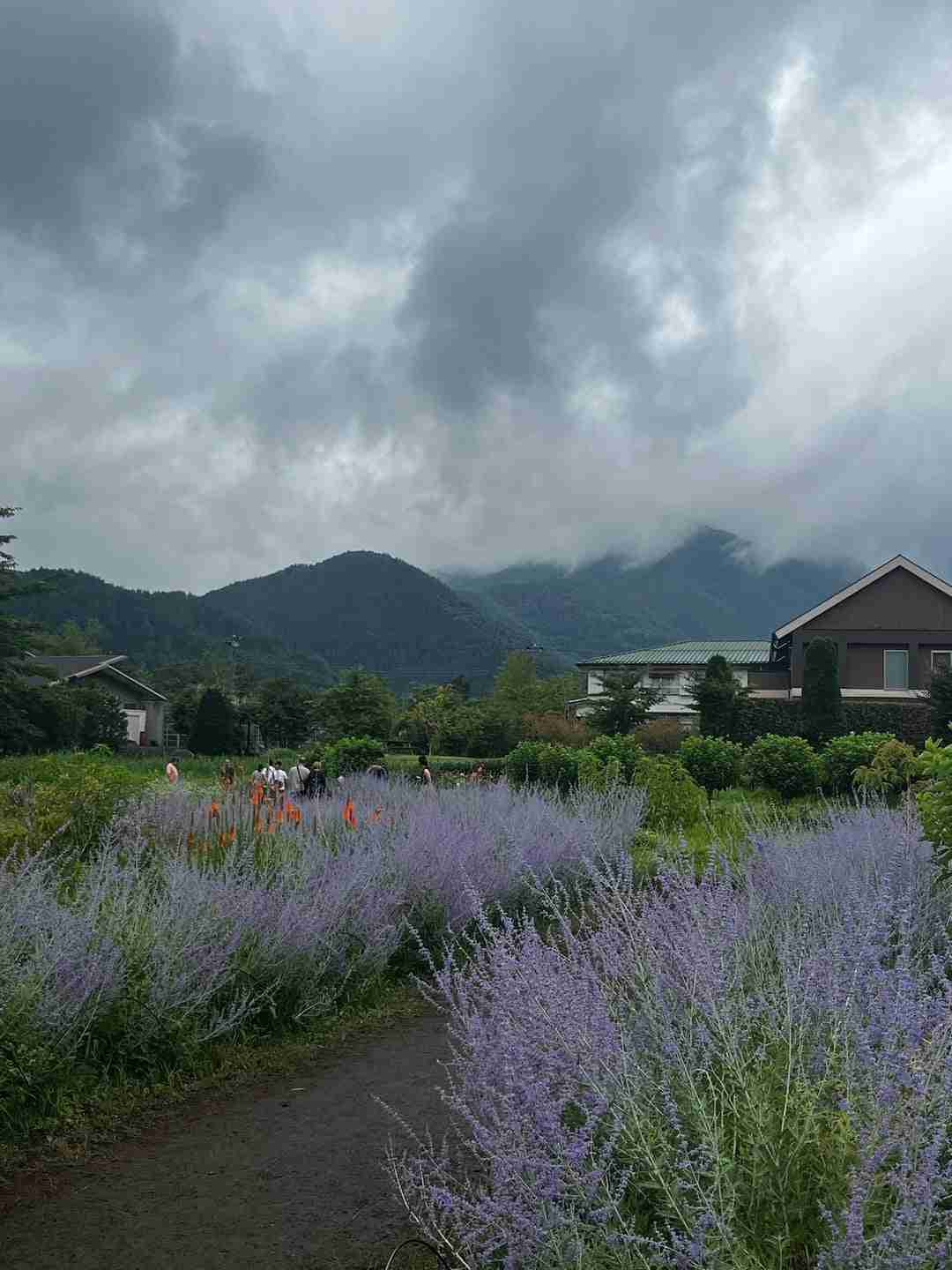
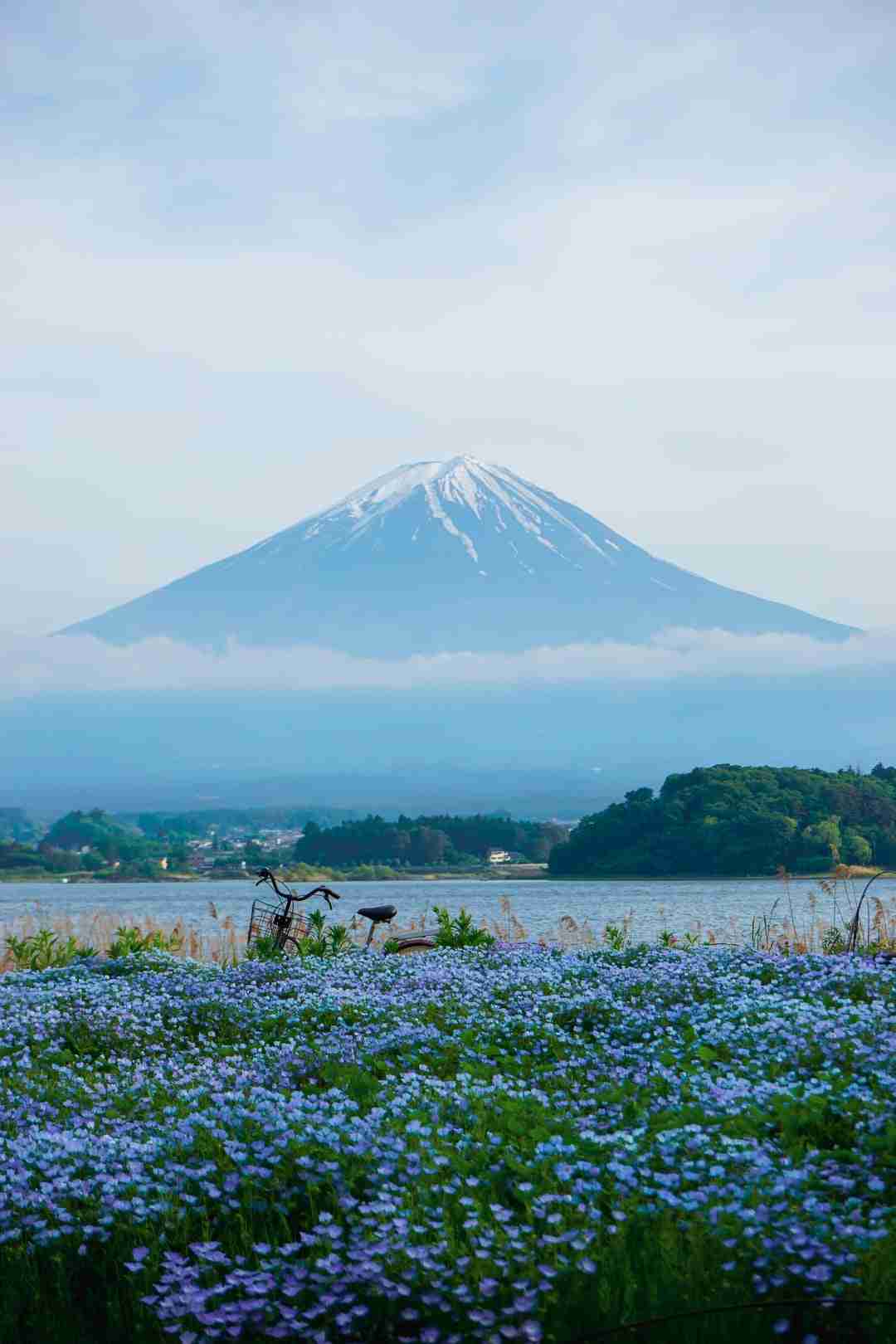
Oishi Park sits on the northern shore of Lake Kawaguchi, and what sets it apart from other lakeside stops is its commitment to seasonal flower displays that complement rather than compete with the mountain backdrop. The Flower Road promenade runs the length of the park, shifting its palette across the calendar: tulips and rapeseed blossoms arrive in late April, lavender fills the summer months, kochia turns crimson from August through September, and sage and asters carry the color into October and onward. The sweeping view of Mt. Fuji across the lake from this Oishi area of Yamanashi Prefecture makes every season feel worth the visit.
The park’s flat walking paths are genuinely suitable for families and casual visitors no difficult terrain, no long climbs, just a photogenic scenic spot that delivers a colorful foreground for the mountain at almost any time of year. It’s the kind of spring and autumn stop that rewards even a 30-minute detour.
Oshino Hakkai Traditional Village
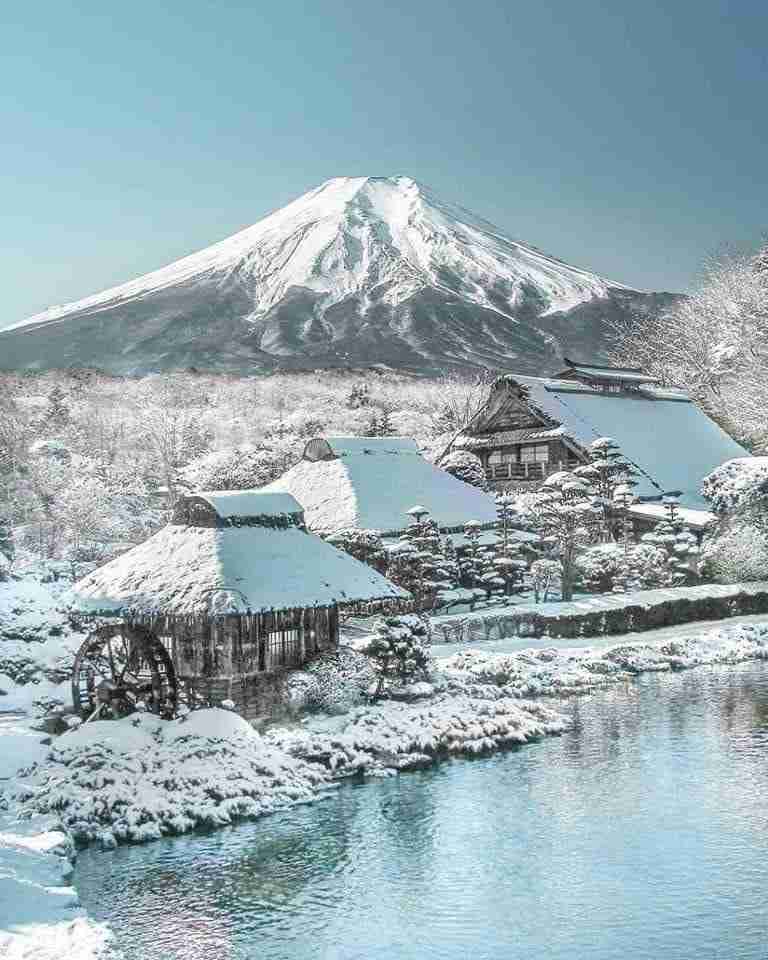
Oshino Hakkai is one of those rare places that earns its popularity without feeling overrun at least if you arrive early. The collective name covers eight spring-fed ponds fed by melted snow from Mt. Fuji: Deguchi Pond, Okama Pond, Sokonuki Pond, Choshi Pond, Waku Pond, Nigoru Pond, Kagami Pond, and Shobu Pond. What makes the water so extraordinarily clear is the fact that it’s been filtered through underground lava layers for approximately 20 years before surfacing the result is a clarity that feels almost artificial. The beautiful natural scenery created by the combination of Mt. Fuji in the background and these spring ponds in the foreground has made it consistently popular with visitors who want something beyond the typical lake viewpoint.
The surrounding small village preserves traditional houses and offers a genuine glimpse into rural Japanese life local snacks, souvenirs, and peaceful views are all part of the experience. It sits a little further out than the main lake circuit, so you’ll need a local bus ticket to reach it, but the journey is straightforward. What you find is a pretty tourist village that presents historic traditional life without overly packaging it the kind of place that feels like it’s been there long before tourism arrived, because it has.
Tenku no Torii Gate
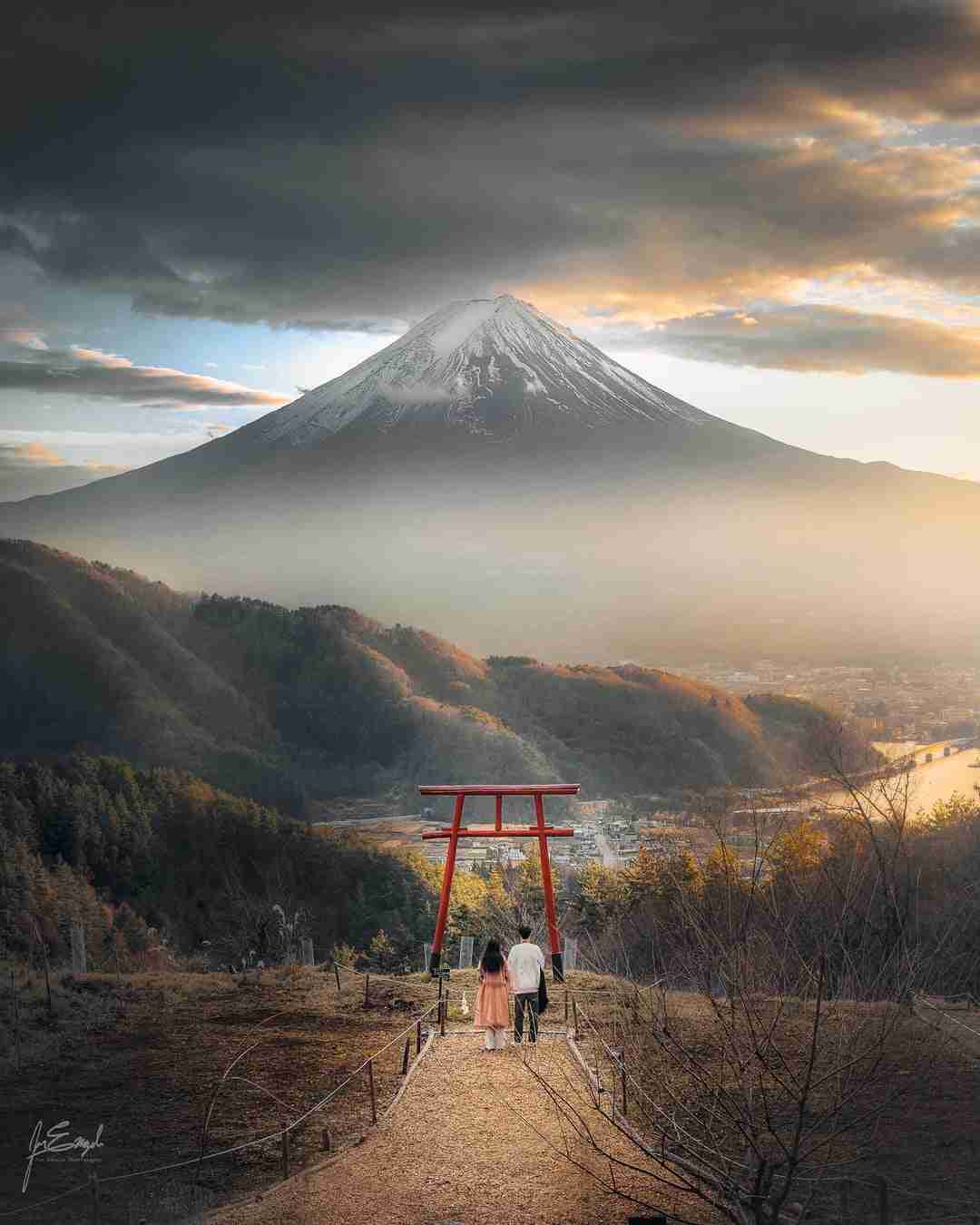
There’s something quietly theatrical about the Tenku no Torii gate positioned with almost deliberate precision to frame Mount Fuji through its torii arch, creating one of the most dramatic and symbolic views the region has to offer. The name means “gate in the sky,” which feels accurate once you’re standing there. The approach from the Monkey Forest bus stop is mostly flat for roughly 1.3km to Asama shrine, which is itself a lovely stop with a calm, forest-enclosed atmosphere. From the path past the shrine, it’s another 25 minutes up the mountain to the Torii gates a short uphill walk that rewards with a direct Mount Fuji view framed by bright red gates that practically glow against a clear-sky backdrop.
Climbing Mt. Fuji
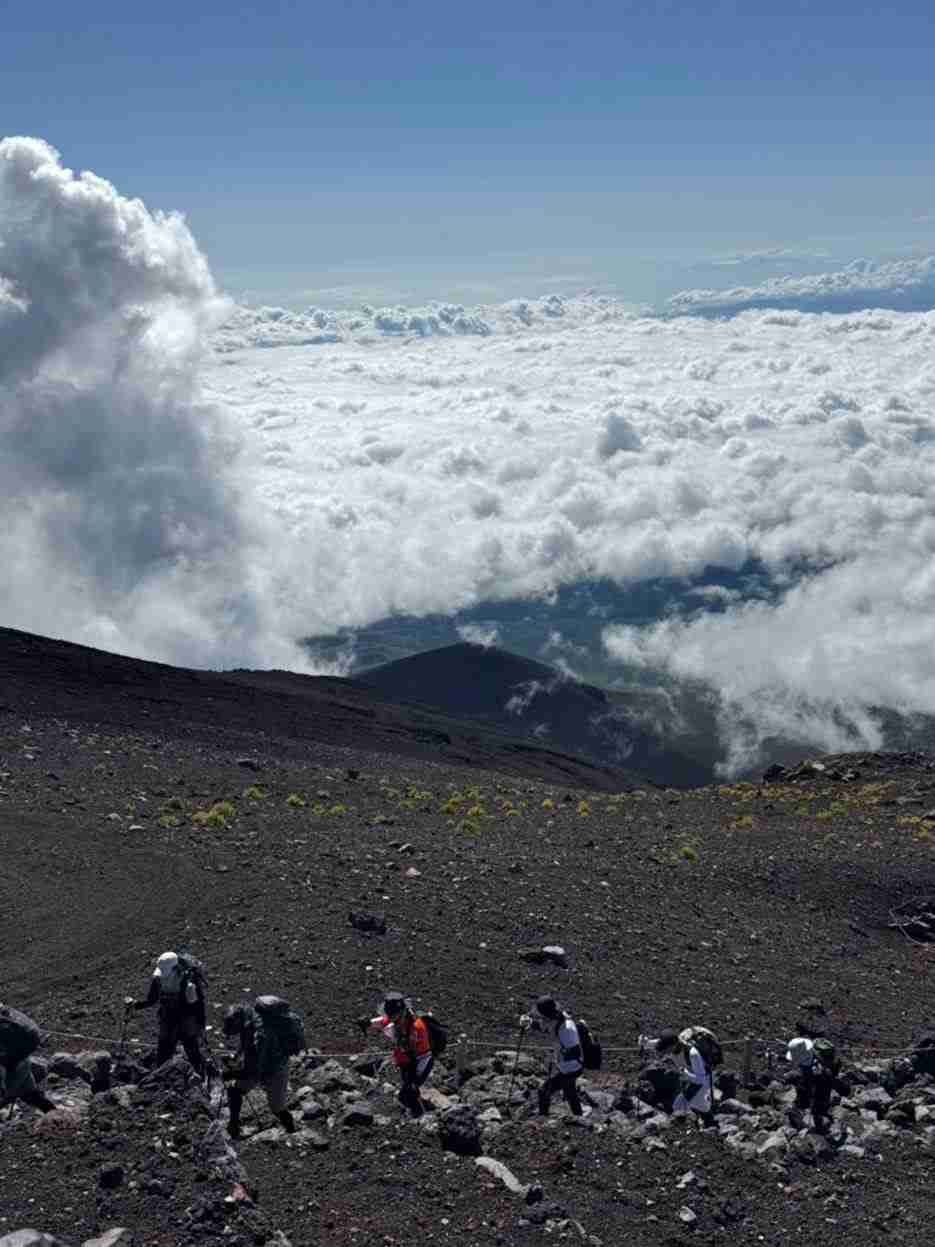
Climbing Mount Fuji follows its own season officially July through September (or July and August for the most regulated period), outside of which access to the upper trails is restricted. The honest pre-climb conversation nobody quite has enough is this: the summit experience is extraordinary, but it demands genuine preparation, physical fitness, and a serious read of weather conditions before you leave. Between 200,000 and 300,000 people attempt the climb each summer many fueled by ambition rather than readiness, which is partly why entry management and traffic restrictions were introduced in 2024 to protect both the mountain and its climbers.
The four climbing routes each carry different highlights and difficulty levels: the Yoshida Route (Yamanashi) is the go-to for beginners, with well-maintained trails, abundant mountain huts, shops, first-aid stations, and restrooms across approximately 10 hours round trip. The Fujinomiya Route (Shizuoka) is the shortest in both distance and time at roughly 8 hours, though its steep slopes and rocky sections suit beginners who also have some experienced hiking behind them. The Subashiri Route (Shizuoka) rewards intermediate climbers with forested areas and the unusual texture of suna-bashiri the volcanic sand trail that shifts underfoot in a way that’s genuinely fun on the descent. Most demanding is the Gotemba Route (Shizuoka), designed for advanced climbers: a 12-hour commitment, the fewest other climbers, the least infrastructure, and the thrilling Osunabashiri great sandy descent as its headline reward. The Subaru Line 5th Station remains the most popular entry point, while Gotemba 5th Station sits as the lowest starting elevation of the four.
As of 2024, the new system requires advance reservation or registration through a web system, enforces entry restriction hours of 2:00pm to 3:00am the following day (no entry from the 5th Station during those windows unless you’re a mountain hut guest), and charges a user fee of 4,000 yen per person. Gear matters more than most beginners expect: temperatures near the 5th Station hover around 59°F while the summit drops to roughly 43°F, falling well below 32°F before sunrise. Thunderstorms, rain, and strong winds appear without much warning, making a checked weather forecast genuinely essential. Dress in layers of quick-drying wool or synthetic fibers with a warm outer jacket, wear proper trekking shoes or hiking boots with thick soles, and pack rain gear, a headlamp, a map, at least 2 liters of water, light snacks like nuts and chocolate, and enough coins for hut facilities. A basic first-aid kit and sunscreen round out the kit. The mountain huts along each route serve as more than resting spots they provide meals, short naps, and emergency shelter, and treating them as strategic stops rather than optional extras makes the whole ascent more sustainable. The sunrise at the top, described by nearly everyone who witnesses it as the most beautiful in Japan, is the kind of reward that resets your entire perspective on effort.
Hiking & Trekking Near Mt. Fuji (Non-Summit)
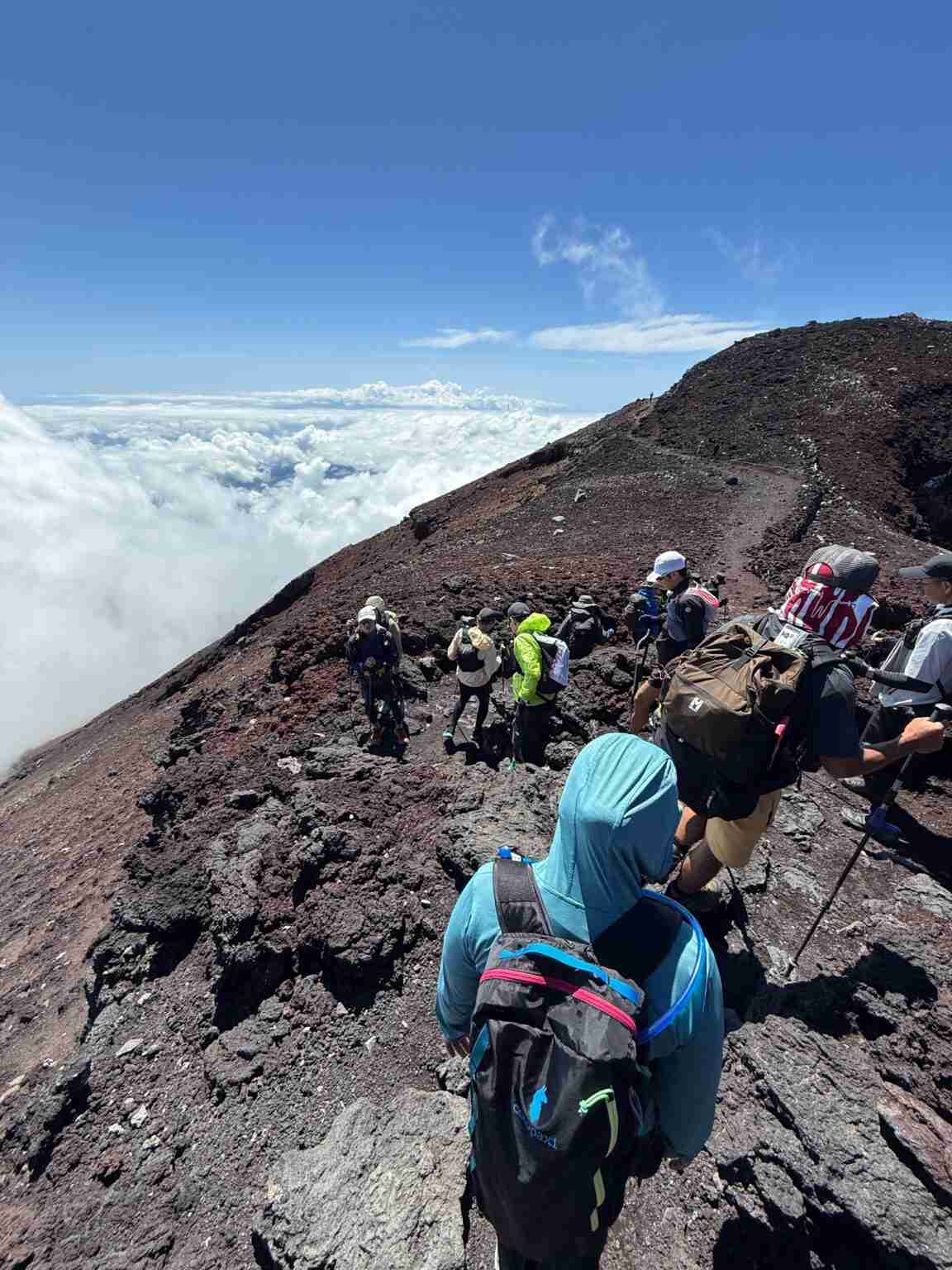
Not every visitor wants or needs to climb to the summit and the trails around Mount Fuji’s base and 5th Station make a compelling case for staying lower. Short hiking trails wind through forest walks and lead to viewpoints that reward casual hikers without demanding serious physical effort. Around the 5th Station alone, there are five well-maintained trekking courses that range in difficulty and duration practical practice for a future climb, but genuinely satisfying on their own terms.
The Izumigataki Course (approximately 1.5 hrs round trip) welcomes families and couples with clear, open views of Lake Yamanaka and the distant mountain ranges it walks more like a nature stroll than a trekking challenge. For those with more stamina, the Yoshidaguchi Course covers around 10 km over roughly 6 hrs and passes through historical sites including Fuji Omuro Sengen Shrine and well-preserved historic remains. The Ochudo Course (roughly 2 hrs, at elevations between 2,300 and 2,400m) carries genuine historical weight once a path of faith open only to those who had climbed Fuji at least three times and today lets hikers walk past lava tree mold caves and crater remains in relative peace. The Shoji Course (5 hrs round trip) moves through quiet forests that include nationally designated special mother tree forests and academic reference forests, with the rare possibility of spotting a wild Japanese serow along the way. Finally, the Okuniwa Loop Course (nearly 2 hrs round trip) is the shortest of the five, threading through forested areas filled with old trees and various plants, and delivering some genuinely dignified views of Mt. Fuji that feel earned without being exhausting.
Lava Caves Near Mt. Fuji
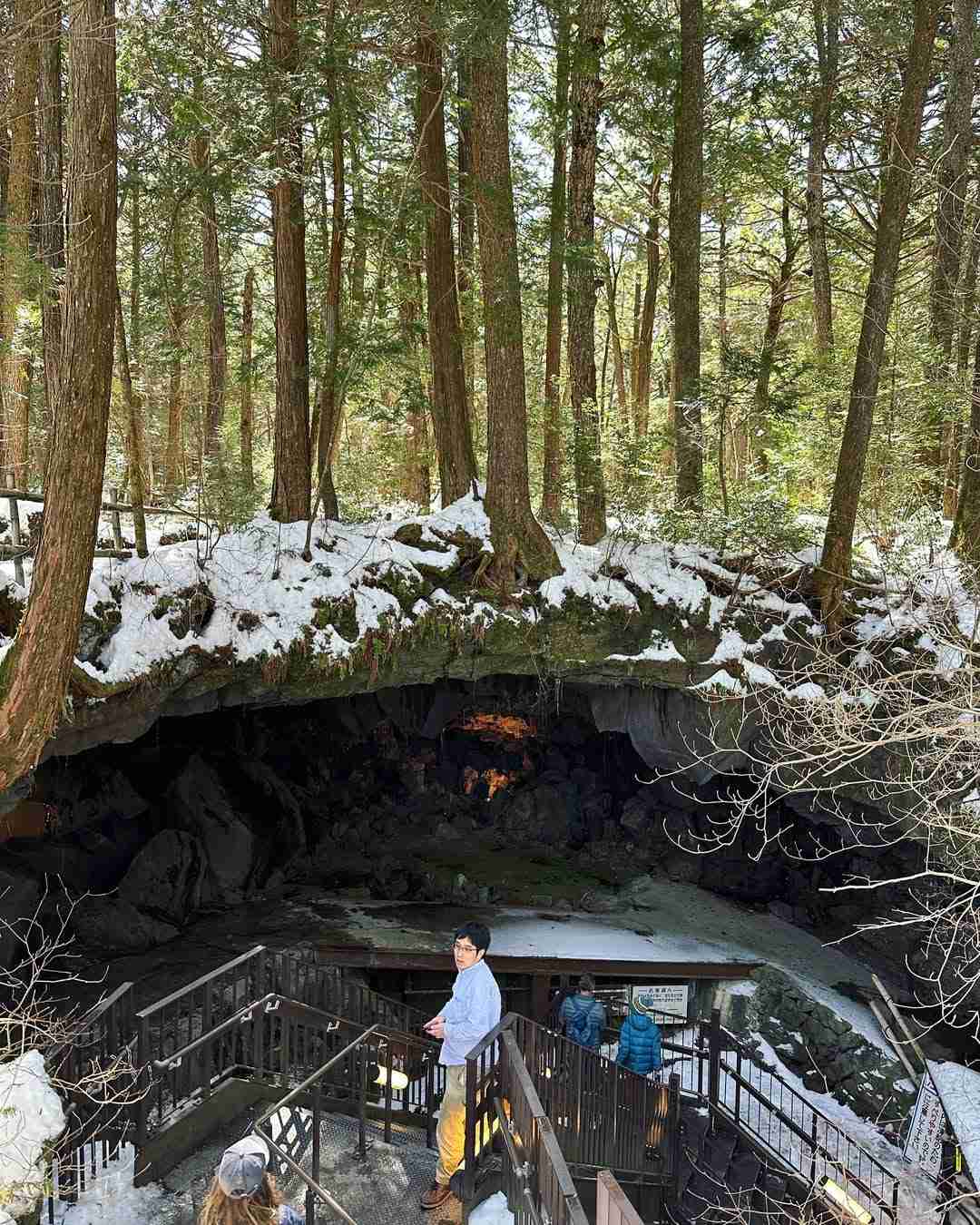
The lava caves near Mount Fuji are one of those attractions that visitors almost always wish they’d spent more time in. Narusawa Ice Cave is the headliner a lava cave running 153 meters in length, formed when lava surged from Nagao-yama, a side volcano of Mt. Fuji, during the 864 eruption. Inside, the temperature averages 3°C year-round, which is what keeps the ice formations permanent and the icicles intact those spikes form when water droplets seep through the ceiling and freeze in place, creating a display that’s both fascinating and slightly surreal in summer. The floor can be slippery, so sturdy shoes are a practical necessity rather than a suggestion.
Fugaku Wind Cave offers a different character its appeal lies in the cool temperatures and varied natural formations rather than ice spectacle, and it’s an easy stop to fold into a broader Mount Fuji itinerary without losing much time. Both caves sit near the eastern entrance of Aokigahara Forest and work well as a combined visit the contrast between the frozen interior of Narusawa and the wind-carved passages of Fugaku adds genuine variety to what could otherwise be a heavily viewpoint-focused day.
Aokigahara Forest
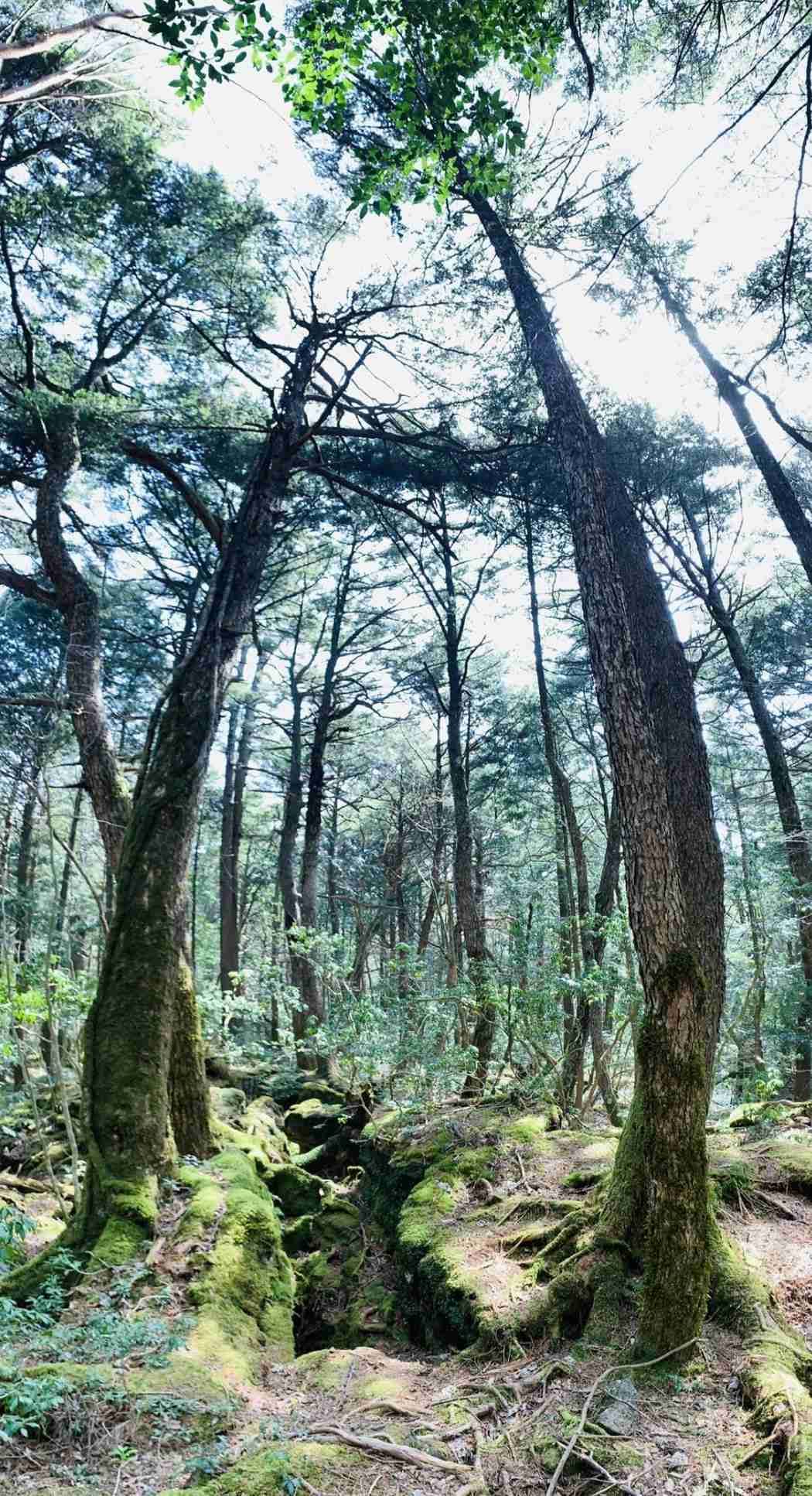
Aokigahara Forest carries a complicated public image, but the reality on the ground is a place of unusual and quietly powerful natural beauty a dense woodland born from lava flows, shaped by the same volcanic activity that created the numerous caves embedded in its foothills. The designated walking paths are well-maintained, and moving through the forest respectfully staying on marked trails, maintaining quiet behavior reveals a landscape that feels genuinely essential to understanding Fuji’s full geography. Narusawa Ice Cave sits at the eastern entrance, making the forest a natural complement to any cave visit. The complex reputation doesn’t diminish what’s there; it simply asks for a measured, thoughtful approach. The spreads of ancient trees, the way light filters unevenly through the canopy, the geological traces of Fuji’s violent past it all deserves more credit than it typically receives.
Onsen & Ryokan Experiences Near Mt. Fuji
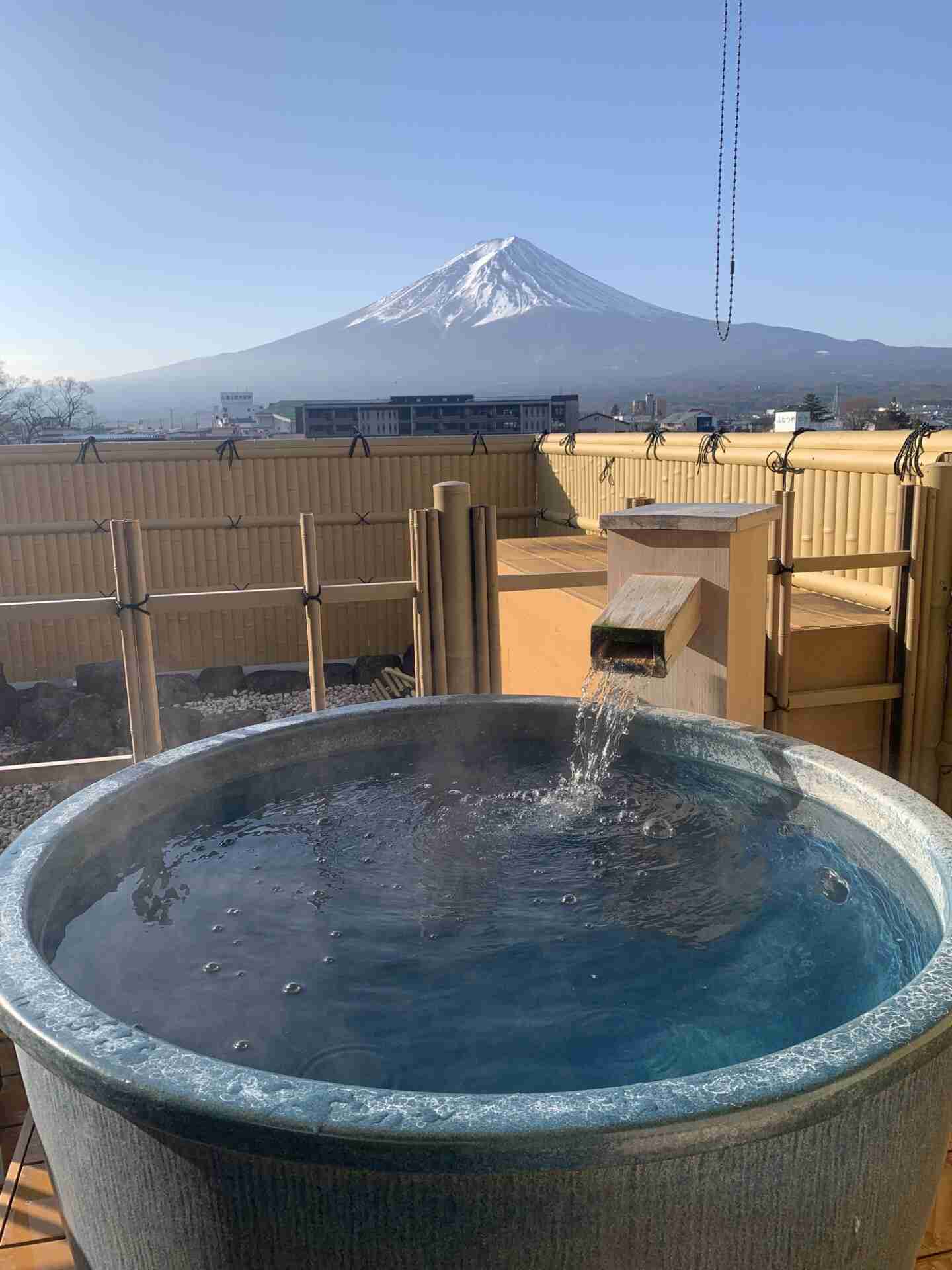
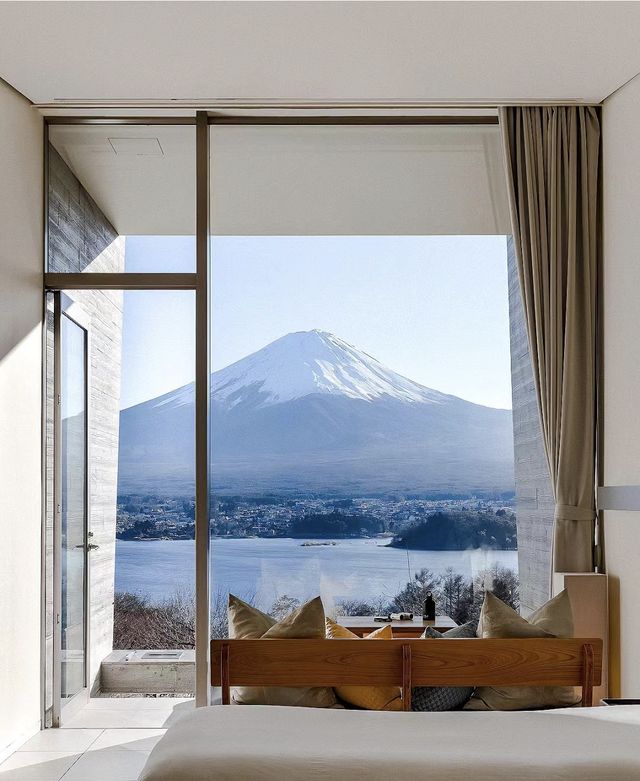
The onsen and ryokan culture around Mount Fuji is worth treating as a destination in itself rather than a bonus. Traditional ryokan accommodations in the area pair onsen baths with direct mountain views the combination of hot water, cold air, and a clear sightline to Fuji is the kind of relaxation that feels genuinely different from a hotel bath. The focus in these places is on hospitality, seasonal cuisine, and an unhurried pace that simply doesn’t exist in most Tokyo hotels. Hakone, as a nearby hot spring resort, extends this experience further and makes an excellent base for viewing Mount Fuji from a slightly different angle.
Within the Fuji Five Lakes area, Fujikawaguchiko Onsen Konanso stands out for its great views of both Mount Fuji and Lake Kawaguchi, offering natural hot spring baths alongside large Japanese-style tatami rooms. Fuji Onsenji Yumedono just 500 metres from Lake Kawaguchiko combines traditional Japanese cuisine with suites that include in-room hot springs, making it an immaculate, magical stay with breakfast and onsen included. For those working with tighter budgets, Yabukiso delivers a beautiful traditional Japanese experience without the premium price tag, while Resort Inn Fujihashi offers a classic ryokan stay that’s consistently clean at cheap and reasonable pricing. Fujiyoshida and Kawaguchi anchor the accommodation geography, covering everything from luxury suites at the Fuji Speedway Hotel by Hyatt (where some rooms carry stunning Fuji views) to genuinely basic options like Habitacion NIIYA Mt. Fuji, which has built a loyal following as a popular cheaper option.
Where to Stay Near Mount Fuji
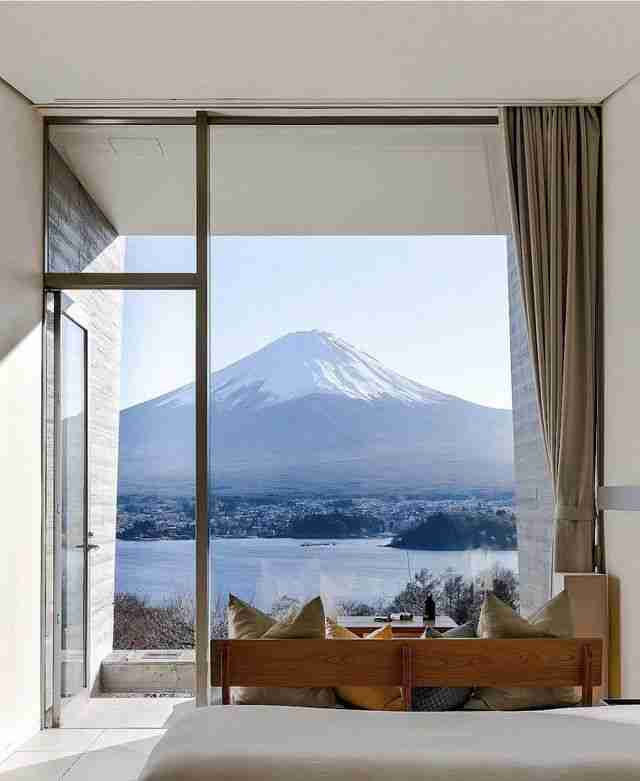
Kawaguchiko earns its reputation as the most popular area for accommodation transport links are strong, the wide range of accommodation options covers every budget, and most of the region’s highlights fan out within reasonable reach. Fujiyoshida skews budget-friendly and tends to feel less touristed, which suits travelers who’d rather save money for experiences. The lakeside ryokan properties deliver a traditional experience that no modern hotel quite replicates if cultural immersion outweighs convenience on your priority list, the choice between hotel and ryokan essentially makes itself. For those traveling with loads of flexibility and wanting luxury alongside basic options in the same area, Kawaguchi and Fujiyoshida together cover the full spectrum.
How to Get to Mount Fuji from Tokyo
Getting from Tokyo to Mount Fuji is straightforward once you know the route the real variable is whether you’re heading for the lakes or the trailheads, because those require different approaches. The most convenient path to the Lake Kawaguchiko area runs via the Chuo line from Shinjuku, connecting to the Fujikyuko Line clean, reliable, and scenic toward the end. Alternatively, the Kawaguchiko Eki Bus from Shinjuku Expressway Bus Terminal covers the same distance in roughly 1hr 50min, with the first departure at 7am book in advance directly at Shinjuku station’s express busway 5B, either at the counter or via the self-serve option. Either way, plan on roughly a two to three hours total travel window, and consider that overnight stays eliminate the time pressure that makes day trips feel rushed.
For those heading to the climbing trailheads, each route runs on a different access path. The Yoshida Route goes via highway bus from Busta Shinjuku directly to Mt. Fuji 5th Station approximately 2 hours and 50 minutes. The Subashiri Route requires a highway bus to Gotemba Station, then a Fujikyuko Bus to Subashiri Trail 5th Station around 3 hours and 10 minutes total. The Gotemba Route follows a similar path to Gotemba Station before a Fujikyuko Bus to Gotemba-guchi New 5th Station, landing at roughly 2 hours and 40 minutes. And the Fujinomiya Route starts at Tokyo Station via the JR Kodama Shinkansen to Shin-Fuji Station, then a Fujikyuko Bus to Fujinomiya-guchi 5th Station the longest at approximately 3 hours and 20 minutes. Whichever direction you’re heading, a relaxed schedule that doesn’t depend on pinpoint timing makes the whole trip considerably more enjoyable.
Getting Around Mt. Fuji Area
Once you’re in the region, the tourist loop buses running around Lakes Yamanaka and Kawaguchiko are genuinely convenient hourly services, hop-on hop off flexibility, and access to most major points of interest. A day pass runs 1500 JPY, and 2-day passes are available at both Kawaguchiko and Fujisan train stations. The train between Fujiyoshida and Kawaguchiko adds another dimension, and plenty of visitors opt for driving around the lakes and towns though an international license is required for car hire.
That said, for the core Lake Kawaguchi circuit, the flat scenic distances between stops mean that paying as you go with a Suica card is often cheaper than committing to a full day pass particularly if you’re covering fewer stops. The tourist loop bus really earns its cost on day 2, when the route extends to Lake Yamanaka that’s further to cover and less walkable, so the pass becomes the smarter choice for that leg.
Sample Mount Fuji Itineraries
A One-Day Mount Fuji Itinerary works best with a tight, geographic sequence: start at Chureito Pagoda before the morning crowds arrive, move on to the Lake Kawaguchi lakefront, take the ropeway ride for elevated views, and finish at Oishi Park in the softer afternoon light. Leave Shinjuku early the bus reaches Lake Kawaguchiko in 1hr 50min and work the one-day sequence methodically: Kawaguchiko Natural Living Center, Stop 17 lakefront walk, the Maple Corridor, and finally the Music Forest with the sunset from the lakeside seats as your closing scene. It’s a full day, but a satisfying one.
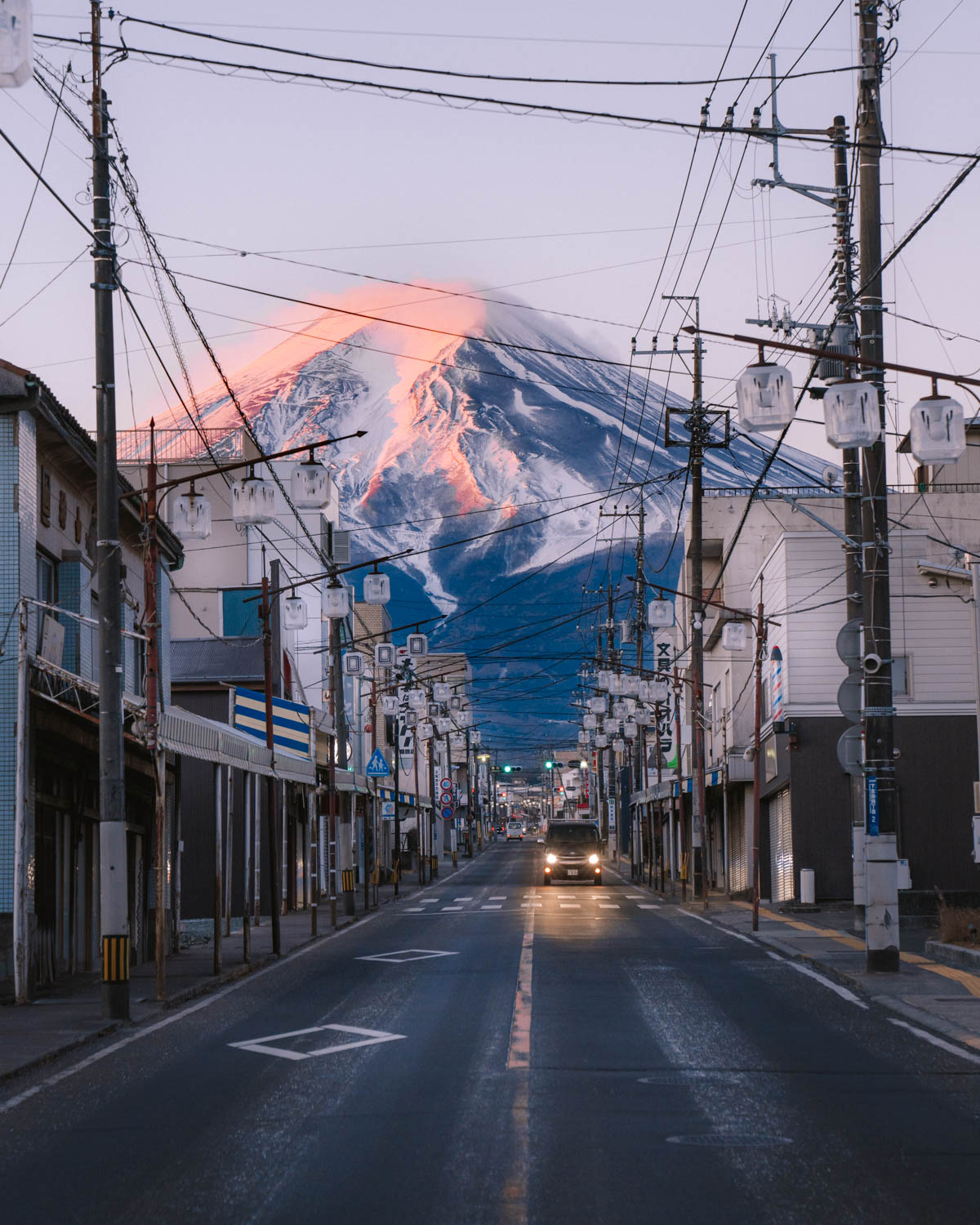
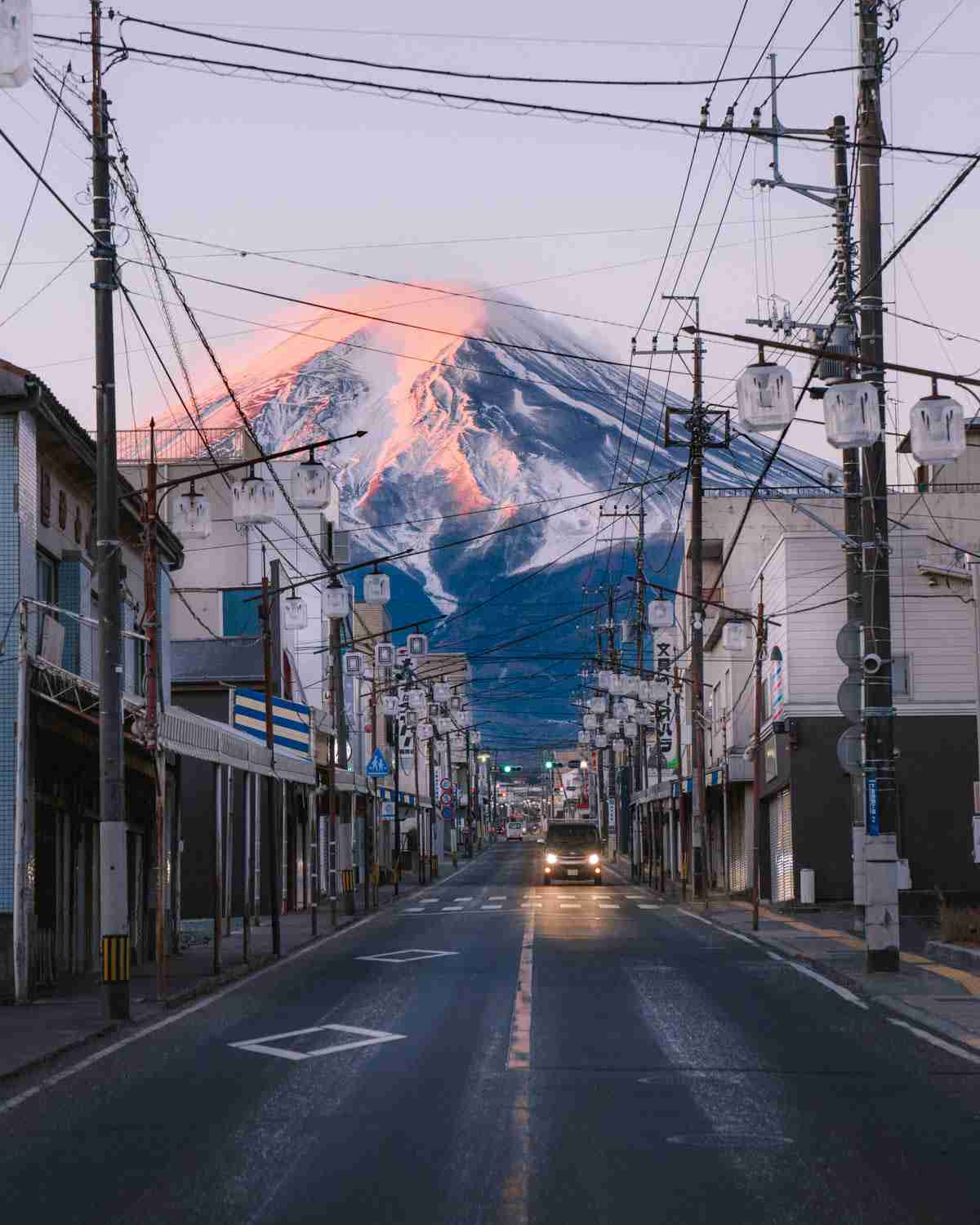
A Two-Day Mount Fuji Itinerary creates breathing room for cultural sites, a traditional village visit like Oshino Hakkai, and a proper onsen stay the kind of balanced experience that a single rushed day simply can’t deliver. On the second day, add Lake Yamanaka via the tourist loop bus, circle back to Chureito Pagoda if you missed ideal light the first morning, and walk the quirky Honcho Street in Fujiyoshida for an urban Fuji-backdrop shot that feels nothing like the lakeside compositions. A Three-Day Slow Travel Itinerary allows for cycling the lake circuit, exploring the caves, long forest walks, and leisurely dining at spots with scenic views the kind of pace that actually lets the place settle in properly.
Fuji Five Lakes & Surrounding Area
The Fuji Five Lake (Fujigoko) region at the northern foot of the mountain works best understood as its own destination rather than a detour. Climbing Mount Fuji is the obvious anchor, with the various 5th Stations providing access points for different routes and fitness levels. Beyond climbing, the area includes ski resorts Fujiten Snow Resort and Snow Town Yeti that give the region genuine winter appeal beyond just views. At a broader leisurely pace, the Fuji Five Lakes area functions as a lake resort at the foot of the mountain, while Hakone to the east operates as a fully developed national park with its own Fuji views, and Fujinomiya anchors the southern base as a real city with local character beyond tourism.
Scenic Cafés & Restaurants
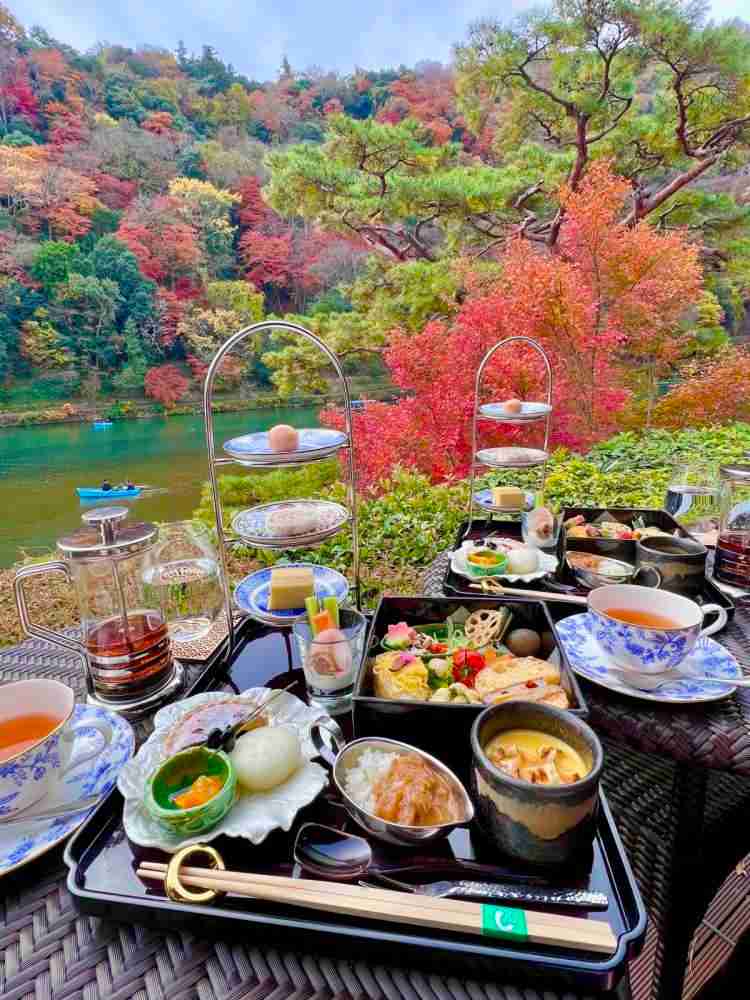
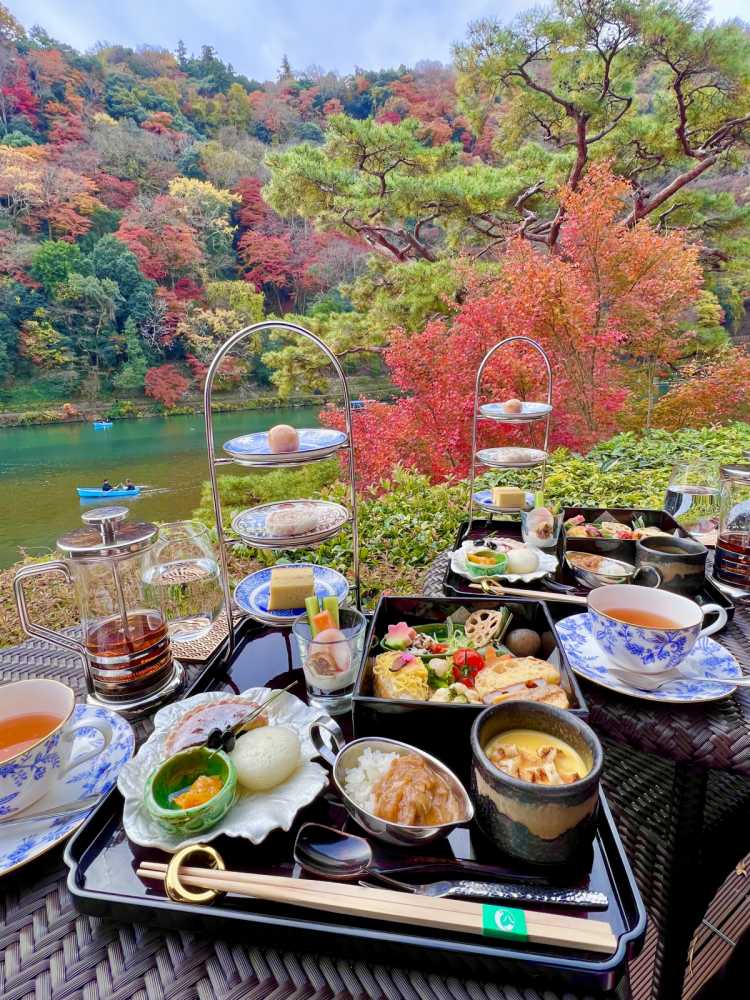
The Mount Fuji area is quietly excellent for food and coffee with a view numerous cafés and restaurants are positioned overlooking the lakes and open landscapes, and the best ones treat the mountain as part of the dining environment rather than an afterthought. Mid-morning and early afternoon are the optimal times for dining with clear views the light is kinder, the crowds thinner, and the mountain more reliably visible than during peak midday haze.
Scenic Cafés & Restaurants
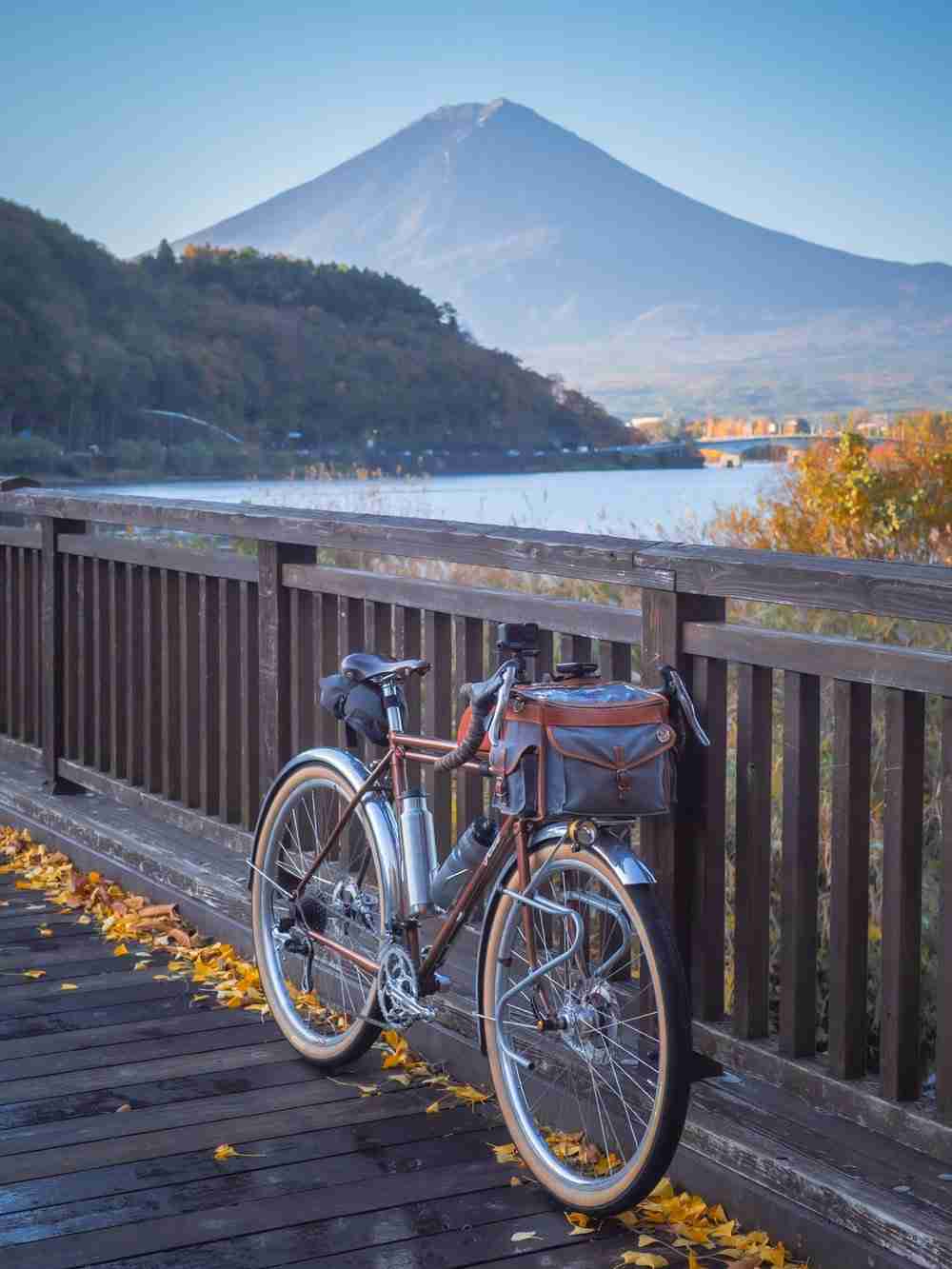
Cycling around Lake Kawaguchi is one of those activities that sounds pleasant in theory and turns out to be genuinely one of the best decisions you can make for a half-day. Bike rentals are widely available in the town, the route is mostly flat, and the frequent stops for viewpoints, cafés, and parks mean you’re never just grinding distance you’re actually experiencing the lake rather than passing through it. The relaxing pace suits almost everyone, and the flexibility to explore at your own tempo is something no tour bus can replicate.
Kayaking & Boating Experiences
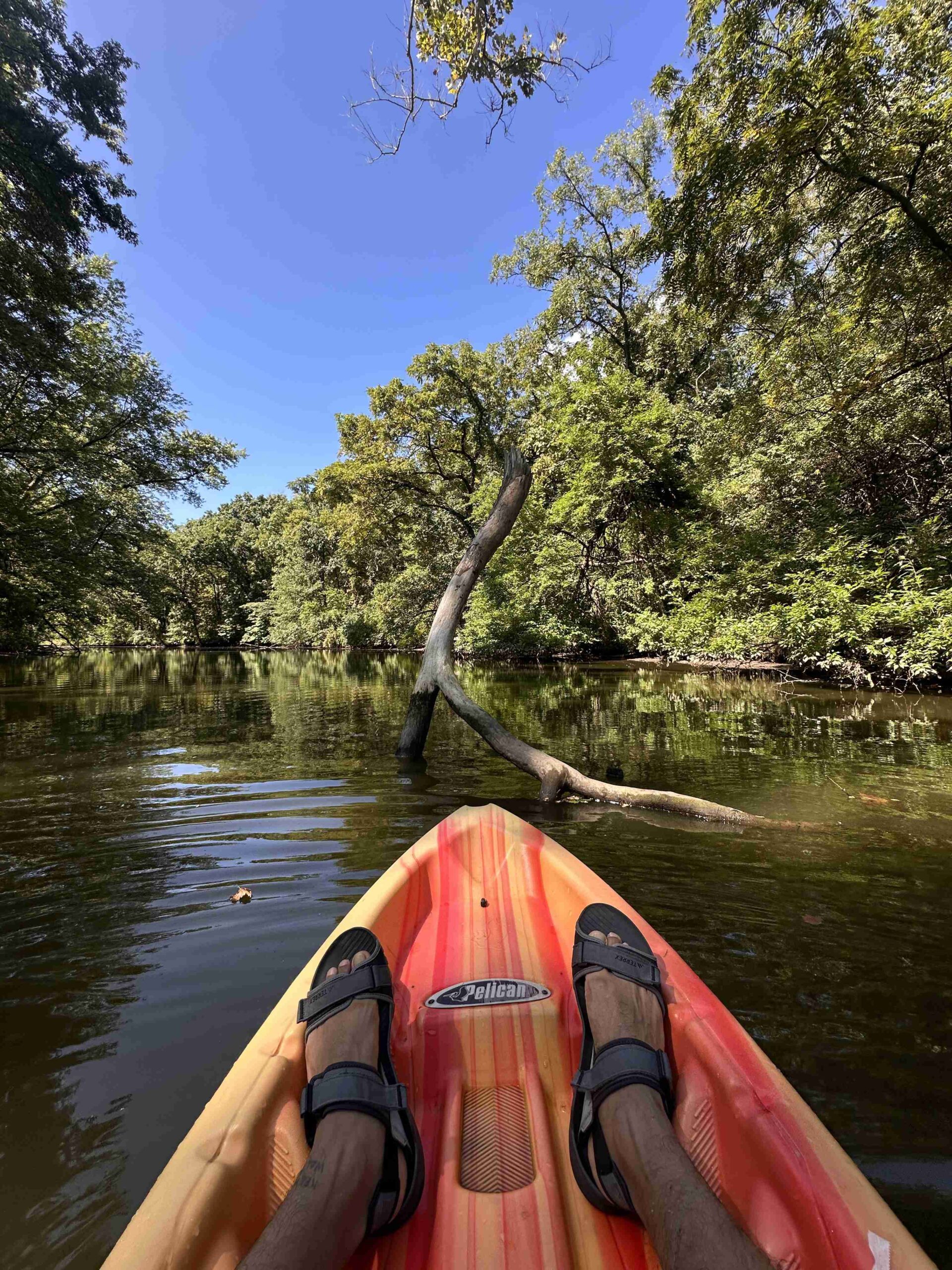
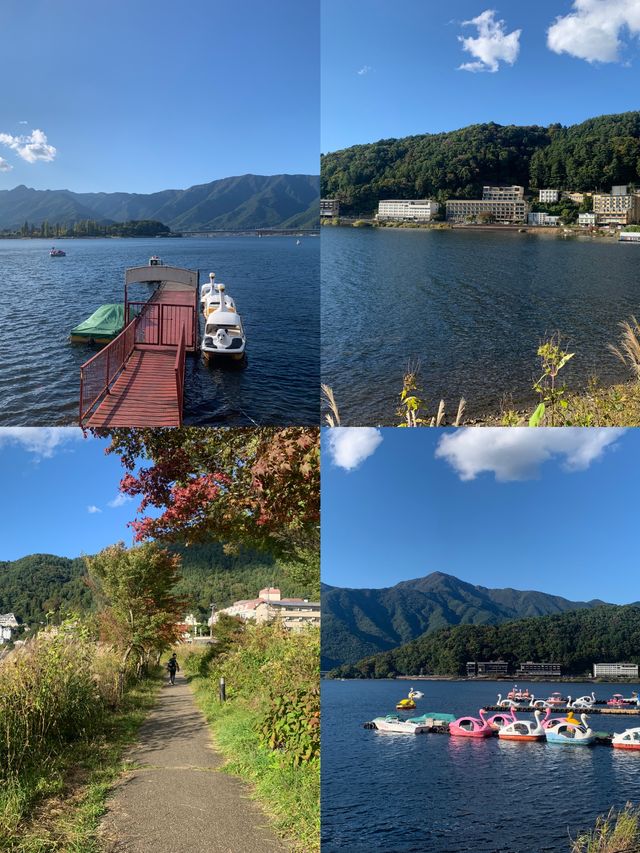
Getting onto the water changes the relationship with the mountain entirely. Kayaking and paddle boating on the lakes offer a unique angle Mount Fuji viewed from water level sits lower and wider in the frame, which creates a surprisingly different compositional experience. These are beginner-friendly activities, suitable for visitors of all experience levels, and the gentle outdoor experience they provide works well for families or anyone who wants something active without anything technically demanding.
Ride the Mount Fuji Panoramic Ropeway
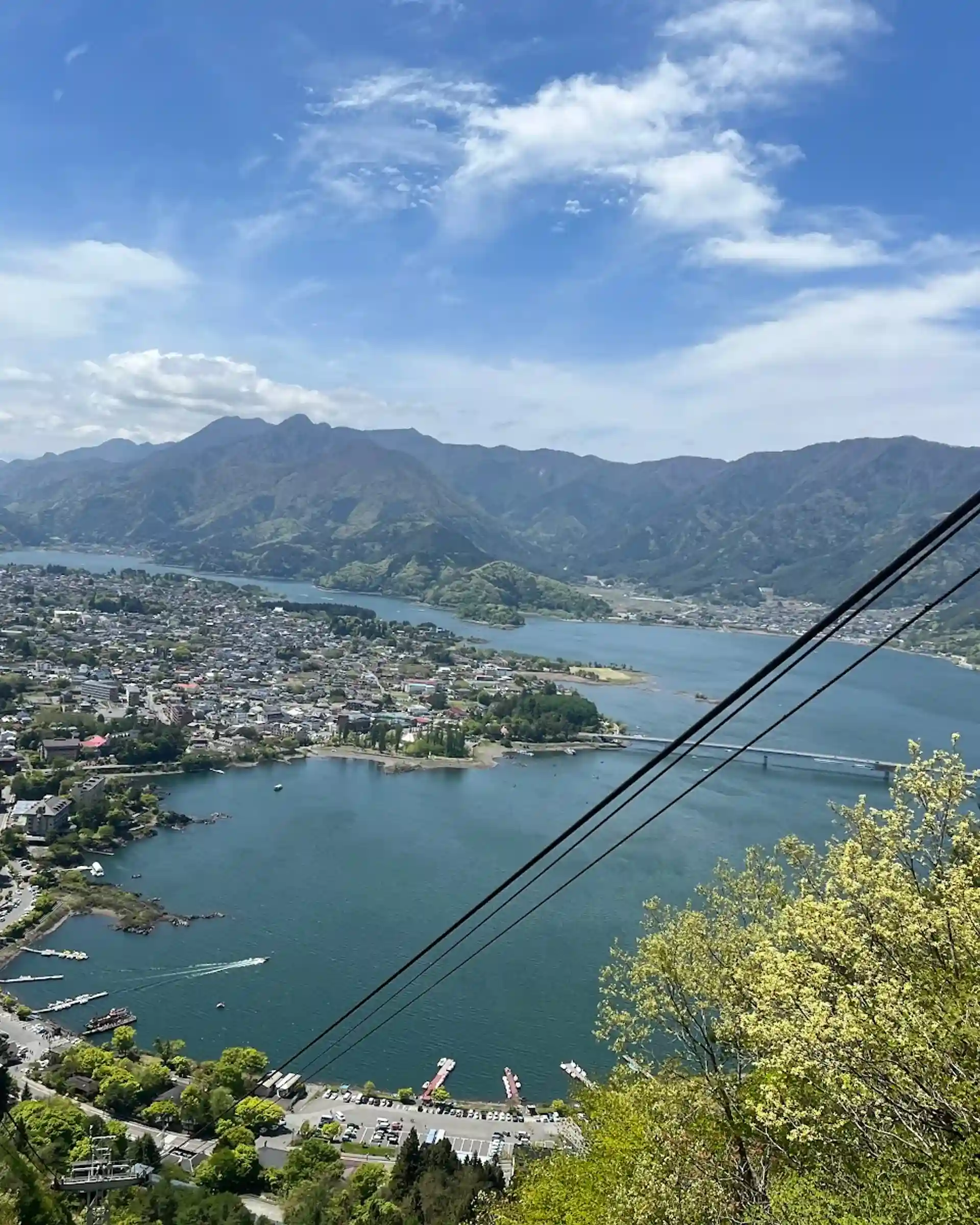
The panoramic ropeway near Lake Kawaguchi is one of the easiest wins on any Fuji itinerary. The lift carries you to an elevated viewpoint with sweeping views of both the lake and Mount Fuji the kind of scenic vistas that would otherwise require a serious hiking commitment to access. It’s easy, it’s accessible, and for visitors whose itinerary doesn’t include a summit attempt, it provides that satisfying sense of altitude without the gear, the hours, or the effort.
Kawaguchi Asama Shrine
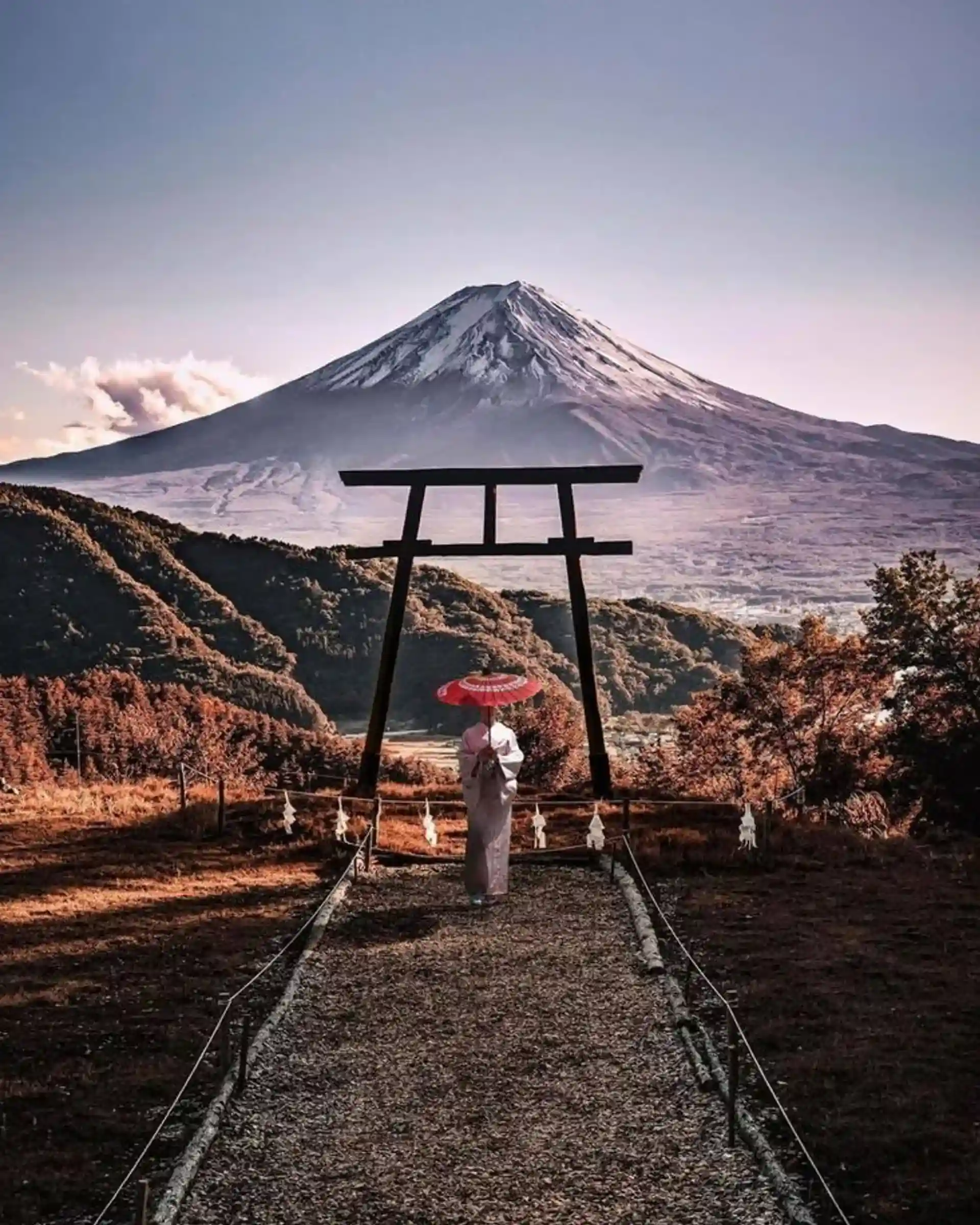
Kawaguchi Asama Shrine is one of those important spiritual sites in the region that gets quietly overlooked in favor of more photogenic stops which means arriving here feels genuinely serene rather than crowded. The shrine has long been associated with Mount Fuji worship and is surrounded by a quiet forest that creates a naturally calm and reflective atmosphere. Visiting in the morning amplifies that feeling the light through the trees, the absence of tour groups, the way the experience settles rather than rushes. Worth every minute.
Saiko Iyashi no Sato Nenba
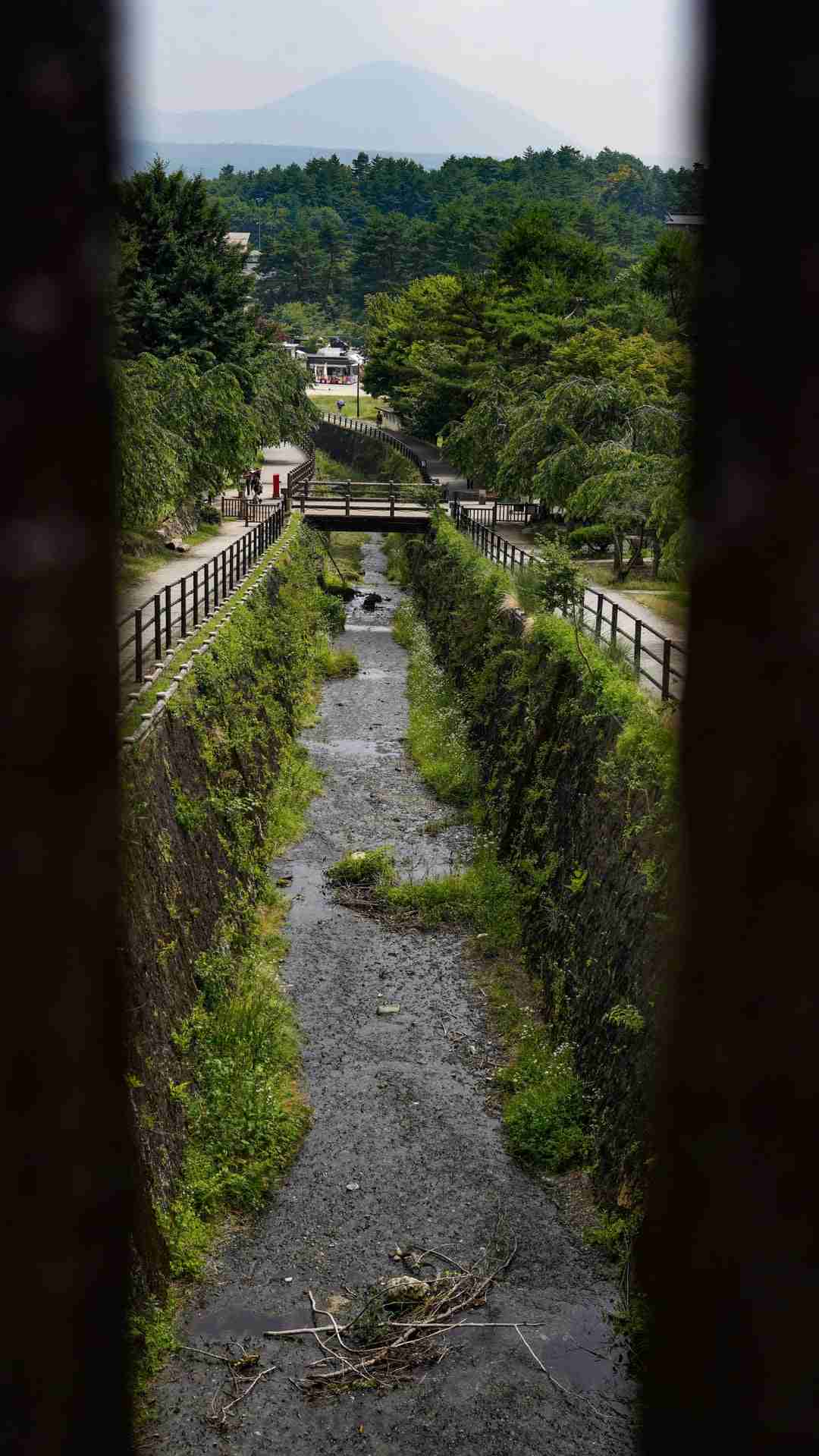
Saiko Iyashi no Sato Nenba reconstructs Edo period rural atmosphere with enough traditional thatched-roof houses and craft activity to feel substantive rather than theatrical. Visitors can rent kimonos, watch local craft demonstrations, and move through the village at their own pace there’s no script and no rush. For travelers drawn to history and culture rather than scenic viewpoints, this restored village offers something the lakes simply cannot: a textured, human-scale encounter with the way this region once lived.
Mt. Fuji Day Trip Tours
If the idea of coordinating buses, timing viewpoints, and navigating an unfamiliar train system sounds like more stress than holiday, a guided day trip tour solves everything in one booking. The Tokyo Full-day Tour of the Four Majestic Spots of Mt. Fuji covers Saiko Iyashi-no-Sato Nenba, Lake Kawaguchiko, and Arakura Sengen Park in a single well-paced day. The Mount Fuji Private Day Trip with Driver from Tokyo offers full customizable itinerary flexibility Chureito Pagoda, Oishi Park, and the Hakone Ropeway can all be included. The Mount Fuji and Hakone Customize Private Day Tour takes that further, looping in Kawaguchiko, Oshino Hakkai, and additional stops. And for something with a different energy, the Private Mt. Fuji Tour with Scenic BBQ and Hidden Gems adds a Japanese lunch at the mountain’s base alongside the sightseeing one of the more memorable combinations available. Book as early as possible; these breeze through availability faster than most people expect.
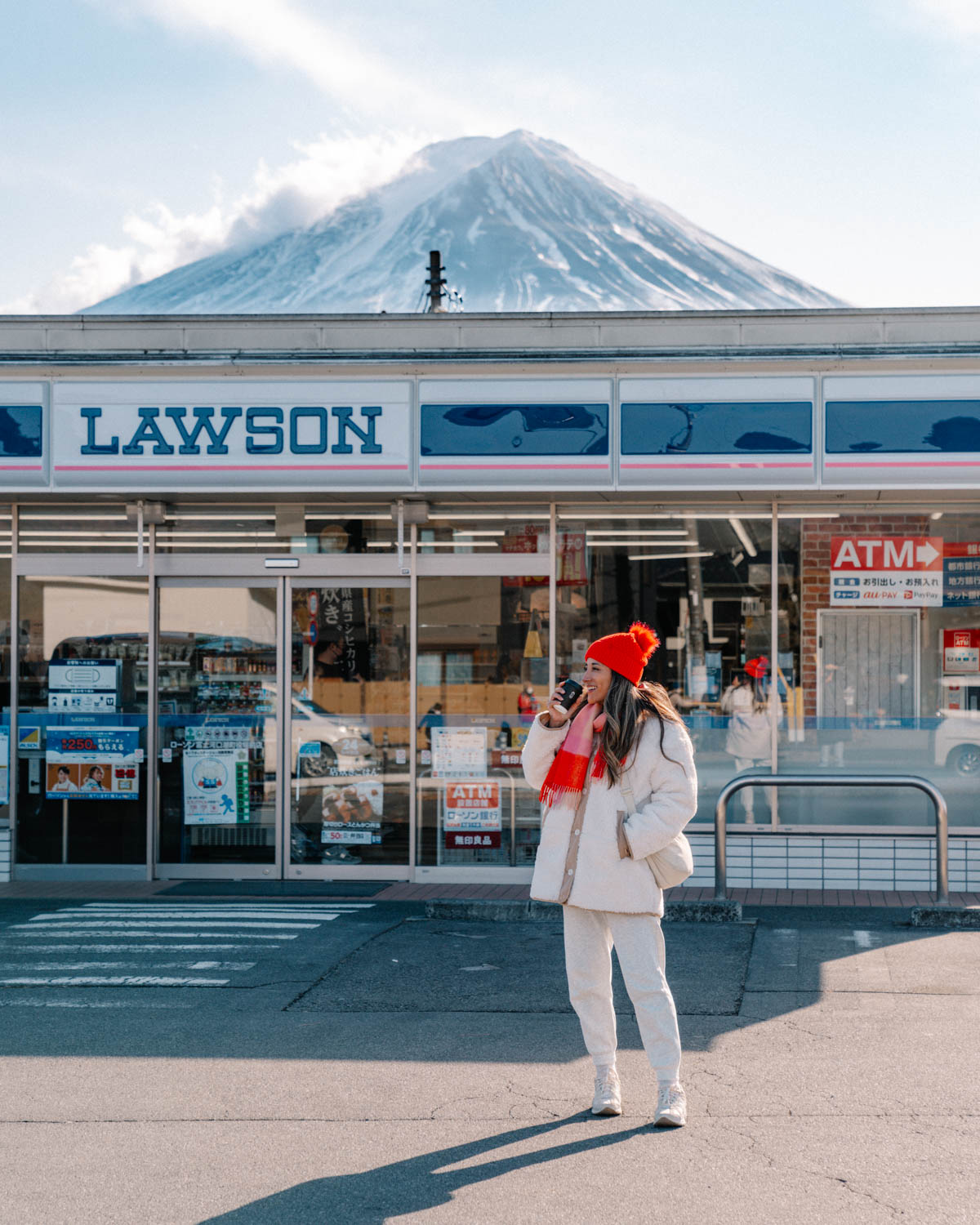
Famous Lawson Convenience Store View
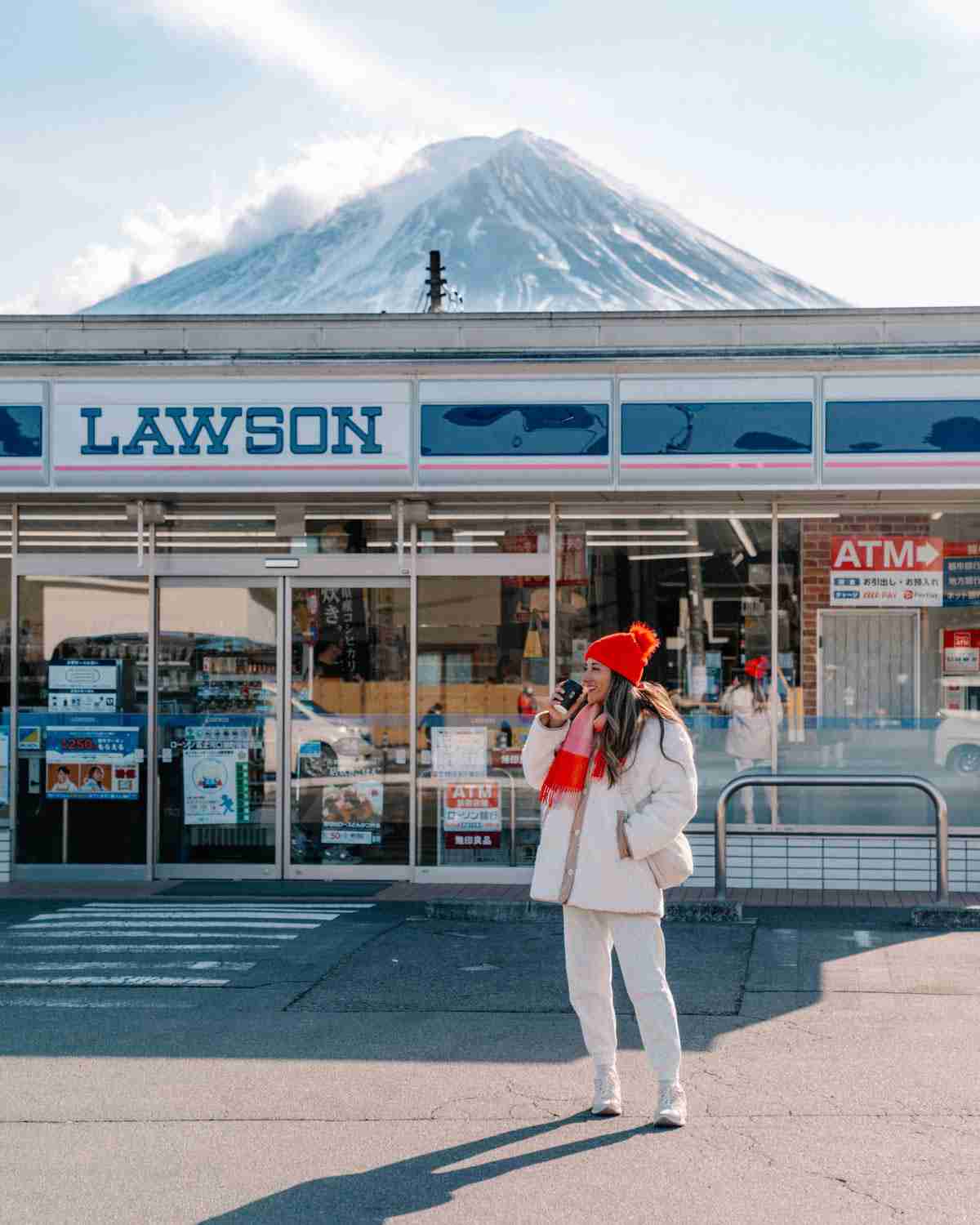
It sounds absurd until you’re standing there a Lawson convenience store in Lake Kawaguchi town with Mt. Fuji looming directly in the background, the mountain perfectly framed behind the store’s signage. Tour buses genuinely pull up for this. Go early to avoid crowds and get a clean photo before the car park fills; grab some snacks while you’re at it. The Lawson near the Town Hall offers a slightly quieter alternative with similar Mount Fuji views busy with tourists taking pictures, but less of a full event than the main snap spot.
Enjoy Sightseeing at Mt. Fuji’s 5th Station
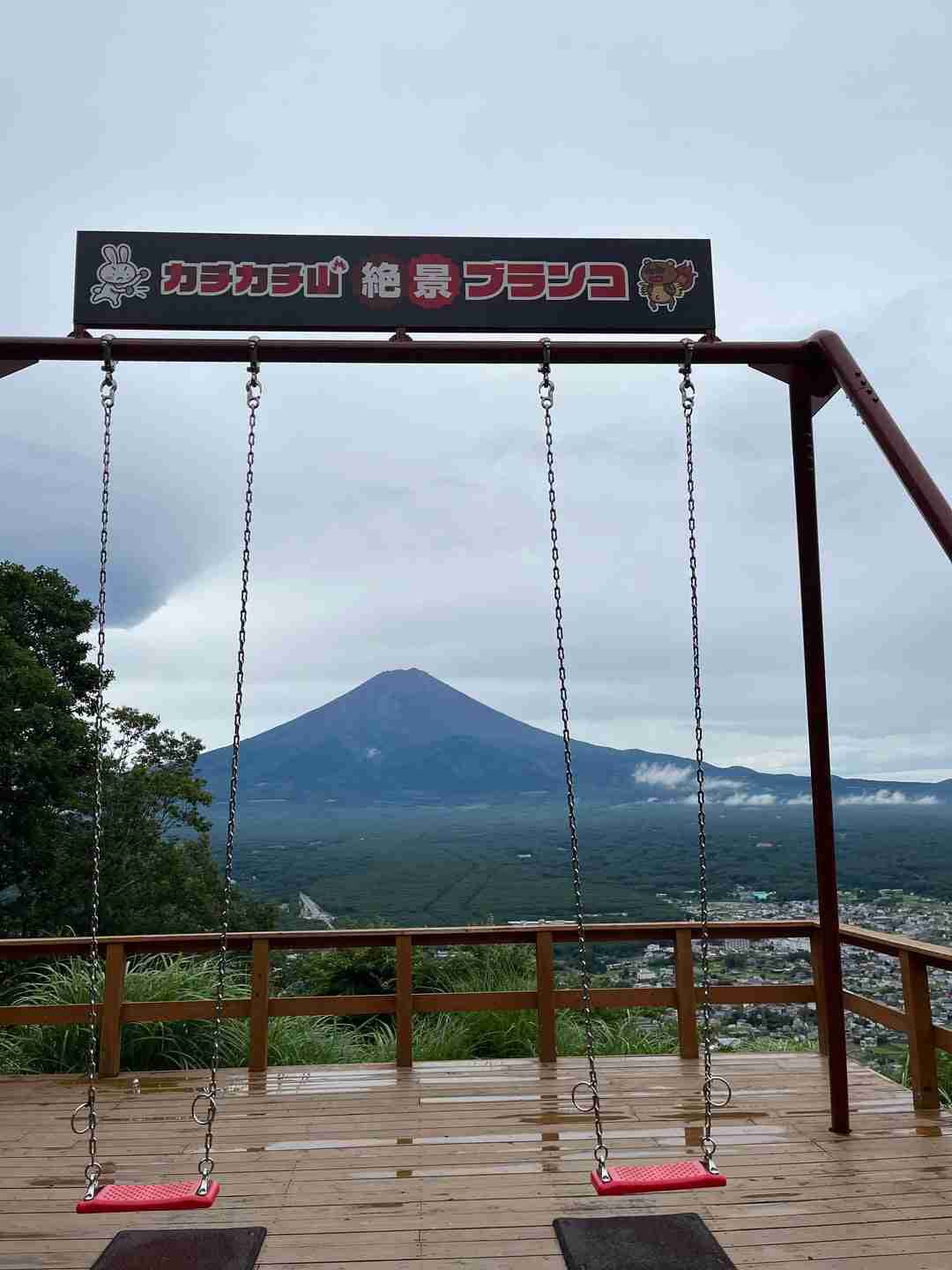
The 5th Station on the Yoshida Route accessed by rental car or bus and sitting at 2,305 meters elevation functions as a fully operational mountain town complete with shops, lodging facilities, and a constant stream of bustling tourists. Reaching it without climbing means arriving at altitude directly, which gives an immediate sense of the mountain’s scale. Nearby, Komitake Shrine offers a genuinely sacred site of mountain worship untouched by the commercial energy of the station itself, while Satomidaira delivers a scenic viewpoint with sweeping views of Lake Yamanaka and Lake Kawaguchi simultaneously. The hiking course along the walking trail to Okuniwa is one of the more understated recommendations in the entire area manageable, grand in scenery, and far less trafficked than the trailhead platforms.
5 Recommended Tourist Spots in Yamanashi & 5 Tourist Spots in Shizuoka
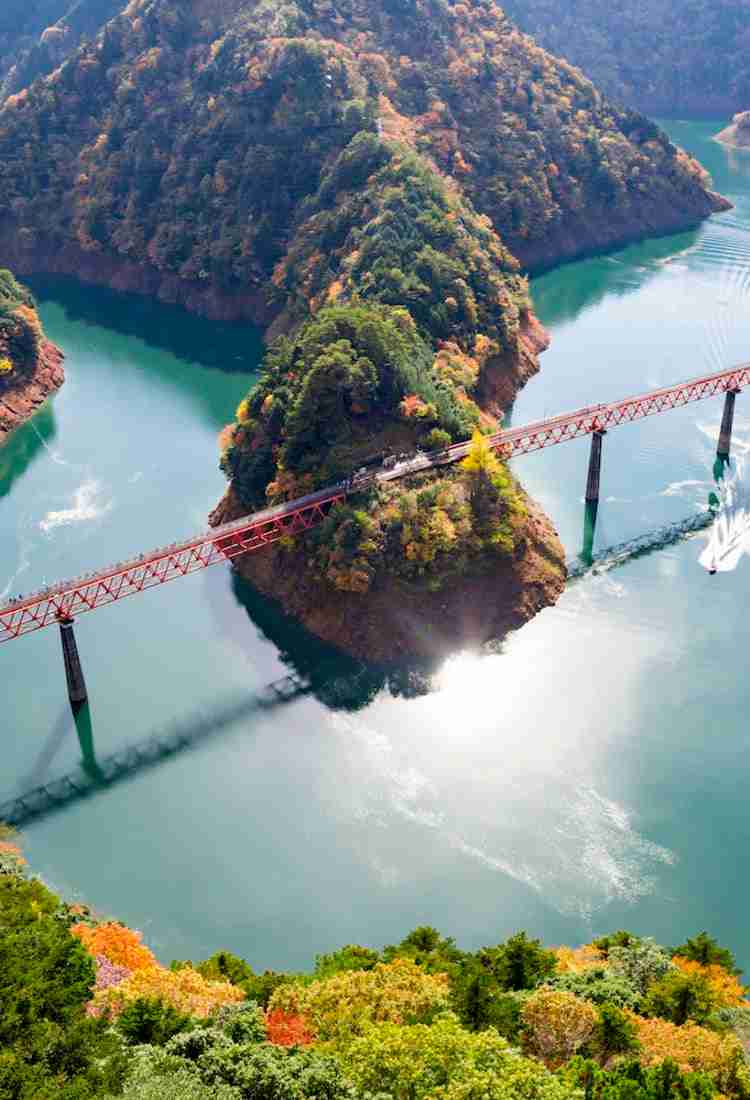
Fuji-Q Highland at the mountain’s base operates at a completely different frequency from everything else in the Fuji region this is a world-class amusement park with thrill rides that hold actual records. FUJIYAMA, the King of Coasters, tops out at 130 km/h, while Eejanaika stacks 14 rotations into an intense single ride. The haunted house Senritsu Meikyu stretches 900 meters the longest in Japan and has a genuine reputation for defeating visitors halfway through. It’s character-themed and broad enough for families, but the headline attractions are unapologetically built for adrenaline.
Lake Yamanaka covers roughly 6.57 square kilometers and sits at 980.5 meters above sea level, making it the third-highest lake in Japan and the closest of the Fuji Five Lakes to the mountain itself. The seasonal rotation is genuinely year-round: tulips in spring, sunflowers in summer, cosmos in fall, and autumn foliage alongside snow-dusted Mt. Fuji in winter each one a completely different visual. Kitaguchi Hongu Fuji Sengen Shrine carries over 1,900 years of history as a World Heritage site component asset, its solemn approach lined with cedar trees and stone lanterns leading to the Fujiyama Otorii one of the largest wooden torii in Japan. The sacred trees Fuji Taro Cedar and Meoto Hinoki, both reportedly over 1,000 years old add another layer of presence to an already powerful site, originally designated by Yamato Takeru as a place to worship Mt. Fuji afar and serving as the starting point of the Yoshidaguchi climbing trail.
The Kawaguchiko Music Forest Museum sits on the shore of Lake Kawaguchi and wraps itself in an almost European scenery that feels incongruous and charming against the Mt. Fuji background. Inside, rare automatic musical instruments including one originally destined for the Titanic share space with large music boxes and the automated performances of one of the world’s largest dance organs. Fuji Motosuko Resort, roughly 4 km from Lake Motosu, delivers what many consider the most beautiful view of Mt. Fuji among the Fuji Five Lakes framed by seasonal flowers and the still lake surface. The addition of the Peter Rabbit English Garden among the largest British-style gardens in the Kanto region alongside a café, museum, and shop makes this a genuinely layered stop.
In Shizuoka, Shiraito Falls earns its status as both a nationally designated scenic spot and a natural monument registered as part of the World Cultural Heritage site. From a curved cliff 20 meters high and 150 meters wide, hundreds of individual waterfalls cascade like white silk threads, fed by spring water from Mt. Fuji at a volume of 1.5 tons per second the largest waterfall in the Mt. Fuji foothills. Fuji Safari Park, elevated at 850 meters at the mountain’s foot, is one of Japan’s largest safari parks lions, cheetahs, leopards, elephants, and bears occupy open terrain here, and the bus options range from a Navigation Car to a Jungle Bus with wire mesh sides and a Super Jungle Bus with mesh extending to the roof each offering progressively more exposure across a 50–60 minute driving course.
Kinomiya Shrine in Atami is revered as a deity of good fortune and auspicious blessings, and the giant camphor tree on the grounds a sacred tree and natural monument said to be 2,100 years old is Japan’s most famous embodiment of the belief that walking around its trunk once extends your life by one year, with a wish for good health, long life, and wishes fulfilled granted to those who circle it with intention. Fujisan Hongu Sengen Taisha Shrine stands as the head of over 1,300 Sengen shrines across Japan, dedicated to Konohanasakuya-hime-no-Mikoto, the principal deity of Mt. Fuji its origins tracing back to 27 BCE, with the current site established in 806. Over 500 cherry trees bloom in the Sakura no Baba grounds, including Shingenzakura, a second-generation weeping cherry tree believed to descend from one planted by the warlord Takeda Shingen. Closing out the Shizuoka list, Gotemba Premium Outlets opened in 2000 and expanded with a Hillside zone in 2020 now houses approximately 290 stores in a North American townscape-styled complex split across East Zone and West Zone. Burberry, Armani, Nike, Adidas the brand mix is broad, the restaurants are solid, and its position near Hakone, Izu, and Mt. Fuji makes it a genuinely convenient final stop on a multi-destination day.
Miho no Matsubara Viewpoint
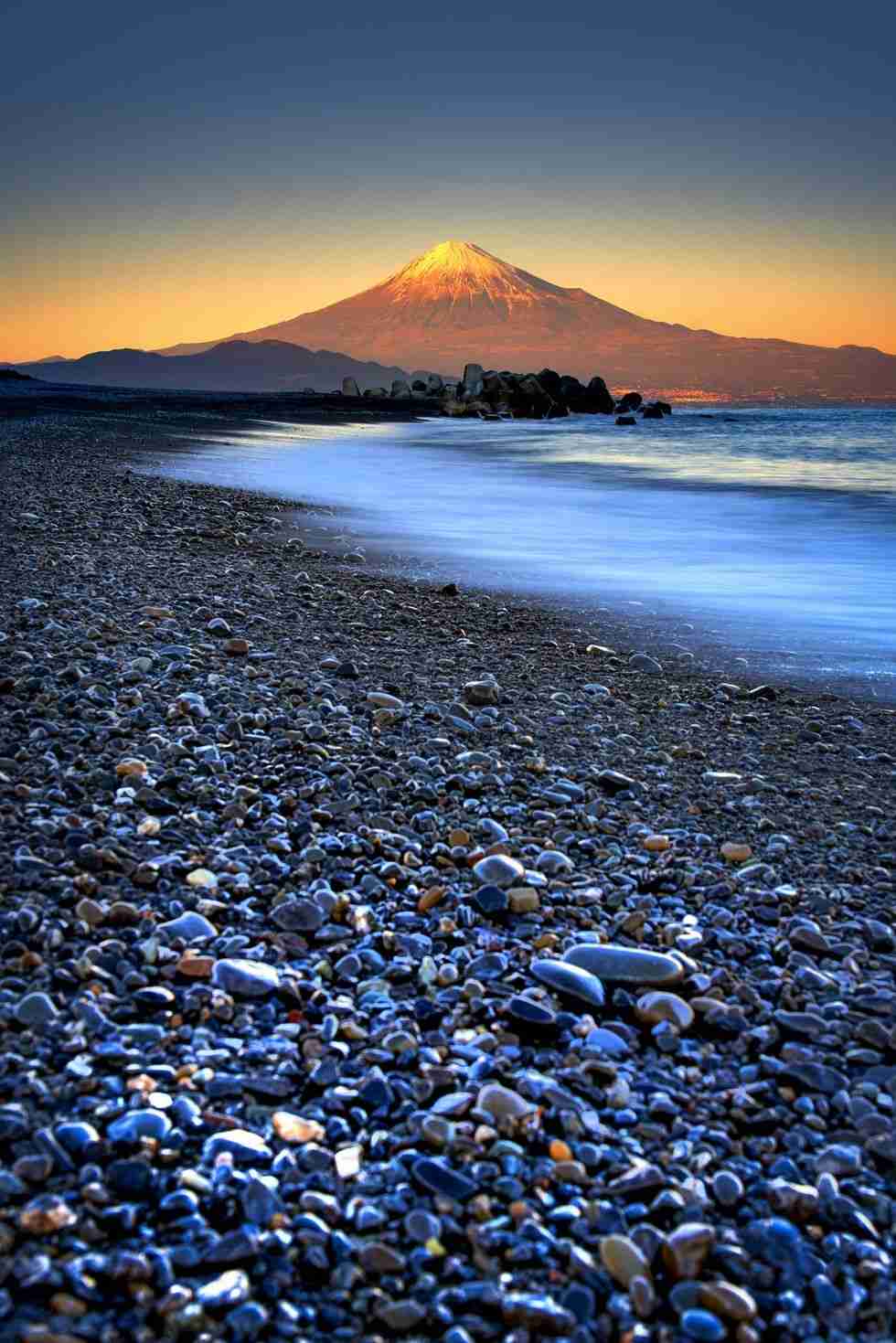
Miho no Matsubara offers something compositionally different from every lake-based viewpoint in the region: Mt. Fuji rising behind pine trees and white waves, framing the mountain against the ocean rather than still water. This quintessentially Japanese landscape the kind that historically inspired the scenes painted on Japanese public bathhouses is registered as part of the World Heritage site, and deserves more visits than it typically receives from international travelers who tend to cluster around the lakes.
Essential Mount Fuji Travel Tips
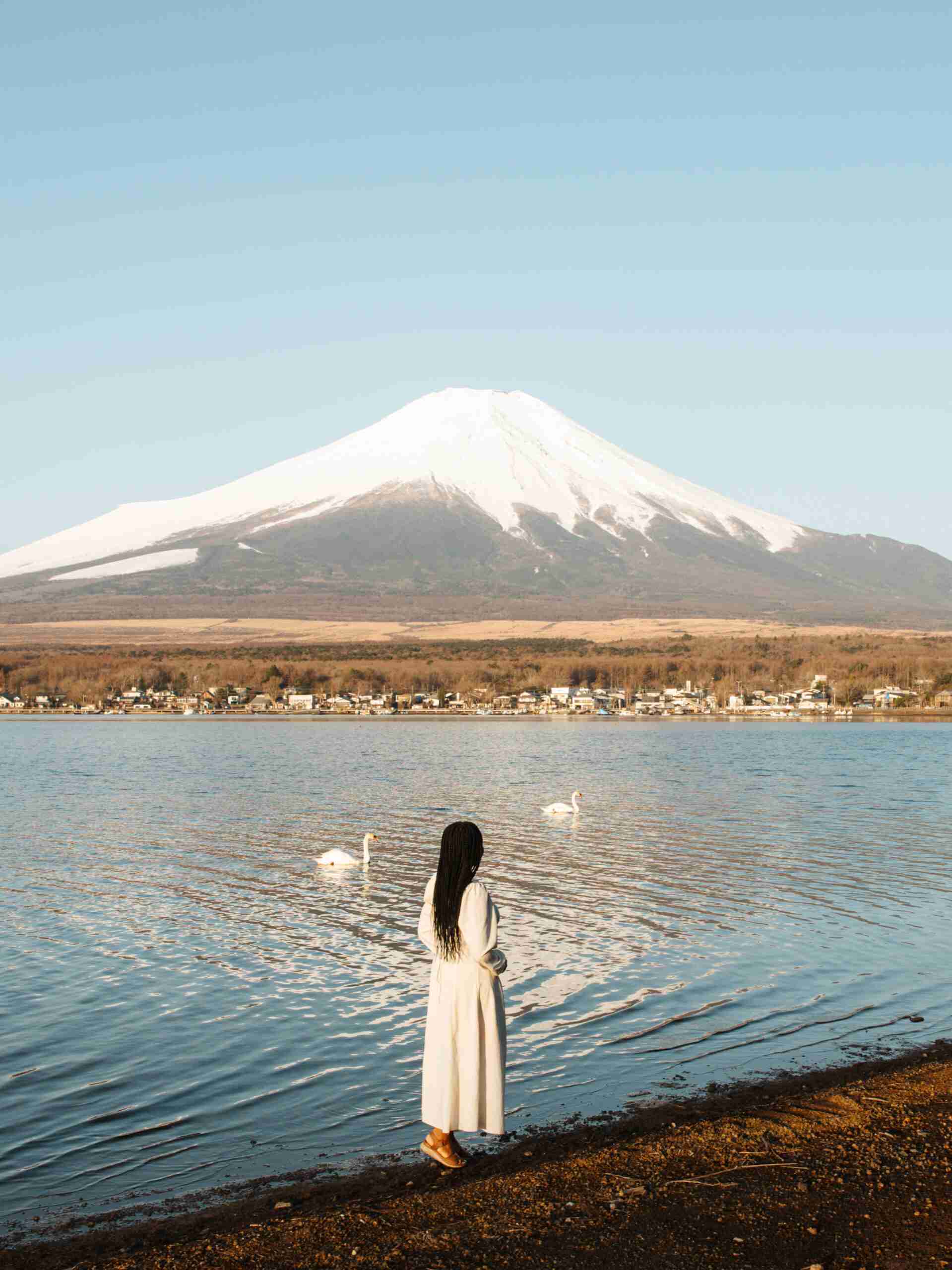
Early mornings deliver the clearest views of the mountain no exceptions, no shortcuts. Beyond timing, the single most consistent piece of advice from anyone who’s spent real time here: packing layers matters more than most people plan for, because weather can change quickly at any elevation and any season. Show genuine respect for local customs at shrines and villages remove shoes where indicated, keep voices low in sacred spaces, and treat the mountain and its surrounding communities as places rather than backdrops. Finally, if flexibility exists, avoid peak weekends the crowds are real, and their absence on a quieter weekday can reduce the entire experience from crowded to genuinely personal.
Is Mount Fuji Worth Visiting?
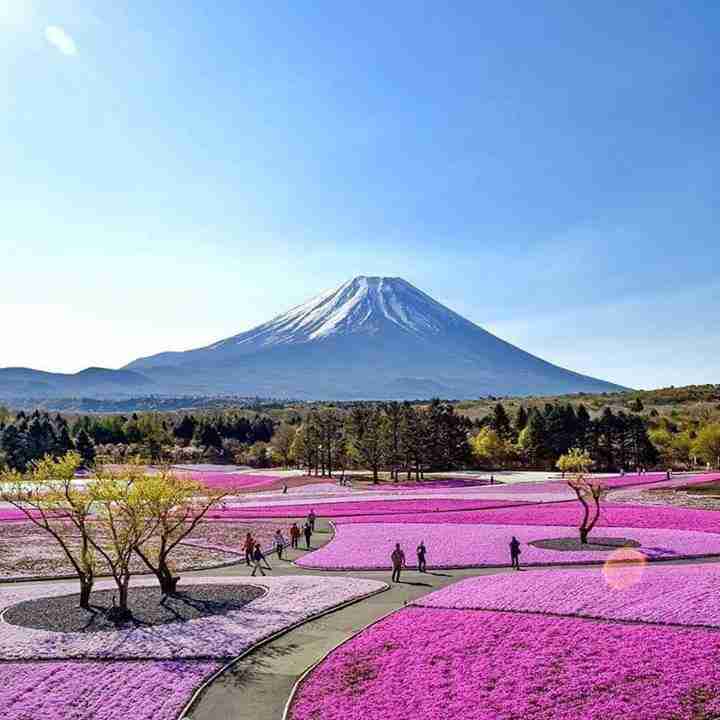
Mount Fuji rewards travelers who arrive with patience and genuine appreciation for scenic landscapes, cultural depth, and peaceful natural environments. The region offers a rich and rewarding experience even without climbing and in many ways, the experience of moving through the lakes, villages, shrines, and forests builds a more complete picture of what this mountain actually means than any summit attempt alone. It fits naturally into any Japan itinerary, but it also holds its own as the sole reason to make the trip.