The Perfect 3-Day Smoky Mountains Itinerary (2026 Travel Guide for Gatlinburg, Cades Cove & Pigeon Forge)
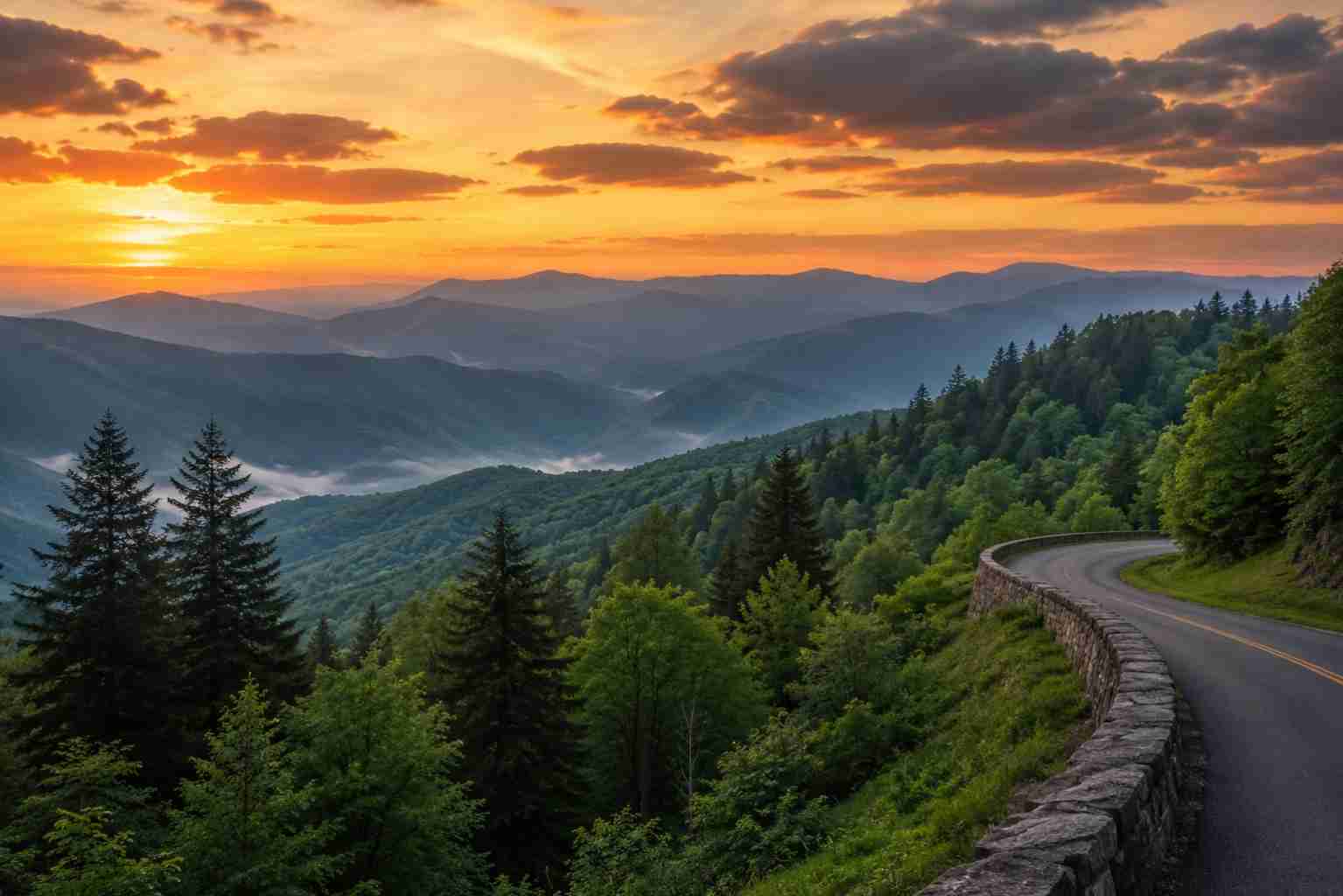
If you have ever asked yourself what a truly perfect Smoky Mountains vacation looks like condensed into a 3-day itinerary, I’ll tell you right now — it isn’t about seeing everything. I made that biggest mistake myself on my first trip, cramming what felt like five days of activities into 72 hours, and I showed up for the drive home more exhausted than when I arrived. What actually works is a well-planned approach that respects your energy as much as it respects the landscape. This guide is structured around a Friday afternoon arrival and a Sunday late-morning checkout, giving you genuine room to breathe between major stops rather than racing through highlights like a checklist. Whether you are a solo traveler, a couple, or one of those families trying to balance adventure seekers and naptime — this 3-day weekend framework holds up.
The vast National Park split between Tennessee and North Carolina pulls in 13.3 million visitors in 2023 alone, making it the most visited park in the United States — and yet somehow it still feels wild once you step past the overlooks. Admission is technically free, but since March 2023, a parking tag has been required for any stop longer than 15 minutes in designated lots, so purchase yours in advance online or at the visitors center on arrival. The park is also a temperate rainforest where severe weather storms can roll in without warning — always check the forecast and heed any warnings before heading deep into the backcountry. Good flexibility built into your schedule is what separates a great trip from a stressful one. Know what your group size is, set a realistic budget somewhere between $500 and $1,200 depending on your lodging choice and dining preferences, and lock in advanced reservations for anything with limited availability and seasonal hours well before your trip.
Timing your visit wisely changes everything about the experience. Fall foliage peaks in mid-October and while the peak crowds are real, the color payoff is worth it if you book your cabin rental and paid attraction tickets ahead. Early spring and late November remain the sweet spots for lighter traffic and cooler, clearer air through the ridges. In 2026, the shuttle service inside the park has become a genuinely smart alternative to white-knuckling your way through brutal parking congestion at mid-morning on fall weekends — particularly around Alum Cave and the Kuwohi Mountain corridor, formerly known as Clingmans Dome. On rainy Saturday days, rain-day options like Anakeesta, The Island in Pigeon Forge, and Ober Gatlinburg ensure the trip doesn’t unravel. A quick stop to check clear skies and the Cades Cove closure forecast before heading out each morning takes two minutes and saves two hours. Remember — there are no restaurants, grocery stores, or gas inside the park, so carry your own food and plan a picnic stop at one of the riverside pull-offs.
HOW TO GET TO GREAT SMOKY MOUNTAINS NATIONAL PARK
Getting here is simpler than most people realize once you understand the layout. The park has three main entrances — one each in Gatlinburg TN, Townsend TN, and Cherokee NC — and which one you use shapes your entire first day. If you’re flying into the region, your two best options are McGhee-Tyson Airport near Knoxville TN to the northwest, or Asheville Regional Airport to the east of Cherokee NC on the North Carolina side. There is no public transportation connecting those major cities to the park, so renting a car at the airport isn’t optional — it’s the backbone of your whole 3-day itinerary.
WHERE TO STAY IN GREAT SMOKY MOUNTAINS
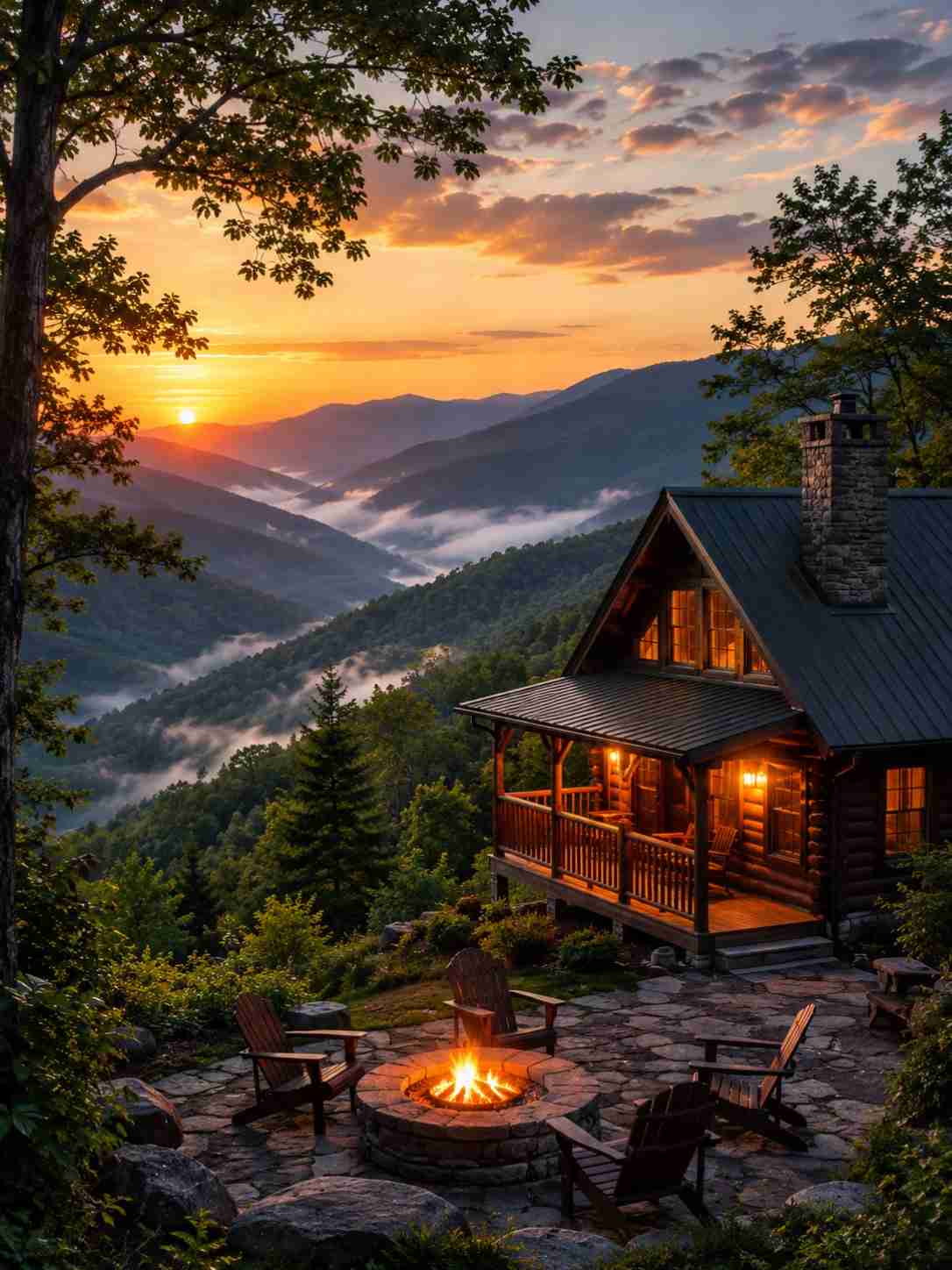
Where you stay has a direct impact on how smoothly this Great Smoky Mountains itinerary flows, and my strong recommendation is to base yourself in either Gatlinburg TN or Townsend TN. Gatlinburg sits right where it abuts the park, meaning you’re inside the tree line in under ten minutes most mornings — a huge advantage when you’re racing trailheads before 9 AM. It packs in restaurants, hotels, and entertainment venues within walking distance of each other, which makes evenings genuinely easy. Townsend, on the other hand, rewards those who prefer a quieter environment and slower pace, with lodging options that feel a world away from the Parkway crowds. For well-reviewed properties, consider Old Creek Lodge, Margaritaville, Baymont by Wyndham, or Greystone Lodge in Gatlinburg, or Best Western Cades Cove if Townsend suits your style better.
GREAT SMOKY MOUNTAINS NATIONAL PARK CAMPING
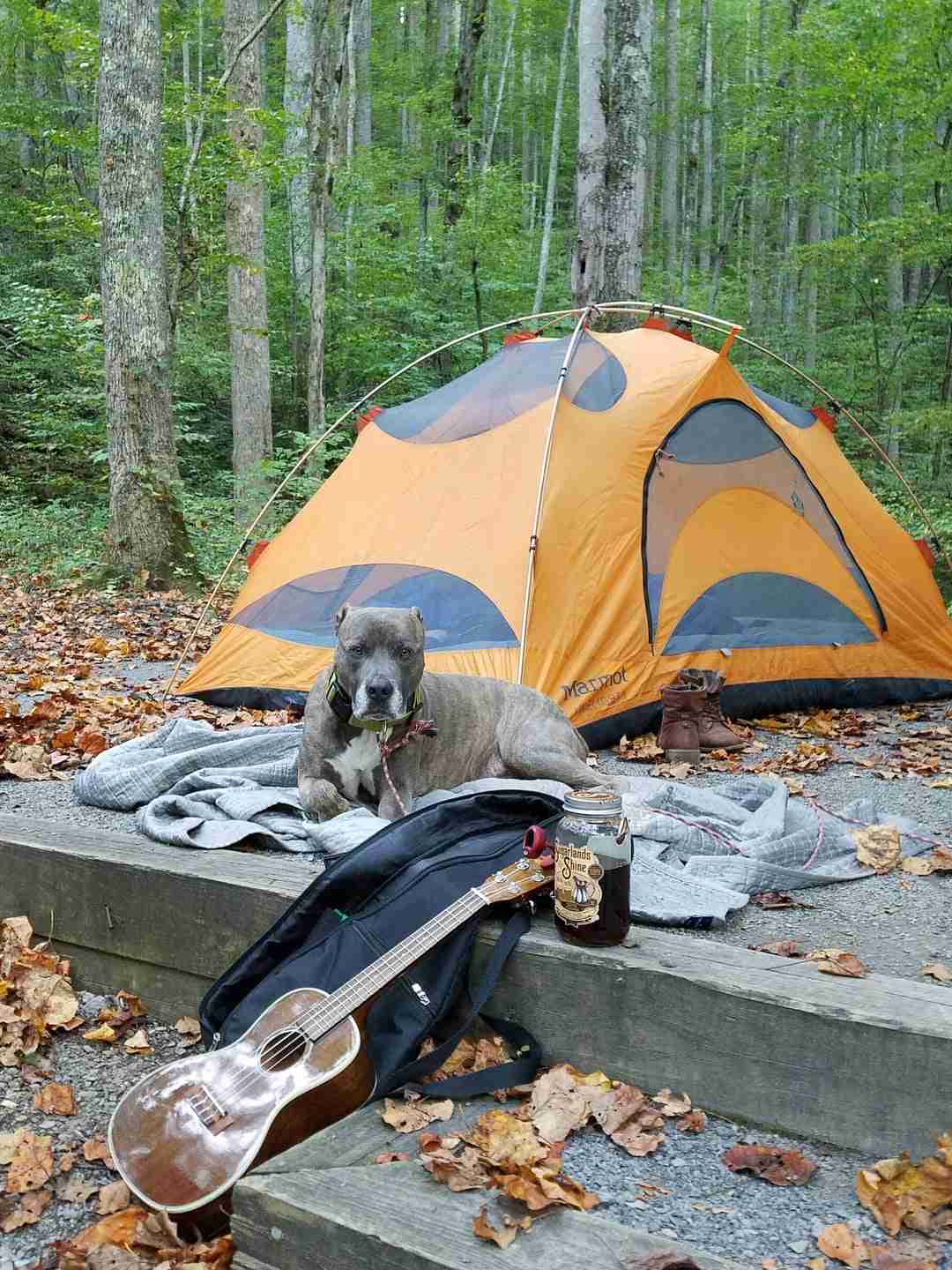
For travelers who’d rather wake up to birdsong than a hotel hallway, a campsite inside Great Smoky Mountain National Park is one of the most rewarding accommodations choices you can make. The park holds 10 campgrounds and more than 100 backcountry sites, most of which are operational from April through October — though that window can shift depending on the year. Reservations are strongly recommended, especially for summer and fall dates, since the best spots disappear weeks in advance.
GREAT SMOKY MOUNTAINS NATIONAL PARK TOURS
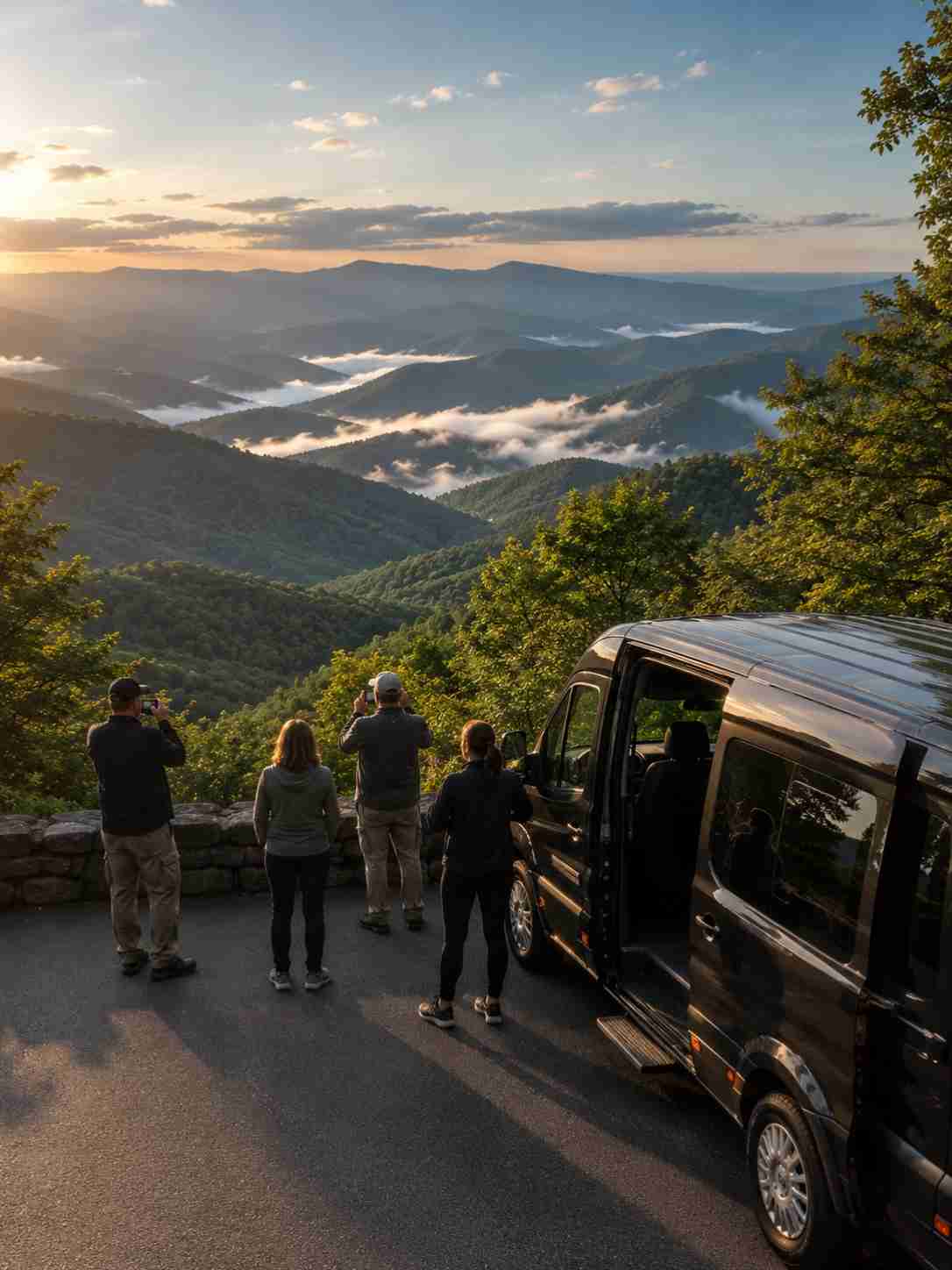
Not everyone wants to tackle the park roads solo — and honestly, those twists and turns through the ridgeline can feel intimidating on your first pass, even for seasoned driving veterans. Handing that responsibility to a knowledgeable local via a guided tour is a legitimate strategy, not a shortcut. The region has solid options: the Smokies Guided Hiking Tour pairs you with a ranger-quality naturalist, the Cades Cove Self-Guided Drive Tour gives you audio narration for the loop, the Historic River Town Ramble digs into Appalachian heritage, and the Smoky Mountains Guided Van Tour covers the widest ground with the least logistical effort on your part.
BEST TIME TO VISIT GREAT SMOKY MOUNTAINS
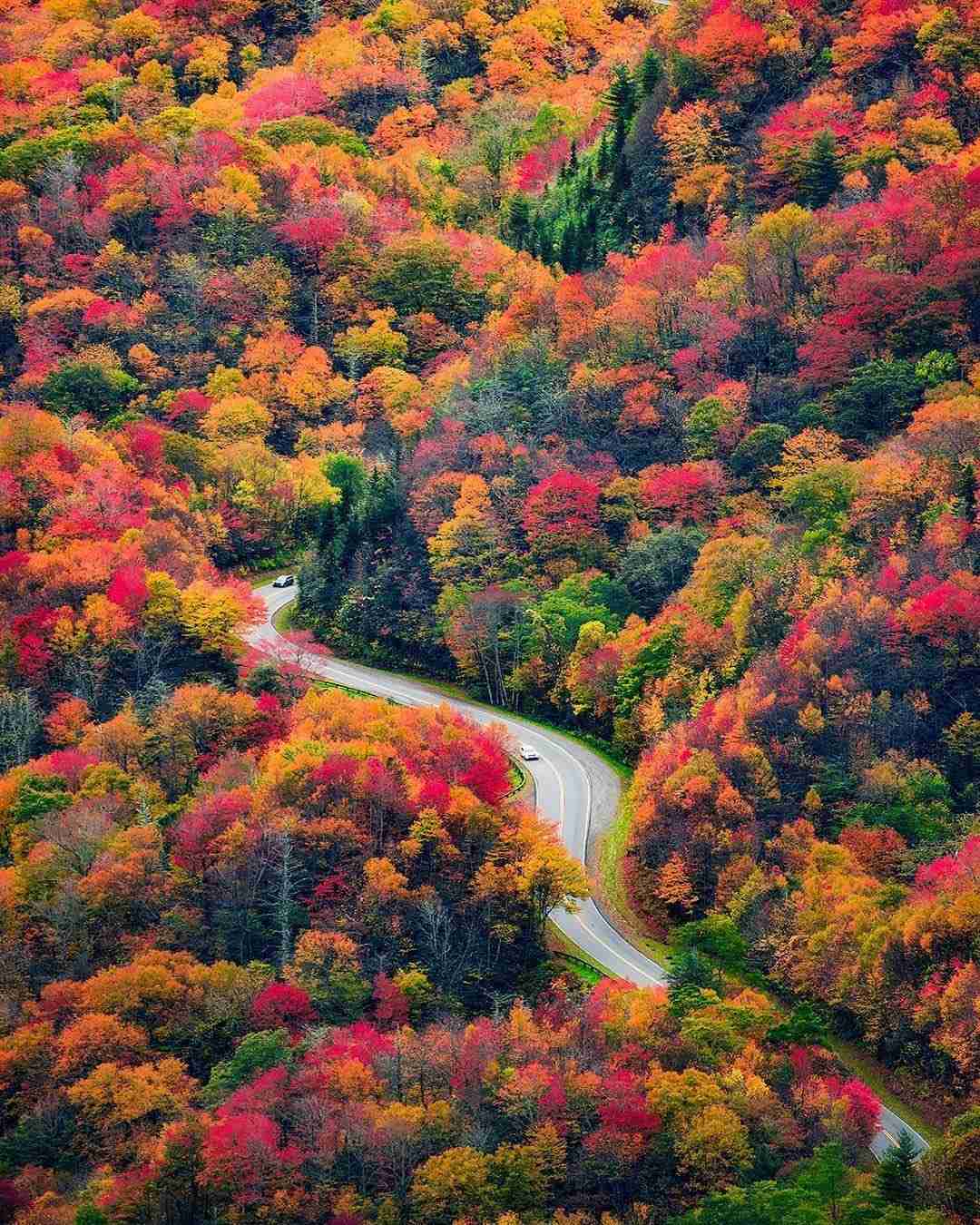
Choosing when to visit shapes every single element of this trip — from how long you sit in traffic to whether Kuwohi Road is even open when you get there. In winter, from December through February, certain roads close and park services operate on shorter hours, but the crowds thin dramatically and what you trade in accessibility you gain back in solitude. Snow genuinely transforms the ridgelines into something you won’t find on any postcard, lower cabin rates make the lodging math easier, and the Newfound Gap Overlook stays accessible year-round while ice formations build up at Grotto Falls and throughout the Tremont area through January and February. For spring visitors arriving March through May, the high balds erupt with wildflowers — trillium, flame azalea, and blooms along Andrews Bald (a 1.8 miles one-way walk from the Kuwohi parking area) that peak into June. Pack antihistamines if you carry allergies to tree pollen, as spring in the Smokies is no joke.
Summer is the busiest season, and the week surrounding July 4th week in particular turns the Parkway into a test of patience — hot, humid, bumper-to-bumper traffic, long wait times, and long lines at every major stop. That said, River Rat Tubing on the Little River at approximately $25 per person is a genuinely refreshing Saturday afternoon activity after a hard morning hike, running from Memorial Day through Labor Day when temperatures push into the 80s. The Pigeon Forge attractions hit peak periods in summer as well, so book ahead. Fall remains the crowd favorite. Fall foliage in the Smokies peaks in mid-October, starting at higher elevations like Kuwohi and Newfound Gap in early October and working down toward the lower elevations of Gatlinburg by late October. It is genuinely beautiful but also the most crowded season — secure your cabin 3 to 6 months ahead for October weekends, add 15 to 20 minutes to every drive time estimate, and expect the Cades Cove loop to be spectacular and slow in equal measure. The non-peak times of early spring and late fall offer a year-round destination experience that most first-timers underestimate. If a full week vacation isn’t possible, even an extended weekend road trip from April, May, June, September, October, or November — outside peak foliage weeks — gives you temperate weather and a noticeably calmer Roaring Fork Motor Nature Trail.
DAY 1: Alum Cave Trail, Newfound Gap, & Clingmans Dome / Kuwohi
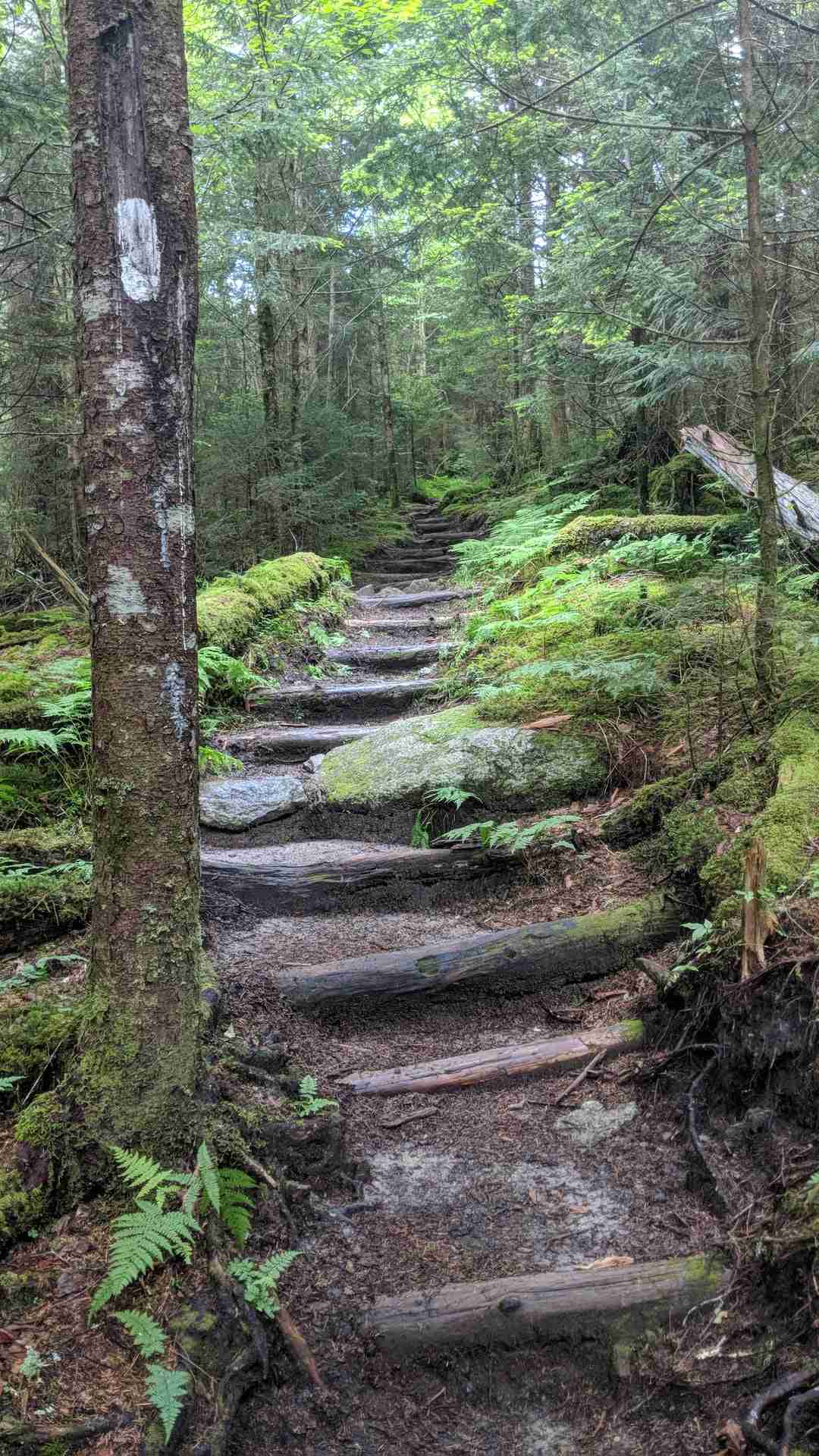
Start your exploration at the Sugarlands Visitor Center before doing anything else. It takes twenty minutes and saves you from the kind of surprises that derail trips. Grab your maps, check for real-time closures and bear activity warnings, flip through the exhibits that document how the CCC boys shaped this park during the Great Depression, and purchase your GSMNP parking tag here if you didn’t book it online — a weekly tag and daily tag both run $5, while the annual pass at $40 pays off fast for repeat visitors. From there, head 8.7 miles south along Newfound Gap Road (Rt 441) toward the Alum Cave Trailhead, keeping the parking lot on your left-hand side when you arrive early — ideally by 8:15 AM on a Saturday to secure a spot in the main lot before the 9 AM rush hits. After that window, the GSMNP shuttle service back from Sugarlands Visitor Center becomes your best option.
The Alum Cave Trail is moderately difficult at 4.6-mile round trip, threading through Arch Rock into the open slab of Alum Cave Bluffs with a gentle grade running alongside a stream through old-growth forest before the path turns steeper and rockier with increasingly dramatic mountain views overhead. For 2026 visitors, note that the Laurel Falls Trail has been closed since January 2026 for an 18-month rehabilitation, so lean on these alternatives as stronger hikes for the season. Travelers with young children or grandparents dealing with limited mobility can skip Alum Cave entirely and instead do the Cataract Falls trail — a 1 mile roundtrip kid-friendly walk to a pretty waterfall that takes about 45 minutes and starts directly behind the visitor center building. After your morning hike, continue along Rt. 441, a scenic mountain road threaded with streams, tunnels, and roadside overlooks, until you reach the Newfound Gap parking lot sitting right on the border of Tennessee and North Carolina at 5,046 feet — the site of the Rockefeller Memorial where the park was formally dedicated in 1940, with views on a clear day stretching for dozens of miles in both directions.
From Newfound Gap, take Rt 441S a short distance to Kuwohi Road and follow it 7 miles uphill to the summit of Kuwohi Mountain — the highest point in the park at 6,643 feet, previously known as Clingmans Dome. The 1-mile paved uphill path to the observation tower is steep but short, with spectacular views across the Appalachian Mountains on clear mornings. I hiked it on a foggy day once and still found the experience deeply moving — the renaming in 2023 to honor the Cherokee people and their sacred site adds a layer of meaning that the old name never carried. Kuwohi Road follows a seasonal closure schedule, typically running April through November, so check before you go. On the way back, stop at the Metcalf Bottoms Picnic Area along Little River Road for lunch — pack sandwiches from a Gatlinburg deli the evening before, because there is zero food service and no gas stations anywhere inside the park, with the nearest restaurants sitting 20 to 30 minutes away. Come evening, downtown Gatlinburg, Tennessee delivers: wineries, distilleries, stacked shops, and a legitimate dining scene. Make dinner reservations ahead — Crockett’s Breakfast Camp runs breakfast through dinner until 9 PM and the Tennessee country ham plate is worth every minute of the wait. Ole Red Gatlinburg, Blake Shelton’s bar and restaurant on the Parkway, brings loud live music on Friday and Saturday nights from 8 PM onward, while Greenbrier Restaurant on US-321 serves excellent steaks in a quieter atmosphere for those who need it. Jason Aldean’s Kitchen and the Gatlinburg Brewing Company round out a strong evening lineup. Cap the night with a walk past the SkyLift Park cable car lit against the ridge, with candy shops and fudge kitchens open until 10 PM.
DAY 2: Elkmont Ghost Town, Cades Cove & Pigeon Forge
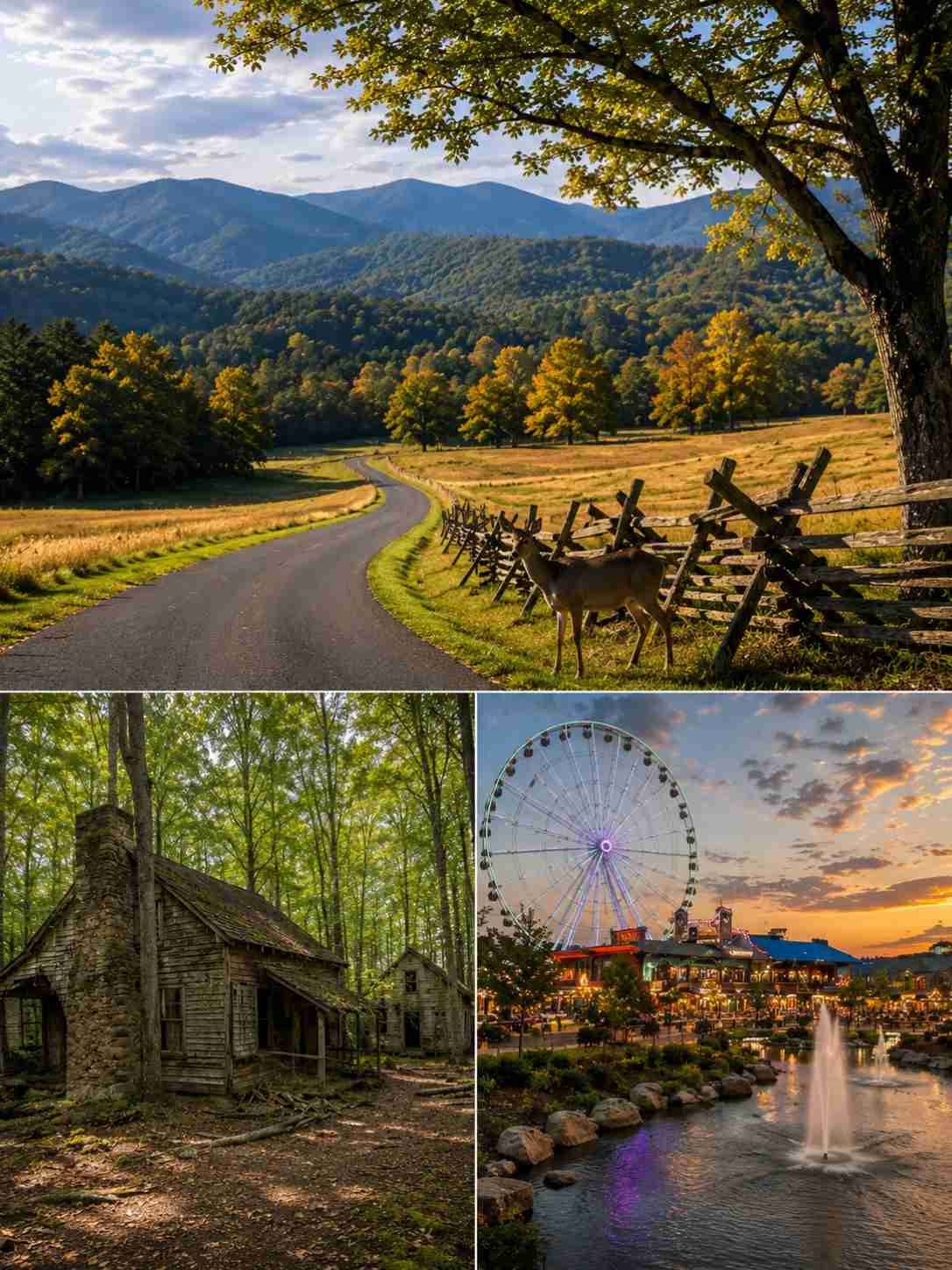
Few places inside the park hit as unexpectedly as the Elkmont Campground area, where an abandoned ghost town sits quietly off a trailhead lot most visitors drive straight past. The Elkmont resort community began as a logging camp in the early 1900s, evolved into a private resort, and was gradually left behind when the national park was established — the National Park Service has since preserved a collection of those original cabins for self-guided touring. It’s eerie and fascinating in equal measure. Afterward, pick up the Little River Trail, an easy 2.5 miles of pleasant trek through a corridor of wildflowers, a meandering river, and a dense canopy of oak, hickory, maple, and birch trees that feels completely removed from anything touristy. From there, collect your map of stops and the full route at the Cades Cove Visitor Center before heading into lunch at the picnic grounds — it’s one of the more civilized midday breaks you’ll have on this trip.
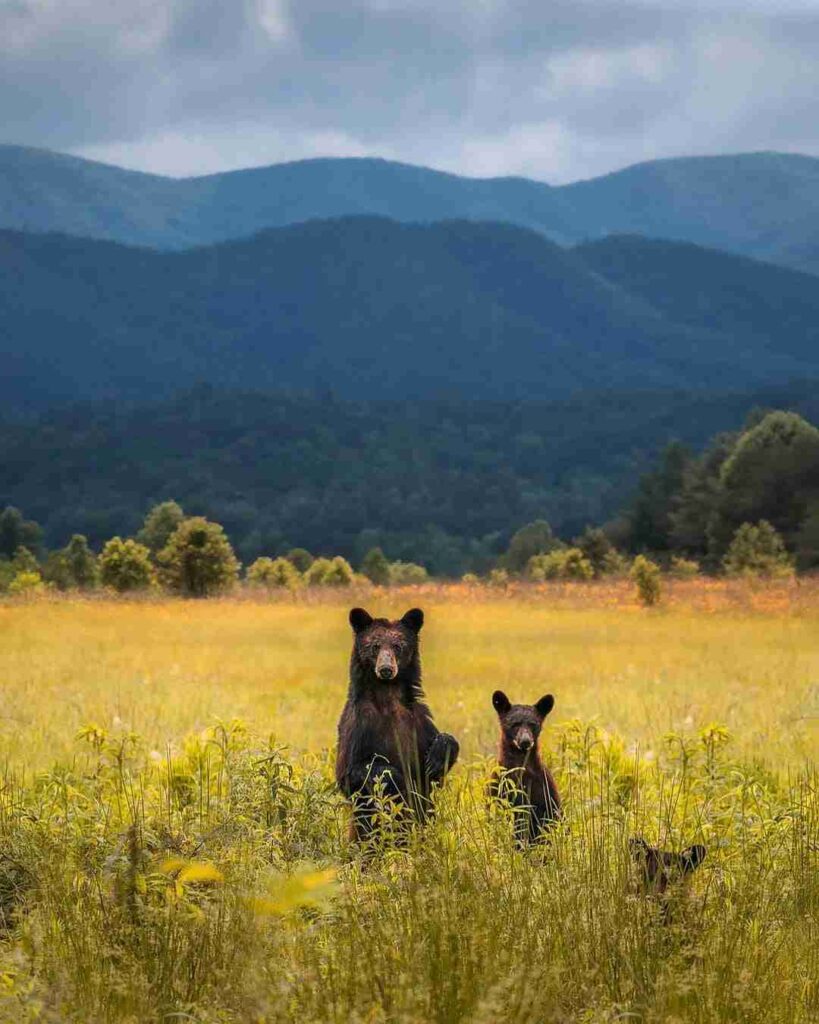
The 11-mile Cades Cove Scenic Loop runs as a paved one-way road through a sweeping open valley below the Appalachian Mountains, dotted with historic churches, log cabins, and cemeteries that predate the park itself. It goes bumper to bumper during summer holidays and weekends, so plan for the full 2 to 4 hour outing rather than rushing it. The strategic move is visiting in the late afternoon rather than morning — wildlife viewing genuinely peaks after 3 PM when deer, black bears, and other animals grow active as temperatures drop and traffic thins. The river running alongside the road offers multiple pull-off spots for picnic, tube, and hike detours, including Abrams Falls at the park’s lowest elevation point, whose cascades are among the most powerful in the region. The Sinks along the Little River is another family-friendly picnic spot worth the stop. When you hit the end of loop, consider looping back 2.8 miles to the Missionary Baptist Church and turning down the dirt road marked for Hyatt Lane — this narrow remote lane through the cut-off roads section delivers black bears sightings at a rate far higher than the main loop. Keep a respectful distance; black bears should never be approached. Note that Cades Cove locks out vehicles every Wednesday from May through September, opening the loop to bikes and car-free roads only — if that sounds appealing, plan for it. The Townsend entrance into the cove sidesteps the worst traffic entirely. That evening, the 23-acre complex of The Island in Pigeon Forge is the right energy after a long day outdoors — family entertainment across live music, fireworks, light shows, stacked shops, and thrill rides including the Great Smoky Mountain Wheel. Parking is free, the fountain plaza light show runs on weekend evenings at no cost, and Timberwood Grill, Margaritaville, and Paula Deen’s Kitchen cover dinner from different angles.
DAY 3: Laurel Falls / Roaring Fork Motor Nature Trail, Anakeesta & Astra Lumina
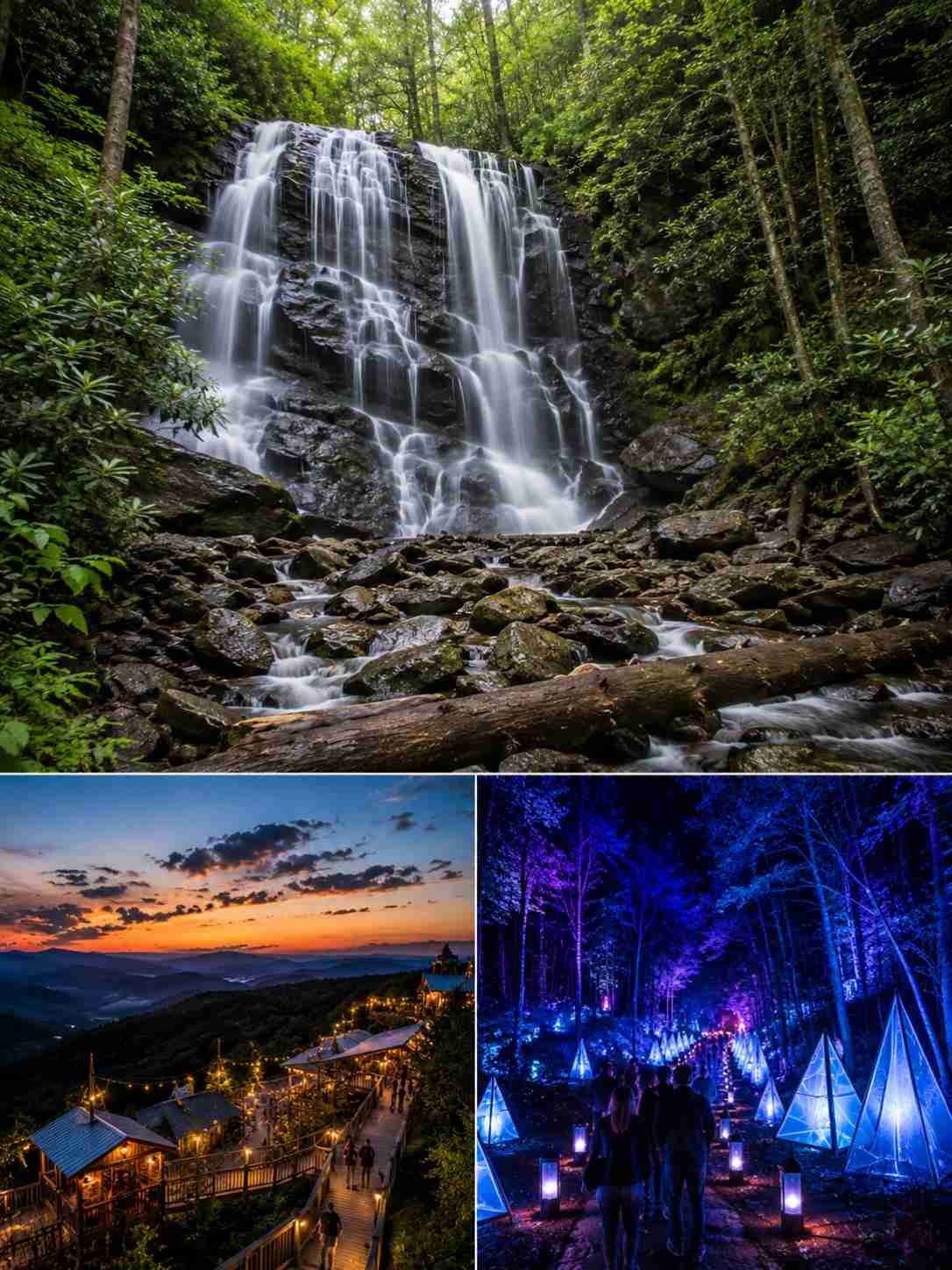
Here’s the honest 2026 visitors update: the Laurel Falls Trail has been closed since January 2026 for approximately 18 months of work, meaning the Laurel Falls Trailhead parking lot sits quiet for now. When it does reopen, the 2.6-mile roundtrip hike through forest to the 80-foot waterfall is worth it — though that paved path is broken and uneven enough to make it unsuitable for anyone with mobility issues. In the meantime, the Alum Cave Trail at 4.6 miles roundtrip (moderately difficult) serves as the right swap for those wanting a longer waterfall hike, while Grotto Falls off the Roaring Fork Motor Nature Trail at 2.5 miles roundtrip is shorter, easier, and lets you walk directly behind the waterfall — one of the more quietly thrilling experiences in the park. For families traveling with young children, Cataract Falls behind the Sugarlands Visitor Center at just 1 mile roundtrip remains the most accessible option.
The Roaring Fork Motor Nature Trail is the spine of Day 3 regardless of which waterfall you choose. Accessed via Cherokee Orchard Road from downtown Gatlinburg, this 5.5-mile one-way driving loop runs seasonally from April through November and packs in more history per mile than almost anywhere in the park. The entrance reveals the Noah Bud Ogle farmstead and its heritage buildings — including the Noah Bud Ogle Cabin — before the loop winds past the Rainbow Falls trailhead (a 5-plus mile roundtrip push to an 80-foot waterfall if you have the legs for it), the Alfred Reagan Tub Mill built in 1895, and eventually the Place of a Thousand Drips at the far end. At minimum, budget two or three stops and save time for Grotto Falls — it works for toddlers, rewards photographers, and the 2.5 miles roundtrip trail is consistently among the most accessible and photographically rewarding short hikes anywhere in the Smokies. If energy allows, Rainbow Falls and Trillium Gap are both solid add-ons. The full loop with stops runs about 90 minutes. By evening, head to Anakeesta Adventure Park in Gatlinburg — grab tickets at the ticket booth, ride the chairlift up, and spend time across 70 acres of whimsical lands featuring treetop walks, a mountain coaster, and assorted thrill rides. The base entry package runs $30 to $45 per adult, and Saturday evening slots in peak season sell out, so book ahead. After dinner with views of the mountains, walk the celestial pathway of Astra Lumina — an evening light walk with an immersive light and music show that is ticketed separately but closes out a three-day trip on an unexpectedly poetic note.
PARKING STRATEGY & TIPS
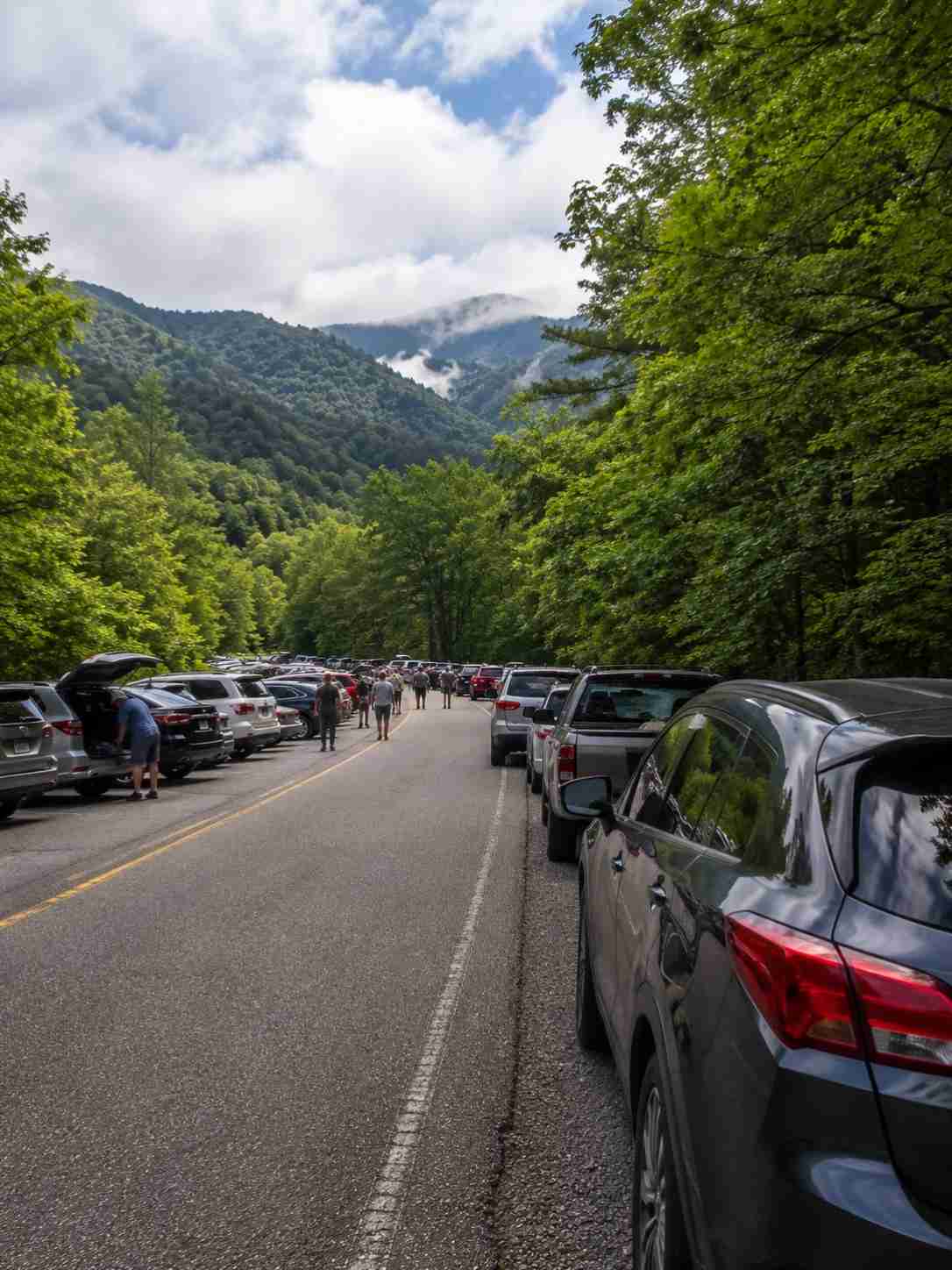
Parking is genuinely the most underestimated logistical challenge in any Smokies itinerary, and getting it wrong on a weekend morning can cost you two hours before your hike even starts. The Alum Cave trailhead lot along Newfound Gap Road fills between 8:30 to 9 AM on summer and fall Saturdays without exception. The Chimney Tops trailhead roughly 2 miles back fills even faster, around 8 AM. The Laurel Falls lot was historically the fastest to fill of any in the park — with that trail closed through mid-2026, that pressure has been redistributed toward Rainbow Falls and Alum Cave instead, so factor that in. The GSMNP shuttle service running out of Sugarlands Visitor Center is the smart move on Saturday morning — park once at the visitor center, ride directly to your trailhead, and eliminate the frustration of circling a full lot. For crowd-avoidance by entry point: the Greenbrier entrance off US-321 east of Gatlinburg, the Cosby entrance on the park’s northeast side, and the Townsend entrance through the Wears Valley corridor into Cades Cove all see significantly less congestion than the main Sugarlands entrance on any given Saturday. Plan your route accordingly.
SUNDAY: EASY HIKE OR SCENIC DRIVE BEFORE HEADING HOME
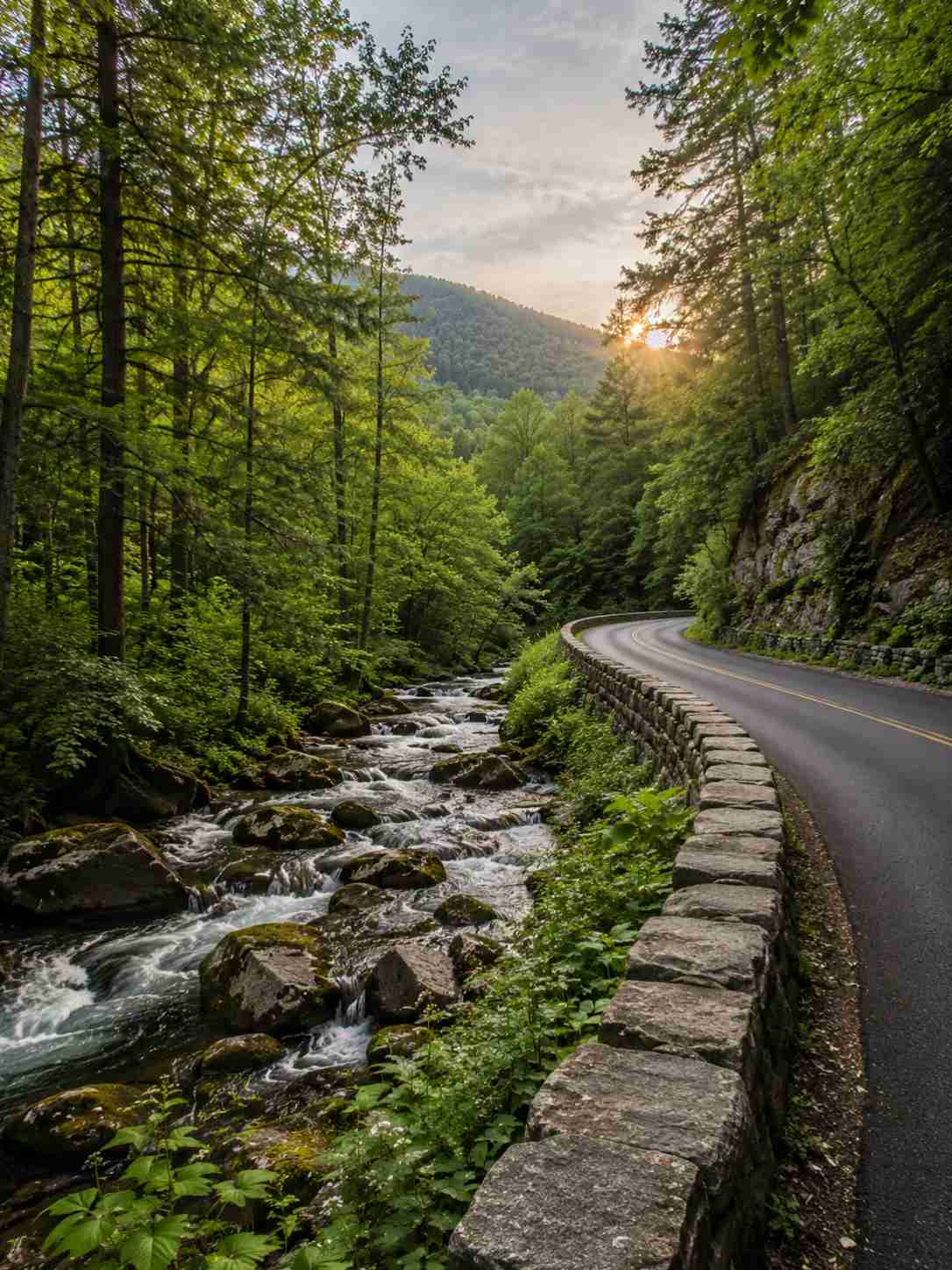
Sunday on a Smoky Mountains weekend is a negotiation between one last park experience and the reality that most cabin checkouts run between 10 AM and 11 AM. The solution is simple: plan activities that don’t require you to be deep in the backcountry by 8 AM. The Middle Prong Trail in the Tremont area is a genuinely strong choice here — it follows Little River Road as a flat, wide path alongside cascading water with minimal elevation change, and walking roughly 1 mile in gets you to impressive cascades without the drama. If you leave your cabin at 7:30 AM, you can hike out and back and return by 9:30 AM with time to spare. Alternatively, Spruce Flats Falls in the same Tremont area is a 1.6-mile roundtrip drop of about 30 feet to a waterfall you can walk to the base of — one of the least-crowded trails in the park before 10 AM on a Sunday, and well worth knowing about. After the hike, don’t shortchange Sunday brunch. Crockett’s Breakfast Camp in Gatlinburg runs through late morning and the Tennessee biscuits with sausage gravy are worth every minute of the 20-minute wait. If you’re closer to Pigeon Forge, The Old Mill Restaurant on Old Mill Square — a Pigeon Forge institution that has been grinding its own grains since 1830 — serves corn chowder and stone-ground grits that are reason enough to end the trip well. A proper breakfast before the drive home makes the whole weekend feel complete.
RAINY DAY BACKUP PLAN
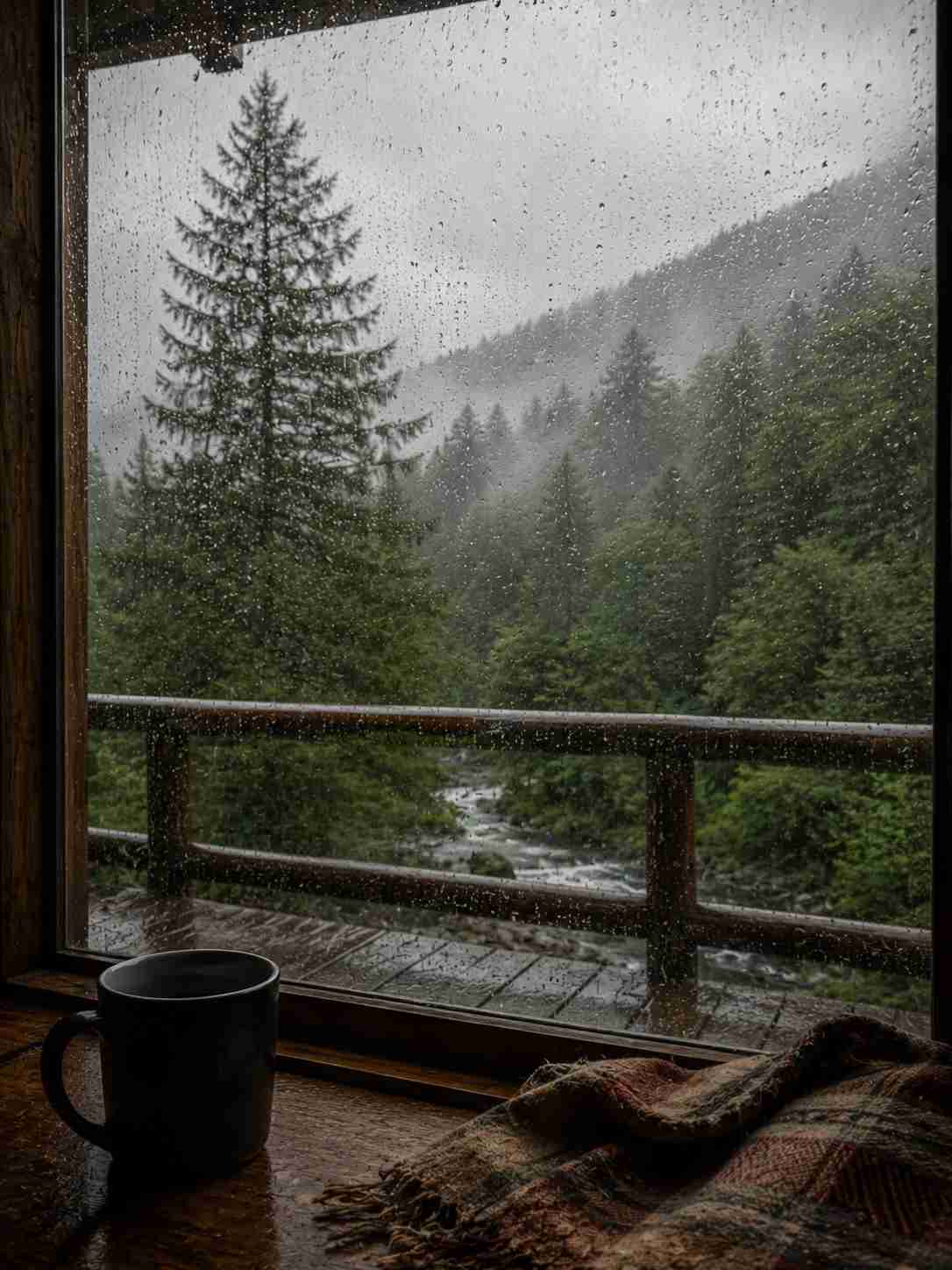
The Smokies receive significant rainfall year-round, and writing off a rainy Saturday as a lost day is the wrong instinct. Anakeesta holds up in light rain — the gondola ride delivers strangely atmospheric views over fog-draped ridgelines that you simply don’t get on a sunny afternoon, and the elevated treetop walk stays partially enjoyable even when it’s wet. For families who need full indoor entertainment, Ripley’s Aquarium of the Smokies in downtown Gatlinburg is the most consistently satisfying rainy-day choice in the region — plan 2 to 3 hours and you’ll leave satisfied. Wonderworks in Pigeon Forge works well as a backup for a mixed group of kids and adults. And the Alcatraz East Crime Museum on the Pigeon Forge Parkway is one of those places that routinely surprises visitors expecting a tourist gimmick and instead finding a genuinely well-designed museum that holds attention for two solid hours. Don’t let rain make the decisions for you.
WEEKEND BUDGET BREAKDOWN
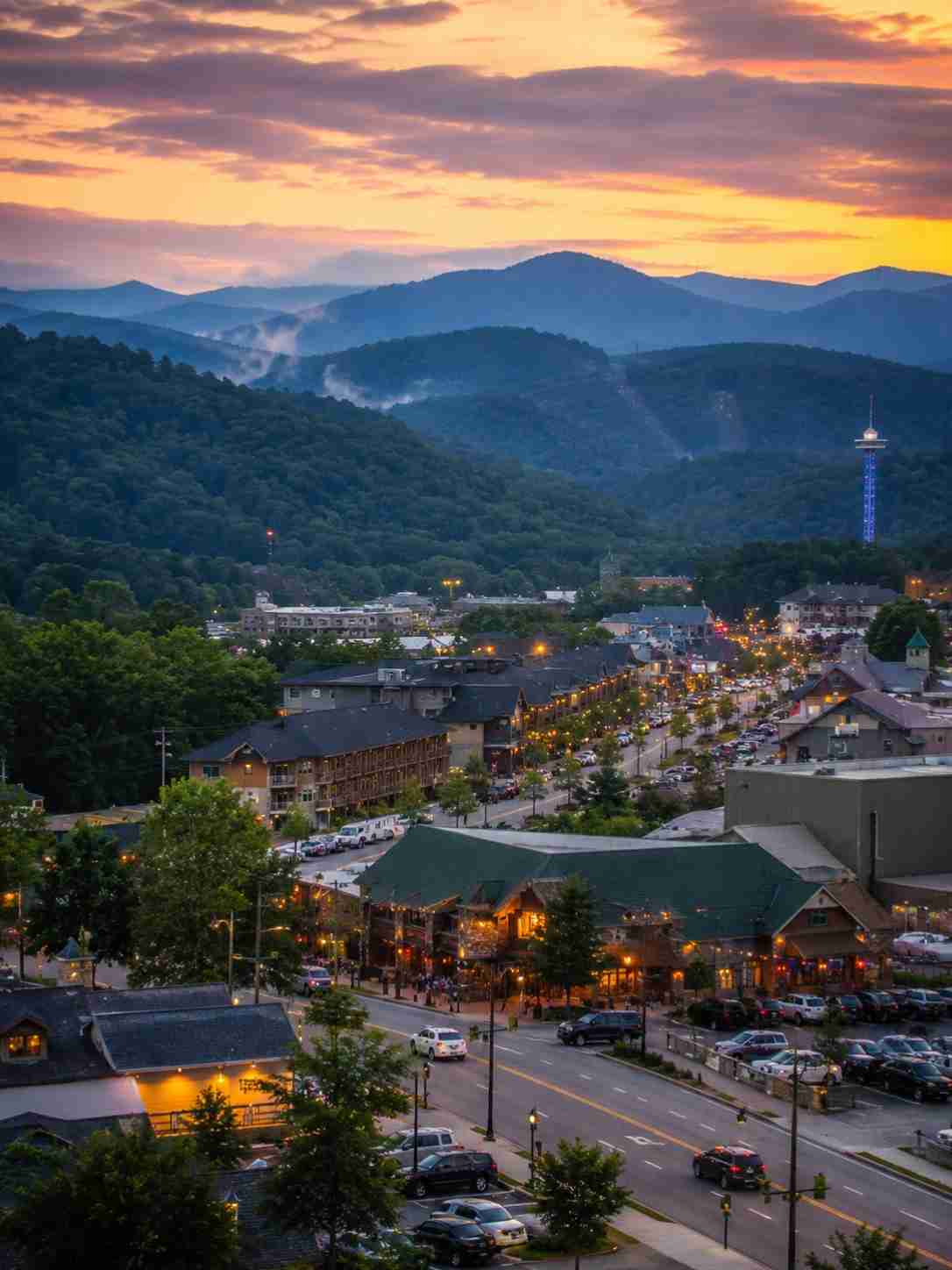
Let’s talk money, because no other part of trip planning causes more friction than discovering costs you didn’t plan for. For 2 adults, realistic weekend spending lands between $470 and $795 across every major expense category. A family of 4 runs $610 to $1,035 — still manageable with some intentionality. Cabin lodging for 2 nights typically runs $300 to $500 for a couple and $350 to $600 for a family, with rates varying sharply by season — fall foliage weeks command genuine premium pricing. GSMNP Parking Tags cost $5 to $10 depending on how many days you need ($5 per day or $5 per week; the annual pass at $40 is the better deal if you’re returning). Dining across Friday dinner, Saturday lunch, Saturday dinner, and Sunday brunch runs $80 to $150 for 2 adults and $130 to $220 for a family of 4 — swapping one meal for a grocery store lunch on park days saves $30 to $50 without sacrificing anything. One paid attraction like Anakeesta adds $60 to $90 per couple or $100 to $160 per family (Astra Lumina is ticketed separately and worth budgeting for independently). Gas and fuel within the region runs $25 to $45 — remember there are no gas stations inside GSMNP, so fill up before entering. The estimated total above doesn’t include optional extras like the CLIMB Works zipline at approximately $120 per person, which should be treated as its own line item if it’s on your list.
ADVENTURE ACTIVITIES: ZIPLINING
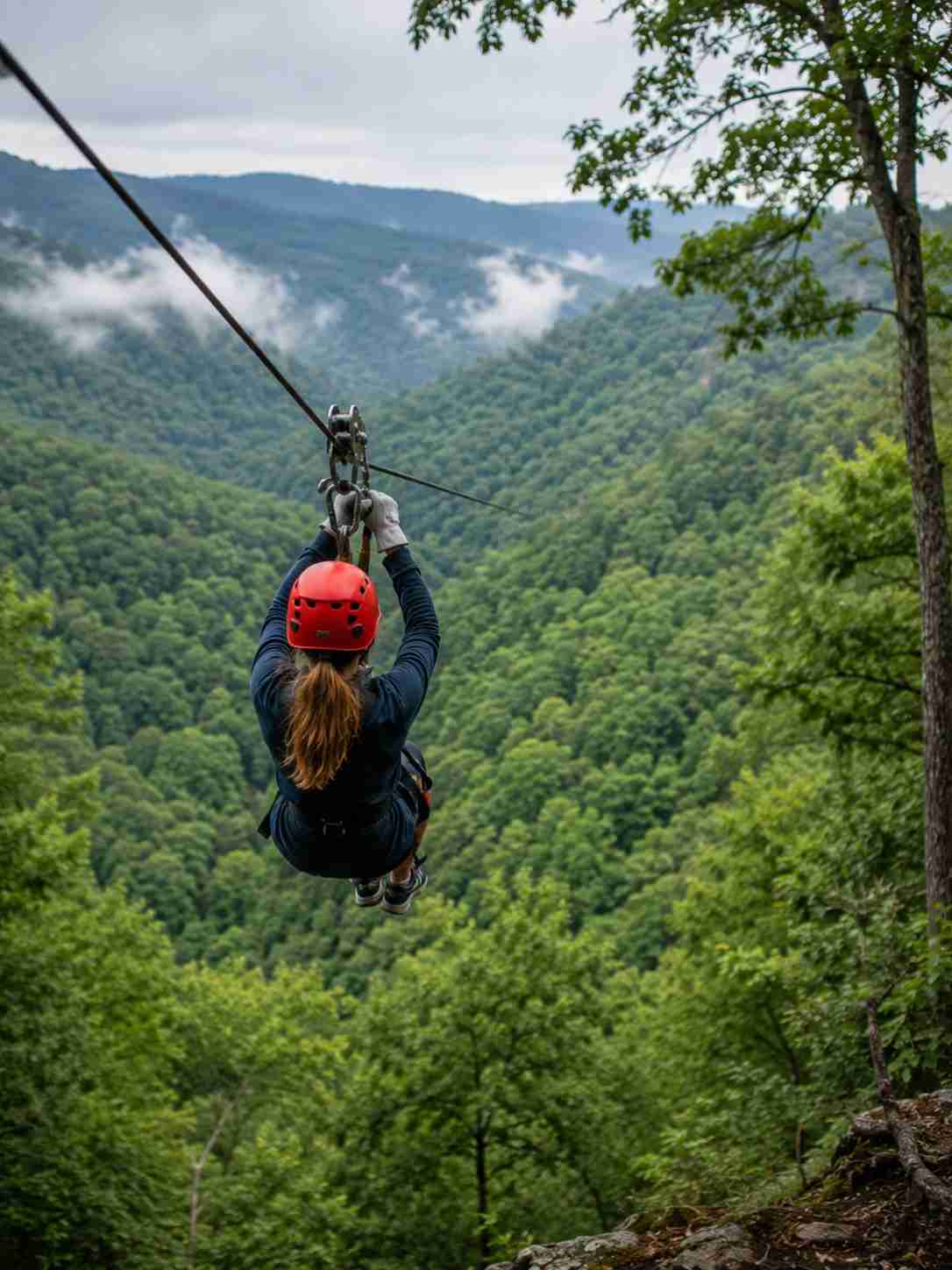
If you want to see the Great Smoky Mountains National Park from a genuinely different perspective — not from a trail, not from a pullout, but from a bird’s eye view — ziplining with CLIMB Works Smoky Mountains is the answer. I’ve done a lot of outdoor activities across the Eastern US and this one earns its reputation. The 2-hour guided tour covers a full circuit: an ATV ride to the launch point, 6 dual ziplines with breathtaking views across the ridgeline, a rappel descent, suspension bridges, and a floating staircase — all of it woven through nature with the park spread out below you. It’s genuinely Instagram-worthy, and the photo package they offer means you come home with pictures and videos worth sharing rather than blurry phone shots. This fits cleanly into a vacation package that bundles ziplining, rafting, and Anakeesta into one all-out Smoky Mountains adventure with lasting memories built in.
EXPLORING GATLINBURG & PIGEON FORGE
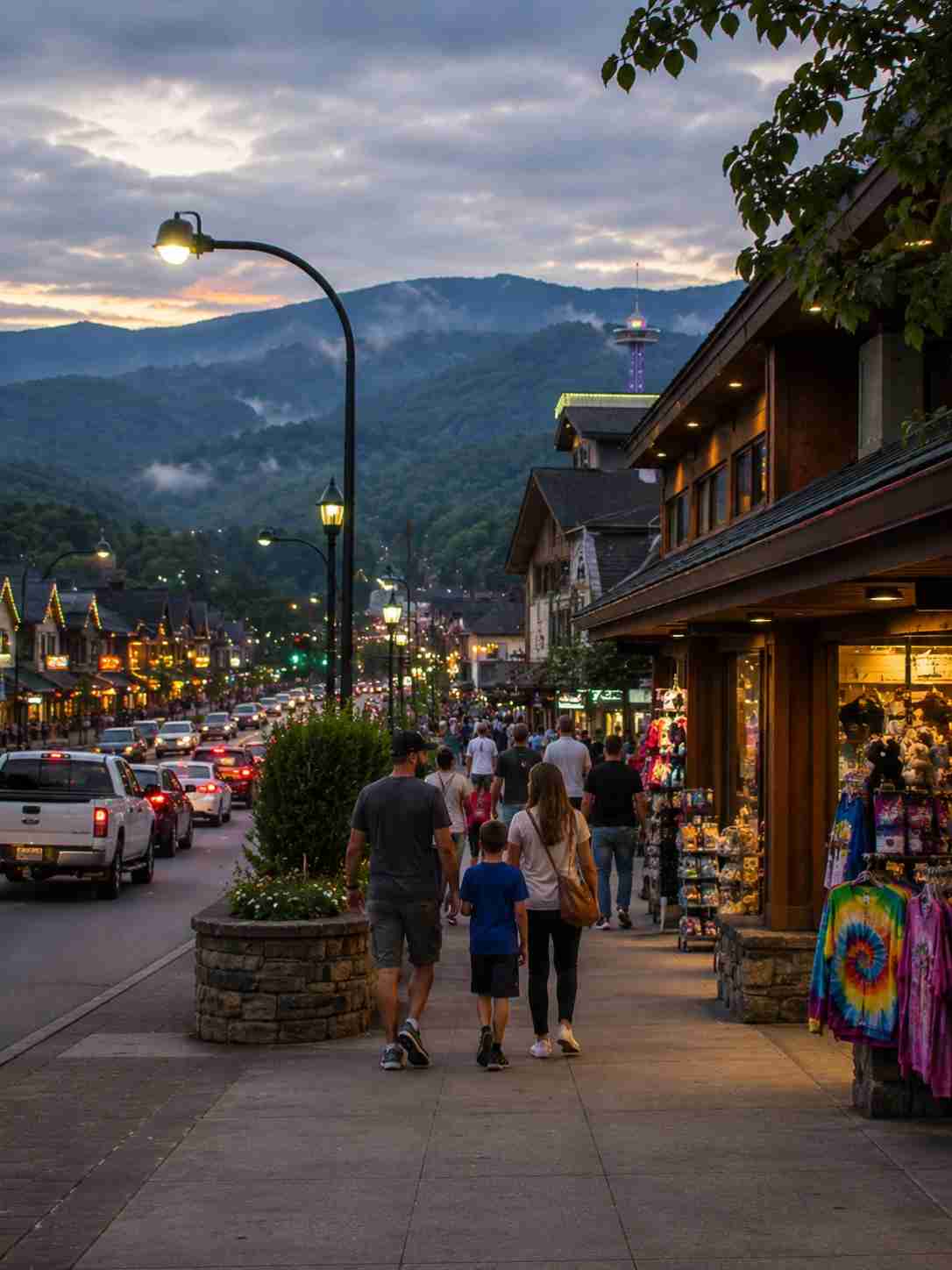
Both towns have real charm that’s easy to miss if you only sprint through them on the way to a trailhead. Pigeon Forge leans into attractions hard — mountain coasters, mini golf, go-kart racing, and a collection of unique museums that span everything from music history to illusion art. The Lumberjack Feud Supper Show and its attached Adventure Park is one of those rare things that genuinely works for every member of the family at once, and The Island in Pigeon Forge — that 23-acre stretch of over 80 shops, restaurants, and activities — can easily absorb an afternoon without you noticing. Gatlinburg operates on a different frequency. The historic art district behind the main strip holds hundreds of independent vendors, galleries, and local makers you won’t find anywhere else in the region. The big-ticket draws — SkyLift Park, Anakeesta, and Ober Gatlinburg — are all within walking distance of each other, but the quieter stretches between them are where the town actually lives. For meals, the full list worth knowing: The Old Mill, Ole Red, Blue Moose, Local Goat, Smoky Mountain Brewery, Crockett’s Breakfast Camp, Trish’s Mountain Diner, Doc’s 321 Cafe, and Greenbrier Restaurant each bring something different and none of them disappoints if you know what you’re ordering.
CADES COVE SCENIC DRIVE
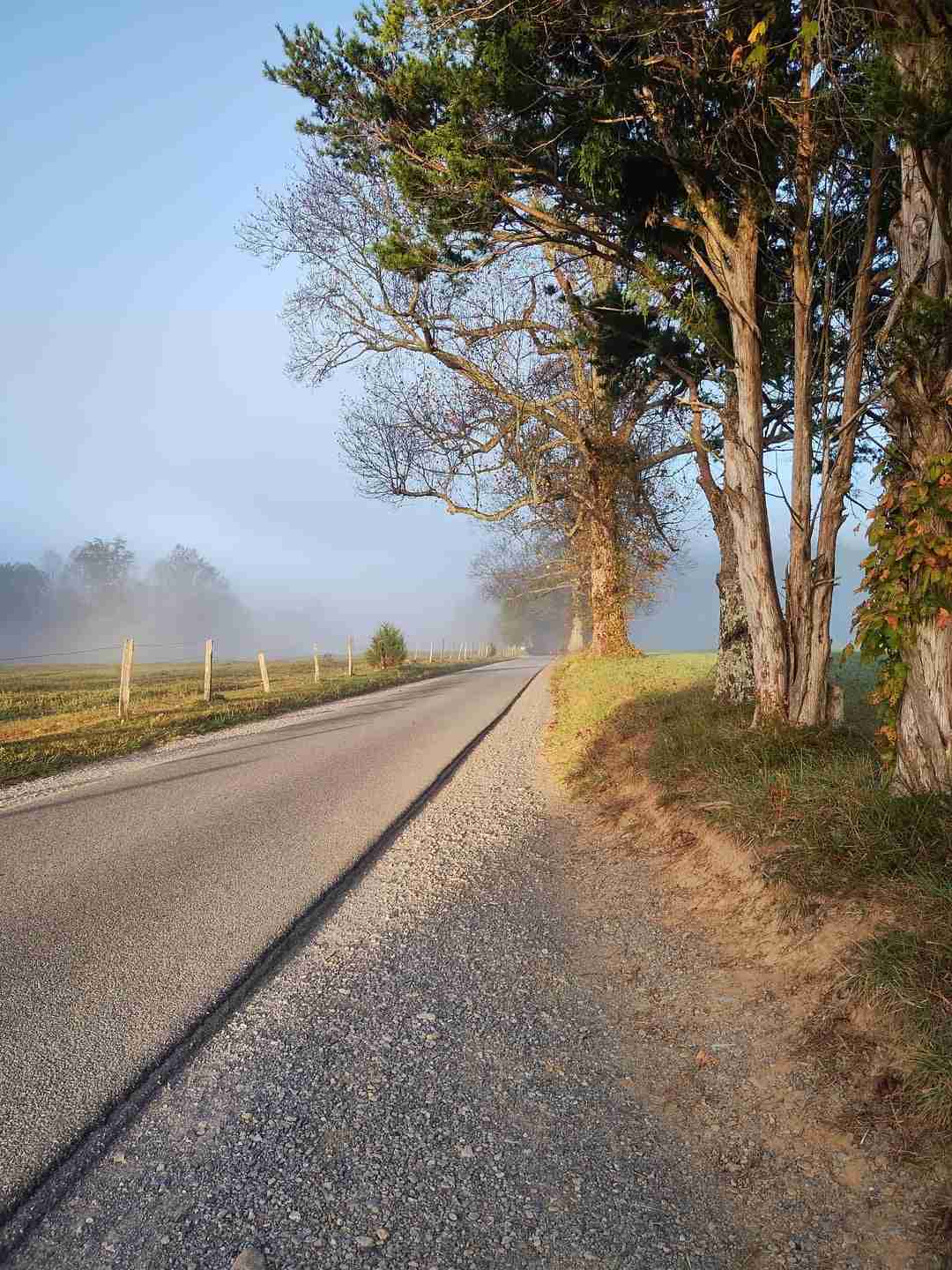
Of all the scenic drives in the Smokies, Cades Cove hits the hardest — and not just for the views. This 11-mile one-way road carries more Smoky Mountain history and culture per mile than anywhere else in the park, threading past historic sites, cemeteries, churches, and old settlements that predate the park by generations. The Wednesdays closure to automotive traffic from May through September turns it into a car-free haven for biking — pack your bikes if that version of the loop appeals to you, because it’s a genuinely different experience from the car. The road runs alongside the river for much of the loop with pull-off spots where you can picnic, tube in the shallows, or push off toward waterfalls on foot. Abrams Falls at the lowest elevation point of the park is the showstopper, with cascades that command attention. The Sinks along the Little River offers a gentler family-friendly picnic spot where the water pools into accessible swimming holes. Whether you’re renting a car or bringing your own car, you’ll want the wheels — the distance between stops makes walking the loop unrealistic. The 11-mile one-way loop earns its status as the best wildlife-viewing drive in the park after 3 PM, when light drops and movement picks up through the preserved log cabins, historic churches, and grist mills framing the valley. At 2.8 miles into the loop, the Missionary Baptist Church marks the turnoff for Hyatt Lane — a dirt cut-off road that most visitors skip entirely but where bear sightings are consistently higher than anywhere on the main loop. Review the NPS Black Bear Safety Guidelines before your visit and know what slowing down for wildlife actually looks like in practice. The rich history and culture woven through this single road make it the one stop on this itinerary I would never cut.
CLOSING / CONCLUSION
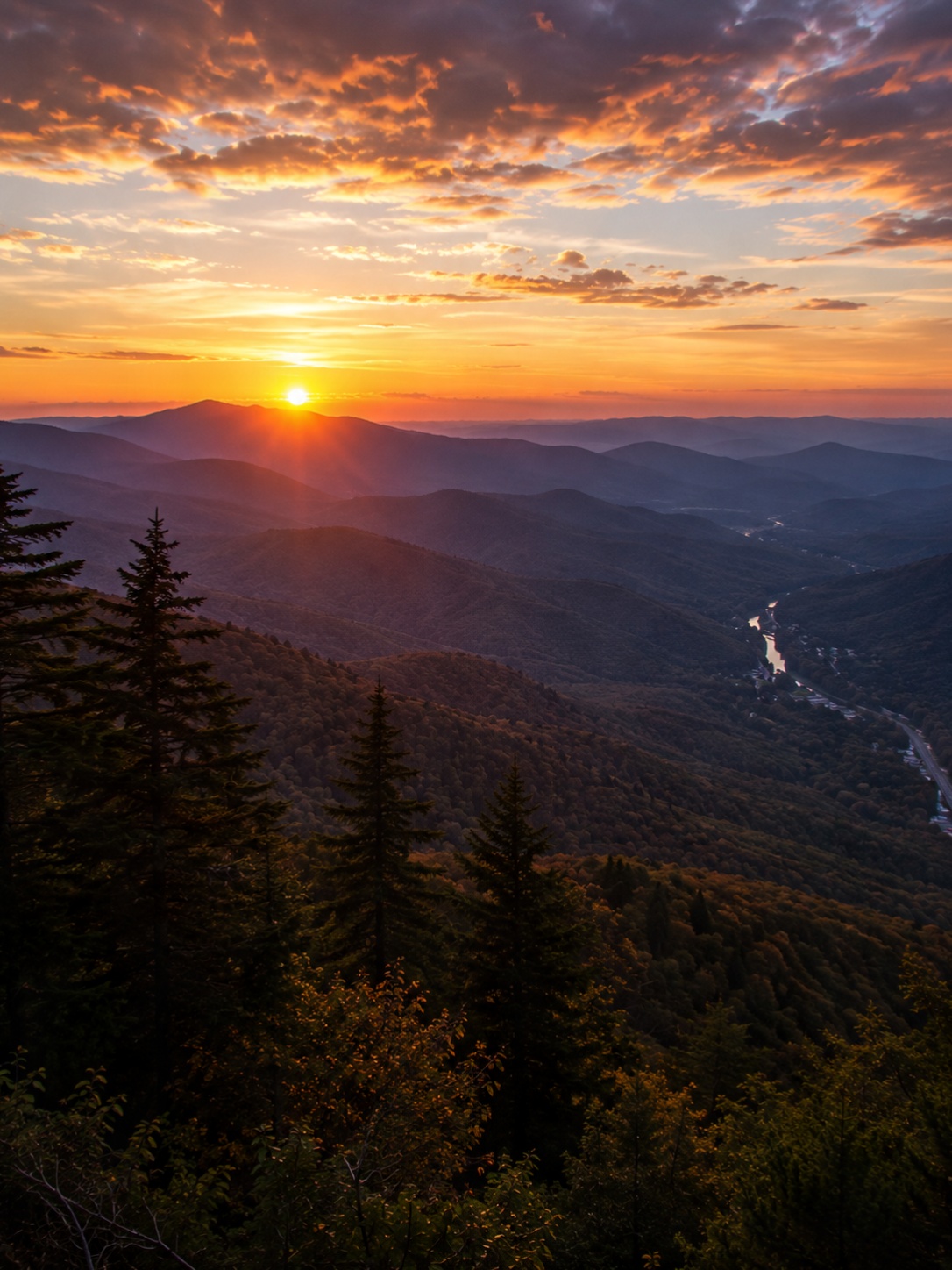
What I’ve watched travelers do wrong in the Smokies again and again is rush — chasing the next stop before they’ve actually absorbed the one they’re standing in. This place holds thousands of species of plants and animals across a biodiversity index that rivals much larger wilderness areas, and the beauty of it only registers when you slow down enough to notice. A 3-day itinerary that protects Saturday for serious park time, leans on Friday and Sunday for town experiences, and deliberately leaves one activity off the list will always outperform a packed schedule. Build your theme around what matters most — the hike, the food, the wildlife — and let the rest fill in around it. The balance between touristy activities, outings in nature, and moments to just relax is what separates a trip that leaves you restored from one that leaves you needing a vacation from your vacation. Whether you come once or multiple times — and most people who visit the Smokies do come back — this combination of park scenery, walkable mountain towns, and excellent cabin rentals within a 20-minute radius of the most visited national park in the country is genuinely hard to match anywhere in the Eastern United States. Appalachia has a way of pulling people back. Budget well, arrive early, watch the parking before 9:30 AM turns into the 8:45 AM scramble, and take the time to feel one with nature rather than racing past it. That’s the only thing worth appreciate-ing here.