22 carry on packing list one suitcase Exciting ideas
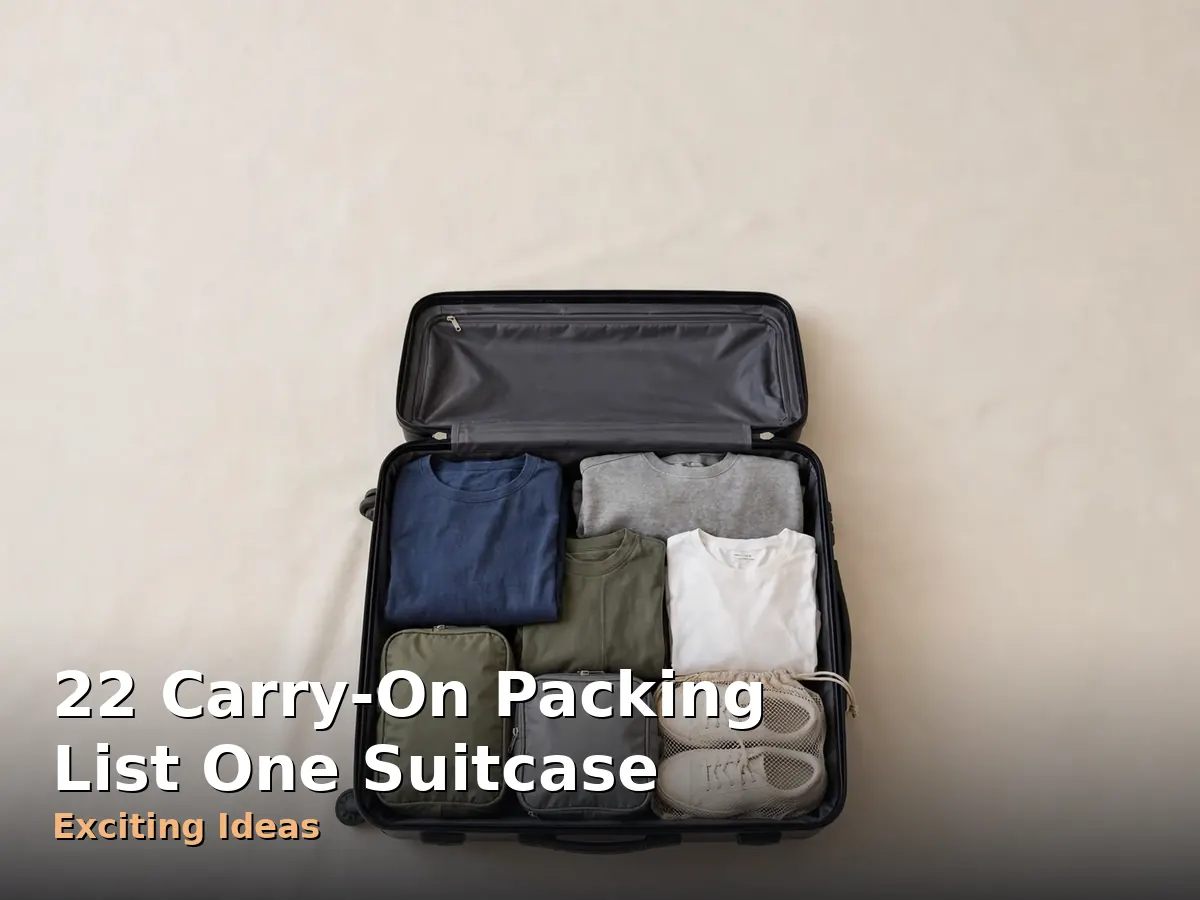
One suitcase. That is the whole system. Not one suitcase plus a bursting tote, a duty free bag and a coat over your arm, but a single carry-on size case that holds everything you need for a week, two weeks, or longer. This carry on packing list for one suitcase gives you exactly 22 items, and, more importantly, the minimalist method behind them: a tight capsule wardrobe, items that each do two or three jobs, a laundry strategy that resets the list mid-trip, and a strict one-in-one-out rule that stops the case quietly refilling.
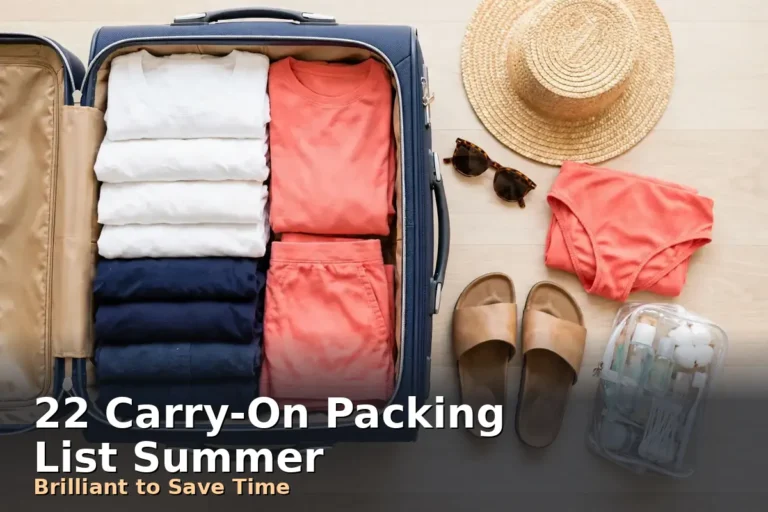
The list is season-neutral on purpose. Seasonal lists tell you what to pack for heat or for cold; this one teaches you how to choose, so the same 22 slots work all year. Swap the swimsuit for a thermal layer in January or the jacket for a lighter shell in July, and the structure does not change. Pack for about a week of clean clothes, wash once, and the same case covers a month.
One Suitcase at a Glance
- The bag: one carry-on size suitcase within your airline’s size limit, plus a slim personal item for the flight itself. Everything you own on the trip lives in the case.
- The clothes: 4 tops, 2 bottoms, 1 one-piece outfit, 2 layers, sleepwear, 5 underwear, 3 pairs of socks, 1 swimsuit, 2 pairs of shoes in total.
- The palette: two neutrals (for example navy and grey) plus one accent (for example olive). Every top must work with every bottom.
- The reset: one laundry stop or sink-wash session every 5 to 7 days. The list is a week that repeats, not a fortnight packed in advance.
- The discipline: one-in-one-out. Anything bought on the trip replaces something, or it does not come home in the case.
- The liquids rule: containers of 3.4 oz (100 ml) or less in one quart size bag at US checkpoints (TSA), with solid toiletries doing most of the work.
Before You Pack: One Suitcase Still Has to Fit the Rules
A minimalist list only works if the suitcase itself is legal cabin baggage on the airline you are flying. There is no single world standard: each airline sets its own maximum dimensions and, on many fares, its own weight limit, and low cost carriers are often stricter than legacy airlines. Check your airline’s baggage page shortly before you travel, and measure your case including wheels and handles.
As one named example, Delta’s official carry-on baggage page allows one carry-on bag plus one personal item, with the carry-on limited to 22 x 14 x 9 inches (56 x 35 x 23 cm) including handles and wheels, and 45 linear inches (114 cm) in total. Delta itself notes that partner airlines may apply different guidelines. Treat those numbers as an example of the shape of the rules, never as a promise about your flight.
What Goes Where: The Suitcase, the Personal Item, and Home
| Goes in the suitcase | Rides in the personal item | Stays at home |
|---|---|---|
| All clothing, both pairs of shoes minus the worn pair, toiletries, laundry kit, cubes | Documents, phone, power bank, earbuds, medication, the flight comfort kit | Single-use outfits, a third pair of shoes, full-size bottles, “just in case” duplicates |
| Anything you will not touch between security and your room | Anything you would need if the case were gate-checked | Anything you can buy cheaply at the destination if a real need appears |
The logic is simple. The suitcase is your wardrobe and bathroom cabinet. The personal item is your survival kit for the flight and for the unlikely day the case is taken at the gate. Everything else has to argue its way in, and in a one-suitcase system, most things lose the argument.
The One-Suitcase Rules: Five Principles Behind the 22 Items
1. One palette, no orphans. Choose two neutral colours and one accent before you choose a single garment. A piece that only works with one other piece is an orphan, and orphans are how a small case ends up holding fewer outfits than a smaller one. If a top cannot be worn with both bottoms, it does not make the list.
2. Every item passes the multi-use test. Ask of each slot: what is its second job? The scarf is also a blanket and a cover-up. The sleepwear is also loungewear. The day bag is also the shopping bag and the laundry run bag. Single-job items are not banned, but they have to be essentials, like a passport or a toothbrush.
3. Wear the bulk, pack the light. Your heaviest shoes, your jacket and your thickest layer travel on your body, not in the case. This one habit is worth several litres of space and is the reason the worn items are marked on the list below.
4. Laundry is part of the list, not an emergency. Pack a week, wash, repeat. The laundry kit in slot 15 is what turns 5 sets of underwear into a month of clean clothes. A trip without a wash plan needs a bigger bag; a trip with one does not.
5. One-in-one-out, no exceptions for souvenirs. The case leaves home full and comes home full. If you buy a shirt in Lisbon, a packed shirt becomes a donation, a layer you wear home, or post. Decide the rule before the first market, not at the till.
The Complete One-Suitcase Packing List: All 22 Items
Here is the full system. The 22 items are counted the way you pack them: a set or a kit counts as one slot, because it packs as one unit. Quantities are for a trip of a week or longer with one wash in every 5 to 7 days. Shorter trips can drop a top and a set of underwear; longer trips change nothing at all, because the laundry reset, not the calendar, sets the limit.
How the 22 Items Relate to the 5-4-3-2-1 Formula
Travellers often meet one-bag packing through the 5-4-3-2-1 formula. Be aware that the numbers mean different things in different versions: one common reading is 5 sets of socks and underwear, 4 tops, 3 bottoms, 2 pairs of shoes and 1 hat; another is 5 tops, 4 bottoms, 3 layers or dresses, 2 pairs of shoes and 1 accessory. The formula is a memory aid for the clothing core, not a law. This list keeps the spirit of it (a small set of clothes that all combine) and spends the remaining slots on the things formulas usually forget: the laundry kit, the charging kit and the organisation that makes the small wardrobe usable. For outfit-building in depth, our guide to Europe travel outfits and capsule wardrobe packing shows how a palette turns a handful of pieces into weeks of combinations.
1. Quick-dry tops (4)
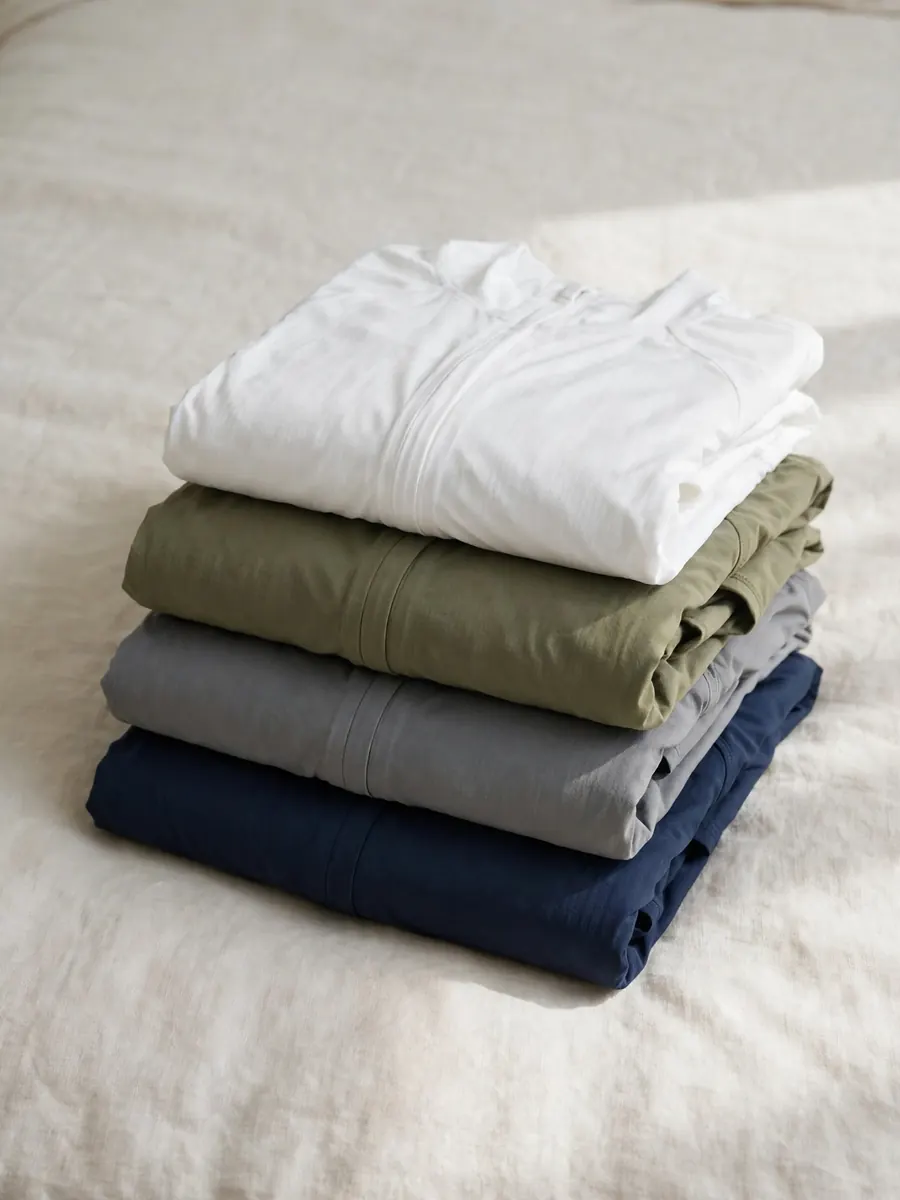
Four tops is the number that survives contact with real trips. Fewer and laundry day becomes a deadline; more and you are carrying spares for outfits you will never build. Choose fabrics that forgive a sink wash and an overnight dry: merino wool if your budget stretches to it, because it resists odour across several wears, or a decent synthetic blend that dries in hours. Mix the cuts so the four read as different outfits: one plain tee, one smarter shirt or blouse, one long-sleeved option for sun, modesty or cool evenings, and one accent piece in your third colour. Every one of them must work with both bottoms in slot 2, no exceptions.
Packing tip: roll the tops rather than folding them, and stand the rolls upright in a cube so you can see all four at a glance. A top you cannot see is a top you will not wear.
2. Bottoms (2)
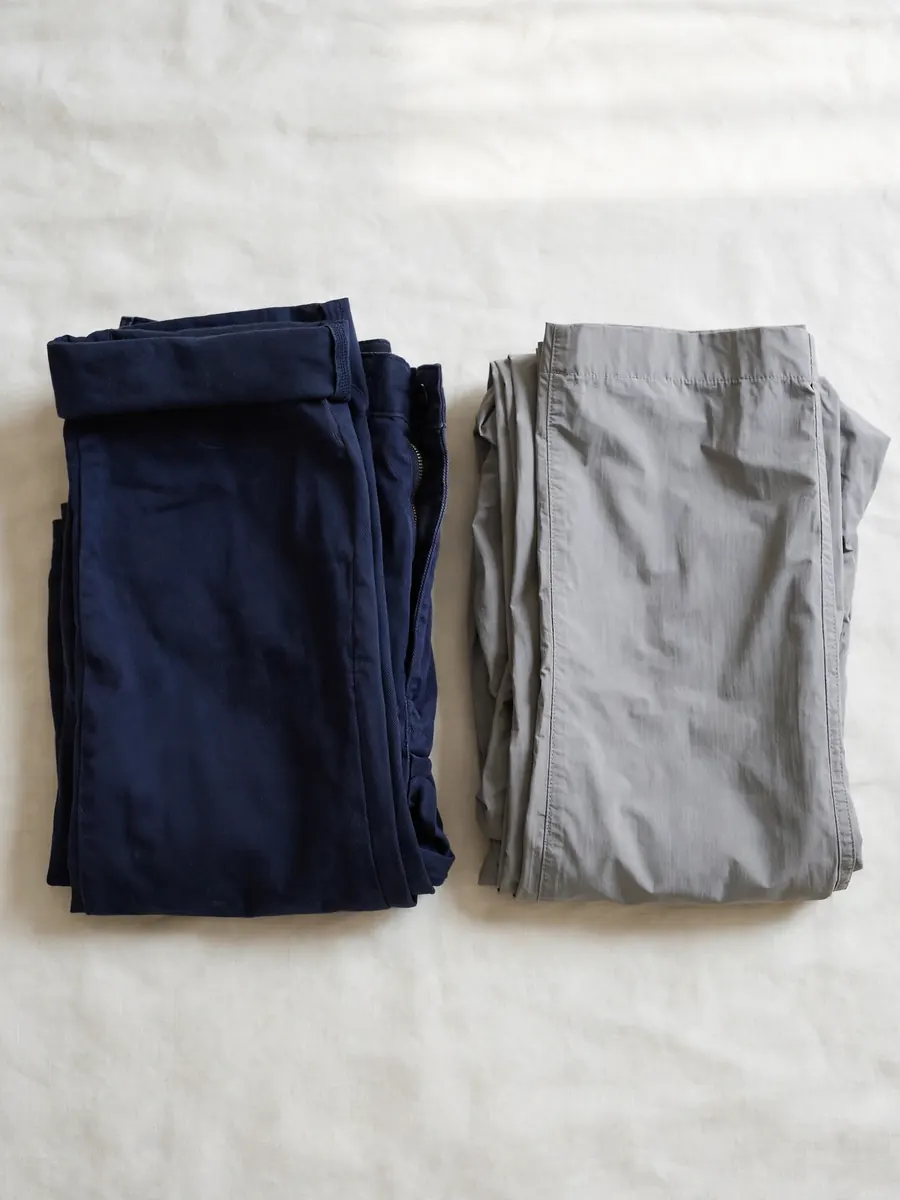
Two bottoms do the work of five when both are chosen properly. Bottoms are the heaviest clothing in the case and the slowest to dry, so this is the slot where minimalism pays the highest rent. Pick one darker, smarter pair that can sit down in a good restaurant, and one lighter, tougher pair for travel days and walking. Travel trousers in a nylon or polyester blend beat jeans on every measure that matters here: they weigh less, pack flatter, wash in a sink and dry overnight, while denim stays damp for days. Both pairs must accept every top and both pairs of shoes without a colour argument.
Packing tip: wear the heavier pair on the plane and pack the lighter one. If your trip mixes climates, make the packed pair the quick-dry one, because it is the pair you will wash most often.
3. One-piece outfit: a dress or jumpsuit (1)
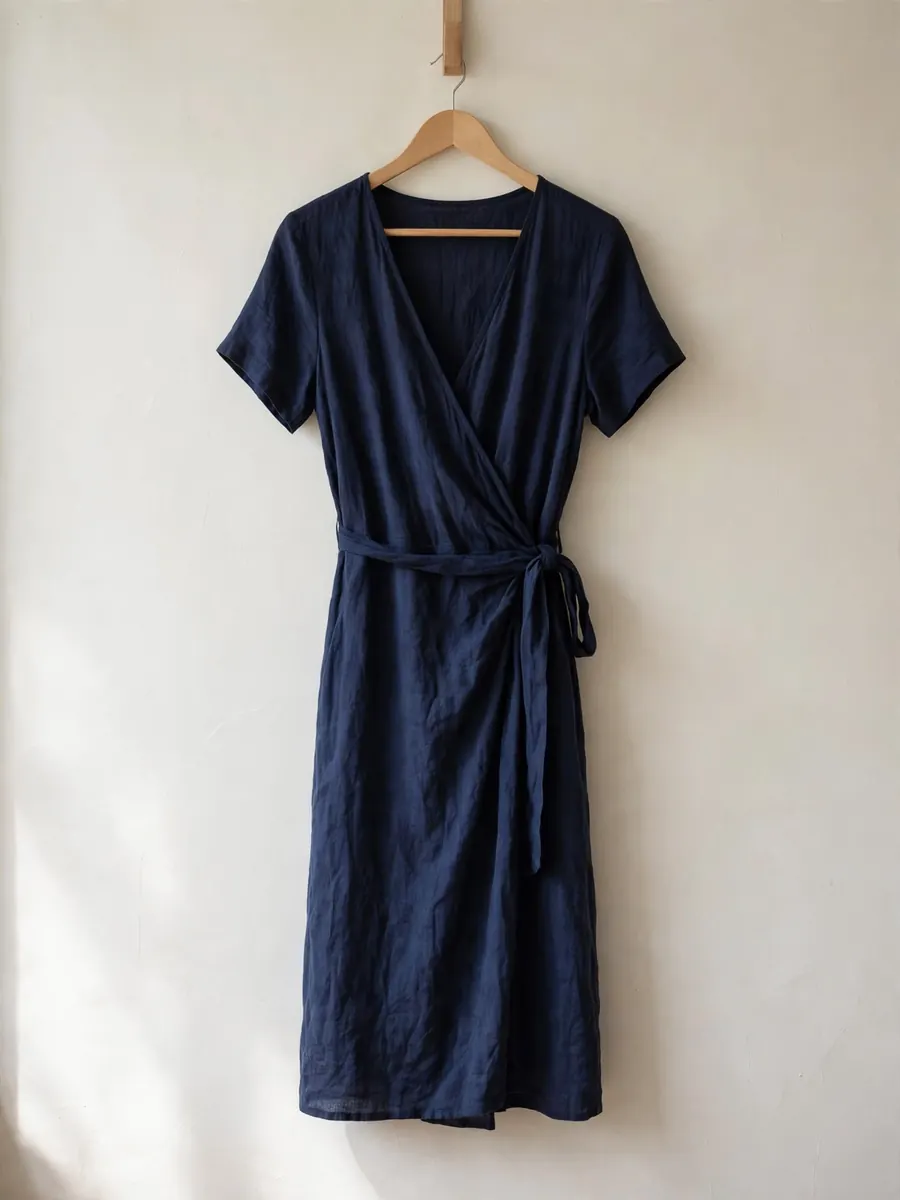
A one-piece outfit is the minimalist’s shortcut to looking deliberate. A wrap dress, a jumpsuit or an equivalent single garment gives you a complete, smarter look with zero matching decisions, which makes it the hardest-working slot on dress-up occasions: the nice dinner, the theatre, the photo you actually keep. Choose a fabric that shrugs off wrinkles and a cut that works with your packed shoes as well as your walking shoes, dressed up with the scarf from slot 11 or down with the mid-layer over it. If dresses are not your style, a coordinated two-piece in one fabric does the same job, as long as it reads as one outfit.
Packing tip: hang the one-piece outfit up the moment you arrive, ideally in a steamy bathroom while you shower. Ten minutes of steam does the work of an iron you did not pack.
4. Packable weatherproof jacket (1, worn to travel)
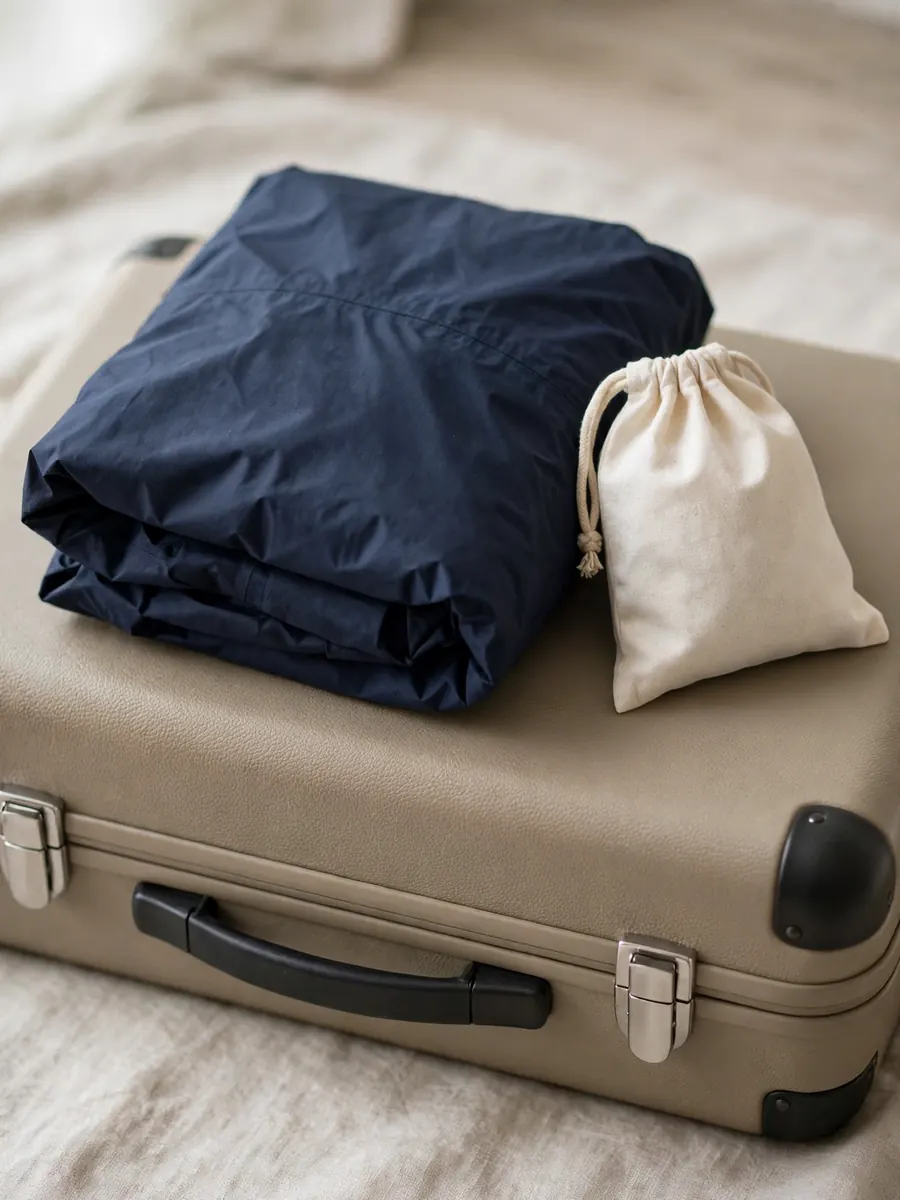
Weather is the classic excuse for a bigger bag, and this jacket is the answer to it. A lightweight waterproof shell that packs into its own pocket handles rain, wind and cold air-conditioning, and layered over slot 5 it covers a wide temperature range without a coat. It travels on your body or over your arm, so its packed size matters less than its versatility, but a jacket that stuffs down small also earns its keep on warm trips, disappearing into a corner of the case until the day the sky changes. Look for a hood, sealed-feeling zips and a length that covers the top of your trousers.
Packing tip: use the jacket pocket as your travel-day wallet for the things you reach for most at the airport. When the jacket comes off in a warm arrivals hall, everything is in one place.
5. Mid-layer: an overshirt, cardigan or light fleece (1)
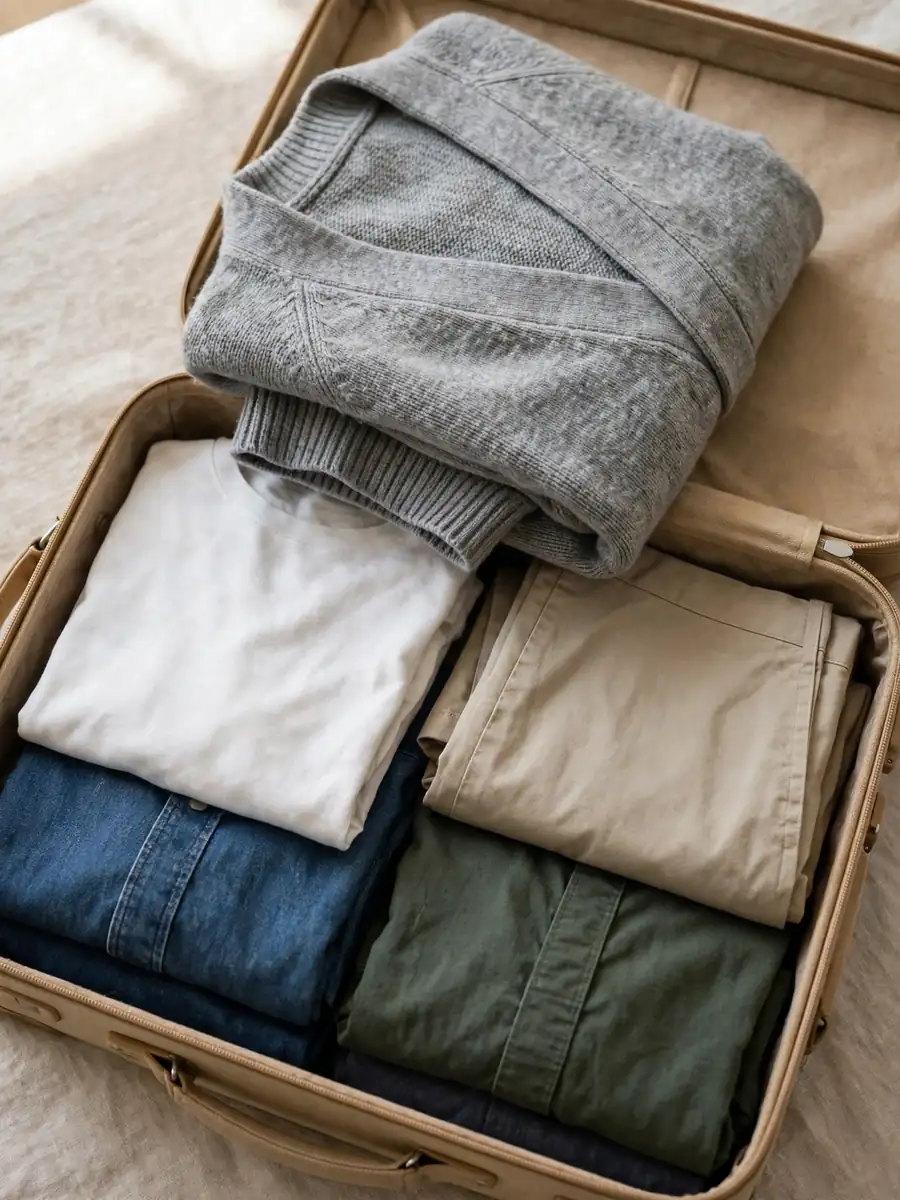
The mid-layer is the thermostat of the whole system. On its own it handles cool mornings and over-air-conditioned trains; under the shell from slot 4 it becomes genuine cold-weather kit; over a top it changes the outfit enough that repeats stop looking like repeats. Choose the version that suits how you travel: a cardigan dresses up more easily, an overshirt adds pockets and a casual structure, a light fleece wins on warmth per gram and dries fastest after a wash. One mid-layer is enough because it is worn or carried almost daily rather than rotated: it is the garment most likely to travel on your body next to the jacket.
Packing tip: pick a mid-layer in one of your two neutrals, never the accent colour. Layers sit over everything, so the layer has to agree with every top you own on the trip.
6. Sleepwear that doubles as loungewear (1 set)
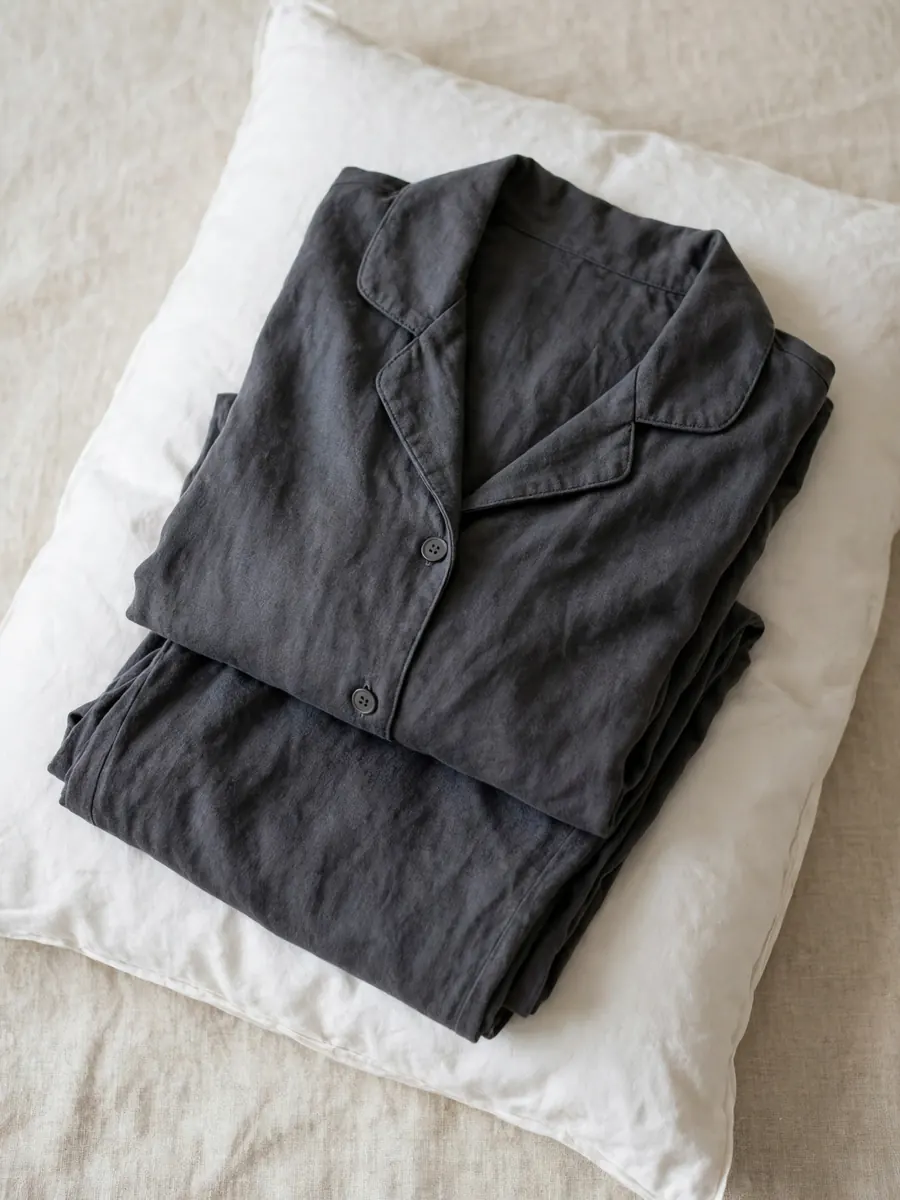
Sleepwear is where one-suitcase packing quietly wins or loses an evening. A dedicated pyjama set that only works in bed costs a slot; a soft top and relaxed trousers or shorts that also work for a hostel kitchen, a hotel corridor ice run or a lazy morning of trip admin cost the same space and do three jobs. Choose a fabric that feels decent against skin after a long day and washes as easily as your tops. Darker colours forgive the reality that this set will be worn every single night between washes. Travellers who sleep warm can make the set do even more by choosing pieces that pass as a casual day outfit in a pinch.
Packing tip: keep the sleep set in the same cube as your underwear. A fixed evening routine (change, wash the day’s smalls, hang them up) is the habit that keeps the whole laundry system running.
7. Quick-dry underwear (5)
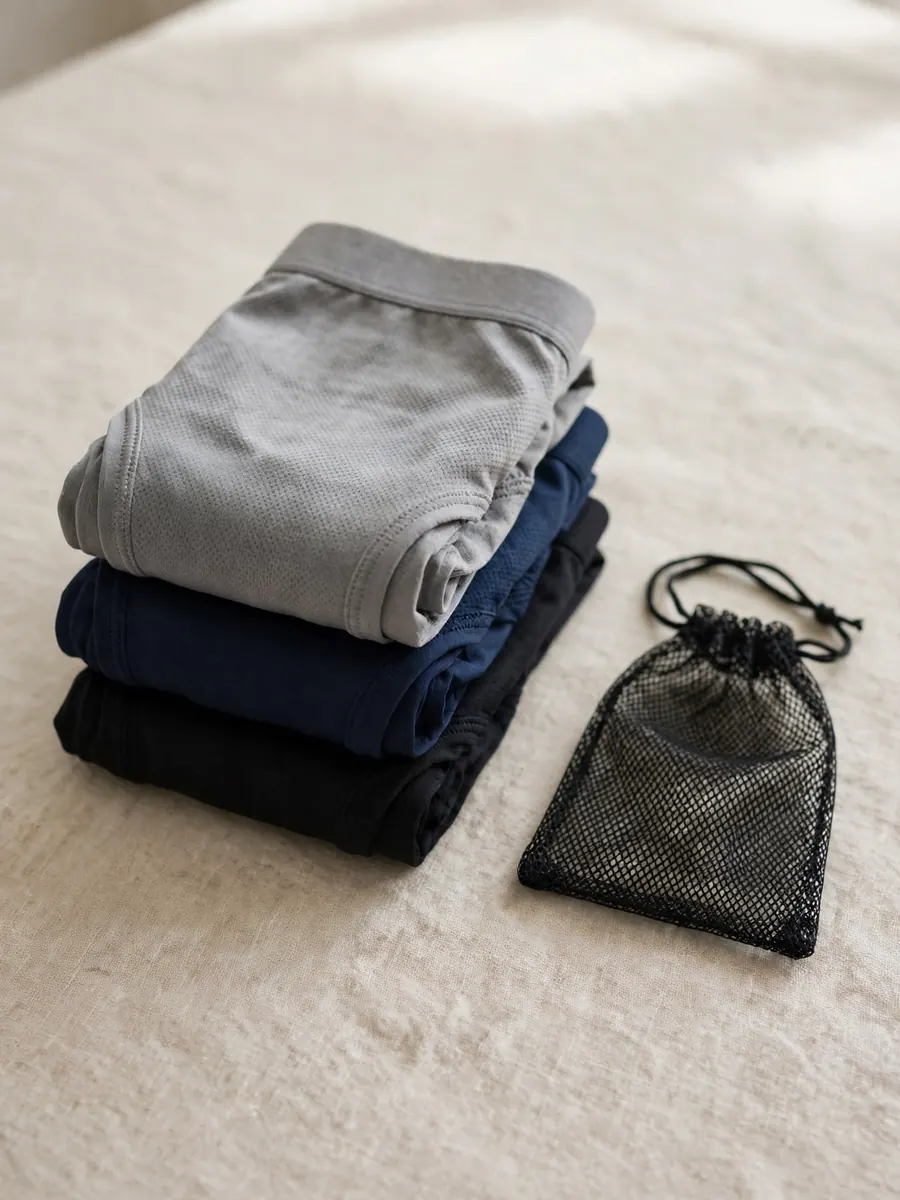
Five sets is the working number for a one-suitcase trip of any length, and the maths is the laundry strategy in miniature: one worn, a few in the case, one drying. The fabric matters more here than anywhere else on the list. Cotton underwear washed in a sink can still be damp two days later; synthetic or merino blends rinse clean in minutes and dry overnight on a line, which is what makes a five-set rotation honest rather than optimistic. This is also the slot where one-in-one-out hurts least and helps most, because underwear wears out on long trips and replaces easily anywhere in the world.
Packing tip: wash the day’s set each night as part of the evening routine rather than saving a big wash for later. Two minutes in the sink beats an hour at a laundromat queue you did not plan for.
8. Merino socks (3 pairs)
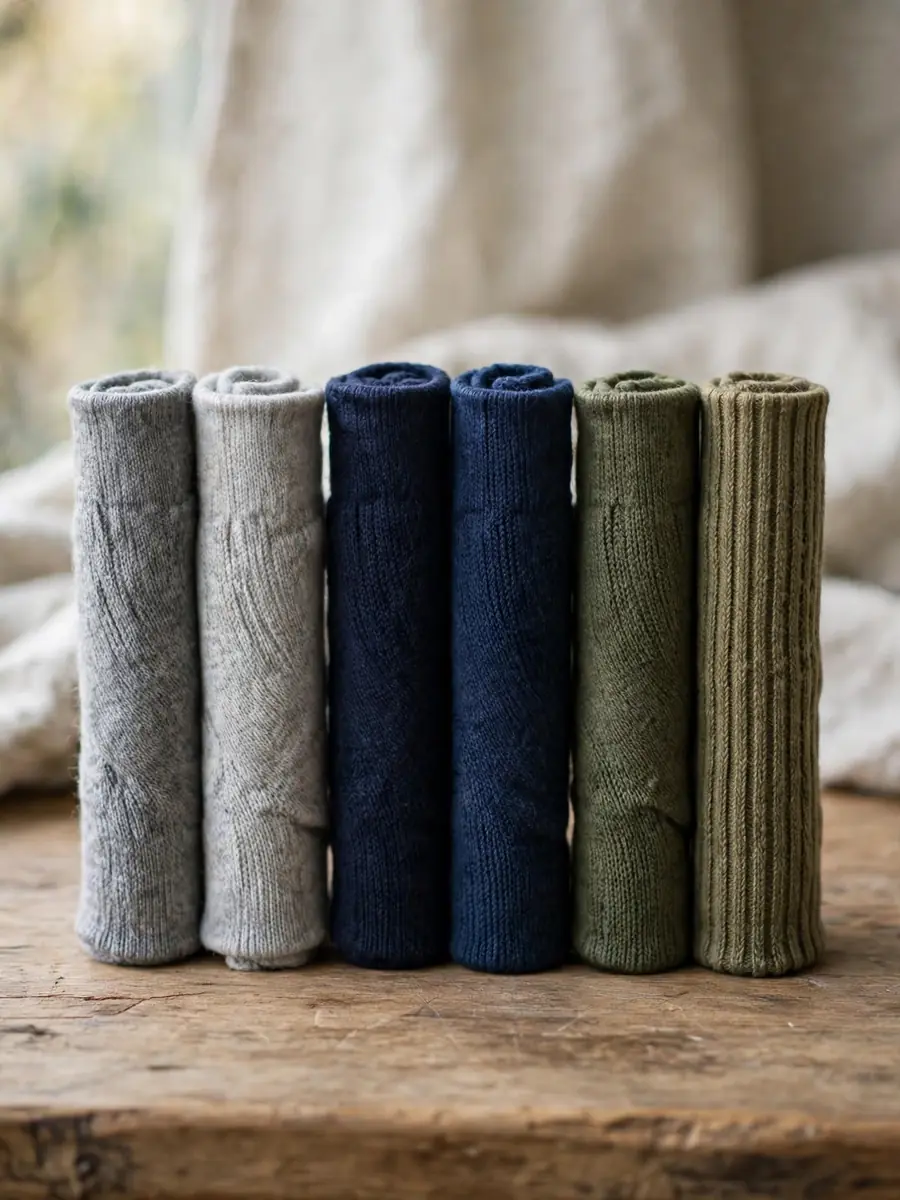
Three pairs of socks sounds like a misprint next to five sets of underwear, until you account for the fabric. Merino wool regulates temperature, resists odour far longer than cotton, and can be worn twice between washes without consequence, so three pairs cover the same ground as six cotton pairs at half the bulk. Choose a cushioned, midweight pair style that works with both your walking shoes and your second shoes, and keep the colours inside your palette so an odd sock showing under a trouser hem never clashes. Socks are also the system’s packing peanuts: nothing fills dead space better.
Packing tip: stuff rolled socks inside your packed second shoes. It holds the shoes’ shape, uses space that would otherwise travel empty, and keeps small items findable in the dark of an early start.
9. Walking shoes (1 pair, worn to travel)
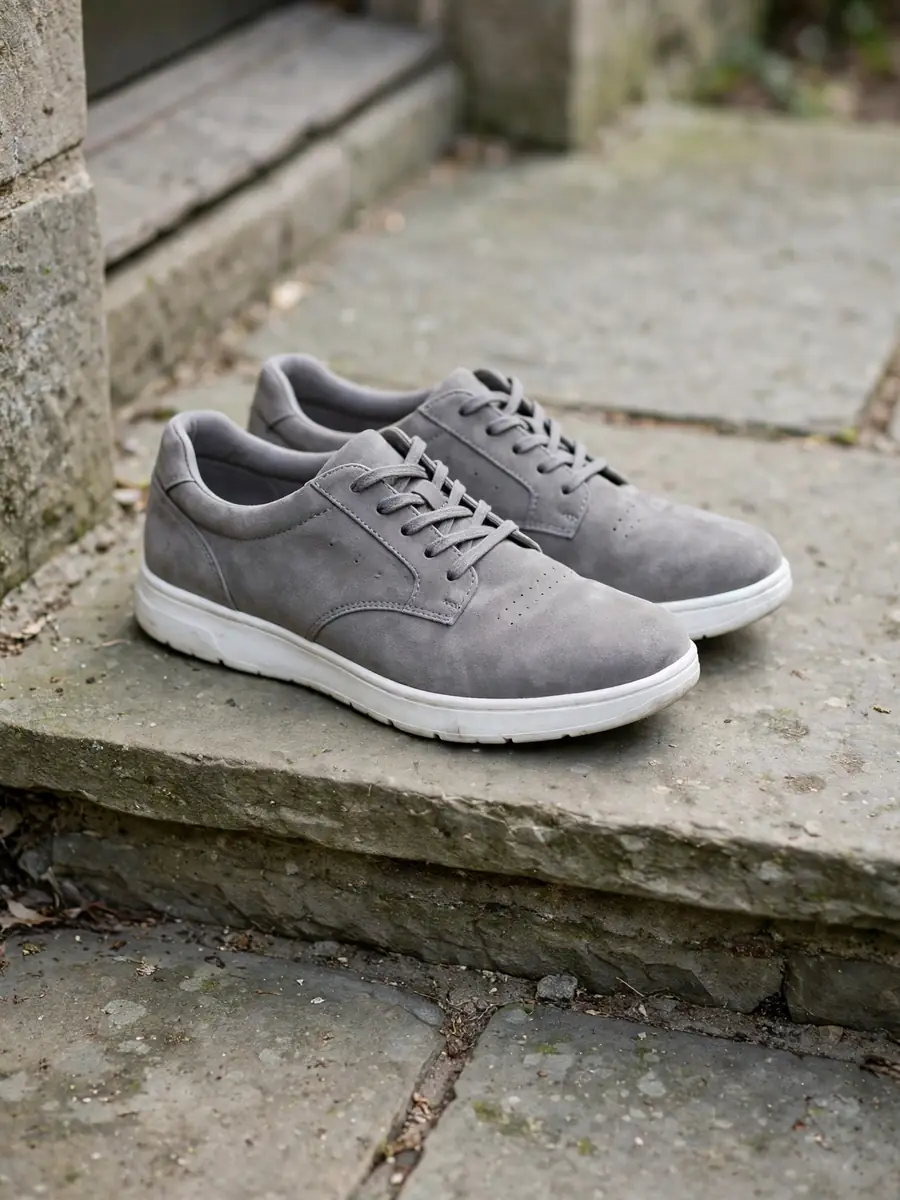
Your walking shoes are the foundation the whole list stands on, and in a one-suitcase system they are almost never in the suitcase: they travel on your feet, which is the single easiest space saving in this article. Choose the pair you can walk 20,000 steps in, on cobbles, in rain, without thinking about them, and break them in at home rather than on the trip. Plain, neutral styling matters more than travellers expect, because this pair will appear in nearly every outfit and almost every photo. A trail-leaning shoe handles countryside detours; a cleaner trainer handles cities and smarter rooms better. Pick for your itinerary, not for an imaginary one.
Packing tip: if rain is likely, treat the shoes with a proofing spray before you leave and pack a spare set of laces in the repair pouch. Wet shoes with no backup are the fastest way to break a two-shoe system.
10. Packable second shoes (1 pair)
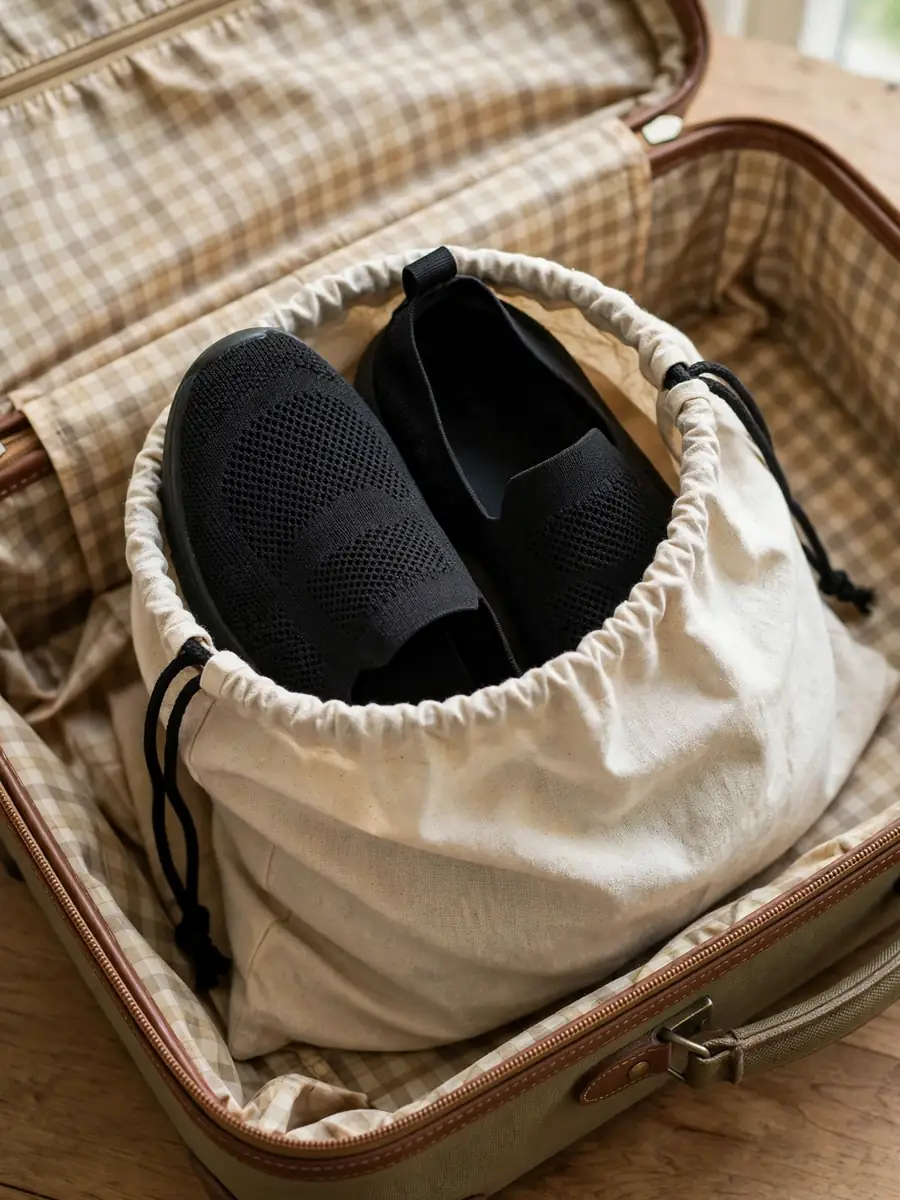
The second pair exists to give your feet, and your look, a change of register: lighter, smarter or more open than the walking pair, so that evenings and rest days do not have to happen in hiking trainers. The constraint is brutal and simple: they must pack nearly flat. Slip-ons, ballet flats, slim sandals or minimalist loafers pass; anything with a rigid heel counter and a thick sole is a third of a clothing cube spent on one occasion. This is also your insurance pair: if the walking shoes get soaked through, the trip continues while they dry. Two pairs total is the rule that every serious one-bag traveller converges on, because shoes are the bulkiest thing you own.
Packing tip: carry second shoes in their own bag or an old pillowcase, soles outward against the case wall. It keeps clean clothes clean and uses the flat edges of the case that cubes cannot fill.
11. A large scarf or wrap (1)
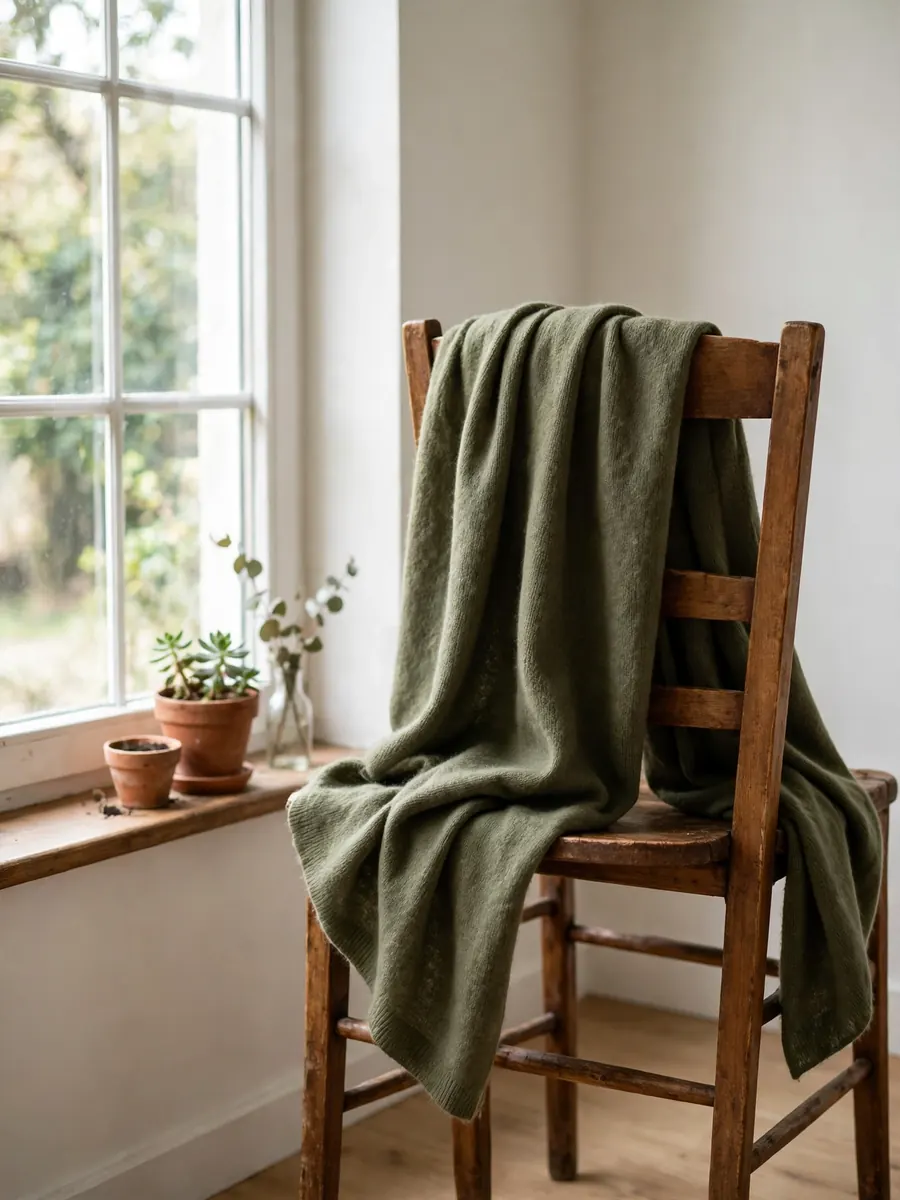
No item on this list has a longer job description than the large scarf. It is a blanket on a cold flight, a pillow cover on a night train, a wrap for bare shoulders in places of worship, a beach or park sitting cloth, an extra layer on a cold evening, a privacy screen on a bunk, and the one accessory that makes a repeated outfit look different in photos. Choose the largest, lightest one you can find in a fabric that folds to almost nothing, in your accent colour or a soft pattern that hides marks. In cooler seasons, swap in a warmer wrap and it partly replaces a third layer you did not pack.
Packing tip: keep the scarf at the top of the case or in your personal item rather than buried in a cube. It is the item you will reach for most often in transit, usually before you have anywhere to unpack.
12. Swimsuit (1)
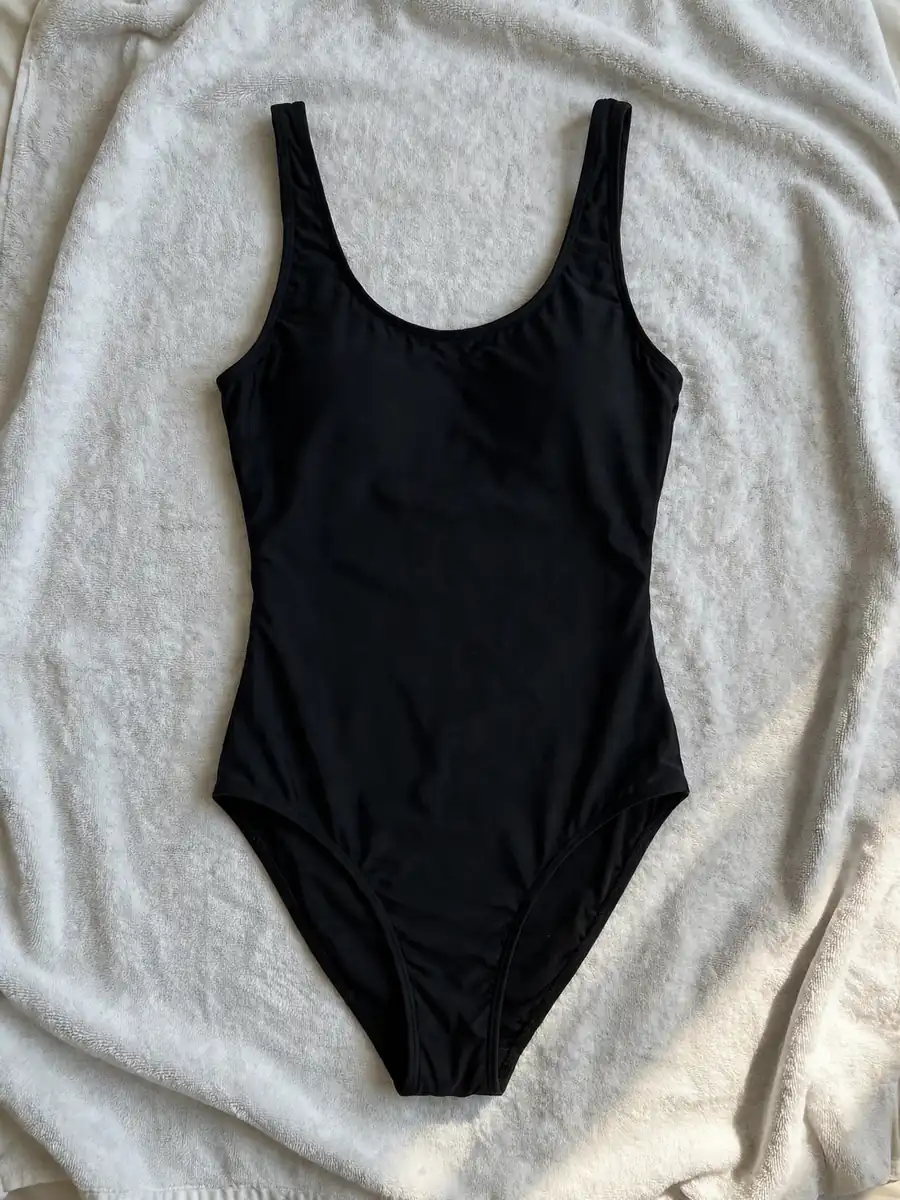
A swimsuit earns its slot even on trips that are not beach trips, because water turns up everywhere: hotel pools, thermal baths, lakes, saunas, a host’s hot tub, an unplanned coastline on a free afternoon. It weighs almost nothing, rolls into a fist-sized ball, and is the item most likely to be expensive or hard to replace well at short notice in your size. One is enough with the laundry rhythm: rinse it the same evening, hang it with the day’s wash, and it is dry by morning. If your trip is firmly inland and winter-bound, this is the slot to convert, into a thermal base layer or a proper hat and gloves, using the same one-in-one-out logic.
Packing tip: roll the swimsuit inside the dry bag from the laundry kit. On the way home, a still-damp swimsuit travels sealed, and nothing else in the case pays for your last-morning swim.
13. Solid toiletries kit (bars and tablets)
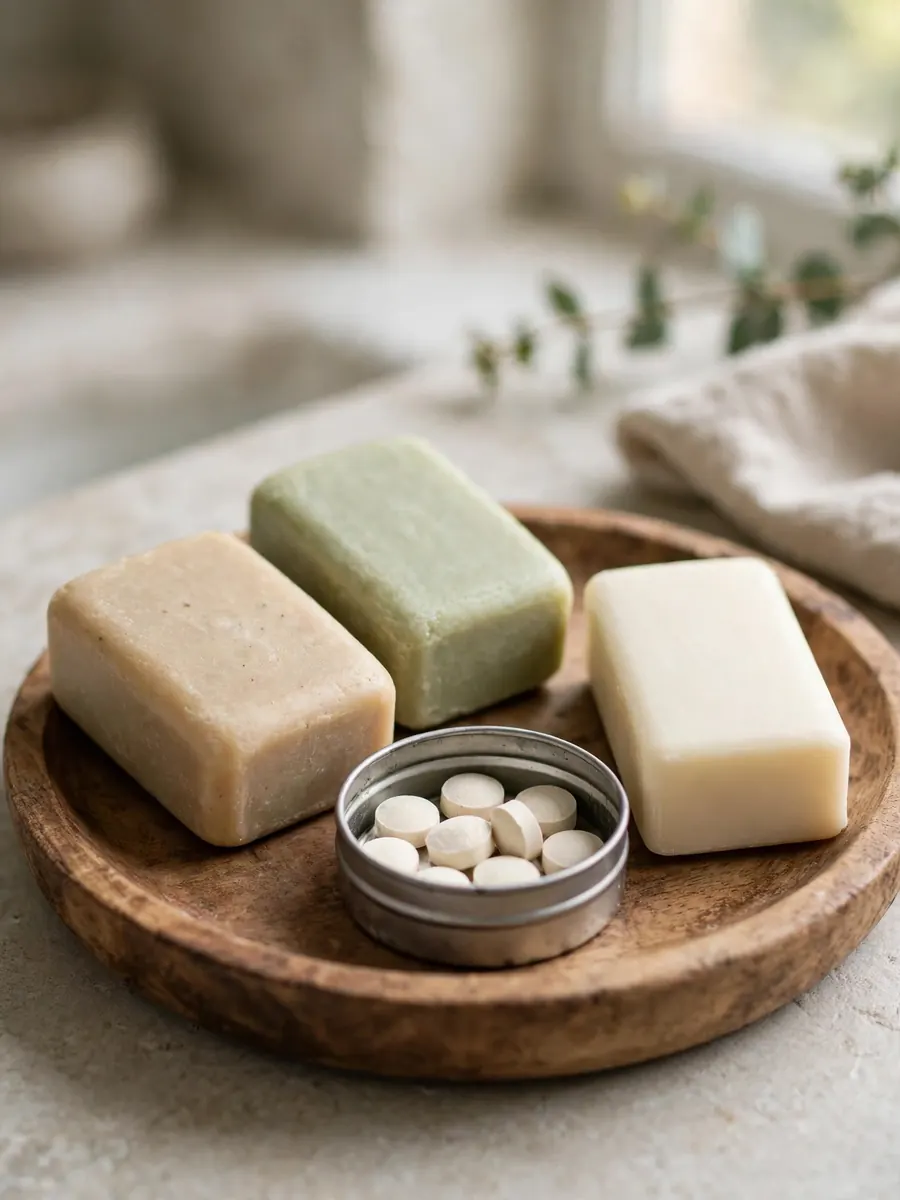
The solid toiletries kit is the quiet revolution inside one-suitcase travel. A shampoo bar, a conditioner bar if you use one, a bar of soap and a small tin of toothpaste tablets replace four bottles, never leak, never count towards your liquids limit, and last far longer than travel-size bottles. Under the TSA liquids, aerosols and gels rule, only liquids, gels, creams and pastes are restricted at US checkpoints, at 3.4 ounces (100 ml) or less per container; solids simply are not part of that count. The kit also survives the worst day in travel: a bottle can burst in a hot case, a bar cannot.
Packing tip: give bars a drying routine, a drained tin or a mesh bag hung up after each use. A solid kit that lives wet turns to mush in a week, and the savings disappear with it.
14. Quart-size liquids bag (essentials only)
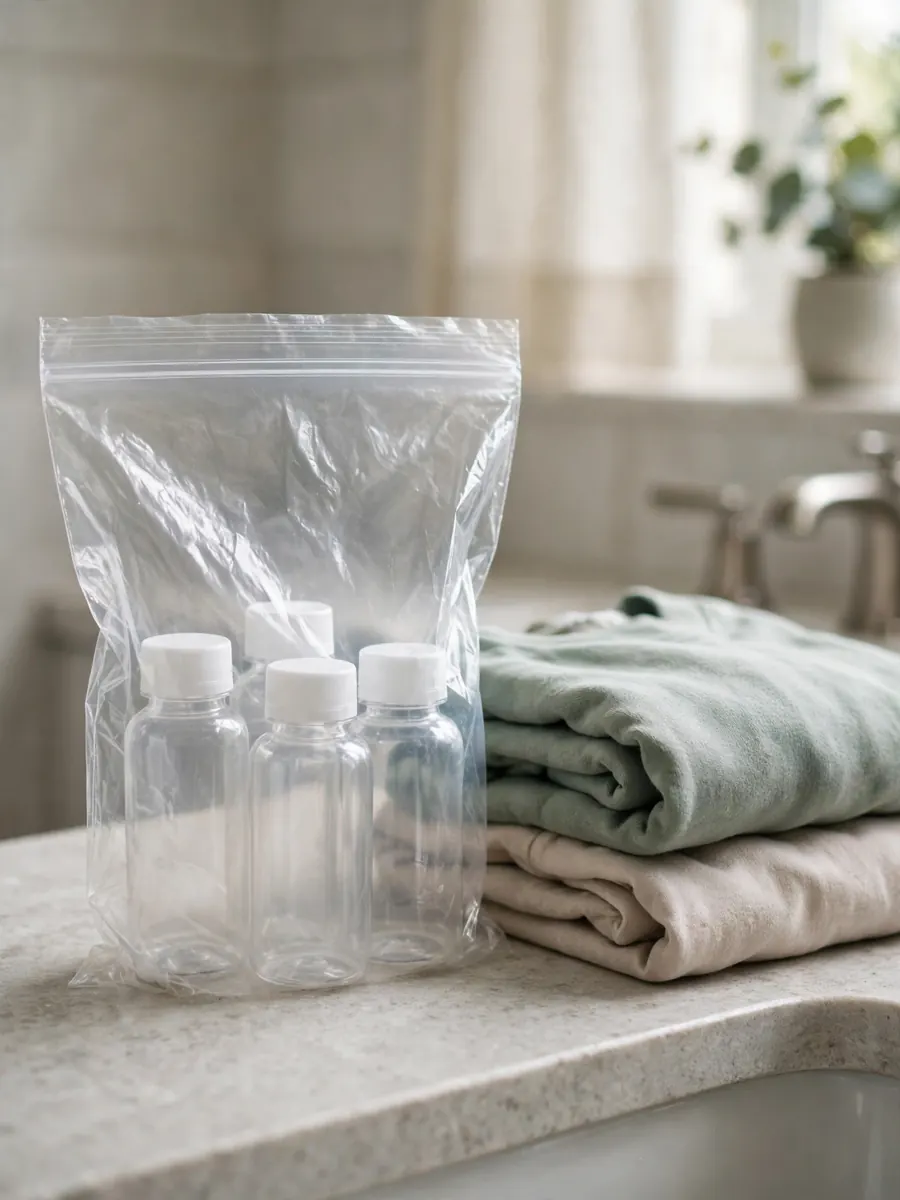
Some things only come as liquids: sunscreen, a moisturiser your skin trusts, contact lens solution, medication in liquid form. Those go in one quart-size clear bag, the format the TSA rule describes for US checkpoints, with every container at 3.4 ounces (100 ml) or less. The minimalist discipline is in the word “only”: if a product exists in solid form, it belongs in slot 13, not here. A half-empty quart bag is a sign the system is working. Decant into small plain containers rather than buying minis of everything, and refill from full-size products at home between trips instead of accumulating a drawer of travel bottles.
Packing tip: pack the liquids bag last, in the case’s outside pocket or at the very top. At security it has to come out; a bag you can reach without unpacking your wardrobe is a queue you move through calmly.
15. Laundry kit (soap sheets, clothesline and a dry bag)
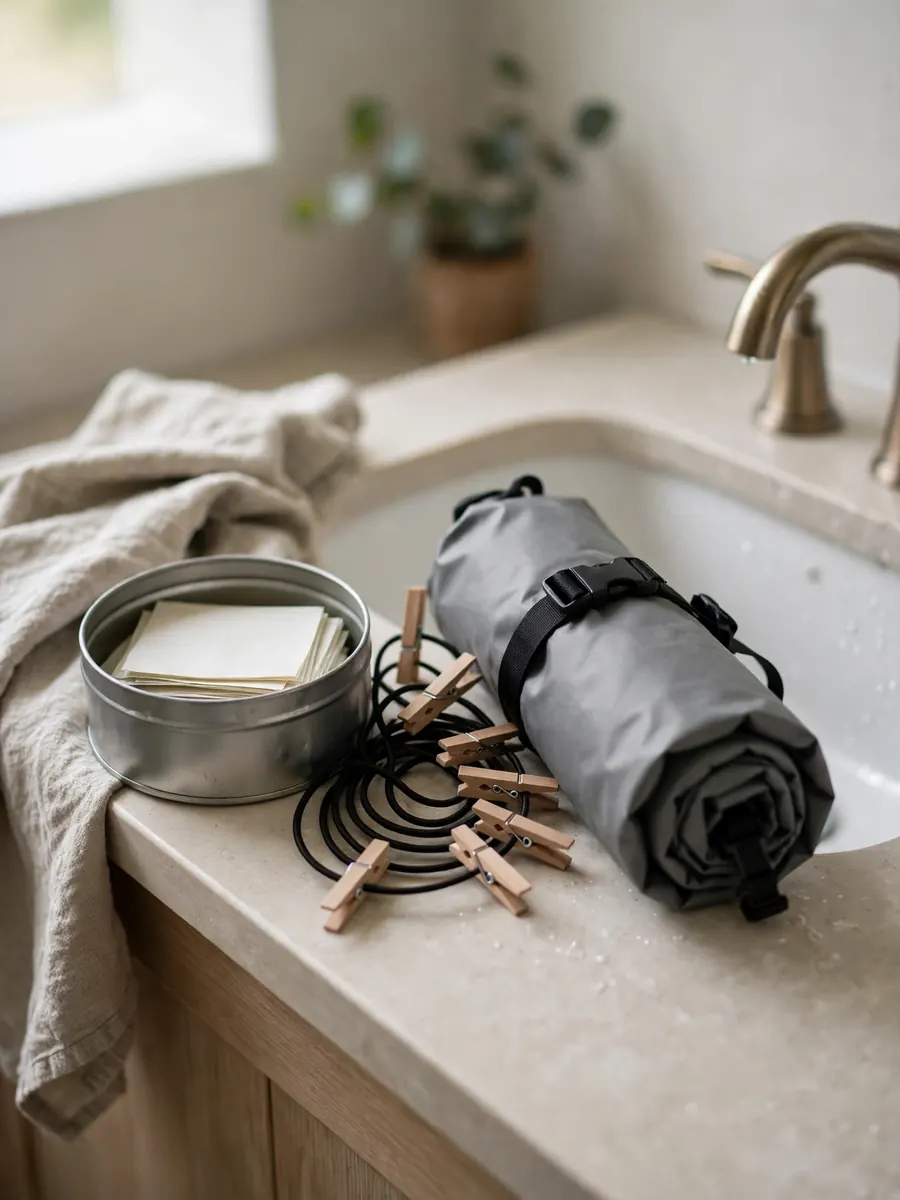
This small kit is the engine of the entire article, the reason 22 items can cover a trip of any length. It has three parts. Laundry soap sheets weigh almost nothing, cannot spill, and are not liquids, so they sail through security; a few sheets handle a sink wash. An elastic travel clothesline with loops or suction cups strings up over almost any bath or balcony. And a lightweight dry bag works triple duty: it is the wash tub for soaking, the laundry sack for separating worn clothes inside the case, and the waterproof for anything damp or valuable on a boat, beach or rainy day. Together they take less space than one extra outfit.
Packing tip: wash little and often, in the dry bag itself. Fill it, add a sheet and warm water, roll the top closed and knead for a few minutes; it beats a sink for smalls and uses far less water.
16. First aid and repair pouch (small)
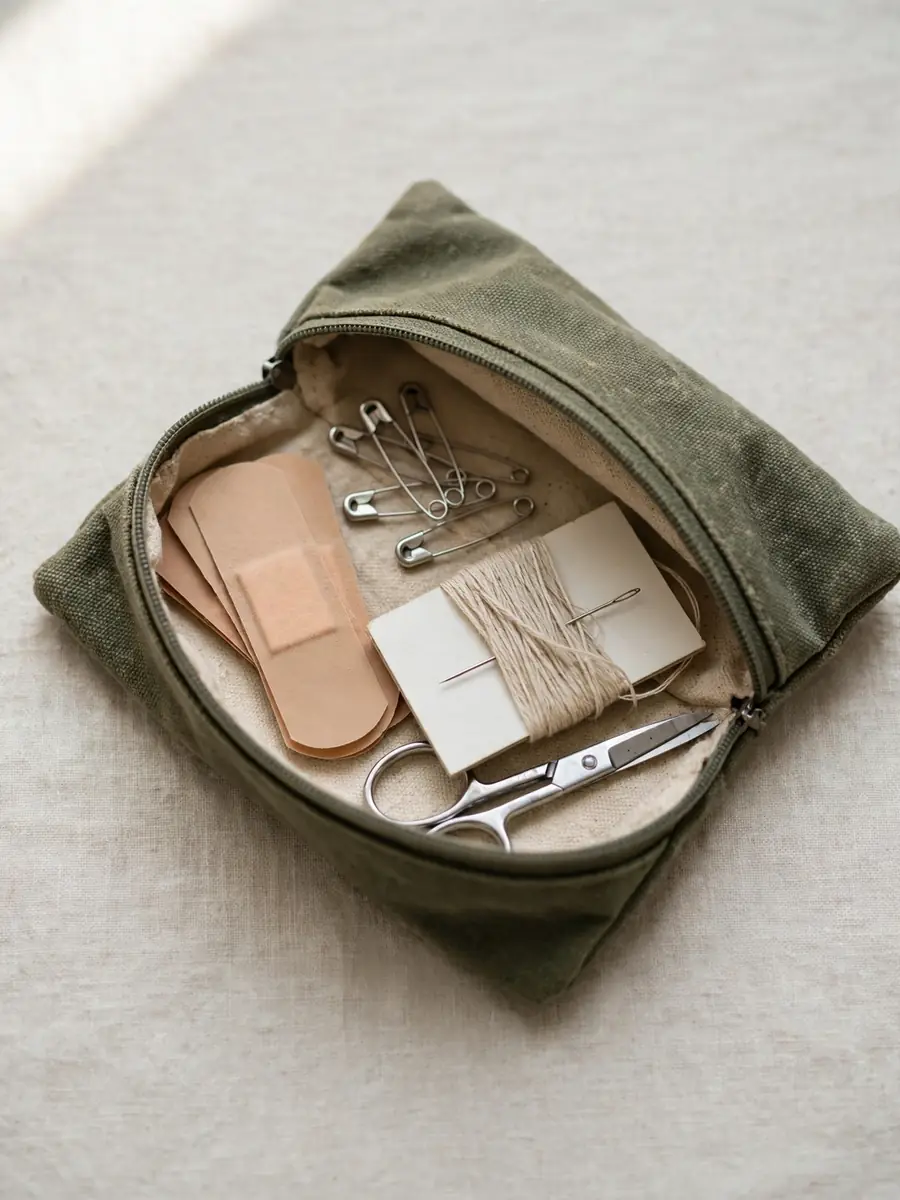
In a bigger bag, a first aid kit can afford to be a pharmacy. In one suitcase, it has to be a pouch with a strict editor: plasters in two sizes, blister plasters specifically, a few painkillers, any personal medication, antiseptic wipes, and then the repair half that most people forget: safety pins, a needle with two colours of thread, and a spare button. The repair items weigh grams and rescue outfits, which matters enormously when you only own seven. Medication rules vary by country and prescription items deserve checking before you fly; anything liquid also counts in the quart bag at security unless an exemption applies, as the TSA page notes for medications.
Packing tip: restock the pouch at home after every trip, the day you unpack. A minimalist kit that quietly empties itself is a kit that fails on the one evening a blister meets new cobbles.
17. Universal charging kit (one charger, one multi-head cable)
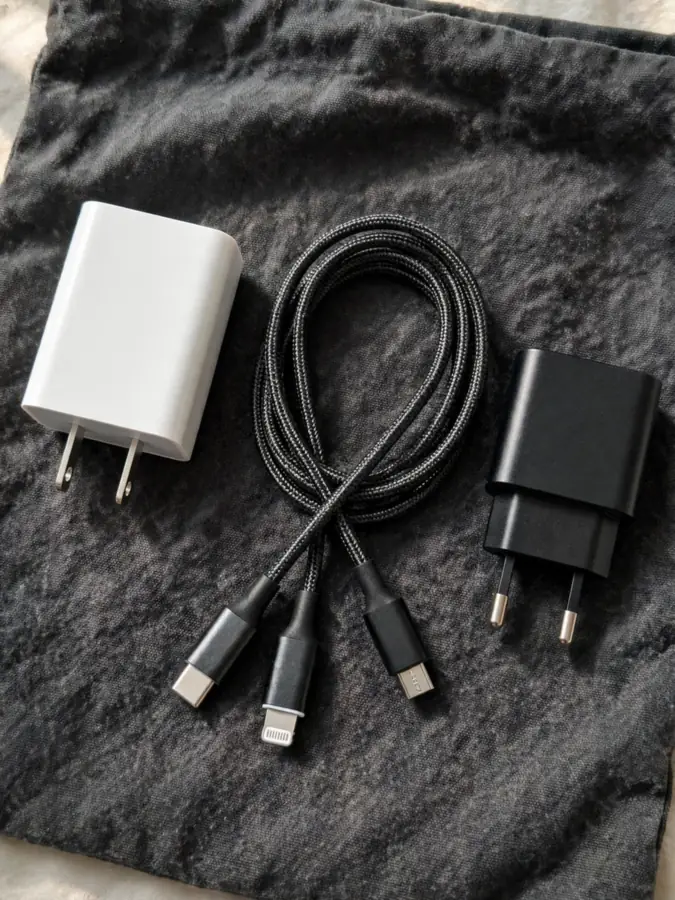
The tangle of chargers is where minimalist packing goes to die, so this kit is deliberately boring: one wall charger with enough output for your hungriest device, one braided multi-head cable that ends in the two or three connectors your devices actually use, and, for international trips, one universal adapter rather than a bag of country plugs. Everything else you own charges from those, in sequence, overnight. Audit your devices before the trip and be ruthless: the camera charger, the spare cable and the just-in-case hub are how a 200 gram kit becomes a kilogram. If two devices share a connector, they share a cable, and they take turns.
Packing tip: keep the whole kit in one small pouch that lives in your personal item, not the case. A gate-checked suitcase should never be able to strand you with a dying phone and no way to charge it.
18. Power bank (1)
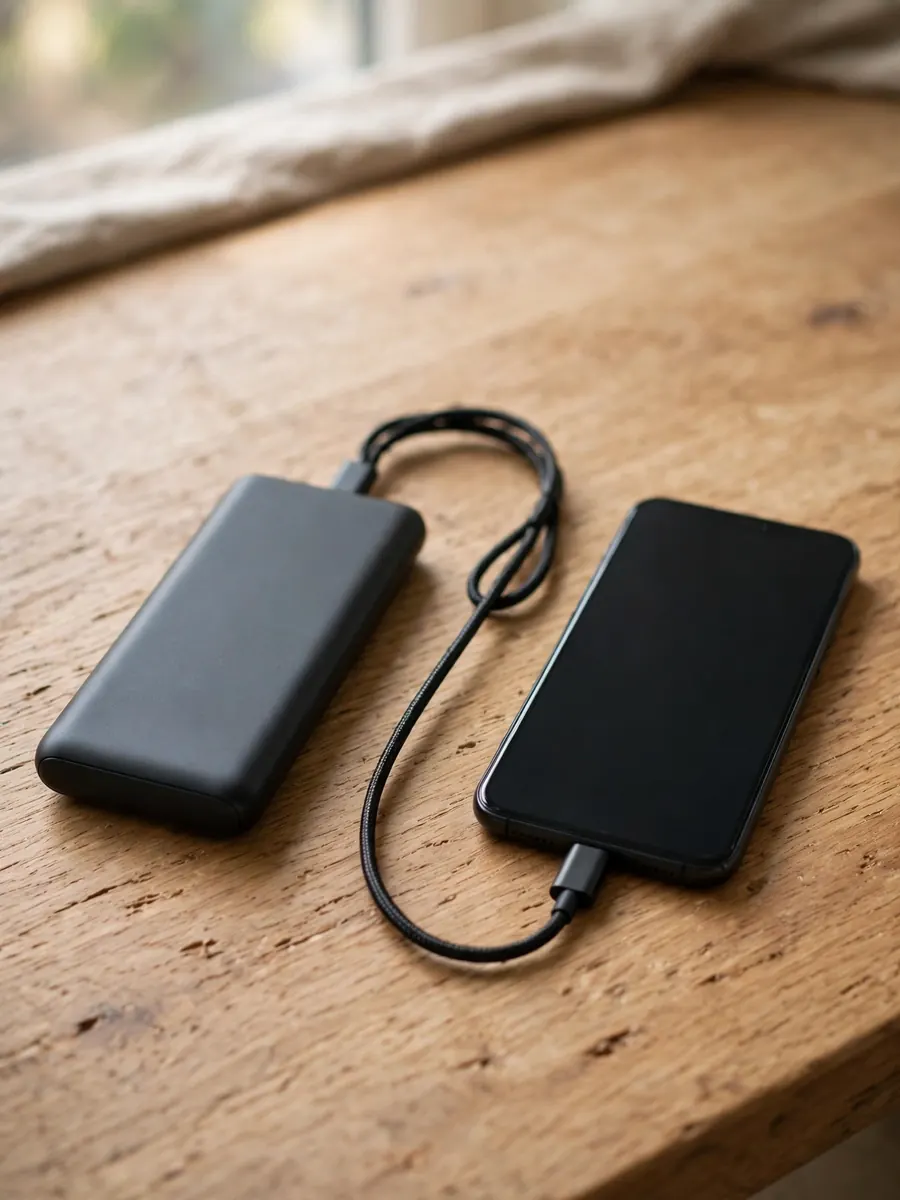
One power bank, chosen once and packed forever, is the difference between a long travel day being an inconvenience and being a problem. Navigation, translation, boarding passes, payment apps and your camera all live on the phone now, and a slim bank that refills it once or twice covers a delayed train, a long bus or a day of heavy map use. It must travel in your cabin baggage, not in anything checked, which suits the one-suitcase system perfectly since the case is always with you. Resist the giant high-capacity bricks unless your work genuinely needs one: every extra gram is a gram you carry up every hill and staircase of the trip.
Packing tip: charge the bank on the same overnight rotation as the phone, from the same wall charger. A power bank that is itself empty is the most demoralising 200 grams in travel.
19. Flight comfort kit (earbuds, bottle, lip balm)
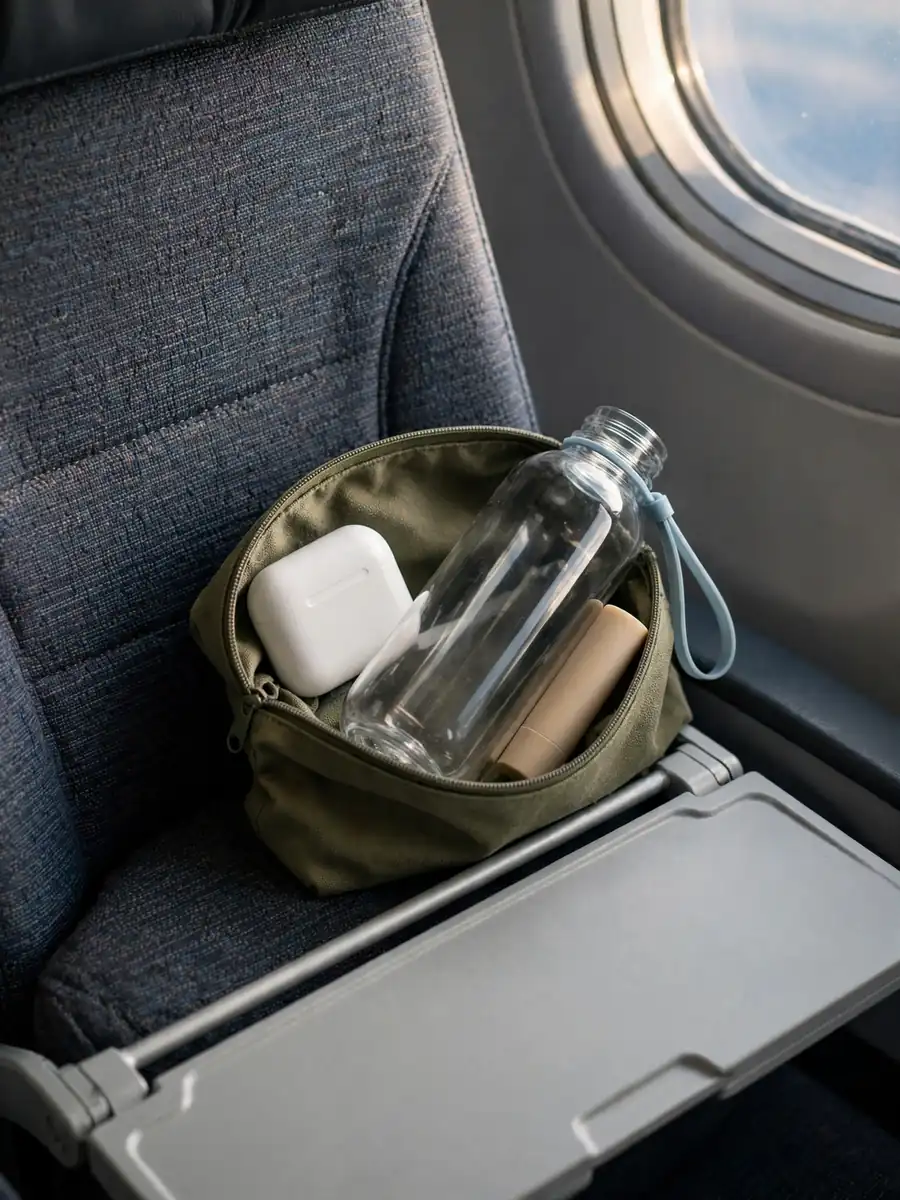
This little kit is the only part of the list that lives outside the suitcase, in your personal item, and it covers the hours when you cannot reach the case. Earbuds handle entertainment, translation apps and the neighbour’s conversation in equal measure. A reusable bottle, taken through security empty and filled airside, ends the cycle of buying water at airport prices. Lip balm and any small comfort you genuinely use daily finish the kit; the discipline is that it stays this small. For longer routes, our guide to carry-on bag essentials for long flights expands this kit into a full long-haul version, but for most flights these three things are the difference between arriving flat and arriving fine.
Packing tip: assemble the flight kit the night before, not at the gate. It is a fixed kit in a fixed pouch, so packing for any trip starts with one item already done.
20. Documents and money set
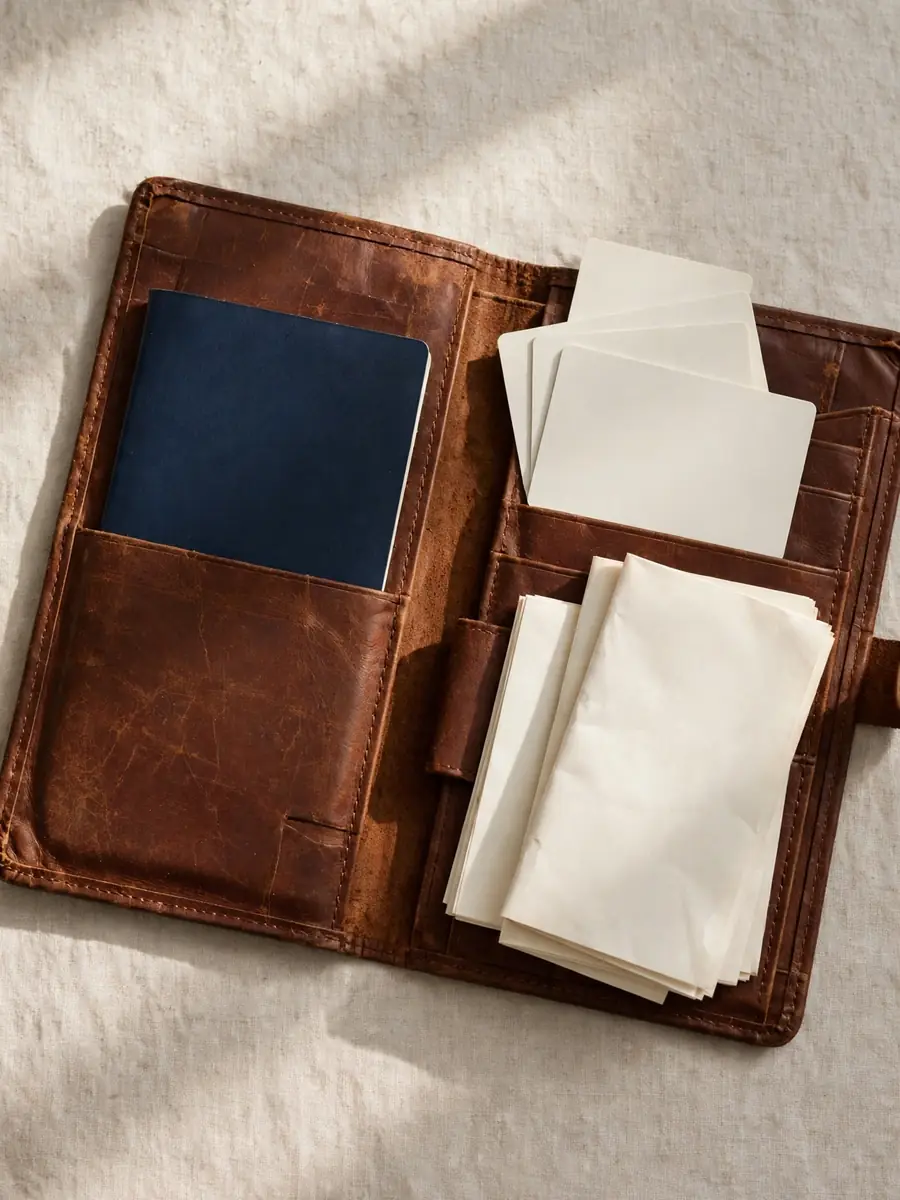
Documents are the only truly irreplaceable slot in the case, which is why the set is small, physical and backed up digitally. Passport or ID, one main payment card and one backup card kept in a different place, a modest amount of cash in the local currency, and any printed confirmations for the traveller who likes paper. Behind that sits the invisible half of the kit: photographed or scanned copies of the passport, cards and insurance stored in your phone and in cloud storage, so a loss becomes an embassy visit rather than a catastrophe. Keep the physical set in your personal item or a zipped inside pocket whenever you are in transit, never in the checked-anything stream.
Packing tip: photograph the contents of your suitcase each time you close it at home. If the case is ever lost, the photo is your packing list, your insurance evidence and your memory, all in one.
21. Compression packing cubes (1 set)
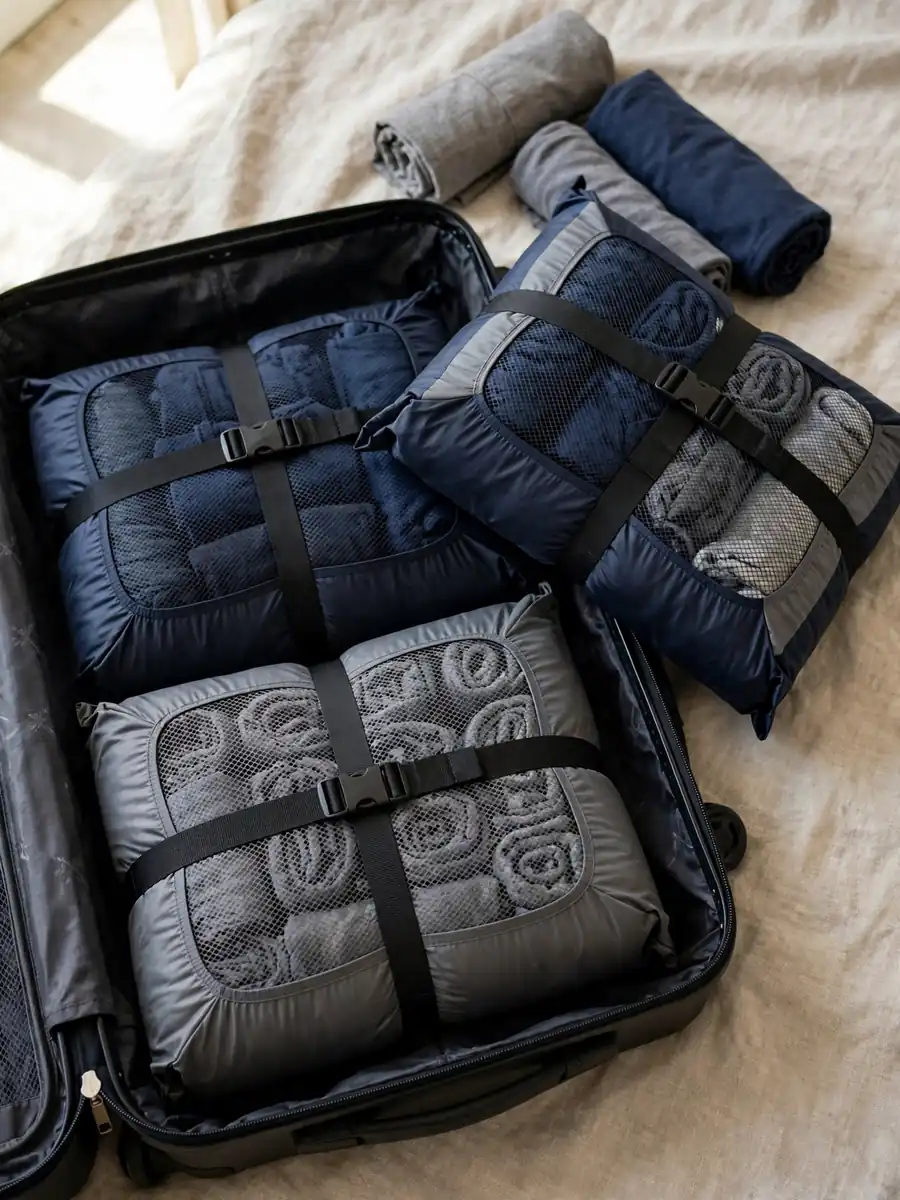
Packing cubes do not create space out of nothing, but compression cubes do something almost as valuable: they squeeze the air out of soft clothes and, just as importantly, they give a small case a fixed internal geography. One cube for tops, one for bottoms and the one-piece outfit, one for underwear, socks and sleepwear: three units that lift out, open, and go back, so the case never becomes a rummaged pile by day three. In a one-suitcase system the cubes are also your expansion limit. When the cubes are full, the list is full, and the one-in-one-out conversation happens at the shop, not at the zip.
Packing tip: leave one cube a third empty on departure day. That slack is your souvenir space, your dirty-laundry overflow and your insurance against a case that will not close in a hostel doorway.
22. Foldable day bag (1)
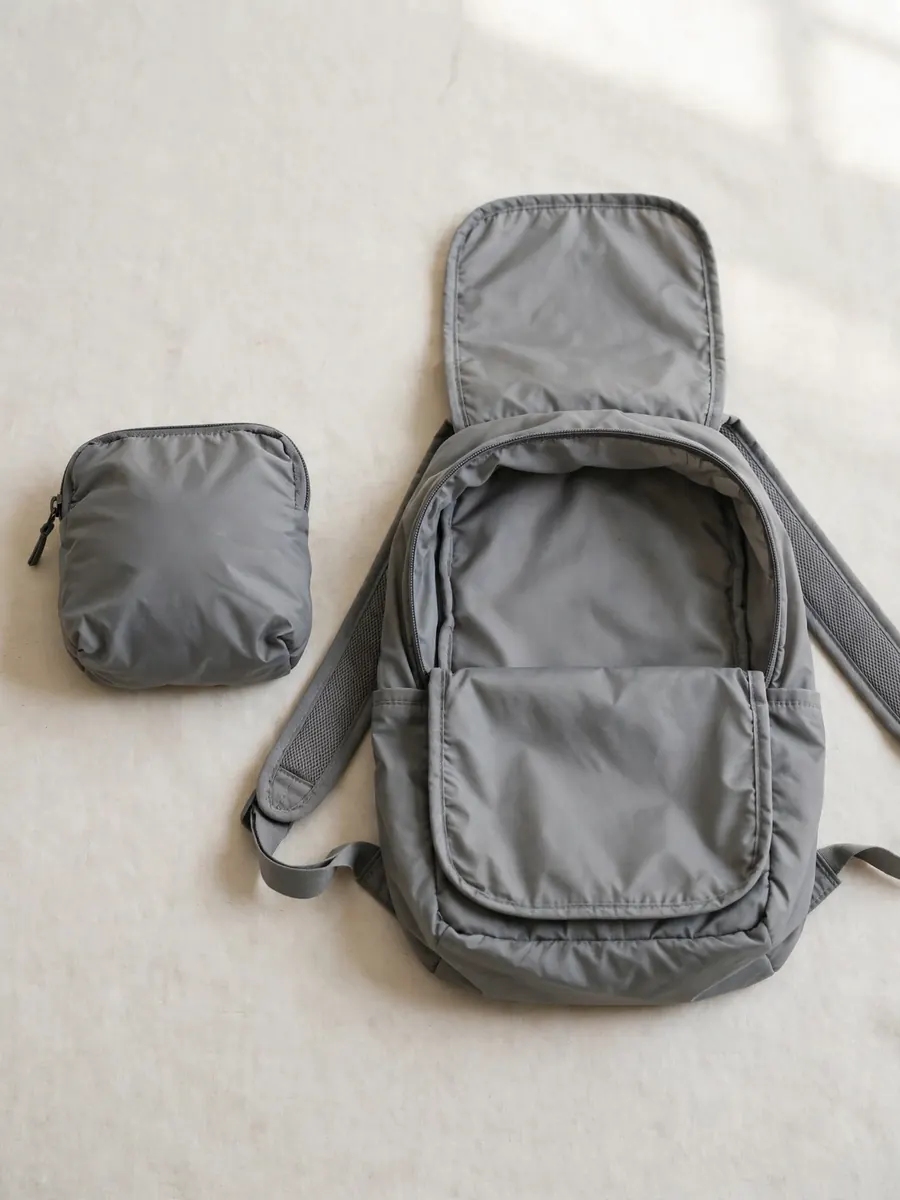
The last slot solves the problem every one-bag traveller meets on day one: you arrive with one case, but you live each day with a small bag. A foldable daypack or tote that packs into its own pocket rides flat inside the suitcase, then unfolds into your daily carrier for water, the scarf, market finds and the layer you shed at noon. It is also the system’s pressure valve: it becomes the laundry-run bag, the grocery bag, and, on the way home, the overflow carrier for the one souvenir that earned a one-in-one-out exception, as long as it still qualifies as your personal item. Choose one with a zip and comfortable straps; the flimsy free ones tear exactly when loaded.
Packing tip: pack the day bag last, flat on top of the cubes. It is the first thing you will want at the destination and, opened out, it doubles as a clean surface for repacking on a hotel bed.
Multi-Use Swaps: This Instead of That
Most of the space in a normal suitcase is not taken by essentials; it is taken by single-job versions of things. These swaps are the list above, expressed as replacements.
| Pack this (multi-use) | Instead of this (single-use) | Why it wins |
|---|---|---|
| Solid shampoo bar and toothpaste tablets | Full or travel-size bottles of each | No leaks, no liquids allowance used, lasts a whole long trip |
| Large scarf or wrap | A travel blanket, a separate cover-up and a dress-up accessory | One flat item does all three jobs and changes an outfit’s look |
| Sleepwear that works as loungewear | A pyjama set plus separate downtime clothes | Evenings, mornings and laundry day are covered by one set |
| One mid-layer plus a packable shell | A single heavy coat | Two light layers combine for cold and separate for mild weather |
| Dry bag from the laundry kit | A wash basin, a laundry sack and a waterproof pouch | Soaks laundry, stores the damp and the dirty, protects valuables |
| One charger and a multi-head cable | A charger and cable per device | Devices charge in rotation overnight; the tangle and weight disappear |
| Foldable day bag | A second packed handbag or daypack | Travels flat, works daily, doubles as shopping and overflow space |
The Laundry Strategy That Makes One Suitcase Enough
Everything in this system depends on one honest assumption: you will wash clothes as you go. That is not a hardship clause; it is the trade that buys you the small case. There are two rhythms that work. The first is little and often: each evening, the day’s underwear, socks and, if needed, a top go into the dry bag with warm water and a soap sheet, soak while you shower, get rinsed, rolled in a towel to press the water out, and hung on the travel line overnight. Quick-dry fabrics are dry by morning. The second rhythm is a weekly reset: a laundromat, a hotel laundry bag or a serviced wash every 5 to 7 days for everything at once, which suits travellers who would rather have one laundry hour than a nightly ritual.
Choose fabrics for the rhythm you will actually keep. Merino and synthetics forgive sink washing; heavy cotton and denim punish it. And plan the wash around your stays: a two-night stop is a drying window, a one-night stop in a humid room is not. Travellers who build the wash into the trip stop experiencing laundry as a chore and start experiencing it as the reason their bag weighs half of everyone else’s.
How to Pack the Suitcase: Order, Compression, and the Spare Inch
Pack in the reverse order of need. Shoes go in first, soles to the case walls, with socks stuffed inside them. Rolled clothes go into the compression cubes, the cubes go in flat, and the cubes get zipped and compressed before the case is closed, not after a struggle. The liquids bag and the laundry kit sit where you can reach them, the documents never go in the case at all while you are in transit, and the day bag lies flat on top. Wear the walking shoes, the jacket and the heaviest layer onto the plane. Finally, keep the spare inch: a case packed to bursting at home will not close after the first repack, so the system only works if closing it is easy on your worst packing day, not just your best one.
Quiz: Which One-Bag Packing Style Are You?
Four honest answers to the question every minimalist list has to settle: what kind of one-suitcase traveller are you? Open the profile that sounds most like you.
The System Builder
You like a rule you can count. The 22-item list as written is your home ground: fixed quantities, a fixed palette, the wash on a fixed rhythm. Your risk is not overpacking, it is refusing a good exception. Let the one-in-one-out rule bend for the one irreplaceable thing, and replace something honestly when it does.
The Comfort Keeper
You will travel light happily, as long as nothing you love is sacrificed. Build the list around your non-negotiables (your own pillow-adjacent sleepwear, your trusted skincare in the liquids bag) and cut harder on clothing instead: drop to 3 tops and lean on the laundry rhythm. Comfort kept deliberately is not a packing failure.
The Long-Haul Minimalist
You are packing for a month or more, and your superpower is the weekly reset. The list does not change for you, but your fabric standards should rise: merino everywhere it makes sense, the best dry bag, and a mid-layer that can take a season of wear. Your watch-out is wear and tear; budget for replacing one item mid-trip.
The Recovering Overpacker
You currently travel with a checked case and a just-in-case pile. Do not jump straight to 22 items in a panic. Run one trip at this list plus three wildcards of your choice, notice which wildcards never leave the case, and delete them next time. The system works when it is learned, not when it is endured.
What to Leave Out of One Suitcase
The leave-out list is as important as the packing list. Leave the third pair of shoes, the outfit for an occasion that is not actually planned, the full-size bottle of anything, the book you could read on your phone, the hair tools your accommodation already provides, and every item whose case begins with “just in case”. One-suitcase travel runs on a different sentence: “if I truly need it, I can get it there.” That sentence is almost always right, and on the rare trip where it is wrong, it is wrong about something small, cheap and replaceable, which is exactly the kind of wrong a traveller can afford.
Printable Checklist: Tick It Off as You Pack
Clothing
- ☐ Quick-dry tops (4)
- ☐ Bottoms (2)
- ☐ One-piece outfit (1)
- ☐ Packable weatherproof jacket (worn)
- ☐ Mid-layer (1)
- ☐ Sleepwear and loungewear set (1)
- ☐ Quick-dry underwear (5)
- ☐ Merino socks (3 pairs)
- ☐ Swimsuit (1)
- ☐ Large scarf or wrap (1)
Footwear
- ☐ Walking shoes (worn to travel)
- ☐ Packable second shoes (1 pair, in a shoe bag)
Toiletries, Health and Laundry
- ☐ Solid toiletries kit (bars and tablets)
- ☐ Quart-size liquids bag (essentials only, 100 ml or less each)
- ☐ Laundry kit (soap sheets, clothesline, dry bag)
- ☐ First aid and repair pouch
Tech and Documents
- ☐ Universal charging kit (one charger, multi-head cable, adapter if needed)
- ☐ Power bank (charged, in cabin baggage)
- ☐ Flight comfort kit (earbuds, empty bottle, lip balm)
- ☐ Documents and money set, plus digital copies on the phone
Organisation and Travel Day
- ☐ Compression packing cubes, one left a third empty
- ☐ Foldable day bag, packed flat on top
- ☐ Bulkiest items worn: shoes, jacket, heaviest layer
- ☐ Case measured against the airline’s own size limit
- ☐ Photo taken of the packed case contents
Frequently Asked Questions
Can you really travel for two weeks or more with one suitcase?
Yes, and the trip length matters less than the wash rhythm. The list holds about a week of clothing; one laundry session, at a laundromat or in a sink with the laundry kit, resets it completely. Travellers who wash every 5 to 7 days use this same 22-item system for a fortnight or a season without adding a single slot.
How is this different from a normal carry-on packing list?
A normal list is organised by what you might need; this one is organised by what each item replaces. Every slot has to pass a multi-use test or be genuinely irreplaceable, quantities are fixed by the laundry maths rather than the calendar, and the one-in-one-out rule keeps the system stable for the whole trip instead of letting it grow.
What is the 5-4-3-2-1 packing rule, and does this list follow it?
It is a popular counting shortcut for the clothing core of a carry-on, but its numbers are defined differently in different versions: sometimes 5 sets of socks and underwear, 4 tops, 3 bottoms, 2 shoes and 1 hat; sometimes 5 tops, 4 bottoms, 3 layers or dresses, 2 shoes and 1 accessory. This list keeps its spirit, a small wardrobe where everything combines, then spends the remaining slots on laundry, tech and organisation, which the formula leaves out.
What size suitcase counts as one suitcase?
A standard cabin-size case that meets your airline’s own maximum dimensions. Airlines set these individually: Delta, as one example, caps a carry-on at 22 x 14 x 9 inches (56 x 35 x 23 cm) including wheels and handles, while other airlines, especially low cost carriers, allow less. Always check the airline you are flying, because the limit that matters is theirs, not a general standard.
How do you do laundry with only a sink?
Use the dry bag as the tub: warm water, a laundry soap sheet, the day’s smalls and any top that needs it, sealed and kneaded for a few minutes, then rinsed. Roll everything in a towel to press out water, and hang it on the travel clothesline overnight. Quick-dry and merino fabrics are dry by morning; heavy cotton is why this fails for most beginners, so it stays home.
What should you wear on the plane when you pack this light?
Your heaviest outfit: the walking shoes, one of the bottoms, a top, the mid-layer and the weatherproof jacket, with the scarf in hand. Wearing the bulk keeps the case light and legally sized, gives you layers for a cold cabin, and means the bulkiest items never compete for cube space at all.
What happens when you want to buy souvenirs?
The one-in-one-out rule answers it: a purchase replaces something packed, gets worn home as your travel outfit, or is posted. The cube left a third empty and the foldable day bag give you honest slack for small things, but a souvenir that needs a second suitcase is not a souvenir, it is a decision to change systems, so make it deliberately or not at all.
Final Check Before You Zip the Suitcase
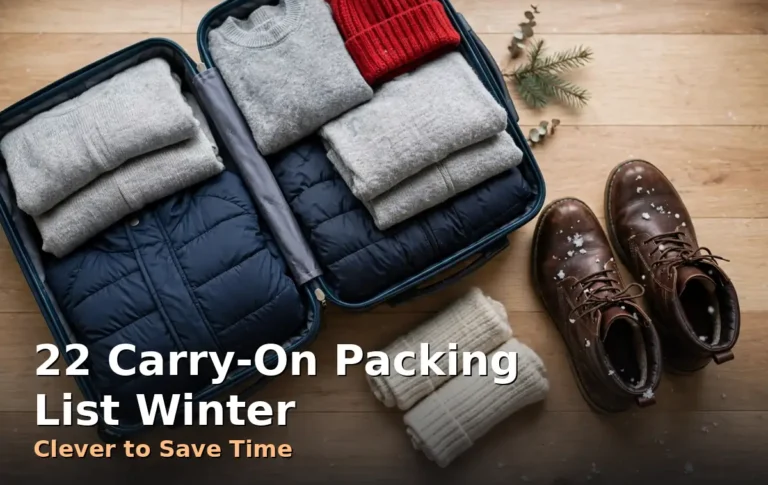
Run the five principles once, out loud if it helps: everything matches, everything has a second job, the bulk is on your body, the wash is planned, and the case closes with room to spare. If all five hold, you are not underpacked, you are finished packing, possibly for the first time. One suitcase is not a smaller version of travelling; it is a lighter one, through airports, up station stairs and into small rooms, with nothing checked, nothing waited for and nothing lost. For the cold-weather version of the same one-bag discipline, see our winter carry-on packing list, which applies it to coats, layers and boots.