22 carry on packing list winter Clever to save time
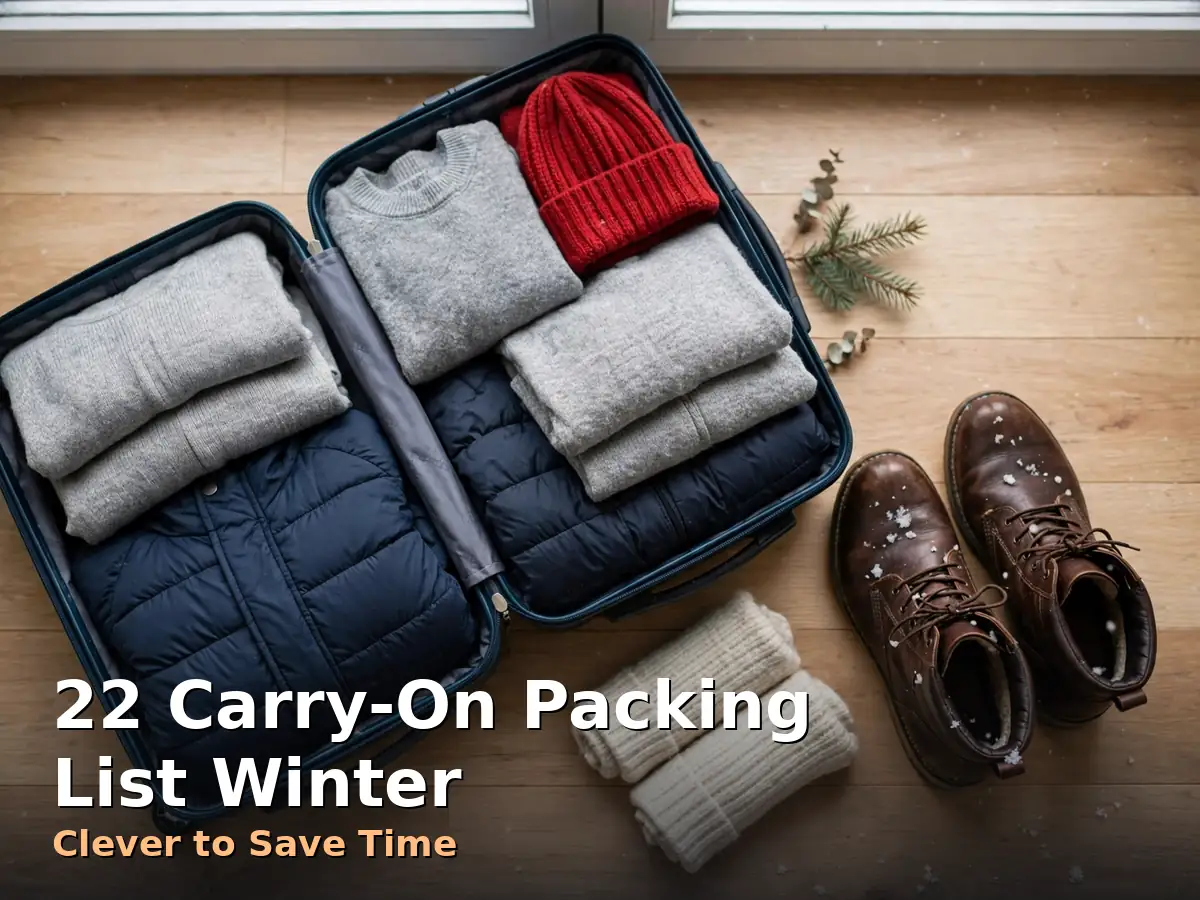
Winter is the season that breaks carry-on travellers. Coats swallow half a suitcase, boots eat the rest, and one chunky sweater can weigh more than an entire summer wardrobe. This carry on packing list for winter solves the problem the way cold weather itself works: in layers. Instead of packing for every temperature, you pack one system of 22 items that combine, so the same small kit handles a frosty morning platform, a heated museum and a snowy evening walk.
The list is built for a winter trip of about five to seven days in a cold city or town, and it stretches to ten days or more with one laundry stop. Two rules hold the whole thing together: wear your bulkiest items on travel day, and let every piece layer over or under at least two others. Quantities assume icy pavements, short daylight and heated indoor spaces, which is the mix most winter trips actually involve.
Winter Carry-On at a Glance
- The bag: one carry-on within your airline’s size limit, plus one personal item that fits under the seat.
- The layers: a wicking base, an insulating mid layer and a weatherproof outer, worn in combination rather than packed as separate outfits.
- The transit outfit: coat, boots, heaviest sweater, hat and gloves travel on you, not in the bag.
- The clothes: 2 base layer tops, 1 to 2 thermal leggings, 2 sweaters, 2 trousers, built on one colour palette.
- The liquids rule: containers of 3.4 oz (100 ml) or less, in one quart size clear bag, one bag per passenger (TSA, US checkpoints). Solid toiletries do not count.
- The safety net: documents, medication, chargers, a spare pair of socks and your skin kit always travel in your personal item.
Before You Pack: Check Your Airline’s Rules First
Winter makes airline rules matter more, because a bag that passes in July can fail in January once boots and knitwear push it over a weight limit. Every airline sets its own carry-on dimensions, and many low cost carriers also weigh cabin bags at the gate. Check the baggage page of the airline you booked, shortly before you pack, and weigh your finished bag at home.
As an example, Delta’s official carry-on baggage page allows one carry-on plus one personal item, with the carry-on limited to 22 x 14 x 9 inches (56 x 35 x 23 cm) including handles and wheels, and 45 linear inches (114 cm) in total. The same page notes that a jacket can be carried in addition to your allowance, which is exactly why the wear-your-coat strategy in this list works. Other airlines work to smaller bags and stricter weights, so treat every figure here as one airline’s example, never a universal standard.
What Goes Where: Carry-On, Personal Item, Checked Bag
| Bag | What belongs in it on a winter trip | Why |
|---|---|---|
| Carry-on | Base layers, sweaters, trousers, sleepwear, second shoes, toiletries, organisation kit | Your full clothing system stays with you in the cabin |
| Personal item | Documents, tech kit, medication, spare socks, lip balm, snacks, hand warmers for arrival | Survives a gate-check or a delay; everything you need in the first cold hour |
| Worn on you | Winter coat, insulated mid layer or heaviest sweater, boots, hat, gloves, scarf | The bulkiest third of the list never enters the bag at all |
| Checked bag (not needed) | Nothing on this list requires one | The 22-item system is designed to make checked luggage unnecessary |
The Layering System That Makes Winter Fit
Warmth does not come from thickness. It comes from trapped air and dry skin. A base layer pulls moisture away from your body, because damp skin chills fast. A mid layer traps warm air in loft or fleece. An outer layer stops wind and precipitation from stripping that warmth away. Three slim layers worn together are warmer, lighter and far more packable than one enormous jumper, and they let you adjust through the day: full system for a snowy platform, base and sweater only in a heated cafe.
Cotton is the one fabric to keep out of this system. It absorbs moisture, dries slowly and loses its insulating value when wet, which is why the list leans on merino wool and synthetics for anything worn next to the skin. Build everything on one colour palette, navy, grey, black and one accent, say, and every top works with every bottom, which is how 22 items turn into two weeks of outfits.
Down or Synthetic? Choosing Your Insulation
| Insulation | Strengths | Weaknesses | Best for |
|---|---|---|---|
| Down | Warmest for its weight, compresses very small, lasts for years | Loses warmth when wet, dries slowly, costs more | Dry, cold city trips and continental winters |
| Synthetic | Keeps insulating when damp, dries fast, usually cheaper | Bulkier for the same warmth, loft fades sooner | Wet, maritime winters with rain and sleet |
| Merino wool (layers and socks) | Warm even when slightly damp, resists odour for days, breathable | Slower to dry than synthetics, needs gentler washing | Base layers, sweaters and socks worn repeatedly |
| Cotton (avoid) | Comfortable indoors | Holds moisture and chills you when it gets wet | Sleepwear at most, never a base layer |
The Complete Winter Carry-On Packing List: All 22 Items
Here is the full kit, in the order you would put it on. Items 1 and 10 travel on your body; almost everything else rolls or compresses into the bag. Each item explains why it earns its space, how to choose it, how many you need and one packing tip that makes a real difference in winter.
The Transit Outfit: What You Wear Is Part of the List
On travel day you are the second suitcase. Coat on, boots on, heaviest sweater layered under the coat, hat and gloves in the coat pockets, scarf around your neck. That single move removes the three bulkiest items from the bag entirely and, on airlines that weigh cabin luggage, removes their weight from the scale too. Dress in layers you can peel off in a warm cabin: the coat doubles as a blanket or pillow once you are seated. Everything below assumes this transit outfit, so if you pack the coat or boots into the bag instead, the system still works, but you will need compression and a lighter hand elsewhere.
1. Heavy winter coat (worn to travel)
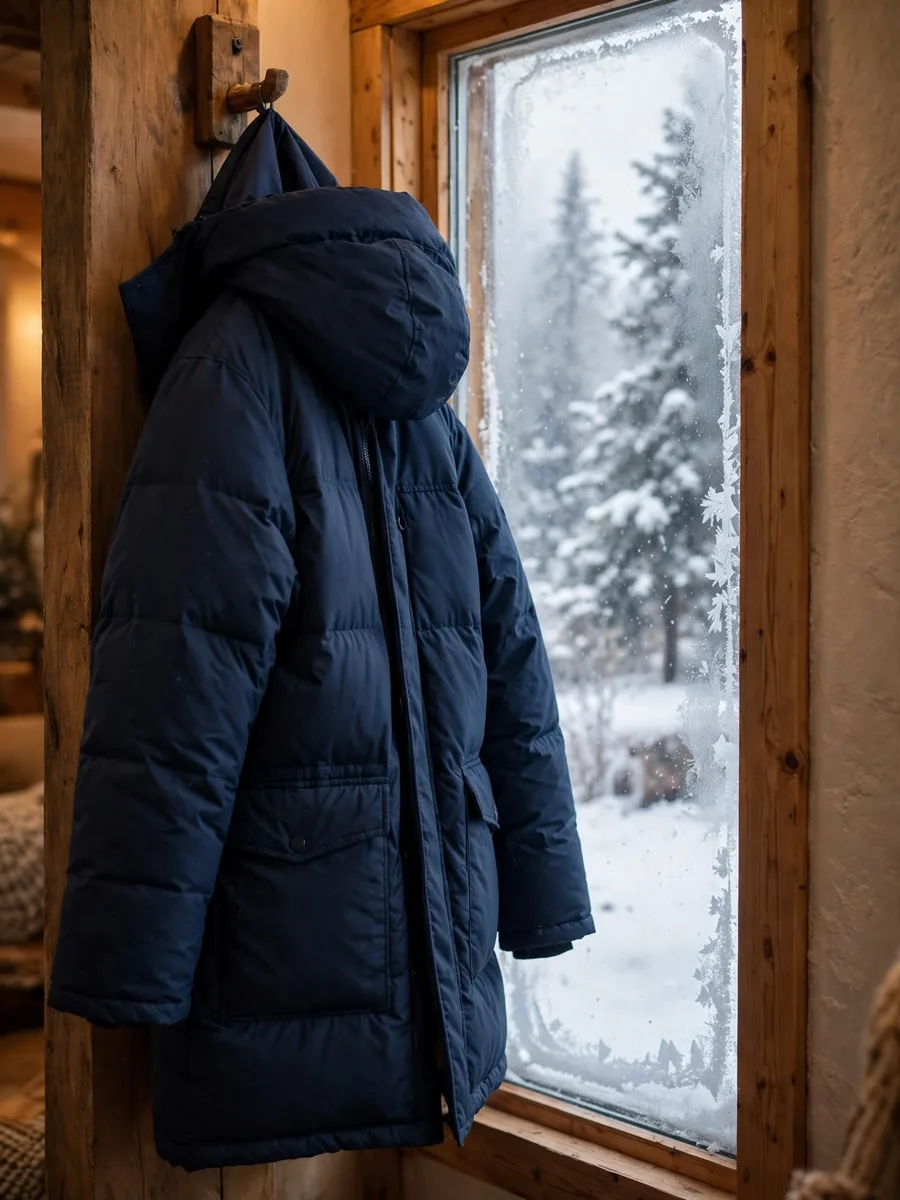
Your coat is the single most important item on this list, and it should never see the inside of your suitcase. Choose one insulated, windproof coat that reaches at least mid-thigh, with a hood, a two-way zip and pockets big enough for gloves and a phone. Length matters more than thickness: a longer coat protects your legs, which lets your trousers stay lighter. If your trip mixes city sightseeing with countryside walks, a waterproof outer fabric earns its keep in sleet, while a purely fashion coat with thin lining will not.
One coat is enough for the whole trip, so pick a neutral colour that works with every sweater you pack. Packing tip: wear the coat onto the plane rather than carrying it, and use its inside pockets at security for your liquids bag and documents to keep your hands free.
2. Packable insulated mid-layer jacket
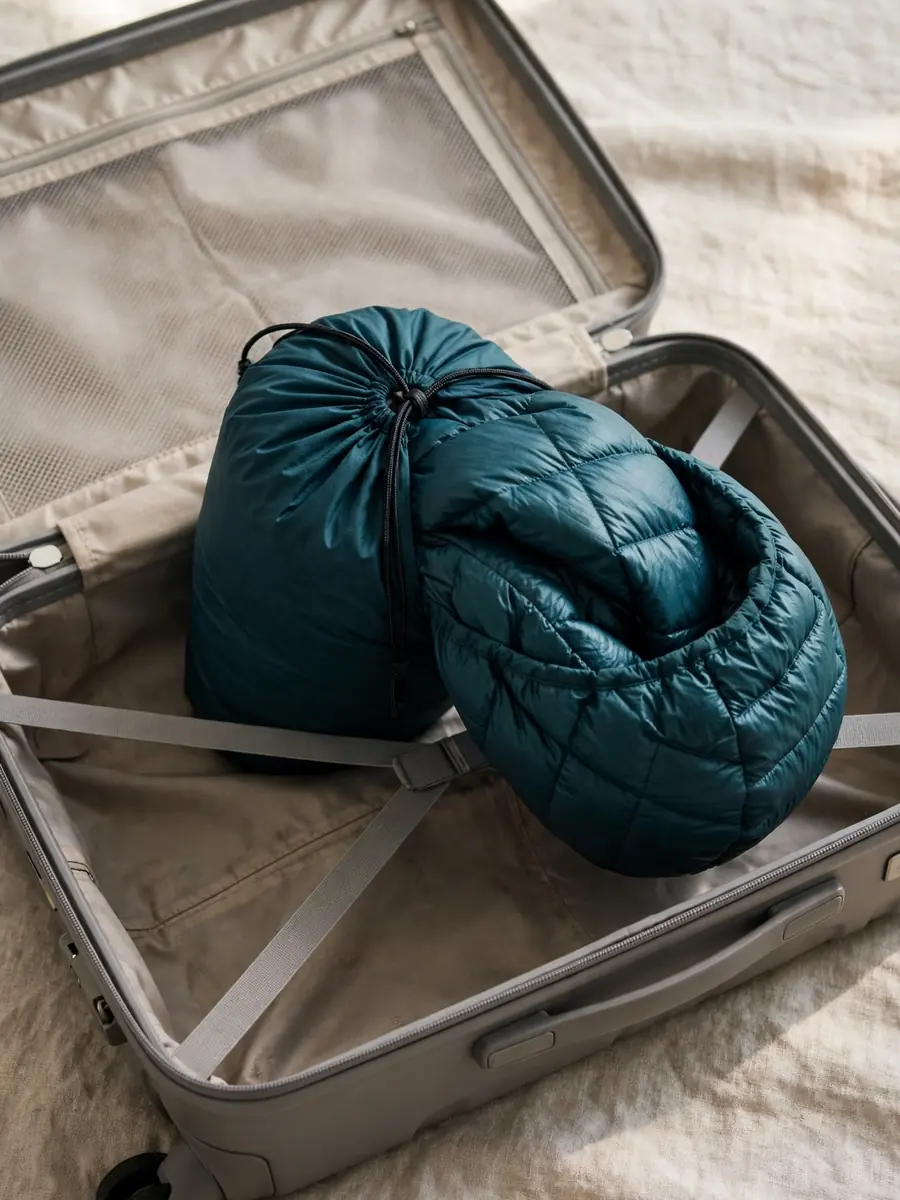
Under the coat, or instead of it on milder days, sits a packable insulated jacket: down or synthetic fill in a thin shell that squashes into its own pocket or stuff sack. This is your temperature dial. Worn alone it handles a crisp autumn-like day; layered under the coat it turns a cold snap into a non-event; and because it compresses to roughly the size of a water bottle, it costs almost no bag space for the warmth it returns.
Choose a jacket without a hood if your coat has one, to avoid bulk around your neck, and check the cuffs sit close so wind cannot funnel up your arms. Down packs smallest in dry cold; synthetic is the safer pick for wet, coastal winters. Packing tip: store it uncompressed in the bag’s lid or your personal item during the trip, and only squash it down on packing days, which keeps the insulation loftier for longer.
3. Thermal base layer tops (2)
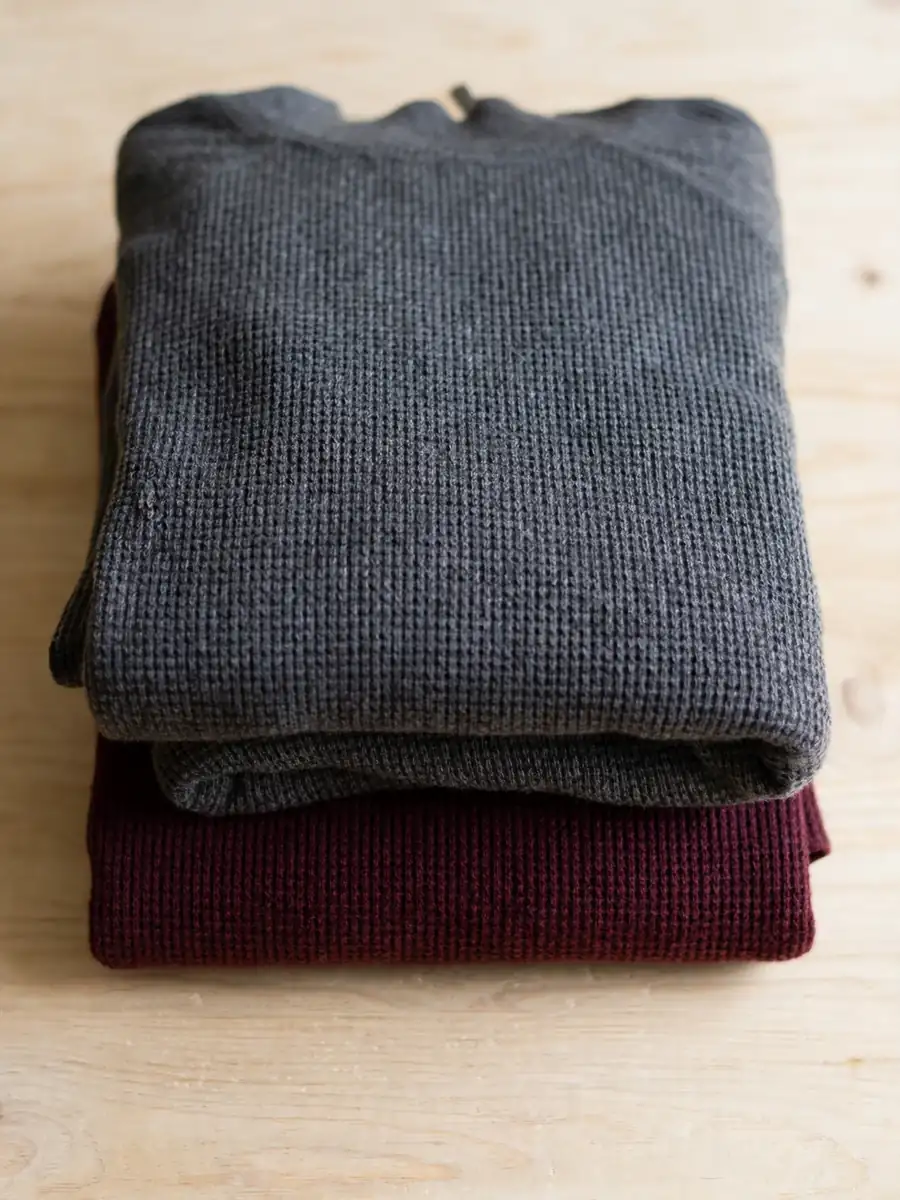
Base layers are the foundation everything else stands on. A long-sleeved thermal top in merino wool or a technical synthetic wicks sweat away from your skin, and in winter that matters as much indoors as out: you will walk fast for a train, then sit in heated carriages, and a cotton top would stay damp and cold through both. Merino has the extra travel advantage of resisting odour, so a top can be worn two or three days before it needs a wash.
Two tops are the working number: one on, one aired or washed in the sink. Midweight fabric, roughly 200 to 250 grams per square metre, suits most city winters; go lighter if your trip is mostly indoors, heavier for standing outdoors at markets or viewpoints. Packing tip: roll each top tightly and pair it in the wash rotation with your thermal leggings, so a full base layer set is always clean at the same time.
4. Thermal leggings (1 to 2)
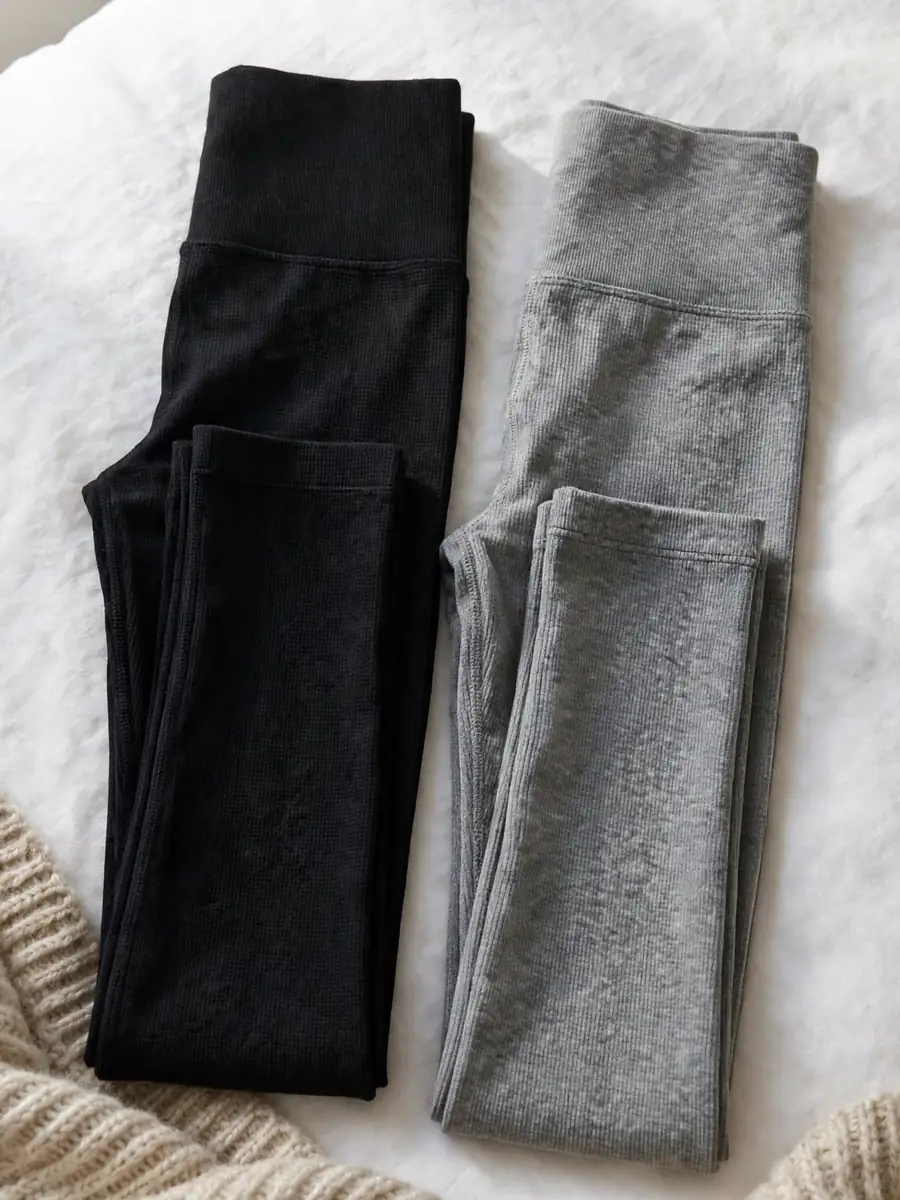
Legs are where one-bag winter travellers most often under-pack. Thermal leggings worn under ordinary trousers add the warmth of a second pair of trousers for a fraction of the space, and they turn regular chinos or wool trousers into genuine winter clothing. The same merino or synthetic rules apply as for tops: no cotton, a close fit without tightness, and a waistband that sits comfortably under trouser waistbands all day.
One pair is enough if you wear them only on the coldest days; take two if your destination sits below freezing most of the time, or if you will be outdoors for long stretches, skiing, hiking or standing at markets. They also double as an extra sleep layer in a cold room. Packing tip: leggings roll into almost nothing, so tuck them into the gaps around your packing cubes rather than giving them cube space of their own.
5. Merino wool sweaters (2)
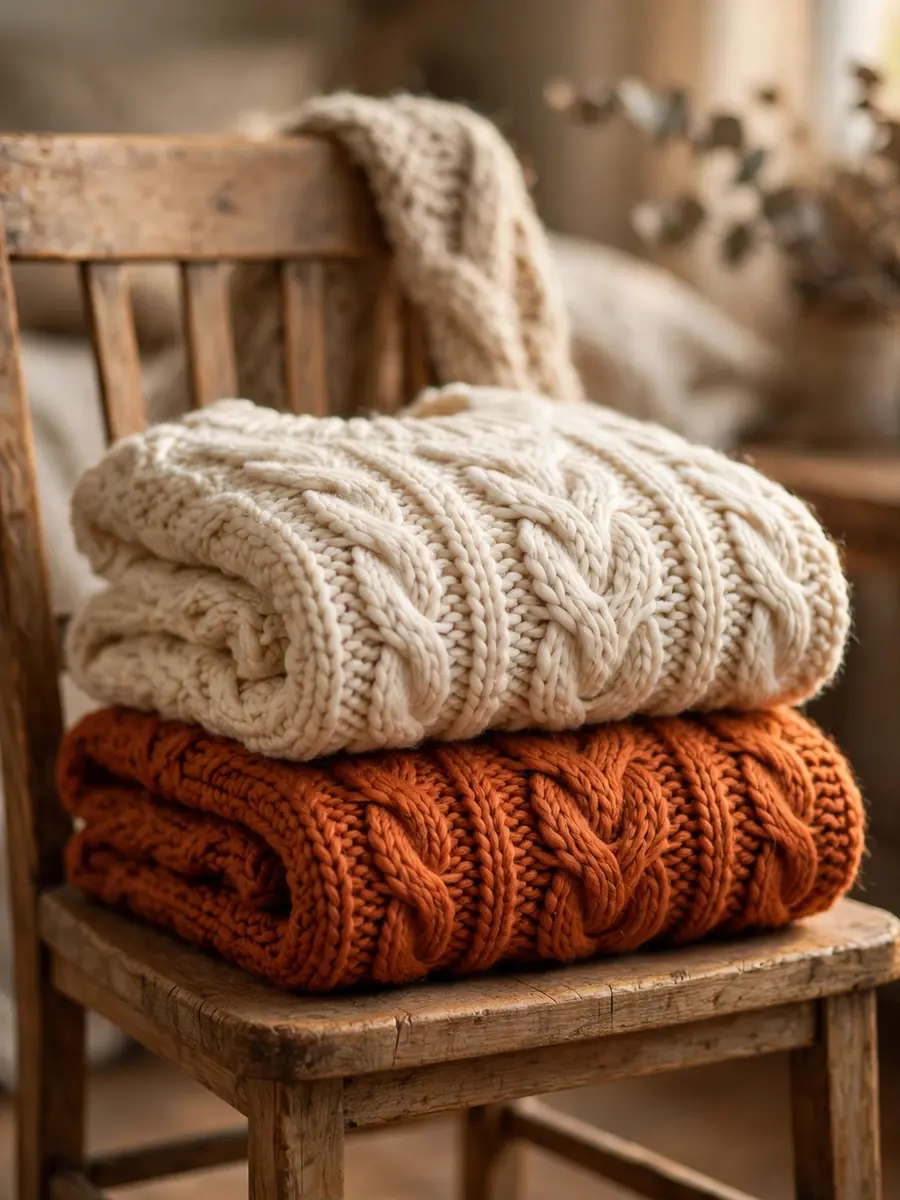
Sweaters are your visible layer, the one that appears in every photo, so this is where the list allows some personality. Two sweaters in your palette, one lighter and one heavier, rotate across the trip: worn over a base layer they are warm enough for heated interiors alone, and under the mid layer they complete the system outdoors. Merino is the travel-friendly choice because it regulates temperature across that indoor-outdoor swing and resists odour between wears.
Fit matters more than fashion here. Each sweater must layer comfortably over a base layer without binding at the shoulders, and the heavier one should still fit under your mid-layer jacket. Wear the heavier sweater on travel day. Packing tip: fold sweaters flat and place them at the top of the bag where they are not crushed by boots or cubes; heavy compression creases knitwear and does the loft no favours.
6. Winter trousers (2)
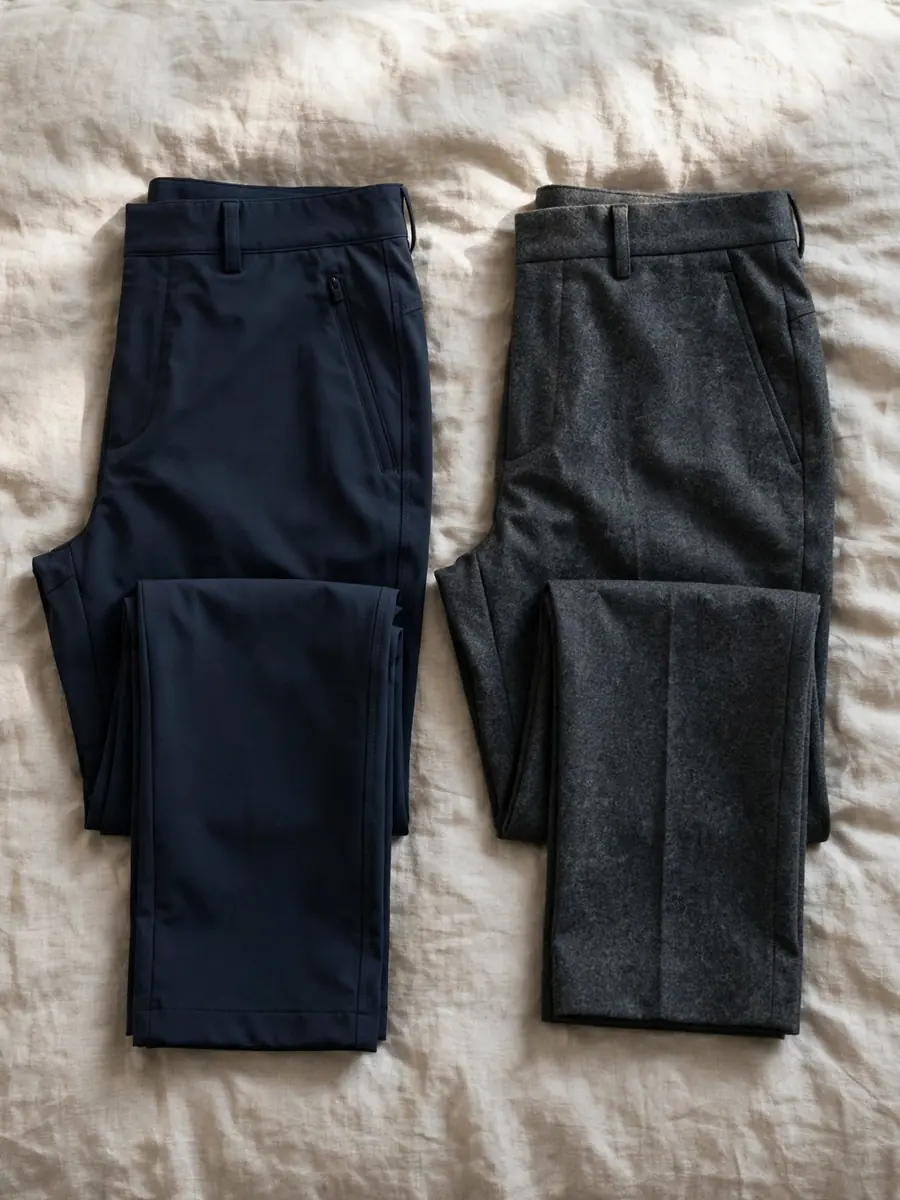
Two pairs of trousers anchor the bottom half of the system: one you wear, one in the bag. The ideal winter travel trouser is a wool blend or a softshell with a light water-resistant finish, warm enough with thermal leggings beneath, smart enough for a restaurant, and dark enough to hide the salt splashes and slush marks that winter pavements guarantee. Thin summer chinos and stiff denim both fail here; denim in particular is heavy, slow to dry and cold against the skin.
Alternate the two pairs daily so each gets a rest day to air, and spot-clean marks rather than washing whole garments. If your trip includes a genuinely formal occasion, choose one pair in a cleaner cut rather than adding a third. Packing tip: pack the spare pair folded around a sweater to soften creases, and keep the belt you travel in on your person, not in the bag.
7. Warm sleepwear (1 set)
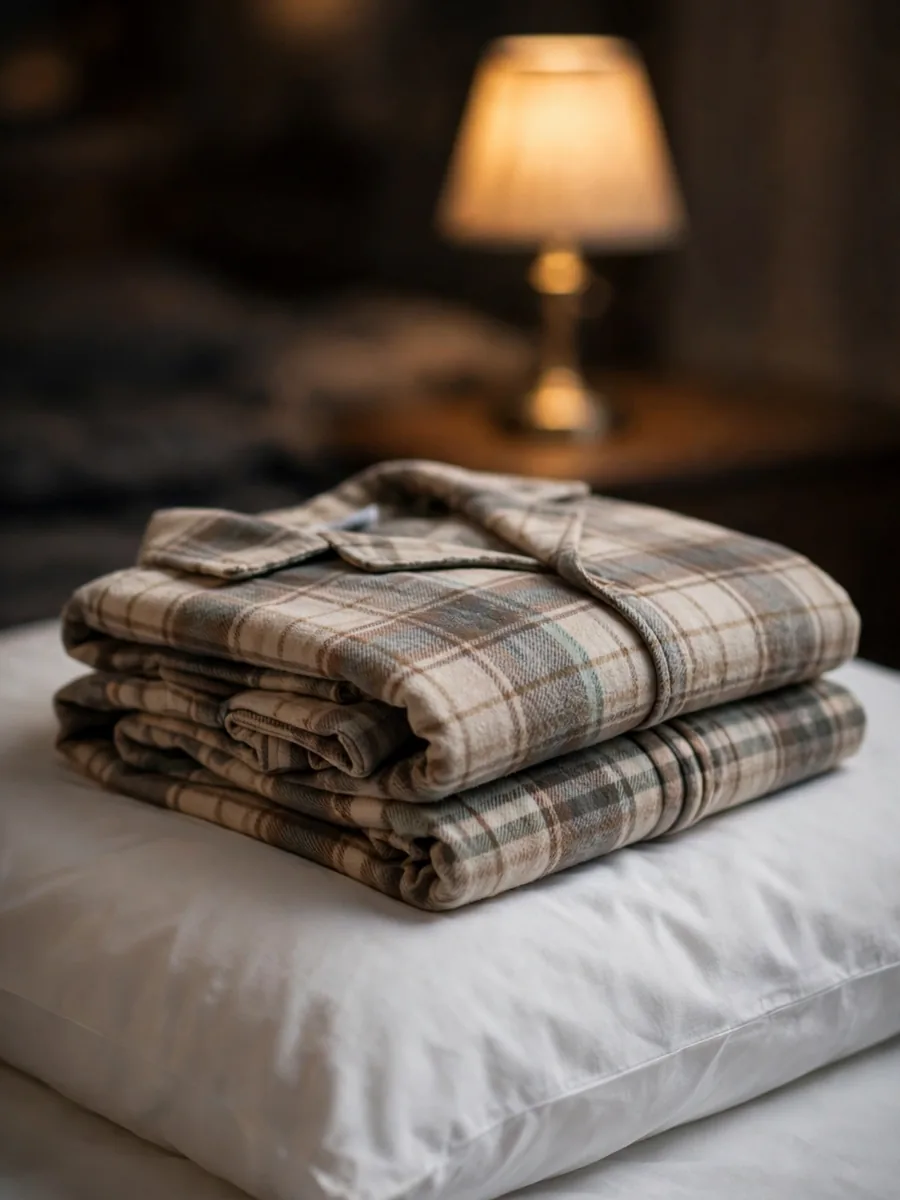
Sleepwear is easy to dismiss as dead weight, until the first night in a draughty old-town apartment or a mountain guesthouse where the heating cycles off at midnight. One warm set, flannel, brushed cotton or a merino blend, keeps sleep comfortable without touching the day wardrobe, and it gives your base layers a full night to air, which extends how long they stay fresh.
This is also the one place cotton is welcome: you are indoors, dry and horizontal, so its weaknesses do not matter. A long-sleeved top and full-length bottoms cover most situations; add your thermal leggings on the coldest nights instead of packing a second set. Packing tip: sleepwear makes an excellent soft buffer layer in the bag, so pack it last, spread over the top of your cubes to cushion anything fragile beneath.
8. Underwear (5 to 7, or 3 to 4 in merino)
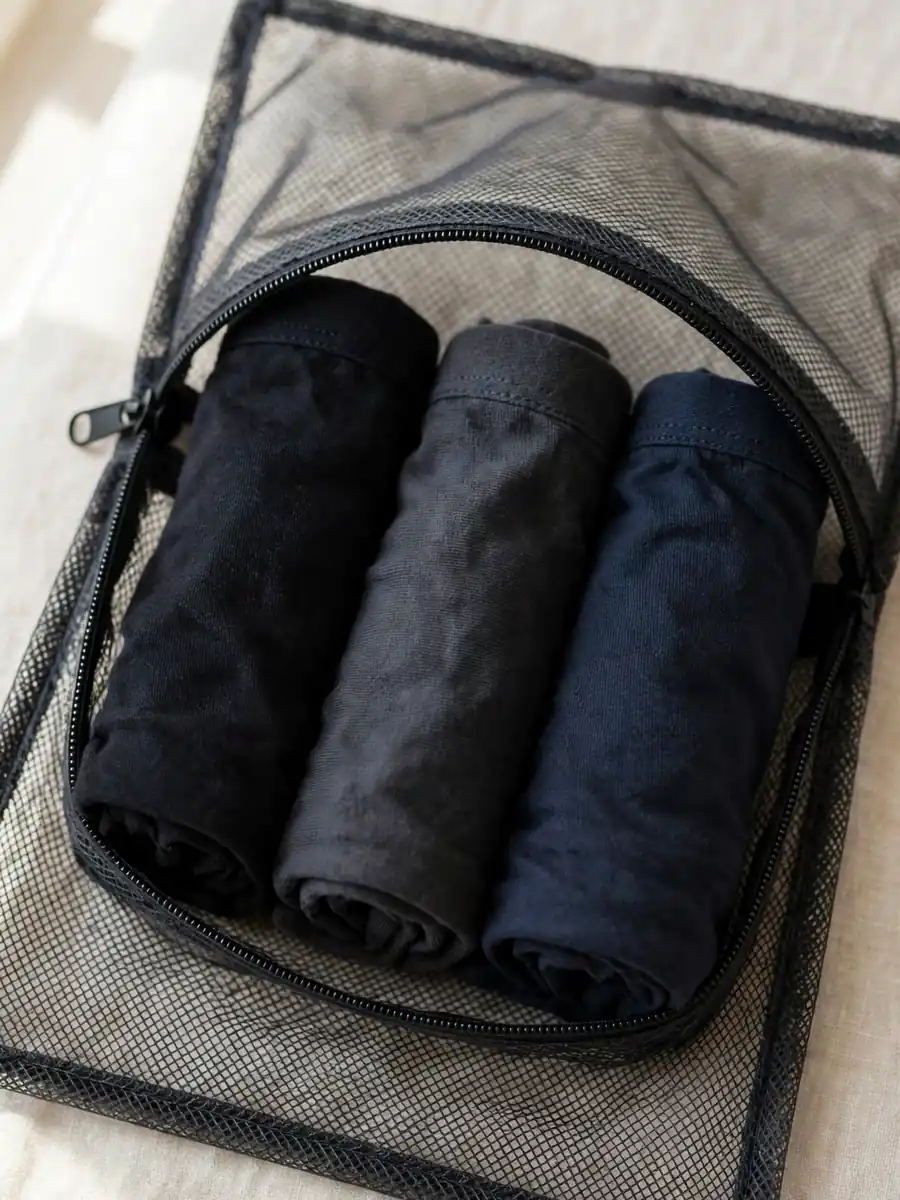
Underwear sets the laundry rhythm of the whole trip. In ordinary quick-dry synthetics, pack five to seven sets and wash a batch mid-trip. In merino, three to four sets can be enough, because each set can be worn twice and merino washes and dries well in a hotel sink overnight. Either way, quick-drying is the property that matters: heavy cotton underwear is the classic reason travellers end up with a bag of damp laundry.
Choose dark colours that will not show through lighter trousers and that all wash happily in the same sink load as your base layers. Sports styles in synthetic fabric also double as a swim option in hotel pools and thermal springs, which saves packing a dedicated swimsuit in winter. Packing tip: keep one full spare set, underwear, socks and a base top, in your personal item; if your carry-on is gate-checked or a connection goes wrong, you can still freshen up completely.
9. Merino wool socks (3 to 4 pairs)
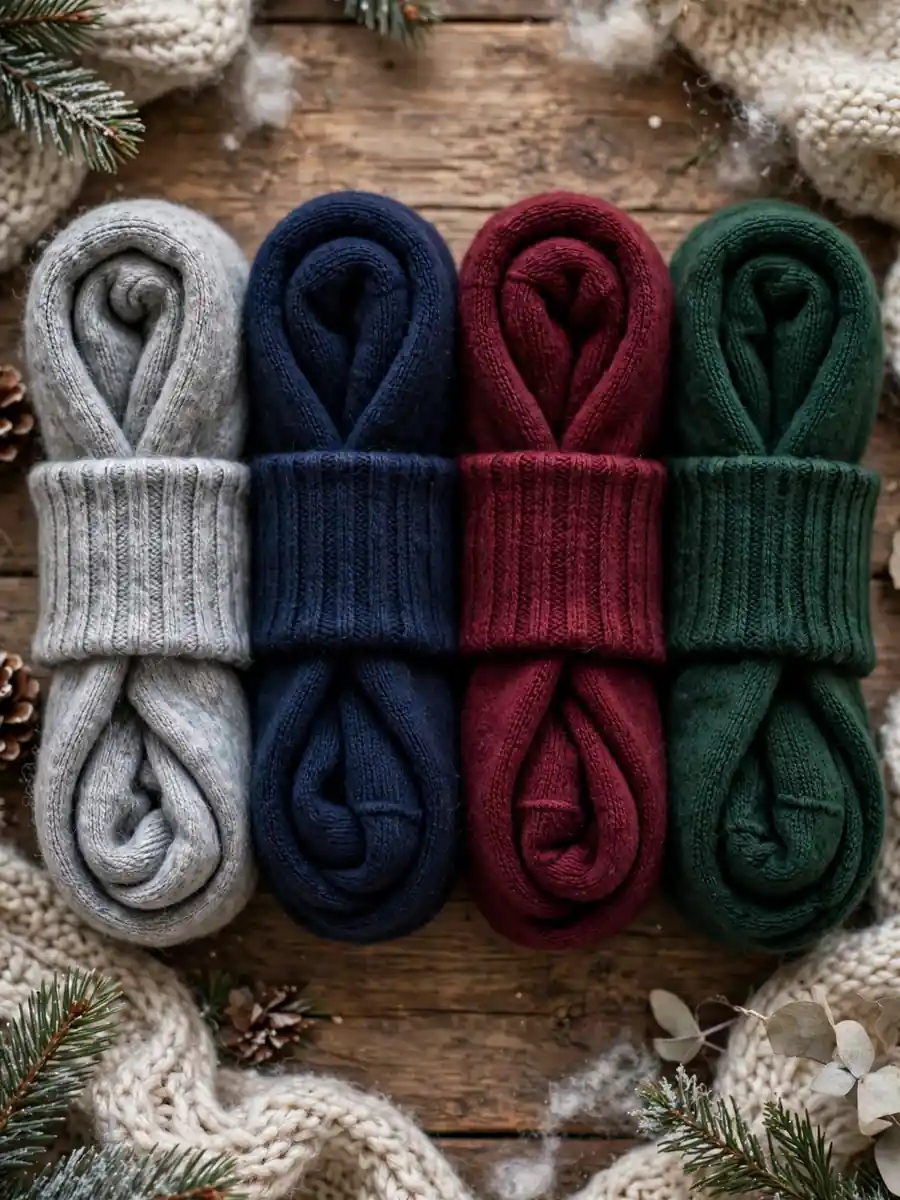
If winter travellers could upgrade only one item, this should be it. Cold feet end sightseeing days early, and feet get cold through conduction from icy pavements as much as from the air. Merino wool socks insulate even when slightly damp, cushion long walking days and resist odour, so a pair can be worn twice before washing. Cotton socks do the opposite: they absorb sweat, stay cold and invite blisters.
Three to four pairs work on a sink-wash rhythm: one on, one drying, one or two in reserve, with the thickest pair reserved for the coldest day. Choose crew or mid-calf length so there is no skin gap between boot, sock and legging, and check they fit inside your boots without squeezing, because tight socks restrict circulation and actually make feet colder. Packing tip: stuff rolled socks inside your packed second shoes to use the dead space and help the shoes hold their shape.
10. Insulated waterproof boots (worn to travel)
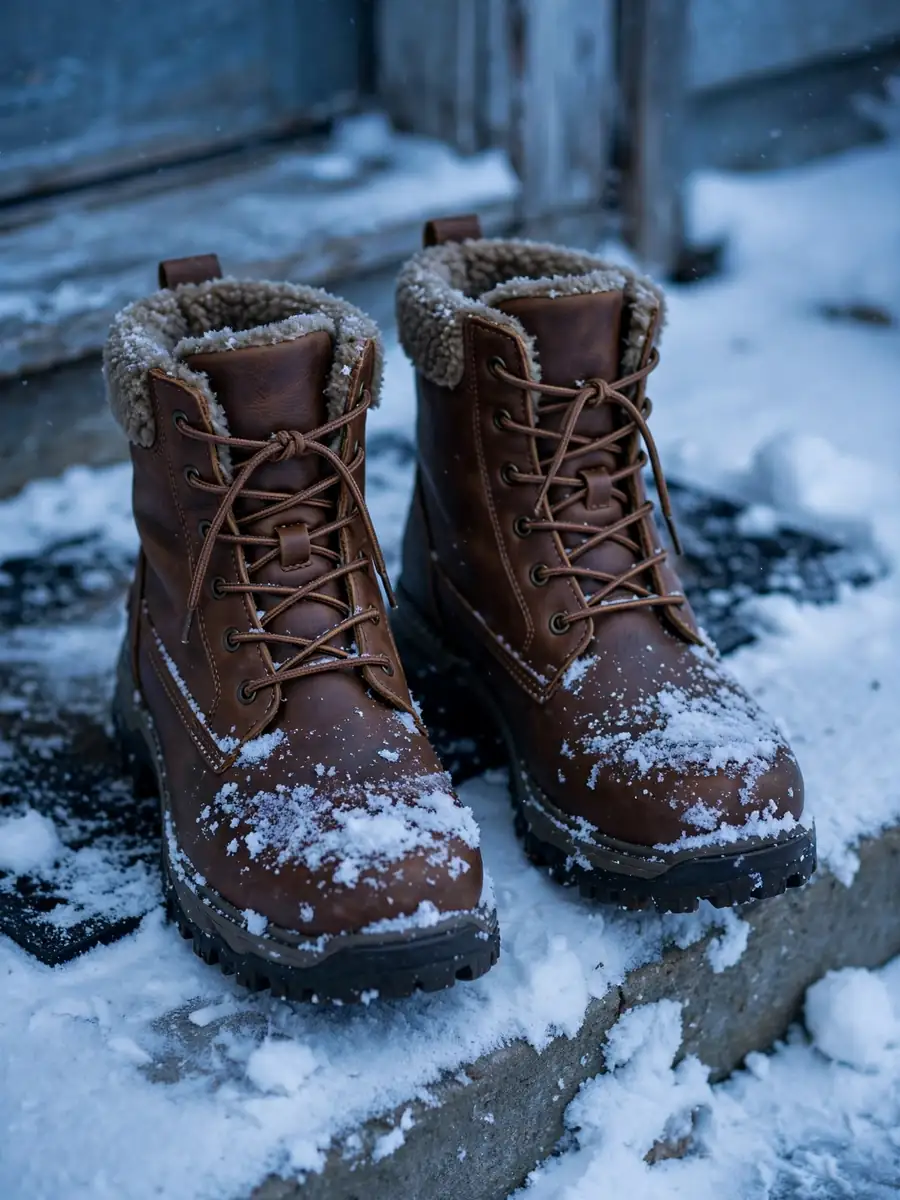
Your boots are the platform the whole trip stands on, and in winter they need three properties at once: insulation for standing still on frozen ground, a waterproof membrane or treated leather for slush, and a deep tread for grip. Fashion boots with smooth soles are a genuine hazard on icy streets. Wear your boots on travel day without exception; they are the heaviest item you own and the single biggest space saving available.
Break them in at home first, because new boots and 20,000-step days are a miserable combination. If your trip is city-only, a lighter insulated ankle boot is enough; save heavier mountaineering styles for rural or ski trips. For cold, wet city breaks, the footwear logic in our Edinburgh outfit and packing guide is a useful companion. Packing tip: at security and on the plane, loosen the laces rather than removing boots fully when you can, and wear your thickest socks with them so the fit you tested at home is the fit you travel in.
11. Second pair of shoes (packed)
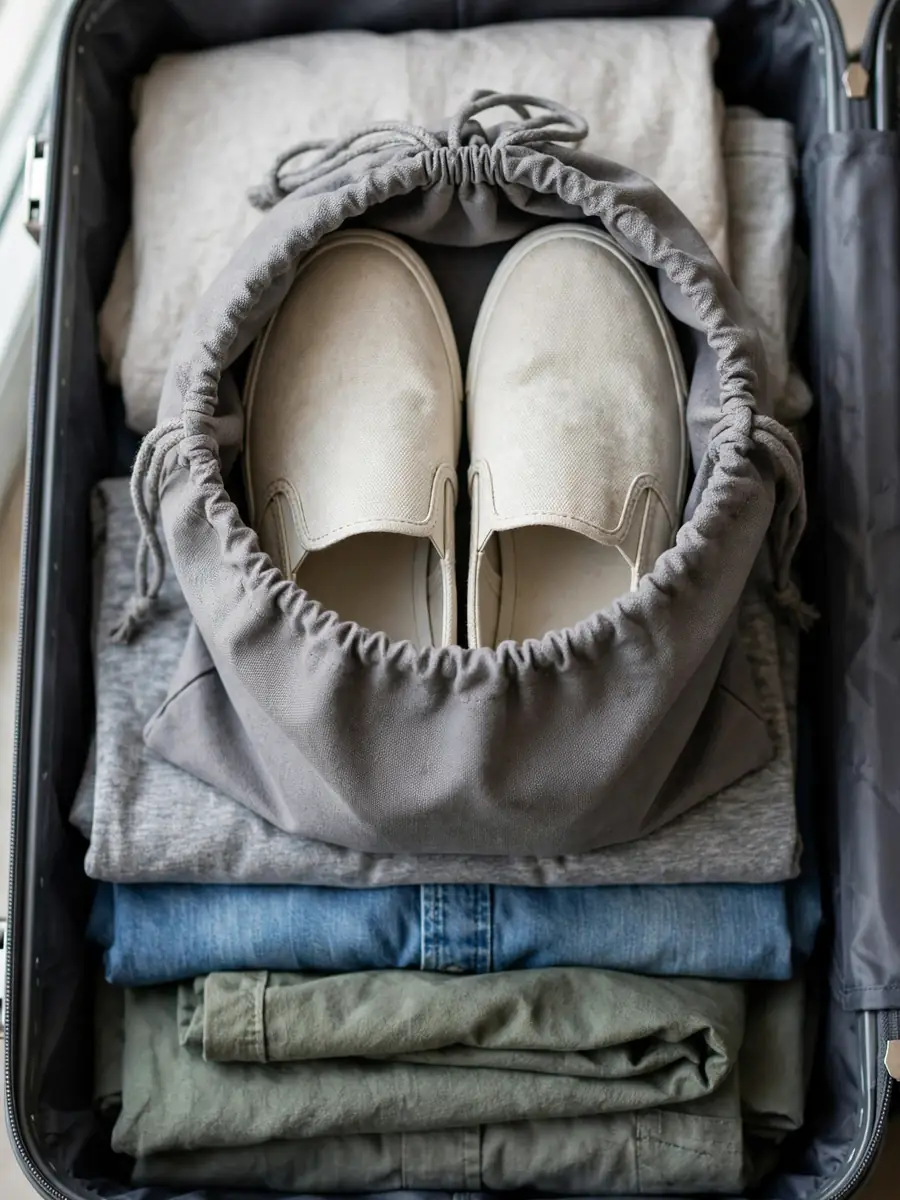
One pair of shoes, however good, is a risk in winter: boots get soaked, feet get tired of the same last, and hotel floors are cold. A second, lighter pair, simple slip-ons, trainers or flats depending on your style, covers evenings, indoor days and the disaster scenario of boots drying on a radiator. It also gives your feet a different pressure pattern on alternate days, which matters more than most travellers expect on a walking-heavy trip.
Keep this pair genuinely light and flat-packing; a second heavy pair defeats the system. It travels in the bag, in a shoe bag that keeps pavements off your knitwear, and it should be a pair you could walk a full day in if the boots failed completely. Packing tip: choose the second pair in the same palette as everything else and wear it on the plane home if your feet swell on flights, swapping the boots into the bag for the return only if space allows.
12. Slip-on ice traction cleats
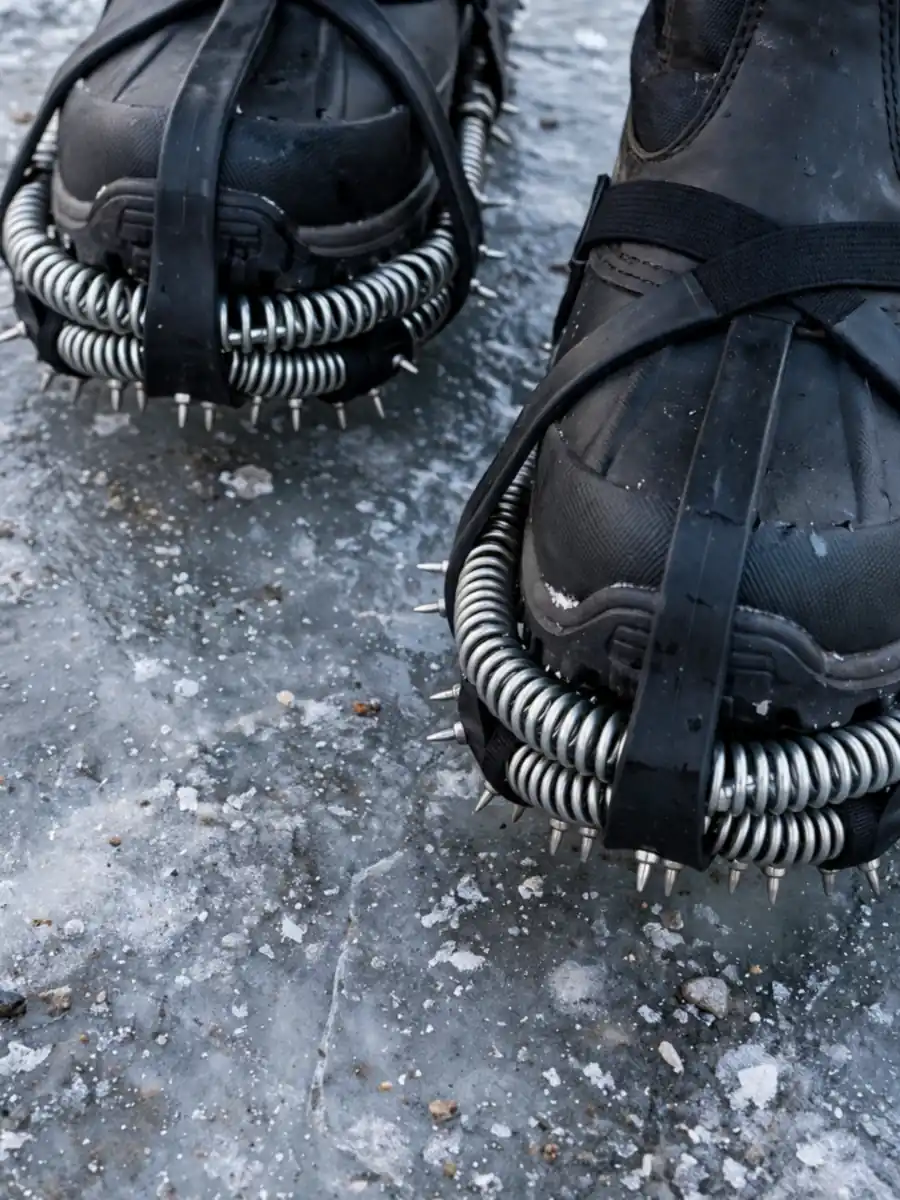
The smallest item on this list may save your whole trip. Slip-on traction cleats, elastic frames with metal coils or studs that stretch over your boot soles, turn sheet ice from a shuffle into a walk. City pavements that freeze overnight, station platforms, old town cobbles and rural paths are exactly where winter travellers fall, and a fall on day two can end the holiday that the other 21 items were packed for.
They weigh very little, pack flat against the bag wall, and take ten seconds to fit or remove at a cafe door. Buy them sized for your boots and test the fit at home, because a cleat that pings off in a snowdrift is worse than none. Packing tip: carry them in your day bag or coat pocket on days with freeze-thaw weather rather than buried in the suitcase, and rinse the salt off them at night so the metal lasts the trip.
13. Insulated gloves
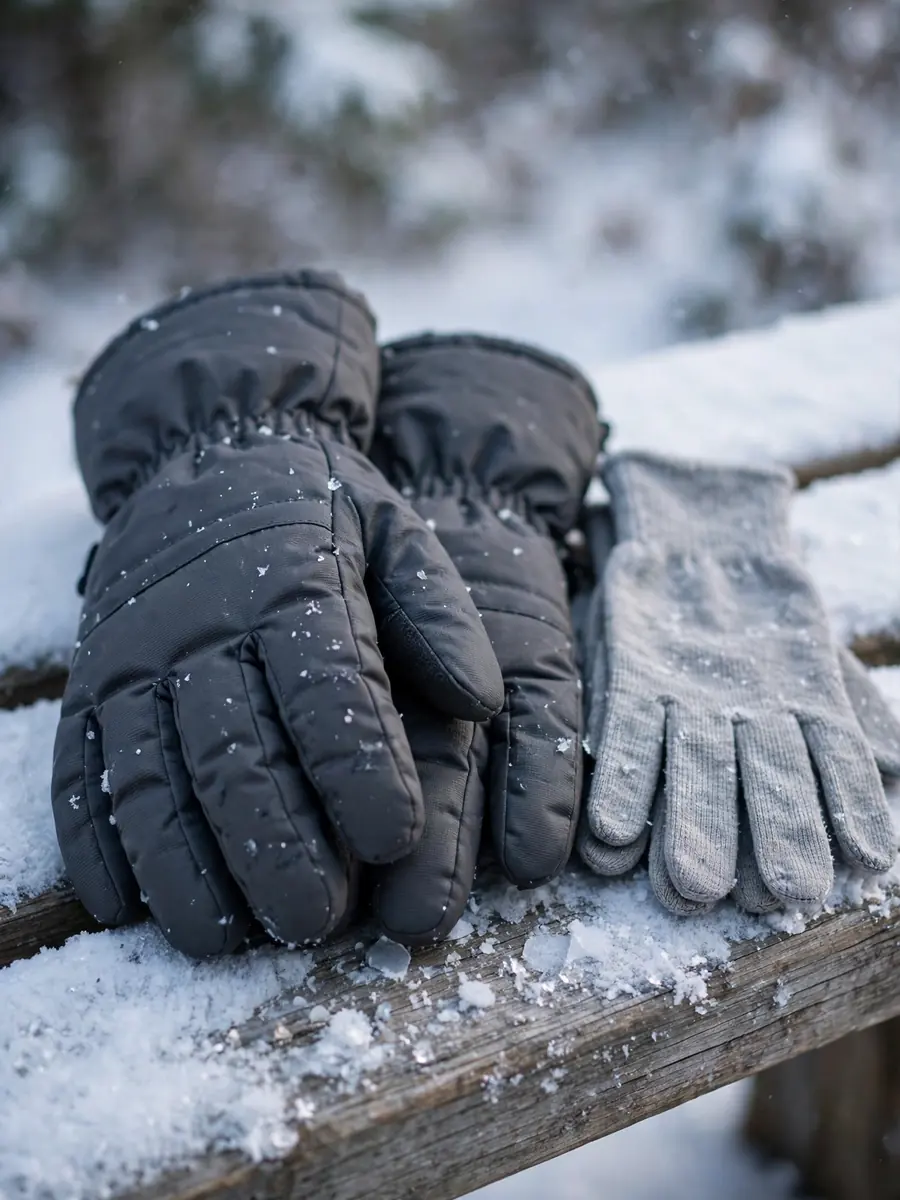
Hands lose heat fast and complain loudly, and winter travel is full of hand exposure: holding a phone for navigation, gripping railings, carrying a bag through snow. One good pair of insulated, windproof gloves with a water-resistant outer covers almost everything. Touchscreen-compatible fingertips are worth having, because removing a glove at minus five to check a map is how gloves get dropped and lost.
If your trip involves serious cold or snow activities, use the two-layer trick: thin liner gloves underneath, which handle phones and cameras, and the insulated pair over the top for walking. Both pairs together still pack smaller than one ski mitten. Clip or zip them into a coat pocket when not worn, hands-free and unlosable. Packing tip: on travel day, gloves live in your coat pockets, not the bag, so they are available the moment you step out of the arrival airport into the cold.
14. Warm beanie hat
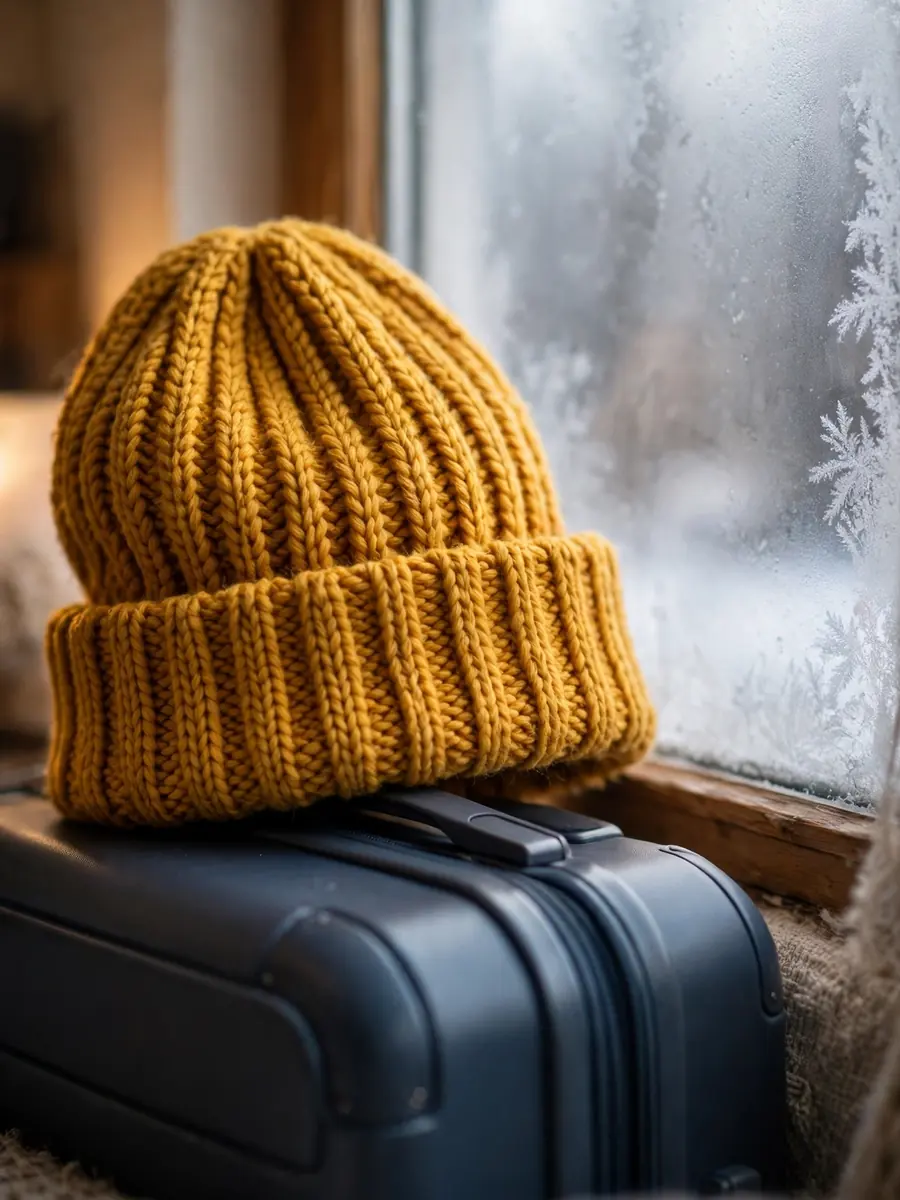
A beanie is the highest warmth-per-gram item you own. Your head and ears are constantly exposed, wind finds them first, and a good knit hat that pulls down over the ears changes how cold a day feels more than another sweater would. Wool or a wool blend beats thin acrylic fashion hats, and a fleece-lined band around the ears is worth looking for if you feel the cold.
One hat is enough; choose a colour that works with your coat and appears happily in photos, because it will be in all of them. A close fit matters: loose hats let wind underneath and need constant adjusting with gloved hands. Packing tip: the beanie is the ideal travel-day pocket item, and on the plane it doubles as a soft pouch for fragile small things like earbuds or sunglasses if you need padding in a hurry.
15. Scarf or neck gaiter
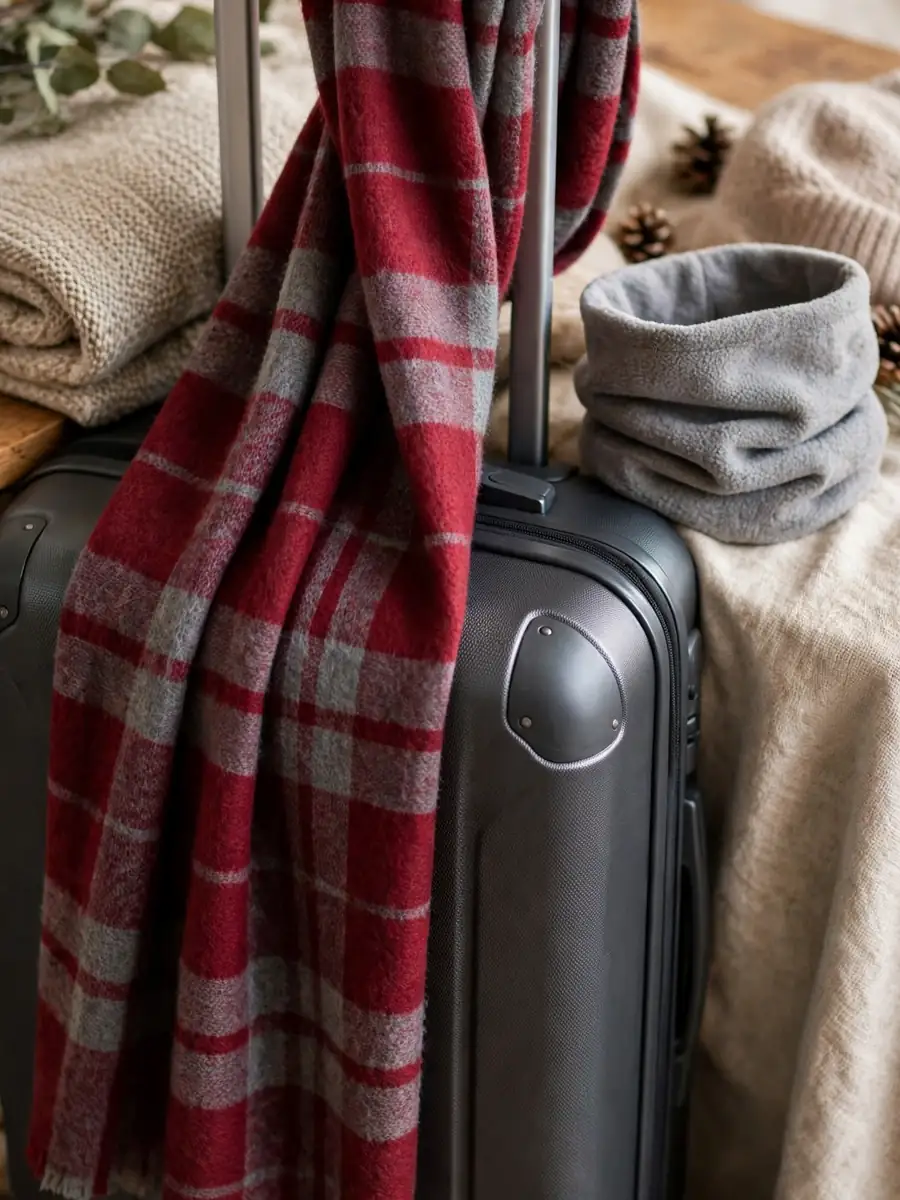
The gap between coat collar and beanie is where winter gets in. A scarf or neck gaiter seals it, and the choice between them is practical: a gaiter or buff is compact, stays put in wind and pulls up over your nose on bitter days, while a full scarf adds style, covers more of the chest where a coat zip ends, and doubles as a blanket, pillow or extra layer on trains and planes.
Many travellers pack the gaiter and wear the scarf, which is a reasonable way to have both without spending bag space. Wool or merino again outperforms acrylic for warmth when damp. Whichever you choose, it should be long or stretchy enough to wrap twice; a short decorative scarf is jewellery, not equipment. Packing tip: wear the scarf on travel day even if you board somewhere mild, because it becomes your in-flight blanket and frees you from relying on airline blankets entirely.
16. Hand warmers
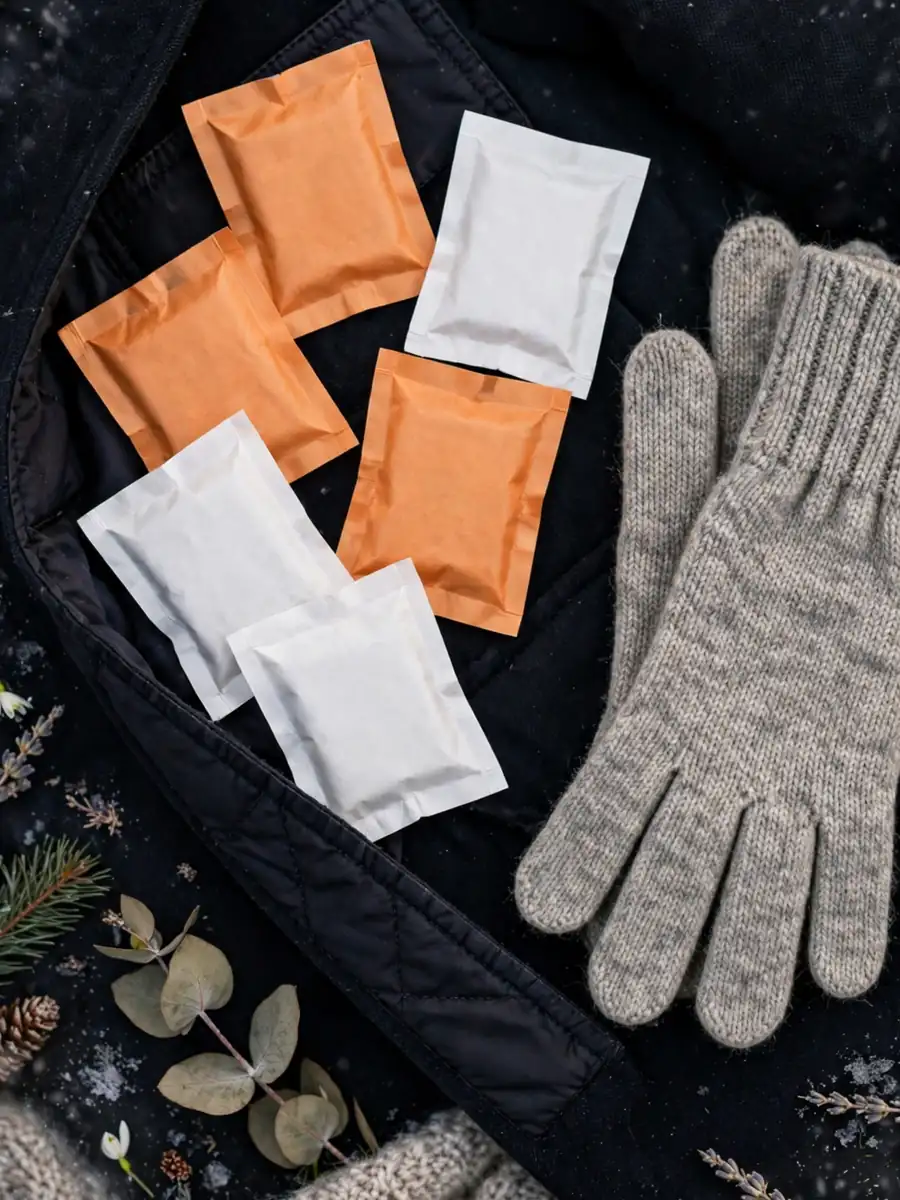
Disposable hand warmers are pocket-sized insurance: two small packets that heat up when exposed to air and keep gloves genuinely warm through a long outdoor stretch, a Christmas market evening, a viewpoint wait or a delayed train on an open platform. They weigh almost nothing, cost little, and rescue the moments when the rest of the system is not quite enough, especially for travellers whose hands and feet run cold.
Pack four to six single warmers for a week and treat them as consumables for the coldest outings rather than daily kit. Disposable air-activated warmers are standard cabin items; if you prefer a rechargeable battery warmer, it must travel in your cabin baggage like other lithium battery devices, so keep it in your personal item and check current rules before you fly. Packing tip: put one pair in your personal item for arrival day, because the first journey from airport to hotel is often the coldest and most disorienting hour of the trip.
17. Lip balm and moisturiser kit
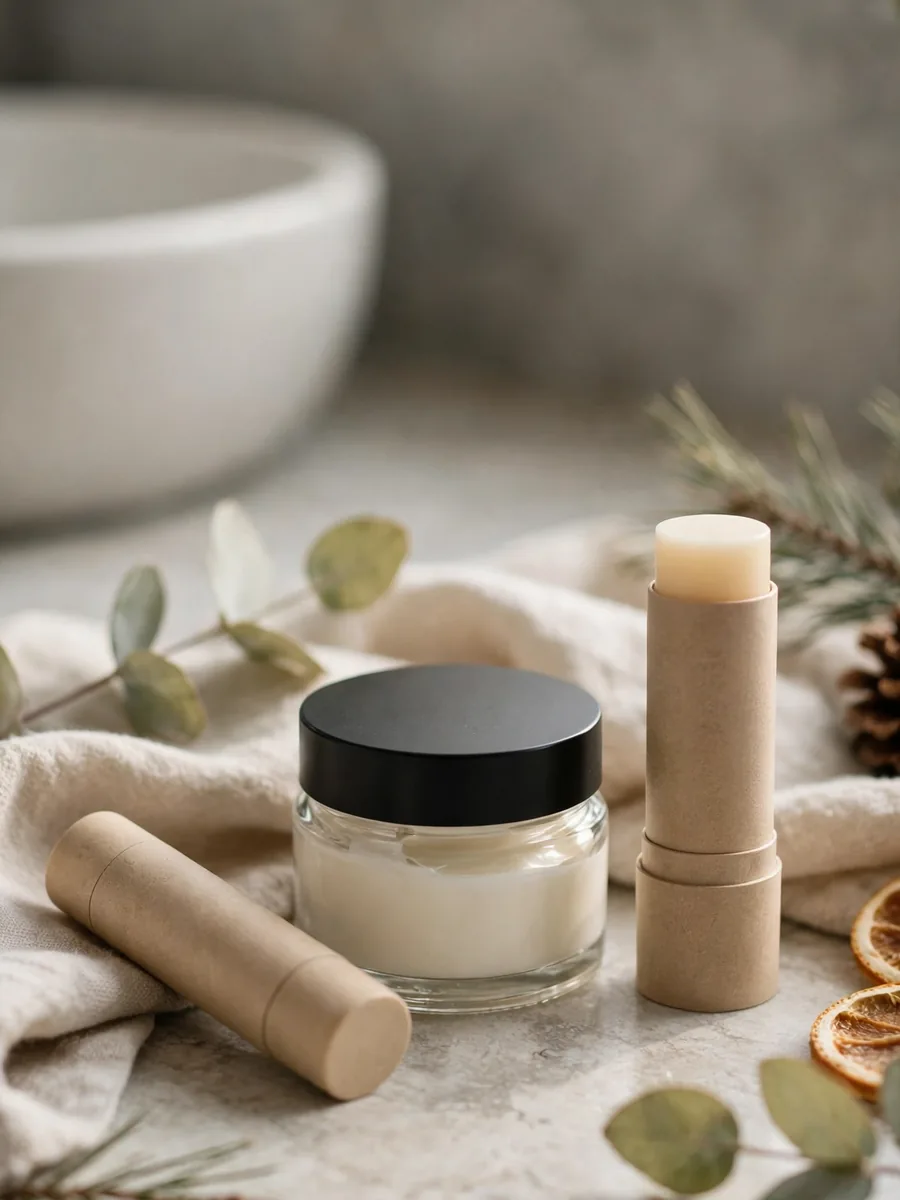
Cold air outside and dry heated air inside attack skin from both directions, and lips, which have no oil glands of their own, crack first. A small skin kit solves it: a lip balm you actually like the taste of, so you use it, a rich moisturiser for face and hands, and ideally a solid balm stick, which multitasks across lips, cuticles and dry patches. The smart travel detail is format: solids do not count towards your liquids allowance, so the balm stick and a solid moisturiser bar stay outside the quart bag entirely.
Keep this kit in your personal item or coat pocket, never buried in the suitcase, because the damage happens during the travel day itself: cabin air, cold platforms, windy walks. Apply lip balm before going outside rather than after lips are already sore. Packing tip: decant rich cream into a small pot rather than carrying a full-size jar, and put one lip balm in the coat and a spare in the personal item, because lip balm is the most lost object in winter travel.
18. Sunglasses for snow glare
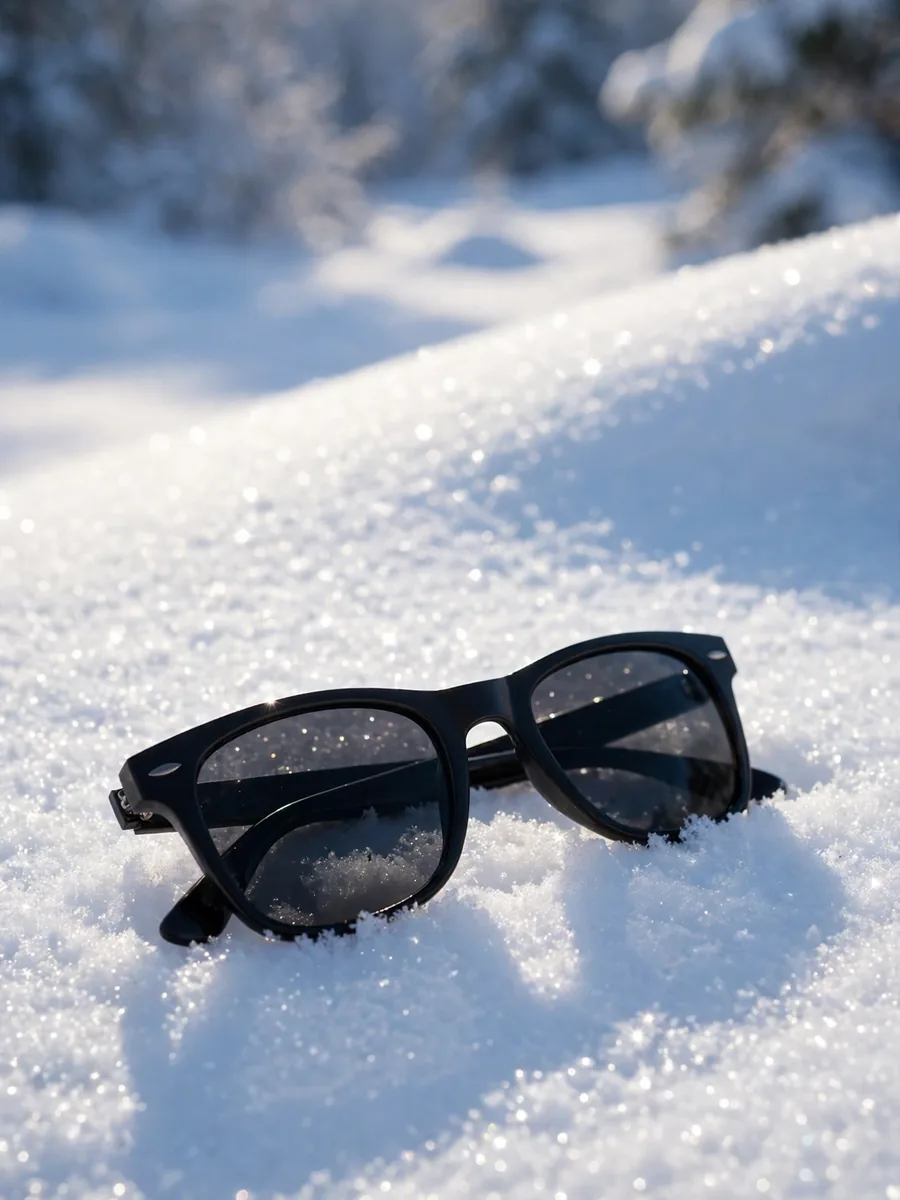
Sunglasses feel like a summer item, but winter sun is often harsher: low angles, long shadows and, above all, snow, which reflects ultraviolet light back up at your face and can leave you squinting through headaches on a bright day. A proper pair with full UVA and UVB protection, ideally a darker lens for snowfields and high places, earns its tiny space on any itinerary with bright days, altitude or open snowy landscapes.
They weigh almost nothing and live in a hard case in your personal item, which also protects them from the crushing that soft pouches invite. If you wear prescription glasses, a larger frame that fits over them, or clip-ons, beats struggling. Packing tip: the case doubles as safe storage for the other fragile small item travellers break, wired earbuds, so sunglasses and tech share one rigid home instead of two.
19. Toiletries in a quart size liquids bag
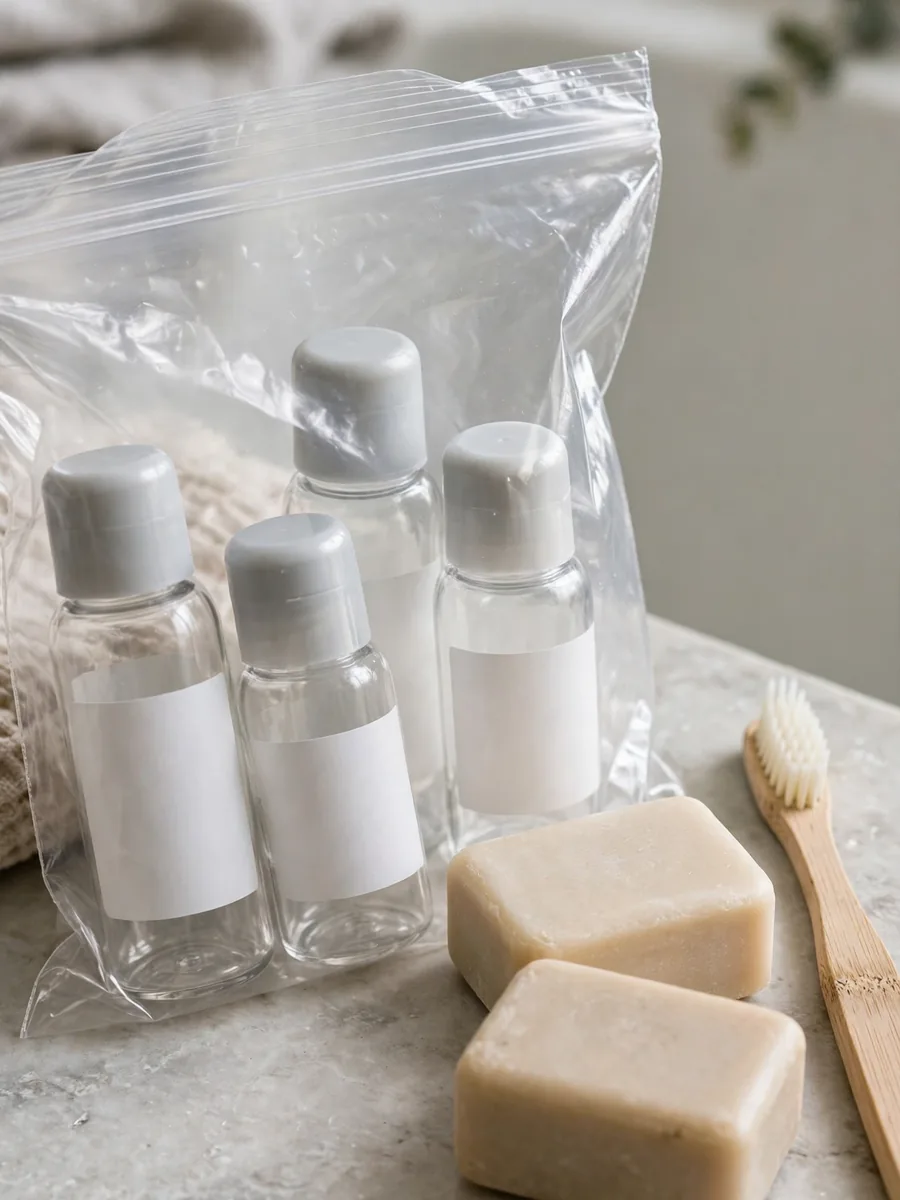
The liquids rule does not change with the season: at US checkpoints the TSA liquids, aerosols and gels rule allows travel-size containers of 3.4 ounces (100 ml) or less, all inside one quart size bag, with medications exempt. Winter simply tempts you to bring more creams and lotions, which is why the solids strategy matters: solid shampoo, conditioner and moisturiser bars bypass the bag completely and free its space for the few true liquids you need.
Build the bag around what hotels cannot provide well: your moisturiser, any prescription creams, contact solution if relevant. Everything else can shrink. Keep the bag at the top of the carry-on or in an outside pocket so security stays fast with cold, slow fingers. Packing tip: winter skin drinks more product than summer skin, so decant moisturiser into two small pots instead of one, one for the bag and one for your personal item, rather than one large container that breaks the 100 ml limit.
20. Tech kit with cold-weather battery care
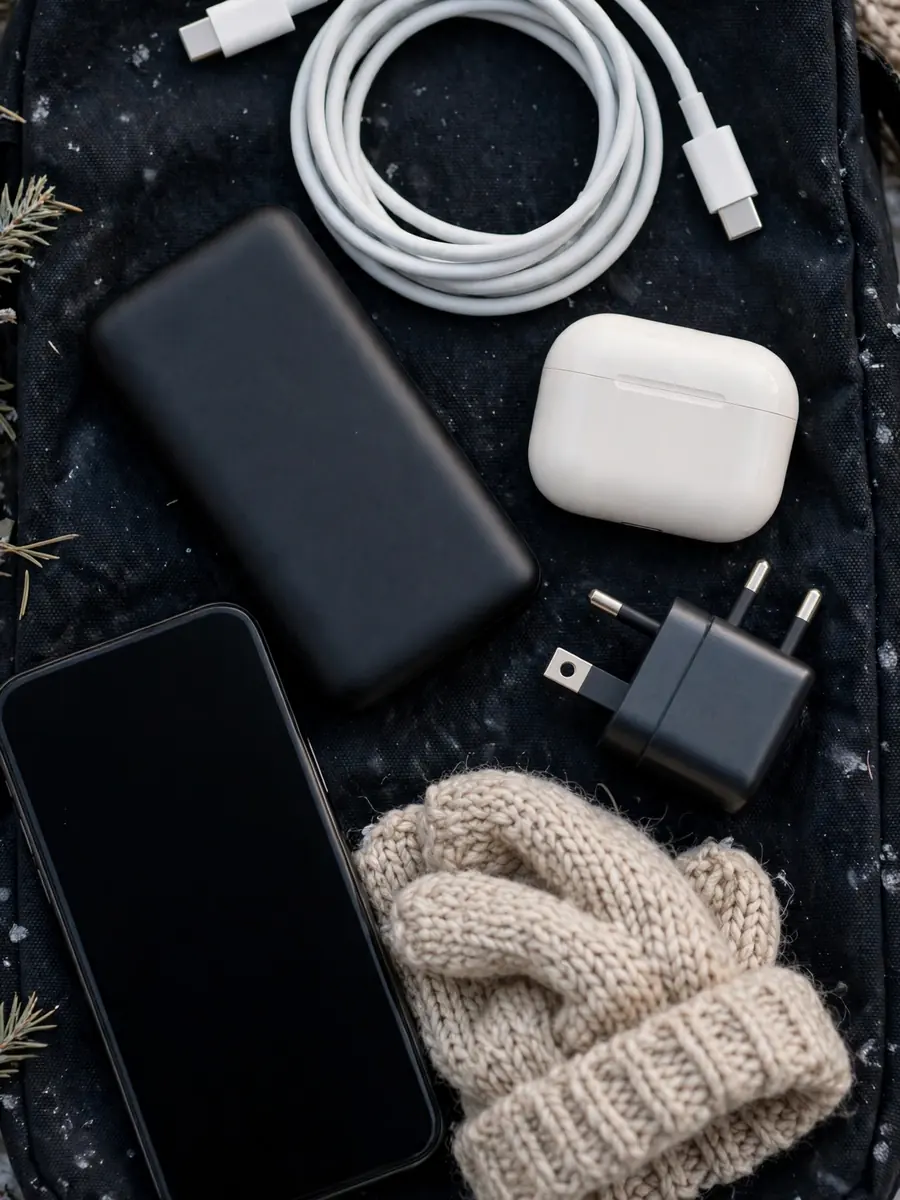
The tech kit itself is standard: phone charger, cable, power bank, earbuds or headphones, and a plug adapter if you are crossing regions. Winter adds one behaviour, not more gear: cold temporarily drains lithium batteries, and a phone that showed 40 percent can die abruptly in freezing wind, usually at the exact moment you need a map or a boarding pass. The fix is storage, not a bigger battery: phone and power bank ride in an inside coat pocket, warmed by your body, not in the suitcase or an outer rucksack pocket.
Keep cables braided and short, and the whole kit in one pouch so it transfers between bags in seconds. Photographers should rotate camera batteries the same way, one in the camera, one warming in a pocket. Packing tip: download offline maps and save boarding passes as screenshots before you leave, so a cold-dead battery or a signal gap never strands you at a snowy station.
21. Documents and personal item kit
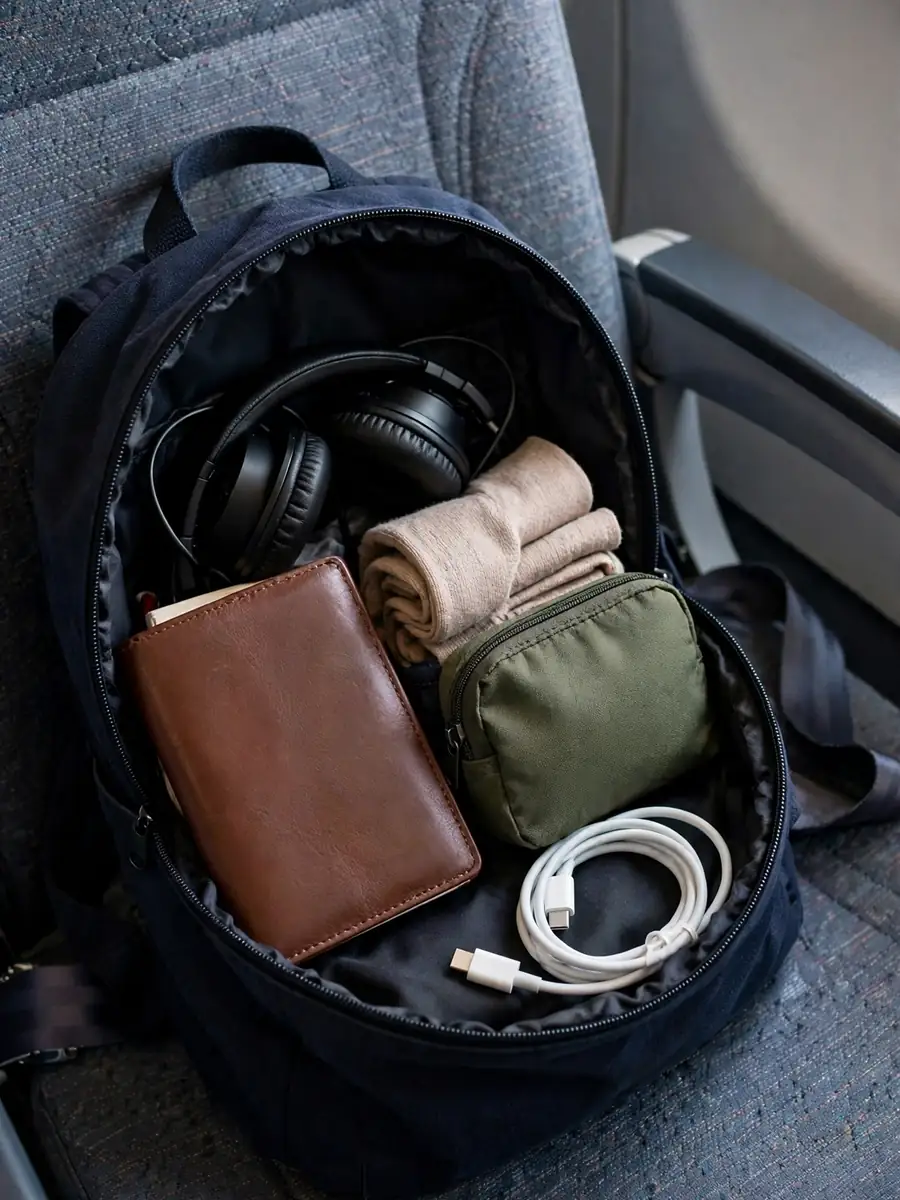
The personal item is your insurance policy, and winter raises the stakes of the classic scenario: your carry-on gets gate-checked on a full flight, or a connection collapses in a snowstorm and you spend a night in a hub airport. The documents set, passport or ID, payment cards, insurance details, bookings and medication, lives here permanently, with digital copies on your phone. Around it, pack the survival layer: spare socks and underwear, a base layer top, chargers, snacks, lip balm and your hand warmers.
This kit follows the same logic as our guide to carry-on bag essentials for long flights: if the main bag vanished, you could still arrive, sleep and function. In winter, add one thermal layer to that promise, because an unplanned night in a cold city without your coat system is a genuine problem, not an inconvenience. Packing tip: photograph every document and store the images in a single phone album, so a border official, insurer or hotel desk can be shown proof in seconds with gloves half off.
22. Organisation kit (compression cubes, laundry bag, foldable day bag)
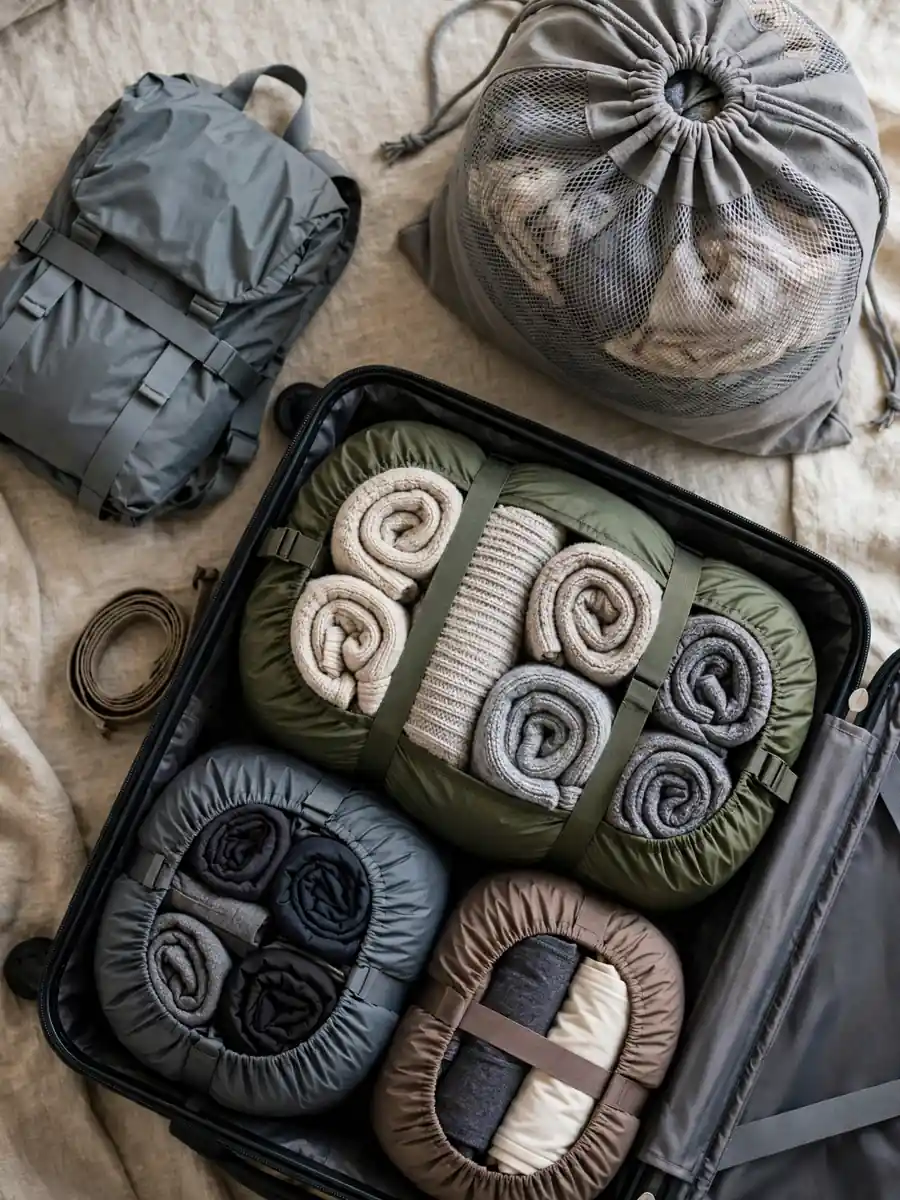
Winter clothing only fits when air leaves the equation. Compression packing cubes squeeze the loft out of sweaters and base layers and keep the system sorted: one cube for base layers, one for knitwear, one for small items. A laundry bag quarantines worn merino from clean clothes, which matters more on a sink-wash rhythm, and a simple dry bag or plastic isolation bag handles the return trip, when boots, gloves and cleats come home damp and salt-stained.
The foldable day bag completes the kit: it is your personal item’s partner at the destination, carrying hat, gloves, cleats, water and layers you peel off indoors, and it returns inside the carry-on taking almost no room. Building outfits from the cubes follows the same capsule logic as our Europe travel outfits and capsule wardrobe packing guide. Packing tip: zip cubes only three-quarters full at home; winter trips accumulate gloves, receipts and one souvenir, and a bag packed to bursting on day one has nowhere to put any of it.
Toiletries and Liquids: The 3-1-1 Rule, Explained Simply
The name is a memory aid for the US system: liquids, aerosols and gels in containers of 3.4 ounces (100 ml) or less, inside 1 quart size clear bag, 1 bag per passenger. Larger containers belong in checked luggage, even if they are half empty, while medications and infant nourishment are exempt from the size limit. Similar limits apply in the UK, the EU and many other regions, with local variations, so international travellers should check their departure airport’s current rules.
Winter rewards going solid wherever possible. Shampoo and conditioner bars, solid moisturiser and a balm stick are not liquids, gels or aerosols, so they sit outside the quart bag and outside its maths. That leaves the bag’s precious space for the liquids that genuinely have no solid form you like. Keep the bag somewhere you can reach it without unpacking in the cold: security halls are draughty, queues are long, and repacking a winter bag on the floor is nobody’s favourite start to a trip.
How to Make It All Fit in One Carry-On
- Lay out the full 22 first. If it is not on the list, it does not travel. Winter overpacking is almost always just-in-case clothing, and the layering system is the just-in-case.
- Build the transit outfit. Coat, boots, heaviest sweater, hat, gloves, scarf: on you. This is the step that makes the maths work.
- Roll base layers and leggings tightly; they compress best and fill the bag’s edges and corners.
- Compress knitwear in cubes, but fold the best sweater flat on top to protect it from creasing.
- Shoes at the bottom, in their bag, soles to the wall, with socks stuffed inside them.
- Small items into gaps: cleats flat against the back panel, warmers and chargers in pockets, skin kit in the personal item.
- Weigh the finished bag. Winter bags creep heavy; if your airline weighs cabin bags, move the mid-layer to your body as well.
- Leave expansion room. A bag at 90 percent on departure absorbs gloves, a gift and a damp layer on return. A bag at 100 percent does not.
Quiz: Which Winter Packing Style Are You?
Four packing personalities take this list in four directions. Open the one that sounds like you.
The Layer Scientist: you think in systems
You already own merino and know your gsm weights. Your risk is over-engineering: three insulation options where two would do. Trim to the coat plus one mid layer, and let the quiz answer be discipline. Start at items 2 to 5 and build outwards.
The Christmas Market Romantic: you pack for the photos
Your trip is markets, old towns and evenings out, so keep the list city-smart: the better sweater, the cleaner trousers, the good coat. Your essential upgrades are items 12, 14 and 16, grip, a photogenic beanie and warmers for long evenings outdoors with mulled drinks in hand. For outfit-first planning, see our guide to what to wear in London at Christmas.
The Winter Adventurer: you are heading outdoors properly
Snow walks, viewpoints and maybe a day in the hills. Weight your list toward items 10, 12 and 15, boots, cleats and a gaiter that seals the neck gap, and consider swapping the second shoes for a more serious spare. Everything else on the list stays; adventure does not need more clothes, just better contact with the ground.
The Minimalist in Denial: you swear it is not that cold
Every year you under-pack, borrow a hat and shiver through the trip. This is your correction year: pack items 3, 4 and 9 exactly as listed, thermal top, thermal leggings, proper socks, and wear the boots. The list is small on purpose; your only job is not to subtract from it.
What to Leave Out of a Winter Carry-On
- A second coat. One coat, worn, is the system. A spare doubles your bulk for zero extra warmth days.
- Chunky fashion knits. If a sweater cannot layer under your mid layer, it is a suitcase item, not a carry-on item.
- Snow pants for a city trip. Thermal leggings under trousers handle city cold. Save snow pants for actual ski itineraries, and even then, consider renting at the destination.
- Cotton base layers and cotton socks. They get damp, stay cold and take days to dry. This is the one fabric rule with no exceptions.
- Full-size toiletries. Decant, go solid, or buy at the destination.
- Just-in-case formal wear. One smart sweater and the cleaner trousers cover winter evenings out.
Printable Checklist: Tick It Off as You Pack
Outer Layers and Clothing
- ☐ Heavy winter coat (wear)
- ☐ Packable insulated mid-layer jacket
- ☐ Thermal base layer tops x2
- ☐ Thermal leggings x1 to 2
- ☐ Merino sweaters x2
- ☐ Winter trousers x2 (wear 1)
- ☐ Warm sleepwear set
- ☐ Underwear (5 to 7, or 3 to 4 merino)
- ☐ Merino wool socks x3 to 4 pairs
Footwear
- ☐ Insulated waterproof boots (wear)
- ☐ Second pair of shoes, in shoe bag
- ☐ Slip-on ice traction cleats
Accessories and Weather Extras
- ☐ Insulated gloves (plus liners if very cold)
- ☐ Warm beanie hat
- ☐ Scarf or neck gaiter
- ☐ Hand warmers x4 to 6
- ☐ Lip balm x2 and moisturiser
- ☐ Sunglasses in a hard case
Toiletries, Tech and Documents
- ☐ Liquids bag: containers 100 ml or less
- ☐ Solid toiletries (shampoo bar, balm stick)
- ☐ Charger, cable, power bank, adapter
- ☐ Documents set, cards, insurance details
- ☐ Spare socks, underwear and base top in personal item
Organisation
- ☐ Compression packing cubes
- ☐ Laundry bag and dry bag for the return
- ☐ Foldable day bag
- ☐ Bag weighed at home
Frequently Asked Questions
Can you really pack for winter in just a carry-on?
Yes, if the wardrobe is a layering system rather than a pile of outfits. The 22-item kit works because the bulkiest pieces travel on your body, the layers mix freely, and laundry is a sink and a rhythm rather than an event. Trips built around one base town suit it best; multi-stop trips in deep cold are harder but still possible with the same list and more washing.
How many sweaters do I need for a winter trip?
Two, plus your base layers and mid layer, covers a week comfortably. The trick is that sweaters are not worn alone: rotated over fresh base layers, a merino sweater stays presentable for many days. A third sweater adds bulk faster than it adds outfits, because trousers, not tops, limit most winter wardrobes.
Do I need snow pants in a carry-on?
For city trips, no. Thermal leggings under winter trousers handle pavement cold, and snow pants consume the space of three other items. For dedicated ski or snowshoe trips the answer changes, and the carry-on answer there is usually to wear or rent the snow pants at the destination rather than pack them.
Down or synthetic insulation: which is better for travel?
Down wins on warmth per gram and pack size, and loses when wet. Synthetic wins in damp, maritime winters and dries faster. Choose by destination climate, not by spec sheets: dry continental cold suits down, wet coastal cold suits synthetic, and either works inside a layering system with a weatherproof coat over it.
Are hand warmers allowed on a plane?
Disposable air-activated hand warmers are standard cabin items and can travel in carry-on or checked bags. Rechargeable warmers contain lithium batteries, and lithium battery devices belong in the cabin with you, never in checked luggage. Rules can change, so check your airline and the current security guidance before an important trip.
What happens if my carry-on gets gate-checked?
This is exactly what item 21 exists for. If the bag is taken at the gate, your personal item still holds documents, medication, chargers, a spare base layer, socks and underwear, skin care and warmers, and you are wearing your coat, boots and warmest layers. You lose convenience, not the trip.
How do I stop my phone dying in the cold?
Keep it warm. Cold temporarily reduces battery performance, so carry the phone and power bank in an inside pocket close to your body, use offline maps and screenshots of passes so the screen stays off longer, and let a cold phone warm up gradually indoors rather than charging it the moment you come inside.
Final Check Before You Zip the Bag
Winter carry-on packing is not about owning expedition gear. It is about a small number of honest items, each doing two jobs, worn and packed in the right order. Lay the 22 out, build the transit outfit, compress the rest, weigh the bag, and the season that breaks most travellers becomes the easiest one to move through: no carousel, no checked-bag queue, just step off the plane already dressed for the weather.
For a broader, tips-led take on the same challenge, read our earlier winter carry-on packing list, which approaches one-bag winter travel from the strategy side. And when the season turns, the sibling guide in this series applies the identical 22-item system to heat instead of frost.