22 travel packing list with kids Delightful to try
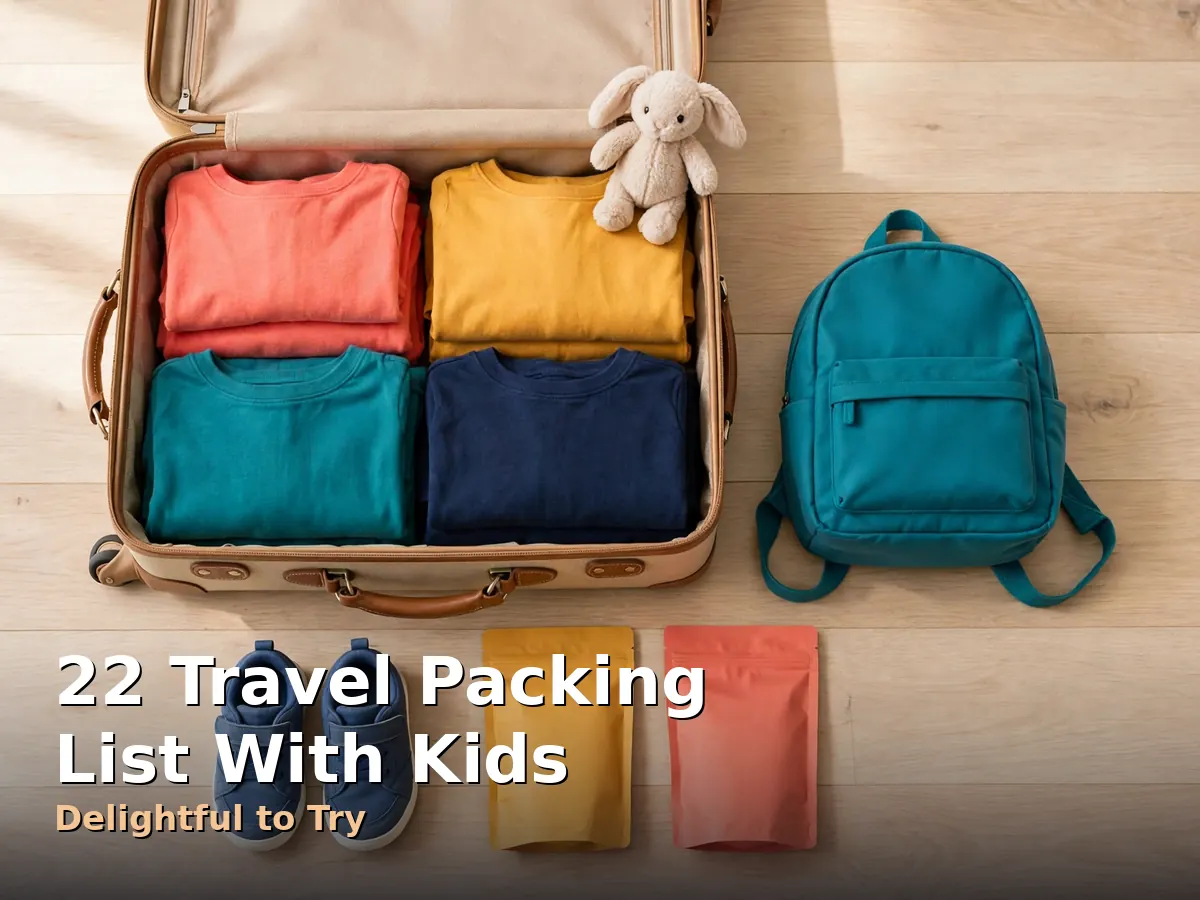
Packing for a family trip is not really a clothes problem. It is a logistics problem. The clothes are small; what overwhelms parents is the sheer number of jobs the bags have to do at once: feed the children, entertain them, clean them, comfort them, change them, and get everyone’s documents through an airport without a single essential item buried in the wrong bag. This travel packing list with kids breaks that whole job down into 22 items, each one explained on its own, so you can pack by category, by child, and by journey stage instead of standing over an open suitcase trying to remember everything at once.
The list is written for a parent travelling with children roughly aged 2 to 10, on a trip of about a week, with notes throughout on how the quantities change for younger toddlers, older children and longer trips with a laundry stop. Treat every quantity as a starting system to adjust to your own children, not a rule. Where you are flying, the list also shows you what belongs in your hand luggage and what can safely travel in the main bag, because with children, where an item rides matters almost as much as whether it comes at all. If your trip is adult only, our summer carry-on packing list covers the same one-bag system for a single traveller.
Family Packing at a Glance
- The split: one main bag for the bulk, one hand luggage bag per adult packed as a 24 hour survival kit for the whole family.
- The clothes: one complete outfit per child per day, plus spares scaled by age, all rolled and sorted per child.
- The transit kit: snacks, drinks, spare clothes, wipes, entertainment and the comfort item, all within arm’s reach, never in the hold.
- The documents: one wallet, one parent in charge of it, paper and digital copies stored separately.
- The method: pack by child and by journey stage, not by bag. Every bag holds something for everybody.
- The golden rule: if losing the main bag for a day would ruin the trip, that item belongs in your hand luggage.
How to Split It: Hand Luggage vs Main Bag
Before the list itself, decide how your bags divide the work, because the same item can be a comfort or a crisis depending on which bag it is in. The main bag is the wardrobe and the stockroom: the week’s clothes, shoes, bulk toiletries, beach gear and everything you will only need at the destination. Your hand luggage has a different job. It is a survival kit for the journey and for the first 24 hours after it, built to carry the family through delays, spills, a missed connection or a main bag that arrives a day late.
| Bag | Where it travels | What belongs in it | Why |
|---|---|---|---|
| Hand luggage (cabin bag and personal items) | In the cabin with you | A spare outfit per child and a clean top for you, snacks and drinks, wipes, the comfort item, entertainment, health pouch, documents wallet, chargers | It handles the journey itself and the first day if the main bag is delayed |
| Main bag (checked, or the big family case) | Aircraft hold, car boot, train luggage rack | The remaining outfits, pyjamas, shoes, swim and weather gear, bulk toiletries, laundry kit, destination extras | It is the stockroom you unpack at the destination, not the bag you fight through an airport with |
| Each child’s own small backpack | On the child’s back, then under the seat | Their snack portion, their activity kit, their comfort item, their water bottle | It spreads the carrying, gives children ownership of their things, and keeps their essentials reachable without opening the big bags |
One more split matters as much as the bags themselves: never put all of one child’s things in a single bag. Spread each child’s outfits across the main bag and the hand luggage, and across two cases if you are taking two. If one bag is delayed, every child still has clothes. Airlines set their own baggage allowances, and rules for children’s equipment such as strollers and car seats vary by airline and by fare, so check your own airline’s baggage and family pages before you finalise the packing, rather than relying on what another airline allowed last year. For more on what earns a place by your feet on a long flight, see our guide to carry-on bag essentials for long flights.
How Many Clothes Do Kids Actually Need?
Most family bags burst for one reason: the outfit count was never decided, so clothes went in by handfuls. The honest maths is simpler than it feels. Plan one complete outfit per child per day, then add spares in proportion to how messy that child’s age group is, and stop the count at seven days of clothing no matter how long the trip runs. Beyond a week, the answer is a laundry plan, not a bigger bag. Younger children burn through clothes faster (food, water play, toilet training accidents), while an eight year old’s outfit can often be worn twice if it passes the sniff and stain test.
| Per child | Ages 2 to 4 | Ages 5 to 7 | Ages 8 to 10 |
|---|---|---|---|
| Outfits per day | 1, plus a spare most days | 1 | 1, with rewears |
| Spare outfits for a week | 2 to 3 | 1 to 2 | 1 |
| Pyjama sets | 2 | 2 | 1 to 2 |
| Underwear and socks | One set per day, plus 2 spares | One set per day, plus 2 spares | One set per day, plus 1 spare |
| Shoes | 2 pairs total | 2 pairs total | 2 pairs total |
| Swim sets | 2 | 2 | 1 to 2 |
With those numbers settled, the 22 items below are the whole system. Items 1 to 11 are the wardrobe and weather layer, items 12 to 19 run the journey itself, and items 20 to 22 handle mess, health and paperwork. Pack them in that order and the bags almost pack themselves.
The Complete Travel Packing List With Kids: All 22 Items
1. Complete outfit sets (1 per day, plus spares)
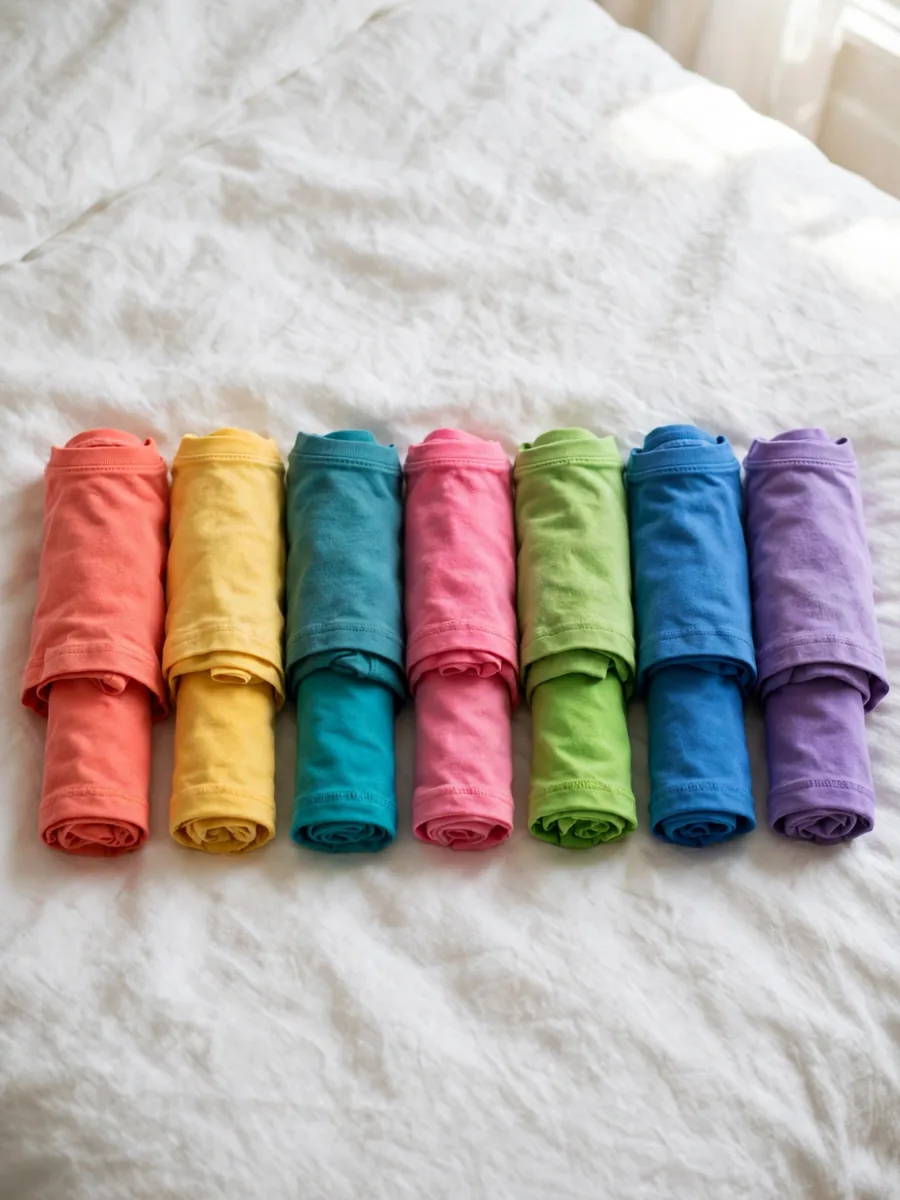
Start with outfits, not individual garments. A complete outfit (top, bottom, underwear and socks, rolled together) is the unit family packing actually runs on, because it removes the morning negotiation and the suitcase excavation in one move: anyone dressing the child can grab one roll and be finished. One outfit per day is the baseline for a week; the spares in the age table above are what absorb ice cream, puddle and travel sickness incidents without a laundry emergency.
Build each roll around bottoms that repeat. Two or three pairs of shorts, leggings or trousers can carry the whole week if the tops change, which keeps the total count honest. Choose fabrics that forgive: cotton blends and jersey that spot wash and dry overnight, in colours that do not show every mark. Packing tip: roll each outfit with the next morning in mind and line the rolls up in day order, so the first day’s clothes sit on top and the packing gets easier as the week goes on.
2. A colour-coded packing cube for each child
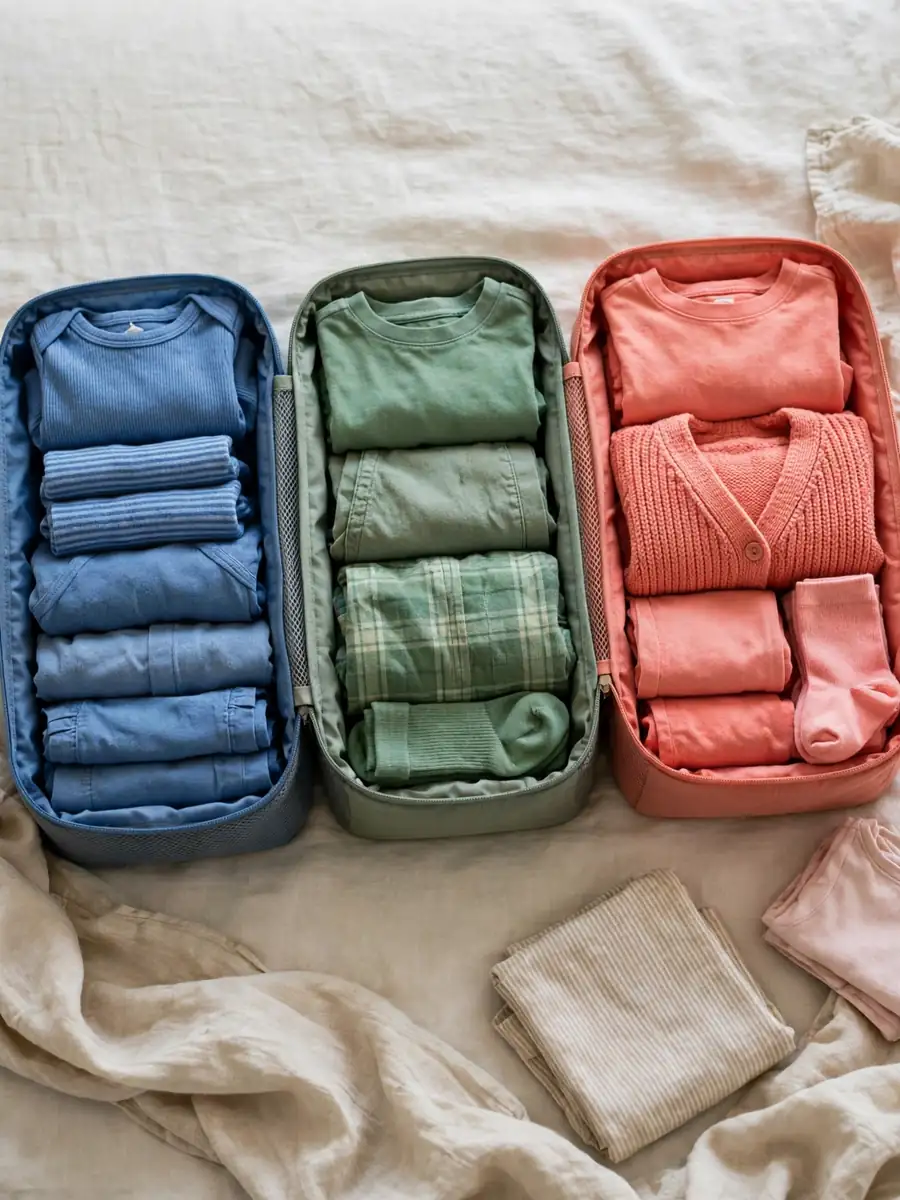
One cube per child, in that child’s own colour, is the cheapest organisational upgrade in family travel. It turns one shared suitcase into separate drawers: blue is one child’s, green is the other’s, and anyone can find, or refold, a specific child’s clothes without emptying the case onto a hotel bed. It also contains the chaos when a bag has to be opened mid-journey, because the cubes come out and go back as blocks.
Size the cubes to the child, not the case: one medium cube holds a young child’s week of outfits, while older children may need two. Compression cubes earn their price on the return leg, when dirty clothes expand. If you are taking two cases, split each child’s cubes across both, so a delayed case never leaves one child with nothing. Packing tip: put a small label or a coloured ribbon on each cube’s zip as well as using colour, so the system still works in a dark hotel room and for children who are not reading yet.
3. A small backpack each child carries
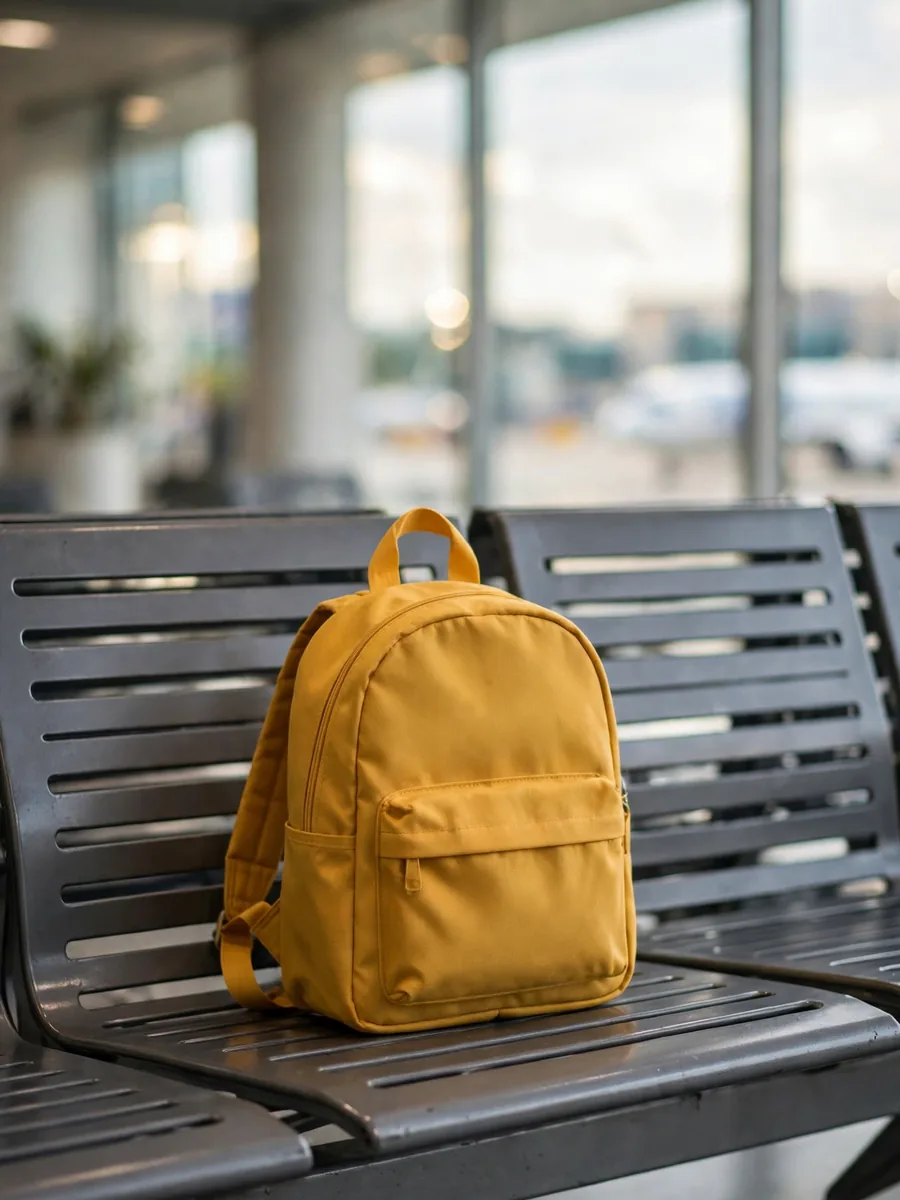
From about age three, most children can carry a small, light backpack of their own, and it quietly solves three problems at once. It spreads the family’s carrying load, it keeps that child’s journey essentials (snack, activity kit, comfort item, water bottle) reachable under the seat without opening the overhead bags, and it gives the child a job. Children carrying their own special bag tend to take the airport seriously, which makes the whole transit smoother.
Keep it genuinely light: a full backpack should never be more than a small fraction of the child’s own weight, and for the youngest travellers it may hold little more than the comfort item and a snack. Choose a bag with two shoulder straps and a front pocket you can reach without taking it off, and check the contents the night before, together, so there are no surprises (or smuggled rocks) at security. Packing tip: clip the backpack to your own bag with a simple carabiner while you queue, so it cannot be set down and left behind in the departure lounge.
4. Spare outfits in your hand luggage (1 per child, plus a top for you)
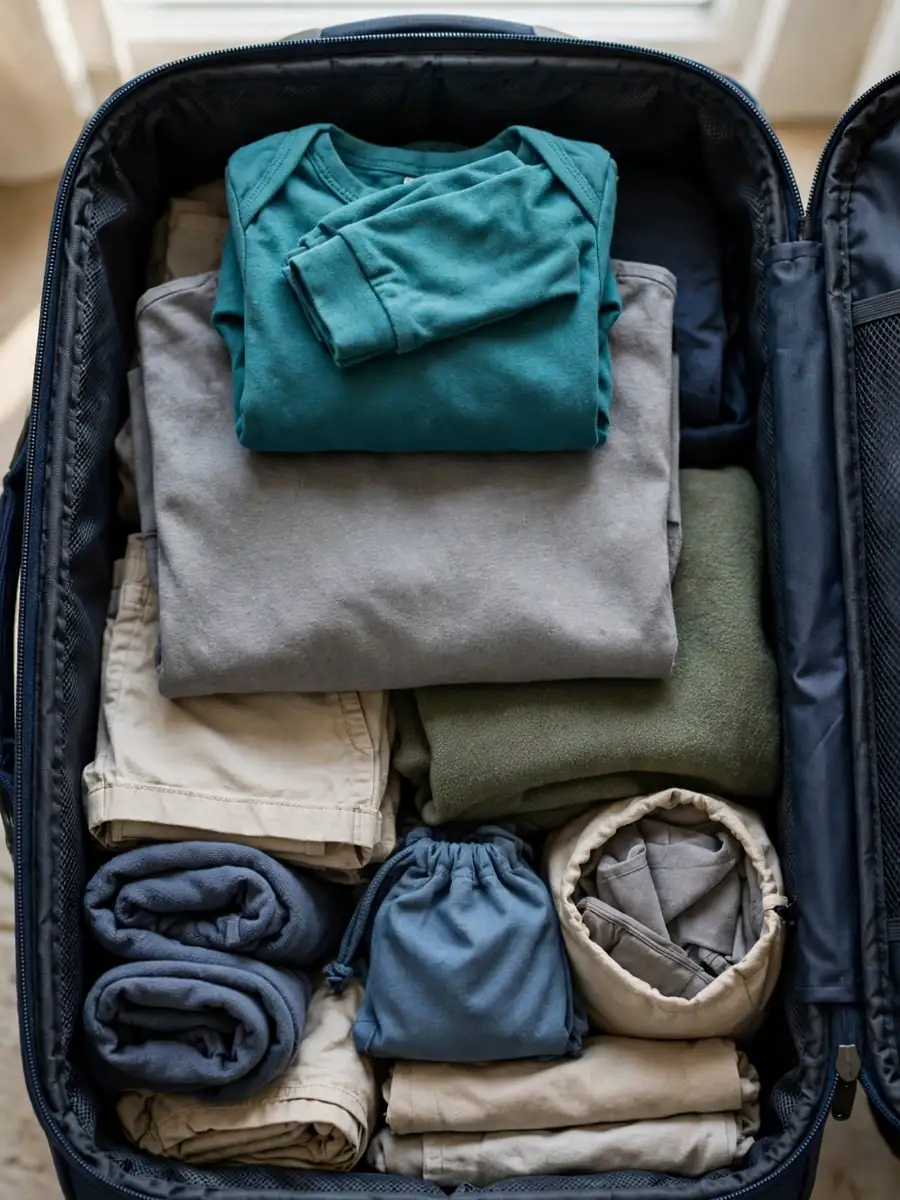
This is the item experienced family travellers never skip. One complete spare outfit per child rides in your hand luggage, sealed in its own pouch, alongside a clean top for the adult most likely to be holding the child when a drink, a meal or a stomach goes wrong. It covers the classic transit disasters (a spilled drink at 30,000 feet, a nappy that fails in the security queue) and doubles as insurance if the main bag is delayed: you land with a change of clothes for everyone, and the first day survives.
Pack the spares as complete mini outfits, underwear included, rolled tight and kept at the top of the cabin bag where you can reach them one handed. Choose the outfit you would want in the destination’s weather on arrival day, not the bulkiest thing the child owns. Replace anything you use during the journey from the main bag on arrival, so the system resets itself for the return trip. Packing tip: add a spare top for the second adult too if space allows; spills rarely respect which parent is on duty.
5. Pyjamas (2 sets per child)
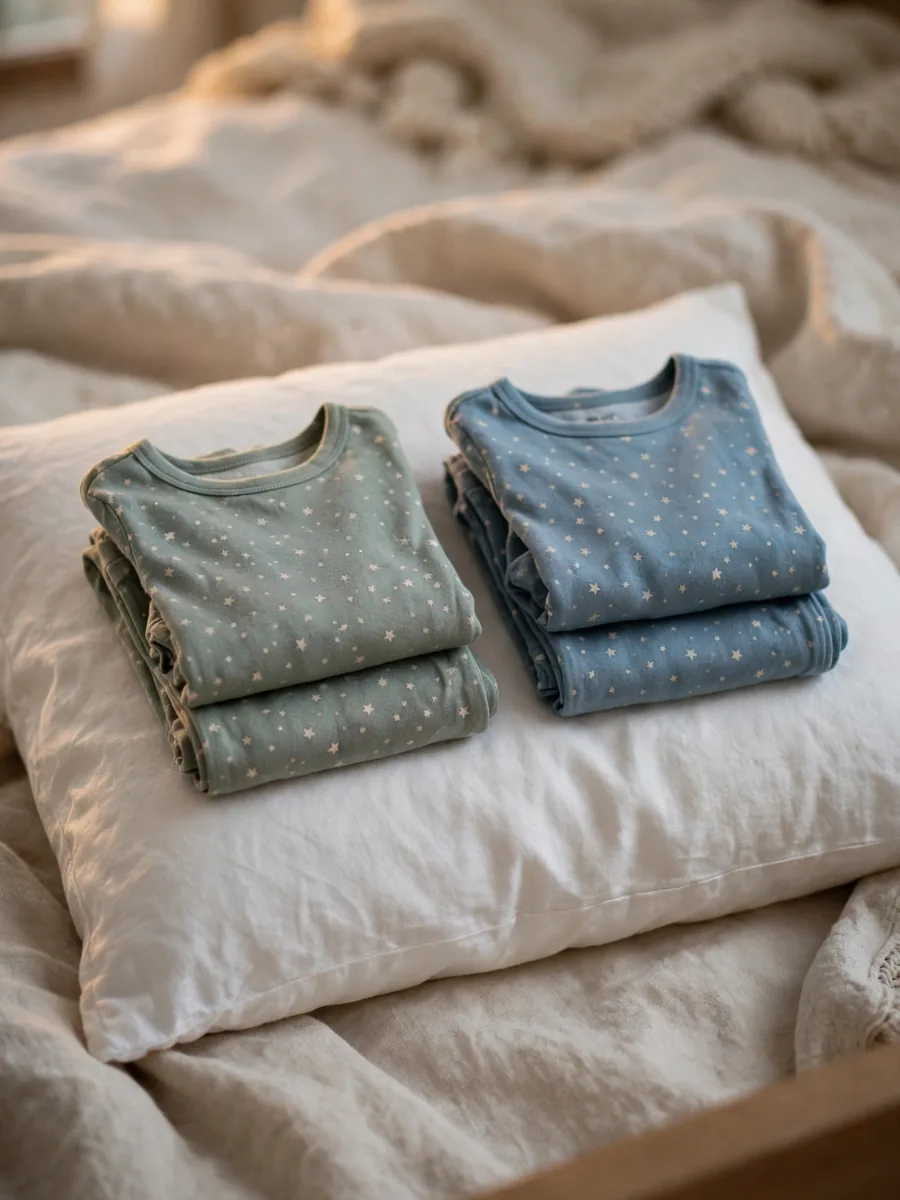
Two sets of pyjamas per child is the settled number for a week: one to wear, one as the backup for the night a drink of water goes over, a nappy leaks, or the air conditioning makes the first set feel damp. A familiar bedtime outfit also does quiet work on the road: it is part of the routine that tells a small child this strange room is for sleeping in.
Choose pyjamas for the room you will actually sleep in, not the weather outside: hotel air conditioning and thin holiday apartment blankets run cold, while heating in winter properties runs hot, so a mid-weight set plus the warm layer from item 8 covers most combinations. For children who are toilet training, treat pyjamas like outfits and add the spare without debate. Keep one set in the hand luggage if you are facing a very long travel day or a late arrival. Packing tip: on the last morning, dress young children for the journey home in yesterday’s pyjama top under a layer; one less decision, and it is already their most comfortable shirt.
6. Underwear and socks (1 set per day, plus 2 spares)
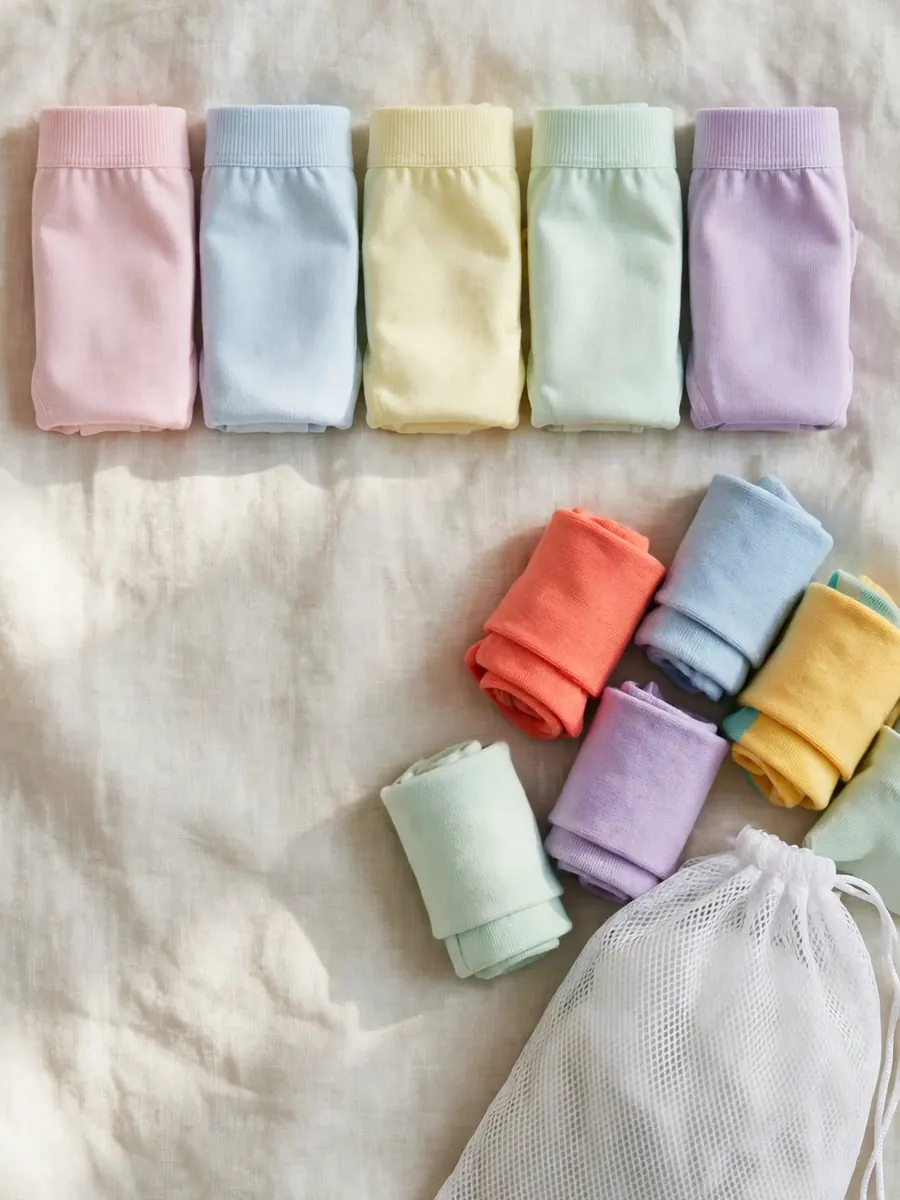
Underwear and socks follow the simplest rule on the list: one set per day, plus two spares per child, full stop. They take up almost no space, they are the items you least want to be washing in a hotel sink, and they disappear at a rate no parent has ever explained. Socks in particular vanish into hotel rooms and car footwells, and a trip is too short for sock recovery.
Give the smallest items their own small mesh pouch or a corner of the child’s packing cube, because loose underwear migrates to the bottom of the bag and multiplies the morning dig. For children in the earlier stages of toilet training, ignore the standard count and pack underwear like it is a consumable: spares in the day bag, spares in the hand luggage, spares in the main bag. Packing tip: pack one day’s underwear and socks inside each rolled outfit from item 1, and keep the spares together in the pouch; that way an outfit is always truly complete.
7. Shoes (1 pair worn, 1 pair packed)
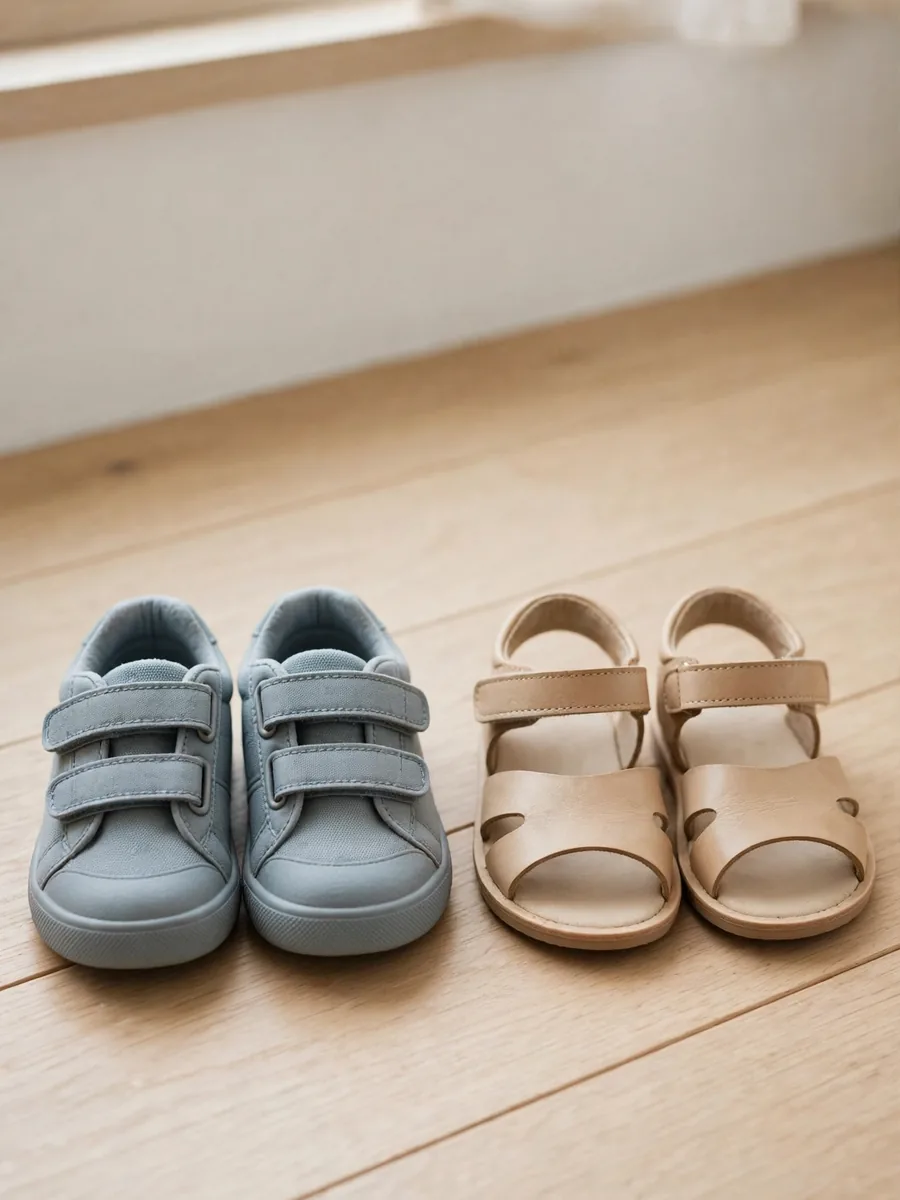
Two pairs of shoes per child is the whole rule: the pair on their feet, chosen for the journey and for walking, and one pair in the bag that covers what the first pair cannot. For most warm trips that means trainers to travel in and sandals or water shoes in the case. For a wet or winter trip it means the waterproof pair worn, and a lighter dry pair packed, so one soaked day never means damp shoes tomorrow.
Shoes are the bulkiest thing a child owns relative to their size, which is why a third pair almost never earns its space; if an occasion genuinely needs smarter shoes, choose the packed pair to double for it. Everything should already be broken in: new shoes and holiday walking distances are a miserable combination. Stuff the packed pair with socks or small soft items so the space inside them is not wasted. Packing tip: put packed shoes in a shoe bag or a shower cap, soles out, at the bottom of the case; dirty soles never touch clean clothes that way.
8. One warm layer for every child
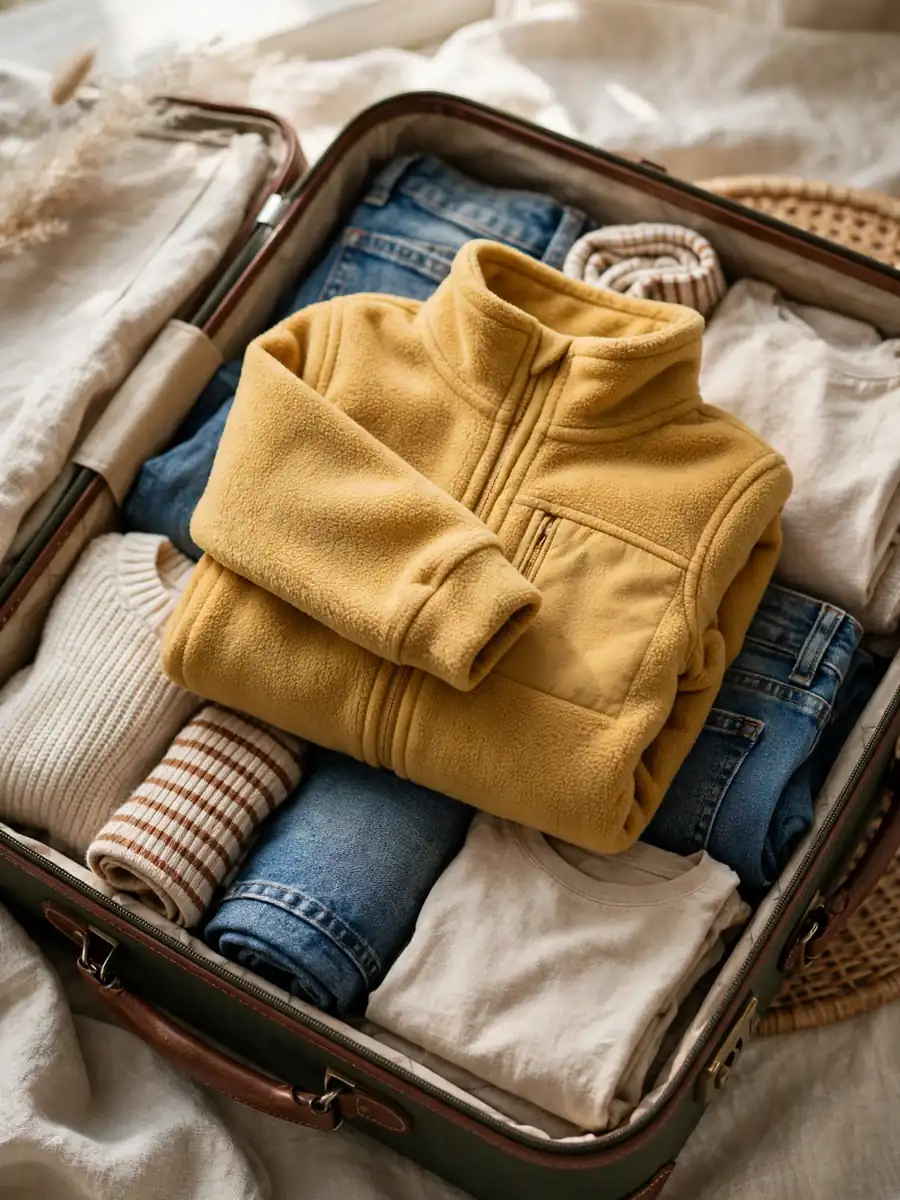
Whatever the forecast says, every child travels with one proper warm layer: a fleece, a hoodie or a light insulated jacket. Aeroplanes, airports and restaurants are air conditioned fiercely, seaside evenings turn cold an hour after a hot afternoon, and weather does not always read the forecast. It also doubles as a pillow and a blanket supplement, which is a lot of work from one small roll of fleece.
Choose the layer for versatility rather than maximum warmth: something that fits over every outfit in the bag, survives being sat on, and washes easily. If you are travelling between seasons or climates, two thin layers beat one thick one, because they can be worn together or separately. The layer should travel in the hand luggage or be worn, not buried in the main bag, since the coldest moments of most trips happen in transit. Packing tip: pick the warm layer in the child’s cube colour where you can; at a glance you can then see whose layer is whose in a pile of tired children.
9. A packable rain jacket for every child
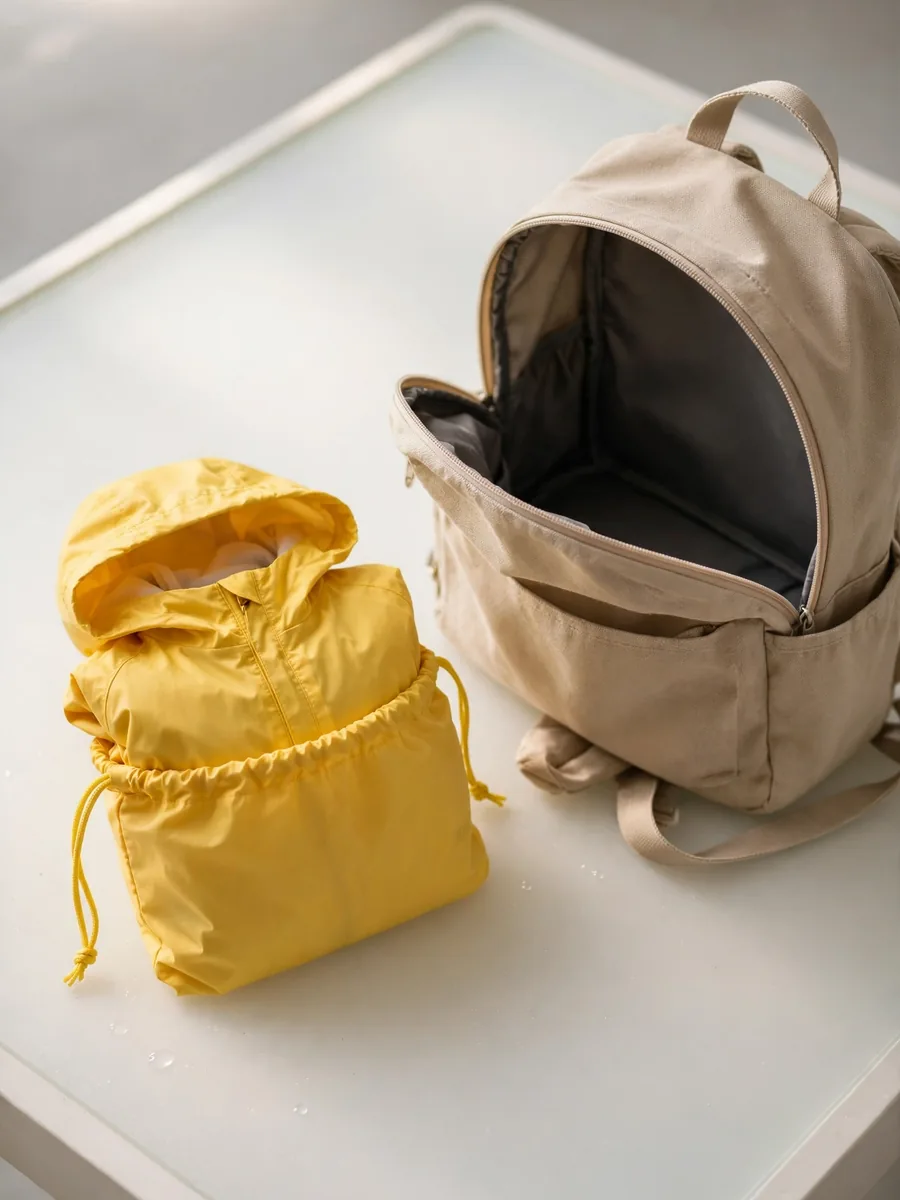
A rain jacket that packs into its own pouch earns its place on almost every trip, because rain is the weather event that most reliably ruins a day with children: it cancels the beach plan, soaks the one pair of shoes, and turns a sightseeing walk into a negotiation. Children will splash through a wet city happily in the right jacket; in a soaked cotton hoodie, nobody is having fun, including you.
Look for a proper hood, a fit that goes over the warm layer, and a pouch it folds into, so it lives in the day bag without unfolding itself everywhere. It doubles as a wind layer on boats, open-top buses and breezy evenings, which is when ours gets used most. For trips to reliably dry climates it can be the one item you consciously drop, and the checklist below lets you do exactly that. Packing tip: store the folded jacket in the child’s backpack or your day bag rather than the main case; rain rarely waits until you have unpacked.
10. Swimwear (2 sets per child)
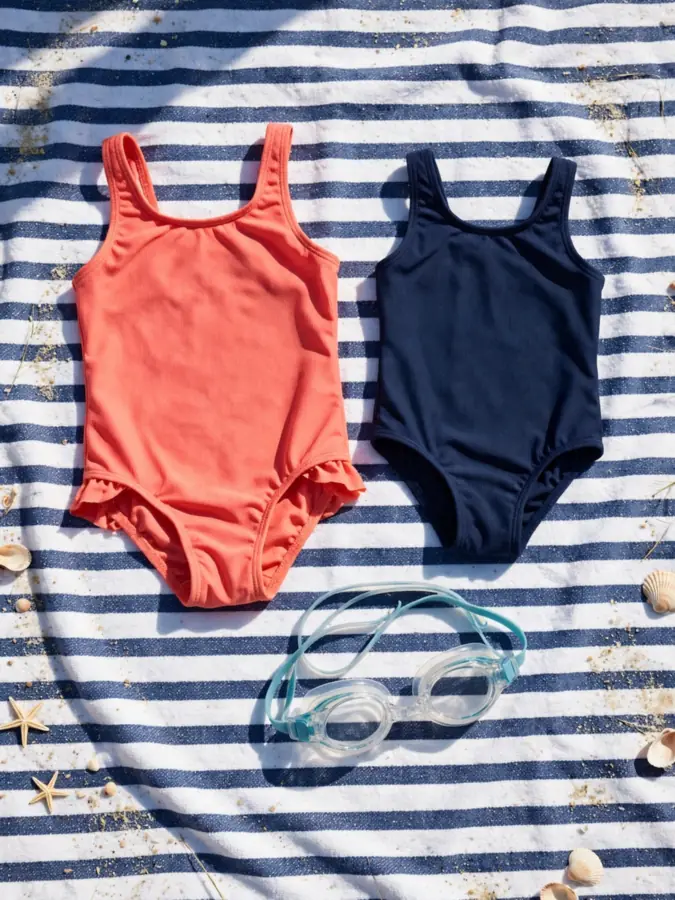
Two swimsuits per child is the swim maths that works. One is drying while the other is in use, and nobody has to be persuaded into a cold, damp costume at 8 in the morning, which is a persuasion campaign no parent enjoys. On a beach or pool holiday, children can live in swimwear for half the day, and a single set becomes the bottleneck of the whole trip.
Add the supporting cast in the same pouch: goggles if your child uses them, a swim nappy system if your youngest still needs one (many pools require them), and a small microfibre towel if your destination does not provide them. Rash vests do double duty as sun protection and are worth packing instead of a second ordinary top on a beach trip. Keep both sets together in one waterproof pouch, which then becomes the wet bag on the way home. Packing tip: put one swimsuit in the hand luggage for trips arriving before check-in; a first swim while you wait for the room turns arrival day from a delay into a holiday.
11. Sun protection kit (sunscreen, hat, sunglasses)
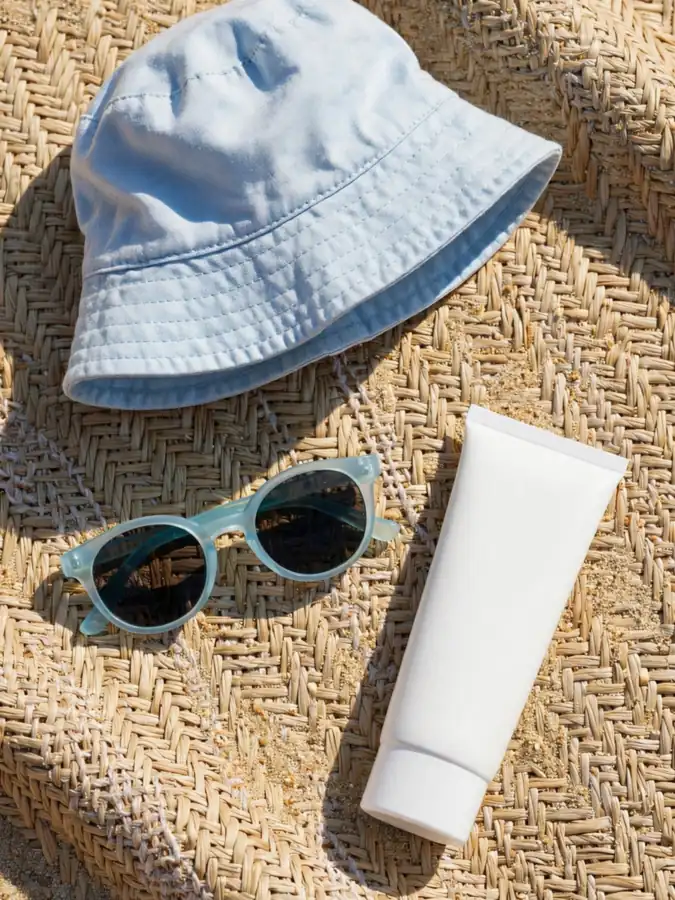
Sun protection packs as a kit, not as loose afterthoughts, because the three parts only work together: sunscreen for skin, a hat for the head and neck, and sunglasses for eyes that spend all day at glare height. Pack the kit for the first day in the hand luggage, in line with the liquids rules below, and buy a larger bottle at the destination on longer trips; families go through sunscreen faster than seems possible.
Choose a sunscreen your children already tolerate, because a new brand that stings or smells wrong will be refused at the exact moment you need cooperation. A hat with a chin strap or a legionnaire style flap survives wind and swimming far better than a fashion cap. Children’s sunglasses should be the cheap, replaceable kind. Reapply sunscreen after swimming, and treat shade as part of the kit too. Packing tip: keep a small sunscreen tube permanently in the day bag from day one; the full-size bottle stays at the accommodation, and the kit works wherever the day ends up.
12. The family snack box
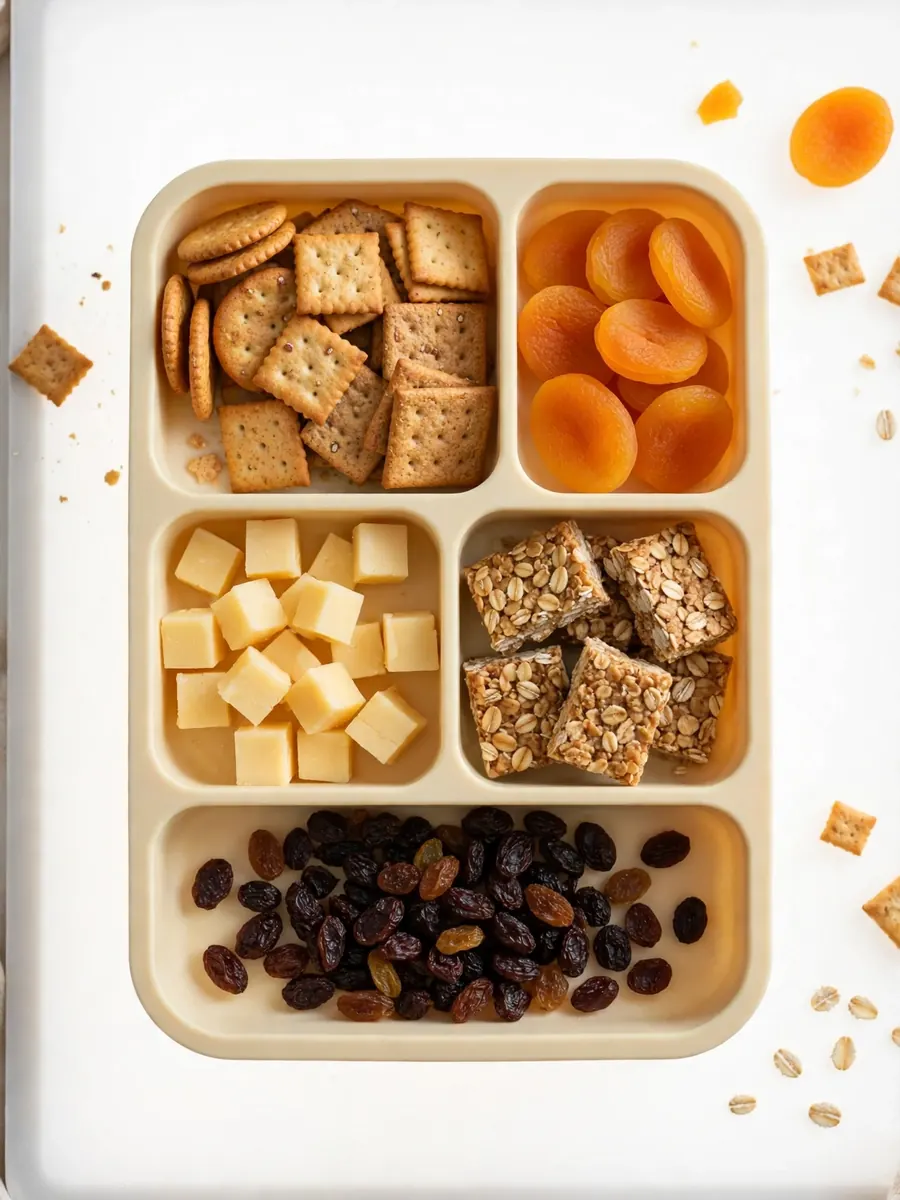
If one item on this list buys you peace, it is the snack box. Hunger is behind a remarkable share of travel meltdowns, queues and delays are worst exactly when food is hardest to reach, and a compartment box of familiar, low-mess food gives a child something to choose, pick at and take time over. Build it from food your children already eat happily: crackers, oat bars, dried fruit, breadsticks, and one small treat held back as a reserve.
Pack for the journey you fear, not the journey you hope for: enough for the scheduled travel time, plus a full second round for a delay. Dry snacks pass through airport security without liquids complications; yoghurt pouches and similar foods can count as liquids for older children, so check your departure airport’s treatment, and keep baby and toddler food under the exemption explained below. Refill the box each evening from a small stock kept in the main bag. Packing tip: let each child choose one compartment’s contents the night before; a snack they picked themselves gets eaten instead of negotiated.
13. Refillable water bottles (1 per person, travel empty)
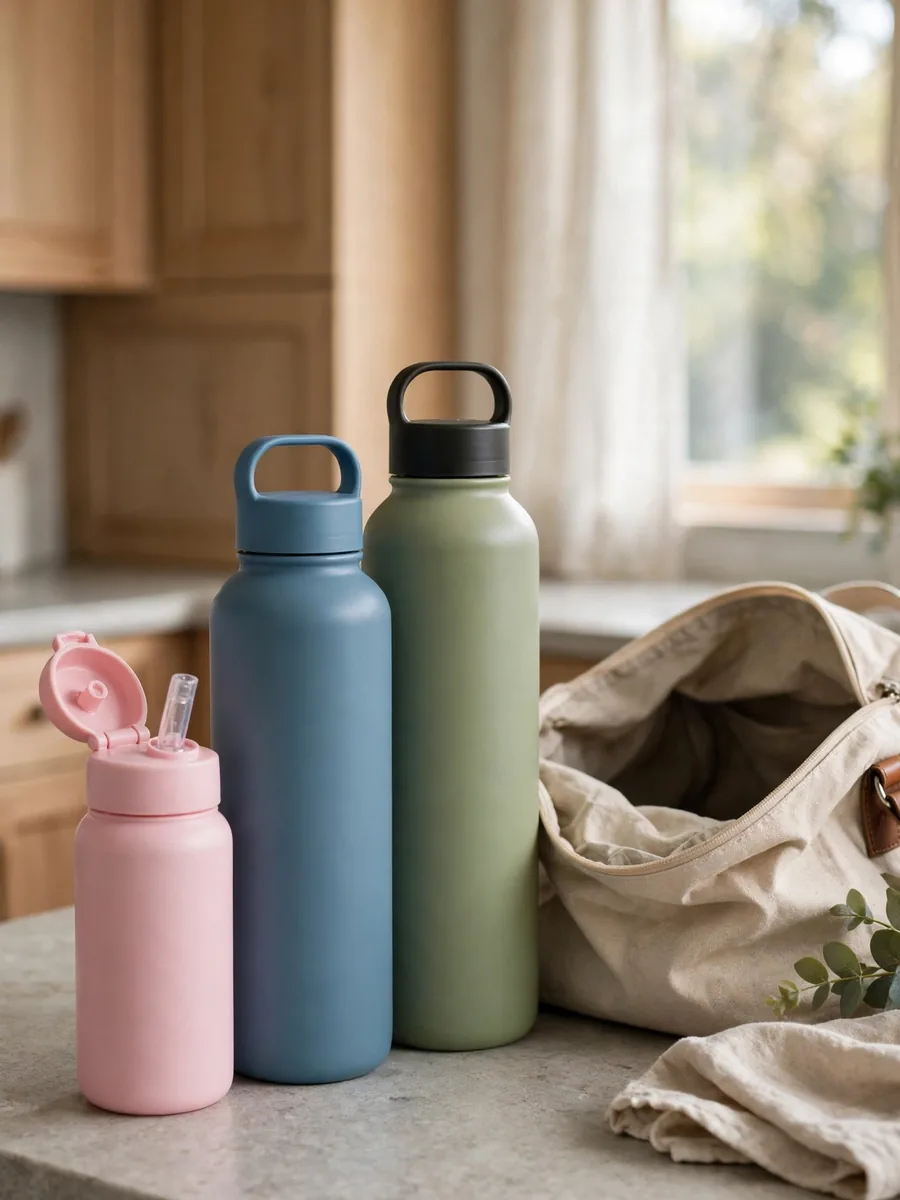
One refillable bottle per person, children included, is the hydration system for the whole trip. Bottles come through airport security empty and get filled at a fountain or cafe on the other side, which is both cheaper and calmer than hunting for drinks with a thirsty queue of children. A child with their own bottle drinks steadily through the day instead of asking at the least convenient moments.
For younger children, choose a bottle they can open and close themselves, with a straw or sports cap that does not pour when it tips. Leakproof is not a marketing word here, it is the whole point: test the bottle upside down in the kitchen sink before it travels in a bag with the activity kit. Keep all the bottles together in one outside pocket or one tote during transit, so refills at a fountain take seconds and headcounts are easy. Packing tip: run the bottles through the dishwasher or a proper hot wash on the first night and the last; travel bottles get grubby faster than home ones.
14. Milk, formula and toddler drinks kit (for the youngest travellers)
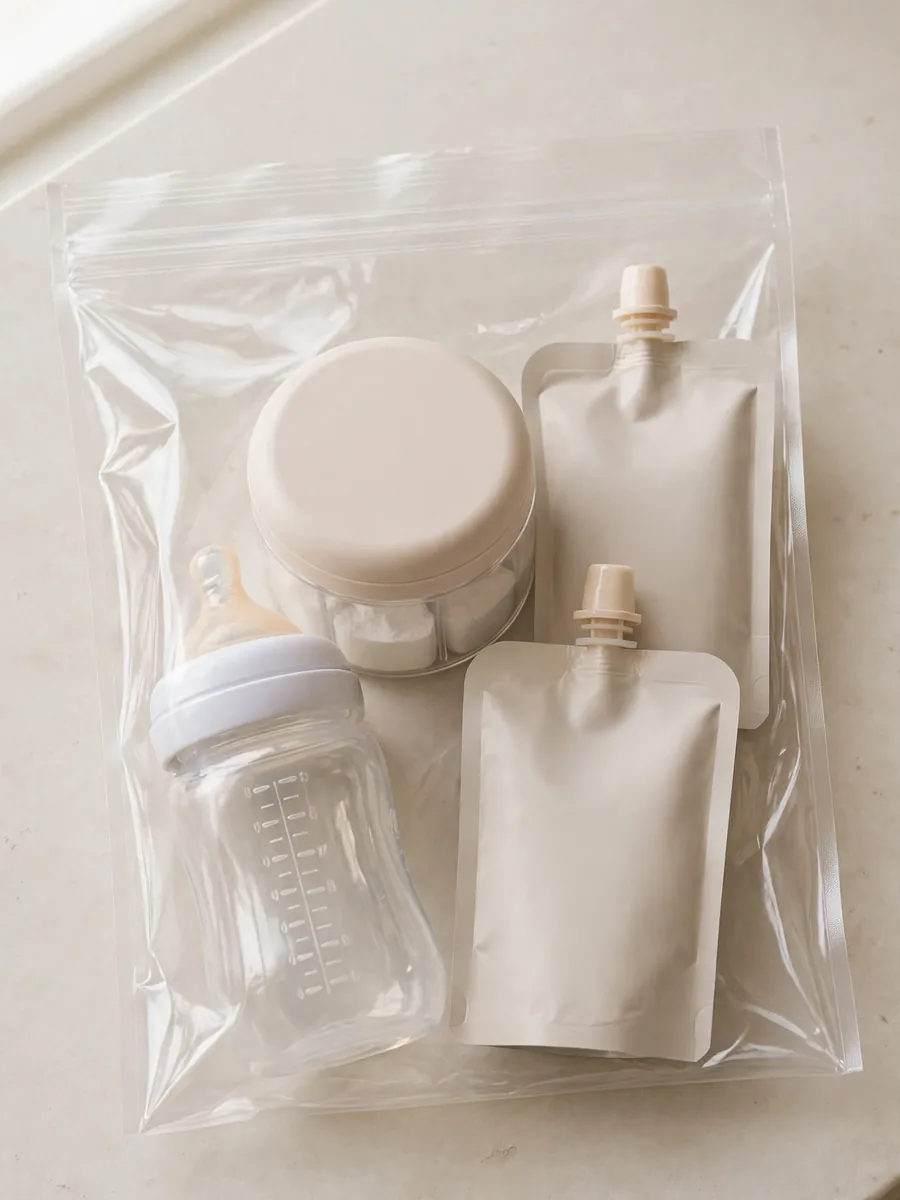
If anyone in your party is still on bottles, formula or puree pouches, this kit is the one to pack with real care, and the good news is that airport security is on your side. Under the TSA’s travelling with children guidance, formula, breast milk, toddler drinks and baby and toddler food, including puree pouches, are treated as medically necessary liquids at US checkpoints: they may travel in your carry-on in quantities over the usual 3.4 ounce (100 ml) limit, do not need to fit in the quart-sized liquids bag, and the ice or gel packs for keeping them cool are allowed too.
Pack the kit as one clear pouch you can lift out in seconds: measured formula portions, bottles, pouches and a spare teat. At the checkpoint, tell the officer at the start and remove them for separate screening; officers may test the liquids, and screening never involves putting anything into the milk or food. Rules outside the US are set locally and differ in detail, so check your departure airport’s guidance. Packing tip: carry one full feed more than the journey needs, in case of a delay on the tarmac.
15. A tablet loaded with downloaded shows and games
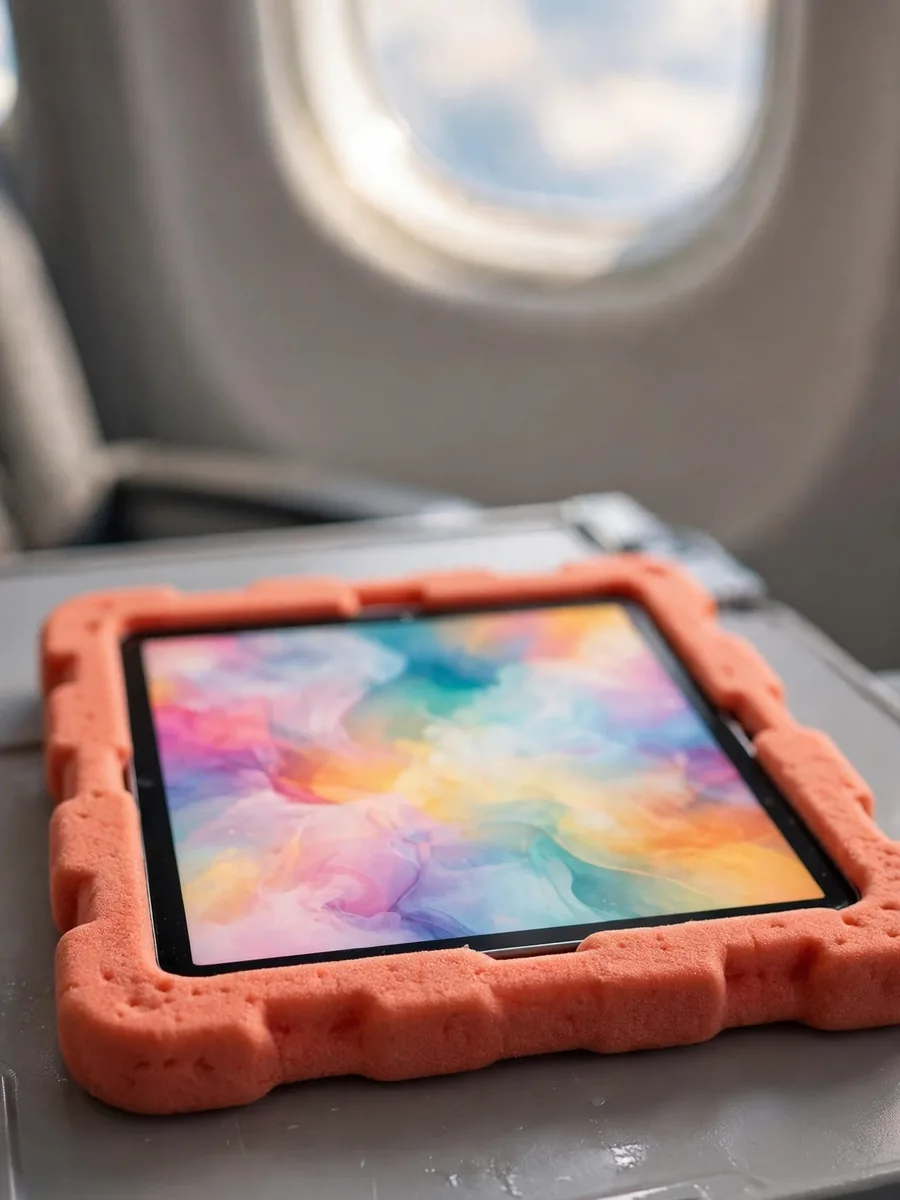
The tablet rule for family travel is simple: it is only as good as what was downloaded before you left home. Aircraft wifi is unreliable, hotel wifi is worse, and a streaming app with nothing saved is just a rectangular disappointment. The night before you travel, download a generous library (favourite episodes, one or two films, a few games that work fully offline) and test that each one actually opens in aeroplane mode. That five minute test is the difference between this item being the hero of a long journey and dead weight.
A chunky protective case is not optional with young children. Load content generously and delete freely afterwards; storage is cheaper than a four hour delay with nothing saved. Keep the tablet in the child’s backpack or your personal item, never in a checked bag, with its charging cable in the same place every day. Packing tip: download one or two things that are completely new and save them for the return journey, when novelty has run out everywhere else.
16. Screen-free activity kit
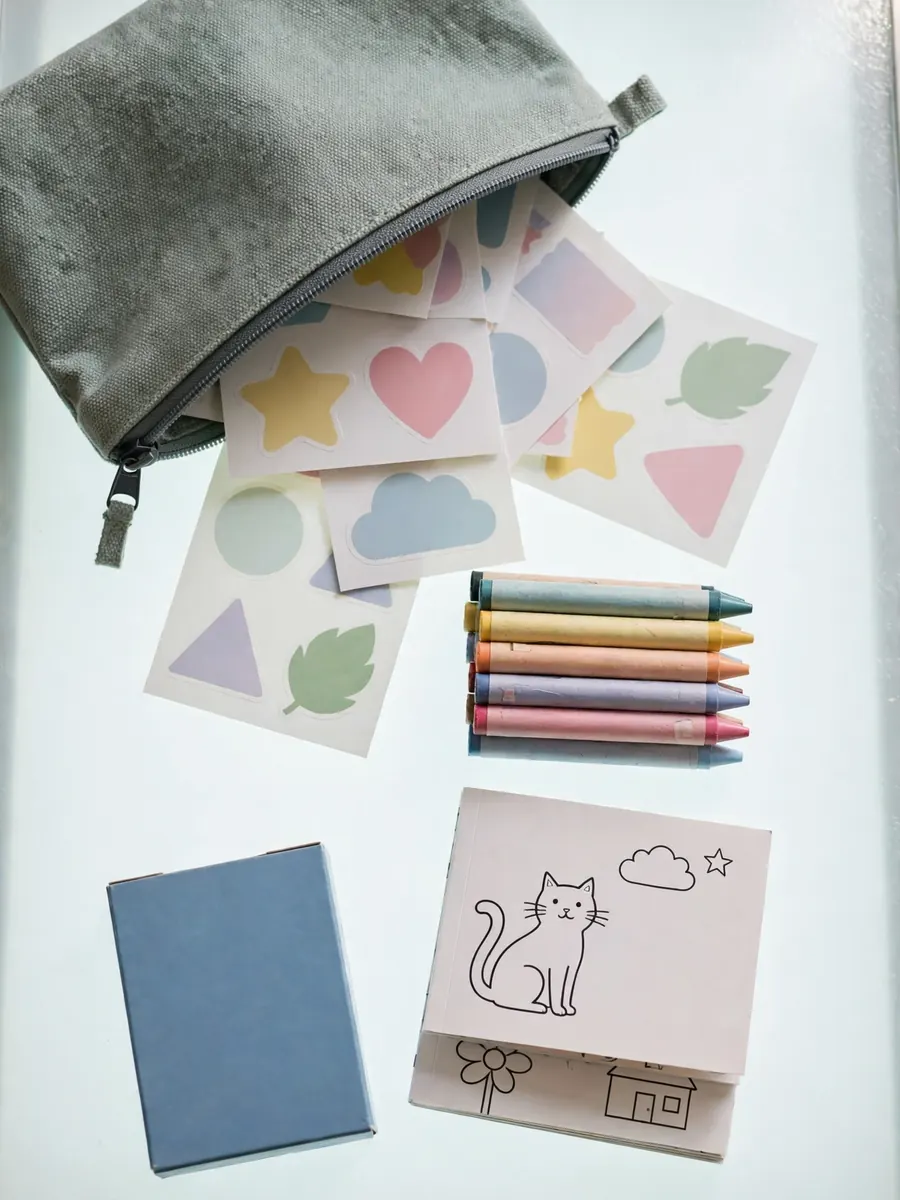
Screens need a partner act. A small screen-free activity kit covers the gaps a tablet cannot: take-off and landing when devices go away, the restaurant wait, the queue, the moment the tablet battery dies at the worst possible time. Build it as one zip pouch per child, filled with sticker sheets, a small colouring book, a few crayons, a reusable drawing pad and one compact card game. Small, flat and quiet beats big and brilliant every time.
Novelty is the active ingredient: one or two unseen items hold attention far longer than old favourites, so keep a couple of sticker books in reserve and bring them out one at a time. Avoid anything with many loose pieces, anything noisy, and pens that are not washable; crayons and water-based pens forgive the tray table and the child’s clothes. Restock the pouch each evening from a small reserve in the main bag. Packing tip: a resealable bag inside the pouch, labelled for finished stickers and wrappers, keeps the kit from turning into confetti by day three.
17. Child-size headphones (1 per child)
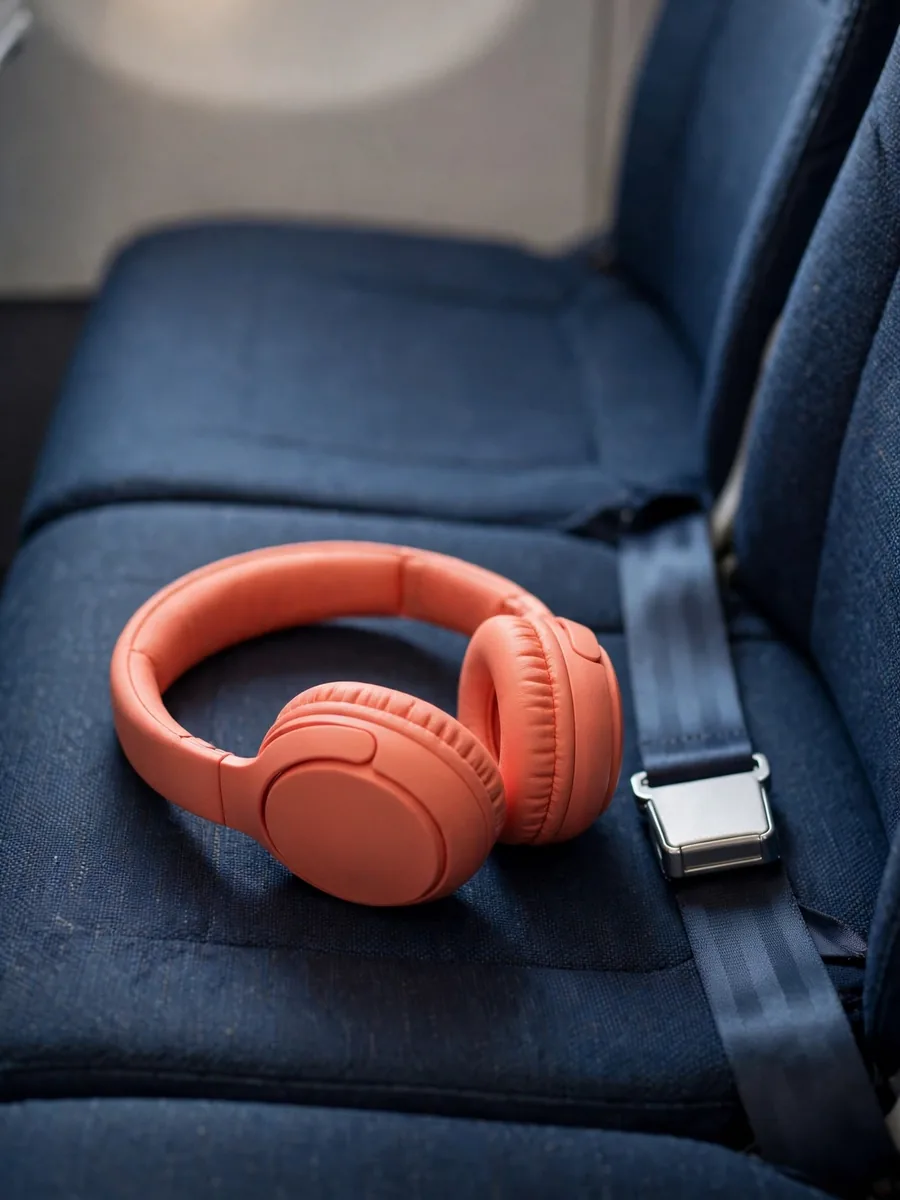
Headphones are what make the tablet civilised. One pair per child, sized for children and volume limited where the design offers it, means downloaded shows and games stay personal, siblings can watch different things, and the cabin stays peaceful. They earn double their space on the return leg, when everyone is tired and tolerance for a neighbour’s cartoon soundtrack is at its lowest, including yours.
Fit matters more than features. Over-ear padded styles suit younger children and stay on better than earbuds, which small ears tend to eject every few minutes; whatever you choose, test them at home for a full half hour before the trip, because headphones that pinch will be refused at altitude. Fold-flat designs pack neatly against the tablet, and a shared splitter lets two children watch one screen when a battery runs low. Keep them in the child’s backpack, in the same pocket every day, and charge or check them in the evening routine. Packing tip: pack one cheap spare pair in your own bag; headphones are the most commonly sat-on, snapped and left-in-seat-pocket item in family travel.
18. Comfort and sleep kit (the one soft toy, blanket and pillow)
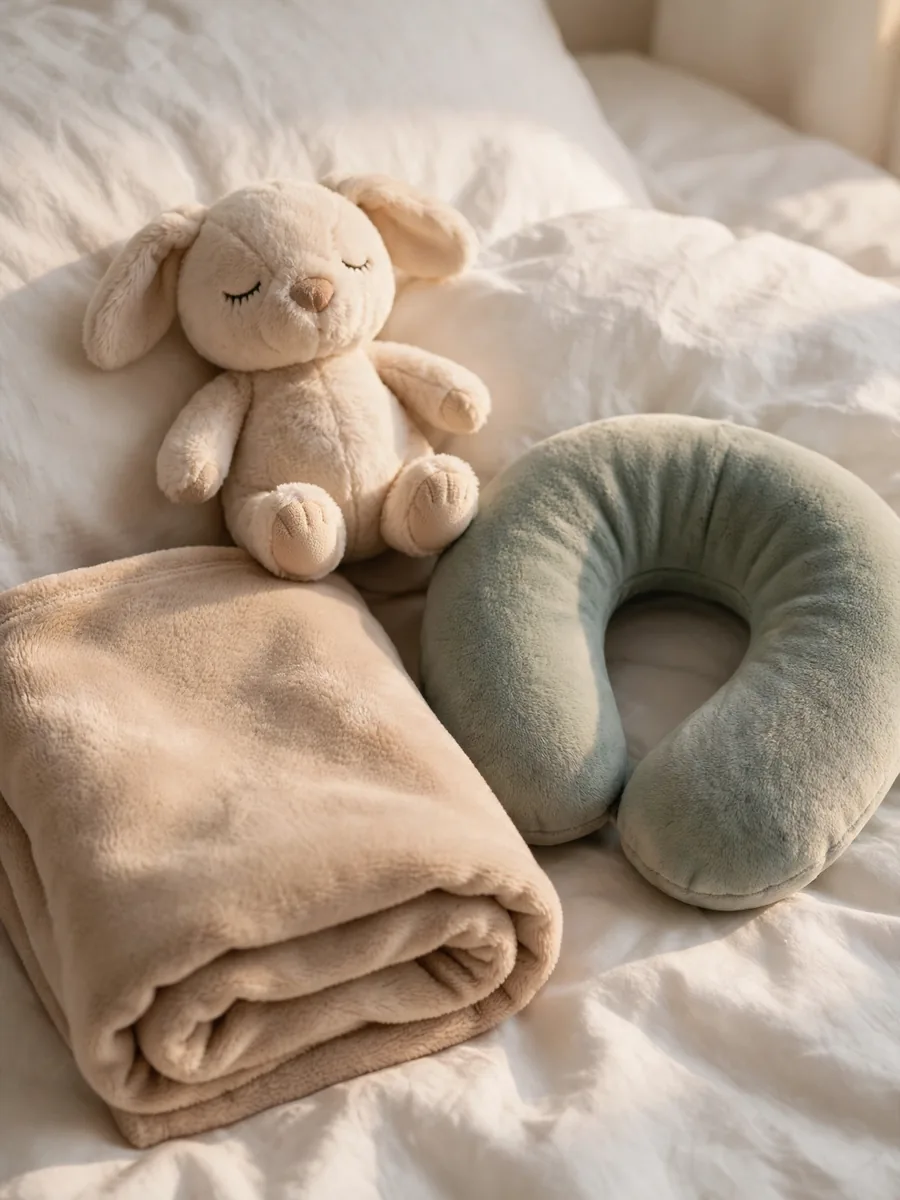
Every child in the 2 to 10 range has, or deserves, one comfort anchor: the soft toy, blanket or scruffy object that means sleep and safety. That one item travels in hand luggage, always, and it is the only item on this list that is genuinely irreplaceable at the destination. Build the rest of the sleep kit around it: a small fleece blanket that works on a plane, in a car and over hotel bedding, plus, for older children, a small neck pillow and a sleep mask.
Protect the comfort item like a document: photograph it before you leave (it helps enormously if you ever need to describe or replace it), keep it in the child’s backpack rather than loose in the cabin, and make a house rule that it leaves the bag only for sleep and travel. If your child is deeply attached, consider buying the identical backup toy at home and rotating the two before the trip, so a loss is survivable. Packing tip: on the first night away, recreate one small piece of home routine exactly, same blanket arrangement, same pyjamas, same order, and let familiarity do the settling.
19. Wipes and hygiene kit
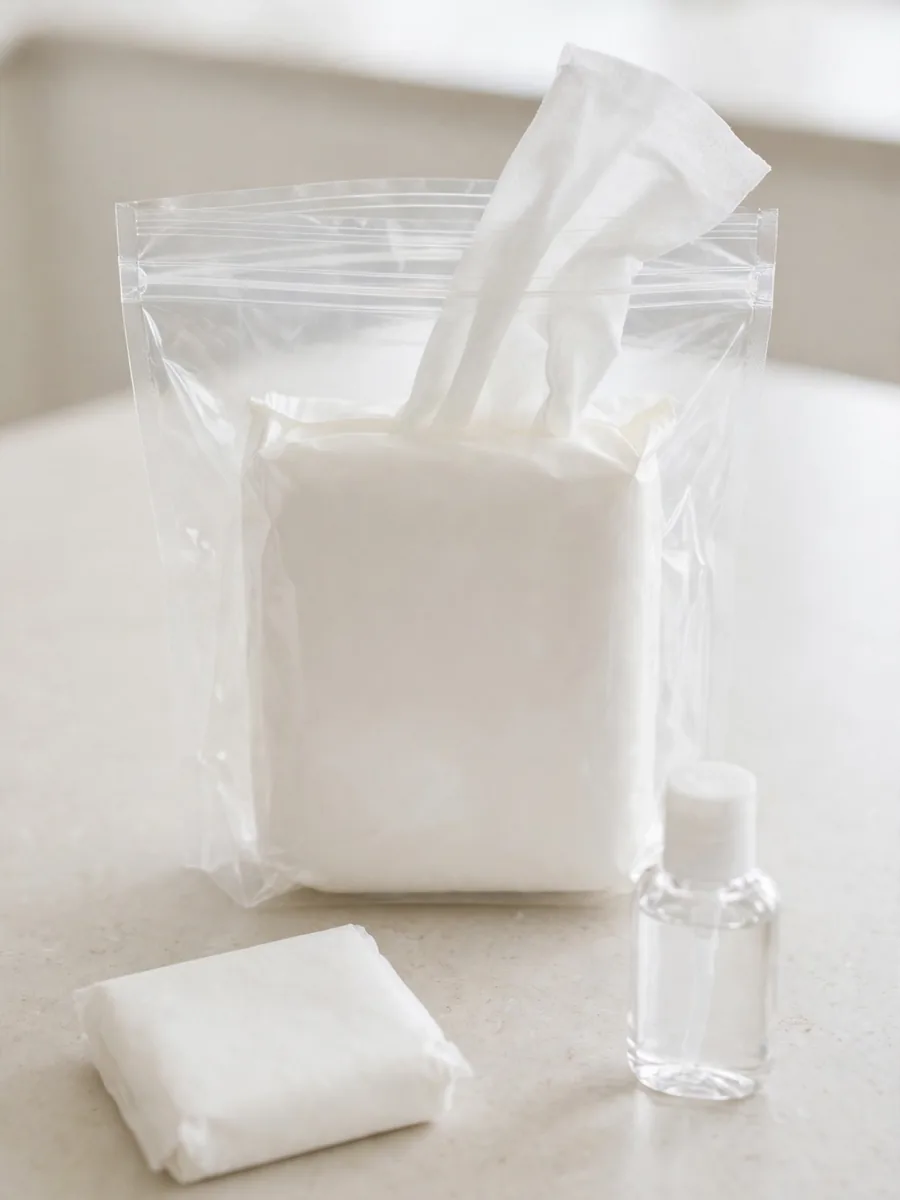
Wet wipes are the unofficial currency of family travel. They clean hands, faces, tray tables, toilet seats, buggy handles, and the mysterious stickiness that appears on children in transit from nowhere identifiable. Pack them as a kit, in three places: a full pack in the hand luggage, a small pack in the child’s day bag or your pocket, and a reserve pack in the main bag. Add tissues and a small hand sanitiser, and you have a hygiene system that handles most of what a journey produces.
The hand luggage pack is the one that matters, so check it the night before (a dried-out half pack is a classic) and keep it reachable one handed, mid-incident. Sanitiser is the backup for when there is no sink; where you can choose, soap and water wins. At the destination, the kit also runs restaurant tables, picnic benches and post-ice-cream recovery. Packing tip: decant wipes into a slim reusable pouch for the day bag instead of carrying the crackly full retail pack; it takes half the space and survives being opened 40 times a day.
20. Changing and laundry kit (wet bags, laundry leaves, stain wipes)
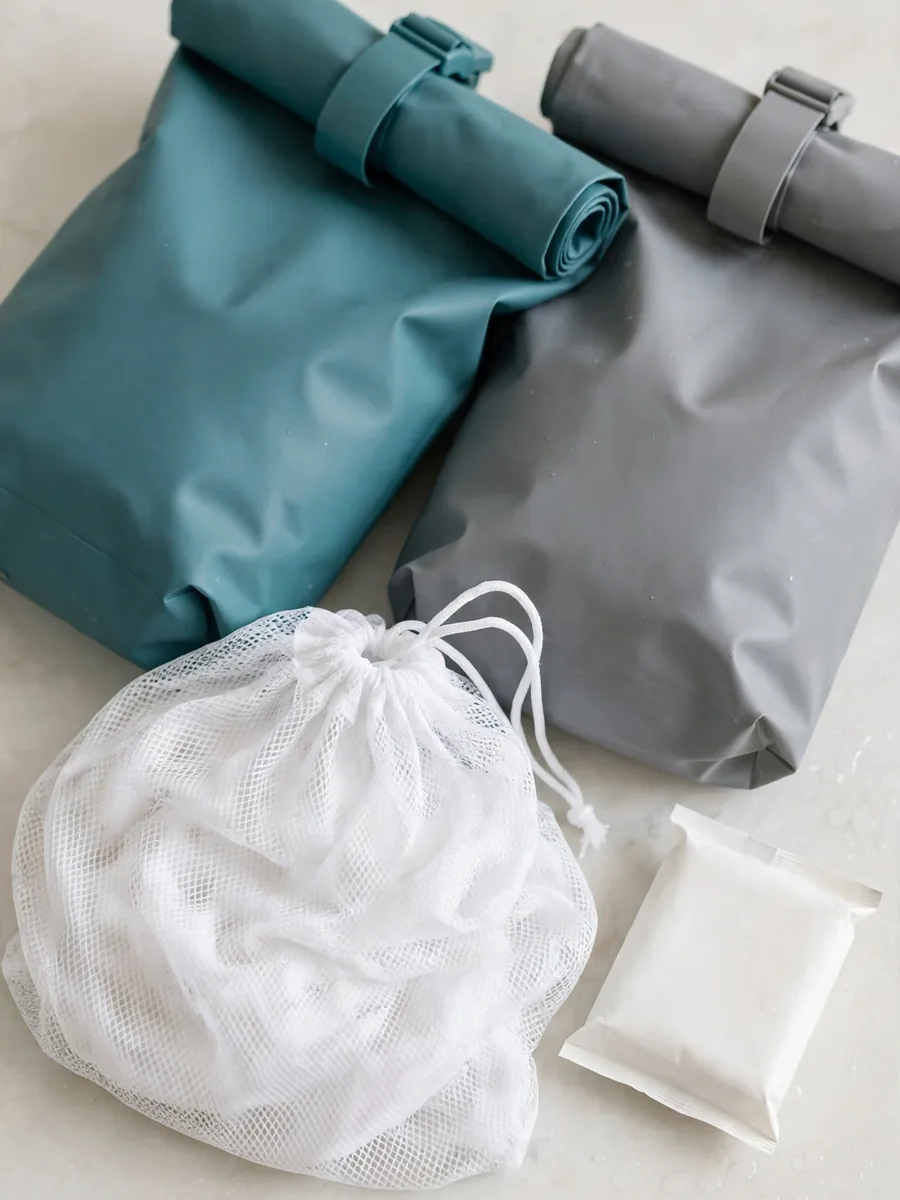
Children on holiday produce laundry at industrial speed, and this kit is how you manage it without the suitcase turning into a damp archive. Two waterproof wet bags are the core: one lives in the day bag for the nappy change, the swimsuit, the travel-sick t-shirt, whatever today produces; the second rotates as the first one is washed or aired. Add a mesh laundry bag that corrals dirty clothes in the main case, a few laundry soap leaves or a tiny bottle of travel wash, and stain wipes for treating marks before they set.
If your party still includes nappies or pull-ups, the same kit carries them: a full change kit in the hand luggage, the bulk of the supply in the main bag. The laundry half is what makes the seven day clothing rule work on longer trips: one sink wash or laundrette visit mid-trip, small clothes dried overnight, and the outfit count never grows. Packing tip: put the wet bag for dirty clothes in the same bright colour every trip; when everything smells of suncream, visual shortcuts are worth having.
21. Family health pouch
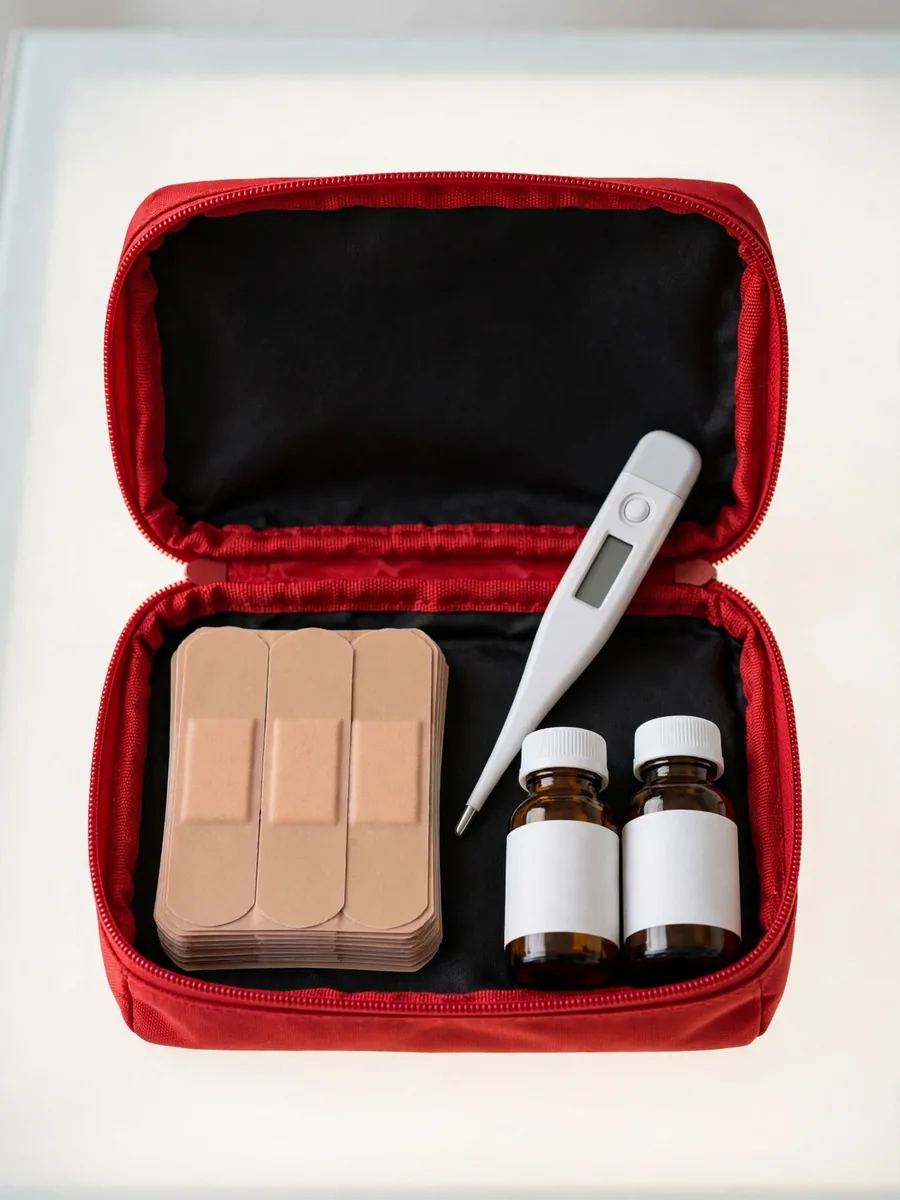
One small health pouch, kept in hand luggage, covers the predictable medical moments of a family trip: a temperature at midnight, a grazed knee, a headache on the plane, travel sickness on a mountain road. Stock it with children’s pain and fever medicine in the form your child will actually take, a thermometer, plasters in two sizes, any prescription medication (always in hand luggage, in its original packaging, with a buffer for delays), and your family’s own basics, from antihistamine to rehydration sachets.
Check the pouch before every trip rather than trusting last year’s version: medicines expire, children outgrow doses, and the one thing you need is reliably the thing that ran out. Keep prescription details and your doctor or pharmacy contact in the same pouch or photographed on your phone. Rules for carrying medicines vary by destination, and some medicines that are ordinary at home are restricted elsewhere, so for international trips check the destination’s official guidance for anything prescribed. Packing tip: tell the other adult, and older children, where the pouch lives; a kit only one person can find is half a kit.
22. Documents wallet (passports, copies and insurance details)
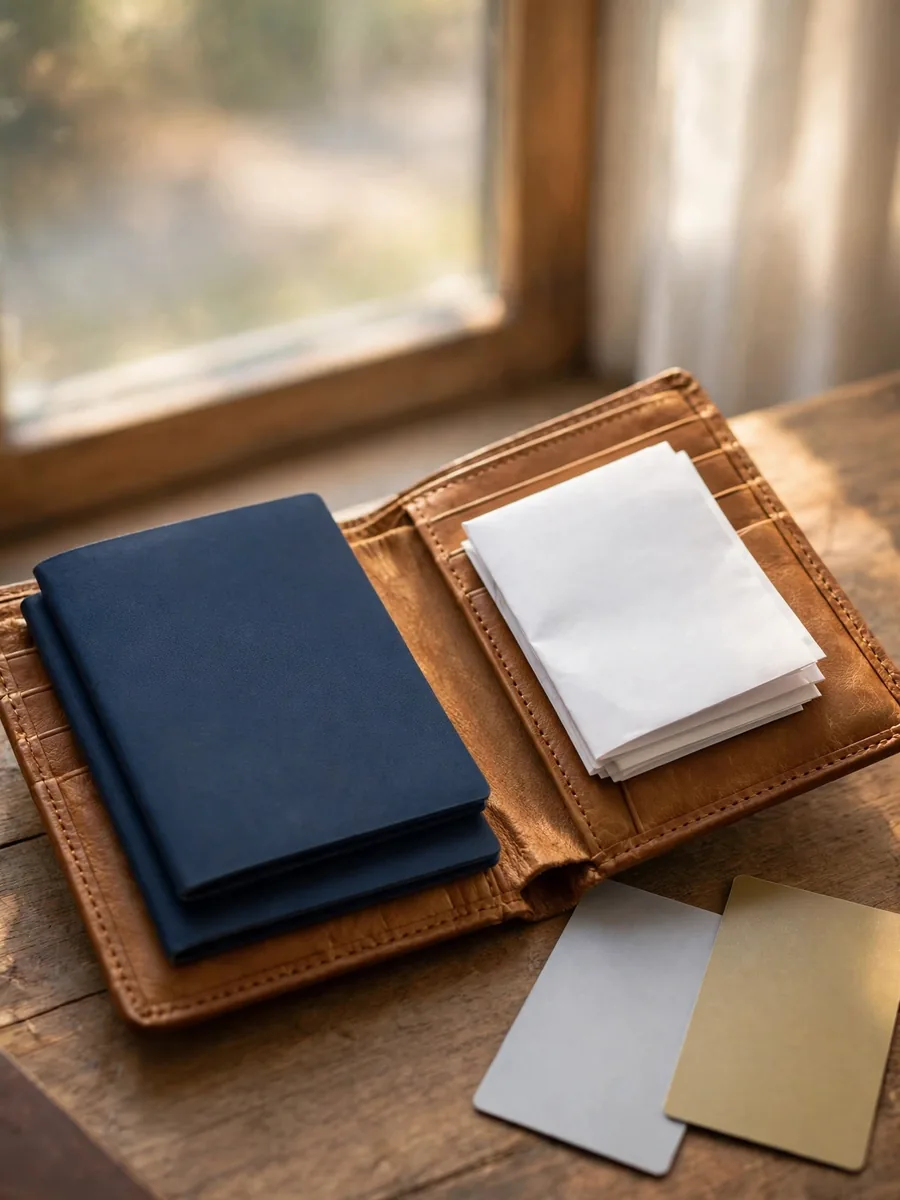
The documents wallet is the smallest item on this list and the only one that can end a trip at the airport. Every traveller, including every child, needs their own passport for international travel. Keep the whole family’s set in one wallet: passports, boarding passes, booking confirmations, travel insurance details with the emergency assistance number, and any visas or entry forms your destination requires.
Be careful here, because this is where confident advice goes wrong: entry requirements, and the paperwork expected when a child travels with one parent or another family member, vary by country, airline and family situation, and they change. The sensible preparation is cheap: carry paper copies of the children’s passports and birth certificates stored separately from the originals, keep digital copies accessible to both parents, and before you travel, check your destination’s official entry guidance and your airline’s requirements for minors, especially if not all parents are travelling. Copies are not substitutes for originals at a border, but they speed up every replacement conversation. Packing tip: photograph the wallet’s contents and share the folder with the other parent or a trusted person at home before departure.
Airport Security With Kids: The Rules That Change Your Packing
Security is where family packing meets official rules, and two of them are worth building the bags around, especially for US travel. Under the TSA liquids, aerosols and gels rule, liquids in carry-on bags are limited to containers of 3.4 ounces (100 ml) or less, fitted into one quart-sized bag. The same rulebook names exemptions for medications and for infant and child nourishments, which is why item 14’s milk, formula, toddler drinks and baby food can travel in larger quantities, declared at the start of screening and taken out to be screened separately. Many countries run a similar 100 ml system, but the details and the exemptions are set locally, so treat the TSA version as the example and check your own departure airport’s rules.
The TSA’s guidance for travelling with children also changes the physical side of the checkpoint: children who appear to be 12 and under get modified screening, can keep their shoes, light jackets and headwear on, and are not separated from their parent or guardian. Strollers, baby carriers, car and booster seats and backpacks all go through X-ray screening, with a visual inspection for anything too big to fit. Packing for that reality is easy once you know it: shoes children can stand in for an hour, the milk kit in one lift-out pouch, the documents wallet in the same pocket every time, and nothing essential loose in a stroller basket. Allow a little extra time, and the checkpoint becomes a process instead of a performance.
Quiz: Which Family Packing Style Are You?
Answer honestly, then open the result that sounds most like your last trip. Each result includes one adjustment that makes the system work harder for your style.
Mostly A: “Every child has a colour, a cube and a list. I pack a week ahead.”
You are a Colour Coder. Your system is already doing the heavy lifting. One adjustment: audit the transit layer, where organised packers quietly underpack, and check the snack box and spare outfits against the 24 hour test before you zip up.
Mostly B: “If it does not fit in the cabin bags, it is not coming.”
You are a Carry-On Family. Travelling light with children is a genuine skill, and the laundry plan is your engine. One adjustment: protect the plan with the changing and laundry kit, and keep one full spare outfit per child out of the wash rotation at all times.
Mostly C: “I pack for the trip, the weather turning, and two emergencies I invented.”
You are a Just in Case Loader. Your children will never lack for anything, except bag space. One adjustment: run every extra item through the destination test: if it can be bought cheaply at the destination in ten minutes, it stays home.
Mostly D: “I pack the night before, standing in the children’s doorway, hoping.”
You are a Night Before Scrambler. The good news is that a system beats willpower. One adjustment: print the checklist below and pack in the list’s order (wardrobe, then transit, then mess, health and documents); the order itself stops the classic omissions.
What to Leave at Home
The 22 items earn their space; these do not. Duplicate toys beyond the one comfort item and the activity kit (children play with the destination more than with their toys), a third pair of shoes per child, full-size toiletries that can be decanted or bought on arrival, a separate outfit for every possible restaurant, bulky towels where your accommodation provides them, and the second tablet charger brick when one shared charger and a routine will do. If an item’s only argument is that it might be nice, it is competing with the snack box for space, and the snack box wins.
Printable Checklist: Tick It Off as You Pack
Print this section or copy it into your notes app, and tick each line as the item goes into a bag.
Clothes (Items 1 to 11)
☐ Complete outfits: 1 per day per child, plus spares by age
☐ A colour-coded packing cube per child, cubes split across bags
☐ Pyjamas: 2 sets per child
☐ Underwear and socks: 1 set per day, plus 2 spares
☐ Shoes: 1 pair worn, 1 pair packed, in a shoe bag
☐ One warm layer per child, in hand luggage
☐ Packable rain jacket per child, in the day bag
☐ Swimwear: 2 sets per child, goggles, swim pouch
☐ Sun kit: sunscreen for day one, hats, sunglasses
Transit and Comfort (Items 3, 4 and 12 to 18)
☐ Spare outfit per child plus a clean top per adult, in hand luggage
☐ Snack box filled, plus a refill stock in the main bag
☐ Water bottles for everyone, travelling empty
☐ Milk, formula and toddler food kit in one clear pouch (if needed)
☐ Tablet charged, downloads tested in aeroplane mode
☐ Screen-free activity kit per child, with one new item saved back
☐ Headphones per child, tested at home, plus one spare pair
☐ The comfort item, photographed, in the child’s backpack
☐ Sleep kit: small blanket, pillow, mask for older children
Clean and Healthy (Items 19 to 21)
☐ Wipes: full pack in hand luggage, small pack in day bag, reserve in main bag
☐ Tissues and hand sanitiser
☐ Wet bags (2), mesh laundry bag, laundry leaves, stain wipes
☐ Nappies or pull-ups for the journey plus a delay (if needed)
☐ Health pouch: children’s medicine, thermometer, plasters, prescriptions
Documents and Tech (Item 22 and the parent kit)
☐ Passports for every traveller, including every child
☐ Paper copies of children’s documents, stored separately; digital copies shared
☐ Boarding passes, bookings and insurance details with the emergency number
☐ Destination entry requirements and airline rules for minors checked
☐ Phone chargers, cable for the tablet, power bank in hand luggage
☐ Each child’s backpack packed and checked together the night before
Frequently Asked Questions
How many outfits should I pack for a child for a week?
Seven outfits is the ceiling, not the target: one per day, built from repeating bottoms and changing tops. Add spares by age (two or three for a two to four year old, one or two at five to seven, one at eight to ten) and, for trips longer than a week, wash rather than pack more. The quantities table earlier in this guide shows the full breakdown.
What should stay in hand luggage when travelling with kids?
Everything the family needs to survive the journey and the first 24 hours without the main bag: a spare outfit per child and a clean top per adult, snacks and bottles, the milk kit if you use one, wipes, the comfort item, entertainment and headphones, the health pouch, chargers, and the documents wallet. If a delayed bag would ruin day one without it, it rides in the cabin.
Can I take baby food, formula and breast milk through airport security?
At US checkpoints, yes, in reasonable quantities over the normal 3.4 ounce (100 ml) liquid limit. The TSA treats formula, breast milk, toddler drinks and baby and toddler food, including puree pouches, as medically necessary liquids: tell the officer at the start of screening and take them out to be screened separately, and cooling packs for them are allowed as well. Outside the US, rules are similar in spirit in many places but set locally, so check your departure airport.
What documents does a child need to travel?
For international travel, every child needs their own passport, whatever their age. Beyond that, requirements vary by country, airline and who is travelling with the child, and there is no single worldwide rule: some situations call for birth certificates or consent paperwork, others do not. Carry copies of the children’s key documents separately from the originals and check the destination’s official entry guidance and your airline’s rules for minors before you travel.
Do children get their own baggage allowance?
It depends entirely on the airline, the fare and whether the child has their own seat or is travelling as an infant, and allowances for equipment such as strollers and car seats vary just as much. Because the differences are real and they change, this guide deliberately does not print figures: check your own booking and your airline’s baggage pages, and pack to the allowance you actually have.
How do I keep children entertained on a long flight without relying only on a tablet?
Rotate three layers: the tablet with downloads tested before you leave, a screen-free kit (stickers, colouring, a drawing pad, a card game) with one or two new items held back for the hard middle hours, and the snack box used slowly as an activity in itself. Headphones per child, the comfort item for rest, and a walk to the galley when the cabin allows it complete the system for most journeys.
Should each child really have their own backpack?
From about age three, usually yes, provided it stays light: their snack, their activity kit, their bottle and their comfort item. It spreads the carrying, keeps their things reachable under the seat, and gives them a small responsibility most children enjoy. Check and weigh it the night before, clip it to your own bag in queues, and carry it yourself without comment when they are asleep or finished; it is a tool, not a test.
Final Check Before You Zip the Bags
Family packing stops being stressful when it becomes a system instead of a memory test. Pack by child, split by journey stage, keep the survival layer in your hand luggage, and let the 22 items do the remembering for you. The night before you travel, walk the checklist once, weigh the main bag, and put the documents wallet by the front door with your keys. Whatever your destination, whether it is a beach week or a family route through the best things to do in Sunriver, Oregon with kids, the bags are then just luggage, and you can get on with the trip. When the weather turns cold instead, our winter carry-on packing list applies the same disciplined approach to coats, layers and boots.