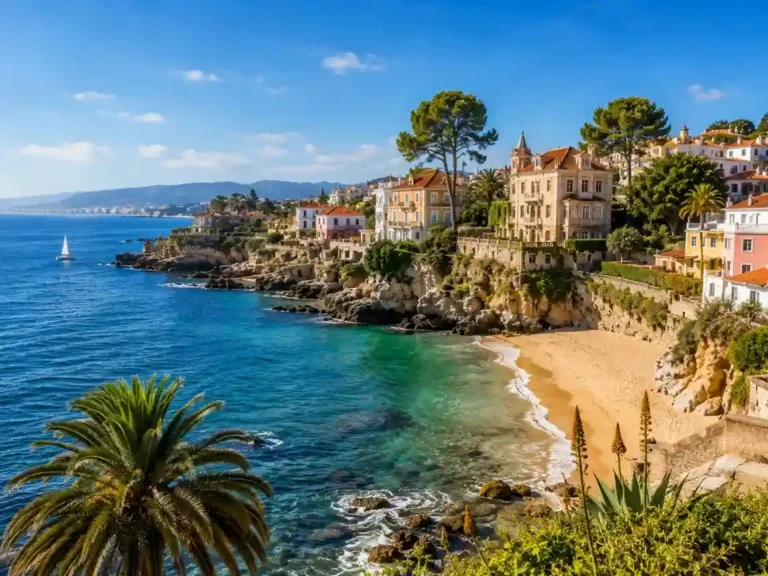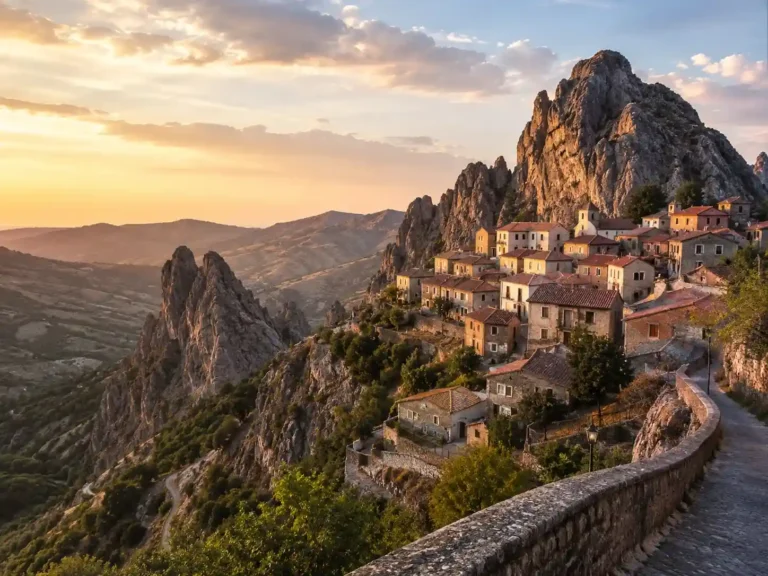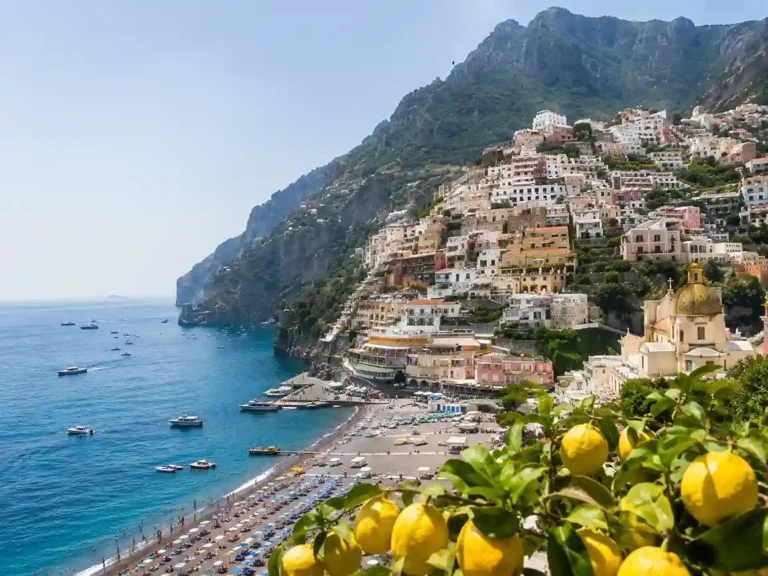
Cinque Terre, Italy: Ultimate Travel Guide to the 5 Villages
Perched dramatically along the northwest coast of Italy, the region of Liguria guards one of Europe’s most fiercely beautiful secrets — Cinque Terre, meaning “Five Lands”, a cluster of five charming fishing villages that have somehow survived pirate attacks, WWII bombing, and economic decline to emerge as a UNESCO World Heritage Site that genuinely earns every superlative thrown at it. I remember standing on a cliff path for the first time, genuinely speechless — not because travel blogs had built it up, but because nothing about this place feels manufactured. The 11th Century roots run deep through every cobblestone, every sun-faded wall, every colorful house clinging to the rock face like it has no intention of letting go. For anyone building a bucket list or crafting a serious beginner’s guide to Italian travel, this landmark on the Ligurian coast belongs at the very top — a tourist destination that is at once remarkable, treasured, and completely irreplaceable.
What makes Cinque Terre so disarming is how effortlessly it blends the dramatic coastlines with an almost absurd rich cultural heritage — where viticulture, UNESCO World Heritage sites, and the smell of pesto hang in the same salty air. The five villages — Monterosso al Mare, Vernazza, Corniglia, Manarola, and Riomaggiore — stretch across northern Italy’s Ligurian coast in a sequence of impossibly scenic, charming communities, each wearing its own personality like a coat of paint. Think color palettes that don’t exist anywhere else in the world, cliffside villages that defy architectural logic, and a food culture so embedded in carb-loading excellence that leaving without expanding your waistline is genuinely impossible.
Sitting on the west coast of Italy, just north of Tuscany and within comfortable distance from both Florence and Pisa, the area operates as a designated national park — a rare distinction that has helped preserve its Mediterranean coastline, agricultural terraced lands, and ancient forests almost entirely intact. Around 4,000 people call these villages home year-round, yet an extraordinary 2.4 million visitors pass through annually, each drawn by the same magnetic character and charm that has defined these five distinct villages across centuries. The brightly colored houses stacked against sea cliffs give the whole coastline a striking appearance — high cliffs with villages that seem to be defying gravity, connected by scenic hiking trails that wind through agricultural land and agricultural terraces carved painstakingly into what is otherwise an impossibly harsh environment that remained largely inaccessible well into the late Nineteenth century. What the early settlers built here through communal effort — terraced trails, farming systems, fishing communities — is the very reason this place carries iconic destinations status today. Since 1997, its exceptional cultural and ecological assets have been formally recognized, adding an official layer to what visitors instinctively understand the moment they arrive: this place is unlike anywhere else on Earth, built on steep terrain above an azure sea, its traditional fishing villages rooted in a story stretching back nearly a thousand years.
The Five Villages of Cinque Terre
1.Riomaggiore
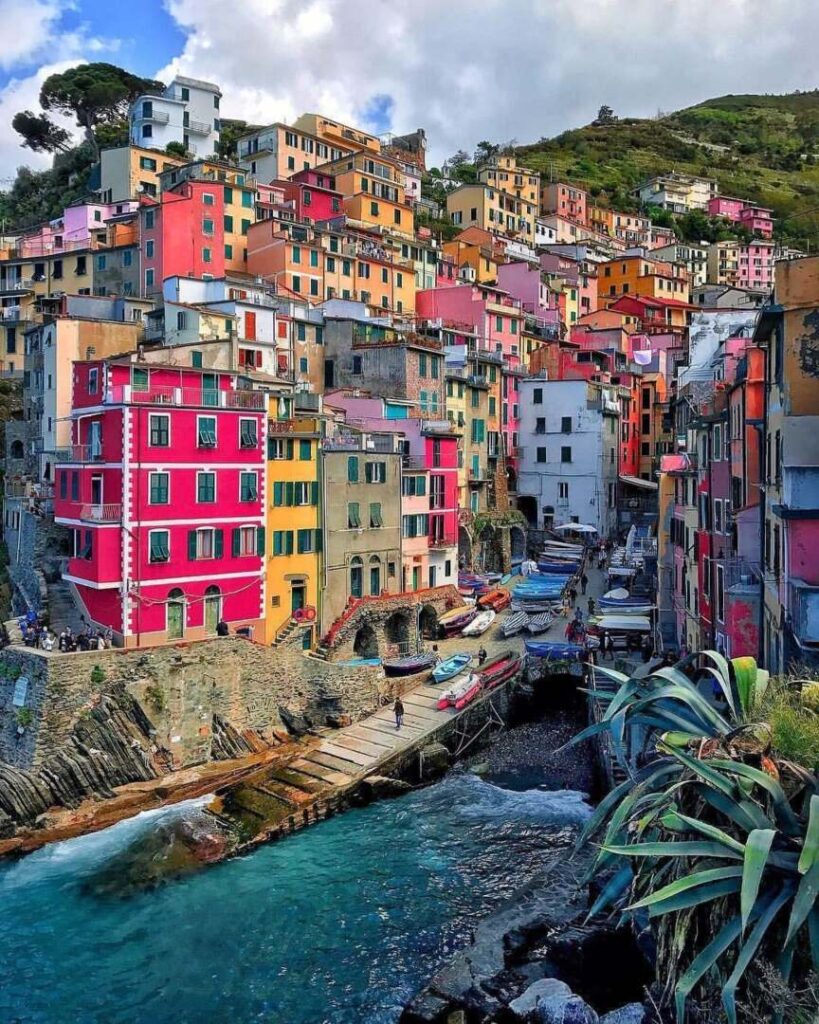
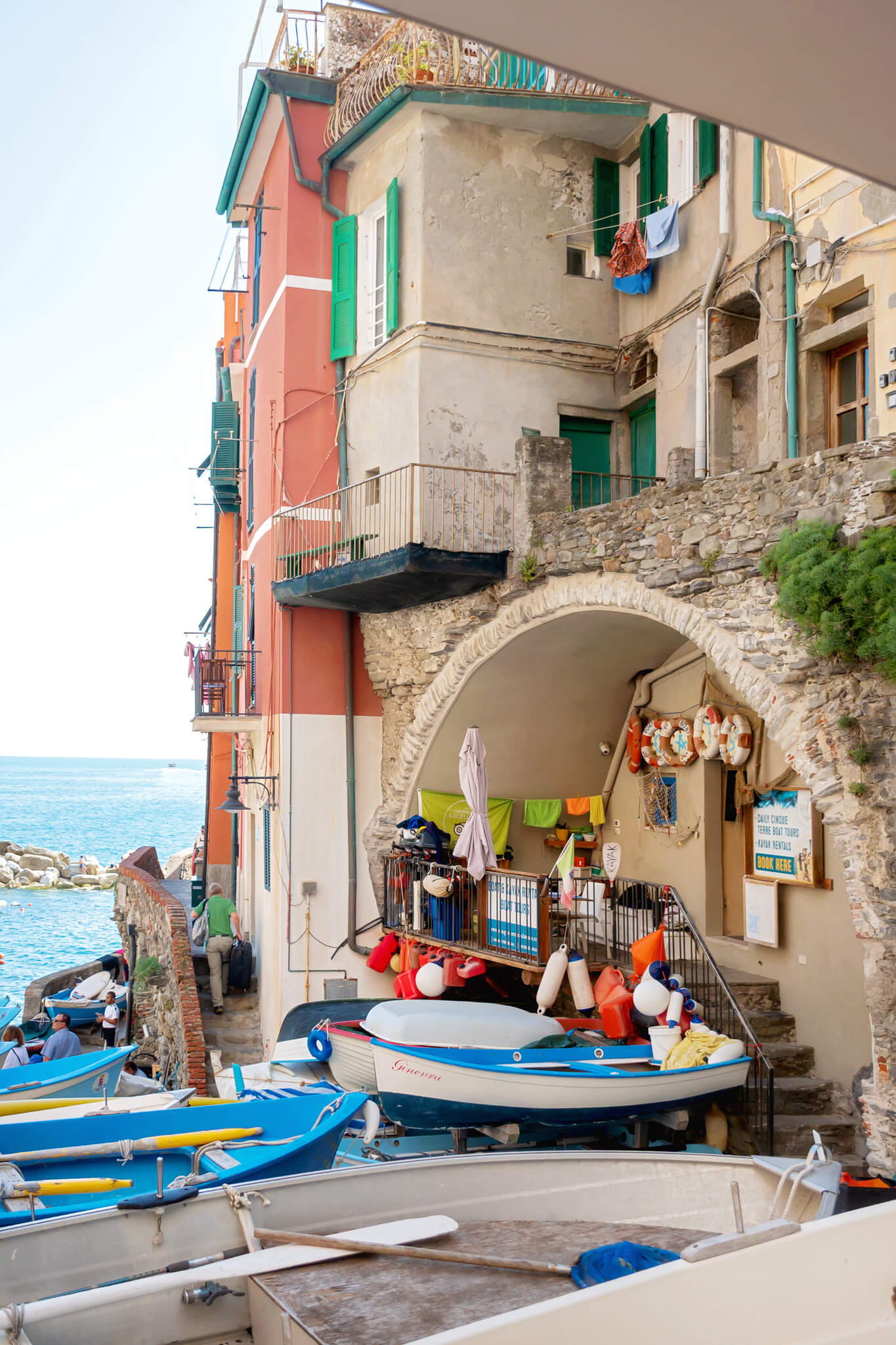
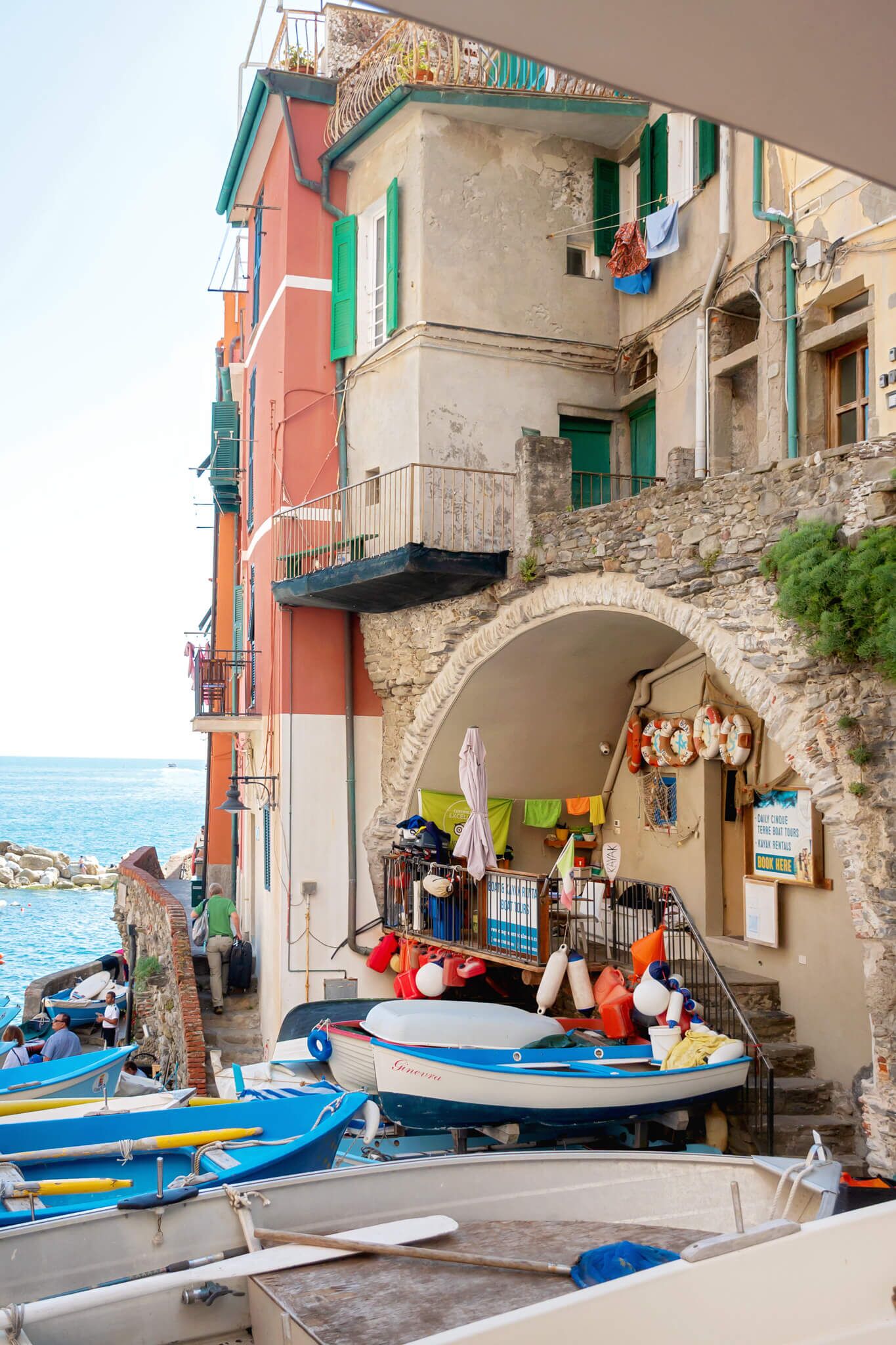
The southernmost village in the chain, Riomaggiore announces itself through steep terraces and a vibrant harbor that punches well above its weight in atmosphere. The Castello di Riomaggiore — a 13th-century castle positioned high above the waterline — delivers panoramic views of the Ligurian Sea that no photograph has ever done justice to. What draws people back to this particular village more than once is its romantic ambiance, most potent at sunset, when the pastel-colored houses absorb the gold evening light and the whole harbor glows in a way that makes you reach for your camera while simultaneously wanting to put it down. Grab an aperitivo, find a perch on the rocks near the harbor, and settle in — the postcard-worthy photos can wait, because this moment is better lived than archived. A scenic boat tour from the harbor at dusk is, in my experience, one of the most underrated ways to spend an evening anywhere on the Italian coast.
As Riomaggiore’s most populous village with around 1,700 residents, the settlement splits across a hill into two distinct personalities — the quieter residential base above, and the animated waterfront below, where hills and steps become your constant companions. The rocky beach tucked into an alcove around the corner from the main drag surprised me the most — crystal clear water even in late September, calm enough to swim comfortably without the summer circus. The west coast light at that time of year hits differently, and the handful of locals I found sitting on those rocks clearly agreed. Fuel the experience with takeaway calamari in a cone from one of the village’s beloved spots — places like Mamma Mia have perfected the art — and position yourself in the sunset square before the show begins.
The town’s proximity to La Spezia makes it a natural first or last stop on any Cinque Terre route, and its scenic port, though compact, is surrounded by a vertical stack of colorful homes rising up the cliff face in an arrangement that rewards anyone willing to wander upward. The restaurants and cafes here tend to keep later opening hours than the other villages, which quietly attracts younger crowds looking for an evening that extends beyond gelato. For the single best photo spot in the village — the one that produces the iconic Riomaggiore photo — head up and to the right from the port, find the outcrop that looks back over the rooftops, and shoot into the light. Both Manarola and Riomaggiore share the title of best sunset watching in the Cinque Terre, and the stretch of small beaches and harbour rocks here doubles as a popular bathing spot well into autumn — a detail that makes it an ideal base for a longer stay.
2.Manarola
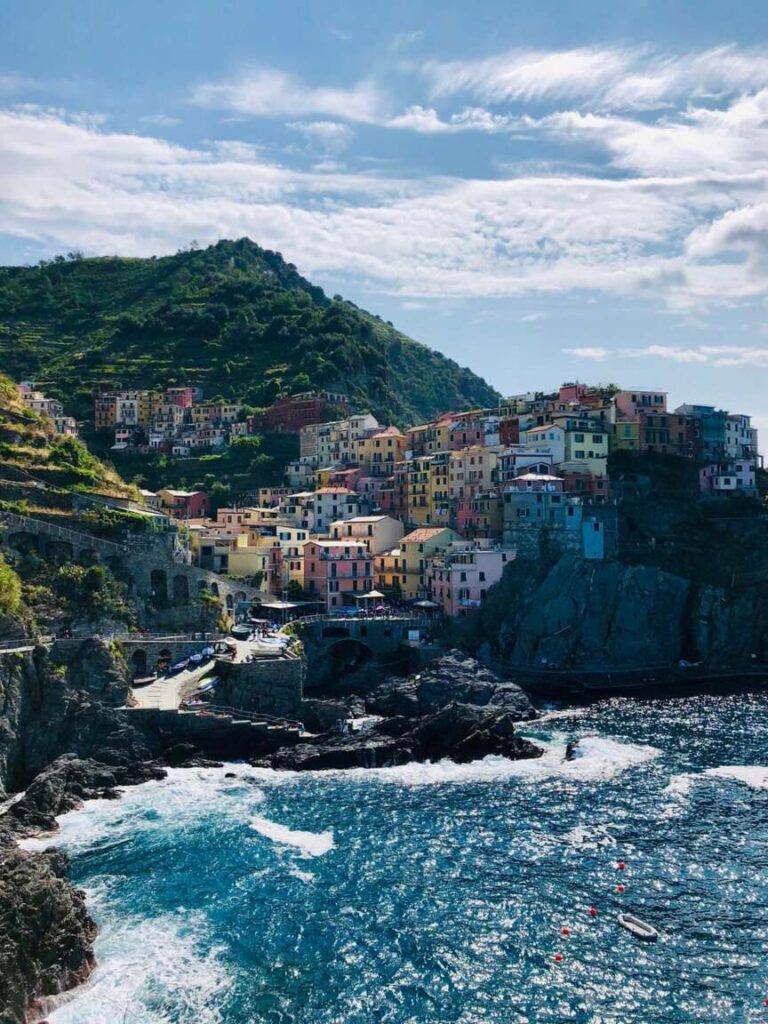
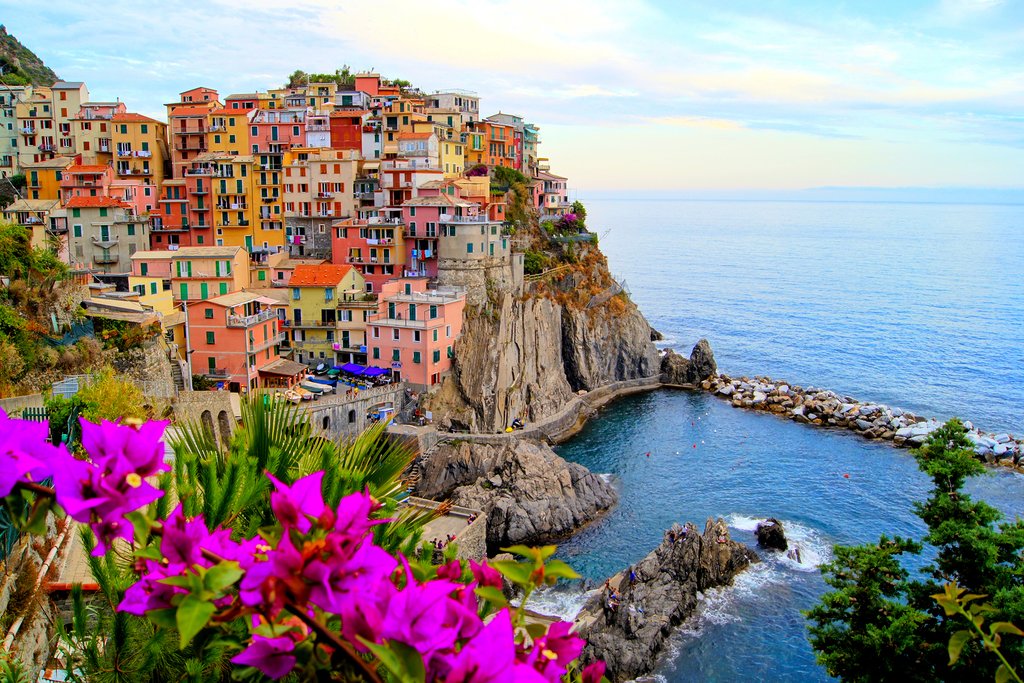
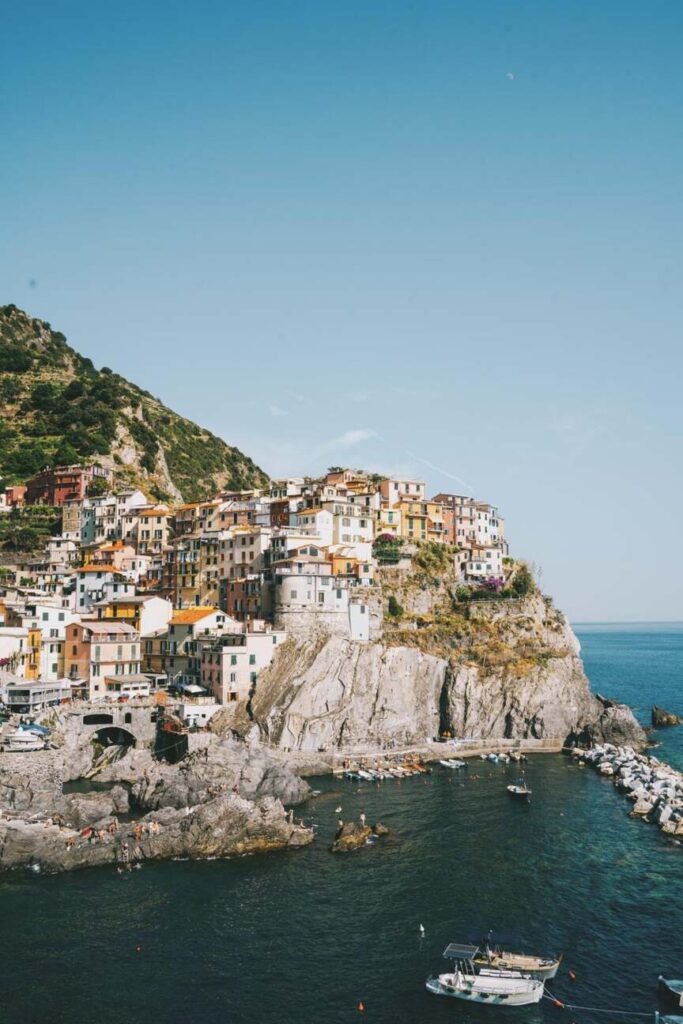
If there is one village in the Cinque Terre that has been most photographed by the rest of the world without losing an ounce of its dignity, it is Manarola — and the reason is immediately obvious from the path of walkways that frame it from every angle. The village’s reputation for wine production, particularly its extraordinary Sciacchetrà wine, gives it a cultural depth that elevates it beyond a mere photo opportunity, and the Punta Bonfiglio viewpoint — arguably one of the best viewpoints in the entire region — offers breathtaking vistas at sunset that feel genuinely earned after the climb. Nessun Dorma, the legendary cliff restaurant carved into the hillside above the port, has become synonymous with the Manarola experience, and rightly so — the aperitivo there as the light drops is the kind of memory you’ll be describing to people for years.
I’ll be honest — I walked into Manarola fully expecting to be underwhelmed, having seen it on too many postcards and Pinterest boards and more than one honeymoon slideshow. I was wrong. The colorful houses genuinely do spill down the cliff in a way that photographs cannot replicate, and the Ligurian blue of the water below shifts color throughout the day in a way that holds your attention long after you’ve run out of excuses to stay. The narrow streets hide wine shops and tiny producers where you can taste directly from the source, and the vineyard paths that climb above the village — threading between ancient terraces — offer a perspective of Manarola that most visitors miss entirely because they never look up. Head away from the harbour toward the cliffs opposite for the best view and the iconic lookout point that rewards the effort. The vibe here is genuinely singular — equal parts wine, light, and the particular magic of a village where only around 450 people actually live, yet accommodation fills months in advance because the rest of the world has figured out what they’re missing.
Beyond the aesthetics, Manarola is also one of the prettiest and most popular villages for families, partly because it sits at a more manageable scale than the others and partly because its pesto class — run out of the iconic Nessun Dorma location — is consistently one of the best experiences available in the whole Cinque Terre. The colorful homes, the viewpoint, the romantic atmosphere, the great views stretching south toward the harbour, and even the kids’ playgrounds tucked into unexpected corners — Manarola delivers at every level. Follow the signs toward Nessun Dorma from the port, and take your time — the walk up rewards patience, and the photos you get on the way are worth every step.
3.Corniglia
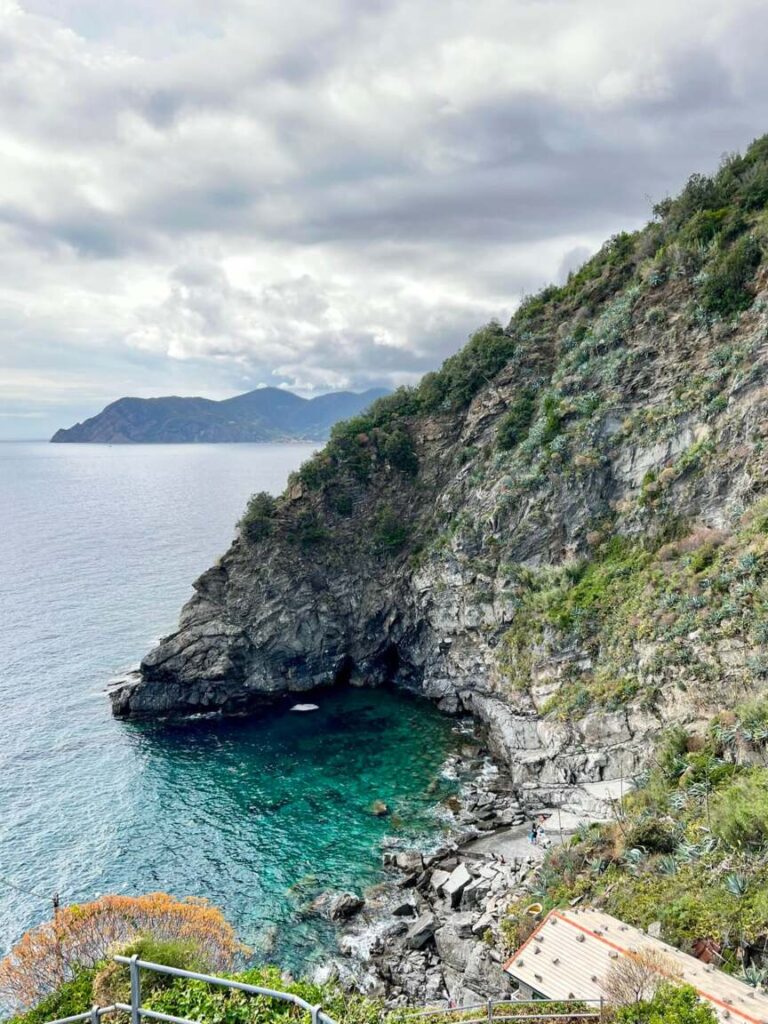
Standing at roughly 100 meters above the sea on a dramatic promontory, Corniglia holds an entirely different energy from its four neighbors — it is the only village in the Cinque Terre that is not adjacent to the sea, and that distinction shapes everything about it. The famous Lardarina staircase that connects the village to the waterfront is both a physical challenge and a genuine rite of passage, delivering a tranquil atmosphere, stunning views of the coastline, and a secluded quality that has largely kept the maddening crowds at bay. Fewer crowds, a peaceful pace, and narrow alleyways lined with multi-story colourful buildings housing tiny shops and local gelato purveyors experimenting with honey, citrus, and even basil flavors — this is Corniglia’s quiet pitch to the traveler willing to make the climb. And it works. The tranquil atmosphere here is less a coincidence and more a direct result of its secluded geography — something I found profoundly restorative after two days in the busier villages south of it.
The numbers tell a small story: 382 steps connect the train station to the village above, compared to a permanent population of just 240 people — a ratio that has kept Corniglia relatively quieter even in peak season. A shuttle bus is available from the station for a small fee, which is worth knowing if you’re arriving with luggage, but the climb itself is rewarding enough that I’d recommend the stairs at least once. The Church of St Peter, built in 1334 over an earlier structure, showcases a compelling mix of Baroque, Gothic, and Ligurian styles that feels more substantial than its village size would suggest, and the terraces around it look out over a cliff-edge panorama that puts most viewpoints in the region to shame. The lesser visited status of Corniglia relative to the other four villages is one of its greatest gifts — less tourism here means the relaxed charm has not been polished away, and the mountainous position that makes it a challenge to reach also means that its uphill character has protected it from the kind of infrastructure that tends to follow mass footfall.
The honest caveat: no port, no direct access to water, and hundreds of steps between you and the train — all genuine considerations if mobility challenges are a factor, since the bus from the station, while available, can involve a long wait. But for hikers and those actively seeking distance from the day-trippers, Corniglia is arguably the most authentic of the five villages, and the furthest from crowds once the afternoon trains have carried most visitors away. The 33 flights of stairs from the train station are not a deterrent — they’re a filter, and what they filter for is exactly the kind of traveler who will appreciate what Corniglia keeps at the top: quiet, views, and the sea stretched out below like a reward.
4.Vernazza
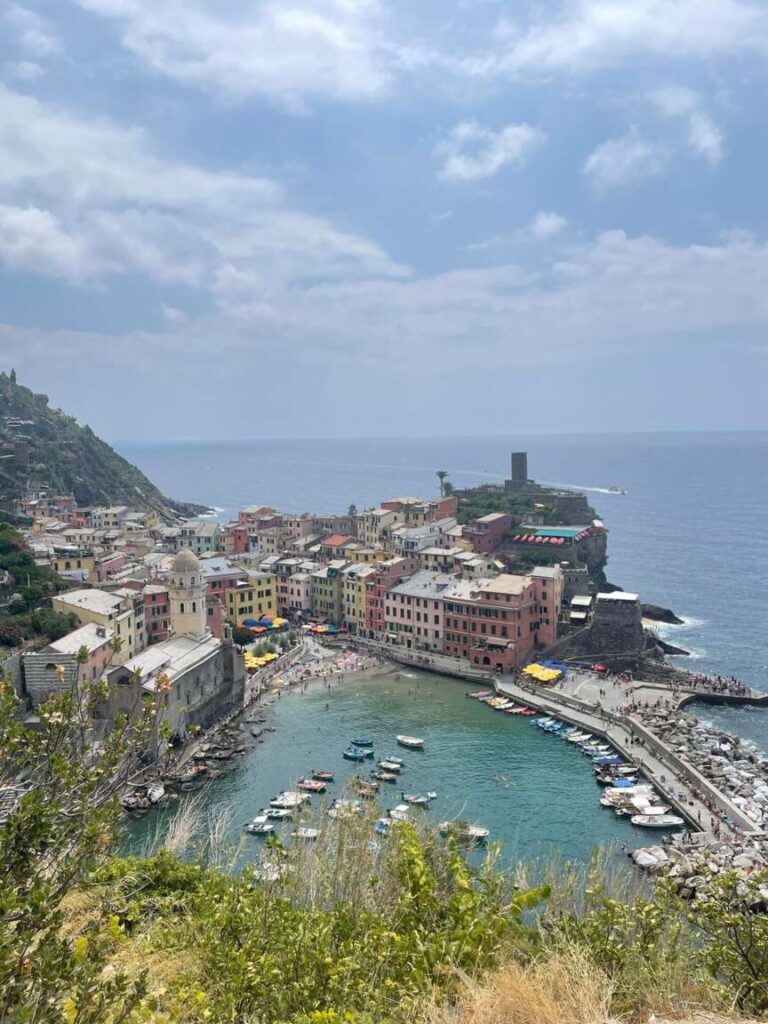
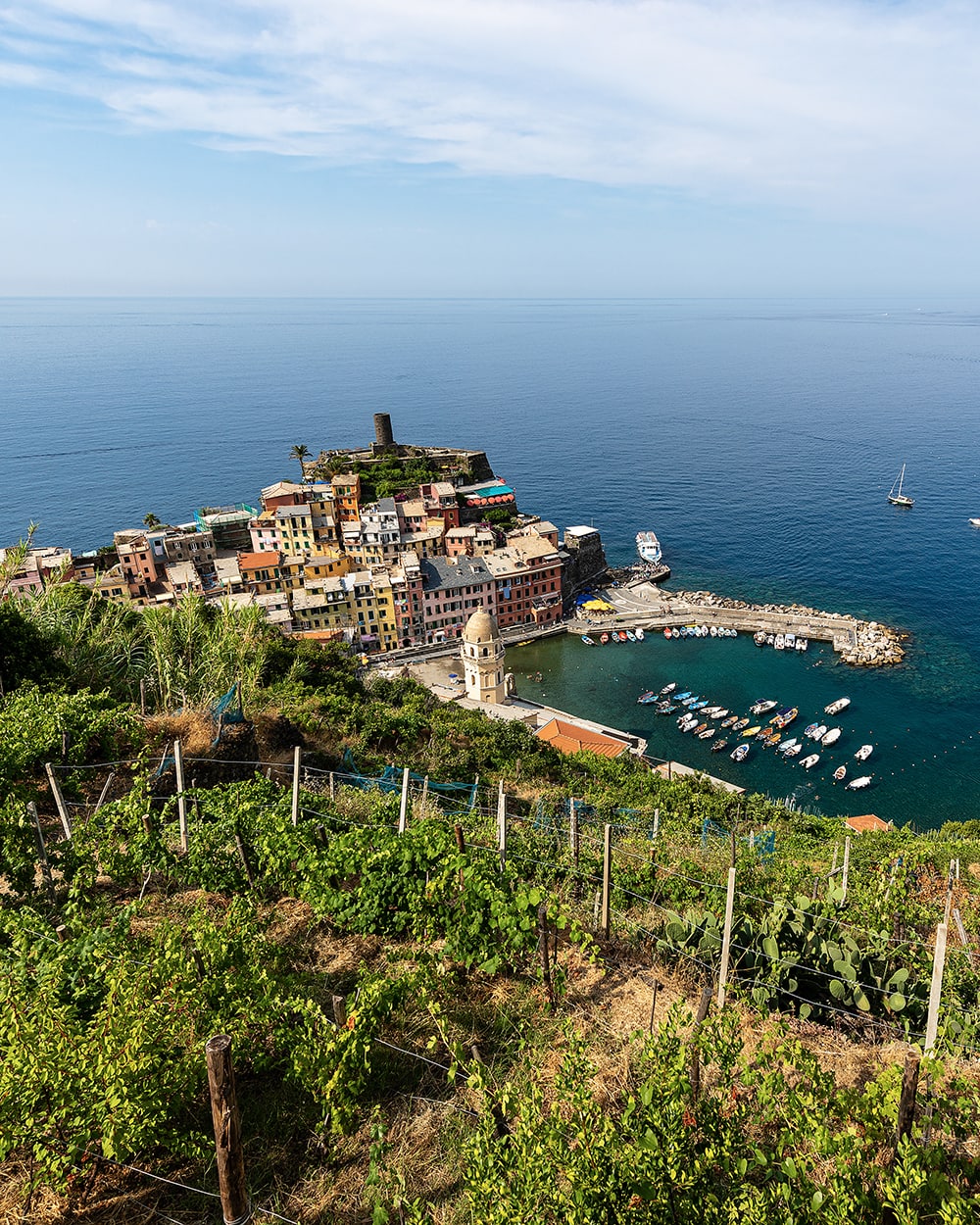
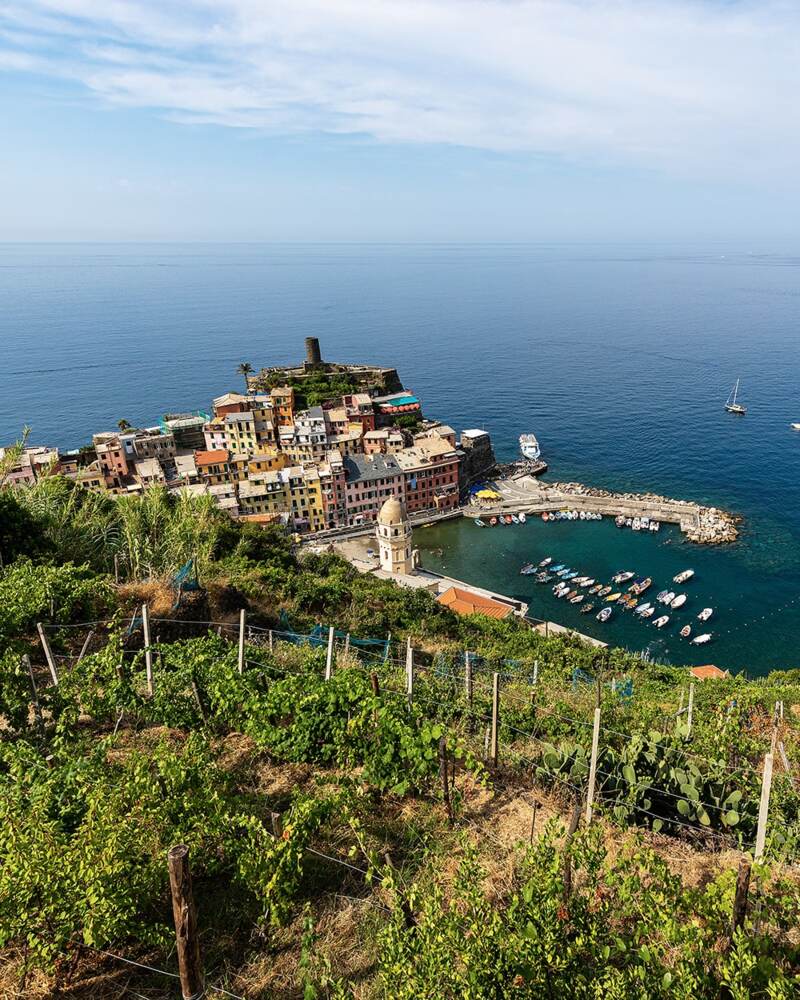
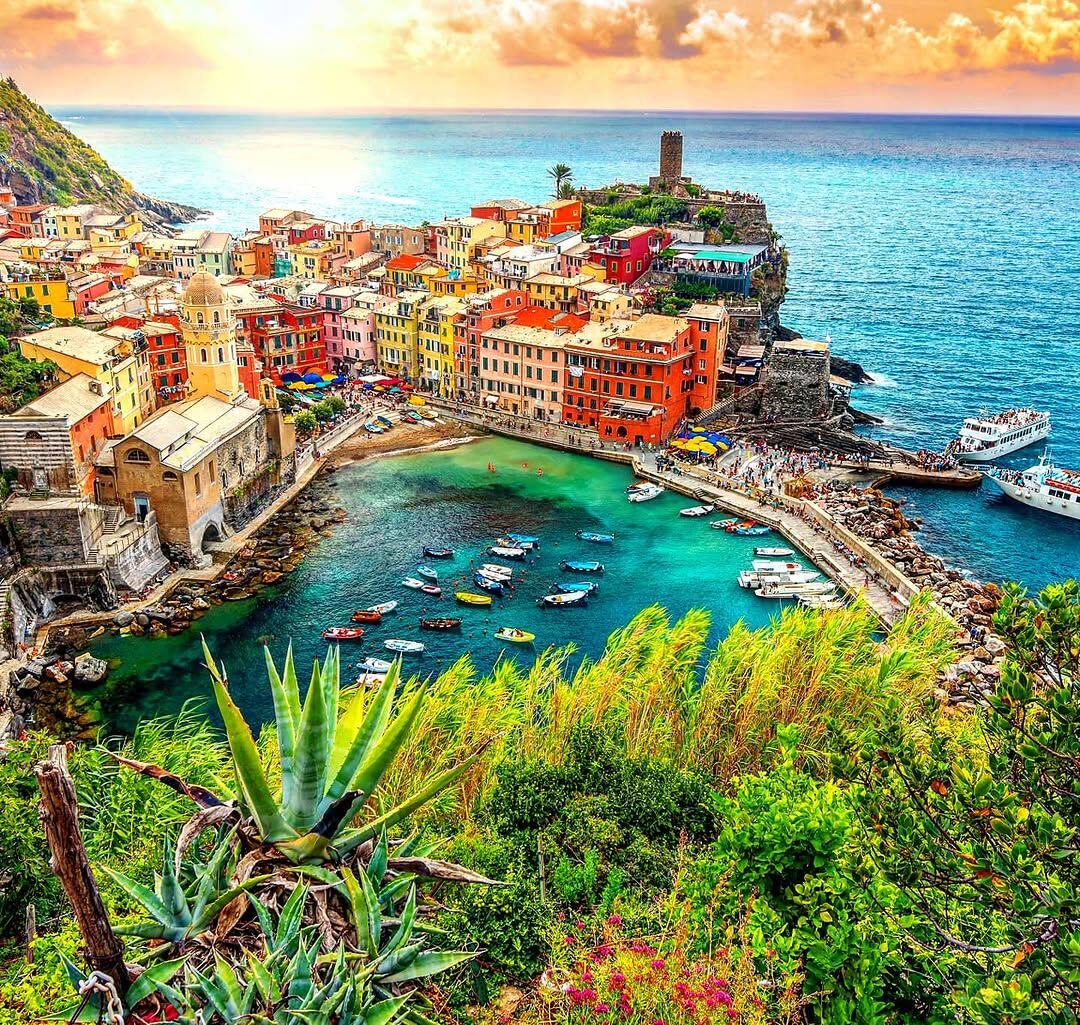
There is a reason Vernazza consistently tops the polls as the most picturesque of the five villages — its natural harbor, framed by narrow winding streets that funnel down to a small, protected bay, creates a composition so perfectly proportioned that it looks staged. A small beach sits at the base of the piazza, the charming piazza itself is ringed by restaurants ideal for a long dinner watching the boats, and the Church of St. Margaret of Antioch — dating to the 14th century — anchors the skyline with a quiet authority. The harbor water here runs in that specific shade of baby blue that belongs exclusively to the northern Ligurian coast, and the fresh seafood served at the waterfront trattorias tastes precisely as good as the setting demands. Vernazza is, without question, the most popular village in the Cinque Terre for a reason — but it handles its fame better than most, mostly because the geography that makes it beautiful also limits how many people can physically be in it at once.
Spend any meaningful time here and the pastel-coloured buildings reveal layers of detail you’d miss on a quick pass — carved doorways, potted herbs on window ledges, fishing nets drying between walls that have seen centuries. The tiny sand beach draws swimmers to the smoother rocks around the bay for sunbathing and afternoon dips, while the Doria Castle tower — built in the 11th century — charges a modest €2 entry and operates daily from 9am–7pm, rewarding visitors with panoramic views that reframe the entire village from above. A hike to Monterosso from here takes approximately 1.5–2 hours depending on pace, and the trail immediately above Vernazza offers one of the finest lookback views in the entire region — the kind of jaw-droppingly beautiful birds-eye views that justify the steps entirely. The people watching in the piazza is a genuine sport here, and the combination of prettiest architecture and romantic atmosphere makes it consistently the crowd-pleaser of the chain — despite being anything but overcrowded once you move away from the waterfront and climb toward the highest trails and quiet viewpoints above the town, where the colorful homes below take on an almost abstract beauty and the narrow streets become a mosaic of terracotta and shadow, and the views stretch far enough that you can see pretty church spires and small stretch of sand simultaneously.
5.Monterosso al Mare
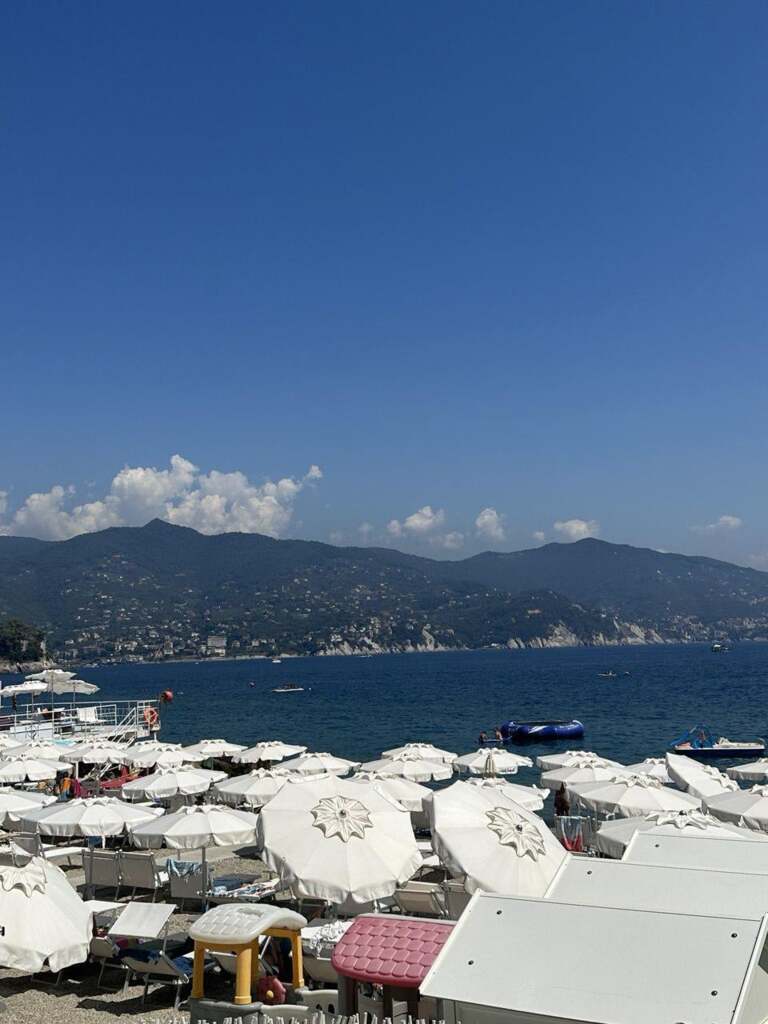
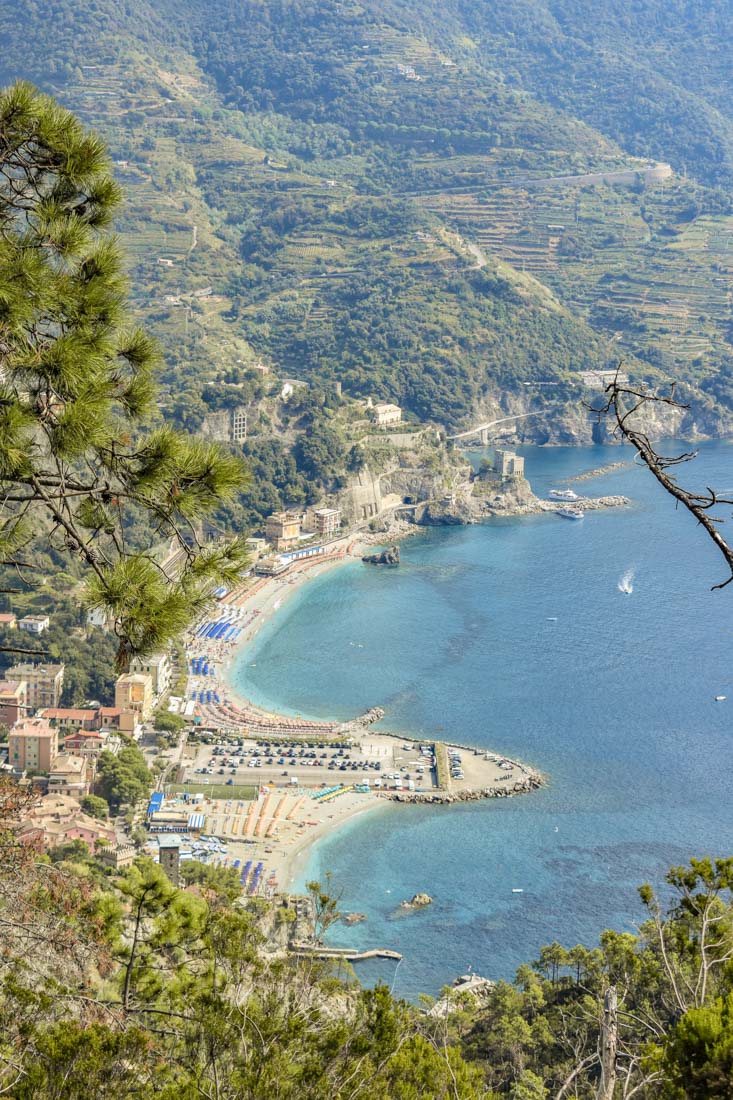
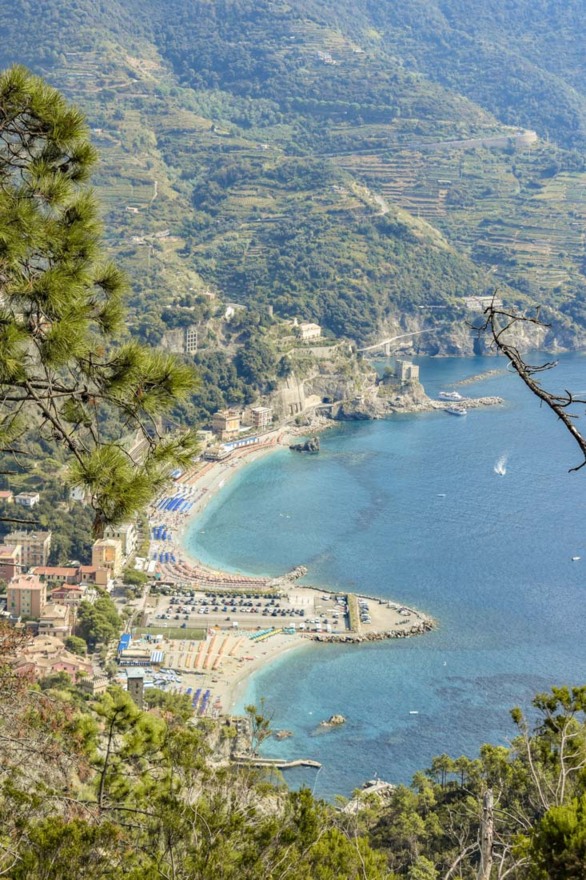
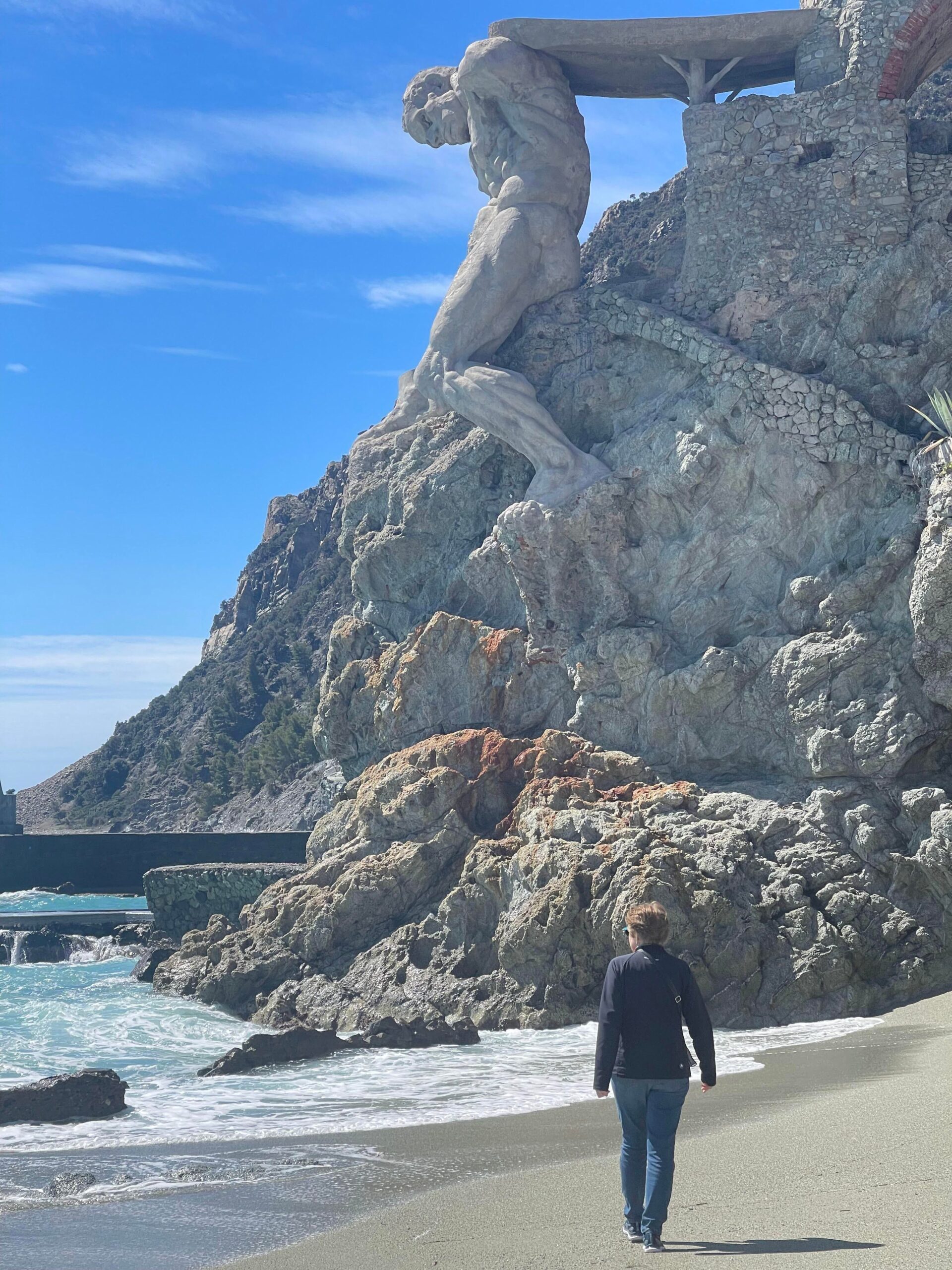
Monterosso al Mare operates by a different set of rules to its four neighbors, and that is precisely the point. As the largest village in the chain — split between a characterful Old Town and a more modern New Town connected by a tunnel — it is the only one that offers a genuinely sandy beach, complete with Italian umbrellas, sunbeds, and the full beach-lovers experience that the rest of the Cinque Terre frankly cannot provide. The lemon groves climbing the hills behind the village supply locally-made limoncino — a Ligurian variation of the classic southern Italian digestif — and the lemons here are a specific variety famous well beyond the region’s borders. The resort feel is intentional and unapologetic, and for travelers arriving after days of stair-climbing and village-hopping, the flattest terrain and accessibility on offer here feels like a genuine gift.
What Monterosso trades in vertical drama it more than compensates for with horizontal pleasure — lemon spritzes from a beach bar at midday, browsing shops for a linen dress or handmade ceramics or the kind of woven bag that communicates effortlessly that I summer in Italy now, and the two sandy beaches and long promenade that give it a resort feel absent elsewhere. The Church of San Giovanni Battista is worth the short detour for its remarkable white and green marble facade — the black and white striped exterior topped by a beautiful rosette window is one of the more surprising architectural encounters in a region better known for views than buildings. For the adventurous, paragliding from the hill above the village and landing on the beach is available between October to April, when beach time gives way to aerial thrills. The pebbly beaches are well equipped and swimming here is far more comfortable than the rocky coves elsewhere, making Monterosso the definitive choice for families with small kids, travelers with mobility challenges, and anyone whose idea of Italy includes lying horizontal in the sun with no plan whatsoever. The biggest towns comparison is apt — Monterosso is less scenic in the cliff-drama sense, but accommodation options here are the most plentiful in the region, and for beach time, it is simply unmatched.
History & Why Cinque Terre is Important
Long before social media made these villages globally famous, their story was already extraordinary — rooted in survival, ingenuity, and a relationship with the land that produced one of the world’s most distinctive cultural landscapes. The origins of the Cinque Terre trace back to the 11th century, when the earliest settlements of Monterosso and Vernazza were established by communities from the Val di Vara, a fertile inland valley in Liguria, who were driven toward the higher ground of the coast by population pressures and the persistent threat of disease. What they built on those cliffs — agricultural villages sustained by terraced farmland, grapes, olives, and the sea below — became the foundation of an identity that has survived nearly a thousand years intact. The fishing villages label, while evocative, was always only half the story: these communities were primarily wine farmers, producing varieties like Vernaccia that carried regional fame as far back as 1300, long before the first tourist ever arrived. The 16th century brought pirate attacks from the sea, prompting the construction of fortifications and watchtowers that still punctuate the landscape today — stone reminders that beauty here was always defended. It was the arrival of the railway in the 19th century that finally pierced the isolation, connecting the villages to larger cities and initiating the slow burn of economic growth and tourism that has defined the region’s modern character.
The deeper significance of the Cinque Terre lies in what culturally unique really means here — not aesthetic novelty, but genuine necessity made beautiful. The harsh environment, the tall, rocky terrain, and the fact that these communities remained essentially inaccessible well into the late Nineteenth century forced generations of residents to develop communal ideas around land use that produced the agricultural terraces and trails we walk today. Every terrace wall was built by hand; every trail maintained collectively. The agricultural land carved from near-vertical cliff faces represents one of the most labor-intensive landscape interventions in human history, and the fishing community that ran in parallel with the farming economy gave the villages their dual identity — hardy, self-sufficient, and entirely shaped by geography. These are not decorative details. They are the reason the place exists at all.
Best Time to Visit Cinque Terre / When to Go
The numbers alone should settle the timing debate: a reported 4 million visitors descended on an area of just 1 square kilometer in 2023, making overtourism not a theoretical concern but a lived daily reality for the popular tourist destination that Cinque Terre has become. The busiest months — June, August, and September — each bring hundreds of thousands of visitors, and August specifically operates at a pitch that turns what should be a contemplative coastal experience into something closer to a peak high season endurance test, where accommodation is scarce, fighting for space on every viewpoint is standard, and the tourists outnumber any trace of authentic village life. The shoulder season windows — specifically April, early May, late September, and October — represent the genuine sweet spot: lovely weather, a relaxed atmosphere, and a version of the Cinque Terre that still resembles the place people come hoping to find.
April and May are exceptional for hiking — the trails are drying out from winter, the wildflowers are in full force, and the sea is still chilly enough that the swimming crowd hasn’t arrived yet, which keeps the villages measurably calmer. By September, the water is warm enough for a very comfortable swim, the light is extraordinary, and the biggest crowds of high summer have retreated — though the village trails still see solid traffic, so early starts matter. Mid-October signals the beginning of the rainy season, after which hiking trails may be closed and certain services scale back for winter, so the window between mid-September and mid-October is arguably the single best moment to visit if conditions align. August, beyond being the hottest month and most expensive for everything from beds to boat trips, also brings a specific quality of crowd that tends to overwhelm the coastal destinations of the Cinque Terre past the point of pleasure.
Digging deeper into the timing strategy: weekends between May and September bring substantial day trips traffic from Milan, Genoa, and Florence, meaning that a midweek visit in late spring or early autumn offers the closest experience to genuine quiet the region can offer in the good season. The shoulder season framing extends even further if you consider March through mid-June and September through October as viable — we visited in late October and found t-shirt temperature conditions during the day, meals eaten entirely outside, and enough space on the trails to actually stop and look. A jacket for evening and early morning is essential, and meals outside become a genuine pleasure rather than a compromise. Fewer crowds, milder temperatures, and the particular golden quality of the light in October make active holiday planning in that window an easy recommendation. Rain is possible at any point — including summer — so don’t let that consideration push you into the worst months. Come when the milder temperatures and manageable visitor numbers stack in your favor, and the Cinque Terre rewards you accordingly.
Things to Do in Cinque Terre
The Sentiero Azzurro — the famous Blue Trail — is the thread that connects all five villages along the coastline, delivering breathtaking views at nearly every step and operating as the spine around which most Cinque Terre itineraries are built. Trail conditions change seasonally and some sections close for maintenance without much warning, so checking current status before committing to a route is genuinely important — the Cinque Terre National Park website is the most reliable source. The Via dell’Amore, the iconic road of love linking Riomaggiore and Manarola along the southern cliffs, has a storied history of romantic scenic walks and its phased reopening has been one of the most anticipated developments in the region. Away from the trails, the Ligurian Sea offers exceptional swimming and sunbathing from the various beaches and rocks accessible throughout the chain, while vineyard tours and wine tasting sessions in the terraced hillside estates give genuine insight into the winemaking traditions that predate tourism here by several centuries.
Getting out on the ocean to see the villages from the water is, in my experience, the single perspective shift that most changes how you understand the Cinque Terre — the colorful houses built into steep hills from sea level look genuinely implausible, and a sunset boat tour catches the changing light in ways that land-based viewpoints simply cannot replicate. The ferry-based approach is the budget-conscious version; a private boat trip allows for swimming and snorkeling at anchor in otherwise inaccessible coves. Kayaking and paddle boarding are available from several villages with hourly hire rates or fully guided tours — the paddle between villages takes roughly half an hour in calm conditions, and the stunning villages seen from water level are worth every minute. A cooking class focused on pesto — which genuinely originated in this stretch of Liguria — or on broader traditional Italian cooking methods is time extremely well spent; vegetarian cooking options exist alongside the seafood-forward curricula. Porto Venere, a UNESCO World Heritage Site sitting just to the south, is reachable by boat and offers a full afternoon’s alternative to the main village circuit — genuinely as beautiful as anything in the Cinque Terre proper. The sunset from both Riomaggiore and Manarola and Vernazza is non-negotiable — the west coast positioning means the light show is simply part of the daily schedule here. Gelato consumption needs no justification; the lower in fat composition relative to standard ice cream means the flavours are intensified, which is either excellent news or dangerous, depending on your self-control.
The strategic hiking approach worth knowing: split the trail across two days, running Riomaggiore–Manarola–Corniglia via Volastra on day one, and tackling Monterosso–Vernazza–Corniglia on day two. This distribution prevents the exhaustion that comes with attempting the full chain in a single push, and each leg offers genuinely different landscape character. The ferry between villages provides an efficient reset between hiking days, and combining a private boat trip with a sunset cruise on the second evening rounds out the experience beautifully. The views from water perspective accessible by top deck ferry is an affordable introduction before committing to the full private boat trip experience. The quay in Manarola is a fantastic spontaneous swimming and sunbathing spot that many visitors miss; the beach clubs and full facilities in Monterosso provide the organized version. A photoshoot with a professional photographer who knows the local light and scenic spots is worth considering for a specific half-day — the memory produced is considerably more valuable than anything your phone delivers from the same vantage point. Nessun Dorma in Manarola runs pesto tasting and classes that consistently rank among the best culinary experiences in the region — book ahead.
Food & Drink in Cinque Terre
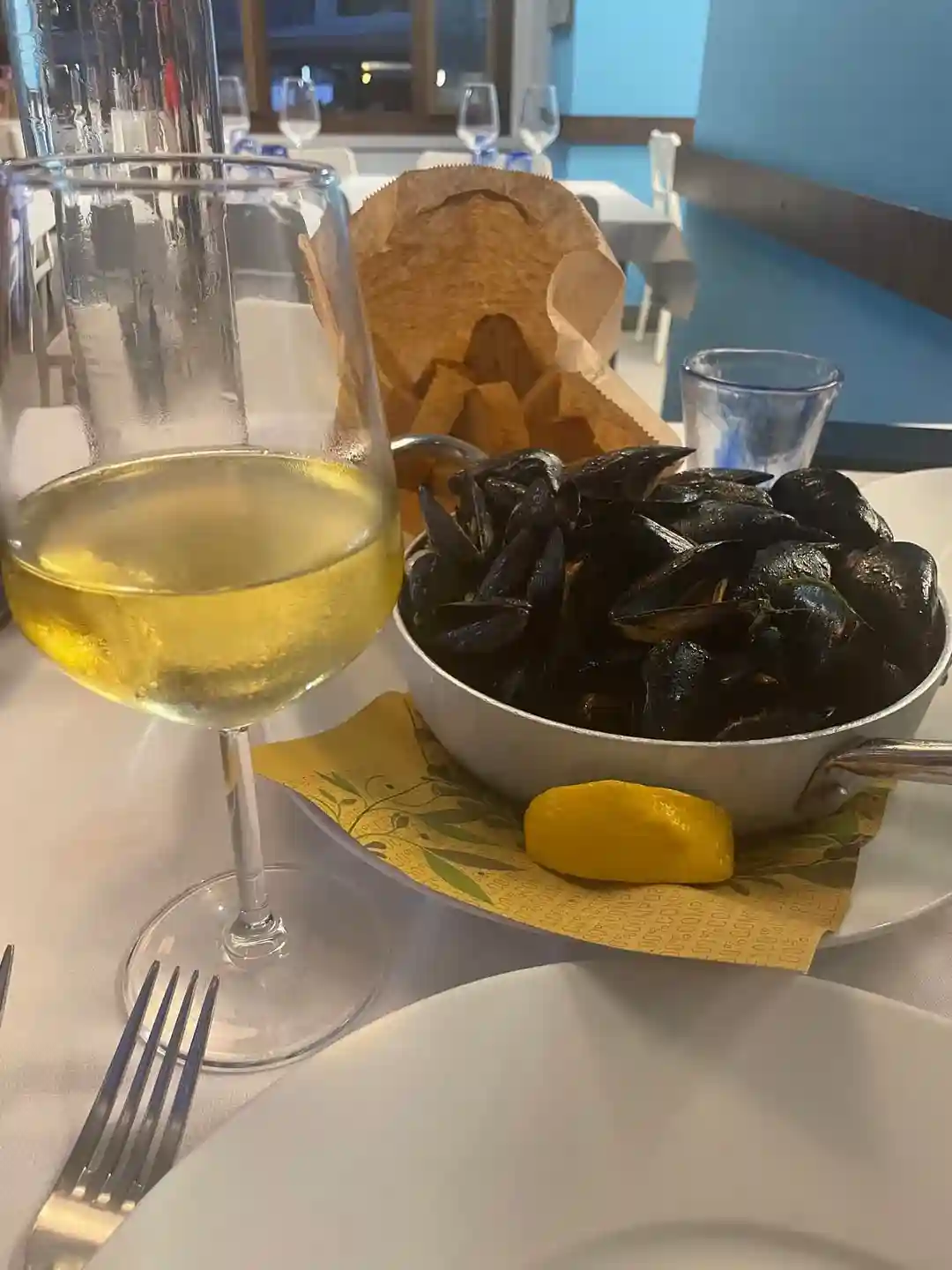
The cuisine of this stretch of coast is where coastal geography and agricultural heritage collide most deliciously, producing a Ligurian region food identity that is simultaneously humble and extraordinary. Anchovies from Monterosso are treated with a reverence usually reserved for luxury ingredients — cured, marinated, layered in olive oil, or served fresh over pasta with a confidence that reflects centuries of practice. Pesto alla Genovese is everywhere, and rightly so — made properly with locally grown basil and served over trofie or trenette pasta, it bears almost no resemblance to the jarred approximation sold in supermarkets globally. The Sciacchetrà sweet dessert wine — produced from selected white grapes dried on rocks in shady areas, sometimes finished with a piece of Gorgonzola cheese nearby during the ripening process — is the region’s most distinctive viticultural achievement, a liquored dessert wine at 18% alcohol that pairs brilliantly with both biscotti and sharp aged cheeses. The farinata — a chickpea flour flatbread that functions somewhere between a crêpe and a pancake — is a genuine local delicacy found throughout Liguria, served hot from wood-fired ovens and eaten as a street snack with a simplicity that belies how deeply satisfying it is. The restaurants and trattorias here tend to position themselves on terraces engineered specifically to maximize views, which means that even a straightforward lunch becomes an occasion.
Seafood restaurants along the coast serve squid ink pasta and locally caught seafood with a directness that comes from supply chains measured in meters rather than miles. The primary local white wine — produced from rocky hills vines that have been cultivated here for centuries — is poured by the carafe in most establishments, sourced directly from producers whose vineyards are visible from the dining table. Focaccia bread, another Liguria original, is available from bakeries across all five villages in a range of toppings variations that makes it both a reliable snack and a genuinely exciting culinary detour. The coast orientation means anchovies — fried and marinated — appear on virtually every menu in multiple preparations. For the full spectrum: the forno culture here is magnificent, with fresh bread, proper focaccia, excellent sandwiches, and hot plates available from bakeries that open early and run out of the best items by midmorning. For a more considered evening: Cantina De Mananan at via Fieschi 117 in Corniglia is an intimate, serious wine-focused address; Cappun Magro Bistrot at via Riccobaldi 1 in Manarola offers creative takes on the local tradition; Nessun Dorma in Manarola delivers both the pesto class and extraordinary views; Miky at Via Fegina 104 in Monterosso is consistently excellent for seafood; and L’ancora della Tortuga at Salita dei Cappuccini 4 in Monterosso occupies a genuinely dramatic cliff location that makes the meal feel like an event. The range across these addresses — from high end restaurants to forno counters serving the locals — means eating well here requires nothing more than curiosity and a willingness to follow the smell.
Getting Around Cinque Terre
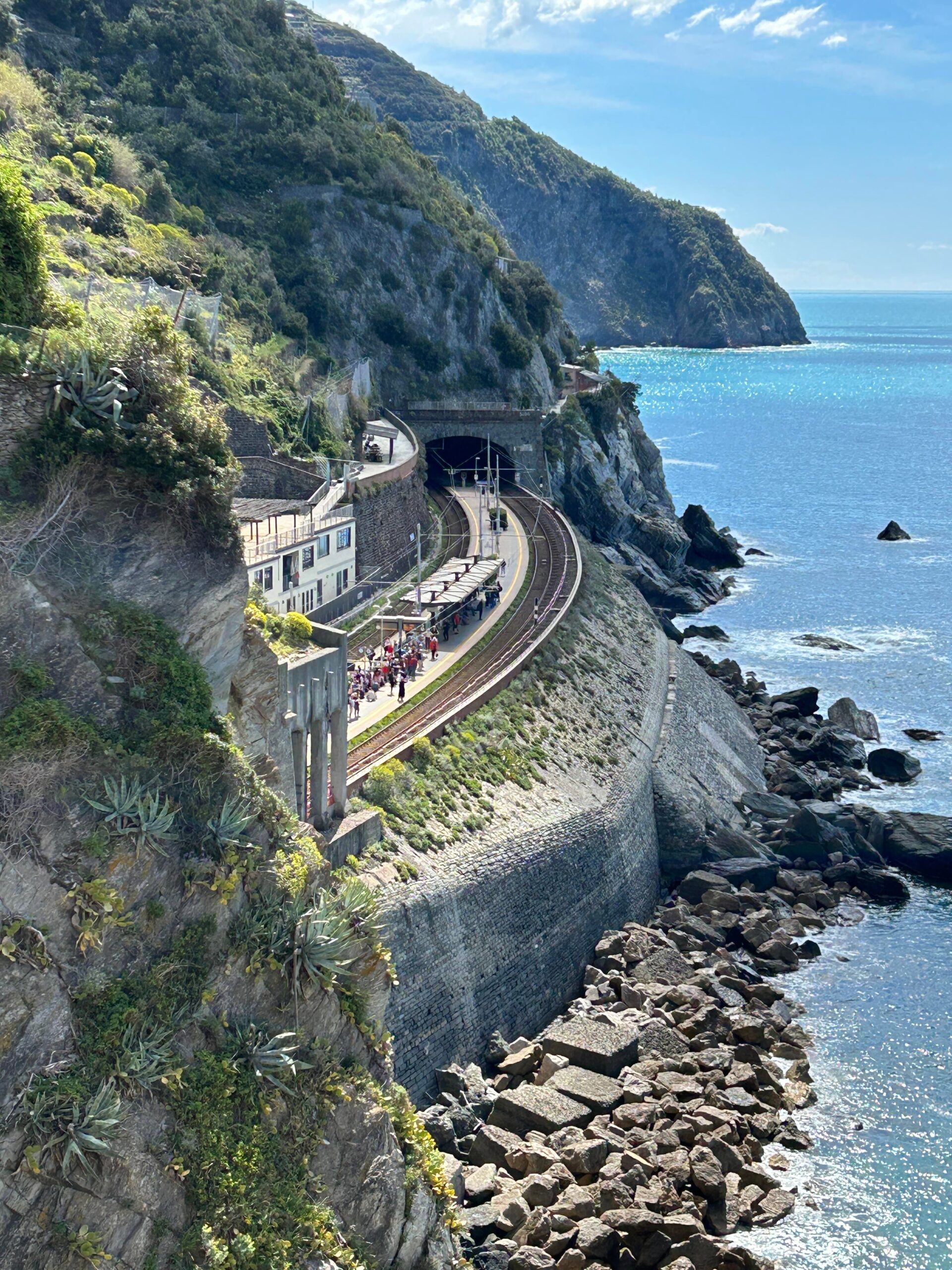
The practical reality of moving through the Cinque Terre is straightforward once you accept the governing logic: cars are restricted from the villages entirely, and the infrastructure built to replace them — trains, ferries, and hiking trails — works well enough that the absence of road access feels like a feature rather than a limitation. The Cinque Terre Express runs on a frequent schedule between all five villages and is universally regarded as the most convenient baseline option; the Cinque Terre Card bundles unlimited train travel with access to hiking trails and represents genuine value for anyone spending more than a day in the region. Boat services connect all villages except Corniglia — the one village that the sea cannot reach directly — and the coastline perspective from a ferry deck reframes the whole geography in a way that the train tunnel network, for all its efficiency, simply cannot. The well-marked trails between villages complete the trio, and the natural beauty experienced on foot between settlements is the entire reason most people come in the first place. Convenience and value are built into the Card structure; the only real decision is how to weight train versus boat versus trail on any given day.
From La Spezia, the regional hub that most arrivals pass through, the local line drops into each village sequentially in a journey short enough that carrying a physical timetable feels unnecessarily formal. The trains are frequent and efficient; the only honest caveat is that the local trains run without assigned seating, meaning that at busy times a degree of standing — not unlike a city bus during rush hour — is possible. Journeys between villages take only a few minutes, so even standing is trivial. The Cinque Terre Train Card eliminates the new ticket friction of hop on and off travel and is worth acquiring on arrival. Ferries operate in the good season and are subject to weather conditions — a good reason to mix both modes rather than depending on one exclusively. The flexibility of the mix and match approach — ferry one way, trail back, train to skip a leg — is the most enjoyable way to structure multiple days here. For those arriving by car: Parcheggio Fegina and Parcheggio Loreto Terrazza in Monterosso, Vernassoa Parking in Vernazza, Parcheggio Corniglia near San Lorenzo Church, Parcheggio Manarola, Parcheggio Rio Park and Parcheggio della Zorza in Riomaggiore, and the broader infrastructure of La Spezia all offer parking options — but the strong recommendation remains to leave the car in La Spezia and explore entirely by public transport, which is both faster and considerably less stressful than navigating the narrow access roads into the villages.
Where to Stay in Cinque Terre
Choosing where to base yourself in the Cinque Terre is less a logistical question than a temperament question — each village offers a genuinely different experience after the day-trippers leave and the all villages theory of exploration gives way to the reality of one place becoming home for a few nights. Monterosso, as the largest village, functions best as a base camp for those prioritizing comfort, variety, and the ability to organize day trips to the other four from a well-equipped center with real amenities. Outside the villages entirely, Levanto to the north is a coastal town with budget-friendly hotels and excellent train access, while La Spezia to the south provides a larger city infrastructure with frequent train connections in both directions and considerably more lodging flexibility. Portovenere, with fewer crowds and those extraordinary Gulf of Poets views, is another underused base option that rewards anyone willing to commute slightly further into the national park.
For those committed to staying inside the villages themselves — which I’d argue is the only way to actually understand them — the choice comes down to what you want your evenings to feel like. Riomaggiore is my personal preference for a multi-night stay: quieter at night than the central villages, still animated enough to find a good table at one of the restaurants lining the harbor, and positioned for the best sunset views in the southern chain. Manarola and Vernazza are the most sought-after for obvious reasons, and popular is an understatement — book months ahead for either. Monterosso wins the practicality category outright with its large beach, flatter ground, and the most diverse hotel options in the region, making it the sensible choice for those with mobility considerations or who simply want to end long hiking days with the least possible vertical challenge. La Spezia and Levanto remain solid fallbacks against the tourist crowds with the train providing a reliable and quick connection in.
Specific hotel recommendations worth knowing: Hotel Villa Adriana in Monterosso offers a pool, solid restaurant, family rooms, and is within walking distance of the best beach in the region — genuinely rare in a place where beachfront accommodation is limited. Hotel Baia sits conveniently between the beach and the station in Monterosso, making logistics simple. Hotel Marina, also in Monterosso, is a comfortable 3-star option in the center of town with rooms that are compact but well-positioned for everything. The universal truth of staying the night anywhere in the Cinque Terre — rather than visiting on a day-trip — is that the quiet moments before 9am and after 7pm are a completely different destination. The day-trip crowds thin dramatically, the light changes, the villages become themselves again, and you remember why you came. Corniglia remains the most authentic and furthest from crowds once the day-trippers have departed, and Monterosso al Mare, while carrying a slightly modern feel compared to the others, delivers the best beach access in the region — a trade-off that suits a significant portion of travelers perfectly. After visiting all of five towns, the honest recommendation is: pick one of Manarola, Vernazza, or Riomaggiore for atmosphere, stay at least two nights, and use the train to reach the others.
How to Get to Cinque Terre
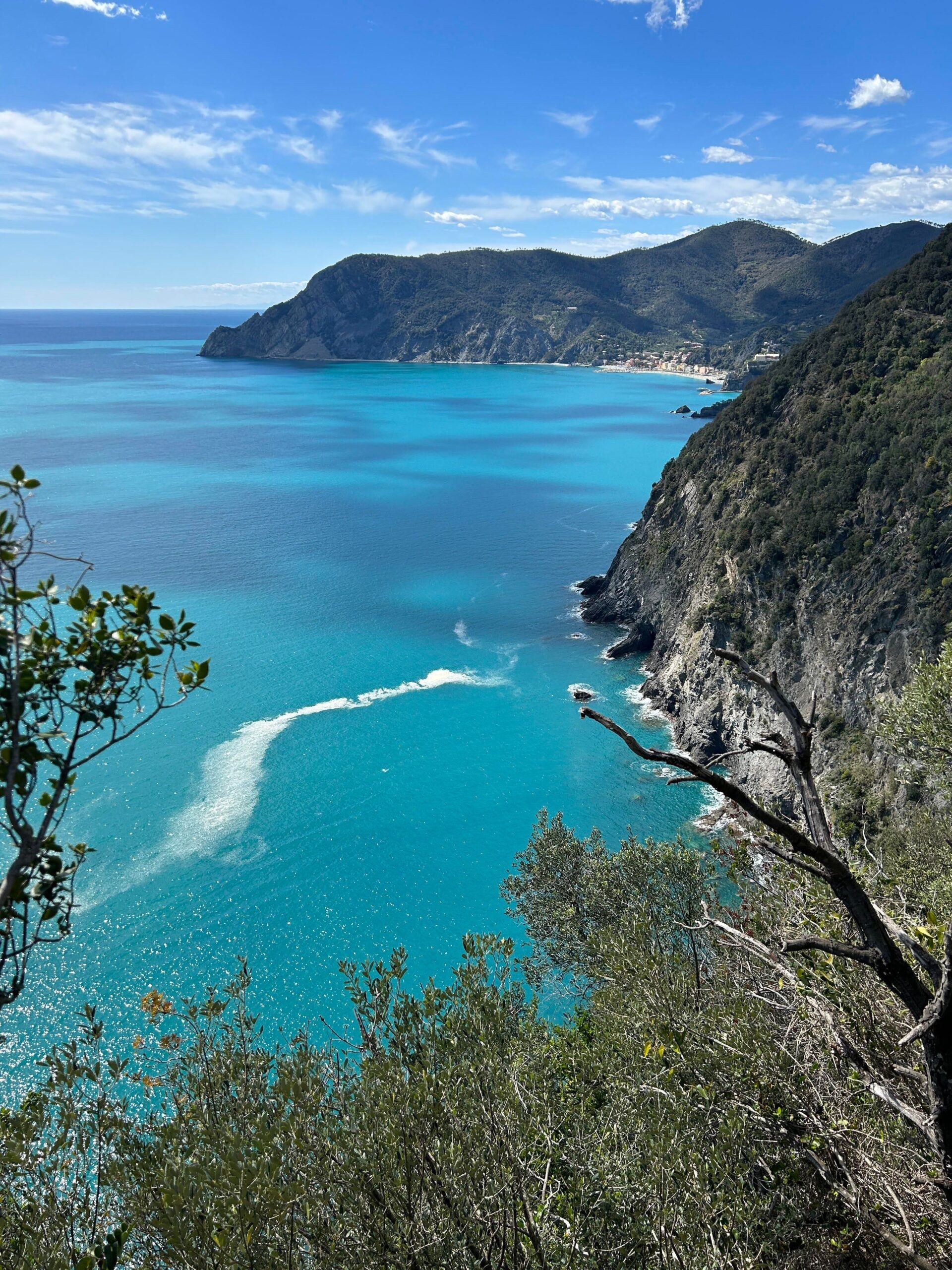
The gateway logic for the Cinque Terre runs through La Spezia in virtually every scenario — the main gateway city sits on the southern edge of the national park and connects directly by train to all five villages in minutes. The closest airports serving the region are Genoa, Pisa, and Milan — each connected to La Spezia by regional rail — with the journey times varying from under an hour from Pisa to roughly two and a half hours from Milan depending on the service. From any of these hubs, the train to La Spezia and then the local line into the villages is the standard and most reliable approach, requiring no rental car and no navigation anxiety. Parking in La Spezia and walking to the station is the recommended approach for anyone driving to the region.
Pisa and Florence represent the two most convenient airports for international arrivals combining Cinque Terre with a broader Tuscany itinerary — Pisa sits geographically closest to the Ligurian coast, while Florence offers more direct long-haul flight options. La Spezia functions as the regional hub on the railway line connecting all 5 villages, and the nearest larger city infrastructure makes it the natural first or last stop on any Cinque Terre trip. Levanto, on the western side of the national park, represents a valid alternative entry point, particularly useful if you’re approaching from the French Riviera direction. The train connections from La Spezia to Milan, Pisa, and Rome are all well-served, making the Cinque Terre accessible from essentially any major Italian hub without requiring a car.
How Many Days Should You Spend in Cinque Terre
The honest minimum for experiencing the Cinque Terre properly is more than a single day — one day per village gives each settlement the attention it deserves, but realistically the rush involved in five villages across five days defeats the contemplative purpose of being there. The fall in love phenomenon — where a single village holds you longer than planned — happens consistently here, and 2–3 days as a baseline gives enough flexibility to let it happen without guilt. A day trip from Florence or Pisa is logistically possible and genuinely better than nothing, but the version of the Cinque Terre you experience in a single rushed visit is a pale shadow of what reveals itself once you stay past sunset.
Three days is the recommendation I give most consistently for a first visit — it is enough time to see all villages without the itinerary becoming an endurance exercise, and it allows for the kind of wandering and repetition (yes, going back to the same harbor at different times of day) that makes a place actually lodge in your memory. The ideal structure across three days: all villages visited at least once, one proper hike between two of them, and one half-day doing absolutely nothing in particular.
The most practical day-count framework: 1 to 3 days covers the spectrum from determined day-tripper to genuinely relaxed guest. One day works best if structured around a boat trip and focused attention on two to three towns — Manarola, Vernazza, and Monterosso form the strongest single-day circuit. Two days allows for three towns on the first day and the remaining two plus a class (pesto, cooking, wine) on the second. Three days unlocks the full experience — villages, hiking, the beach at Monterosso, an evening ferry ride toward Porto Venere, and the unhurried version of all of it.
Tips for Visiting Cinque Terre
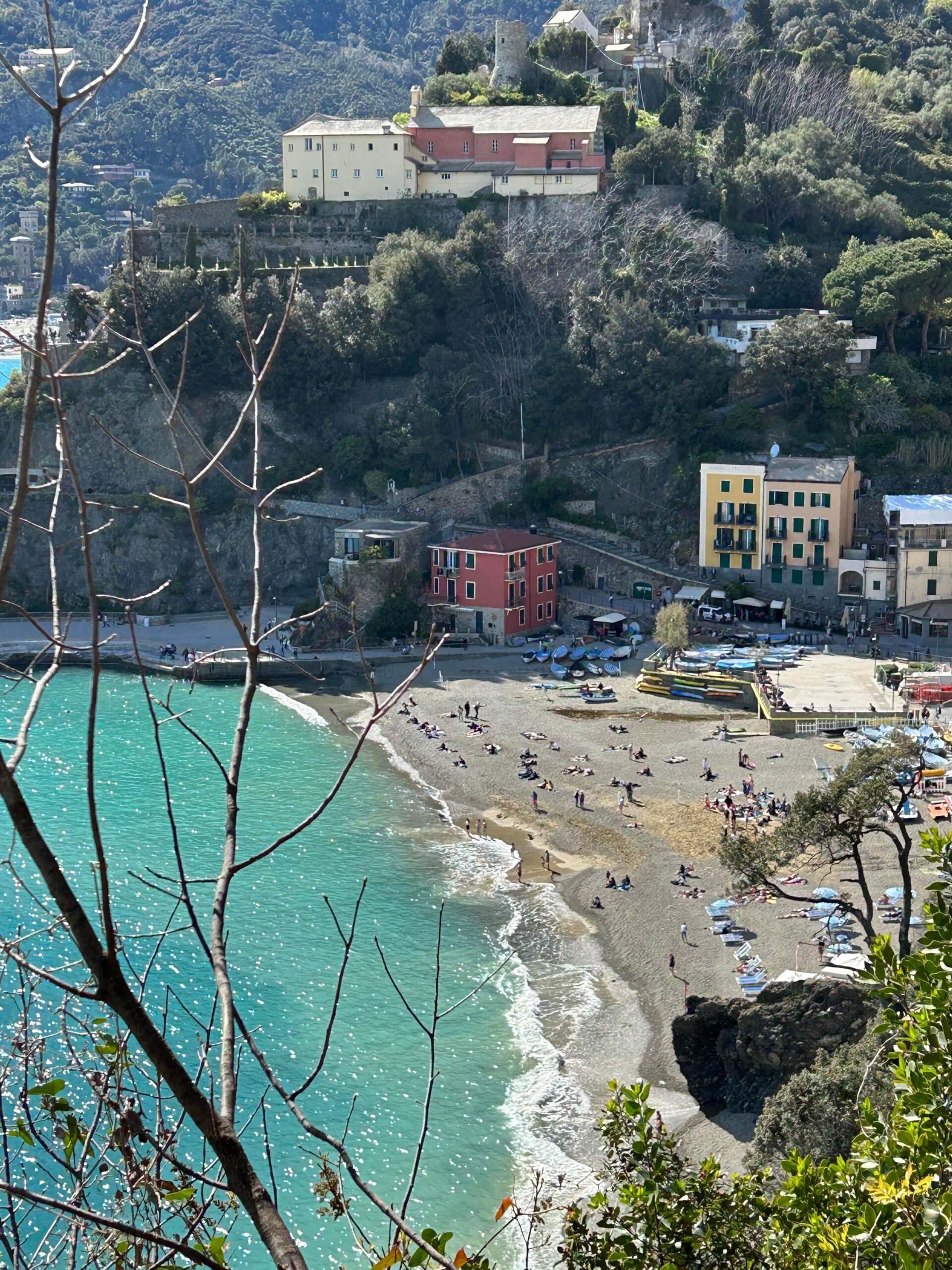
Footwear is the single most consequential packing decision for the Cinque Terre — comfortable, sturdy shoes built for uneven surfaces are non-negotiable, whether or not hiking is on the formal agenda, because the villages themselves are steep enough that inadequate footwear becomes a problem within the first hour. Attire should trend lightweight for daytime movement, with layers added for cooler evenings when the sea breeze picks up and the temperature drops faster than expected. Sun protection in the form of sunscreen, hats, and sunglasses matters more here than most Italian destinations because the combination of reflective water, exposed trails, and limited shade on the beaches creates real UV exposure accumulation across a full day. A reusable water bottle is essential for staying hydrated on hikes, and the cash habit is worth maintaining — credit cards are increasingly accepted, but enough smaller businesses still operate cash-only that arriving without notes is a recurring inconvenience.
Start early — this applies to every day, but especially the first. The light in the first two hours of morning is genuinely magical for photos, the villages are quieter in ways that feel almost private, and the gap before the first train from La Spezia arrives gives you a version of the Cinque Terre that most visitors never see. The hills and scenic overlooks don’t become more manageable with crowds added; wear proper shoes is repeated advice for good reason. The instinct to over-plan is worth resisting actively — some of the best moments here happen from wandering into a courtyard or following a scent uphill without a specific destination. Eat everything: the seafood, the focaccia, the pesto, the full pasta-and-pesto experience — this is not a place for dietary caution. Avoid midday trains if any flexibility exists in the schedule — the crowded carriages during peak hours between villages are uncomfortable when the alternative is finishing lunch in a waterfront piazza and catching the next service.
For electronics, a mobile phone and camera will both be working overtime here — the photos opportunities are relentless — so a power bank to keep devices charged across a full day is a practical necessity, along with a plug adaptor for anyone arriving from outside the EU. The outfits and accessories consideration for shoulder season: light clothing for the heat of the day, layers and a light coat for evening transitions, and the assumption that rain in shoulder seasons is possible enough to warrant a packable waterproof. A sunhat and sunscreen in summer are obvious; comfortable walking shoes for the hilly villages and proper hiking boots or walking shoes for the trails are worth packing as separate items if genuine trail hiking is on the agenda. If visiting in August, the strategic move is to lean into the boat trip option — it keeps you away from the worst of the crowds, gets you into the water, and delivers the views of the villages from the open sea that land-based positions cannot replicate. Weekdays are consistently more manageable than weekends between May and September, when day-trippers from Milan and Genoa swell the train platforms significantly — a midweek arrival changes the experience measurably. And the single most powerful tip of all: stay the night. The quiet of early morning and the return of calm in the evening after the last day-tripper has left is the Cinque Terre that the photographs almost never show, and it is worth every extra euro of accommodation to experience it firsthand.
How Far is Cinque Terre from Florence?
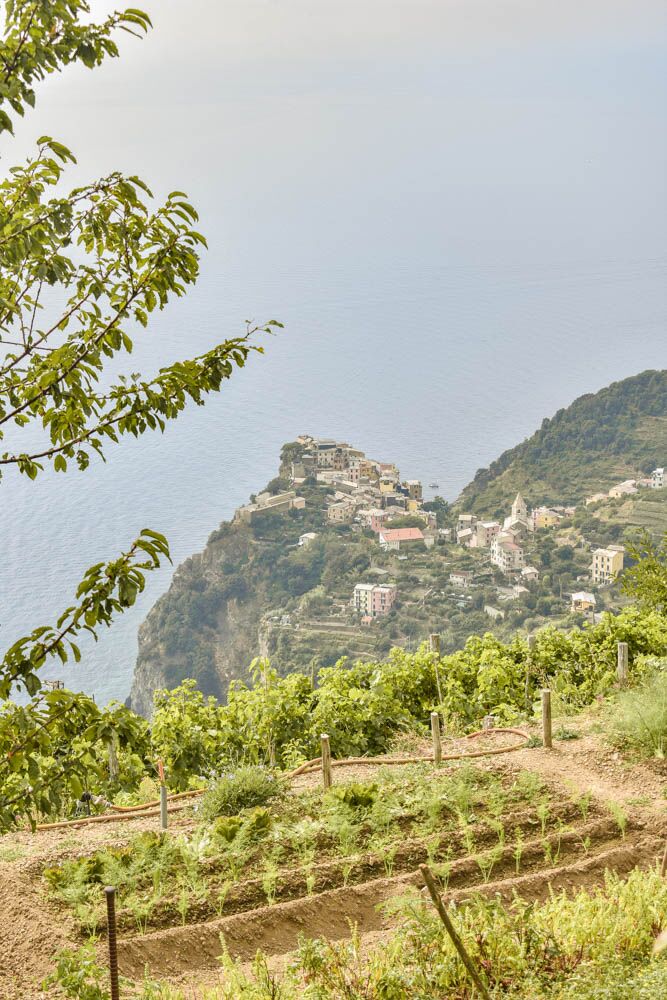
The distance between the Cinque Terre and Florence sits at approximately 180 km — or 112 miles — making the two destinations genuinely compatible within a single Italian itinerary without either feeling rushed. The train journey runs at roughly 2.5 to 3 hours depending on the specific service and connection required, typically involving a change at La Spezia or Pisa — comfortable enough for a day trip, short enough to justify an overnight in either direction.
How Do You Pronounce Cinque Terre?
The pronunciation trips up more English speakers than any other Italian destination name of comparable fame — the correct rendering is “CHEEN-kweh TEHR-reh”, with a slight emphasis on the first syllable of each word rather than the trailing syllables that English instinct tends to stress. Say it confidently in a restaurant and watch the reaction improve immediately.
One-Week Cinque Terre and Tuscany Itinerary
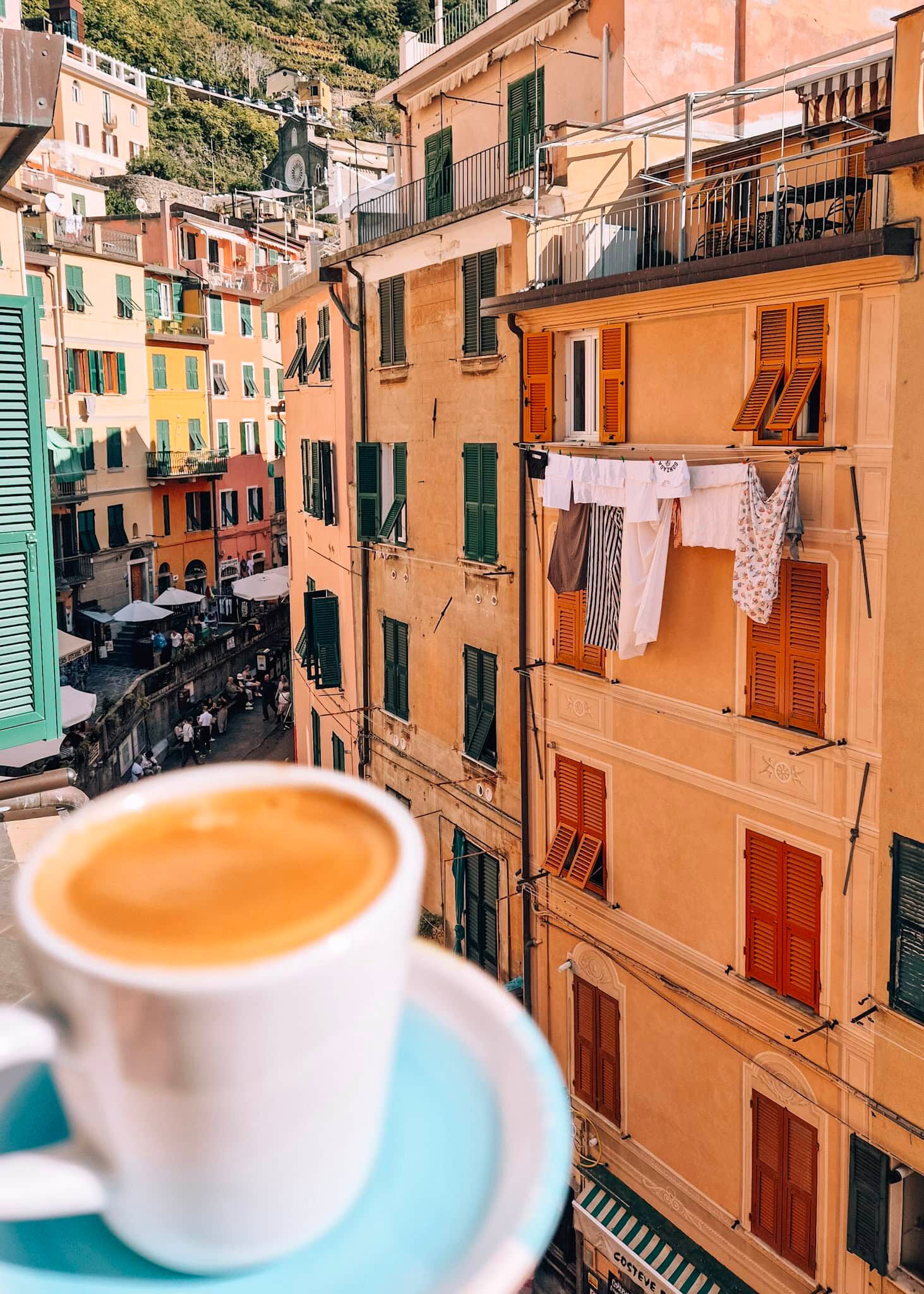
A one-week itinerary combining the Cinque Terre with Tuscany is, in my experience, one of the most satisfying structural decisions available to the Italian traveler — it pairs coastal intensity with rural depth in a sequence that feels genuinely complementary rather than overloaded. The broad architecture: 3 nights in Cinque Terre, 2 nights in San Gimignano, and 2 nights in Pienza, using a rental car collected after the coastal section. The most convenient airports for this circuit are Pisa and Florence — fly into one, out of the other if scheduling allows. This is an active holiday built around scenic landscapes, dreamy towns, beautiful sunsets, and the kind of food and wine culture that Tuscany and the Ligurian coast between them deliver with extraordinary consistency.
Days 1–4 belong to the Cinque Terre. Park in La Spezia and take the train into the villages — the hiking structure I’d recommend is Riomaggiore–Manarola–Corniglia via Volastra on one day and Monterosso–Vernazza–Corniglia on the next, buying day passes for the train to handle the repositioning. Sunset watching from Manarola and Riomaggiore is not optional. Swimming from the small beaches of Riomaggiore and Vernazza, from the quay in Manarola, and from the full beach clubs of Monterosso covers every preference across the four days.
Days 4–6 shift to San Gimignano — collect the car from La Spezia, drive approximately 2 hours south, and consider a lunch stop in Volterra or a brief Pisa detour along the way. The medieval skyline of San Gimignano, with its famous 14 towers — earning it the nickname Medieval Manhattan — is the visual headline, but the real pleasure is in the countryside surrounding the town: bike tours, wine tasting in the Vernaccia producers, and a morning of horseback riding through the hills with operators like Il Vecchio Maneggio that set the tone perfectly. Come the afternoon, when the day-trippers from Florence have departed, the medieval streets become genuinely pleasant for aperitivo in the squares, long dinner in the alleys, and the climb up the Torre Grossa — all 54 metres of it — for epic sunset views over the Val d’Elsa. B&B La Cornice is a small, boutique, family-owned address with a lovely garden facing the old town and the kind of warmth that chain hotels have entirely forgotten.
Days 6–8 complete the circuit in Pienza, driving south through Tuscany for approximately 2 hours, with a recommended stop in Montalcino — home of the extraordinary Brunello wine that locals treat with entirely justified reverence. Pienza itself, rebuilt in the mid-15th century according to humanist urban planning principles, is known formally as the ideal city of the Renaissance, and the views it commands over the Val d’Orcia make the sunsets here genuinely formidable. On your full day, get out into the valley — the cypress-lined roads of Val d’Orcia have appeared in enough films and paintings to justify the phrase iconic, and the Chapel of the Madonna di Vitaleta standing alone in the middle of large fields is a quietly moving sight. The Bagni San Filippo hot springs, approximately 30 minutes by car from Pienza, are entirely free to visit — find the White Whale, the large white limestone formation, and descend to the pools beneath it for genuinely hot thermal water. On the final day, Montepulciano and Fiesole offer worthwhile stops en route to the Florence airport at 1h45min away, or the Pisa airport at 2.5–3 hours.
Cinque Terre Day Trip: Guided vs. Self-Guided
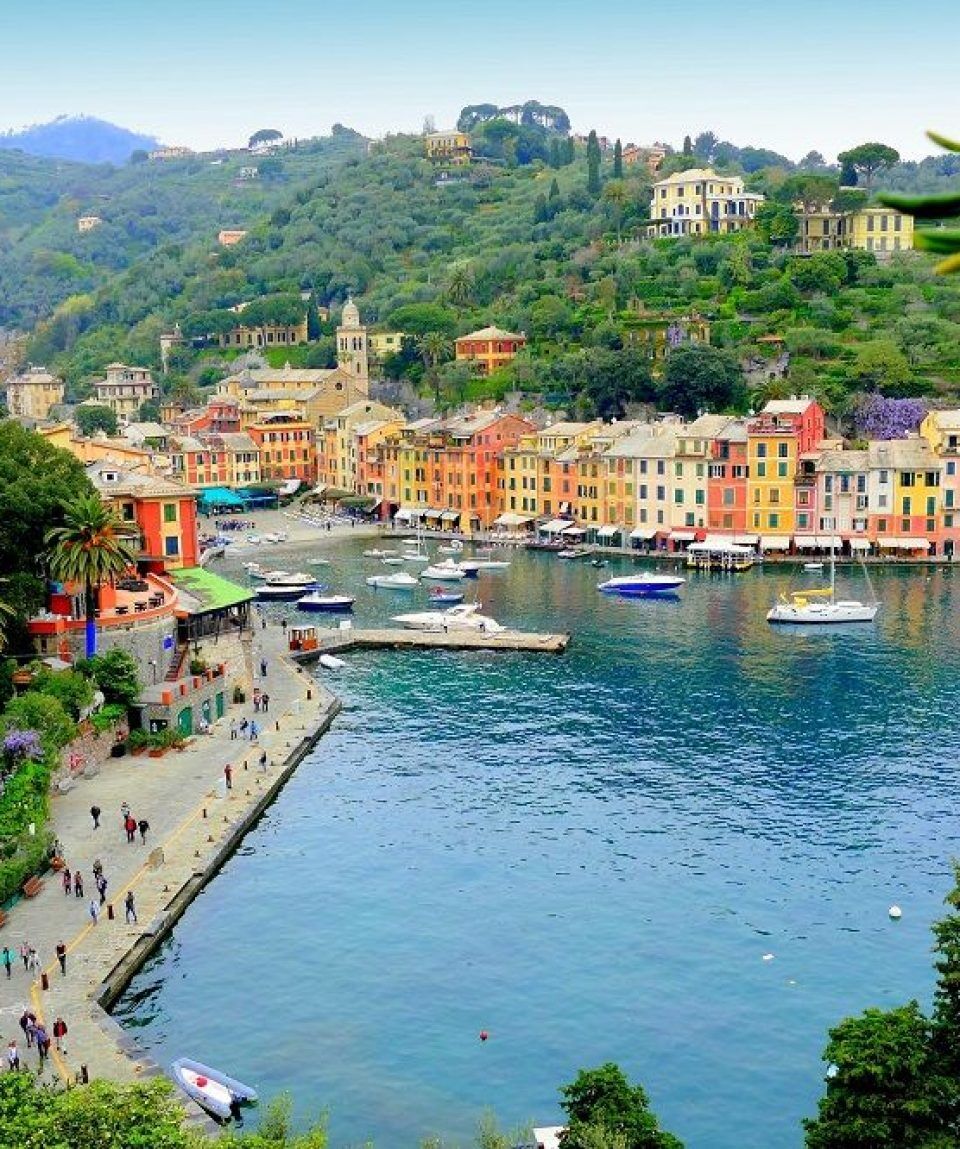
The Cinque Terre is fundamentally easy to explore on your own — it is not sightseeing-heavy in the museum-and-monument sense, and the logic of moving between villages by train and ferry is intuitive enough that a no guide approach works perfectly well for the vast majority of visitors. The case for a guided tour is narrow but genuine: if you are short on time, genuinely anxious about missing ferries or being late back to a cruise ship on a shore excursion, or need to be on a specific train to catch a flight, then the certainty of an organized trip is worth the cost. LivTours offers an expert guide option covering the villages by train and boat that is consistently well-reviewed; GYG originals runs an organized Cinque Terre Day Trip from Florence that includes a boat trip in summer; and a dedicated Cinque Terre day trip from Pisa is available for those approaching from the airport direction.
Cinque Terre with Kids
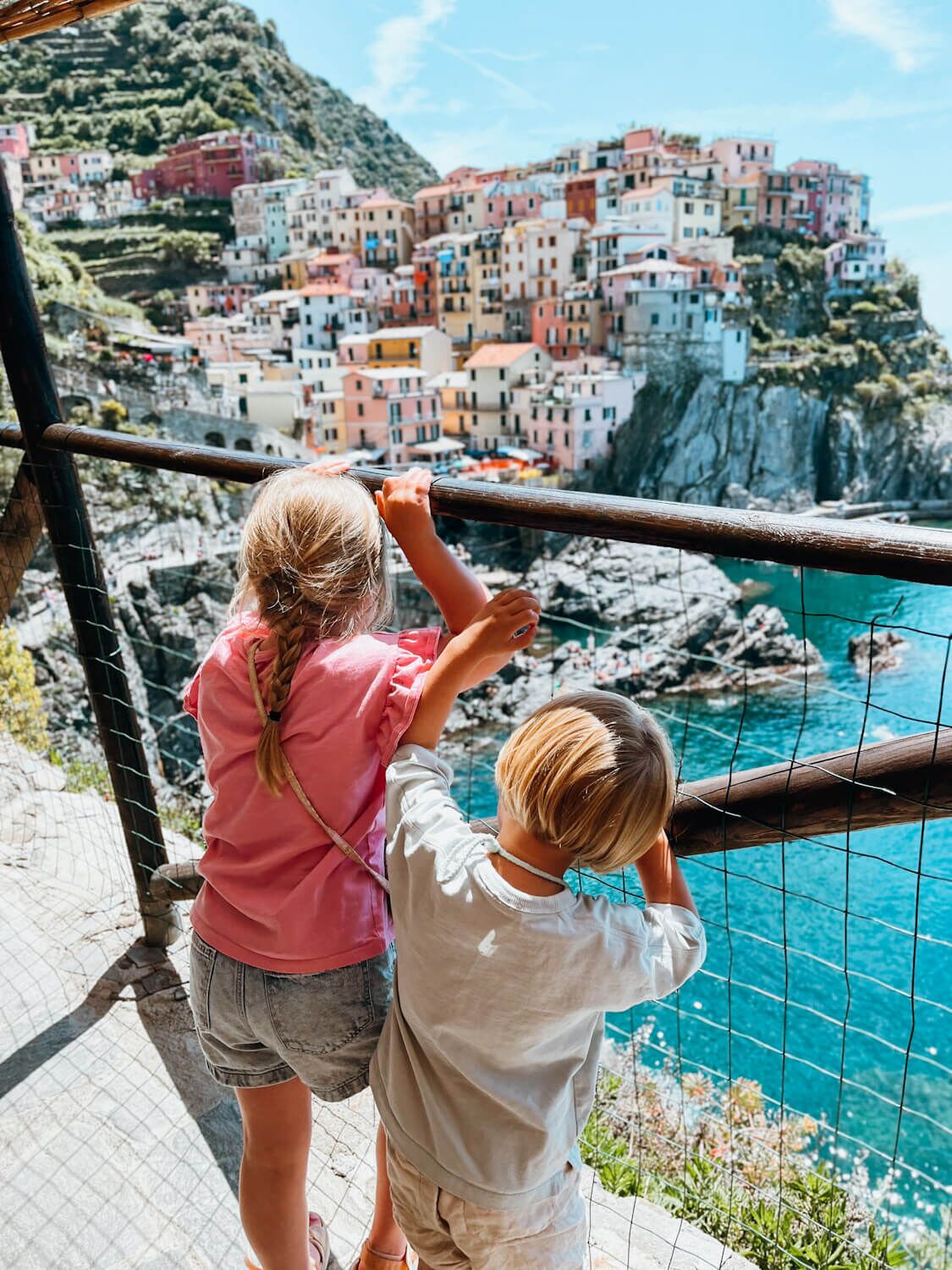
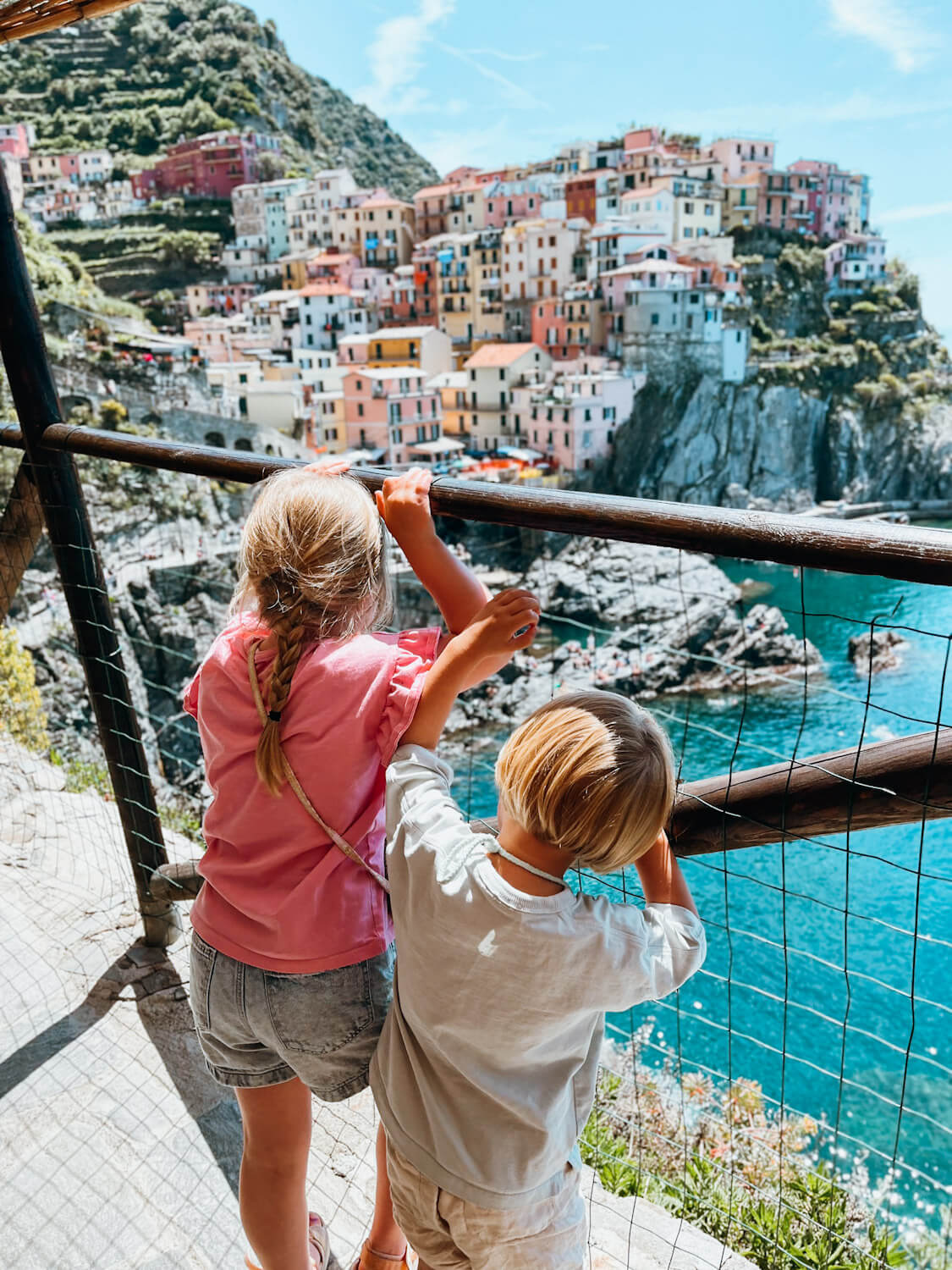
Traveling with kids through the Cinque Terre is entirely doable with the right orientation — the lovely area rewards families who approach it with adjusted expectations around the uneven terrain, the significant steps between levels of every village, and the near-total lack of sandy beaches outside Monterosso. The practical answer to most family-friendly tips questions is Monterosso: it is the flattest village, has the best beaches, and offers the most child-appropriate facilities in the region — making it the natural base for children who need space to move without navigating cliff-face staircases. Manarola is the runner-up, partly for its scale and partly for the excellent kids’ playground tucked into its hillside — a detail that transforms a potential energy problem into a solved one. The town guides at mamalovesitaly.com offer dedicated coverage of Monterosso, Manarola, Vernazza, and Corniglia from a family-specific perspective that is worth consulting before finalizing your base choice.
How to Avoid Crowds in Cinque Terre
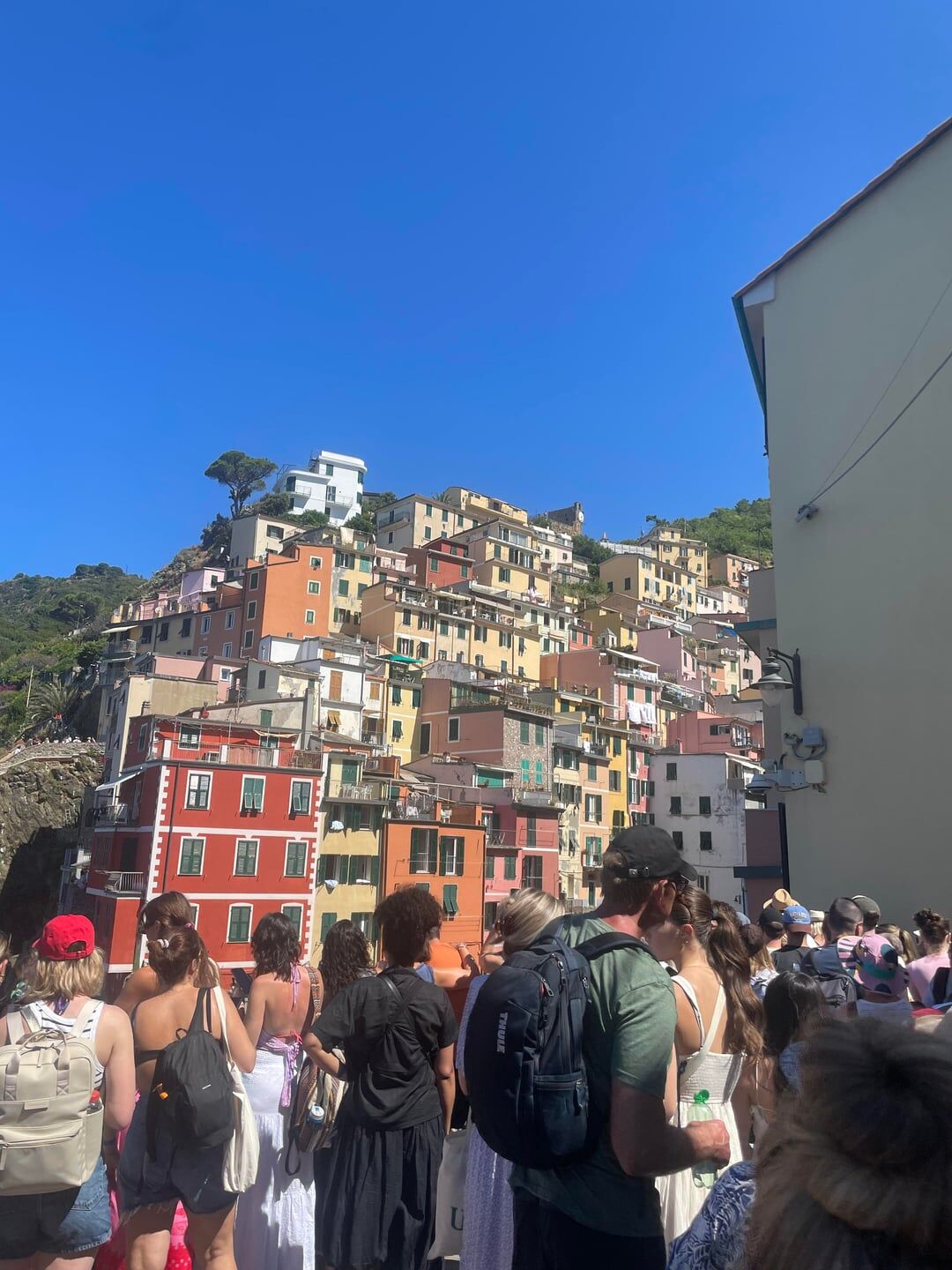
The crowd management playbook for the Cinque Terre has four reliable moves, and they work best in combination. First: avoid August categorically if the primary goal is experiencing the actual villages rather than the experience of being compressed between other people experiencing the villages — the visitors count in that month is genuinely off the chart, and the best mitigation if August is unavoidable is to spend that time on a boat trip, which keeps you on the water away from the worst of the land-based congestion. Second: avoid weekends between May and September, when locals from Milan and Genoa add a substantial layer of domestic day trips traffic to the existing international visitor load — even a single stay the night in the region shifts your experience from the weekend wave entirely. Third: stay the night — the rhythm of the Cinque Terre day trips culture means that by early evening, the quiet returns to a degree that feels almost miraculous; the early morning version of these villages is a different destination entirely, and the evening light after the crowds have left is the light the photographers don’t post. Fourth: come in late spring or early autumn — the coast in those seasons is warm enough for a genuine boat trip and comfortable walking, but the fewer people relative to summer make every experience in the villages more spacious and more real.
Why Visit (and Why Not Visit) Cinque Terre
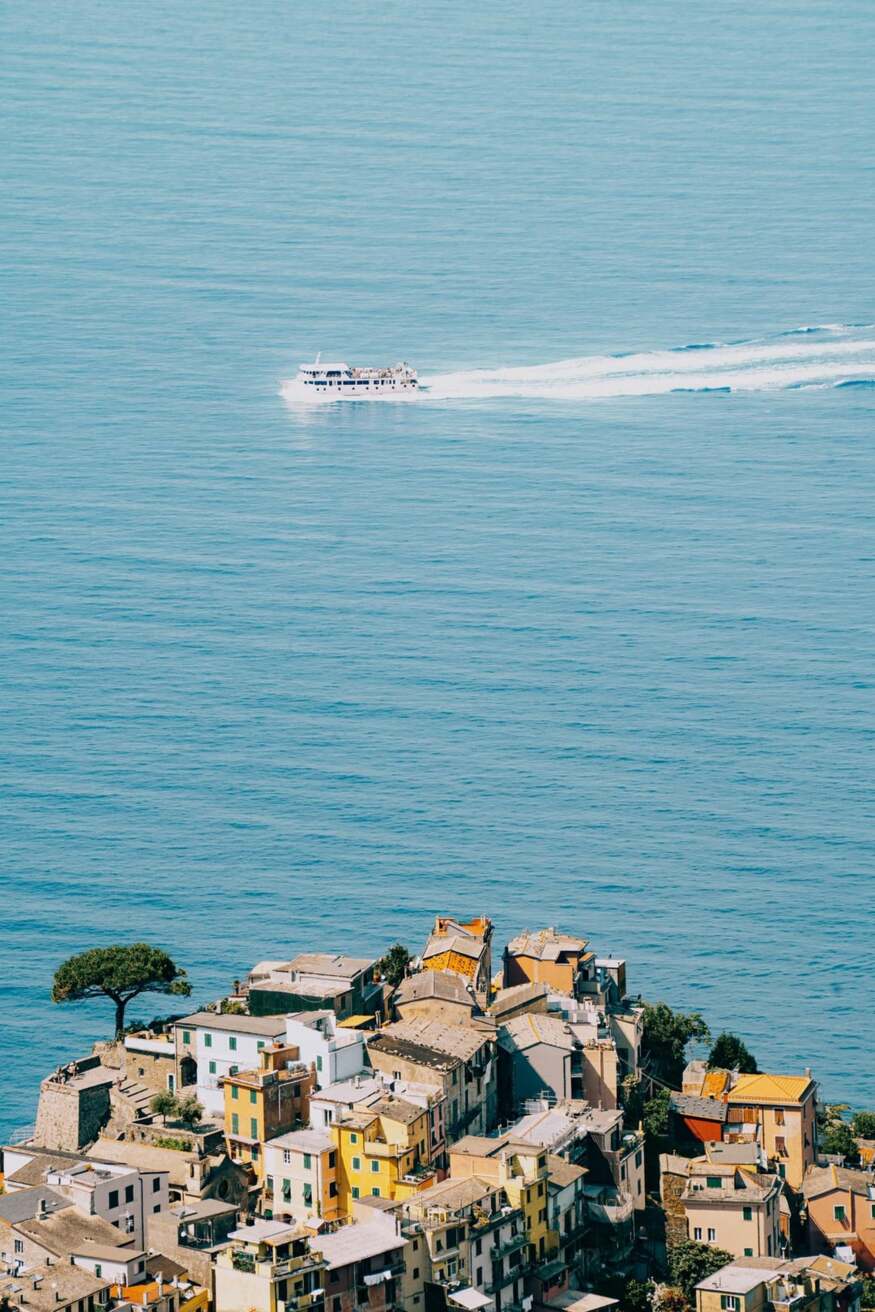
The case for visiting is built on three things that no amount of overtourism has actually diminished: the pretty villages in their unique position above the water, their color visible from the sea in a way that produces something close to disbelief; the boat trip that lets you see them properly from the water while jumping in during the hottest months; and the hike between them, which reveals the extraordinary use of land and the accumulated skill and effort of generations who built the beautiful terraces we walk across today. These three experiences — village, water, trail — are not things photographs can substitute for, and they retain their power regardless of how many other people are present.
The honest counterargument: overtourism here is not a vague concern but a measurable condition that at peak times makes the experience genuinely overpowering in ways that can undermine the very qualities the place is celebrated for. The ways to escape the worst of it are documented — timing, weekdays, overnight stays, the tips outlined throughout this guide — and they work. But they require planning, and arriving in August on a weekend without a strategy is a decision that benefits no one, least of all the villages themselves.
Visit Levanto or La Spezia
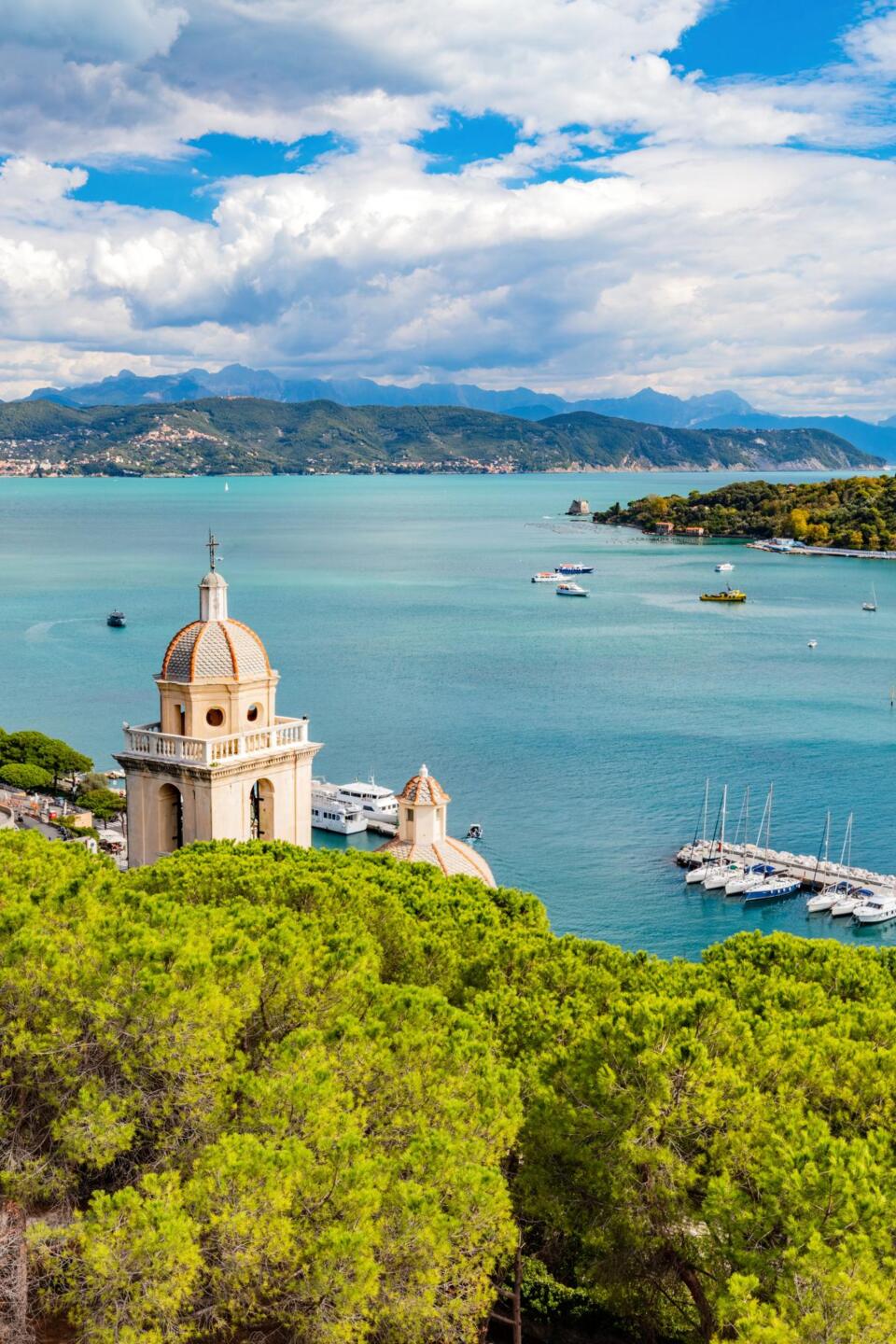
Both Levanto and La Spezia deserve consideration not merely as logistical staging posts but as genuinely worthwhile destinations in their own right for visitors who want accommodation options that are both wider in range and more variable in prices than anything available inside the national park boundaries. Staying in either rather than in the villages of Cinque Terre themselves is a completely legitimate choice — the train connection into the park is fast and reliable, and the Italian life you encounter in both towns carries a texture that the touristy area of the Cinque Terre, for all its beauty, has largely traded away. Levanto in particular rewards a visit even for those staying inside the park — a genuinely relaxed coastal community that sits just outside the Cinque Terre boundary and operates at a pace that the villages themselves can no longer sustain.