One Week in Tuscany Itinerary: 7 Perfect Days Exploring Florence, Siena, Chianti & Val d’Orcia
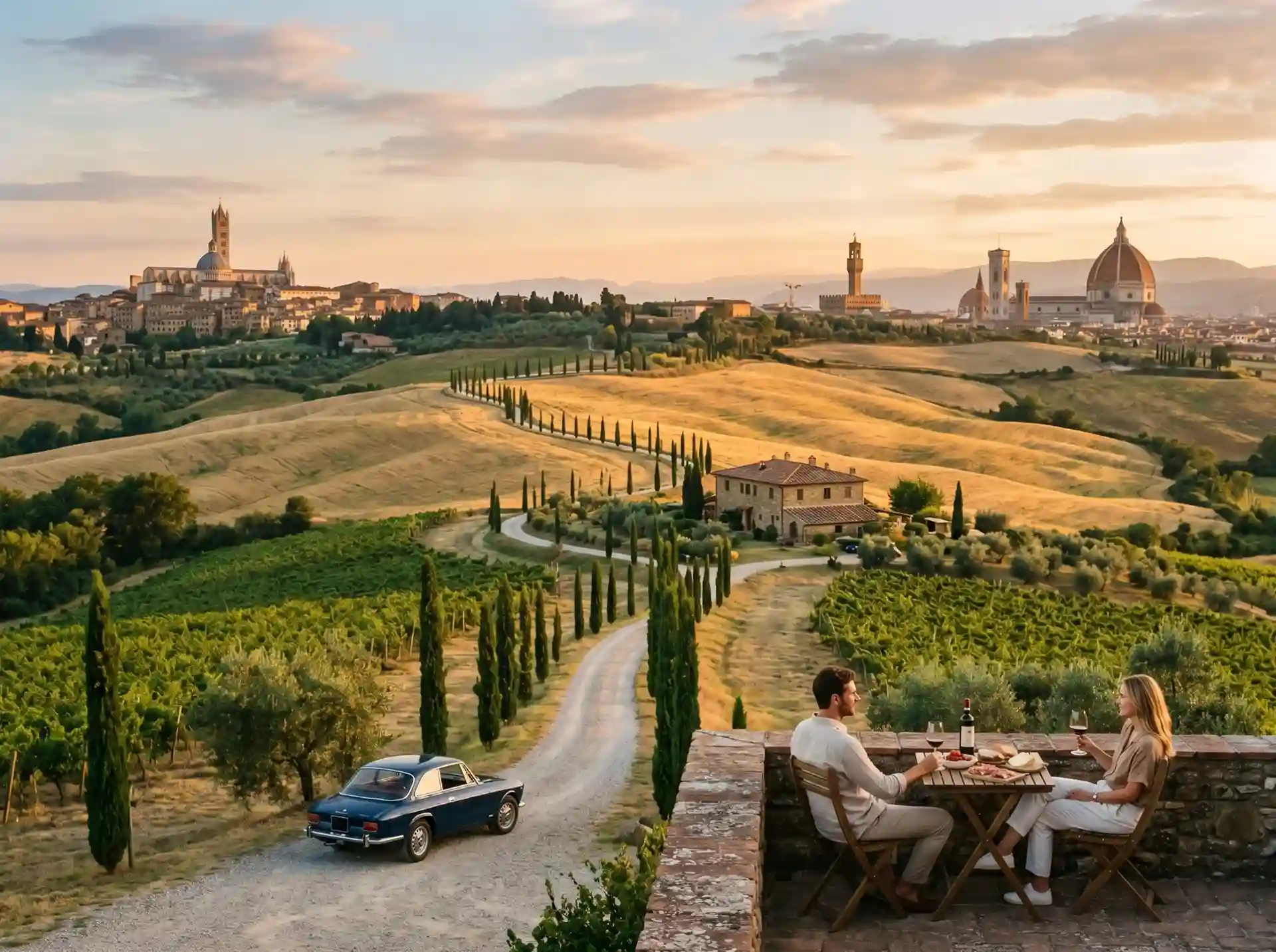
If you’ve been dreaming of rolling hills, vineyards, and medieval towns that feel steeped in history, let me tell you one week in Tuscany genuinely delivers all of it and then some. I’ve spent time across this region twice now, and each visit has peeled back a new layer of what makes this corner of Italy so impossible to forget. This 7-day itinerary isn’t just a checklist it’s a comprehensive travel guide built from real research, honest planning, and the kind of travel insights that only come from actually being there, navigating wrong turns, and stumbling into the best hidden gems along the way.
Whether you’re a history buff chasing Renaissance masterpieces, a food lover hunting down authentic Tuscan flavors, or an outdoor enthusiast who wants scenic bike rides through cypress-lined valleys, this week-long itinerary has been crafted with every traveler in mind. My own experience managing a 10-day trip for an extended family of 12 people yes, really taught me that the secret to a successful Tuscan vacation is pacing. You need to avoid backtracking, maintain a slower rhythm, and resist the urge to maximize time at the expense of actually soaking it in.
What draws people to Tuscany is this rare combination of la dolce vita living, art-filled cities, pint-size villages, and a sublime pastoral landscape that honestly looks like a painting at every turn. From the grand city of Florence to the Val d’Orcia, Siena, San Gimignano, Chianti, and Montepulciano — this Tuscan adventure is structured as a loop that starts and ends in Florence, so you can arrive the night before, settle into your accommodation, and wake up ready to go. The abundance of beauty here is real, and this guide will make sure none of it gets rushed past.
Geography of Tuscany / About Tuscany
Here’s something I wish someone had told me before my first trip: Tuscany is genuinely bigger than it looks on a map. Before diving into the day-by-day breakdown, a quick geography lesson saves a lot of confusion. Sitting in central Italy, the region stretches from the Mediterranean Sea on the west coast all the way east toward Arezzo and south down to Grosseto. Its capital, Florence, shares the stage with major cities like Pisa, Siena, Lucca, Livorno, Pistoia, Prato, and Massa-Carrara each falling within its boundaries across ten provinces, many named after the dominant city within them, like Firenze, Arezzo, and Lucca.
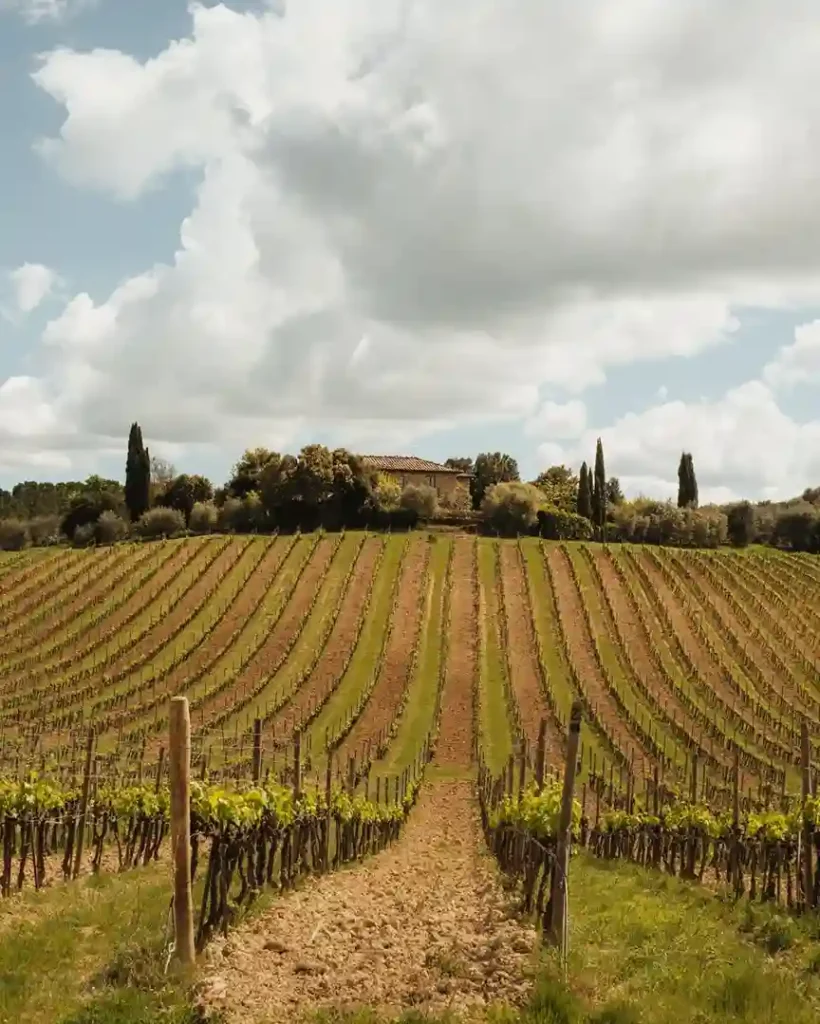
What most people picture when they think of Tuscany the quintessential Tuscan countryside of rolling hills, winding roads, cypress-lined lanes, and sun-drenched vineyards is largely concentrated across three areas: the provinces of Chianti (within Firenze), Siena province, and Pisa province. The Val d’Orcia sits within the Siena territory and is arguably the most photogenic stretch of the entire region. Beyond the scenery, this is the Renaissance birthplace the land of Leonardo da Vinci and Michelangelo where beautiful medieval towns, villages perched on hilltops, ancient farmhouses, and great wines all coexist in a way that rewards curious, unhurried travelers. With seven days, you have the perfect amount of time to experience the best of it, provided you have a car and aren’t trying to fit too much into each day.
Getting Around Tuscany / Car Rental & Transportation
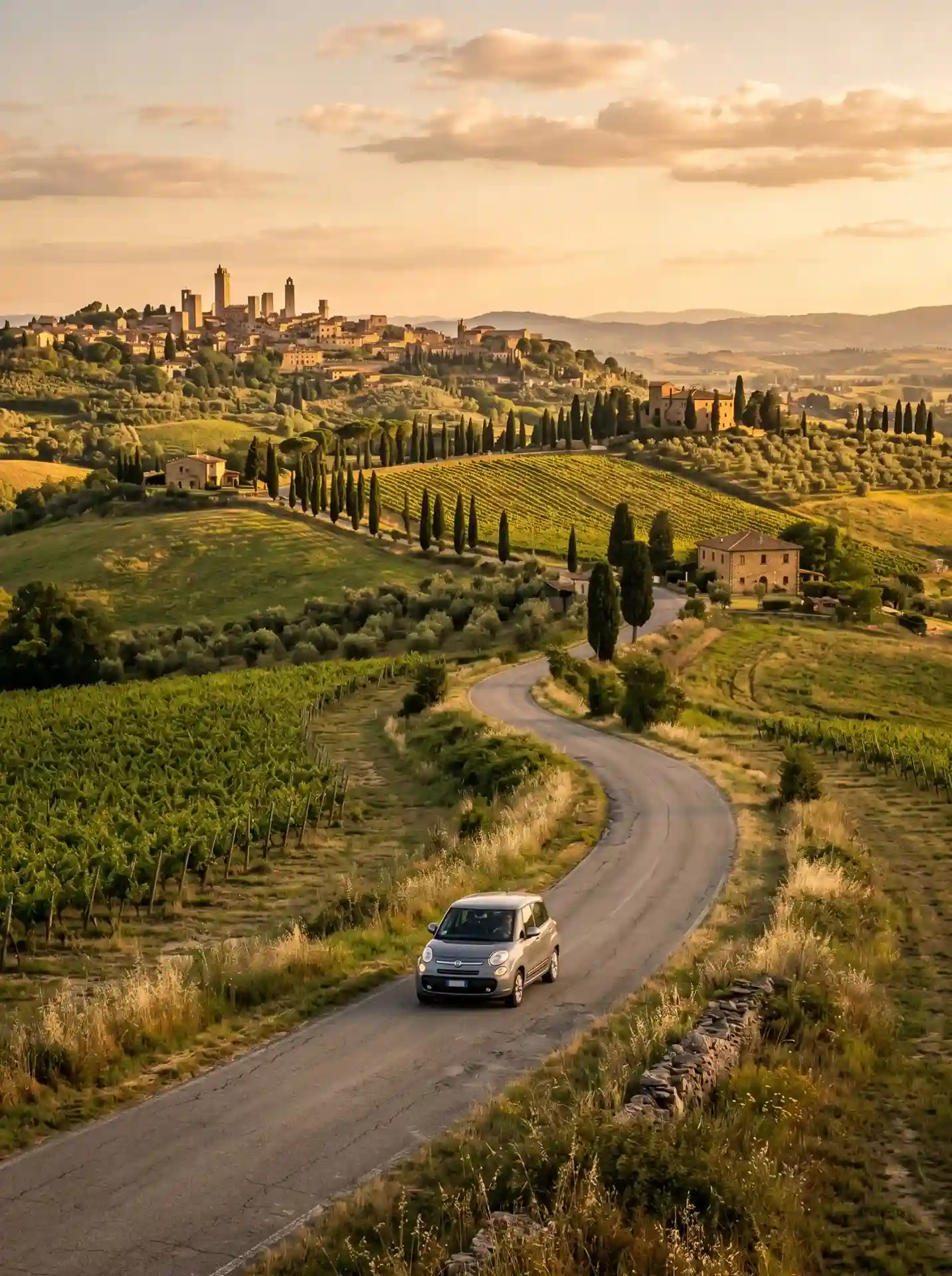
Let me be direct about this: a car is essential for doing Tuscany properly. I’ve tried piecing together bus and train combinations across the countryside, and while Trenitalia connects the larger cities reliably, services like Tiemme, Autolinee Toscane, Sitabus, and even Flixbus only get you so far before public transportation becomes genuinely time consuming. Getting into the countryside — the part of Tuscany most people actually come for — is essentially impossible without your own wheels. Train connections between major cities like Florence, Siena, and Pisa are decent, and local buses cover some towns, but once you’re navigating between small towns and medieval towns off the main corridors, the schedules simply don’t cooperate.
My recommendation: pick up a rental car directly at your arrival airport — either Florence Airport, Pisa International Airport, or even Bologna Guglielmo Marconi Airport (BLQ), which sits about 45 minutes north of Florence and can mean cheaper fares. Use Discover Cars to compare options, go with trusted names like Alamo, Hertz, or Sixt, and always opt for full coverage insurance — narrow roads and tight village parking lots are not forgiving. Keep the car smaller, drop off where you pick up, and plan a big loop back to your starting point. One critical detail that catches visitors off guard: historic centers in Florence, Siena, and Pisa sit within ZTL (Limited Traffic Zones) — drive into these restricted areas without a permit and you’re looking at a hefty fine. For your 7 days, you’ll only need the car once you’ve leave Florence — the first day or two in the city are perfectly walkable, which also keeps your rental car costs lower. If driving genuinely isn’t an option, hiring a driver or guide for the Chianti and Val d’Orcia days is the best workaround available through international car rental agencies or local companies.
Where to Start / Starting Your Tuscany Itinerary
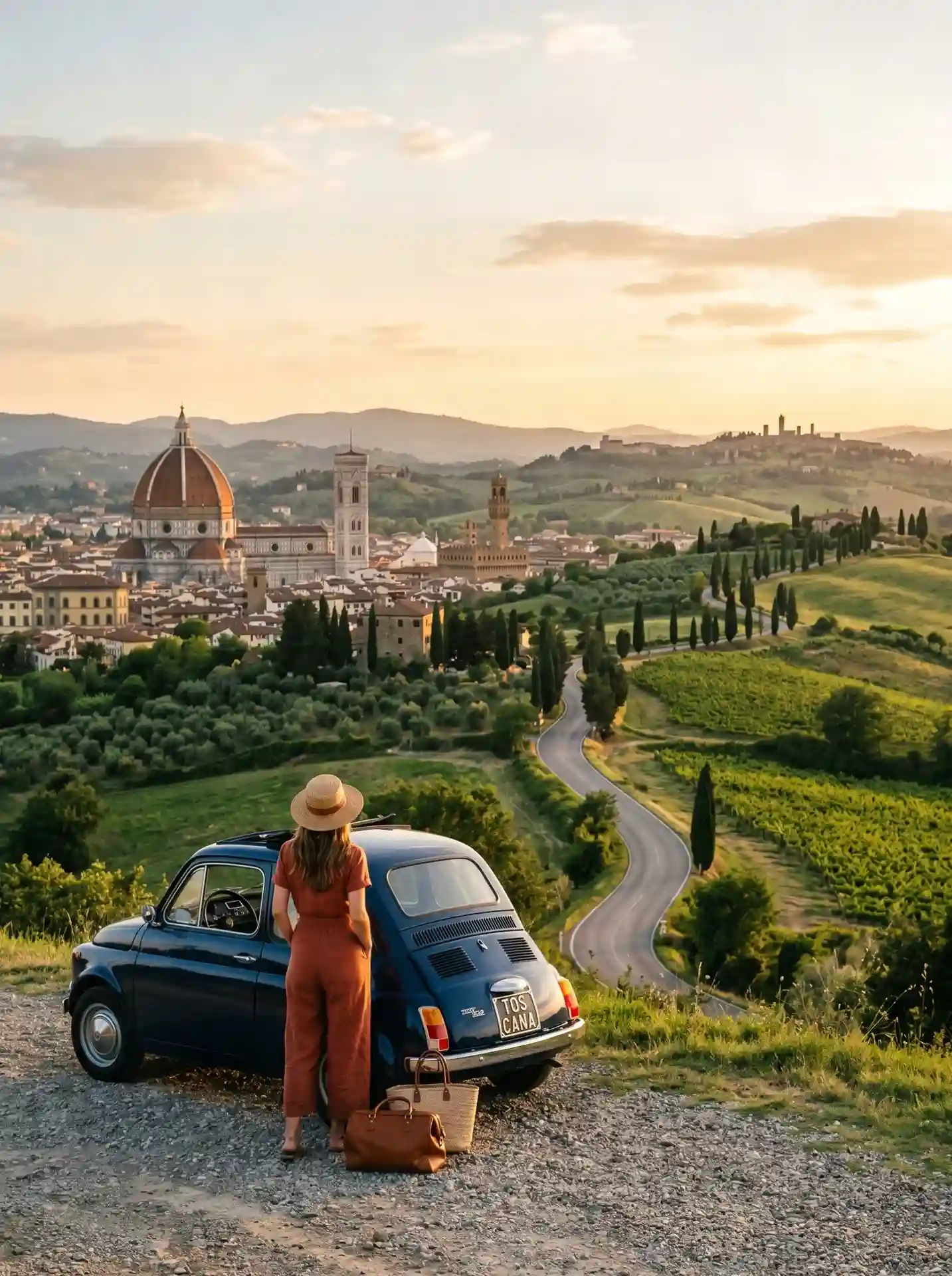
Every version of a great 1 week itinerary through Tuscany eventually points back to the same answer: start in Florence. It’s the capital, it’s where the best flights land (at Florence Airport, FLR), it offers the widest best selection of rental cars, and frankly, it earns at least 2 days — ideally 3 days — before you even think about heading out. You could technically race through the highlights in 36 hours, but Florence rewards those who move slowly through its museums, absorb its stories, and let this genuinely unique destination breathe. That said, this is still a Tuscany-first guide, not a Florence deep dive.
Once you’ve had your fill of art and history in the city, the road trip truly begins. The loop structure here — begins in Florence, swings south through Siena, San Gimignano, the Val d’Orcia, and comes back through Chianti toward Florence — keeps driving sensible and avoids the exhausting backtracking that plagues poorly planned Italian holidays. Alternatively, some travelers prefer easing into Tuscany by heading first to the countryside near San Gimignano, collecting their rental car on arrival at the airport, and letting that slower pace set the tone for the whole trip before the intensity of Florence closes out the week with a Volterra side trip thrown in. Both approaches work — it really depends on whether you want your extra days in Florence at the start or end.
The 7-Day Itinerary at a Glance
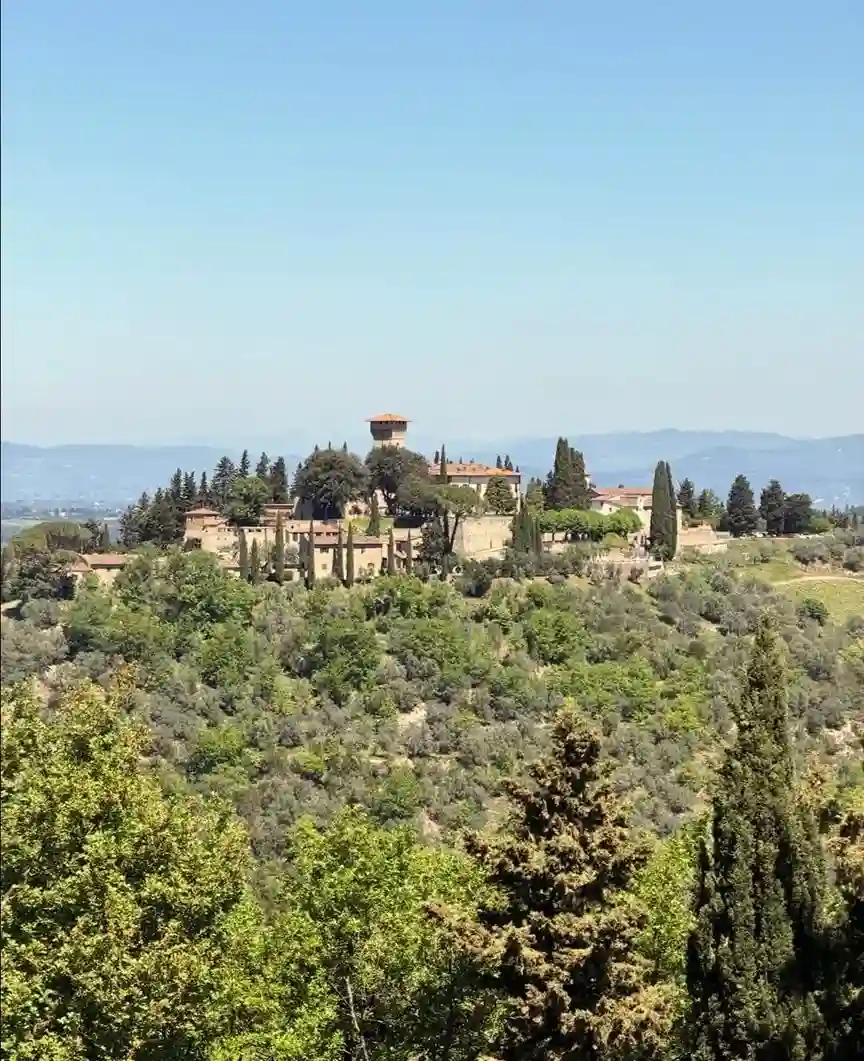
Before getting into the detail, here’s a quick glance at how this Tuscany itinerary flows across one week — a 7-day loop that starts and ends in Florence, threading through Italy’s prettiest villages in between. Plan to arrive the night before Day 1, lock in your accommodation, and wake up ready with Day 1 already mapped out so you’re not losing precious morning hours to logistics.
Day 1 – Florence
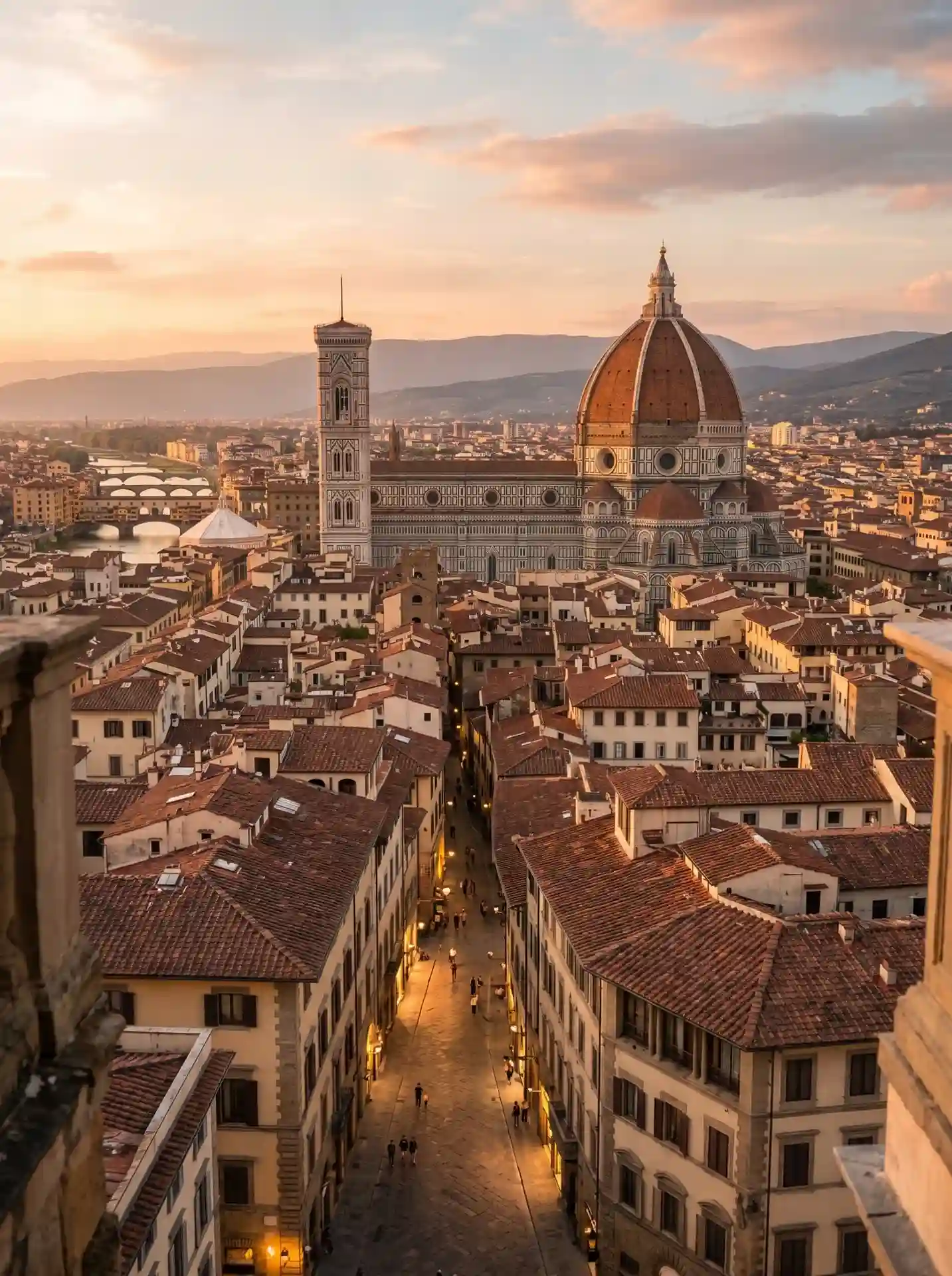
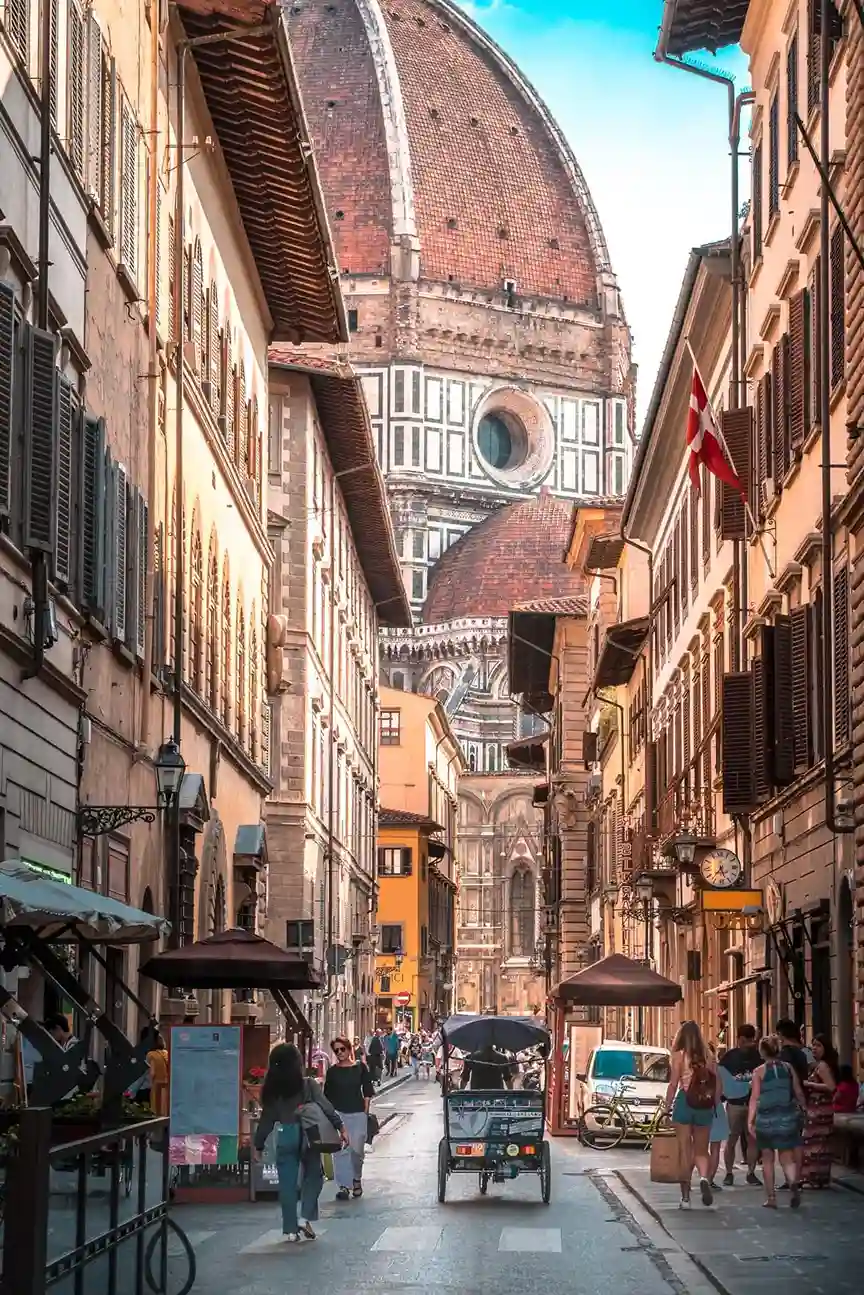
Florence hits differently the first time — and honestly, the second and third. This city, known as the Cradle of the Renaissance, carries a density of Renaissance art and history that feels almost overwhelming in the best possible way. I remember standing in the queue for the Uffizi Gallery thinking I’d budget an hour — I was inside for four. Beyond the Uffizi and the Accademia (home to David), this city rewards those who slow down for its ancient streets, beautiful churches, and the kind of architecture that makes even a short stroll feel significant. The historical centre is compact enough to be explored on foot, so lean into that — weave between Santa Maria Novella, the Church of Santa Croce, and the stunning frescoes tucked inside both.
Prioritize climbing the Cathedral Dome (Il Duomo) for a panoramic view that reframes everything you’ve seen at street level, then cross the Ponte Vecchio — the iconic bridge lined with jewelry shops — in the late afternoon when the crowds thin slightly. For museum lovers, foodies, history buffs, and architecture enthusiasts alike, Florence earns every hour you give it. Aim for 2 days here minimum — one focused on main Museums and the Palazzo Vecchio, another reserved for Piazzale Michelangelo at golden hour (bus 12 or 13 gets you there, or take the steep walk for the workout). Cap the evening with a proper Tuscan dinner in the historic district — order the Bistecca alla Fiorentina and don’t apologize for how much of it you eat. For first-timers, Florence is legitimately one of the best places in Europe, and its role as Italy’s most important cultural center is felt immediately.
Day 2 – Lucca & Pisa
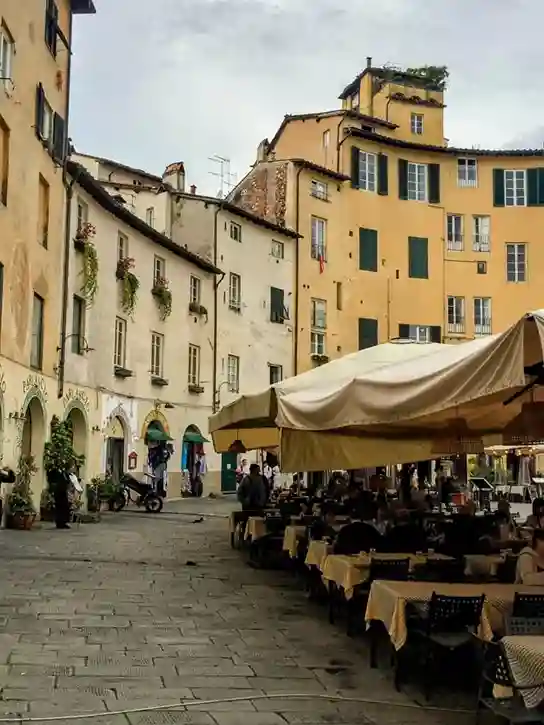
Lucca is one of those places that genuinely surprises people — it’s arguably Italy’s best kept secret among the more well-known Tuscan stops, and pairing it with Pisa makes for a full, satisfying day without feeling rushed. The two towns sit close together in northwest Tuscany along the corridor toward the Serchio River, meaning you can reach both comfortably from Florence by train or car within an hour. My suggestion: dedicate the most of the day to Lucca and leave a couple hours at either the beginning or end for Pisa.
What makes Lucca special is the astonishing condition of its 16th century walls — remarkably intact and wide enough to walk or cycle along their full 2.5-mile circuit for genuinely breathtaking views over the rooftops. The town below has camera-ready facades, a charming atmosphere, and none of the tourist fatigue you feel in bigger stops. A 2 hour guided walking tour adds real depth if you want the history unpacked properly. Pisa, meanwhile, delivers the iconic Leaning Tower within the Piazza dei Miracoli and, once you’ve seen it, earns about two hours of your time before the experience feels complete. Head back toward Florence in the evening and catch the sunset from the Ponte Vecchio — that’s a scene that never gets old.
Day 3 – Siena
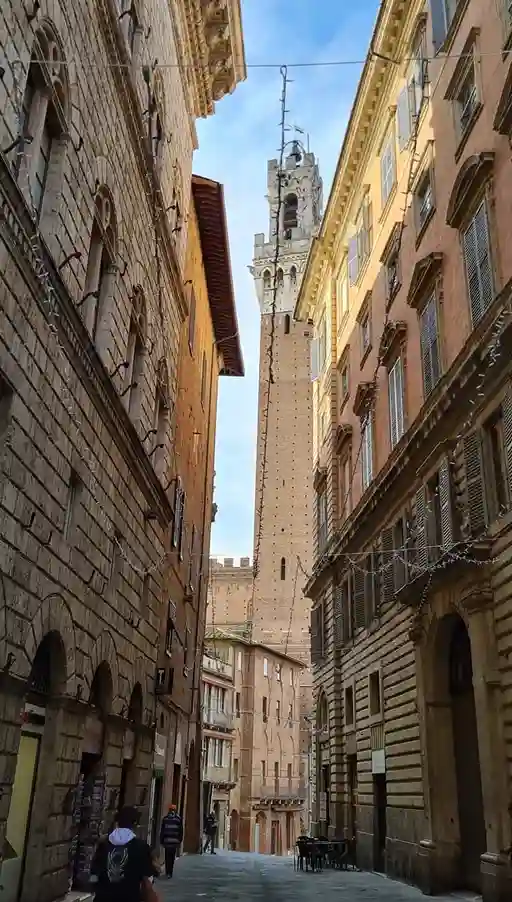
Siena arrived on Day 3 of my last trip and immediately became my favorite city of the entire week — which is saying something after Florence. This hilltop city isn’t just well-preserved; it feels genuinely frozen in time in a way that larger cities can’t quite pull off. The defining feature is the fan-shaped Piazza del Campo one of the most architecturally dramatic medieval squares in Europe, and the home of the legendary Palio di Siena, a thrilling horse race with roots stretching back to the 1600s that’s been a fierce local tradition ever since. When we visited, racing teams were mid-procession through the city in full costume — completely unexpected and completely unforgettable.
Start the morning at the Siena Cathedral (Duomo di Siena) a masterpiece of Romanesque-Gothic style with an intricate facade, striped marble columns, and dazzling mosaic floors unlike anything else in Italy. The Opa Si Pass is genuinely worth it here, covering the Piccolomini Library, Crypt, Baptistery, Cathedral Museum, and the Panorama from the Unfinished Façade in a single ticket. The Baptistery and Opera museum hold Duccio Buoninsegna’s extraordinary Maestà altarpiece from the 14th century don’t skip it. Spend the afternoon exploring the Torre del Mangia for elevated views of the city before winding through charming shops selling locally crafted ceramics, leather goods, and the famous panforte Siena’s traditional fruit and nut cake. End the evening at one of the local trattorias and order the pici pasta thick, hand-rolled, and exactly what you need. The Drive Time from Florence to Siena is just 1 hour 15 minutes (78 km), making it an easy transition day. Siena, strategically located right in the heart of Tuscany, also makes an excellent base for everything south of here.
Day 4 – San Gimignano
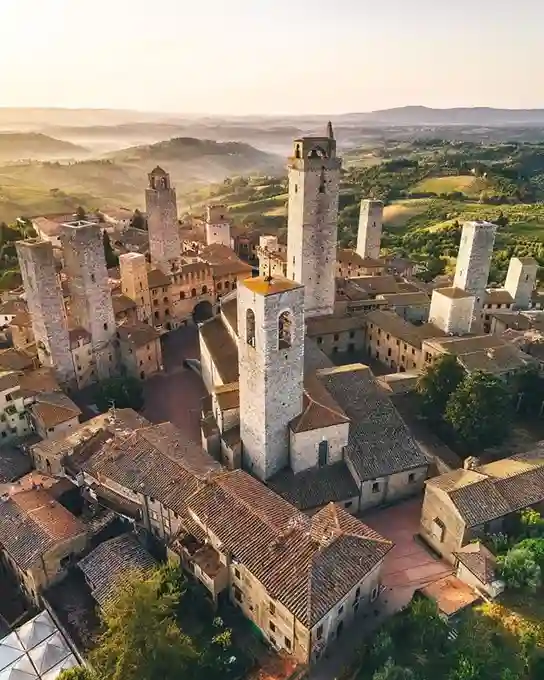
San Gimignano carries a nickname the “Medieval Manhattan” and the first time the skyline of stone towers comes into view from the road, you’ll understand exactly why. This UNESCO-listed town, also known for its Bella Torres (or Beautiful Towers), is one of Italy’s most celebrated villages and belongs firmly on every one week Tuscany itinerary. The historic center is compact and stunning, with cobbled lanes that make you feel like you’ve stepped into a time machine, and a walk from one gate to the other takes barely 10 minutes — though you’ll want far more time than that.
The Piazza del Duomo is the town’s core, surrounded by historic attractions in a wonderfully compressed urban setting — here you’ll find the Duomo, the Palazzo Comunale, and the Torre Grossa, all accessible with the San Gimignano Pass, which also covers Contemporary Art Raffaele De Grada and is genuinely cost-effective if you’re hitting multiple museums. Wander to the piazza della cisterna, take in the medieval fountains, and book a 2 hour guided walking tour if you want the town’s history properly contextualized. A short 30 minutes west sits Volterra — an absolute must if you have time while Chianti wine tasting is easily accessible as a half-day addition. Nearby, the walled castle of Monteriggioni offers a quick detour back toward Siena, where 15 towers along the walls still stand and the views over the Tuscan countryside from the top of those massive walls are worth every step of the climb. Consider basing yourself in the countryside near San Gimignano rather than inside the town itself — you’ll get the Tuscan quiet without sacrificing access.
Day 5 – Chianti Wine Region

The Chianti leg of this trip is where the itinerary shifts gears entirely — from history-heavy sightseeing to something slower, more sensory, and genuinely restorative. Stretching between Florence and Siena, this stretch of Tuscany is arguably Europe’s most important wine region, and spending a day moving between rolling vineyards, little stone villages, and splendid settings ranging from ancient castles to restored Medieval hamlets gives you a feel for the authentic good life here that no museum can replicate. You absolutely need a car — this is not a region that yields itself to public transportation.
Start in Greve in Chianti, a small but surprisingly busy medieval town positioned roughly halfway between Siena and Florence, surrounded by brilliant vistas on every approach. Stop at Pasticceria Chianti for a caffè and pastry before heading out to Radda in Chianti and booking tastings at standout estates — Castello di Verrazzano and Castello di Brolio are consistently excellent options. Book wine tasting sessions well in advance, especially in peak season, and if you can arrange an overnight stay at an agriturismo (a farm stay that runs on local produce grown on-site), do it — these properties give you a version of Tuscany that the rolling vineyards alone can’t fully communicate. The Chianti wine produced across this corridor is world-class, and tasting it where the vineyards are literally outside the window is one of those travel experiences that never leaves you.
Day 6 – Val d’Orcia
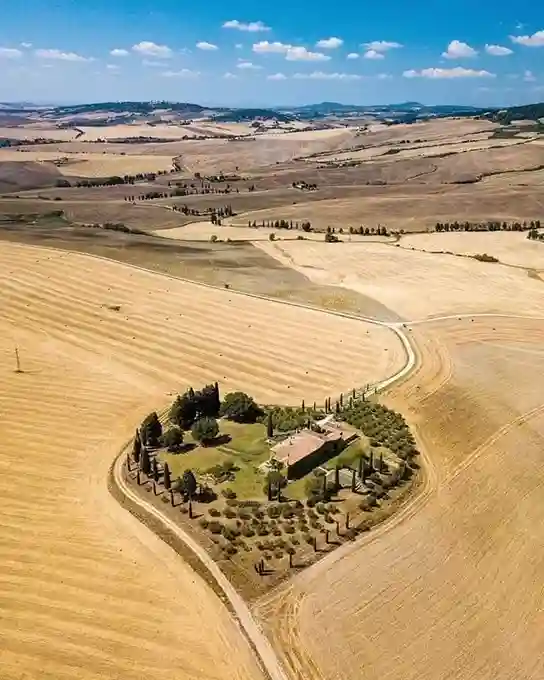
The Val d’Orcia became a UNESCO Heritage Site in 2004, and after spending time here I’d argue that designation still undersells it. Located in southern Tuscany, southwest of Montepulciano within the province of Siena, this rolling valley follows the Orcia River between Montalcino and Montepulciano, sitting roughly 110 km south of Florence and 180 km north of Rome. What separates it from every other beautiful part of Tuscany is the fact that this landscape was intentionally designed — the uncultivated land was carefully tilled, small woods were preserved between plots of land, cypress trees were planted deliberately, and the whole austerely beautiful result is dotted with charming farmhouses and tiny villages that feel like they were placed by an artist.
Visit in spring and the fields are lush and green with vibrant poppies; come in summer and golden sunflowers cover the hills; arrive in fall during the harvest and everything turns a mesmerizing shade of gold. Pick a base somewhere between Pienza and Montepulciano — I stayed closer to Montalcino on one trip and near Pienza on another, and both positions made the several day trips through the valley genuinely effortless. The Val d’Orcia holds two prominent DOCG wine regions and some of the most incredible hotels and restaurants in all of Tuscany, so this is the stretch to indulge. For wine tasting, most wineries require reservations — stop into a tavern or wine bar for spontaneous sipping, or book a structured 3 Montepulciano estate visit to go deeper into the excellent red wines this quintessential Italy landscape produces. Of all the hilltop towns, elegant and overlooking the spectacular countryside, this region of Tuscany remains my personal favorite by a wide margin.
Day 7 – Montalcino / Pienza / Montepulciano
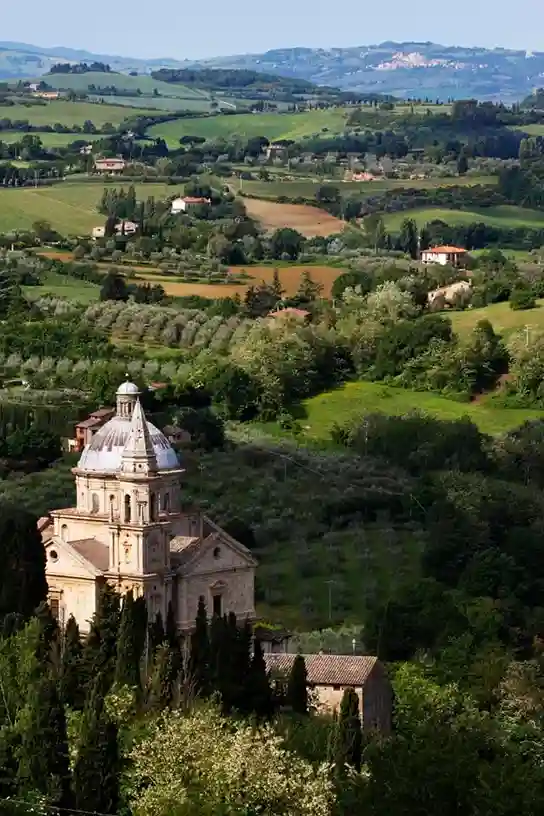
Close out the week across three towns that collectively represent the very best of what southern Tuscany produces — in wine, in architecture, in food, and in sheer visual drama. Montalcino leads with its Brunello di Montalcino — one of Italy’s most prestigious wines — and the town rewards slow exploration of its cellars and vineyards. Two standout producers worth seeking out are Patrizia Cencioni Winery, a woman-run vineyard where the welcoming atmosphere and the Cencioni family’s commitment make for an educational and genuinely heartwarming visit, and Capanna of Cencioni, a renowned family-owned winery that has spent decades mastering Brunello production. Before leaving the area, stop at Abbazia di Sant’Antimo — a 9th century Romanesque abbey set in the hills near Montalcino, its elegant limestone structure and tranquil setting creating a spiritual ambiance that’s among the most quietly moving stops on the entire trip.
Pienza is a UNESCO World Heritage Site since 1996 and earns every bit of that designation — the magnificent views over the Tuscan Val d’Orcia from Piazza Pio II are extraordinary, and the town’s streets include memorable names like Via del Bacio (the “kiss street”) and Via dell’Amore (the “love street”). The culinary delicacies here — pecorino cheese, handmade pici pasta, and Cinta Senese sausages — make even a short lunch stop feel like an event. Montepulciano closes the circuit, a town built not by merchants but by nobles, which shows in the wide piazzas, stone palaces, and statement facades that line its streets. Head underground to taste the Vino Nobile in the cellars beneath the town — it’s a DOCG-rated wine consumed since the Middle Ages and one of Tuscany’s finest. A 30-minute drive from Montepulciano takes you to the lakeside town of Castiglione del Lago, where a quick 1–2 hour stop lets you explore the castle, walk the historic center, and if time allows, take a boat ride across the lake. Another 20 minutes brings you to Cortona and San Quirico d’Orcia — both among the prettiest and most famous towns in the region — before the loop carries you back toward Florence.
Where to Stay in Tuscany
My first trip recommendation for Tuscany accommodations is simple: don’t try to base yourself in just one place. Splitting across 2–3 locations — anchoring near San Gimignano in the north, Siena in the middle, and somewhere between Pienza and Montepulciano for the Val d’Orcia stretch — keeps day trips efficient and cuts down on long drives. From any of these bases, key stops sit within a 20–45 minutes drive, which preserves morning energy for actually exploring rather than just arriving.
In Florence, Hotel Calimala is a standout boutique hotel right in the historic center (around $250–450 USD), while Locanda de Ciomp offers excellent value as a guesthouse for around $150–200 USD. In Siena, the Grand Hotel Continental Siena (Starhotels Collezione) is the top luxury hotel choice, Hotel Athena handles mid-priced luxury well, Hotel Certosa di Maggiano works for those wanting a countryside feel near the city, Il Battistero Siena delivers strong design for dollar, and Relais degli Angeli is a lovely boutique hotel option. Palazzo Ravizza is a solid midrange pick at around $120–175 USD. For Chianti, Castello di Fonterutoli — a working castle and winery resort in the Chianti countryside — runs $200–300 USD and is worth every cent. Near San Gimignano, Borgo Pignano delivers a proper 5-star hotel experience outside town, while Villasanpaolo Resort pairs a spa break with olive groves for something more restorative. In the Val d’Orcia, Lupaia is the finest luxury boutique hotel in the valley, and Rosewood Castiglion del Bosco is the definitive luxury resort of the entire Val d’Orcia region. Meublé il Riccio keeps things historic in Montepulciano for around $160 USD, and La Casa Di Adelina is a charming B&B tucked into the Val d’Orcia village of Montichiello at roughly $130 USD. Across all of these areas, agriturismi — farms that offer both accommodation and food sourced entirely locally — are consistently among the most memorable places to stay in the entire region.
Best Time to Visit Tuscany / When to Go
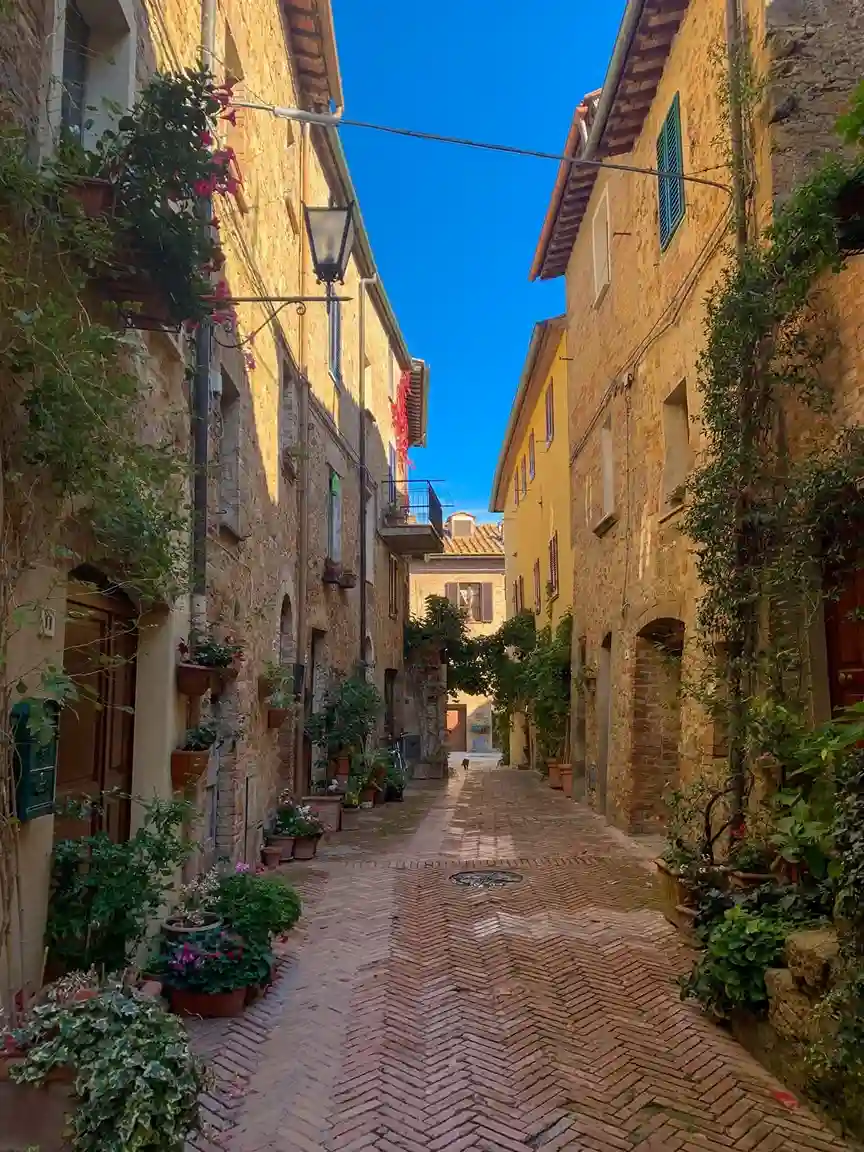
The honest answer: May and September are the months I’d book without hesitation, and I’ve confirmed this across multiple visits. Both months carry gorgeous light, manageable crowds, and pleasant weather before the intensity of peak season locks in. Spring specifically brings green hills, perfect conditions for walking tours and general sightseeing, and the kind of atmosphere that makes Tuscany feel personal rather than touristic. Fall delivers wine harvests, local festivals, and a warmth in the Chianti valleys as the vines turn gold — I was there in October for the fall harvest season and it was extraordinary.
June through August still works — especially if your schedule makes the shoulder seasons impossible, or if lazy days by a villa pool are genuinely part of the plan. Sunflower season starts in June and runs into July, which is genuinely beautiful even through the summer heat. But prices are high, advance bookings are essentially mandatory, the crowds peak through mid-October, and the Tuscan coast fills with vacationing Italians making accommodation even tighter. December through February brings the risk of finding many hotels and restaurants closed entirely — particularly across the Val d’Orcia, where most properties shut from December to the end of February. Winter in Tuscany can swing cold, rainy, and dreary, with the Val d’Orcia’s famous vibrant greens and golds replaced by muted, brown tones, no leaves on the vines in Chianti, and outdoor activities becoming genuinely unpleasant in the rain and mud. For the best version of this one week experience, late spring or early fall wins every time — April through early June, or September into October.