Colosseum Rome Travel Guide: Tickets, Underground Tours & Essential Tips for Visiting Italy’s Iconic Landmark
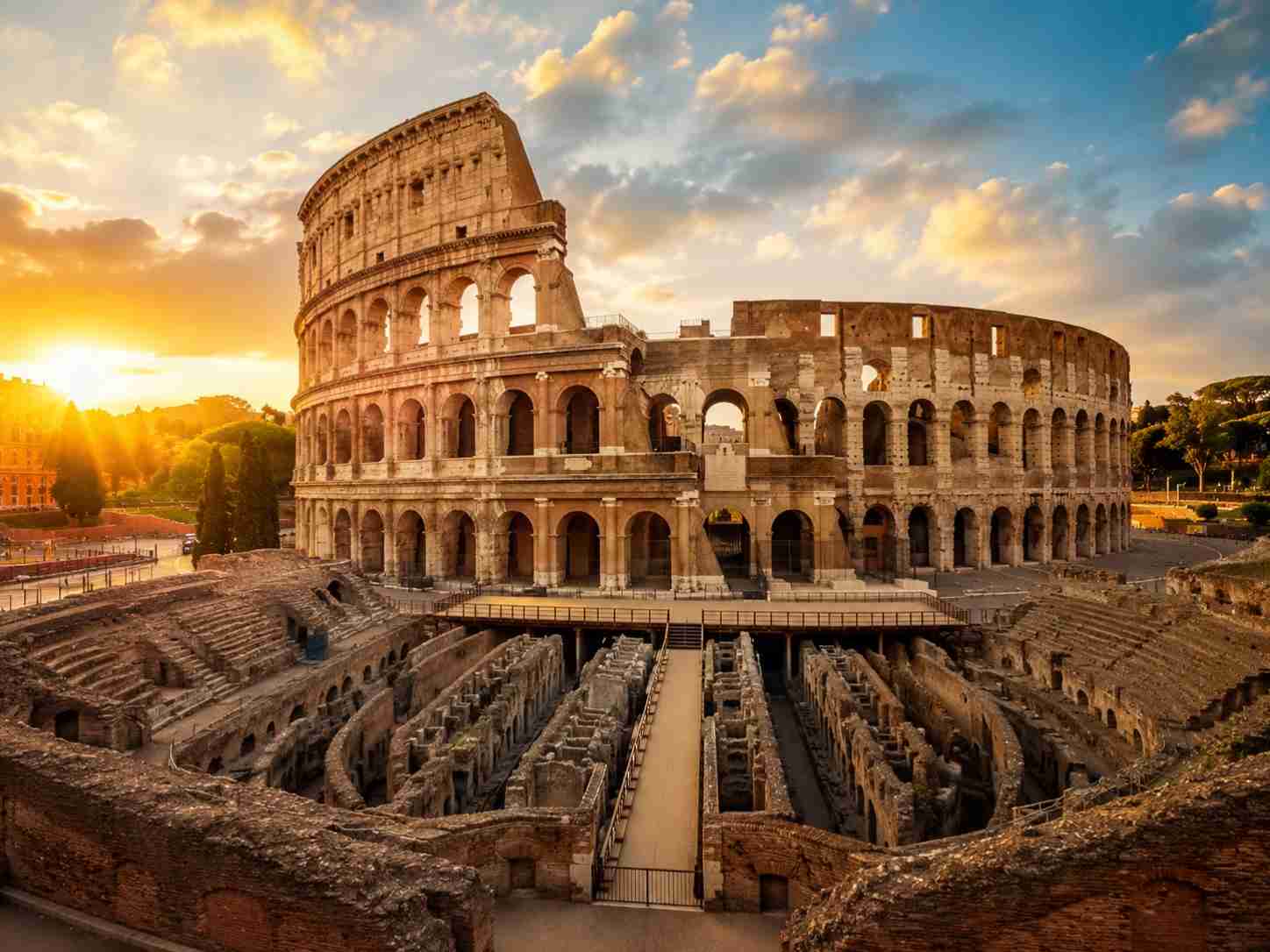
Standing in Rome, the eternal city, and finally crossing the Colosseum off your bucket list feels nothing like flipping through books or watching it on TV — it hits differently, deeper, in a way that earns the title of one of the Seven Wonders. The amphitheatre swallows your anticipation whole; sun-warmed stone, a strange hush, and a sense of scale that lands in your chest before your brain catches up. I remember the moment I first saw it — not through a screen, not in imagination, but real, massive, glowing — and honestly, nothing I’d read prepared me for that unforgettable inspiration.
For adventure seekers and cultural enthusiasts alike, this place is a living story — one you physically walk into. Whether you’re chasing ancient history, marveling at Roman engineering, or hunting that hidden gem coffeeshop with a killer view, there’s no straightforward single way to do it right. What I can tell you from having lived in Italy and visited a handful of times: the planning matters. Timed entry tickets sell out weeks ahead, long lines swallow the unprepared, and endless crowds can chip away at the magic — unless you go in with up-to-date tips and a seamless day mapped out.
Think beyond just the arena floor — the full sweep of Parco Archeologico del Colosseo pulls you through underground chambers, up to the Roman Forum, and across Palatine Hill, with an optional night tour or VR vivid context that reframes everything. Carry your passport, stay curious, and treat this less like a checklist item and more like insight into how empires rise and fall. That shift in mindset — from tourist to traveler — is what turns a famous monument into one of the most unforgettable experiences of your life, non-negotiable and absolutely worth every bit of stress-free planning you put into it.
What Is the Colosseum?
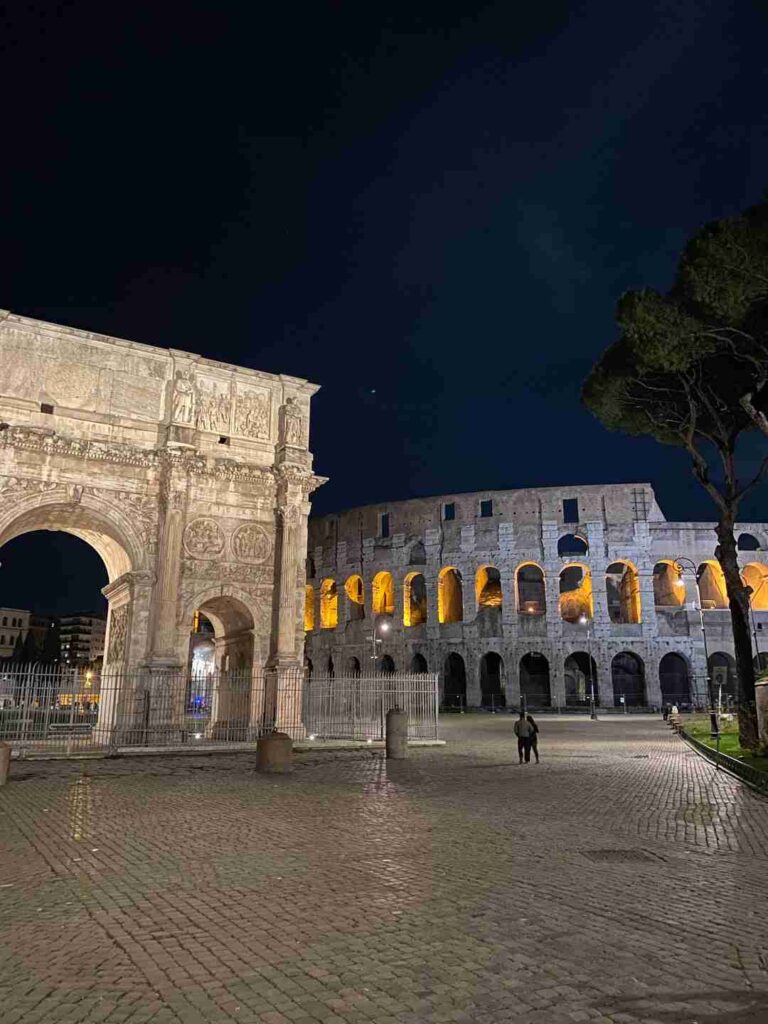
The Colosseum is simply the largest ancient amphitheater ever built — a structure so recognizable it has become one of the defining landmarks of not just Rome, but the entire world. Constructed between A.D. 70 and 80 under Emperor Vespasian and completed by his son Titus, it was designed as a grand venue for public entertainment on an almost unimaginable scale. At its peak, over 50,000 spectators packed its corridors and tiers to witness gladiator battles, animal hunts, theatrical performances, and elaborate spectacles that broadcast the power and wealth of the Roman Empire to anyone who walked through its gates.
What makes it an architectural marvel isn’t just its age — it’s the intelligence baked into every layer. Limestone, concrete, and volcanic rock were stacked into four towering levels of arches, engineered so that thousands of visitors could enter and exit efficiently without chaos. Beneath the surface lies the hypogeum — a vast network of underground chambers and passageways where animals, gladiators, and stage equipment were prepared before events. Today, it remains one of the most visited attractions in Italy, and once you see it, the reason is obvious.
First Visit to the Colosseum in Rome, Italy
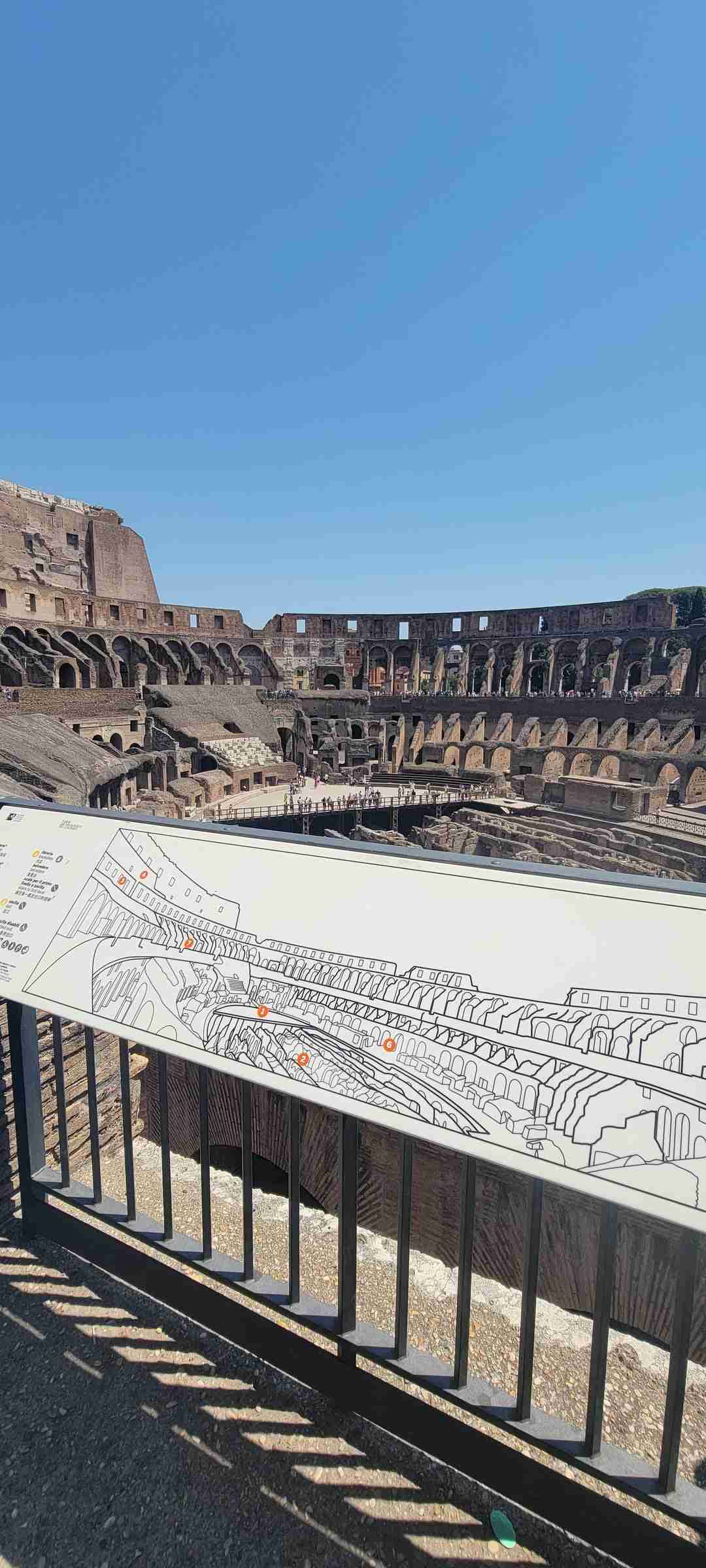
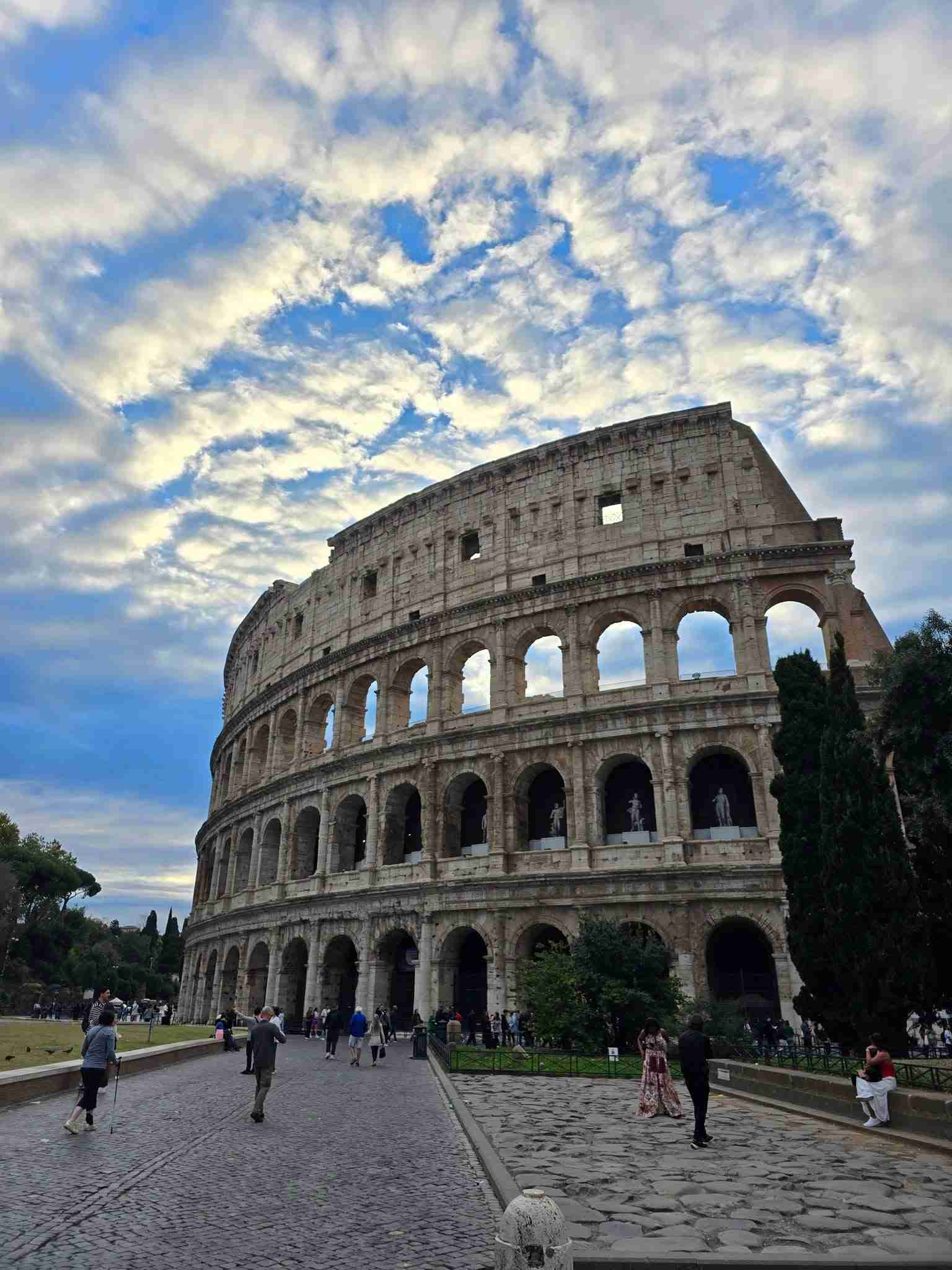
Nothing quite prepares you for that first approach — scooters threading past, pines framing the skyline, and then the Roman Colosseum just there, rising out of the city like an idea made permanent in stone. The Metro drops you at Colosseo station, and as you climb those steps back into daylight, the iconic structure fills your entire field of vision — bigger, more imposing, more epic than anything the books suggested. I’ve done it multiple times now, and that first glimpse never loses its punch; it’s why seven million visitors show up every year and still find something intimate in these ruins.
Once you’re past security and inside, the open-air arena hits you with its sheer ancient scale — the cylindrical design, the archways, the crowds moving like water through arched windows and passages, not unlike how Romans filed into sporting spectacles two thousand years ago. You can still spot original stone pillars, trace the leaf-patterned detail on surviving ceiling sections, and read the stone tablet facing the Roman Forum in the old Roman language. When the floor is exposed, the underground tunnels where warriors and animals waited before battle become visible — and suddenly the white stone steps reserved for the elite or reigning Emperor during tournaments start to make the whole choreography of power feel disturbingly real.
Visiting in the morning, soon after opening, I found temperatures already nudging 32 degrees (90 Fahrenheit) in peak summer — the place goes jam-packed fast. A cleaning project on Rome’s ancient buildings years back stripped away centuries of dirt and grime, and the new look honestly felt like seeing a different monument entirely — incredible, almost disorienting. Beyond the heat and the crowds, the place carries real Roman identity — on Good Friday, the pope leads the Via Crucis nearby, threading Christian remembrance through imperial celebration in a way that reminds you these stones keep getting reimagined by each generation that inherits them.
For first-timers, I’d suggest a simple mental map: Colosseum first on your timed entry, then the Roman Forum for texture and detail, then Palatine Hill for the long view — and slow down enough to notice what a local historian once pointed out to me on a small group walk: faint wear marks on the steps that show exactly how the crowd flow was designed to move thousands with quiet engineering precision. The best stories here aren’t announced — they’re hiding in plain sight, waiting for curiosity to find them, which is exactly the kind of high-end travel insight that separates a rushed visit from one that actually stays with you.
What To Expect When Visiting the Colosseum
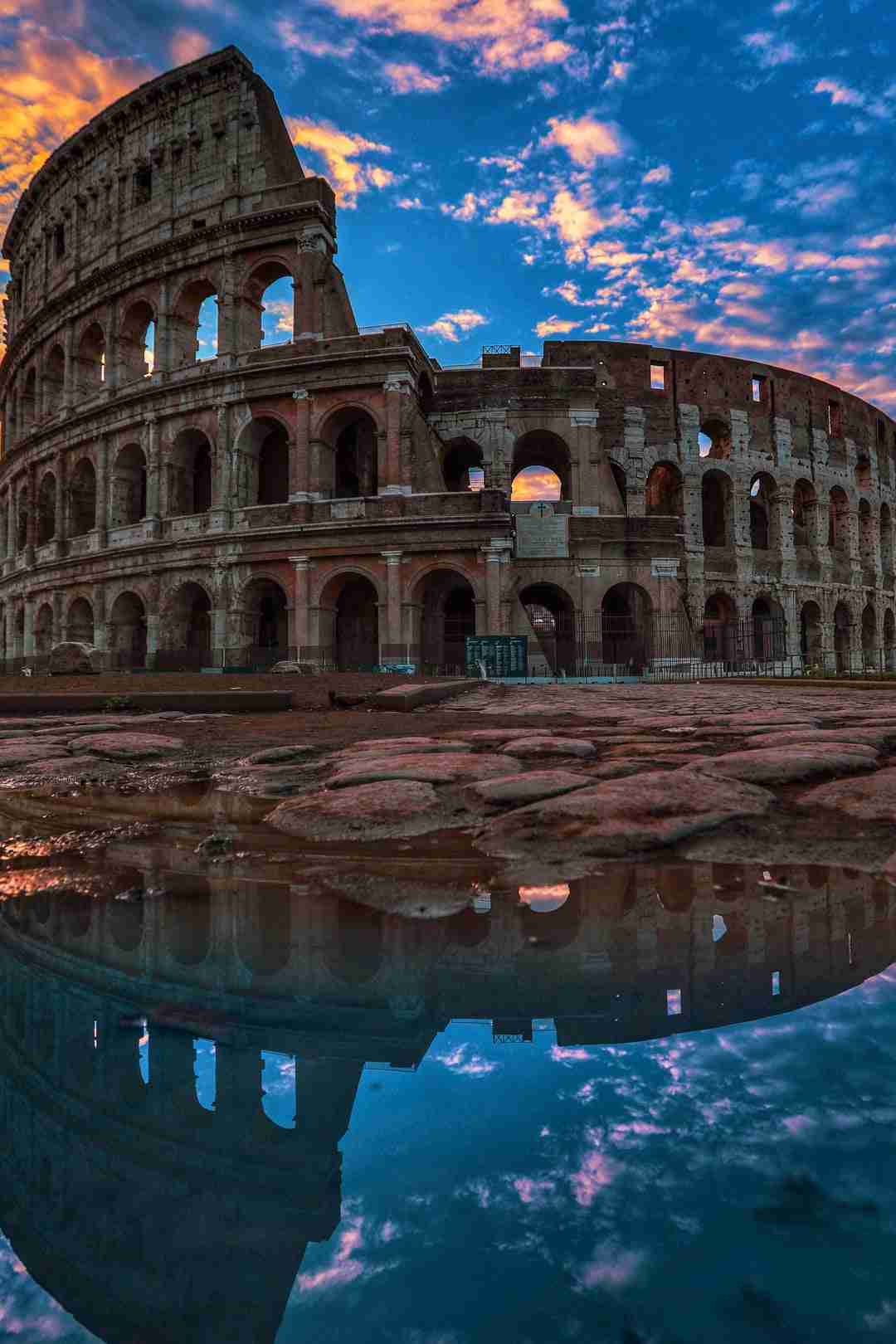
Walking toward it, the massive oval of weathered stone walls rising above the street already starts to shift something — by the time you’re through the gate, you’re moving through multiple levels of a living ancient amphitheater, not a museum replica. The first level and second level open up into sweeping views over the arena floor, and below that, the intricate network of the underground chambers spreads like a maze that once hummed with organized chaos. Highlights include standing at those upper corridors where Roman spectators once jostled for position, reading interpretive displays about gladiator games and everyday Roman life, and finding the photo spots that actually capture the full scale of what you’re standing in.
The hypogeum — visible from above with its staged arrangement of channels where gladiators and animals were held — gives the arena floor views their real weight. The historic amphitheater doesn’t just show you history; it organizes it through ancient seating tiers, stone corridors, and entrances built to handle crowd movement at a scale that still feels relevant. Add the nearby Roman Forum and Palatine Hill into your day, and the visit transforms from a single stop into a layered conversation with centuries of history.
The Flavian Story and the Construction of the Colosseum
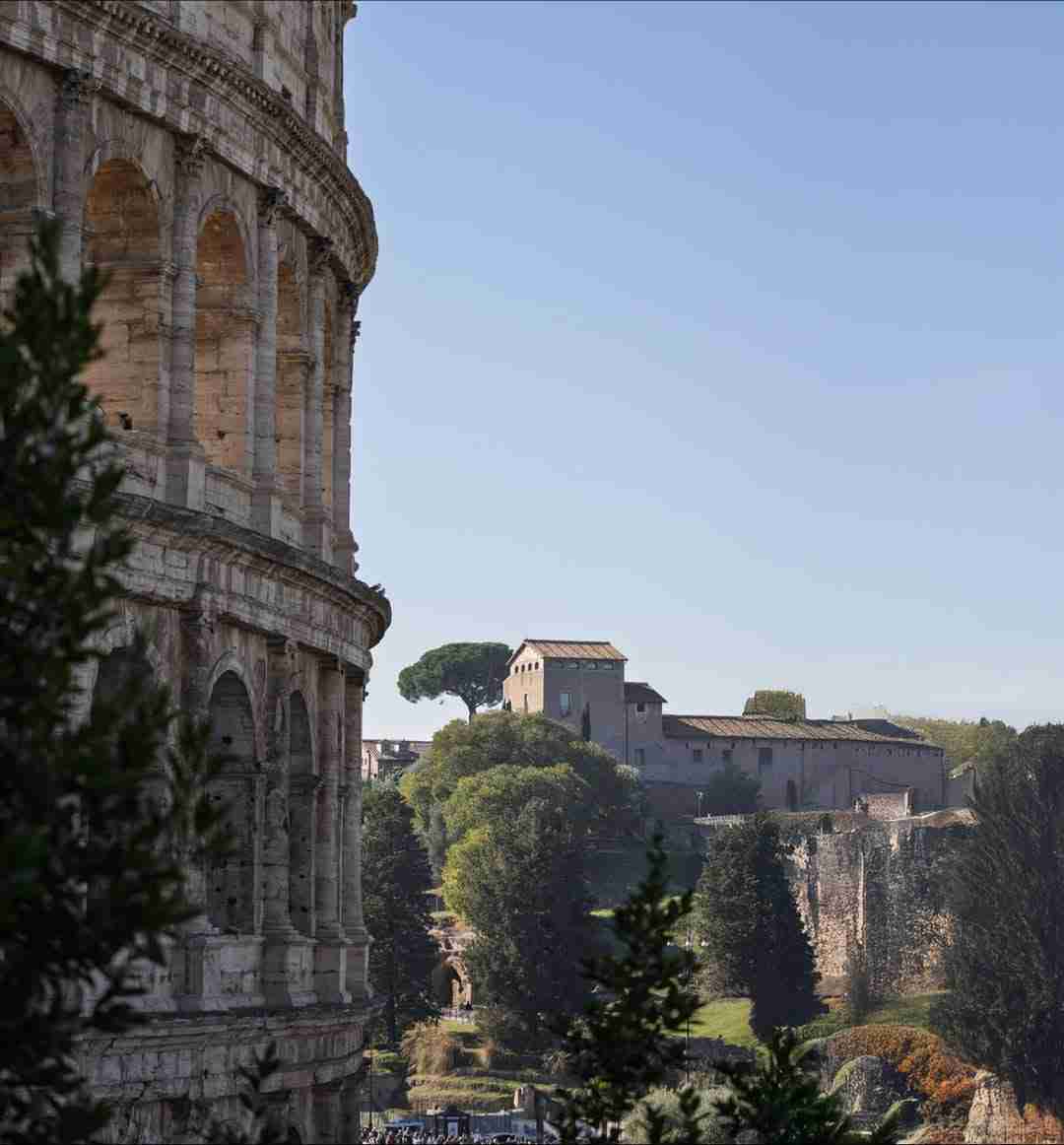
The construction of the Colosseum is really a story about politics and pride wrapped in travertine — Emperor Vespasian, founder of the Flavian dynasty, broke ground on an elliptical structure measuring roughly 156 meters (513 feet) along its long axis, and his son Emperor Titus inaugurated it in 80 with 100 days of games that turned a building into a civic statement. Those opening celebrations were equal parts propaganda and public gift — the Roman citizens didn’t just watch entertainment; they were being handed a message about who Rome belonged to now. The tiers, arches, and stair systems were engineered for flow so the Roman people could enter and exit with surprising speed, which is still quietly dramatic when you think about arc of construction complexity involved.
What I find genuinely fascinating — and what most visitors walk past without knowing — is the Nero layer underneath all of this. Where the amphitheatre stands today, there was once an artificial lake belonging to Nero’s private estate, the Domus Aurea. After his fall, that lake was drained, and a public monument rose in its place — civic theatre literally built over private excess. A colossal statue nearby, the Nero statue, is widely thought to have influenced the name “Colosseum” — an echo of one ruler’s arc of power folded into the Flavian programme. The Roman Empire’s tension between generosity and control, between wonder and violence, between legitimacy and spectacle — you can feel all of it in the stone as you walk through, if you know what you’re looking for.
Tickets, Timing & Getting There
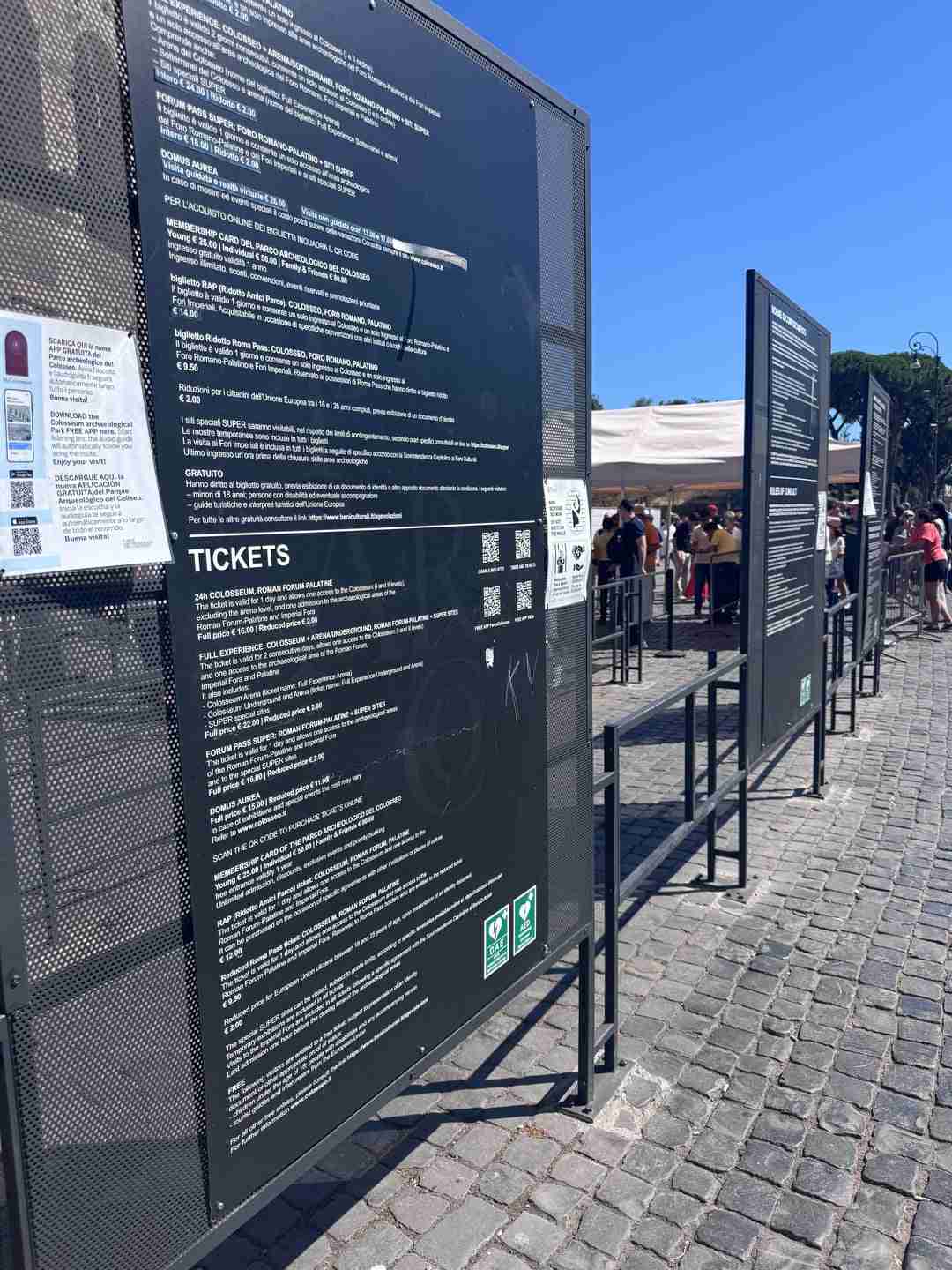
Getting your Parco Archeologico del Colosseo tickets sorted before you land in Italy is genuinely the single best logistics decision you’ll make — and I say that from experience watching unprepared visitors stare at sold-out screens in high peak season. The official combined ticket covers the Colosseum, Roman Forum, and Palatine Hill, which is excellent value for a full day that feels crafted rather than chaotic. Book through Colosseo.it — tickets drop exactly 30 days in advance (Rome time!), so set a calendar reminder and don’t sleep on it. Regular entry sits at €18.00 per person, or €24.00 for arena floor access; EU citizens and youth can access reduced entry with valid ID. If you want underground access or a guided option, look for Full Experience restricted areas add-ons — worth every euro for the underground chambers alone.
Timed entry keeps visitor flow manageable, but the system only works if you’re on time — airport-style screening means arriving a little early helps keep the whole experience smooth, especially during busy seasons like spring and summertime when same-day tickets vanish fast. Metro Line B to Colosseo station is the cleanest way in; taxis and private transfers work fine too if you’re staying central. The best crowd balance sits at 8:30 right at opening, or in the final couple of hours before closing time — that’s when the light softens beautifully for photos, with morning clarity or rich late shadows depending on your pacing preference.
Adventure seekers do best in early morning or late afternoon — cooler air, better light, fewer shoulders pressed against yours. April, May, September, and October offer mild temperatures and genuine rhythm to the city; June and August are lively but demanding. If summer is your only window, commit to that early entry slot and you’ll be fine. Pack water (non-negotiable June through September), sunscreen, and comfortable walking shoes — the uneven surfaces are original and unforgiving on soft soles. Accessibility is improving steadily, with lifts and adapted routes available; check with staff at the entrances if you need specific support, as they’ll point you toward the most suitable path through the archaeological areas.
Guided Tours vs. Self-Guided Visits
Going independently with a standard entry ticket is completely viable — the informational displays are solid, audio guides add real depth, and moving at your own pace through the historic corridors and viewpoints has its own quiet rhythm. That said, having done both on separate visits, the difference a great tour guide makes is hard to overstate: they handle purchasing tickets (no stressing over the 30 days advance window), get you through group entry rather than long lines, and turn what could be a confusing walk into genuine storytelling that makes the hypogeum, gladiator battles, and the broader sweep of ancient Rome actually click. The Colosseum, Roman Forum, and Palatine Hill together become a connected narrative rather than three separate buildings and ruins to tick off.
If budget rules out a live guide, an audio tour is the next best move — far superior to wandering without context. A good guide knows every photo spot, every temple worth pausing at, and every corner where the history becomes human rather than abstract. For first-timers especially, the efficient flow of a guided tour through the Colosseum is genuinely the smarter play, and frankly the more memorable one.
Tour of the Colosseum Underground, Arena Floor & Gladiator Path
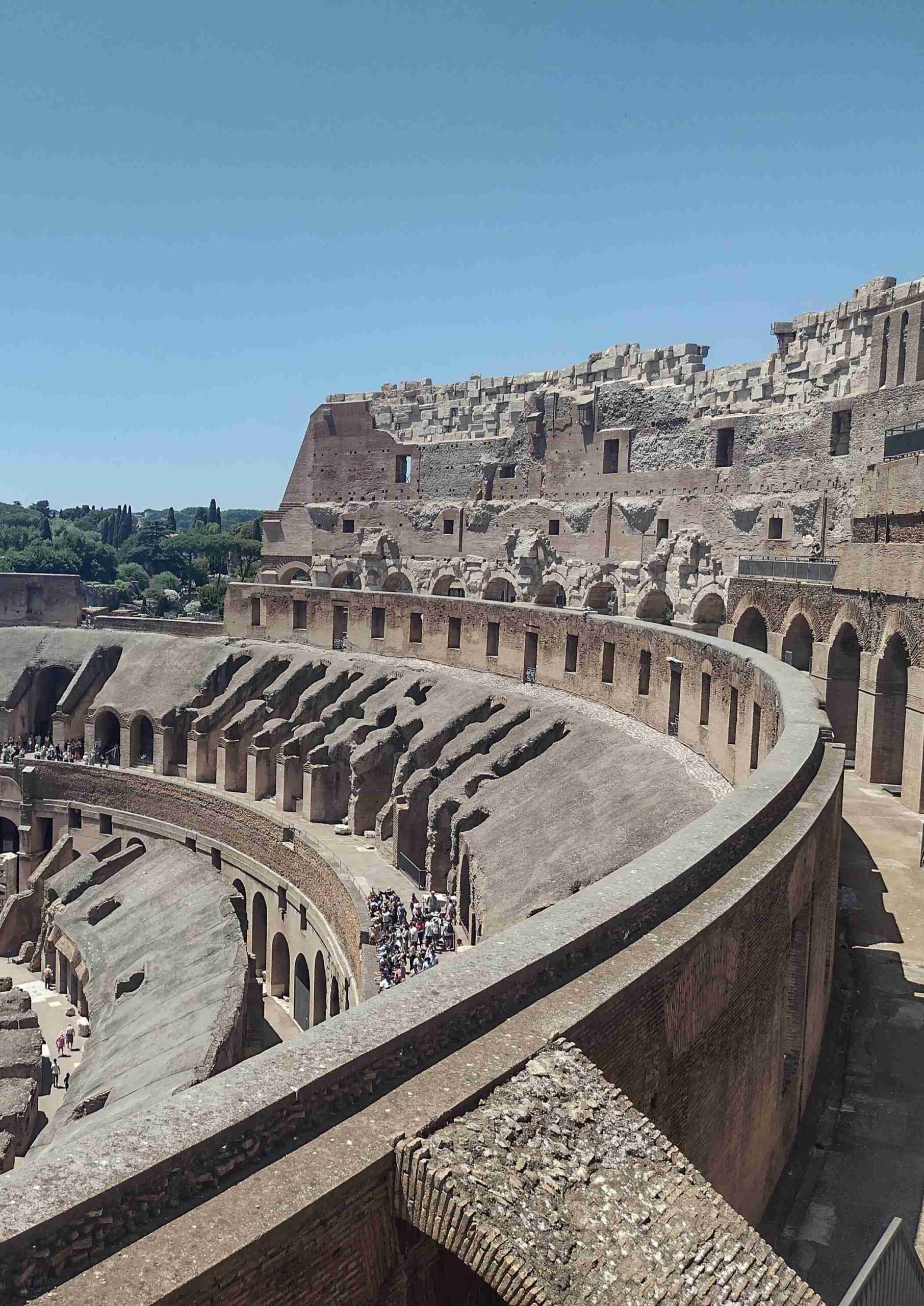
Stepping onto the arena floor is the moment the Colosseum stops being a backdrop and becomes a physical experience — open sky above, steep seating banking up on all sides, and the eerie, electric sense of standing at the center of the Roman imagination. The crowd noise that once filled this amphitheatre feels almost audible in the silence; this is where spectacle was manufactured, where the choreography of power played out in front of Flavian amphitheatre tiers packed with seating for thousands. I’ve stood there twice now, and both times something shifted — it’s not reverence exactly, more like suddenly understanding the narrative these walls were built to tell.
Dropping into the hypogeum shifts everything again — darker corridors, cooler air, and the quiet machinery of an ancient logistics operation built entirely around controlled risk and theatrical performance. Your guide will walk you through where trapdoors opened, how platforms rose, how coordinated teams moved animals and scenery through these narrower passages with staggering precision, and suddenly gladiatorial culture stops feeling like a film cliché and starts feeling like a tightly managed, deeply Roman institution. The underground tunnels are cooler in summer — a genuine relief — though the steps down can feel abrupt if you’re not expecting the shift. A guided visit turns that disorientation into context, and context is what makes the photographs you take here actually mean something when you get home.
The Roman Forum and Palatine Hill
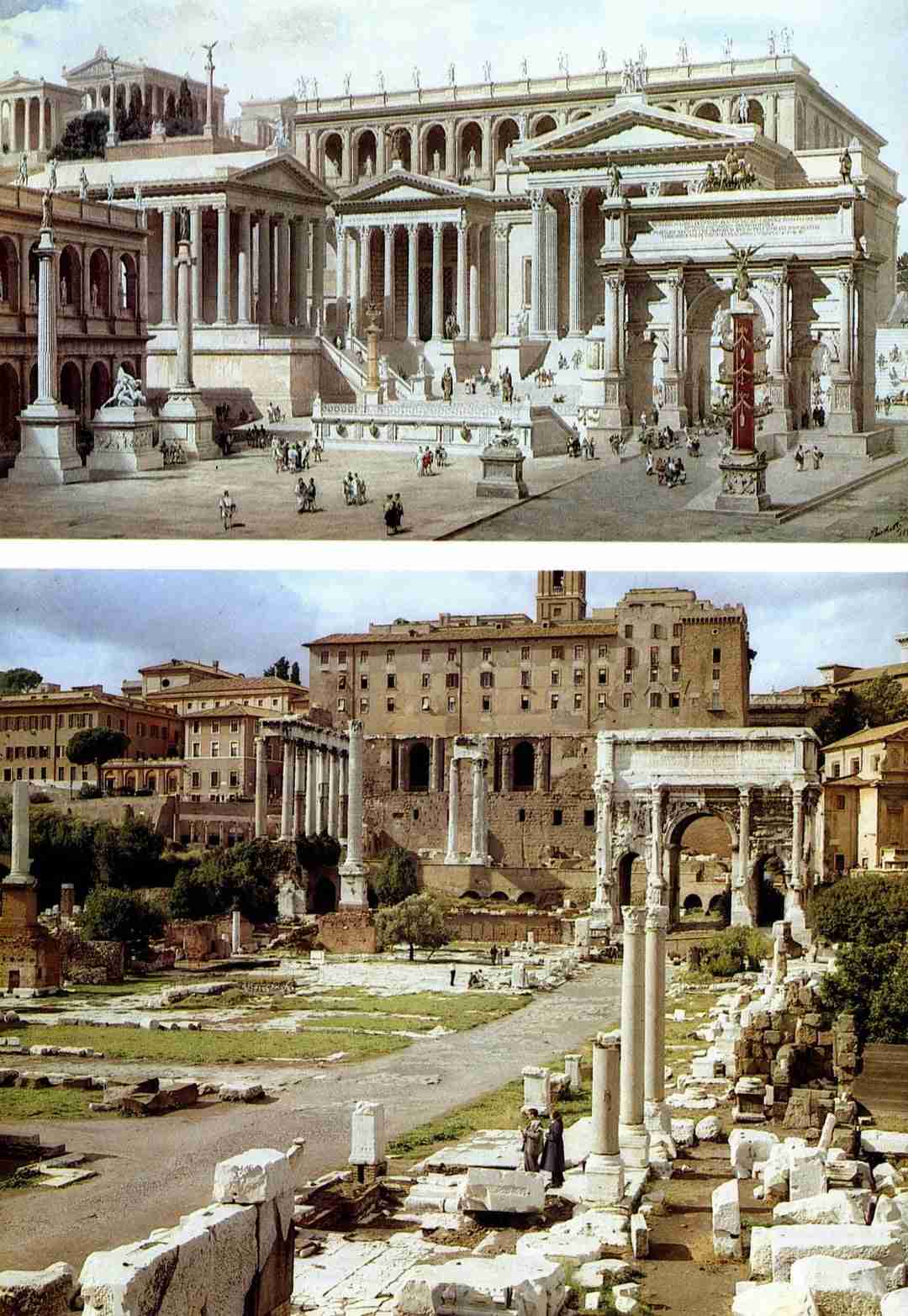
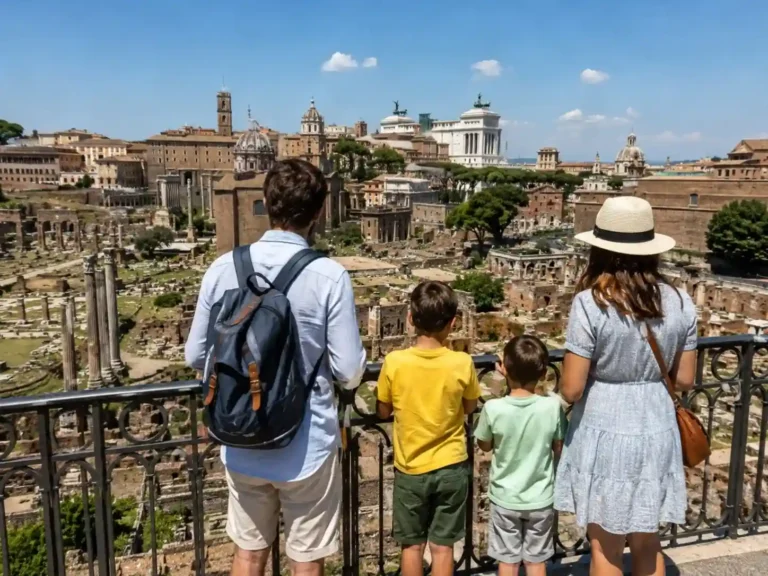
The Roman Forum and Palatine Hill, both part of Parco Archeologico del Colosseo, are what give your Colosseum visit its full meaning — without them, you’ve seen the spectacle but missed the civilization that built it. The amphitheater shows you what ancient Rome watched; the Forum shows you how ancient Rome decided — law courts, temples, speeches, processions, all staged across a valley of foundations and columns that once formed the downtown pulse of the city. The stone streets still carry the grooves left by chariots, the government buildings still hold their shape, and Palatine Hill — considered the birthplace of Rome and the centermost of the seven hills — gives you views over everything, a long climb rewarded by perspective.
The Roman Forum reads like a political and social theatre once you know what to look for: legitimacy built in stone, memory encoded in column styles — the sturdy proportions of doric, the scroll of ionic capitals, the leafy flourish of corinthian detail — each one a clue to different periods, different patrons, a living archive written in architecture. An earthquake damaged parts; rebuilding happened in phases; sections were later used as a quarry and even repurposed as a fortress as the Western Roman Empire faded. That layered, honest story of endurance is what makes the Forum richer on a second or third visit. Walk the gentle flow of its pathways with a time-smart approach — Forum first while your mind is sharp for details, then the climb to Palatine for the slower pace and sweeping viewpoints over modern Rome and ruins alike.
Practically: carry a refillable bottle, seek shade when the sun peaks, and wear steady shoes — the uneven surfaces across all three sites are original and unforgiving. Find the quieter edges of the Forum and look back across the central pathways; those are the pockets where the power of the place settles on you properly, without the noise of the main entrance crowds pulling you out of it.
Colosseum Night Tour, Sunrise Visit & VR Experience
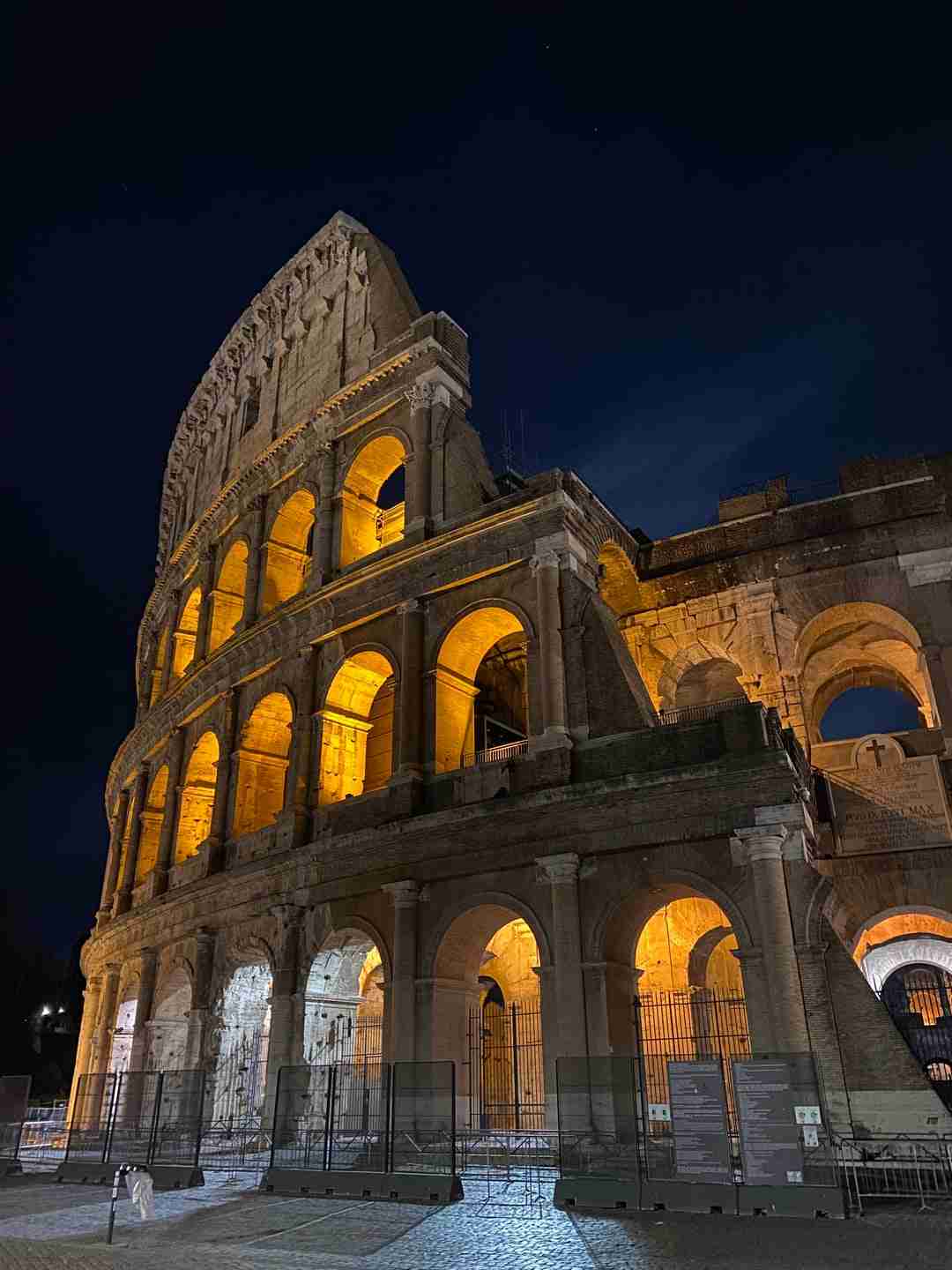
The question of when to visit the Colosseum is really a question of mood — and the answer shapes the entire experience. At sunrise, the arches glow like warmed marble in soft golden light, the silence is almost physical, and the atmosphere feels like you’ve arrived before the rest of history showed up. At night, illuminated ruins turn the monument cinematic — smaller group, lit viewpoints tracing the structure’s curves and shadows, a calm that invites deeper attention than a midday summer crowd ever allows. I’ve done an evening visit once, coffee beforehand, a pre-arranged driver booked so the return felt crafted rather than scrambled — and it genuinely changed how I understood the place.
A proper night tour comes with timed entry, expert informed storytelling, and an adventure quality that suits travelers who want culture without the heat and noise. For discovery through a completely different lens, some tours offer a VR headset experience — slip it on and the seating tiers, arena surface, and staging of gladiatorial contests reconstruct themselves around you; take it off and the same geometry is right there in the real stone, suddenly legible. It’s a smart bridge between past and present, between emotional mechanics and physical ruin — less gimmick, more choreography of understanding. Plan your transport home in advance whether you choose taxi or rideshare; the evening is worth protecting all the way to the end.
Is the Colosseum Worth Visiting?
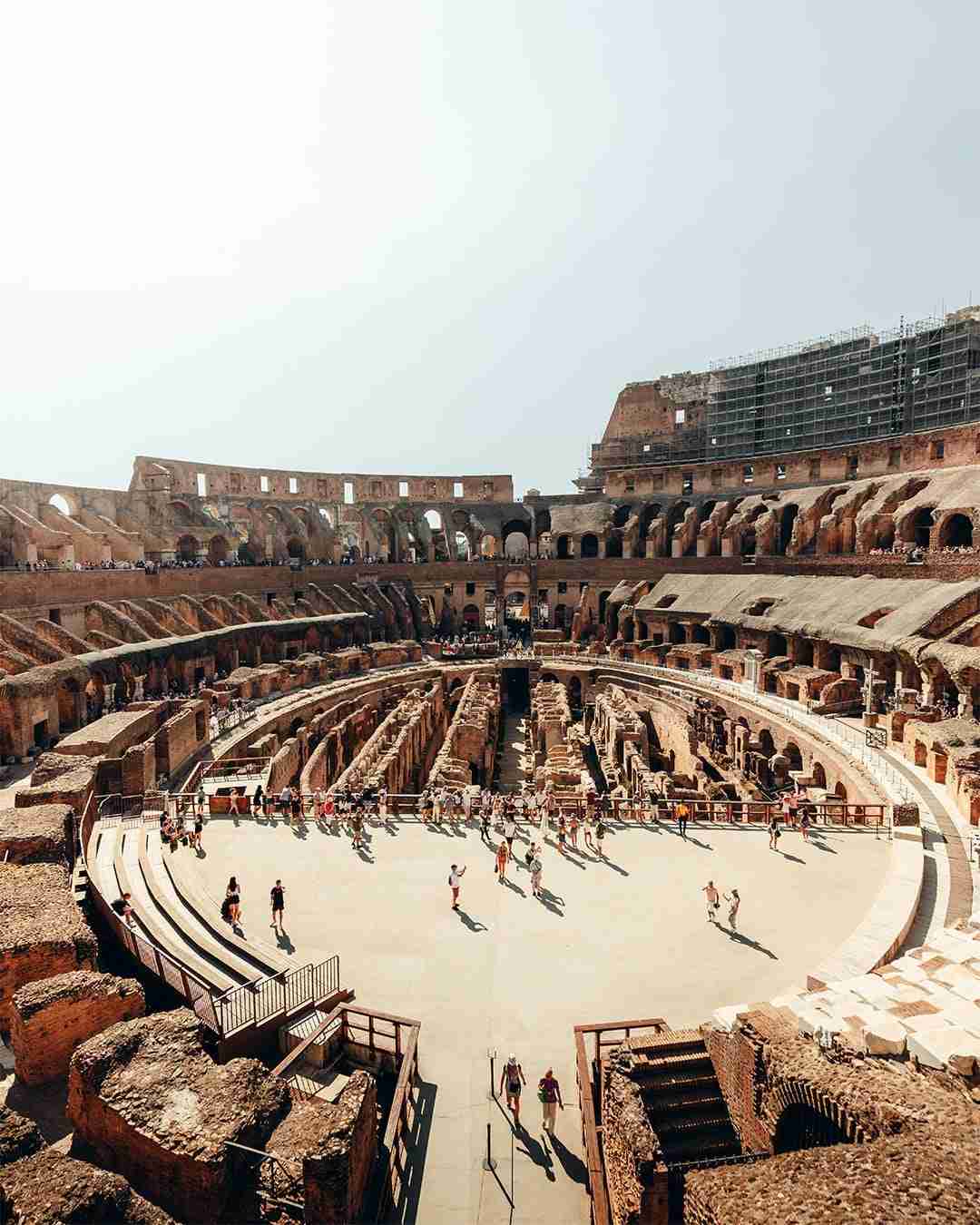
Without question, the Colosseum earns its place among the most worthwhile historic sites on earth — and I don’t say that lightly after visiting my fair share of Rome’s ancient Rome relics. The immense scale hits you in person in a way that no image prepares you for: towering arches, sweeping seating tiers, underground chambers that once hummed with real power and real influence, all of it framing a story about world history that feels urgent rather than dusty. Walking the corridors where Roman spectators once moved, you feel a powerful connection to the past that most architecture simply cannot manufacture.
Beyond the engineering brilliance, the Colosseum gives travelers something rarer — a genuine confrontation with stories that shaped Western civilization. It’s one of those memorable highlights of a trip to Italy that stays with you long after the amphitheater is out of sight, not because it’s famous, but because standing inside it, you understand why it became famous in the first place.
How Much Time Does It Take To Visit the Colosseum?
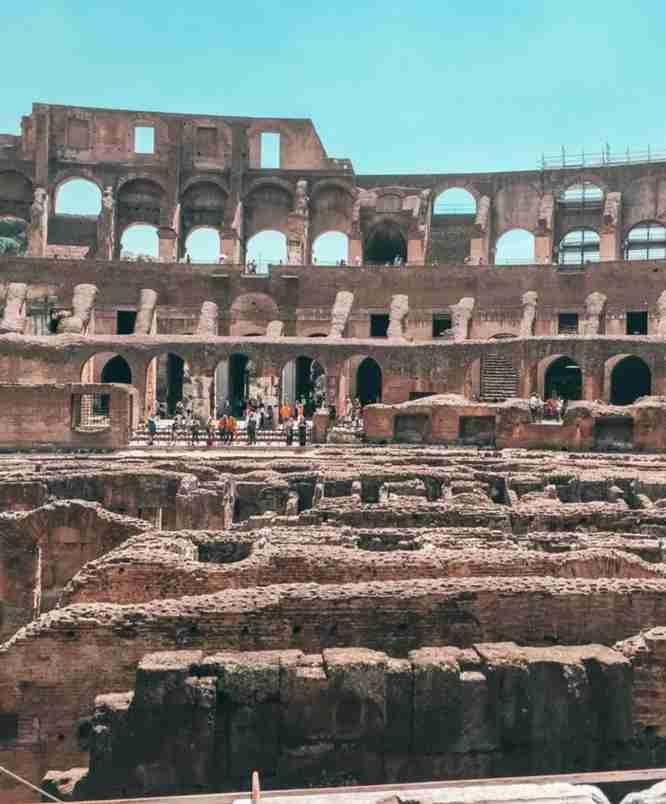
Budget one to two hours for exploring the Colosseum itself at a genuinely comfortable pace — enough time to move through the main levels, take in views over the arena floor, and absorb the informational displays and history without rushing. Add the Roman Forum and Palatine Hill and you’re looking at three to four hours total, sometimes more if you fall into the underground chambers or get a particularly engaging guide. Guided tours naturally run longer since historical context gets layered in throughout, but that time is never wasted.
Rules for Visiting the Colosseum
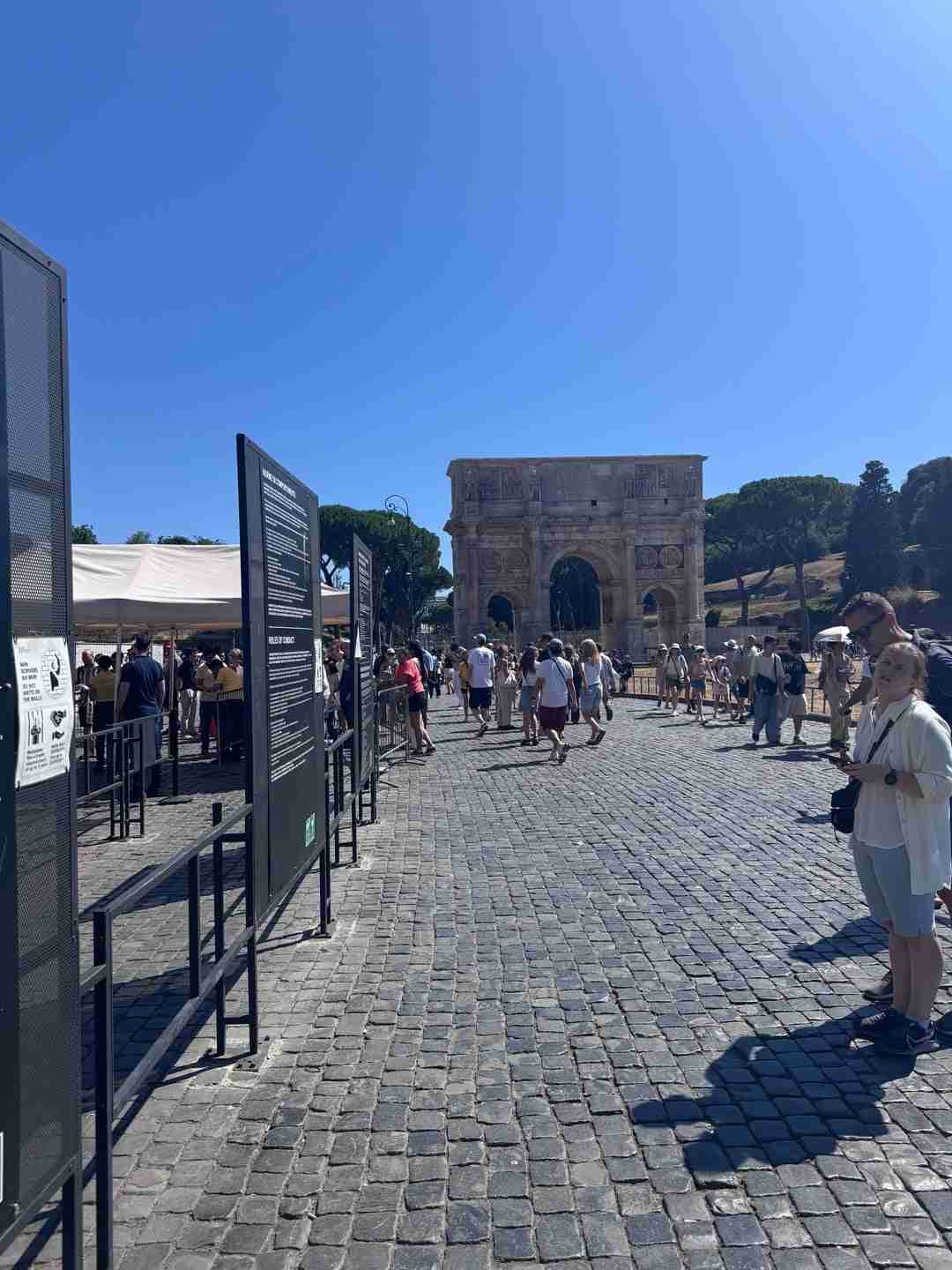
The Colosseum runs tight security screening at entry — think airport-style screening — so arriving a few minutes before your timed entry keeps things smooth and stress-free. Large backpacks, suitcases, glass containers, large umbrellas, and sharp objects are all prohibited; small bags only make it through. Food and drinks may be restricted in certain areas, and designated walking paths exist throughout the historic monument for good reason — the stone has survived nearly two millennia and doesn’t need your help aging faster. Follow the rules, respect the space, and your smooth visit is practically guaranteed.
Is the Colosseum Wheelchair Accessible?
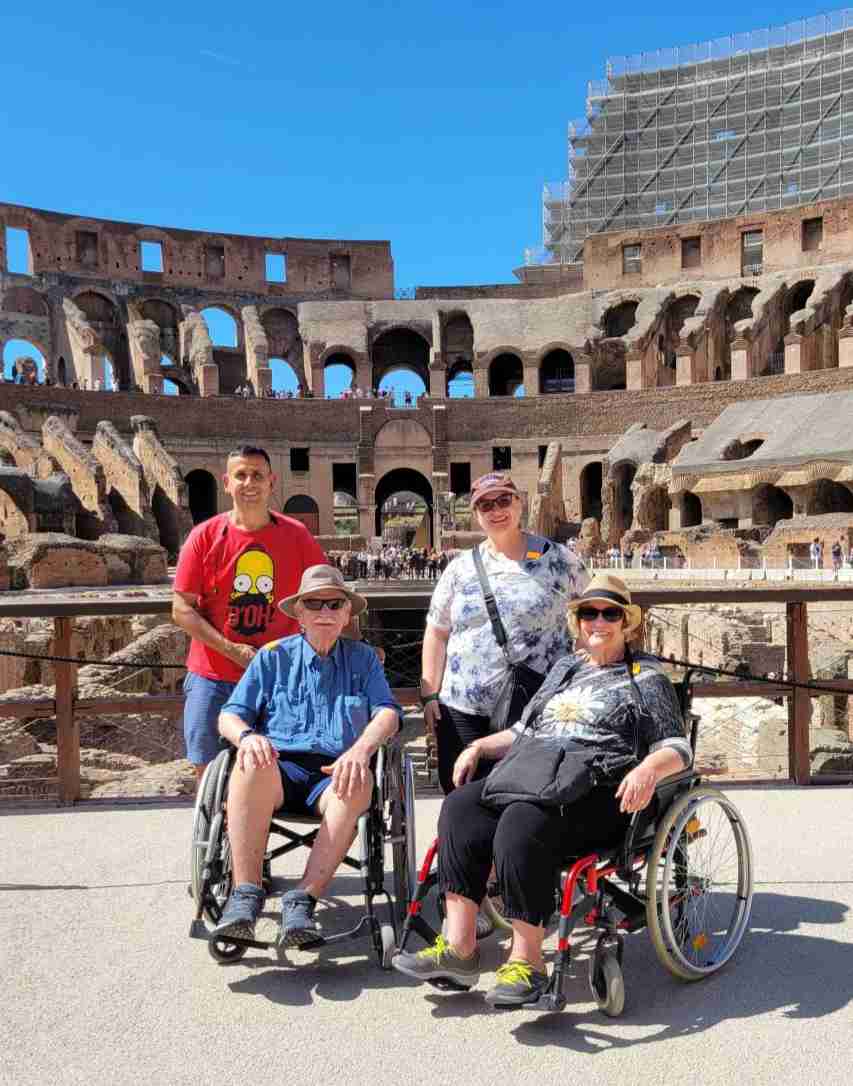
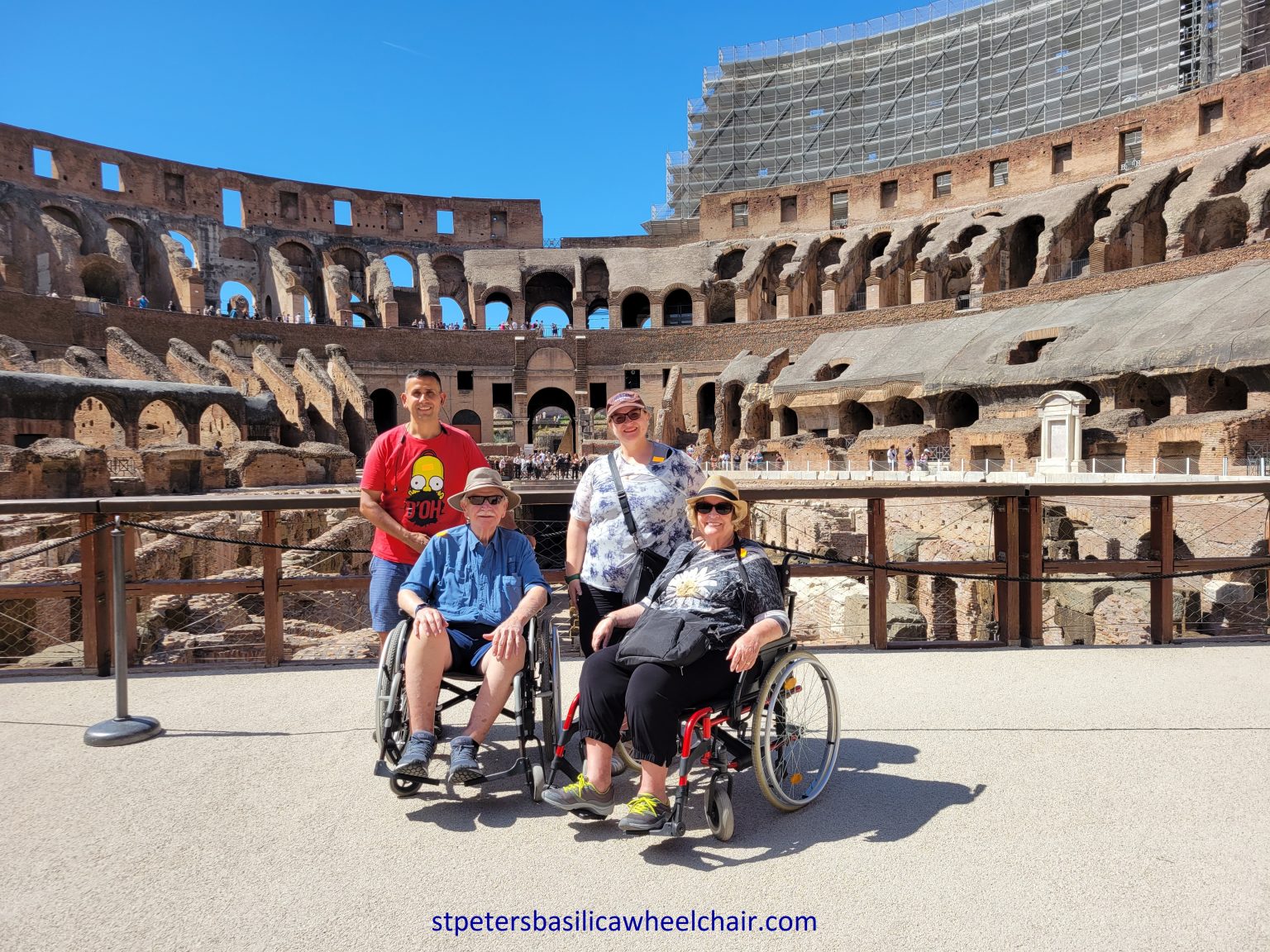
The Colosseum has made genuine strides in accessibility — accessible routes, elevators, and lifts are in place to help visitors with mobility needs navigate parts of the amphitheater without the stairs and uneven surfaces that dominate much of the site. Accessible entrances connect to viewing levels where the scale and atmosphere of the monument come through fully. Some historic areas remain challenging for wheelchairs and mobility devices, so it’s worth checking specific accommodations ahead of time — the staff are helpful and will steer you toward the most supportive experience available.
Don’t Forget the Violent History of This Place
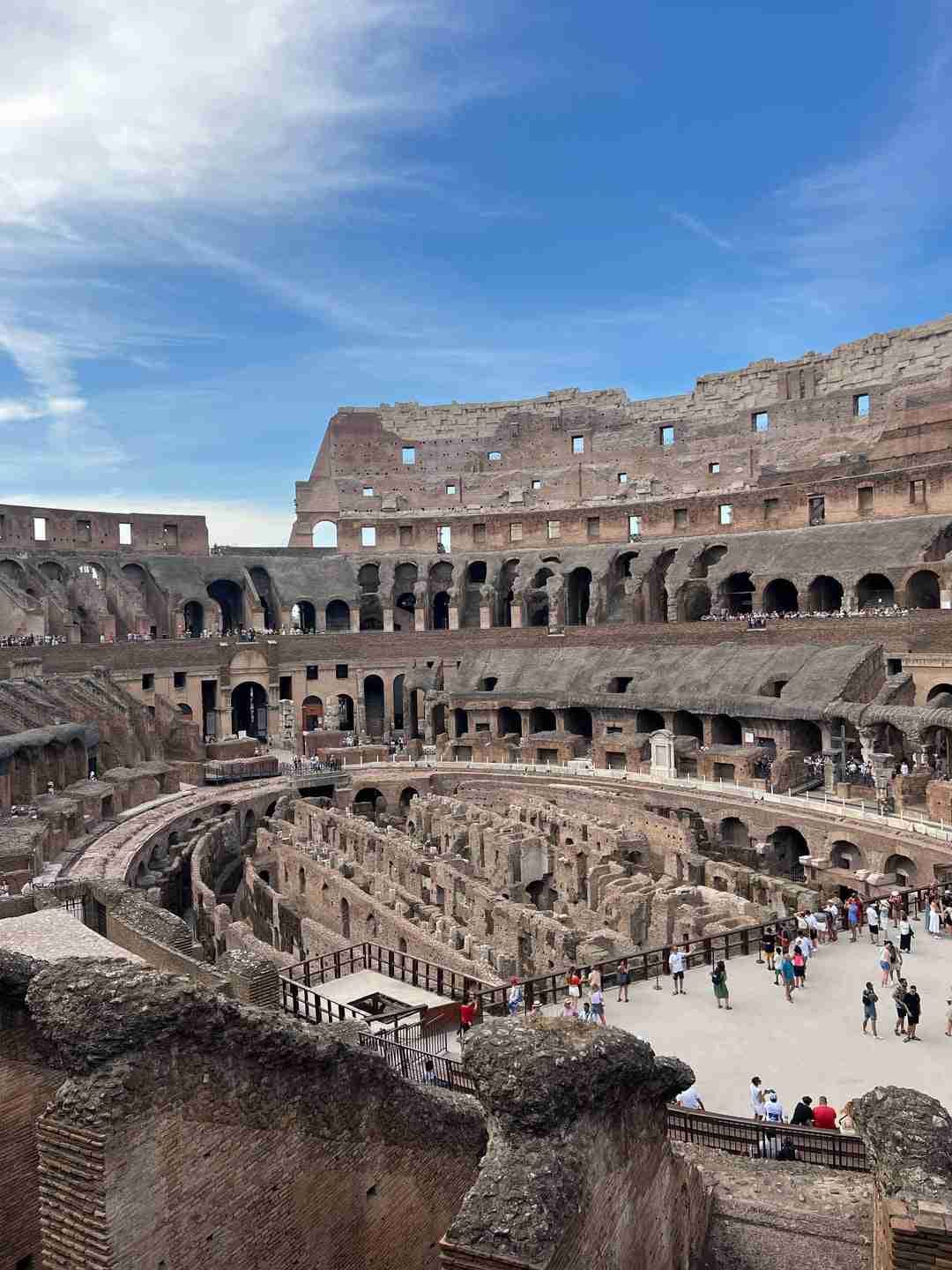
It’s easy, in the awe of first seeing the Colosseum, to let the stunning scale crowd out the full meaning of what you’re looking at — and without a local guide to anchor you, that often happens. But this landmark also represents something brutal: the arena games held here are linked to the deaths of more than 400,000 people and 1 million animals, including the extinction of several animal species deliberately hunted for spectacle. The very stone was laid by enslaved prisoners, the funding drawn from the Siege of Jerusalem. The empire built beauty and impressive infrastructure on unspeakable brutality, and carrying that awareness through your visit doesn’t diminish the experience — it deepens it.
Grab Coffee With a Colosseum View
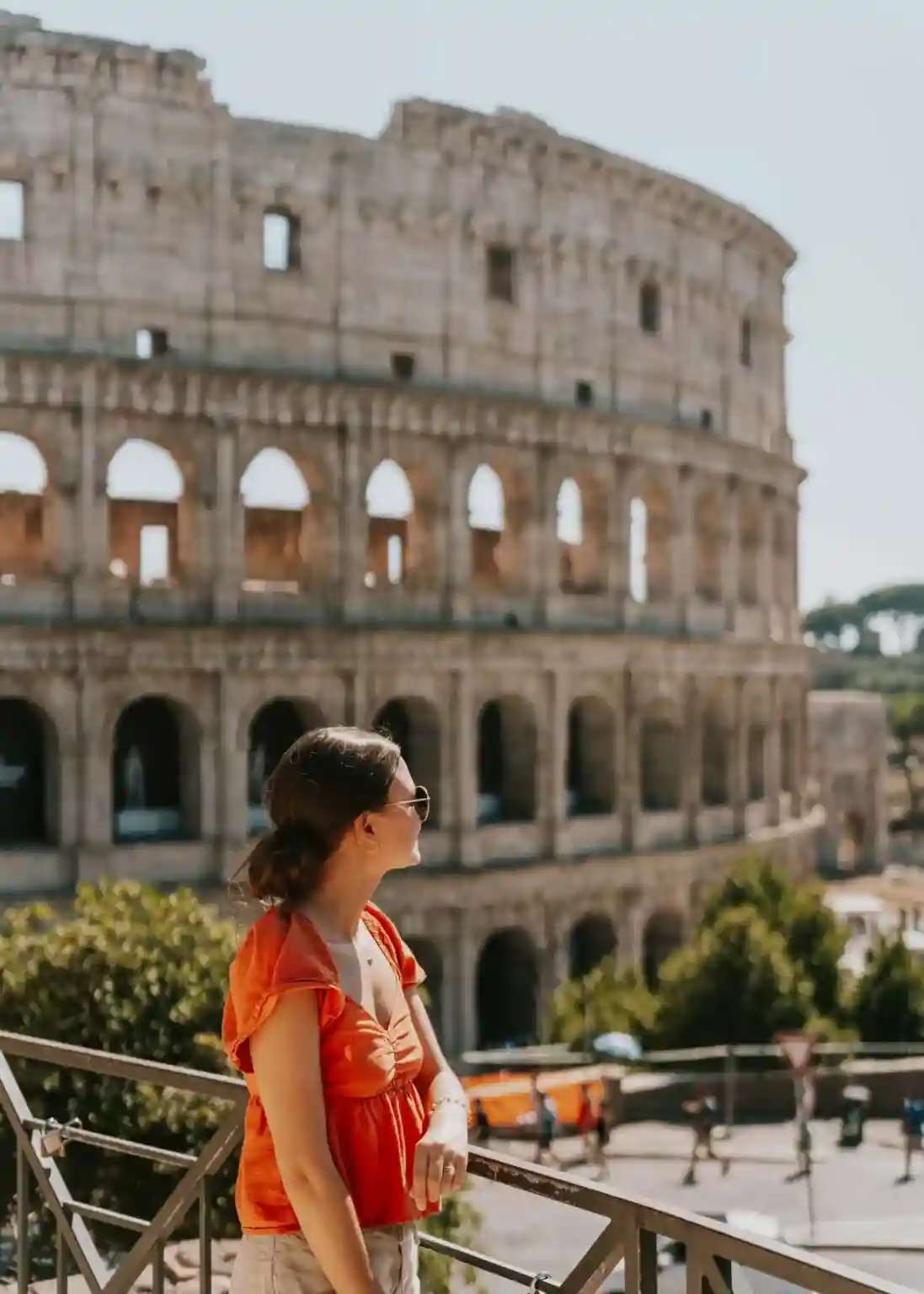
One of my genuine favorite hidden gem finds in all of Rome is Caffetteria Italia al Vittoriano — a coffeeshop tucked inside the Altar of the Fatherland building, with sweeping views over the Roman Forum and Colosseum that most visitors never find. The restaurants and cafes clustered near the Colosseum itself are reliably crowded and overpriced; this one, because you have to walk all the way through the building to reach it, stays delightfully uncrowded. The cappuccinos are genuinely good — not tourist-trap good, actually good — and the view makes them taste even better.
Tips for Visiting the Colosseum
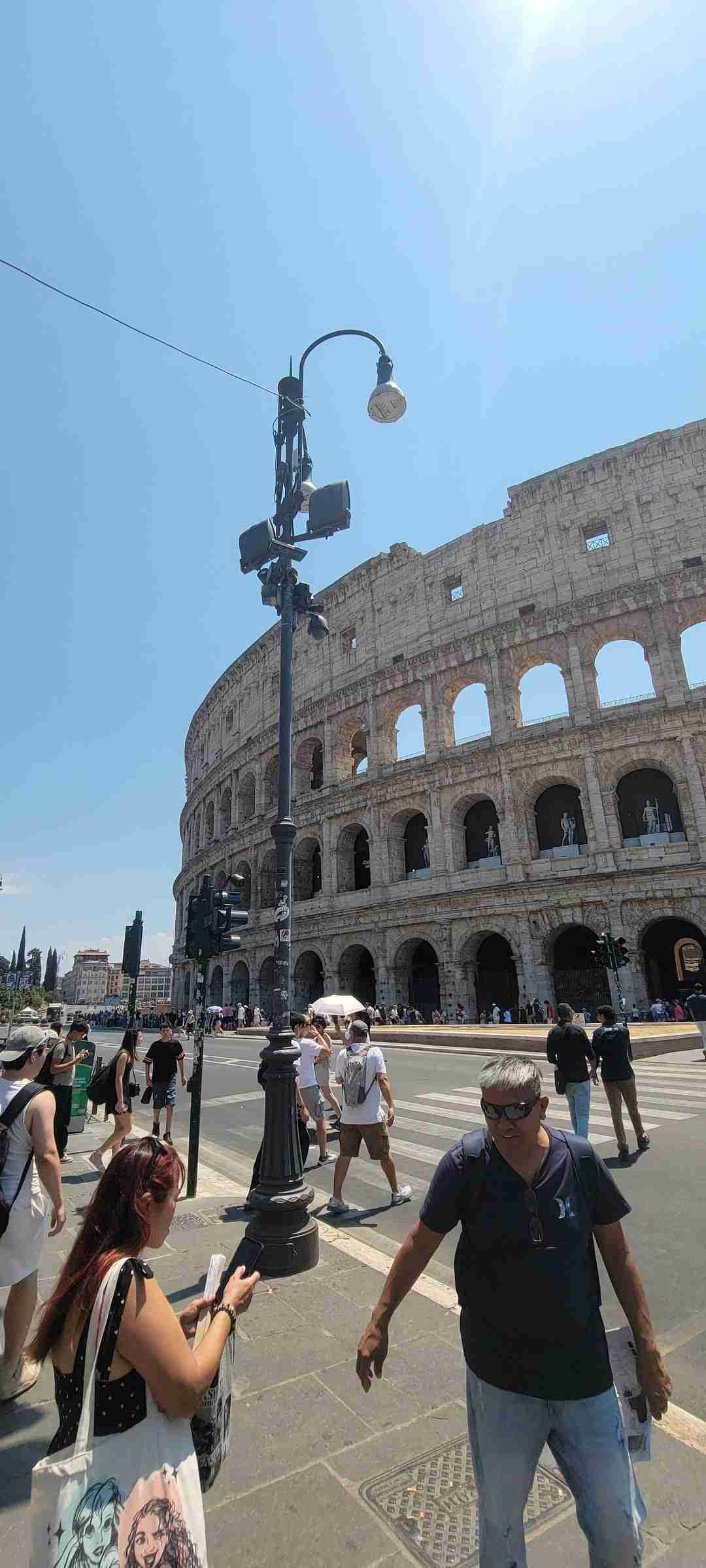
Book your tickets well in advance — they release exactly 30 days out (Rome time!) and the good time slots go fast, especially in warmer months. Show up at 8:30 when doors open if you want the best crowds-to-space ratio, or aim for the closing window. Wear comfortable shoes built for uneven stone pathways, carry water, and pack sun protection for anything between spring and autumn. Your combined ticket covers the Colosseum, Roman Forum, and Palatine Hill on the same ticket — use that timed entry for the Colosseum first, then move through the Roman Forum at a slower pace once the structure of your day is anchored.
One thing people consistently overlook: bring your passport or a clear photo of it — photo ID matching the name on your tickets is required at entry, and getting turned away at the gate after all that planning is a genuinely avoidable disaster.
Personal Reflection on Visiting Rome’s Colosseum
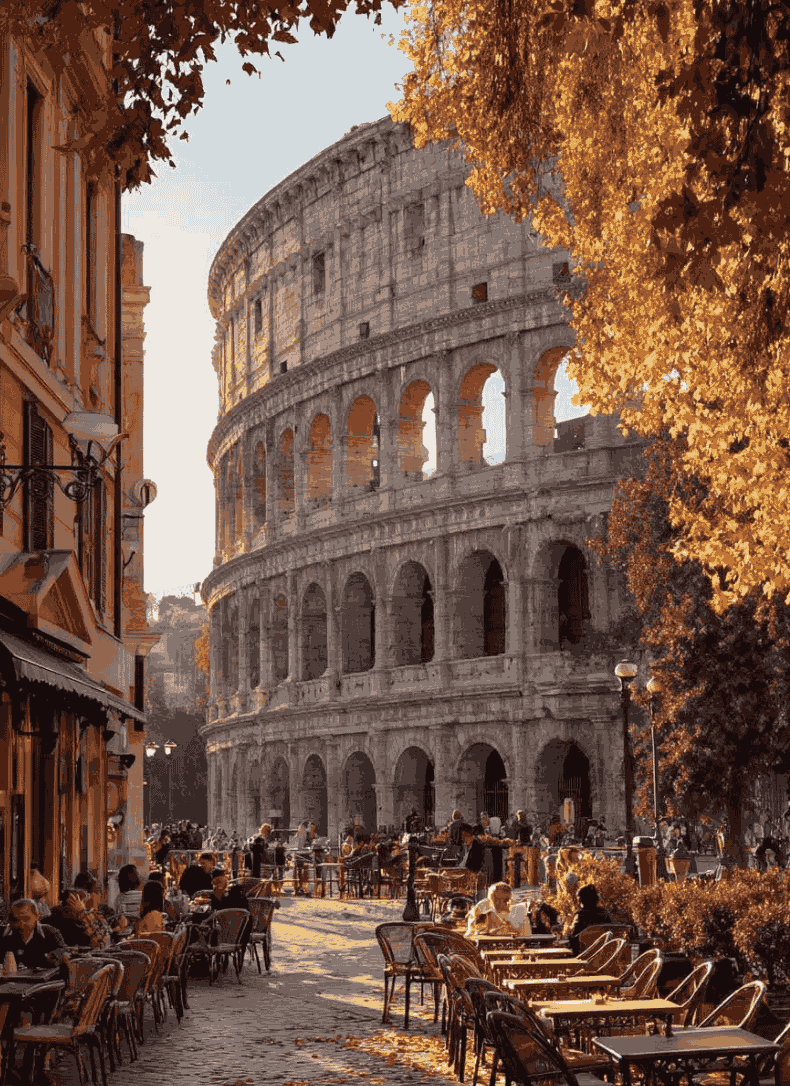
There’s a particular kind of personal reflection that the Colosseum triggers — it doesn’t arrive in the moment, not usually. It comes later, walking back through Rome, Italy, when the scale of the Flavian amphitheatre has had time to settle. I remember noticing it in my posture first: that lingering sense of cool corridors, of time briefly bending, of standing in a place where the grandeur and the grief were inseparable. The tiers once held Roman people pressed shoulder-to-shoulder, witness to things we’d never sanction today — and now they hold visitors from every language on earth, all of us arriving with questions and leaving with quieter ones, all of us trying to imagine what it meant, all of us adding another layer to the stonework of human continuity.
The history here isn’t clean. By the 6th century the site had changed function entirely; early Christians wove traditions of martyrdom into its memory; it became ruin, then resource, then symbol, absorbing each era’s need to gather and look and make meaning from what centuries leave behind. What I carry from my visits isn’t just curiosity satisfied — it’s a deepened sense that care for heritage is part of the act of traveling, that passing through a place like this is also, in some small way, a promise to keep its stories alive. That sense of togetherness across time, of courage borrowed from ancient stone — that’s what the Colosseum does to you, if you let it.