One Day Rome Itinerary: Best Things to Do in Rome in 24 Hours (2026 Guide)
Let me be honest — the first time someone told me Rome could be done in one day, I laughed. The Eternal City, with its ancient history, its ancient archaeological sights tucked behind every corner, its famous monuments demanding attention at every turn? Daunting doesn’t even begin to cover it. But here’s what years of navigating this beautiful city taught me: it’s not about seeing everything — it’s about seeing the right things. Whether this is your first visit or you’re returning after a long gap, a well-crafted one-day itinerary turns what feels overwhelming into something genuinely magical.
This isn’t your average Italy city guide thrown together for first timers. This is a plan built around intention — one that respects your energy, your hunger for local food spots, and your need to collect memorable moments rather than just major landmarks. Think of it as a drive-by of the city’s greatest hits: the two main landmarks — Colosseum and Vatican — woven through the historic city center, with detours for gelato, hidden gems, and streets worth wandering. With your tickets sorted and your book in advance strategy locked in, a single day here can feel richer than a week somewhere else. Pack your comfortable shoes, block out the full 24 hours, and let’s maximize every minute of this short visit.
The Colosseum & Ancient Rome
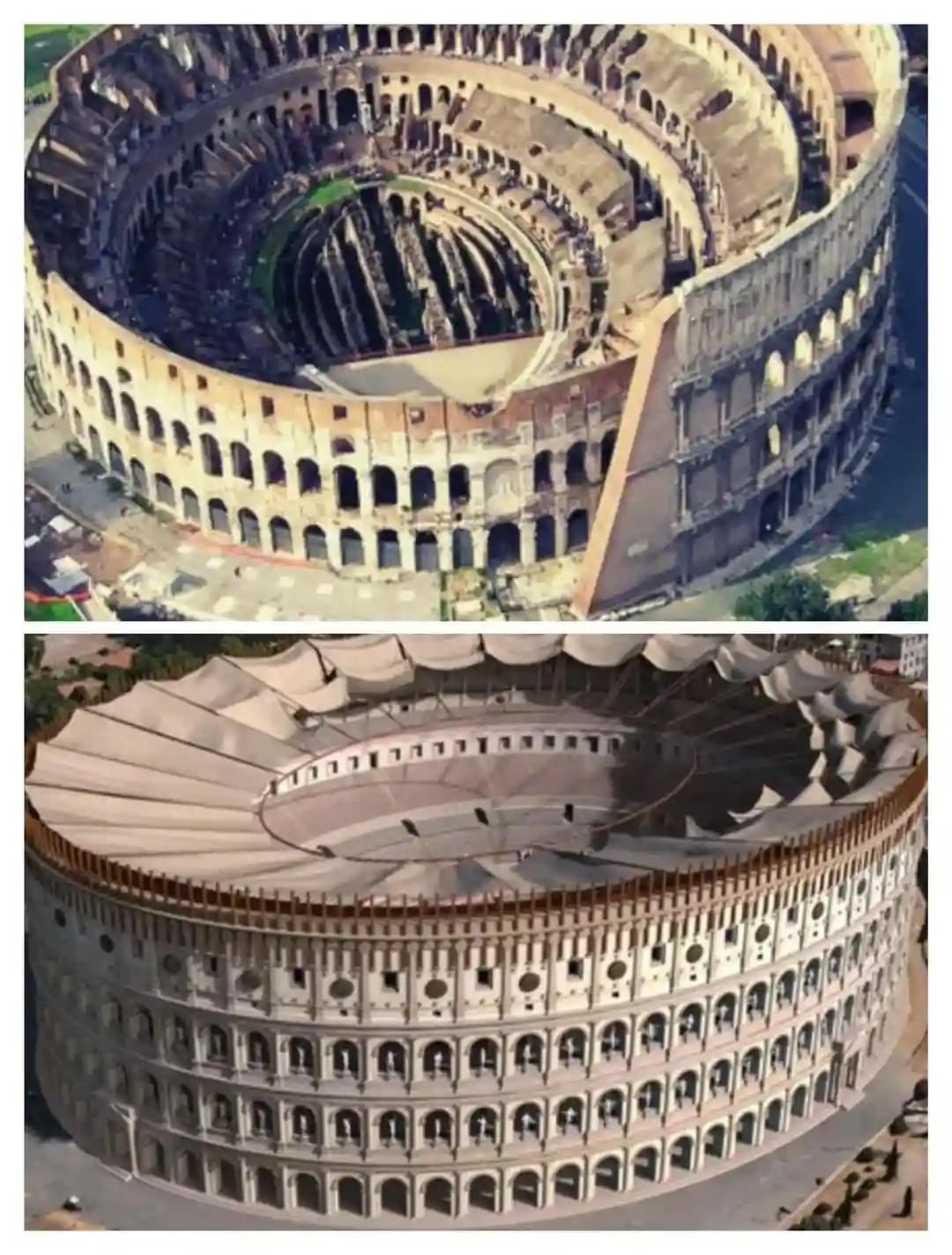
Start your morning where Rome began — at the Colosseum. Arrive close to the 8:30 a.m. opening, grab a quick coffee at a nearby cafe, and let the incredible view of this 80 AD giant hit you before the Summer months crowds descend. Trust me, the magnitude of this structure standing in the middle of a living, breathing city never stops being surreal — speechless is the right word. Whether you opt for a self-guided tour or a guided tour, make sure your tickets are secured ahead of time because the lines here are notoriously unforgiving. Your entry is timed, so confirm every detail: valid ID, bags ready for security gates, and expect to have bags checked before stepping through.
Inside, you’ll navigate three levels — the Arena floor, the Attico or upper level, and — if you’ve booked one of the select guided tours — the Colosseum Underground, where the world of gladiators suddenly becomes visceral and real. For the full picture of ancient Rome ruins, pair it with the Roman Forum and Palatine Hill — all part of the same 1-day Rome itinerary flow. Don’t overlook the small walk-through museum with its marble inscriptions or the humble gift shop on the way out. And yes, take the Instagrammable photos — you’ve earned them. If you’re timing this afternoon, aim for 2 PM to balance your Vatican morning with a powerful must-see landmark finish — priority tickets are non-negotiable either way, with crowds peaking through the day across this 1-day Rome itinerary.
Roman Forum & Palatine Hill
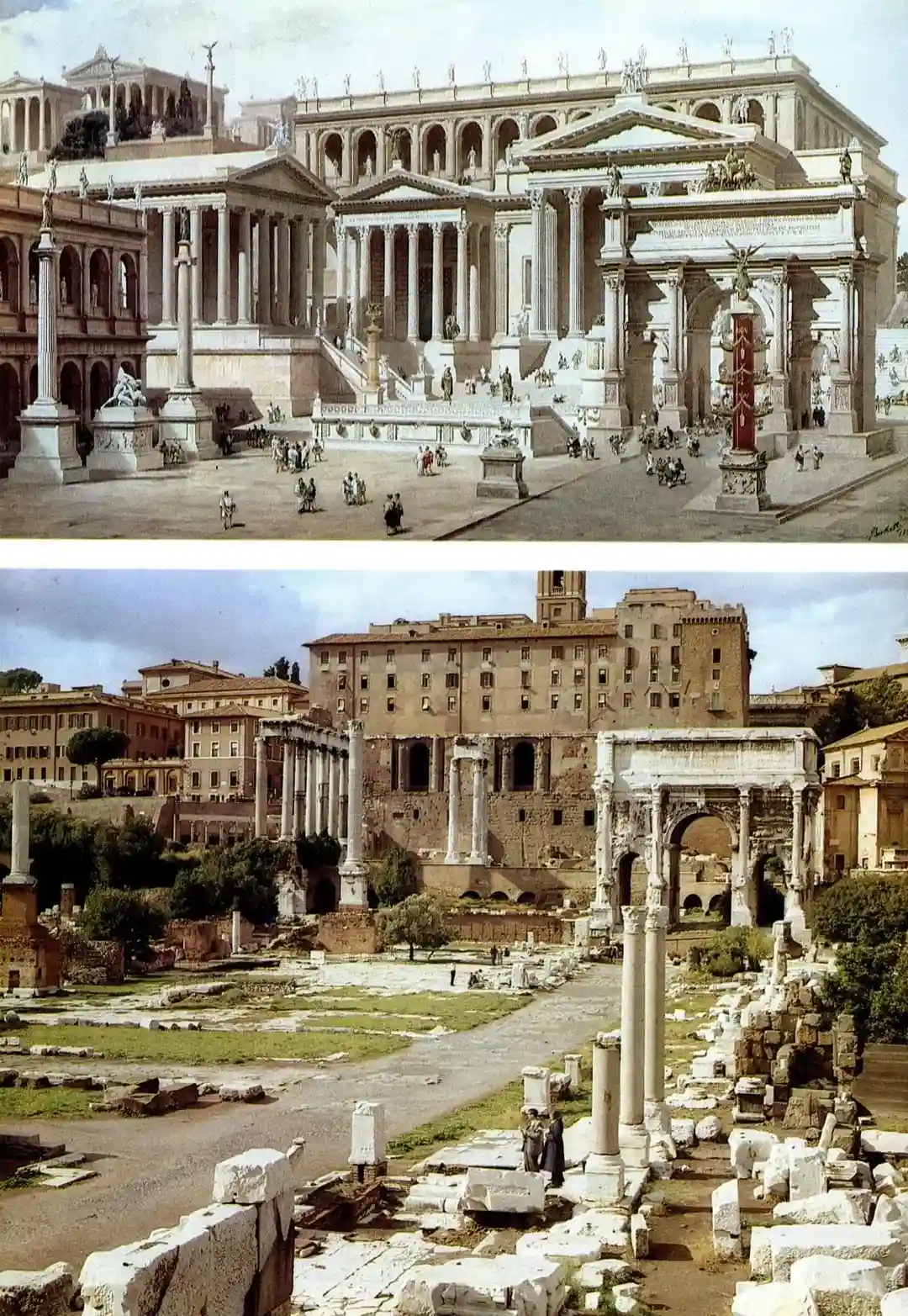
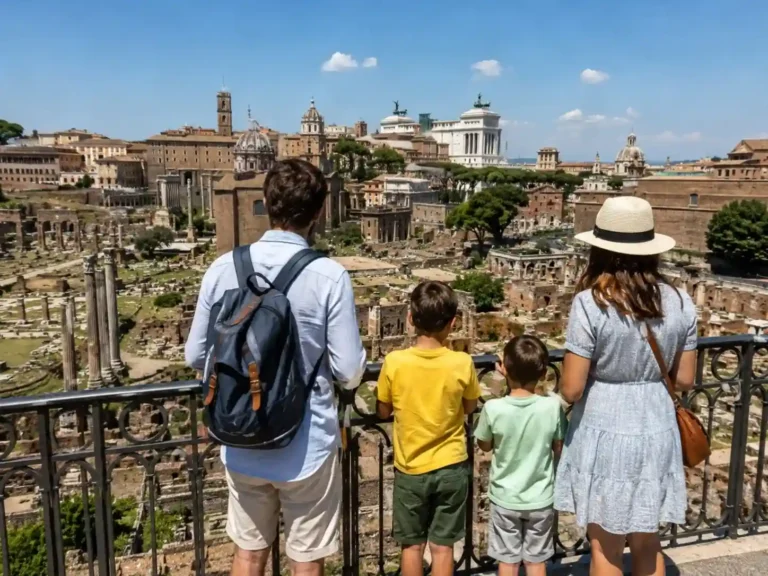
Right next door to the Colosseum lies what was once the beating heart of civilization — the Roman Forum, the city center of ancient Rome, where government buildings, temples, and markets once defined daily life. Without a guide, the structures and layouts can blur into rubble — beautiful rubble, but rubble nonetheless. Walking through it, though, is an immersive experience unlike anything else; I remember standing between columns so enormous they made me feel genuinely small. Show your ID at the entrance and let the scale of this archeological site do the rest — no narration needed for awe.
A short walk uphill takes you to Palatine Hill, offering panoramic views that sweep over the ruins below — all greenery, quiet shade, and a rare moment of stillness in an otherwise packed day. While it can feel overwhelming to navigate this massive site solo, know that a guided tour that bundles the Colosseum visit with both sites typically runs about 3 hours in total, with the Colosseum alone accounting for 1.5 hours. That’s efficient planning at its finest.
Trevi Fountain
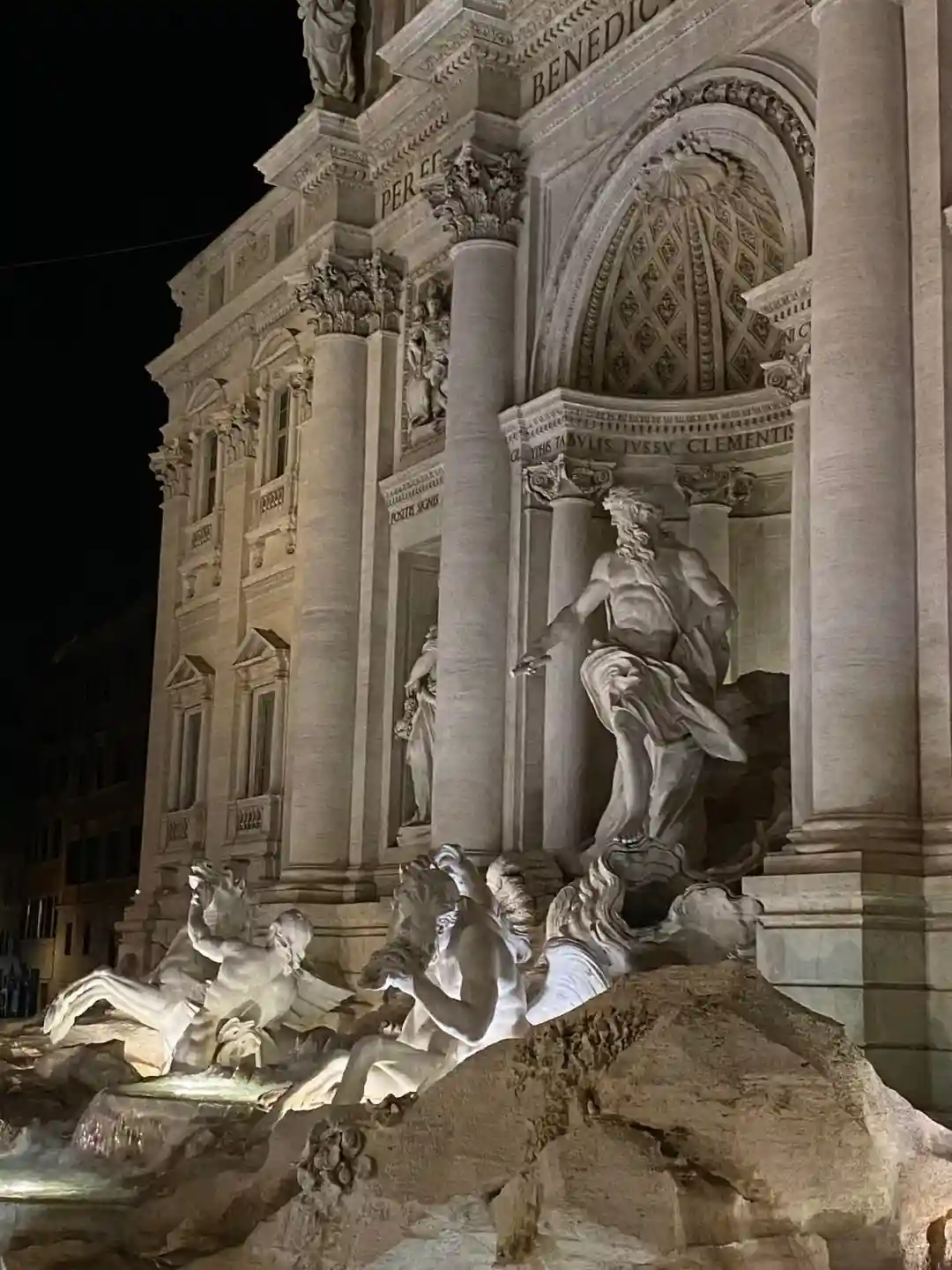
Few things in travel carry the same electric anticipation as rounding a narrow Roman alley and suddenly finding yourself face-to-face with the Trevi Fountain — the most photographed spot in all of Italy. It’s inevitably crowded, often to the point where getting to the base feels like a tactical mission, but even from a short distance, the beautiful Baroque theatrics of water cascading over carved gods is worth every jostled shoulder. The world-famous fountain earns its reputation every single day.
The tradition is simple: stand with your back facing the fountain, throw a coin into the water, and you’ve officially guaranteed a return visit — or so the traditional coin legend goes. For the clearest shot at both the coin toss and a quieter experience, arrive early before the day builds up. The iconic landmarks of Rome are all spectacular, but the Trevi hits differently — there’s something about the return trip promise that makes even the most seasoned traveler a little busy with sentiment.
The Pantheon
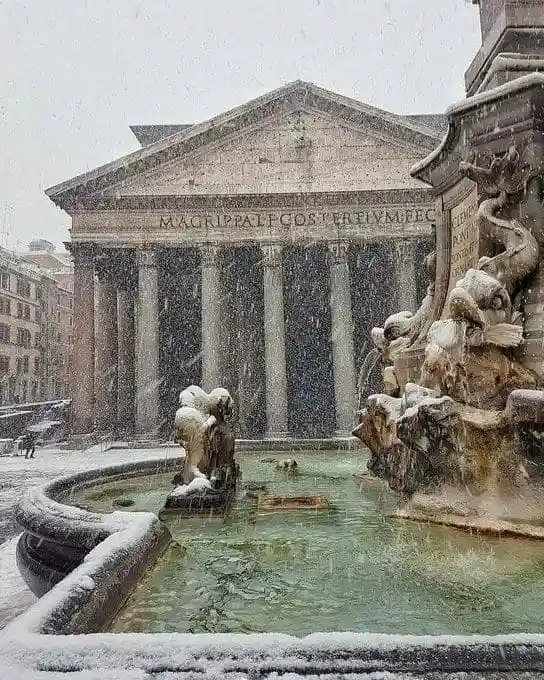
From the Trevi, a ten-minute walk leads you to something arguably even more astonishing — the Pantheon, sitting in the center of Piazza della Rotonda like it’s been waiting patiently for 2,000 years. This is Rome’s oldest fully intact structure, and that unsupported cement dome — still the largest unreinforced concrete dome in the world — is a genuine marvel of architecture and history. Standing beneath the oculus and looking up is one of those rare travel moments that quietly rewires something in your brain.
Tickets are required now, so skip the line chaos by booking a timed-entry ticket through the official site well in advance — just note that tickets must be picked up at an external location, so read the instructions carefully before your visit. The Pantheon typically closes between 6-7 PM depending on the season, meaning an evening visit requires you to account for the queue and move efficiently. If time runs short, the exterior from the piazza is still worth every second — this Rome gem commands presence even from the outside.
The Spanish Steps
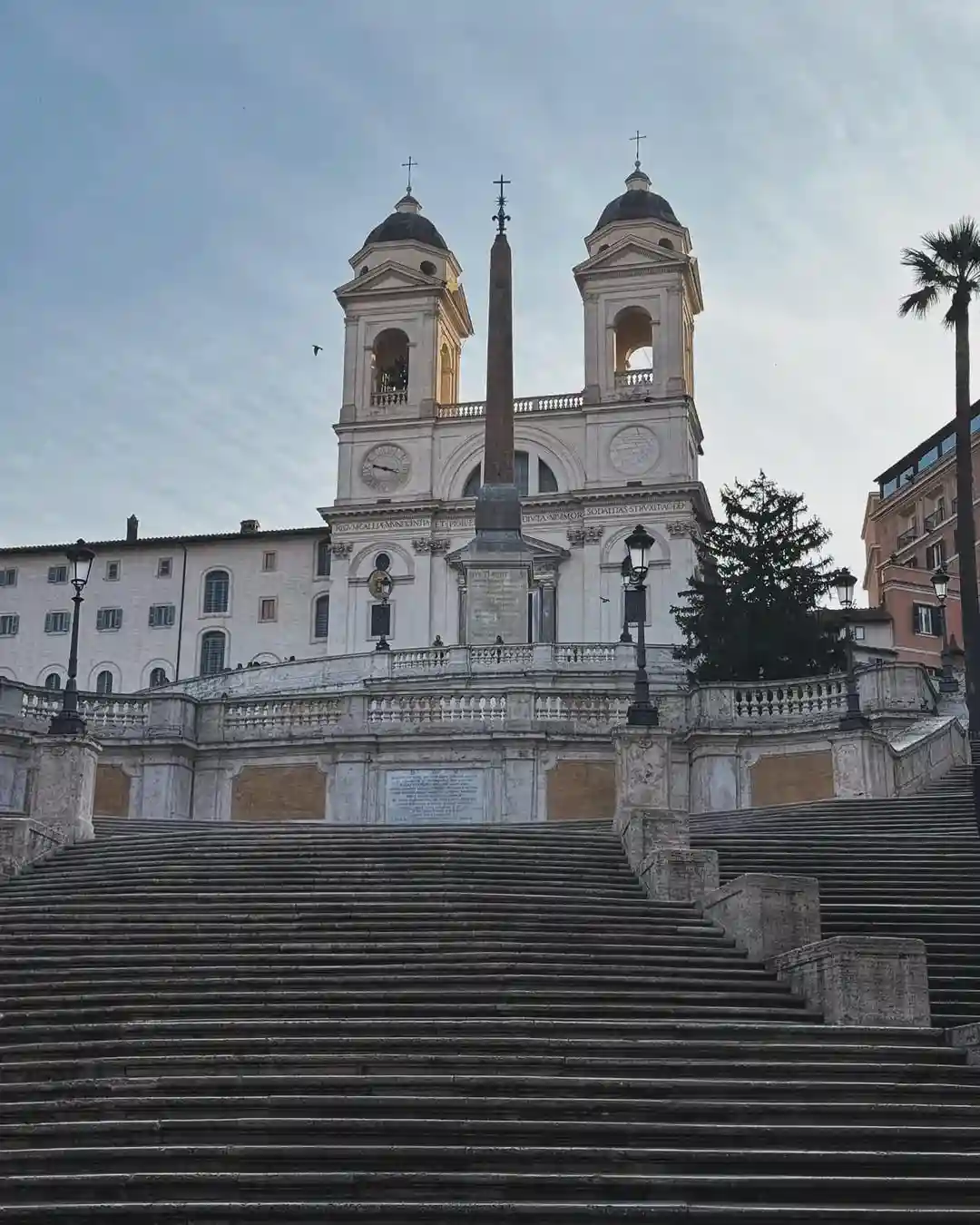
The Spanish Steps — or Scalinata della Trinita dei Monti — are one of those Europe-famous sights that reward you simply for showing up. From Trevi, it’s roughly a 10-minute walk to reach Piazza di Spagna, where the grand staircase sweeps upward in an arc so elegant you instinctively reach for your camera. Take a quick break here — the square below is perfect for people-watching, and the surrounding shopping neighborhood is Rome’s most stylish, though with just one city day, the sights matter more than the storefronts.
Climb all the way to the top and Pincian Hill opens up before you, with stunning views across the rooftops toward the horizon. At the summit, you’ll find the Trinità dei Monti church — worth admiring from outside. Rather than doubling back down the grand staircases, walk left along the ridge toward Terrazza del Pincio, one of Rome’s best-kept sunset spot secrets. Along the way, a viewpoint marked by the monument to Enrico e Giovanni Cairoli offers arguably the finest panoramic views of the city — unfiltered, unhurried, and often overlooked.
Piazza Navona
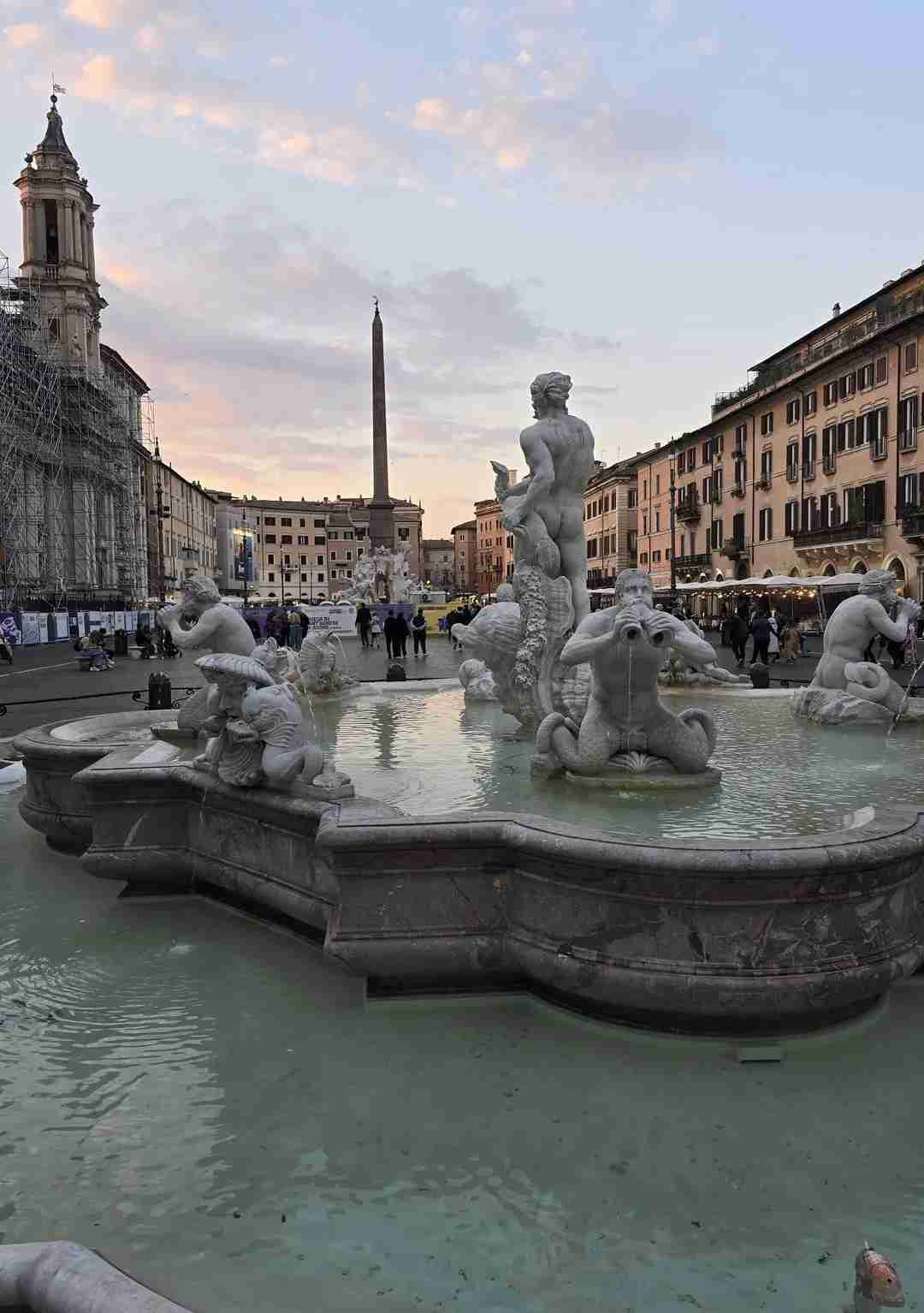
If the Colosseum represents Rome’s power and the Vatican its faith, then Piazza Navona represents its soul — huge, theatrical, and impossible not to feel mesmerized by the moment you step inside. The piazza carries enormous importance in Roman history and design, home to three iconic fountains: the Fountain of Neptune anchoring the north, the Moor Fountain at the southern end, and Bernini’s spectacular Fiumi Fountain with its obelisk commanding the center — sometimes also listed as the Fountain of the Four Rivers. Walk the full length of the square and take it all in before the afternoon thins out.
This is also a natural pause point — pull up a chair, order an espresso for a caffeine boost, or reward yourself with a scoop of something incredible because the gelato here is serious business. For lunch, resist the temptation of restaurants directly facing the prominent attractions — instead, duck down one of the streets branching off for a short walk and you’ll find less expensive, far better quality restaurants with zero tourist markup. On your walk here from the Colosseum — a pleasant 20-30 minutes through Via dei Fori Imperiali and Piazza Venezia — consider a tiny detour to Largo di Torre Argentina, the very spot where Julius Caesar was killed, and one of the most underrated historic city center stops in all of Rome. From there, Piazza Navona and its Neptune Fountain on the northern side are just moments away.
Vatican City: Vatican Museums & Sistine Chapel
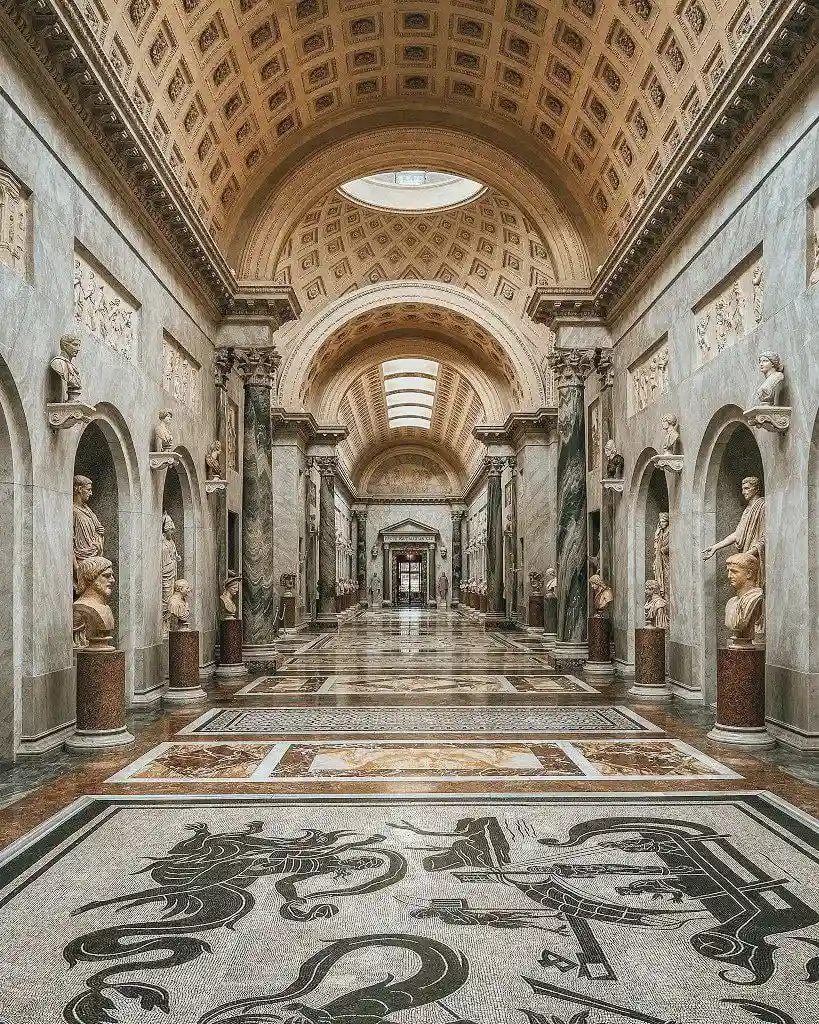
There are things on every traveler’s bucket list, and stepping into Vatican City — technically crossing from one country into another in a single stride — is one of them. No Italy city guide worth its salt skips this, especially for first timers arriving wide-eyed at the scale of it all. The Vatican Museums hold more beautiful exhibits than you can absorb in hours, with galleries that spiral through history, art, and theology in a way that makes you forget you’re supposed to be somewhere else entirely. Photos prohibited inside the Sistine Chapel is the rule — but trust that no photo could capture it anyway.
Given that this is among the most visited sites on the planet, navigating the long lines without pre-booked tickets is a rookie mistake — book ahead of time, full stop. Ideally, anchor your morning here: an early morning tour kicking off between 7:15-7:45 AM and wrapping by 11-11:30 AM gives you enough flexibility without sacrificing depth. Going alone offers freedom but the Vatican Museums can feel genuinely overwhelming without a guide — particularly if you want to find the Sistine Chapel efficiently and understand what you’re looking at when you arrive. For absolute musts in Rome, this is at the very top.
St. Peter’s Basilica & St. Peter’s Square
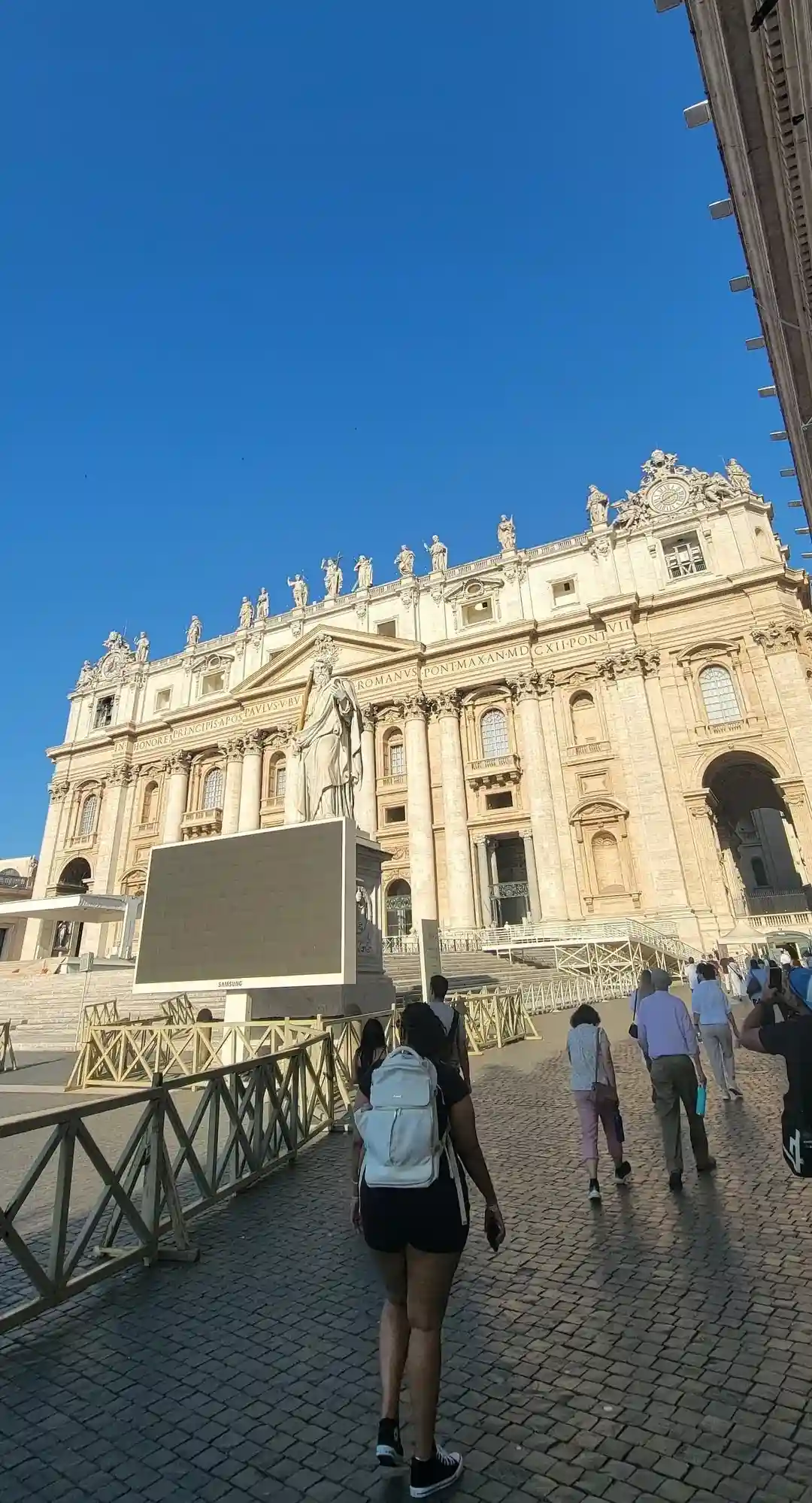
Walking through the curved colonnade arms of St. Peter’s Square and arriving at the open expanse before St. Peter’s Basilica is one of the most architecturally dramatic moments in travel — those massive columns lining the perimeter create a sense of arrival that no photo fully prepares you for. Impressive is an understatement. Visiting Vatican City in the afternoon means the big crowds are well established, so factor that into your pace. The Basilica itself closes at 6:00 pm between Oct-Mar and 7:00 pm from Apr-Sept, with last entry cutting off 75 minutes before closing — plan accordingly.
The entrance to St. Peter’s Basilica is free of charge, but security checks mirror airport intensity, and the queue for stand in line entry can stretch significantly. The smart move is booking a tour that uses the special door connecting the museums directly to the church — bypassing the standard wait entirely. Inside, the sheer scale of this — the biggest, most important Catholic church in the world — is staggering: gigantic, lavishly decorated, and humbling in a way that lands regardless of your faith. The St. Peter’s Dome climb is extraordinary, but with just one day, save it for the quiet season or a return trip when fewer crowds let you breathe through the experience.
Evening: Dinner in Trastevere
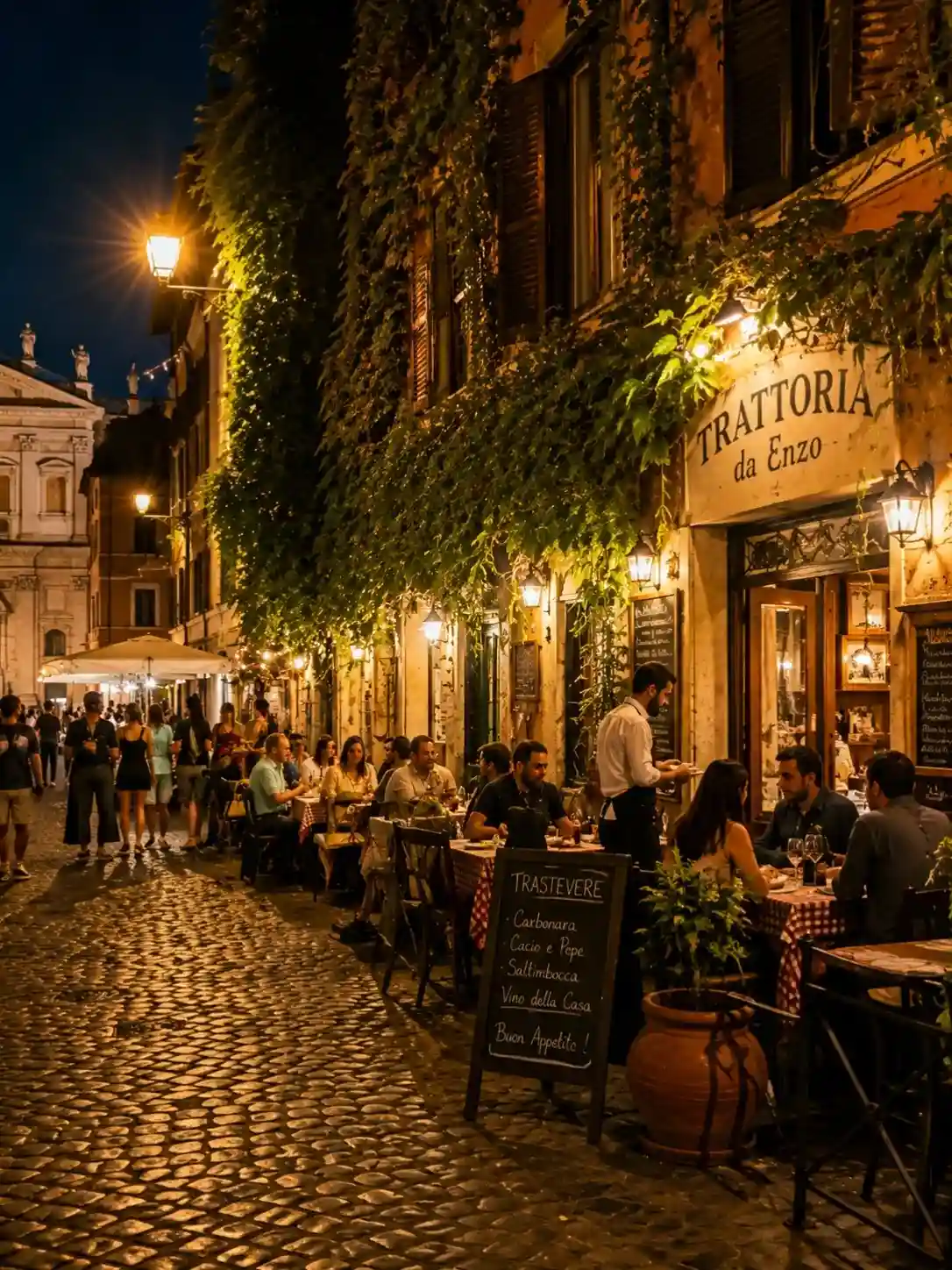
By evening, your legs have earned this: crossing the Tiber River into Trastevere, Rome’s most spirited neighborhood, where cobblestones glow amber under lamplight and the Roman vibe shifts into something looser, louder, and entirely irresistible. The Trastevere area sits just across from Vatican City, and its network of hip restaurants rivals anything in the city for authenticity and energy. Taverna Trilussa is the legendary anchor — hearty Roman fare, famous pastas, and a room that buzzes from the first seating — while La Canonica offers something cozy and decidedly local favorite in character. If you have the appetite and the time, a food tour through the neighborhood unlocks hidden gems and top things no menu alone could reveal, with tour guides weaving stories into every bite.
Trastevere nightlife reaches its peak around Piazza Trilussa, where live music spills into the air and the crowd is an energetic mix of locals and travelers who’ve all had an equally packed day in Rome. For a true bucket list close, consider a sunset dinner overlooking one of Rome’s great landmarks — the kind of sunset views that remind you exactly why one day here, as rushed as it feels, was absolutely worth every step. And if you’re still romanticizing the Colosseum from the morning, sitting outside near it at dusk with a glass of wine is, without question, a top things Rome moment.
Where to Stay in Rome
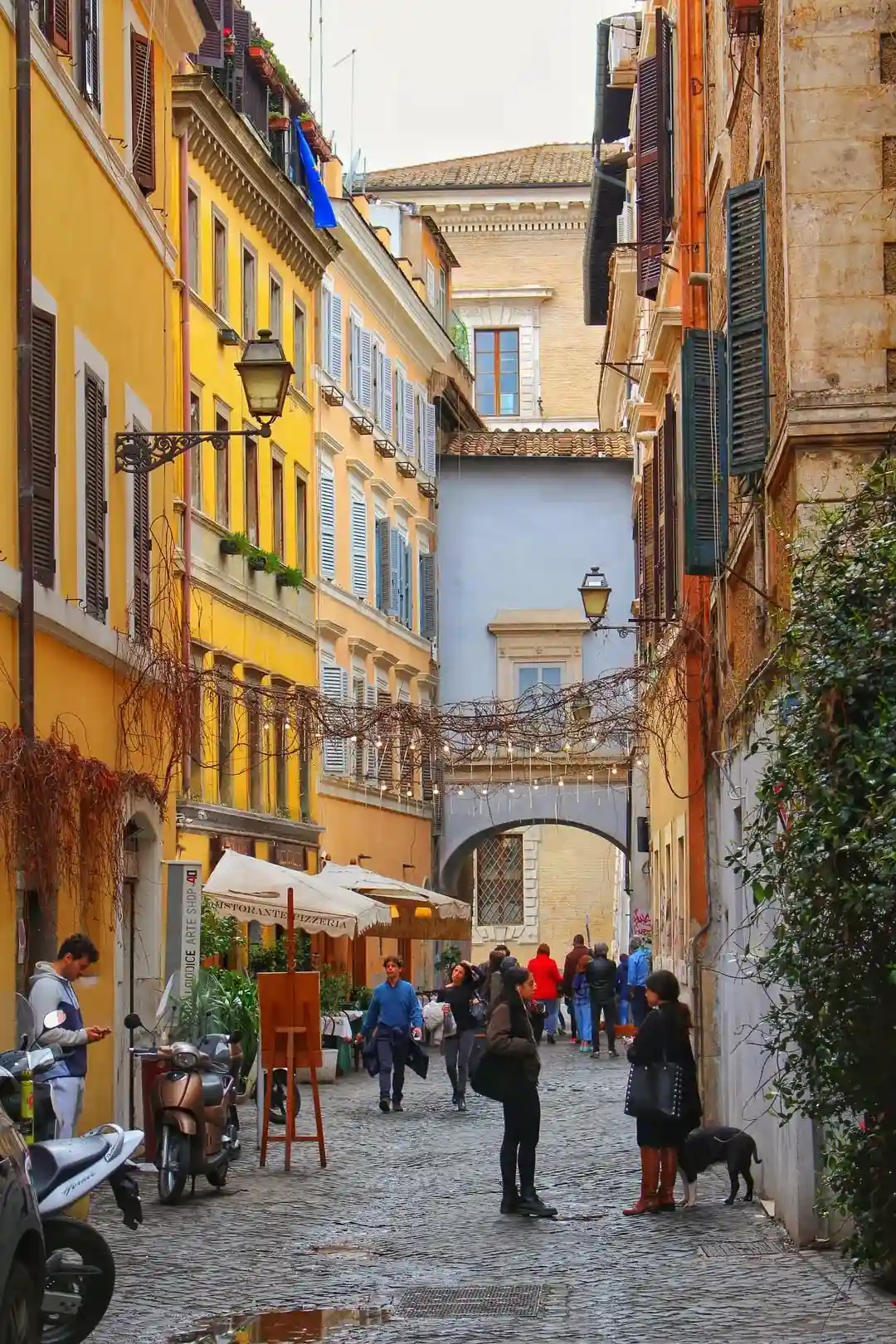
Location is everything here — staying central means access to everything without burning your morning on commutes. Maalot Roma in the Trevi area puts you steps from the fountain at dawn before the crowds arrive. Hotel Santa Maria in Trastevere plants you inside the evening’s best neighborhood. And Nerva Boutique Hotel in Monti — Rome’s hippest village-within-a-city — keeps you connected to the Colosseum corridor without the tourist-trap pricing.
How to Get Around Rome
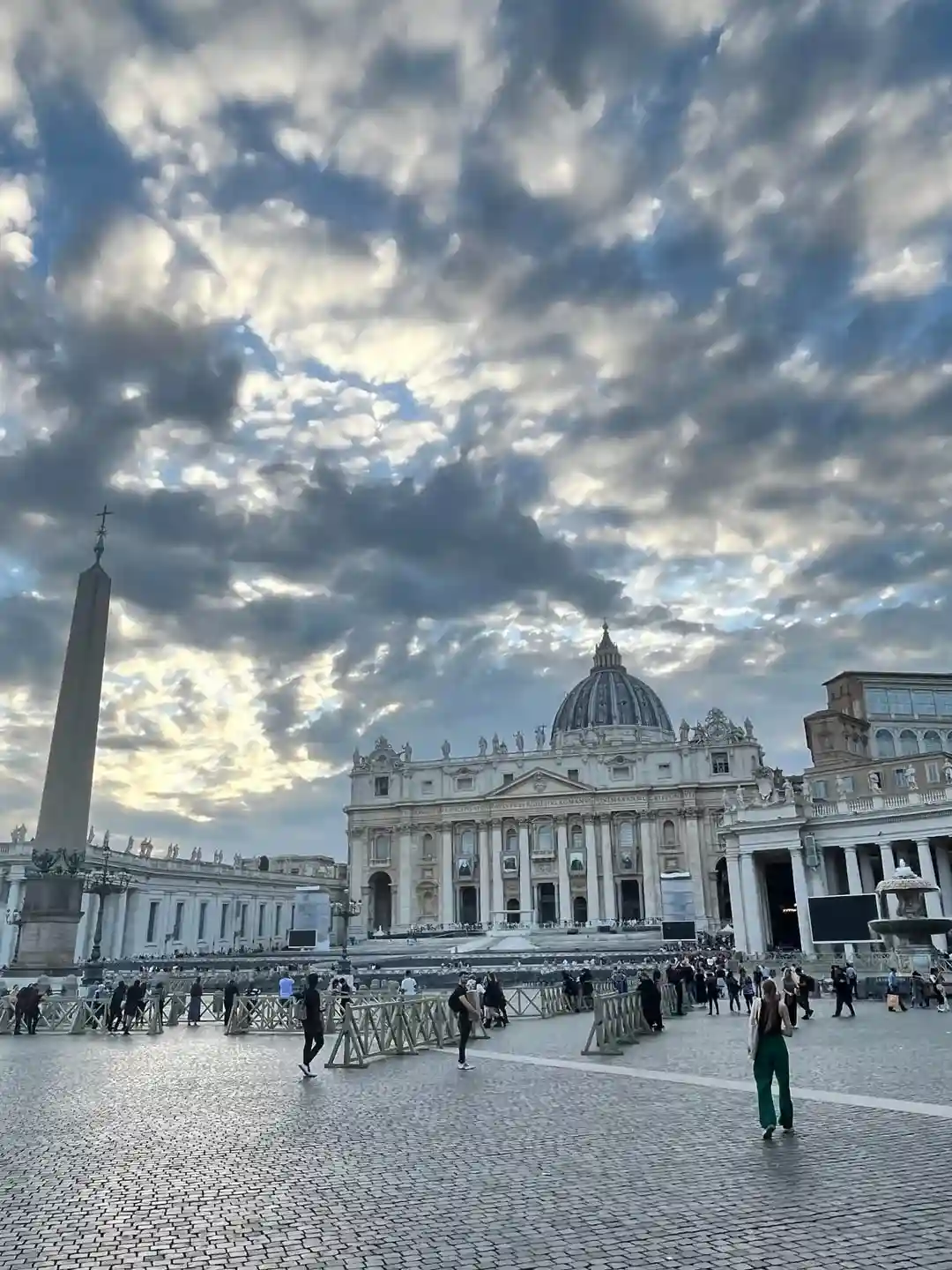
The good news: Rome’s best bits are remarkably walkable, and this entire itinerary is built for foot travel. The metro stations are straightforward for those who prefer public transportation — to reach the Colosseum, Line B drops you directly at the Colosseo metro station. For the Vatican, board from the Ottaviano metro station, which shaves off that one-hour walk between the two anchor sites (not recommended on a one-day clock). If you have a rare extra window, stroll to the St. Angelo Bridge and take in Castel St. Angelo from across the water before grabbing a taxi onward — a detour that costs minutes but pays dividends in atmosphere. Grab lunch somewhere en route and keep moving.
Essential Tips to Maximize Your Day
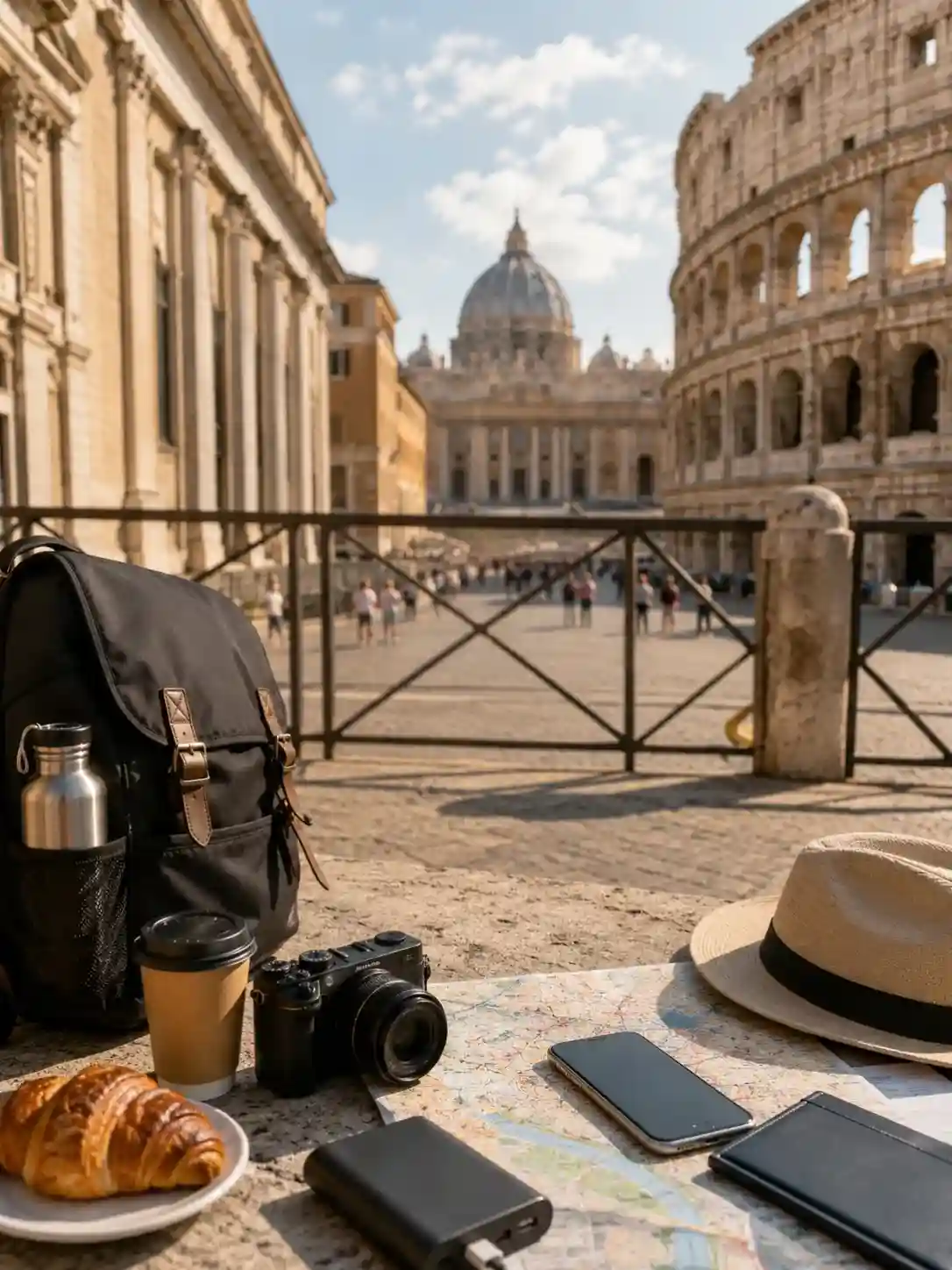
Your feet will carry you through Rome — but only if you treat them right, so start with comfy shoes and mean it. The Vatican Museum opens at 8:00 AM and the Colosseum at 8:30 AM — arriving 10 minutes early to your first location with a pastry and coffee already in hand is the move that separates a smooth day from a chaotic one. Book tickets in advance for both: this is not optional, it is vital. For anyone doing this as a busy day sweep, organized tours with skip-access are worth every cent. At security — and you will pass airport-style security at the Vatican Museums, St. Peter’s Basilica, the Colosseum, Roman Forum, and Palatine Hill — a small backpack moves through faster than large bags, so travel light.
Clothing respectable is enforced at the Vatican: knees covered, shoulders covered, no exceptions. Carry a reusable bottle — Rome’s water fountains dispense cold, clean, free drinking water across the city. Keep Google Maps offline downloaded before you lose signal in the crowds, and a translation app handles everything from menus to museum plaques. Pack a power bank to keep your phone alive through a full shooting day, and bring extra batteries if you’re carrying a camera — because the light in Rome, especially in the golden hour, demands documentation.
Unique Sections
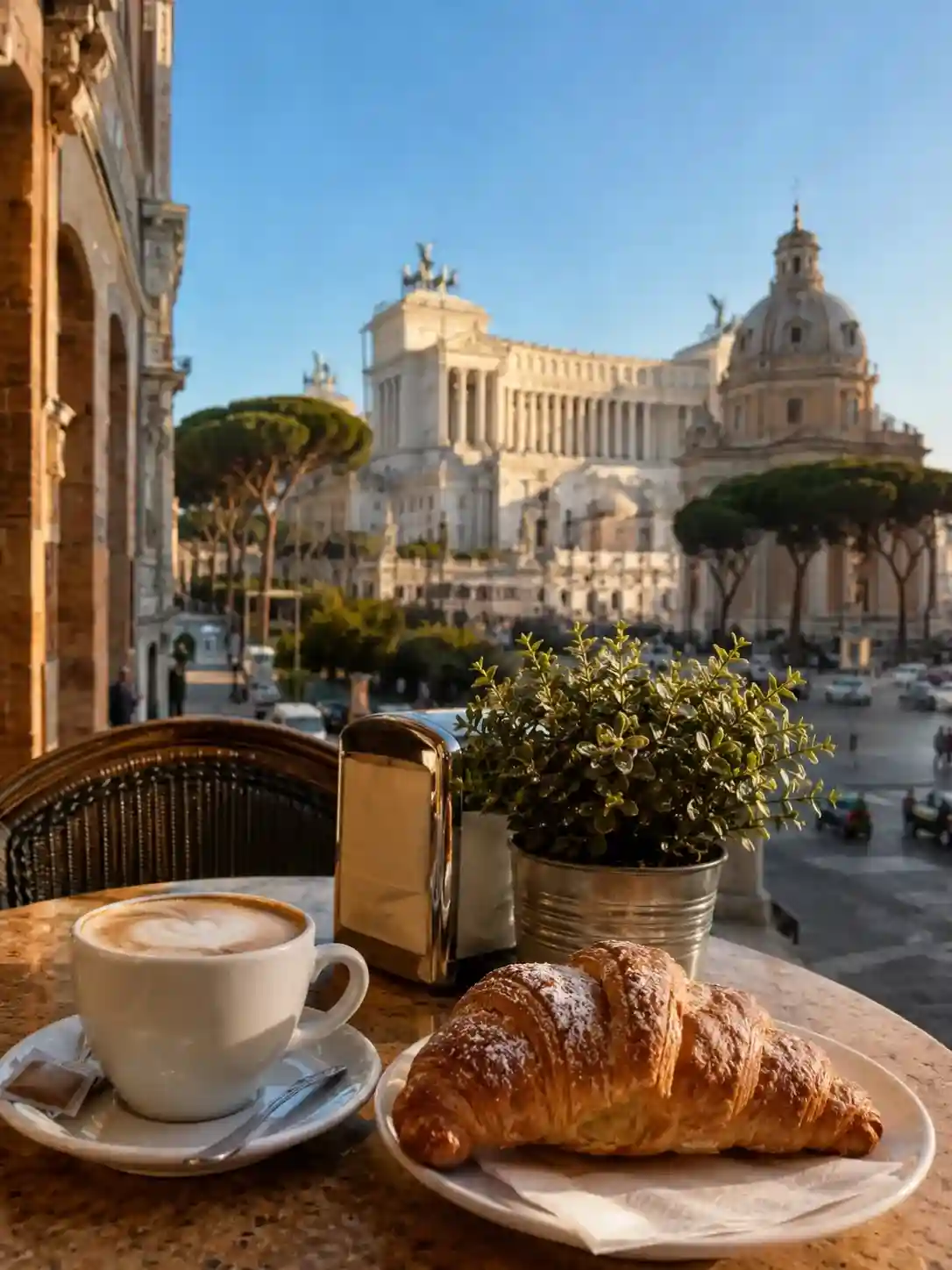
An Italian breakfast near Piazza Venezia sets the tone perfectly — Da Etta is the local’s choice for fluffy cornetti and a smooth cappuccino that hits differently than anything you’ll find at a chain. Barnum Café brings great coffee with genuine ambiance, and L’Antico Forno di Piazza Trevi — a classic bakery beside the fountain — is the kind of place that makes you want to slow down the entire trip. For lunch, Agrodolce owns the amatriciana conversation, Pane e Salame delivers a perfect panini near Trevi, while Alfredo alla Scrofa is pilgrimage territory for fettuccine Alfredo purists. Tre in Lucina plates traditional Roman dishes with care, and Osteria da Fortunata – Rinascimento turns handmade pasta into theatre.
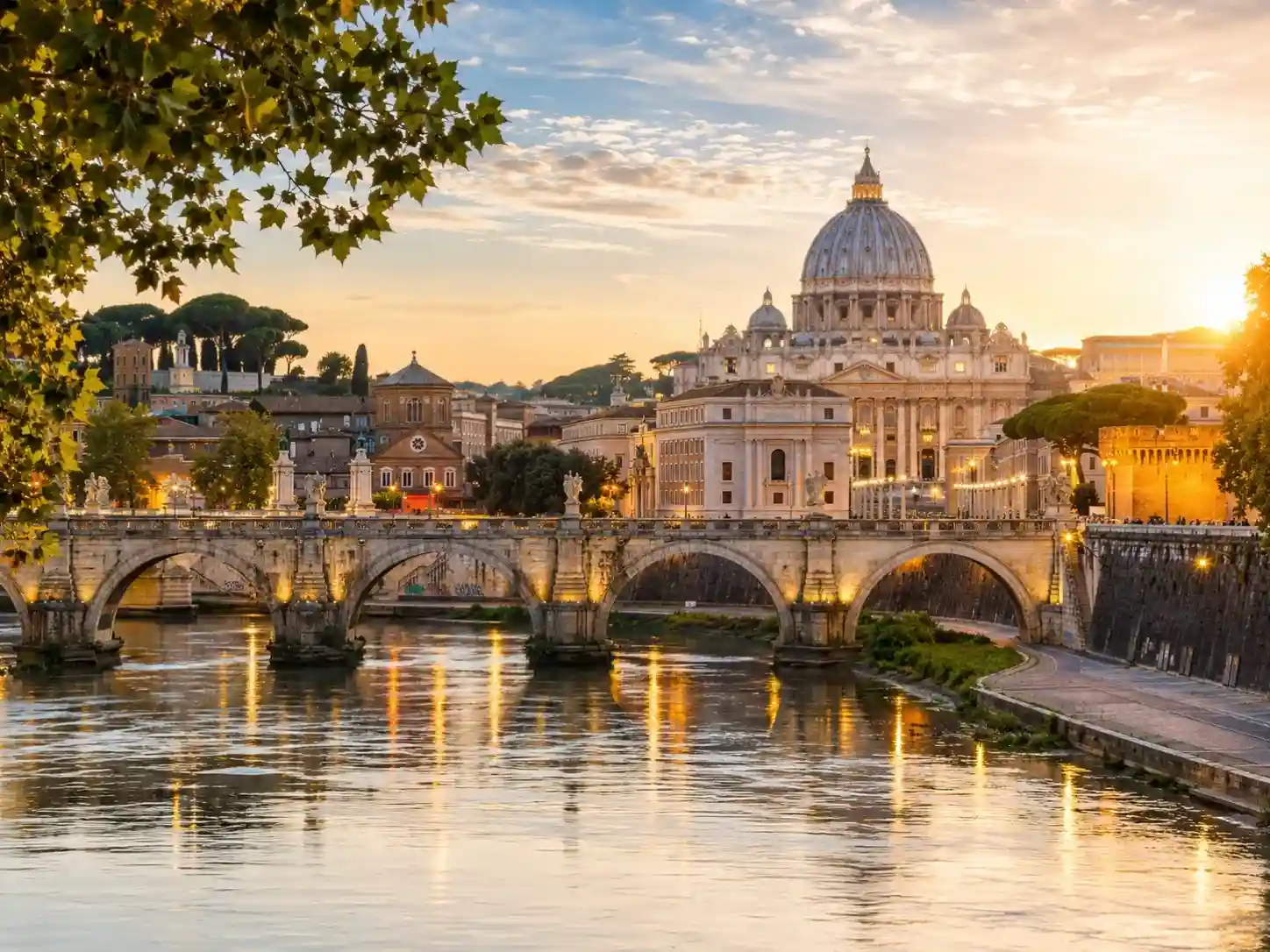
The Altare della Patria along Via dei Fori Imperiali is jaw-dropping — massive, relentlessly impressive, and the leisurely stroll connecting the Colosseum to Piazza Venezia is one of Rome’s great free experiences en route to the Trevi Fountain. Heading toward Vatican City, pause to admire Castel Sant’Angelo — originally Emperor Hadrian’s mausoleum, later a fortress, now a museum — best viewed from the Ponte Sant’Angelo bridge across the Tiber River, its row of sculptured angels making it arguably the prettiest crossing in Rome. Inside the Vatican complex, the Vatican Gardens are a genuinely restorative break from the intensity of the museums — there’s even a small cafe tucked inside. If Rome is just a day trip and you need to drop your bags, luggage storage is available at Termini main train station and throughout the city, a concept that’s beautifully practical for the Europe traveler — ideal if you’d rather check into your accommodation in the evening.
From the top of the Spanish Steps, walk left toward Terrazza del Pincio — a sunset spot that earns its reputation every evening. On the way, a viewpoint beside the monument to Enrico e Giovanni Cairoli frames the views better than almost anywhere else in the city. Descend from Pincian Hill into Piazza del Popolo — the historic Rome city gate square, among the oldest and biggest town squares in the city — anchored by the Flaminio Obelisk, flanked by beautiful fountains and the twin churches of Santa Maria dei Miracoli and Santa Maria in Montesanto. For dessert in motion, two of Rome’s finest gelaterias — Giolitti and Gelateria Della Palma — sit along the path between the Pantheon and the Trevi Fountain, which means ice cream is practically mandatory on this leg of the historic city center loop. Finally, if you want to streamline the ticketing chaos, the Rome Tourist Card is a combined ticket covering the top sights — Colosseum, Roman Forum, Palatine Hill, Sistine Chapel, St. Peter’s Basilica, and the dome — with the ability to lock in time slots for top attractions all in a single booking.