The Perfect Amalfi Coast Itinerary: Best Places to Visit in 3, 5 or 7 Days
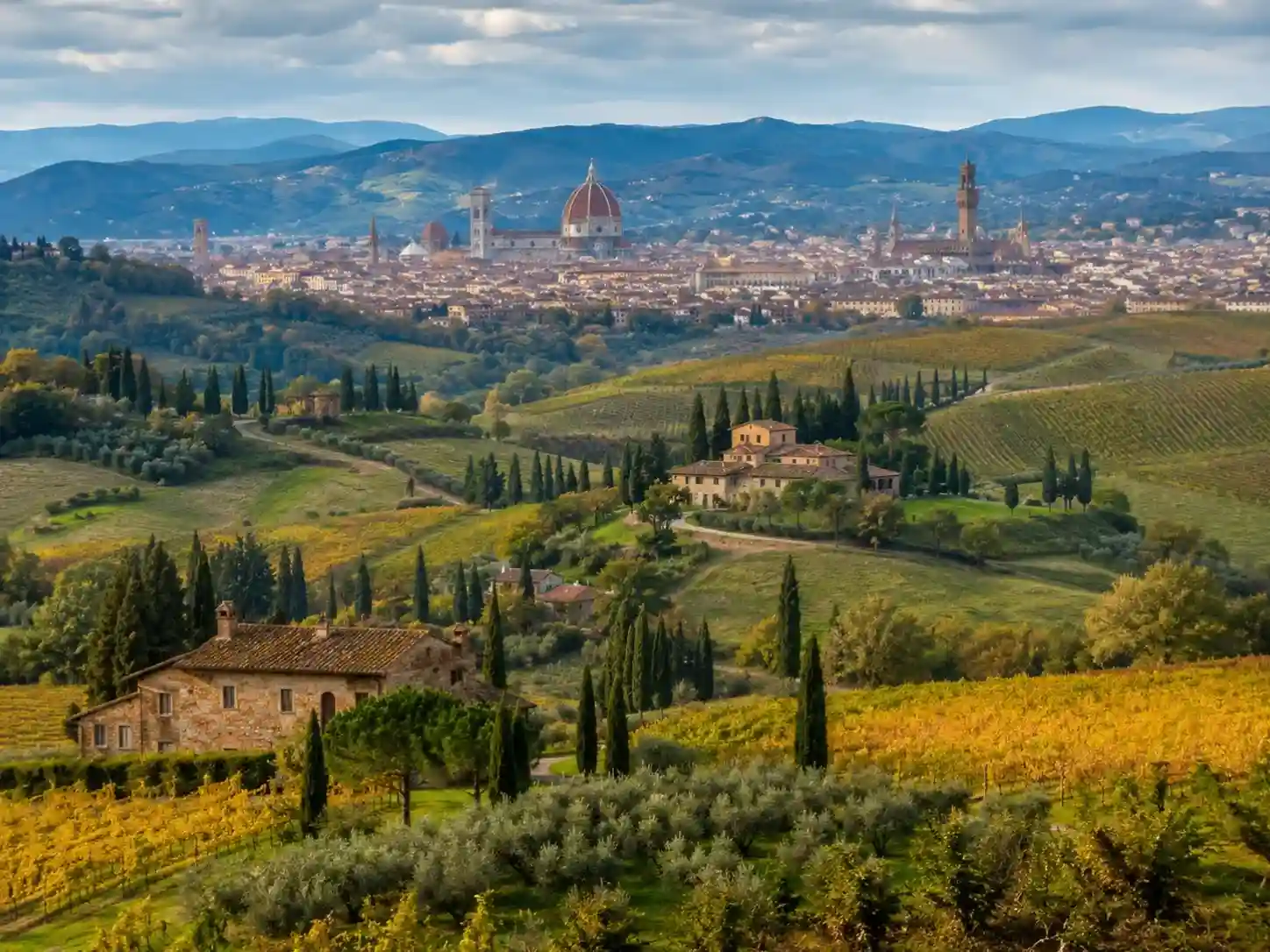
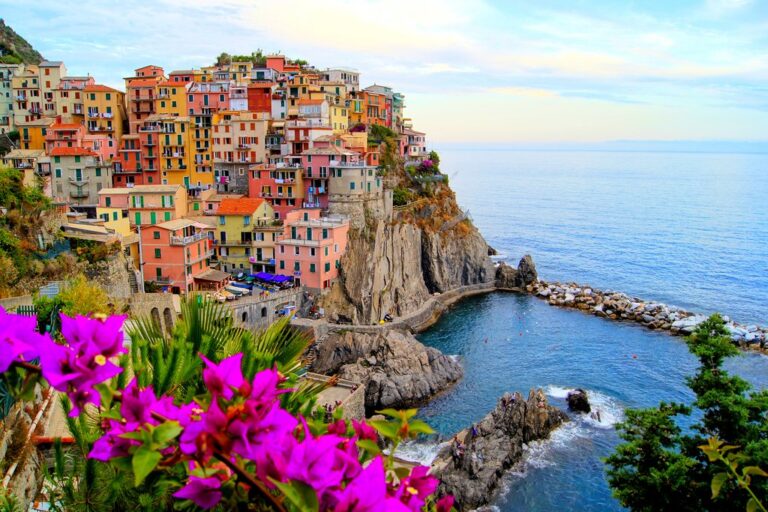
Few places on earth hit you the way Italy’s Amalfi Coast does — I still remember rounding that first cliff bend on the coastal road and genuinely losing my breath. This isn’t just a destination; it’s a living painting where towering cliffs cradle pastel-colored villages above the glimmering water of the Mediterranean Sea and Tyrrhenian Sea, while the air carries lemons and salt in equal measure. Southern Italy’s Campania region shelters this iconic strip — officially called Costiera Amalfitana — sitting roughly 60 km from Naples, the gateway city that most travelers use as their entry point into this enchanting world.
What makes the Amalfi Coast so layered is that no two tourists experience it identically. History buffs lose themselves in ancient ruins and UNESCO World Heritage Sites stretching from Pompeii to Ravello, while food lovers chase limoncello, lemon groves, and mouth-watering seafood down every sun-drenched alley. Nature enthusiasts find dramatic scenery along winding roads and hairpin turns carved into rock faces and jutting cliffs, and romantic souls simply sit at a terrace and let the vibrant tapestry of color and light do its work. Whether you carry a bucket list or just a travel guide dog-eared to Positano, the Italian coastline rewards every kind of explorer.
The smartest move — and this guide is built around it — is matching your itinerary length to your energy. We’ve designed 3-day, 5-day, and 7-day frameworks (with notes toward 10 days and a week-long deep dive) so your trip never feels rushed or padded. The region sits snugly near the ankle of Italy’s boot, with Naples and Sorrento bookending its hub towns, and history running deep — from the ancient Romans and eruption of Mt. Vesuvius in 79 AD through the barbarian invasions that tested this coast during the fall of Roman Empire, right up to the 5th Century AD communities that carved culture and heritage into every stone wall you’ll photograph. Whether your vacation is a short trip or a family vacation you’ve been planning since 2022 — or even a spontaneous bestie getaway like one I took in 2025 — this grab-and-go adventure framework has you covered, with enough relaxation built in to make the iconic sights feel genuinely unforgettable.
Best Time to Visit the Amalfi Coast
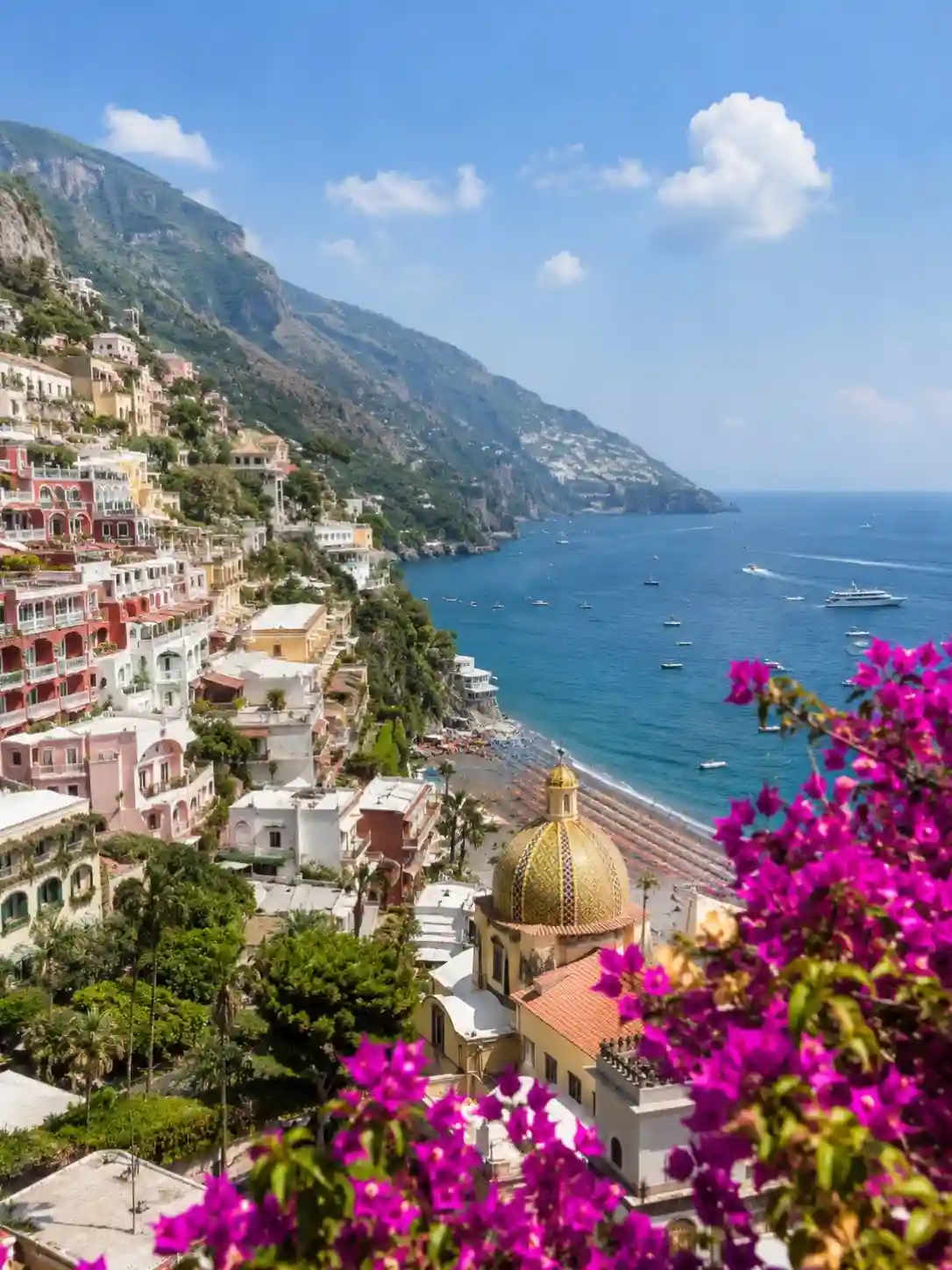
Picking your window matters more here than almost anywhere else in Europe. The shoulder seasons — Spring (April to May or even stretching to April to June) and Autumn (September to October) — deliver the perfect balance of pleasant weather, with mild temperatures hovering between 15°C–25°C (59°F–77°F), fewer tourists, and reasonable prices on hotels and accommodations. The hillside paths burst with wildflowers, the lemon groves hit full bloom, and you can actually hear yourself think at a cliffside café — something nearly impossible in peak months. The sea is still warm enough for swimming well into October, making Autumn feel particularly magical and spectacular for outdoor activities and outdoor dining with stunning views.
Summer (June to August), on the other hand, is peak season — crowded, expensive, and occasionally sweltering heat pushing above 86°F (30°C) in July and August. Beaches pack out early, restaurants fill by 7pm, and the SITA bus queues test patience. That said, the warm weather, the warm seas, the electric energy, and the sheer sunbathing bliss are ideal if you can book early and budget higher. Winter (November to March) flips everything — the coast becomes quietly beautiful, but ferries may not run, shops and many restaurants keep limited hours or stay closed, and hiking trails and certain attractions become inaccessible. Rain is more unpredictable, temperatures drop to 8°C–15°C (46°F–59°F), and the overall off-season vibe suits slow solo travelers more than families. Whatever your personal preferences and travel budget dictate, just know the coast is never truly quieter than in those mist-draped December or February mornings — cooler, yes, but hauntingly comfortable in its own way.
Where is the Amalfi Coast Located?
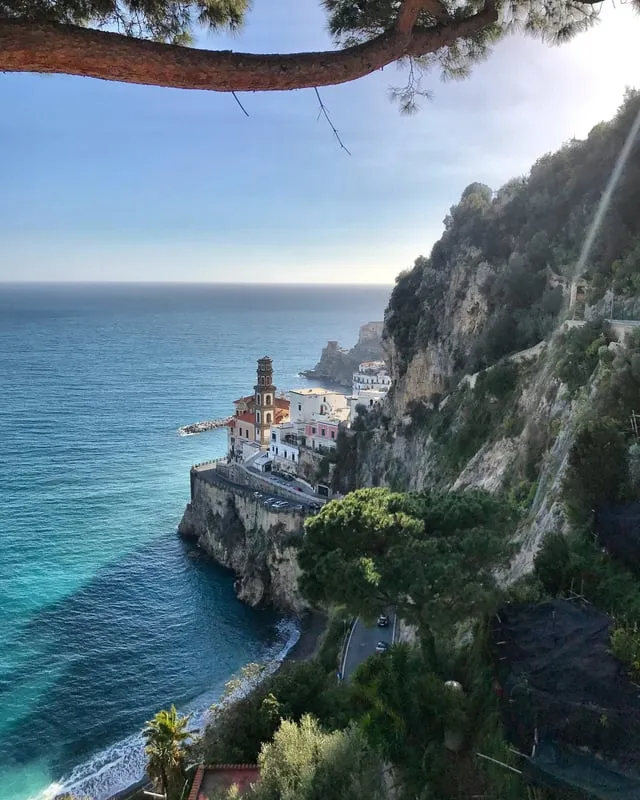
Geographically, the Amalfi Coast curls along the southern edge of the Sorrentine Coast in Campania, Southern Italy — essentially the inner curve of the Gulf of Salerno, bleeding into the broader Bay of Naples and the Tyrrhenian Sea beyond. On any map, you’ll spot it tucked between Sorrento to the northwest and Salerno to the southeast, with the Mediterranean Sea glittering on every south-facing exposure. The distance from Naples to the start of the coast runs about 60.9 km — roughly 1h 25min driving — while Rome sits 276.6 km away, meaning over 3 hours by road, though most visitors fly directly into Naples International Airport (Naples Capodichino Airport) rather than Roma Fiumicino International Airport to shorten the approach. Technically, Sorrento belongs to the Sorrentine Coast rather than the Amalfi Coast proper, but nevertheless it functions as the gateway and base for the entire region — historically the first major city contact point for most international arrivals.
The key towns along this roughly 50-km stretch — Positano, Amalfi, Ravello, and dozens of smaller towns — cling to cliff faces above the crystal blue water, while offshore, the island of Capri floats in stunning isolation, famous for its rocky landscape and beautiful blue seas. Further out sit Ischia and Procida, part of the Phlegrean Islands off the coast of Naples — popular yet still must-see additions for anyone with extra days. Visitors enter and leave through Naples primarily, connecting by air, by train, by ferry, or by bus across a well-worn web of routes and transport links — and actually, once you understand this backbone location logic, navigating between towns feels surprisingly intuitive.
How to Get to the Amalfi Coast
Most journeys begin in either Rome or Naples — though Milan, Florence, and Sorrento are all legitimate start points depending on your wider Italy loop. The Naples International Airport (NAP, also known as Naples Capodichino Airport) is the clear front-runner for proximity, with direct flights from across Europe on carriers like Ryanair and Wizzair, plus transatlantic connections flying in from Atlanta (ATL), Newark (EWR), New York (JFK), Philadelphia (PHL), and Chicago (ORD) — making it genuinely accessible for United States travelers without an awkward connection through Roma Fiumicino International Airport. From NAP, a modern air-conditioned bus run by Curreri Viaggi rolls directly to Sorrento for around €13 — fast, comfortable, and far less stressful than wrestling luggage onto the Circumvesuviana train, which, while inexpensive, can feel crowded and lacks air conditioning on summer afternoons.
From Rome, your options stack up quickly: a high-speed train reaches Naples in 1 to 2 hours (departing from Roma Termini or connecting from Roma Fiumicino International Airport), a bus covers the same route in 3 to 4 hours at lower cost, or a car service drives you door-to-door without a single transfer. Pushing through to Sorrento directly by train takes anywhere from 2h 50min to 4h 50min depending on the regional train or local train type — the EAV Train on the Vesuviane line handles this leg, with stops through Pompeii and Salerno en route. Once you arrive in Sorrento, a SITA bus, ferry, hydrofoil, or shared transfer carries you onward to Positano, Amalfi, or wherever your first night’s accommodations wait. One critical detail: ferries drop you at the water level, meaning steep steps and uphill roads stand between you and most cliff-side hotels — factor that in if you’re arriving heavy with luggage, since luggage lockers exist at the Pompeii train station and museum but no luggage allowed enters the ruins themselves. Book in advance — timetables shift seasonally, ferry tickets sell out, and summer months turn every dock into a scramble. The most convenient and straightforward approach for groups is a private transfer or car service from Naples directly to your coastal base, cutting every connection point cleanly.
Where to Stay on the Amalfi Coast
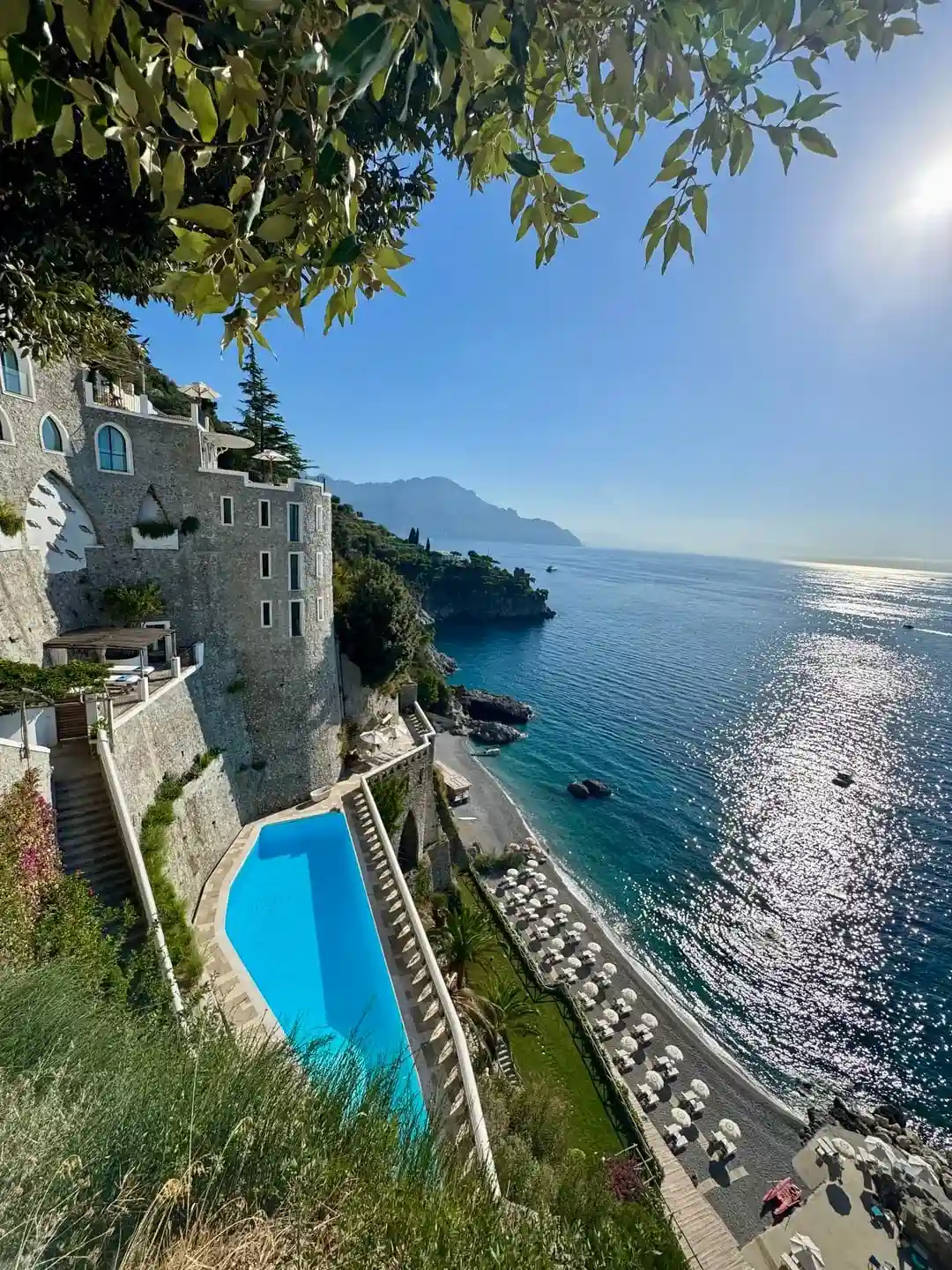
Choosing where to sleep on a 50-kilometer coastline with 13 towns is genuinely one of the most strategic decisions of this trip — get it right and everything else flows; get it wrong and you’ll spend your days checking in and checking out instead of exploring. For a 3-day stay, Sorrento earns its place as the ultimate home base: it’s well-connected by train, ferry, and bus, offers the widest range of accommodations at comparatively lower rates, and acts as the natural hub and jumping-off point for Capri, Pompeii, and the coast itself. Stay close to Piazza Tasso or the city centre — avoid booking up on the waterfront hills if you’re planning to move in and out of town frequently, as the steep walk back to a cliffside hotel after a long day is no joke. For a 5-day or longer trip, the smarter play is two home bases: Sorrento for the first half, then relocate to Amalfi Town or a quieter, more local option like Atrani or Praiano for the back half — both of which are far cheaper and more peaceful than Positano while putting you in the heart of the coast’s most charming towns.
Amalfi Town itself is the most convenient base on the coast proper — it has a ferry port, boat taxi and water taxi connections in every direction, and hotels that are genuinely more affordable than Positano or Ravello. At the luxury hotels end you’ll find the Anantara Convento di Amalfi (a converted 13th-century convent with extraordinary architecture) and Hotel Santa Caterina (an Art Nouveau villa perched above the sea), while mid-range picks like DieciSedici, Hotel Marina Riviera, and Residenza Luce near Piazza del Duomo offer genuine Mediterranean style without the eye-watering bill. Budget travelers should look at Giardino Sul Mare, Casa Barbara, or Lucy’s House — a comfortable apartment with a beautiful terrace that punches well above its price. Over in Positano, the stacked buildings cascading down the Lattari Mountains toward the Tyrrhenian Sea make even mid-range rooms feel cinematic — Hotel Vittoria, Hotel Il Gabbiano (with panoramic sea views from every room), and the more budget-friendly La Mammola or Villaverde all deliver those iconic private terraces and gardens. The undisputed luxury crown goes to Il San Pietro di Positano — private beach, Michelin Star restaurant, and sea views that make the price tag almost rational.
Sorrento’s hotel scene rewards early research and advance booking — luxury seekers gravitate toward Bellevue Syrene (impeccable service, outstanding suites, views of Mount Vesuvius that feel almost theatrical) or Maison La Minervetta, while mid-range travelers do well at Romantic Relais Sorrento or Mediterranean Suites. Budget options like Alma Sorrento Suite and B&B Il Saraceno keep things clean and central. In Sorrento’s B&B tier, Le Tre CCC and A Suites consistently over-deliver. For those staying near Amalfi’s neighboring villages, Palazzo Jannuzzi Relais sits directly on Piazza Tasso in the mid-range bracket, Grand Hotel Excelsior Vittoria anchors the luxury end with water-facing rooms that glow at sunset, and Palazzo Tasso handles the budget-friendly slot with spacious rooms steps from the central piazza. Further afield, Grand Hotel La Favorita, Hotel Continental, and Imperial Hotel Tramontano round out Sorrento’s accommodation landscape, while Positano adds Villa Boheme Exclusive Luxury Suites, Le Sirenuse, and Casa Cinque to its already formidable upscale boutiques-and-hotels scene. In Amalfi itself, Hotel Residence, Hotel La Bussola, Hotel Luna Convento, and the grand Anantara Conventi di Amalfi Grand Hotel cover every tier from mid-range to splurge-worthy — with beach clubs, waterfront access, and genuinely slow-paced relaxation built into the DNA of each property. The rule of thumb: book in advance, stay flexible on planning, and never underestimate how quickly deals disappear in this destination.
How to Get Around the Amalfi Coast
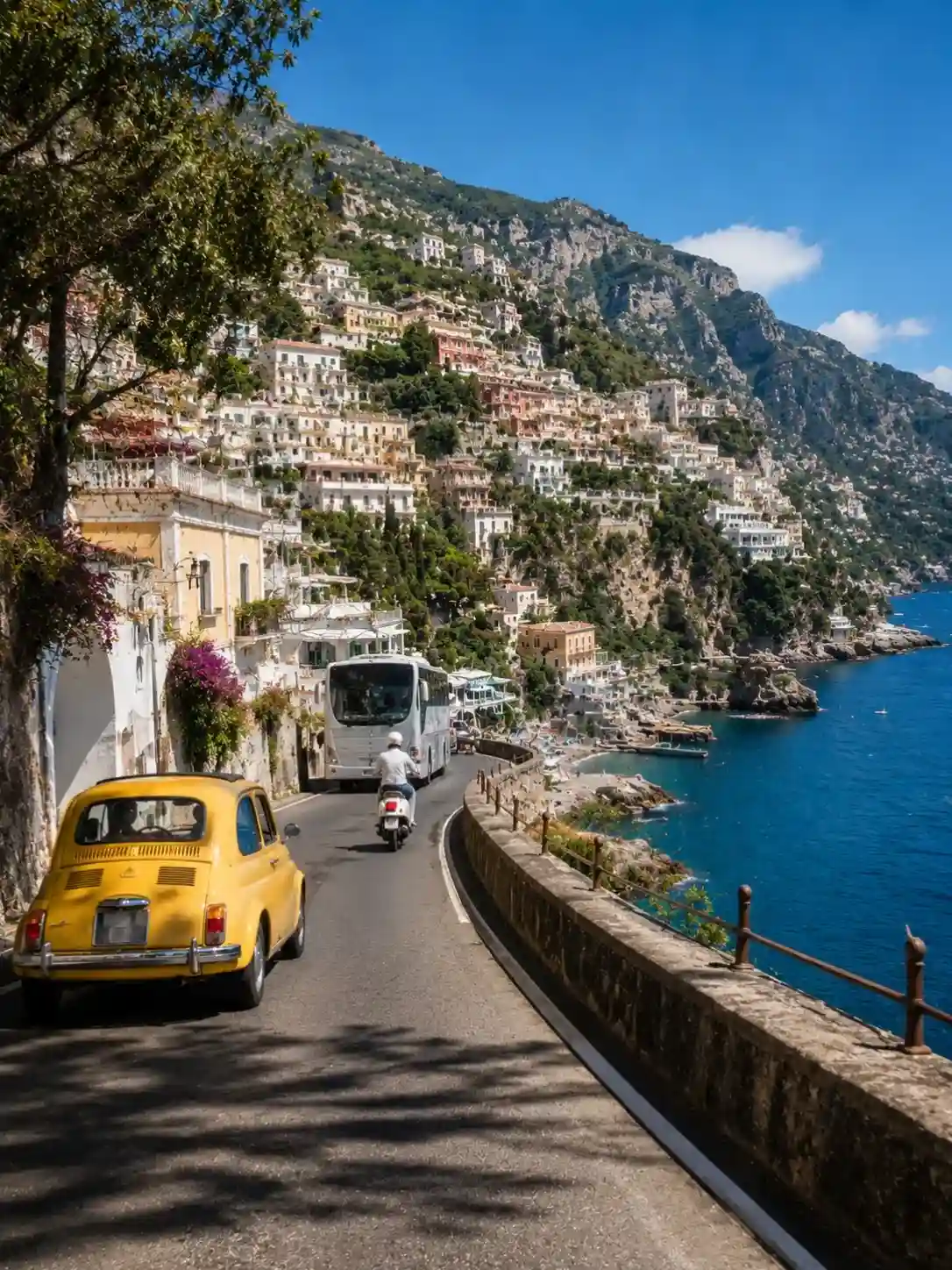
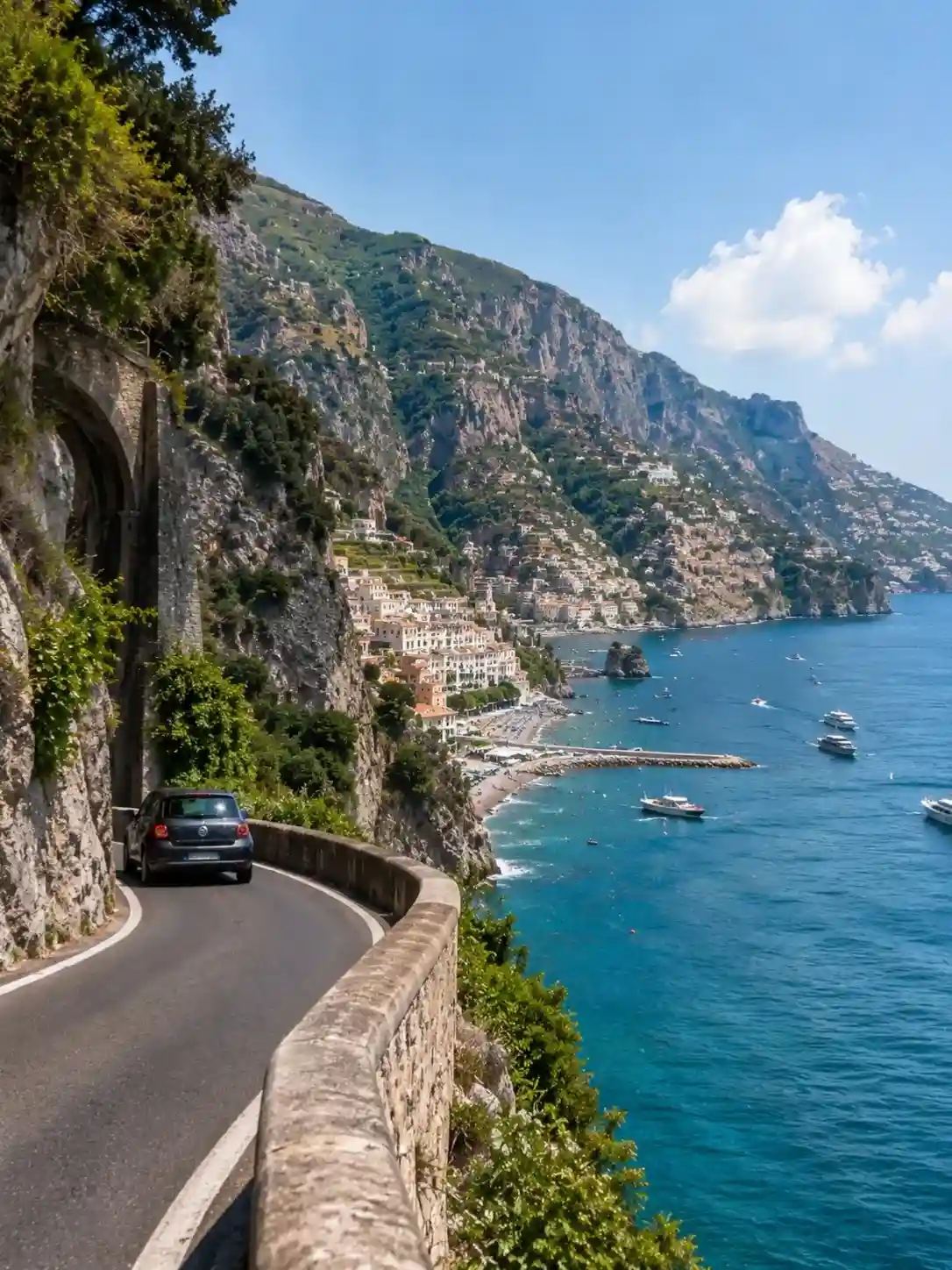
The Amalfi coast drive is one of the most celebrated scenic drives in the world — and also one of the most genuinely nerve-wracking. Renting a car gives you freedom and the ability to move at your own pace, stop for photos at cliffside pullouts, and reach villages the bus misses, but the narrow roads, relentless curves, scarce parking spots, and white-knuckle parking logistics make it a challenging proposition in peak months. If you’re a confident driver who’s comfortable with hairpin turns and the occasional standoff with an oncoming tour bus, go for it — just book your rental car far ahead. For everyone else, the SITA bus run by SITA Company (also branded as Mobility Amalfi Coast) is the workhorse of budget-friendly coastal movement, connecting Sorrento, Positano, Amalfi, and all villages through to Salerno with frequent rides through the summer for as little as €2–€3 one-way (tickets to Positano run about €2.40). The catch is real though — long lines, genuinely crowded carriages in August, and the mental load of worrying about driving replaced by the mild chaos of a packed mountain bus. Buy tickets at Tabacchi shops, bars, or newsagents — not on the vehicle.
The ferry network (operating roughly April to October) offers the most scenic and arguably relaxing way between Positano, Amalfi, Capri, Naples, and Sorrento, with one-way fares running €10–€20 depending on the route — more expensive than the bus, but arriving by water with the coastline laid out behind you is an experience worth the premium. The main downside is weather-dependent reliability — rough seas mean cancelled ferries and limited schedule windows, so never plan a ferry as your only option for a time-sensitive connection. Taxi fares climb fast — €60–€100+ for a direct route between towns — while private transfer and shared transfer services sit at €80–€120+ but eliminate every logistical headache with true door-to-door service. The Circumvesuviana train handles the Naples–Sorrento corridor (including Pompeii) but doesn’t extend onto the Amalfi Coast proper — the furthest point the regional train reaches is Sorrento. My honest take after navigating all of these transportation options: the ferry for scenic hops, the SITA bus for budget daily movement, and a private transfer for airport arrivals with heavy luggage — that comparison of pros and cons holds across every season. The cost difference between a taxi and a shared transfer often narrows when you split it three ways, so it’s worth doing the math before defaulting to the bus in summer.
The Perfect 3-Day Amalfi Coast Itinerary
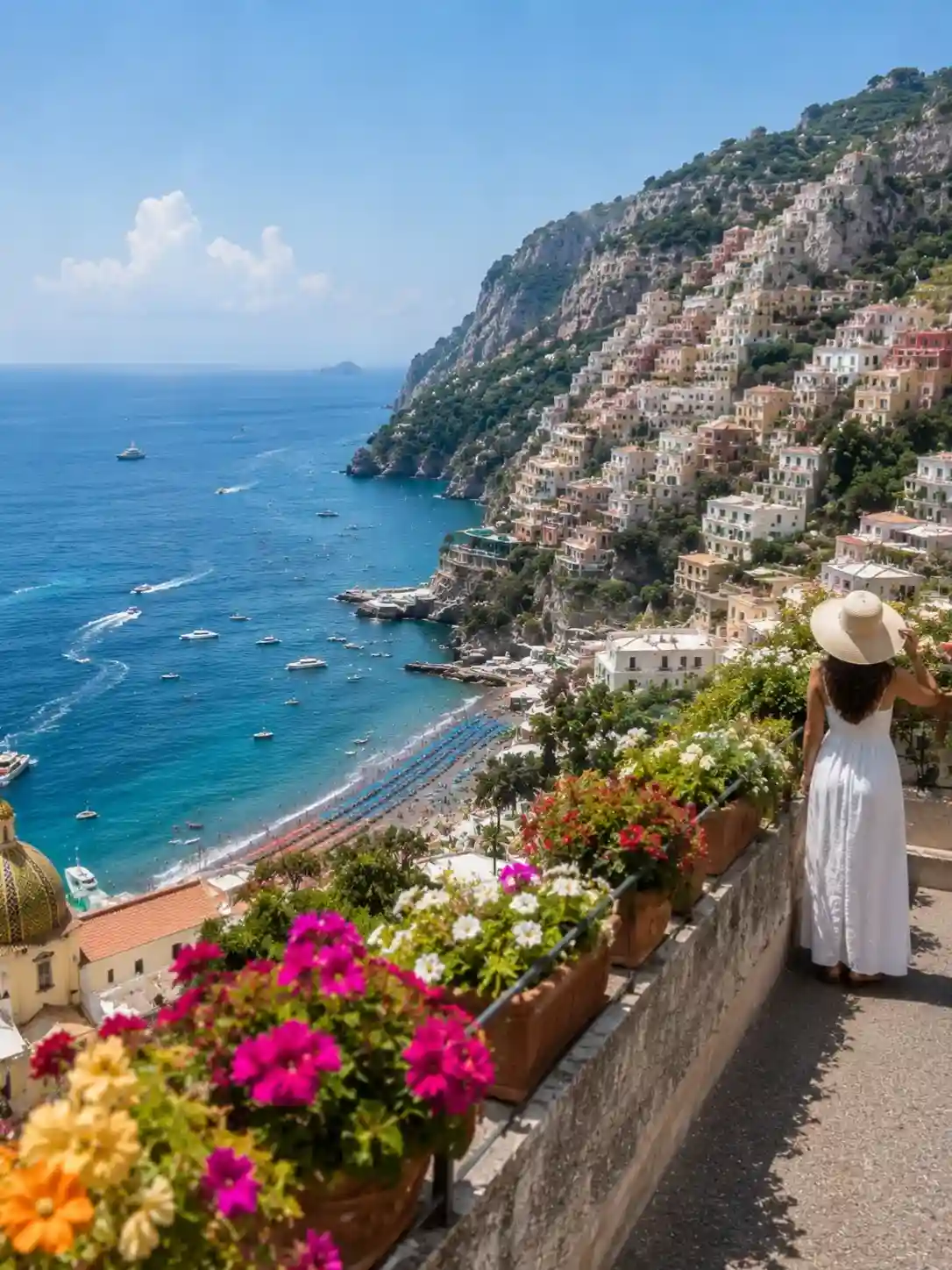
Three days sounds tight — and it is — but with the right travel plan you can hit the top attractions and leave feeling genuinely satisfied rather than frantic. The key is resisting the temptation to visit every town and instead treating this as a summary of the coast’s greatest hits. Think of it as a focused 3-day sprint across Positano, Amalfi, and Ravello — the top three highlights — using either an organized tour that handles the logistics of whisking you along the coastline, or a self-guided loop by boat tour and SITA bus. You can tweak this plan easily depending on energy levels; the region rewards spontaneity as much as planning. For a single town deep dive, Amalfi or Positano alone can fill three days with limited time feeling anything but limited — but most visitors prefer the organized sweep. A driving tour or boat tour for Day 3 particularly suits those who want to cover Positano, Amalfi, and Ravello in one fluid arc without backtracking. Join any reputable coastal tour operator early on Day 1 to lock in the logistics and free the rest of your itinerary for unplanned discoveries — the best moments on this coast have a habit of appearing when you’re not looking for them.
Day 1: Amalfi Town
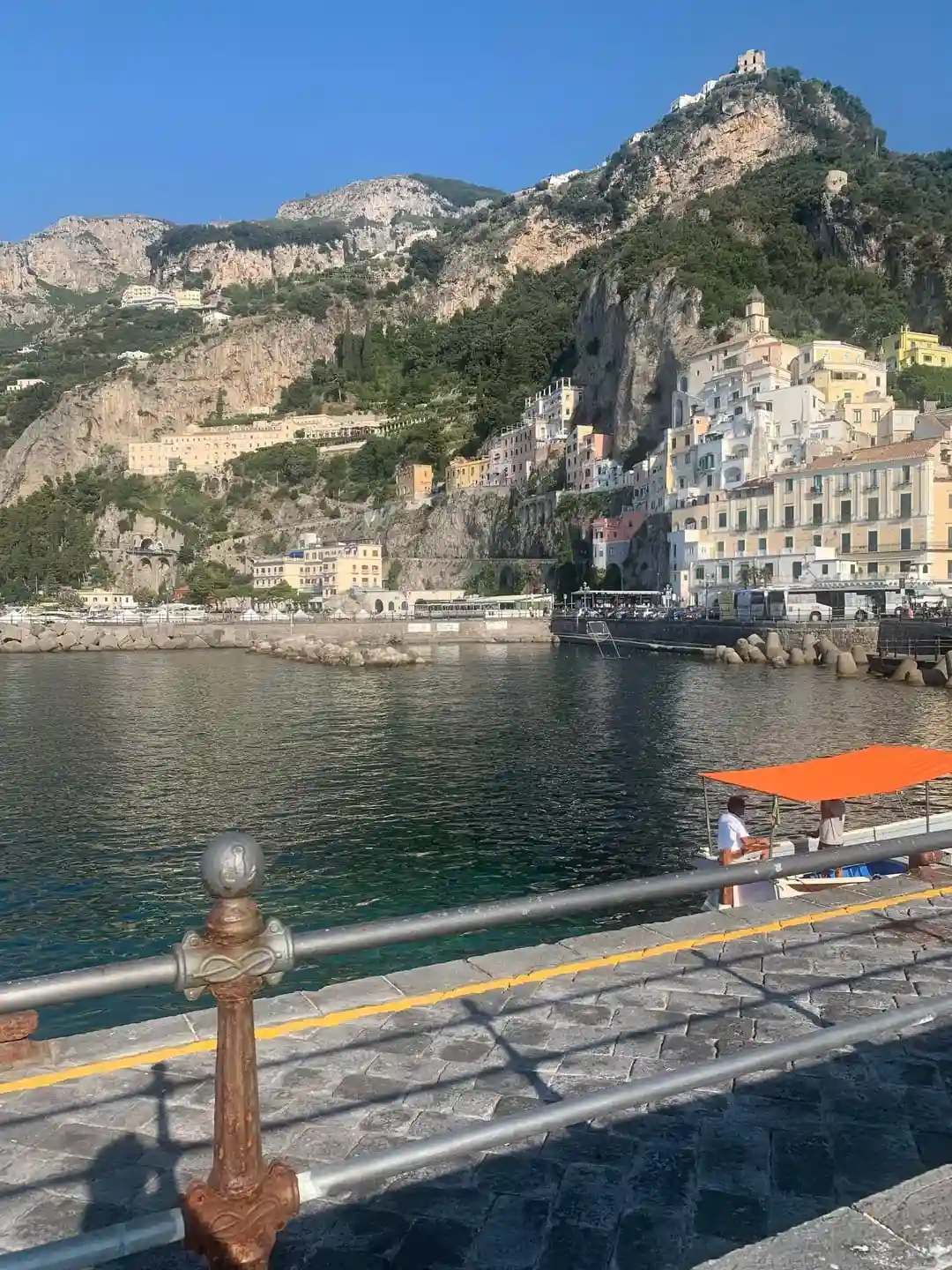
Amalfi Town earns its place as the opening act of any itinerary — this port town on the Gulf of Salerno was once the epicenter of a maritime power that rivaled Venice, and walking its streets still carries a faint pulse of that historic authority. Start early, before the crowds pack in around 9–10 am (or 10:30 am if you’re arriving in August by SITA bus from Sorrento). The Rione Vagliendola neighborhood is your first move — weave through its narrow lanes and up the steep stairs for breathtaking viewpoints over the rooftops, and duck into the Paper Museum to understand a local craft that has been history here since the Middle Ages. Then make your way to the Cathedral of Saint Andrew — also known as the Cathedral of St. Andrew the Apostle or Duomo di Sant’Andrea Apostolo — an architectural masterpiece built in 987 with a Cloister of Paradise dripping in Moorish architecture and immaculate gardens. Saint Andrew’s Fountain (Fontana di Sant’Andrea) stands nearby in the main square, a perfectly iconic image to learn the town around.
Midmorning, follow the Lungomare dei Cavalieri — the seaside promenade — past colorful buildings with their sea view patios, stopping for the legendary lemon sorbet served inside an actual lemon (budget around 10 euros — worth every cent, a genuinely classic treat). Marina Grande is your beach for the afternoon: a quick swim or dip in the clearest water you’ve likely ever seen. The Piazza Duomo and its central square anchor the late afternoon with iconic views of those tall steps, while Ruga Nova Mercatorum (also called Via dei Mercanti) — the main shopping street lined with ceramics, leather, and lemons in every form — is ideal for a late stroll before dinner down by the port and water. If your legs are willing, the walk from Amalfi to Atrani is a scenic short hike along the coastal road that takes under 30 minutes and rewards you with a completely different side of the coast — quieter, more intimate, worth every charming center moment of it.
Day 2: Ravello
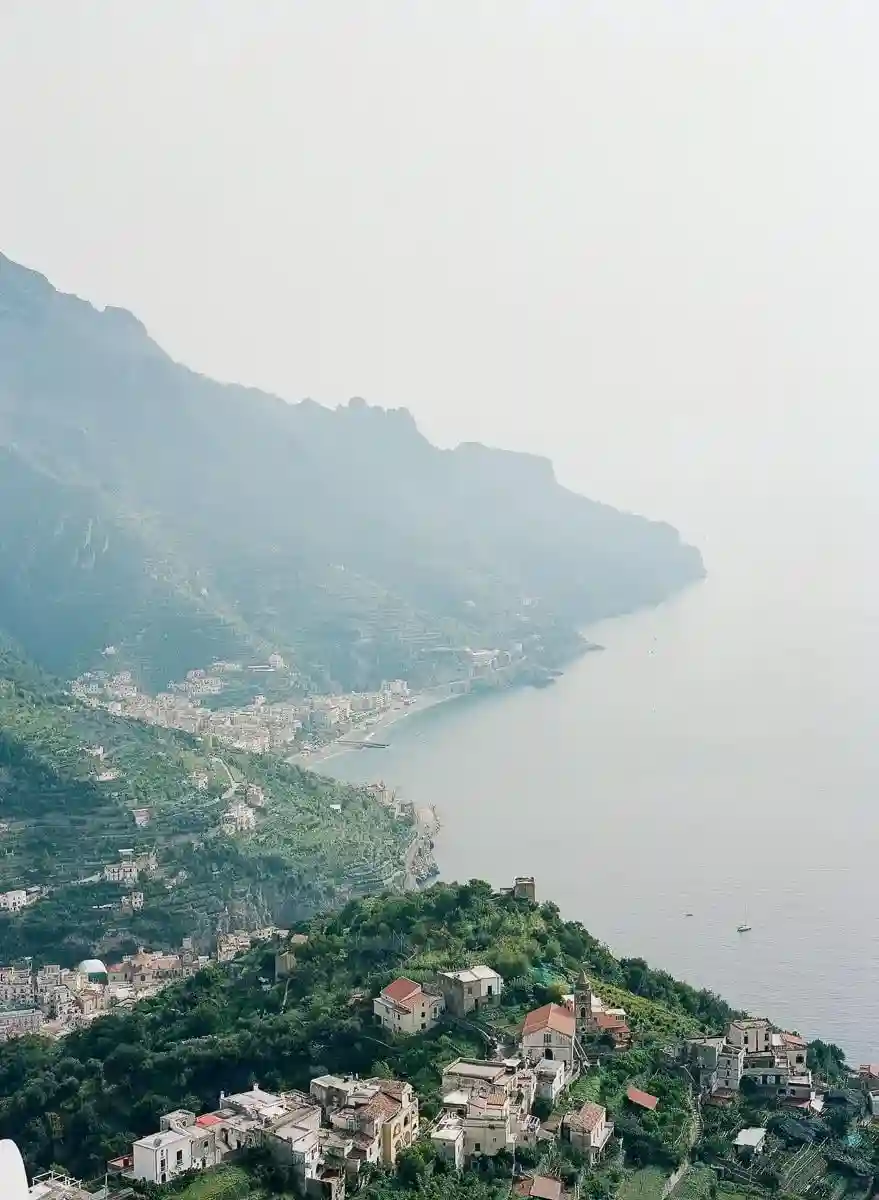
Perched above Amalfi on a cliffside that feels genuinely mountaintop in its drama, Ravello is only 20 minutes by car (or a short bus or taxi ride) from town — yet it exists in an entirely different emotional register. The town dates back to around the 5th Century AD, created as a place of refuge from barbarian invasions during the fall of Roman Empire, and later became a magnet for artists and writers — Greta Garbo and André Gide among the famous names who found something irreplaceable in its peaceful atmosphere and charming streets. I hiked up from Atrani once — steep, uphill, about 45 minutes, requiring at least two water bottles and the acknowledgment that you are absolutely not an athlete — but arriving to find local musicians playing and people dancing in the square made it feel like the most romantic Italian movie ever staged. The exercise was entirely worth it.
The architectural crown jewels here are Villa Cimbrone and Villa Rufolo — the former famous for its Terrace of Infinity (also called the Infinity Terrace), where the sea and sky seem to dissolve into each other in an unparalleled panorama, the latter a Moorish-style villa from the 1200s with terraced gardens and ocean views that host the celebrated Ravello Festival. Both deliver breathtaking viewpoints and incredible vistas unlike anywhere else on the coast. Start at Piazza Vescovado (also marked Piazza Centrale on some maps) and work outward — the Duomo with its white facade, Moorish elements, mosaics, and twin towers sets the tone, alongside the Annunziata Church of Ravello whose own twin towers overlook the sea. Take a guided walking tour if you want the full historical sweep, or simply wander and let the fresh air and sea-view clarity do the work. For dinner, Trattoria Pizzeria Cumpa’ Cosimo is a local institution — the pizza is exceptional — though grabbing a final glass at Mimi’s before heading back down to the coast makes for a properly beautiful sites-filled send-off. The ceramics shops along the afternoon walking route are worth a browse too — Ravello’s craft tradition runs as deep as its views.
Day 3: Positano
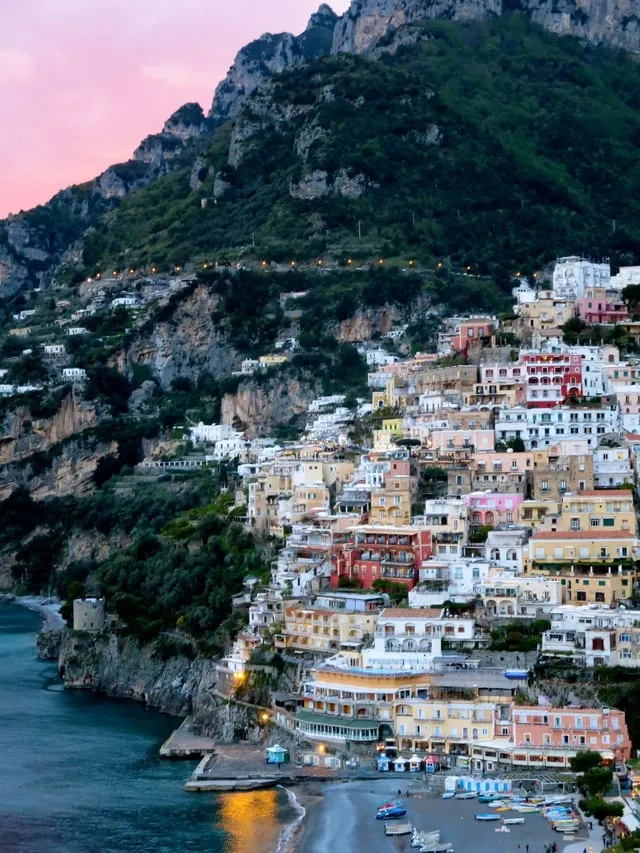
No place on the Amalfi Coast carries the weight of its own iconic reputation quite like Positano — and yet somehow it still delivers. The best-known town on the coast, the quintessential image on every postcard, the undisputed benchmark of luxury Italian coastal living — and it earns every adjective thrown at it. Arrive by ferry for a 20-minute journey from Amalfi and you’ll see it the right way: the whole colorful coast cascading from ridge to waterline as the boat rounds the headland. Get up early and reach town before the crowds build — walking down Via Cristoforo Colombo (stop at 44 Via Cristoforo Colombo for the iconic viewpoint that’s launched a thousand Instagram accounts) through winding lanes lined with bougainvillea-covered buildings to the Piazza di Mulini and its pedestrian streets buzzing with artisan craft and traditional shops. The Church of Our Lady of the Assumption (Chiesa di Santa Maria Assunta) anchors the lower town — step inside for the Byzantine icon of the Virgin Mary — while Villa Romana, the archaeological site immediately adjacent, is genuinely unmissable for anyone interested in the historic center’s deeper layers.
Spiaggia Grande is the main beach — brilliant for sunbathing, swimming, and that essential beach action session with a cocktail from the adjacent bars. For something quieter and more scenic, follow the cliff-hugging Via Positanesi d’America west to Spiaggia di Fornillo (Fornillo Beach) — peaceful, far less packed, and beautiful in the golden hour light. Fuel the morning with a coffee and snack at Angelo Cafe, graduate to a Hugo spritz at Ocean Bar Positano as the heat builds, eat lunch at Rada Beach Ristorante (the seafood is exceptional), and close the afternoon with a pistachio ice-cream and espresso at Bar Paradise Positano while the turquoise waters go gold below. The ceramics display near Hotel Le Sirenuse is worth a deliberate pause — genuinely beautiful work. If you have the legs and inclination, Positano is also the launchpad for the Path of the Gods (Sentiero degli Dei) — a 5.6 km (3.5 miles) ridge trail rated easy to moderate, ascending 215 meters and descending 410 meters between the start point at Bomerano (Piazza Paolo Capasso) and the endpoint at Nocelle, with views that make every step feel earned. The trail continues optionally toward Montepertuso or loops back to Positano — factor 2km east on Amalfi Drive for the approach, or take a bus or taxi to Bomerano directly. A beach club day at La Scogliera — sunbeds, umbrellas, Prosecco, and unfiltered people watching on the colorful coast — is equally valid if the hiking trail can wait for another morning. Either way, budget around 90 euros for two sun beds if you go the beach club route.
The Perfect 5-Day Amalfi Coast Itinerary
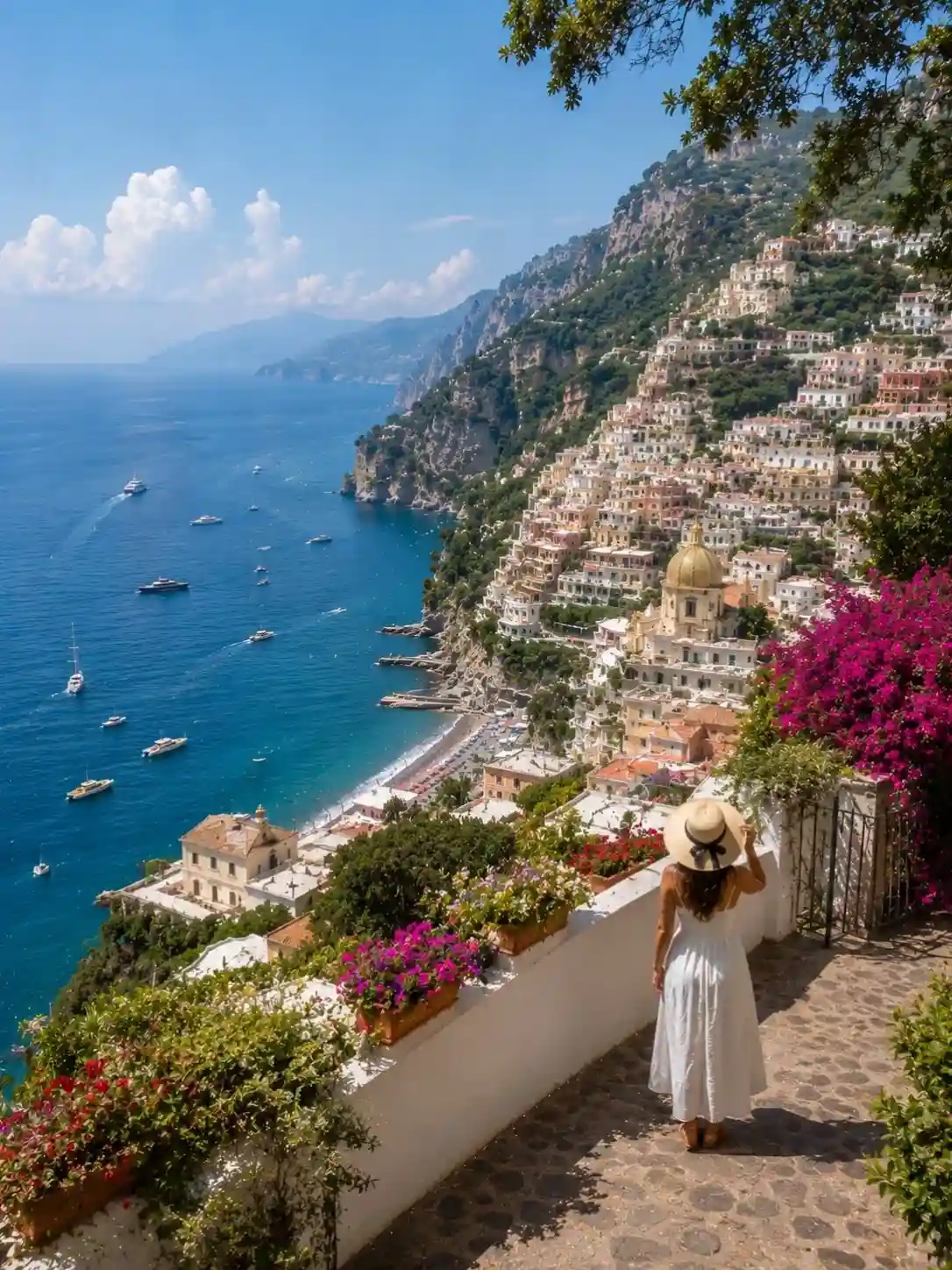
Five days unlocks the coast properly — enough to breathe between towns and actually absorb places rather than photograph and flee. The strategic backbone here is two home bases across two cities: Sorrento for Days 1–2, covering Capri and Pompeii, then a transfer to Amalfi for Days 3–5 to work through the towns along the coast. This structure means you’re not relocating every night (exhausting on a coast where luggage logistics are always an adventure) while still accessing the full spread of what makes this region extraordinary — from exploring island grottos to wandering hilltop Ravello at dusk. Days 1 through 3 follow the 3-day framework above; Days 4 and 5 extend into Sorrento and Capri.
Day 4: Sorrento
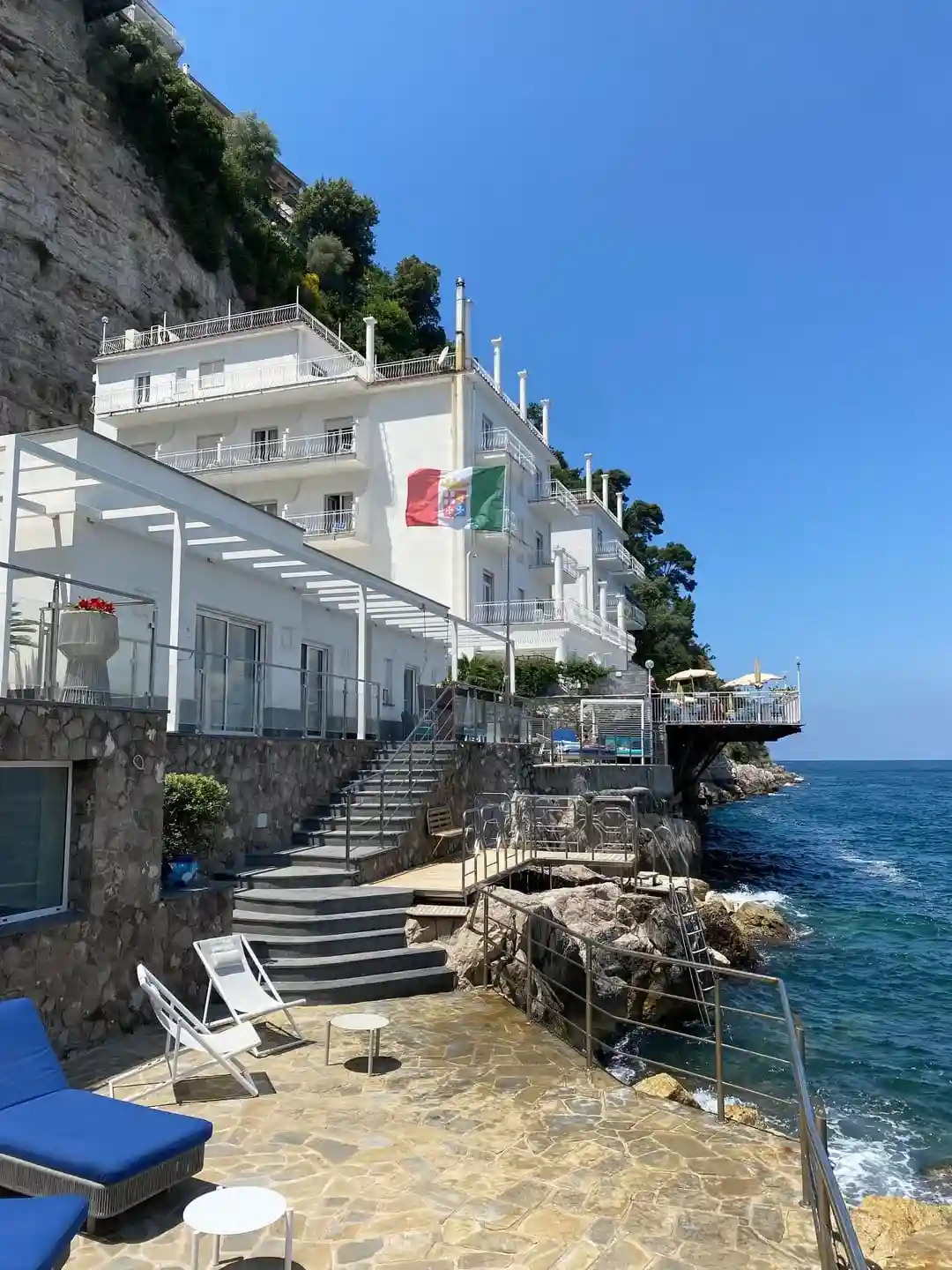
Sorrento gets undersold. Most itineraries treat it purely as a hub — a logistics node you pass through on the way to flashier Positano — but spend a real day here and it reveals itself as one of the warmest, most charming towns on the entire coast. It’s the first scenic town on the iconic coastline heading south from Naples, the main hub for ferry departures, and a place with genuine dolce vita energy in its lively little streets. Start the morning with an espresso and pistachio croissant at Il Giardino Mediterraneo — one of those Italian breakfast experiences that recalibrate your standard for what coffee and pastry should be — then push into the narrow streets filled with lemon-themed shops selling soaps, ceramics, limoncello, and every lemon product you didn’t know you needed. The Vallone dei Mulini — a 200-year-old abandoned mill tucked into a mysterious-looking alley behind the main streets — is a genuinely unique detour that most visitors walk past entirely.
Piazza Tasso is the central square and the natural starting point for orientation — cafes ring the perimeter and some have views that bridge the bustling centre and the sea below. From there, Villa Comunale delivers stunning gardens, a manicured park, and a terrace with arguably the best views of the Bay of Naples and Mount Vesuvius in the background — a spectacle that hits differently in the evening light. Marina Grande (the quieter of Sorrento’s two marinas) suits a seafood lunch or dinner at the water’s edge, while Marina Piccola is typically where boat tours depart for day trips. Corso Italia, running between Piazza Tasso and Parco di Villa Fiorentino, is the most reliably charming stretch for tourist attractions and shops without feeling manufactured. The beaches here are genuinely unique — no sand, just wooden platforms with sunbeds and umbrellas suspended directly over the water for around 30 euros for two chairs — while sandy-beach seekers can take a short train ride to Vico Equense (roughly 50 euros for sunbeds) for softer shores. End the day watching the sunset from Piazza della Vittoria or Villa Comunale di Sorrento — the blue hour here is genuinely cinematic. For organized fun, the Sorrento E-Bike Wine and Food Tour is one of the best half-day activity investments on the coast, and the Walking Food Tour for food-related activities like lemon grove dinners and cooking class sessions creates unforgettable memories that outlast any beach photo. We ended one evening at Chaplin’s Irish Bar making late night friends before wandering back to the hotel — the experience of Sorrento after dark is warmer than most people expect.
Day 5: Capri
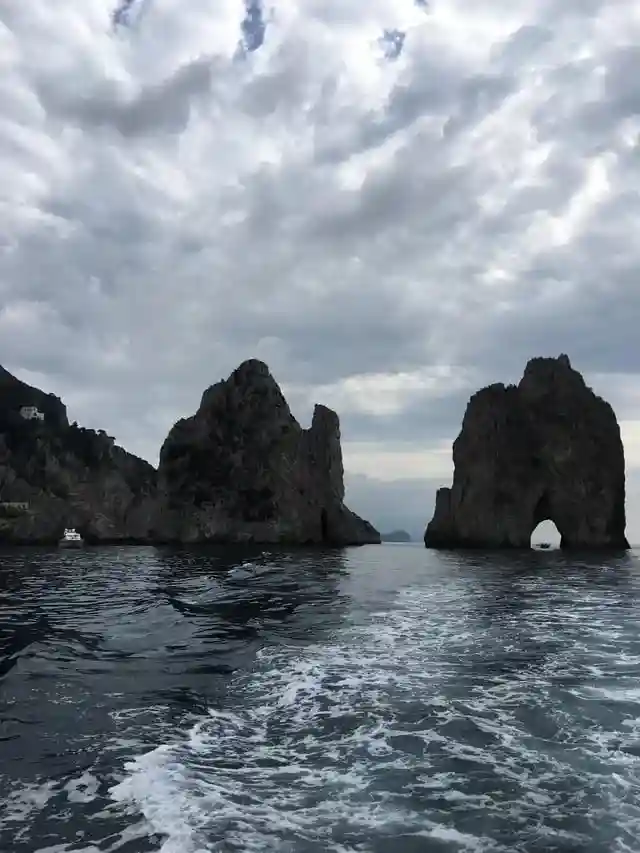
Capri is the kind of place that makes you reconsider your life choices — specifically, why you don’t live on a famous island in the Bay of Naples surrounded by turquoise waters and the type of luxury that makes hotspot feel like an understatement. The dreamy quality of this island is real: it’s all rocky landscape, crystal clear water, and a social scene that has attracted the rich and famous for over a century. Take the first ferry or hydrofoil from Sorrento in the early morning — the 30-40 minutes crossing is stunning — or book a semi-private yacht experience (expect around $130–140 per person for a group of 8–10 people) for a more intimate day on the water. Whatever you do, schedule Capri early in your trip so weather flexibility exists — if the ferries can’t run due to rough conditions, you need the option to reschedule without unraveling your whole plan.
The Blue Grotto (Grotta Azzurra) is the non-negotiable opener — this sea cave with its extraordinary glowing blue cave effect requires a local boat tour from the island’s shore (the crowd builds fast, so early arrival matters). From there, Anacapri village leads you to Piazza Vittoria and the cable car up to the summit of Mount Solaro (Mt. Solaro) — the views across the Bays of Naples are spectacular in a way the word barely covers. Walk down past the Hermitage of Cetrella (a quiet 15-century small church on the slope) and continue toward the Certosa San Giacomo Capri, a 14th-century monastery with sea views and frescoes that feel almost impossibly well-preserved. The Gardens of Augustus (Giardini di Augusto) — manicured gardens laid out by Roman emperor Augustus himself — offer terraced gardens and panoramic views down to the Faraglioni rock formations and the Via Krupp zigzagging to the sea below. Faraglioni Rocks are the coast’s most photographed landmark: three dramatic towering stacks with an arch through the largest, where the legend holds that couples who kiss while passing through will stay together for eternity — a story the boat tour captains tell with appropriate theater. Via Krupp leads down to Spiaggia Torre Saracena and Marina Piccola, both worth the descent. Cap the afternoon with Piazza Umberto I (La Piazzetta) — the social main square buzzing with cafes and luxury boutiques — and wander Via Camerelle for high-end fashion and artisan stores if shopping is part of your Capri calculus. Villa San Michele rewards architecture lovers with outstanding interior architecture and stunning gardens, while Monte Solaro Anacapri anchors the whole island’s geography. For an active alternative, the Capri Caves and Beaches Kayaking Tour is an eco-friendly way to reach the Grotta dello Smeraldo (Green Grotto), Grotta Bianca (White Grotto), and sea-level caves that no day trip ferry schedule accommodates. A private boat around the island for a late-afternoon sail through the arch before heading back to the mainland is the kind of overnight-worthy capstone that makes a single-day visit feel almost inadequate — which is precisely why those with extra time choose to stay, spending night or two nights to see the island fill days differently once the day trip crowds head home.
The Perfect 7-Day Amalfi Coast Itinerary
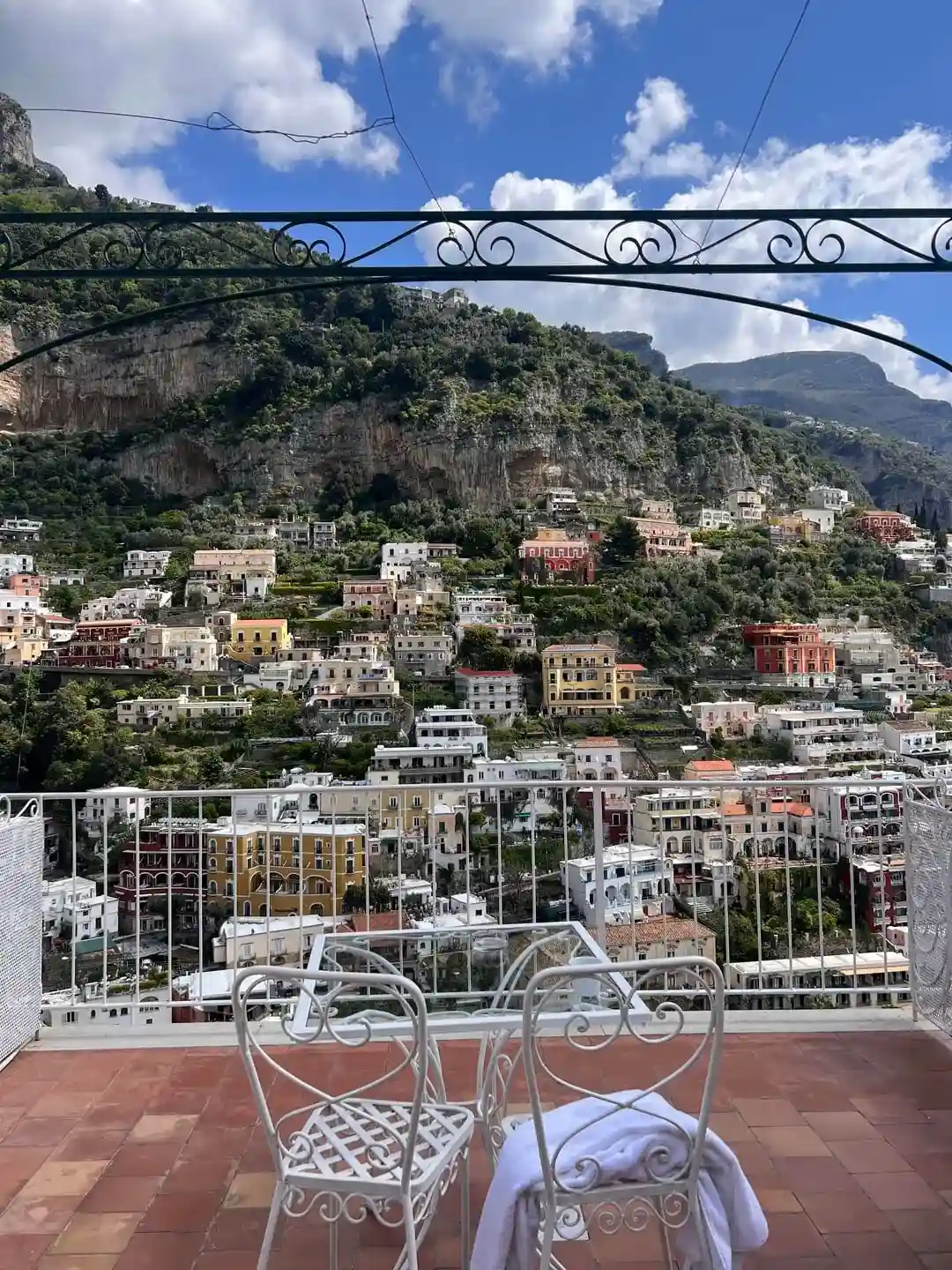
Seven days — one week, week-long, a genuinely full week — is when the Amalfi Coast stops being a trip and becomes an experience you carry for years. Follow the 5-day framework through Day 5, then extend into Pompeii and Naples for the final stretch: two of the most historically dense, culinarily extraordinary, and emotionally complex destinations in all of Southern Italy. Seven days also allows the slow down philosophy to actually take hold — you’re no longer racing the itinerary, you’re living inside it.
Day 6: Pompeii
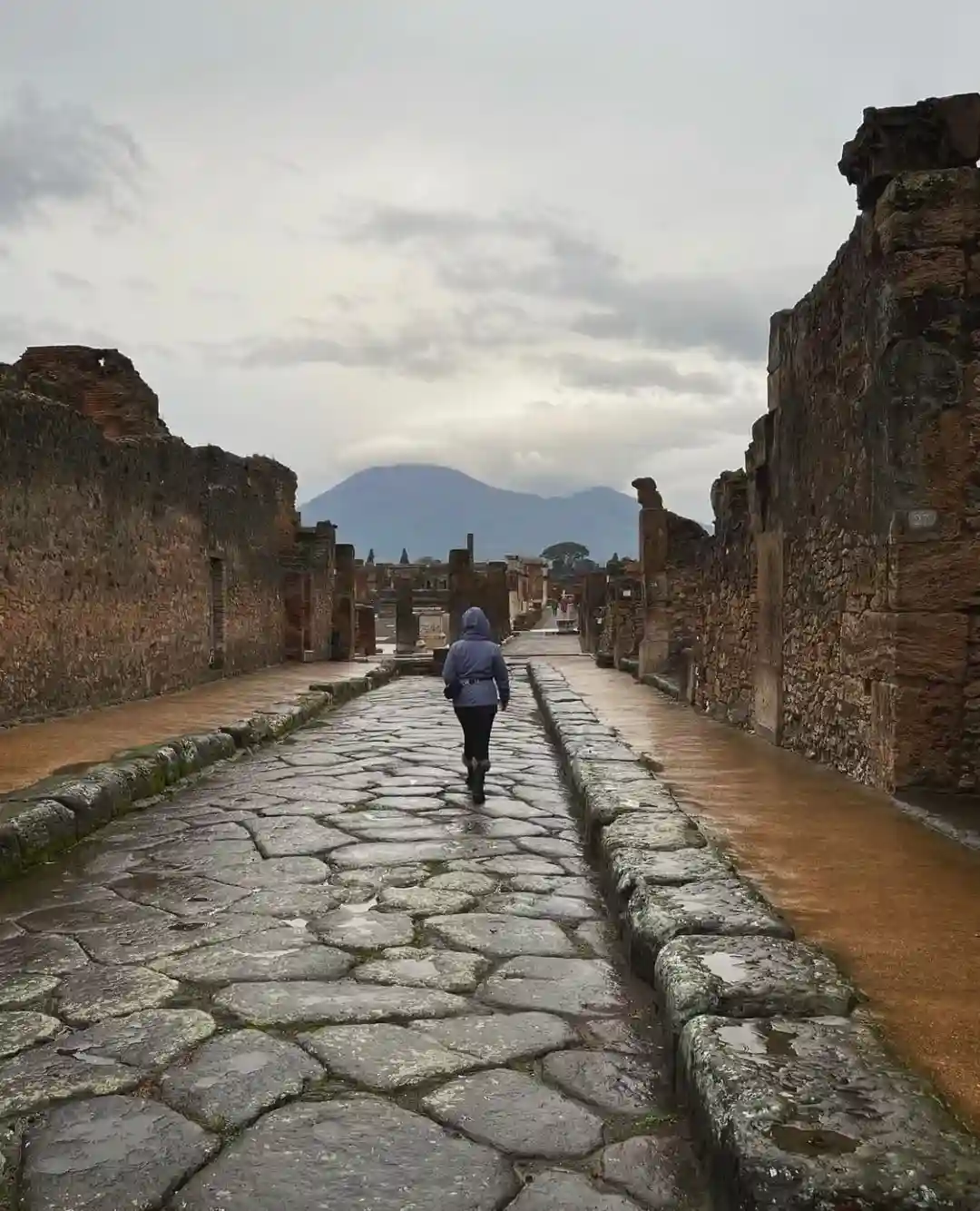
Pompeii requires almost no introduction — and yet nothing quite prepares you for the actual scale of it. This isn’t a ruin in the usual sense; it’s an entire city, Roman-era and ancient, preserved under volcanic ash after the eruption of Mt. Vesuvius in 79 AD in a way that froze in time everything from mosaic tiles in elaborate courtyards to restaurant storefronts with preserved artwork depicting chicken and beef — the world’s oldest takeaway menu, essentially. The explosion was so sudden and complete that human remains and personal belongings intact have been found across the Pompeii Scavi — the Plaster Casts display in the Amphitheatre area is the most haunting and memorable single sight on the entire 7-day trip, a genuinely humbling and slightly mind boggling encounter with history that leaves you quiet for a while afterward.
Take the Circumvesuviana train from Sorrento and alight at Pompeii Scavi – Villa dei Misteri — the whole journey runs about 30 minutes by train, or drive a car directly to the archaeological site in similar time. No luggage allowed inside, so either use the luggage lockers at the train station or the museum storage, and arrive earlier in the day before the crowds and heat converge. The site is classified as a UNESCO World Heritage Site — same tier as much of the broader region — and covers the footprint of what housed 10,000 to 20,000 citizens in its modern day context of 20km from Naples. Plan 3 hours minimum for the highlights: the Temple of Apollo, House of the Vettii, House of the Faun, Amphitheatre, and the ghostly streets, homes, and temples of an advanced society that had no warning. A guided tour or tour guide transforms the experience — we used a Rick Steves audio guide with a map on one visit, which worked beautifully, but a live 2-hour guided tour with skip-the-line entry via an archaeological park tour is the most efficient approach. The uneven terrain is worth noting for anyone with physical disability or mobility concerns — this is not a smooth-path site. For the historically obsessed, a combined tour adding Herculaneum or a Mount Vesuvius hike turns this into a full day of extraordinary historical sites discovery. The afternoon offers time for a traditional meal in town before making your way to Naples — a nice change of scenery and pace after so many beaches and charming towns.
Day 7: Naples
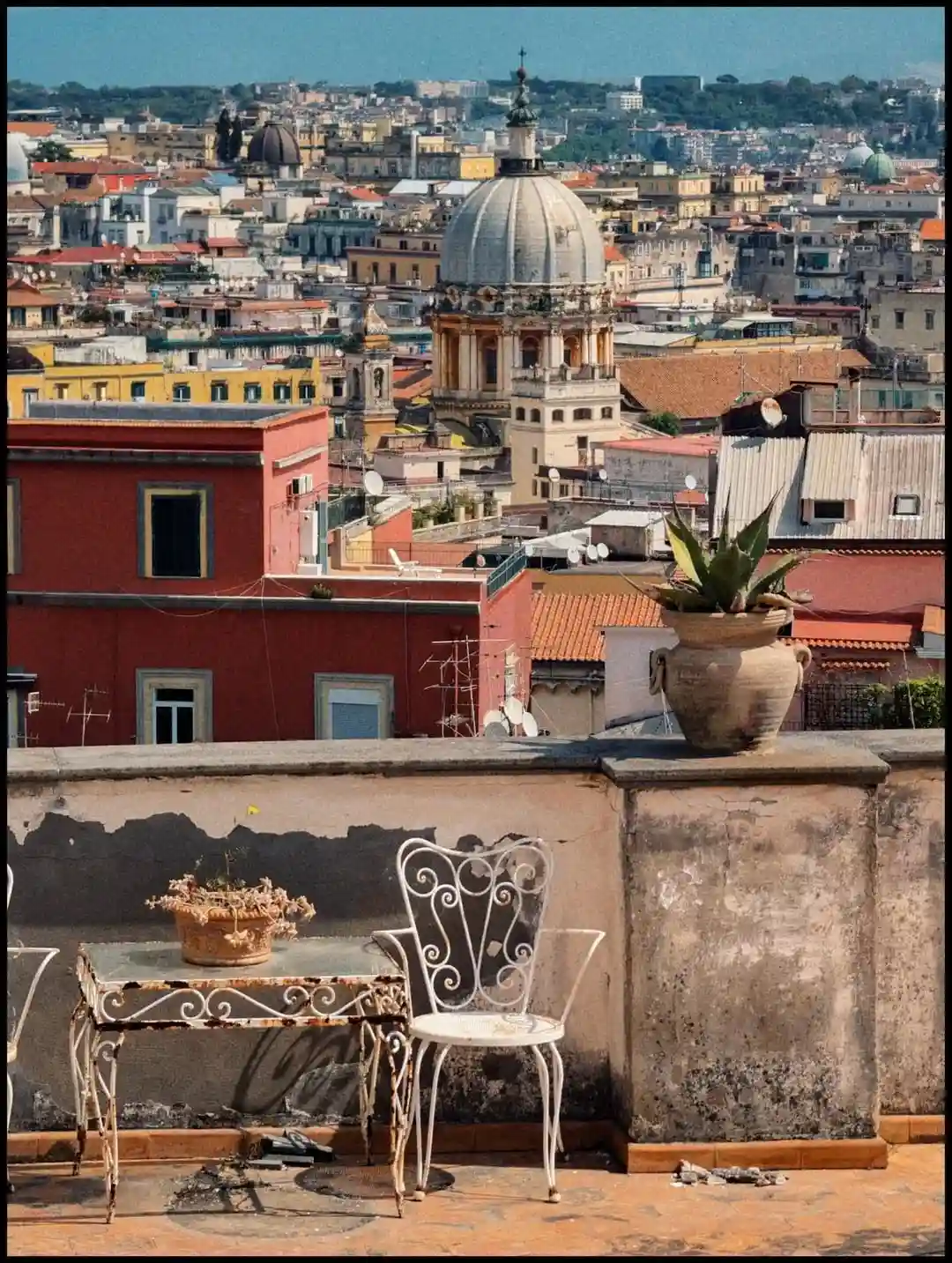
Naples — Napoli — is one of Europe’s oldest cities, and it hits differently from every coastal town that preceded it. Think of it as Southern Italy’s most bustling, most lively, most genuinely gritty urban experience: rambunctious, loud, chaotic, and absolutely electric in a way that Sorrento or Positano simply aren’t designed to be. The unfair stereotype among northern Italians paints it as rough and undesirable — a view shaped more by cultural snobbery than reality. One day is absolutely not enough, but it’s enough to fall in love with the Centro Storico (the historic centre of the city, also called the old centre) and understand why Neapolitan Pizza — made with fresh local tomatoes and Buffalo mozzarella in its birthplace — is so categorically different from every imitation you’ve ever eaten.
Begin with the funicular from Monsanto station up to San Martino, then descend the Pedamentina of Saint Martin — 414 steps threading down through the neighborhood with views of the city, the sea, and Mount Vesuvius that unfold with every flight. The Certosa e Museo di San Martino (a former monastery now functioning as a museum with cloisters overlooking the Bay of Naples) anchors this upper area with serious marble sculptures and regional artifacts rivaling anything in the National Archaeological Museum downtown — though that museum (rich with Pompeii finds and the most impressive collection of regional historical sites material in existence) deserves a dedicated morning visit if time allows. Drop into Centro Storico via Spaccanapoli — the main artery cleaving the historic centre in a straight line — and walk Via San Gregorio Armeno, the street where artisan shops creating nativity scenes operate year-round with genuine craft and innovation. The Duomo of Naples (with its lavishly decorated chapel to San Gennaro) and adjacent Piazza del Plebiscito form the civic heart of the city. Don’t leave without booking ahead for the Veiled Christ at Cappella Sansevero — this marble sculpture is one of the most technically astonishing works of art in Italy, and the pre-book requirement is non-negotiable given demand. Food-wise, beyond the mandatory Neapolitan Pizza, try Impepata di Cozze (fresh mussels with tomatoes, white wine, black pepper, and parsley), Spaghetti alla Puttanesca, and the street food served in a cuoppo — a paper cone of potato croquettes, fried pasta balls, and various fried food items that constitute the best walking snack in Italy. A food tour, street food tour, or 3-hour walking tour consolidates all of this efficiently. Naples is also the last stop ferry gateway to Ischia and Procida — worth knowing if you plan to visit those islands — and functions as the ending point of this entire 7-day arc, a fittingly gritty and glorious closing chapter to a week that began in the refined calm of Amalfi.
Got More Days? Additional Ideas for the Amalfi Coast
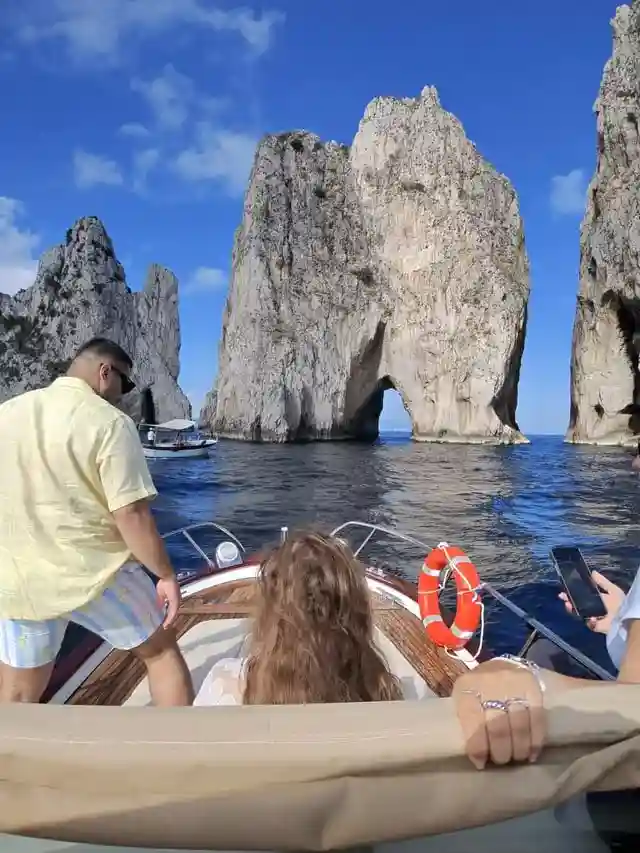
Extra days on the Amalfi Coast are never wasted — the region simply reveals quieter, more local layers the longer you stay. From Amalfi, a short ferry hop reaches the neighboring towns of Maiori and Minori — towns with a genuinely local vibe, fewer crowds, and flatter terrain that makes them favorites for families with young kids. The Path of Lemons (Sentiero dei Limoni) connects these two towns on foot, winding through lemon groves above a less crowded beach in a walking experience that feels authentically local in a way the main-coast trail circuit doesn’t. Similarly, the 15-minute walk from Amalfi to Atrani — a tiny, intensely local village with few tourists, a small beach, and a main square full of cozy restaurants and bars — is one of the coast’s great free pleasures. Stop at Ristorante Da Zaccaria (perched cliffside, house wine for 12 euros a jar) on the way, have lunch at La Risacca (the lemon ravioli with swordfish and the caprese salad are both essential), then spend the afternoon at Spiaggia di Castiglione Cove — past Atrani along Amalfi Drive — where Lido di Ravello Beach Club rents sunbeds and umbrella for a properly relaxed afternoon of swimming in crystal-clear water until golden hour. The magical streets and street art of Atrani are worth a wander, and the houses stacked above the main square make for some of the most picturesque photography on the coast.
For active days, the Path of the Gods (Sentiero degli Dei) is the most famous hike on the coast — a 5.6 km, 3.5 miles ridge trail rated easy to moderate that most average shape hikers (emphatically not athletes required) complete in about 2 hours, ascending through Bomerano (Piazza Paolo Capasso) and tracking the cliffs all the way to Nocelle before optionally continuing to Montepertuso or Positano. Take a bus or taxi to the start; the descent to the end is manageable. The breathtaking views at 215 meters up and 410 meters down make this the single best Amalfi Coast hike option for the investment. Mt. Vesuvius deserves its own half day if you haven’t combined it with Pompeii — about a one hour drive from Sorrento, with the hike itself taking roughly 45 minutes to reach the crater at the top. The views from the rim are genuinely spectacular, and full day tours combining Pompeii and Mt. Vesuvius with winery lunch stops are among the best-value structured experiences in the region — worth checking your schedule and wiggle room before dismissing them.
For water-focused additions, a dedicated Amalfi Coast boat tour — even if you’ve already done a small group excursion in Capri — is a completely different experience: a half-day from Amalfi visiting swimming spots, snorkeling coves, rocks for cliff jumping, and getting great views of Positano from the sea as part of the sheer beauty appreciation that only water-level perspective delivers. Farm tours and cooking classes deserve a dedicated slot too — Amalfi Heaven Gardens in Amalfi town, the Instagram-famous La Tagliata above Positano, the La Masseria farm tour from Sorrento (a genuine reader favorite that includes a meal as part of the farm exploration), and various lemon farm tour options in Amalfi town all offer a different lens on the local cuisine and food culture of this Italy region. The Sorrento pizza making class is equally beloved if both a farm and cooking explore feels ambitious.
Vietri Sul Mare — sitting just west of Salerno on the coast’s eastern edge — is the town that doesn’t appear in enough itineraries. It’s distant enough from the tourist center to feel genuinely off beaten path and under the radar, but picturesque enough to rival Positano in its own quieter way — a real beach, shops and restaurants with local rather than tourist pricing, and the slow, relaxing quality of a couple nights of truly slow-paced living. The ceramica vietrese tradition makes it the most artistic town on the entire coast. Ischia and Procida — the Phlegrean Islands off the coast of Naples — round out the extended itinerary perfectly for anyone with ample time: Ischia is the larger island, renowned for rich history, thermal springs, and lush landscapes, while Procida (the smaller sibling) is famed for its colorful marina, quiet beaches, and authentic Italian village life that feels genuinely removed from the mainstream. Both work as a day trip or overnight visit — and both remain meaningfully under the radar compared to their Capri neighbor across the water. Finally: if you have extra time and none of the above appeals in a structured way, use it to slow down and lounge. Ravello alone can fill an entire day at a relaxing pace — the extra day spent entirely in one town, between the Villa Cimbrone Gardens, a farm tour, a cooking class, and an evening at a cliffside hotel pool, is sometimes the most memorable day of the whole trip. Stretch out days, use the extra time well, and let the coast do what it does best.
Praiano – A Hidden Gem Near Positano
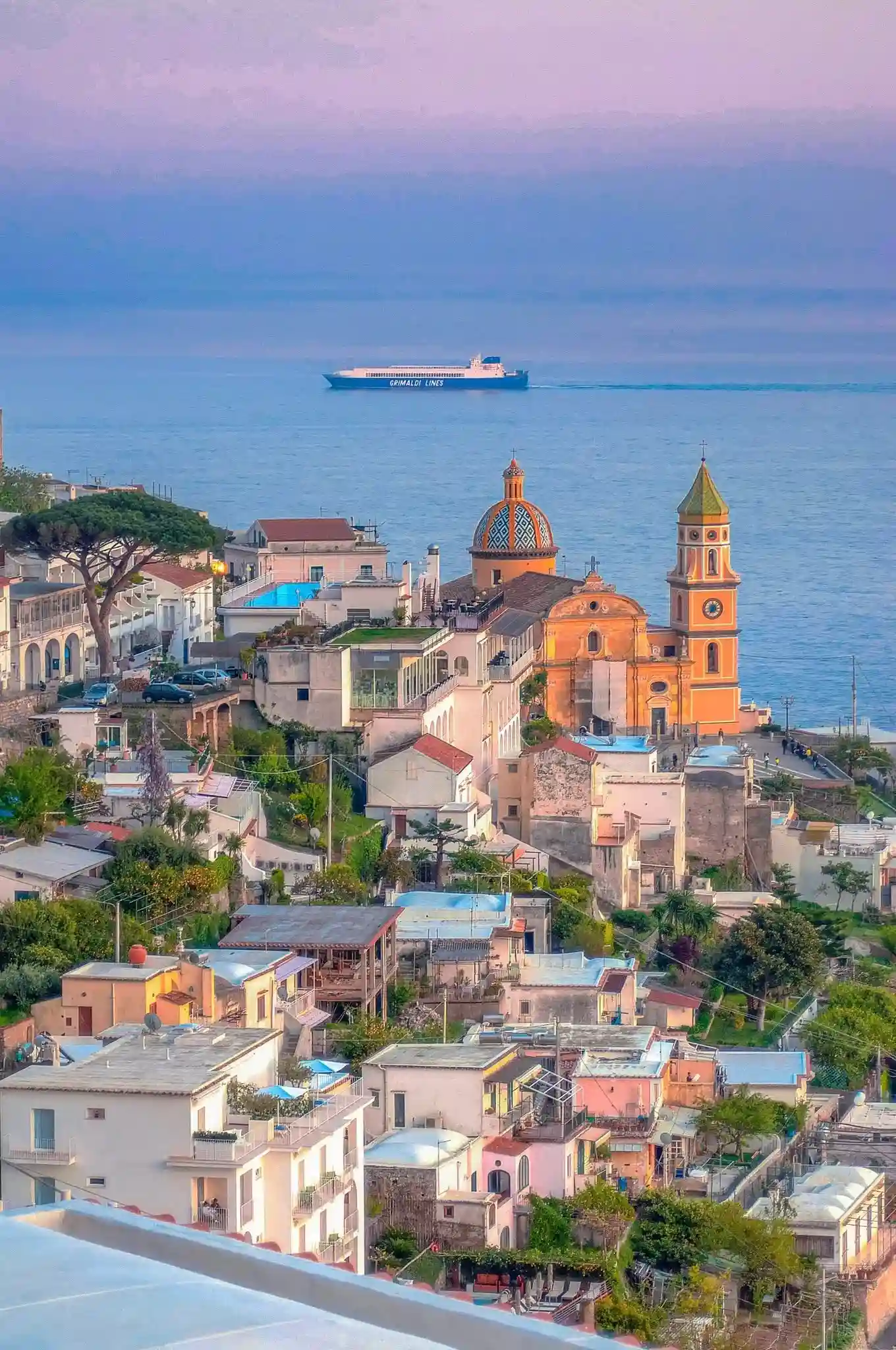
Praiano is the kind of discovery that makes experienced travelers feel smug in the best possible way. This medieval town sits on the coastal highway between Positano and Amalfi — genuinely neighboring both without belonging to either’s tourist circus — and staying here instead of more famous alternatives was one of the smartest accommodation choices I’ve made on any trip. The Church of San Gennaro and Marina di Praia Beach give it genuine local character, the stunning seaside views are no less dramatic than anywhere else on the coast, and waking up to a lemon tree on your balcony in a locally owned, charming hotel at a fraction of Positano’s rates is a pleasure that compounds daily.
The practical advantages are real: Praiano is far quieter at the end of day when Positano’s concentrated travelers make the village feel like a festival that forgot to end. The scenic walk along the coastal road toward Positano — roughly 2km east on Amalfi Drive via Via Cristoforo Colombo — passes through a series of vantage points with multiple vantage points and breathtaking views that shift with each hairpin turn. We booked on-the-fly in July (peak tourism season) specifically because Positano’s accommodations were either expensive or completely booked, and found Praiano offered the same views at a fraction of the budget — a hack that genuinely worked. The walking rhythm of the stay — stepping daily along the coastal road toward the more famous town and back — gave us distance views of Positano that felt more memorable than being inside it did. For anyone traveling on a cheaper budget without sacrificing the peak coastal experience, Praiano is the answer that most neighboring towns guides quietly omit.
10 Famous Amalfi Coast Towns
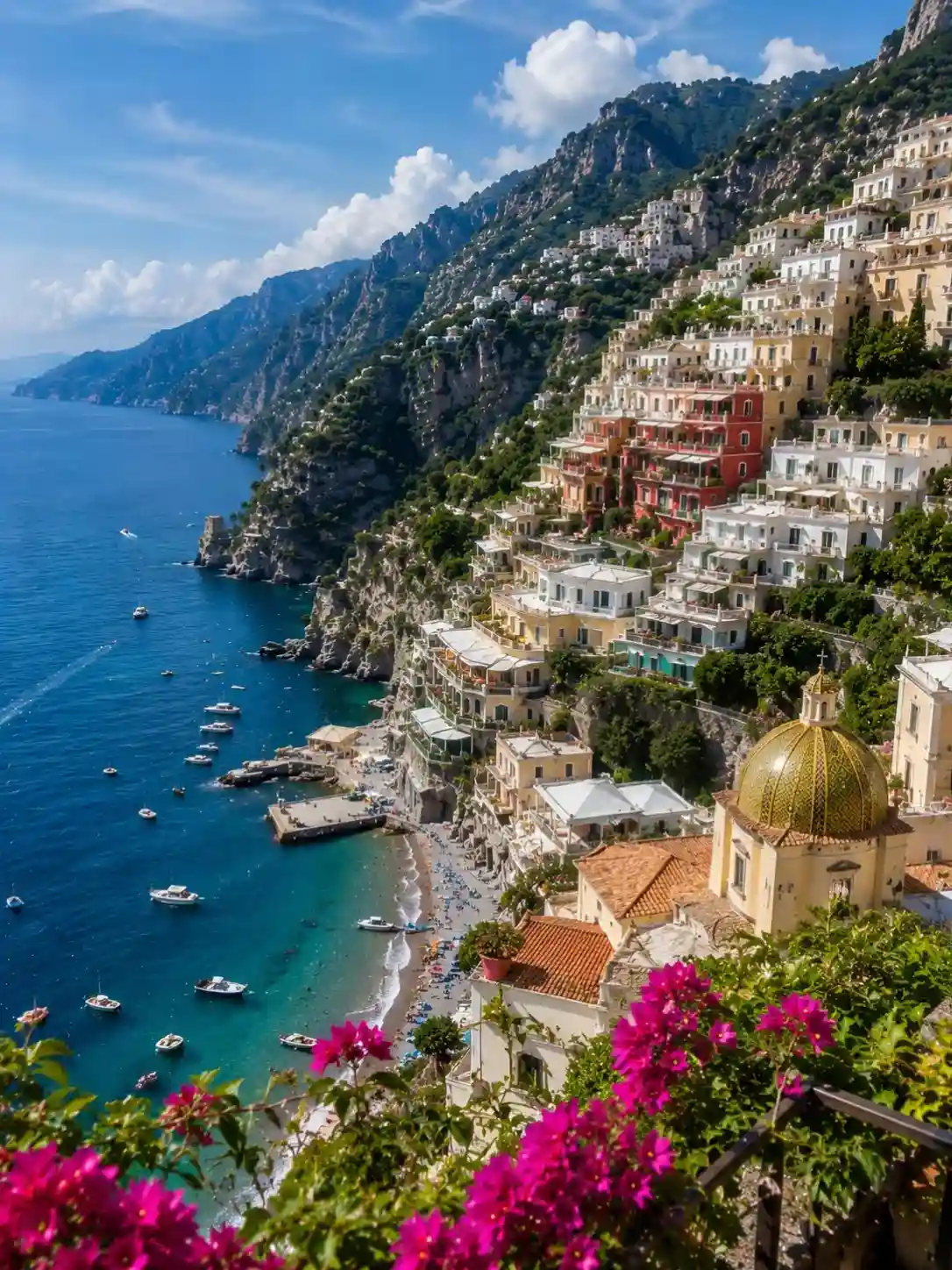
The Amalfi Coast is anchored by ten towns that collectively define its character and region — each worth understanding before you arrive so you can match your energy to the right destination. Amalfi Town is the literal heart and name of the coast, the historic maritime capital where everything radiates from. Positano needs little introduction — the most beautiful, most expensive, most photographed, with epic views, genuinely delicious food, and architecture that stacks improbably down the cliffside. Ravello is the romantic outlier, set high above the sea with lavish gardens, a serious arts and festival culture, and mesmerizing Mediterranean views that draw a quieter, more contemplative crowd. Praiano is the medieval gem — the only town whose beach catches sun until sunset, making it ideal for hikers and those pursuing hiking trails through the afternoon hours.
Atrani offers the most compact and budget-friendly experience on the coast: a cliffside village with a black sand beach and an intimate scale that feels genuinely unlocked. Vietri Sul Mare closes the eastern end of the coast as its most artistic expression — fewer tourists, a deep ceramica vietrese tradition of traditional Italian ceramics, and a pace that rewards staying rather than day-tripping. Maiori and Minori are the pragmatic choices for family trips and budget travelers: both are relatively flat (a real advantage with children or mobility concerns), and Maiori holds the title of the longest sandy beach on the entire coast. Cetara is a fishing village that food lovers specifically seek out — the tuna and anchovies here are processed and sold with the craft seriousness of a wine region. Furore is the most dramatically hidden of all — wedged between sheer rock cliffs with a beach accessible only by descending beneath a road bridge in a gorge — while Conca dei Marini closes the list as the most laid-back entry point to the celebrated Emerald Grotto (Grotta dello Smeraldo).
Most Beautiful Beaches on the Amalfi Coast
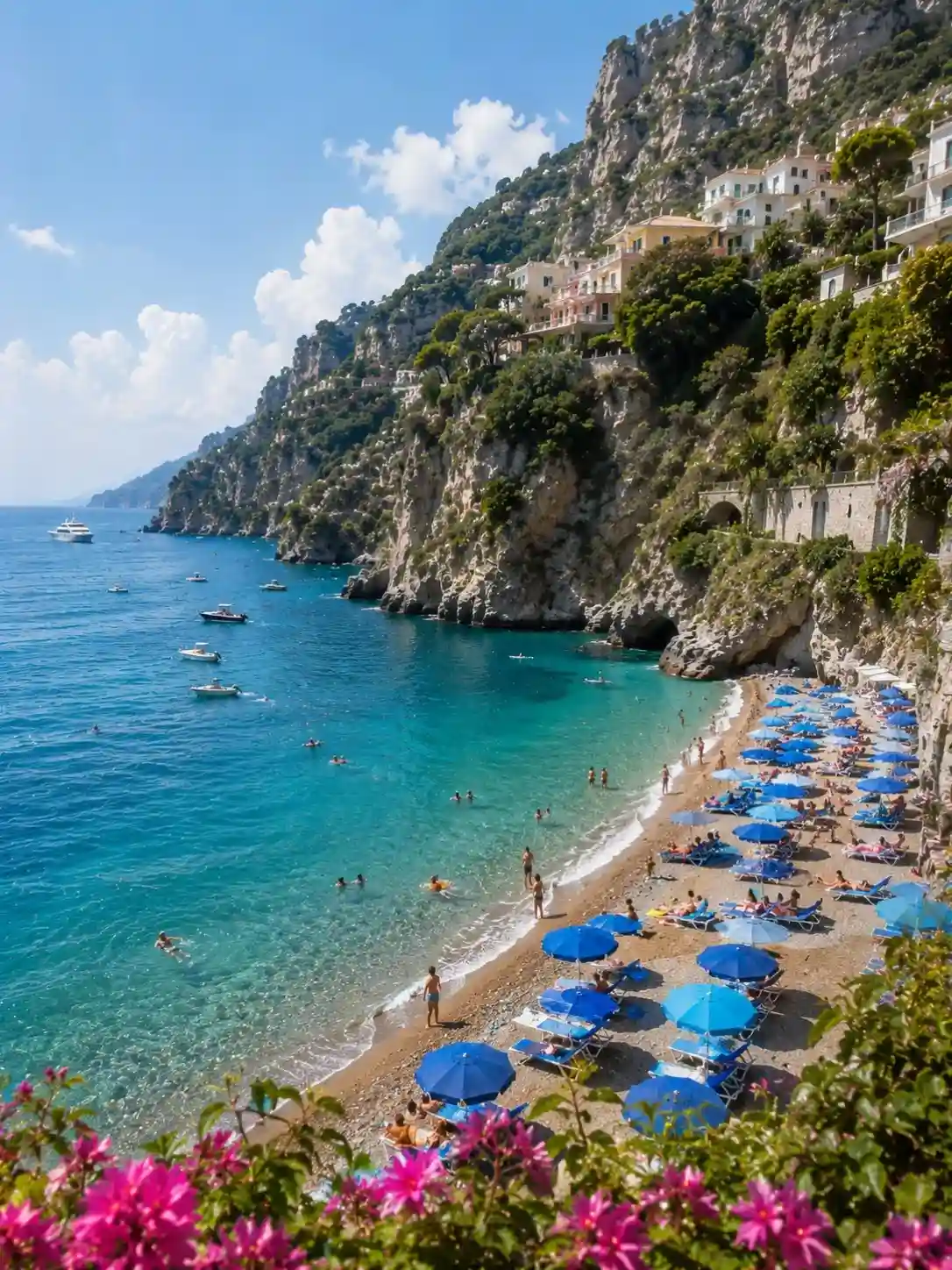
The beaches here require a mental recalibration before you arrive: most of what you’ll see online is real, but the texture is different from what tropical travel conditions you to expect. The majority of these beautiful, picture-perfect stretches are pebble beaches — warm, smooth pebble, not sand — and good sandals or dedicated beach shoes are genuinely non-negotiable if you want to walk without wincing. Many of the most incredible spots are only reachable by boat taxi or water taxi from the nearest town, adding a logistical layer that rewards planning. Most beaches operate a combination of public areas (with free access) and private beach club sections where you pay for sunbeds, umbrellas, and lounges — the terrace bars and restaurants attached to most clubs make a full beach day feel genuinely complete. Sandy beaches do exist — Maiori has the most — but they’re exceptions rather than the rule across this coastline.
The full roster spans every corner of the coast: Spiaggia Grande Positano (Marina Grande Beach Positano) and Spiaggia del Fornillo Positano (Fornillo Beach) anchor the Positano section, joined by Spiaggia di Arienzo Positano (Arienzo Beach) and Spiaggia di Tordigliano Positano (Tordigliano Beach) for those willing to venture slightly further. Moving east, Fiordo di Furore Furore (Fiordo di Furore Beach) is the dramatic gorge-beach accessed beneath a bridge, while Il Duoglio Spiaggia Amalfi (Duoglio beach), Spiaggia Grande Amalfi (Marina Grande Beach Amalfi), and Spiaggia di Santa Croce Amalfi (Santa Croce Beach) cover the town’s immediate coastline. Spiaggia di Maiori (Maiori Beach) and Spiaggia Cavallo Morto Maiori (Cavallo Morto Beach) deliver the coast’s longest sandy stretches, while Spiaggia di Minori (Minori Beach), Marina di Praia Praiano (Marina di Praia Beach), and Spiaggia della Gavitella Praiano (Gavitella Beach) reward those who push into the quieter middle section. Spiaggia di Atrani (Atrani Beach) is small and local-feeling, Marina di Vietri (Vietri Beach) marks the eastern end, and Spiaggia di Cauco Erchie (Cauco Beach) remains genuinely off the main circuit. Finally, Spiaggia di Castiglione Ravello — also known as Castiglione Beach or the celebrated Lido di Ravello — and Spiaggia del Lannio Cetara (Lannio Beach) close out a list that could fill an entire second week of exploration on its own.
Wrapping Up: Final Tips for Your Amalfi Coast Trip
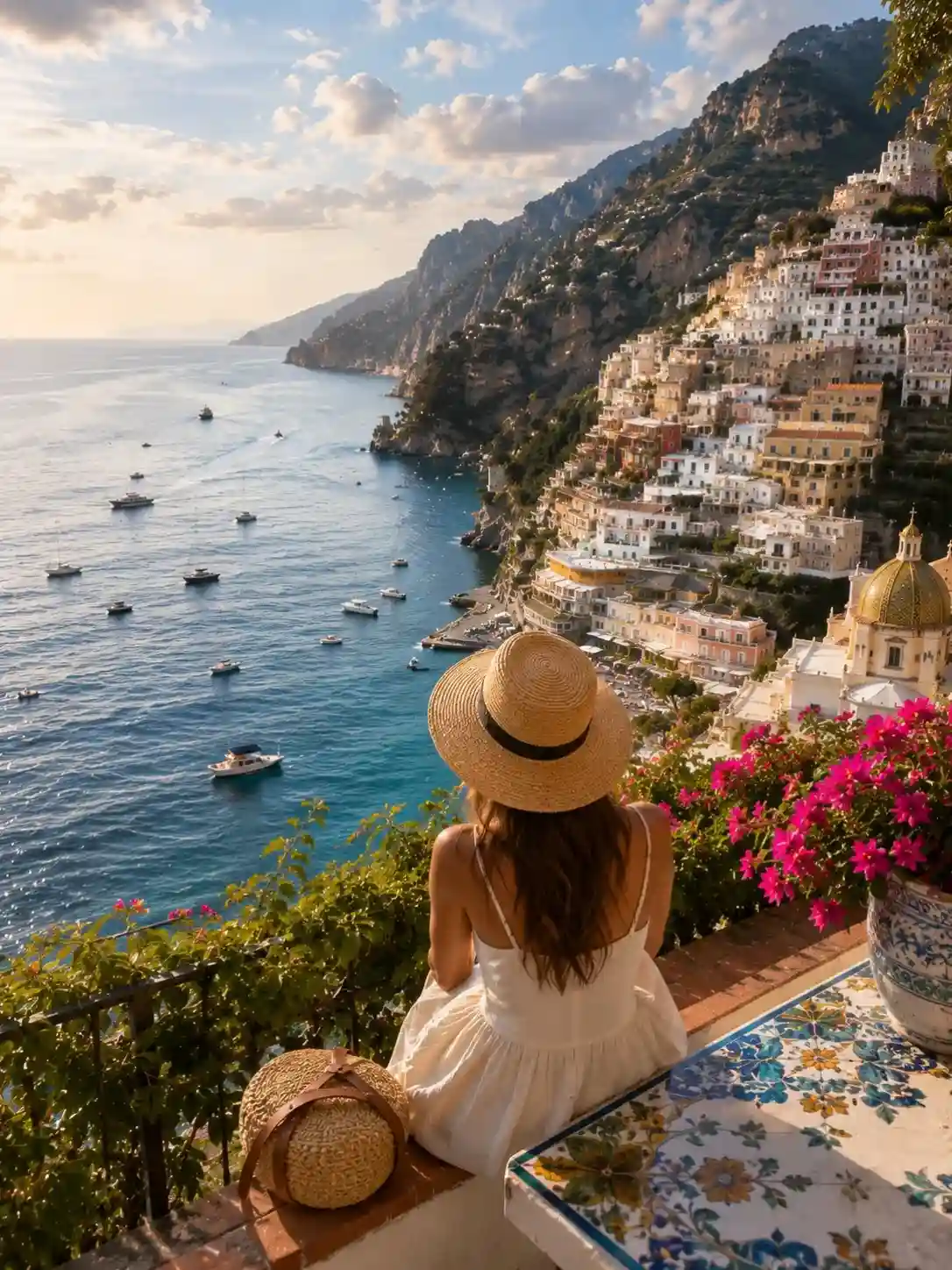
The single most repeated piece of advice from everyone who has done this trip well — and the one most consistently ignored by those who struggled — is simple: book in advance. Book flights early, lock in accommodation before the season turns, secure your tours and local transportation before you land, and treat advance booking as the structural foundation of the whole experience rather than an optional extra. The Amalfi Coast is busy in a way that punishes spontaneity financially — expensive at the best of times, and genuinely punishing during peak months — and even a few weeks of preparation separates a trip where money and time are well spent from one where both feel wasted. Don’t underestimate this.
Beyond logistics, the deeper tip is to identify what matters most to you — food, beautiful accommodations, access to hikes, water, or historical sites — and lean into that thread across every day. An Aperol Spritz on a terrace overlooking the ocean, a third gelato comparison between gellaterias (the lemon gelato will win, every time), a sunset watched from a hotel balcony over the Tyrrhenian Sea as the full moon rises — these are the memorable, calming, soothing moments that define an Amalfi Coast trip in memory, not the itinerary itself. Slow down, take a beat, and let the pace of the coast reset your body and mind — because over-planning is the enemy of the introspective, solace-filled experience this place is genuinely capable of delivering. From the colorful towns of Sorrento and Ravello to the crystal-clear waters and breathtaking views of Positano and Capri, every corner of this magical coastline offers something unforgettable — pack your camera, absorb the Italian cuisine, lose yourself in the streets and beaches, and let this enchanting, once in a lifetime, special corner of Italy do what it has done to romantic souls and introspection-seekers for centuries. It will leave you inspired.