3 Days in Barcelona Itinerary: Ultimate First-Timer Guide to Gaudí, Beaches & Hidden Gems (2026)
Sagrada Família
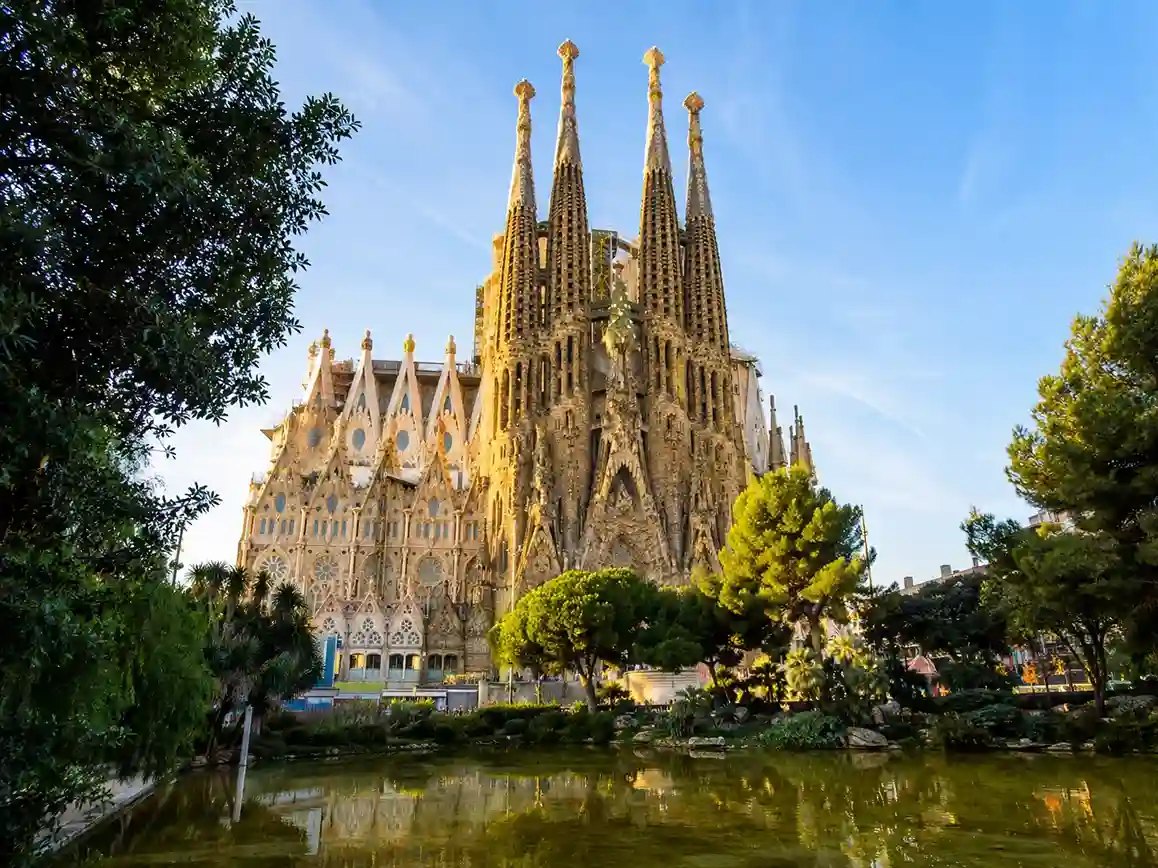
Walking into Gaudí’s magnum opus for the first time genuinely stops you mid-step — and I say this as someone who has stood inside a lot of churches. This UNESCO landmark has been under construction for over 140 years, yet nothing about it feels unfinished to the eye. Every façade carries a distinct biblical story, and the interior transforms natural light through stained-glass panels into something closer to a fairytale forest than a place of worship — tree-like columns branching overhead, colorful shifting hues painting the floor beneath your feet. The symmetry and color hit differently depending on the mid-day sun angle, so timing your visit around that sweet spot genuinely pays off.
Getting in requires planning well ahead — booking in advance is non-negotiable, especially since the exterior was officially completed in Feb 2026 and post-completion crowds are only climbing. The first time slot — 9am Mon through Sat, or 10:30am Sun — remains the smartest move. Pricing sits around €26 regular or €30 guided, with an audio tour bundled in. Prefer something more intimate? There’s a golden hour tour at 4pm capped at just 9 people — worth every cent. Budget between 1.5 and 2 hrs, though rushing it would genuinely be a shame. The tower elevator offers panoramic views, though the exit stairwell can feel a touch dark and claustrophobic for those sensitive to tight spaces. Skip the crowds entirely with a fast-track skip-the-line option — £28 gets you past the long queues with an audio guide add-on available. Even standing outside and craning your neck delivers a quiet wow moment — construction first began in 1882, and the ambition encoded in every stone still reads as staggering.
Park Güell
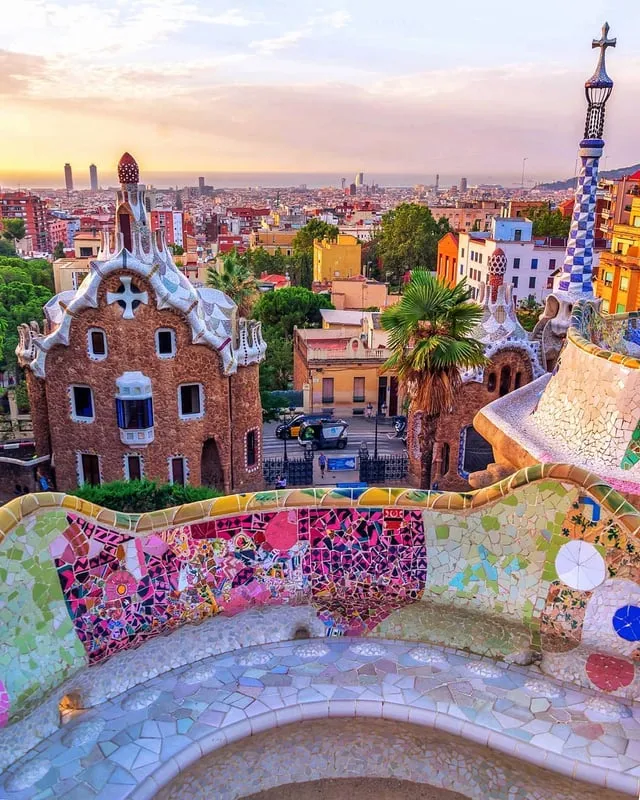
Gaudí didn’t design Park Güell as a tourist attraction — he designed it as a garden city that never quite became one, and that unrealized ambition is exactly what makes it magical. The ticketed Monumental Zone holds the headline moments: the Salamander Fountain (El Drac), the serpentine bench blanketed in mosaic tiles, the Hypostyle Room, the Dragon Stairway, the laundry-room portico, and the Greek Theatre — all framed against hillside views that make the UNESCO designation feel obvious. Personally, I’d argue the symmetry here rivals anything at Sagrada Familia, and the colorful design reads more playfully human than monumental. Plan for at least 1.5 hrs, though the gardens could comfortably swallow a half day if you let them.
The earliest available slot — around 9:30am — is worth the early morning alarm before crowds build noticeably by 10–11am. A regular ticket runs approximately €18, which includes Casa del Guarda entry. The park is considerably bigger than expected, so skipping the uphill trek from downtown in favour of a taxi or bus is genuinely sensible advice. If your schedule is more flexible, a sunset approach — the park closes at 21:30 — cuts the heat and softens the crowds, tying beautifully into the broader spirit of Catalan modernism this entire neighborhood breathes. The tower add-on ticket isn’t essential — the views from the gatehouses and bench terrace more than compensate.
Casa Batlló
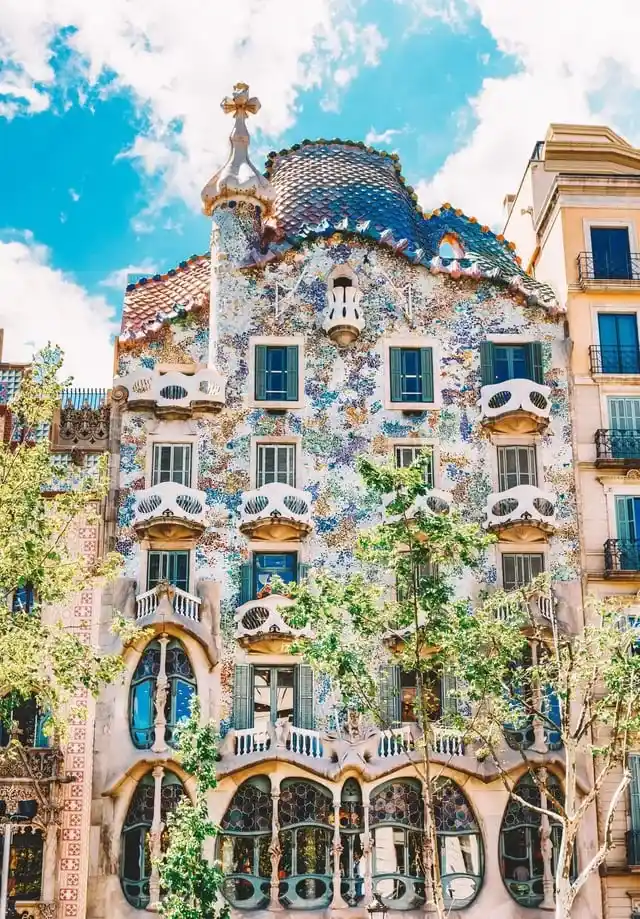
There is no building on earth quite like Casa Batlló, and standing on Passeig de Gràcia 43 watching first-time visitors physically stop and point at the dragon-scale facade never gets old. The dragon’s back rooftop terrace — lined with those unmistakable colorful chimneys — is the visual payoff of the visit, alongside the curved wooden doors, layered stained glass, and the dragon-spine rooftop arching overhead like something half-organic. Hidden detail worth hunting: Venetian masks embedded in the façade, easy to miss unless you know to look. The Casa Amatller next door makes an effortless optional add-on to round out the block.
For the cleanest experience, the early-bird ticket at 8:30am delivers a genuinely crowd-free window ideal for photos before the day tour groups descend. A standard entry runs around €29, with a 75-minute visit being a reasonable benchmark. The official site includes an audio guide, or you can opt for guided skip-the-line access if convenience matters more than cost. This is the top recommended Gaudí house to tour if you’re only picking one — the interior justifies every argument that Gaudí was less an architect and more a residential landmark builder operating in a category entirely his own. Even treating it as a photo stop from outside rewards the detour.
Casa Milà / La Pedrera
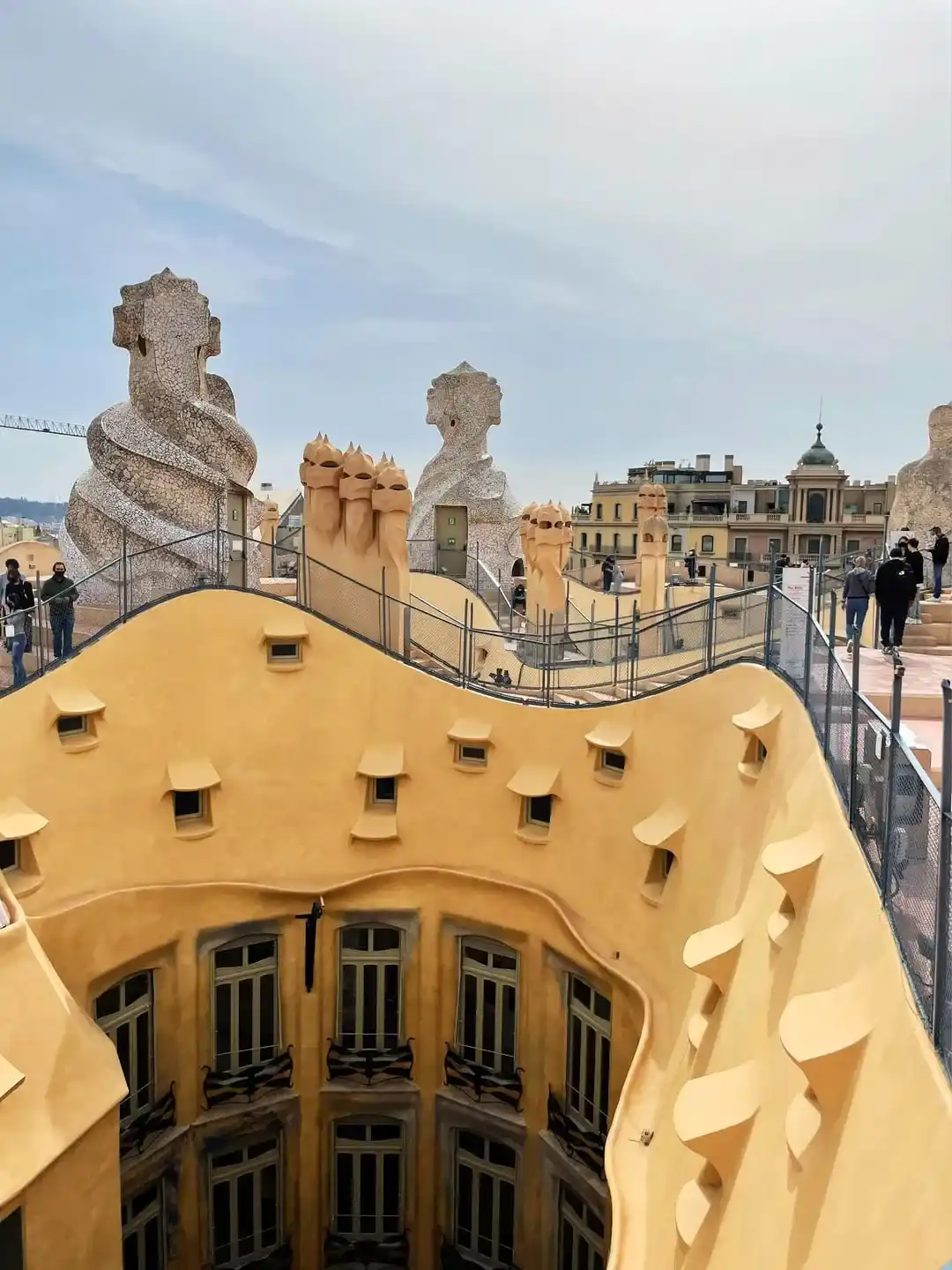
The nickname says everything — La Pedrera translates roughly to “the stone quarry,” and standing beneath those undulating façade balconies of twisted seaweed ironwork, the name feels exactly right. Built between 1906 and 1912, this was among Gaudí’s last residential works, and the rooftop reads like a sculptural fever dream — chimneys that reportedly inspired Star Wars stormtrooper helmets, panoramic city views, and a texture so alien it photographs differently in every light. The wavy stone façade and layered balconies make it visually distinct even from Casa Batlló next on the Passeig de Gràcia circuit. A UNESCO landmark in its own right, it sits comfortably within the broader Eixample neighborhood modernist trail.
A timed-entry ticket is required — budget around £20 for skip-the-line access with an audio guide included — and a self-guided 1 hour visit covers the essentials comfortably. The rooftop terrace ranks among the best view points in the city, full stop. If you have flexibility, returning later for the sunset night tour transforms the rooftop entirely. The nearby Fundació Antoni Tàpies works as a low-key cultural add-on if contemporary art is your thing, and Cerveceria Catalana just around the corner delivers excellent tapas as a recovery reward. The alternative path — visiting this over Casa Batlló — is a perfectly defensible choice depending on your architectural appetite.
Gothic Quarter (Barri Gòtic)
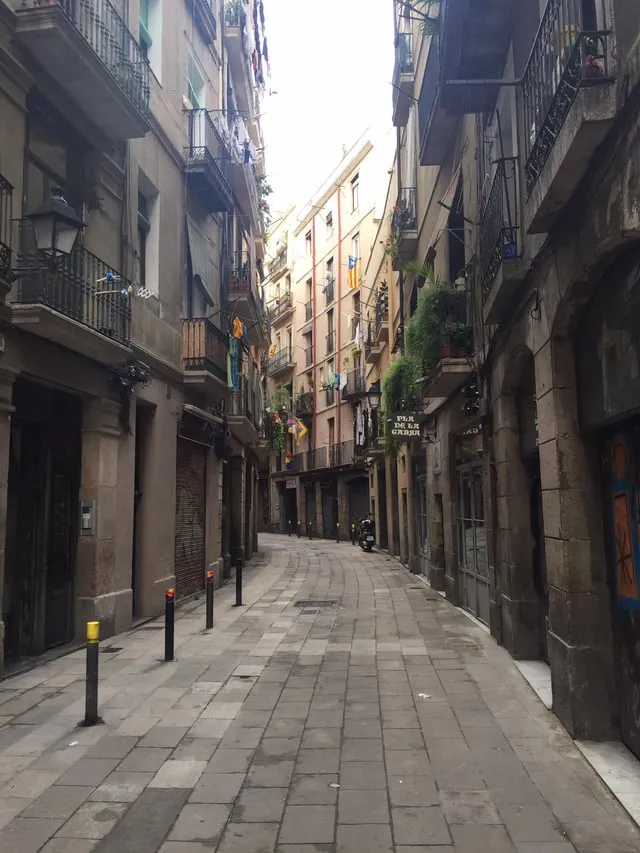
The Gothic Quarter is the rare neighborhood that genuinely rewards having no plan at all. Arrive with a rough sense of direction and let the cobblestone streets pull you — past Roman wall remnants, through the atmospheric Carrer del Bisbe with the photogenic Pont del Bisbe overhead, into the Plaça de Sant Felip Neri which manages to feel centuries removed from the city outside it. The Barcelona Cathedral anchors the area — its 13th-century Gothic architecture, cloister full of white geese, and optional rooftop terrace (small fee applies) all justify time inside. Plaça de Sant Jaume puts the City Hall and Catalan government buildings face to face across a single square, which feels almost theatrical once you know the political weight of that proximity. Plaça del Rei, Plaça Reial, and the quieter squares nearby carry 2,000 years of history in their stones — Picasso walked these streets, and traces of the old Jewish Quarter still surface for those paying attention.
Practically speaking, a guided tour — either private 4-hr or small-group 3-hr — earns its cost here more than almost anywhere else in the city, simply because context transforms what would otherwise be a pretty wander. A walking or bike tour both work; the latter covers more ground if your feet have already logged miles. The one watch-out: balloon-seller scammers operate near the Cathedral plaza — one travel writer lost €20 to exactly this. For those preferring to wander without a plan, the wine bar Salterio is the kind of accidental discovery that becomes a favorite city memory. The small patisseries and indie shops folded into the narrow streets and hidden squares are part of what makes this area feel less like a monument and more like a living, breathing piece of old architecture and heritage.
El Born
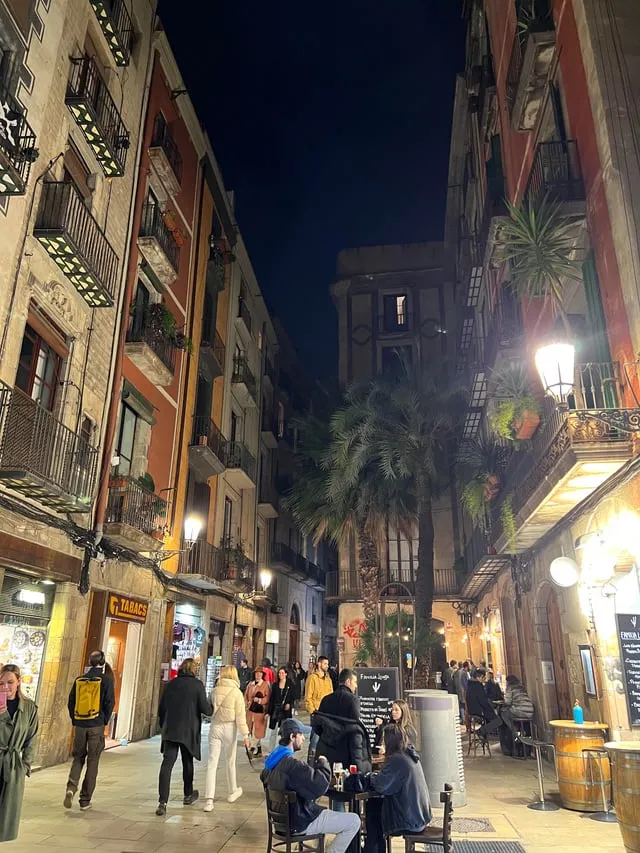
El Born runs calmer and more local than the Gothic Quarter next door, which is precisely its appeal. The neighborhood holds a genuinely impressive cluster of cultural heritage in a compact area: the Palau de la Música Catalana with its guided concert-hall tours, the Santa Caterina Market with its wildly colorful mosaic roof, Santa Maria del Mar church (arguably the most beautiful Gothic space in the city), and the Mercat del Born — a free museum built around Roman-era ruins discovered during a 2002 renovation and left dramatically exposed beneath a cast-iron Victorian market hall. The medieval-palace building housing the Museo Picasso adds another layer to an already architecturally dense neighborhood.
The El Born arts scene extends into its streets — boutique shops, artisan studios, and tapas bars line the lanes in a way that feels genuinely bohemian rather than manufactured. A pre-dinner tapas crawl through the area is one of the better ways to spend an evening in Barcelona, and the 7 specific tapas-bar recommendations available across various guides give you a solid shortlist to work from. If time is limited, pairing a 20 minute walk through Ciutadella Park — past the Arc de Triomf — with a Picasso Museum stop before dinner covers the Day 3 essentials without feeling rushed. There are 4 bookable food-tour links worth investigating if a structured introduction to the area suits your travel style better.
La Rambla & La Boqueria Market
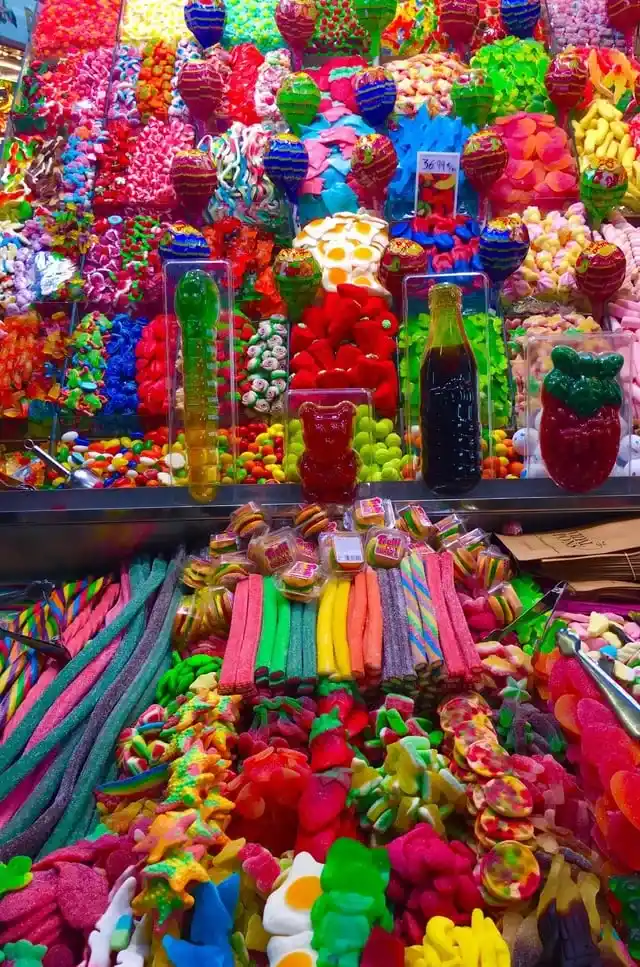
La Rambla is complicated. As a pedestrian boulevard, it remains an iconic piece of Barcelona geography — but the honest version of this guide has to acknowledge that the street has visibly declined over time, with litter, overpriced restaurants, and pickpockets making the experience considerably less charming than the postcards suggest. The practical advice is consistent across every experienced traveler: come for an early-morning walk before the crowds arrive, treat it as a stroll for people-watching and perhaps a sangria, and then eat elsewhere — ideally on a side street where the quality-to-price ratio dramatically improves. The stretch between visits 5 years apart showed measurable deterioration, which is worth factoring into your expectations.
La Boqueria operates on a different level entirely, provided you arrive when it opens at 8am (note: closed Sundays). The fresh juice counter alone justifies the detour, but the real draws are the Jamón Ibérico stalls, grilled squid and octopus at El Quim de la Boqueria, and the general theater of cheese, ham, and olives being sold at volume by people who clearly take their food stalls seriously. Granja M. Viader nearby does the definitive hot chocolate if you need warming afterward. Dalston Coffee and Caravelle both work well as brunch stops in the vicinity. The La Liceu Theater and Plaça Reial are both within easy reach, making this corridor worth the morning visit despite the touristy vendors and persistent pickpocketing warnings that follow La Rambla around like a bad reputation.
Montjuïc
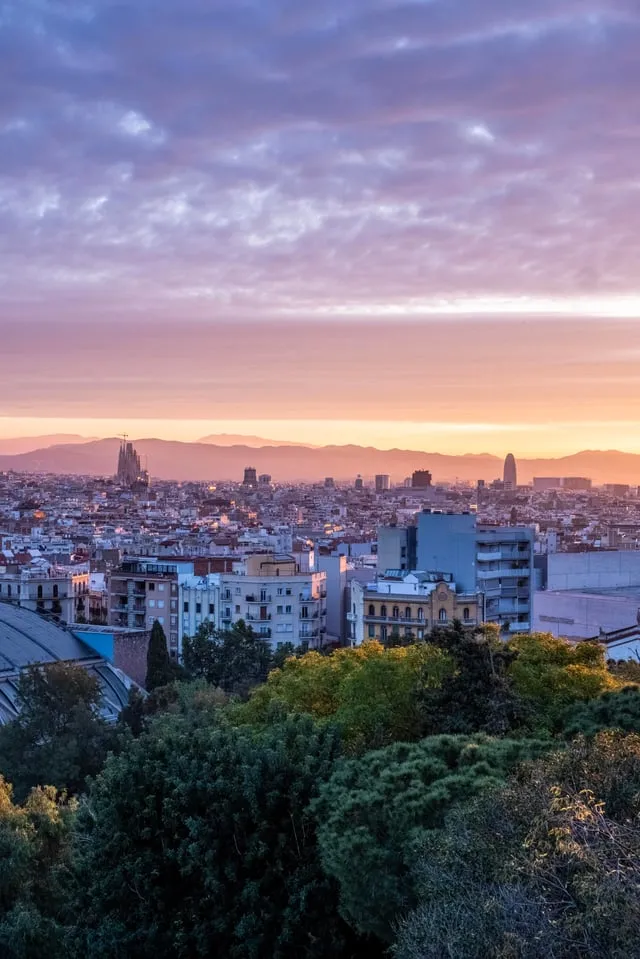
Montjuïc rewards visitors who approach it with a loose plan and comfortable shoes. The hill carries layers of history — the 17th-century fortress with its harbor views, the grounds built for the 1929 International Exhibition, and the infrastructure left from the 1992 Olympics including the still-impressive Olympic Stadium and pool — all stitched together by gardens, panoramic views, and a cultural heritage density that justifies a full 2 hrs at minimum. The Fundació Joan Miró is a genuine world-class institution tucked into the hillside, and the Palau Nacional looking down over the (currently closed) Magic Fountain and Plaça Espanya provides one of the cleaner photo viewpoint compositions in the city. The Jardins Miramar approach from Parc del Mirador del Poble-sec remains a local-favorite route up, delivering a skyline view that most tourists on the cable car miss entirely.
Getting there involves a choice. The Telefèric cable car from the port takes 8 min at around €12.50 one-way — scenic, but widely considered overpriced and overrated given the alternative is simply taking a taxi or metro directly to MNAC. The Museu Nacional d’Art de Catalunya holds what is legitimately argued to be the world’s finest Romanesque art collection, and 1.5–2 hrs there passes quickly. The Magic Fountain steps work as a secondary photo viewpoint even when the fountain itself isn’t running. The Salts outdoor bar near the Olympic pool is the kind of museum adjacency that makes an afternoon here feel genuinely well-rounded rather than purely dutiful.
Barceloneta Beach
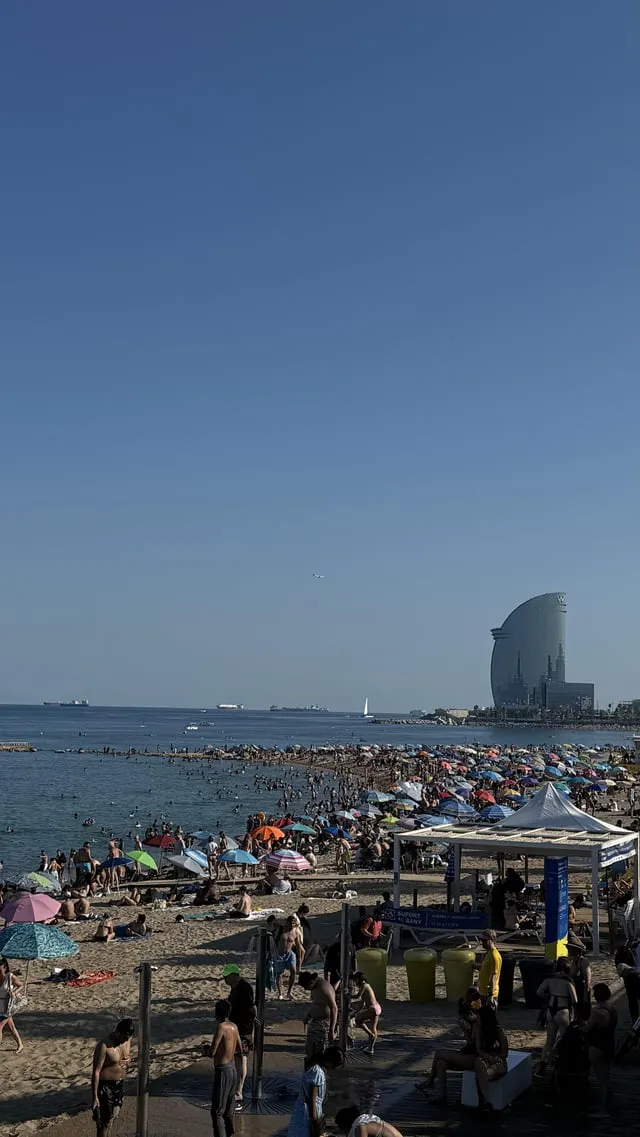
Barceloneta isn’t just a beach tacked onto a city break — it’s a legitimate reason some people book Barcelona as a destination in the first place. The Mediterranean waterfront delivers proper sand, reliable summer swimming (October is still viable, per firsthand experience), and a beachfront promenade that works equally well at sunset or mid-afternoon. Peak summer weekends push the busy factor into genuine overcrowding territory, but even then the beach-club scene — a calmer, more accessible version of what you’d find in Ibiza — provides a structured alternative to fighting for sand space. Water sports options are plentiful for those wanting more than passive sun exposure.
For the Day 2 close, a seafood dinner here anchors the evening beautifully. Can Solé is the classic recommendation — the squid-ink arroz negro specifically — with a post-dinner drink on the promenade as a natural follow-on. Bar Canete works equally well as a final dinner option for those after something slightly less formal. The easy metro connection means this area also functions as flexible backfill if earlier days ran over schedule or weather shifted plans — a vibrant coastal reset that costs nothing to simply walk through even if a full beach day isn’t on the agenda. The Montjuïc cable car operates nearby as an optional extension for those who want to connect the two areas in a single afternoon loop.
Bunkers del Carmel
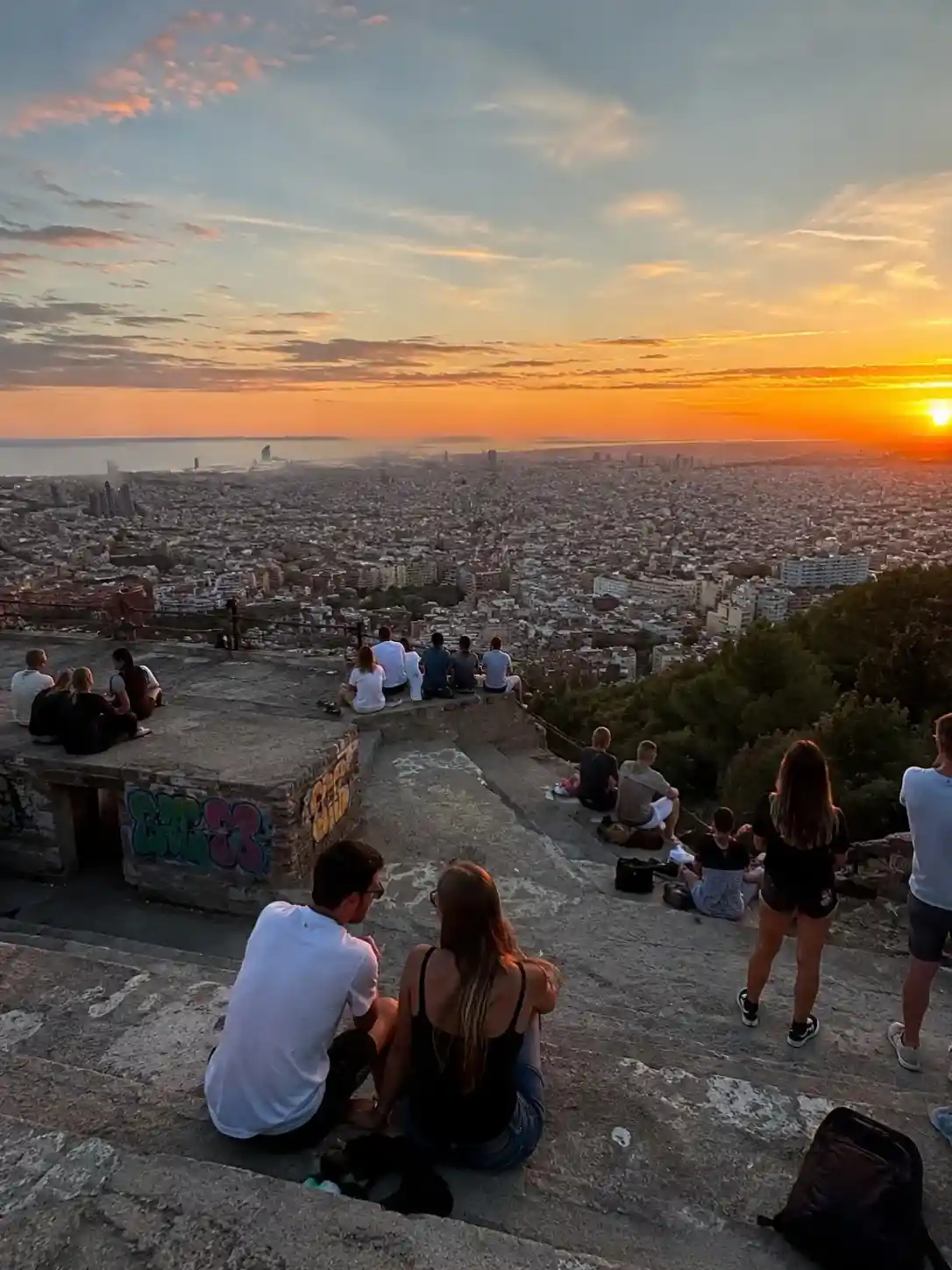
Most Barcelona visitors never make it to the Bunkers del Carmel, which is exactly the kind of off-the-beaten-path detail that separates a decent trip from a genuinely memorable one. Originally built as an anti-aircraft battery during the Spanish Civil War, these ruins now sit inside Parc del Guinardó as the city’s most atmospheric hilltop viewpoint — a genuinely historic platform delivering panoramic skyline and city views that arguably surpass anything you’ll get from a paid observation deck. It’s popular among locals for exactly this reason, and the evening energy here has a quality that no official landmark quite replicates.
The sunset is the obvious draw — Barcelona’s unofficial best-kept secret for golden-hour views — though the views hold up well any time of day if sunset timing doesn’t fit your schedule. One practical note worth flagging: police routinely clear the area around 7pm for noise control, so arriving early enough to actually settle in matters. It works perfectly as an alternative evening option to the standard tapas tour circuit, particularly for those who’ve already eaten well and simply want to sit with the local crowd and watch the city light up below.
Casa Vicens
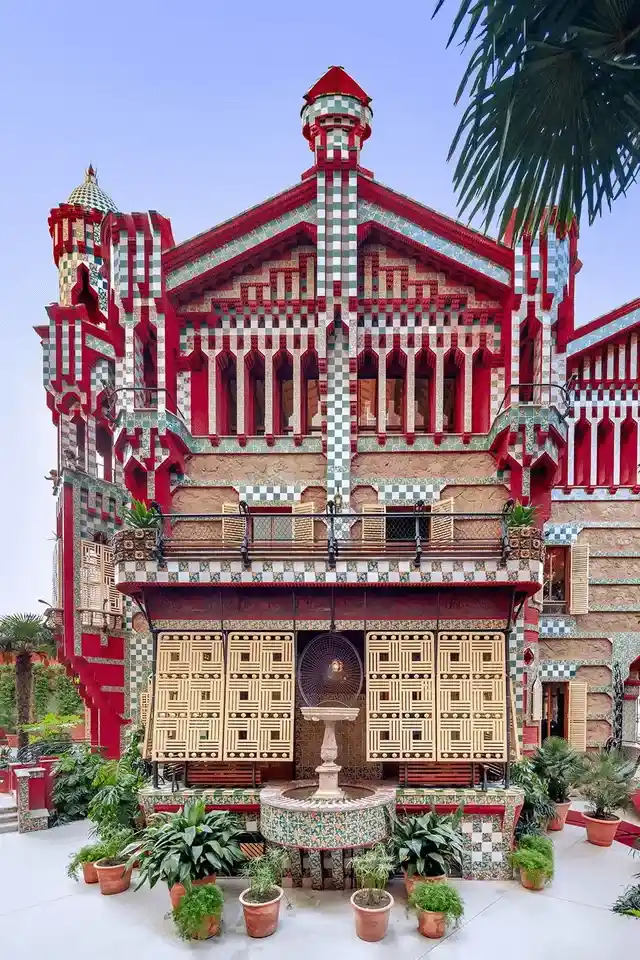
Casa Vicens is Gaudí’s acknowledged first major work and a UNESCO site in its own right — yet it remains conspicuously uncrowded in a city where every other building with his name attached has queues around the block. That relative quiet is its own reward. The aesthetic here reads as a Moorish, neoclassical, and nature-inspired mix unlike anything in his later catalogue — colorful decorative tiles covering the facade in intricate patterns that feel both North African and distinctly Catalan. Budget 1 to 1.5 hrs and arrive without the compressed schedule that the bigger Gaudí sites demand.
Positioned in the Gràcia neighborhood, it sits naturally on the route between Park Güell and Casa Milà — making it a logical optional add-on rather than a separate mission. The surrounding streets around Carrer de Verdi, Plaça del Sol, Plaça de la Virreina, and Mercat de l’Abaceria all offer their own texture if you’re not in a rush. This is Barcelona heritage presented without the performance of mass tourism around it — a genuinely residential architectural experience that rewards the visitors willing to look slightly beyond the obvious circuit.
Gràcia Neighborhood
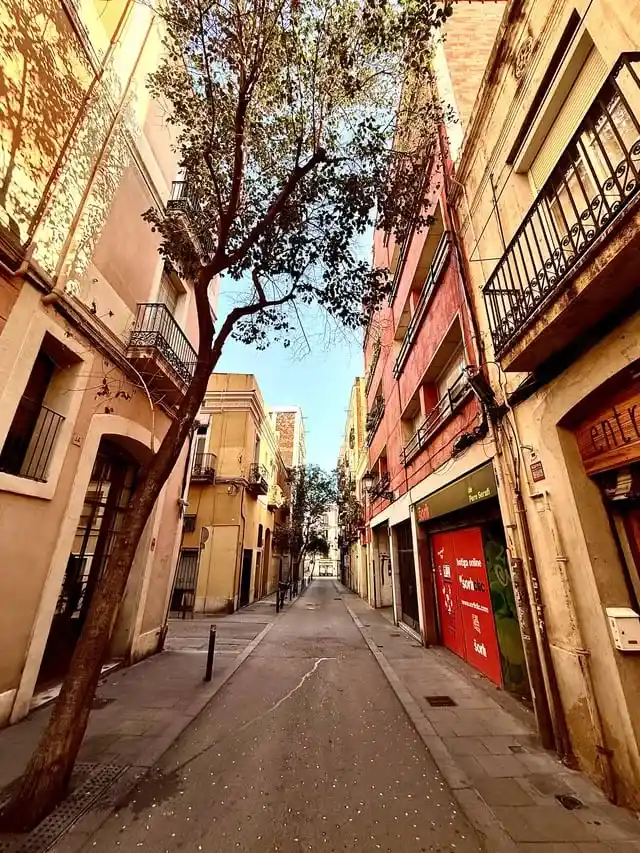
Gràcia operates on a different frequency from the rest of Barcelona — more village-like, genuinely residential, and carrying a bohemian local feel that the more visited neighborhoods have largely traded away. Plaça del Sol functions as the social hub of the area, the kind of square where people actually live their evenings rather than perform them for Instagram. Dinner here at Bocanariz Wine Bar or La Xula Taperia covers the food angle well, and finishing with dessert at Nabucco Tiramisu in Plaça de la Vila de Gràcia is a small indulgence worth building into the evening dining plan.
The coffee culture in Gràcia runs genuinely deep — Syra, The Madness, Hidden Coffee Roasters, and SlowMov all deliver quality well above the city center average and provide a natural transition stop on the way down from Park Güell. The neighborhood won’t overwhelm you with must-see Catalan culture landmarks, but that’s the point — the boutique streets, independent shops, and relaxed atmosphere of local life here are the attraction. It’s authentic in the way that word usually promises but rarely delivers.
Day Trips (Girona / Montserrat / Sitges / Costa Brava / Tarragona)
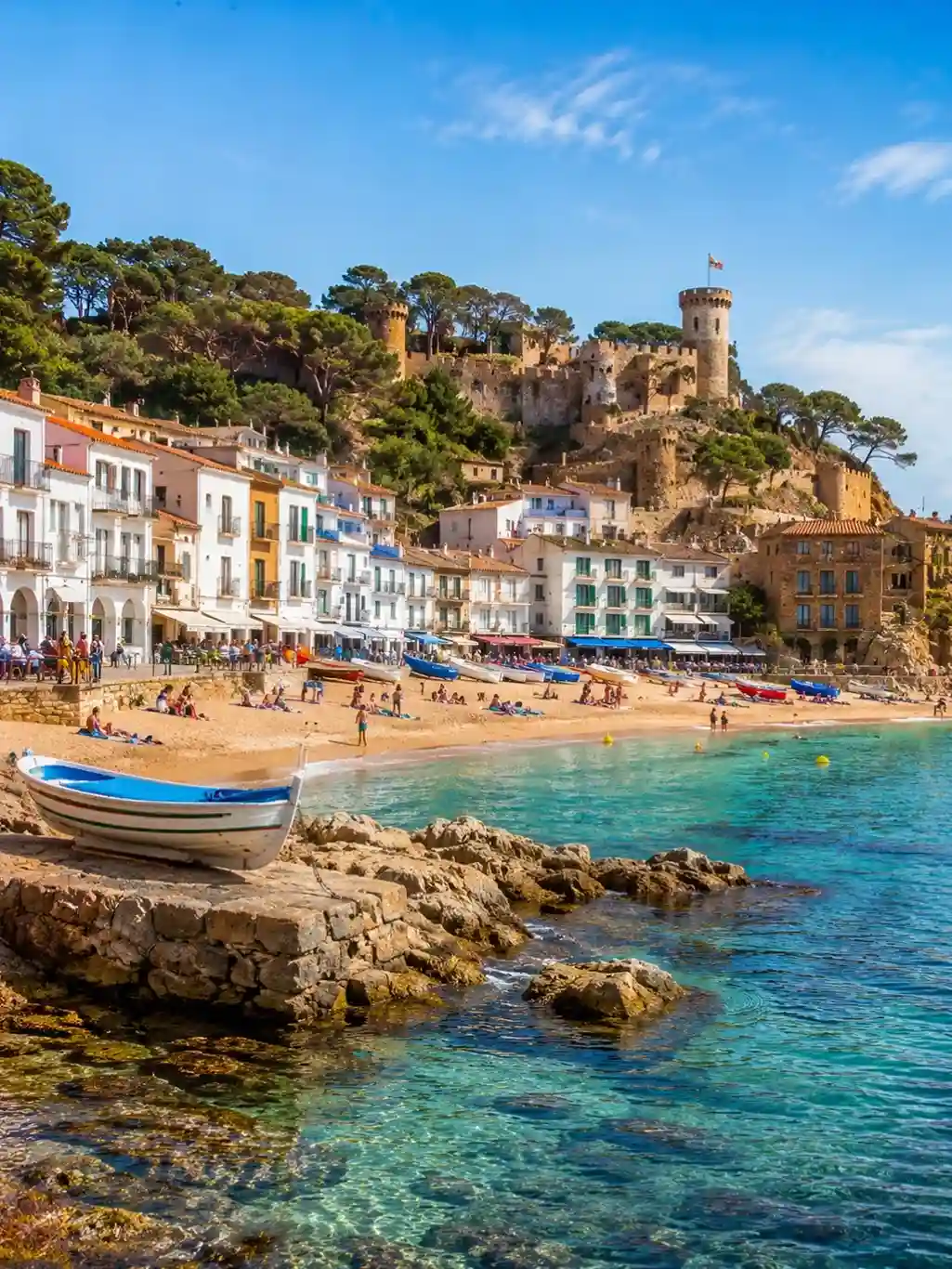
An optional 4th day opens up a genuinely strong set of excursions, each with its own character. Girona sits just 1 hr by train and is the most consistently recommended day trip to do independently — the medieval city center, colorful houses above the river, and Roman ruins embedded throughout justify the easy journey without needing to pay a premium for a guided day trip. Sitges, reachable in 40 min by train, works beautifully as a beach and arts town escape — compact, charming, and easily combined with Tarragona for a Roman ruins pairing if you want historical density. Montserrat requires roughly 1 hr by train plus a funicular or some hiking to reach the Benedictine monastery and Black Madonna statue — a half-day private guided tour with cable car access is the most efficient route, and the landscape justifies the effort entirely.
Costa Brava is the one destination on this list that genuinely benefits from a rental car — the coastline villages of Tossa de Mar, Calella de Palafrugell, and Cadaqués are each rewarding in their own right but awkward to access purely by public transport. A wine-tour lunch pairs naturally with the Montserrat route for those wanting the scenic landscape and a table with a view of the Catalonia region at its most dramatic. These aren’t extensions that dilute the Barcelona experience — they’re the trips that contextualise it, placing the city within the broader cultural heritage and geography that makes this corner of Spain so consistently worth returning to.