What to Wear in Florence: 35 Chic Florence Outfit Ideas & Packing List for Every Season (2026 Guide)
I didn’t fall in love with dressing for Florence overnight — it took a few trips, a couple of packing mistakes, and one too many mornings caught without a jacket to figure out what actually works. Somewhere along the way I picked up a quote that stuck with me, one credited to Virgil Thomson, about how this city has a way of teaching poise without you even noticing. That’s really the core question every traveler ends up asking before a trip here: what do you actually wear in a place built on craftsmanship, history, and quiet authentic expression?
Florence isn’t the only stop that shapes this answer. An experienced Italy traveler — and I say this as someone who’s now logged seven regions and multiple seasons — knows that Rome, Milan, Venice, Lake Como, Sicily, Cinque Terre, and the Amalfi Coast each pull your suitcase in a slightly different direction. Writers like Dana Berez, Jennifer Tattanelli, Maggie Fogg, Angela Sterley, and Lola Mendez have all tackled this from their own angle, but the throughline is the same: your region and season decide almost everything, right down to whether you’ll need that jacket in April or not.
Florence itself does the rest of the convincing. Picture golden summer light hitting the Duomo, a seasonal scene near Piazzale Michelangelo with the faint scent of irises drifting through quiet afternoons, or stunning architecture framing the Uffizi Gallery, Ponte Vecchio, and Piazza della Signoria. Institutions like Istituto Marangoni frame the city as a place you simply cannot walk into unprepared — you need a plan that’s relaxed without tipping into try-hard, and polished without slipping into costume. That’s the essence of Florentine style: not a performance, but timeless elegance built on quality and understated sophistication.
Between art, food, wine, and endless sightseeing stops, there’s also the shopping — stylish shops tucked into every region, a curated shopping storefront you can screenshot for outfit recreation, and a brand philosophy (see: Jennifer Tattanelli) that treats artisanal leather heritage as the bridge between Florence and a more modern practical American sensibility. Whether your inspiration leans toward Renaissance romanticism or a cooler, more contemporary modern style sensibility, the practical challenge stays the same — dress for the city, not the fantasy of it, and let your personal style decide the rest.
Overall Florence/Italian Style Philosophy
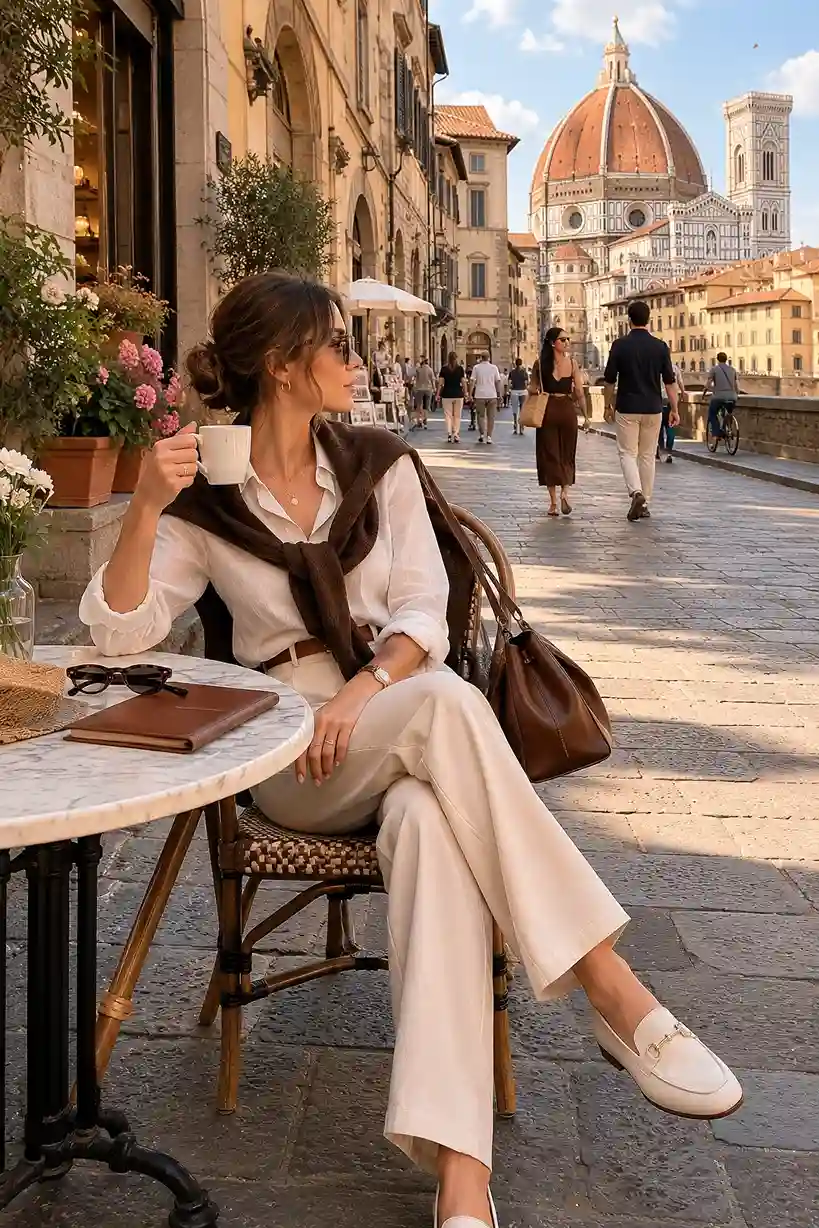
If there’s one lesson I keep relearning in Florence, it’s that comfortable always wins over merely stylish. Locals in major cities like Rome and Milan dress with real intention, but it’s practical intention — broken-in shoes, casual day looks, and only a slight dial-up in the evening. Head out toward smaller towns and the vibe turns more traditional, but the underlying Italian dressing logic — quality over quantity, investment pieces over fast fashion — never really changes.
What actually reads as Florentine style on the ground is a kind of refined restraint. Think elegant without being stuffy, polished without being overdressed, simple rather than fussy. The color palette borrows directly from the city itself — chocolate brown, cream, black, occasional burgundy, hints of navy accents — echoing the stone facades and terracotta rooftops you’ll walk past all day. Layer in natural materials like supple leather, merino wool, cashmere, silk, and crisp cotton, and you’ve basically nailed the street style locals have perfected for decades.
Florence’s fashion credentials aren’t accidental, either — this is a city near Pitti Uomo, a major menswear trade show, sitting close to Tuscany’s leather-making districts that quietly supply luxury brands worldwide. Unlike Milan, which chases fast-changing trends, Florence leans into timeless craftsmanship. Your foundational wardrobe pieces should reflect that: a well-tailored blazer, fitted trousers, quality leather shoes, a structured handbag, finished with daily accessories like a silk scarf or fine jewelry.
Blend that with a touch of Renaissance-inspired elegance and modern trends, and you get the real goal — to blend in, not stand out as an obvious tourist. The whole look should feel glamorous yet comfortable, feminine without effort, occasionally modest, dressed in luxurious materials like soft merino wool and buttery leather, pulled from a natural color palette that feels romantic because it’s borrowed straight from the Renaissance scenery surrounding you — you’ll be logging thousands of steps, so dress up smart, not stiff.
General Packing & Practical Tips
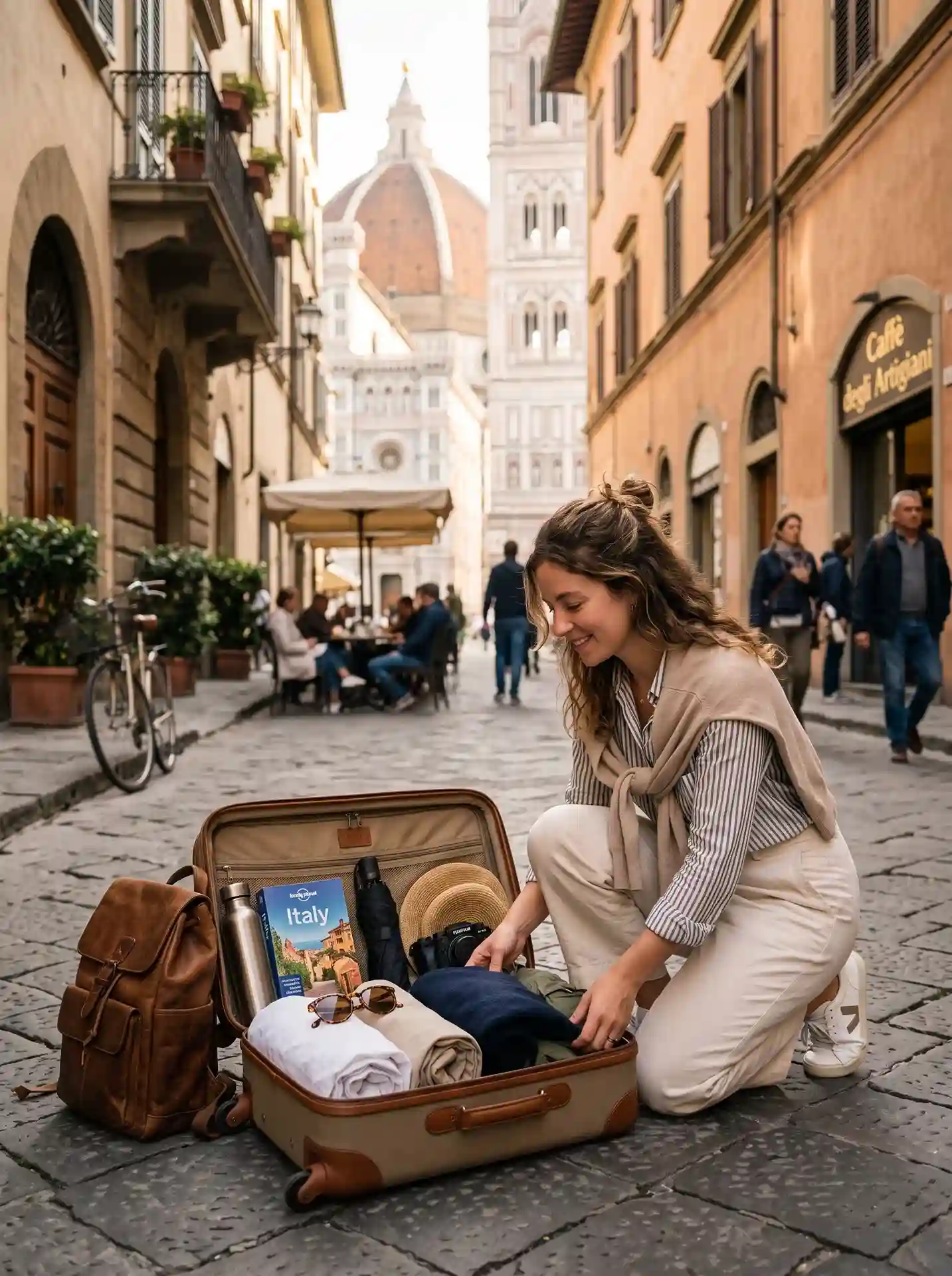
Packing for Italy starts with admitting there are genuinely four seasons here — cold winters, hot summers, and everything between — which means your style choices shift depending on northern regions versus southern regions. Florence and Rome call for a city sightseeing wardrobe, while a coastal trip demands something else entirely, so figure out your itinerary before you fold a single item.
Every one of my trips has reinforced the same golden rule: never let painful shoes or impractical bags ruin a day, especially once you factor in cobblestone streets, endless stairs, and uneven stone streets underfoot. Sturdy shoes, a durable suitcase, and genuinely comfortable shoes matter more than any single outfit — you’ll easily rack up 8–10 miles without noticing.
A simple capsule wardrobe approach saves your sanity: one sightseeing outfit, one dressier outfit, pieces that mix and match across the trip. Don’t forget a shawl to cover shoulders when you’re stepping into churches or other religious sites — comfort first, always, but respect the space you’re walking into.
Spring Outfits
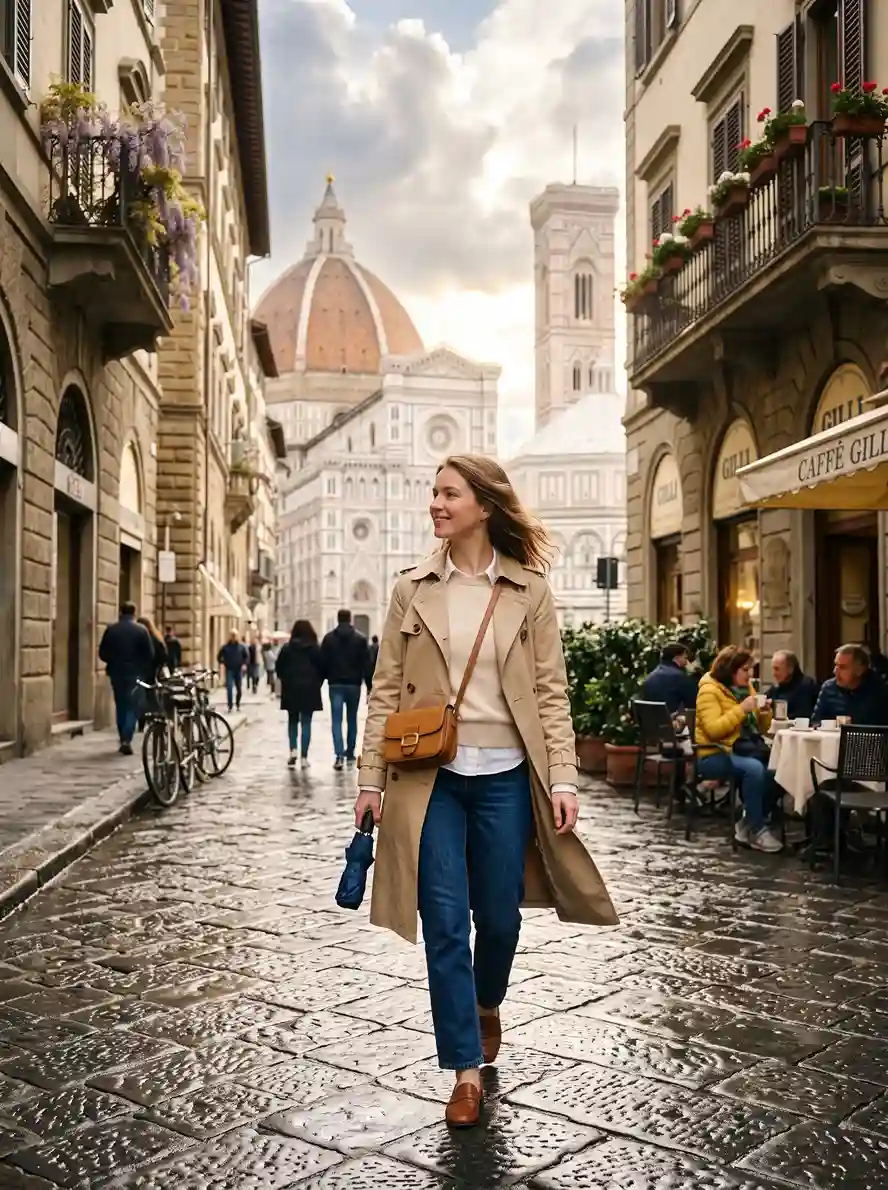
Spring in central Italy is moodier than people expect — wetter, windier, hovering around average temts (43–59°F), with April earning its reputation as the rainiest month, sometimes with real thunderstorms. Mornings and evenings stay properly crisp and cool even once afternoons warm up, so don’t be fooled by a sunny lunch hour.
A light jacket genuinely earns its suitcase space here — a trench, rain jacket, or classic leather jacket covers you through chilly mornings and nights. I’ve also come to appreciate a reversible leather jacket, sleeker than the typical motorcycle style, for layering without bulk. Underneath, lightweight long-sleeve shirts or a lightweight cashmere sweater (or simply a merino sweater) do the heavy lifting.
For bottoms, long pants in lighter colors brighten things up, while slim dark jeans or tailored trousers stay dependable. A crisp white shirt paired with slim cigarette pants channels a bit of Sophia Loren or Audrey Hepburn-era glamour, especially in a black-and-white check or a bold burnt sienna. Maxi dresses, long skirts, or a midi skirt all move easily from daytime strolls to dinner or fine dining.
On feet, comfortable leather ankle boots or minimal white sneakers handle the walking, while sophisticated flats — think neutral-toned, soft pink, or cream d’Orsay flats — pair with skirts, jeans, or trousers alike. Finish with a silk scarf for warmth and a quality crossbody bag to keep your hands free through late March into early June.
Summer Outfits
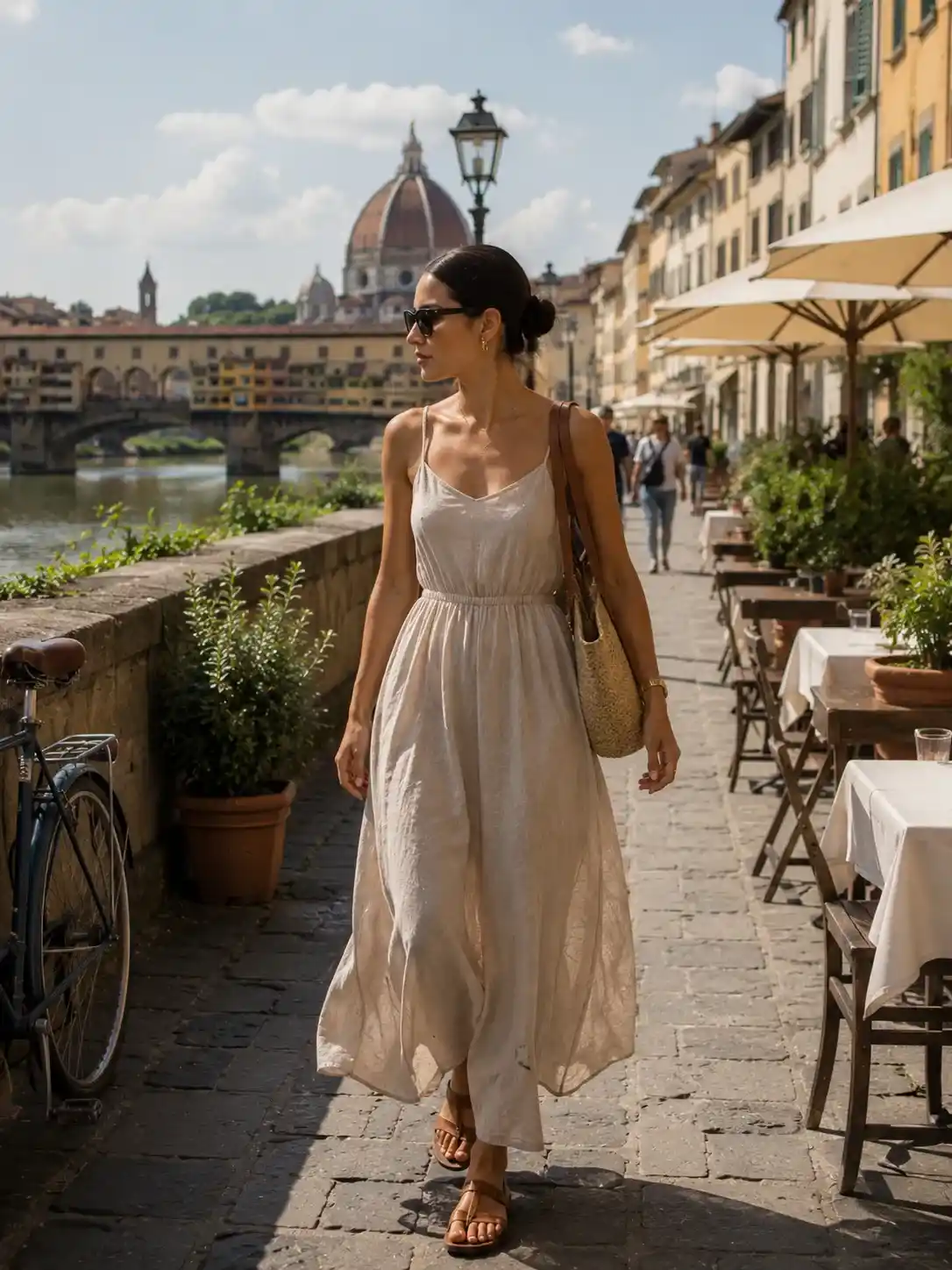
Summer arrives hot and humid, stretching from late June to early September, with highs (89–108°F) pushing everyone toward shade or AC once midday heat sets in. Linen earns its title as the unofficial fabric of the season — lightweight, fast-drying, endlessly breathable — while cotton picks up the slack in cotton tees and a crisp cotton shirt.
Sundresses, a lightweight day dress, or a flowing midi skirt paired with a blouse or silk tank make for effortless dressing; a linen-based maxi dresses situation doubles beautifully as a beach coverup for coastal add-ons. Stick to tailored shorts, linen shorts, or linen pants over jean shorts, and favor sleeveless cuts and linen tops for actual breathability.
Footwear stays simple: flat leather sandals by day, heels reserved strictly for dinner. Comfortable sandals or comfortable walking shoes beat anything precarious on cobblestones. A straw bag or structured leather tote carries you through, in neutral tones like beige, soft gray, or navy, with cream as an easy default.
Two things I never skip: something non-revealing to throw over a swimsuit for modesty near cathedrals — you’ll want to cover shoulders — and breathable coverups packed alongside any swimwear for daytime stops.
Fall/Autumn Outfits
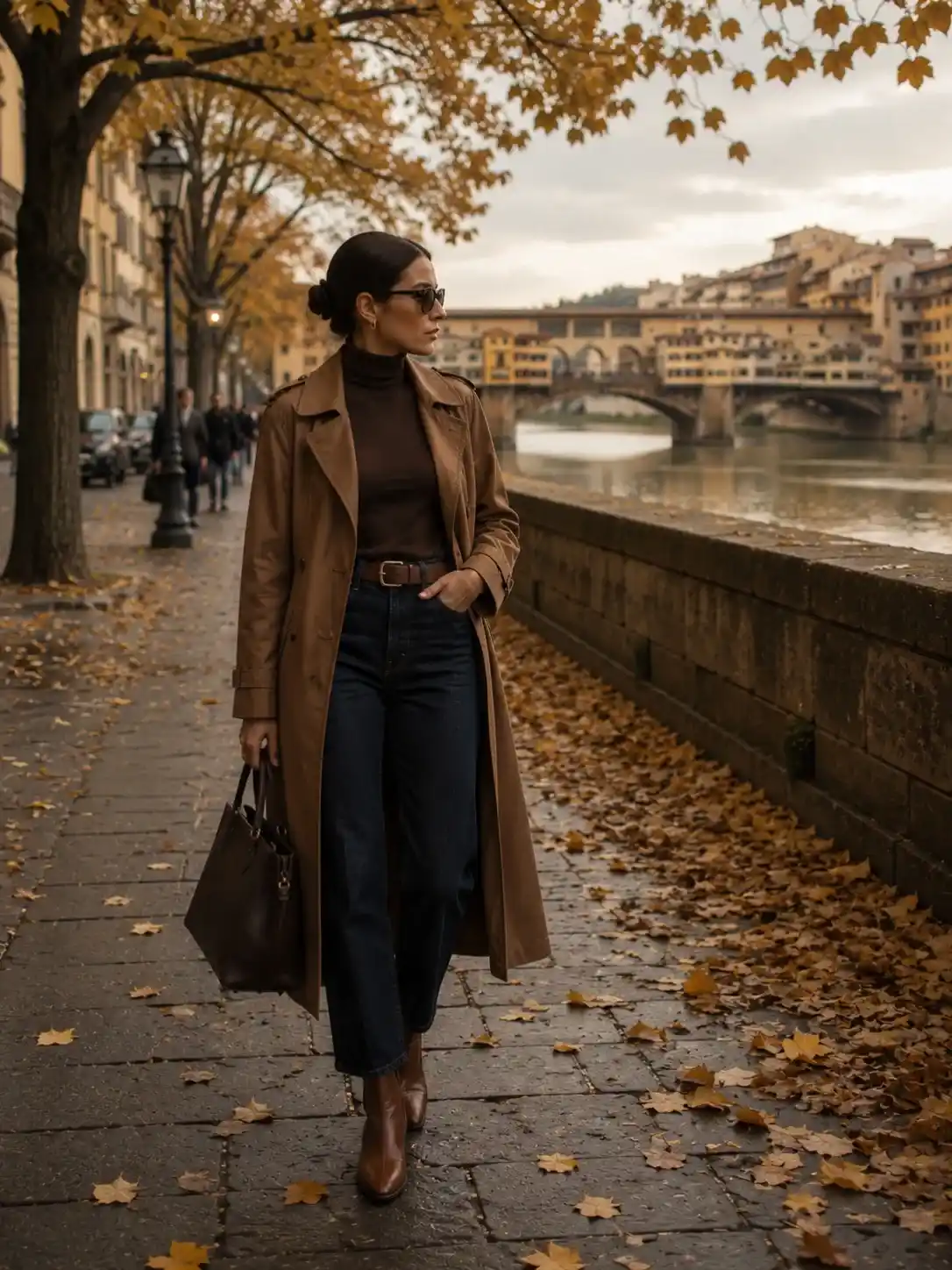
Fall, or autumn if you prefer, opens mild — often carrying summer heat into late September and early October — before cooling toward early December, generally landing around 45–70°F. Florence stays gentler than you’d expect, rarely dipping much below 65°F, or 18°C, though a chillier breeze off the Arno shows up once evenings settle in.
Outerwear becomes the star: a leather jacket, lightweight puffer, or jean jacket all work, and I personally lean on a timeless trench coat or faux leather motorcycle jacket to toughen up a ladylike look. A leather trench or tailored wool coat adds real sophistication when the cool weather kicks in properly.
Layer a thin turtleneck in earth tones under a patterned blouse, or swap into long-sleeved tees early on and a fine-gauge knit paired with leather bottoms once it drops further. Bottoms range from dark-wash jeans and sleek black, white, or wide-leg indigo jeans to a midi A-line skirt, pleated skirt, or butter-soft leather skirt — just steer clear of distressed denim or cutoffs. Maxi dresses and maxi skirts with leggings underneath add warmth on cooler days.
Finish with ankle boots, or simply booties, in cognac or black — genuinely a fall/winter staple — or lean into sneakers for something more casual, plus a cashmere scarf in complementary tones, a felt floppy hat, a statement necklace, and a delicate watch. Multiple sources agree this is peak elegance season for Florence — good light, comfortable temperatures, and a region that photographs beautifully in every direction.
Winter Outfits
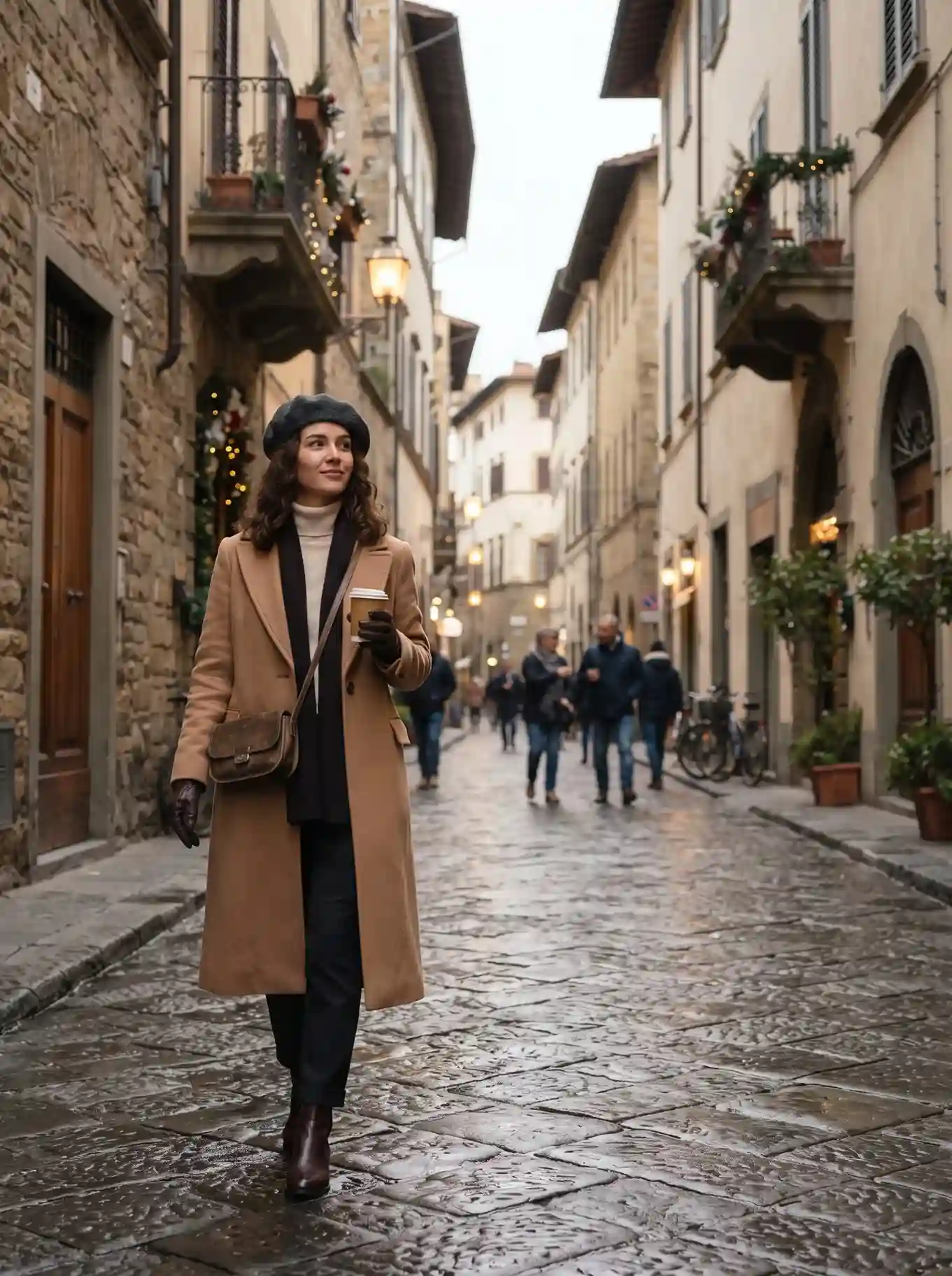
Winter is the coldest season and also the low travel season, which comes with fewer crowds and better deals if you can handle the chill. Rome-area temps hover near 38–54°F, while Florence can dip below freezing, closer to 30°F, or -1°C, on sharper mornings — snow is rare but not impossible from late December through early March.
A heavier winter jacket, puffer coat, or long wool coat brings both warmth and Italian polish; I’ve also worn a quality shearling coat that falls below the knee in camel, charcoal, or black, and it never once looked out of place. Pick one versatile jacket whose coat color pairs easily with your hat and shoes, since you’ll be reaching for it daily.
Cashmere sweaters are non-negotiable for warmth without bulk — layer a sweater over a blouse, or a cardigan over a turtleneck, since heating runs hot indoors in shops and galleries. Long darker-toned pants or trousers finish the look with evening-appropriate polish, and if you’re in a dress, thick tights or felt-lined tights (even over-the-knee socks) keep the cold out.
Accessories do real work here: a winter hat, gloves, a scarf, maybe even a thin inner scarf under a thicker blanket-style outer scarf. On the ground, sturdy leather boots with real traction matter more than anything on rain-slick cobblestones — I’ve learned to skip heels entirely this season to avoid ankle injuries. A structured leather bag in a rich tone rounds things out nicely against gray winter days.
Shoes to Wear in Florence/Italy
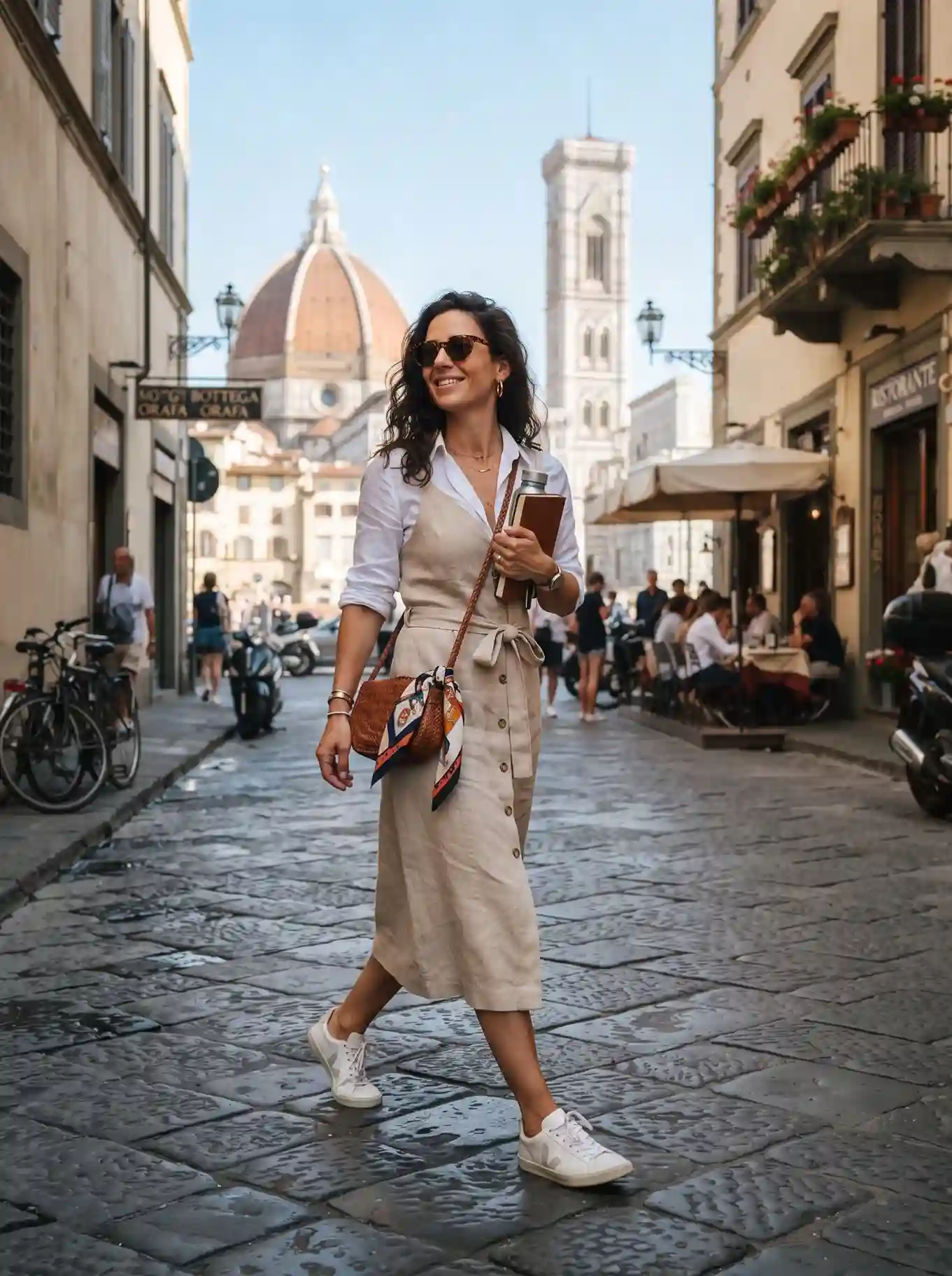
Cobblestones are the great equalizer in this city — every trip has taught me that supportive footwear, or simply comfortable footwear, beats style-first choices, and that goes double for heels. In spring, I reach for minimal white leather sneakers for spring walking, or plain white leather sneakers generally, since they’re versatile, comfortable, and somehow still dressy enough for tourist-friendly spots at dinner.
For warmer months, comfortable sandals with real grip and a back strap — not slides — hold up through long walking days; Birkenstock-style buckle sandals are practically European-approved at this point. Flat leather sandals handle daytime, with heels saved strictly for evenings.
A thicker block-heel sandal or espadrille wedge gives height with more stability than a stiletto ever could. Locally, a Friulane — a flat velvet slipper-loafer hybrid originally from Friuli but thoroughly adopted by Florence — makes a genuinely stylish backup, alongside plain flats or D’Orsay flats in neutral tones.
For fall through spring, chic leather ankle boots or simply ankle boots in cognac or black offer both comfort and evening polish; waterproof leather boots take over once winter traction becomes the priority. Across every season, though, the verdict on high heels stays the same — genuinely impractical daily wear on medieval, uneven stone streets. Even for special occasions, I keep a flat backup nearby to dodge injury.
Bags & Accessories
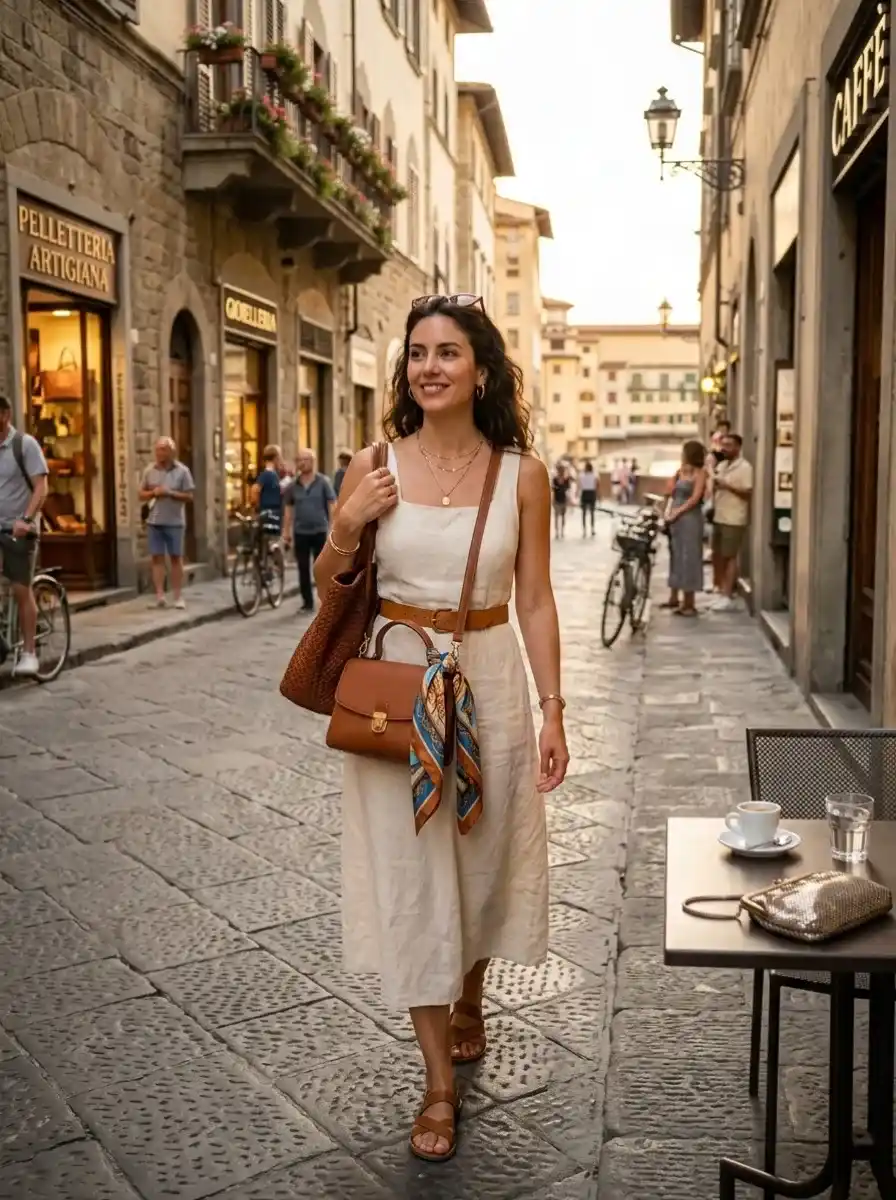
Crossbody bags remain my top pick — secure with zip closures or button closures, hands-free, and roomy enough for a phone, wallet, and room key. If you need to carry more, a small-to-medium, non-athletic-looking backpack is a solid stand-in; for beach days or general errands, a larger tote in leather, canvas, or rattan covers an everyday city bag need nicely.
A colorful scarf might be the single most essential Florentine accessory — practical against the wind off the Arno, styled onto a handbag, and tied directly to the city’s textile heritage (Pucci and Gucci prints come to mind). Jewelry does similar work: bold earrings, bracelets, necklaces turn a simple daytime outfit into an evening-ready look, and Florence’s own jewelry-making heritage rewards a little shopping detour.
My favorite trick is the evening bag hack — a small leather crossbody becomes an evening clutch the second you remove the strap. A compact metal mesh handbag, a quiet nod to the city’s post-war fashion history, works the same magic and is often found secondhand. Round it out with a quality leather belt for waist definition and visual interest, and keep bags sleek and closed — pickpockets exist here too, so totes and backpacks should never feel like an afterthought.
What NOT to Wear / Avoiding the “Tourist” Look
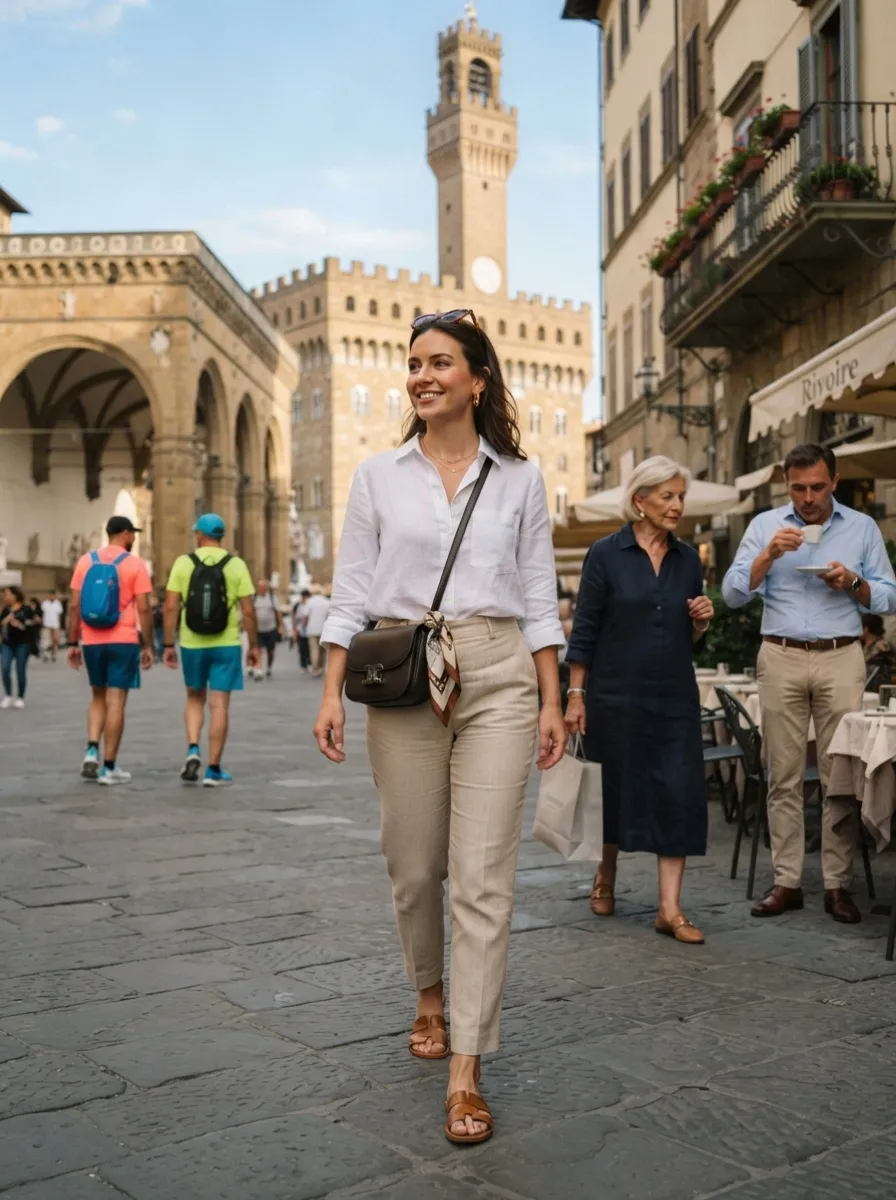
Some things just don’t belong in a Florence suitcase, full stop: flip-flops, thong sandals, basketball shorts, sports jerseys, and anything that screams activewear or athleisure. Leggings fall into the same category — comfortable, sure, but an immediate tourist signal the moment you step off the plane.
Overly revealing clothing doesn’t read well either — short shorts, low necklines, or sheer coverups worn casually around town feel out of step with how genuinely modest the local dressier instinct actually is. Distressed jean shorts and loud graphic tees or novelty tees land in the same touristy, distinctly American bucket; a plain-colored tee and tailored shorts or simple tees look sharper for the same amount of effort.
Footwear rules apply here too — skip proper sandals’ cousins, the flimsy kind, and lean toward real sneakers instead. The whole philosophy boils down to one line I repeat to myself every trip: dress like you care, but resist trying too hard — locals spot a costume outfit from a mile away, even in peak summer heat, and blending in always beats performing for the camera.
Day-to-Night Outfit Strategy
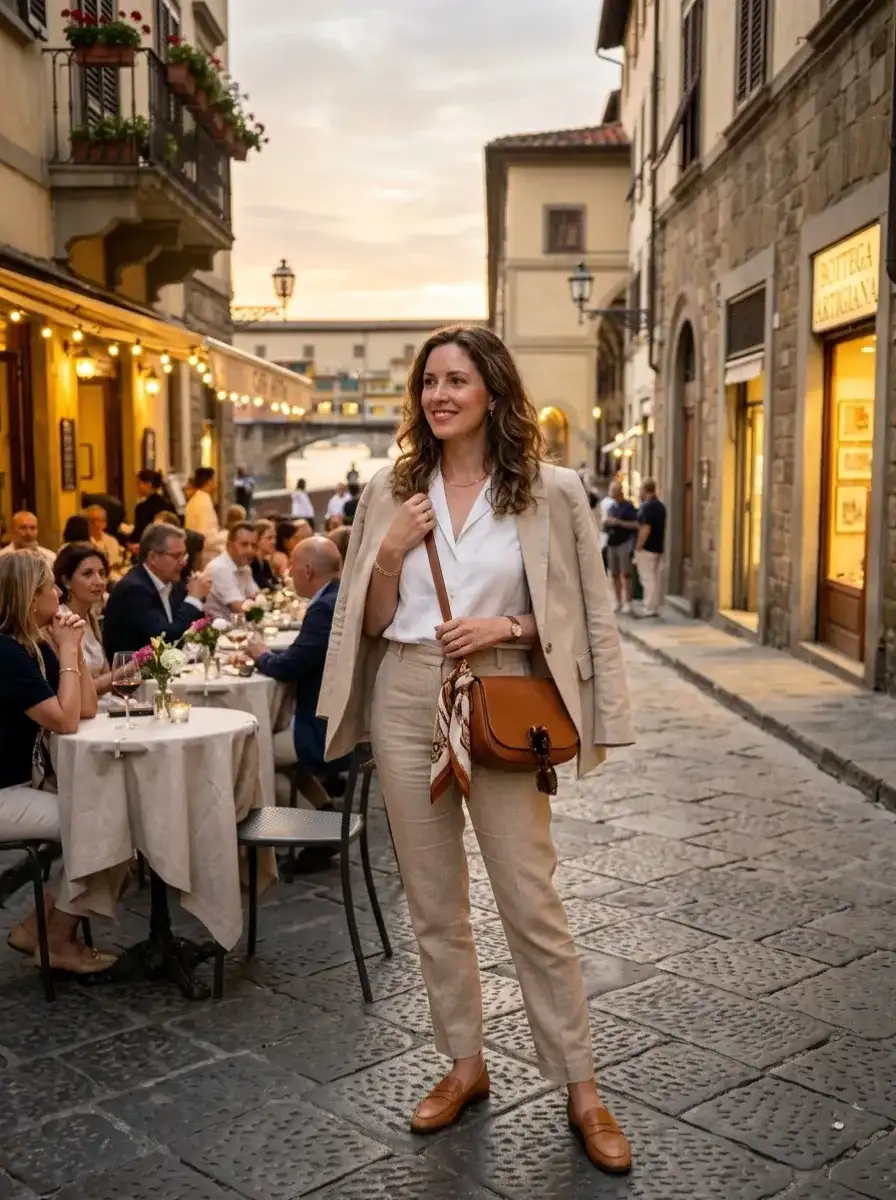
My go-to move is building the day around one elevated neutral piece — trousers, a skirt, or fitted jeans — paired with a simple top, then adding a statement jacket or blazer for daytime. It’s a main-piece strategy that means casual sightseeing clothes can carry you straight through to evenings out with barely any effort.
Come evening, the trick is subtraction and swaps, not a full outfit change: pull the jacket removal, trade flats for heeled boots or loafers, add bolder jewelry and a swipe of lipstick. Suddenly you’re dressed for dinner or a night near the museum without repacking anything.
Tonal dressing does a lot of quiet work here — sticking within one color family, or a few shades of it, whether that’s cream, camel, or cognac, keeps the whole look feeling like a cohesive look rather than two separate outfits stitched together. Accessories — scarves, jewelry, sunglasses, a swapped bag — end up being the easiest lever for transforming a look, and they save you from repacking an entirely new wardrobe halfway through the trip.
Where Are You Going / When / How Long?
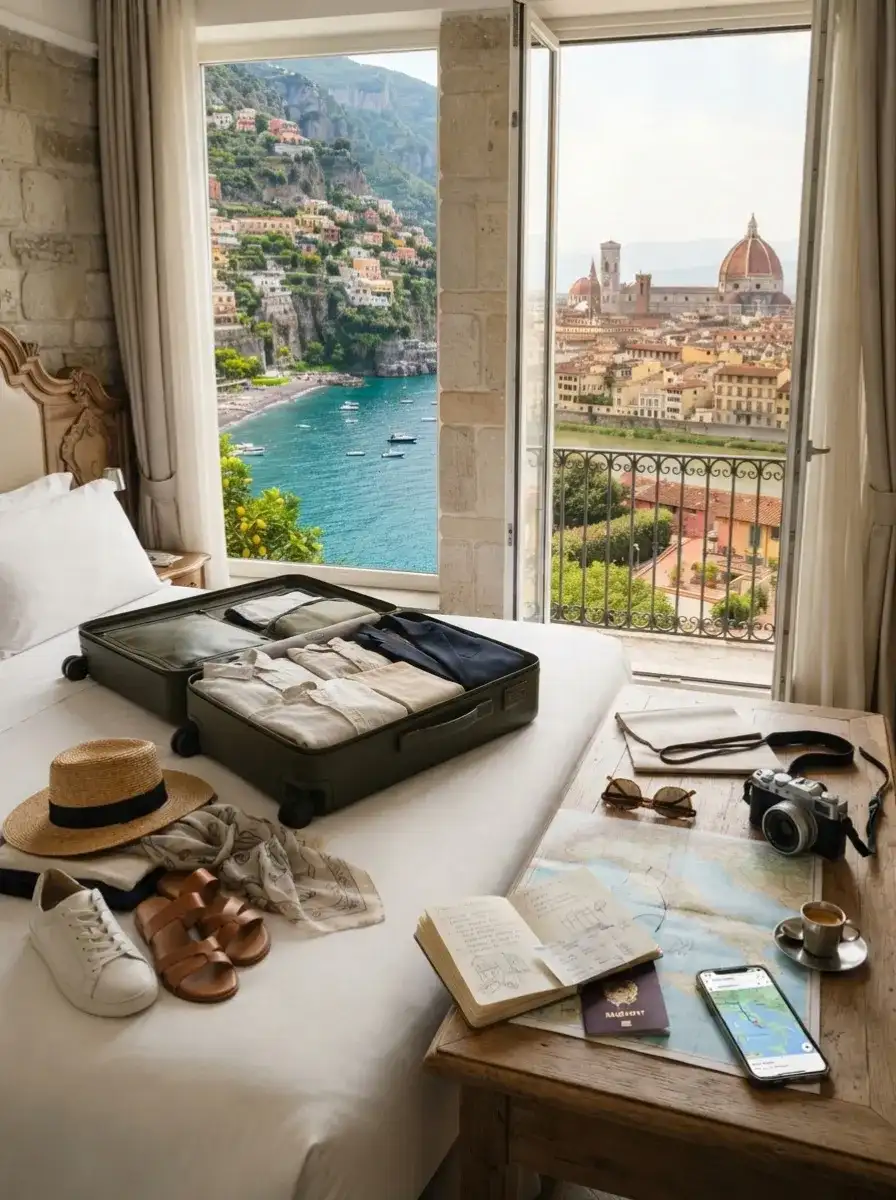
Before you pack a single bag, sit with the real trip-planning questions: are you sticking to cities, or heading toward coastal towns? What season are you traveling in, and what’s your actual trip length? These answers shape the destination type you’re dressing for, and honestly, they decide more about your clothing and your packing strategy than any single outfit list ever could.
Other Things to Pack in Italy
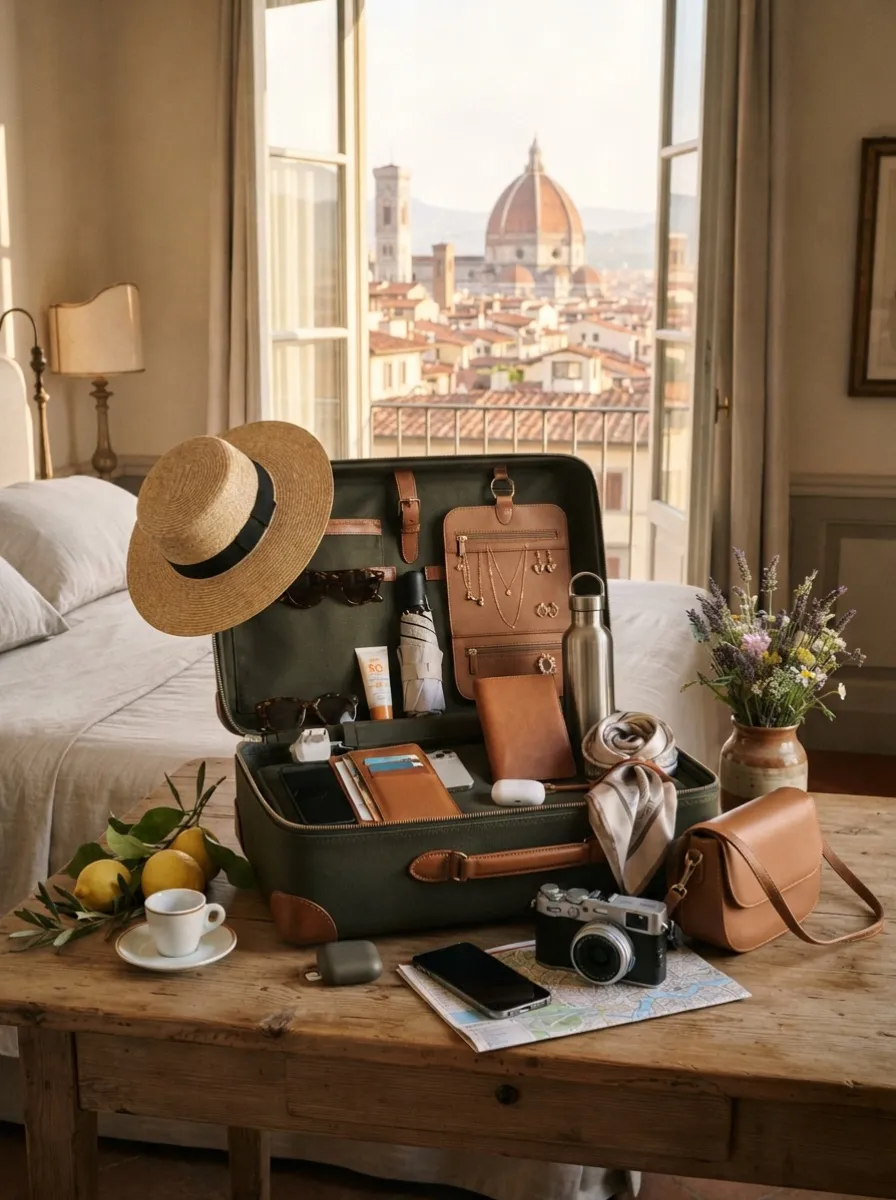
Beyond the outfits themselves, a short list of extras earns permanent space in my bag: sunscreen, a sun hat (with hat clips so it doesn’t fly off near the Arno), sunglasses — including prescription options if you need them — a compact umbrella for those sudden spring showers, a plug adapter, a hanging jewelry organizer to keep things tangle-free, and an insulated water bottle for the long walking days.
Best Suitcases for Italy
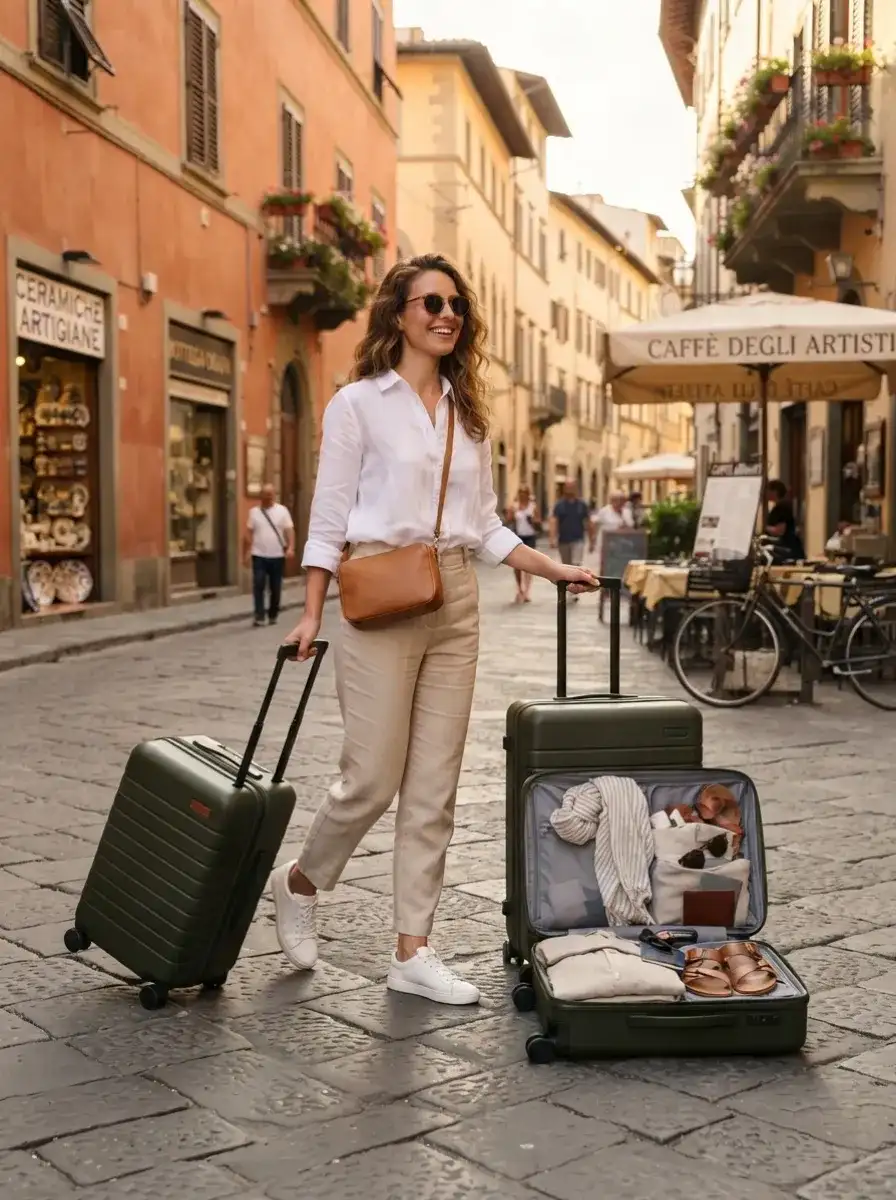
Cobblestones are unforgiving on cheap luggage, so durable suitcases genuinely matter — names like Samsonite, Delsey, and Travelpro come up again and again for good reason. Pair whatever you choose with packing cubes for real organization, and you’ll thank yourself by day three.
Where to Shop for Italy Outfits
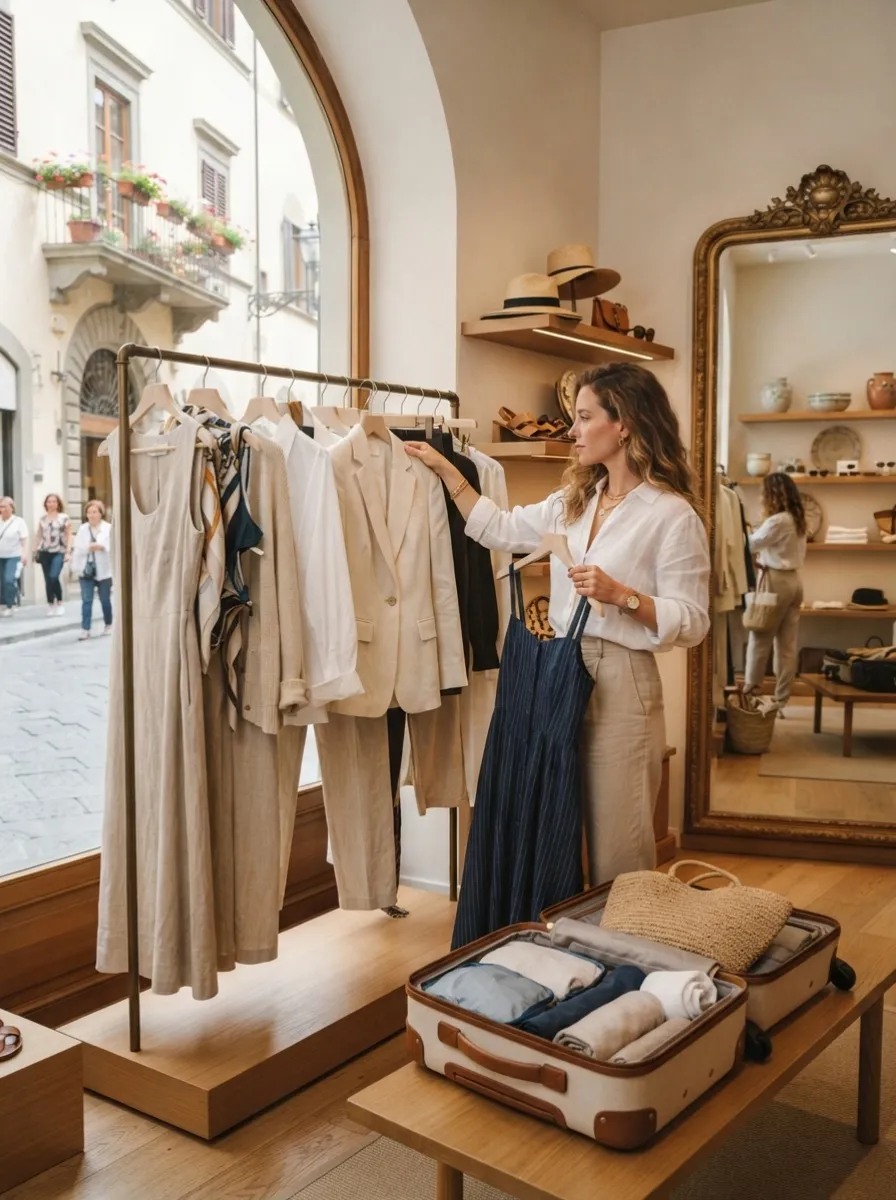
For quick wardrobe building before the trip, Amazon covers basics and accessories, J. Crew handles classic tailored pieces, and Revolve is where I go for trendy dresses and swimwear. Between the three, most retailers you’d actually need are covered.
Is Florence, Italy Known for Fashion?
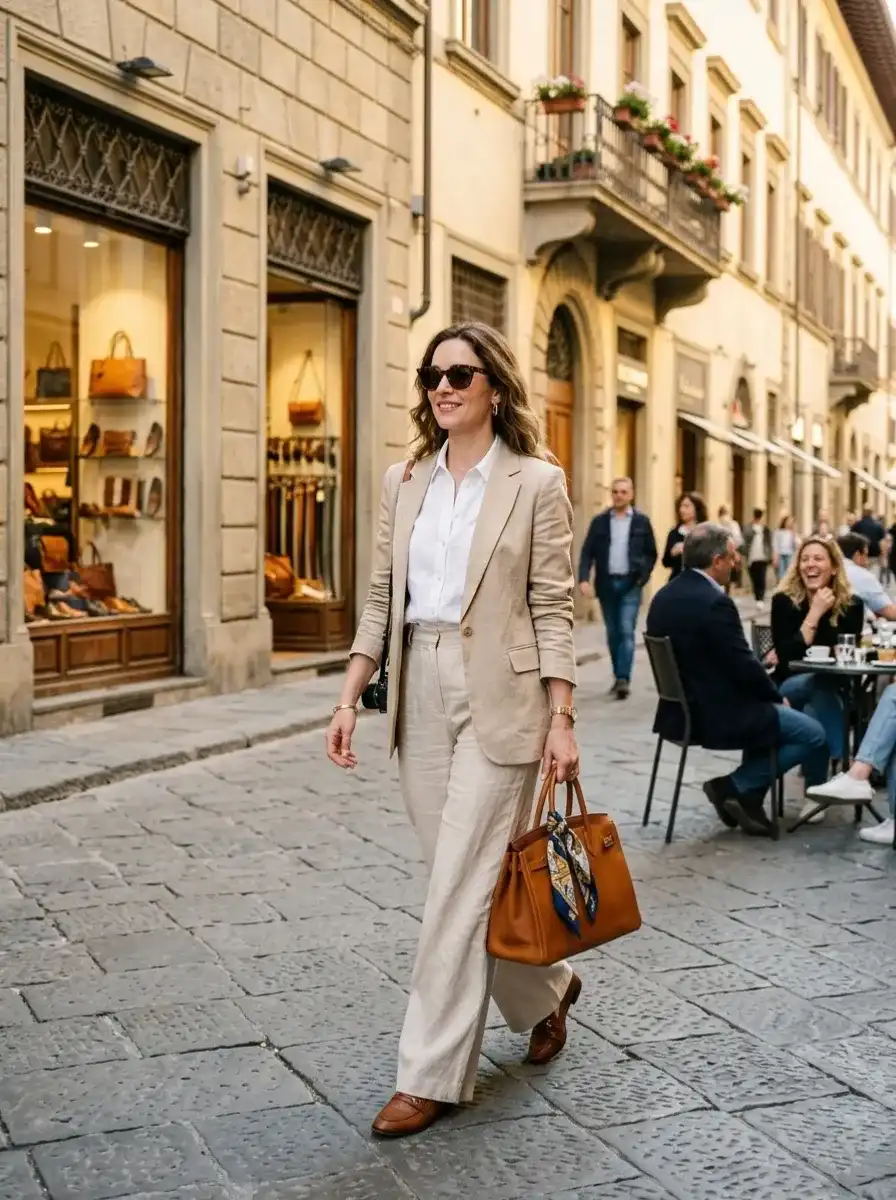
Absolutely — this is a city with genuine fashion pedigree, anchored by Pitti Uomo and its proximity to Tuscany’s prestigious leather-making districts, which quietly feed global luxury brands around the world. Where Milan chases a trend-driven fashion scene, Florence holds onto its own Florentine timelessness instead.
The Jennifer Tattanelli Wardrobe Touch
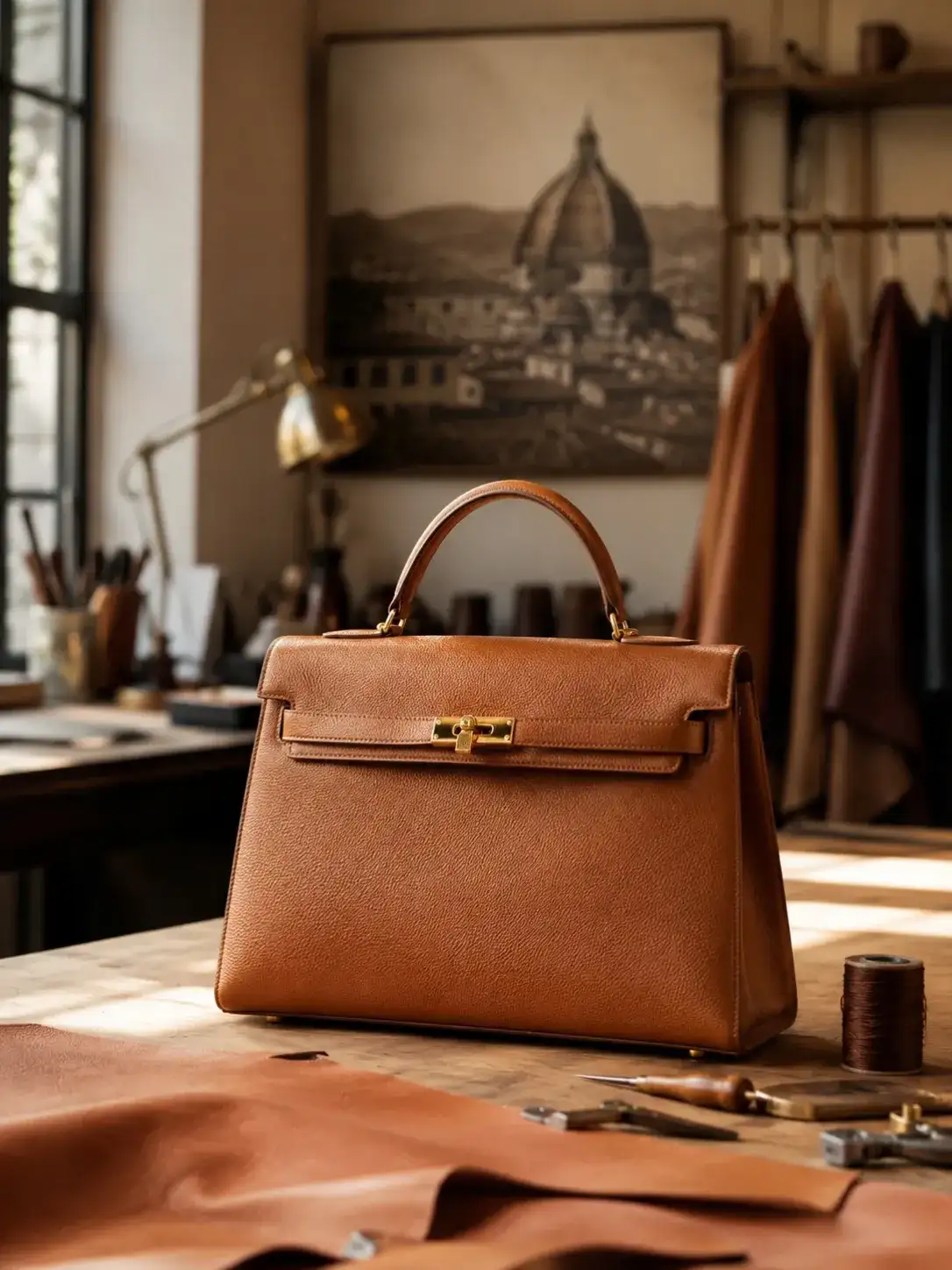
The Jennifer Tattanelli name keeps surfacing in this conversation for a reason — its leather goods line, built in Florence workshops with boutiques stretching to the Hamptons and Palm Beach, leans hard into the Florentine dressing philosophy: real quality construction, timeless design, and a bit of limited-edition exclusivity baked into every piece.
The Silky Slip Dress & Tailored Blazer — Vintage Market Essentials
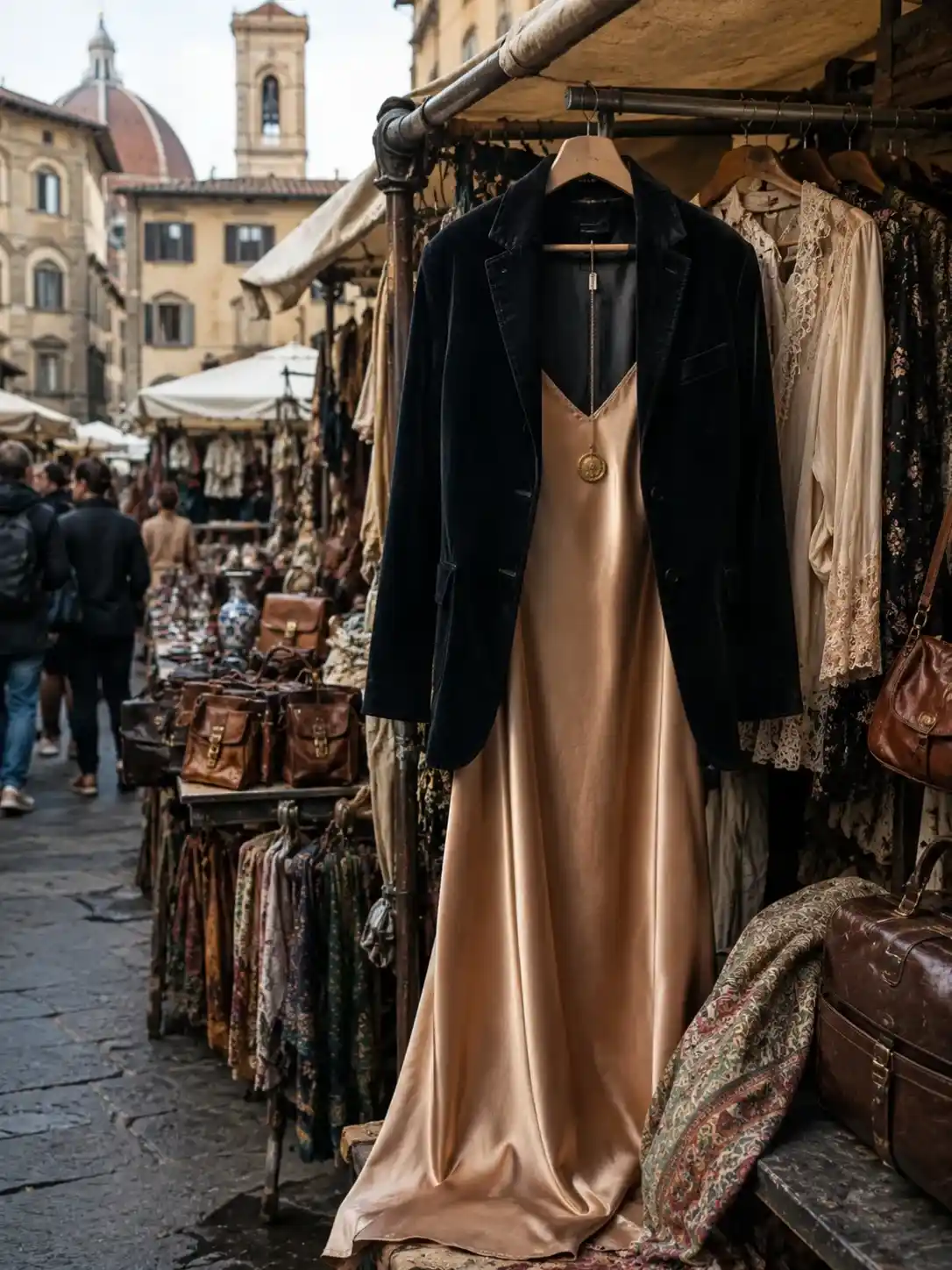
Florence has a real vintage shopping culture — or secondhand shopping culture, depending how you frame it — anchored by spots like the Santo Spirito Sunday market. Look for masculine-cut velvet blazers or wool blazers paired against silk slip dresses, a nod to the city’s historic silk-weaving tradition through Antico Setificio Fiorentino. Local designer Loretta Caponi adds dress details worth hunting for too, including a lingerie-inspired blouse that feels distinctly Florentine.
Sparkle and Shine — Capturing Florence’s Golden Hour
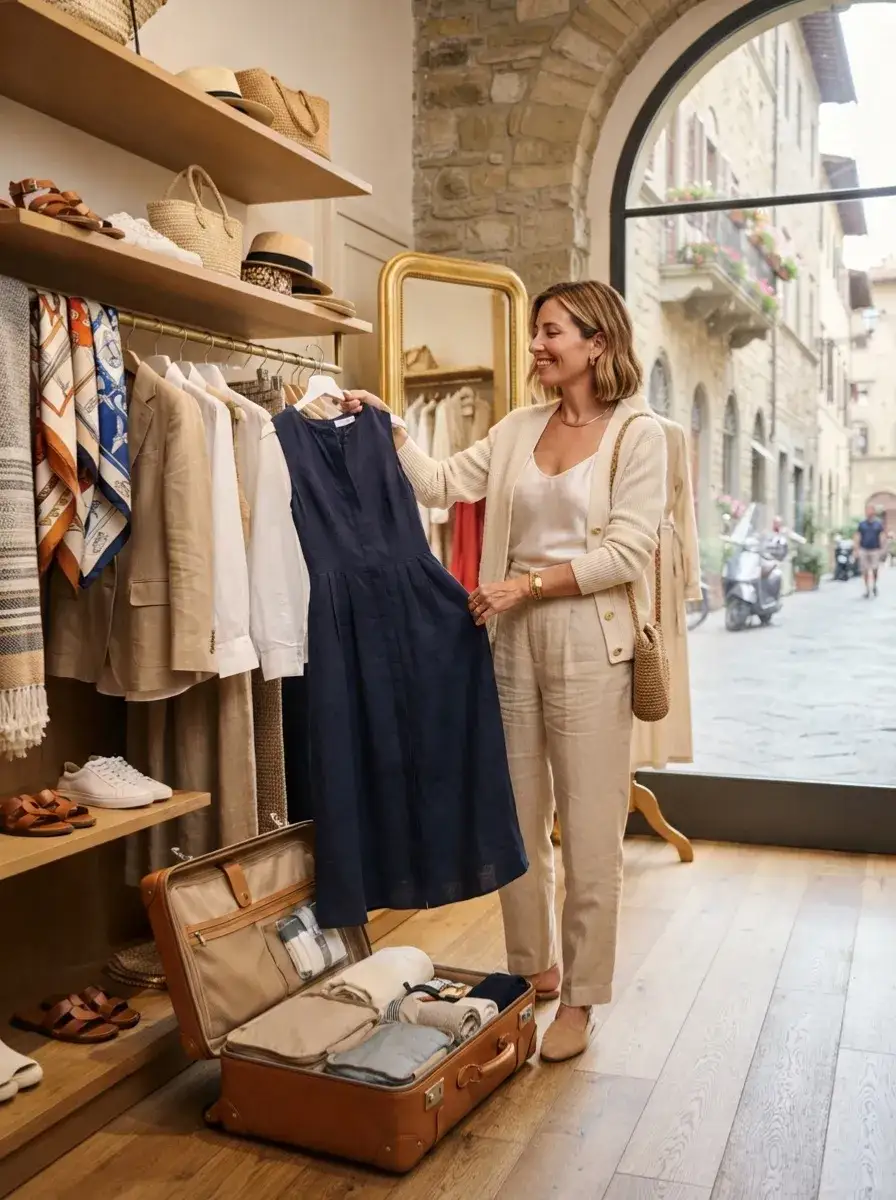
As day slides into aperitivo hour, transitioning accessories become the whole game. The metal mesh handbag trend — a quiet callback to post-war Sala Bianca fashion shows — is my favorite way to shift a look without changing a single garment.
A Touch of the Past — Eclectic Jewellery
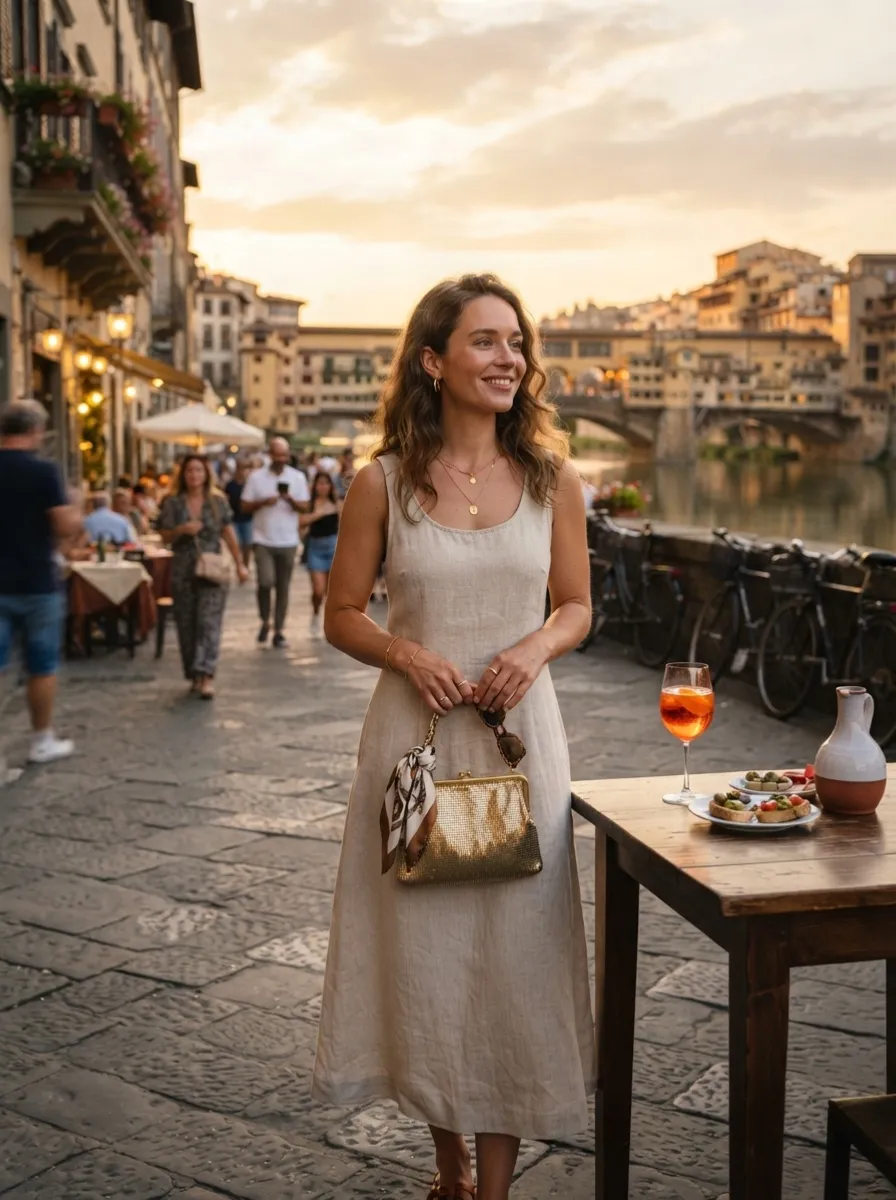
Florence’s Renaissance-rooted jewelry heritage runs deep, and if you want a genuine shopping recommendation, a local jeweler like Arlo Haisek is worth the detour for something that actually says “Florence” rather than a generic souvenir.
What to Do in Florence
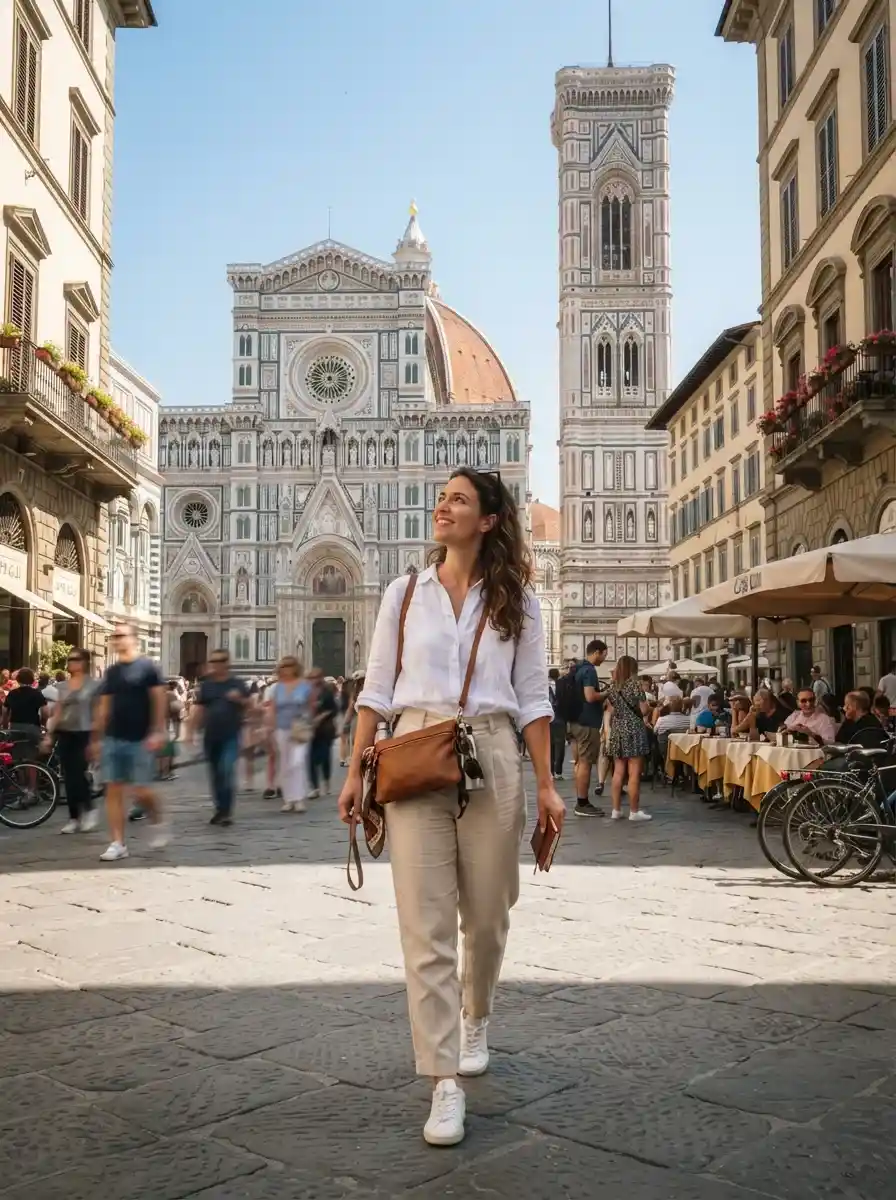
Dress with the day’s plans in mind — the Duomo climb and a stop to see Michelangelo’s David both call for dressing comfortably over anything precious. It’s also smart to build in anti-theft accessories, like money belts or a secret bra pocket, especially if you’re following any kind of sightseeing guide through crowded areas.