Venice Outfit Ideas: What to Wear in Venice for Every Season + Ultimate Packing List (2026)
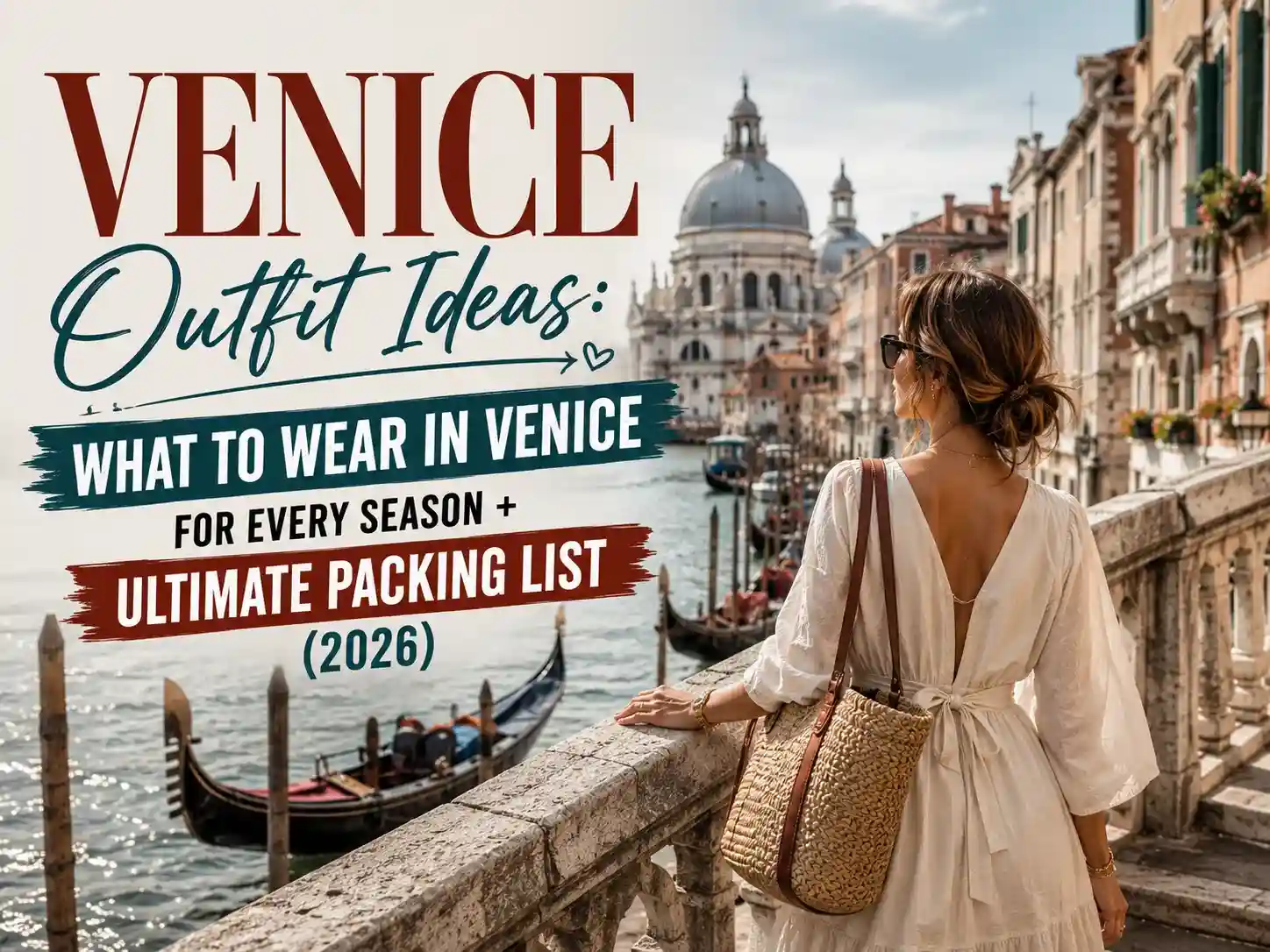
My own Venetian escape began almost by accident — a Rome and Venice getaway tacked onto a longer trip that started years earlier when I was practically still a toddler, sitting in a classroom in Milan during first grade, soaking up Italian culture before I even knew what a packing list was. Fast forward to adulthood, and that same family, now with boys of our own, planned another spring break run through the city, camera in hand, chasing the same rhythm that hooked me as a kid. Venice has always felt like a tourist destination built for romance and decadence, a place where San Marco glows like a postcard and the sights stretch across 118 islands, tied together by 177 canals and 409 bridges — a canal transportation system unlike anywhere else on earth, pulling in roughly 60,000 tourists on a busy day.
What surprised me wasn’t the architecture or the art, though both are staggering — it was how quickly my mindset around dressing had to shift. I showed up with a flowy shirt, bright sneakers, and a head full of designer runway fantasies, only to realize Venice doesn’t reward that kind of loud style. The weather turns on a dime across seasons, from humid alleys in summer to slippery bridges in winter, and overpacking heavy clothing only slows you down when you’re trying to blend in and fit in with the locals strolling past in quiet colors.
This guide is my attempt to hand you the Italy packing list I wish I’d built before that trip — a working layer system and a set of accessories that carry you through every fashion mecca cliché without the decoration for decoration’s sake. Think mix and match basics that move from a plate of pasta at lunch to an evening stroll, shoes that won’t wreck your feet, and a few well-loved shoes and pressed shirts that earn their guide-worthy reputation because they simply work — whether it’s spring, autumn, or deep winter, and whether you’re chasing gelato near the Queen of the Adriatic or just trying to look comfortable and fashionable in photos.
Venice Style / Clothing Mindset
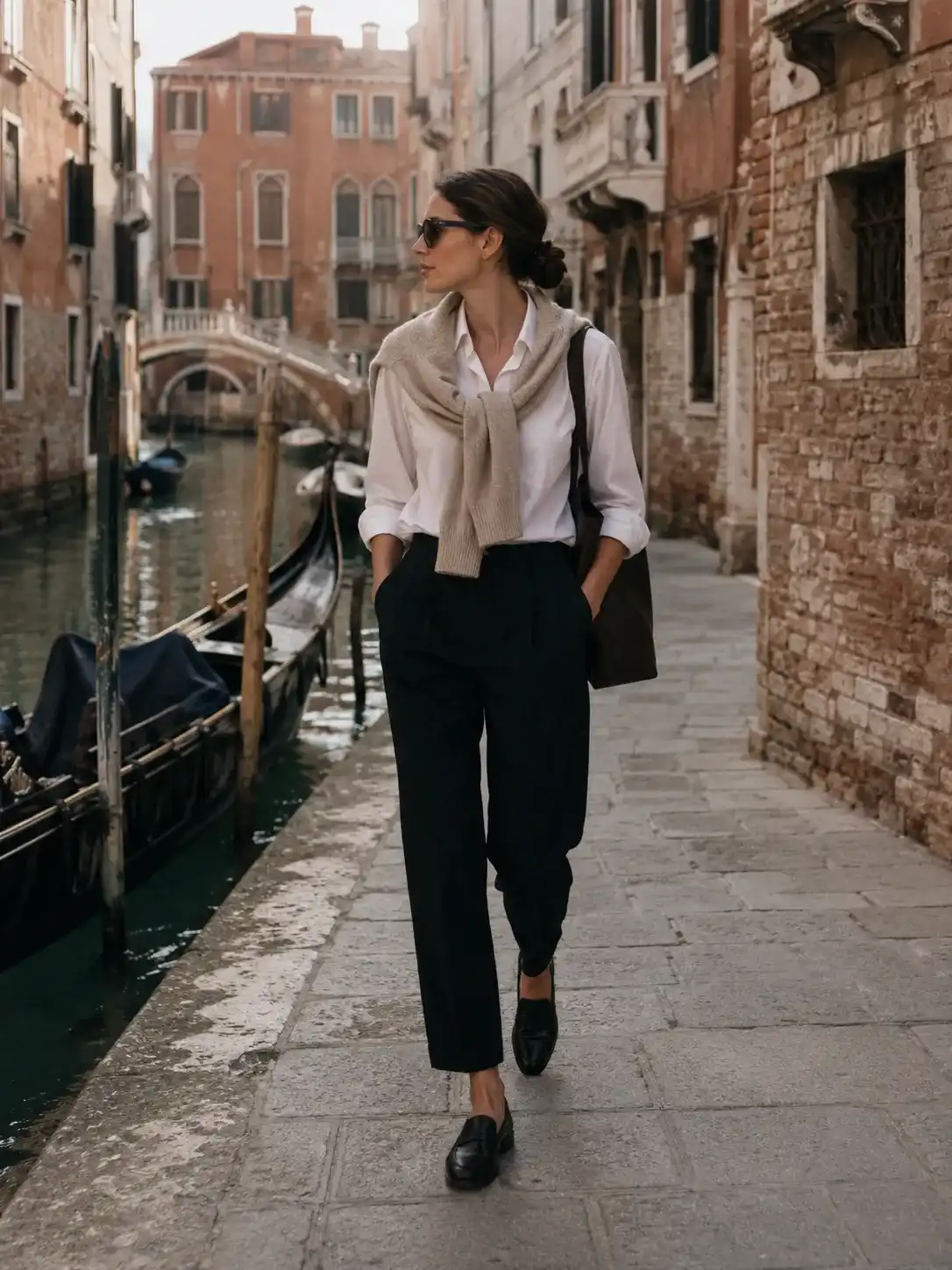
Venetian style carries a strange duality — part Renaissance grandeur, part gym-honest practicality. Historically the city leaned fanciful and opulent, a legacy of Murano glass, courtesan-culture, and a popular fashion scene rooted in the feminine and the decadent; you can still feel that romanticism in how people dress today, even if actual Venetians rarely go full costume. What I noticed on my own walks through Dorsoduro was closer to quiet precision: neutral tones, fitted silhouettes, and shoes built for real walking rather than gym wear or bright tourist prints. It’s the opposite of sloppy — clean, purposeful, and thoughtfully put together without trying too hard.
If you want a reference point, think Audrey Hepburn in Roman Holiday or Sabrina — fitted dark pants, classic-cut shirts, cardigans, a neutral scarf thrown over the shoulders. That effortless balance between function and fashion is what locals actually wear, and it’s echoed by guides like Venice Revealed, which points out that neutral colors dominate but every piece stays fitted and polished. For everyday exploring, jackets, t-shirts, pants, and closed shoes are enough, but the moment you head to restaurant dinners, the opera, or a church visit, smart casual or something dressier is expected.
Certain venues raise the bar further. Prestigious establishments like Harry’s Bar — home of the original Cipriani bellini — enforce actual dress codes, so a couple of conservative pieces and covered shoulders belong in your travel capsule wardrobe regardless of shoulder seasons. What struck me most, though, was how this classic look functions socially: dress with that classic European simplicity and shopkeepers chat longer, locals smile more, and the city stops treating you like just another face in the colorful, elaborated, crowd-driven chaos near pretty things stalls. It’s a small shift, but it changes the entire trip — your Venice packing list becomes less about style points and more about comfort that photographs well too, wind or no wind.
Practical Packing Knowledge / Before You Pack
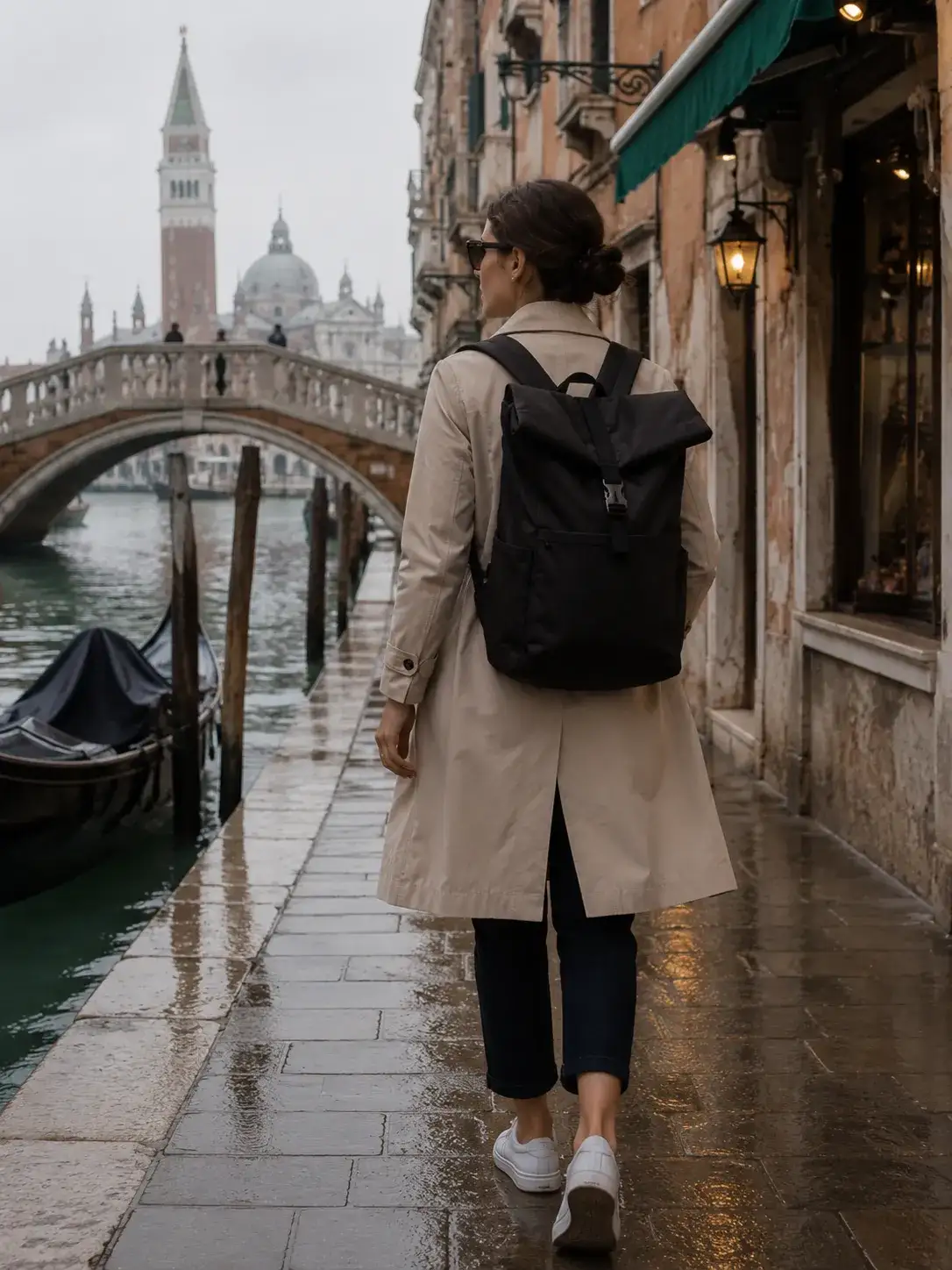
Nobody warns you about the quirks of Venice’s charm until you’re standing on slick cobblestones with a wheeled bag catching on every seam. Uneven bridges, narrow walkways, countless bridges, and flights of stairs everywhere mean a rolling suitcase is basically a punishment you inflict on yourself; old buildings rarely have elevators, and hauling luggage over centuries-old steps gets old fast, especially in older areas or when you’re navigating crowded areas near the St. Mark’s Basilica. My own fix was ditching wheels entirely for a backpack-style setup, and I’ve never looked back.
Weather is the other variable nobody plans for properly. Rain shows up without warning, and sudden weather changes can turn a sunny morning into a soaked afternoon, so I always carry a foldable rain poncho instead of chasing umbrellas — lagoon winds flip those inside out before you can react, whereas a poncho just stays put. A packable waterproof jacket or trench coat pulls double duty as a stylish layer for photos and a shield against drizzle, and if you’re relying on a travel umbrella anyway, tuck it somewhere you can grab fast, because rain gear bought last-minute in tourist areas is never cheap.
On your feet and on your back, keep things minimal. High heels simply don’t survive uneven surfaces, so practical shoes you can walk all day in are non-negotiable — comfortable feet mean you linger longer instead of cutting sightseeing short. For carrying essentials, a crossbody bag or compact bag with secure pockets and zippered pockets beats bulky bags every time; it keeps you hands-free through alleys, on boats, and past lockers where backpacks get refused entry. Skip the giant luggage hauls, pack light layers, and you’ll notice more of the beauty around you instead of wrestling a smaller bag, a day bag, or a practical day bag up one more set of stairs while taxis — which don’t exist here anyway — stay firmly out of the picture.
Shoes & Walking Comfort
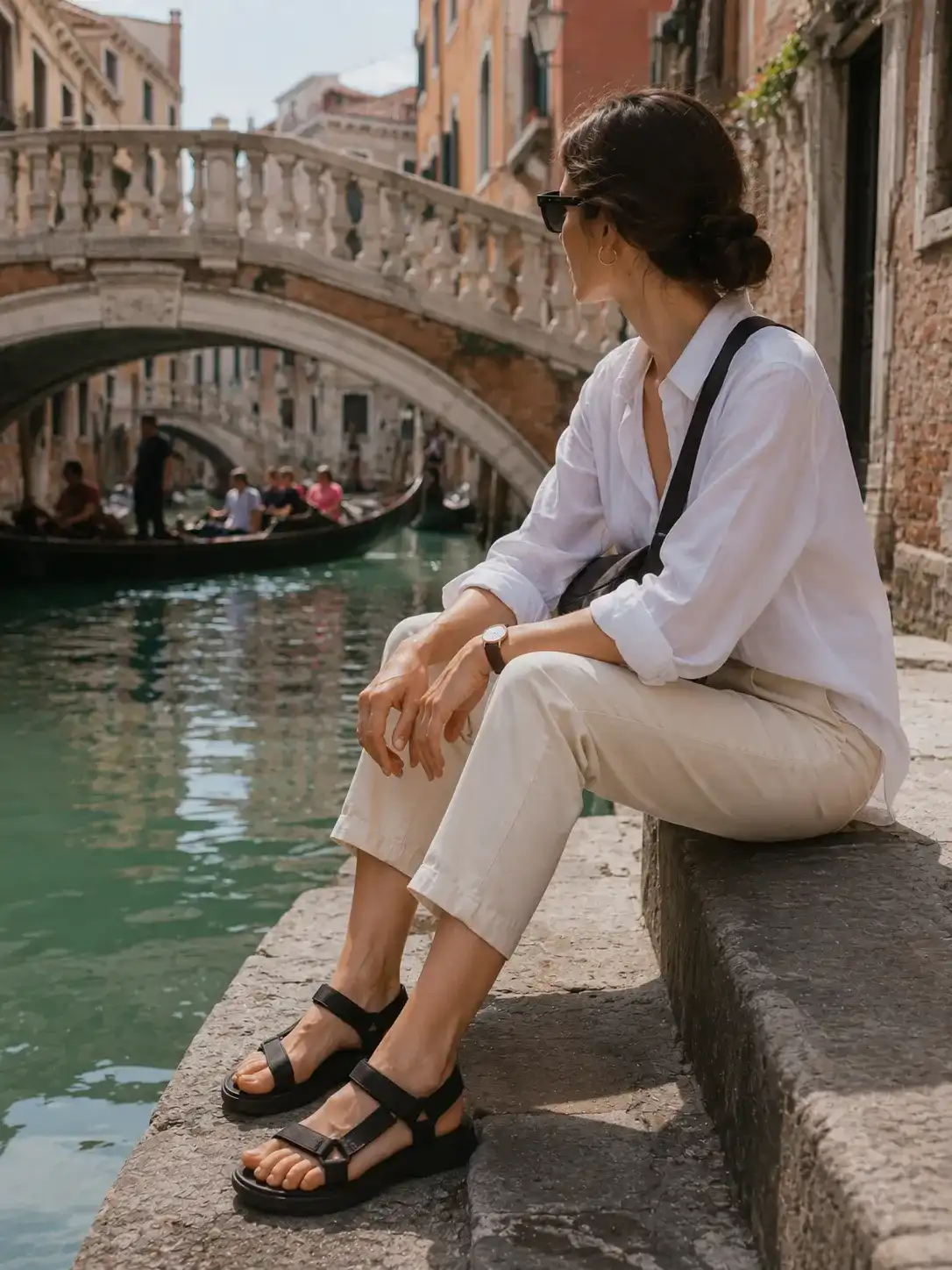
Here’s the truth nobody puts in the glossy photos: those images of women in flowy dresses and high heels crossing the charming Venice bridges look gorgeous, but I genuinely don’t know how they don’t twist an ankle. Real walking comfort matters more than the fantasy shot, and feet that hold up all day are worth more than any outfit.
My own solution came from a friend who talked me into Teva sandals — I used to think sandals looked too sporty, but there are genuinely good looking options out there now that don’t scream “hiking trip.” If sandals aren’t your thing, sneakers work too, as long as they’re styled to avoid looking overly athletic. Whatever you choose, prioritize cushioning and comfy footwear; it’s not glamorous advice, but it’s the difference between loving your trip and limping through it.
Church / Dress Code Etiquette
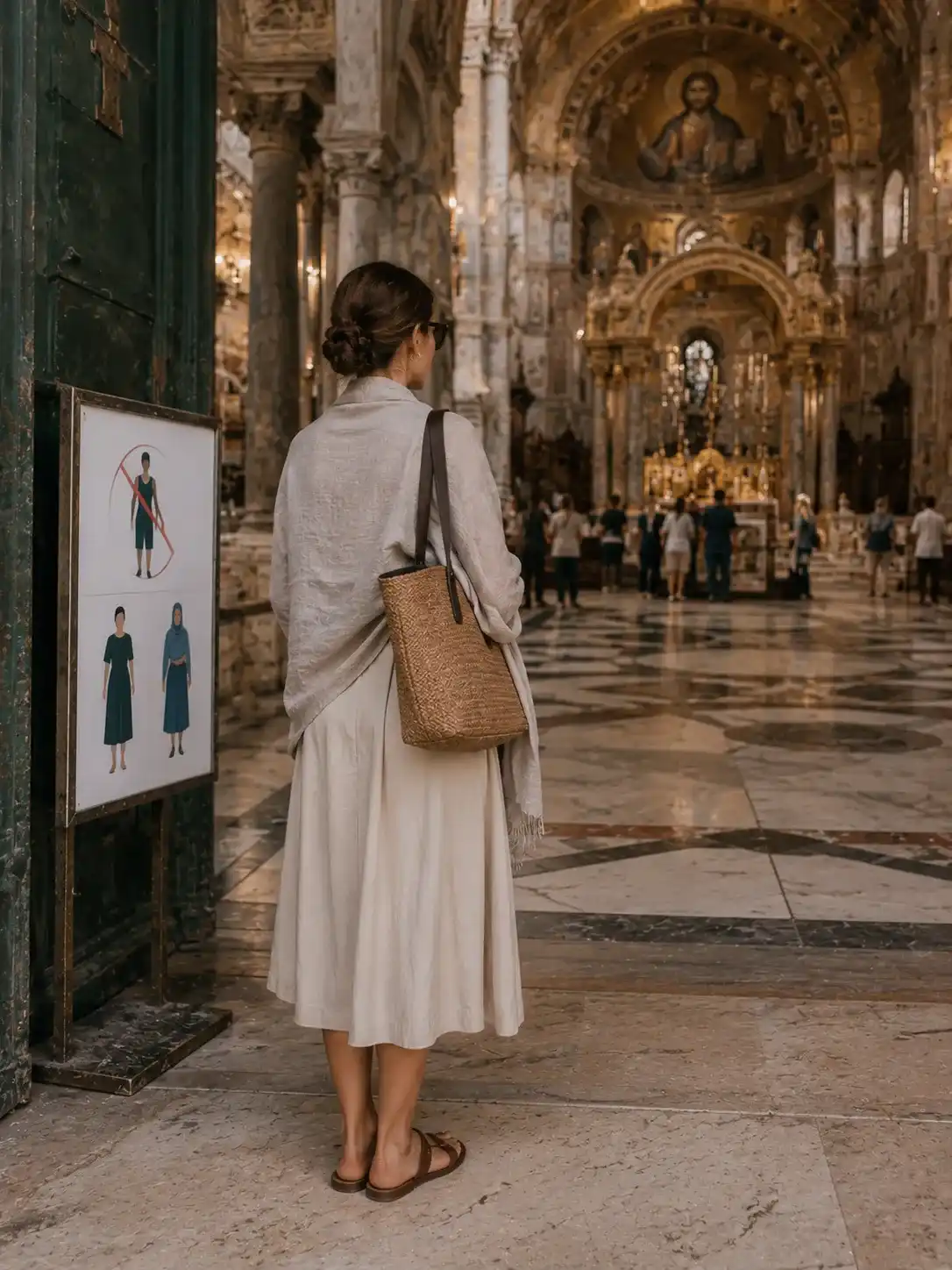
Churches across Venice are still active religious sites, and the dress code is enforced more strictly than most visitors expect. I learned to keep a lightweight shawl wrap in my bag at all times, because you’re expected to cover shoulders, avoid deep necklines, and steer clear of see-through tops or spaghetti-strap tops entirely.
The general rule of thumb: skirts and shorts should sit below the knee, and anything that reads as revealing outfits risks pulling you out of the line. At the St. Mark’s Basilica specifically, staff will turn people away — I watched it happen to a couple in front of me — so it genuinely pays to dress respectfully rather than risk refused entry after waiting in that queue.
Seasonal Outfits — Spring (March–May)
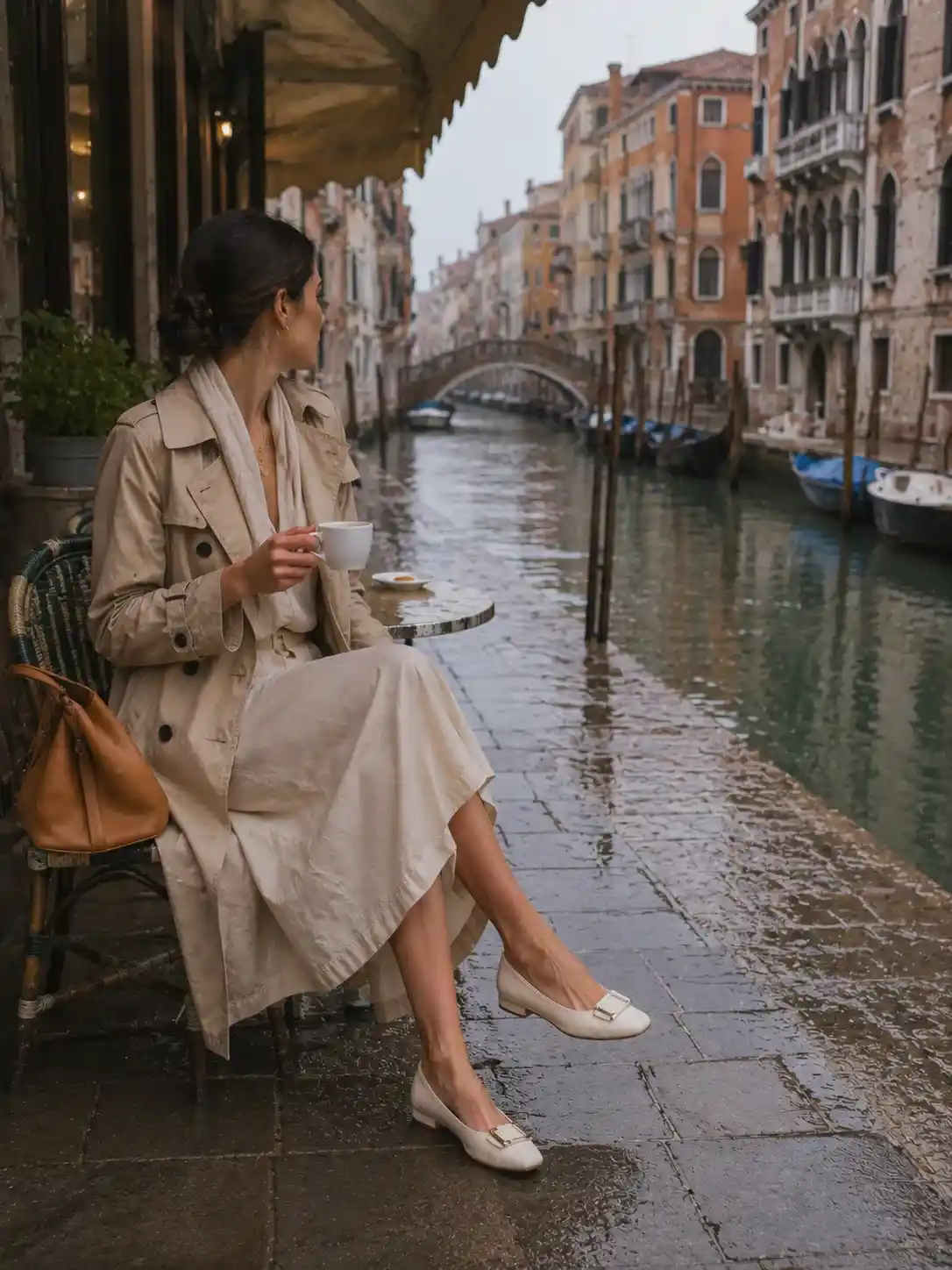
Spring in Venice is moody in the best way — soft rain, crisp air, mild days hovering around 55–65°F, and cooler nights that catch you off guard. I remember sitting under an awning with an espresso, watching mist roll off the canal, and realizing this weather change is exactly why layers matter more than any single showpiece. Linen pants, a light jacket or trench coat, and a light scarf got me through most days, while waterproof flats and a waterproof jacket handled the rainy days and showers that pop up without checking a forecast first — genuinely worth checking weather daily during early spring.
Style-wise, this is the season for dresses — shift dresses, wrap dresses, midi-length pieces that go from day and night without a costume change. A silk duster jacket in a pastel color feels dressy yet modern feel-appropriate, and if that’s not your lane, a lady-life trench coat works just as well; spring is honestly the best time to try a non-traditional color like a steely blue-grey or a magenta hue. For evening activities, lean into elaborate jewelry — a bib necklace or cocktail ring — especially if cocktails at Harry’s Bar (home of the bellini) are on the trip itinerary; statement jewelry is genuinely versatile enough to dress up half your outfits.
Timing shapes your packing too. Visit closer to June and you’ll catch sunny days and pleasant, milder conditions; arrive during early autumn or push toward November, and you’re back in fall territory needing something closer to winter clothes. Either way, jeans, long pants, t-shirts, short sleeve t-shirts, a middle layer like a cardigan or sweater, an umbrella, and sunglasses round out a genuinely stylish choice of a capsule — a romantic, slightly dreary-proof approach that avoids tourist season crowds while still feeling put-together, warm without being bulky, and ready for whatever the climate throws at it, cool mornings and spring-like, spring coat evenings included, in beautiful, unpredictable Italy.
Seasonal Outfits — Summer (June–August)
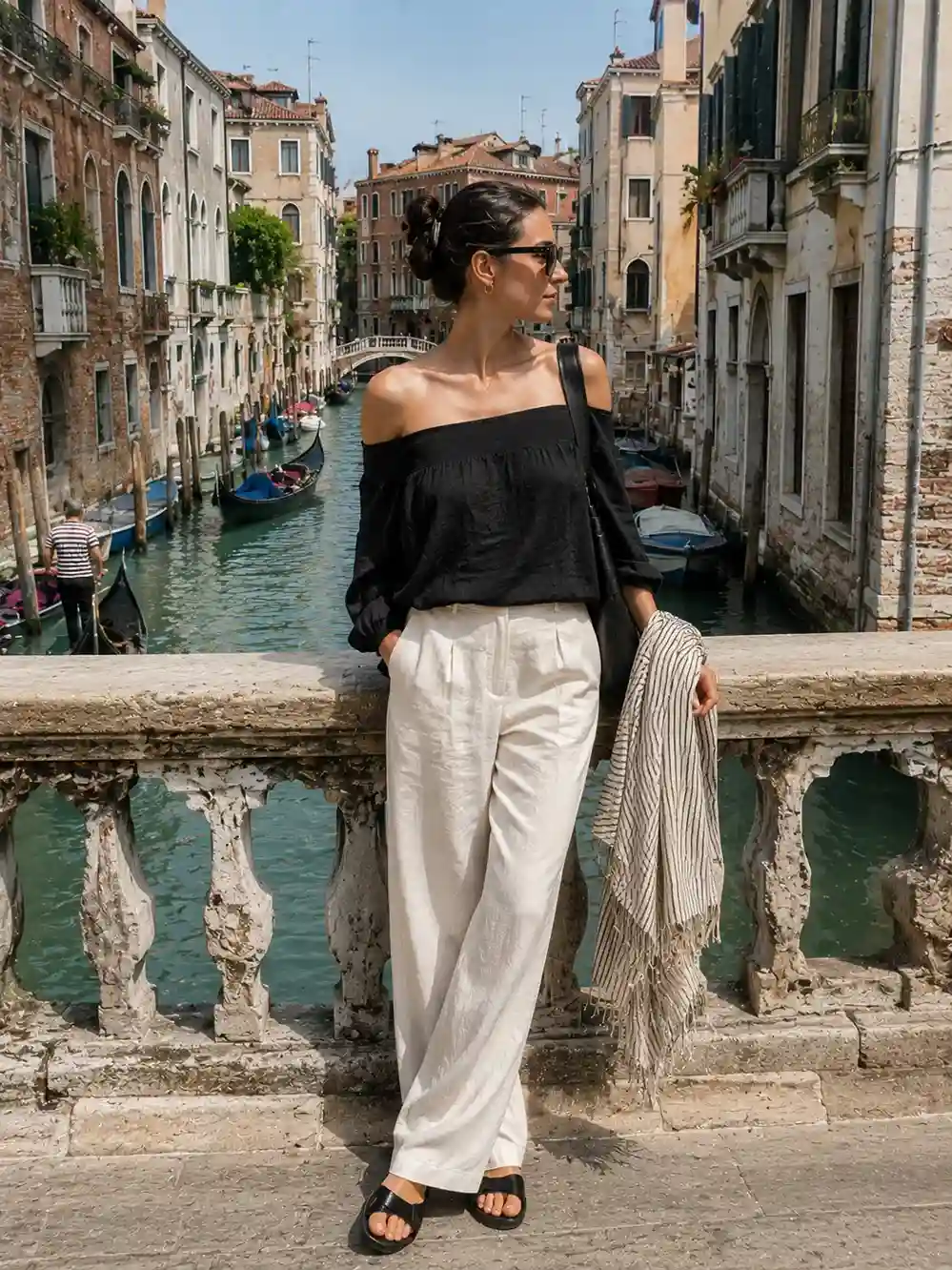
Summer turns Venice into a different city entirely — scorching, humid, and genuinely hot, with temperatures pushing past 85°F and high temperatures that make shade feel like a luxury. It’s also the wettest season, which sounds backwards until you realize the city floods, forcing everyone onto elevated paths; that reality quietly dictates your summer shoes decision more than style does. I learned the hard way that leather footwear gets ruined fast in that combination of rain and standing water, so cotton and linen over synthetics became my rule, paired with shoes with grip since the marble turns slick after even a light shower.
Mornings are for sightseeing before the heat peaks — an all-black, chic outfit works surprisingly well, or try an off-the-shoulder blouse with wide-leg trousers and ballet flats or loafers. Because churches and the St. Mark’s Basilica still enforce modesty, a light scarf, shawl wrap, or pashmina to cover up bare shoulders is non-negotiable, even over a tank top. Save the bright, fun patterns and floral dress or frock for the beach days — Lido and other nearby islands are close enough for afternoons by the water, so toss a beach cover-up or classic one-pieces with low-cut backs over your swimsuit, grab a towel, and take the vaporetto out.
The unglamorous essentials matter just as much: sunscreen, mosquito repellent (the mosquitoes near the canal are relentless), a summer hat or wide-brim hat, and sunglasses for the July sun. A light cardigan covers cooler evenings, and simple pieces like skirts, knee-length skirts, shorts that stay above the knees, summer dresses, sandals, and breathable t-shirts and light clothing round out a wardrobe that stays comfortable even when the city is crowded and every surface feels bright and unforgiving under the sun.
Seasonal Outfits — Fall (September–November)
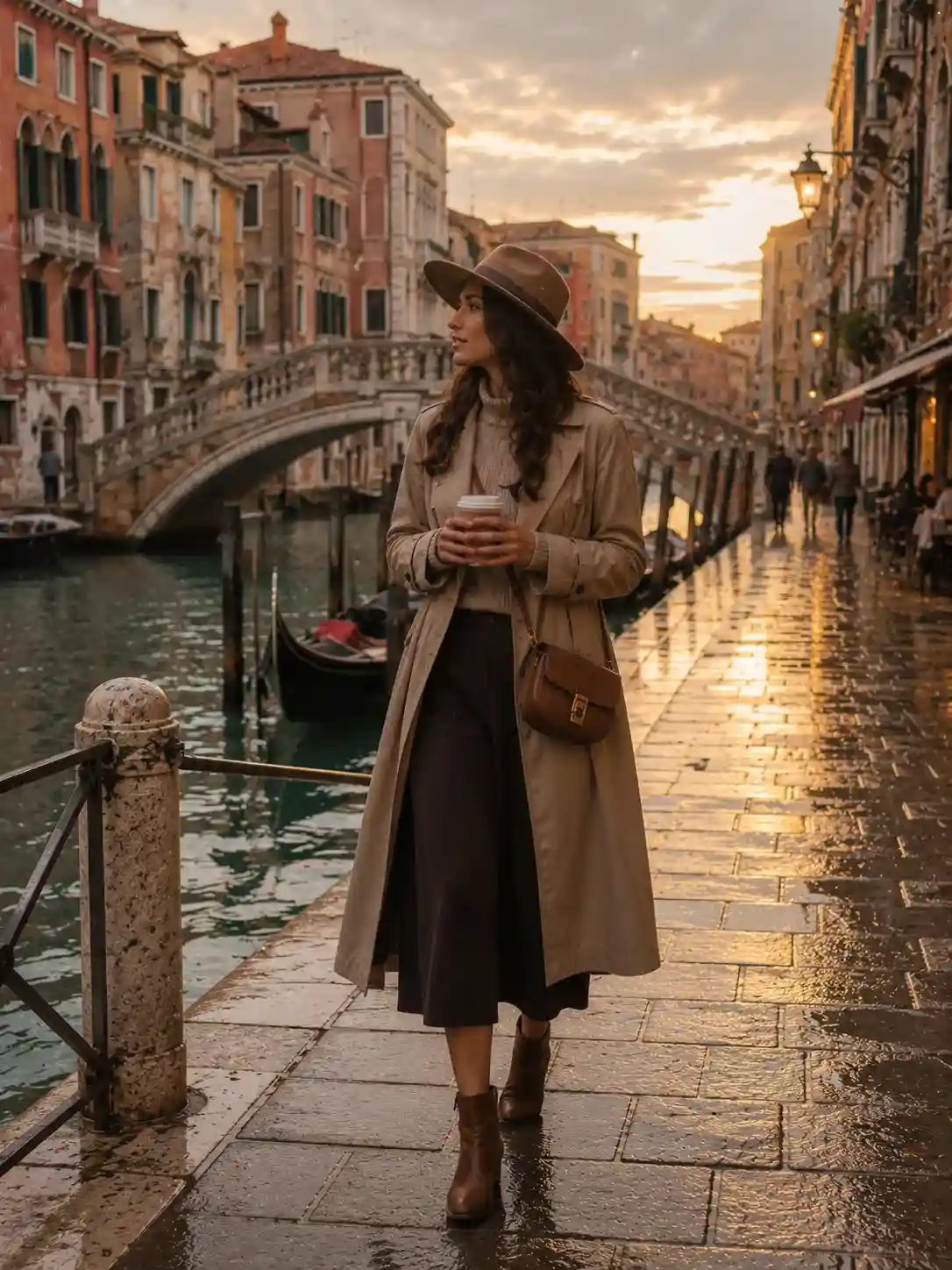
Fall is quietly the best season to visit — mild, golden hour light everywhere, cool air, temps swinging between the high 40s and mid-60s, with sunsets that turn the whole city cinematic. I remember evening walks with a warm drink in hand, grateful my boots had stayed dry feet-friendly through an unexpected splash of acqua alta — those high-tide days show up without warning, so I always cuff my pants and leave shoes air overnight to dry properly.
Style-wise, this season rewards mix and match thinking: a thin sweater, A-line skirt, booties or ankle boots, a floppy hat, dark denim, and sophisticated blouses. A jumpsuit is one of the most comfy footwear-friendly ways to look sharp without effort, and a duster jacket or cardigan adds warmth for the strong breeze that rolls off the water. Skip heels, stilettos, and chunky heels entirely — the cobblestone streets stay uneven, and there are no cars to bail you out, so you’re walking everywhere, including up to the St. Mark’s Campanile.
Crowds dissipate as wet weather becomes more common alongside the sunny days, so pack for both: a crossbody bag that zips shut, a compact umbrella, a scarf for dining al fresco on the rare warm evening, and light jackets for the rest. Every outing here starts to feel like a special event, and honestly, dressing slightly cozy and slightly polished for rain or shine is the easiest way to enjoy Venice’s most underrated weather window between the last of summer and the first bite of true winter.
Seasonal Outfits — Winter (December–February)
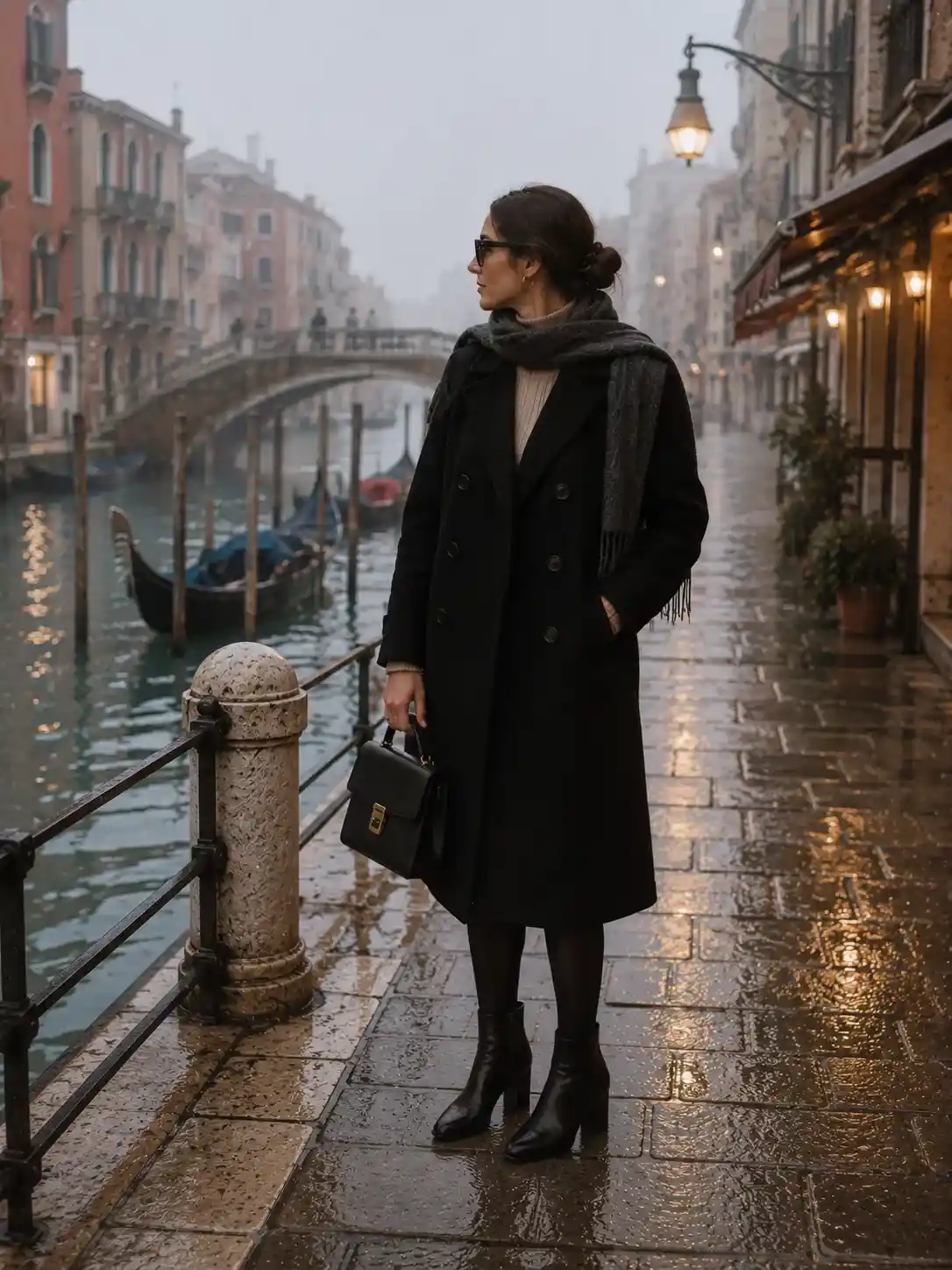
Winter in Venice is genuinely moody and hauntingly beautiful — fog drifting through alleys, bells echoing over canals, and a cold that cuts sharper than the temperatures suggest. November and December bring highs 40s-50s and lows 30s, but January is the coldest month, and snow isn’t unheard of; the humidity near the water makes everything feel colder still. I found this out shivering through Carnival in thin denim while every local around me stayed warm in a proper wool peacoat.
That’s the real lesson — layer like a Venetian. A warm coat, ideally a wool coat with room for a thick sweater underneath, handles daytime; dark corduroys, black wool leggings, or slim pants work for the legs, with tights underneath on the coldest days. Solid-color button-downs and neutral-color thick sweaters in classic cuts are the safe bet, though a hit of dark green or burgundy adds color without breaking the classic look. For something dressier, a wool pencil skirt or black shift-style dress paired with black leather boots — a genuine staple wardrobe piece for Italians — keeps things elegant and stylish at once.
Don’t skimp on the extras: black leather gloves, a wool beanie, and a scarf cut the worst of the cold winds and bone-chilling winds, particularly out by Piazza San Marco where the taller buildings stop blocking the gusts. Thick socks, thermal underwear, and thermal layers under long sleeve t-shirts or warm short-sleeve t-shirts keep you functional through hours outside, while a waterproof winter jacket and waterproof boots or plain sturdy shoes handle the rainy, damp, quiet streets of the walkable city. Add a hat, gloves, and rain gear, and Venice in winter stops being something to endure — it becomes the practical, cozy layers version of the city that locals actually love best.
Seasonal Quick-Reference Table
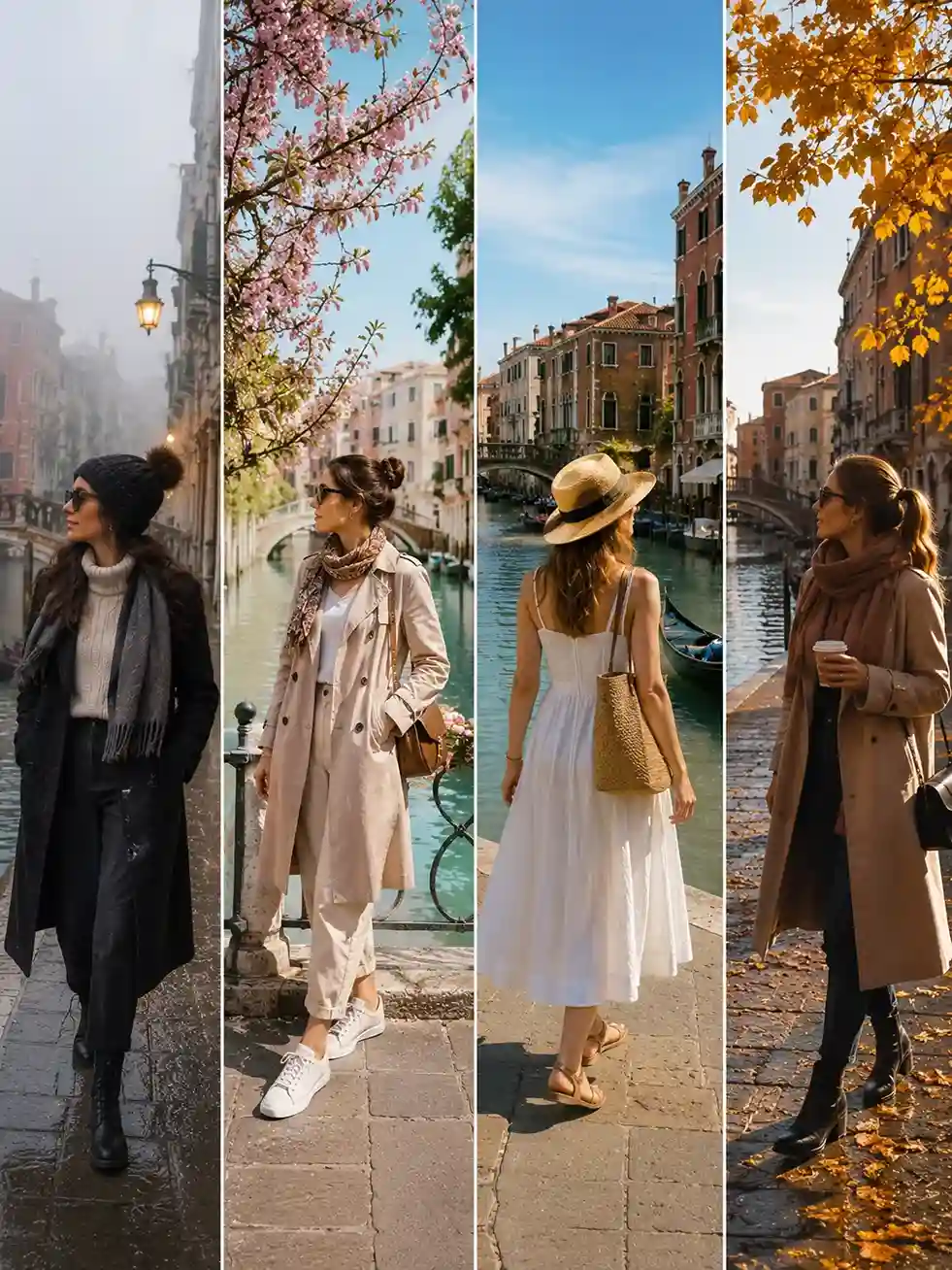
If you only remember one thing, remember this: weather in Venice shifts fast, so a snapshot helps. In winter (Dec–Feb), expect cold, windy, damp air and lean on a warm coat, sweater, gloves, and waterproof shoes. Spring (Mar–May) brings mild, changing weather — mornings run chilly, so a light jacket and layers cover you until the afternoon warms.
Summer (Jun–Aug) is straightforwardly hot, calling for light clothes, dresses, shorts, and sandals made from breathable fabrics. Fall (Sep–Nov) sits mild to cool with a higher chance of rain and even flooding, so waterproof shoes stay useful alongside a scarf for cooler evenings. Whatever the season, bridges and uneven streets mean walking-ready shoes belong in every single key tips column, no exceptions — that’s the one constant across the whole what to wear conversation.
Packing Essentials / Travel Essentials
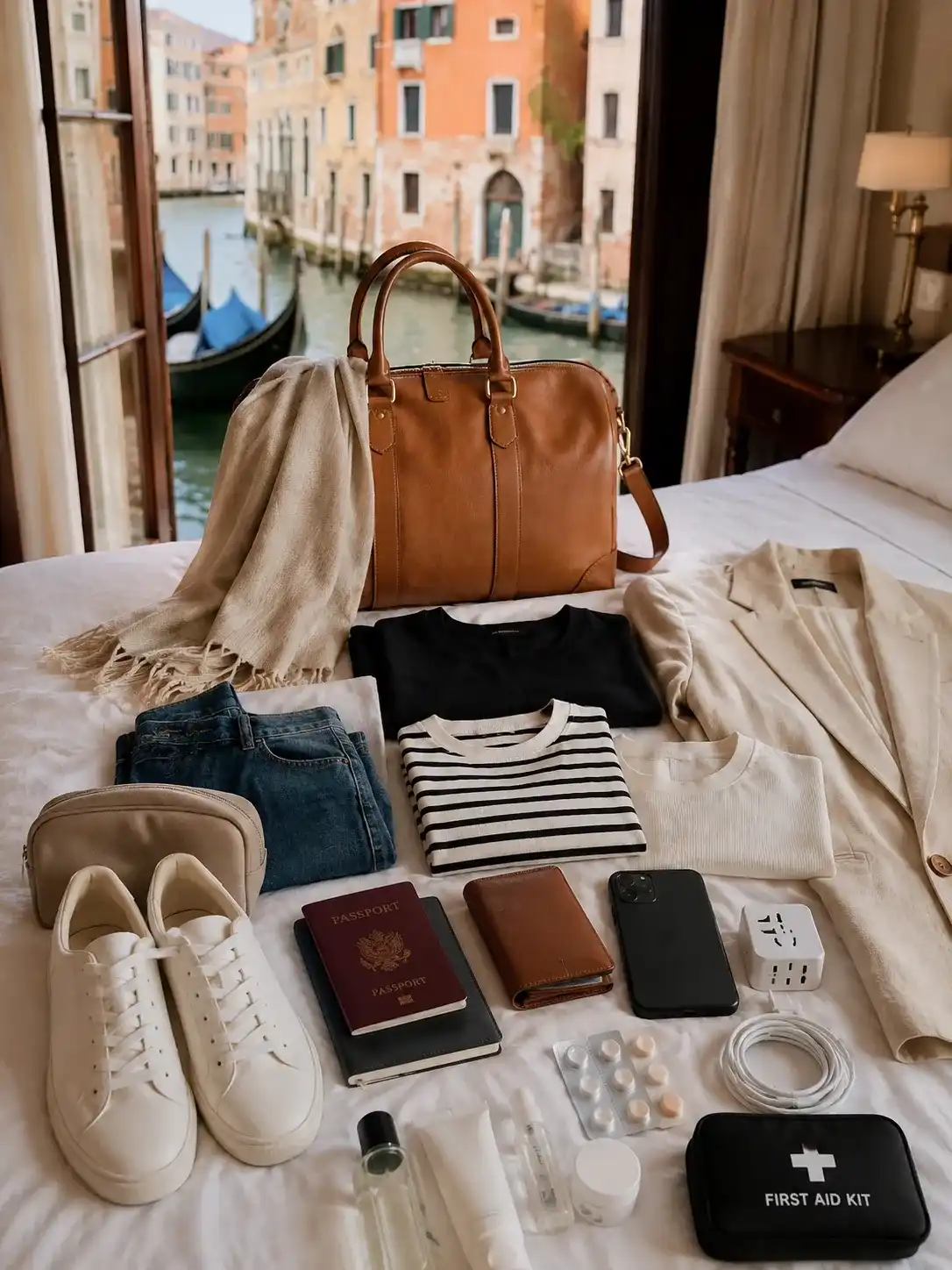
Over six visits, my core kit barely changes. Wrinkle-resistant fabrics, breathable tops, a neutral scarf, and a light jacket or blazer form the backbone, alongside genuinely comfy walking shoes and comfortable walking shoes that survive colder months just as well as warm ones. Add the boring-but-critical documents pile — ID, travel documents, wallet, phone, chargers, a driver’s licence if you’re doing a day trip, plus hygiene products, basic clothes, underwear, medicine, and a first aid kit — and you’ve got a Venice capsule that experienced travelers like myself trust without overthinking.
Because Venice stays car-free, a travel electronics adaptor matters more than you’d think, and a handful of optional items — a water bottle, a little jewellery (mind the pickpockets), nightwear, and one piece of evening attire for a nicer restaurant — round things out nicely. As Wanderlust Designers puts it, even simple sneakers that don’t read too sporty can carry real Venetian fashion and grace, which sums up how little accessories it actually takes to look finished.
Speaking of accessories: a good handbag, belts, and scarves bring color to an otherwise neutral outfit, and sunglasses double as your go-to daytime accessory. The travel bag MVP is a crossbody bag with a zipper — swap the strap for a removable chain and it transforms from daytime carry into an elegant clutch for day to night plans. Warmth, modesty, and practical thinking tie the whole Venice packing list together, and honestly, that’s the entire secret behind travel essentials that actually earn their spot in the bag.
Luggage & Bag Tips
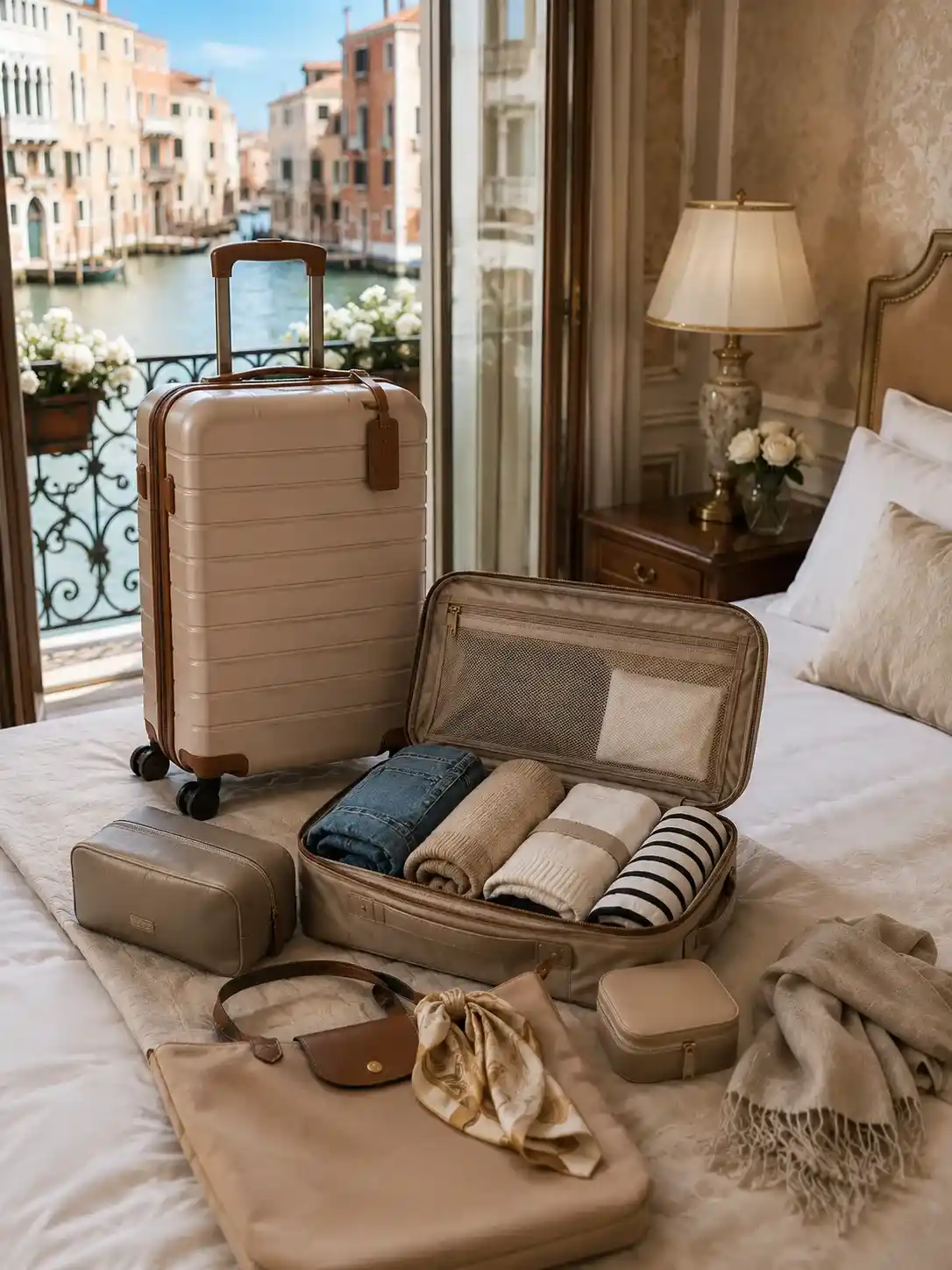
Once your travel wardrobe is sorted into something close to a chic capsule collection, the actual packing question becomes about the bag itself. For trips spanning several days or weeks of traveling, packing cubes are worth the small investment — they make better use of space, keep everything organized, and turn unpacking and repacking into something closer to stress-free than stressful.
Because you’re heading into fashionable Italy, it’s worth choosing a stylish carry-on rather than whatever’s cheapest. Just double check the fine print first: Europe’s budget airlines often cap the carry-on bag allowance at roughly 55cm x 40cm x 20cm, and airline rules and regulations vary enough between carriers that it’s genuinely worth confirming before you’re stuck repacking at the gate.
What Locals Actually Wear
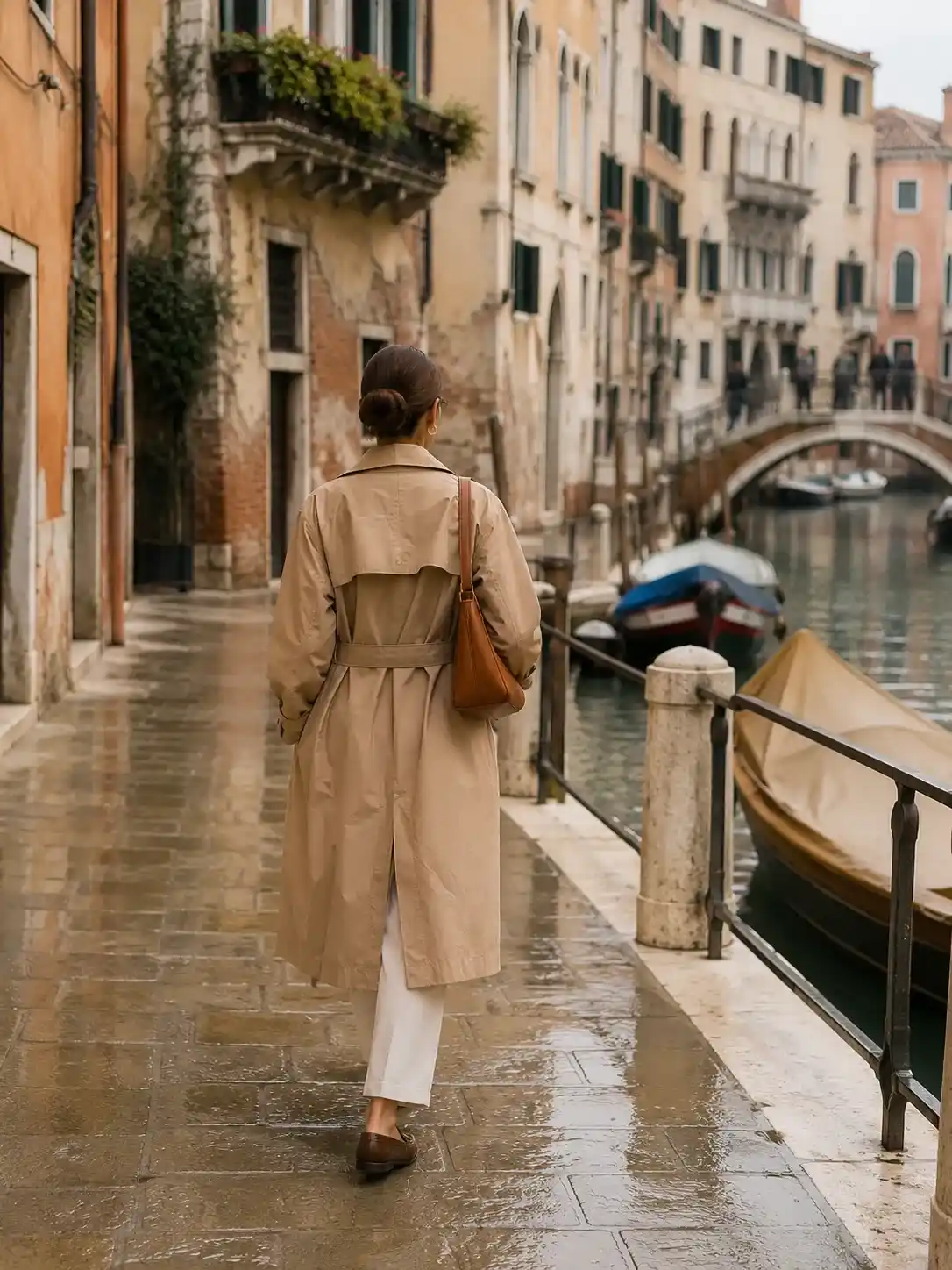
The thing that struck me most, watching daily life unfold over several weeks, is that Venetians don’t chase trends at all. Their clothes look lived-in yet refined — timeless over flashy, right down to rain boots that somehow still look curated rather than purely functional.
That sense of ease changes how the city treats you back. Waiters remember you, strangers strike up conversation, and you stop reading as a visitor almost immediately. My own rule now is simple: pack two pairs of quality shoes instead of five cheap shoes, rotate them so each pair stays dry and lasts longer, and always pick comfort over flash — nothing ruins a gondola ride faster than blisters.
Sustainable Style Tips for Venice
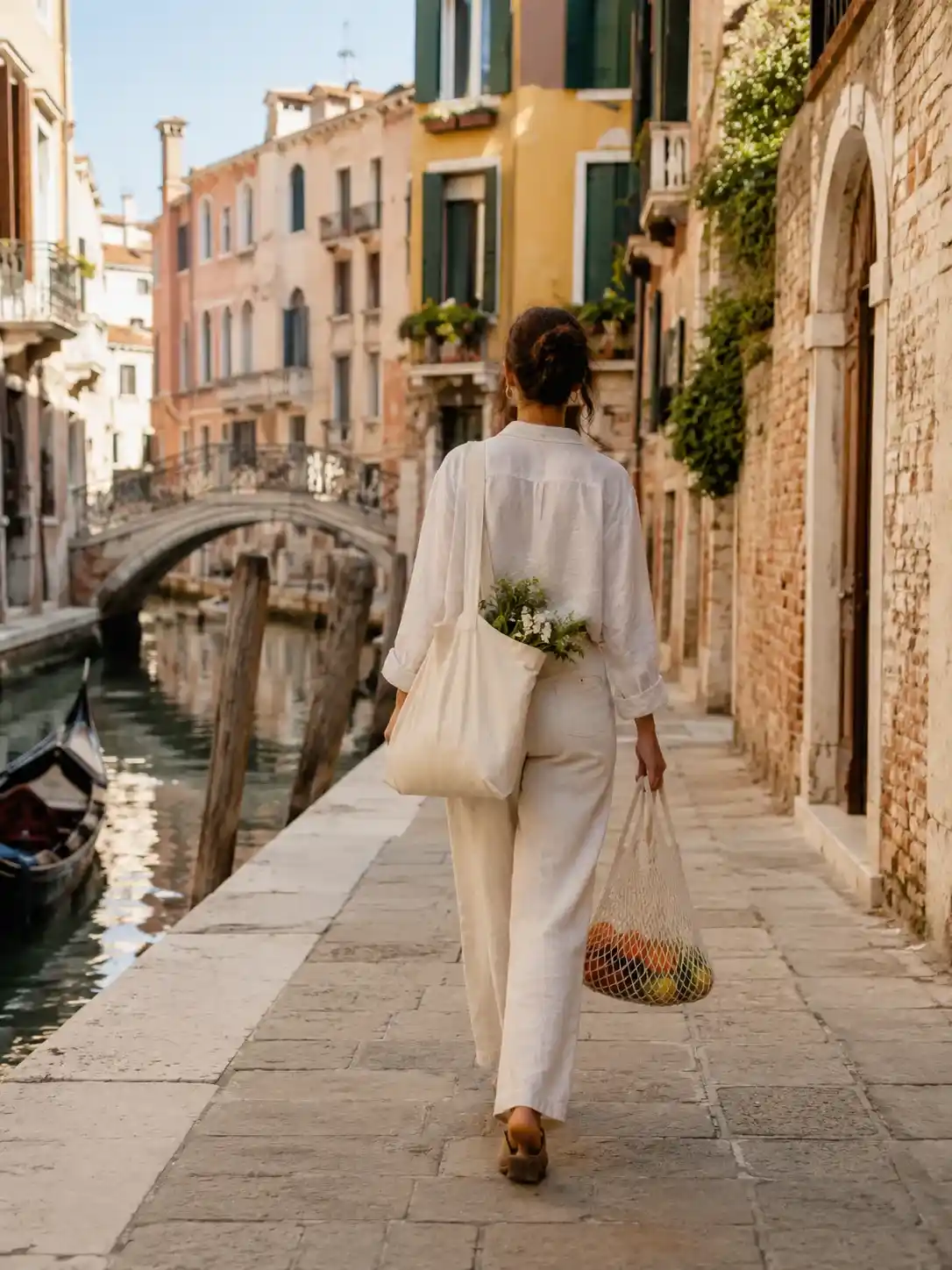
Venice is genuinely struggling with overtourism, and locals care deeply about preservation — which means dressing responsibly is also a small act of respect. In practice, that means choosing eco-friendly fabrics, skipping single-use ponchos, and carrying reusable totes for groceries or markets instead of collecting plastic.
I started looking for Italian labels like Re-Hash or Rifò, which build genuinely stylish clothing out of recycled materials — proof that sustainability doesn’t have to mean sacrificing style. Once I committed to traveling lighter and buying better, I felt more connected to the city itself; something as small as rewearing a linen shirt or refusing plastic bags genuinely helps Venice breathe easier, one visitor at a time.
Venice Accommodations
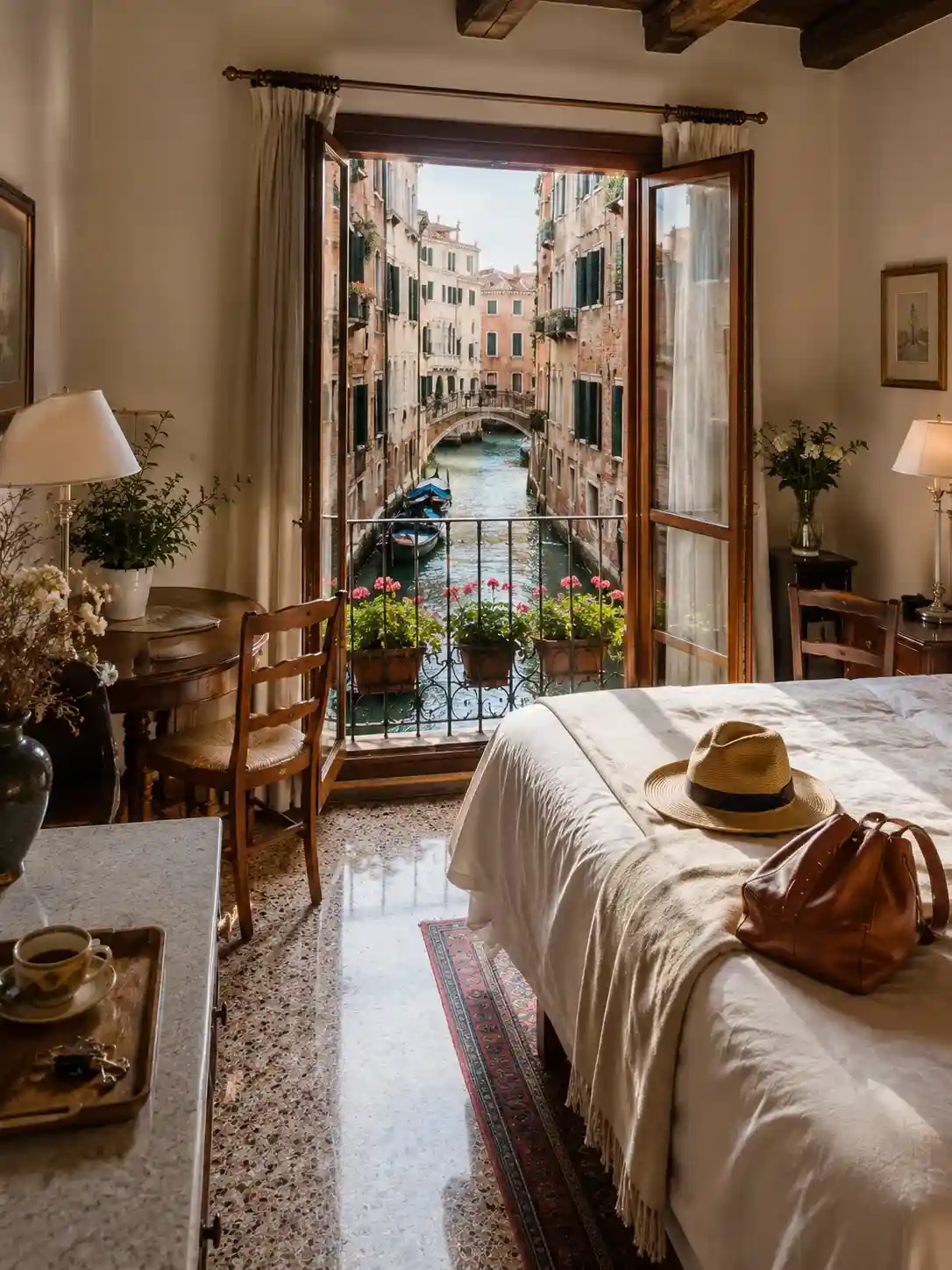
Venice is never not full of tourists, and hotel prices reflect that constant pressure from mass tourism. My workaround has been to support locals directly — booking Airbnb stays or homestays tends to be more affordable and offers a genuine cultural exchange you don’t get from a chain hotel.
It’s also worth considering the city outskirts rather than the city center, since the train connects both easily and the price difference can be significant. I personally book the entire home option rather than shared accommodation — partly for safety, partly because I like actually living in the destination rather than just visiting it.
Venice Transportation
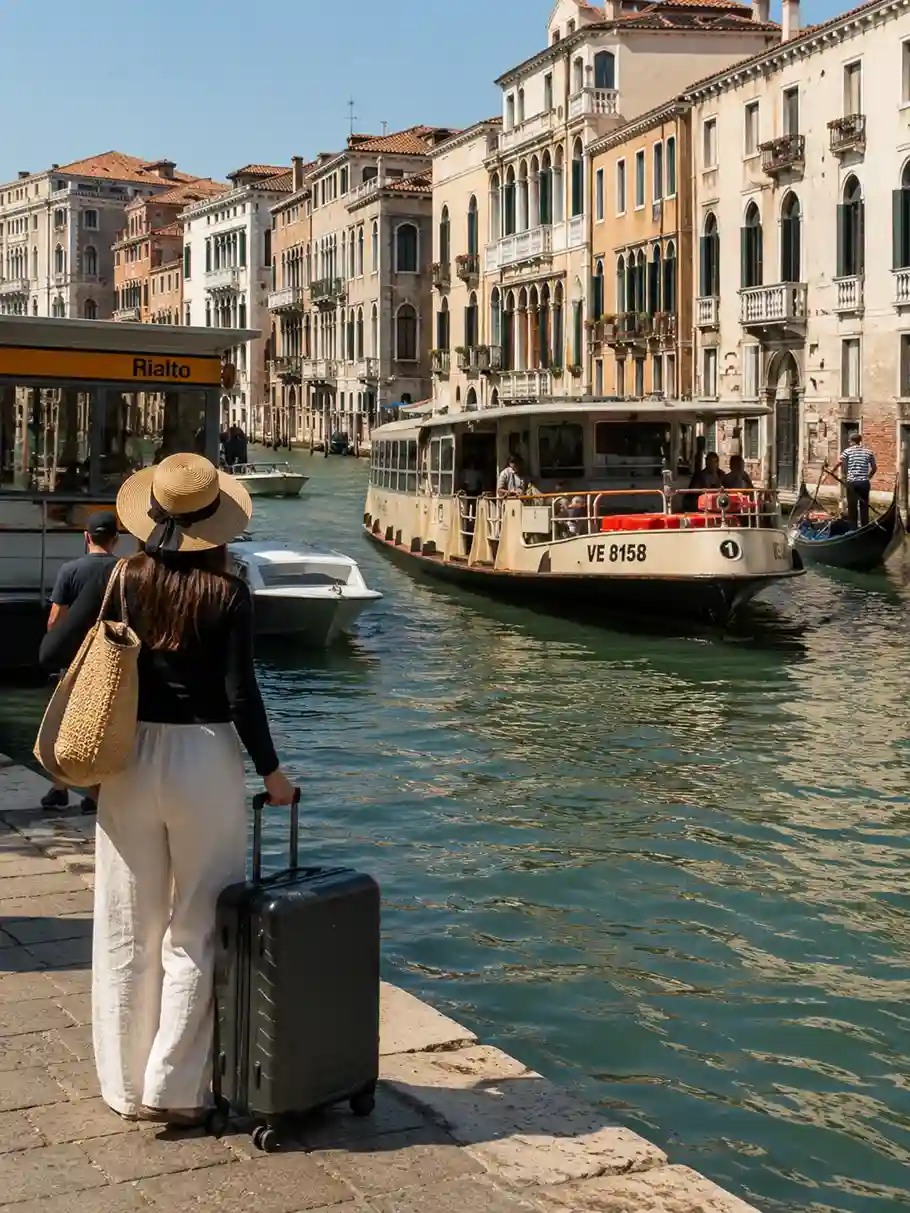
There are no cars anywhere in the Venice city center — the whole area is stitched together from islands, canals, and bridges, which means you’re carrying your own luggage from the train station or ferry port whether you like it or not. Nearly everything moves by water instead: water buses, vaporettos, private boats and gondolas, or short targhetto crossings over the grand canal.
In practice, the best way around is a mix of water taxis and plain walking. Traveling during busy stretches can mean sitting in the outdoor seating area of a boat, which runs chilly in winter and properly hot in summer — worth knowing before you sit down for the ride.
What To Do in Venice
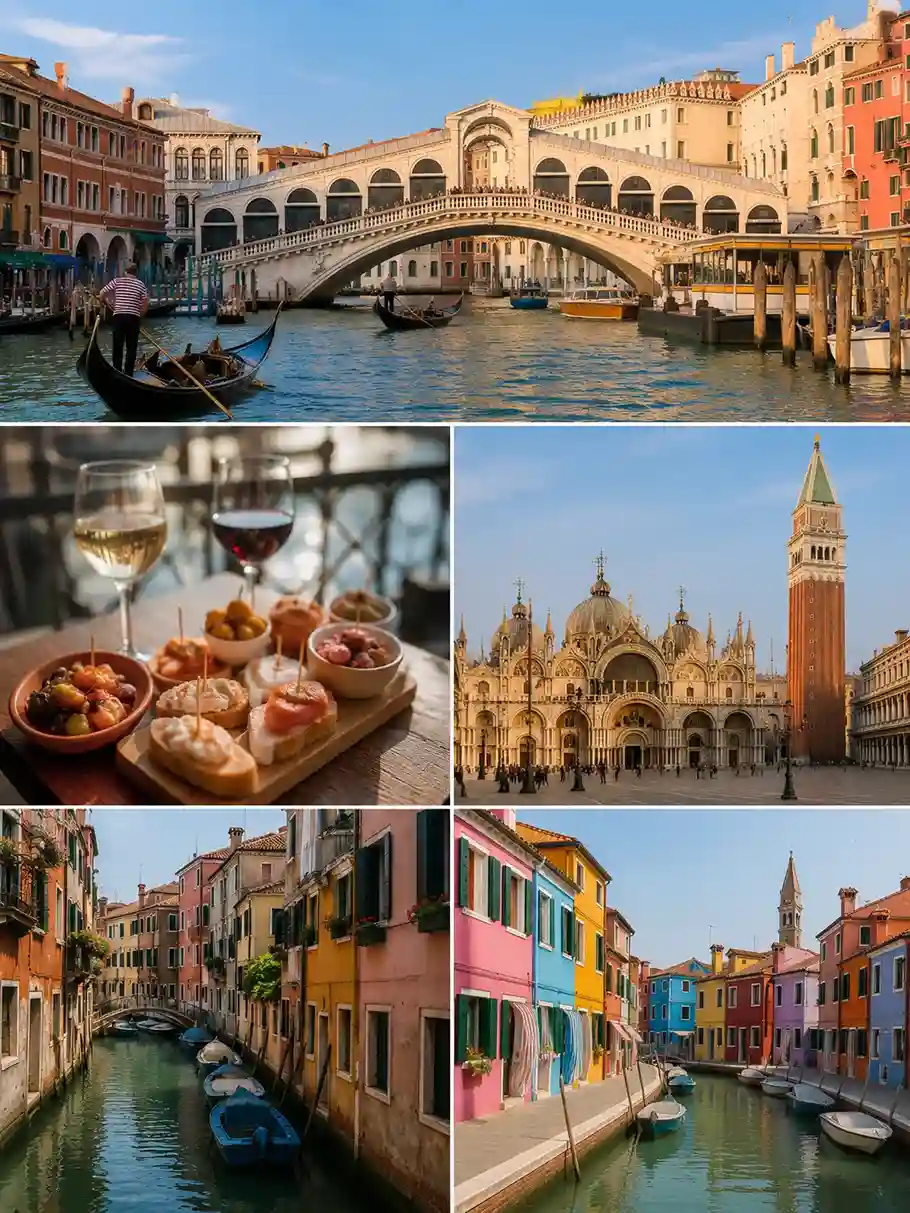
Beyond the outfits, Venice itself is spectacular — the glistening St. Mark’s square, endless canals, world-class museums, and tiny colorful alleyways backed by architecture worth stopping for at every turn. My favorite ritual is Venetian cicchetti at happy hour, where a bacaro — a Venetian wine bar — pours a giro di ombre alongside bite-sized seafood dishes.
Time your trip right and you might catch the Venice Biennale and its art exhibits, which open mid-May, and it’s worth pushing past the obvious sites to catch a vaporetto out to Burano for its colorful fishing houses and handmade lace, or Murano for authentic Venetian glass straight from the source.
Venice Safety Tips
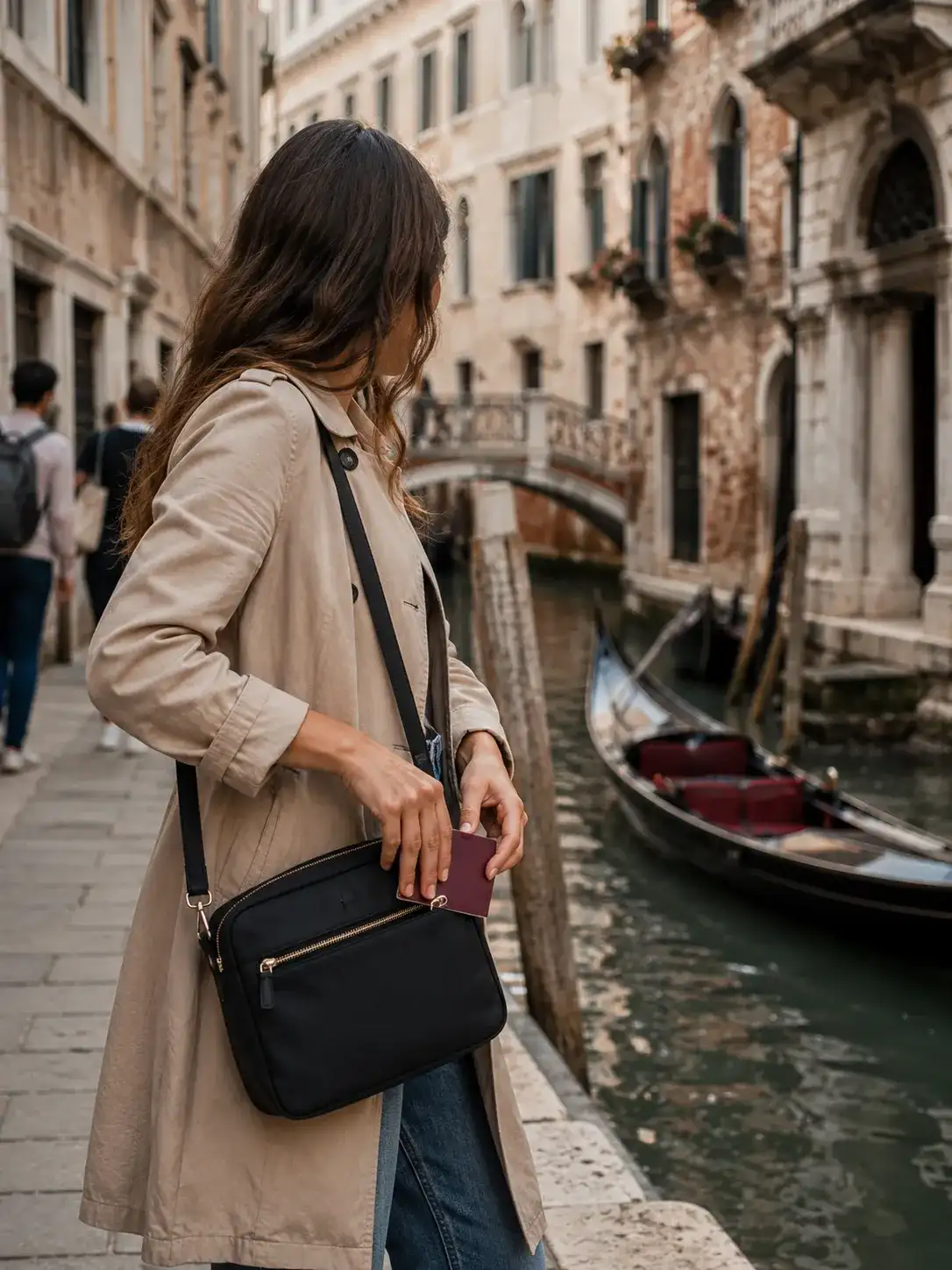
A little street-smarts goes a long way here. Keep cash somewhere secure to avoid muggings and pickpocketing, and lean toward clothing with theft-proof details like sturdy zippers; jeans are genuinely useful for this, since front pockets make it hard for a wandering hand to reach your wallet or phone.
Purse snatchers are a real concern too — they’ll either slash the bottom of a bag or cut the strap itself, so wear your purse strap across your body with the zipper facing forward. As for your passport, the safest place for it is locked in your accommodation; carry a photocopy or secondary ID instead when you’re out sightseeing or moving around at night.
What to Pack for Venice for Kids
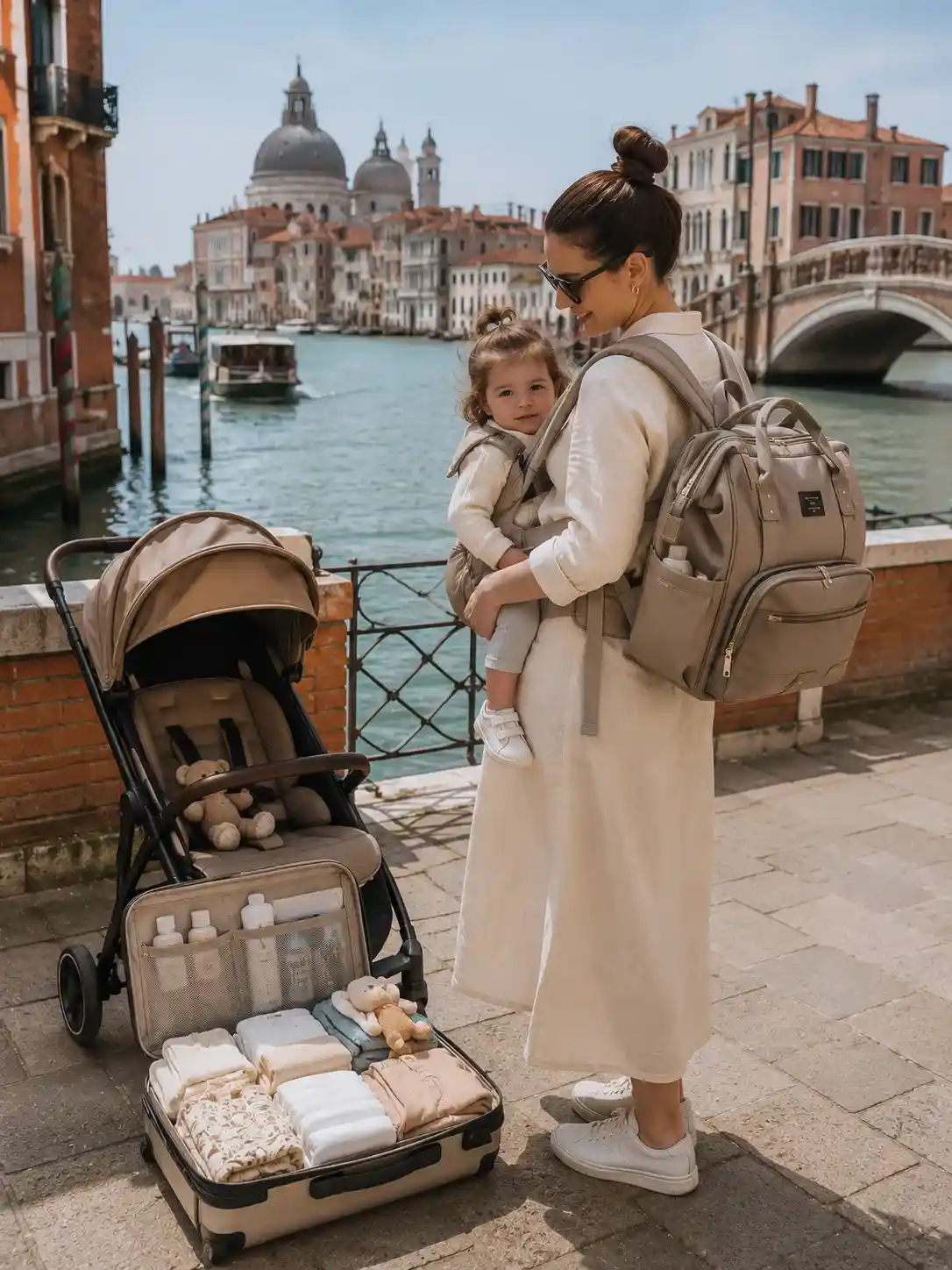
Traveling with a kid — up through toddler age — changes the packing math entirely. A diaper backpack beats a diaper shoulder bag every time, and a baby carrier is genuinely essential, since cobblestone streets, bridges, and stairs make the city almost entirely stroller-friendly-hostile.
Beyond that, cover the basics: baby essentials like diapers, wet napkins, diaper cream, spare clothes, a pacifier, a soft toy, and a blanket, plus kids-friendly sunscreen if you’re traveling near summer. A little walker will still want comfortable walking shoes of their own. Most hotels provide cribs and restaurants offer high chairs, but it’s worth confirming ahead of time — and remember, local supermarkets mean you don’t need to pack every single item for the whole trip.
Deciding What to Pack: Research, Activities & Color Scheme

Before anything goes in the suitcase, I check the weather obsessively — not because forecasts are perfect, but because I once packed for rain and a raincoat on a spring break trip to London and barely needed either. That unpredictability is exactly why checking weather repeatedly before any trip, right up until departure, actually pays off.
Next comes mapping out activities. I don’t need a rigid agenda, but knowing roughly what’s ahead — a Vatican and Colosseum tour, a gondola ride in Venice, a couple of dinners worth dressing up for — makes choosing appropriate, comfortable outfits for the vacation in Italy dramatically easier.
Finally, I pick a color scheme. My packing lists almost always lean into one palette — blues, greens, and neutrals — because sticking to a few color families makes it effortless to mix and match and stretch a small suitcase into multiple outfits without anyone noticing you’re repeating pieces.
Outfit Category Breakdown
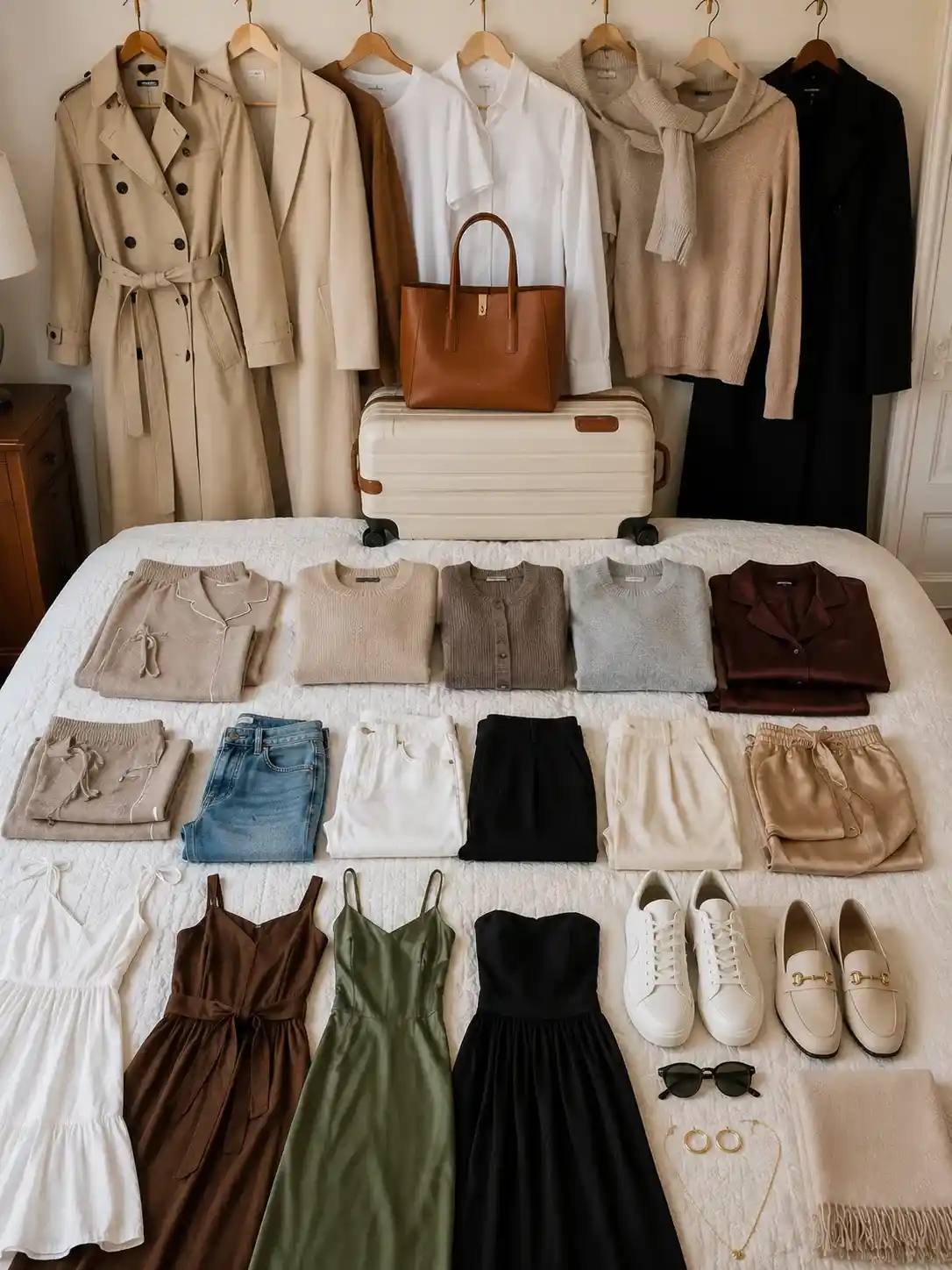
For flying days, I want to feel elevated and put together without sacrificing comfortable. Signature shirts with an elevated neckline are genuinely timeless, and a cashmere wrap — warm, chic, and a makeshift blanket in one — pairs perfectly with cashmere pants and sneakers. Keep accessories minimal: small hoop earrings, a delicate necklace, chic sunglasses, a tote as your personal item, and a carry-on suitcase for everything else.
Tops and layers matter most across every trip. A white tee and a timeless button-down can be layered and mixed and matched through nearly every one of the seasons, and a cashmere sweater drapes over shoulders the moment restaurants turn up the air conditioning. For outerwear, I always bring a trench coat that doubles as a raincoat, plus a proper wool coat for cozy evenings.
Down below, a favorite pair of jeans and white denim cover most days, while silk pants add comfort without sacrificing polish; trousers work for both travel and sightseeing, and a soft short-long set handles pajamas. For dresses, a white dress is endlessly flattering, a brown dress styles a dozen ways, and a green midi dress or corset maxi dress covers a proper night out — a reversible statement dress or matching set works just as well.
Round it out with shoes and jewelry: huggie earrings, a timeless watch, a cashmere scarf and printed Italian-style scarf among the scarves, plus bags like a structured top-handle bag and a woven crossbody. For footwear, I narrow it to four pairs — sneakers with cute socks, woven flats, sandals with a heel wide enough to survive cobblestone streets, and neutral flats that match absolutely everything.
Conclusions / Final Thoughts
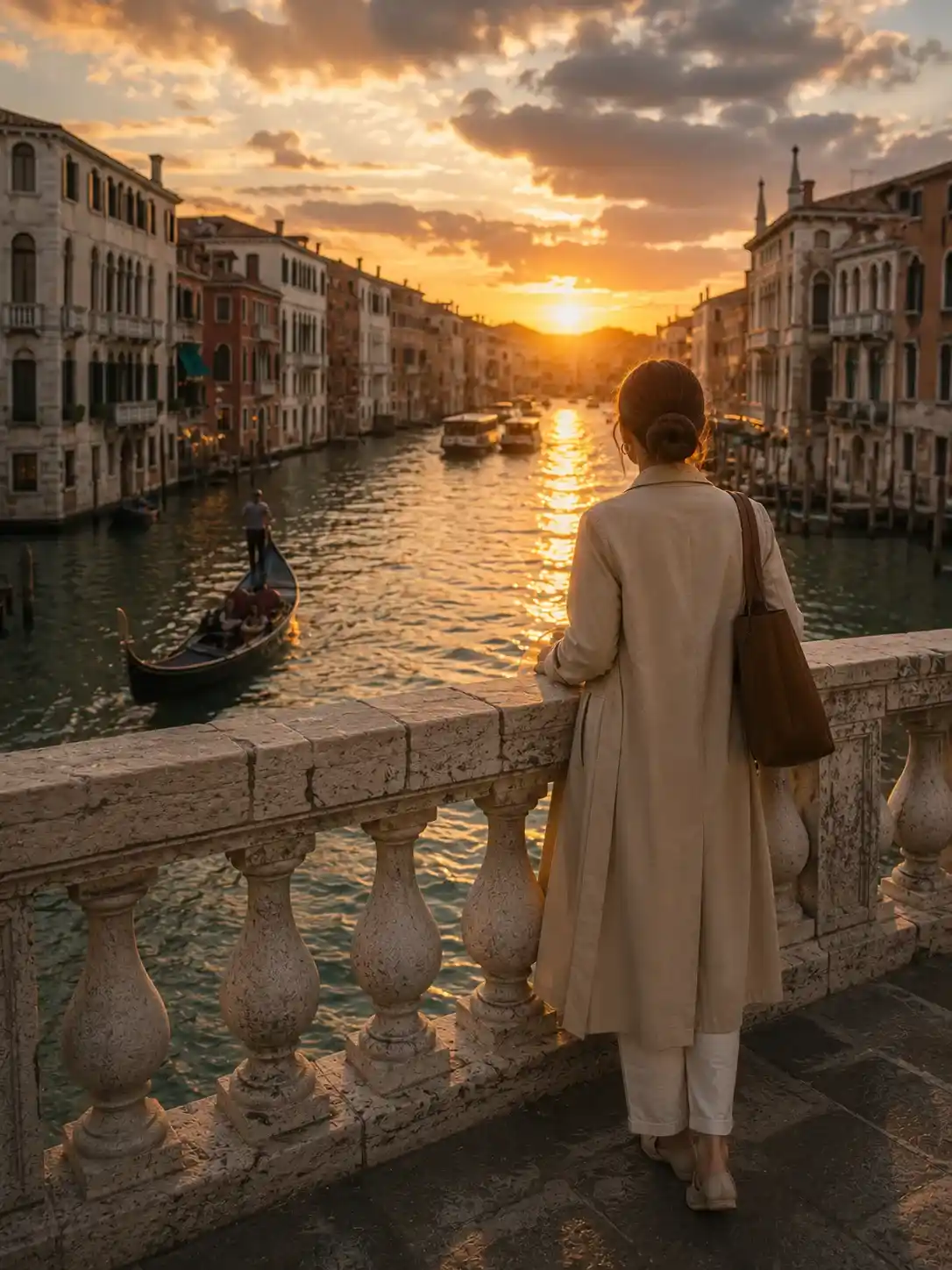
Looking back, Venice teaches things no packing list can fully capture — a real awareness of how you walk, how you speak, even how you dress inside a city this old. Choosing the right outfit isn’t only about how you look in photos; it’s about matching that quiet rhythm the city runs on, and packing with comfortable shoes, real layers, and genuinely weather-appropriate clothing for whatever season you land in, whether that’s Italy in spring or the depths of winter.
When you pack light and dress with care, something shifts — you move slower, you notice more, and you end up seeing the real Venice instead of the version stacked on every postcards rack. So the next time you’re crossing a bridge at sunset, remember the actual goal was never to stand out; it was always to belong, even for just a few days — and honestly, these same classic outfits work just as well back home in the U.S. for everyday wear, events, and every ordinary day in between, no matter the destination.