15 Fun Things to Do in Hood River, Oregon (2026 Local Guide)
Hood River Waterfront Park / Riverwalk
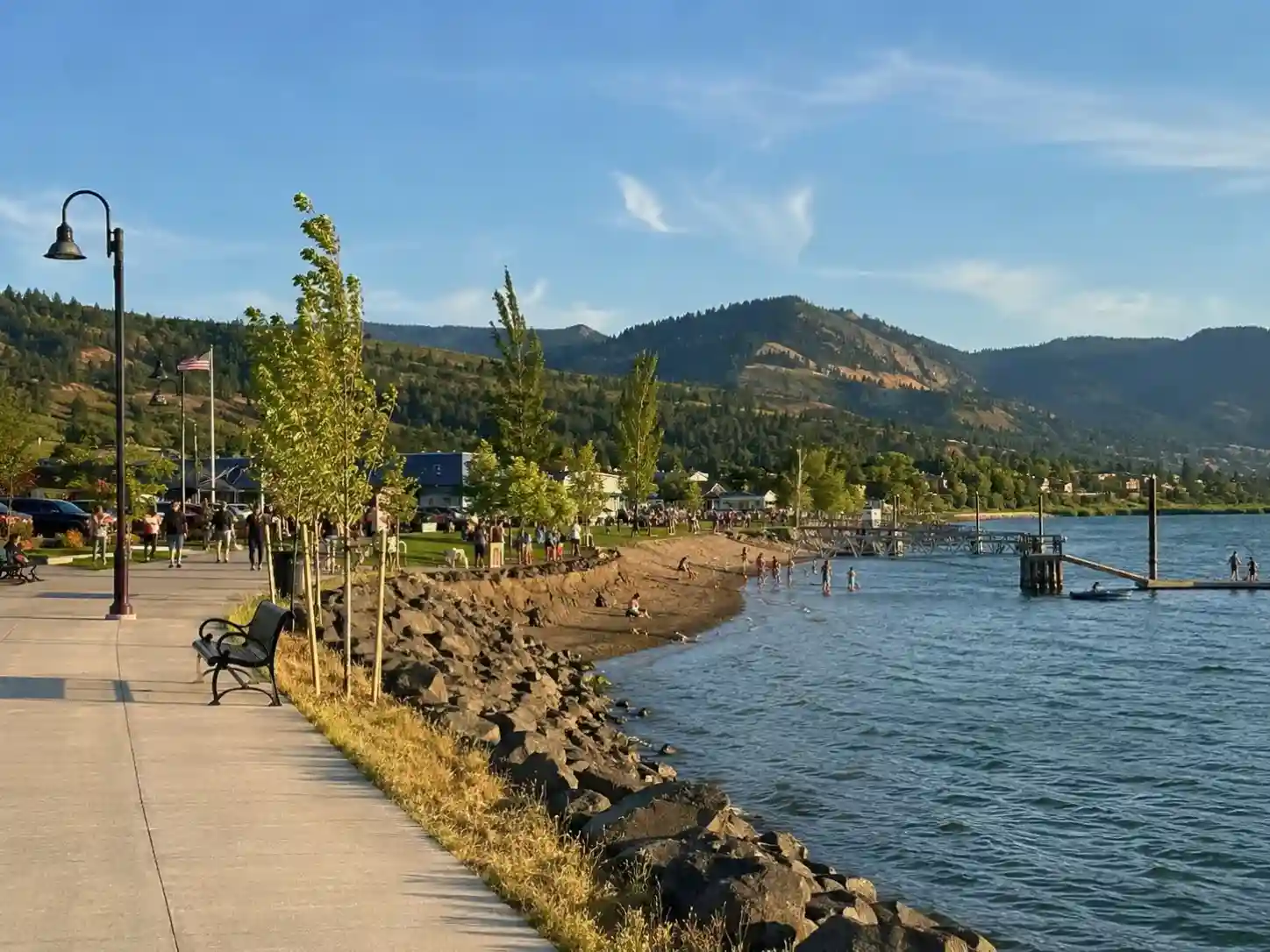
My first stop whenever I’m back in town is always the Hood River Waterfront Park, and I never get tired of it. There’s a walking path that hugs the Columbia River, dotted with benches where you can just sit and watch the water roll by. Families gravitate toward the small beach and the play equipment, while the picnic tables nearby fill up fast on a warm afternoon. I’ve gone swimming here more than once, though the river currents can catch you off guard if you’re not paying attention, especially once summer crowds show up.
Just across the road, you’ll find a strip of cafes and restaurants that make grabbing coffee, ice cream, or a slice of pizza dangerously easy. Ferment Brewing Company has upstairs windows that frame the river perfectly, and if you don’t mind waiting, Solstice pours some genuinely good cocktails alongside their wood-fired pizzas. This whole waterfront strip sits apart from the historic downtown district, tucked south of I-84 — Hood River really does have two distinct hubs, and it took me a couple of trips to actually understand that layout.
There’s also a separate stretch of riverwalk overlooking the Columbia River Gorge, and it might be the single best place to catch sunset. We’ve brought our dogs down here to cool off, watched kite surfing from a blanket during a picnic, and just people-watched for hours. It’s roughly 10 minutes on foot from the Hood River Hotel, or 3 minutes if you’re driving, and the whole thing runs as a paved trail starting near the Best Western Plus Hood River Inn.
Along the way, keep an eye out for the public art installations and small tributes to local history scattered along the route — there’s a landmark locals call the Hook, plus Marina Park and another swimming beach further down. You can cross the river on the pedestrian bridge, or duck underneath near the White Salmon bridge if you’d rather stay dry. The History Museum of Hood River County sits right along this path, and further along you’ll reach the Hood River Event Site — my honest recommendation is an early morning walk before the wind picks up and the crowds arrive.
Water Sports (Windsurfing, Kiteboarding, Wing Foiling)
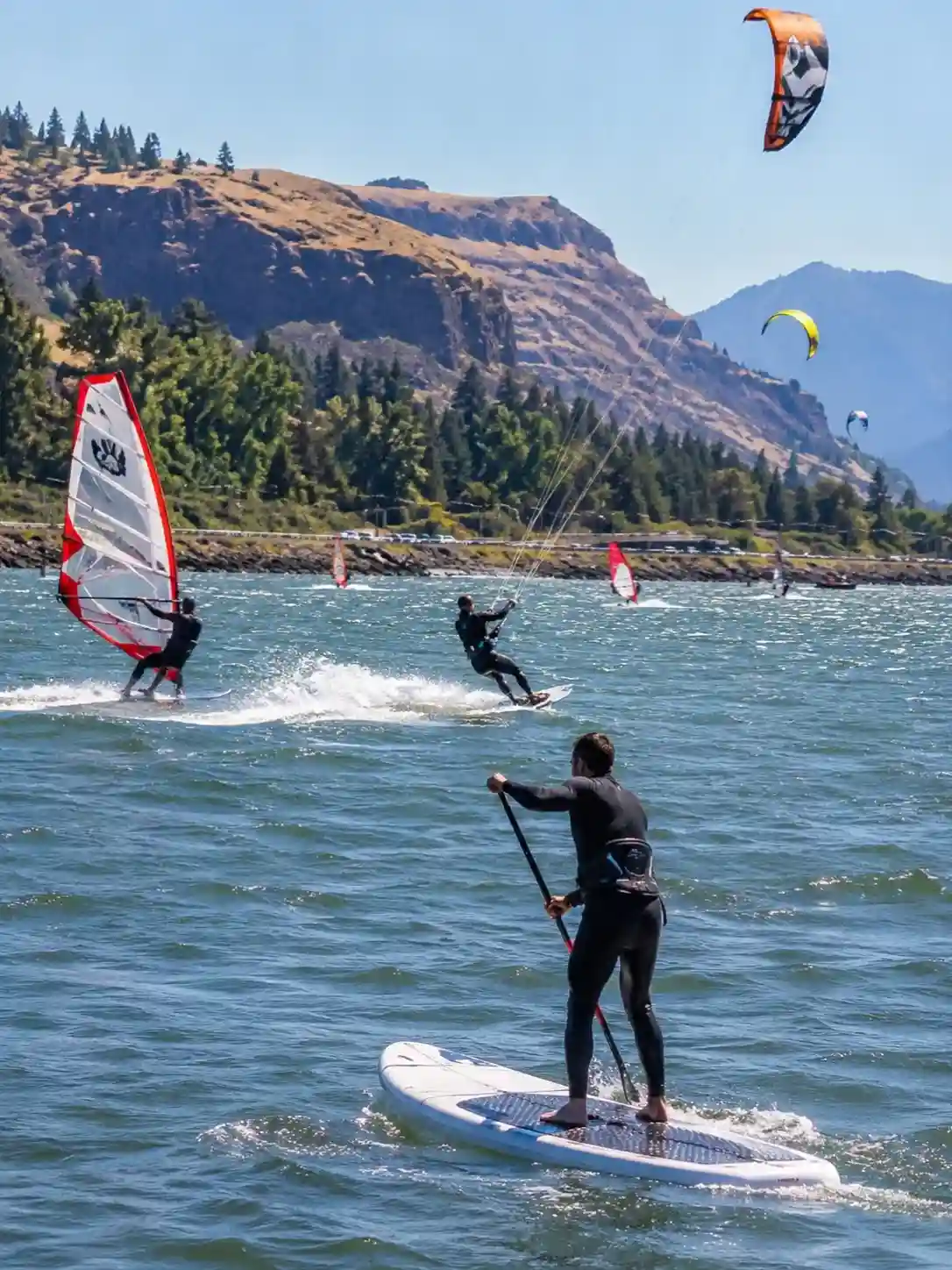
Ask anyone who’s spent an afternoon on the water here and they’ll tell you: windsurfing and kiteboarding are basically the town sport, though newer disciplines like wind foiling and wing foiling are creeping onto the Columbia River fast. People genuinely call this the windsurfing capital of the world, right alongside spots like Maui and the Red Sea, which felt like a stretch to me until I watched the wind rip through here on a summer afternoon. If the extreme end isn’t your thing, paddleboards and a rented kayak or paddleboard are the easiest ways to get on the water without much of a learning curve.
Local rental companies will get you fully outfitted, and I’d genuinely recommend a couple of lessons before you try to look proficient out there — the high winds here are no joke. Book through an approved guide for rentals if you’re nervous, and if you’re not ready to get in the water, the riverfront park district is a great place to watch from the sidelines. The wind and water conditions shift quickly, so local instructors genuinely earn their keep.
Even as a total beginner, hopping on stand up paddle boards felt manageable, and honestly, being a spectator here is half the fun too — spectators line the shore to watch rowing teams, kite flyers, and parasails drifting overhead. Grab a bench and just take it all in. The gorge walls, some rising up to 4,000 feet, funnel the air into a natural wind channel that produces the kind of steady swells riders dream about.
The season really runs May through September, and the river’s laid out well for both beginners and experts — quiet coves with calm waves for people just starting out, and stretches known for strong swells for the advanced crowd. All of it happens with Mount Hood and Mount Adams looming across the Columbia River Gorge, which never stops being surreal. Schools like Cascade Kiteboarding and Gorge Kite are solid options if you want structured schools for lessons. Or, do what we did: grab a crowler from a nearby microbrewery, walk down to Hood River Waterfront Park, spread out a blanket, and just watch — some people even bring inflatable water rafting gear just to float nearby and soak it in.
Hood River Fruit Loop
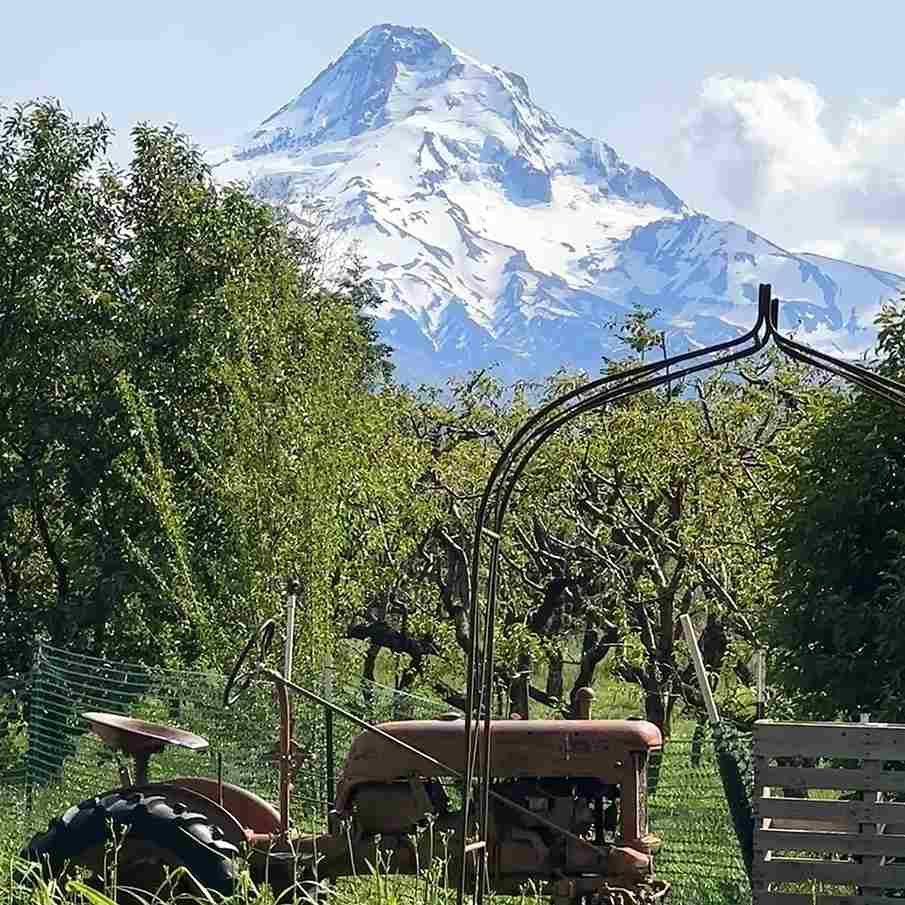
There’s a reason the Hood River Fruit Loop is the thing everyone tells you to do first — driving through a valley ringed by mountain peaks, past endless orchards, farms, and vineyards, feels like something out of a postcard. This scenic byway stretches about 35 miles, and it changes character depending on when you go: summer and fall bring out the best of it, when the flowers and produce are at their peak. Strawberries show up first in June, then apples and pears take over by September and October.
You can stop at one of the farm stands for pre-picked fruit, or go the U-pick route and get your hands dirty. Afterward, most people swing by one of the wineries for a tasting flight on a patio overlooking the vines — it’s my favorite way to end the loop. Locals just call it Fruit Loop Road, and if you time it for apple blossoms in April, the meandering country roads are worth the drive on their own. The full route hits 28 fruit and farm stands, though fair warning: dogs not allowed at several of them, so plan accordingly on a hot summer day. Fox Tail Cider and Draper Girls Country Farm are two stops I keep coming back to along this 35-mile route.
Between the tasting rooms, you’ll find farm fresh produce, baked goods, and plenty of local wines and ciders to sample. Bring a cooler if you’re buying anything perishable goods-related, especially with Mount Adams blazing overhead on a clear day. It’s essentially a self-guided rural farm loop connecting breweries, cideries, flower fields, and lavender fields across the full 35-mile loop, and the u-pick harvest season runs roughly June to October.
Depending on the week, you might catch cherries, blueberries, or peaches at their peak. What makes Hood River Valley so productive for fruit orchards comes down to its unusual mix of warm climate, dry climate, and fertile soil — a combination you don’t often find this far north. Along this 35-miles scenic drive, you’ll pass roughly 27 fruit stands scattered across bucolic fields, with Kiyokawa Family Orchards, Fox Tail Cider and Distillery, and Marchesi Vineyards — which genuinely feels like a slice of Tuscan countryside — among my personal favorites. Just double-check opening hours before you go; most close somewhere between 4 to 6 pm.
Panorama Point
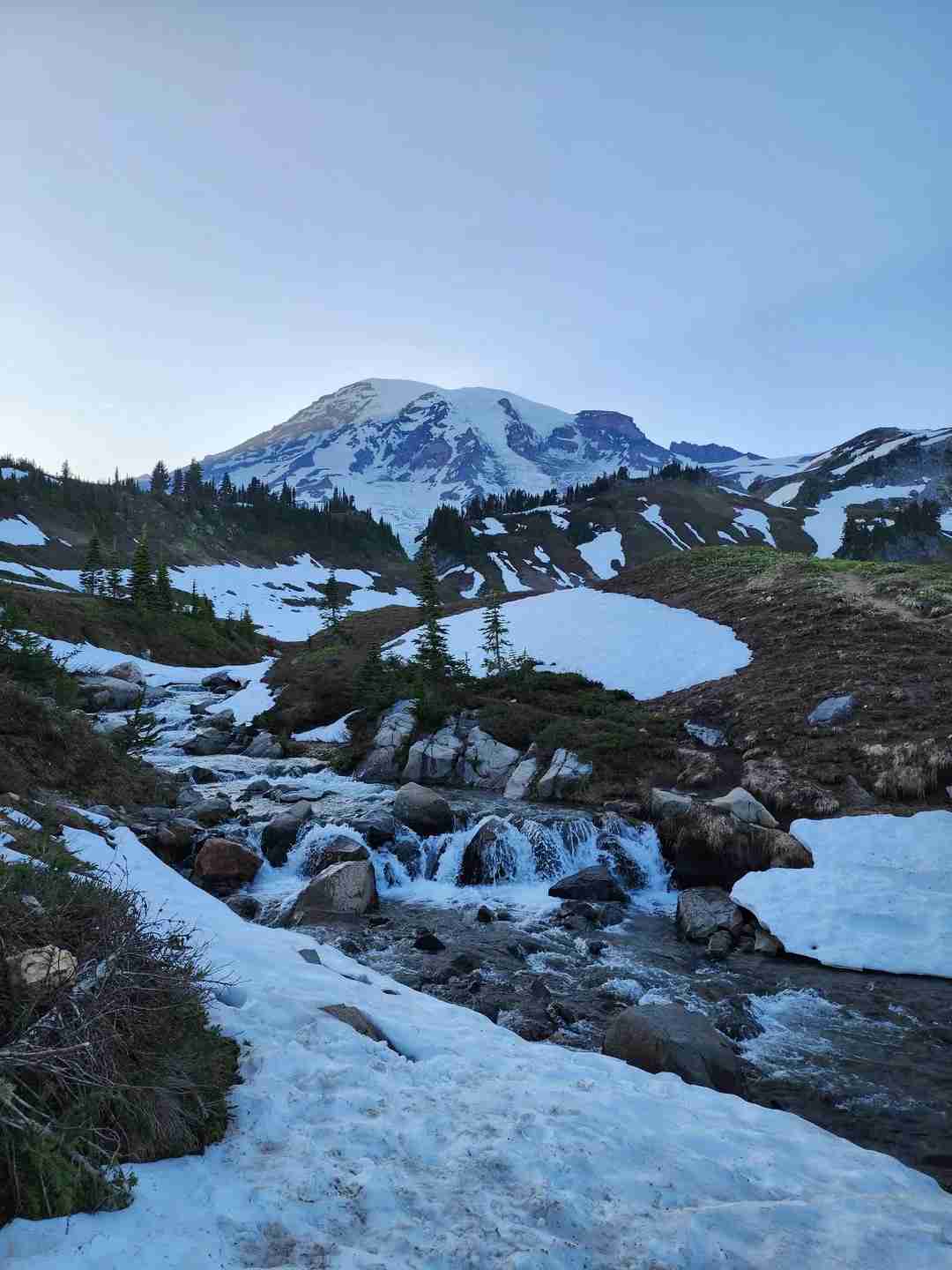
Panorama Point, officially Panorama Point County Park, is the kind of spot everyone drives past without realizing what they’re missing. It sits just south of downtown, on the way toward the Fruit Loop, and a small sign off Highway 35 points you up a short hill to the views. What you get up there is a full sweep of the Cascade Mountains framing the rolling hills of farms and vineyards below in the Hood River Valley, with Mt Hood to the southwest and Mt Adams and Mt St Helens to the north.
Parking is free parking, the overlook is wheelchair accessible, and there are restrooms and picnic tables right by the lot. Even on a cloudy day, the panoramic views are worth the five-minute detour, but I’d genuinely plan around sunset if you can swing it. On our visit, the easy drive up ended with the gate closed, so we ended up doing a short improvised hike in flimsy sandals — check the hours before you go so you don’t repeat our mistake.
Come spring, this spot gets even better: you’re looking out over roughly 15,000 acres of orchards, farmland, and foothills, and in springtime, when the fruit trees are in full bloom, it’s genuinely one of the prettiest views in the state. Pack a cooler, treat it like a picnic date, and enjoy — it’s only 10 minutes from downtown.
Downtown Hood River / Shopping
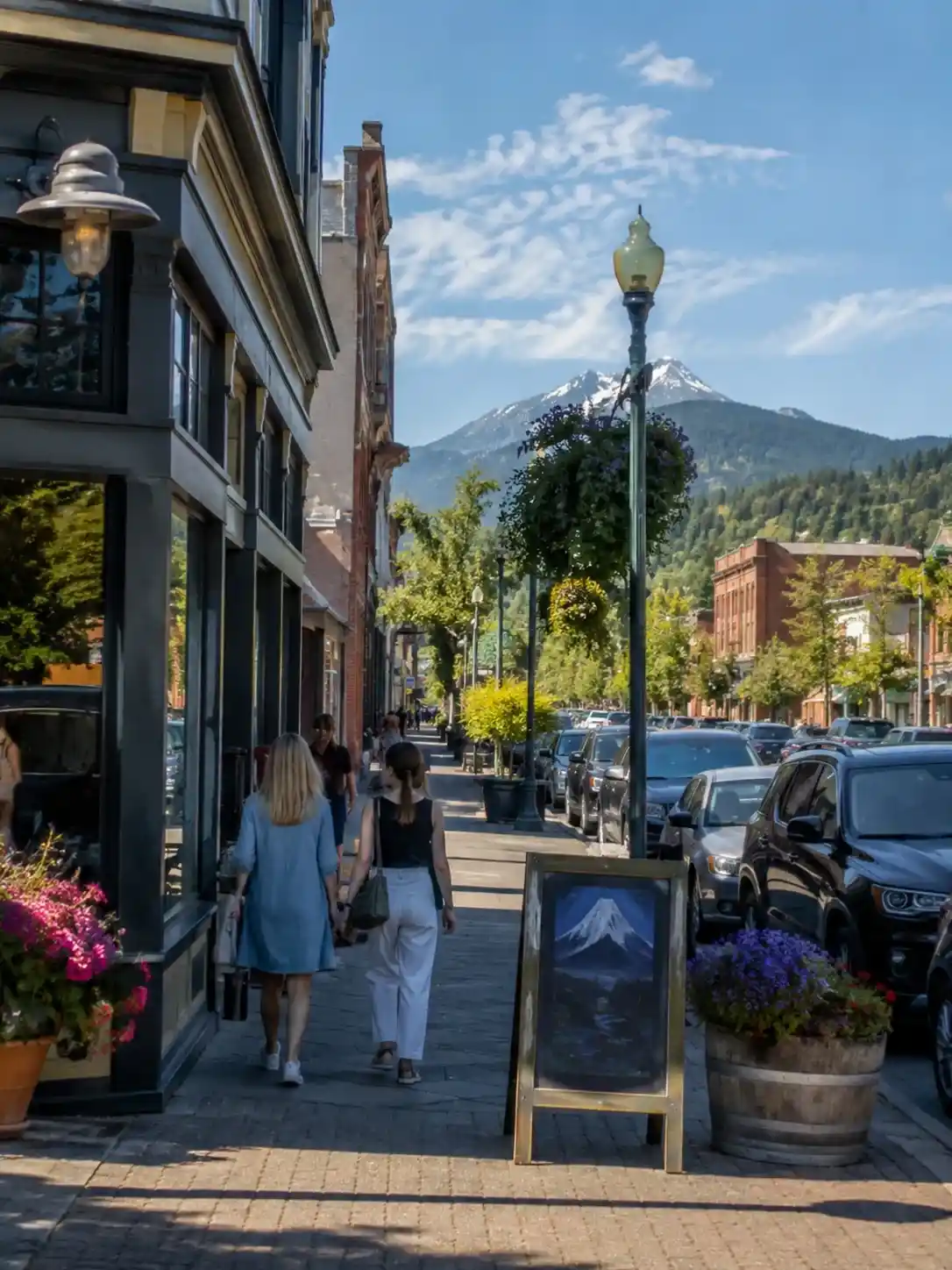
Wandering downtown Hood River is one of those low-key activities that ends up eating an entire afternoon. The boutique shops, cafes, bars, and restaurants all sit inside old Victorian buildings, and the brick buildings still carry a lot of their original character. You’ll find everything from vintage clothing to books, art, furniture, and outdoor sports equipment tucked into these storefronts. My personal favorite discovery was The Pines 1852, a tasting room pouring a unique Zinfandel made from 1800s vines.
Beyond just shopping, there are local restaurants and art galleries worth building a proper walking tour around, with everything from handcrafted chocolates to outdoor gear and kids toys lining Oak Street. Keep an eye out for the historic Hood River Hotel, which sits on the National Register of Historic Places, plus little photo-worthy spots like City Hall and a quirky egg chair sculpture nearby.
Between the ice cream shops and wine tasting rooms, my favorite stop is still Waucoma Bookstore, open since 1976, stacked with gifts, notebooks, and games — I always end up browsing the staff picks at any decent indie bookstore, and this one delivers. Mike’s Ice Cream usually has a line worth joining if you have time, and along Oak Street you’ll also find Twiggs, Hood River Stationers, and Oak Street Pub.
Beyond the obvious, the strip is full of coffee shops, boutiques, and outdoor gear outfitters tucked into more of those historic brick buildings. Apple Green Home and Garden sells sweet little paper goods, ornaments, greeting cards, and succulents, while Waucoma Books, a proper used bookstore, runs a fun feature called Blind Date With a Book and stocks plenty from PNW artists. Grab a pair of goofy socks or other home goods on your way out — it’s the kind of downtown built for slow, aimless wandering.
Pipeline Trail / Indian Creek Trail
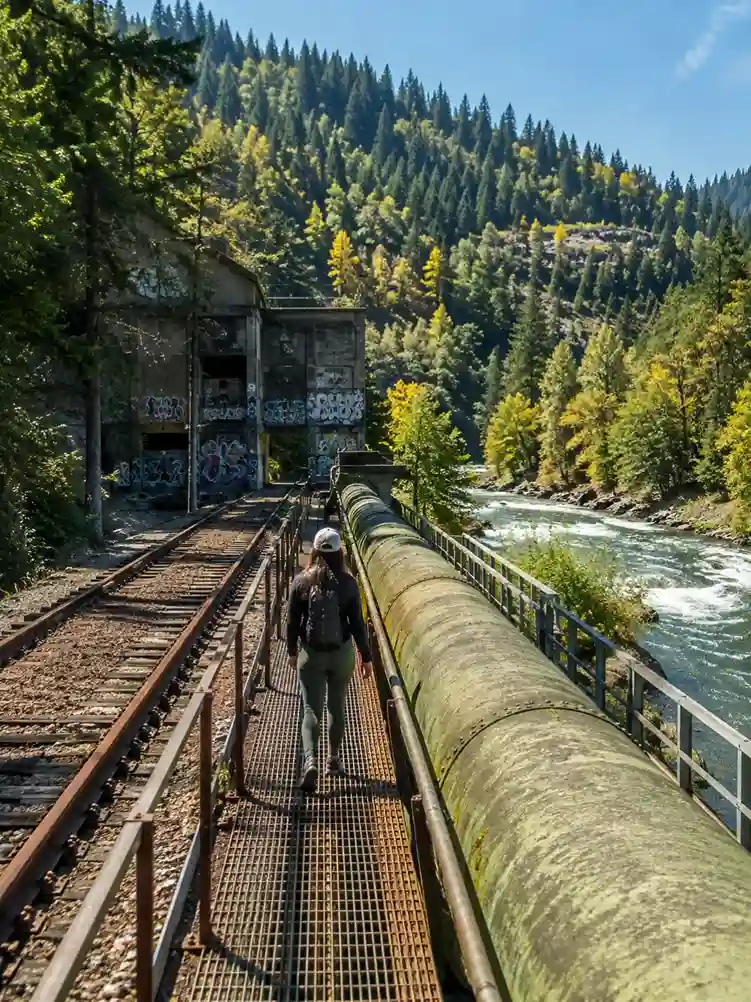
The Hood River Pipeline Trail is one of the strangest, most memorable hikes I’ve done in Oregon. It starts at an abandoned power station covered in graffiti, then has you walking directly on active railroad tracks past warnings about trains, before dumping you onto a narrow catwalk above a massive decommissioned pipeline. It follows the Hood River the whole way, and in season you’ll pass wildflowers and spots good for wading. Come fall, the changing leaves make it even better. It’s flat, easy, genuinely family-friendly, and clocks in around 3 miles total — and it’s free, with no pass required and, unfortunately, no restrooms at the trailhead. Dogs allowed is technically true, but I wouldn’t bring one; the pipeline grating is rough on their paws.
The Indian Creek Trail is a completely different animal — a genuine hidden gem we stumbled onto by accident. It climbs a series of staircases through quiet residential areas before opening into wooded paths with surprisingly good views of the city and the Columbia River below. Some sections are legitimately steep, but there are water fountains along the way, and in bloom, the purple wildflowers lining the path make the climb feel worth it.
Wineries
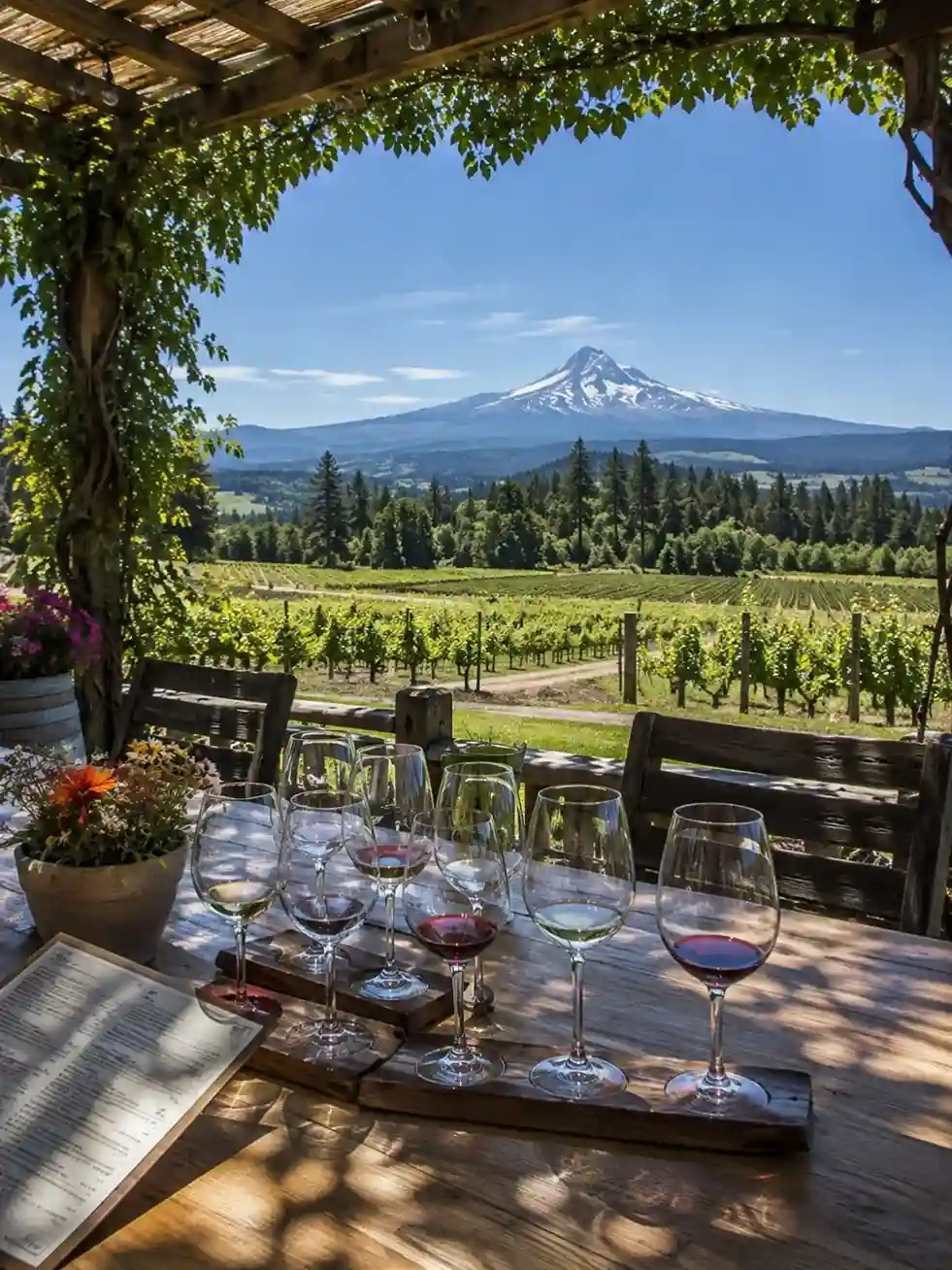
Hood River’s Hood River wine country feels like a more relaxed cousin of the Willamette Valley — the tasting fees here run noticeably lower than Dundee, and thanks to the region’s overlapping microclimates, you’ll find grapes sourced from both here and the Columbia Valley. Views from the patios are ridiculous, with Mt Hood and Mt Adams visible from more than one tasting room. Marchesi Vineyards pours lovely Italian varietals, Wy’East Vineyards has alpacas grazing right behind the patio, and Stave & Stone is worth a reservation — their garden space next to the lavender fields is unbeatable. Mt Hood Winery rounds things out with solid Pinot Noir, white wines, and bold reds; just double-check seasonal hours in winter.
One of my favorite stops stays dog friendly, and if you book ahead, you can usually score a table in the shade even on a packed weekend — not bad, considering there are more than 36 wineries in the area. Between wine tasting at a downtown spot or venturing further out, you’re looking at roughly 40 wineries total, whether you prefer a downtown tasting room or a full guided wine tour through the countryside vineyard by vineyard.
Some of the best-kept secrets require planning: Savage Grace Wines kept our reservation even during a heat wave and sat us inside next to their barrels, Cor Cellars offers a shaded tent experience, and Hiyu Wine Farm books up fast, so reserve early. Downtown, Le Doubble Troubble Wine Co and Evoke Winery both run proper tasting rooms if you don’t want to drive out to the valley.
While the Willamette Valley gets branded as Oregon’s wine capital, Hood River holds its own with 83 vineyards and those 36 wineries, most offering incredible mountain views from their patios — just bring a designated driver. Phelps Creek Vineyard pours a genuinely memorable smoky Pinot Noir, a byproduct of the 2017 wildfire that left a lasting smoky taste in that vintage. Across the river, AniChe Cellars in Washington blends Spanish influences into their pours, best enjoyed from their Adirondack chairs. Just remember most of these operate seasonally, roughly mid-spring through end of fall.
Waterfalls / Columbia Gorge
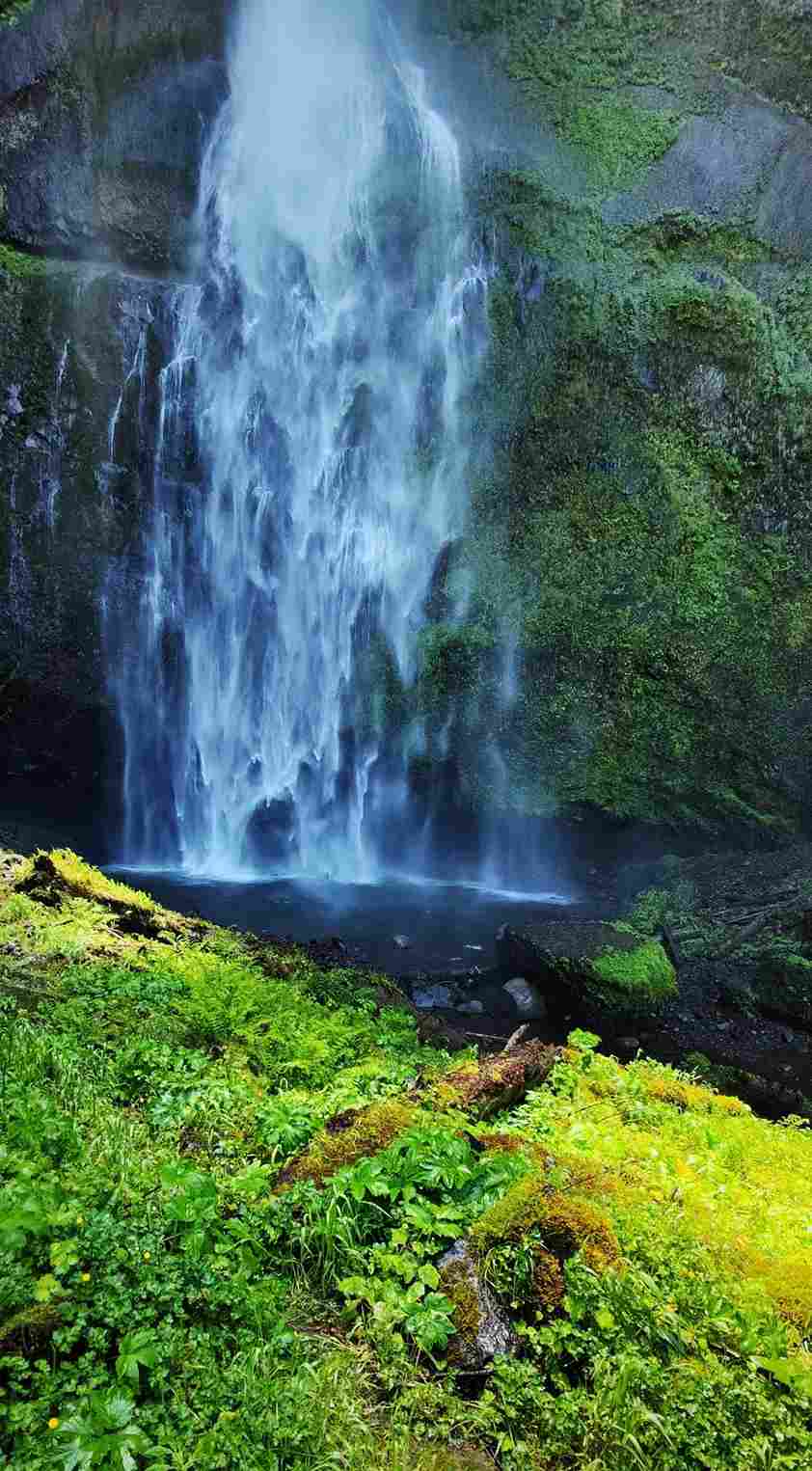
The Columbia Gorge produces an absurd number of waterfalls, largely thanks to frequent rainfalls hitting all those towering cliffs. Multnomah Falls, at 611-foot, holds the title of Oregon’s most famous waterfall, while smaller ones like Fairy Falls feel almost secret by comparison. Some are visible from roadside viewpoints, but the real payoff comes from actual hiking — Eagle Creek Trail and Wahclella Falls are both about 25 minutes away, with a handful of others in the 30-40 minutes range.
The Columbia River Gorge also hides plenty of quieter forested trails. Memaloose Overlook Trail, just 10 minutes out, bursts with wildflowers every May — think balsamroot, lupine, and Indian paintbrush everywhere you look. My personal pick for favorite waterfall in Oregon is roughly 30 minutes away too, and if you want more, Dog Mountain, Rowena Plateau Trail, Starvation Creek Falls, and Latourell Falls Loop Trail round out a seriously stacked list.
For a broader view of the region, the Columbia River Gorge National Scenic Area rewards a proper scenic drive along the Historic Columbia River Highway, out toward Rowena Crest. Heading the other direction takes you along the so-called Waterfall Corridor, past Bridal Veil, Latourell, and Hole-In-The-Wall Falls — though note that Multnomah Falls now requires a reservation, May through October.
On the Oregon side alone, there are over 90 waterfalls tucked into old-growth forests and basalt cliffs. Multnomah, standing 620 feet tall, remains the tallest in Oregon, and you can either snap photos from the viewing platform or tackle the full Multnomah-Wahkeena Loop Hike, a 4.9-mile route (a permit is required these days). Further along, Punch Bowl Falls is another favorite worth the detour.
Lavender Farms
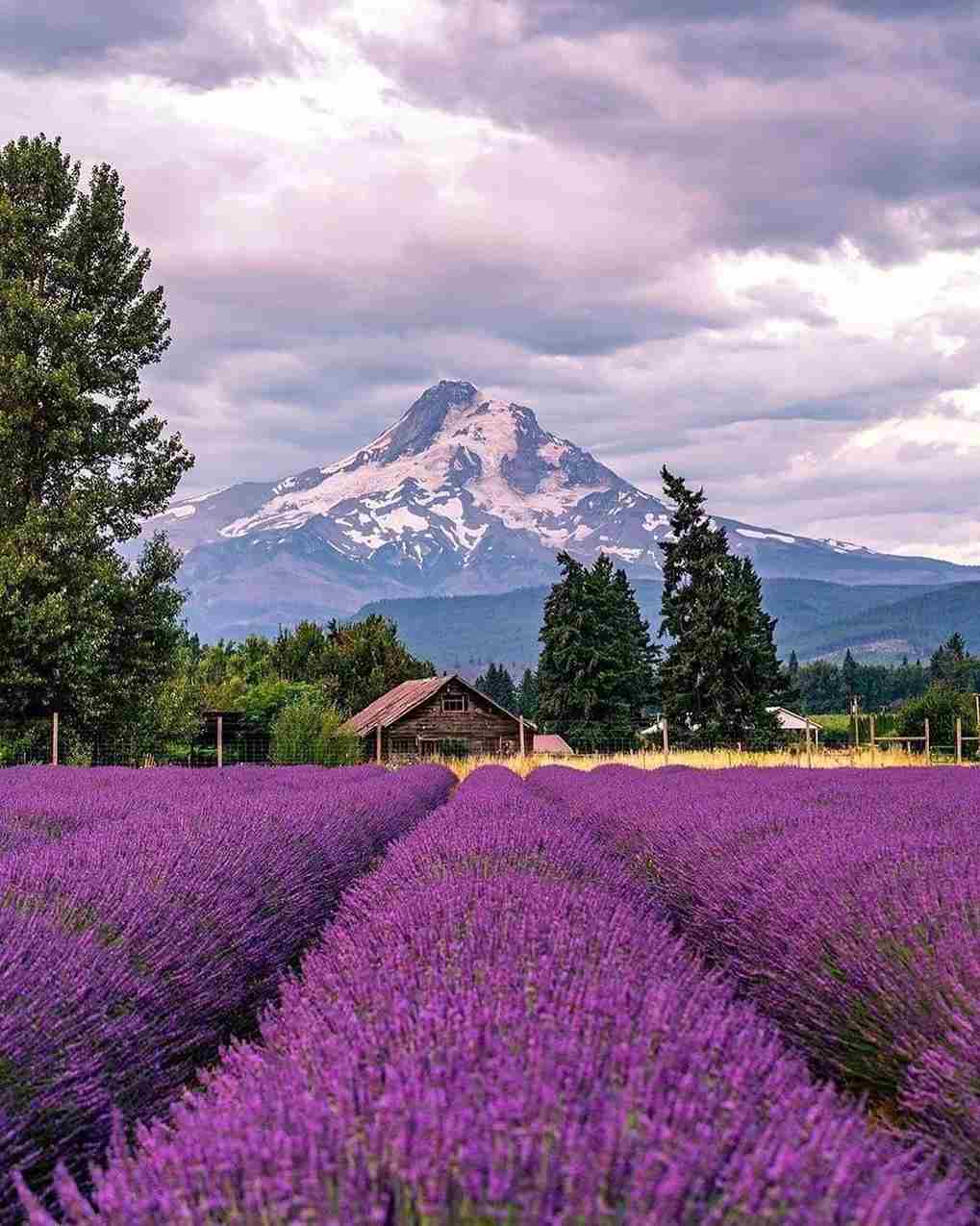
Come June, the fields around town burst into lavender, and the blooms usually hold through early August. Most farms operate on a U-pick basis, with farm stands selling everything from soaps to culinary seasoning. Hood River Lavender Farm has the largest lavender field in the area, plus views of both Mt Hood and Mt Adams, and their lavender ice cream pairs perfectly with a glass from Stave & Stone Winery next door. Hope Ranch Lavender is quieter, with equally striking mountain views, while Mt View Orchards has a small lavender field worth a stop before hitting Grateful Vineyards for wood-fired pizza.
The bloom really peaks between late June and early July. Parking can be tight, so expect to circle the parking lot a bit during peak weekends, but it’s worth it for the lavender infused products and, honestly, the lavender ice cream cones alone.
If you time it right, you can catch both tulips and lavender on the same trip — this really is a legit flower farm destination. The Hood River Tulip Festival runs in April at Packer Orchards, with gorgeous blooms worth planning a whole day around, while the lavender fields peak late June, July. Pick up some lavender products, like essential oils or a bundle of Spanish lavender, on your way out.
Some locals affectionately call this region America’s Provence, a nod to France’s original lavender country. Hope Ranch Lavender stays family-run, and I always grab their culinary lavender for baking cookies at home. Hood River Lavender Farms is certified-organic and woman-owned, hosting a weekend festival every Sunday June through July with food, live music, and craft vendors. Bring cash: a proper U-pick bundle runs about $10 bouquet, and don’t skip the lavender lemonade. The whole field practically hums with bumble bees busy pollinating, running from April through October.
Twin Tunnels
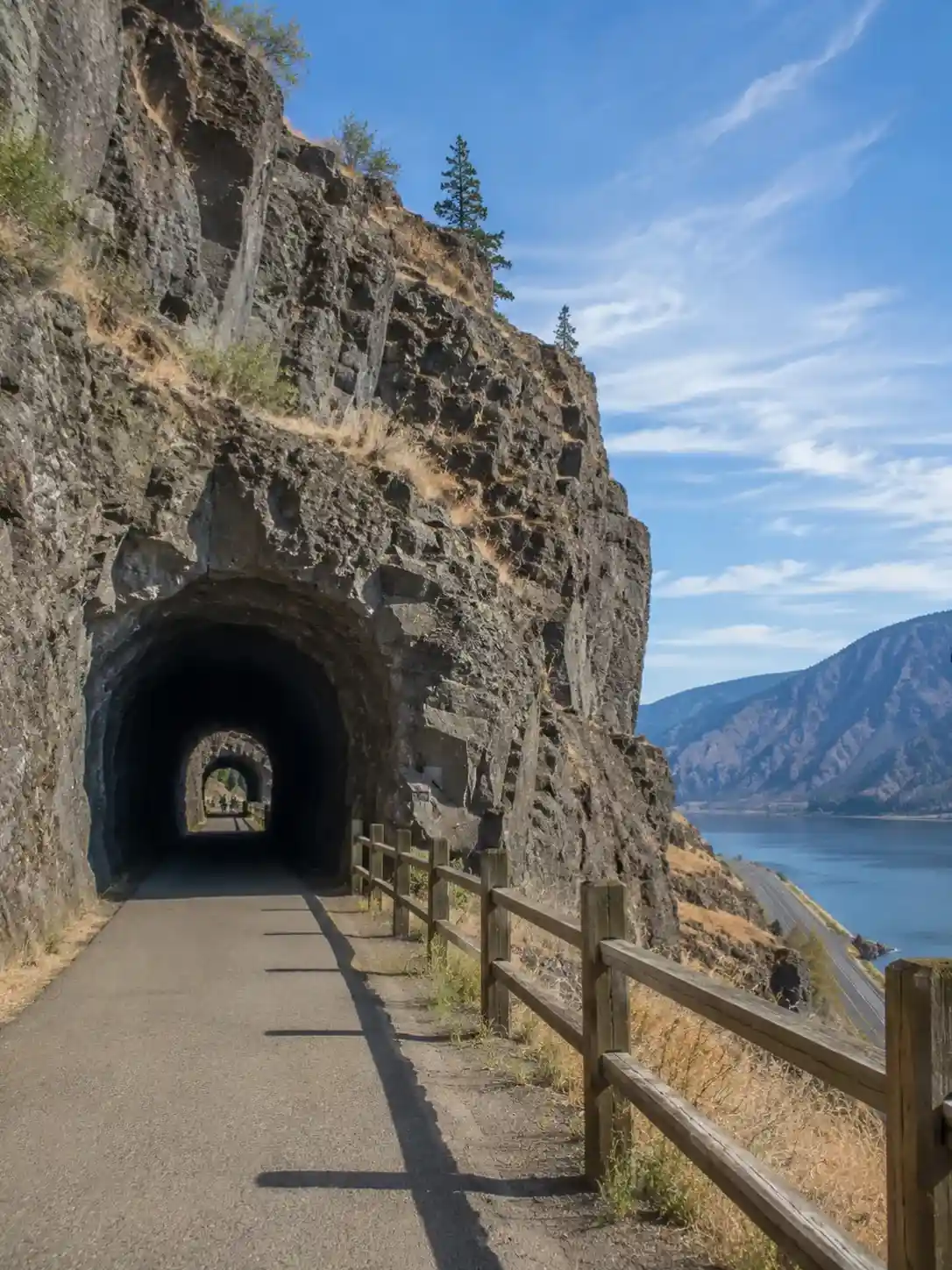
The Twin Tunnels Trail is one of the more unusual excursions in the area, and it requires an Oregon State Park Pass at $10/day. It connects Hood River to the town of Mosier along what used to be the main route before Highway 84 existed — now it’s strictly for hikers and bikers. Workers blasted these two passages through solid basalt back in 1921 through sheer dynamiting, and you can still feel that history at the trailhead. The full route runs 9 miles out and back, with sweeping views of the Columbia River and the distinctly angled basalt cliffs across the water in Washington. It also doubles as a popular mountain biking trail for anyone looking for a flatter ride.
Mt Hood
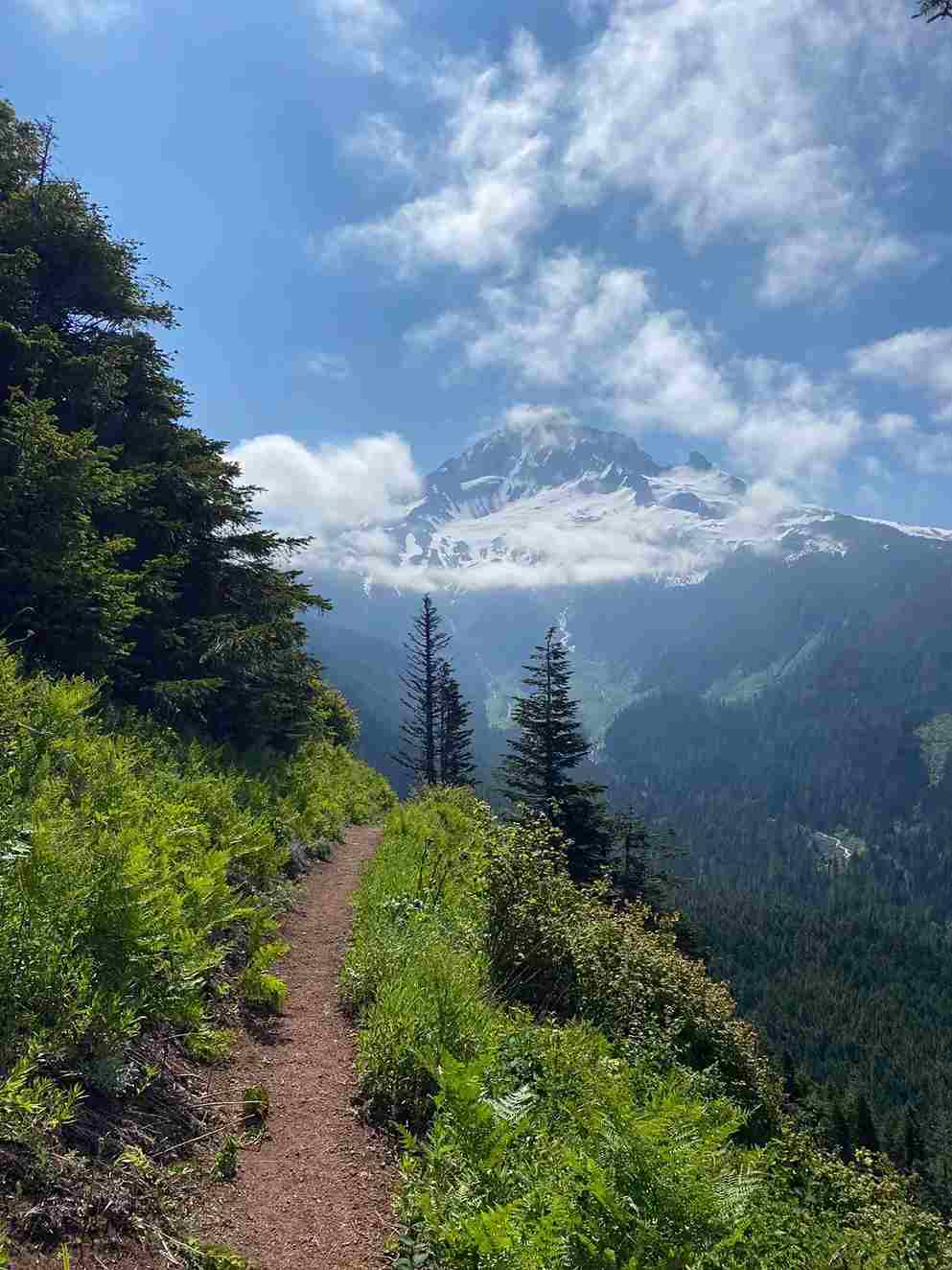
Mt Hood, Oregon’s tallest peak, is an easy scenic drive away — about 30 minutes gets you into some of the best hiking and snowshoeing territory around, including Tamanawas Falls. Push a little further and you’ll hit Timberline Lodge, good for hiking in summer or skiing, snowboarding, and snowshoeing come winter. If you don’t have a car, Columbia Area Transit runs a seasonal bus out to Mt Hood Meadows for just $5.
A trip out to Mt Hood National Forest honestly works in any season. Look for high-elevation wildflowers around Timberline from late July through August, while lower trails stay accessible practically snow-free most of the year. Skiing here is doable nearly year-round, though it peaks roughly December through March, and the whole area offers genuine year-round outdoor recreation.
Winter sports run deep here — Skibowl and other resorts fuel serious winter sports culture, and the Mount Hood Cultural Center does a solid job preserving that history. Once the snow clears, scenic hikes and quiet alpine lakes take over as the main draw. Trillium Lake in particular offers an easy lakefront trail and reliable camping spots. Timberline Lodge itself is worth visiting just for the building — meet the resident St. Bernard dogs, check out stops on the Oregon Film Trail, or just admire the architecture.
At 11,239 feet, Mt Hood earns its spot among the 7 wonders of Oregon, sitting just 35 miles south of town and offering everything from hiking and camping to full-on water activities. The Tom Dick and Harry Mountain trail is one of my favorites, passing Mirror Lake, famous for its still-water reflections of the peak, before climbing a mountain ridge with genuinely in-your-face views. For something bigger, the 40-mile Timberline Trail fully circumnavigates the mountain as a proper backpacking trip, usually 3-4 days. Or keep it mellow at Trillium Lake or Lost Lake, both offering flat trails, solid campgrounds, and easy water access for a kayak, stand-up paddle board, or canoe — we usually bring our Intex Explorer K2 kayak.
Wildflower Hikes
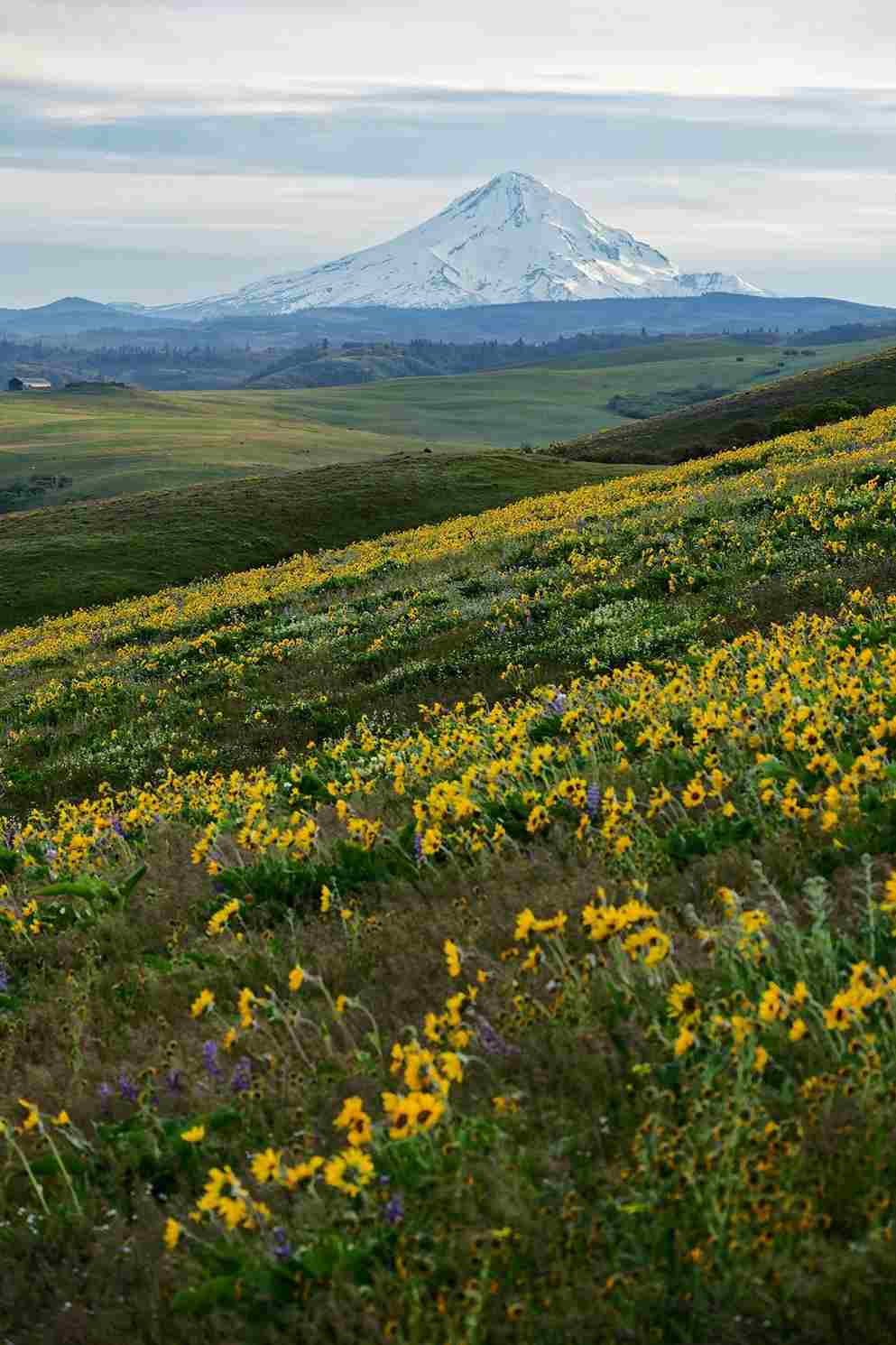
Hood River sits right where conifer forests start thinning into open grasslands, and that transition zone produces some genuinely spectacular spring wildflowers — think lupines, balsamroot, and paintbrush covering entire hillsides. The window runs roughly late April through early June, and you don’t even need to leave town; Hood River Mountain delivers. Head toward Mosier and Rowena and you’ll find even more options, like the Mosier Plateau Trail, about 20 minutes out, with views stretching across the Columbia Gorge to Cascade peaks like Mt Hood, Mt Adams, and Mt St Helens.
Elsewhere, fields of Indian paintbrush blanket the Memaloose Overlook Trail, one of several Oregon State Parks known for this kind of display — the Memaloose Hills Trail inside Memaloose State Park and the Tom McCall Nature Preserve both bloom reliably from March through October.
For something more demanding, Dog Mountain is the classic spring wildflower hike, climbing 2800 feet in just 3 miles to the summit. You’ll pass through balsamroot meadows on the way up, and the panoramic views of the Columbia River Gorge and Mount Hood at the top make the burn worth it. Just know you’ll need a permit to hike it on weekends from end of April through middle of June, including Memorial Day, and the tiny parking lot fills fast.
Breweries
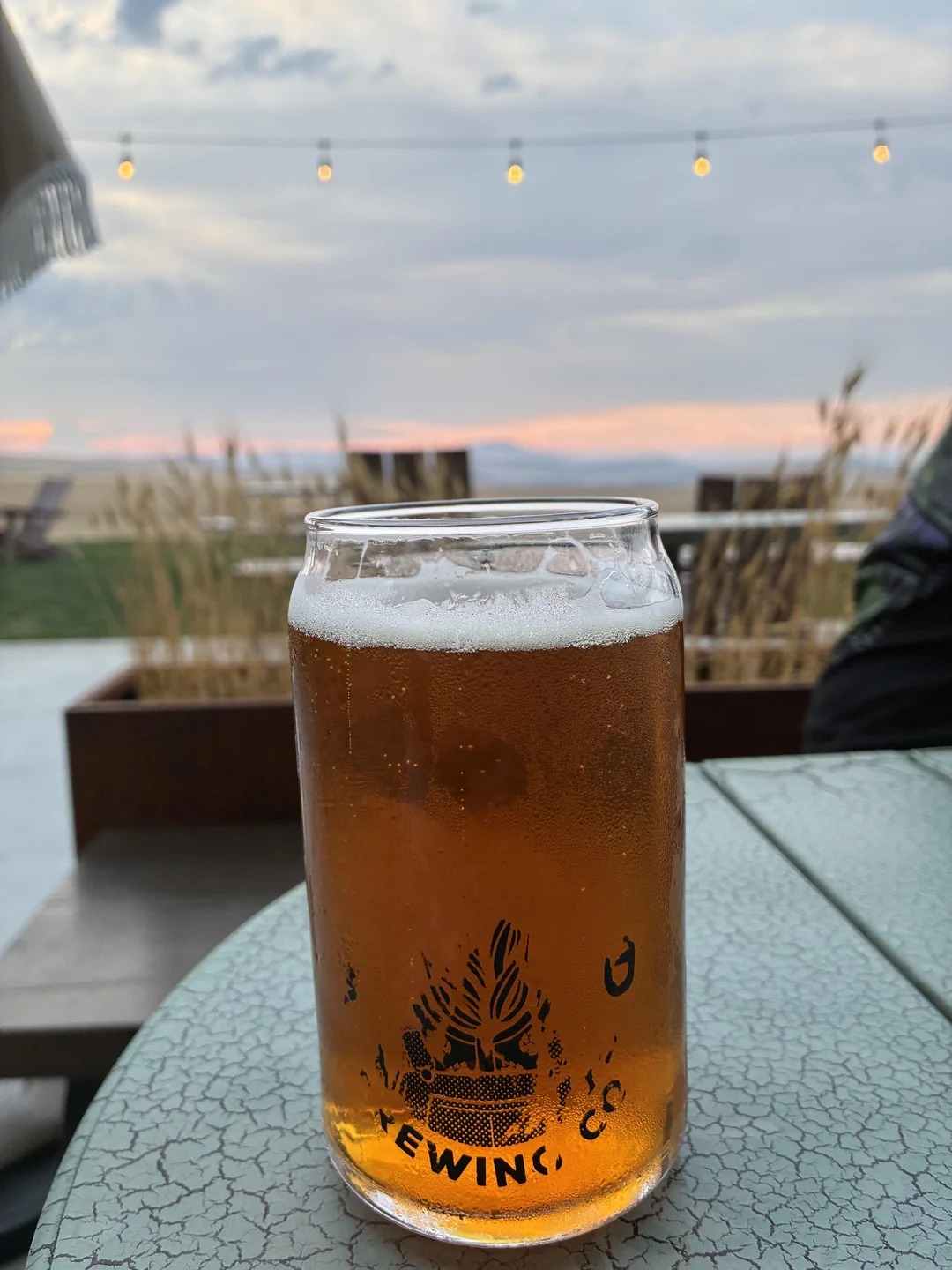
Hood River takes its breweries seriously, and the beer here leans heavily into IPAs, pale ales, pilsners, and lagers — the classic Pacific Northwest lineup. pFriem Brewery sits right on the Hood River waterfront with a patio worth fighting for a table on, while Double Mountain Brewery pairs its pizzas with excellent cider. Ferment Brewing Company leans non-alcoholic-friendly with kombuchas and other fermented foods, and Full Sail Brewing has a seasonal patio with equally great river views. Out on the Fruit Loop, Solera Brewery has picnic tables looking straight at Mt Hood from the town of Parkdale.
Between Oregon and Washington, the micro-breweries scene here is dense — there are roughly 7 breweries just in town, most with unbeatable Mount Hood views and dogs welcome on the patio, plus solid nachos on the menu. Full Sail’s taproom and outdoor patio overlook the Columbia River, and their Oregon Brewery of the Year win at the New York International Beer Competition isn’t a fluke — try their Session Lager, Amber Ale, Nut Brown Ale, or seasonal Wreck the Halls.
pFriem Family Brewers blends Belgian-style brewing with local ingredients, right across from Waterfront Park, and their seasonal beer releases built around local produce are always worth checking. For live music and a genuine commitment to sustainability, Double Mountain Brewery is the spot — they also brew ginger beer and root beer, sell par-baked pizzas to finish at home, and their Sunday Brunch is a great way to close out a weekend.
Across the river, Everybody’s Brewing in White Salmon deserves a stop too — I’m partial to their Early Riser Easy IPA, and the food menu covers everything from burritos to a solid gyro. Round out the list with Crush Cider Café. It genuinely makes sense that this region churns out so many hops — the Pacific Northwest at large fuels a serious microbrew scene, and Hood River alone claims a full dozen breweries spread between downtown and the Fruit Loop countryside. pFriem’s industrial tasting room focuses on hop-forward beers, while Double Mountain experiments with unexpected notes like pine tree and blood orange alongside their New York style pizza. But for the single best view of Mount Hood from a brewery, nothing beats Solera, pouring a rotating Flemish style beer, cherries-infused brews, and a tart raspberry sour — order the flight and settle in.
Biking / Mountain Biking
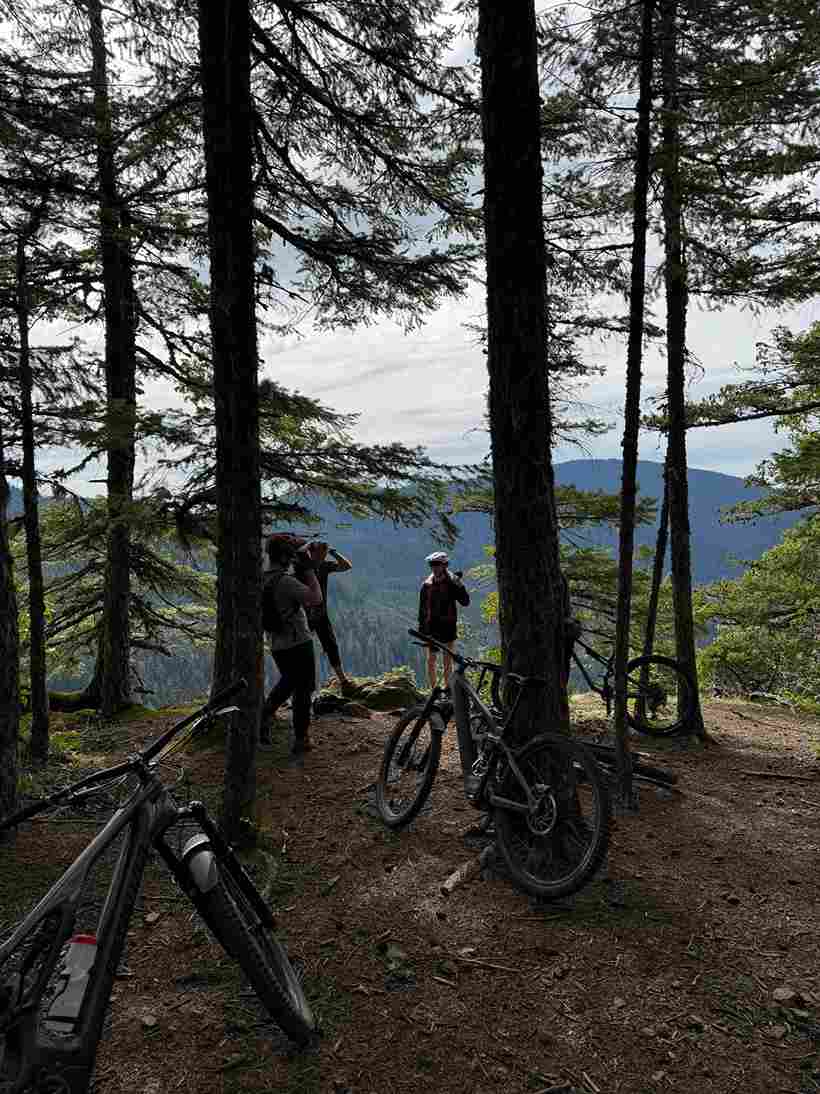
Hood River’s biking trails run the full range from casual to genuinely gnarly. On the easy end, the flat, paved, family-friendly Twin Tunnels Trail is a favorite, and the 2.8-mile path through Hood River Waterfront Park is another solid, low-effort option. Indian Creek Trail offers an unpaved, woodsy alternative that somehow feels miles from town despite being right in it.
For actual mountain biking, the Post Canyon Loop covers 9-mile of legitimately technical terrain, and the Surveyor’s Ridge Trail, a 23-mile out-and-back shared-use route, is one of the more ambitious options around. Beyond that, there’s a whole network of single track trails and paved car-free roads, plus guided tour options if you’d rather not navigate solo. Twin Tunnels near Mosier, Post Canyon, and Forest Road #44 inside Mount Hood National Forest all come recommended by locals — just don’t forget your GoPro, because the Post Canyon Trail System in particular offers both flowy trails and proper skills-building courses. If you didn’t bring your own bike, outfitters like Fat Tire Farm and Hood River Mountain Bike Adventures let you rent a bike and even book a shuttle straight to the trailhead.
Western Antique Aeroplane & Automobile Museum (WAAAM)
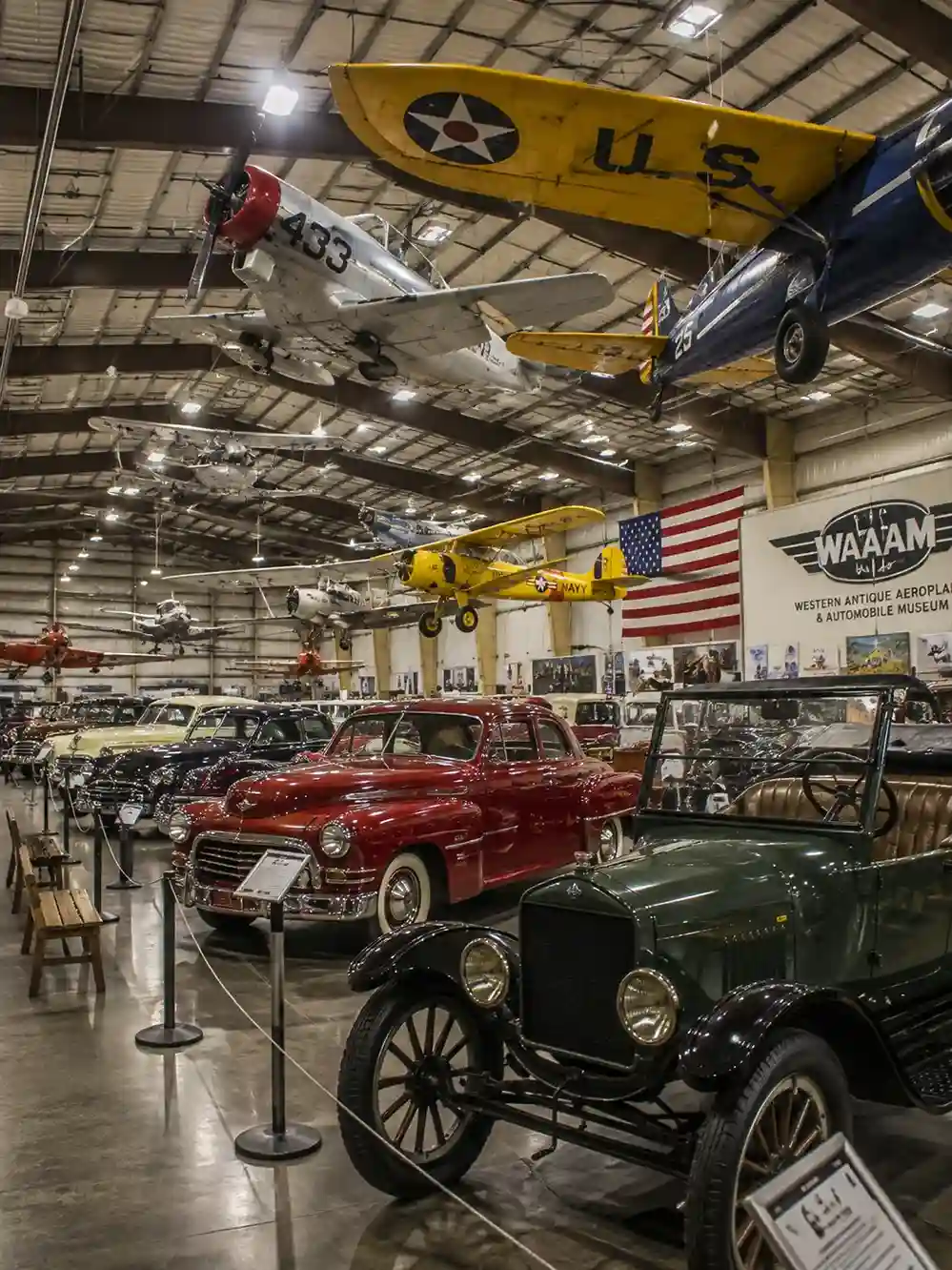
I’ll admit this one is a bit of a niche pick, but the Western Antique Aeroplane & Automobile Museum, better known as WAAAM, might be the single best attraction in town if you’re into anything mechanical. It’s packed with vintage planes, cars, and motorcycles, all maintained by a small army of dedicated volunteers who clearly love this stuff. The antique aircraft and vehicles fill a genuinely massive 3.5-acre hangar, and on the second Saturday of the month, they run actual flights, drives, and flight demonstrations.
Hours run 9 AM to 5 PM, admission is $23 admission, and it’s located at 1600 Air Museum Rd, Hood River OR 97031. Inside, you’ll find real vintage airplanes and classic vehicles, and it’s genuinely a hands-on experience more than a look-but-don’t-touch museum. We spent hours across two full warehouses admiring dozens of beautifully restored aircraft from the early to mid-20th century, helped along by solid interpretive videos and displays. Between the 130 classic cars and various military vehicles, my kids got to actually climb into a WW2 army jeep and a Ford Model T — on the right day, you might even catch rides or a full flight displays show.
Mount Hood Railroad
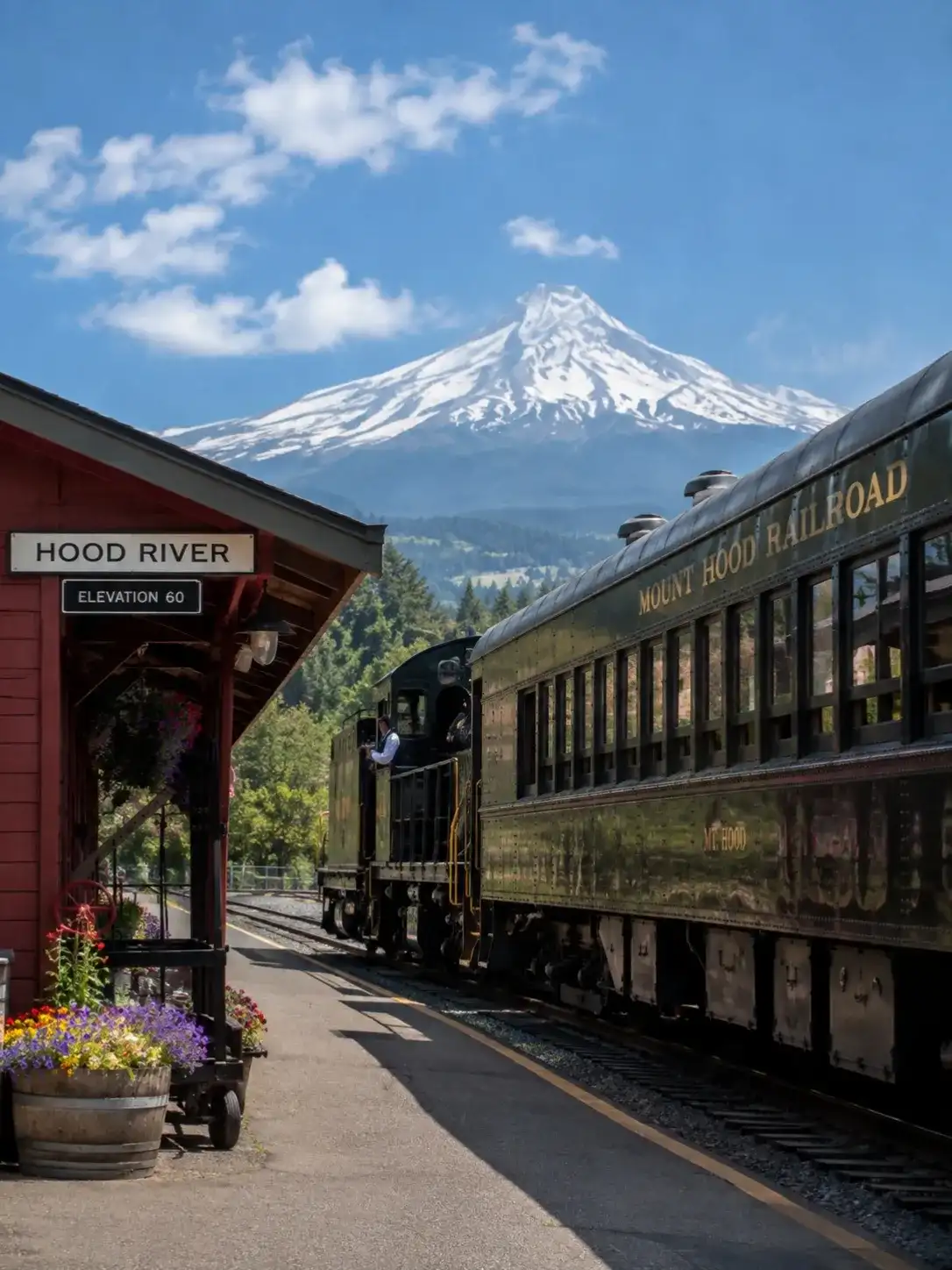
A scenic train ride through the surrounding countryside, with Mount Hood framed in nearly every window, is genuinely one of the more relaxing ways to spend a few hours here. Seating is assigned seating, so book ahead if you want your group together, and the historic Hood River Valley Train runs 2.5 to 3 hours, with concessions and drinks available onboard. The train station itself is worth a few photos on its own.
The Mount Hood Railroad runs this vintage train ride year-round, including seasonal specials like the Polar Express around the holidays. The conductor and staff were genuinely great with our kids, which made the whole experience easy. Grab lunch at the Fruit Company during the layover, or squeeze in a tasting at Mt. Hood Winery — just check on reservations first. Beyond the classic train, they also run railbike rides through the Hood River Valley, and you can rent E-bikes if you’d rather explore under your own power.
Restaurants
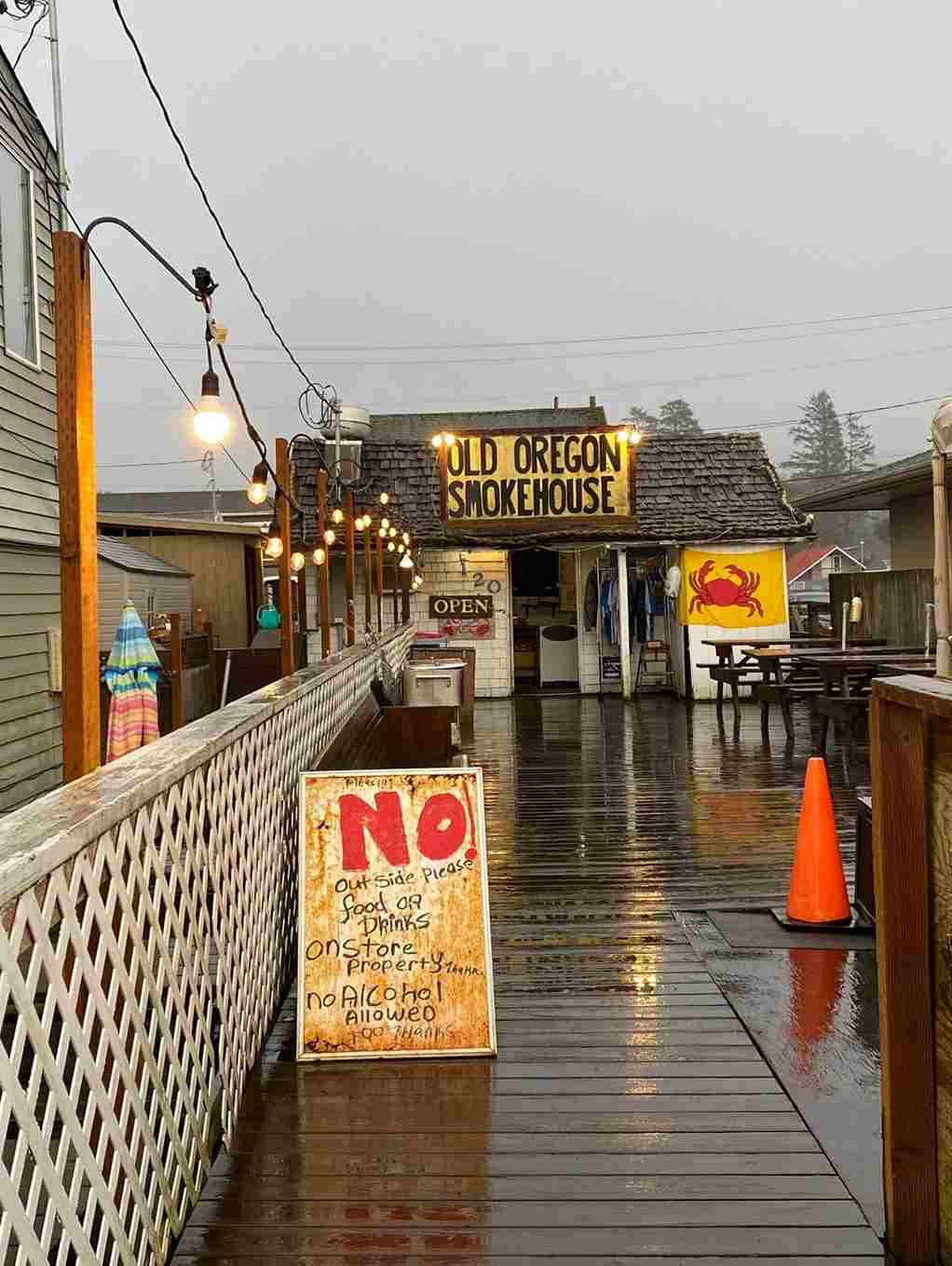
Hood River’s restaurants scene punches above its weight for a town this size. Solstice Woodfire Pizza has a dog friendly patio worth planning around, Love and Hominy covers both lunch and dinner nicely, and Celilo Restaurant is the move for an upscale dinner. Ferment Brewing does double duty as a solid lunch spot, Doppio is your best bet for coffee and breakfast, Stoked pours excellent coffee too, and Mugen Noodles serves genuinely good ramen.
Beyond that core list, Kickstand Coffee & Kitchen, Bette’s Place, and Solstice Wood Fire Pizza are all solid picks, and Grasslands Barbecue deserves a shot even if you’re skeptical. Round things out with 3 Rivers Grill, Riverside, Boda’s Kitchen, Celilo Restaurant & Bar, and Pine Street Bakery. Just a heads up: many of the best spots require a reservation, especially during busy summer season, so book ahead if you can.
Rowena Crest
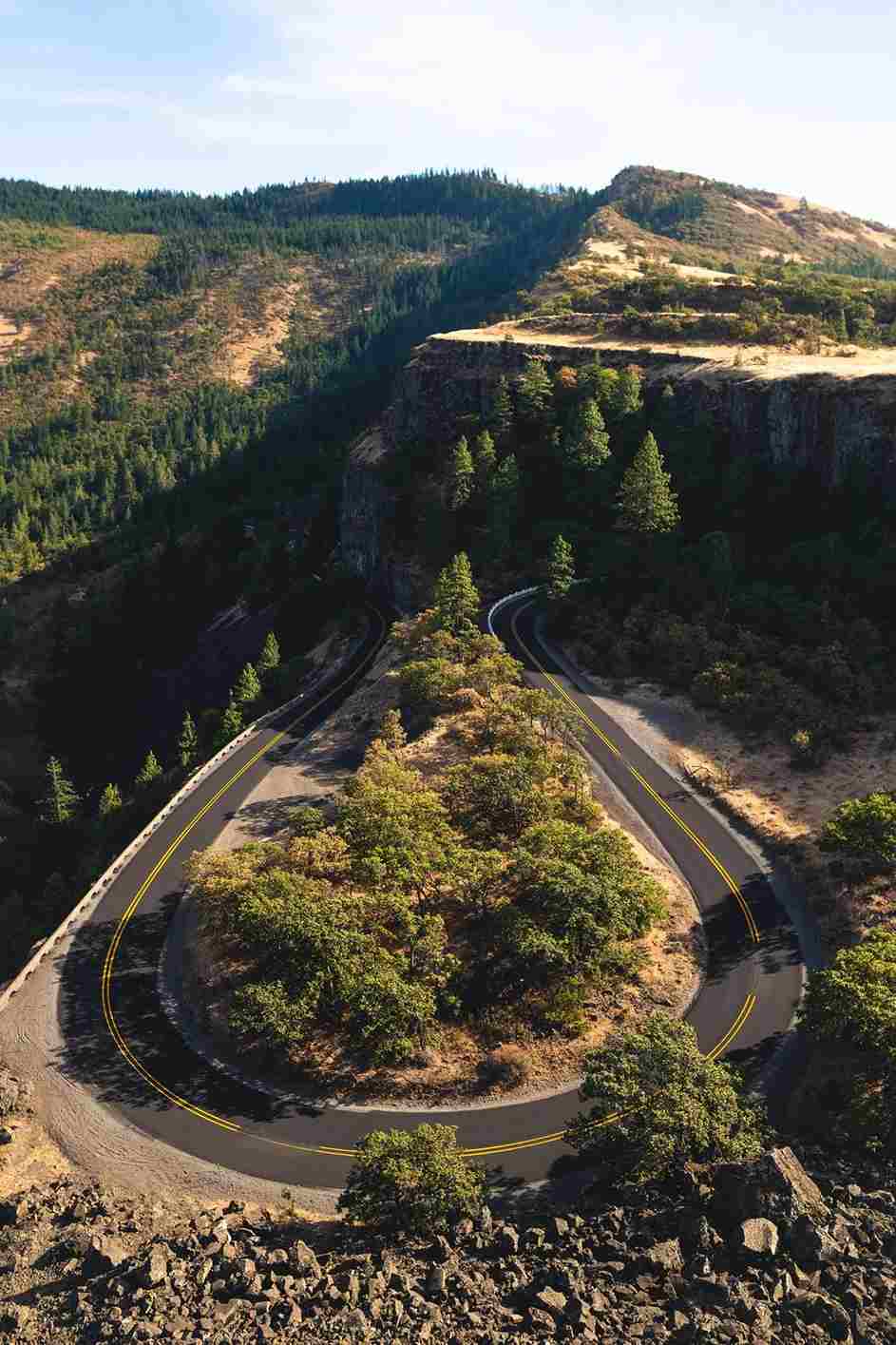
Rowena Crest, out east of Hood River, is a genuinely gorgeous scenic area overlooking the Columbia River, and it’s one of the best spots around for either sunrise or sunset. If you’re chasing that famous iconic round road shot, it’s located on the west side of the guard rail once you pull into the parking lot — look for the guard rail for reference. It sits right along the Historic Columbia River Highway, and the phenomenal views from up here are honestly hard to overstate.
The History Museum of Hood River County
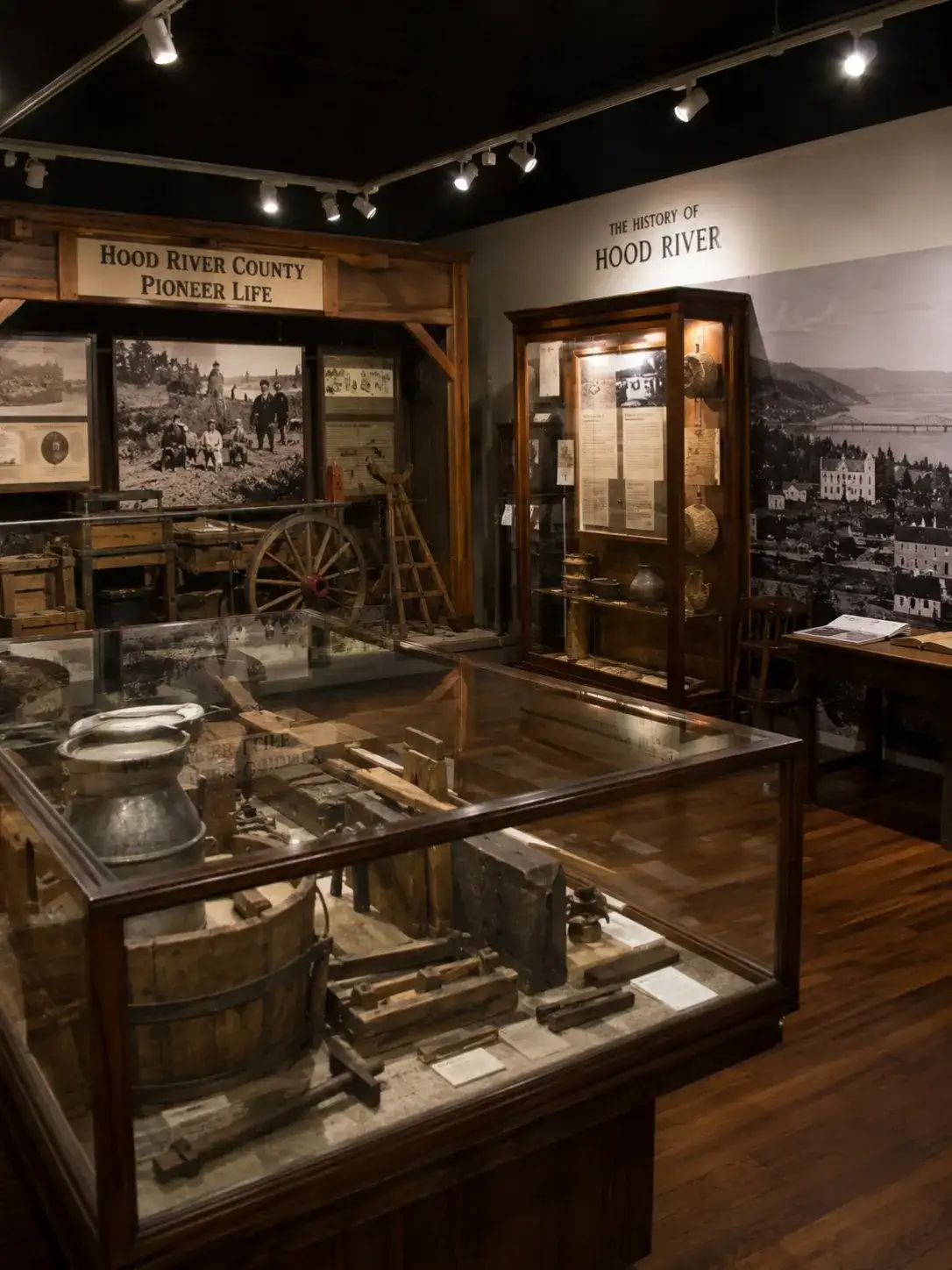
This local museum does a genuinely solid job covering the history of Hood River and the surrounding regions. It’s stacked with local artifacts, from Native American relics to old pioneer tools, all arranged to trace the valley’s development over time. Current exhibits cover everything from local watersports to local artists, the story of Nikkei Japanese immigrants, and even a lighthearted Sasquatch feature. On weekends, staff lead walking tours through historic downtown Hood River, which is a nice bonus if you’re already in the area.
Skiing/Snowboarding at Mount Hood
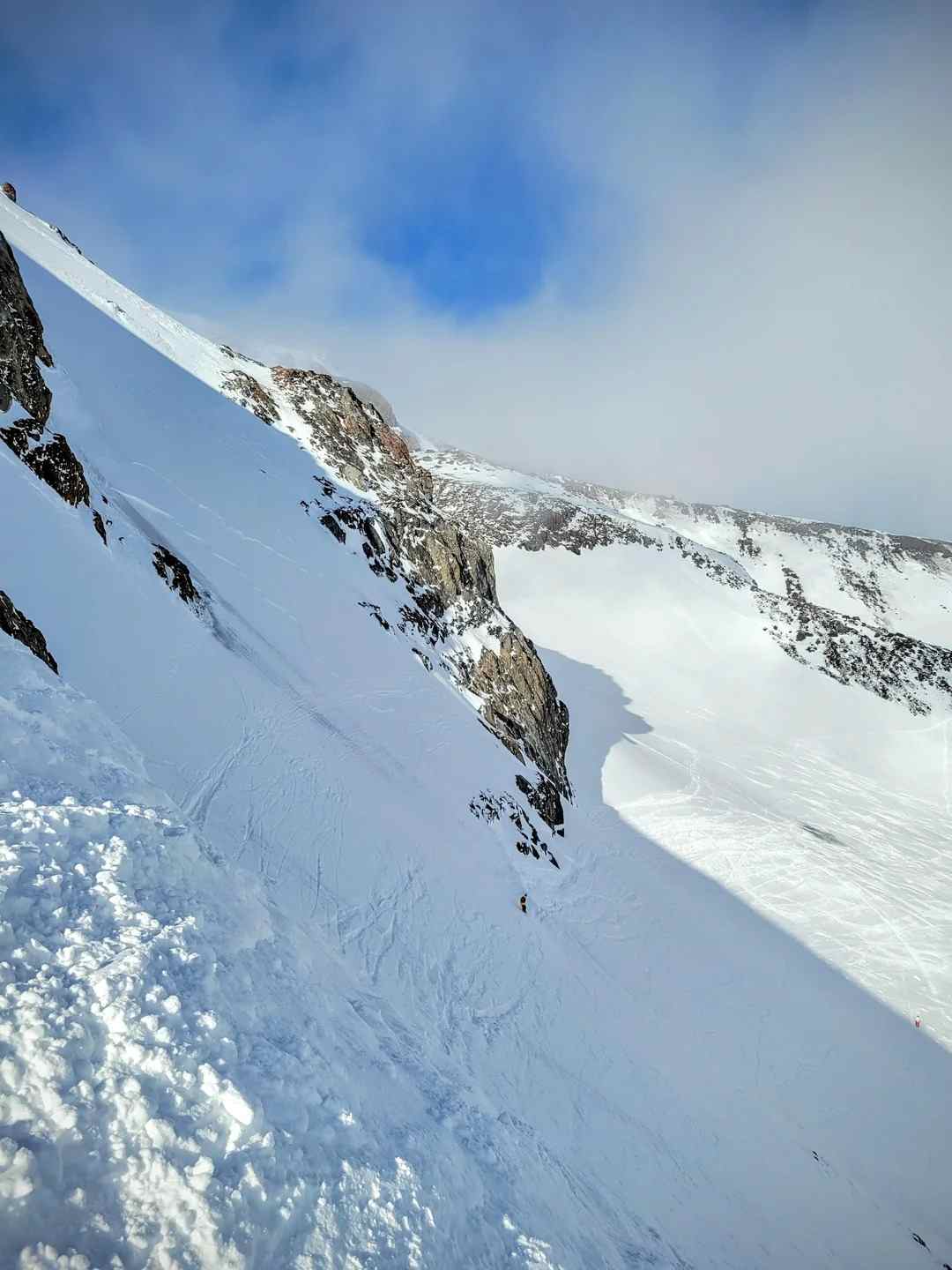
If you’re visiting in winter, skiing and snowboarding on Mount Hood are hard to beat — it offers something like 10 months of powder thanks to Timberline, sitting at the mountain’s highest elevation. There are enough ski resorts here to fit every budget and every skill level, from budgets to advanced skill levels. Timberline claims the mountain’s only true ski-in ski-out resort, Mt. Hood Meadows offers the most varied terrain on the mountain, and Skibowl stays family-friendly while still boasting the largest night ski area in the country and its genuinely unique cosmic snow tubing setup.
For apres-ski plans, or really just an excuse for a hot tub, Timberline Lodge is the obvious pick for a cozy night after a day on the mountain. If you don’t want to drive, the Gorge-to-Mountain Express, run by Columbia Area Transit, gets you out to the slopes for just $5 roundtrip, or you can grab the GOrge Pass annual deal for $40. It’s honestly a popular spot — I lasted about one hour before heading inside to warm up by the fire.
Scenic Drive / Columbia River Highway
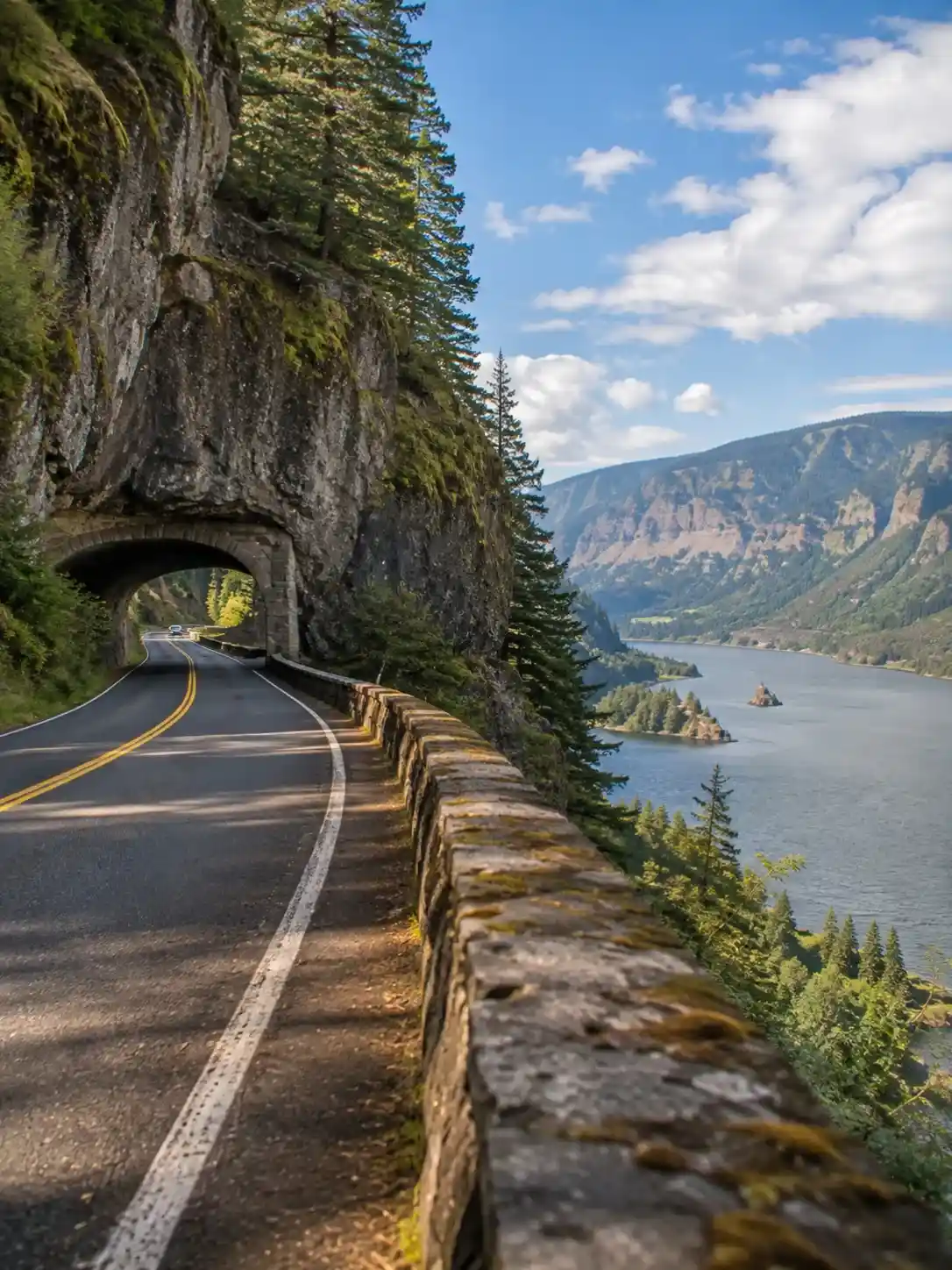
The Columbia River Gorge stretches roughly 80 miles, running from Portland past Hood River all the way to The Dalles, and it holds the title of the largest National Scenic Area in the entire country. The Historic Columbia River Highway, completed back in 1922, was one of the first roads in the U.S. built to complement its landscape rather than cut through it, and it earned status as a National Historic Landmark as a result.
Driving it, you’ll pass towering gorge walls, lush temperate rainforests thick with moss and ferns, and long stretches of the Columbia River itself. Expect more scenic overlooks than you can reasonably count, plus a few tunnels carved straight into the cliffside and some genuinely historic bridges. Between the hikes, waterfalls, and overlooks along the way, this drive alone could easily eat up a full day.
Hood River Farmers Market
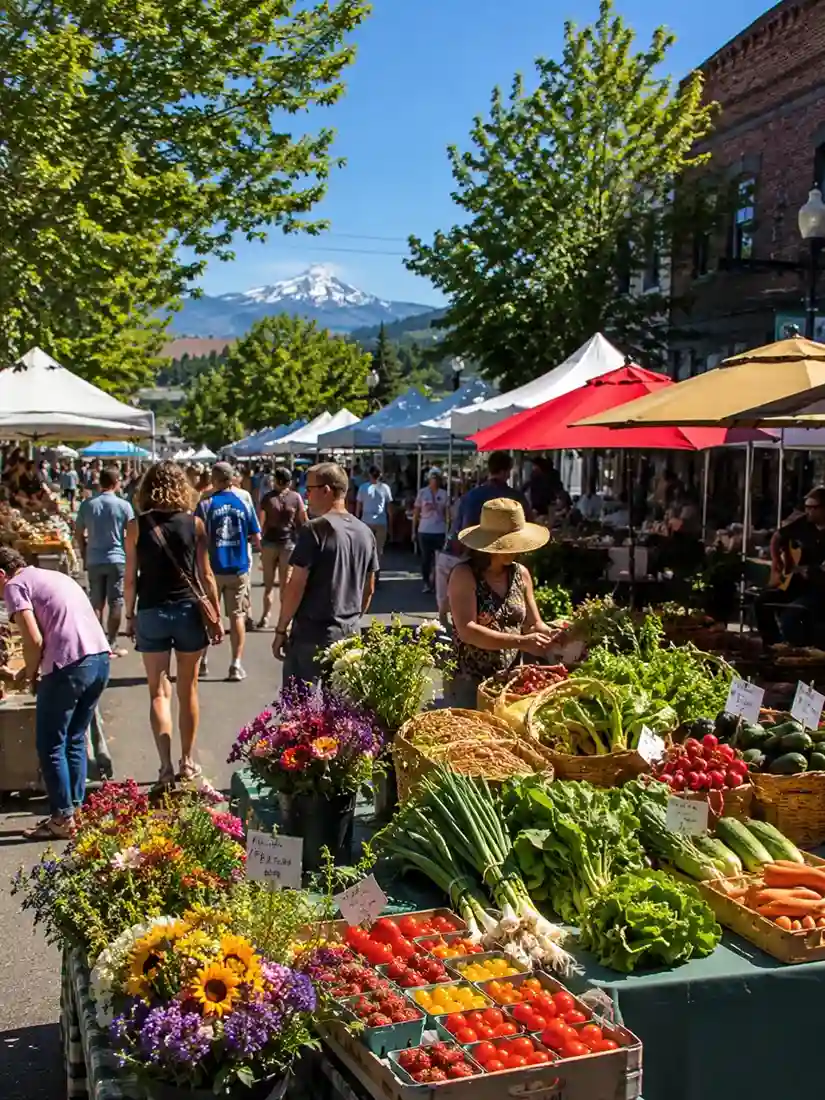
The Hood River Farmers Market runs May through November, every Saturday, right in downtown. Expect somewhere around 50 vendors selling local produce, handmade arts and crafts, and various artisanal foods. There’s usually live music playing, plenty of activities for kids, and — my favorite part — no shortage of free samples to graze on while you browse.