35 Beautiful Places in Switzerland You Must Visit in 2026 (Hidden Gems + Famous Spots)
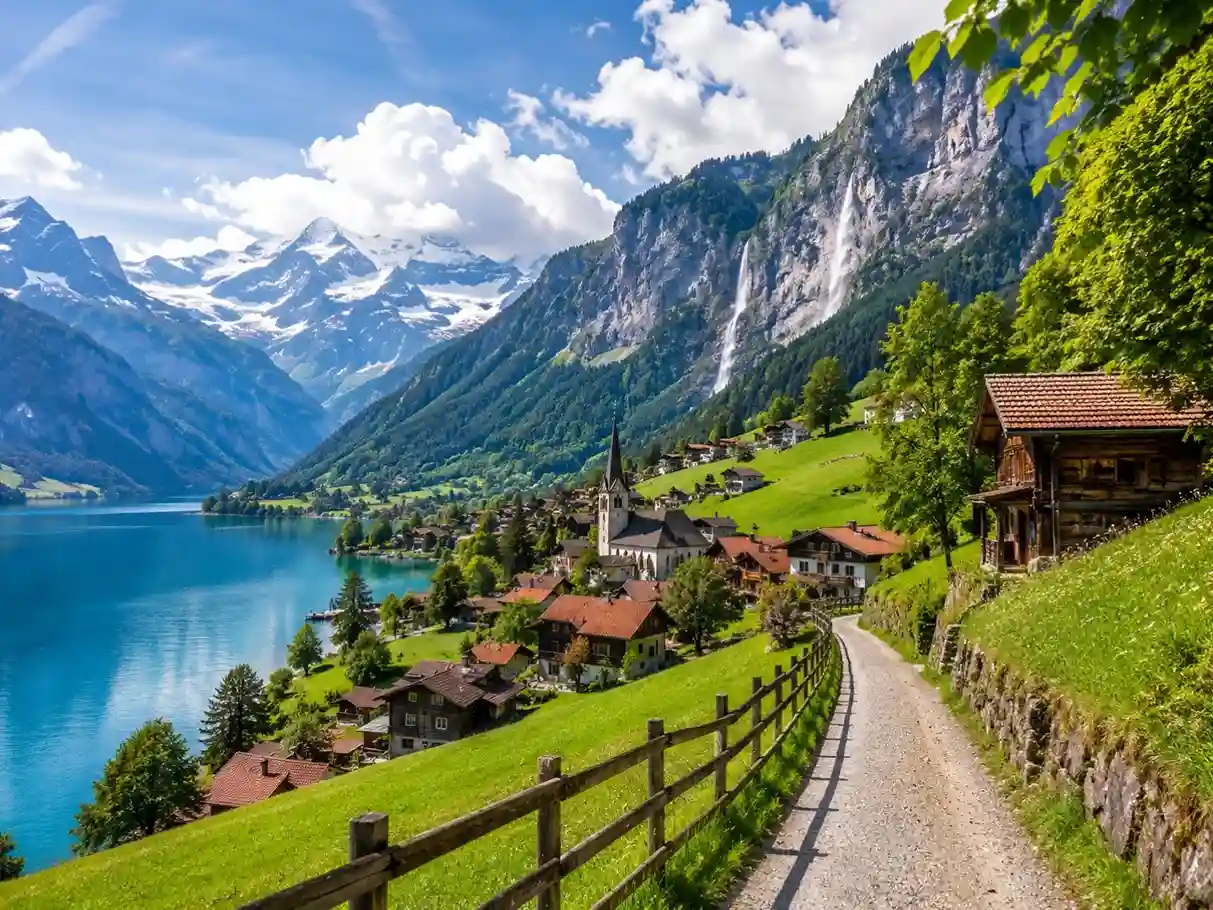
Every single frame of Switzerland felt like a postcard pulled straight from a fairytale — and I say that having spent an entire summer chasing breathtaking scenery across this landlocked country tucked in the heart of Europe. The kind of place where you round a bend and suddenly there’s a quaint mountain village framed by snow-capped mountains, a crystal clear turquoise lake shimmering below, and picturesque farms dotting the hillsides like something a painter carefully composed. I’m a photographer and nature lover at heart, and even I ran out of adjectives by day three.
What genuinely caught me off guard was how accessible the whole country is — gondolas, trains, and buses move seamlessly between valleys, lakeshores, and mountain tops without you ever feeling stranded. Whether you’re a seasoned hiker or someone who just wants to sip coffee in charming cities with Insta-worthy scenery outside the window, Switzerland delivers. The cuckoo-clock houses, bell-adorned cows, the smell of chocolate and cheese drifting through alpine air — yes, the clichés are all true, and honestly, that’s the best part.
Fair warning though: Switzerland is expensive. But here’s the thing — if your budget is tight, you don’t need a full week. Munich to Zurich is roughly four hours by train, Lyon to Geneva barely two. Stack it onto a trip through France, Italy, or Germany, treat it as a day trip or add a few nights, and suddenly those two-month adventure dreams become a very real long weekend. The stunning natural beauty, the hidden gems, the sheer jaw-droppingly amazing landscapes waiting off the standard itineraries — none of that is crowded if you time your peak summer months right and go in with a plan.
Lucerne
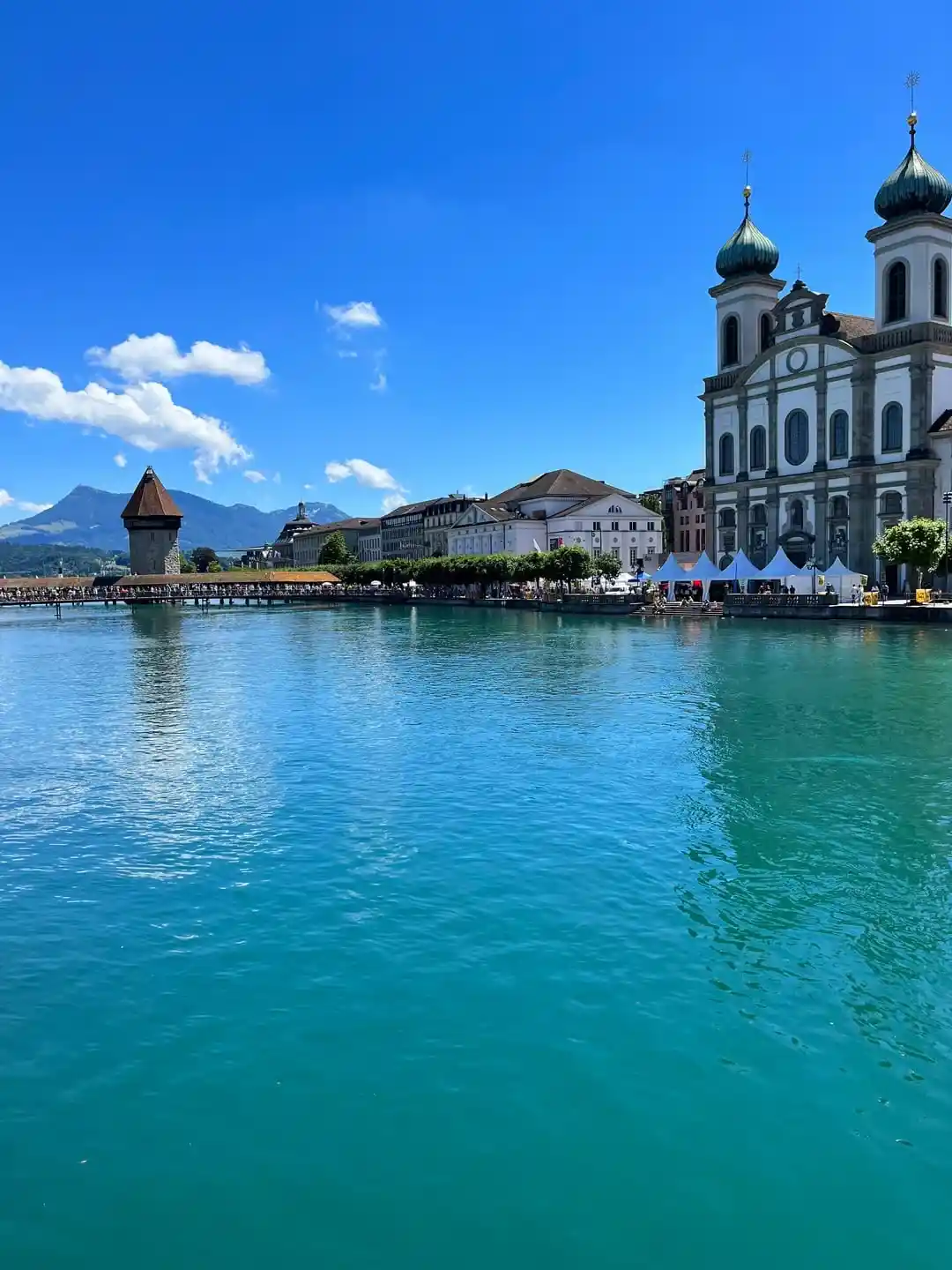
If there’s one city in Switzerland that punches hardest on first impression, it’s Lucerne — and yes, it’s one of the more expensive stops, but even a half-day here earns its keep. I spent mine threading through waterfront streets and crossing footbridges over a turquoise river, pausing at cafes with mountain views that felt almost unfair. The vibrant flowers spilling over the railings, the colorful buildings reflected in the water below — it made for some of the most instinctive photo stops of the entire trip. You can also arrange a boat tour on Lake Lucerne or push further toward Mount Pilatus if a half-day stretches into a full one.
Founded back in the 8th century, Lucerne wears its history in layers — medieval arcades beside baroque facades beside Swiss chalet styles, all pressed together into a remarkably photogenic package. The frescoed Old Town opens onto a deep-blue lake with fjord-like inlets and a mountain backdrop that anchors every view. The flower-decked Chapel Bridge — a wooden bridge dating back to the 14th century — is the postcard shot everyone chases, but the Musegg Wall towers offer a quieter, more storybook-pretty angle. A Lake Lucerne boat cruise or a ride on the world’s steepest cogwheel train up to Mount Pilatus for an alpine panorama makes the day feel complete. Arriving by Swiss Rail from Zurich is the move — it’s barely an hour, and from Lucerne you’re just two hours from Interlaken. For accommodation, Seehotel Kastanienbaum, Boutique Hotel KARL, or Hotel Des Alpes all sit beautifully close to the water and the Old Town. A small city by scale but entirely romantic and serene in character — Lucerne is one of those places that feels both popular and genuinely worth every bit of that attention.
Grindelwald
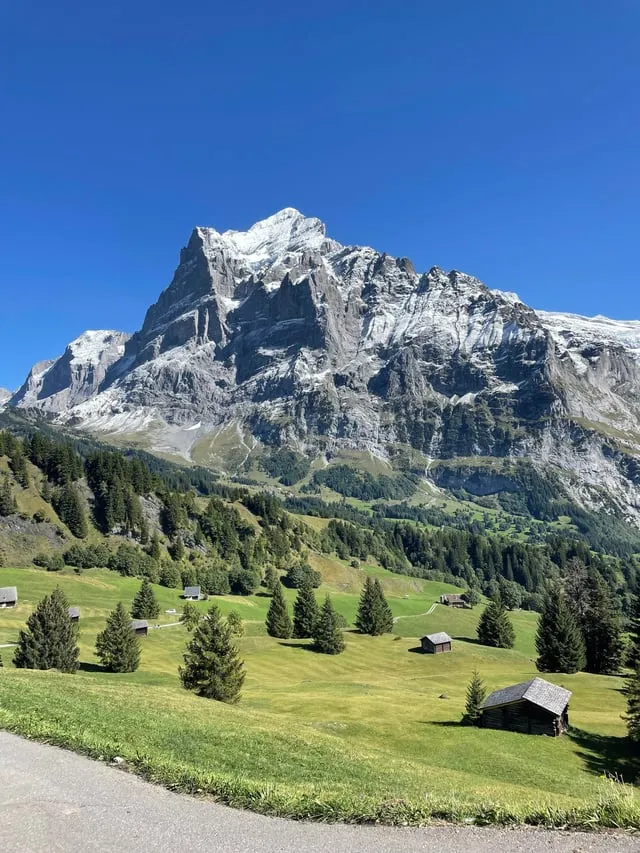
Grindelwald has earned its reputation as a hotspot among locals and visitors alike — and walking into that valley with chalets stacked against flower-covered balconies and the Jungfrau looming behind everything, it’s obvious why. The village sits in the Lauterbrunnen Valley corridor and acts as the perfect launchpad for hiking, ziplining, mountain cart rides, and day-trips toward Wengen, Mürren, Interlaken, and Iseltwald. It does get busy, so going early in the season or midweek changes the experience dramatically.
What makes Grindelwald genuinely special is that combination of cozy Swiss atmosphere and relentless adventurous spirit — you can spend a morning on the Grindelwald-First slopes, afternoon snowshoeing the First-Grosse Scheidegg trail, and evening eating well at one of the village’s many restaurants. The cable cars deliver sweeping alpine views of Eiger, Mönch, and Jungfrau in one direction and Wetterhorn and Mittelhorn in the other — a panorama that stopped me mid-step more than once. The First Flyer and First Glider rides are worth adding for the thrill, and the Grindelwald Museum gives the mountains some cultural context. Getting here from Zurich Airport is a scenic scenic ride of about three hours with a stop in Bern, from Interlaken just 35 minutes, and from Lucerne around two and a half hours — making it accessible from wherever you’re basing yourself. The Bernese Oberland’s most dramatic, outdoorsy, classic-Swiss large alpine village is well served by Bergwelt Grindelwald Alpine Design Resort, Eiger Lodge Chic, Hotel Bernerhof, and Hotel Bodmi — all solid options depending on your budget and style.
Zermatt
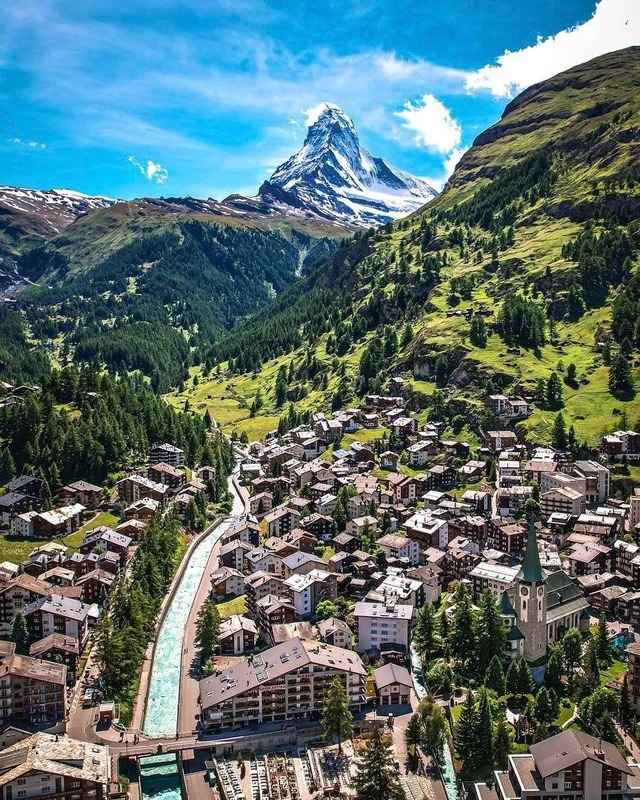
Zermatt is one of those places where the reality actually lives up to the idea — an iconic, car-free town where the Matterhorn fills the skyline so completely it almost seems theatrical. The car-free streets lined with wooden chalets have a magical, picturesque vibe that sits somewhere between relaxed and buzzy, with cozy bars, gourmet restaurants, après-ski energy, and serious outdoor activities all layered into a compact resort village. I hiked the Five Lakes Trail on a clear afternoon and caught the most perfect reflection of the Matterhorn in still water — one of those images that doesn’t need any editing.
Getting there means driving to Täsch, parking at Matterhorn Terminal Täsch, and boarding the Matterhorn Gotthard Bahn shuttle train — the whole process costs around CHF 17.20, and with a Swiss Travel Pass you get half off plus the parking fee is handled separately. From Zurich, the scenic train ride takes about 3.5 hours and drops you right into the alpine-chic heart of it all. Once there, the Gornergrat Railway climb is unmissable, the Glacier Paradise slopes at the luminescent upper mountain are breathtaking, and Bahnhofstrasse’s glamorous shops make for excellent browsing between adventures. For food, Chez Vrony serves a Caramelised Valais pear dessert that I still think about. Hotel Schwarzsee, La Couronne Hotel & Spa, and Hotel Bellerive are all well-positioned for Matterhorn views — and for awe-inspiring, Southern Switzerland mountain experiences, nothing in the country quite matches Zermatt.
Wengen
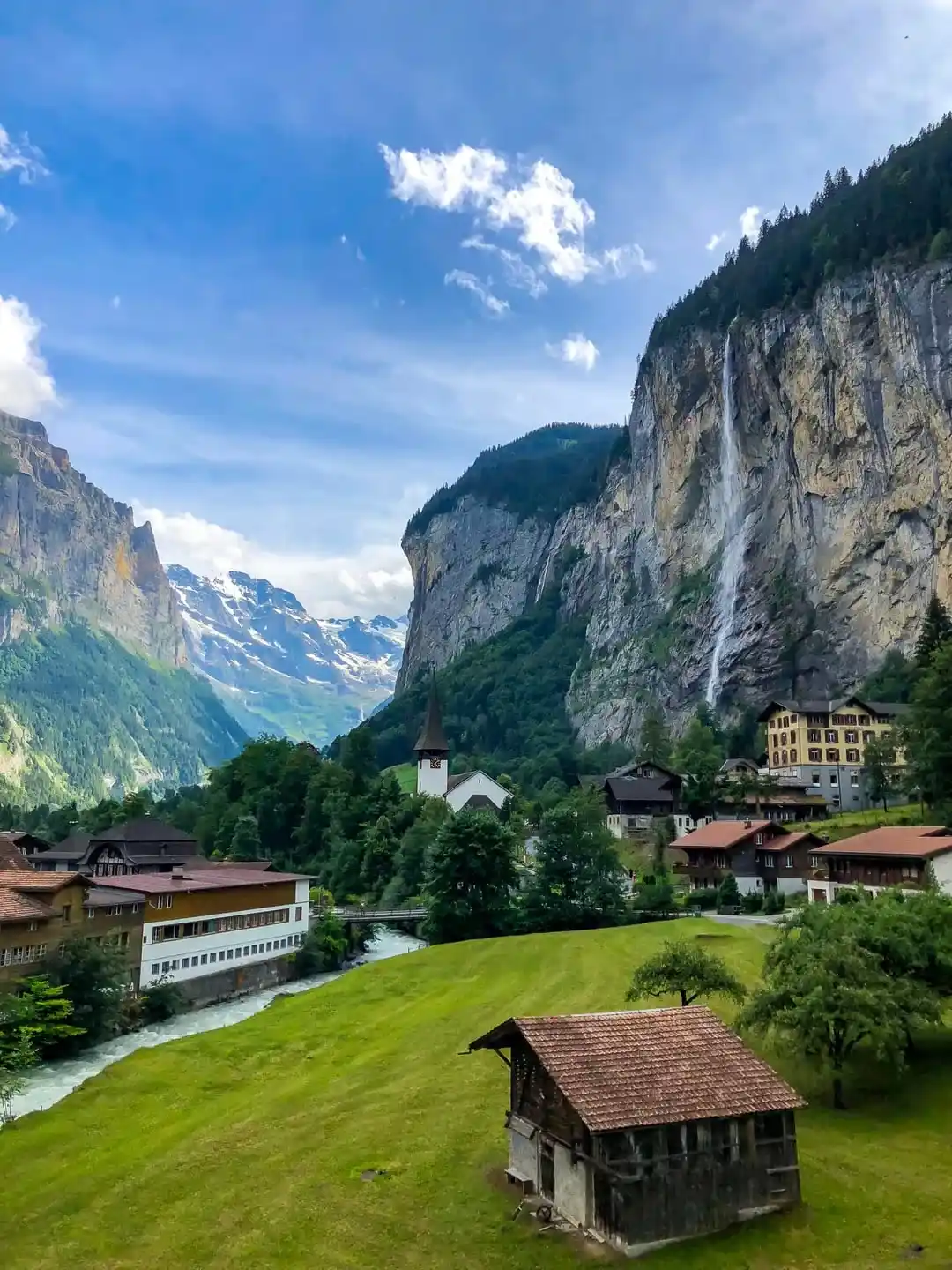
Perched over 1,300m above the Lauterbrunnen Valley, Wengen is the kind of postcard-worthy, picturesque car-free mid-mountain village that doesn’t feel real until you’re standing in it. Quaint hotels, wooden homes, peaceful pedestrian streets, and green rolling hills — it has this unhurried quality that’s genuinely hard to find in more accessible Swiss towns. I spent a morning just wandering the village edges looking down into the valley, and that alone justified the detour.
Since there’s no road access, you take the Wengernalp Railway — the world’s longest cogwheel train — up from Lauterbrunnen for roughly CHF 7, fully covered by Swiss Travel Pass. Once up, the options expand fast: the Männlichen Cable Car soars you to dramatic ridgeline views, the Jungfraujoch Railway pushes all the way to Europe’s highest station — the famous Top of Europe via Kleine Scheidegg — and in winter, the legendary Lauberhorn slopes and a lively après-ski scene take over entirely. Panoramic views of Jungfrau, Mönch, and Eiger frame everything you do here, with dramatic waterfalls threading down the cliffs below. The Bernese Oberland setting gives it a serene, old-school alpine quality that feels genuinely postcard-perfect. Hotel Bellevue, Braunbär Hotel & Spa, Hotel Alpenruhe, and Hotel Jungfraublick are all solid bets — and for photography, mid-morning sunshine brings out the most summery, vivid version of Wengen’s storybook character better than any golden hour I tried.
Bachalpsee
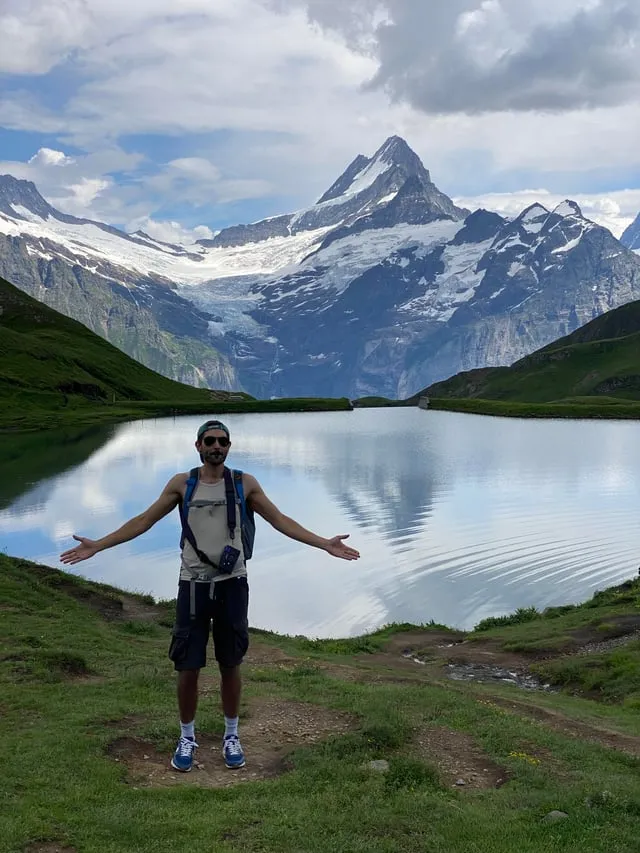
There’s a lake in the Bernese Oberland that I keep recommending to every first-time visitor to Switzerland, and that’s Bachalpsee — sitting at roughly 2,200m, surrounded by lush Alpine greenery, snowy vistas, and the kind of stillness that makes you forget you had a schedule. The reflections of snow-capped peaks in the water are almost absurdly beautiful, and unlike some of the more crowded Swiss highlights, the 3 km easy hike required to reach it naturally thins the crowds. Wildflowers in May and June push the scenery into something almost overwhelming, with cowbells ringing somewhere in the valley below the whole time.
The approach starts at Grindelwald — take the gondola up to Grindelwald First on the cable car (around CHF 76 return, half off with a Swiss Pass), then walk the clearly marked trail past views of Wetterhorn, Schreckhorn, and Finsteraarhorn rising on the far side. The cliff walk at Grindelwald First is worth doing as a warmup — and if you want more after the lake, the first glider, first flyer, mountain cart, and trottibike activities are all available at the station. As a day trip from Interlaken, Lauterbrunnen, Lucerne, or even Zurich, the logistics are entirely manageable by train or car. For a base, Bergwelt Grindelwald, Eiger Lodge Chic, Hotel Bernerhof Grindelwald, or Hotel Bodmi all put you within easy reach. At height, with crystal clear lakes, lush green meadows, and valleys stretching in every direction — Bachalpsee is genuinely a must-visit and the picturesque benchmark against which I now measure every other Swiss alpine lake.
Lauterbrunnen
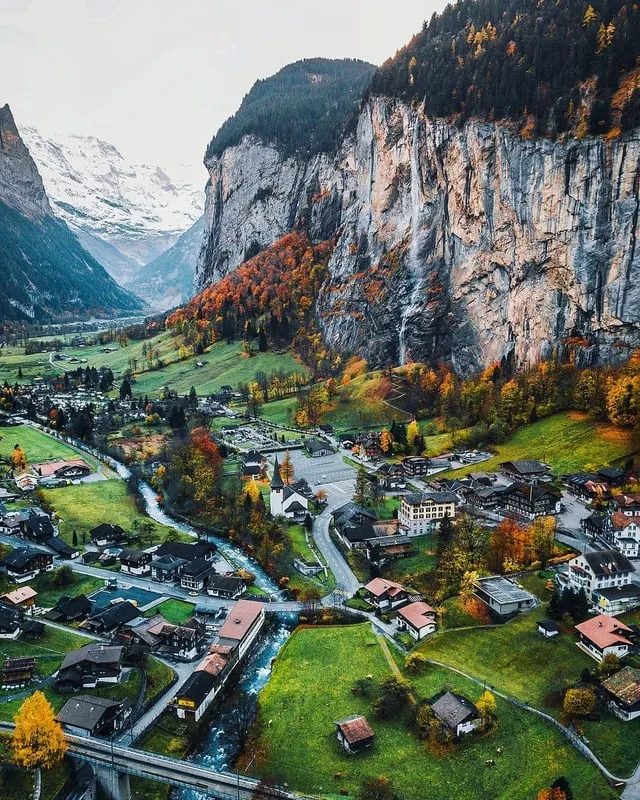
Lauterbrunnen hit me as one of the most iconic and beautiful spots in all of Switzerland — but I made the rookie mistake of arriving mid-day, and the village was packed. Go early. That’s the only real tip you need. The classic viewpoint in front of Chalet Pironnet draws a line of people taking turns for their shot, which is charming in its own way, but the small streets and quieter edges of town reward anyone willing to walk further and stay longer.
The moody atmosphere here when cloudy and rainy is honestly more photogenic than sunshine — wispy, low clouds settle into the valley and make the mountains look even bigger than they already are. The drive into Lauterbrunnen is free and straightforward, making it one of the few major Swiss sights with absolutely no entry cost. Hotel Staubbach and Camping Jungfrau are the go-to accommodation options, and an early morning arrival before the tour groups hit changes the entire experience.
Geneva / Lake Geneva
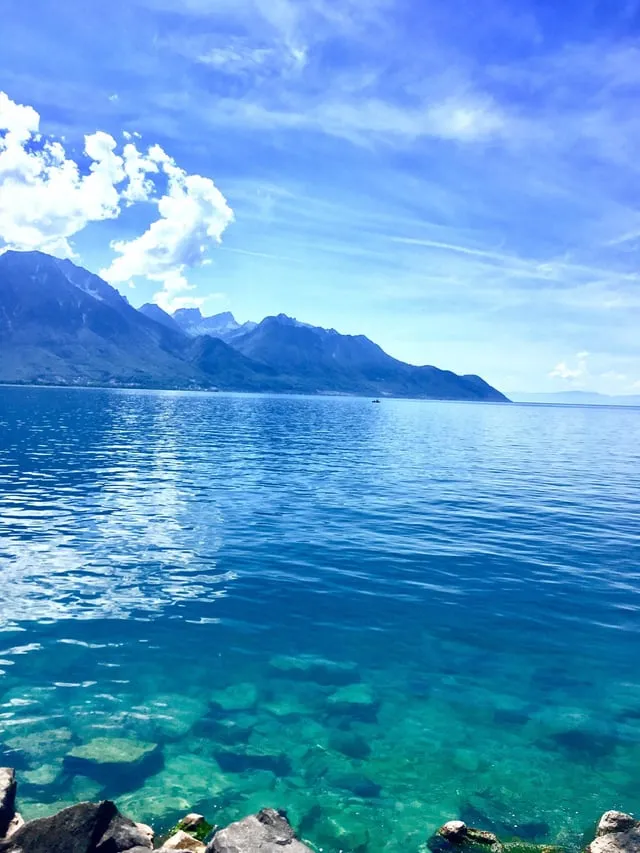
Lake Geneva earns its place among Europe’s largest alpine lakes through sheer drama — vast, shimmering waters set against the dramatic Alps, lined with elegant Belle Époque promenades and carrying that particular peaceful, sophisticated vibe that takes hold immediately. I flew into Geneva Airport for a long summer weekend and ended up fitting in a walk along Montreux’s flower-lined promenade, a cruise on the glacial lake, a tasting of aromatic Lavaux wines, and even an evening at the legendary Montreux Jazz Festival — all within a few days. The Château de Chillon rests on the shores right there, completing the postcard-pretty scene almost too perfectly. The Hotel Angleterre had me sitting by the window with a Williamine Pear Brandy cocktail watching the light change on the water — the kind of afternoon that resets something in you.
The city of Geneva itself operates on a different frequency — the Old Town is a twisting maze of streets packed with outdoor cafes, shops, restaurants, and centuries of Swiss history woven into every mosaic and stone archway. Bourg-du-Four Square is the beating heart of it — lively, main town square energy where a long afternoon disappears without warning. The Arsenal tells the story of Caesar’s arrival in 58BC through canons and murals, while St. Peter’s Cathedral stands with its 2 towers and earns the 5CHF climb for views across Geneva that are genuinely spectacular — you access the South Tower via a corridor partway up the North Tower, which adds a small adventure to the ascent. Down at the waterfront, the Lac Léman walk passes the famous water jet and leads eventually to Parc de la Grange — a beautiful park with rose gardens and a clock made entirely of flowers that somehow manages to be even more charming in person.
Brienz / Lake Brienz
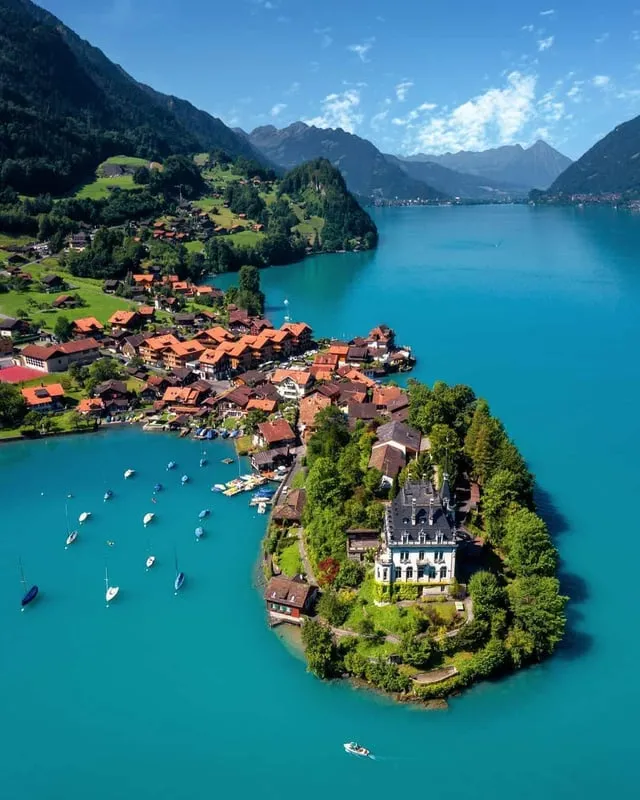
Brienz is the kind of picturesque Swiss village that makes you slow down involuntarily — traditional wooden houses carved with intricate detail, a heavenly alpine backdrop of towering peaks and lush greenery, and a tranquil, quaint, slow-paced vibe that the more famous lakeside towns can’t quite match anymore. A 20-minute train from Interlaken drops you right into it, and I spent two days at the Grandhotel Giessbach without ever feeling like I needed to be somewhere else. The Swiss Woodcarving Museum is genuinely fascinating, a cruise on emerald Lake Brienz reframes the whole landscape from the water, and the hike up to Brienz Rothorn and the cascade of Giessbach Falls keep the picture-perfect village streets from becoming the only draw. Strolling along Brunngasse — honestly one of Switzerland’s prettiest streets — past 18th-century wood-carved chalets draped in red geraniums and purple petunia boxes, with the faint scent of pine and woodsmoke in the air, is exactly the kind of moment this trip is built for.
Lake Brienz itself is one of the most underrated and genuinely prettiest lakes in the country — that uniquely turquoise blue colour sits in a register I hadn’t seen before arriving, and the charming Swiss villages around its edges and the beautiful landscapes of the Swiss Alps rising behind make it difficult to rank against the more famous Swiss Lakes. It’s accessible all year round, reachable directly by public transportation or car to the town of Brienz, and the steam train up to the 2,350-meter summit of Brienz Rothorn for panoramic views is one of those experiences worth building a day around. Base yourself in Brienz or Interlaken — either works perfectly.
Stoos / Fronalpstock
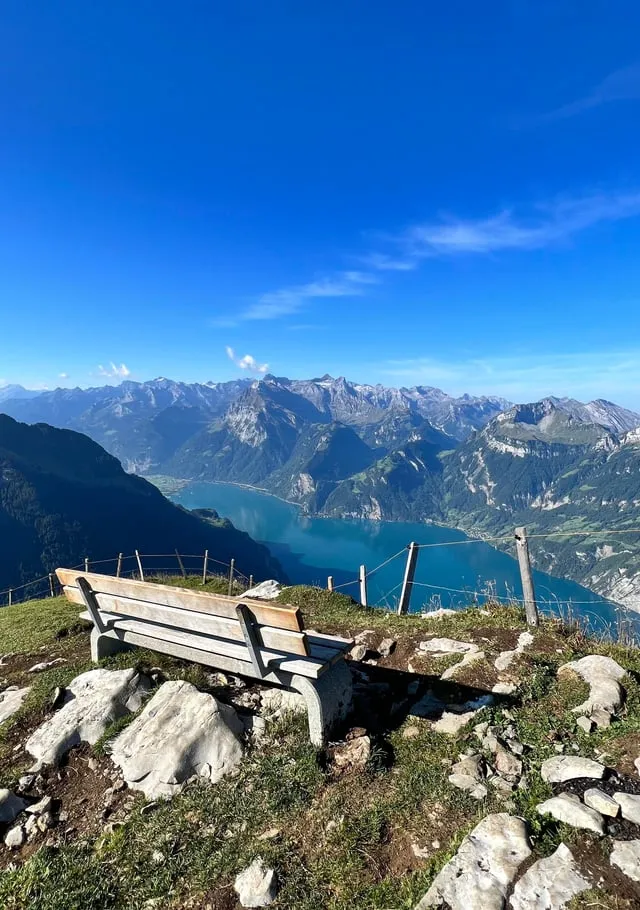
The world’s steepest funicular — a 110 per cent incline, 740 metres of altitude covered in roughly 5 minutes — announces your arrival at Stoos in the most dramatic way possible. The charming village sits at the foot of Fronalpstock mountain in the Schwyzer Alps, and you can walk the whole thing in about 30 minutes before the real experience begins. Take the chairlift up to the summit of Fronalpstock at roughly 1,900m, and suddenly you’re standing on viewing platforms with 360-degree views taking in Lake Lucerne, Zug, and 9 other lakes spread out below — along with a restaurant, a hotel, goats, cows, and even a small playground that somehow makes the whole scene more endearing, not less. It’s one of my favorite places anywhere in Europe, and it earns that completely.
The Stoos Ridge hike connects Klingenstock to Fronalpstock across a trail that features the iconic staircase that went viral on Instagram — but the entire ridge is worth experiencing, not just that one moment. The route goes: Schwyz funicular to Stoos, chairlift to Klingenstock, hike the ridge, finish at Fronalpstock, then back down. Return cost runs about CHF 56, entirely free with the Swiss Travel Pass. In summer, the hiking paths wind through greens and blues that photograph beautifully in early morning light; in winter, the sports options take over and the whole mountain shifts its personality. Getting there by public transportation means heading to Schwyz and taking the bus to Stoosbahn — and for a stay, the Fronalpstock Hotel at the summit is one of those genuinely special experiences, while Wellness Hotel Stoos down in the village covers the more conventional end. The cloud inversions at sunset from Fronalpstock are something I’d go back for alone — the kind of photograph that doesn’t feel earned until you’ve actually stood there.
Oeschinensee
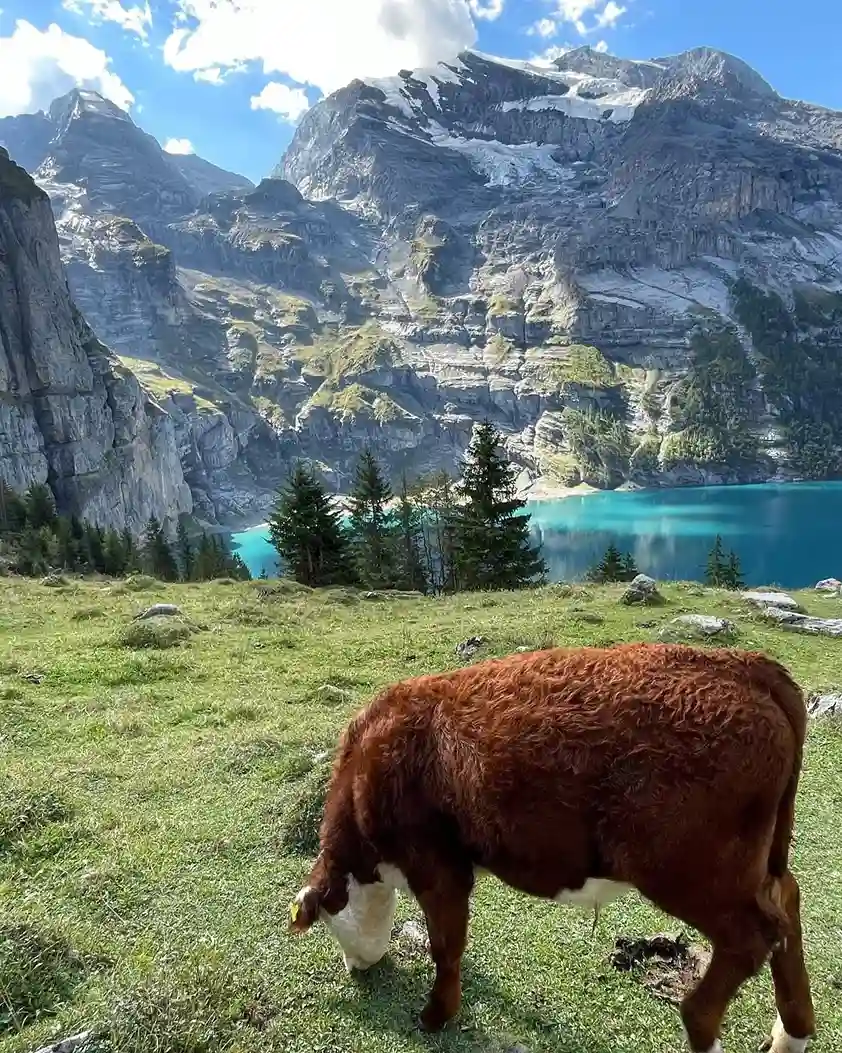
Oeschinensee is one of those places in Switzerland where the description barely prepares you — mountains that tower over an incredibly turquoise lake ringed with wildflowers and laced with waterfalls is accurate, but the scale of it only lands once you’re actually standing on the ridge above it. The approach starts in Kandersteg: take the Oeschinensee Cable Car up, do the hike along the ridge trail first to earn the full bird’s-eye view, then wind back down to the lake for a swim in water that’s surprisingly inviting. Return cost is around CHF 40 — nearly half off with the Swiss Travel Pass — plus a small parking fee if you drive. A wide-angle lens is genuinely necessary here because the mountains are BIG in a way that standard focal lengths clip and compress into something less than true. The village of Kandersteg provides the obvious base, with Chalet Hotel Adler sitting comfortably as the top recommendation. Take the first gondola up early, hike the ridge before the light gets flat, and let the rest of the day follow the terrain.
Interlaken
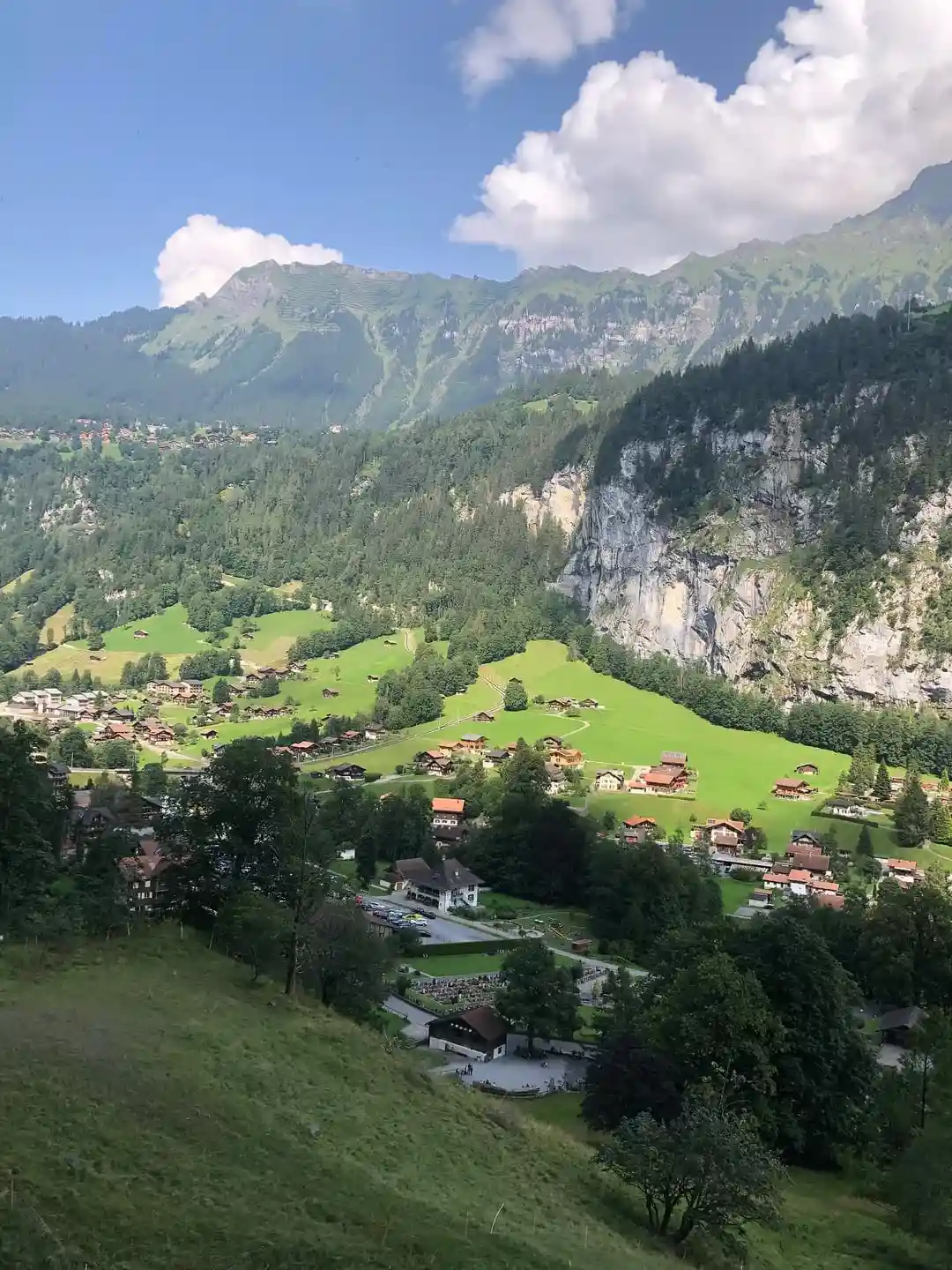
Interlaken is the kind of place that makes you understand why people return to Switzerland again and again — nestled between two sparkling glacial lakes with snowcapped peaks pressing in from every direction, crashing waterfalls visible in the distance, and green alpine meadows filling whatever gaps the mountains leave. The streets of old Swiss chalets feel impossibly charming without trying, and the town hits an unusual balance between genuine adventure hub and genuinely peaceful retreat. I was there just an hour from Bern by train and packed in paragliding, a hike up Harder Kulm, an afternoon in flower-filled Hohematte Park, a cruise on glacial Lake Thun, a walk along the Aare, and dinner — including a memorable Spaghetti Vegetariana at the revolving Schilthorn’s restaurant. In winter, it flips into a popular base for nearby ski resorts, with snow-covered roofs and full alpine views making the whole town look like a Christmas card. Grand Hotel Beau Rivage Interlaken carries the luxury end — including a spa with an Alpine herbal steam infused with locally sourced arnica, edelweiss, and mountain pine — while the Central Switzerland location, adventurous, scenic, alpine-fresh character keeps it firmly on every Swiss itinerary worth its name.
Lavaux Terrace Vineyards
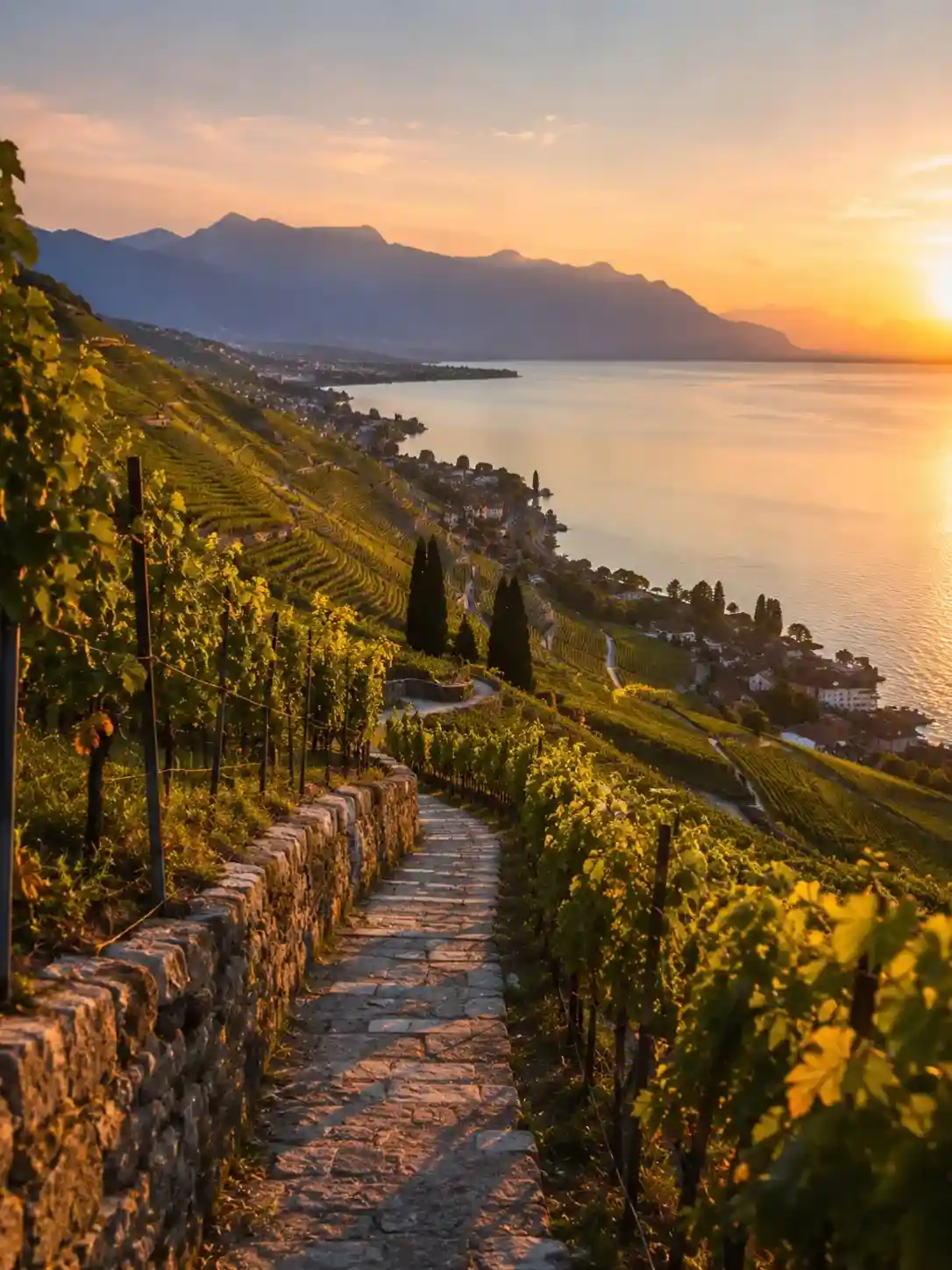
I had genuinely never heard of Lavaux Terrace Vineyards before a friend flagged it, and then I spent what turned out to be one of my best days in Switzerland walking through a UNESCO World Heritage Site I’d been completely ignorant of. These vineyards stretch roughly 30km along the shores of Lake Geneva from Lutry — just east of Lausanne, Switzerland’s 4th largest city — all the way to St Saphorin. From Geneva, the train to Lausanne takes around 60-90 minutes including the connection, and from there the gorgeous walk begins on mostly paved trails threading through the vineyards with both the lake and the mountains providing stunning views at every turn. Wine tasting is possible along the route, though hours vary — check ahead if that’s the priority rather than the discovery.
What the route gives you beyond the wine is atmosphere: morning fog hanging over the mountains at the start, then a slow burn toward afternoon, and finally watching the sun set over Lac Léman from somewhere between the vines. It’s the kind of favourite day that earns that title honestly — no famous landmark, no cable car, just landscape and wine and movement through one of Switzerland’s most quietly spectacular corners.
Schäfler Ridge
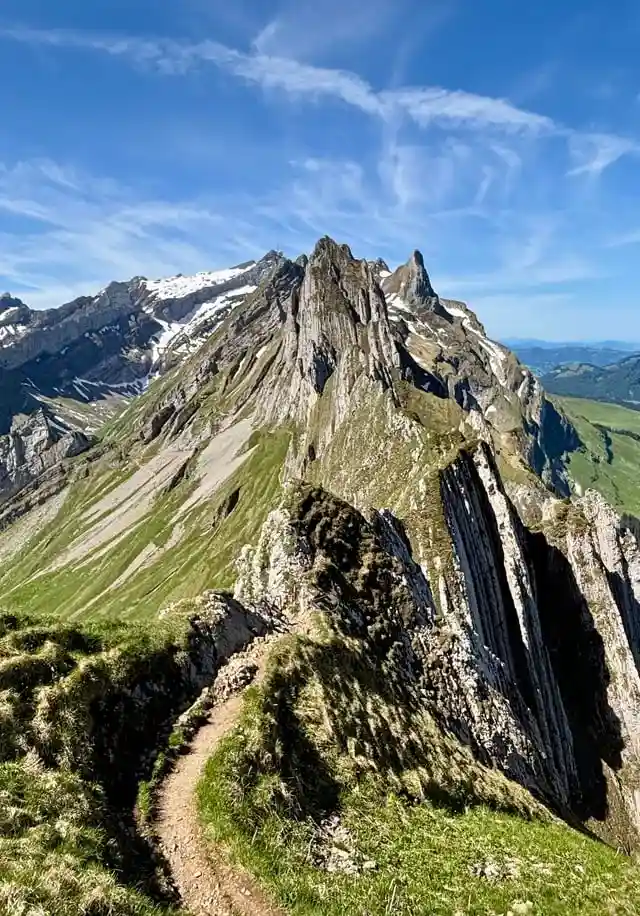
Schäfler Ridge sits in the Appenzell Alps and delivers some of the most dramatic drop-offs and jagged peaks I’ve encountered on any day hike — and the approach via the Ebenalp cable car from Wasserauen keeps it accessible despite the exposed spots along the trail that will genuinely test anyone with a sensitivity to exposure. A single ticket runs CHF 24, return is CHF 36, with a small parking charge at the base. If you want to extend, the trail connects through to Seealpsee before pushing up to Schäfler itself — making for a full loop that hits multiple highlights in a single outing. Berggasthaus Schäfler hut sits right on the ridge and offers dinner and breakfast with what might genuinely be a million-dollar view — I wish I’d known about it in advance and booked ahead. For photography, the golden light floods in from the right side of the mountain range as the sun sets, and that side light in the hours before was stunning enough that I shot through it without stopping — the kind of light that makes Switzerland feel impossibly cinematic.
Rosenlaui Valley
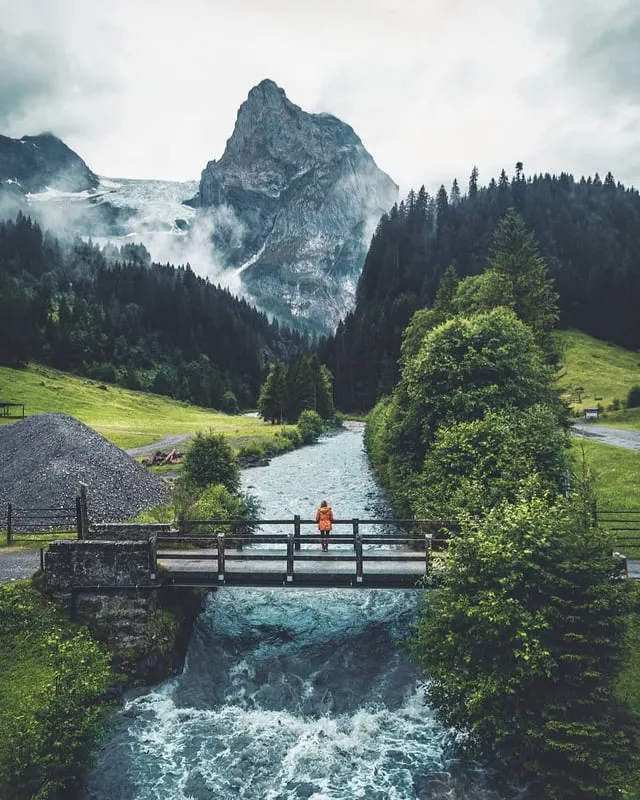
Rosenlaui Valley holds one of those iconic viewpoints that photographs better than almost anywhere in Switzerland — and yet it barely registers on most people’s radar. The spot I’m thinking of sits just before the Rosenlaui Hotel, where the road, river, and mountain align into a frame that’s almost compositionally perfect. Entry to the road by car costs around CHF 8, which feels like nothing once you’re standing there. Make sure to use designated parking areas — the road gets narrow and the locals notice. I shot here a few hours after sunrise to let the light grow warm and full enough to make the greens and blues genuinely pop, and the results were among my favourite from the whole trip.
Wasserfall-Arena Batöni
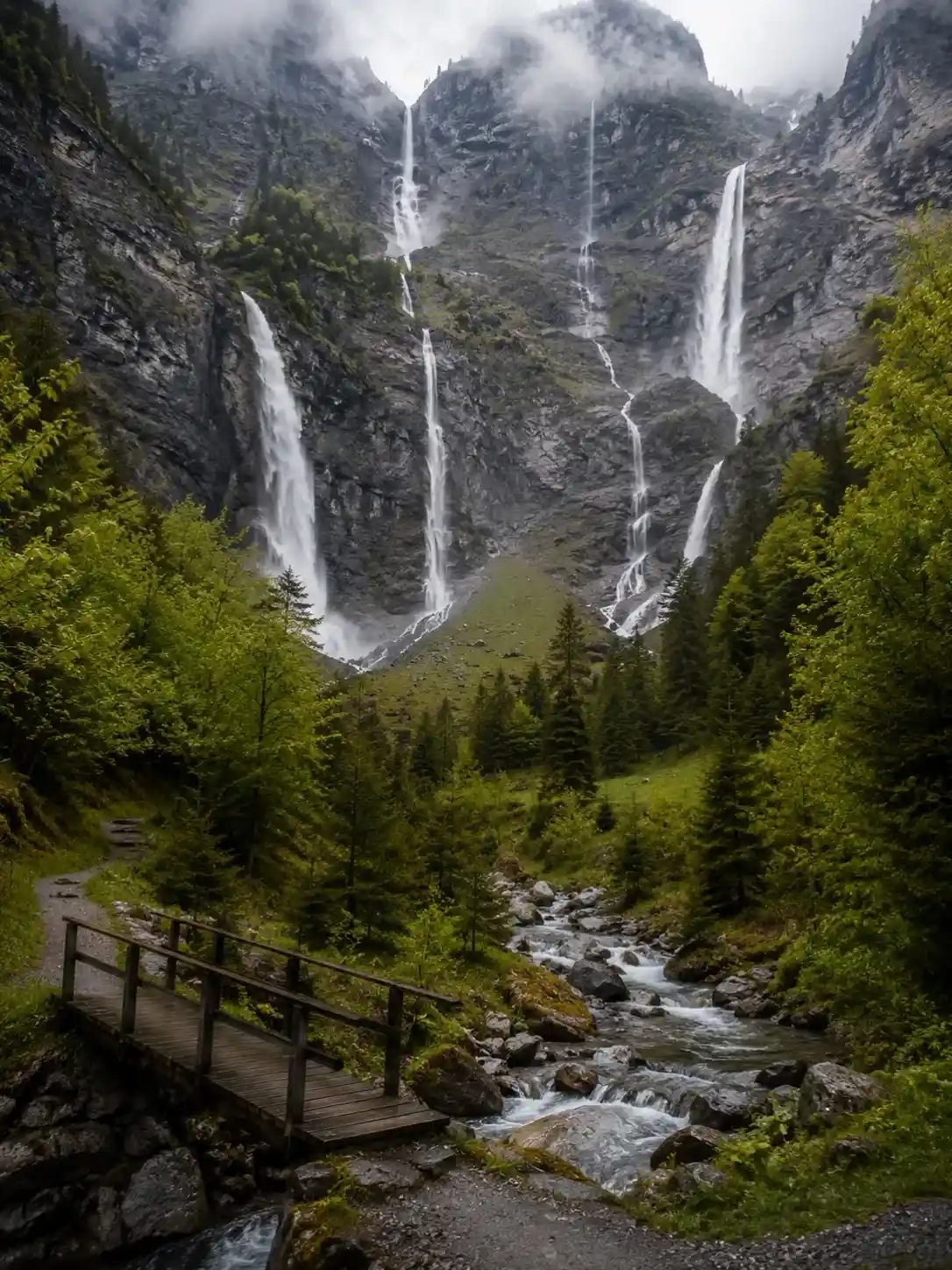
There’s something almost theatrical about Wasserfall-Arena Batöni — a natural amphitheater where three to five waterfalls come cascading down simultaneously, creating an atmosphere that reminded me more of Iceland than anywhere I’d expected to find in central Switzerland. The hike is one of the harder ones — no gondola, no chairlift to soften the elevation gain — and you drive to the trailhead and earn every meter of it. The town of Sargans nearby provides the most practical accommodation, with Hotel Franz Anton as the recommended base. For the best vantage point of the waterfalls, take the trail that runs opposite the bridge and zigzag uphill — the higher you climb, the more dramatic the layered drop becomes. I shot it cloudy and would happily go back on a clear sunshine day just to compare.
Iseltwald
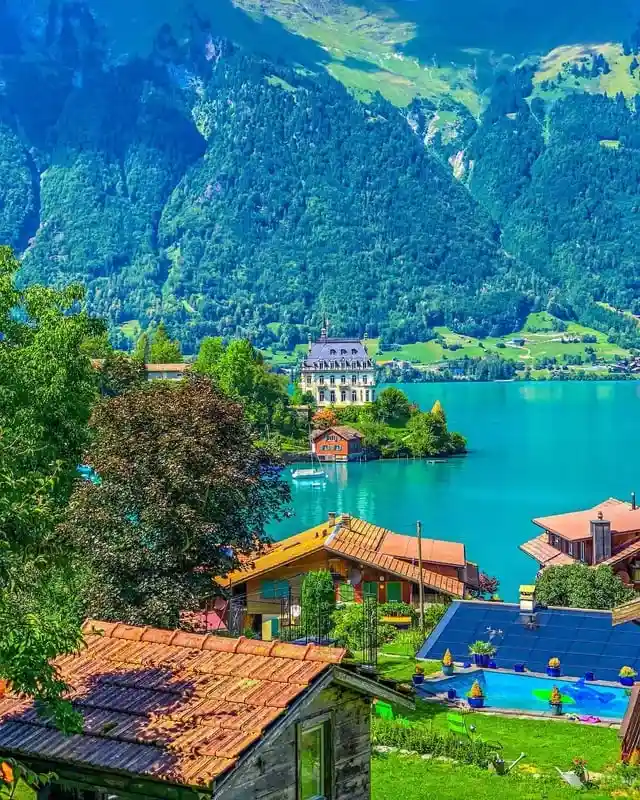
Iseltwald sits on the shore of Lake Brienz about twenty minutes from Interlaken, and the stunning turquoise color of the water there is one of those natural details that photographs seem to undersell. It’s quaint, quiet, and functions beautifully as a base after long days of adventuring through the surrounding valleys. The dock on the lake drew international attention after the Korean drama Crash Landing on You featured it — there’s a small fee now to access it, but Ferries also make scheduled stops here, opening up an easy way to visit other villages along the shoreline without backtracking. Hotel Châlet Du Lac is where I’d stay again without hesitation. The late-afternoon light on the water was something I kept returning to — that hour when the lake turns almost golden and every reflection illuminates beautifully without any effort on your part.
Berggasthaus Äscher
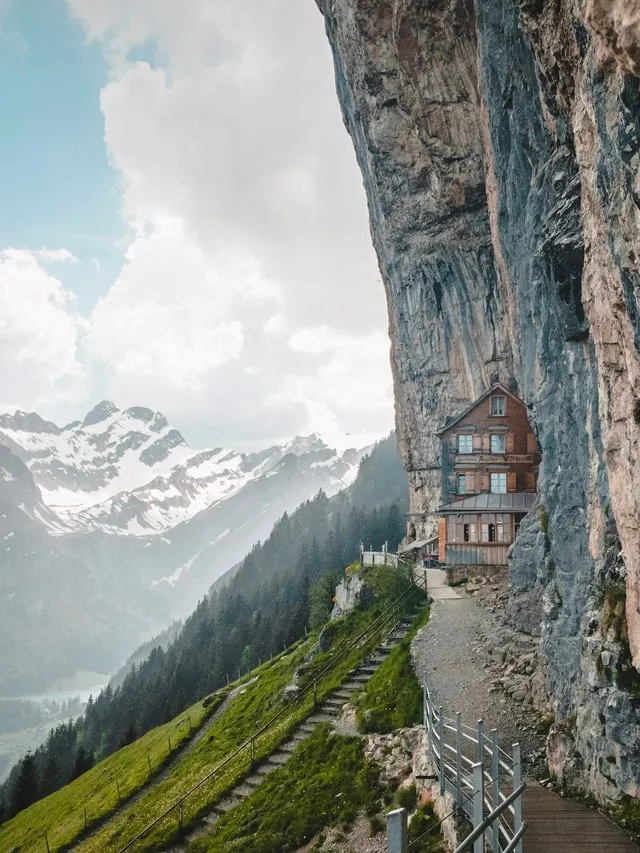
I came across Berggasthaus Äscher entirely by accident — hiking down from Schäfler Ridge when it appeared suddenly, nestled into the rock face beneath Ebenalp like it had been carved there rather than built. An iconic guesthouse and restaurant serving local food in one of the most visually arresting positions I’ve seen a building occupy. It was closed when I arrived, which means I have a very good reason to go back. Access runs through the Ebenalp cable car (CHF 24 single, CHF 36 return) followed by a 15-20 minute walk toward Wildkirchli Cave Walk — or from the bottom via Wasserauen if you prefer the full hike. You can stay in the guesthouse itself or up on Schäfler Ridge at Berggasthaus Schäfler, with the town of Appenzell and Hotel Lowen as the more conventional alternative. For photography, sunrise and sunset are the times to arrive — the peaks beside the hotel turn illuminated and gorgeous, and no people means the composition stays clean.
Saxer Lücke
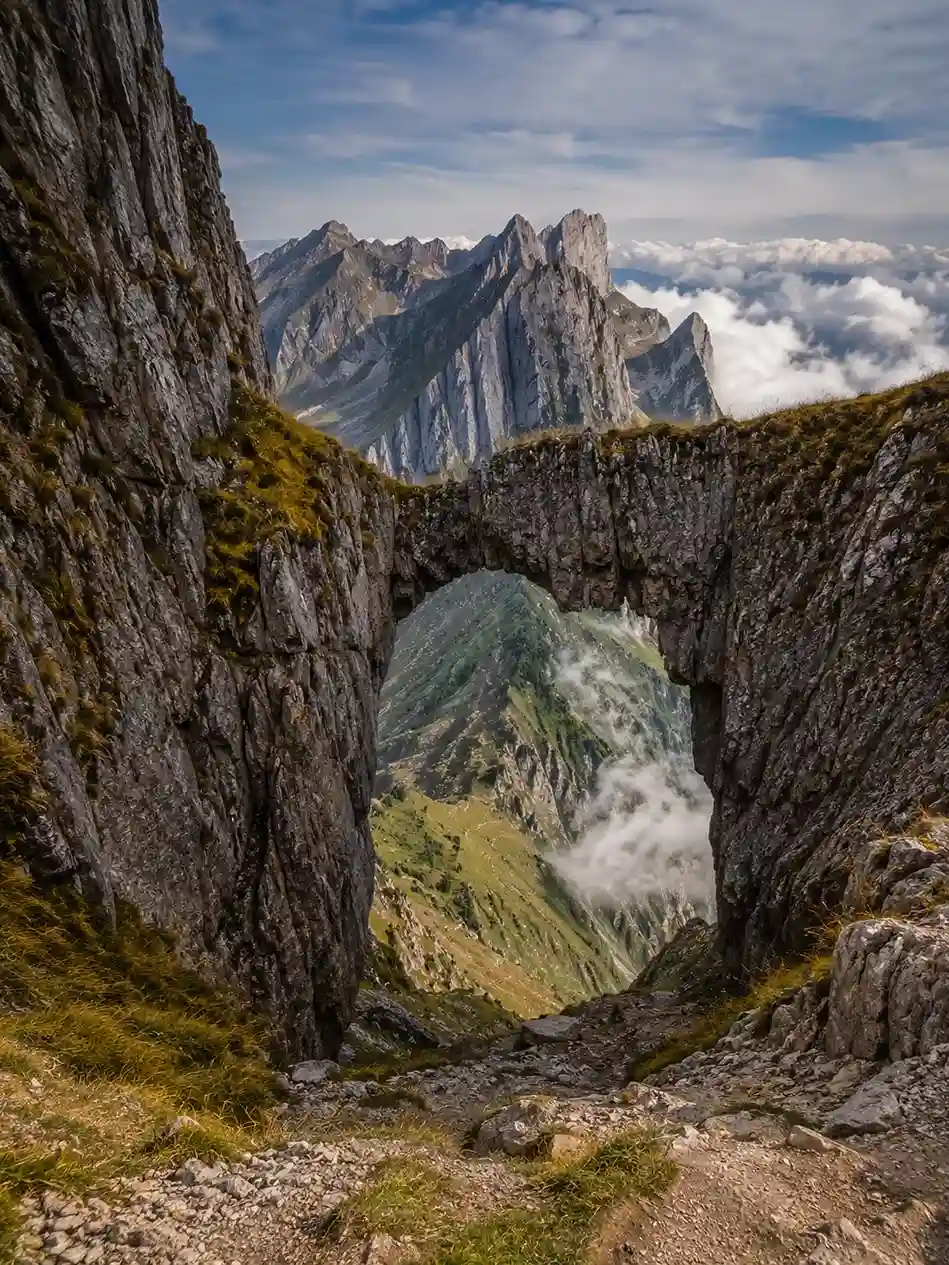
Saxer Lücke in the Appenzell Alps is the kind of place that stops you mid-step — jaw-dropping rock formations, sheer cliffs, and the jagged Kreuzberge peaks creating a skyline that looks almost artificially dramatic. It’s genuinely accessible via multiple trails, with the Frümsen-Staubern Cable Car from Frümsen being the most common approach, followed by a short hike to reach Saxer Lücke itself (return around CHF 40). For a stay, Lodge Hof Weissbad and Hotel Hof Weissbad in Weissbad keep you close enough for sunset shots, while Hotel Lowen in Appenzell covers a slightly wider area. Midday light here is better than you’d expect — the rock textures catch it beautifully — and sunset light turns the cliffs extraordinary. Moody weather with wispy, low clouds drifting through the formations is arguably the best condition of all for photography, and the Appenzell region delivers it often enough that it’s worth building in a flexible day.
Thun
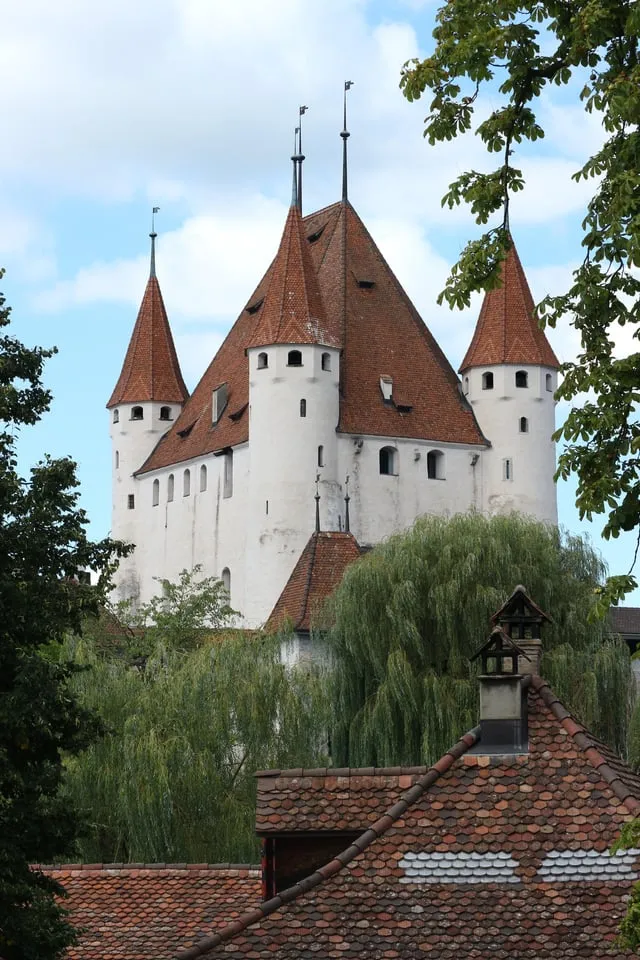
Thun entered my day as an afterthought following Oeschinensee and ended up being one of the more genuinely charming surprises of the whole trip. People were out surfing in the turquoise Aare River right in the middle of town — one of those scenes that makes Switzerland feel both athletic and relaxed simultaneously. The streets were lined with beautiful flowers, endless cafes filled with afternoon noise, and the whole place had an energy that made wandering feel productive rather than aimless. The drive to Thun is straightforward, entry is free, and the area around Lake Thun harbors some exceptional stays — Hotel Restaurant Schönbühl, Hotel Restaurant Bellevue au Lac, and Deltapark Vitalresort all carry those coveted mountain and lake views that make the Thun area feel like a destination in its own right. For photography, I kept using flowers as foreground elements against wider town photos — it’s a technique that works particularly well here given how generously the streets are planted.
Fälensee
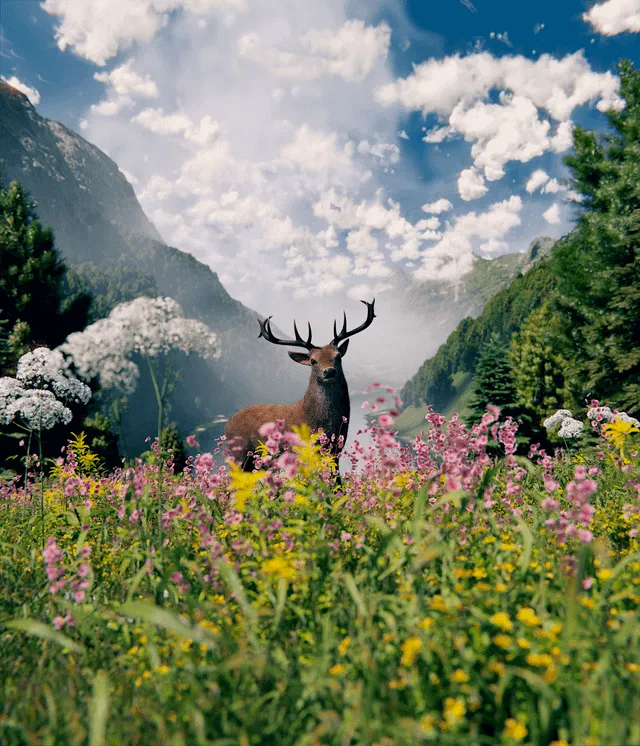
I hiked to Fälensee on the same day as Saxer Lücke since they share the same trail through the Appenzell Alps, and the mountains around this lake carry a dramatic, beautiful quality that feels different from the more famous Bernese lakes. The approach uses the Frümsen-Staubern Cable Car from Frümsen (around CHF 40 return), and the walk from the restaurant and hotel area passes Saxer Lücke en route. For a vantage point that captures the lake properly, go past the buildings and climb the hill until you’re looking down from above — sunrise or mid day both work, and the cloud-even light I caught there gave the water a particular depth that golden hour might have actually oversold. Lodge Hof Weissbad and Hotel Hof Weissbad remain the practical base for this area.
Aletsch Glacier
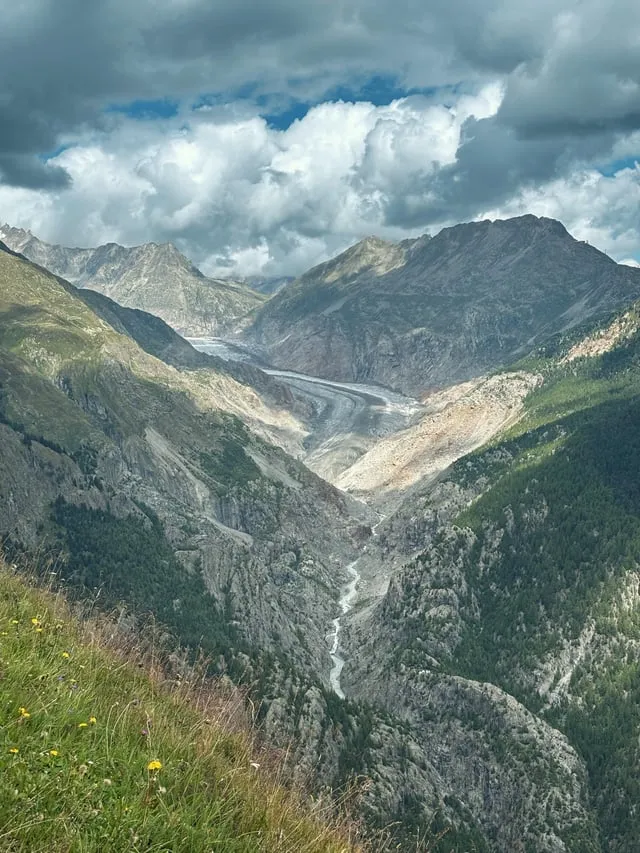
The Aletsch Glacier — the largest glacier in the Alps — is one of those natural phenomena that scale can’t prepare you for, and the fact that you can reach it by gondola makes the whole thing feel slightly surreal. The route goes: cable car from Fiesch up to Fiescheralp, then a second cable car to the Eggishorn viewpoint — total return cost around CHF 49, with a Swiss Travel Pass covering 50% off one leg of the journey. The Eggishorn viewpoint is where I stayed until the light was completely gone — sunset here turns the ice and the surrounding spiky mountains into something genuinely otherworldly. Hotel Alpina in Fiescheralp put me close enough to be at the viewpoint for both sunset and early morning, which I’d strongly recommend over doing it as a day trip from further afield.
Seealpsee
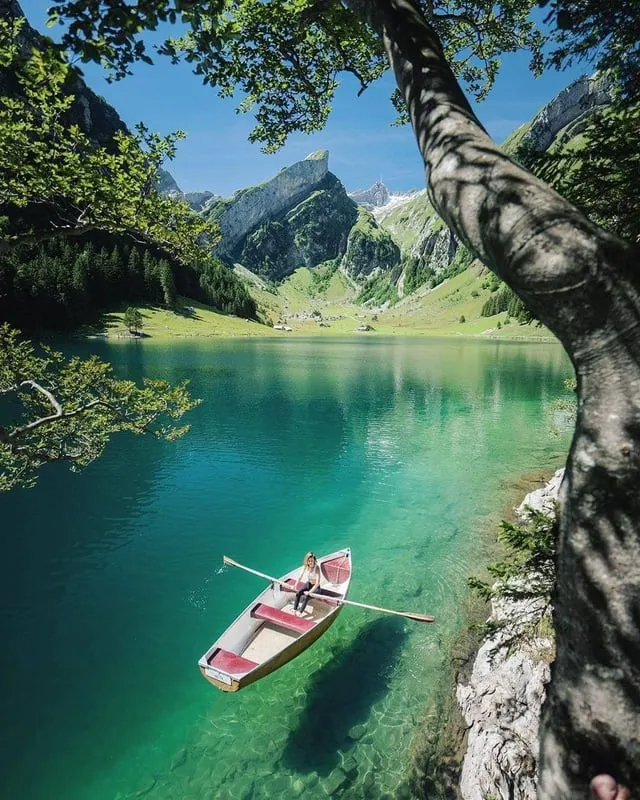
Seealpsee in the Appenzell region is an incredible lake experience that’s still flying under the radar compared to the more marketed Swiss options — and the walk in from Wasserauen is entirely on foot, no gondola required, which gives it a quality of stillness that gondola-accessible lakes rarely hold. The scenery through the trail involves cute cows at remarkably close range, stunning rolling terrain, and a Berggasthaus Schäfler connection if you want to extend upward. Once you arrive, swimming, renting a rowboat, and eating at one of the restaurants on the shore are the programme. A small parking fee at Wasserauen is the only cost. Stay in Appenzell at Hotel Lowen, and go in the morning — when the lake is calm, the sun illuminates the water into its most beautiful color and the whole scene has a quality that midday crowd energy tends to erase.
Foroglio / Ticino
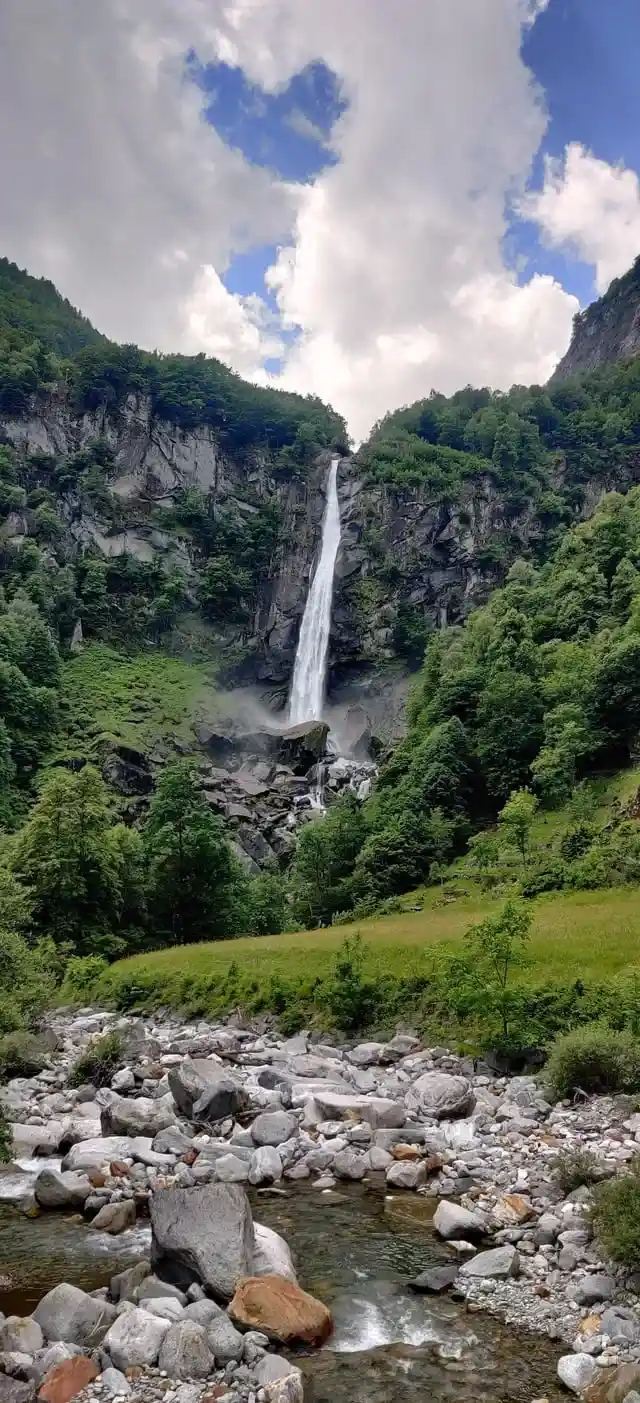
Foroglio in Ticino is Switzerland’s less-travelled south, and visiting it feels like crossing into a different era entirely. Stone homes, small paths, a plunging waterfall, quaint shops with flowers climbing the walls, and genuinely no electricity running through the old quarter — it’s one of those places where the rugged area itself is the attraction rather than any single point within it. I visited during fall season when the foliage was turning, and the warm colours against the grey stone gave the whole village a fairy tale quality that summer probably softens. The drive to Foroglio is straightforward, and the walking once you arrive is the entire experience — finding shots where the stone homes, waterfall, and trees compose naturally together is the game, and the village makes it easy. No cost, no cable car, no crowds — just an honest, rare piece of the country.
Zurich
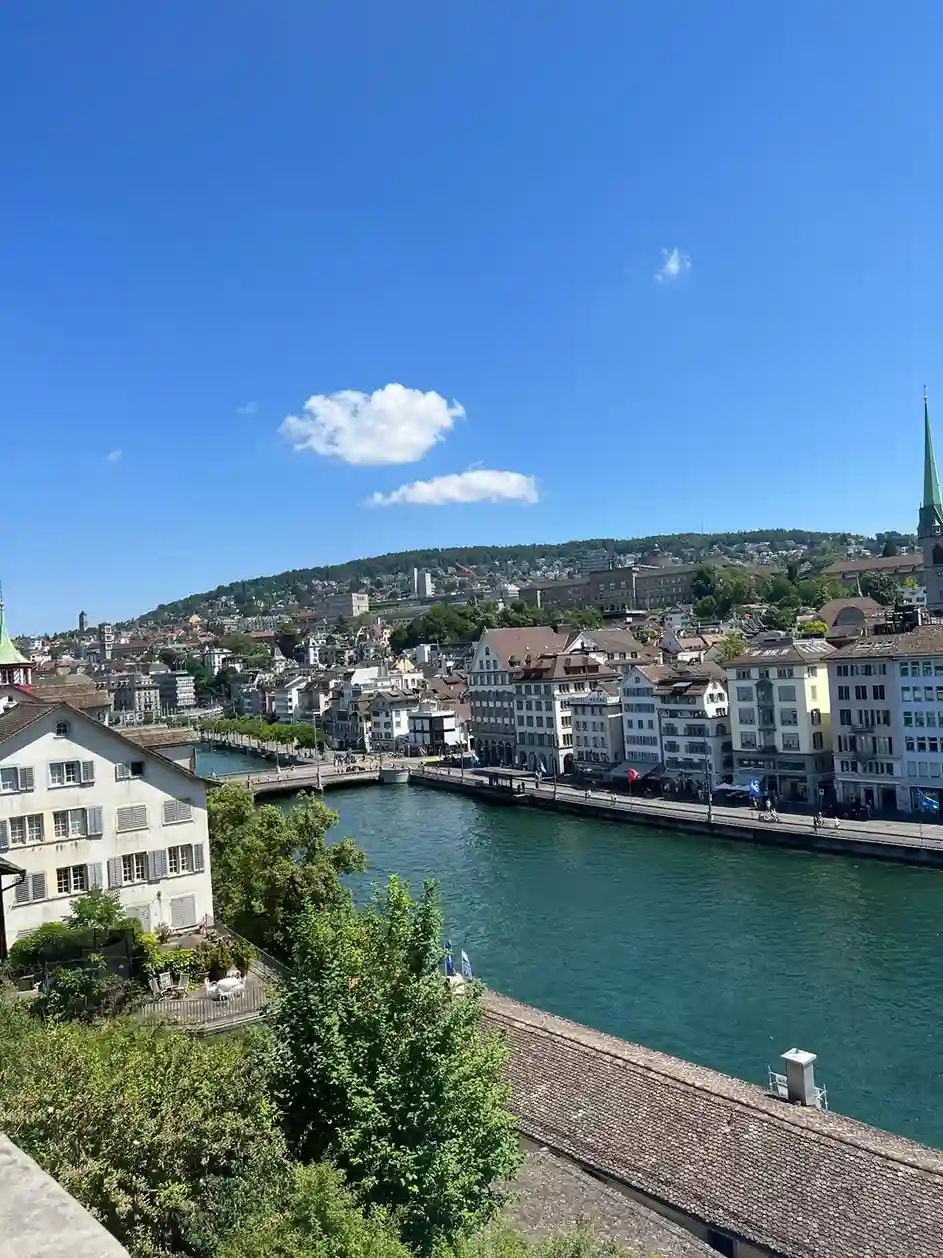
Zurich wears its sophistication lightly — surprisingly lively for a financial capital, with a quaint Old Town of medieval buildings, quirky cafés, and fine restaurants arranged around a gorgeous location on Lake Zurich with distant Alpine peaks framing the horizon. I flew in from London and spent a long weekend there in summer — the season when the city truly came alive, with medieval cobbled streets busy without being frantic and the huge lake so full of swimmers it felt like a civic sport. Landmarks check off fast, luxury boutiques on the main drags are tempting but skippable, and the Badi Bars along the water at sunset — the Rimini Bar specifically — are where the city’s real character shows up, cold Shiso Plum Whisky Highball in a frozen glass on a rooftop while the light dies over the water. 25hours Hotel Langstrasse brought a creative, eco-friendly energy to the accommodation side. Northern Switzerland’s largest city is polished, cultured, and effortlessly livable — and a better starting point for Switzerland than almost anywhere else.
Swiss National Park
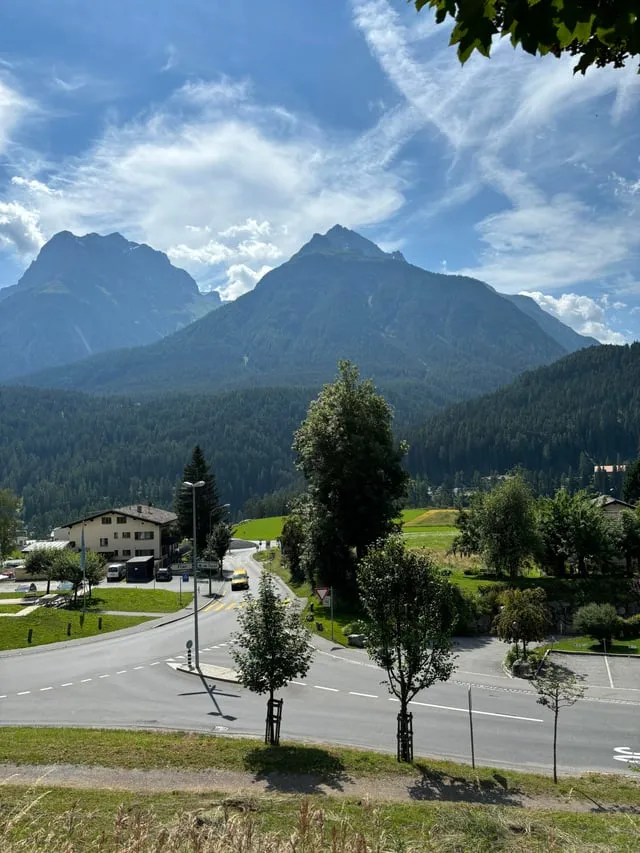
Switzerland’s oldest park doesn’t announce itself with crowds or infrastructure — it’s just genuinely wild, with flower-filled meadows, dense forests, and dramatic peaks in a state that feels genuinely untouched. I drove roughly 2.5 hours from Zurich into the Engadine Valley and spent three days at the Relais & Châteaux IN LAIN Hotel Cadonau, just 10 minutes from the entrance. The Il Fuorn, Macun Lakes, and Val Trupchun Trails cover very different terrain and biodiversity — the Val Trupchun Trail is a 14-kilometer, six-hour trek past soaring limestone cliffs and the clear, sparkling Spöl River with waterfalls punctuating the canyon. A guided tour adds conservation context and helps you spot ibex, red deer, marmots, chamois, and various birds that the park’s strict protections have brought back in real numbers. Rules are firm: off-trail hiking, camping, and pets are not allowed — and that discipline is exactly why the park in Eastern Switzerland, near the borders of Italy and Austria, still covers 170 sq km of pristine, deeply peaceful landscape worth crossing the country for.
Château de Chillon
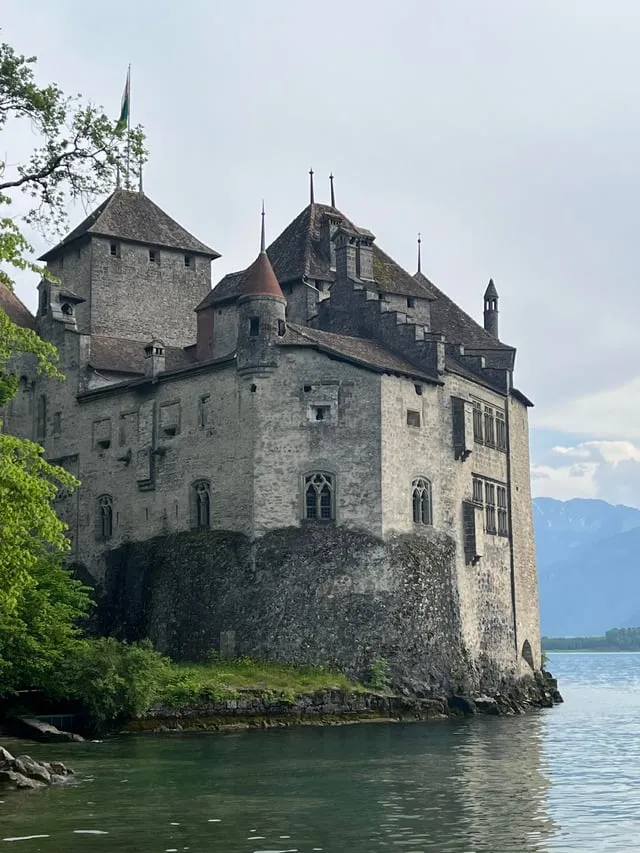
Château de Chillon sits on a tiny island on the shores of Lake Geneva in western Switzerland and carries that particular dramatic, romantic, storybook energy that medieval fortifications rarely sustain past the postcards. The 11th-century castle — 110 meters long, 45 meters wide — has towers and spires rising against the Swiss Alps in a way that stops you mid-sentence when you first see it. An hour and fifteen minutes from Geneva brings you to Montreux and the iconic Château de Chillon, where the fresco-filled halls, atmospheric dungeons (immortalized by Lord Byron himself), a chapel with striking medieval paintings, and towers offering heart-stirring views across the lake and Alps fill a solid half-day without effort. Finding Lord Byron’s name carved into a dungeon pillar — still legible after centuries, the damp stone walls carrying a faint musty scent of history — genuinely gave me chills in a way I wasn’t expecting from a tourist site.
Bern
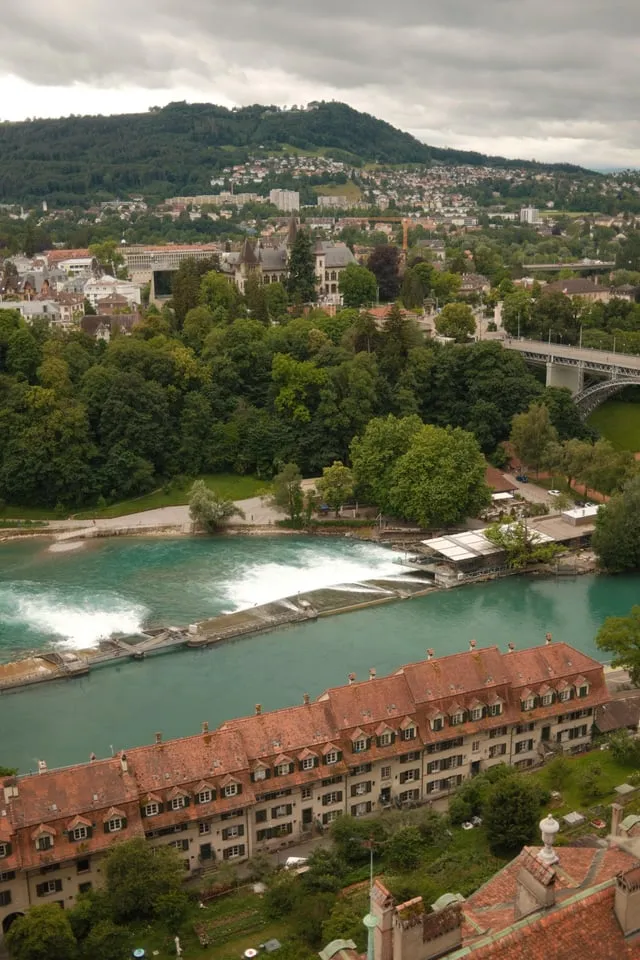
Bern wins you over without really trying — the Old Town carries its UNESCO World Heritage Site status in sandstone arcades, cobbled streets, playful fountains, and striking architecture set against the curve of the Aare and long alpine views beyond. The mix of history and genuinely laid-back charm makes it feel both elegant and welcoming in a way that more self-conscious capitals rarely manage. Arriving by train from Geneva takes about an hour forty-five, and I based myself at NH Bern The Bristol, perfectly positioned in the Old-Town for on-foot exploration. The Zytglogge clock tower is the obvious landmark, the grand Federal Palace is worth the approach, riverside strolls along the meandering Aare give you the city’s best vantage angles, and the Einstein Museum inside the Bern Historical Museum adds real intellectual weight to the day. In the evening, Michelin-starred Noumi serves an avocado tartar with crispy rice and Hokkaido pumpkin from a modern open kitchen that performs as much as it cooks. West-central Switzerland’s compact capital city manages to feel both refined and genuinely storybook-pretty — underrated against Zurich and Lucerne, and worth considerably more than a passing stop.
Villars-Sur-Ollon
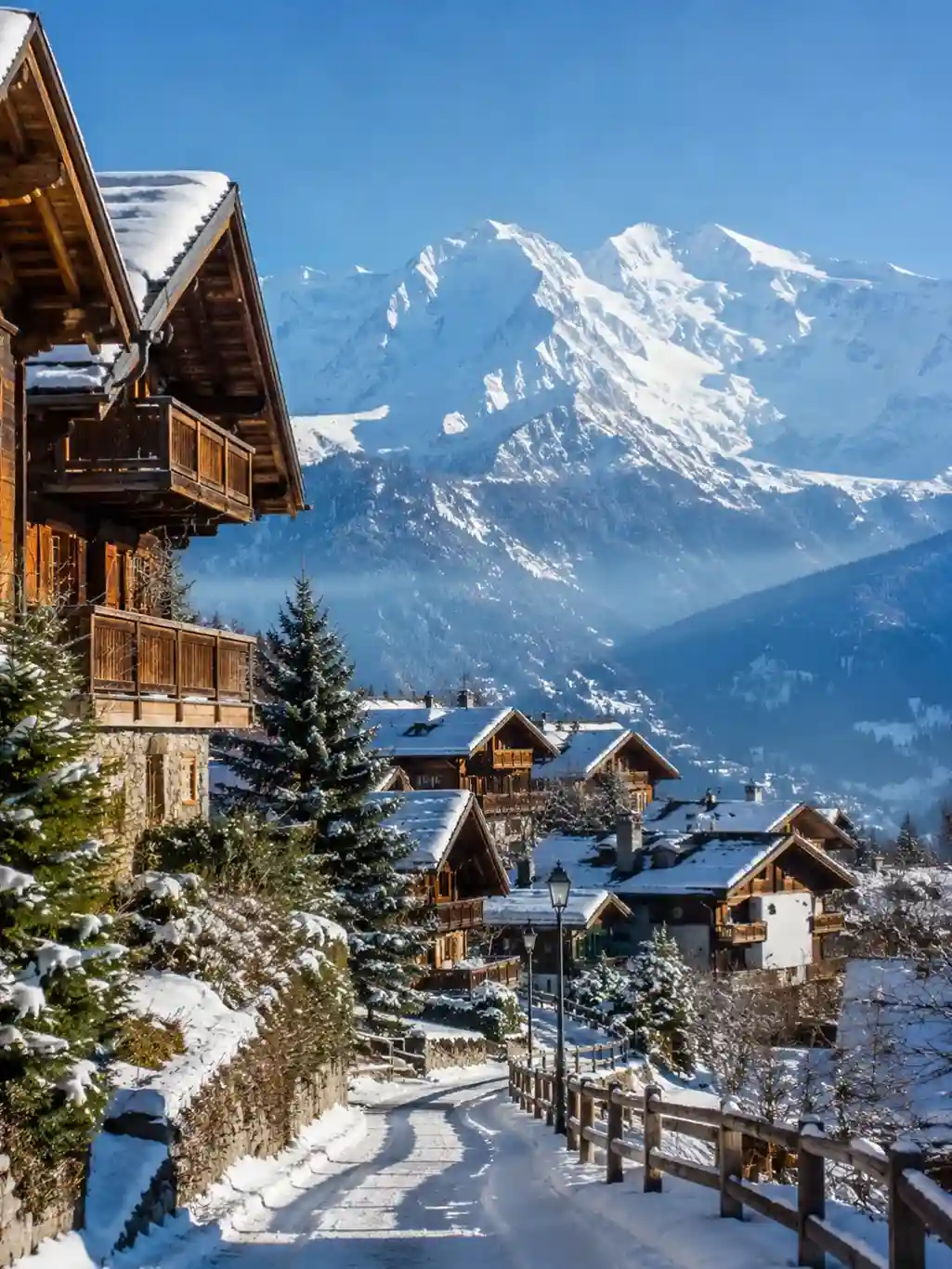
Villars-sur-Ollon doesn’t make a lot of noise about itself, which is part of why it feels so special — an upscale, peaceful alpine setting of postcard-ready chalets and genuine Mont Blanc views that carries understated luxury rather than the more performative glamour of better-known Swiss resorts. A one-hour train from Lausanne into the Vaud Alps of western Switzerland deposits you into something wonderfully laid-back — the heady mix of elegant charm and relaxed energy is immediate. I spent four days at Villars Lodge — skiing Villars-Gryon’s pristine slopes, snowshoeing the Bretaye Trail, strolling through chalet-filled streets, soaking in those captivating alpine views, and booking a mountain mineral body wrap at the stylish Alpine Resort that genuinely reset my entire concept of what a spa treatment should feel like. Evening at Le 1913 — ultra-chic, Michelin-starred, with Insta-worthy décor and gorgeous mountain views — delivered earthy truffle ravioli followed by a perfectly caramelized Tarte Tatin that I still think was the best dessert of the trip. A small resort village, elegantly outdoorsy, and quietly upscale in exactly the right measure.
Basel
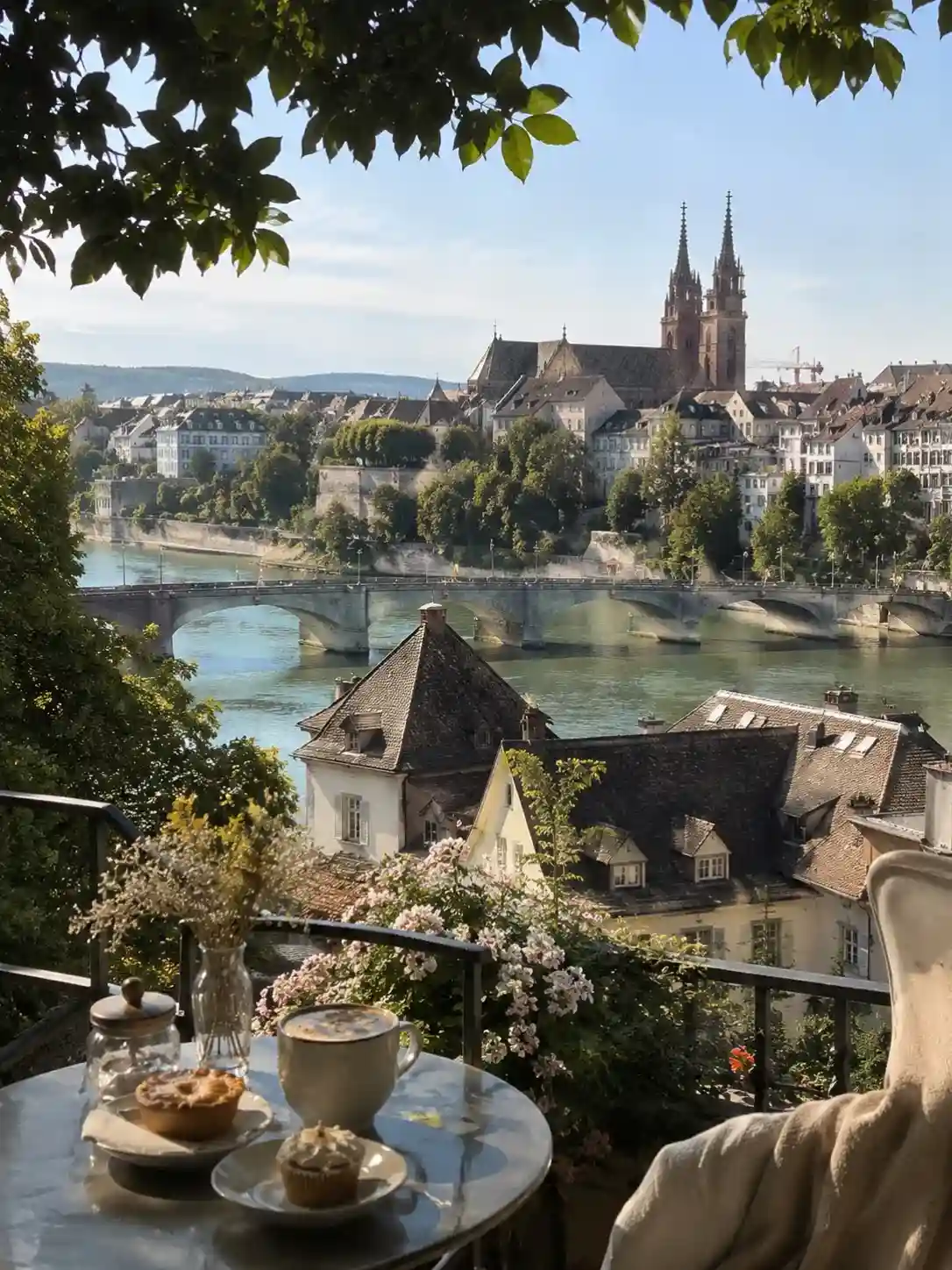
Basel is the kind of jewel that rewards the traveler who’s already done the alpine circuit and wants something genuinely different — a city of charming medieval streets, fine historic buildings, and stunning Rhine River views running underneath a surface of cosmopolitan energy, contemporary creativity, and a cultural scene that punches far above the city’s size. The tension between that old-world charm and cutting-edge art and design is exactly what makes it interesting. An hour’s direct train from Zurich brings you to northwestern Switzerland and three days at the elegant Hotel Märthof Basel gave me enough time to cover the red sandstone Basel Minster, the cobbled Old Town, the world-class Kunstmuseum, the avant-garde Fondation Beyeler, the lively Rhine promenade, and the Tinguely Museum with its whimsical works by Jean Tinguely. A stop at Bonne Maman Basel for Chai and tart-sweet quince cupcakes — the warm spice aroma of cinnamon and cardamom genuinely filling the room — made for one of the more unexpectedly satisfying moments of a city that kept exceeding what I expected of it.
St. Moritz
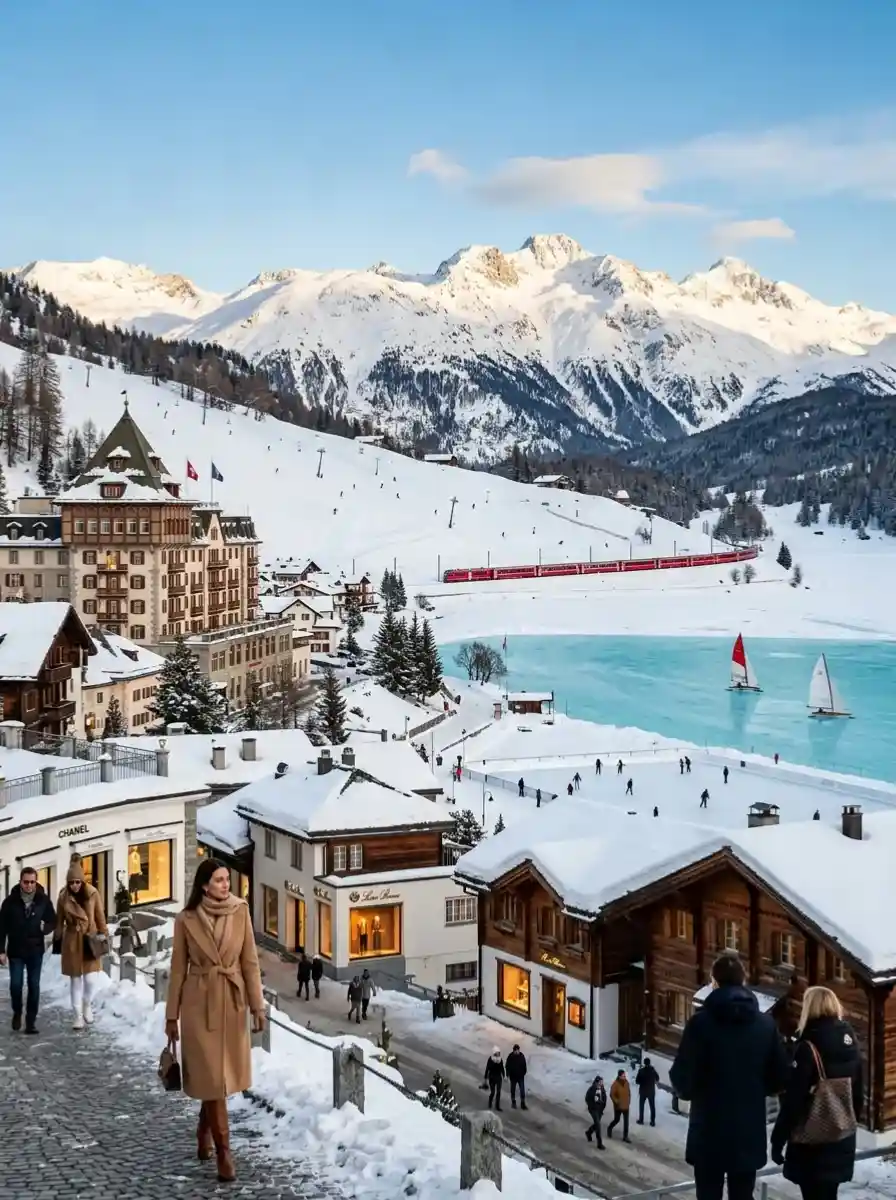
St. Moritz is absolutely breathtaking in a way that’s earned rather than just marketed — the legendary upscale ski resort beloved by royals and A-listers has snowy peaks, the glassy Lake St. Moritz, and chic streets of chalets and luxury hotels that create an atmosphere where natural alpine beauty and effortless glamour genuinely coexist rather than compete. From Zernez, the drive is 40 minutes into the stunning Engadine Valley, and I spent three days at the Art Boutique Hotel Monopol — a chic, 4-star option that sits well in the glamorous, polished, alpine-luxe tone of the Upper Engadine Valley in southeastern Switzerland. I skied Corviglia, went ice-sailing on the frozen lake alongside skating, rode the iconic Bernina Express, spent an afternoon with Segantini’s alpine art, dined at the opulent Badrutt’s Palace, and recovered in St. Moritz’s legendary spas. The compact resort town ends the night at King’s Social House — where I lost myself to DJ Bob Sinclar’s uplifting house music with a bubbly Negroni Sbagliato — and somehow that frivolous detail is what makes the whole destination feel complete.
Lake Constance
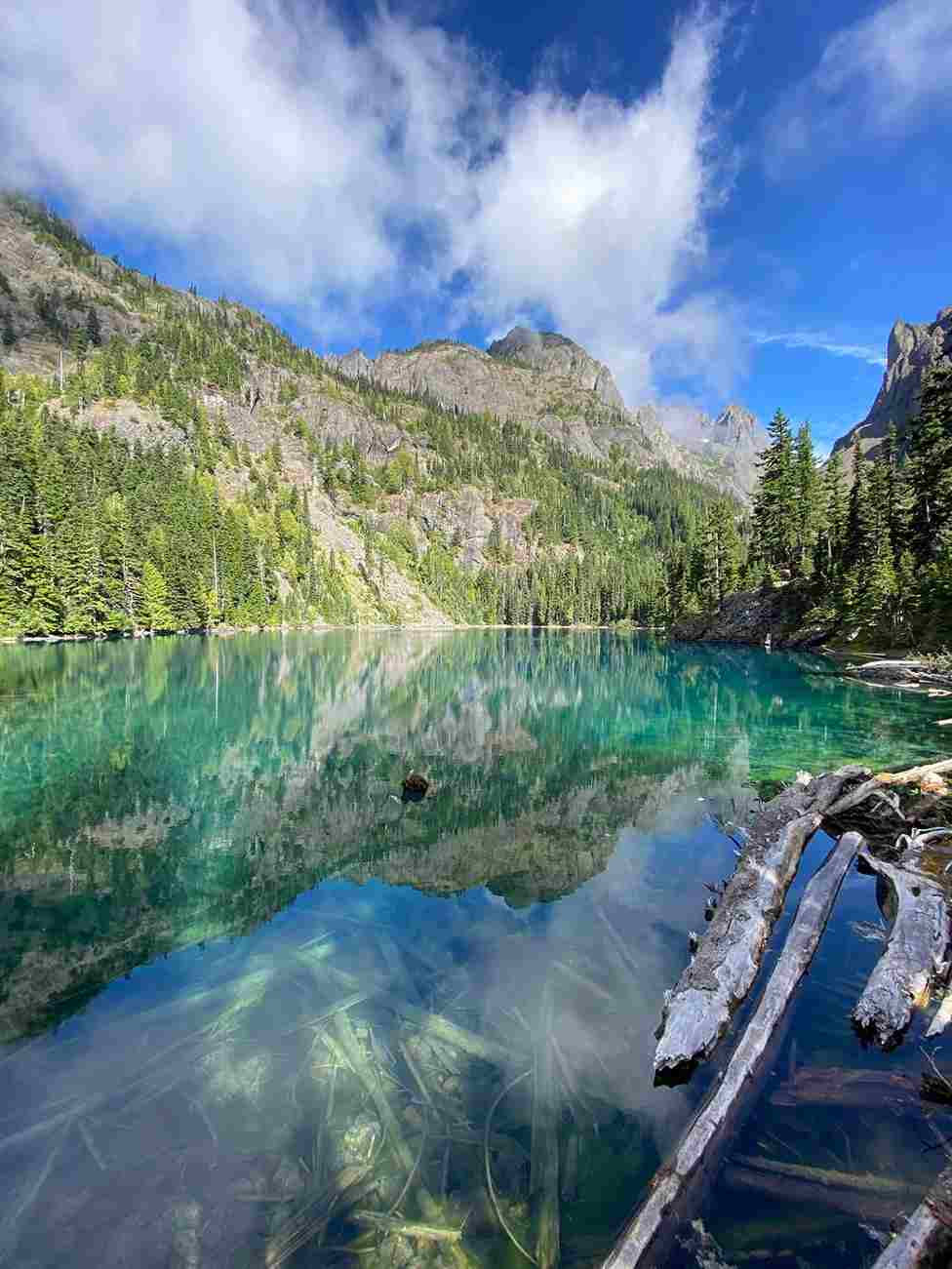
Lake Constance is one of those large, picturesque freshwater lakes that works on you gradually — sparkling waters framed by green hills, quaint lakeside towns, historic buildings set against both Swiss and German Alps, and a quality of serene, picture-perfect landscapes that builds over days rather than delivering one knockout moment. I drove two hours from Zurich to the Swiss-German border and spent three beautiful days at Hotel Bora HotSpaResort — paddle-boarding, visiting medieval Konstanz Cathedral, cruising across to the enchanting Mainau Island, exploring romantic Meersburg Castle, and cycling the well-marked Bodensee-Radweg that traces the entire lake perimeter crossing Germany, Austria, and Switzerland in one continuous ride with a fresh lake breeze the whole way. At 536 sq km, straddling Central Europe at the meeting point of three countries, it carries a relaxed, scenic, gently elegant atmosphere that the more famous Swiss lakes sometimes trade away for spectacle.
Gelmersee
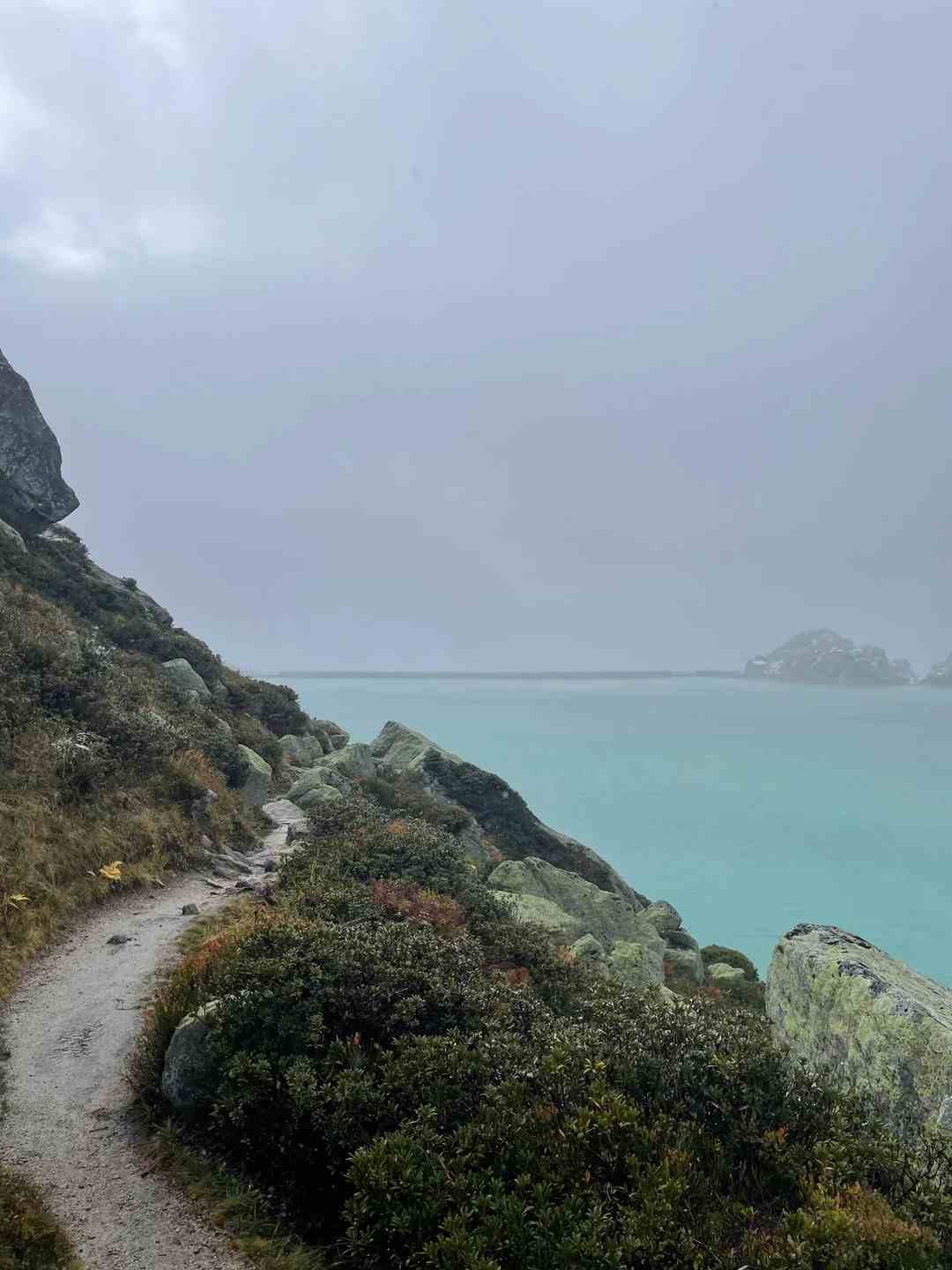
Gelmersee is one of those hidden gems in Switzerland that people who’ve been can’t stop mentioning — crystal clear water, mirror-like reflections, and an almost complete absence of tourists give it a quality that’s becoming rare. The approach itself is part of the experience: one of the steepest funiculars in the country carries you up in open carriages with safety bars that give it the feel of a roller coaster train, with sweeping views of the mountains as you climb uphill. Tickets run on a timed entry basis — book in advance or risk missing your slot. At the top, a 2-hour hike circles the lake for constantly better views, or you can simply walk out to the dam and settle on the small beach and let the stillness happen. The Gelmerbahn runs May through October, with May-June morning visits offering minimal crowds and the best light. The lake sits near Meiringen, about 2 hours’ drive from Zurich — accessible by car though limited public transportation makes self-driving the practical option. Afterwards, continuing toward Grimsel Pass unlocks stunning panoramic views and three more lakes in a single drive. Base at Meiringen or Interlaken, both around 45 minutes away.
Melchsee-Frutt
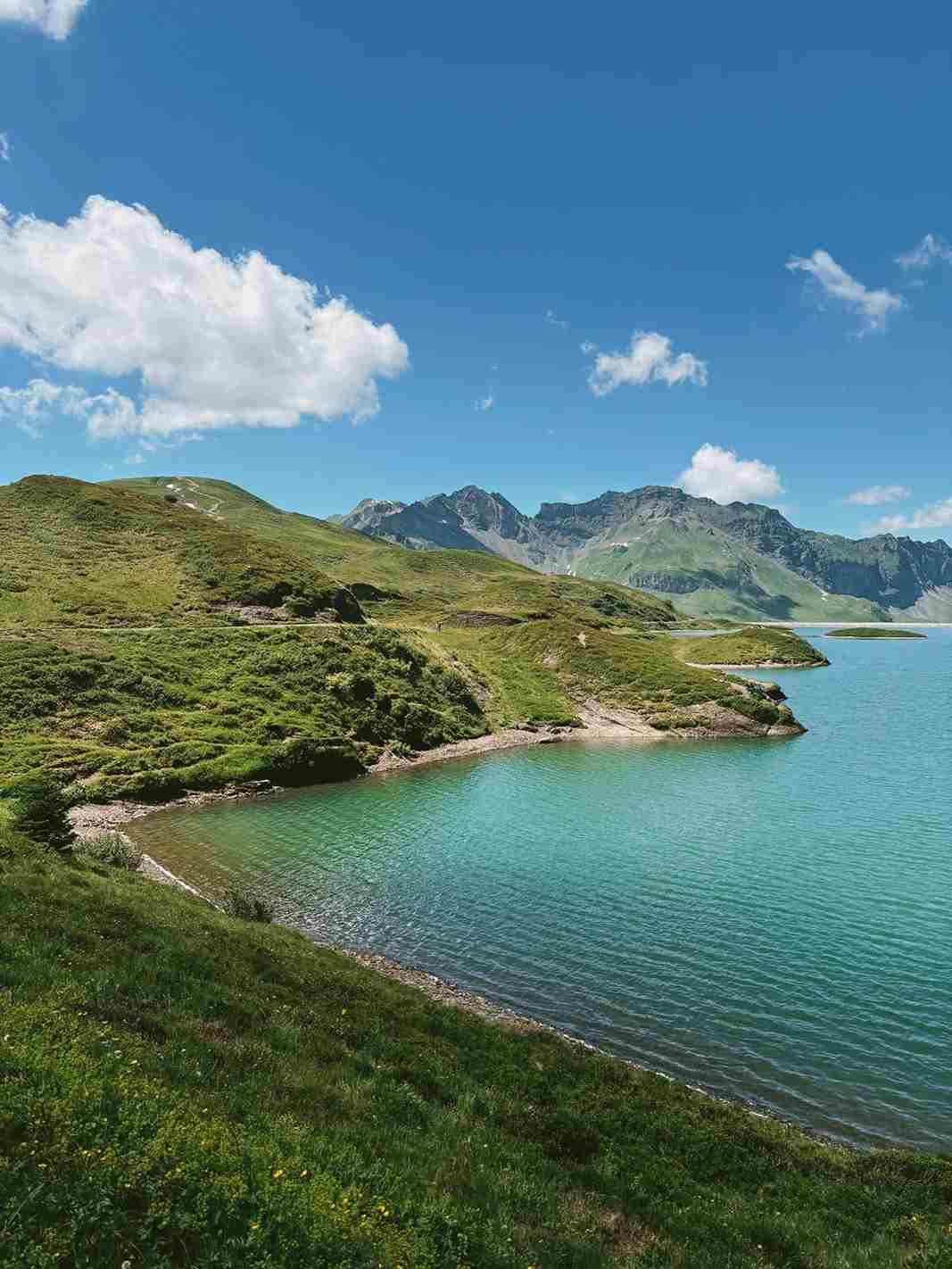
Melchsee-Frutt is a mountain resort village with two genuinely spectacular Alpine lakes — Melchsee and Tannensee — that sit in grassy meadows surrounded by mountains in a way that makes even a short, easy walk feel like a significant discovery. The rolling hills are covered in flowers, tall snow peaks rise in the distance, and cowbells carry on the breeze with a consistency that never becomes background noise. The summer season runs June through October, with early summer giving you the best combination of flower-covered grasslands and visible snow peaks before the warmth softens the upper edges. Getting there means a train to Sarnen, then the post-auto bus to Stöckalp where the Melchsee-Frutt gondola station sends you up — or by car via the A8 to Sarnen, then the cantonal road through Kerns, Melchtal, and Stöckalp to the large parking lot at the gondola station. Accommodation exists right at Melchsee-Frutt itself for full immersion in the panoramic views, with Kerns and Sarnen as the lower-valley alternatives.
Caumasee
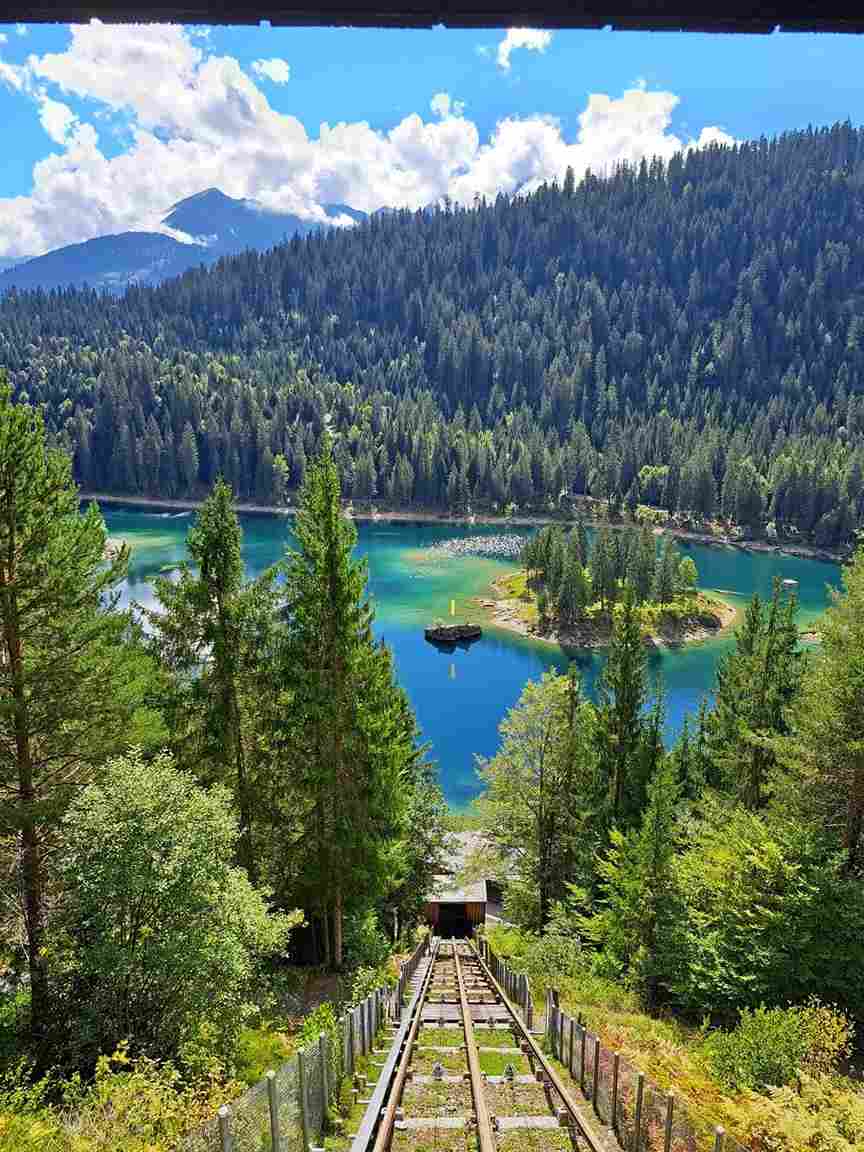
Caumasee — which translates loosely to Lake of Noon Rest — is located in the town of Flims in the Swiss canton of Graubünden, and it’s one of the genuinely least-touristy places in the country despite being jaw-droppingly beautiful. The most immediately striking thing is the turquoise green water — an intensity of colour that reads as almost artificially vivid against the surrounding forests but is entirely natural. It’s a short walk from the Flims Waldhaus bus stop along to the Caumasee lift (open end of May through October), then a 10-15 minute descent to the lake — or an extra 15 minutes on foot if you skip the lift. Once there: relax, swim, have a picnic, stare at the colour. From Caumasee, the ambitious option is a hike toward the Rhine Gorge — Switzerland’s Grand Canyon, a 13-kilometer gorge shaped by geological events over 10,000 years — with the best views arriving at the Il Spir viewing platform just minutes from Restaurant Conn. Flims makes the obvious base; Zurich works well as a day trip origin for the lake alone. The whole area is year-round accessible, though check the weather cam before committing to a specific day.
Bannalpsee
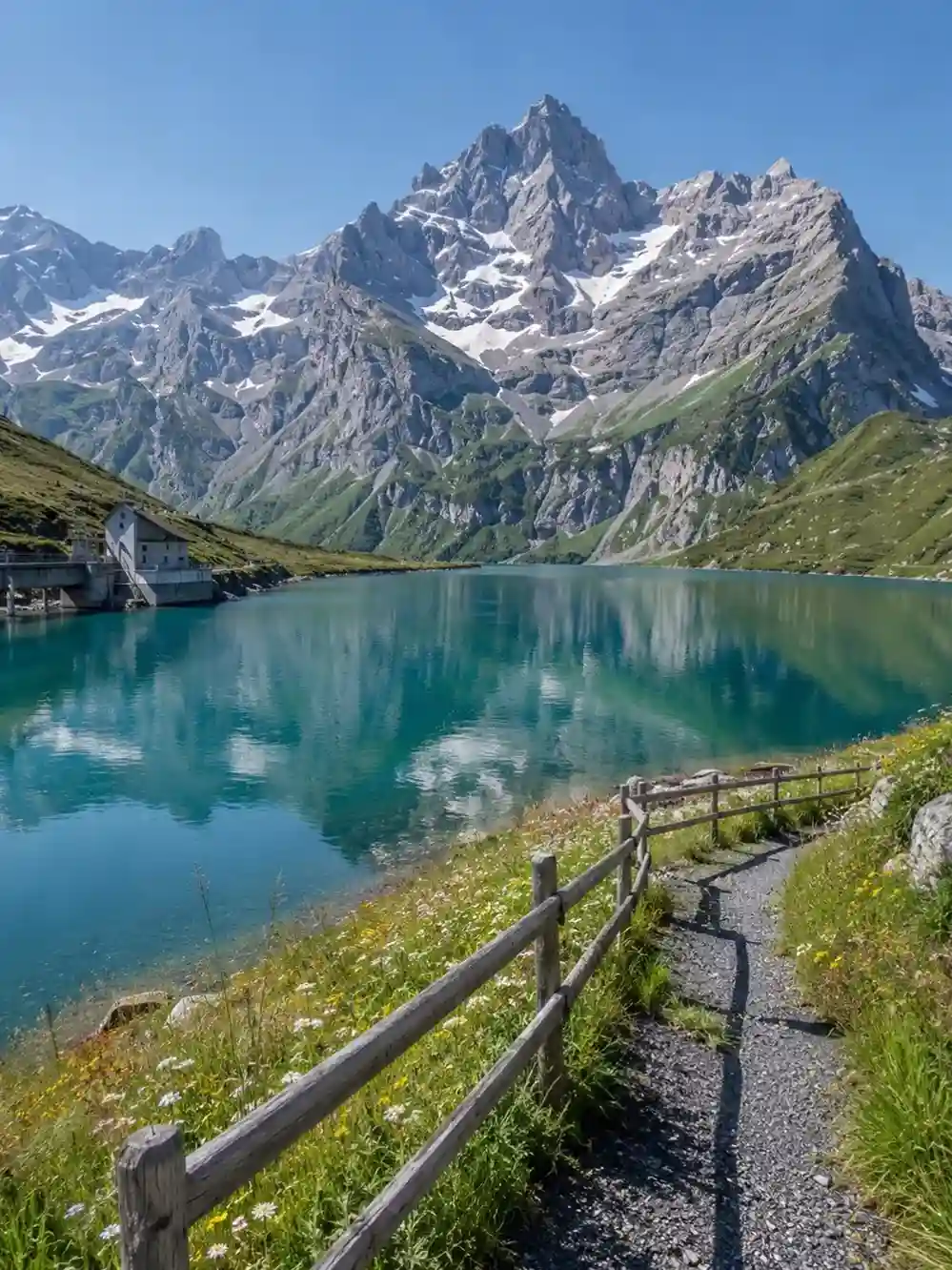
Bannalpsee is a reservoir built in the 1930s in Wolfenschiessen in the Swiss canton of Nidwalden — close enough to Engelberg and the famous Mt. Titlis cable car that combining them into a single day trip makes obvious sense. It’s one of the most peaceful places I’ve encountered in Switzerland: empty, striking, with genuine hiking options for those who want them and a perfectly short walk to the lake for those who don’t. Access runs through the Fellboden cable car station — by public transportation, that means train to Wolfenschiessen, bus to Oberrickenbach Talstat, then a 2-minute walk to the cable car; by car, the GPS address is Fellboden, 6387 Wolfenschiessen. Open May through October for lake visits, though the cable car continues through winter for anyone interested in seasonal activities. A 15-20 minute drive or train connects back to Engelberg if you want to fold in Mt. Titlis — and Lucerne or Zurich both work as central bases if you’re covering more of the country.
Swiss Grand Canyon (Rhine Gorge)
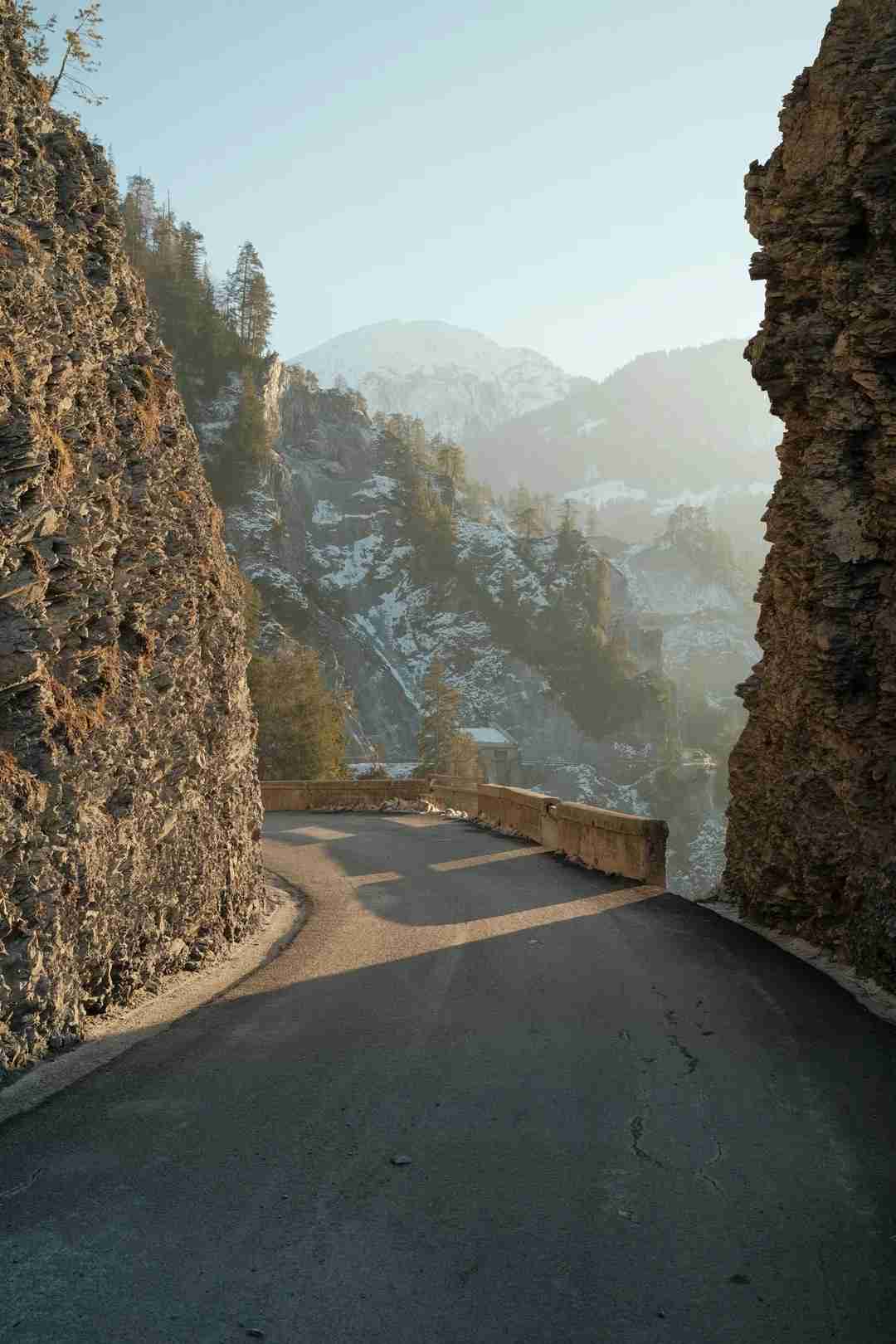
The Rhine Gorge is Switzerland’s very own Grand Canyon — a 13-kilometre gorge carved out of the landscape by geological events tracing back 10,000 years. The several hikes that run through and around the area each frame the gorge from a different angle, and the accumulating stunning views make this one of those places where you keep walking further than planned simply because the next bend keeps improving on the last.
Aare Gorge
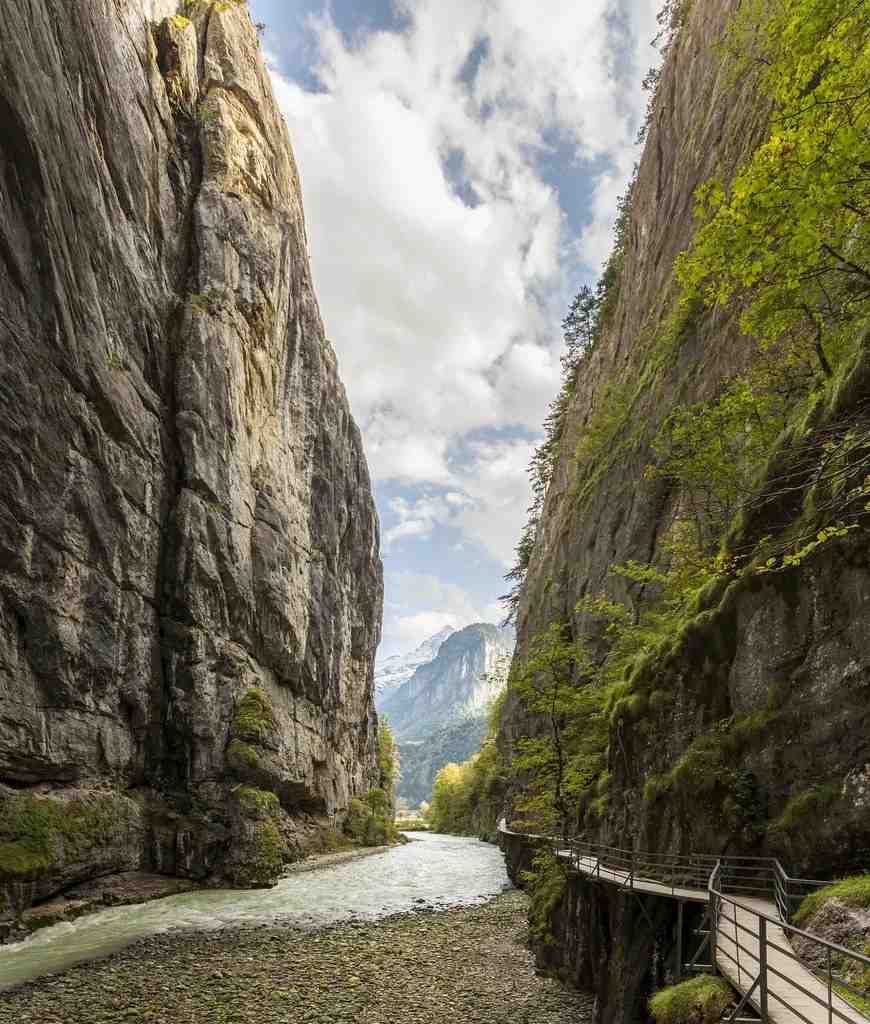
The Aare Gorge is what happens when a river spends thousands of years eroding a series of rocks into something that has no business being as dramatic as it is. The Aare river has cut through the stone in a way that creates a narrow, towering canyon now threaded with walkways that put you inside the gorge rather than merely above it — a close, almost claustrophobic glimpse of an awe-inspiring geological phenomenon that makes the physics of slow erosion feel suddenly very real.
Lavertezzo
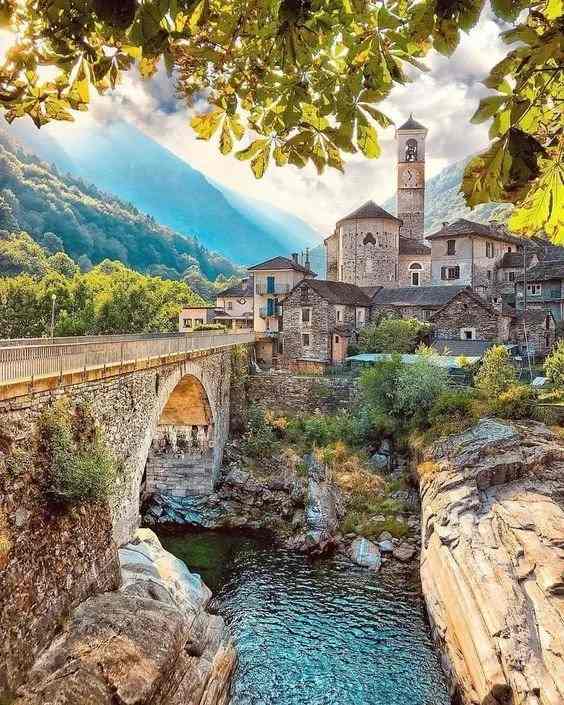
Lavertezzo sits in southern Switzerland and operates almost entirely outside the standard tourist circuit — a lesser-known, genuinely picturesque village where unique stone buildings create a historic, romantic charm that doesn’t require any marketing to be felt. The draw that pulls most visitors who do find it is the 17th-century double-arched stone bridge Ponte dei Salti over the River Verzasca — a strikingly emerald-coloured river with such vivid natural colour that questioning whether it’s real is a reasonable response. Smooth, bright white rocks line the riverbanks and create natural platforms for sunbathing, relaxing, or stepping in for a swim during a summer visit. Ascona sits just 30 minutes away and makes a natural day trip pairing — and both are best visited when warm enough to dip into that impossibly beautiful river.