7-Day Bali Itinerary 2026: The Ultimate Bali Travel Guide
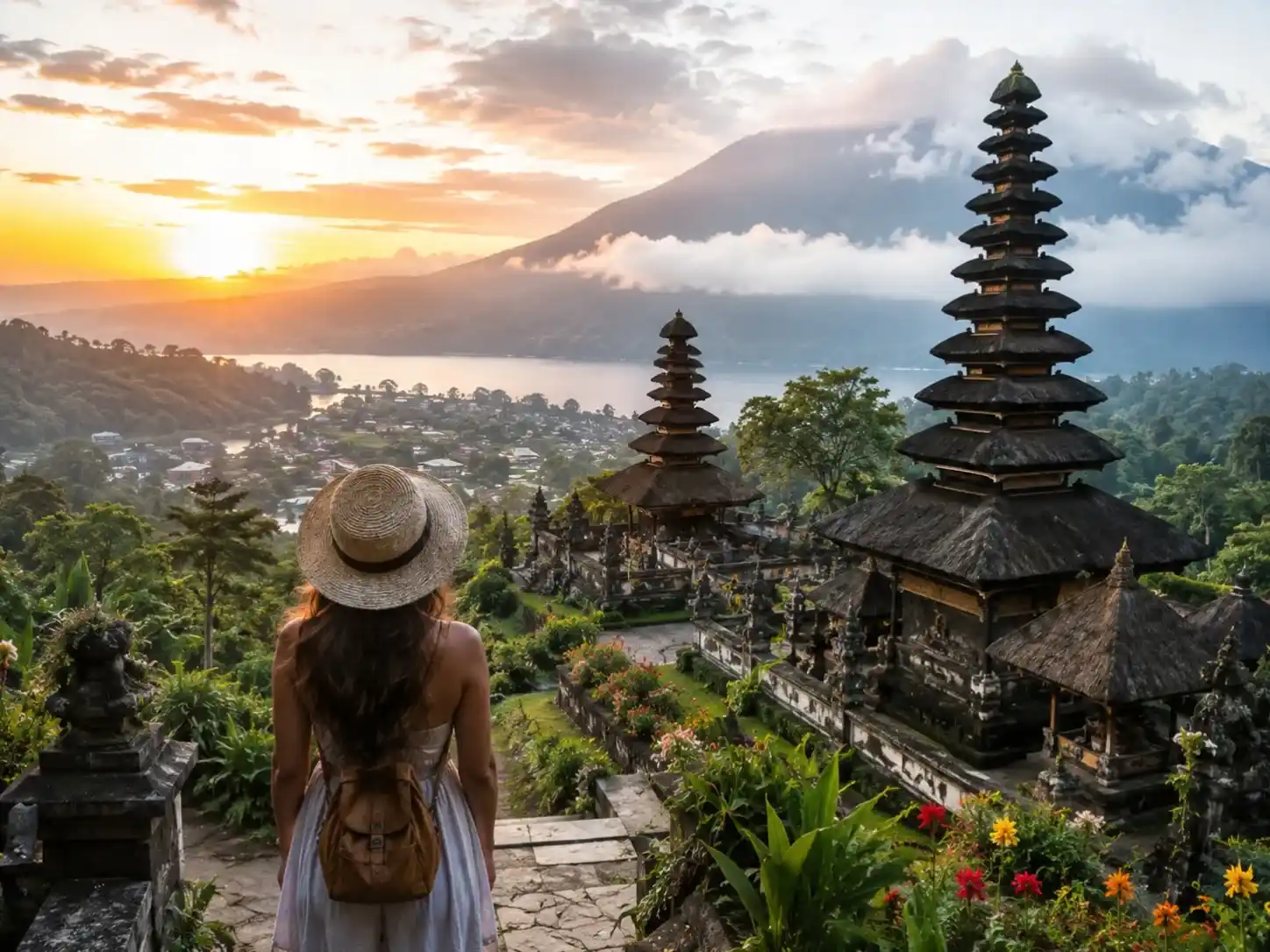
I spent close to a month on Bali before I finally understood why it earns its reputation as a popular destination that somehow still manages sensory overload for first-timers. Whether this is your first trip for solo travel or you’re building out a longer cross-section of the island, seven days (7 days) is enough to move between temples, rice terraces, cliffs, and beaches without feeling like you only skimmed the surface of this small island’s culture and natural beauty.
Before you even book flights, sort your travel insurance — I use SafetyWing’s Essential plan, which covers emergency medical coverage and basic trip protection, though you’ll want to check the add-ons for adventure sports coverage and electronics coverage if you’re hiking volcanoes or diving with a GoPro in tow. This day-by-day breakdown (Days 1–2, Days 3–5, Days 6–8, roughly Days 9–10 if you extend) is built around three nights on the east coast near Amed — a less touristy base for jungle day trips — before working back toward the sights, pool days, and inevitable beach clubs closer to departure. I structured mine to fly out on a Sunday night rather than Friday night at 11pm, since burning through your last hours of annual leave on a red-eye never feels worth it.
Having lived in Bali for over a year, I’ve explored the full spread — from the congested city traffic and bustling energy of the south to the silent jungle and serene nature up north — and this route hits the balance most people are after: waterfalls, art markets, nightlife, and pure beach relaxation, whether you’re traveling as solo travelers, couples, or families. This isn’t a repost of some blog post from before the pandemic; every price below has been checked post-pandemic, with prices updated for what you’ll actually pay in 2026. Expect a sunrise hike up a volcano, sunset at a beach club, plenty of warung meals, and built-in recovery time so the whole thing reads as a balanced week rather than a sprint — with alternate route itineraries and quick facts further down for anyone wanting to tweak the order.
Ubud — Rice Terraces, Temples, Monkey Forest & Culture
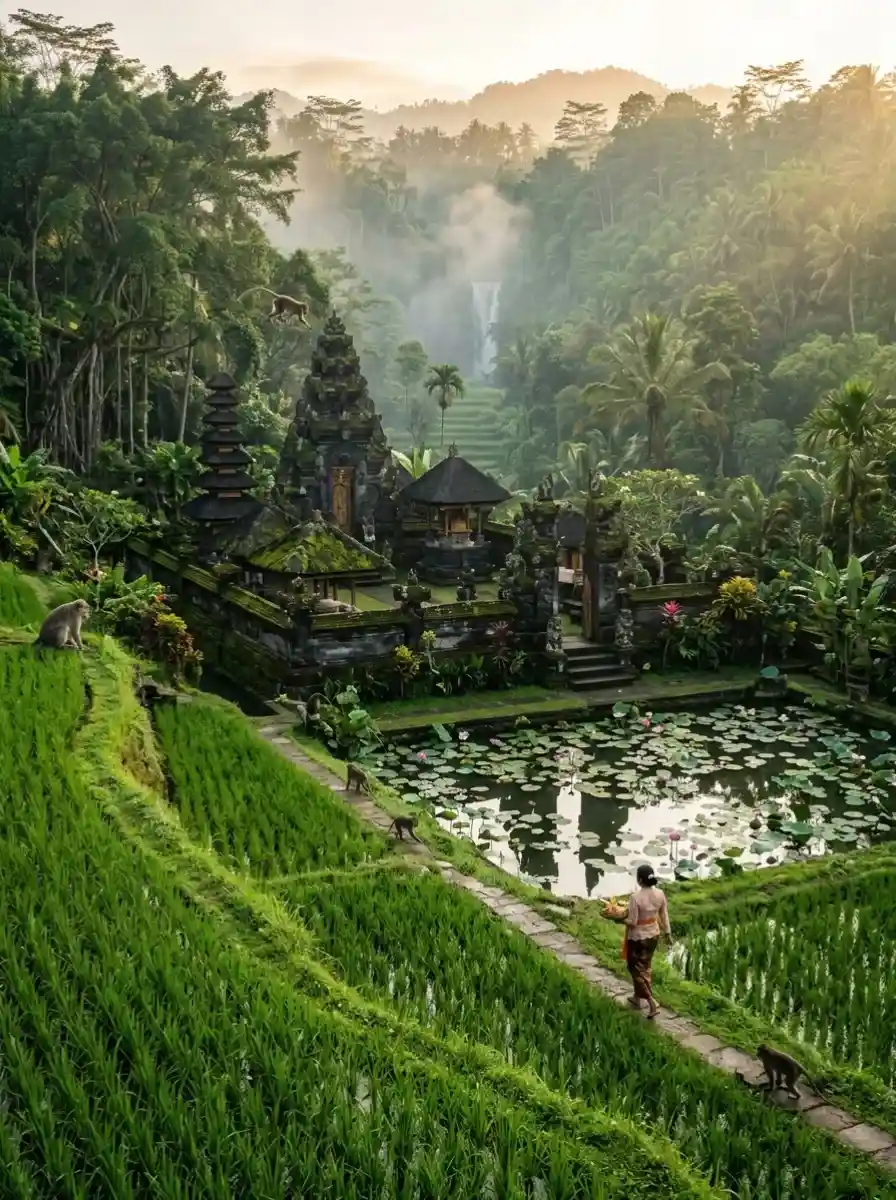
Ubud earns its “cultural capital” title fast. I’d get to the Tegalalang Rice Terraces (also spelled Tegallalang Rice Terraces) in the early morning, ideally by 7:30am, both to beat the crowds and to actually appreciate the Subak irrigation system — a UNESCO-recognized method rooted in Tri Hita Karana, the core Balinese philosophy of balance. From there, a scenic walk through the greenery leads naturally toward Tegenungan Waterfall and the quieter Tibumana Waterfall, or you could detour to Pura Taman Saraswati, a water garden built around a lotus pond dedicated to the goddess of learning.
Pura Tirta Empul (the Tirta Empul Temple) is the water temple most people come for — the cleansing rituals and purification rituals in its spring pools date back to 960 AD, and the water itself runs a brisk 15°C. Nearby, Pura Gunung Kawi is the rock-carved temple holding royal rock-cut tombs thought to be 900-year-old; the 300 steps down keep it undervisited relative to its significance. If you have room for one more, Goa Gajah (the Elephant Cave) has a striking demon-face carved into carved rock dating to the 9th-century, with a cave temple and bathing pools inside, and Pura Gunung Lebah nearby marks the actual birthplace of Ubud.
The Sacred Monkey Forest Sanctuary — locally Mandala Suci Wenara Wana — is a gateless conservation area spanning 14 hectares and home to somewhere between 700+ monkeys and 1,000 long-tailed macaques, considered sacred animals here. Skip running, avoid bringing food, and keep bags zipped and sunglasses tucked away — the dominant males are fast, and snatching items is basically their side hustle. Afterward, I’d wind down at one of the Ubud spas: a massage runs around $7, or about $8.80/hour, at places like Starchild Spa, while Karsa Spa does a lovely flower bath and reiki combo. For Ubud yoga, expect $9 classes with mats and props provided at The Yoga Barn, Radiantly Alive, or the Ubud Yoga House.
Shopping happens at the Ubud Art Market (Pasar Seni Ubud), where woven bags, scarves, jewelry, and other handicrafts — textiles, wood carvings, stone carvings, shell carvings — come with genuinely negotiable prices; I usually get sellers down 40–50% from the opening number. Come evening, Ubud nightlife centers on the Legong dance performed at the Royal Palace, or live music at spots like Bali Bohemia, Laughing Buddha Bar, Paradiso Ubud, No Mas Bar, and CP Lounge. If shisha is your thing, XL Shisha Lounge and Ubud Shisha cover it. I’d also carve out time for a coffee plantation and tea plantation visit — Lumbung Sari House of Coffee near Mount Batur does the famous luwak coffee (civet coffee), though I’ll be honest that the animal welfare side of that trade gives me pause, so ask questions before you book.
For sleeping, Kamandalu Resort’s Valley Pool Villa is worth the splurge; arranging a taxi transfer through WhatsApp runs about $60 AUD for an 8-hour day with Bluebird Taxi. Renting a scooter to wind through the rice paddies near central Ubud is one of my favorite mornings on the island — pair it with Kanto Lampo Waterfall, a genuinely swimmable natural pool, or head out on a motorbike for temple picnics where phones and cameras stay in the bag and you just eat with locals as a kind of food exchange. Ubud’s yoga studios and retreats (Monkey Legend Ubud included) make it easy to slow down here for longer than planned.
Food-wise, Watercress is a solid casual eatery for healthy meals, Milk & Madu does good pizza, and Plataran Ubud has a buffet breakfast with genuine rice terrace views. For sleeping options, Maya Ubud Hotel & Spa leans into full jungle vibes, while Camaya Bali is a more affordable bamboo hotel; if you want something secluded and romantic, the Sidemen area is quietly one of Bali’s best-kept affordable finds for honeymooners. I’d budget Days 2–3 here, ideally with an overnight stay, and hire a private driver for 250,000–350,000 IDR ($15–22) rather than dealing with scooter rental yourself at 70,000–100,000 IDR/day ($4–6) if you’re not confident on two wheels.
Practically: get to Tegalalang by 8am, expect an entrance fee of 15,000–20,000 IDR ($1), and budget 30–45 minutes there including the staircase descent. Gunung Kawi runs entrance 80,000 IDR ($5) for roughly 1–1.5 hours. The Campuhan Ridge Walk is a free 2km stretch through rice fields ending near Campuhan Bridge, with free entry — go around 4:30–6pm when it’s underrated and quieter than the day-trippers’ midday crowd. For food, Locavore is the splurge, Warung Babi Guling Ibu Oka does the famous roast suckling pig, and Warung Teges is a cheap local favorite. At the Ubud Palace (Puri Saren Agung), sarong rental costs 20,000 IDR and entrance 50,000 IDR ($3); arrive by 9am for the temple itself, or come back for the Kecak dance and Legong performances around 7:30pm for 80,000 IDR. Whatever you do, respect basic temple etiquette — cover shoulders and knees, and skip entry if you’re menstruating.
Mount Batur Sunrise Hike
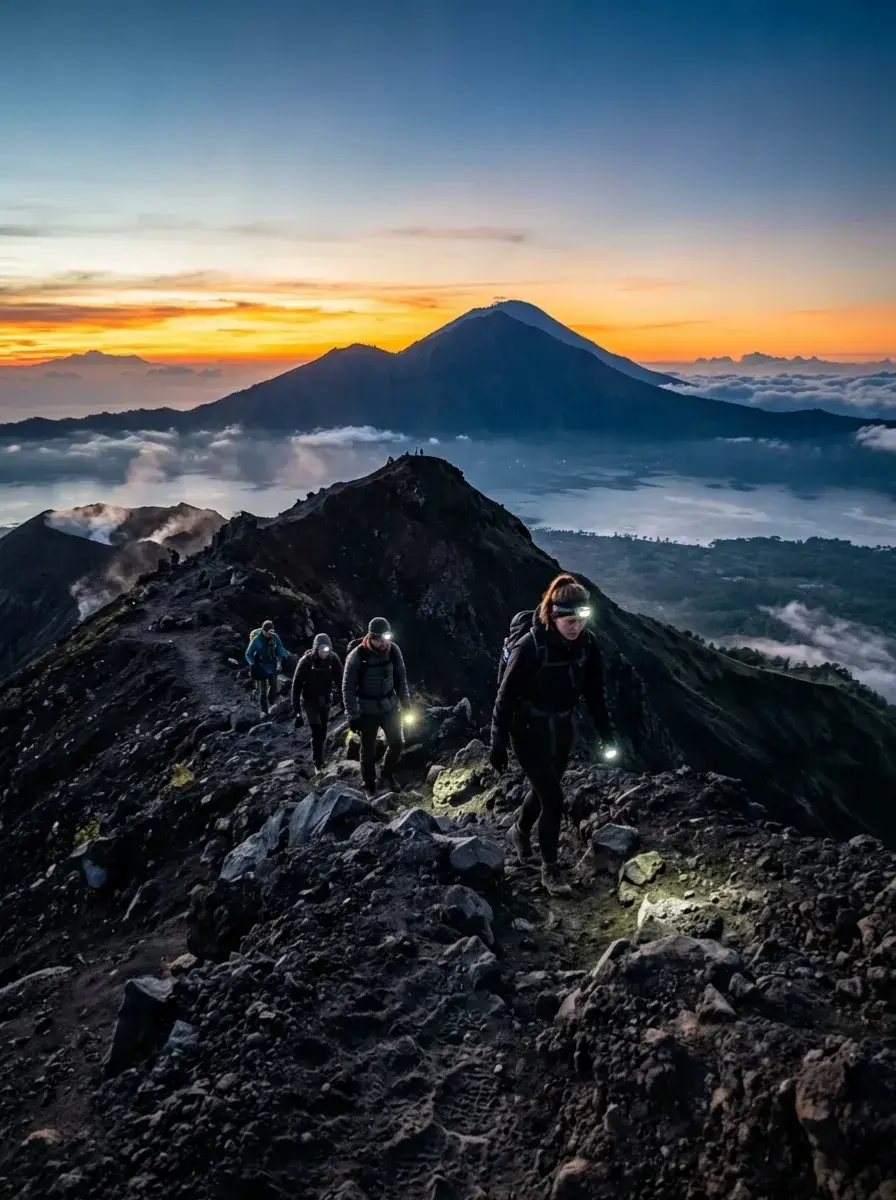
Climbing Mount Batur was, without question, one of the hardest and best mornings of my trip. This active volcano sits at 1,717 metres above sea level, roughly 45km north of Ubud, and most tours pick you up around 2am for a 2:30–3am start, hitting the trailhead by 3am. You can do group hikes or private hikes; either way you’ll need flashlights for the well-maintained trail, which takes about 1.5–2 hours — closer to 2 hours up and 1.5 hours down — through total darkness.
Difficulty-wise it’s moderate difficulty: steep, with loose volcanic rock underfoot, but no technical climbing involved. At the summit, you’re rewarded with views of Mount Agung (sometimes written Mount Agang) and other neighboring volcanoes, plus the caldera and Lake Batur below, often wrapped in a thin cloud layer. It gets cold up there — 10–15°C — so bring a fleece or light jacket; you’ll be back down by around 6am. A standard guided tour runs 250,000–400,000 IDR ($15–25 per person) and includes a guide, torch, and basic breakfast, plus a separate entry fee of 30,000 IDR ($2) at the checkpoint.
One detail I loved: guides use the volcanic steam vents near the summit for cooking eggs as part of breakfast. On the way down, most tours stop at Kintamani Village for a proper caldera viewpoint and buffet lunch, then continue to Tirta Gangga Water Palace, a 1948 royal garden known for its carved fountains, stepping stone ponds, and koi pools, about 35km east (entrance 50,000 IDR, $3). If your legs can take it, Pura Besakih — Bali’s largest temple complex — is nearby, though I’d flag the aggressive guides who work the temple tours there before your hotel drop-off.
Nusa Penida
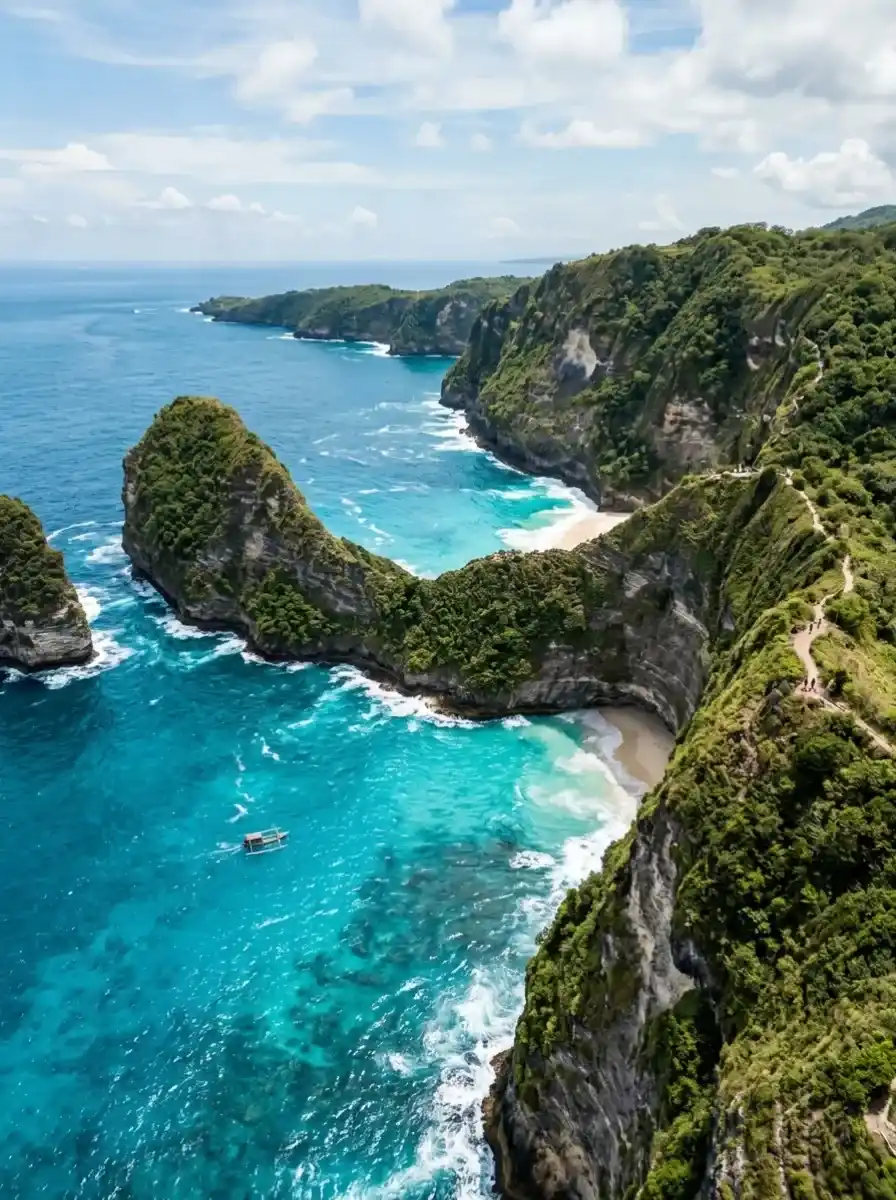
Getting to Nusa Penida means either a ferry from Sanur (a 40-minute ferry) or a rougher 1.5-hour speedboat, and be ready for shin-deep water at the dock on arrival. I’d recommend an overnight stay over a rushed day tour if you can swing it — the island rewards slowing down. Renting a scooter here is doable but genuinely bumpy; a rental is the move if you want to cover East Nusa Penida (Atuh Beach, Diamond Beach, the Rumah Pohon Treehouse, Thousand Island Viewpoint, Teletubbies Viewpoint) and West Nusa Penida (Angel’s Billabong, Broken Beach, Kelingking Beach, Crystal Bay) in one go, plus South Nusa Penida’s Car Temple (Pura Paluang), Tembeling Beach, and Banah Cliff Viewpoint.
Snorkeling with manta rays is the big draw, alongside sailing, cycling, and general water sports rentals — Maruti Beach Club has a nice pool, cabanas, and solid ocean views if you want a break from the road. This small island off the southeast coast has a rugged natural beauty that rewards diving and hiking alike; Pura Penataran Ped is worth a stop as an important temple, and most people book a tour service through the port with a local driver given the bumpy roads.
Kelingking Beach — nicknamed Dinosaur Head Beach for its cliff-top rock formation — hides a secluded cove with impossibly clear water, reached via a genuinely steep jungle hike with no facilities and no vendors at the bottom, so bring your own water. Broken Beach (Pasih Uug) is a natural rock arch formed from a collapsed limestone cave, with a bridge over it perfect for swimming, photos, and spotting monkeys and rare birds. Angel’s Billabong’s rock pool is stunning but comes with real wave action — great for sunbathing, dangerous if you ignore the slippery rocks and strong waves. Don’t miss the last boat back if you’re doing a Seminyak transfer same-day.
This is genuinely the wildest island in the group — raw limestone cliffs, turquoise bays, and less infrastructure than anywhere else on this list. Boats leave from a 45-minute fast boat via Padang Bai or from Sanur Harbour for a day trip, costing 250,000–350,000 IDR ($15–22 return) with operators like Rocky Fast Cruise or Mola Mola Express, departing 8am and returning by 5:30pm. During high season (June–August), boats sell out, so book ahead. The T-Rex cliff viewpoint has no beach access and a 15–20 minute drive with notorious parking chaos; aim for 9am. The turquoise cove below is not swimmable most of the day, but 10 minutes away at low tide there’s a genuinely swimmable pool — check tide times, since high tide currents turn dangerous fast. Just 5 minutes further, best snorkeling happens with manta rays September–October, and it’s free entrance. Scooter runs 100,000–150,000 IDR/day ($6–9), though I’d note the steep roads and unpaved roads make a local driver at 300,000–450,000 IDR/day ($18–28) worth it. If Penida feels like too much, Nusa Lembongan next door is flatter, more developed, and better suited to casual snorkeling.
Uluwatu, Kecak Dance & the Bukit Peninsula
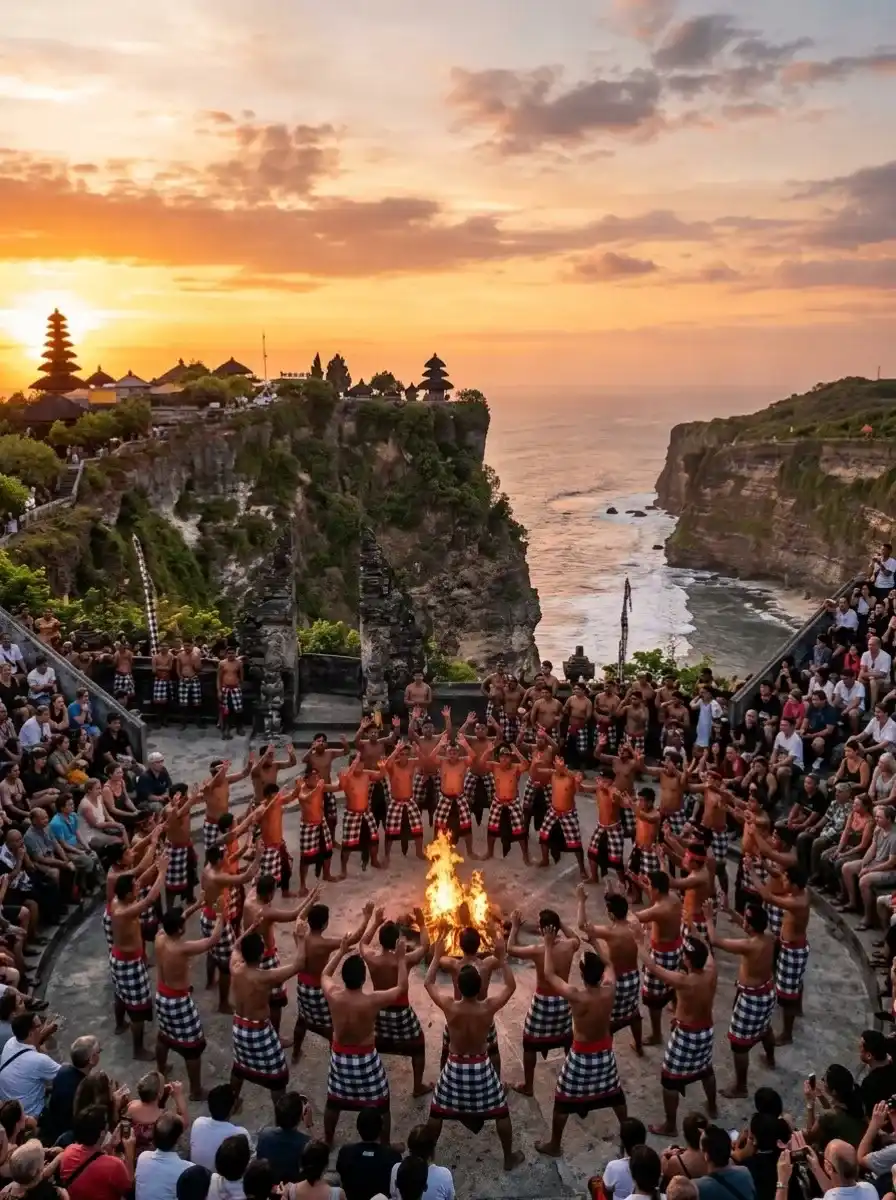
Uluwatu Temple perched on its cliff edge delivers some of the most sweeping views on the island, but the real headline act is the Kecak Dance — a sunset performance built around a rhythmic vocal performance from an entire ensemble of men performing a choreographed skit. Grab tickets and arrive 1.5 hours before sunset to get a seat. It’s about a 40-minute drive from Nusa Dua, deep into the Bukit Peninsula, where the rugged coastline, crystal-clear beaches, and world-class surf breaks hide secluded coves tucked between luxury villas, resorts, ancient temples, and traditional villages.
For dinner, the Jimbaran Fish Market is unmissable — pick your fresh catch and have it cooked to order at a beachside table with your feet basically in the sand. On the accommodation side, Radisson Blu Bali Uluwatu and Alila Uluwatu both offer private pools with proper ocean views, while Bingin Beach leans more toward homestays and Airbnbs for travelers chasing that laid-back sunset and beach BBQ dinners vibe. For food and drinks around Bingin: Casa Asia for pizza, Ours for something rustic romantic, Shaka Riki for sushi, and Singlefin for Sunday beers with a proper DJ set. Savaya is the area’s cliff-top super club if you’re after nightlife, while Padang Padang and Dreamland Beach are better for daytime surf, with surf schools and rental shops nearby, plus Oneeighty Day Club and Sundays Beach Club for a lounge-day option — some reachable by cable car.
The monkey dance itself tells the Ramayana through a chanting chorus rather than the traditional gamelan orchestra, starting around 6pm nightly. I’d slot this in as your last full day, since the drier landscape and cliff-top dining here make for a strong finish — Uluwatu has six directional temples guarding the island, and getting back to Seminyak or Canggu takes 45–60 minutes by scooter or driver. If you’re checking out for your final two nights, this is a good base.
Uluwatu’s left-hand reef break is genuinely world-renowned; access involves steep stairs and an entrance fee of 20,000 IDR ($1.50), with a terraced cliff access route using ladders down to a sheltered bay lined with warungs. The temple itself, Pura Luhur Uluwatu, sits on a dramatic 70-metre cliff (entrance 50,000 IDR, $3, with mandatory sarong rental) — and yes, the resident monkeys stealing items here is a running joke among guides. The Kecak Fire Dance happens in a clifftop amphitheatre (entrance 150,000 IDR, $9) with 50–70 chanting men and actual fire, retelling the Hindu Ramayana story in what’s become something of a Bali brochure photograph moment. Nearby, Single Fin Bali and Nook are solid sunset spots overlooking rice paddies; Warung Warung in Jimbaran (Jimbaran Bay) does excellent beach seafood warungs where you pay for fish by weight, grilled fresh, running $15–30 per person.
Canggu, Seminyak & Tanah Lot
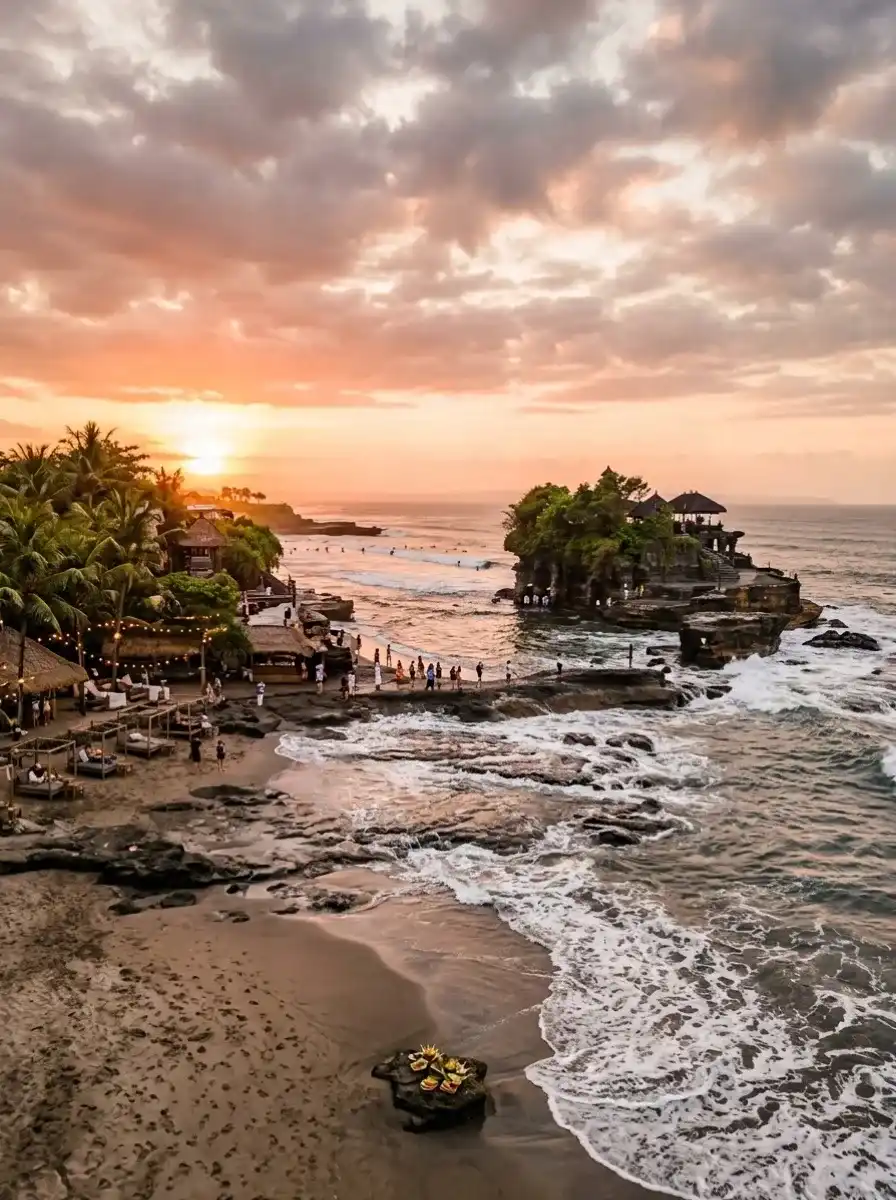
Canggu works well for Days 6–7; the Ubud transfer takes 45 min–1 hour by taxi, scooter, or private driver for 300–400k IDR ($21–28). On the way, stop at Pura Tanah Lot (Tanah Lot Temple), a dramatic rock formation and one of seven ocean temples believed to protect the island — it’s genuinely a crowded attraction at dusk, but the sunset views are worth it. Nearby, The Shady Shack is a great vegetarian cafe overlooking rice fields, while Lola’s Cantina Mexicana covers tacos and chilaquiles, Warung Bu Mi does proper nasi campur and other traditional Indonesian dishes, Cinta Cafe brings boho European-inspired breakfasts, and Nude — often called the friendliest cafe in Bali — is great for breakfasts and pizza.
For evenings, Old Man’s pulls the expat crowd for sunset drinks sliding into late-night dancing, while The Lawn is a chiller open-air restaurant option with daybeds for lawn picnics. Beach club-wise, Finns Beach Club has 4 pools, 9 bars, and resident DJs, and La Brisa leans into reclaimed wood and palm trees styling with Mediterranean food and live music. An airport transfer from here runs 150K–300K IDR ($10–21 USD).
Seminyak is where the island gets polished — think vendors, tourist shops, Australian clothing stores, boutiques, cafes, and bars, including plenty of sports cafes. The Amala hotel has genuinely luxury rooms and pool villas with a free shuttle into town. Corner House and Bintang anchor Jalan Kayu Aya, the main shopping street, while Potato Head Beach Club is unbeatable for pre-drinks, and Sarong restaurant does elegant Asian cuisine alongside a proper breakfast spread. I’d budget Days 4–5 for this upscale beach resort area, known for high-end shopping and vibrant nightlife; Petitenget Beach and Double Six Beach near Kuta round things out.
If remote work is part of your trip, digital nomads flock here for the coworking spaces, surf lessons around 300k IDR, and community fitness through S2S Canggu — think CrossFit, community dinners, and beach workouts. For sleeping, Rama Residence Petitenget and Alila Seminyak (with its waterfront infinity pool) are strong picks. Food-wise: Mama San and KYND Community for vegan food, Warung Gouthé for cinnamon french toast, Brazilian Aussie BBQ for a proper steakhouse hit, Motel Mexicola for Taco Tuesdays and themed parties, La Favela as a multi-floor nightclub, Da Maria for Italian restaurant nights with DJs, and Black Sands Brewery for craft beer during happy hour — especially good on Fridays.
Getting around, a fixed-price taxi runs 100,000–250,000 IDR ($6–15), or use Grab / GoJek for 60,000–120,000 IDR ($4–8); a pre-booked transfer from the airport runs $5–20. For sleeping on a budget, try Echo Beach Inn or the Legian St hostels; mid-range, COMO Uma Canggu or The Layar; upscale, W Bali Seminyak. Don’t skip Batu Bolong and Seminyak Beach themselves — just sand and sunset, no agenda. Scallywags and Betelnut are solid beachfront options, roughly 35 min from a small tidal islet worth the entrance 60,000 IDR ($4). For a cheap, best-value meal, a plate of warung nasi campur runs $1.50–3.
Where to Stay in Bali
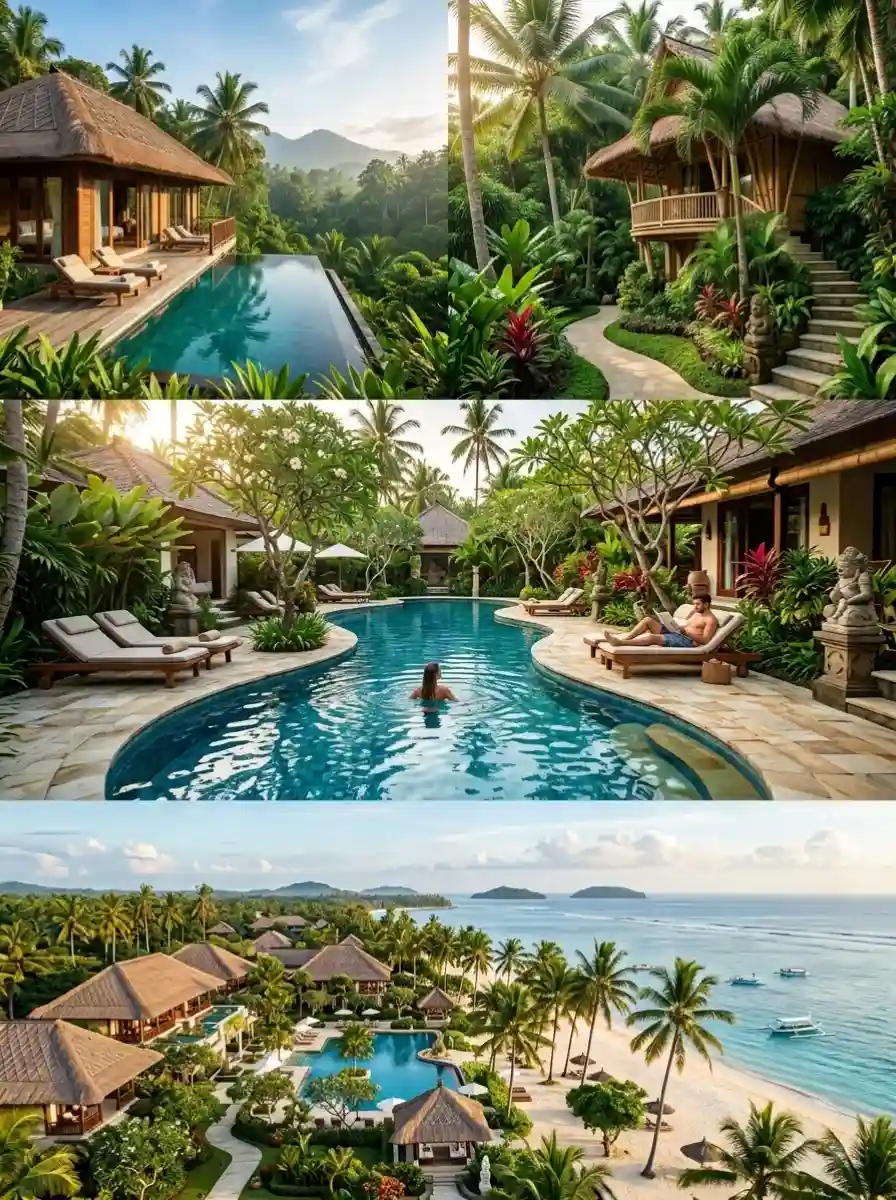
For a resort-style base, Marriott’s Bali Nusa Dua Gardens delivers a proper pool bar, lazy river, full-service spa, kids club, and 7 dining options — genuinely great if you’re traveling with children. If you want something quieter, Sunrise Penida Hill Hotel is adults-only, with hilltop bungalows and private patios overlooking an infinity pool. Budget travelers do well at Alamdini Resort, tucked into tropical foliage with simple balcony rooms and an onsite restaurant, or at Dip & Doze Hostel, a proper boutique hostel offering shared dorms and private dorms alongside vespa rentals, a yoga terrace, and laundry on-site. I book most of these through Booking.com, Expedia, Hotels.com, Tripadvisor, Hostelworld, or VRBO.
Back in Ubud, The Amala hotel handles taxi transfers directly, while Kamandalu Resort’s Valley Pool Villa and Griya Villas both offer private pools with East Coast Ocean views for around 300 AUD/night, typically with breakfast included and transport included — sometimes even a floating breakfast. The Intercontinental Hotel is resort-style with a huge pool, multiple restaurants, and classic Balinese design, closer to 200 AUD/night, and some properties offer day-use facilities if you need a shower and pool before a late flight. Plataran Ubud and Maya Ubud Hotel & Spa both lean into that jungle vibe, while Camaya Bali’s bamboo hotel design and the quiet Sidemen area suit honeymooners particularly well.
Down south, Rama Residence Petitenget and Alila Seminyak are strong for sunset views, while Radisson Blu Bali Uluwatu and Alila Uluwatu, or Bingin Beach’s scattered homestays and Airbnbs, suit travelers chasing surf over spa days. For something totally different, Munduk Moding Plantations up north is a genuine 5-star eco-luxury resort. Budget-wise in Canggu: Echo Beach Inn runs about $20/night, Legian St hostels sit around $10–15, COMO Uma Canggu climbs to $60–90/night, and The Layar’s private villas or W Bali Seminyak push past $150+/night. My honest recommendation is 2 nights in Ubud and 5 nights in the south — a single Ubud base for the whole week just means longer drives every single day.
Getting Around Bali (Transportation)
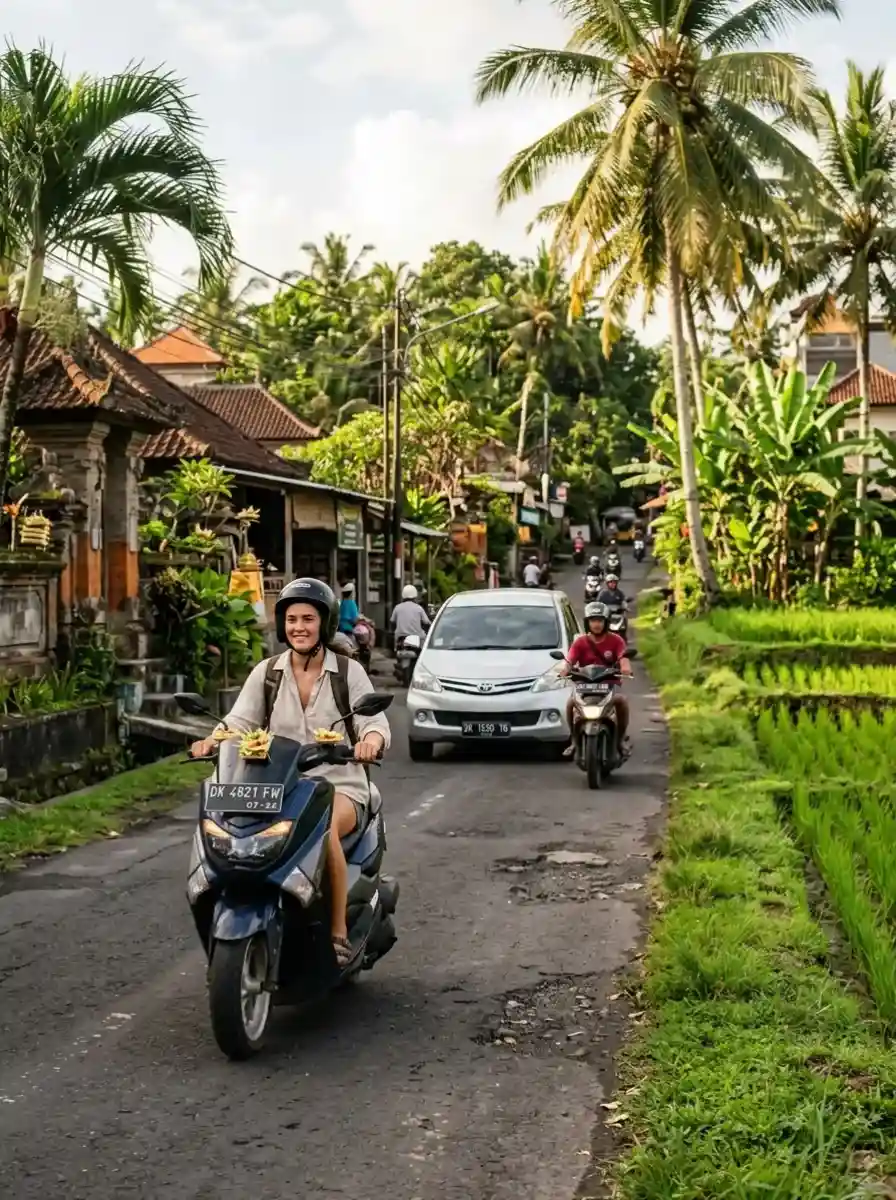
I’ve tried nearly every option here. Private guides and transport companies booked through tour guides run 50 USD, and most hotels can arrange hotel transfers directly. Renting a car is possible but genuinely stressful given the windy roads and constant traffic; renting a scooter is cheaper and more common, though inexperienced riders are behind most of the island’s frequent accidents, so don’t rent one on day one if you’ve never ridden before. Scooter rental runs 15/day.
For everything else, rideshare apps like Grab and Go-jek are genuinely reliable, alongside limited public transportation through the Kura-Kura bus. You can also hire a driver and negotiate rate directly — Gojek and GoRide essentially function as the “Uber of scooters,” running 50–70k IDR/day ($3 USD). Otherwise, you can just take a taxi and agree on price upfront to avoid overcharging; the Trans Sarbagita bus system and local bemos (minibuses) round out the cheapest options, and honestly in Seminyak or Ubud town centers, you can just walk.
For a family, budget $4–8/day per person for transport. Bring an international driving permit if you plan to ride, though I’ll be honest that enforcement on the ground is inconsistent. A private driver for a full day runs $35–55 in Seminyak area, closer to $50–70 around Ubud. Using Grab/GoJek for the south coast costs 250,000–350,000 IDR ($15–22 one way), or 70,000–100,000 IDR/day ($4–6) for scooter rental. The airport to Ubud run takes 60–90 minutes normally, but stretches to 1.5–2.5 hours during the Denpasar traffic bottleneck — avoid traveling 4–7pm, the island’s worst traffic hours.
Best Time to Visit Bali & What the Weather Is Actually Like
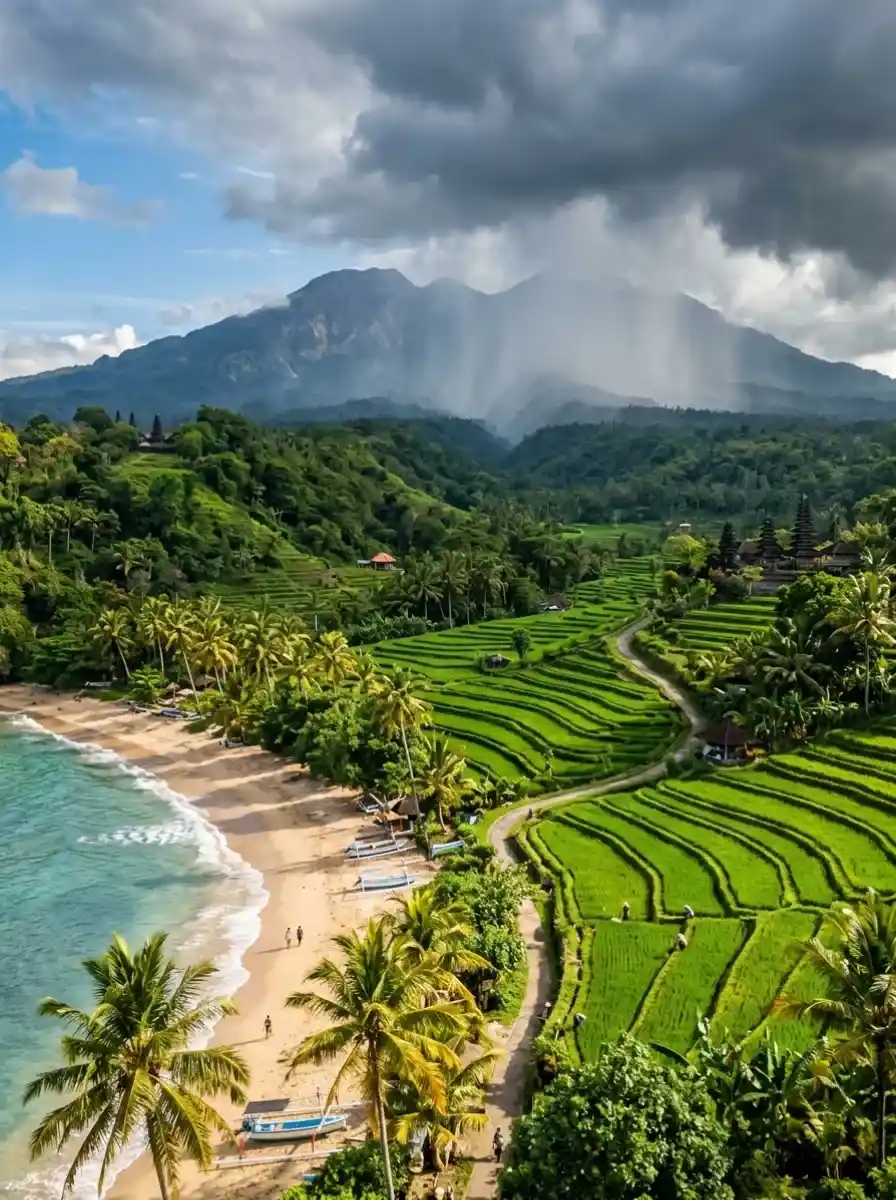
Sitting near the equator, Bali runs on tropical heat and humidity year-round, split broadly into wet season (November–April) and dry season (May–October), with an average daytime temperature around 80°F (26.7°C) regardless of month — it’s the rainfall that shifts, not the heat. The rainy season start typically falls within December–March, while the true dry season April–November window is what most surfers plan around, since surf conditions shift with it.
Shoulder season — roughly April–May and October–November — is genuinely my favorite window: fewer tourists, less crowded waves on the west coast, decent offshore winds, and generally calm winds. January–February brings frequent downpours and high humidity, which pushes more activities indoors, though it also means fewest crowds if you don’t mind getting wet. On the east coast surf side, expect it windy and choppy with little swell most of the year. Peak season (June–September) brings genuinely lovely weather but also crowded waves and worse traffic everywhere.
Breaking it down month by month: March is a wet transition month, notable mainly for Nyepi, the Day of Silence, when the airport closes for 24 hours island-wide. April brings the transition toward less rain and reasonable prices. May marks the dry season start, with June–August as peak dry season — busiest, most expensive, book early. September is quietly one of the best months, doubling as manta ray season; October is the dry season ending, with prices dropping; November transitions with occasional rain; and December hits wet peak territory again, with Christmas crowds and real price spikes. My honest pick is mid-September to mid-October — the best-value window with post-peak pricing on scooters, accommodation, and tours. Whatever you do, avoid Nyepi if you don’t want an island shutdown day baked into your trip, and during peak June–August, expect 20–35% higher prices and genuinely crowded attractions — Tegallalang crowds especially thicken by 10 AM.
Which Area of Bali Should You Actually Base Yourself In
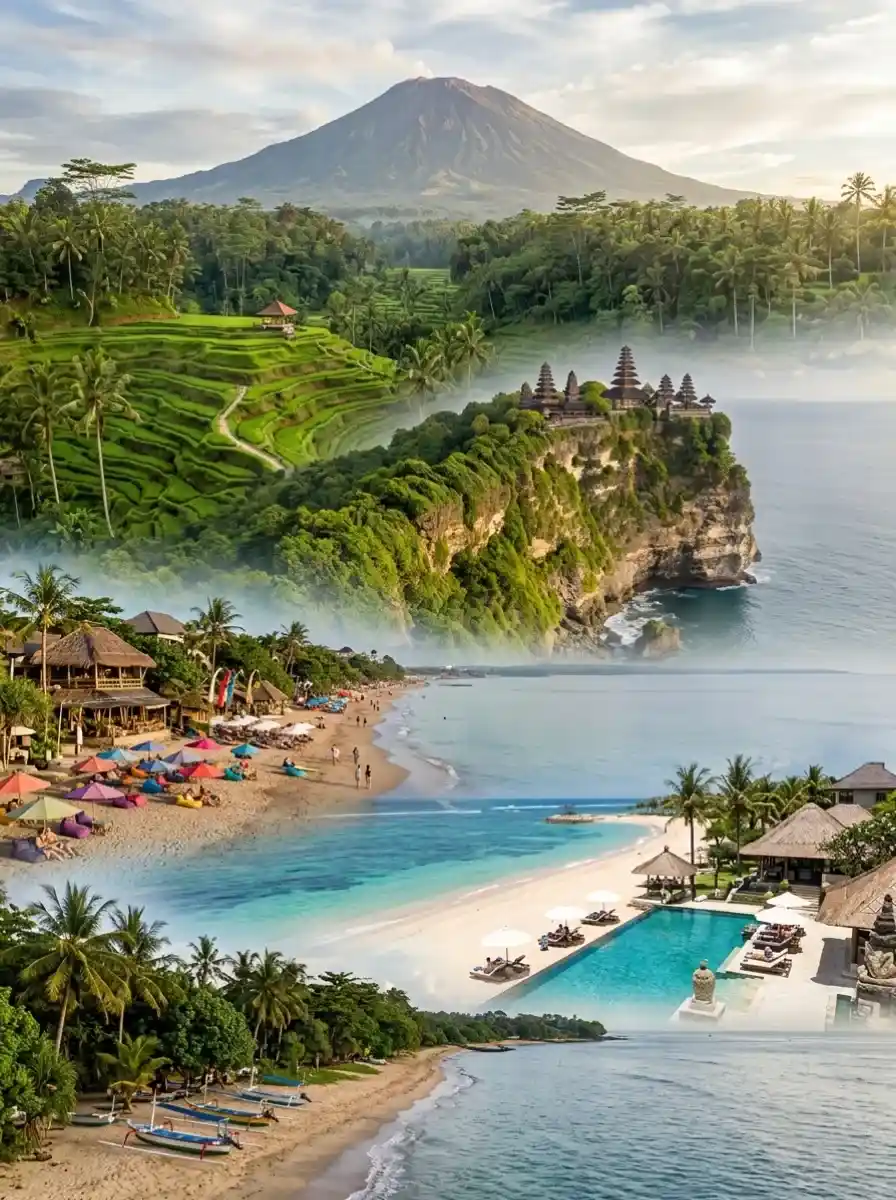
If you’re staying Marriott points-adjacent, Marriott’s Bali Nusa Dua Gardens delivers that classic resort feel in Nusa Dua — polished, touristy, and genuinely good for jetlag recovery thanks to hotel shuttles and reserved cabanas. Nusa Dua Beach, Geger Beach, and Pandawa Beach cover snorkeling, parasailing, and jet-skiing, with the Bali Collection nearby for shopping.
Beyond the main island, the Gili Islands are worth a mention: Gili Trawangan is the nightlife island, Gili Meno offers quiet romance, and Gili Air sits as the middle ground between the two. Nusa Lembongan covers similar beaches and diving territory to Penida with less hassle. Back on the mainland, Seminyak spas pair well with fine dining and boutique shopping, while Kuta and Legian stay loud with lively nightlife and clubs.
For activities beyond sightseeing, Bumbu Bali runs excellent Balinese cuisine cooking classes, and you’ll find photography classes and surfing classes scattered around Canggu and Uluwatu. A few more restaurants worth flagging: Copper Kitchen and Bar for rooftop drinks, Ibu Susu Bar & Kitchen for craft cocktails and Asian fusion, Warung Di Koi for mie goreng, Alchemy for raw organic vegan bowls, Umah Pizza as a casual pizzeria, and Black Pearl for its boho pirate theme.
On dress: stick to lightweight clothing, loose clothing, and breathable clothing generally, but pack long pants or long skirts specifically for temple visits. Further east, Amed on the East Coast sits genuinely off the main tourist route, known for snorkeling coral reefs and dramatic volcanic black sand beaches beneath Mount Agung volcano — Griya Villas and Lipah Beach here are quiet, with outdoor cinema, rooftop seating, happy hour, a floating breakfast, and sunset beers without the crowds.
Base-wise, I’d weigh Jimbaran for airport proximity, or Uluwatu/Seminyak for your final night so you’re not risking a missing flight thanks to unpredictable Bali traffic and solid hotel pool facilities — Sunset Bar and Grill is a good last stop.
Quick Facts About Bali
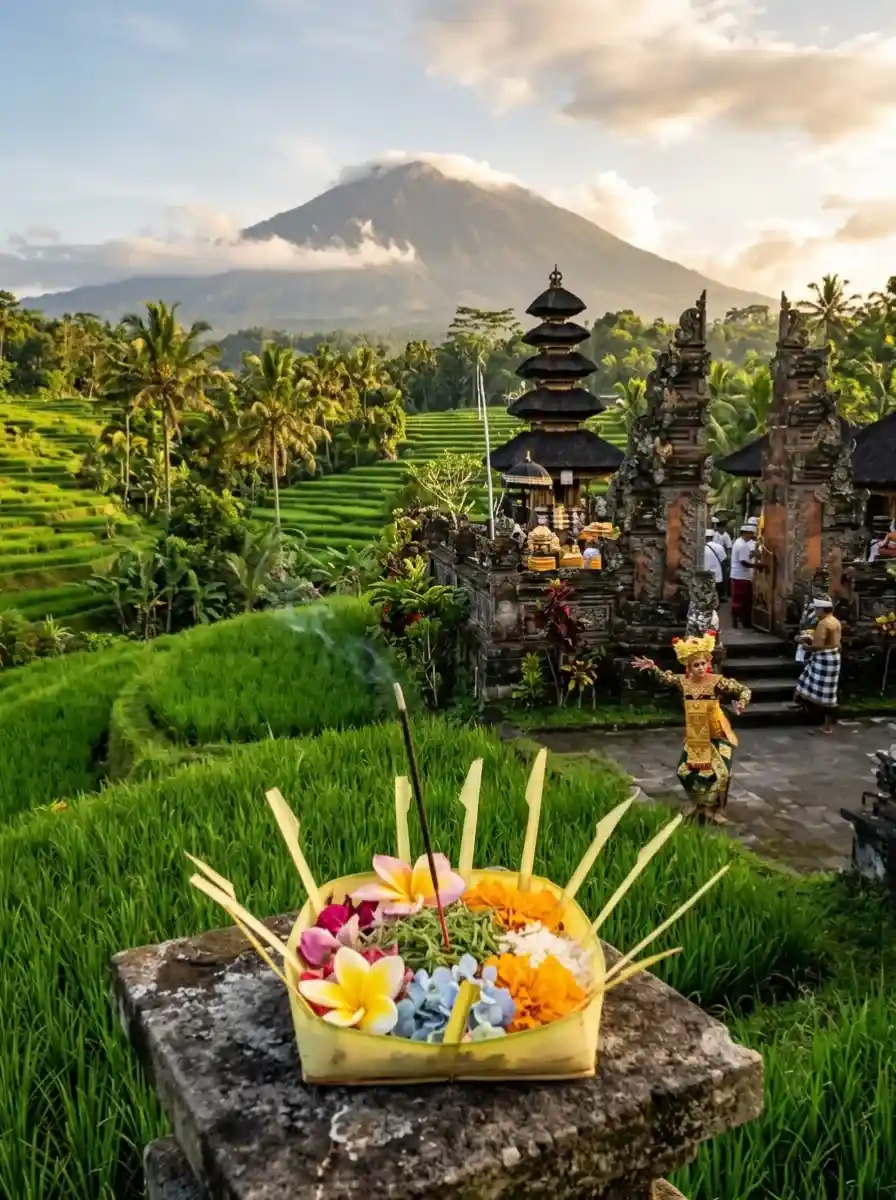
A few essentials before you go: the local language mix is Bahasa Indonesian (“selamat pagi” for good morning, “teri makasih” for thank you, “satu kelapa” if you want one coconut). Currency is the Indonesian Rupiah (IDR), and Bali sits within Indonesia, whose capital is Jakarta, part of the Lesser Sunda Islands alongside Java and Lombok. Denpasar is Bali’s own provincial capital, and you’ll fly into Ngurah Rai International Airport (DPS).
Bali carries a majority Hindu population on an otherwise Muslim-majority archipelago, and drew roughly 6.3 million visitors back in 2019 — proof of how much its natural beauty, volcanoes, and broader tourism economy (alongside agriculture, forestry, and fishing) shape daily life here, alongside a genuinely rich thread of arts and culture, traditional dance, music, and general art heritage. Beyond Ubud’s temples, the island holds several UNESCO World Heritage Sites, including the Jatiluwih Rice Terraces. Up in Munduk, North Bali offers a 2-hour drive into a genuinely cooler climate, mountainous and less touristy, with its own waterfalls like the Banyumala Twin Waterfalls, plus Pura Ulun Danu and the eco-resort Munduk Moding Plantations.
For connectivity, SIM Cards through Telkomsel or the XL network are cheap and easy for hotspotting — bring your passport and an unlocked phone; 150GB runs about $20 USD. Alternatively, eSIM through Holafly often comes with a discount code, saving you from unpredictable roaming rates. WiFi speed across the island averages around 500 mbps in most hotels and cafes, plenty for video calls and general remote work, especially in the more Western establishments and dedicated coworking spaces — though generators are common backup for the occasional power outage.
On entry: Visa on Arrival (VOA) rules are nationality-specific, and you can handle it either through online purchase ahead of time (allow a few processing days) or via airport purchase on arrival.
What to Know Before You Go
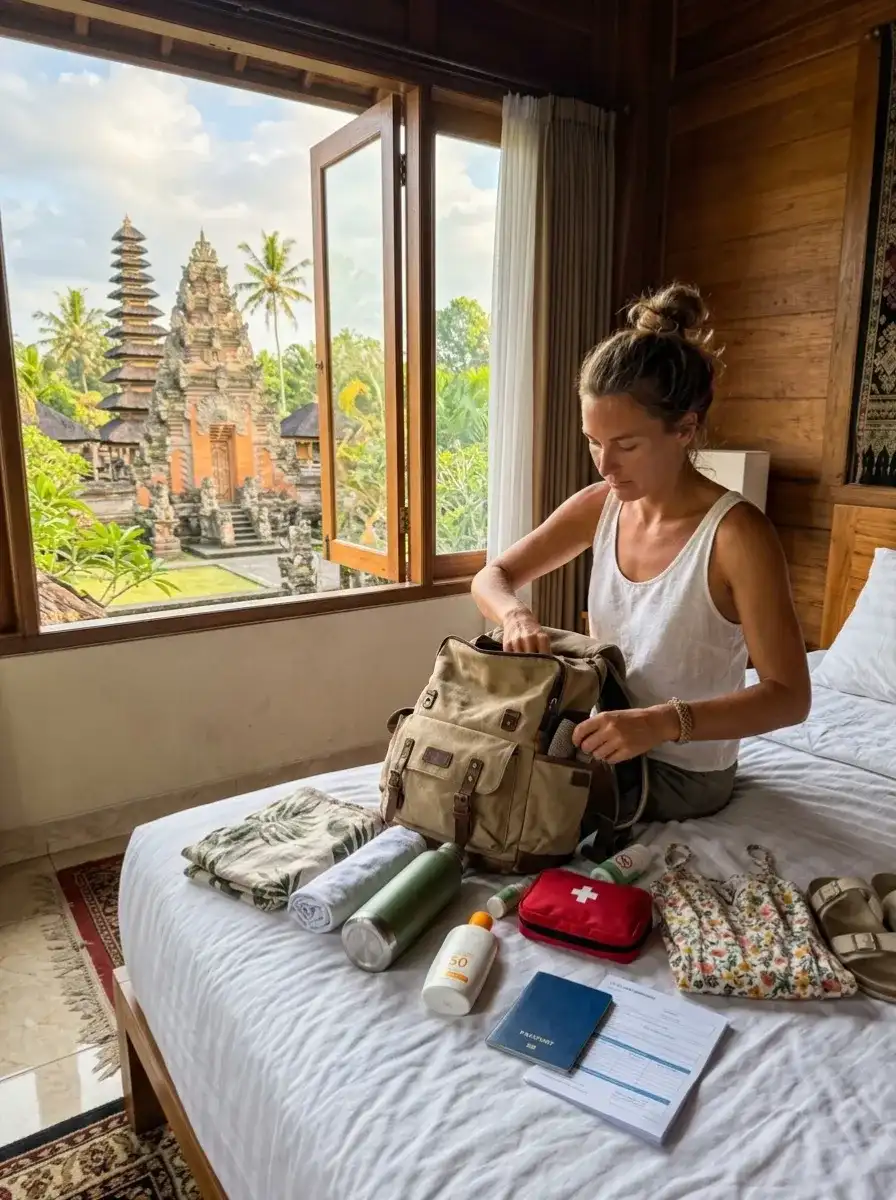
A short list of things I wish someone had told me directly: respecting customs matters here, especially around Hindu traditions — covering up, removing shoes where expected, and general safety awareness, particularly around walking alone at night and keeping an eye on belongings given occasional scams. Stay on top of staying hydrated, go easy on alcohol moderation, and reapply sunscreen — reapplying matters more in this humidity than people expect. Practice basic respecting environment habits: no littering, no disturbing wildlife. Check your vaccinations before you fly — hepatitis A, hepatitis B, typhoid, and rabies are the ones doctors usually flag — and pack insect repellent for the mosquitoes. Travel insurance really is non-negotiable, and if you’re on a scooter, wearing a helmet isn’t optional given how common scooter accidents are. At markets, negotiating prices (haggling) is expected at markets and on tours, and stick to bottled over tap — avoiding tap water will save your trip.
One thing I feel strongly about: overtourism is a real, visible issue here now, and with sustainability and post-pandemic tourism growth straining local infrastructure, the sheer mass migration of remote workers and long-stay travelers means practicing genuine sustainable travel isn’t optional anymore — it’s part of being a decent guest.
How Many Days Do You Actually Need in Bali?
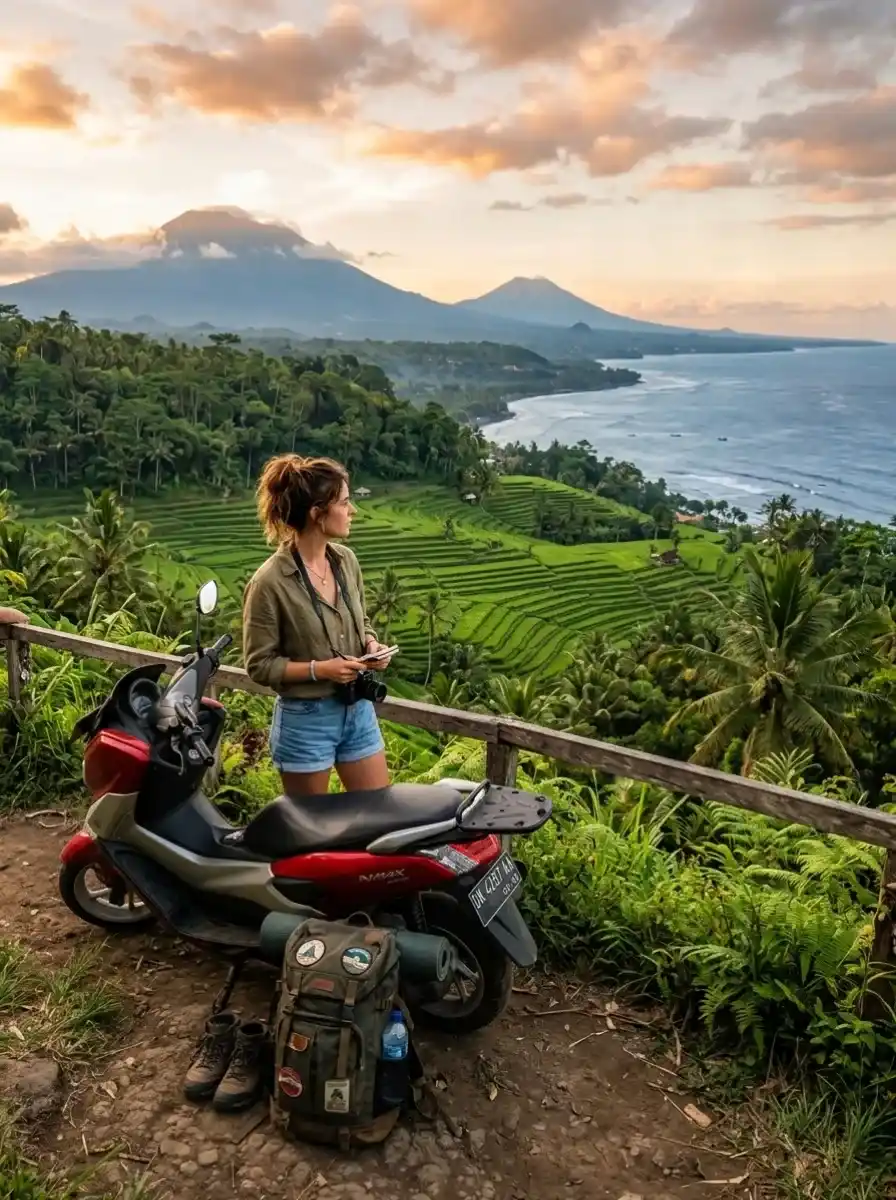
Is 7 Days Enough for a first visit? Broadly, yes — data from BPS Central Statistics Agency shows Bali drew around 7 million tourists in 2025, with an average stay landing between 9–12 nights, so a week puts you slightly below average but still comfortable. Bali itself breaks into distinct zones: south coast surf towns, inland cafe towns, the Bukit Peninsula, the offshore islands, and quieter North Bali areas like Lovina and East Bali’s Sidemen, which reward genuine slow travel if you have it. For Extension Options, anything 10+ days lets you comfortably add north Bali or a Gili Islands detour.
Before You Go: Entry Requirements
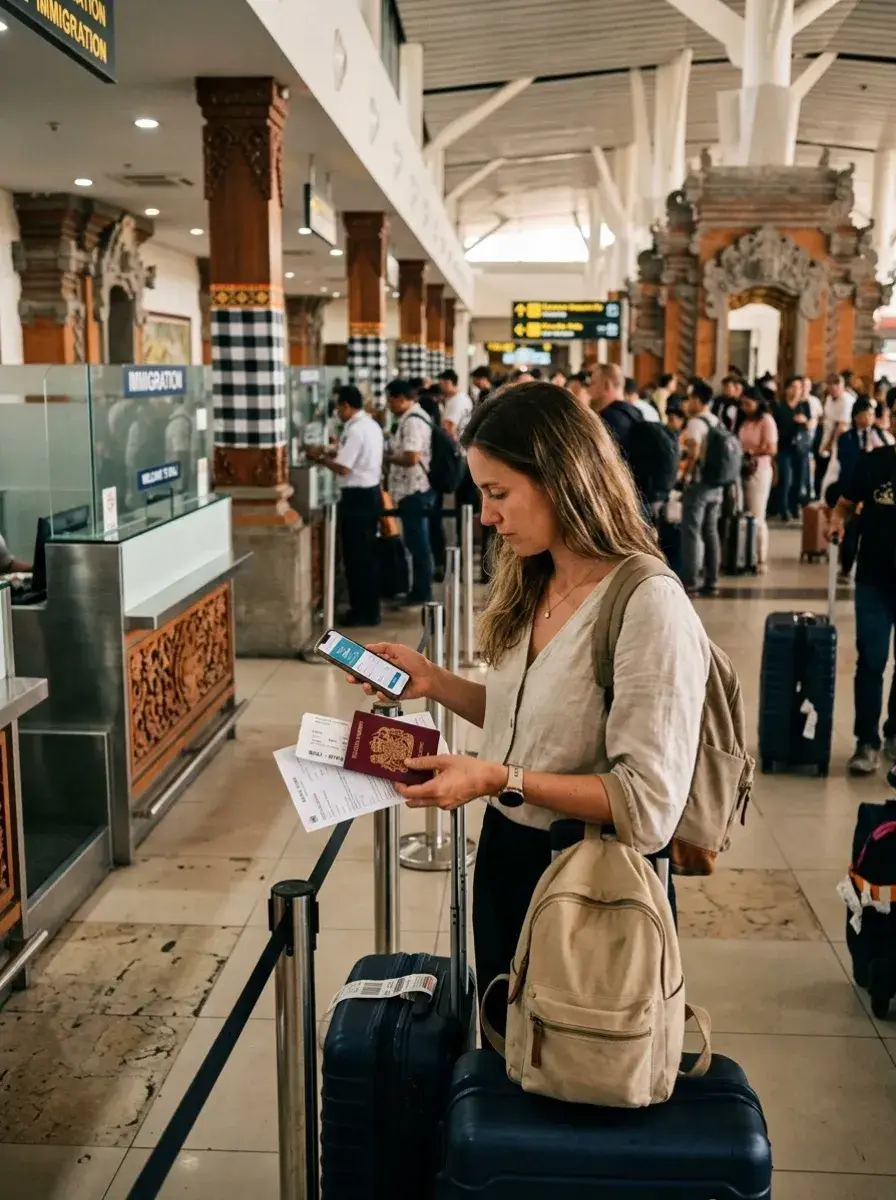
As of 2026, the Bali Tourist Levy sits at 150,000 IDR ($9 USD), introduced back in February 2024. Visa on Arrival costs 500,000 IDR ($31 USD) and covers 30 days, extendable to 60 days. Run through this immigration checklist before you fly: passport validity of 6+ months, 2 blank pages minimum, an onward ticket or return ticket, and evidence of proof of funds. You can pay the levy directly at lovebali.baliprov.go.id or at airport kiosks on arrival. Overstay and you’re looking at an overstay fine of 1,000,000 IDR per day ($62) — and depending where you’re flying from, check whether a yellow fever vaccination certificate applies for transmission risk countries.
7-Day Itinerary Overview

Here’s the whole week at a glance, based on the 7-Day Itinerary Overview Table I built for my own trip: Day 1 Arrival — settle in, hit a beach club, catch Tanah Lot sunset. Day 2 Ubud — Tegallalang, Monkey Forest, art market. Day 3 Ubud area — Tirta Empul, Campuhan Ridge Walk, Goa Gajah. Day 4 Central Highlands — Mount Batur sunrise, Kintamani, Pura Besakih. Day 5 Nusa Penida — Kelingking Beach, Broken Beach, Angel’s Billabong. Day 6 Uluwatu — Bukit, Padang Padang, Kecak Fire Dance. Day 7 Departure — one last spa session before Ngurah Rai airport, budgeting for flight stress from unpredictable traffic.
If your flight leaves after 6pm, squeeze in a 60-minute Balinese massage (150,000–250,000 IDR, $9–15), some Seminyak Square shopping, and a lazy beach club lunch at Potato Head or Ku De Ta. For an afternoon flight (1–5pm), do your packing the night before. For an early morning flight (before 8am) out of Kuta or Jimbaran, book a 5am taxi and factor in real airport logistics — leave 2.5 hours before flight, since a Grab/GoJek to airport runs 80,000–180,000 IDR ($5–11) and airport WiFi is famously unreliable once you’re through with your boarding passes and departure tax sorted. Grab one last nasi goreng or mie goreng from a cheap warung on the way.
Budget Breakdown for a Week in Bali
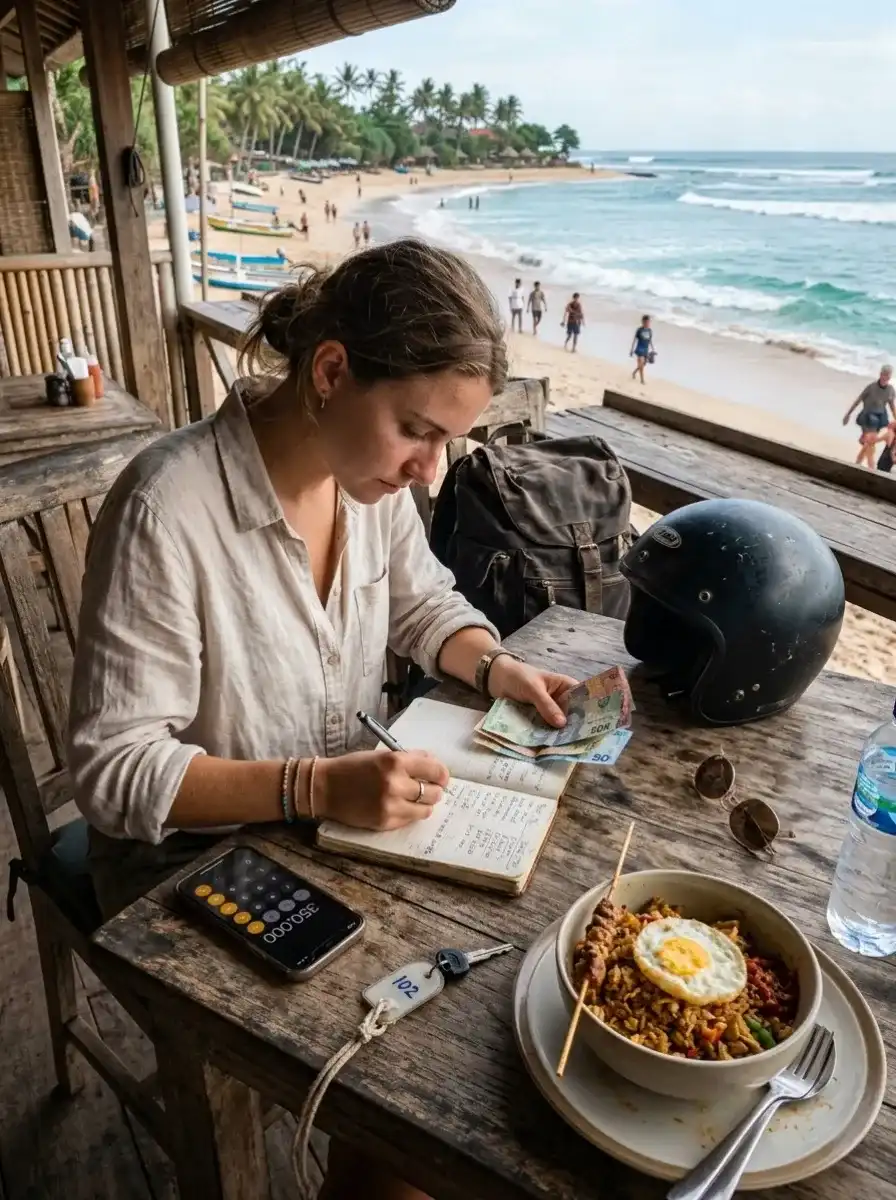
Using the 2025 IDR exchange rate of roughly 16,000 IDR per dollar, here’s how a week actually breaks down across Accommodation costs, Food costs, Transport costs, and Activities costs. On the budget tier, expect $15–25/day for accommodation, $5–8/day for food, $4–8/day scooter for transport, and $5–10/day for activities — landing around $29–51 daily total, or $200–360 trip total for the week. The mid-range tier runs $50–90/day for stays, $15–25/day for food, $25–40/day for a driver, and $15–25/day for activities, totaling $105–180 daily total ($735–1,260 trip total). At the luxury tier, you’re looking at $120–200/day accommodation, $40–60/day food, $50–80/day for a private car, and $30–50/day activities — $240–390 daily total, or $1,680–2,730 trip total. None of this includes flights.
For specific big-ticket items: the Mount Batur guided tour cost and Nusa Penida boat cost both sit comfortably within the mid-range daily numbers above, and the Kecak dance cost is negligible by comparison. On a generous budget tier, sticking to guesthouses keeps costs low even in high season. For context on the numbers I’m using, sites like Salt in Our Hair run similar field estimates, and they broadly match what I spent.
Alternate Route Options
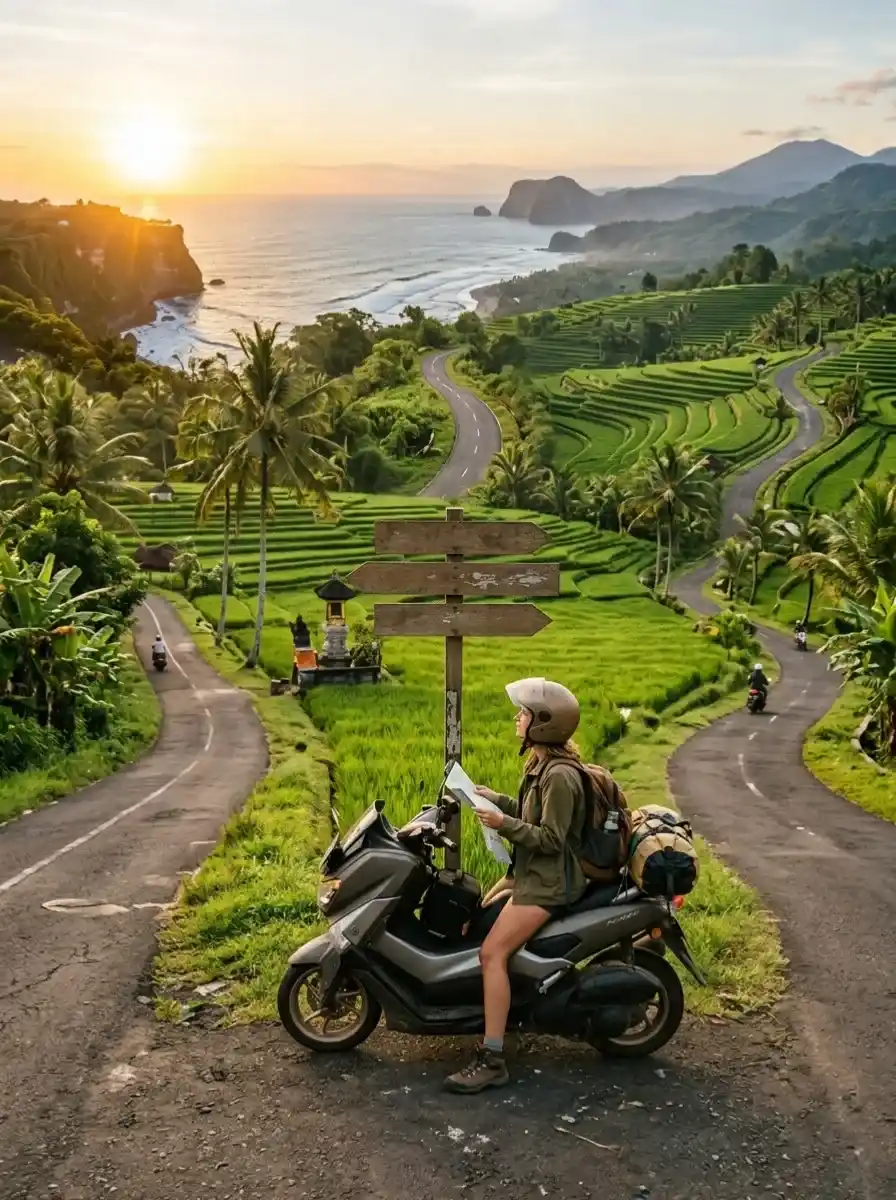
If the standard order doesn’t suit your trip, here are two swaps I’ve actually tested. Route 2 Culture-First keeps you on a single Ubud Base, day-tripping out via Padang Bai (90 min, or a 45 min boat) and doing a Tanah Lot day trip with the full DPS 2-hour drive — better suited to couples, photographers, spiritual travelers, and digital nomads who want one steady base. Route 3 Adventure-Focused front-loads a Canggu surf lesson (half day), heads inland to Sidemen rice paddies as an East Bali alternative, then does an overnight Nusa Penida stop covering Atuh Beach and Teletubbies Hill, closing with an Uluwatu sunset Kecak — built for active travelers who still want the full temple circuit.
For reference, here’s a rough Bali Daily Budget by Traveler Type: $40/day budget, $145/day mid-range, $315/day luxury — broadly in line with Bali Tourism Growth figures from 2010–2025, where international tourist arrivals climbed from about 1.0M to 2.6M, then 5.3M, up to 5.7M, and now sitting around 6.95M, per BPS Central Statistics Agency and Wikipedia data — a climb interrupted hard when COVID decimated the industry before it clawed back past its pre-pandemic highs.
Practical Money & Health Tips
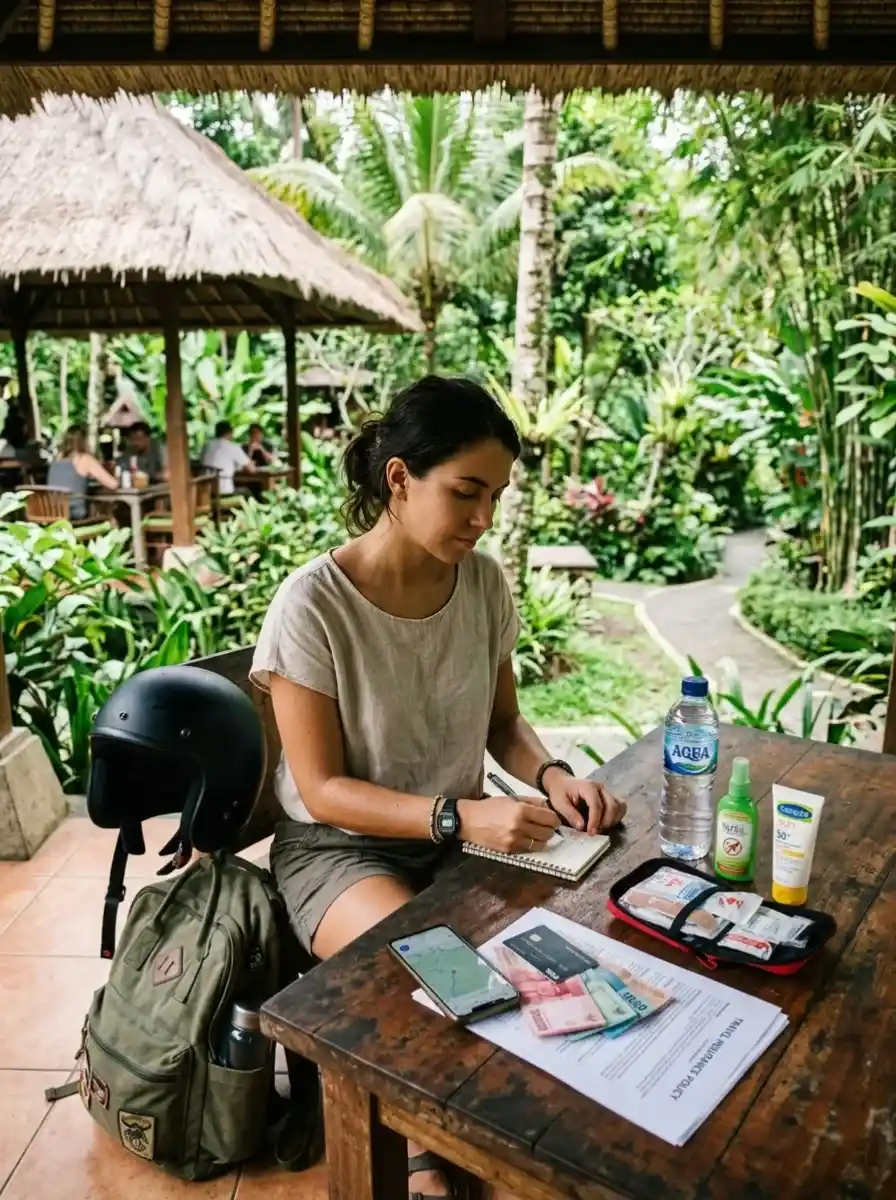
A few things I learned the hard way. For ATMs, stick to major banks like BNI or BCA, and watch your international withdrawal limits; always decline dynamic currency conversion (DCC) when a machine offers it — it’s a bad rate dressed up as convenience. Plenty of places take cards accepted, but warungs cash-only and markets cash-only are still common, so carry 500,000–1,000,000 IDR ($30–60 cash) at all times.
Stick to bottled water or confirm filtered water wherever you’re staying — Bali Belly hits roughly 20–30% of visitors, so pack oral rehydration salts and loperamide just in case, and keep an eye out for dengue fever risk with proper mosquito repellent. Serious cases may need medical evacuation, which is exactly why the earlier point about travel insurance matters. For connectivity, grab a local SIM at the airport with around 100GB data for $5–7, and lean on WhatsApp for local bookings. On cultural etiquette: dress modestly, keep a sarong required at hand for temple stops, avoid touching heads since they’re considered sacred, eat and pass things with your right hand, and if you’re around during Nyepi Day of Silence, just stay indoors and go with it.