4-Day Cape Town Itinerary: Best Things to Do, Where to Stay & Travel Tips
There’s something about Cape Town that makes every trip feel like the first — spectacular in ways that genuinely catch you off guard. I first visited years ago expecting a pretty coastal city, and what I found instead was this layered, cosmopolitan world where historical museums sit beside bold street art, where serious wildlife roams just beyond manicured art galleries, and where the landscapes shift from jagged peaks to rolling winelands within a single drive. It’s a destination that rewards every kind of traveler — whether you’re dragging children through attractions or hunting down the finest cuisine the continent offers.
What makes a four-day getaway here so satisfying is that Cape Town doesn’t demand a rigid plan. I’ve sipped rooibos tea on a Camps Bay terrace at golden hour, wandered through vibrant township galleries, haggled at artisan goods markets, and still had time for serious mountain hikes before sundown. The Mother City rewards first-time visitors and returning ones equally — layering culture, breathtaking scenery, and world-class wine into every experience. With a loose guide and good instincts, four days here can feel like a very full week.
The appeal of this itinerary runs deeper than the obvious highlights and hotspots. Cape Town’s lifestyle is casually chic — a budget traveler and a bougie restaurant devotee can occupy the same street corner and both feel at home. The city carries within it Indigenous African, Dutch, Malay, Portuguese, German, and English cultures, and that duality shows up everywhere — in the food, the languages, the religions, the art, and the community spirit that pushes this place forward while honoring its past. Don’t arrive with preconceptions. Let the city rewrite them.
Is 4 Days in Cape Town Enough? / How Many Days to Stay in Cape Town
Four days in Cape Town is genuinely enough to hit all the major highlights without feeling rushed — and if you time it right, you can even squeeze in a day trip to Hermanus, the world-famous whale-watching town. I’ve done it, and the itinerary flows naturally: each full day builds on the last, from city culture to coastal wildlife to mountain trails. That said, if you arrive with limited time and only two days, go anyway — you’ll just condense the schedule, skip the odd activity, and leave wanting more of South Africa’s most magnetic city.
We spent twenty days traveling across South Africa on that first trip, and dedicated the final four to Cape Town — a decision that felt ideal in hindsight. Three days would cover the main attractions comfortably. Anything less than that, especially for a first visit, means leaving out must-see sights and scenery you’ll genuinely regret missing. Whether you visit for a week or a long weekend, Cape Town has a way of holding back just enough to keep pulling you back — and that’s never a bad thing.
When Is the Best Time to Visit Cape Town
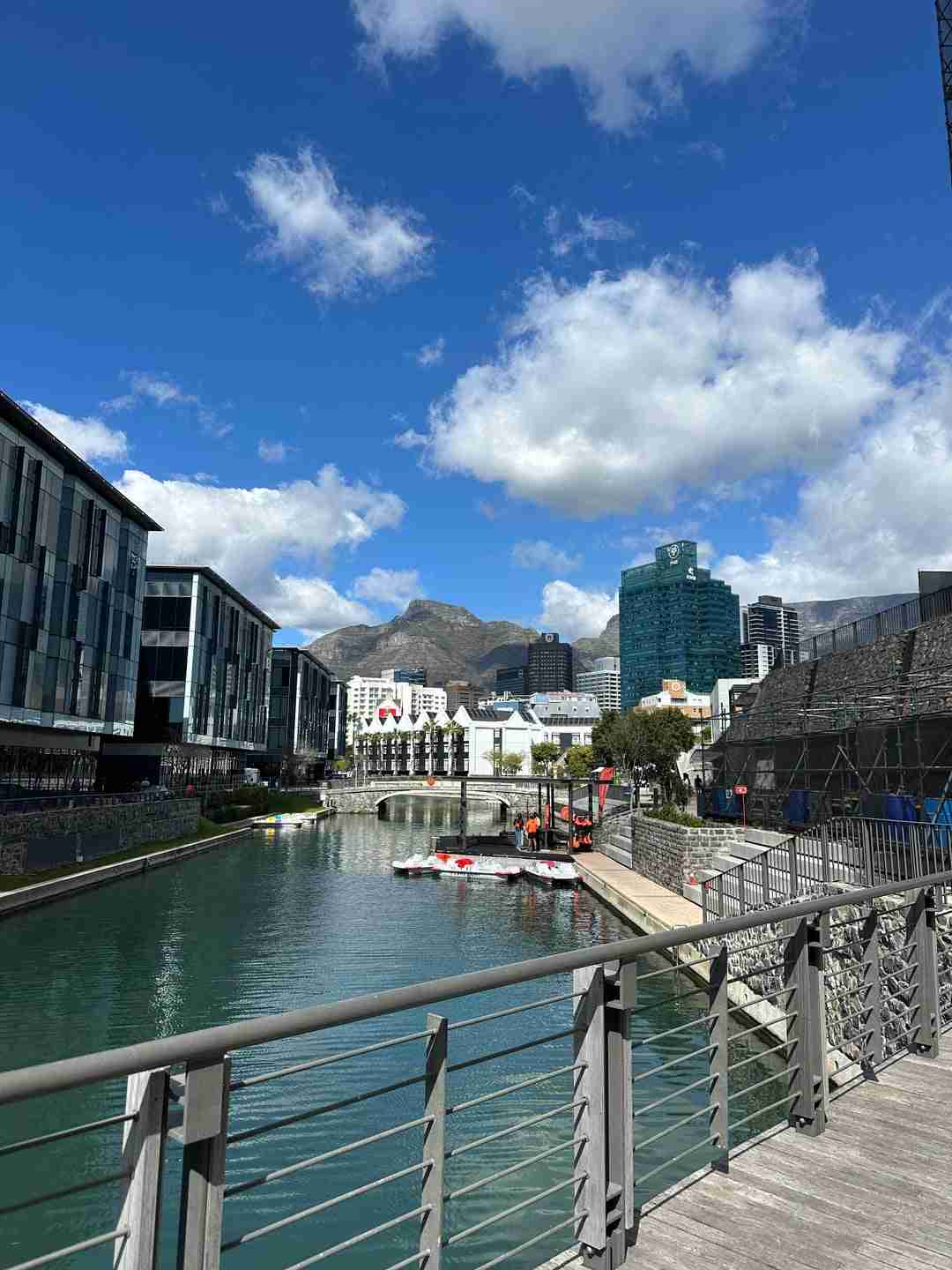
The Mother City operates on a temperate climate that makes sightseeing a year-round proposition, but the experience shifts quite dramatically across seasons. Visitors who prefer long beach days and a buzzing social atmosphere tend to gravitate toward the southern hemisphere’s summer season — December through February — when the sun stays warm well into the evening and the peninsula hums with a laid back holiday energy. February brings the hottest month of the year, with warmest days pushing past 30°C, making it perfect for coastal drives and beaches.
If you’d rather travel without the peak season crowds or the steep pricing, October is a quietly brilliant time to visit — the weather remains agreeable, prices are lower, and Cape Town feels more like itself. Winter months aren’t the deterrent many assume: several attractions aren’t weather dependent, and many of Cape Town’s cold winter afternoons still outshine a London summer. One thing worth flagging: if whale watching is on your list, plan your trip between June and November, when southern right whales, humpbacks, and Bryde’s whales can be reliably spotted off the coast.
How to Get to Cape Town
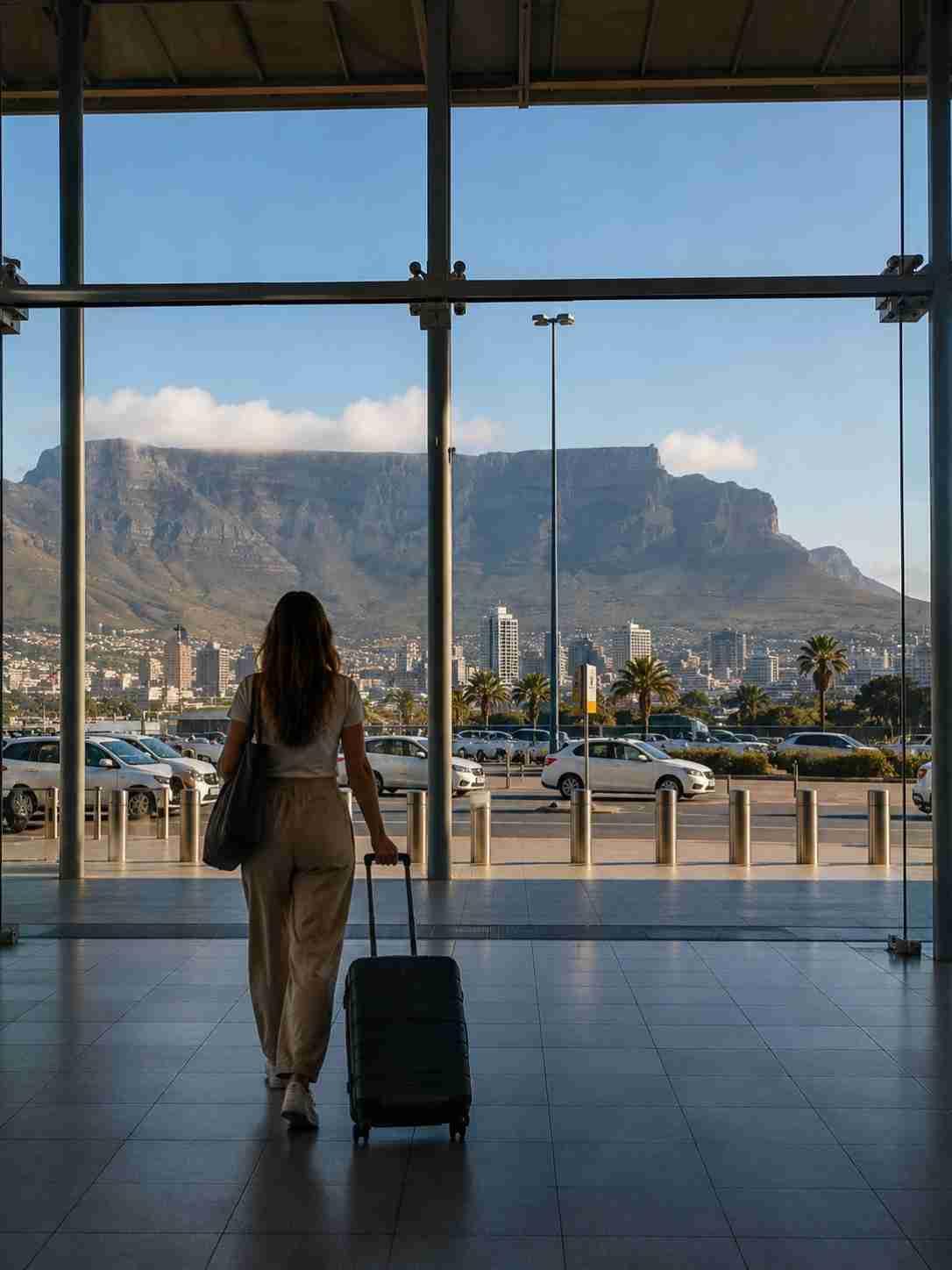
Cape Town ranks as South Africa’s second most accessible city for international arrivals, with most major airlines offering paths there — either directly from their national hubs or via a connecting flight through Johannesburg, just two hours away. British Airways runs direct flights from the UK, while European carriers like KLM and Lufthansa offer well-priced routes through various connecting destinations. If you prefer Gulf carrier comfort, Emirates, Turkish Airlines, and Qatar are solid options — though routing through their respective hubs adds at least six to eight hours to the overall journey from Europe.
For those with serious time to spare, it is technically possible to drive from Johannesburg — a proper road trip that demands three to five days depending on stops. Most visitors won’t take that route, but those who do tend to arrive at the Mother City with a much richer sense of how vast and varied South Africa truly is.
Getting to Cape Town City Centre from the Airport
Once you land, getting from the airport into Cape Town city centre comes down to budget versus convenience. The most economical option is the MyCiti bus shuttle — a flat R90 ticket runs you directly to the Civic Centre terminal, from where you can grab an Uber or taxi for that final connection to your accommodation. It’s straightforward, reliable, and a smart choice if you’re not hauling excessive luggage.
Taxi fares typically run about double the distance equivalent of an Uber, so price transparency matters here. If your hotel offers a private transfer, it’s worth checking whether it’s complimentary or comes with a charge — most will bill you for it. For those planning to use public transport regularly across their stay, a multi-day or monthly pass offers unlimited travel for roughly R930, keeping transport costs firmly under control.
Getting Around Cape Town
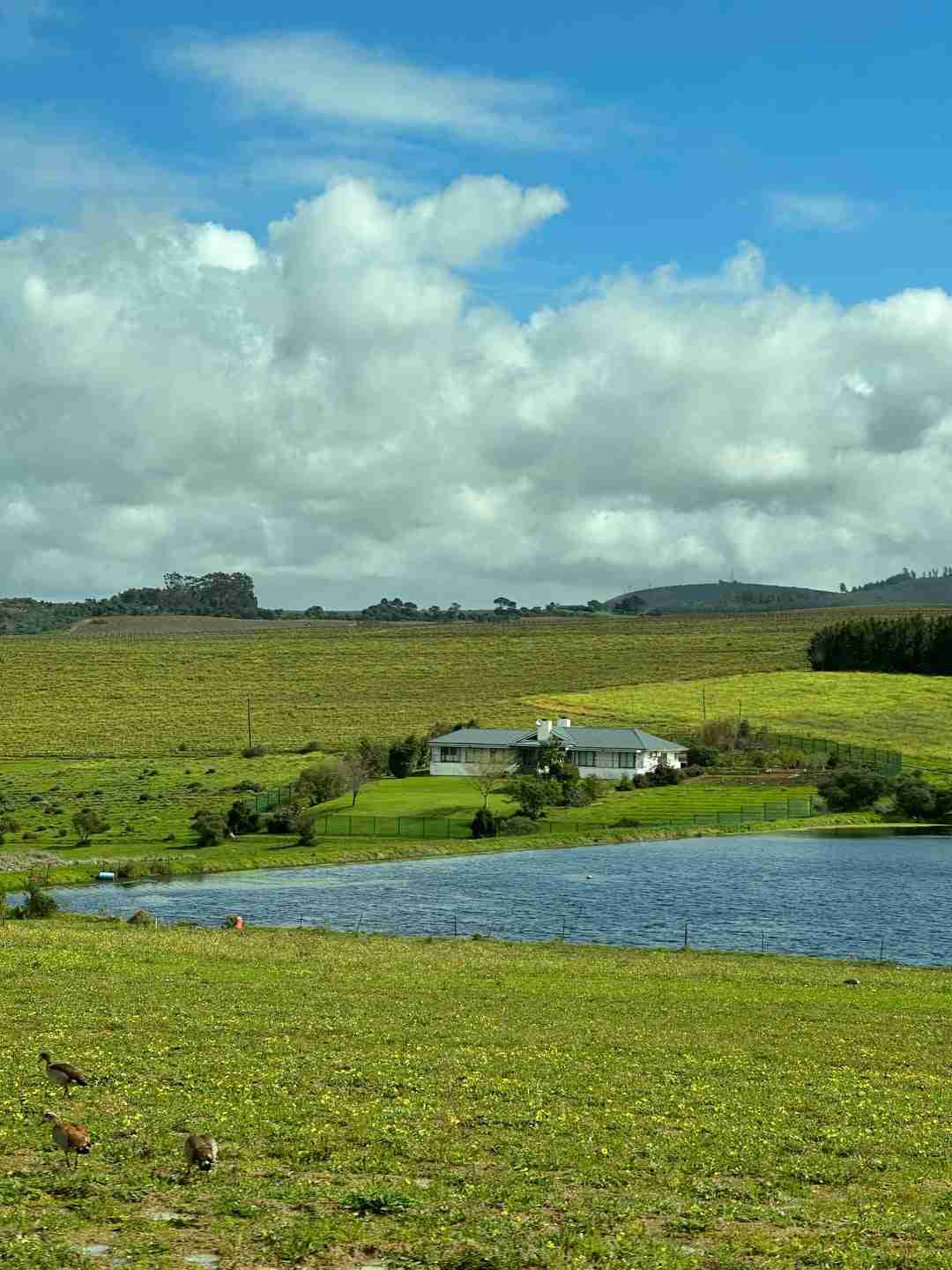
Renting a car at Cape Town Airport is, in my honest opinion, the single best decision you can make for this itinerary. The distances are long, the attractions are spread across the city and peninsula, and having your own wheels gives you the kind of flexibility to adjust plans on a whim — chasing a sunny gap in the weather or lingering somewhere longer because the mood calls for it. One non-negotiable: South Africa drives on the left-hand side, so factor that into your comfort level before committing.
If driving isn’t your thing, the combination of Uber and Bolt handles most of what you need — both apps operate seamlessly here, offer solid value, and eliminate the risk of being scammed on fares. The MyCiti bus covers select routes and pairs well with the Cape Town City Pass, which bundles attraction entry with the hop-on hop-off bus in budget-friendly multi-day and premium package tiers. The hop-on hop-off is particularly useful for first-timers covering Table Mountain, the Waterfront, and the Atlantic seaboard without the stress of parking.
Where to Stay in Cape Town
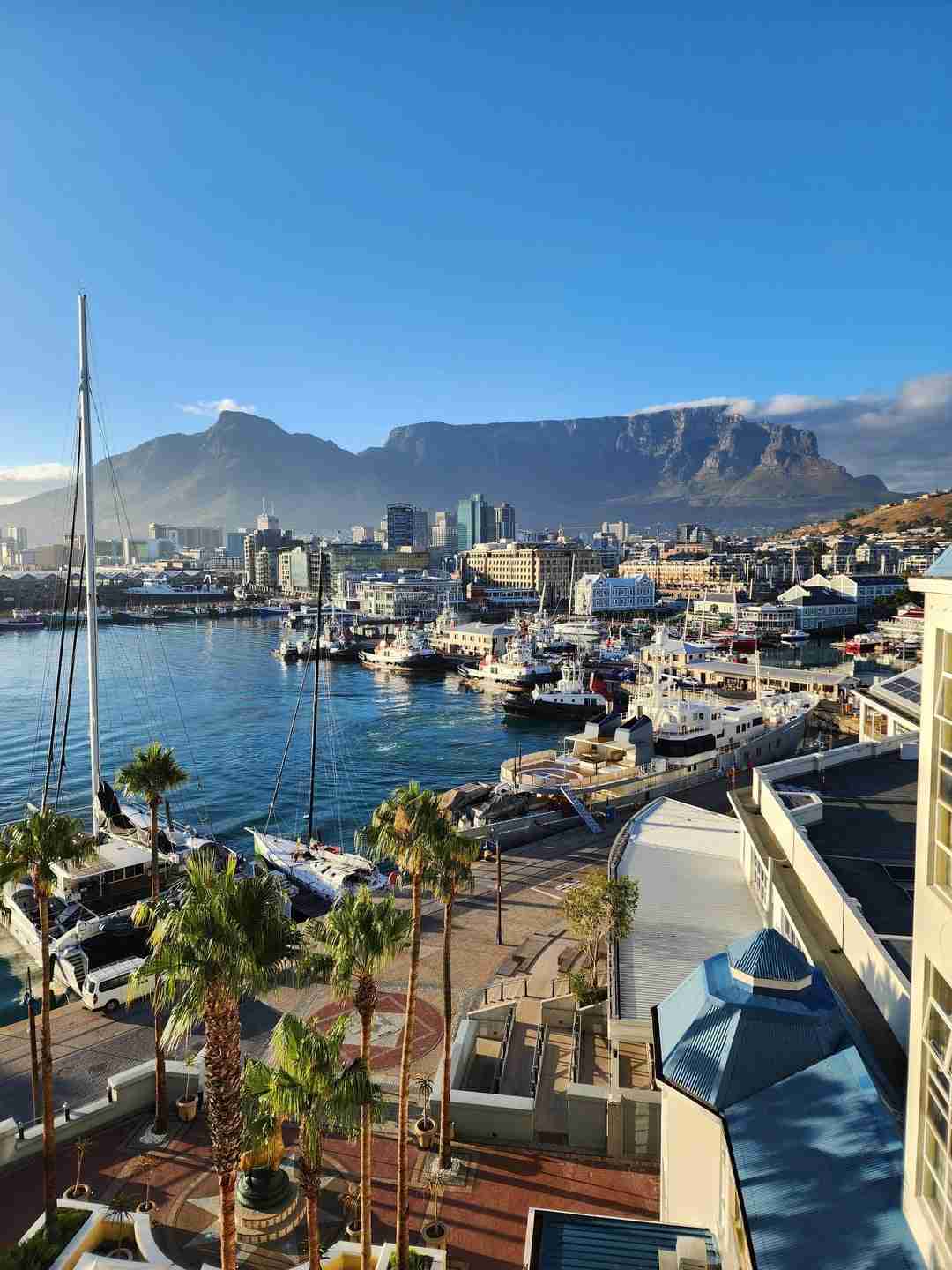
The V&A Waterfront area is where most first-timers land, and for good reason — an apartment with a balcony and a Table Mountain view here means waking up to some of the best sunsets on the planet. With 60-plus hotels within walking distance of the city’s top attractions, the options span every price point: the recently renovated Cape Grace by Fairmont sits at the five-star end alongside the bold, maximalist Silo Hotel above Zeitz MOCAA museum. More accessible rates can be found at the AC Hotel Cape Town Waterfront, Radisson RED, Dockside 1106, Southern Sun Waterfront, and One Thibault Hotel.
The CBD carries a slightly more industrial vibe but delivers on character — the Gorgeous George turns heads with colorful suites, a rooftop bar, and a pool, while The Cape Milner gives easy access to Lion’s Head and the city center. Budget-conscious travelers can explore apartment rental options along Bree Street — think 16 on Bree Studio — a road fast becoming the beating heart of the CBD, lined with excellent restaurants and bars.
For a beach atmosphere that’s hard to beat, Camps Bay earns a strong recommendation for first-time visitors. Wedged between Table Mountain, the Twelve Apostles, and the Atlantic Ocean, this neighborhood delivers scenic views from nearly every angle. Stay at South Beach Camps Bay Boutique Hotel, The Bay Hotel, or POD Camps Bay right on the beach; honeymooners should look hard at Tintswalo Atlantic in Hout Bay. Budget-friendly alternatives include Vetho Villa, Balfour Place Guesthouse, and Royal Boutique Hotel. For luxury seekers, The One & Only Cape Town on the Waterfront and the nearby Silo Hotel remain the city’s most coveted addresses, while Sunflower Stop Backpackers in Greenpoint handles the budget end with a pool and solid facilities near Mouille Point Beach, Sea Point, and the O’Two Hotel cluster.
4-Day Cape Town Itinerary Overview
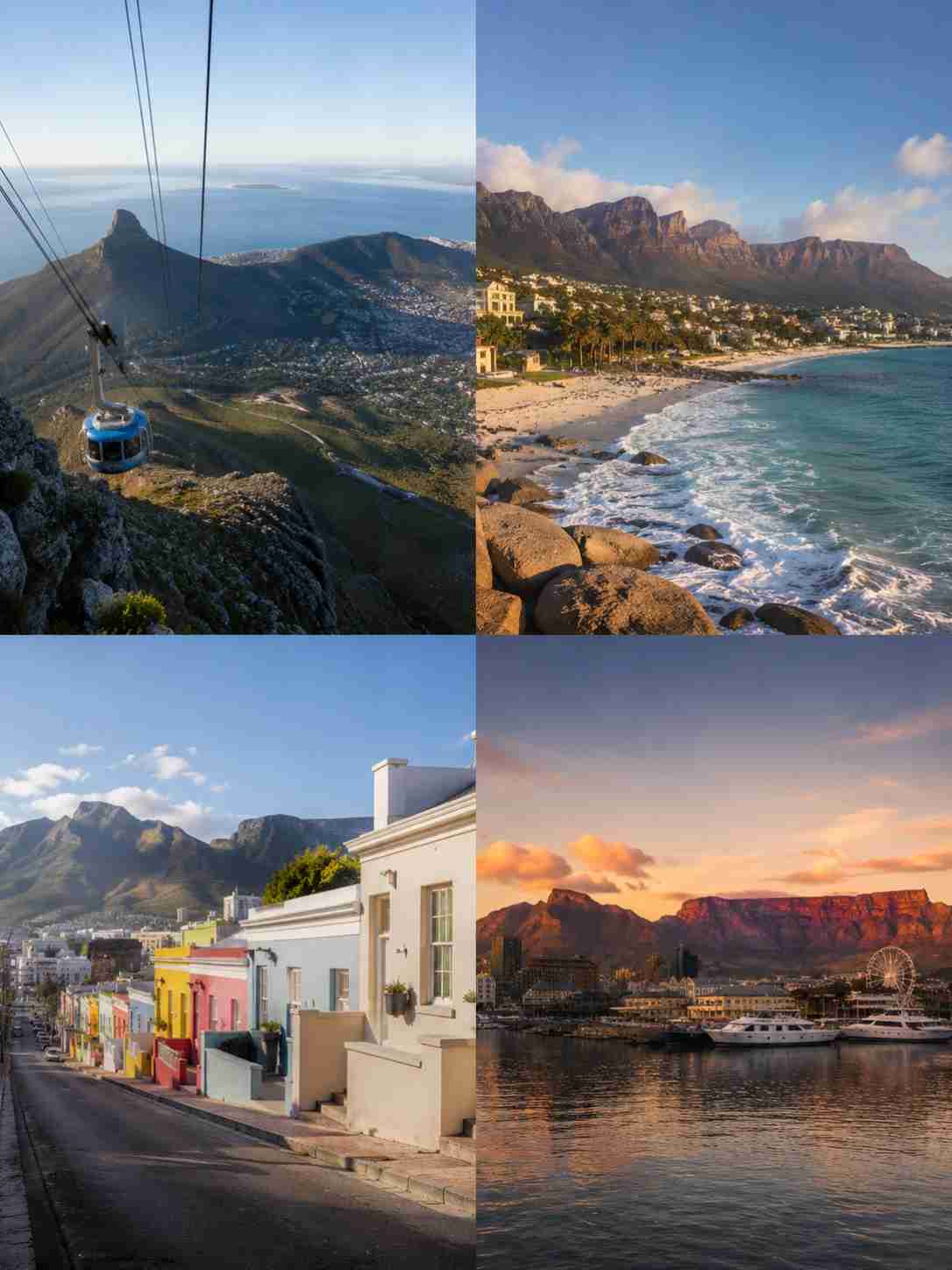
The shape of this itinerary moves from the iconic to the exploratory — Day 1 grounds you in the city itself with Table Mountain, Bo-Kaap, and the V&A Waterfront; Day 2 pushes outward into the Cape Winelands of Stellenbosch, Franschhoek, and Paarl, or alternately into Kirstenbosch and the Neighbourgoods Market. Day 3 is the big road trip — the full Cape Peninsula loop taking in Chapman’s Peak Drive, Cape Point, Cape of Good Hope, and Boulders Beach. Day 4 wraps everything with a Lion’s Head Hike, a deeply moving visit to Robben Island, a golden afternoon at Camps Bay, and an optional detour through the Kirstenbosch or Constantia Wine Route.
Day 1: Table Mountain & Bo-Kaap
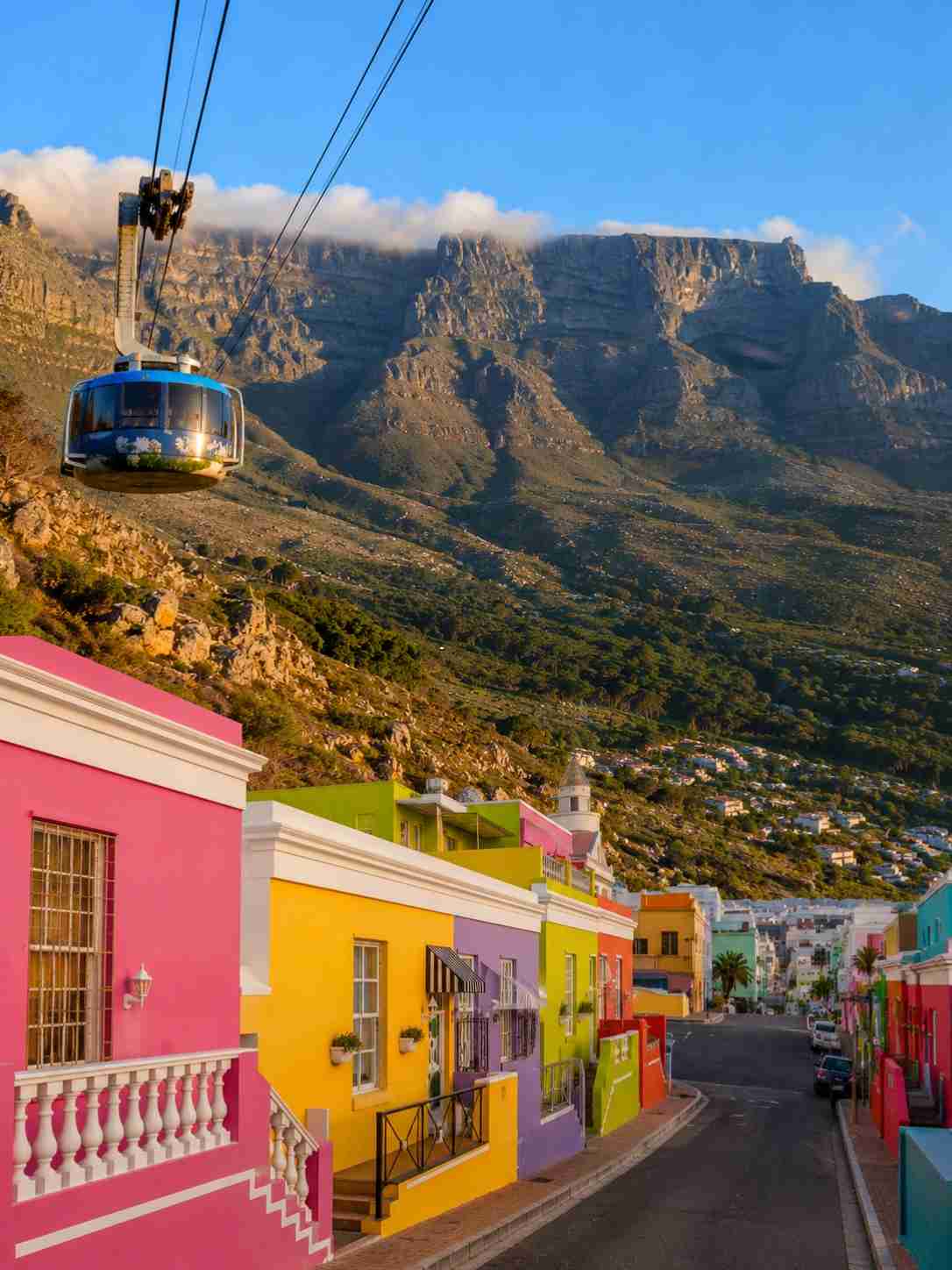
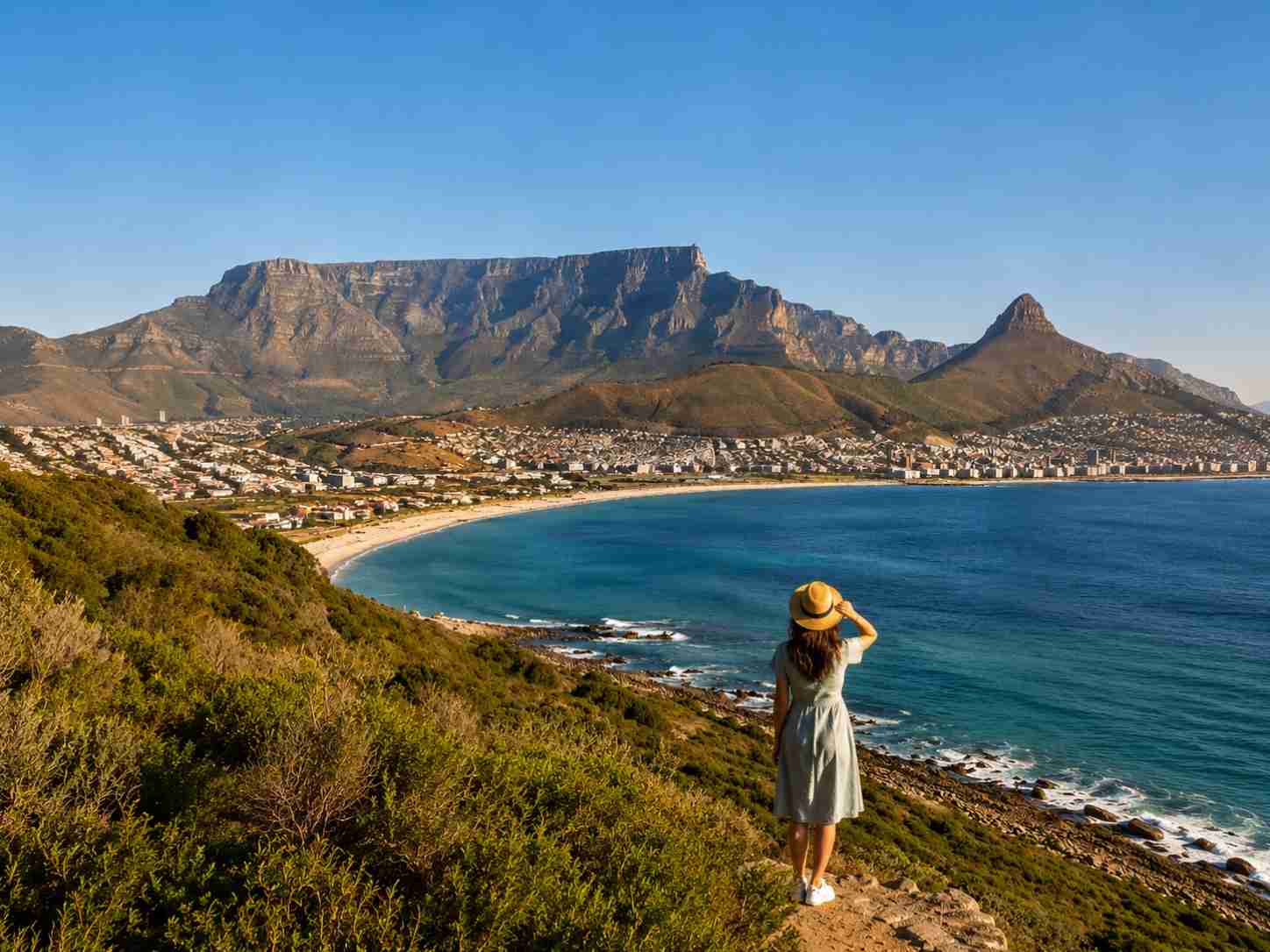
Table Mountain sits as the undisputed backdrop of Cape Town and the rightful top of any must-see list — but the first thing I’ll tell you is that this visit is entirely weather dependent. Book your cable car tickets in advance through the official website (they’re valid for seven days, giving you built-in flexibility), and aim to arrive by 08:30 am to beat the queues. Those who skip the skip-the-line upgrade will find themselves in a line that stretches a brutal 45-minute wait on busy mornings — not ideal when the summit is clear and calling. The Platteklip Gorge trail is the most popular hiking alternative to the car, though it’s not well suited to young children.
Once up top, plan to stay about 3 hours — walking every trail is genuinely worth it. The flat pathways wind across the peak and reward you with photos from angles you didn’t anticipate. Bring a windbreaker and a sweater regardless of the forecast: Cape Town weather is notoriously changeable, and what starts hot can turn sharply cold by midday. There’s a café and shop at the summit — the ice cream hits differently at altitude — and keep an eye on the time to catch the last car descent. The famous “tablecloth” fog that rolls across the peak like a cloth is a natural wonder in itself, but it also grounds the funicular when it arrives, so an early start isn’t just advice — it’s strategy. After coming down, grab lunch before making your way into Bo-Kaap.
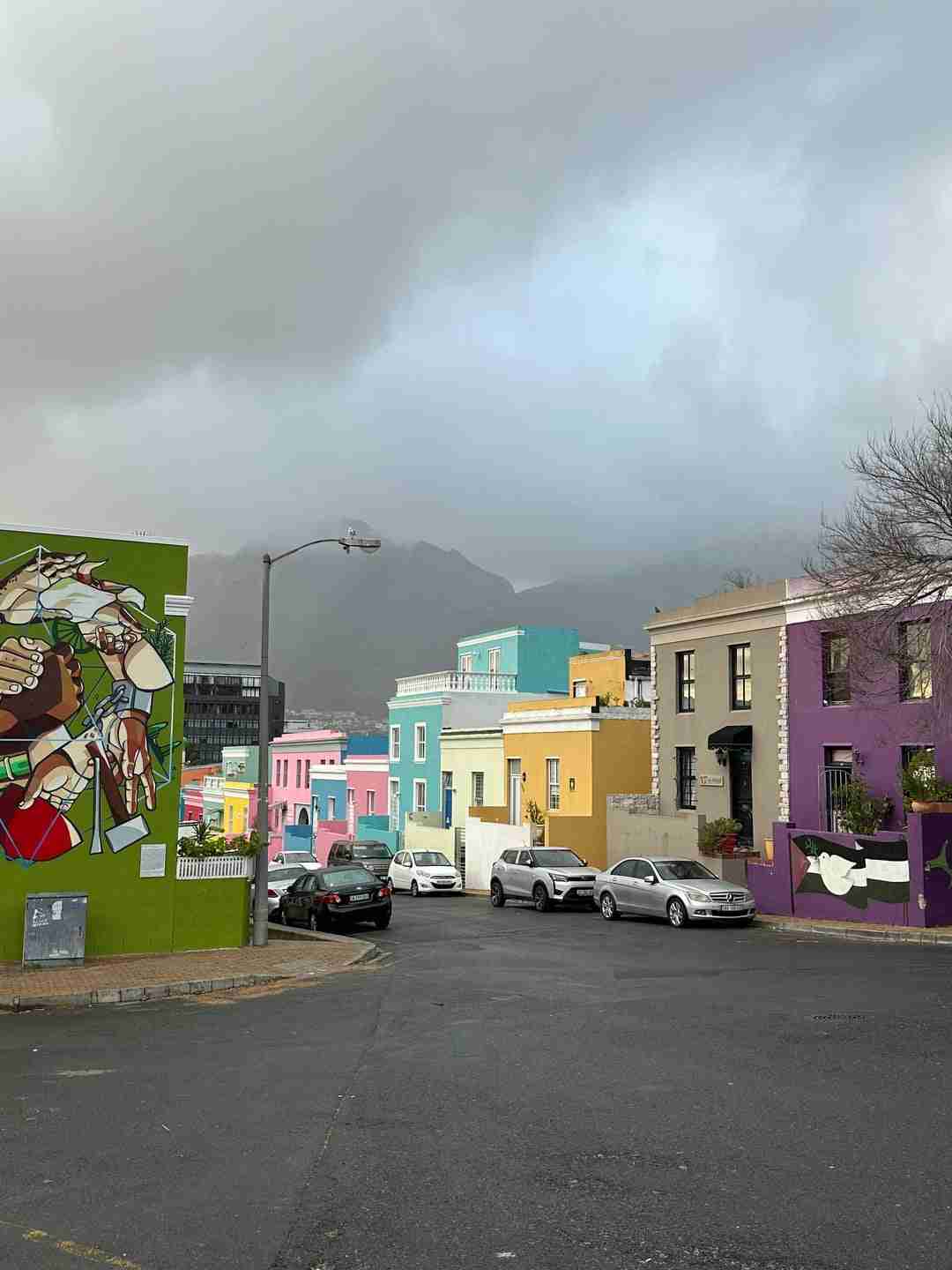
Bo-Kaap’s colorful, low-roofed houses are so photographed they’ve become almost instagrammable shorthand for Cape Town itself — but arriving as a tourist taking an Instagram photo while missing the history would be a genuine waste. This former racially segregated neighborhood was home to freed enslaved people from Malaysia and Southeast Asia from the 18th century onward — people who, once granted liberation, painted their previously white walls in the brightest colors they could find as a declaration of freedom. That context transforms how you see every Chiappini Street corner. The Muslim population has called this the Malay quarter for centuries, and gentrification continues to threaten its identity and community character today.
For lunch, lean into Cape Malaysian cuisine — rich with Eastern spices you can pick up at Atlas Trading Co nearby. Harvest Café and Rose Corner Café both deliver authentic tastes of the neighborhood. The tiny Iziko Bo-Kaap Museum on Wale Street recreates a 19th century Cape Malay home with real texture and care — pair it with a walking food tour into De Waterkant if your legs have anything left, or book a hands-on session to cook traditional Cape Malay dishes yourself. Come with an empty stomach and a curious guide if possible — Bo-Kaap reveals itself slowly and richly to those who let it.
The District Six Museum is one of Cape Town’s most essential and sobering visits — a vibrant multicultural neighborhood that was declared a “white zone” in 1966 under the segregationist regime and systematically erased. Over 60,000 Black and mixed-race residents were forcibly removed from their homes, which were then demolished. What remains today are exhibitions built from photos, testimonies, personal objects, and maps — each one holding the memories of what was destroyed and honoring the cultural richness of what once existed here. Even if you’ve visited the Apartheid Museum in Johannesburg, the District Six Museum carries its own distinct political impact and heritage. Book advance tickets online — it deserves more than a rushed stop.
In the evening, the V&A Waterfront is the natural ending point for Day 1. South Africa’s oldest harbour — now visited by over 23 million visitors a year — delivers on every front: sweeping views of Table Mountain, a revitalized Victorian architecture complex full of restaurants, bars, cafes, a shopping mall, the Food Hall, cultural events, and some genuinely special art and ceramics at the Watershed. Look for carved wood salad servers from African Trading Port, blockprint dresses from local designer Jane Valken, and T-shirts supporting the National Sea Rescue Institute. If the water calls you, the Wildlife Marine Boat Tour departs from here — a wildlife cruise with a real shot at spotting whales, dolphins, penguins, and seals, especially between May and November. For sunset, a 10-minute drive to Rockpool in Seapoint gives you uninterrupted views of the Atlantic horizon.
Day 2: Cape Winelands – Stellenbosch, Franschhoek & Paarl
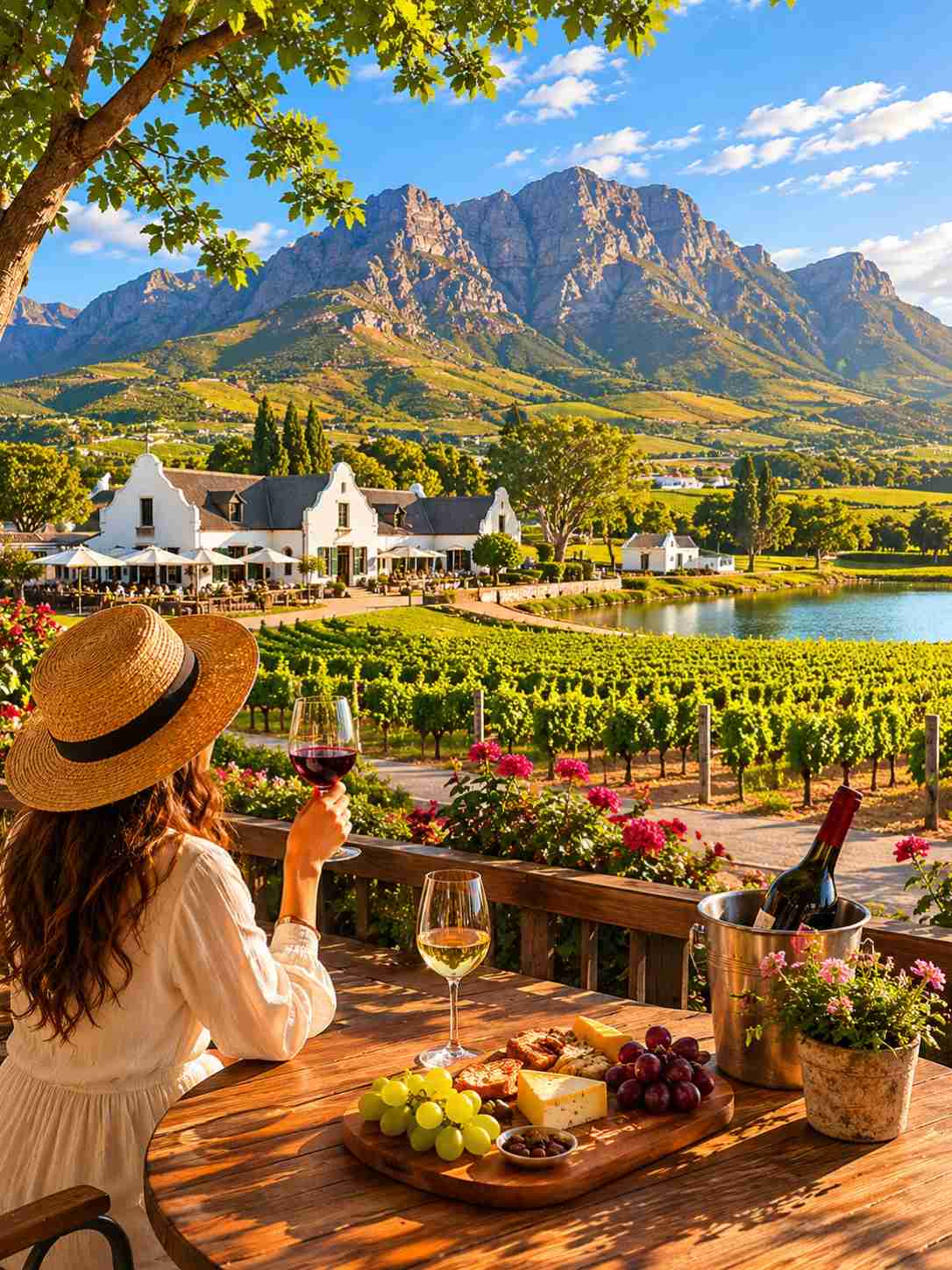
A full day in the Cape Winelands is one of those travel decisions you’ll never question. Stellenbosch opens the day — a genuinely charming university town with a young vibe layered over serious Dutch Colonial history. As South Africa’s second-oldest town, it wears its Cape Dutch architecture, white clapboard churches, and oak tree-lined streets with easy confidence. The surrounding vineyards produce some of the country’s finest bottles, and the Zevenwacht Wine Estate just outside town makes an excellent first stop — a cellar tour followed by white and red wine tasting paired with cheese on a shady veranda is as civilized as mornings get.
Franschhoek comes next, and the French connection is impossible to miss — the name literally means “French Corner” in Dutch, and the Huguenot settlement left its mark in everything from shop names to restaurant menus. Stop here for lunch and make the Franschhoek Wine Tram a non-negotiable: this vintage-style tram threads through breath-taking valley scenery, making stops at various vineyards for tastings that feel nothing like typical tourist experiences. En route, it’s worth pausing outside Drakenstein Prison — where Nelson Mandela spent the final three years of his captivity before his release. The statue unveiled on his 90th birthday in 2008 stands there quietly outside the now low-security correctional centre, and the weight of the moment tends to land differently when you’re standing in front of it.
Paarl rounds out the day as the gateway to South Africa’s interior — an early European settlement where the Afrikaans language was formally developed. The Marianne Wine Estate in the beautiful valley produces French-style wines with a distinctly African vibe, and wine paired with biltong — that wonderfully cured, dry meat somewhere between jerky and something far better — is the kind of combination that only makes sense once you’ve tried it. Most wine farms here allow you to buy direct at competitive prices and even have bottles shipped home.
Day 2 (Alternative): Neighbourgoods Market, Kirstenbosch Botanical Garden & V&A Waterfront
If a full winelands day doesn’t fit your style, Woodstock offers its own kind of Saturday energy through the Neighbourgoods Market — a pulsing food and souvenir market where street food, trendy brands, and upcoming artists collide in one gloriously vibrant, buzzing space. Don’t arrive too early or too late — the sweet spot rewards you with manageable crowds, a full tour of the food stalls, and enough room to actually enjoy a drink while you browse. The Cape Town community spirit here is real, and the shopping and culture hit differently on a weekend market morning.
Day 3: Cape Peninsula Road Trip – Chapman’s Peak, Cape of Good Hope & Boulders Beach
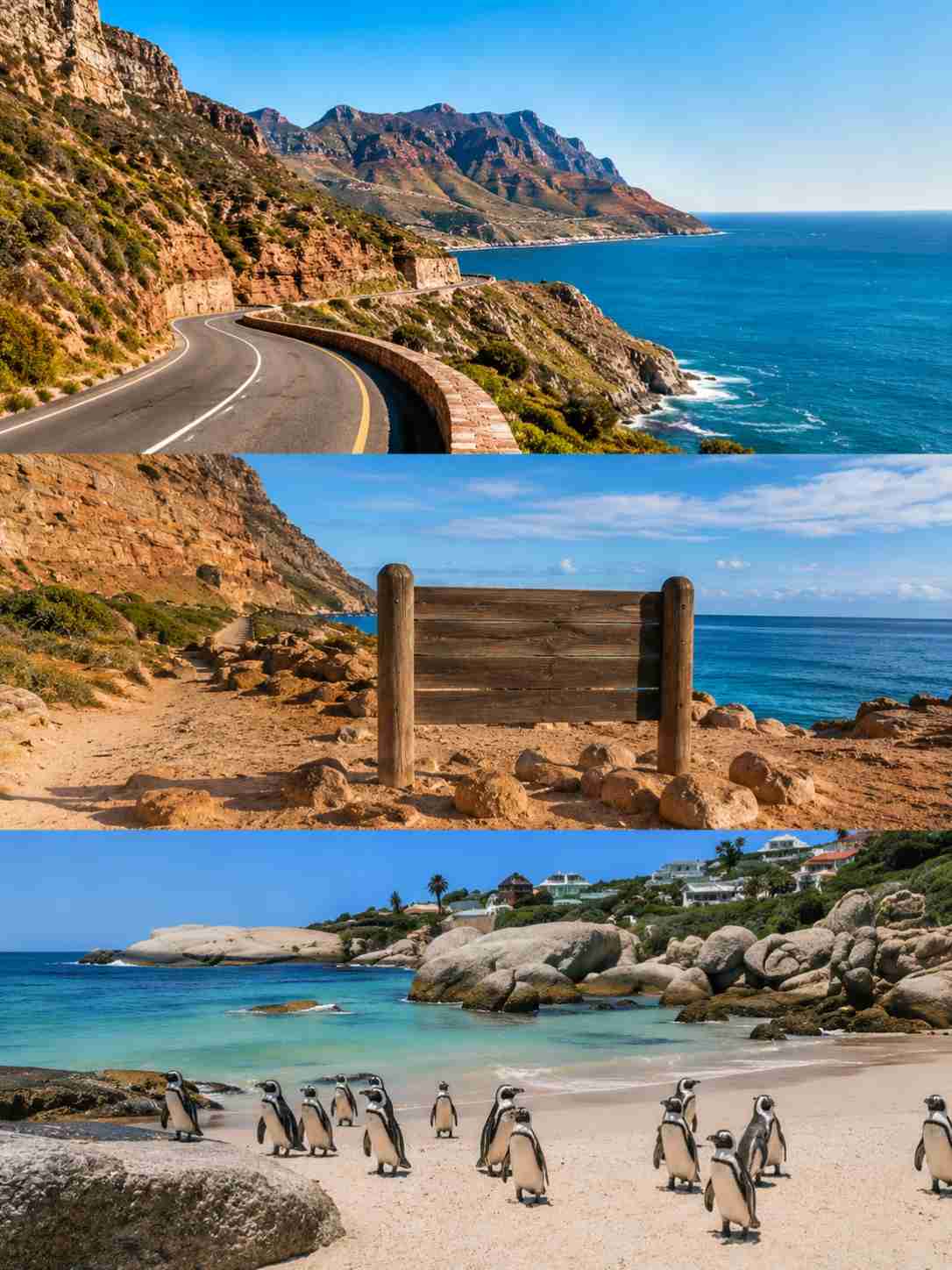
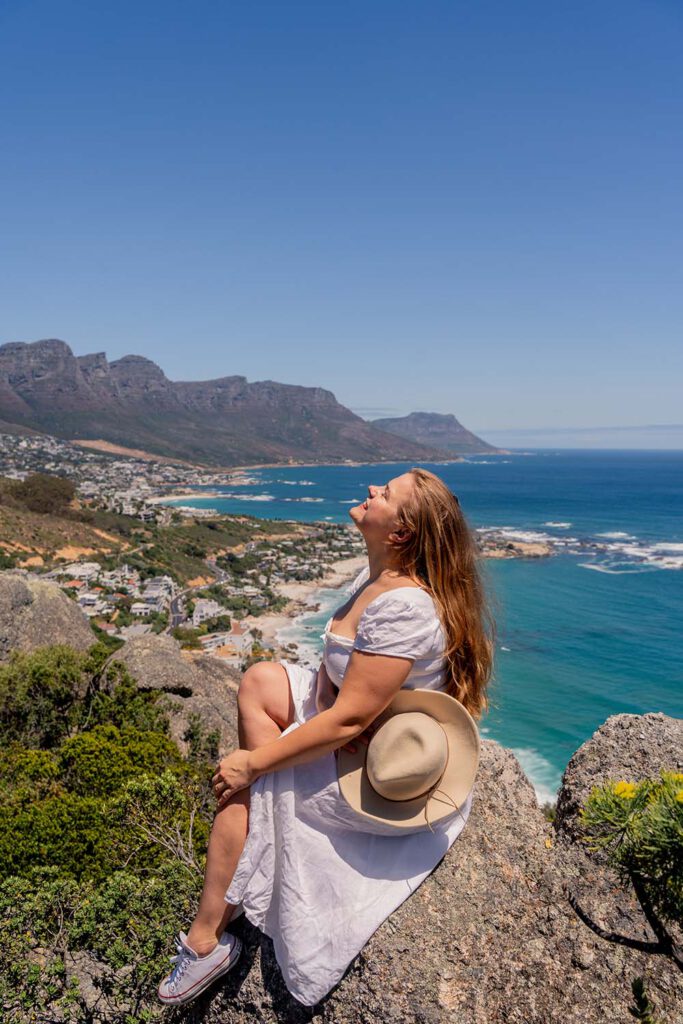
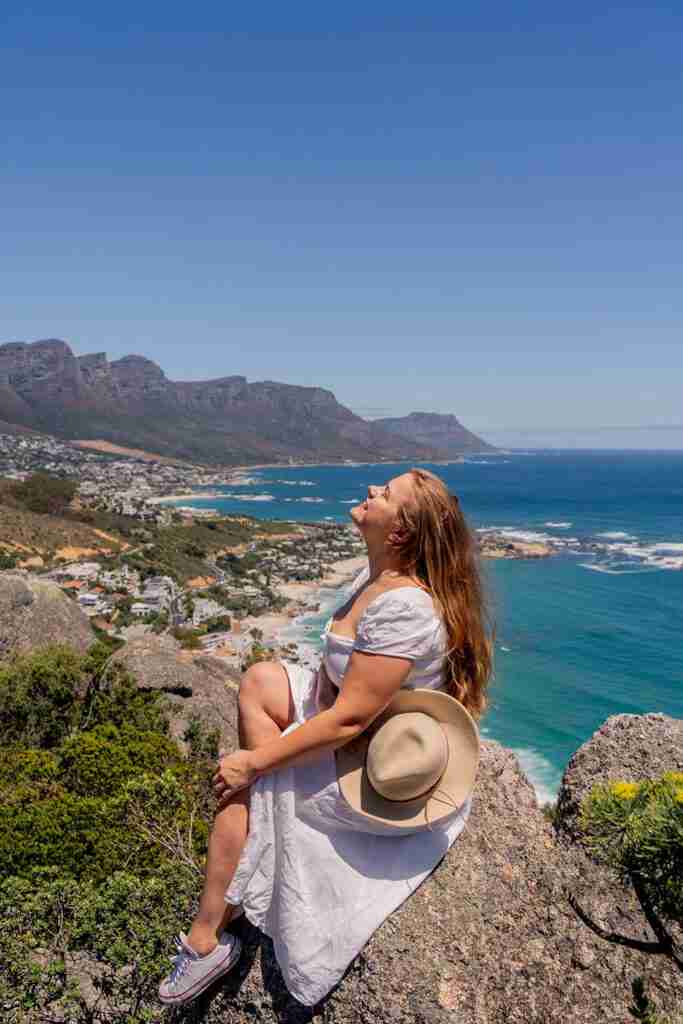
Head out on the M6 along the Atlantic coast and make your first pause above Maiden’s Cove — the ocean spread below you with the full 12 Apostles mountain range filling the background is the kind of stunning, scenic view that makes you understand why people move to Camps Bay and never leave. It’s a brief stop, but a grounding one before the big drama of Chapman’s Peak Drive begins.
Rated among the most spectacular coastal drives in the world, Chapman’s Peak Drive stretches 9 km between Hout Bay and Noordhoek — a winding road that clings to the mountain face through 114 bends, each one opening onto a new composition of rugged rock formations, white sands, and deep ocean blue. Allow well beyond the base 35 minutes — the pull-in spots and parking areas along the west coast of the Cape Peninsula are designed to be used, and the viewpoints are all on the western side. A practical tip from experience: drive the route south to north on the return to Cape Town — following the English road system means you’ll be on the correct side to stop at every lookout naturally. There’s a toll at the entrance, varying by vehicle type.
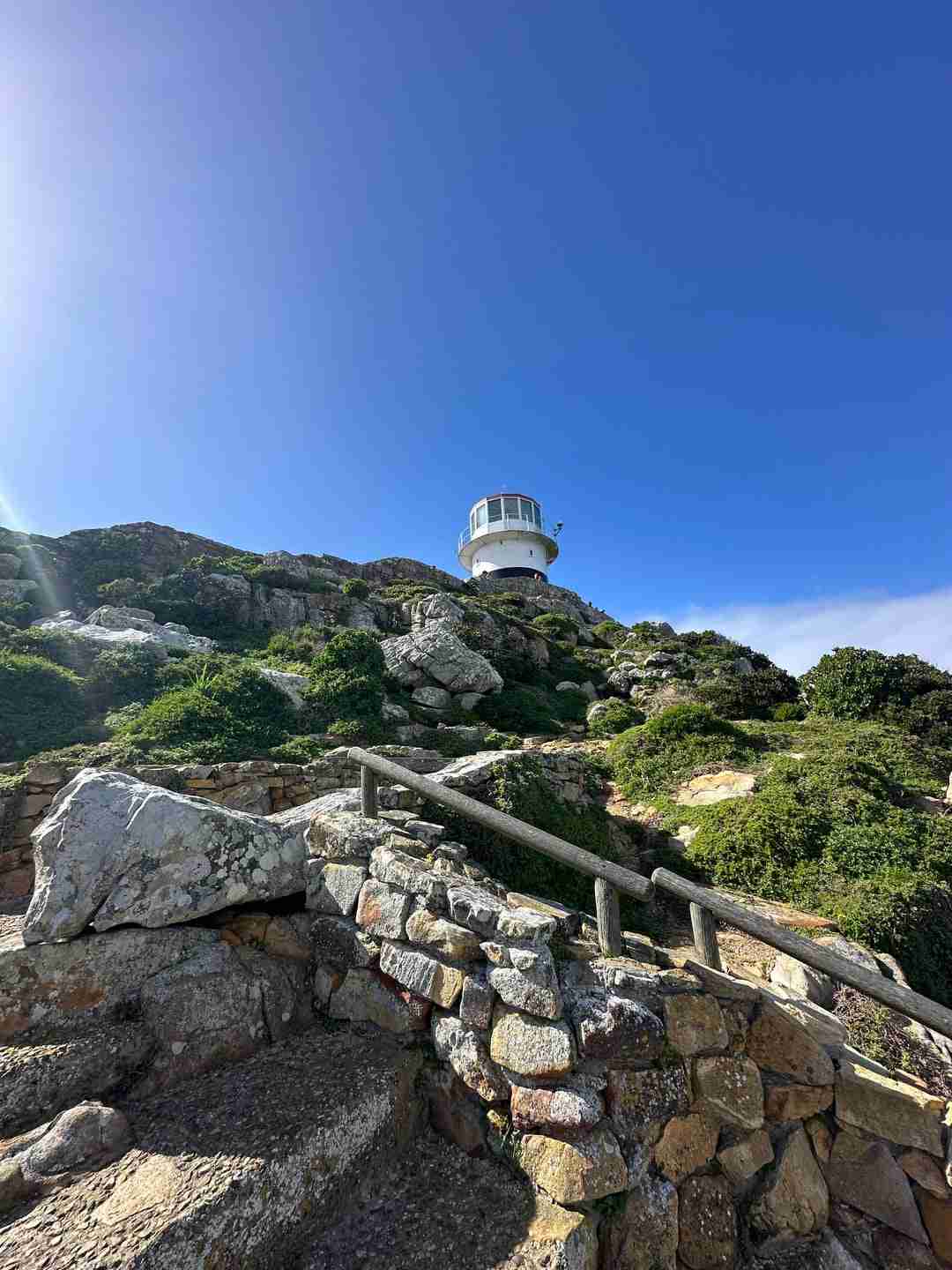
The Cape of Good Hope doesn’t announce itself gently. Entering Table Mountain National Park feels like driving into a mini-safari — I spotted a mountain zebra and an ostrich within the first few kilometers, and elands, baboons, and oryx are regular sightings too. Despite what many maps imply, Cape Agulhas some 150 km further east holds the true southernmost point of Africa — but Cape of Good Hope carries the bigger history. Portuguese navigator Bartolomeu Dias sailed around it in 1488, opening the sea route to the Indies; Vasco da Gama followed in 1497, continuing on to India and cementing the long-sought passage between Europe and the East. The original name — Cape of Storms — honoured the violent storms and fierce sea currents that made it so treacherous. The instagrammable sign is mandatory, but push further: walk to the historic 1860 lighthouse at Cape Point or take the Flying Dutchman Funicular up, grab something at the Two Oceans Restaurant, and explore the hiking trails, beaches, and wildlife zones within the conservation area. Tickets via Sanparks can be booked in advance — R376 for adults, R188 for children — and the on-site visitor centre, restaurant, and toilets make this a comfortable longer stop.
Boulders Beach on the return might just be the most unexpectedly moving place on the entire itinerary. Large rocks, white sand, deep blue water — it’s beautiful on its own terms. But then the African penguins appear, waddling with complete indifference to the humans watching them, and something shifts. This colony near Simon’s Town started with just two breeding pairs washed ashore in 1982 and has since grown to over 2,100–2,200 birds. Since May 2010, African penguins have been classified as an endangered species — once merely listed as vulnerable — making every visit to this Table Mountain National Park site feel quietly urgent. Boardwalks guide you respectfully close without disturbing nesting zones; heed every sign and resist any urge to touch — they peck meaningfully. Arrive no later than 8:30 am (the beach opens at 8:00 am) before the tour buses descend and parking becomes the main challenge. On the way back, Muizenberg Beach — all colorful little houses and surfer energy — and Kalk Bay’s legendary Kalky’s fish-and-chips joint on the marina (where seals lounge nearby during your picnic) are both worth a 20-minute detour. The Main Road here is stacked with unique goodies in shops that reward slow browsing.
Day 3 (Alternative/Extension): Kirstenbosch National Botanical Garden
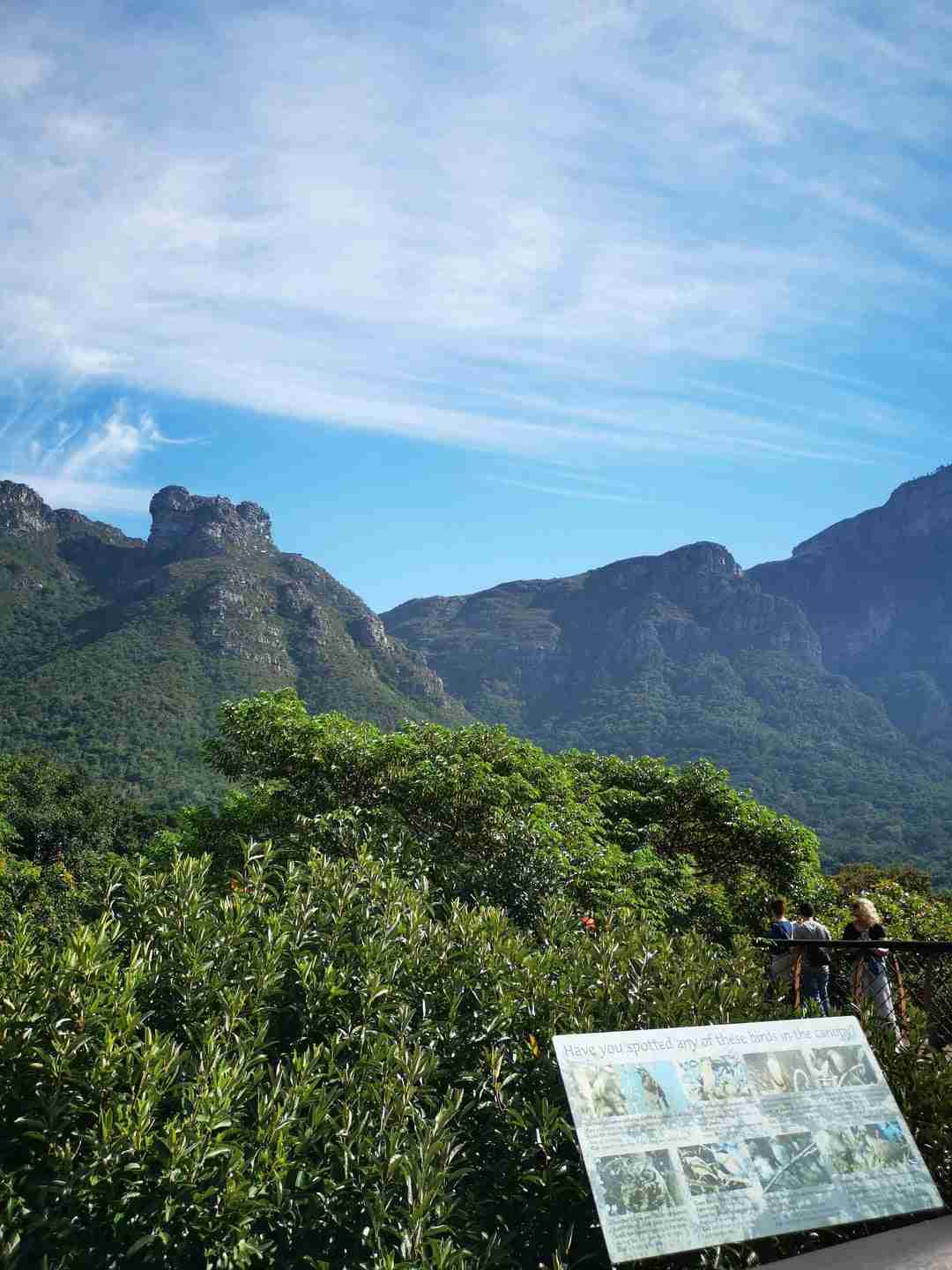
Kirstenbosch National Botanical Garden consistently ranks among the most beautiful botanical gardens in the world, and standing on the lower slopes of Table Mountain in the middle of it, surrounded by South Africa’s native flora across all six of the country’s distinct biomes, it’s not hard to see why. The Cape region sits within one of only six global Floristic Kingdoms — a designation earned by a diversity of endemic species that rivals even the Malaysian rainforest. The Fynbos shrub and bushland surrounding Cape Town defines much of this Kingdom, filled with aromatic medicinal plants and delicate endemic flowers — most iconically the protea, South Africa’s national plant.
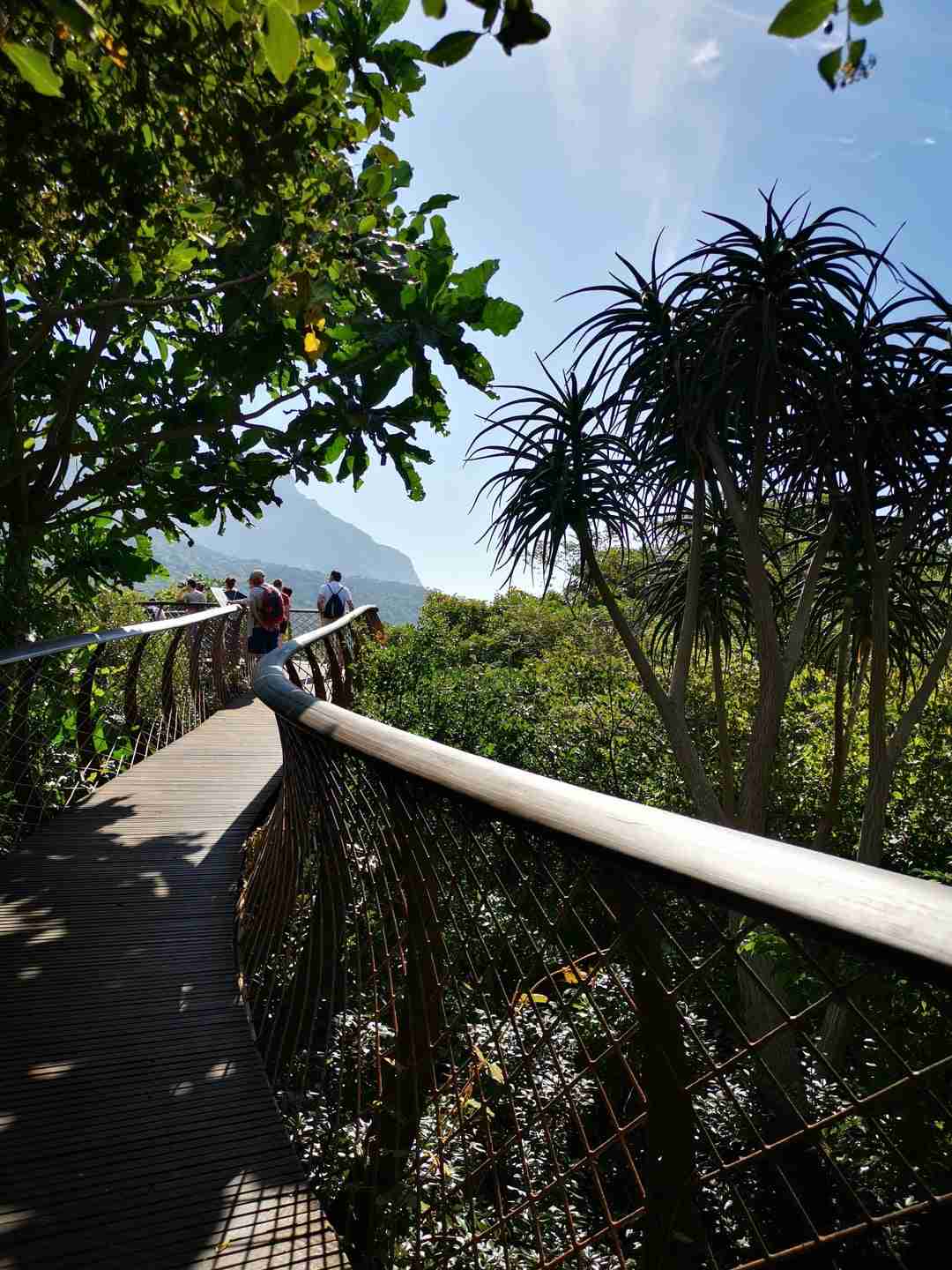
Walking through Kirstenbosch feels less like a park and more like watching the Cape as it would exist without city buildings pressing in on it. Highlights include the Boomslang Canopy Walk — a suspended walkway through treetops with views that make you stop mid-sentence — and the Skeleton Gorge trail, which leads all the way up Table Mountain and passes an impressive waterfall in spring months. Various themed gardens and dedicated greenhouses house plants, trees, and flowers from across the Cape region with real educational care. The gardens were founded in 1913 to preserve the fauna and flora of the Cape, and that founding purpose is still evident in the on-site education and research centre, restaurants, and gift shop.
If your visit falls on a summer Sunday between November and April, book the Kirstenbosch evening concerts — the garden lawns fill up from 5:30 pm to 6:30 pm with a community vibe that is genuinely unlike anything else in the city. Pick up picnic supplies and snacks from Woolworths beforehand, spread out on the grass, and let the setting do the work. A guided tour makes the botanical depth accessible; otherwise, come with time and no fixed plan. Kirstenbosch is a stop on the hop-on hop-off Purple Route, so it integrates cleanly into a broader day without needing a car.
Day 4: Lion’s Head, Robben Island & Camps Bay
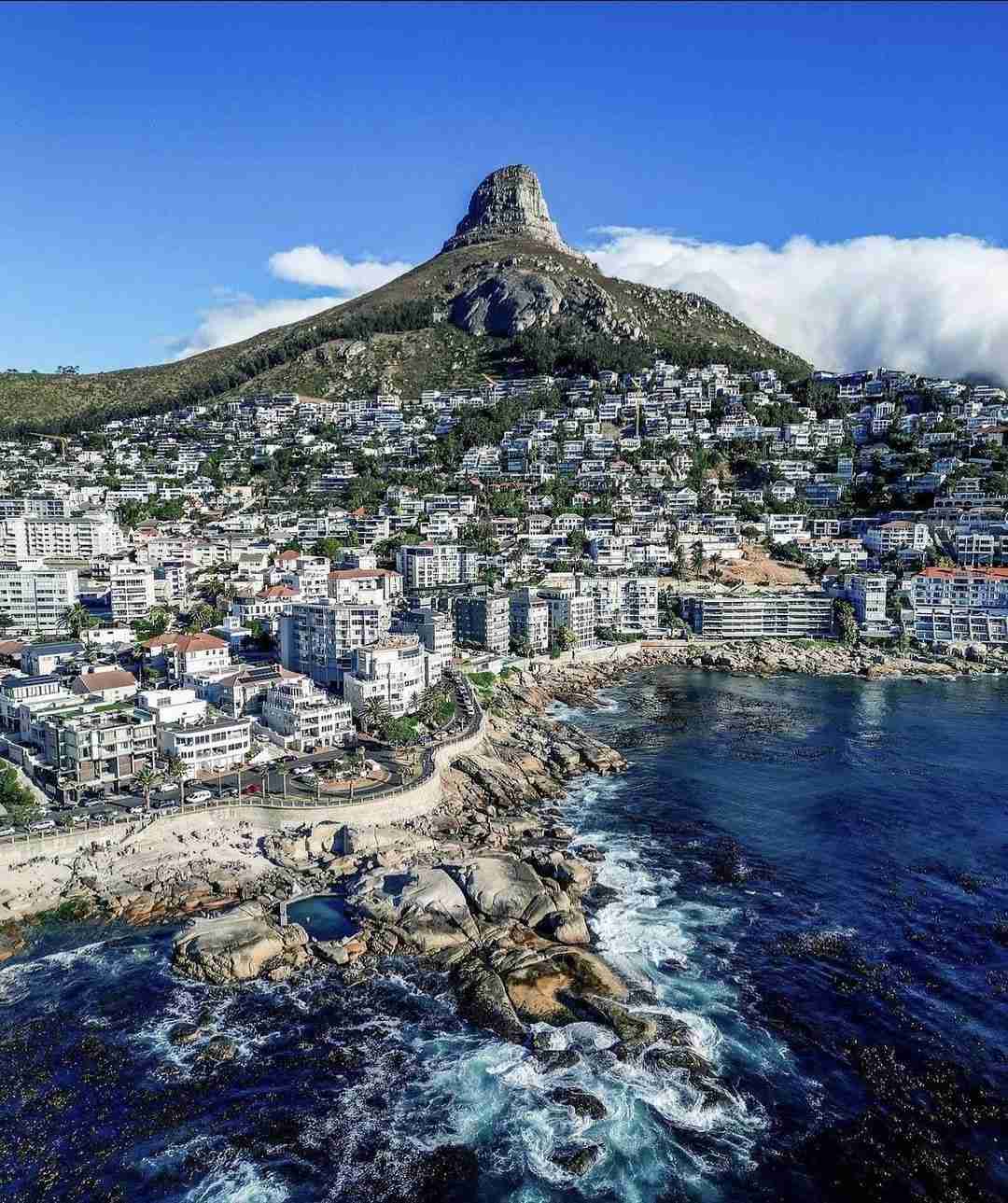
Shake off any remaining jet lag with an early start up Lion’s Head — arguably the most rewarding hike on the continent for the effort involved. Unlike Table Mountain, which offers a cable car shortcut, the only route to the Lion’s Head summit is on foot, and admission is completely free. The trailhead sits at Signal Hill, and the circular route runs roughly 5km (3-mile) — a moderate hike up the hill that overlooks the full Western seaboard with 360 degree views of the Atlantic, the city, and Table Mountain in one sweep. Budget 2–3 hours for the round trip depending on fitness levels and pace.
The trail earns its reputation as challenging through a series of steep sections involving stairs, chains, and genuine bouldering over exposed rocks — but the views along every route make the huffing and puffing worthwhile. A sunrise hike is the move if you can manage the alarm: watching the sun rising over Table Mountain from up there, with the city still quiet below, is genuinely unbeatable. Prefer something gentler? The mostly flat base trail is a relaxing 5K stroll that skips the ladders and climb entirely. Either way, bring water, skip the rainy or humid days, and consider the 10-minute Uber drive from the city center to the shared trailhead at Signal Hill. After the hike, the scenic ocean views from the hill itself are worth lingering over before heading down.
Robben Island is one of those visits that recalibrates everything else on the itinerary. From the V&A Waterfront, the ferry departs at 9 am and covers the 12 km to this UNESCO World Heritage Site in about 30 minutes. What follows is 4–5 hours in the company of historians and — remarkably — former prisoners: freedom fighters who were imprisoned here themselves now serve as tour guides, sharing personal accounts of their experiences inside the maximum-security prison where Nelson Mandela spent 18 of his 27 years of incarceration under the Apartheid regime. The tour covers the island’s past as a leper colony, its stone quarries, and ultimately Mandela’s prison cell — each stop more moving than the last. Book weeks ahead: tickets routinely sell out well in advance, and ferries are weather conditions dependent.
By mid-afternoon, Camps Bay Beach is the natural landing point — and there are far worse ways to close out a Cape Town itinerary than arriving here as the sun begins to angle toward the Atlantic. The Twelve Apostles mountains form a dramatic backdrop while the beach itself stretches wide and white below them. The water runs cold (this is the Atlantic, after all), but kids won’t care, and most visitors are here for the promenade bars, sunset watching, and the particular perfection of Table Mountain, 12 Apostles, and Lion’s Head all visible from a single view. Maiden’s Cove nearby offers tidal pools with that same extraordinary view of the Twelve Apostles. For the final dinner, Codfather in Camps Bay delivers exceptional seafood and sushi in a setting that rewards the whole day’s effort, or try The Bungalow by Kove Collection — perched directly over the ocean, its Japanese-inflected menu is a worthy last meal in the Mother City.
Two Oceans Aquarium
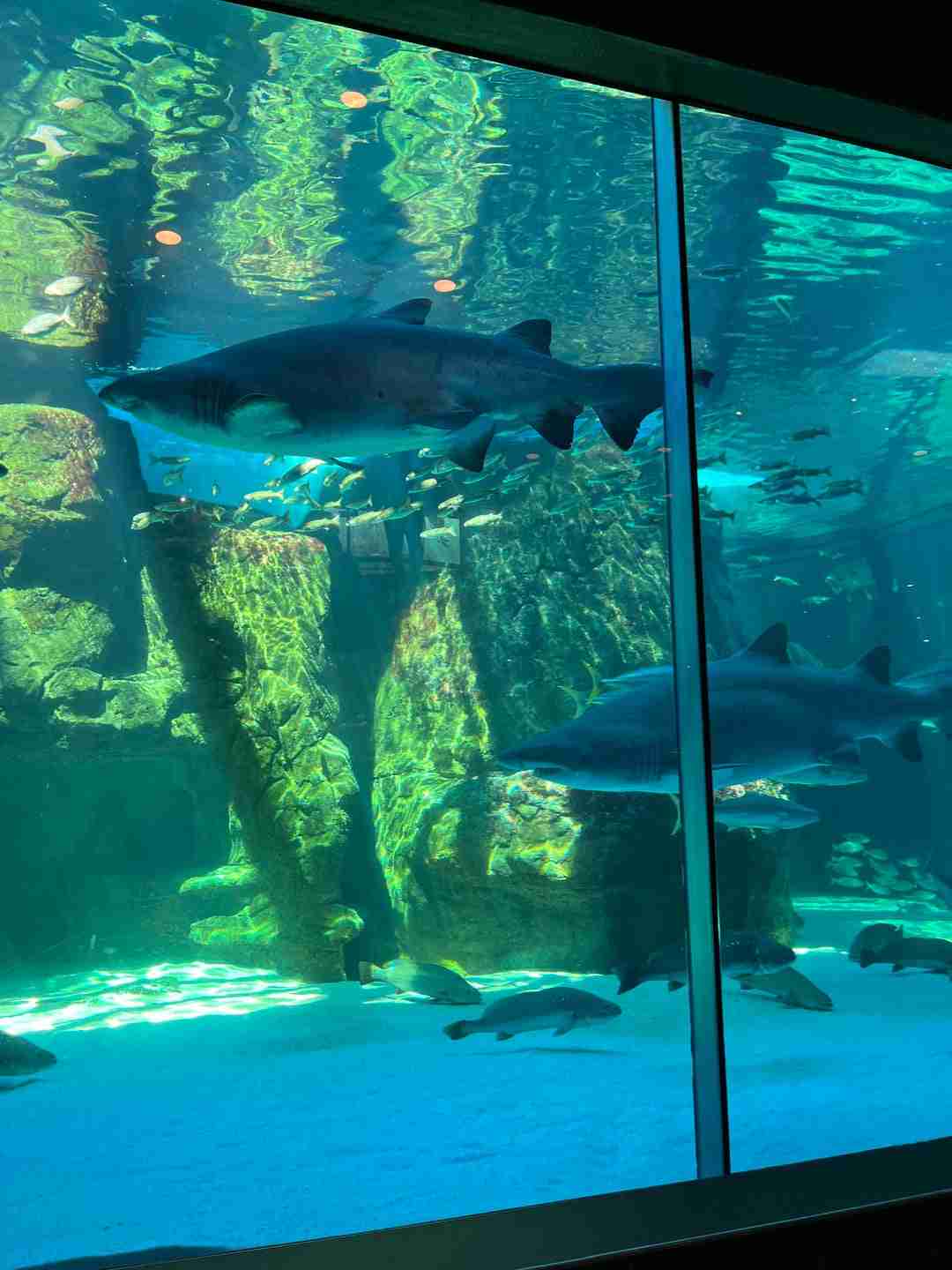
The Two Oceans Aquarium at the V&A Waterfront earns its name from a genuinely compelling concept: the Cape area marks the meeting point of the Atlantic and Indian oceans, and the aquarium showcases the distinct marine ecosystems and life forms of both. Giant tanks house sharks, turtles, and fish in more colors than you’d think possible — a well-structured experience that makes the increasingly urgent challenges facing the world’s oceans feel personal. It works best as a morning visit, particularly if you’re traveling with kids. Book skip-the-line tickets during high season to avoid a lengthy waiting line that undermines the experience before it starts.
Other Things to Do in Cape Town and Around
Beyond the core itinerary, the Cape Town region offers enough to fill another week without repetition. The wineries of Stellenbosch, Franschhoek, and Paarl reward a dedicated day trip — and for those who prefer not to worry about driving, group tour options run the full Western Cape circuit, including the iconic Franschhoek Wine Tram ride, with stops at four wineries minimum. Private wine tours are also easy to arrange for a more tailored region experience.
For a closer-to-city wine fix, Groot Constantia — the oldest established wine farm in South Africa, founded in 1685 by Cape governor Simon van der Stel — is reachable by Uber in roughly 25 minutes. The Cape Dutch architecture here gives real texture to the story of early Dutch settlers, while the cellar tour and wine tasting followed by lunch at the casual Jonkershuis restaurant — where Cape Malay influences show up beautifully on the plate — makes for a genuinely satisfying afternoon. If timings are tight, Beau Constantia up the mountainside hosts a Chef’s Warehouse outpost for fine-dining, while Constantia Glen below offers vineyard views, outdoor seating, and flatbreads on Friday and Saturday evenings. Both are on the hop-on hop-off Purple Route via Constantia Valley.
Whale watching in Hermanus — 100 km from Cape Town — is a genuinely world-class experience, particularly between June and November when southern right whales come in close to mate and give birth. Humpbacks and Bryde’s whales also make season appearances, and on good days these enormous animals are visible from land-based lookouts without even boarding a boat. A full-day tour from Cape Town covers it comfortably; the V&A Waterfront marine life tour offers a shorter alternative with realistic sightings if Hermanus doesn’t fit the schedule.
For wildlife without a multi-day safari commitment, the Aquila Reserve near Cape Town runs malaria-free safari tours through private reserves — a smart option for families with kids who want Big Five wildlife without the logistics of traveling to national parks. It’s accessible as a day trip and genuinely impressive given how close it sits to the city.
Two smaller but worthwhile additions: the Seapoint Promenade — an easy stroll or bike hire along the urban park near Cape Town Stadium — makes for a properly relaxed afternoon activity when your legs need a break from the main itinerary. And for serious art lovers, the Norval Foundation in Tokai stands as one of the most highly rated contemporary art gallery experiences in the region — a quiet, essential stop that most visitors miss entirely.
Tips for Visiting Cape Town
Cape Town is a major city with real crime dynamics, and approaching it with the same sensible awareness you’d bring to any urban destination serves you well. Keep valuables out of sight, store wallets and money in a zipped bag to deter pickpockets, and stay aware of your surroundings — especially in less touristy areas. Hotel staff will often advise against walking after 5pm in many neighborhoods, and that advice is worth taking seriously. Ubers in the evenings consistently offer a safer option than navigating unfamiliar streets on foot — the areas vary significantly in character and it pays to know which ones you’re in.
When packing for Cape Town, prioritize comfortable walking shoes with real grip — Bo-Kaap’s hilly sections, the hiking trails on Table Mountain and Lion’s Head, and general city walking demand proper boots or at minimum sturdy footwear. Pack beach gear without fail: beaches, pools, and sunshine are constants here, and reef safe sunscreen and flip flops will earn their place in your bag every single day. One thing most first-timers underpack: something genuinely warm. The Atlantic can whip up a serious chilly breeze even in summer and the weather is changeable enough to catch you out. The tap water is perfectly drinkable, so bring a reusable flask and stay eco-friendly. Finally, a South Africa travel adaptor plug is non-negotiable — your devices won’t charge without one.