13 Best Beaches Near Rome for a Perfect Day Trip (2026 Local Guide)
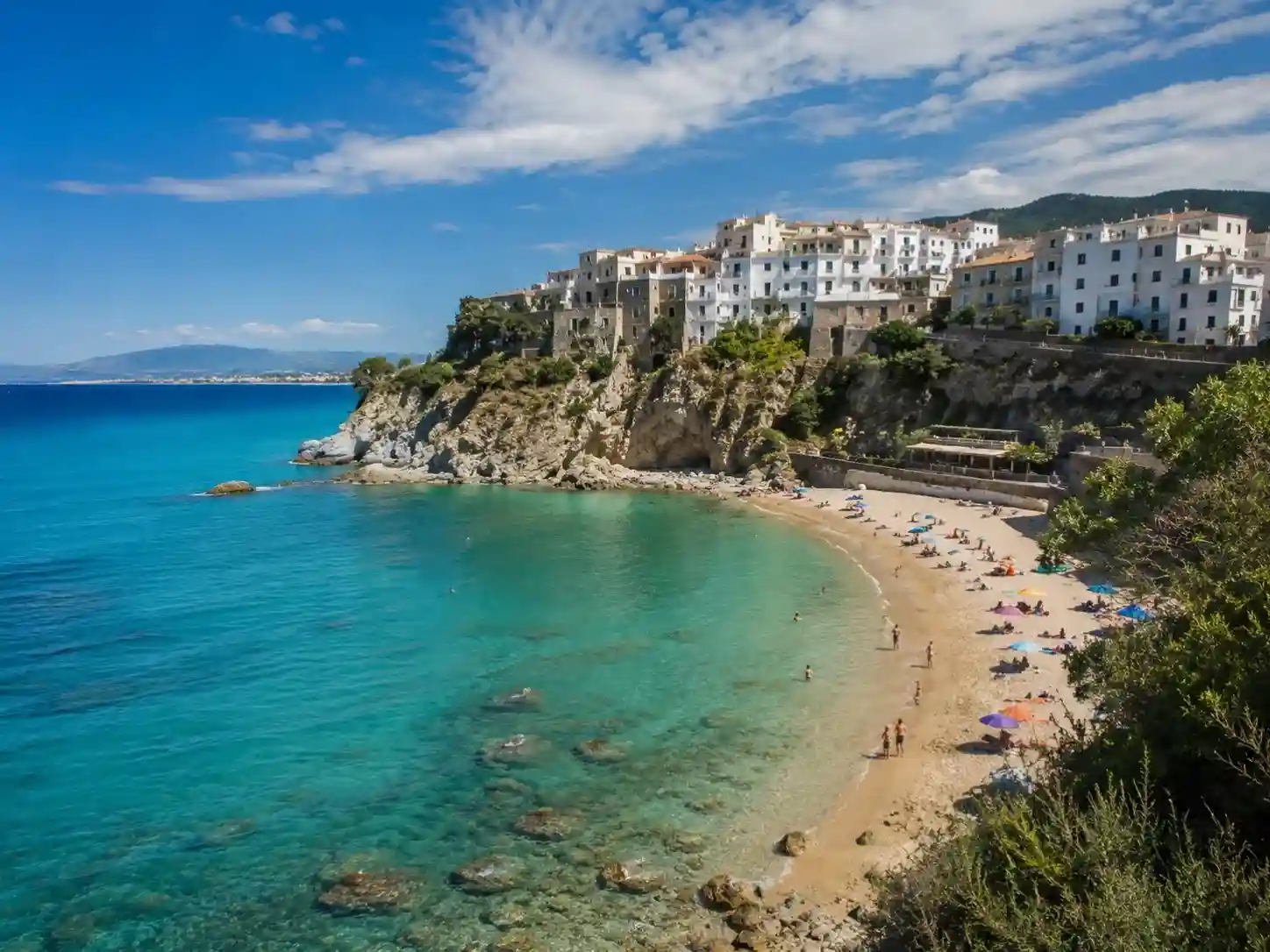
Rome is a city that swallows you whole — the heat, the history, the chaos — and after a few days, even the most devoted traveler starts craving something cooler. I felt this on my third summer visit, standing in a piazza at noon, genuinely fantasizing about salt water. The good news? The Lazio coastline is far more rewarding than most people expect, stretching from the Tiber River mouth all the way down toward Naples, dotted with coastal villages, hidden coves, and proper sandy beaches where the Tyrrhenian Sea turns every shade of turquoise. You just have to know where to look — and more importantly, where not to go.
Here’s the honest truth that most locals won’t volunteer upfront: the beaches within a quick thirty kilometres of the Eternal City — think Ostia and Fregene — are overdeveloped, crowded, and frankly dirty. If you’re only willing to travel an hour or so, you’ll miss the real gems entirely. Push past that threshold — two hours, maybe three hours by road or train — and the coast completely transforms. Splendid, quieter stretches with crystal clear, warm seas and soft sand await, the kind where you can actually wade into the water barefoot without navigating beach umbrella traffic. Sperlonga, Sabaudia, Gaeta, and the Pontine Islands represent the payoff for that extra drive — and I’d take any of them over a ritzy beach club on a hot summer day without hesitation.
Sperlonga
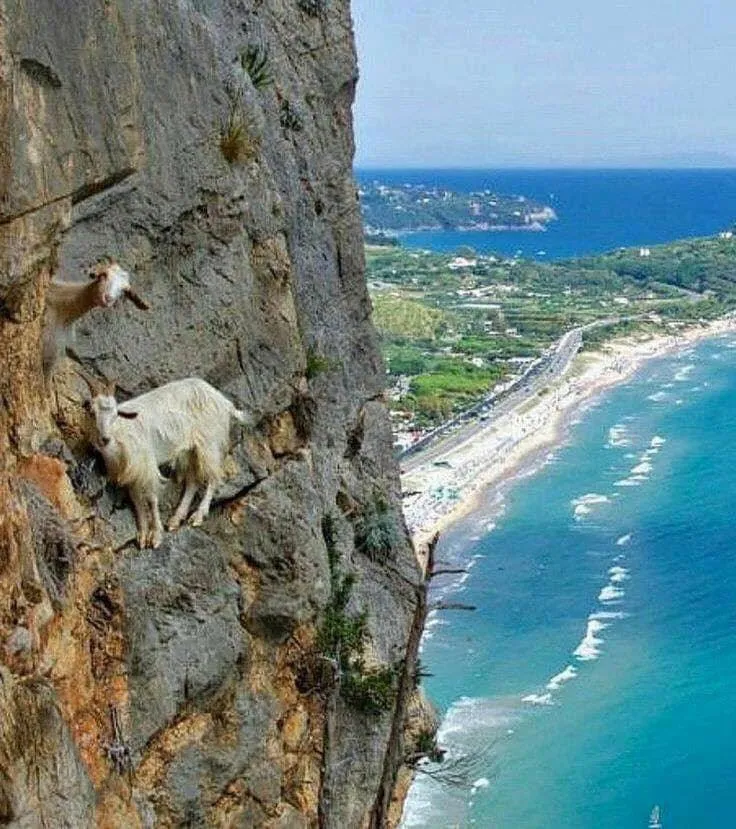
Pull up a map of the Lazio coast and trace your finger roughly 148 kilometers south of Roma Termini, and you’ll land on Sperlonga — a car-free, hilltop coastal village that genuinely earns its spot in I Borghi più belli d’Italia (Italy’s most beautiful villages association). The white sandy beach below town is one of those rare places where the water stays crystal clear even in peak season, with calm seas and fine sands that stretch across six named sections — Angolo, Canzatora, Fontana, Bonifica, Salette, and Bambola — each carrying its own character. The Blue Flag designation here isn’t ceremonial; it reflects a genuine commitment to cleanliness that you’ll notice the moment you arrive. Avoid the August crush if you can — June or September deliver the same Mediterranean magic with a fraction of the foot traffic, and the vibe shifts beautifully toward off-season peaceful.
Getting here requires some patience, which is arguably part of its charm. The train from Roma Termini to Fondi-Sperlonga station takes one and a half hours, followed by a local bus (running only a few times daily, so time it carefully) of about 20 minutes, then a 10-minute walk to the beach itself. Altogether, budget at least two hours for the train journey. Once you’re checked into one of the many B&B or hotels scattered across the hill, the payoff begins. Wander up through the narrow alleys of the old town — past bars and restaurants selling local foods, handmade ceramics, and jewellery — until you reach the tiny Cappella di San Rocco, a chapel barely larger than a living room, with an astonishing view of the Tyrrhenian Sea that stops conversations cold.
History here runs surprisingly deep. Emperor Tiberius had the same instinct as every sun-seeking Roman after him — he built a summer villa stretching 300 metres along the beach, complete with baths, a private port, and a swimming pool carved into a thirty-three-metre underground cavern now known as the Tiberius cave. The Tiberius museum holds the archaeological finds from that era, and the grotto itself — essentially a mansion meeting a cave meeting an endless pool — makes every modern beach club look like an afterthought. In the evenings, the piazza fills up with families and friends, laughter spilling out of restaurants serving proper Italian cuisine, the dolce vita feeling entirely unforced. Stay a night or two if your itinerary allows — this place deserves more than a daytrip.
Sabaudia
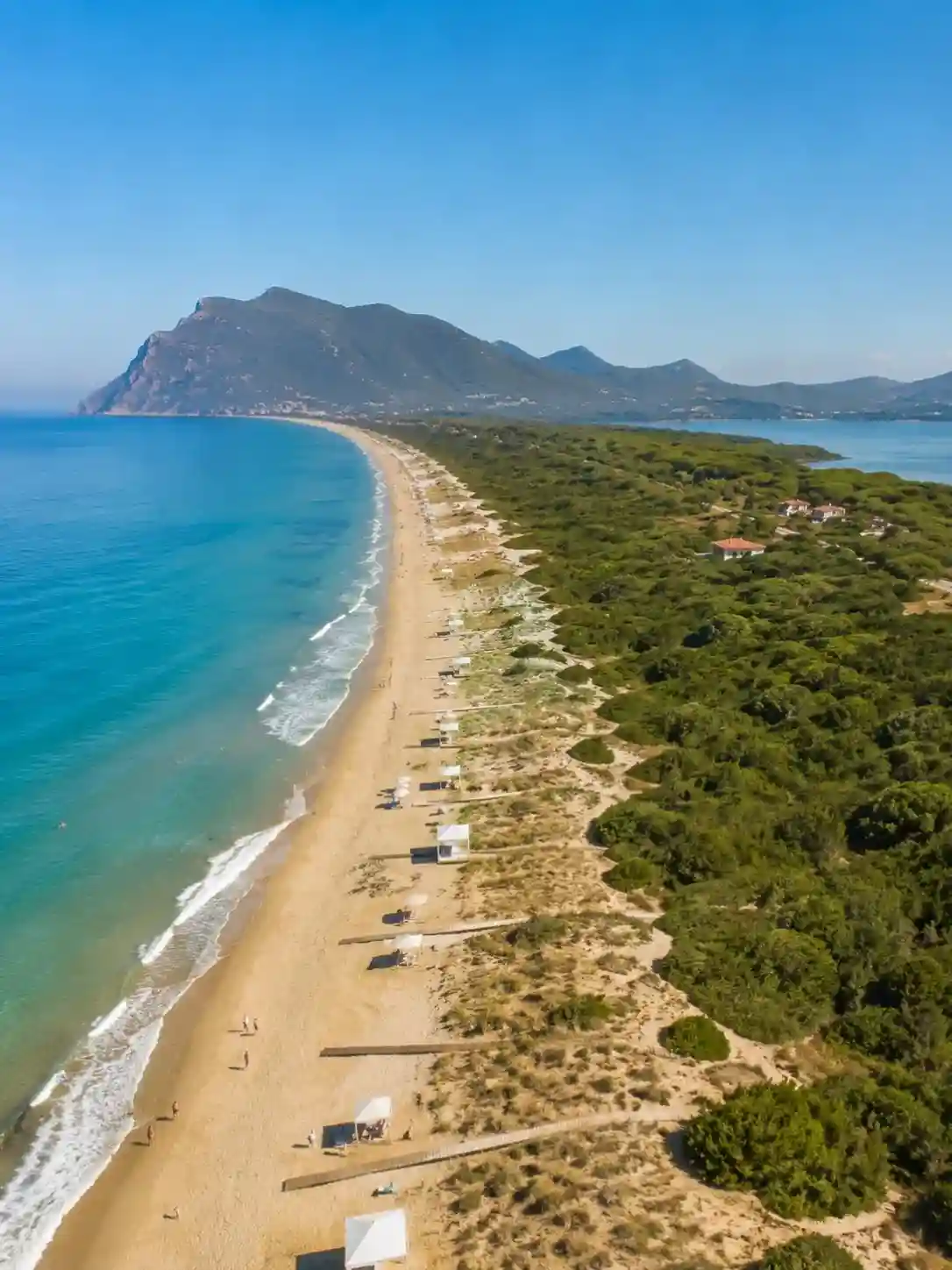
Sabaudia sits on a narrow strip of land wedged between the Tyrrhenian Sea and a chain of lakes inside Circeo National Park, and the setting feels almost engineered for drama — a long headland pushing out into crystal-clear waters, flanked by splendid dunes and thick Mediterranean vegetation that the Circeo forest keeps dense and rejuvenating. The town itself was built in the 1930s under Mussolini as a showcase of Rationalist architecture — a Fascist era experiment in urban planning that, stripped of its political context, actually produces a genuinely striking townscape. At fifteen kilometres long, the beach here is one of the most expansive on the entire Pontine Coast, accessible via wooden walkways that protect the dunes and keep the natural landscape intact.
This has long been the preferred summer destination of wealthy Romans — the kind of exclusive environment where luxury villas and private beaches operate at a remove from the crowds, and where the Blue Flag Beaches designation reflects both ecological sustainability and the general cleanliness of the water. The train from Rome doesn’t extend all the way here, which is precisely why it stays relatively uncrowded — you’ll need a car, making it feel more secluded than destinations with direct rail connections. On the food front, the seaside restaurants serve seaside classics worth lingering over: spaghetti con le vongole, fritto misto, and the kind of unfussy coastal cooking that high-class Italians have been coming back to for decades. My pick for a swanky (in the relaxed, mid-century beach shack sense) afternoon is Saporetti — not showy, just right.
Santa Marinella
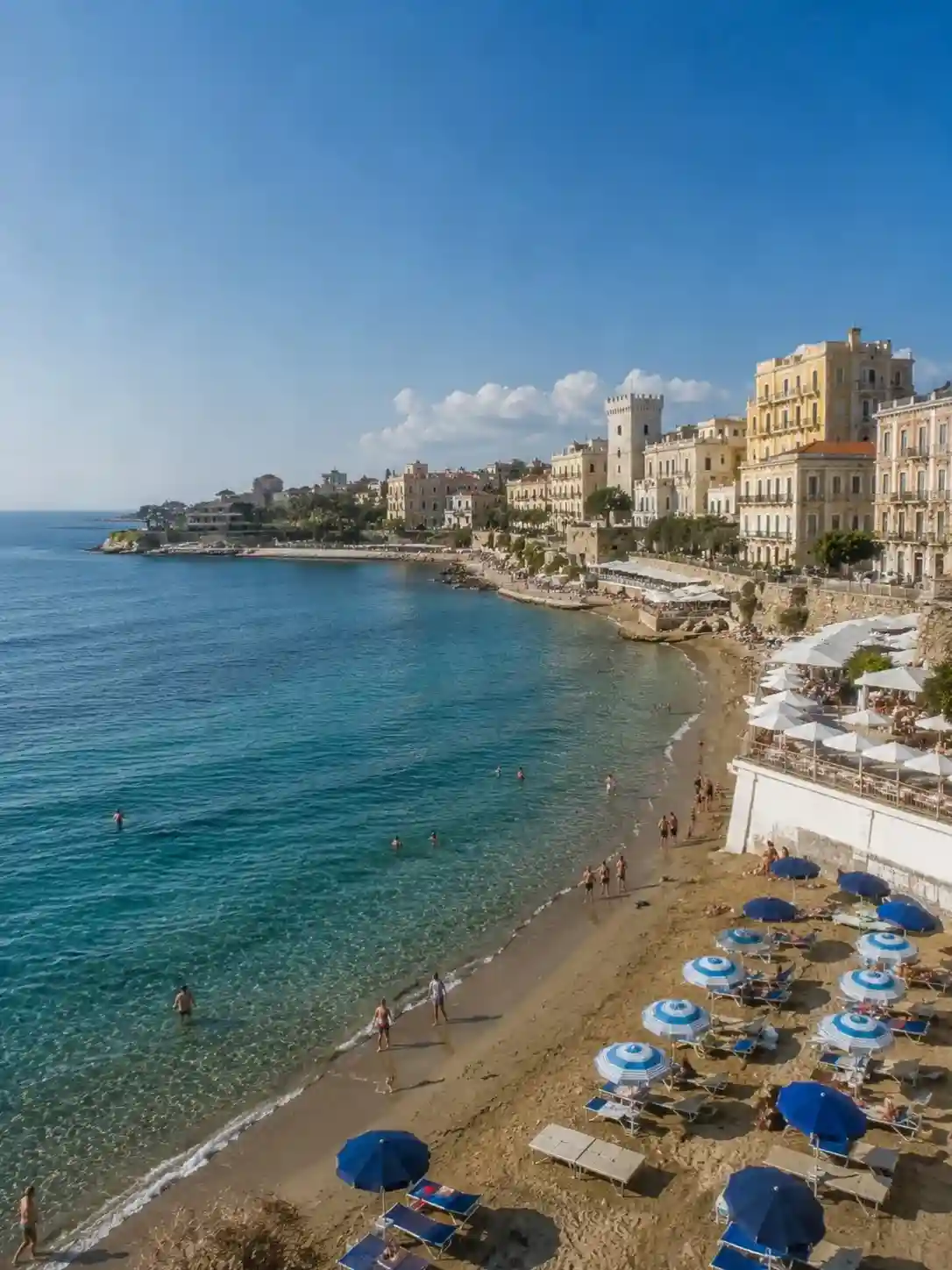
Santa Marinella is the kind of beach town that rewards lower expectations. It won’t blow you away the way Sperlonga might, but compared to the mess of Ostia and Fregene, it feels like a genuine exhale — noticeably nicer and cleaner, with a crescent of sandy beach framed by an architectural mish mash of Liberty style, Art Deco, and post-war styles that gives the seafront genuine character. Summer weekends bring the crowds, so arriving on a weekday morning, claiming a spot at one of the beach clubs, and spending a leisurely lunch at Bianca — where the crudo platter, lobster linguine, and a final lemon sorbetto make for a near-perfect sequence — is the move. It’s the kind of Rome escape where the goal is simply to decompress, lounge chair and umbrella secured, with nowhere particular to be.
Santa Severa
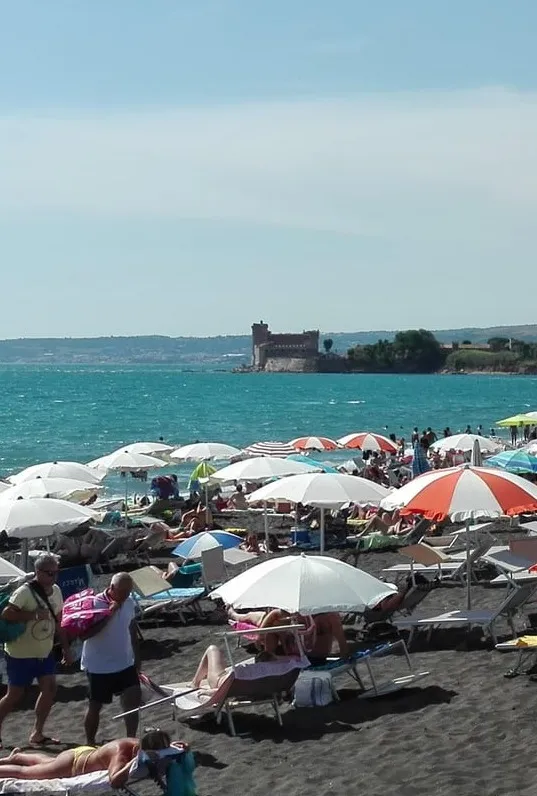
One town north of Santa Marinella sits Santa Severa, and in my honest assessment, it edges ahead on almost every measure that matters for a beach day. The beach itself is larger, which means more genuine room to spread out rather than negotiating territory between beach clubs. The defining landmark is a 14th-century castle — a proper medieval castle — that rises directly from the shoreline and reframes every photograph you take. Uniquely among the towns along this stretch, Santa Severa maintains a spiaggia libera (genuine free beach, with free access and no sunbed rental required) running right alongside the castle walls, which also makes it one of the few places where dogs are welcome on the sand. For a sit-down afternoon, L’Isola del Pescatore — all blue and white tables and chairs, relaxed and casual in the way you’d expect from the Greek islands — provides the right backdrop for a long lunch with the Tyrrhenian just beyond the railing. It’s a public beach with real soul.
Ostia Beach: The Closest Beach to Rome
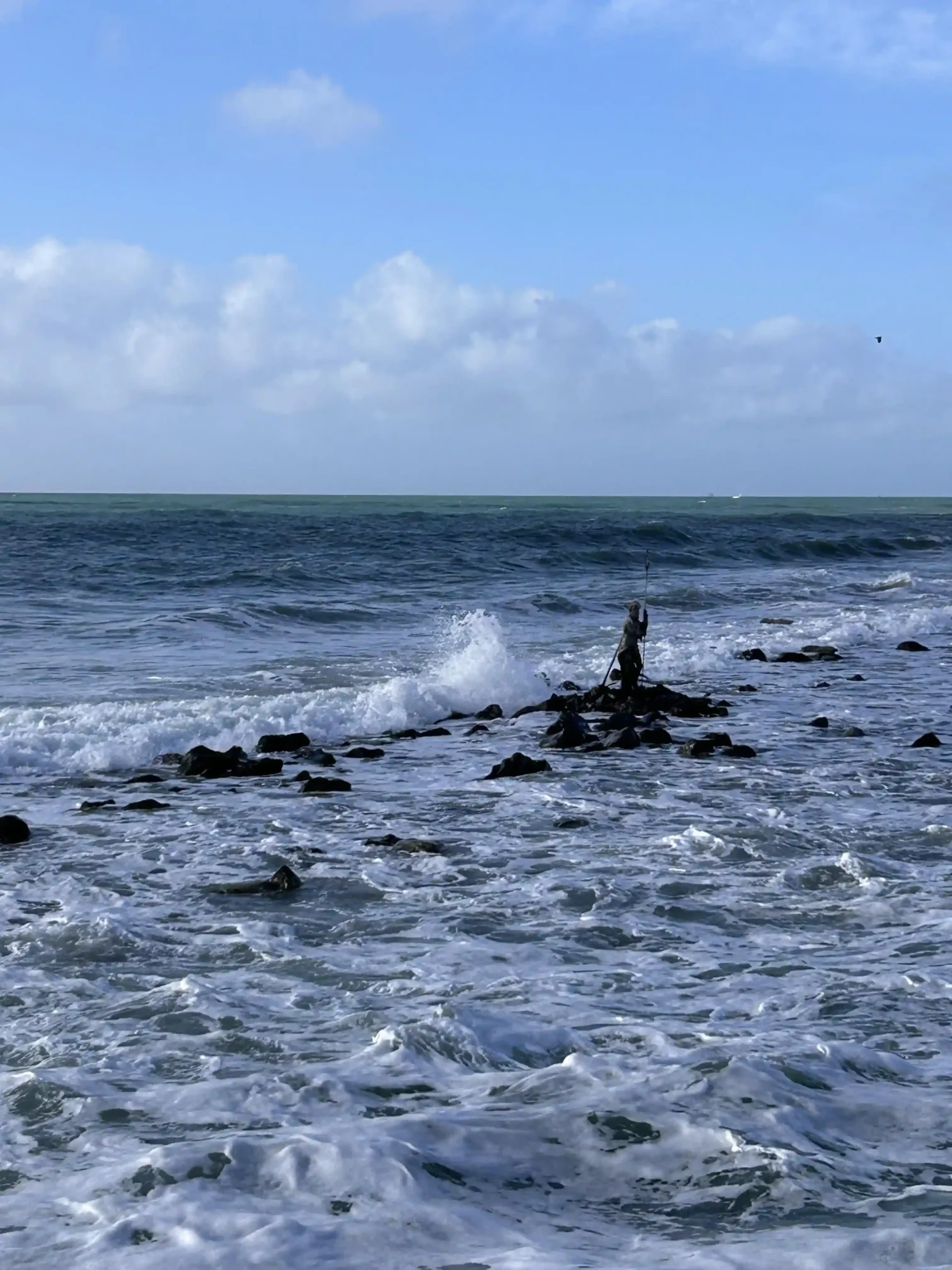
Ostia — officially Lido di Ostia — is Rome’s beach by default and by geography, sitting just over thirty kilometres from the city center at the mouth of the Tiber River. The esplanade, the beach clubs, the road built specifically to funnel Romans here — all of it dates back to Mussolini’s urban expansion, when Lido di Ostia grew from a small trading port into a full seaside district. Tourists tend to stay in the city; it’s the locals who pile in on summer weekends, arriving by car or public transport with the efficiency of a commute. It is not, by any measure, the prettiest beach in Italy — but the area carries unexpected weight as a cult location for literature and cinema enthusiasts, largely because Pier Paolo Pasolini, the writer and filmmaker who used these shores as settings in his novels, was murdered here in 1975. The attractive villas along the coast and the layers of cultural history make it worth understanding, even if the beach itself isn’t the reason you’d come.
Maremma Coast & Island of Giglio
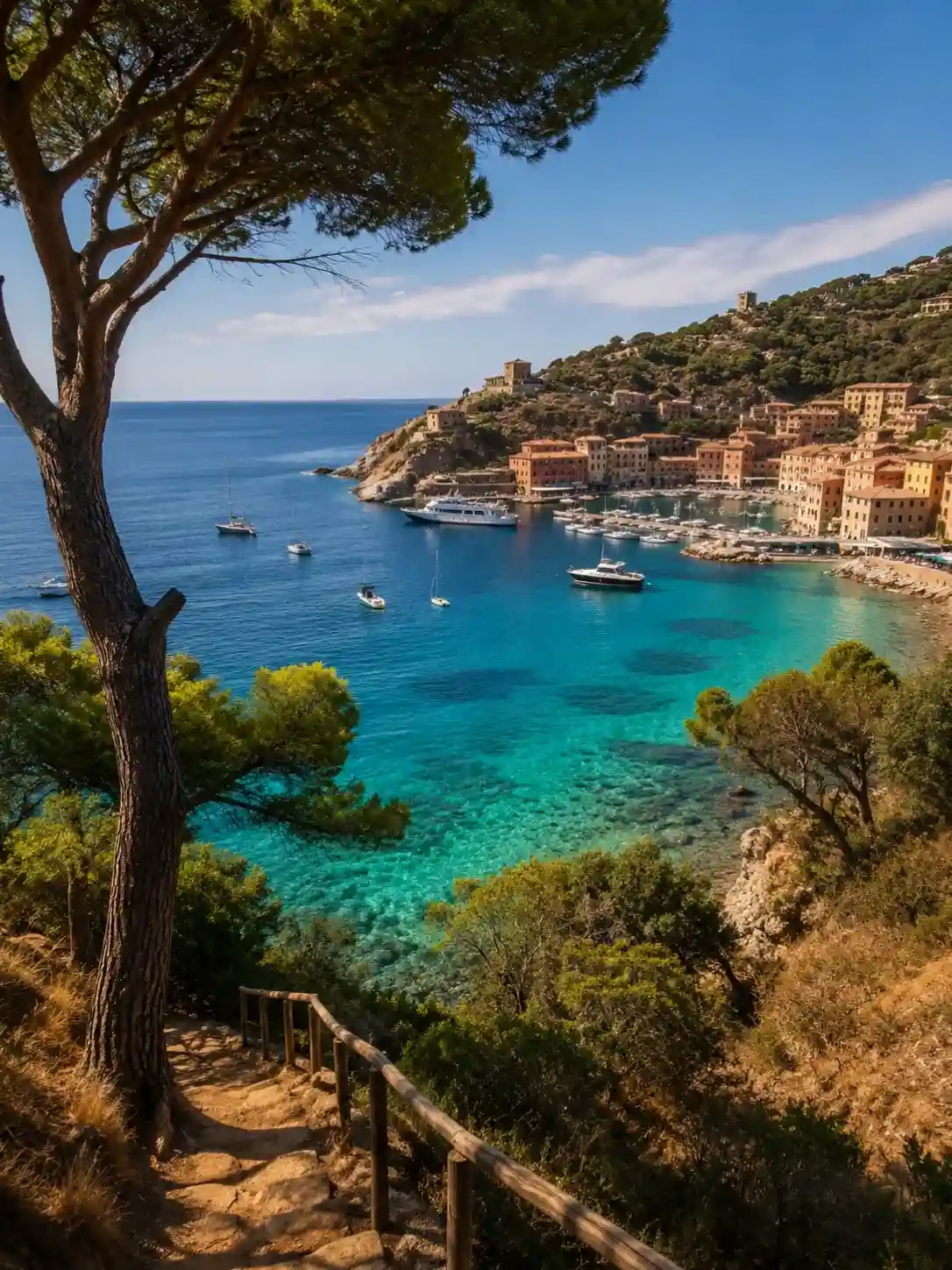
Commit to two hours — or even closer to three hours — from Rome and the Maremma coast opens up into something genuinely extraordinary: nearly a hundred beaches spread across one of the most varied and undervisited stretches of the Italian Mediterranean. The Gulf of Baratti is where I’d start — fine sand, shady pine forests running down to the waterline, and the kind of unhurried beach atmosphere that belongs to a different Italy entirely. But the real reward for those willing to take the ferry from Porto Santo Stefano is the Island of Giglio, a piece of the Med so beautiful it seems almost unfair that it’s been overshadowed by the Costa Crociere tragedy. Its best beaches — Cala dell’Arenella and Caldane Beach — can be reached on foot or by boat from Giglio Port, and the coastline here belongs firmly in the category of paradise.
Getting to Giglio involves a few moving parts worth planning ahead. By fast train, Populonia is reachable from Rome in roughly two and a half hours for around 30 Euros; the slow train option runs every two hours at closer to 15 Euros but requires a change at Grosseto, with the ATM bus connecting onward to the beach zones. For the ferry to the island itself, head to Porto Santo Stefano — from Rome by rail, that means getting off at Orbetello Scalo (1 hour 45 minutes), catching bus number one (running every thirty minutes, taking twenty minutes), and then boarding the ferry for the final 45 minutes crossing. If taking your car across, book ahead with either toremar.it or maregiglio.it — roughly 10 Euros per person on foot, 35 Euros with a vehicle. For an overnight stay, the Poggio All’agnello Country & Beach Residential Resort on the Gulf of Baratti side is worth the extra night, and on Giglio itself, the Hotel Arenella sits as close to the water as you’d want.
Gaeta: A String of Pretty Mediterranean Beaches
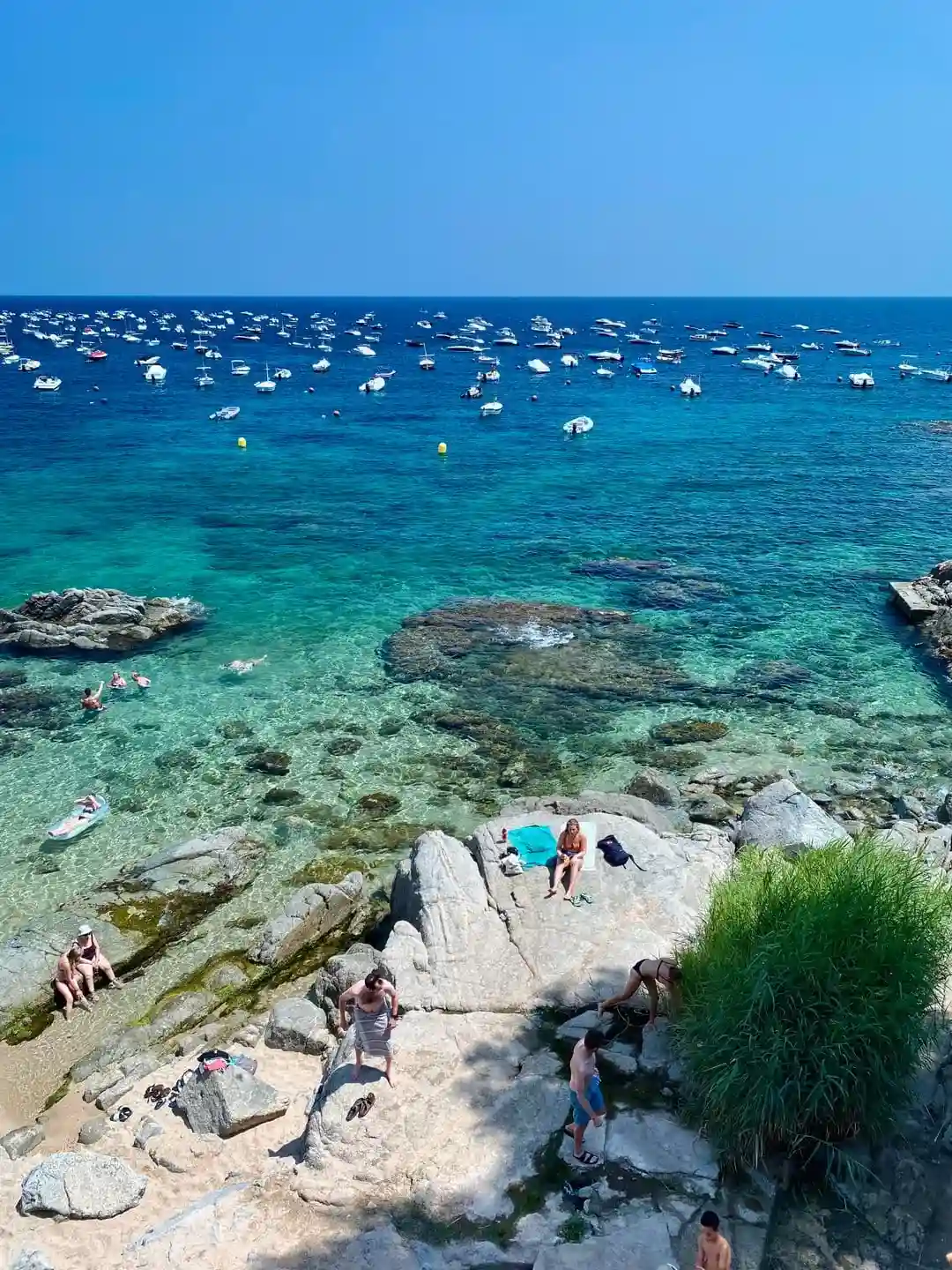
Positioned at the southern edge of Lazio on the border with the province of Campania — roughly two-and-a-half hours from the capital city — Gaeta is the kind of destination that justifies the drive entirely on its own. Seven distinct beaches, all carrying fine golden sand and crystal-clear water framed by proper Mediterranean vegetation, line a coastline that feels nothing like the flat, featureless stretches further north. The main beach, Serapo, sits beside Monte Orlando on the southern side of town, near the striking Montagna Spacata sanctuary — it’s the busiest of the seven but genuinely well-suited to families, with calm water and ample beach huts. Fontania, sitting practically next door, is small enough to reach on foot or by swim, while Spiaggia dei 40 Remi requires a short boat transfer that filters out the less committed.
For those willing to descend 300 steps down the cliffside, Arenauta (alongside its neighbor Ariana) rewards the effort with one of the truly untouched sections of the Lazio coastline — no beach clubs, no vendors, just raw Mediterranean shoreline at its most pristine. San Vito beach draws a more specialist crowd: divers specifically, drawn by the caves and the exceptional seabed visibility. The longest and most socially varied stretch is Sant’Agostino bay, running both public sections and private sections side by side, with a substantial cliff wall that attracts climbers who treat the rock face as their own vertical golden playground. Gaeta is genuinely multi-dimensional — part historic narrow streets and terrace restaurants, part serious beach destination.
Terracina: Sea and Fun
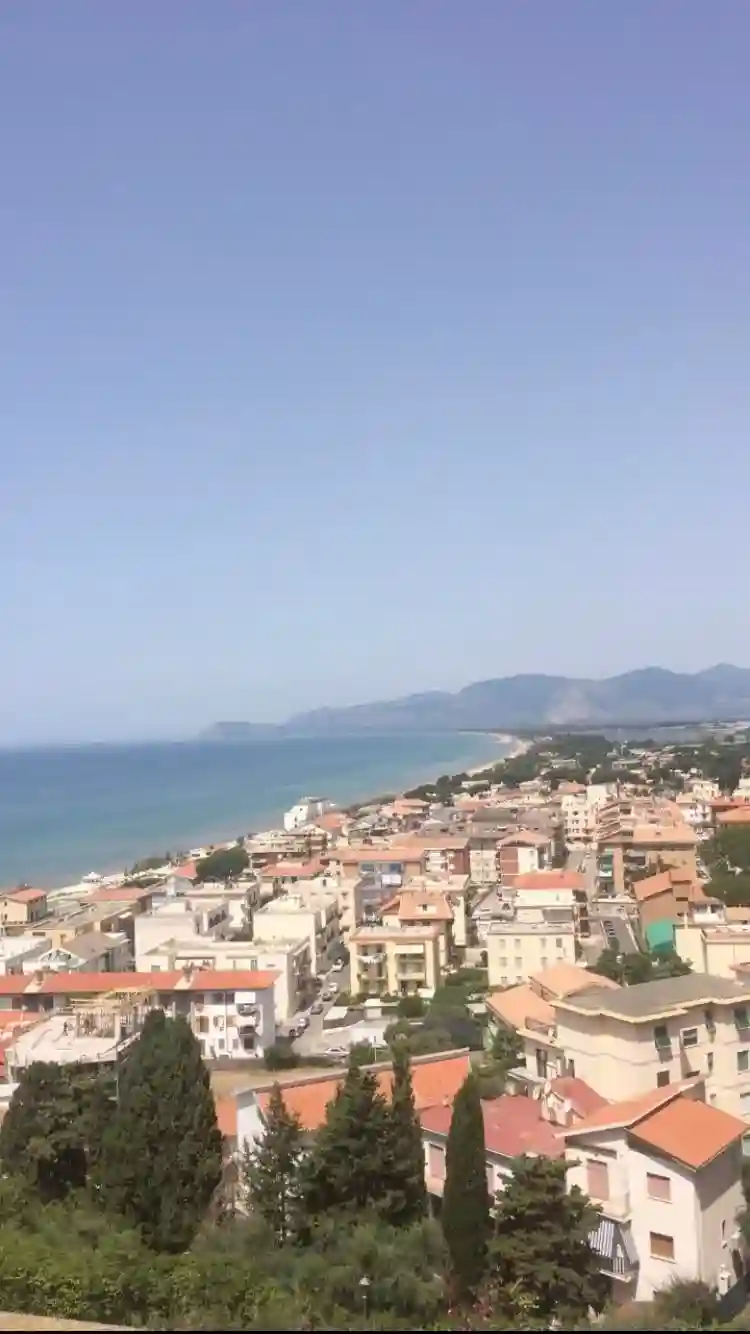
Roughly 100 kilometres from Rome in the Ausoni mountain range, Terracina pitches itself squarely at visitors who want serious relaxation without sacrificing fun — and the long beach here, with its crystal-clear water and golden sand, delivers on both. The nightlife scene around the waterfront draws a noticeably young Italian crowd through summer, which gives the whole coast here an energy that more sedate Lazio beach towns don’t share. What keeps Terracina interesting beyond the beach itself is the ancient layer running through it: the ruins of the temple of Jupiter Anxur crown Mount Sant’Angelo above town, dating to the 2nd century AD, and the interplay of historic and ancient architecture against the working port and modern canals creates a Mediterranean atmosphere that earns more than just a beach day. The coastline all the way toward Gaeta is visible from the heights — one of those views that makes the detour feel entirely justified.
Ventotene: A Small, Dreamlike Island
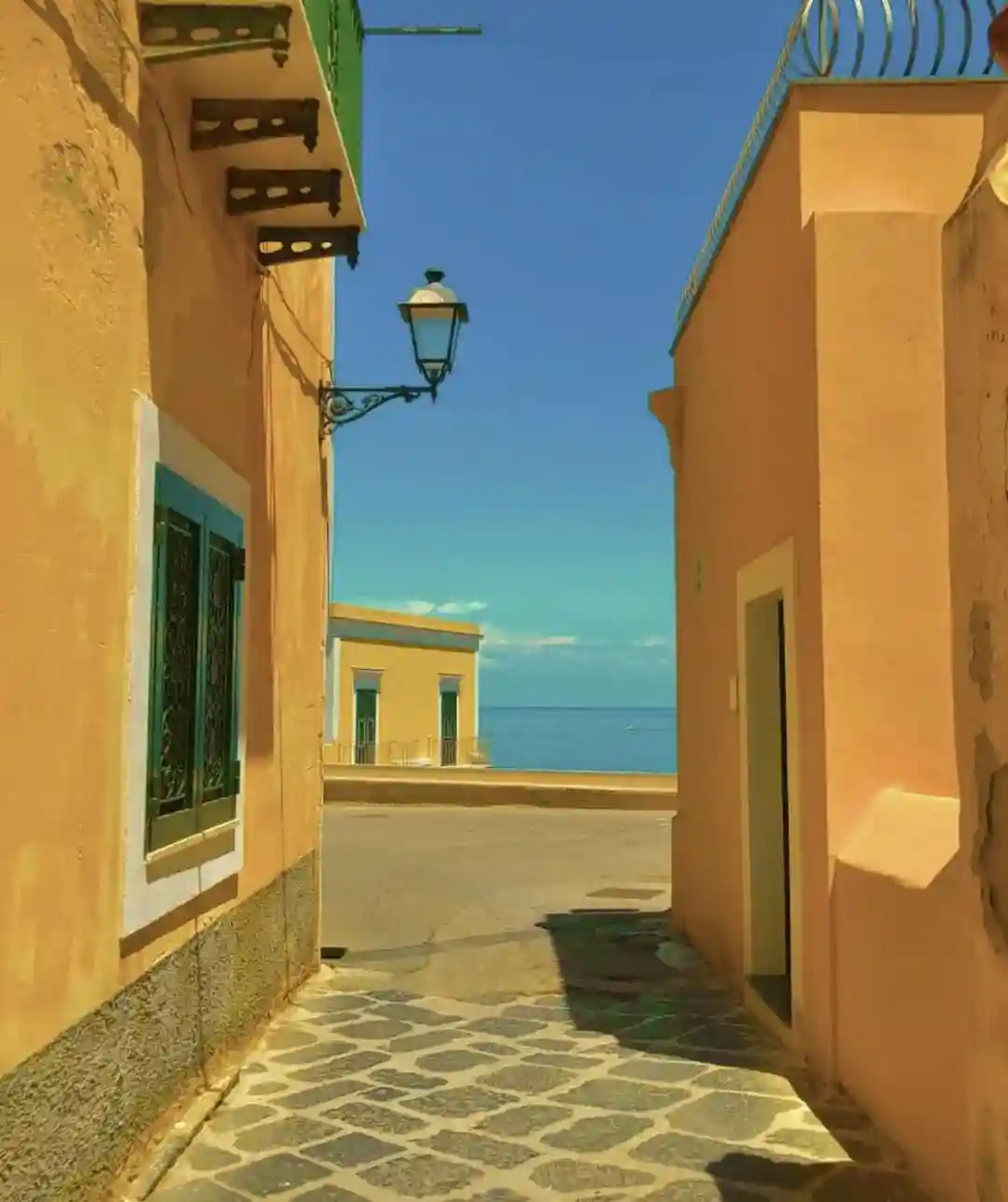
Ventotene sits within the Pontine Islands group at barely two square kilometres in size — a fragment of protected land in the Mediterranean where the pace of modern life simply hasn’t landed yet. The virgin coastline here produces beaches like Cala Nave, where dark volcanic sand meets lush green vegetation in a combination that looks genuinely unlike anywhere else on the Lazio coast. The volcanic rock that shapes both the landscape and Porto Romano — the oldest of the island’s two ports, carved directly from the rock by ancient hands — gives Ventotene a raw, geological texture that feels more dreamlike than constructed. The colourful houses of the main settlement complete the picture in a way no postcard quite captures.
For anyone drawn to the underwater world, the transparent water and network of caves around the island make it one of the better diving and snorkelling destinations in this part of the sea. The seabed is exceptional — beautiful, unhurried, and genuinely worth the effort of the crossing. The more modern Porto Nuovo handles the ferries and larger boats that connect Ventotene to the mainland, and the paradisiacal beaches accessible along the island’s edges reward those who arrive with a sense of natural reserve and patience. This is one of those places where the beauty is inseparable from the effort required to reach it.