35 Best Places to Visit in Greece in 2026: Hidden Gems, Islands & Must-See Destinations
Athens
Few capitals on earth carry 2,500 years of history in their bones the way Athens does — and even fewer do it while also being a certified foodie hotspot with crazy-low prices. I’ll be honest, the city is polarizing: it hit me like a wall of ancient ruins, street art, and diesel exhaust all at once, but by the second morning, I was completely under its spell. Stay somewhere in Plaka district or hunt for an Airbnb around Monastiraki or Thissio — $30–$50 per night is realistic for decent rooms at places like Athens Quinta or Dryades & Orion hotel, and even dorms at Bedbox Hostel deliver that vibrant spirit you’re after.
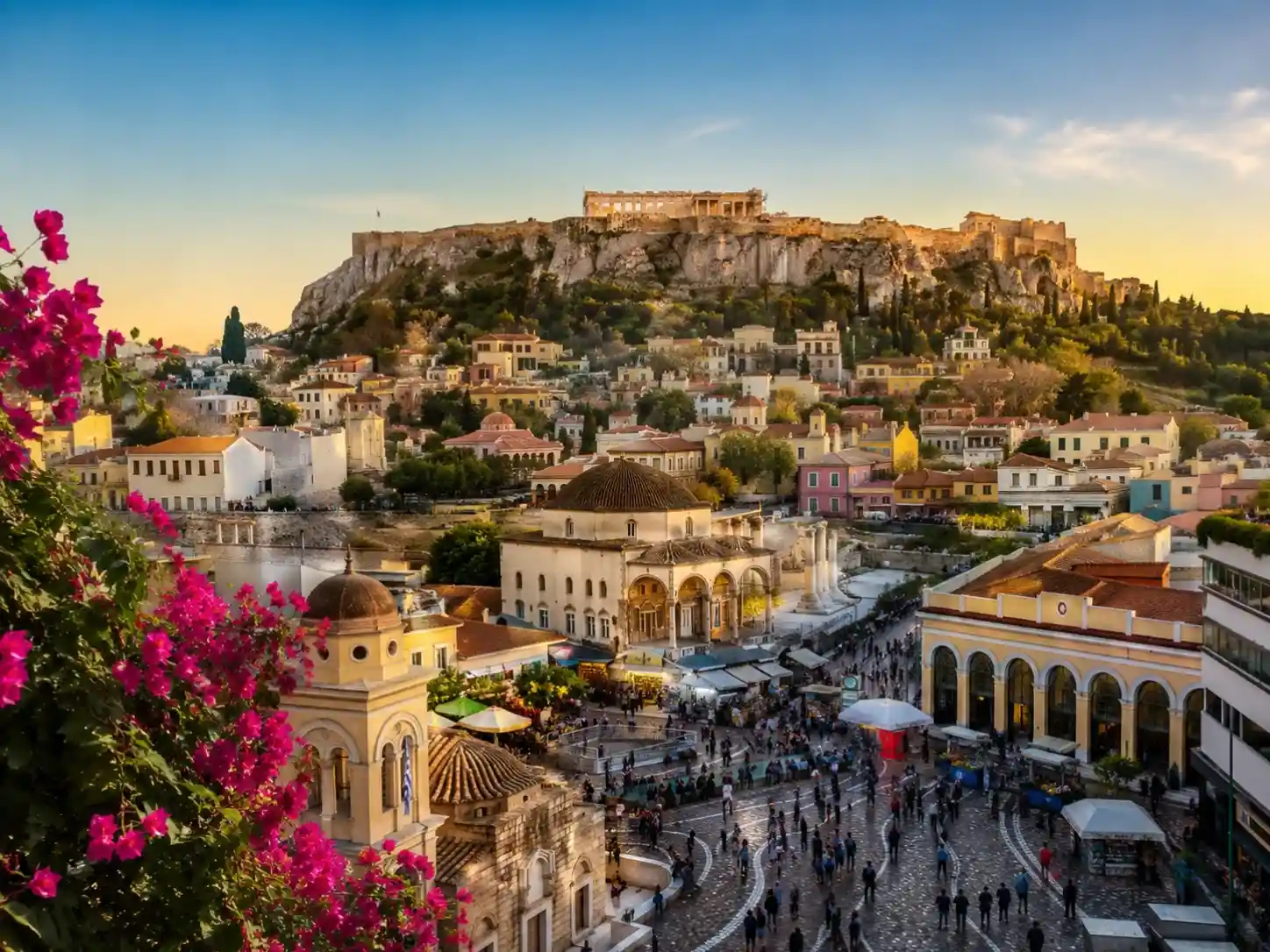
The Acropolis rising from its rocky outcrop above the city’s white and beige buildings is the kind of scene that genuinely earns the word iconic — this 5th-century BC monument, built by the Greeks and later occupied by Romans and Ottomans, sits atop what many call the birthplace of western civilization. Don’t just peer at the Parthenon from below; book a guided tour and walk the Sacred Way yourself, then duck into the Acropolis Museum for the full story of what the ancient Agora and Roman Forum once meant to these oldest cities in Europe. I tacked on a late afternoon walk through Monastiraki Flea Markets — leather goods, vintage treasures, and a rooftop bar with hilltop views over golden marble ruins at dusk made that detour entirely worth it.
What most guides skip is how electric the graffitied backstreets of Gazi and Psirri feel after dark — murals by serious street artists, gallery-lined squares, and a lively cultural scene that rivals any European capital. Pull yourself away for a walking food tour through markets, delis, and bakeries piled with souvlaki, loukoumades (those irresistible honey-soaked doughnuts), and Bougainvillea-draped tavernas serving gyro stuffed with grilled lamb, pita bread, tzatziki sauce, vegetables, and french fries. Wash it all down with a glass of retsina and then catch a high-speed ferry to the car-free island of Hydra — an artists’ colony of boutiques, cliffside galleries, windmills, monasteries, and uncrowded beaches reachable by water taxi — before committing to 2 or 3 nights back in the city’s atmospheric embrace.
Milos
Milos — sometimes spelled Meelos — is one of those Cyclades island chain destinations that travel people whisper about like a secret, yet it quietly holds some of the best beaches in Greece across the Southern Aegean. It’s a volcanic island, shaped by 90,000 years of geological drama, and you feel that in everything: the multi-hued rock formations, the hot springs steaming from cracks in the ground along the northern coast, and the abandoned sulphur mines that hint at the inactive volcano still quietly doing its thing underground. Getting here takes either two direct flights daily from Athens or one of several ferry options, and once you land, hiring a car — ideally a 4WD for the eastern half of the island — unlocks all 70 beaches that most day-trippers never find.
Sarakiniko is the image that stops people mid-scroll: bone-white volcanic rocks carved by salt water into a chalky moon-like landscape that looks beamed in from another planet. But spend four nights here and you’ll find yourself equally obsessed with Kleftiko (only reachable by boat, its hidden caves and red-rust caves glowing at midday), the party beach at Paleochori, the quieter sands of Plathiena, the lunar-like beaches at Aghia Kiriaki, and the pretty seaside village of Pollonia up north. Hire a private guide to navigate the fishing coves, sandy beaches, and spots where you can snorkel over an algae-covered shipwreck — a retired geologist guide I found locally turned the whole landscape into a living lesson on Neolithic times and volcanic history.
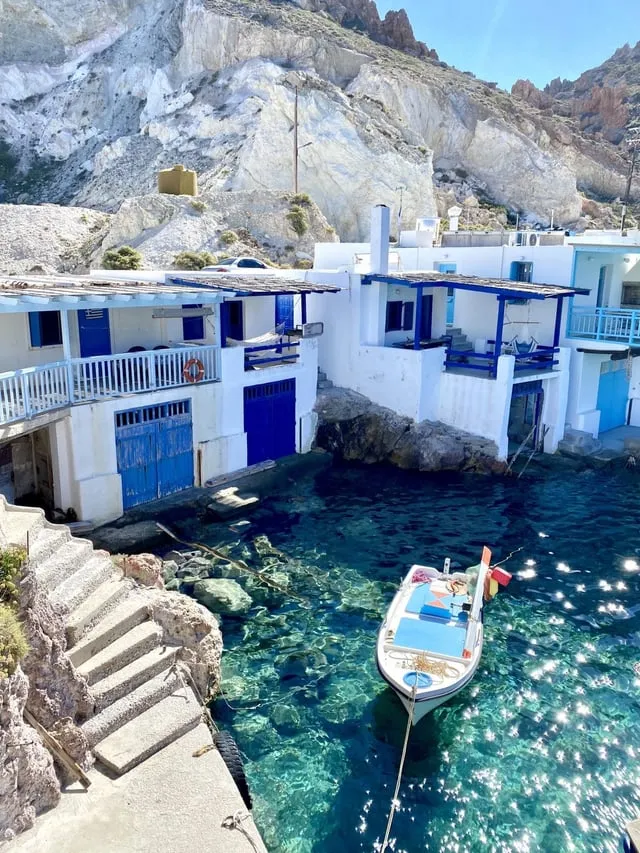
Down in the port towns, the whitewashed homes, old-world-style windmills, and dark blue doors of Chora (the main town) set the scene for dinner. Try the Saganaki shrimp with feta at Avli-Milos, catch the sunset from the Venetian Castle, or book a cookery lesson built around fresh produce and Greek culinary techniques that result in a spread of meze dishes you’ll spend the next month trying to replicate. For beds, the Aeolis Hotel — a solid 3-star at around $44 per night — sits well for exploring. The fishing hamlet of Klima, with its multicolored syrmata (the tiny houses where fishermen once stored their boats), and Little Venice-style waterfront offer panoramic views that are worth every minute of the drive.
Paros
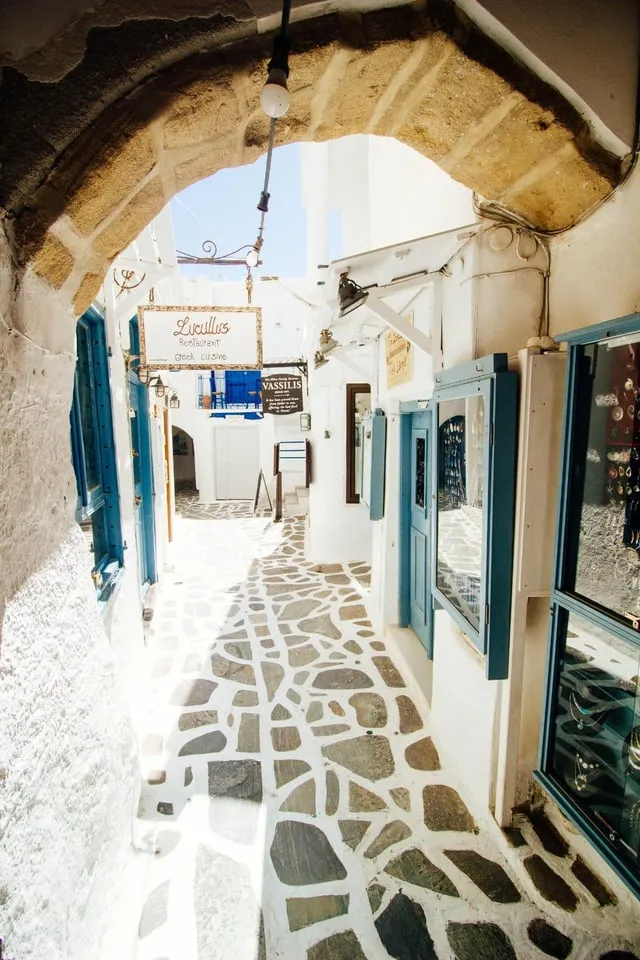
Paros is the Cyclades island that keeps outsiders guessing — it has all the pristine beaches, spectacular natural landscapes, and charming small towns of its more famous neighbours, but without the tour buses, overtourism, or relentless influencer crowds hunting the next sunset shot. The beaches alone make the argument: Santa Maria beach, Golden Beach, Kolombithres beach (those bizarre granite formations rising from the sea), and the long Molos beach stretching past Parasporos cover every mood. Its twin island Anti-Paros is a short ferry ride away and carries its own villages, traditions, and cultures — including a dramatic cave dripping with stalactites and one of the island’s oldest wineries where you can taste five wines alongside Cycladic cheeses in centuries-old cellars surrounded by vineyards.
The medieval capital of Parikia rewards a slow wander through its white-washed Cycladic villages feel: the 13th-century Venetian castle anchors one end, while the Ekatontapiliani — the breathtaking Church of 100 Doors, a 4th-century church with marble exterior, intricate carvings, luminous mosaics, and soaring marble pillars — anchors the other. Some of its snow-white marble came from local quarries that once supplied 80% of all Greek antiquities and marble slabs shipped across the ancient world — you can trace those marble veins right up into the hills of Prodromos, a nearly forgotten remote village whose rugged interior still feels untouched. I stumbled onto a trail that took me through pine-studded hillsides into whitewashed cubist villages I hadn’t even planned to visit.
For eating, Naoussa is where you want to land at dinner — narrow lanes draped in bright-pink bougainvillea lead to a picturesque quay backed by a half-submerged Venetian castle, where restaurants like Yemeni Wine Restaurant and local Souvlakia Kargas serve everything from grilled Gyros & Souvlaki to refined seafood. The hillside village energy here is completely different from Santorini or Mykonos — you’ll find olive oil in every dish, souvenirs that aren’t mass-produced, and an arts scene woven through the crystalline beaches and Antiparos excursions nearby. Those comparing Paros to Milos are debating the wrong question — they’re different enough that both deserve a visit.
Santorini
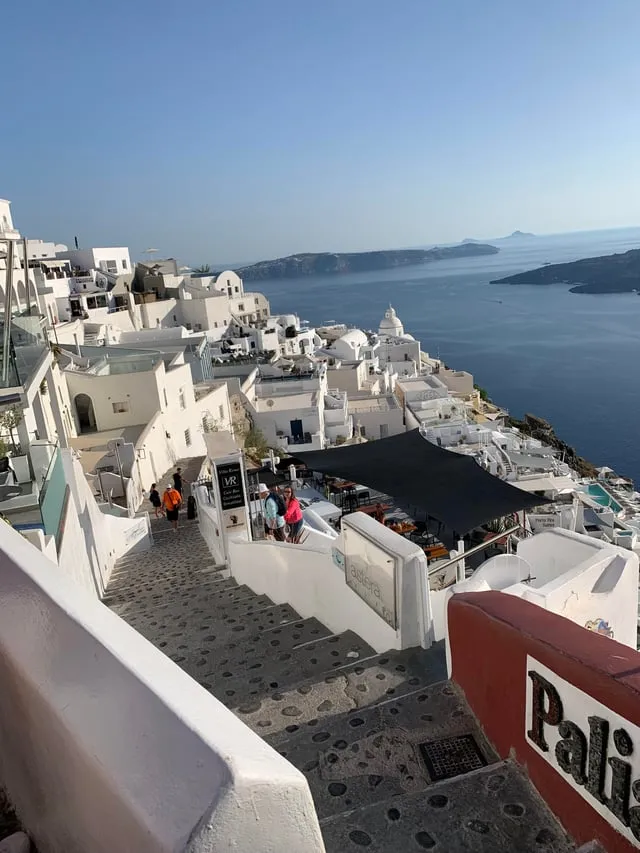
Santorini earns its reputation as one of the most romantic and beautiful places in Greece — but earning it requires understanding what it actually is: a sea-filled crater, a caldera left behind when a volcanic eruption about 3,600 years ago tore apart the island and flooded the center with seawater. What you see today — the white-washed homes, blue-domed churches, and narrow alleyways clinging to the cliff faces of Fira (the island’s capital) and Oia — is civilization literally rebuilt on the rim of a submerged volcano. The postcard-perfect sunsets are real, but the deeper story of this flooded caldera is what makes Santorini feel like one of the world’s most distinguishable destinations.
Most people use either Fira or Oia as a home base and walk the 9km walking trail between them via Imerovigli, the highest point of the crater — allow two hours and time it for late afternoon so you arrive at Oia just as those famous sunset vistas light up. Skip the cable car crowds if you can and instead book a boat cruising day: sulfur hot springs (the sulphur-rich waters will turn your swimsuit yellow — fair warning), black volcanic sand beaches, and a stop at the ancient Bronze Age settlement of Akrotiri, where frescoes and pottery survived under ash for millennia, are all within reach. I paired this with a tasting at Venetsanos winery — a cliffside producer specialising in assyrtiko, a white grape variety grown in volcanic soil, where the production methods are as interesting as the wine — and a catamaran cruise to swim, snorkel, and watch the lighthouse glow at the high cliff edge as the sky dissolved into gold. Late May to early September is peak tourist season; go in the shoulder months if fewer crowds matter more than guaranteed sunshine.
Mykonos
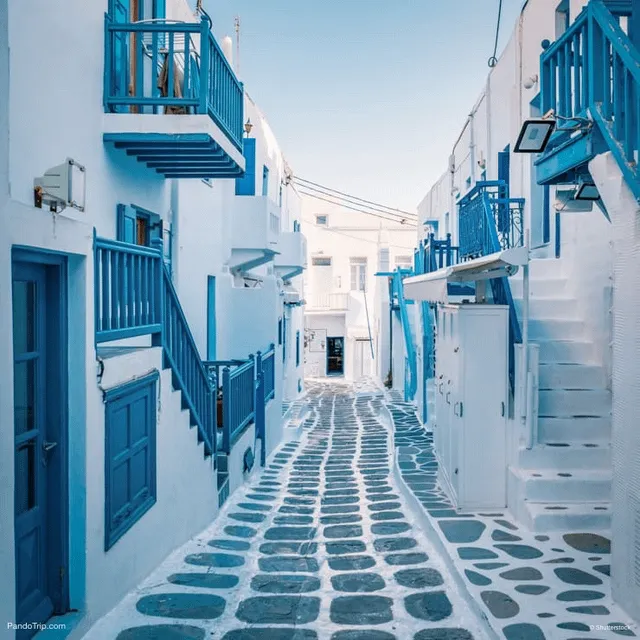
Mykonos sits in the Cyclades wearing two faces at once: it’s the unofficial party capital of Greece, yes — Paradise beach and Super Paradise beach with their busy bars and club music pumping from dawn could be mistaken for Ibiza — but the island also holds old monasteries, art galleries, archaeological sites, and some genuinely serene beaches on the northern part of the island that most visitors in the nightclubs and beach clubs never discover. Families tend to cluster around Órnos, Psaroú, Platis Yalós, and Ayia Ánna; quieter souls head for Houlákia, Kápari, Agrári, and Ayios Stéfanos — and the difference in atmosphere between these and the busiest Greek islands party strip is genuinely remarkable.
Chora — Mykonos Town — deserves a morning before the tour buses arrive: white-washed buildings, colorful doors, bougainvillea trees, purple flowers, and narrow marble walkways along Matoyánni Street lead to the church of Panayia Paraportiani, the Townhall, the castle, the harbor, and a cluster of museums including the Archaeological Museum, Folklore Museum, and Maritime Museum. The famous 16th-century windmills — specifically Boni Windmill, which doubles as an agricultural museum — frame the town’s skyline in that instantly recognizable way. Do a food tour through Renaissance-era churches and Little Venice (those waterside terraces overhanging the sea are entirely as dramatic as they look), tasting louza (the local Mykonian prosciutto), melopita (a honey pie with deep local roots), sharp kopanisti and creamy xinotyro cheese from a 400-year-old bakery, and whatever the fishermen brought in at sunrise.
A 30-minute ferry ride across to Delos — a sacred island and major archaeological site connected to the god Apollo — is one of the most underrated moves you can make from Mykonos. The island is almost entirely ruins, the Mount Kynthos views are spectacular, and for a brief window you feel like you’re standing somewhere genuinely untouched. Then come back to Mykonos for the sunset from the windmills and whatever the nightclubs have in store.
Sifnos
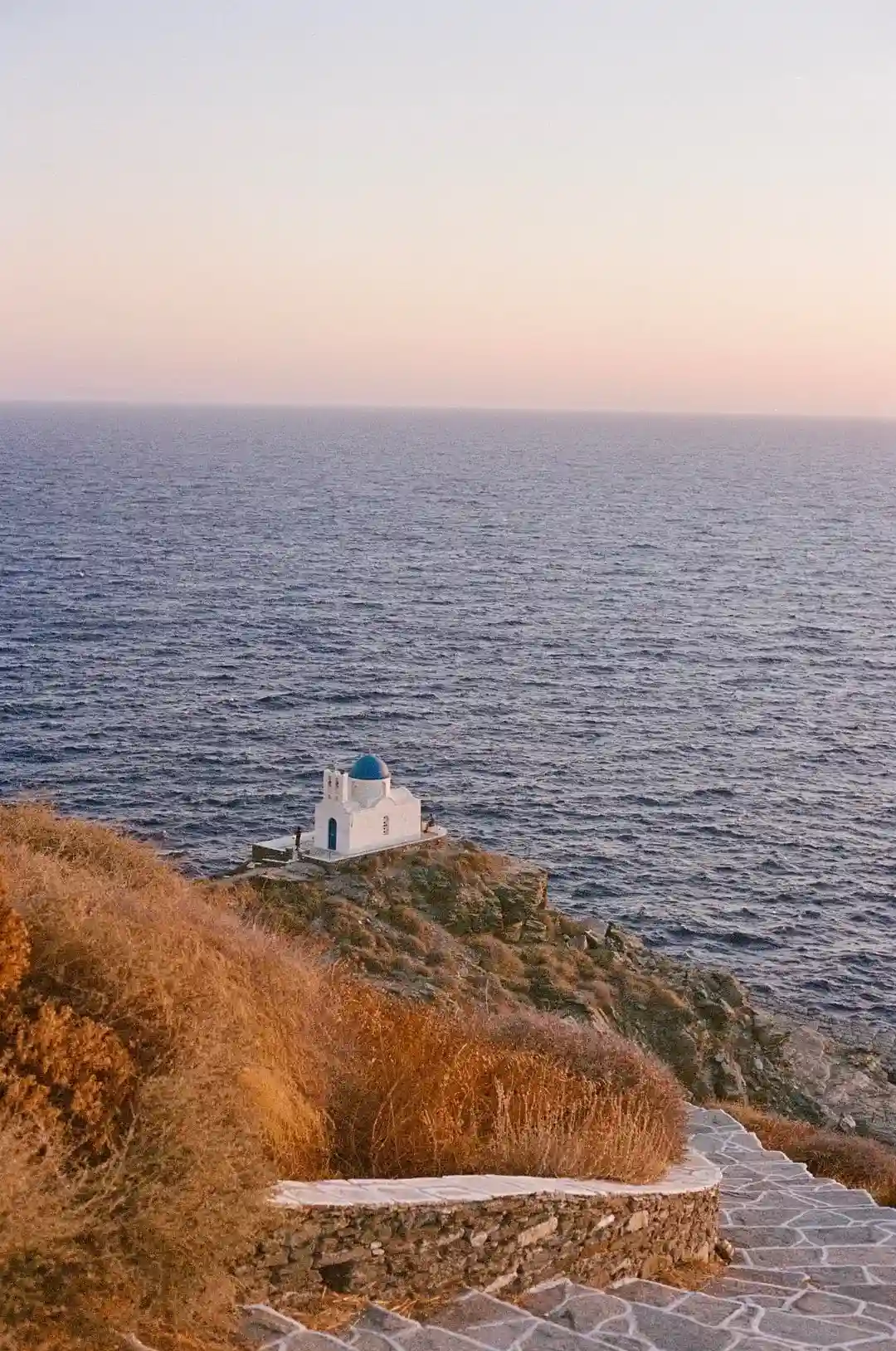
Sifnos is the kind of Cyclades island chain stop that makes you feel clever for including it in your island-hopping itinerary — it’s a genuine hidden gem, a serene respite from the party islands, and it arrives with a cultural distinction that matters: Nikolaos Tselementes, widely considered the father of modern Greek cooking and author of the first comprehensive Greek cookbook in 1910, was born here. That legacy shows up in the clay ovens fired across the island, the risotto unlike any you’ll find elsewhere in the Cyclades, and the slow-braised mastelo (lamb cooked with wine) that you’ll dream about later. Spend three nights minimum, arriving by short ferry trip from either Paros or Milos.
The port town of Kamares has boutiques, restaurants, and beach bars backed by rugged hills and golden beaches — it’s a relaxed slow-paced holiday from the moment you step off the boat. The vibrant nightlife and rooftop decks and terraces of Apollonia (the urban center) offer a livelier alternative after dark, while Vathy Beach — a sheltered white sand beach in a cove surrounded by taverns — sits at the opposite end of the mood spectrum. The Sifnos Trails network covers 100 km of hiking trails across the island’s natural landscapes, connecting tranquil beaches like Cheronissos, Faros, and Chrissopiggi to the mountains and their ancient churches. There’s also rock climbing here, which almost nobody mentions. This slip of an island delivers a refreshing change of pace and local cuisine that justifies the detour entirely.
Crete (incl. Chania)
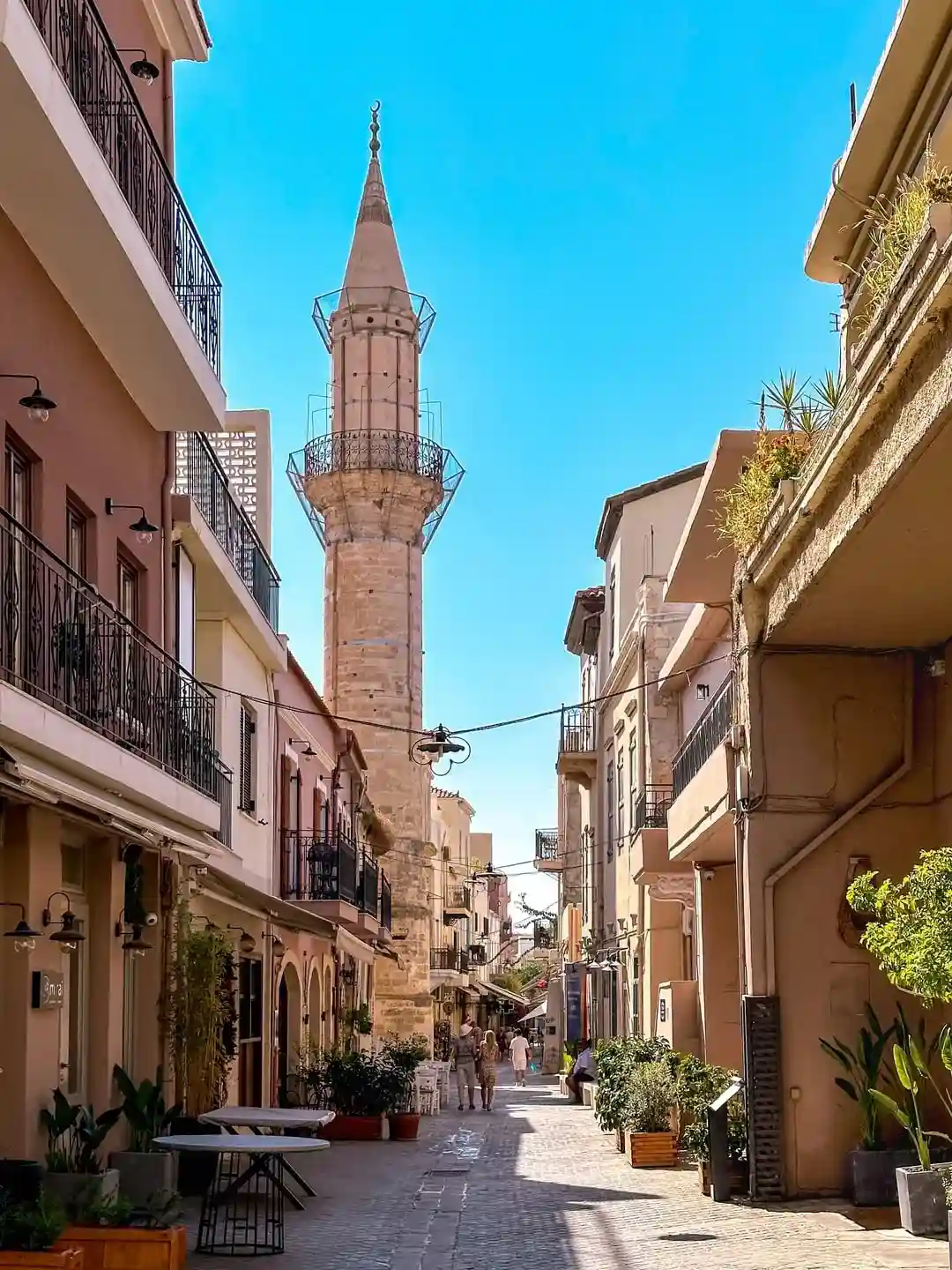
Crete is Greece’s largest island and has been accumulating layered historical legacy since long before most European cities existed — the Minoan civilisation, considered the first advanced complex civilisation in Europe, built the Palace of Knossos here during the Bronze Age, a hilltop complex of over 1,300 rooms decorated with terracotta pottery and frescoes that archaeologists are still interpreting. The island didn’t join modern Greece until 1913, arriving with centuries of Ottoman occupation and Venetian occupation already woven into its architecture, cuisine, and character. That means Crete is not simply a beach destination — it’s a layered world where package holiday tourists cluster on the sand while those paying attention explore a labyrinthine interior full of marble village lanes, olive oil tasting at an 18th-century olive mill, and wild herbs foraged by chefs who take the concept of food hotspot seriously.
Chania — often called the capital of Crete — has one of the most beautiful quaint medieval center areas in Greece: the Old Venetian Harbor with its 14th-century Venetian lighthouse (one of the oldest lighthouses in the Mediterranean and worth every step of the walk for panoramic views) frames cobblestone waterfront evenings that stretch until midnight. Wander the cobblestone alleyways of the old town, duck into Venetian architecture-lined streets, and eat at Tamam Restaurant — their version of Cretan cuisine includes a Hünkar Beğendi-style beef stew in tomato sauce with aubergine puree, and the local Kotsifali wine pairs with it perfectly. The church of Profitis Ilias up on the hill gives panoramic sea views over the entire harbor. Stay at Splanzia Boutique Hotel and you’re perfectly placed for all of it.
Beyond Chania, the Samaria Gorge cuts through the White Mountains inside Samaria National Park — a scenic ravine sheltering 450 species of plants and animals — and the mountain village of Mochos lets you paint ceramics, drink wine, and meet the olive oil producer behind what some claim is the world’s oldest olive tree in Vouves. History goes even deeper at the archaeological museum in Heraklion, home to the finest Minoan artefact collection on earth. For something quieter, the Venetian fortress of Spinalonga — a haunting 16th-century structure on an uninhabited islet that served as a leper colony well into the 20th century — is accessible by private boat tour and carries a weight that lingers. There’s also the purely joyful: bougatsa (a custard-filled pastry) eaten at a no-frills counter while watching Rethymno wake up, or learning to cook the marathon winner diet — rich with olive oil and foraged herbs — at a local cookery lesson in the hills.
Meteora
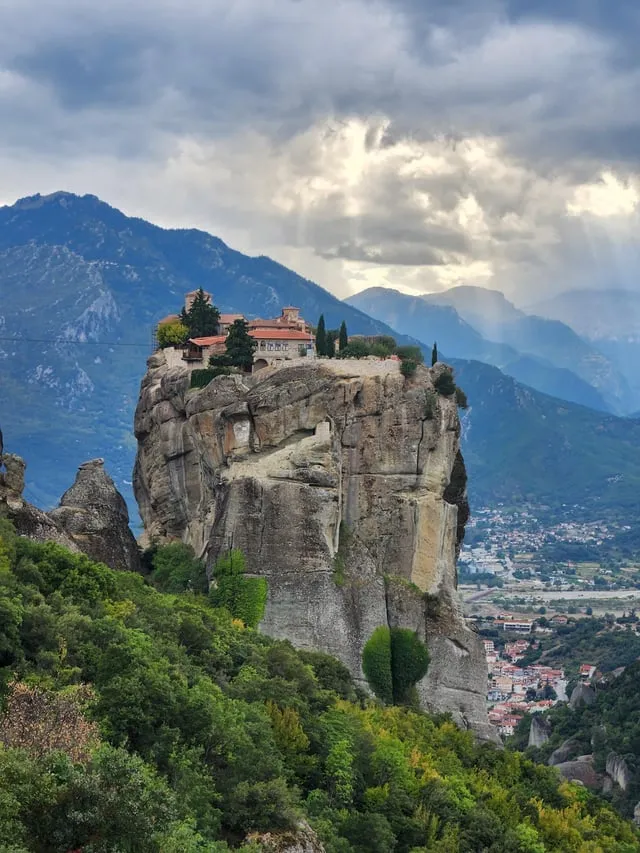
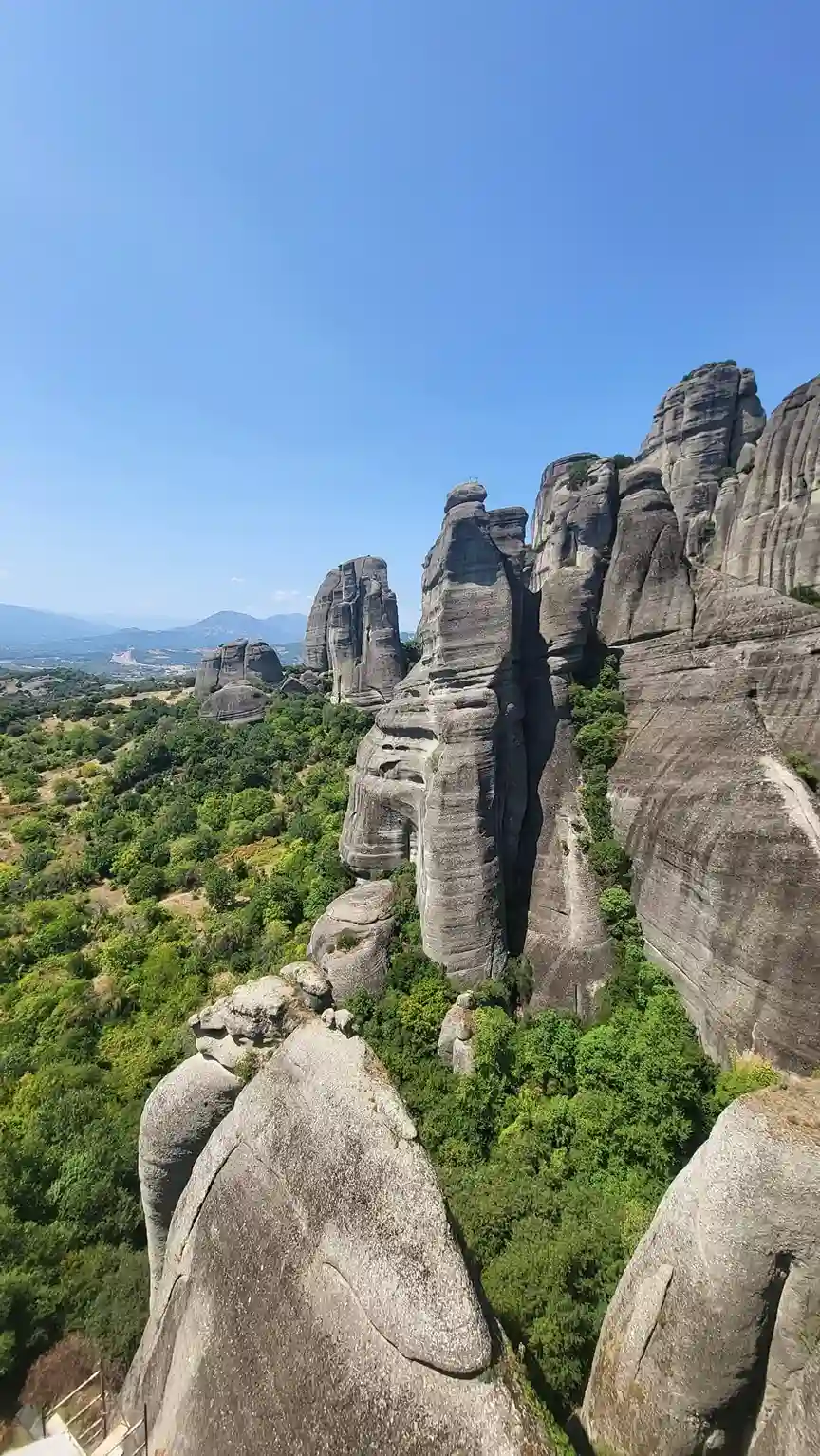
Meteora is the kind of place that makes you genuinely question how humans managed to build anything up there — Eastern Orthodox monasteries perched on narrow pillars of rock, suspended hundreds of meters in the air on volcanic rock formations shaped by water and wind over millions of years, in what can only be described as being quite literally in the heavens above. Of the original twenty-four monasteries built from the 14th century onward by monks seeking an isolated, solitary lifestyle away from the chaos below, six remain today, and visiting them is the major highlight of any trip to mainland Greece. Getting here by train from Athens takes about 5 hours to Kalampaka — the nearest town — and the journey through central Greece past Thessaly’s plains and into the Pindus mountains is itself worth the ticket price.
The picturesque village of Kastraki sits directly beneath the monoliths and is a quieter base than Kalambaka — try Doupiani House Hotel (a solid 3-star with stellar views and modern amenities) or more well-priced budget options like Holy Rock Hostel for dormitory accommodation, Spartacus House, or Vavitsas guesthouse for private rooms. From either base, the hiking trails, forests, and canyons between the gigantic monoliths offer perspectives that no road view can match — rent an e-bike and link the switchbacks between monasteries at your own pace. The entire massif sits inside a microclimate that brings thick morning mist rolling between the bridges and flights of steps carved into the rock, and if you time it right, the idyllic destination earns every superlative in the book.
The surrounding region quietly overdelivers. The Raxa Trikala distillery run by the Tsililis family produces multi-award-winning tsipouro from historic vineyards planted with rare Greek varietals, using sustainable winemaking methods that reflect generations of craft. Venture into the woods around Trikala — a mountain city with an Ottoman-style mosque, a 16th-century hilltop Byzantine castle, a clock tower, and a remarkably car-free city center best explored by bike — and you might stumble onto a truffle hunter working their dogs through 3,000 varieties of mushroom territory in forests that supply some of Greece’s finest culinary delicacies. A guided tour of the old Ottoman-era city quarter rounds things out beautifully.
Delphi
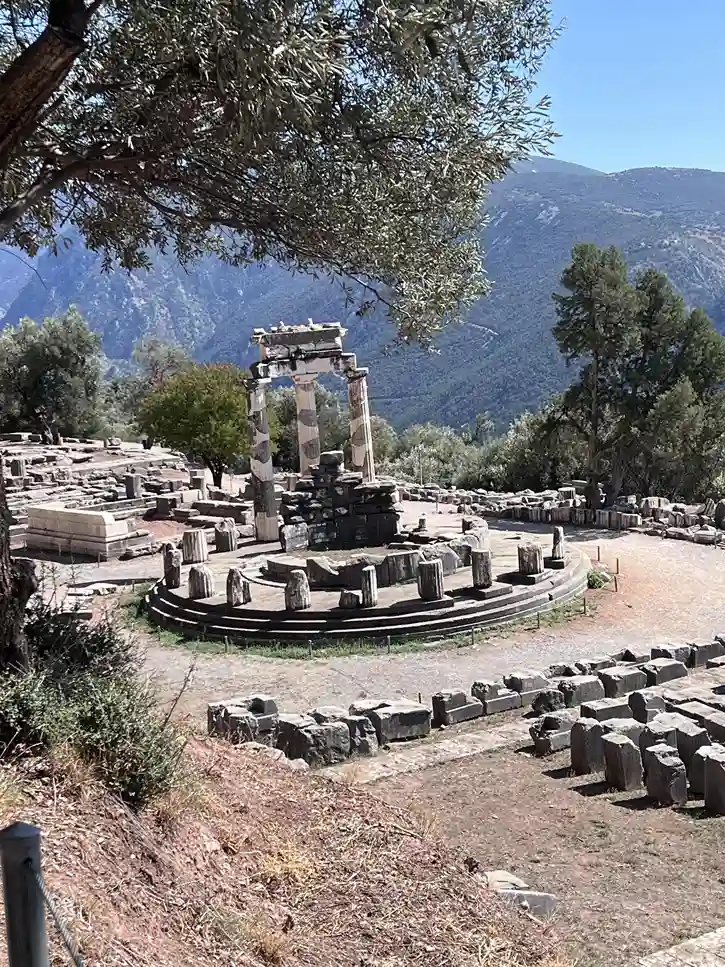
Approaching Delphi on the 3-hour bus journey from Athens, the road climbs through olive groves and forests until the ruins appear clinging to the slopes of Mount Parnassus above the Gulf of Corinth — and nothing quite prepares you for standing in a place that ancient Greeks literally called the center of the world (the story goes that Zeus released two eagles from opposite ends of the earth and they met here). Delphi was a pilgrimage place for kings, generals, and ordinary people seeking the Oracle of the god Apollo — the holy woman called the Pythia, a priestess who delivered cryptic visions of the future to pilgrims who had made the hard long trek to reach her. That history makes the breathtaking ruins here feel less like a museum exhibit and more like a place where something genuinely electric once happened.
The steep uphill climb along the Sacred Way past statues, temples, and monuments leads to the Temple of Apollo — one of the most important historic sites in the ancient world — and continues up to a theater with panoramic views over the valley, and beyond that, a stadium where the Pythian Games (precursor to the Olympic Games) were once held. The archaeological museum holds extraordinary pieces: the Sphinx of Naxos, the charioteer, golden treasures that once lined these temples — all within a UNESCO World Heritage Site that rewards at least an overnight stay rather than a rushed day trip from Athens. I stayed at Hotel Orfeas (comfortable, no-frills, centrally placed) but Boutique Hotel Skamnos in the village of Arachova is the more charming option — the old-fashioned village with its main square, vintage hotels, and surrounding forests famous for beekeeping and wildly good myths deserves its own exploration.
In winter, this area transforms into a winter destination anchored by skiing on Mount Parnassus — the ski resort town atmosphere at Arachova shifts entirely, with fir, spruce, and juniper forests dusted in snow and panoramic views that look nothing like the summer version. The nearby fishing town of Galaxidi offers a coastal counterpoint: shipping families once built the Neoclassical mansions and cobbled streets along the waterfront, and today the place runs on fresh seafood at a waterfront restaurant and honey from a local beekeeper in Itea — a deeply pleasant afternoon after a morning at the ruins. Don’t miss the woven rugs and wooden artworks sold in village shops here.
Parga
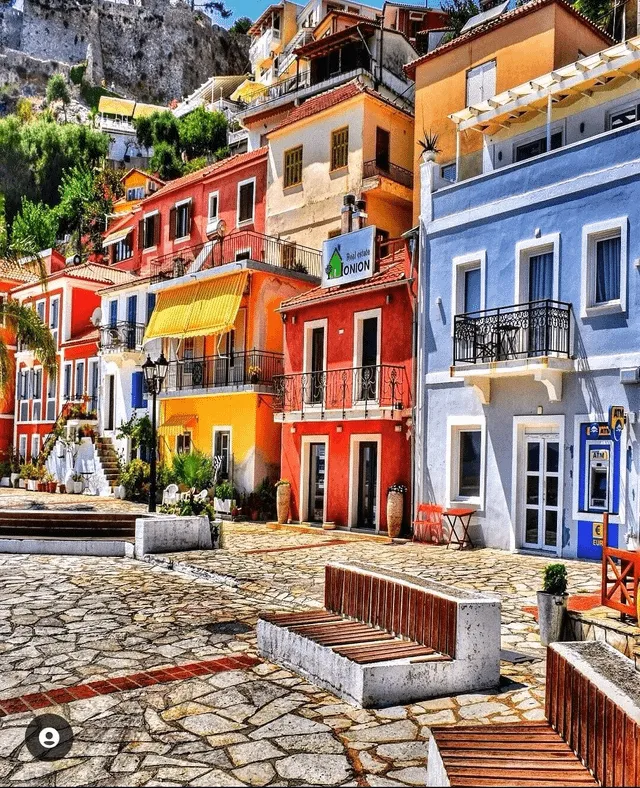
Parga sits in Epirus, in the northwestern portion of the Greek mainland — a resort town where the Ionian Sea meets a backdrop of lush greenery, pine, fruit trees, and olive trees rolling down from the surrounding mountains. The town itself has the feel of a Venetian town misplaced in Greece: colorful homes stacked on slopes, pastel coloured houses reflected in charming harbour water, and a former Venetian Castle perched on the outskirts of town with breathtaking views over the coves below. It has a dreamy, island-like feel despite being firmly on the mainland — the sandy beaches, cute little bays, and coves tucked beneath the hills give it a geography that feels more Ionian island than peninsula.
The surrounding hills reward hiking if you’re willing to push past the beach inertia — the greater mountainous region near Albania and the Pindos mountains shelters bears and wolves in wilderness areas that include the legendary Vikos Gorge, widely recognized as the deepest gorge in the world by various measures, with crystal clear blue waters at the base. Back in town, beachfront tavernas like Tzima and Taverna Arkoudas serve delectable food with sweeping panoramas over the bay — order the fresh seafood, sip a local wine or cocktail from a cozy bar tucked into the narrow alleys, and let the vibrant atmosphere of a place that hasn’t yet been overrun by mass tourism do its work. Budget travelers do well at Avdikos House.
Nafplio / Nafplion
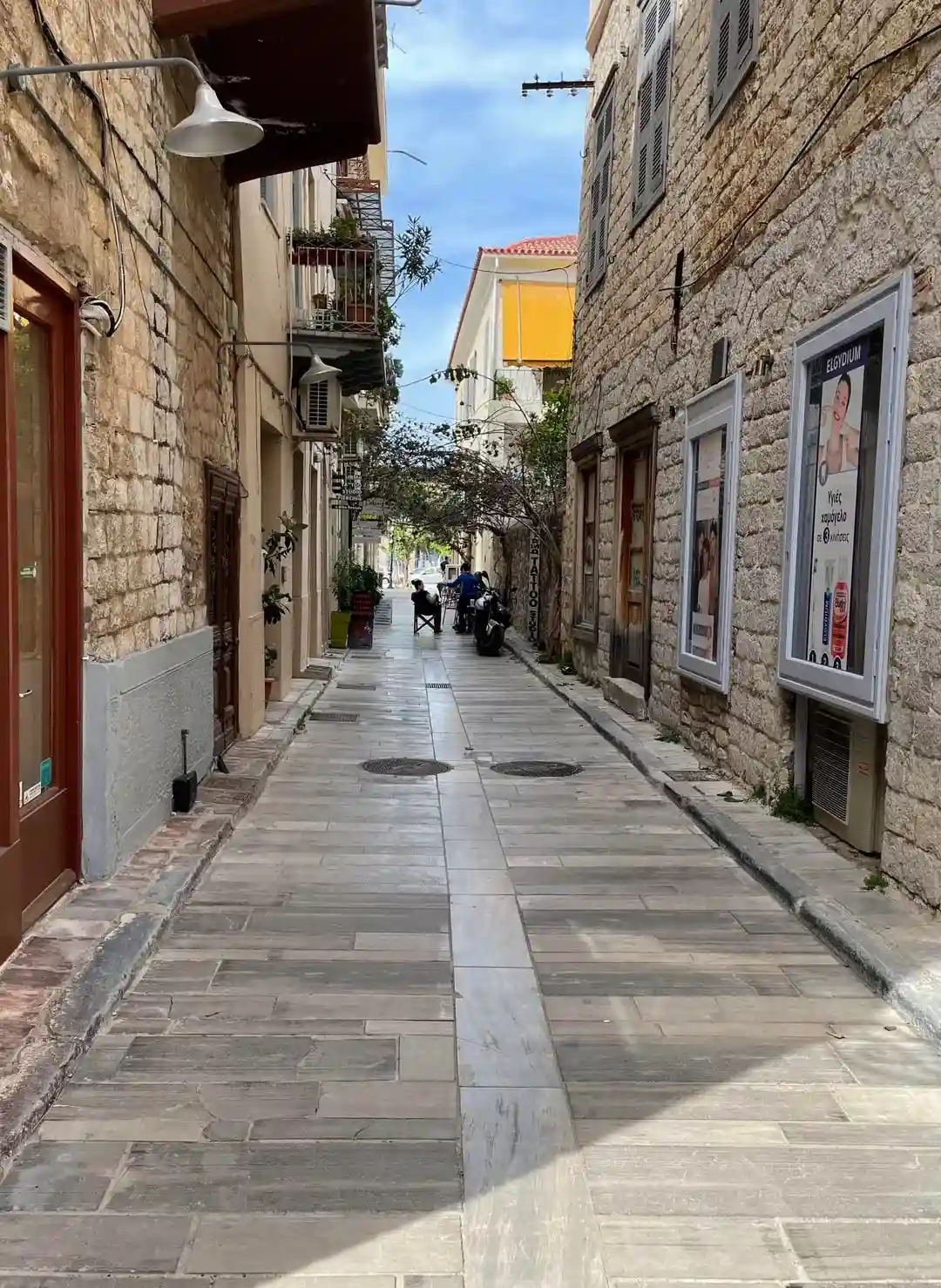
Nafplio — sometimes spelled Nafplion — is the harborfront city that most visitors to Athens skip, and that’s a mistake that the Athenians who crowd here every weekend are quietly grateful for. A two-hour drive south through the Peloponnese delivers you to one of the most romantic places and genuinely picture-perfect Greek town experiences in the country: winding cobblestone streets, Ottoman fountains, neoclassical mansions, chic cafés, family-run stores, picturesque storefronts, and secluded bays below the cliffs of the Argolic Gulf. This was the first capital of modern State of Greece — the weight of that political history lives in its Venetian architecture and the archaeological museum stocked with objects from its layered occupation.
Spend the first evening at a traditional taverna eating fresh local seafood — or splurge on the rib eye at Wild Duck if you’re in the mood for something more ambitious — and then walk the harbor to watch the lights of the Bourtzi Fortress flicker on the water. That small castle, reachable by boat, is one of three fortifications that define Nafplio’s skyline, alongside Akronafplia Fortress pressed against the mountains and the massive Palamidi Fortress above the Old Town. The Carpe Diem Boutique Hotel (a 3.5-star at around $60 per night) sits well for exploring all of it, though the Old Town itself is so compact that modern amenities matter less than simply being inside it. Book a private guide for a walking food tour covering local cheeses, ice-cream, and chilled ouzo — ending at a family-owned restaurant — and your weekend retreat from Athens will feel impossibly complete.
Day trips from Nafplio cover a remarkable range. The ancient theatre at Epidavros — still legendary for its powerful acoustics — is a short drive away, as are the sunken ruins and tucked-away coves explored on a kayaking trip along the coastline, where snorkelling over a Roman villa is genuinely on the menu. The Nemea wine region — Greece’s oldest wine region — is close enough for a dedicated winery afternoon: Skouras and neighbouring wineries pour fruity red agiorgitiko and cabernet blends from cellars that take their craft seriously. And the Bronze Age settlement of Mycenae nearby — with its Lion Gate, Mycenaean beehive tombs, and extraordinary unsupported domes — stands as one of the oldest ruins on mainland Europe, making Nafplio’s position as a base feel almost unfairly convenient.
Corfu
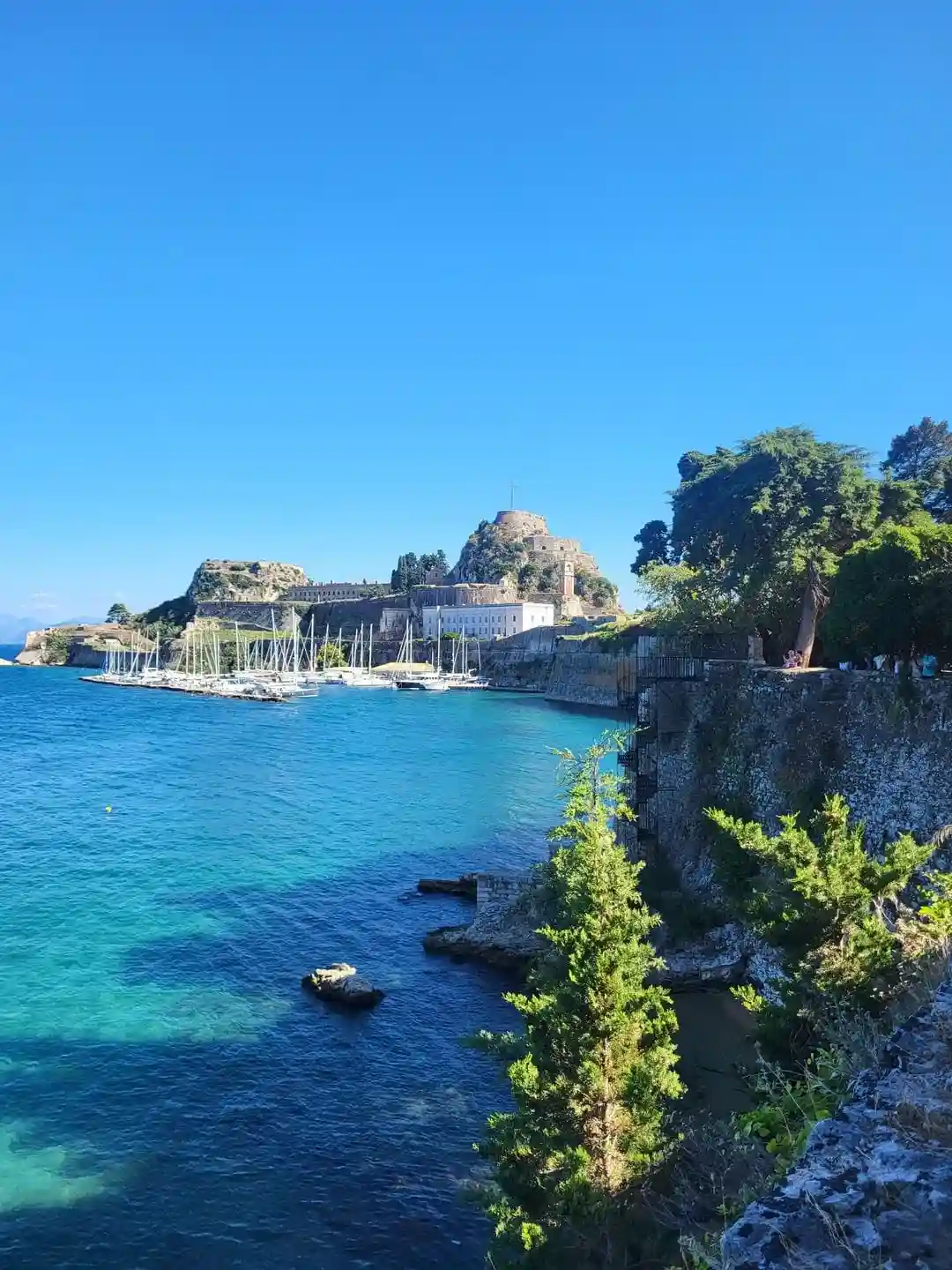
Corfu is the kind of Greek island that surprises visitors who expect white-and-blue Cycladic simplicity — instead, they find mountains, forests, and lush hills soaked in a history that ran through the Byzantine empire, the Venetian empire, and the British empire in succession, producing a unique architecture and cuisine that reflects all three. The UNESCO-listed Old Town carries Venetian, British, and French fingerprints in a charming clash of hidden squares, grand mansions, and red-domed bell towers — particularly Saint Spyridon Church with its celebrated red-domed bell tower and the Byzantine-era Old Fortress commanding bay views and sea views across to Albania and down toward Malta and Italy. A food tour through the narrow streets and tiny cafés and delis of the old quarter — tasting pastitsada (slow-cooked veal or rooster in spicy sauce) and Corfiot specialties — is the most direct way into the island’s soul.
The southern part of the island handles most beach arrivals — gorgeous bays and emerald coves beneath lush green hills — while the north carries a more rugged character, and the northwest side reveals Porto Timoni, a stunning double-sided beach only reachable on foot from the clifftops of Afionas village. Paleokastritsa is where you go to rent a boat and find hidden caves along a coastline that drops straight into turquoise; Sidari in the north pulls a partying hotspot crowd into its clubs, while Kavos in the south takes that energy and amplifies it significantly. The central part of the Island offers something different again — rural landscapes, Corfiot cookery classes, and hill hiking through pine-pinned mountains — and the greenest islands reputation Corfu holds in the Aegean Sea is most visible from a ridge trail looking back over rolling olive groves toward wildflowers on the coastal cliffs.
Offshore, a private boat trip south finds the smaller Ionian islands of Paxos and Antipaxos — white sands, turquoise waters, and caves you can swim and snorkel through in the afternoon light. A guided hike along the coastline passing through the largest olive grove on the island, a 15th-century mill explaining centuries of olive cultivation, and a wood-fired oven dinner cooked by a Corfiot chef rounds out an island experience that runs from the deeply historic to the wholly indulgent.
Thessaloniki
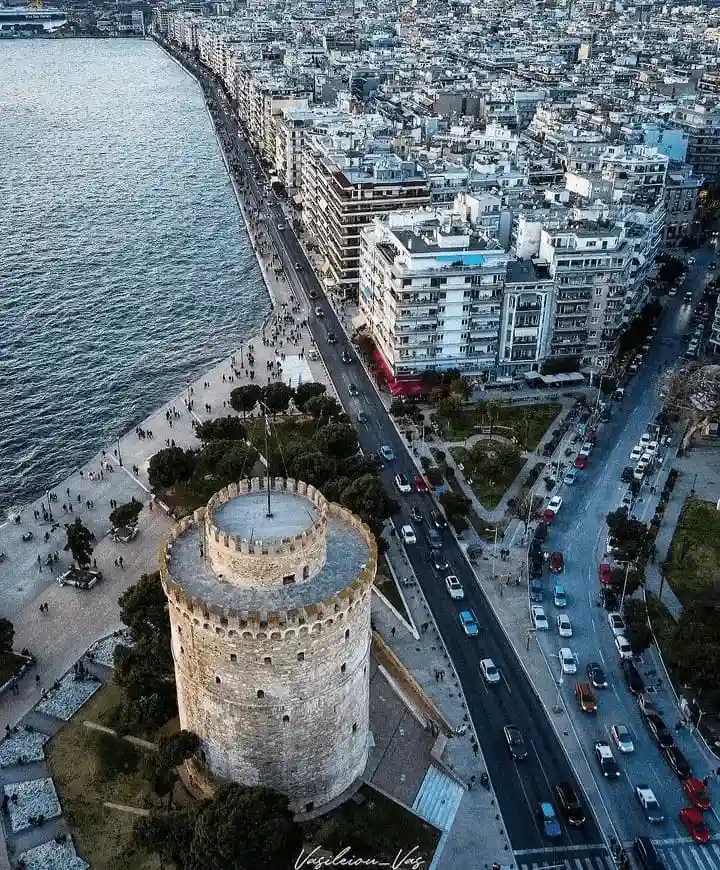
Thessaloniki is smaller than Athens in size but not in ambition — as Greece’s second-largest city and the country’s self-declared culinary capital, it carries a different history and character that rewards anyone willing to look beyond the capital. The waterfront pedestrian walkway stretches along the Thermaic Gulf with Mount Olympus hovering on the horizon, and the Old Town behind it layers ancient ruins, pastel-colored apartment blocks, Ottoman bathhouses, Roman arches, and churches into a charming metropolis unlike anything else in Greece. At sunset, the Acropolis Wall above the old quarter turns amber while the sea below catches the last of the light — it’s the kind of city scene that sneaks up on you.
Eat first, always: bougatsa (the flaky custard-filled pastry) at Bougatsa Bantis — a gloriously no-frills bakery where a strong espresso and a slice of this thing constitute the best breakfast in the city — is obligatory. The Modiano Market nearby channels the energy of a proper Mediterranean food hall, and the Modernist Hotel (4-star, chic streamlined suites) sits close enough to walk everything. Then start working through the 15 UNESCO-listed sites within strolling distance: the Rotunda, the Roman forum with its frescoes, the Trigonion Tower with sea views, and the Byzantine fountains and Ottoman-style houses of the narrow cobblestone alleys in the upper city, where street art now decorates walls that once bore frescoes. The city’s rich Jewish heritage surfaces in the pre-WWII synagogue, the Ottoman-era Jewish hammam, and the Museum of Jewish Heritage — a thread of 2,000 years of history that many visitors entirely miss.
Day trips expand the picture considerably. Pella — the excavated site of Alexander the Great’s ancient city — is a short drive away, as is Vergina, where the marble tomb of Philip II was discovered, still holding its silver chalices, gold shield, and extraordinary treasures. For something physical, Mount Olympus — the highest mountain in Greece and the mythical home of Zeus — offers forested slopes, serious hiking trails, the dramatic Enipeas Gorge with its cascading waterfalls, and even a monastery and chapel carved into rock for those willing to push deep into the mountain’s interior.
The Peloponnese
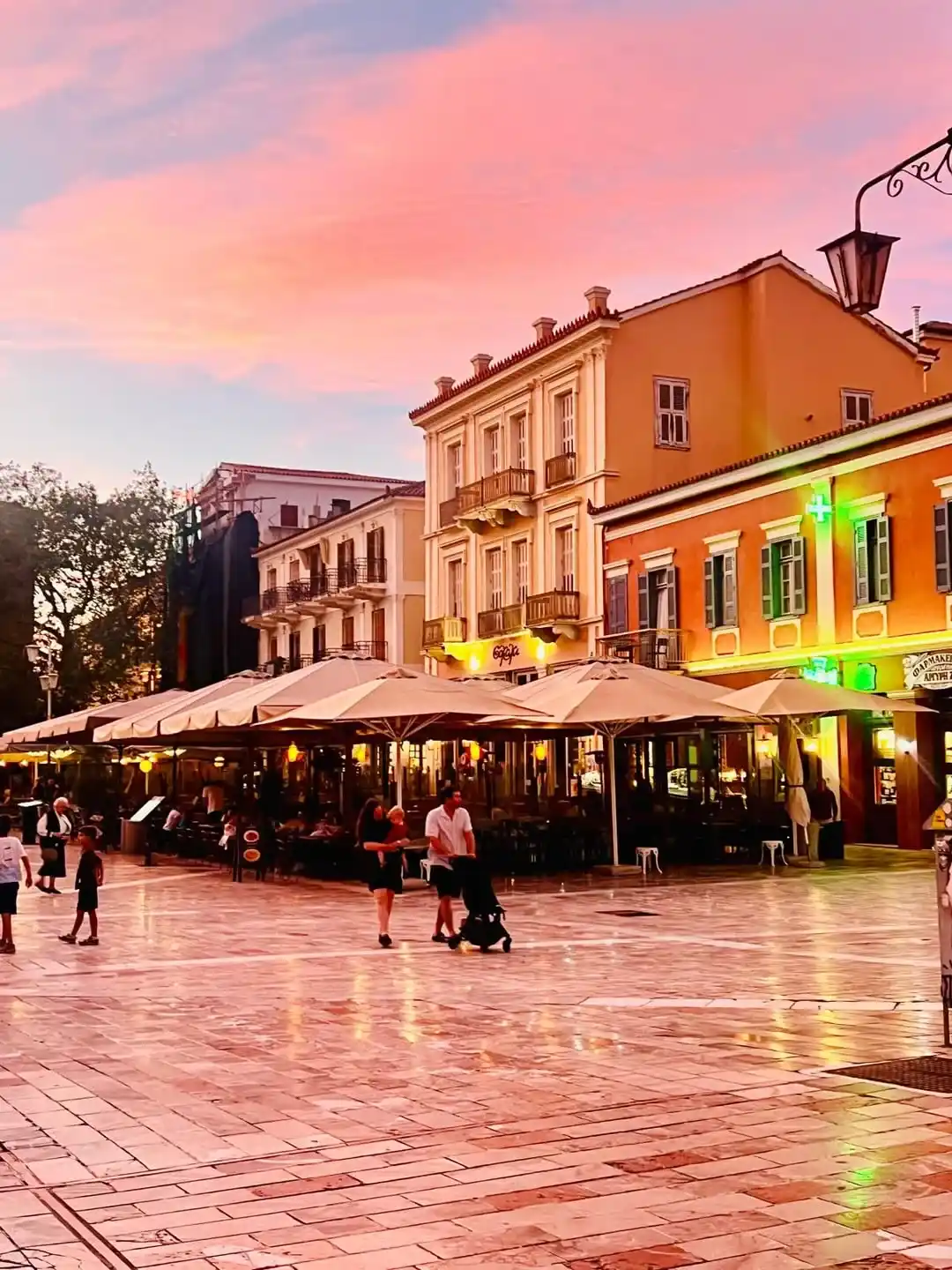
The Peloponnese is the peninsula tethered to the mainland by the thin land bridge above the Corinth Canal — and the Gulf of Corinth crossing, whether by bridge or road, marks the threshold into a region that reads like a living history book of the ancient world. The UNESCO sites here cluster in a way that’s almost absurd: the ancient Greek theatre at Epidaurus (still producing plays to audiences who marvel at its powerful acoustics), the site of the first Olympic games at Olympia, the palace of Mycenae, and the ruins of Sparta are all within reach of a single base. I did a weekend tour in a small van with a guide who had the knowledge of an academic and the energy of someone who still got excited by every stone — the best travel investment of that entire trip.
Chrani
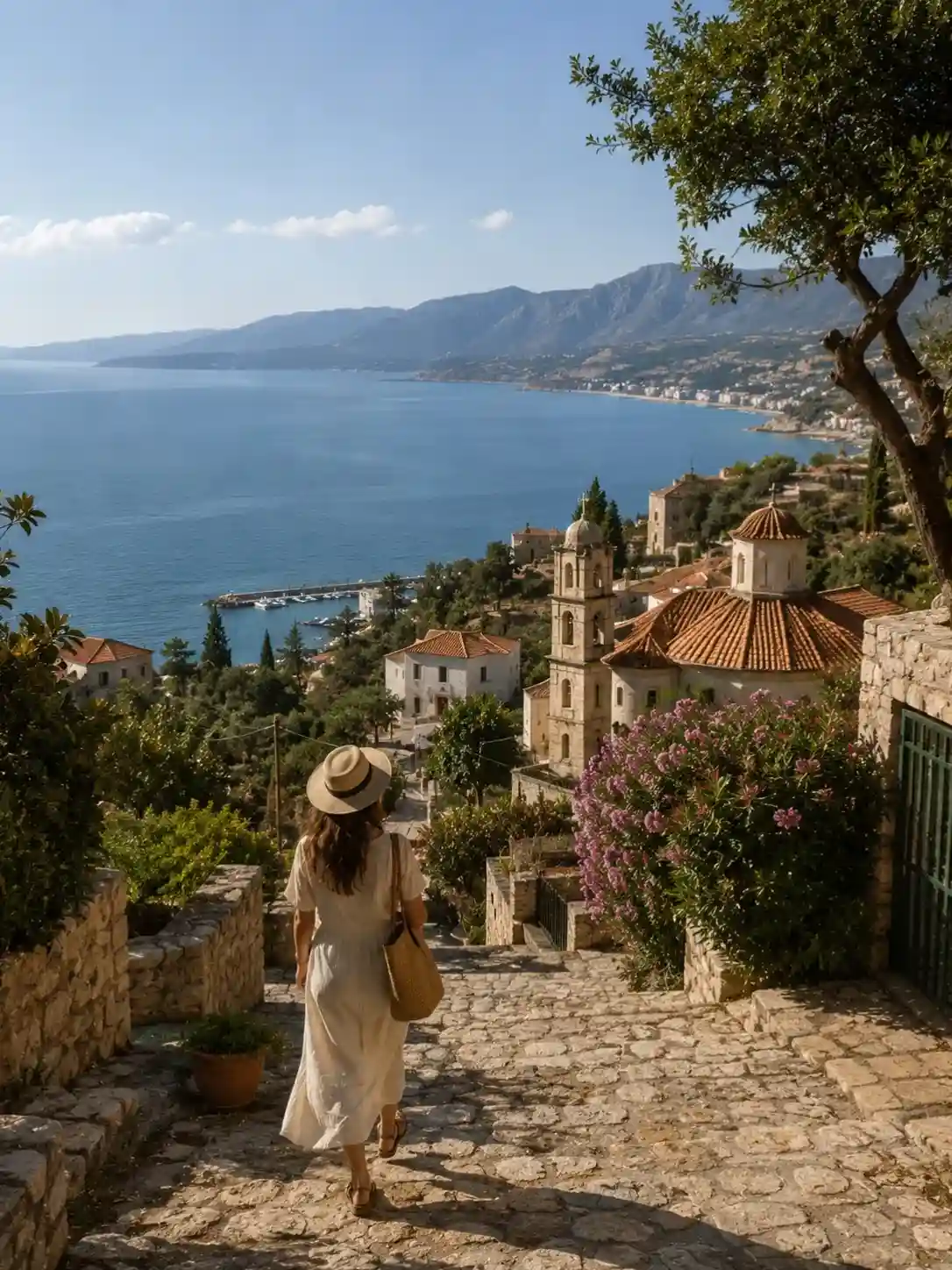
Chrani is the small town in the Peloponnese where restlessness becomes a virtue. By the third day, sitting still near the sea stopped working for me, so I rented a car and drove up into the mountains — past old farmers on tractors, stalls selling fresh vegetables, and through beautiful villages with views that demanded repeated stops for pictures. It’s the kind of undiscovered corner of Greece that rewards spontaneity entirely. Accommodation is thin but honest — Lena Mare and a handful of budget places in nearby Koroni cover the basics without fuss.
Koroni
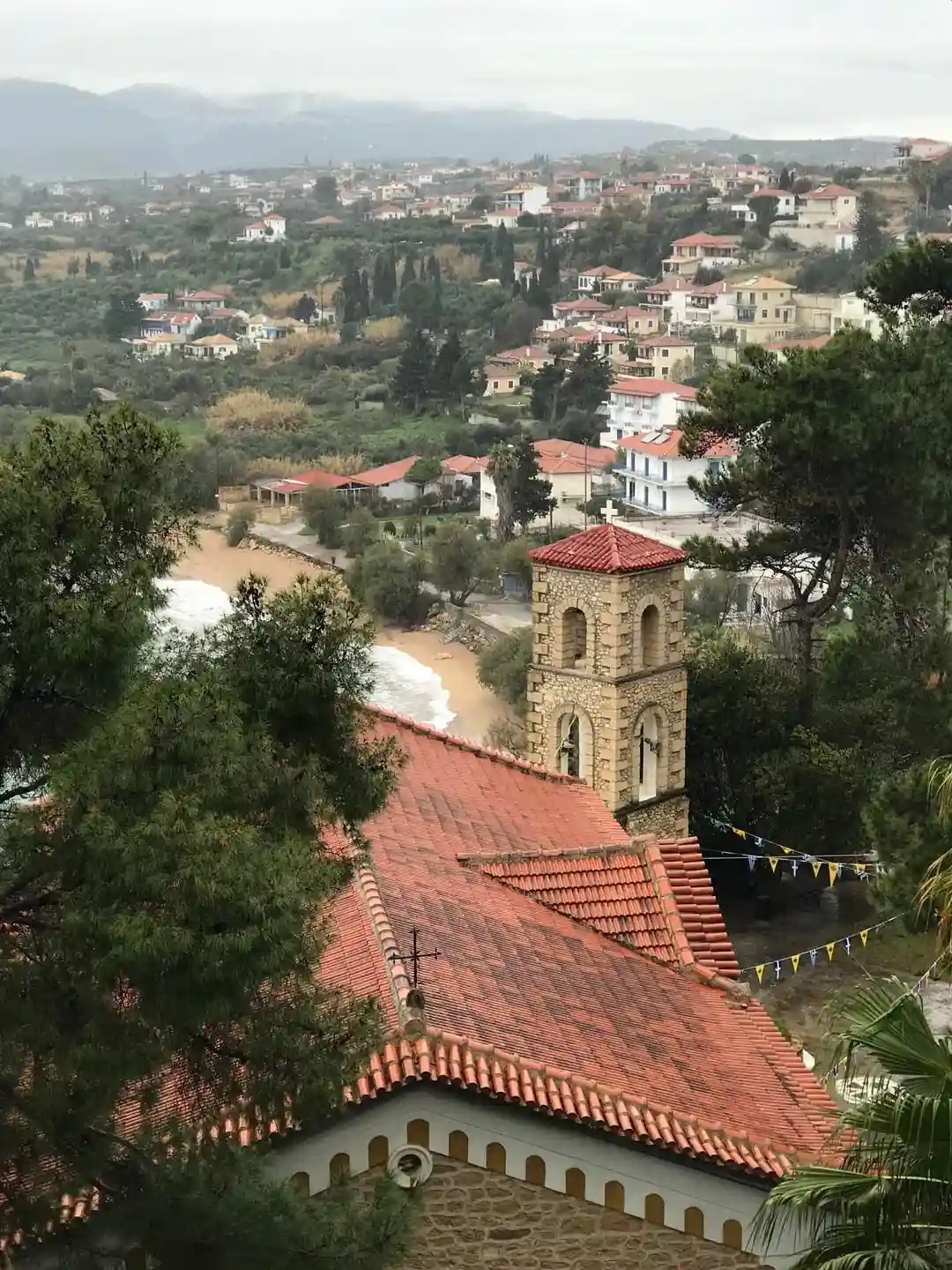
Koroni is a Peninsula gem where the Venetian fortress rises above a harbor of blue waters and the sea port towns rhythm governs everything. The fresh seafood at local restaurants is among the best I’ve eaten in the Peloponnese — grilled fish pulled from these waters that morning, served with nothing but lemon and good olive oil. The town has a charm that the better-known neighbors Nafplio and Monemvasia sometimes obscure, and the quieter blue waters below the fortress walls invite long afternoons of doing very little. Travelers who make it this far and continue to Kiladia, Gythio, or across to Methoni know they’ve found the Peloponnese’s unhurried heart. Parthenon Rooms offers centrally located, solid budget places accommodation.
Nea Makri

Nea Makri, just outside Athens, is not a headline destination — it’s a secluded quiet beach community where I spent three weeks volunteering with the Pammacaristos Children’s Foundation through IBO-Nederland. Tourism here is thin by Greek standards, and that’s rather the point: a nice beach with few tourists, honest tavernas, and a pace dictated by the local community rather than the hospitality industry. It’s the kind of place that recalibrates your expectations of what travel can look like when you subtract the performance of it.
Antiparos
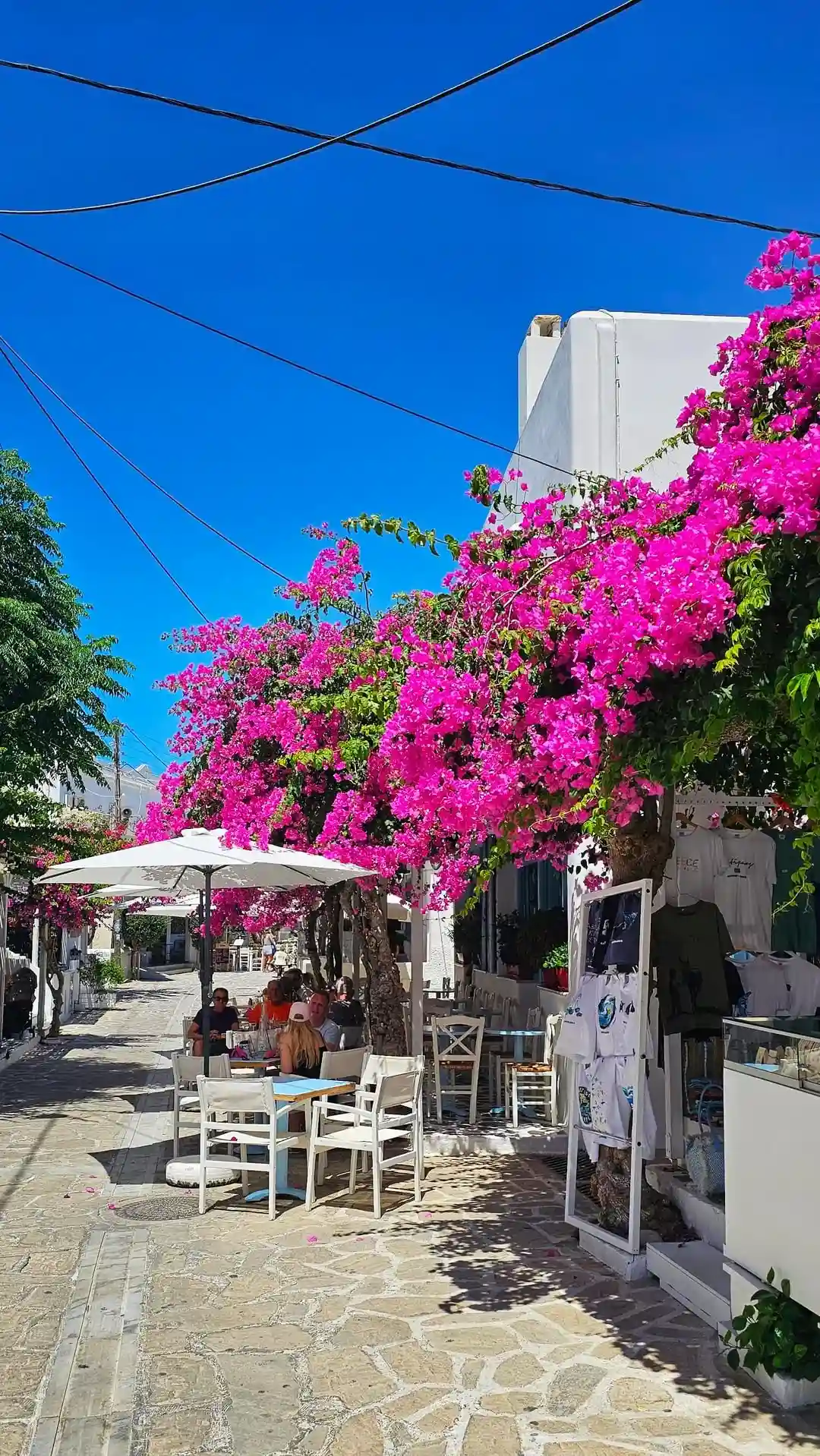
Antiparos is a tiny Greek island in the Aegean Sea that has attracted some famous admirers — Tom Hanks famously spends his summers here in a villa — but the island’s appeal runs deeper than celebrity proximity. It’s a seven-minute ferry ride from Paros and functions beautifully as a day trip, though it deserves longer: white-washed buildings, narrow lanes, and a Venetian castle dating to 1440 at Kambos (the center of the island) frame a village that feels genuinely unrushed. The Cave of Antiparos — a 10-minute drive from the main settlement — is among the more spectacular geological formations in the Cyclades, its interior cavernous and cool.
Beaches here — Glifa, Livadia, Agios Georgios, Psaraliki — deliver the beautiful beaches promise without the crowds, and Greek fare at Captain Pipinos (where the fresh seafood arrives with gorgeous views across the channel) makes every meal feel like a small event. Villa Artemis and similar luxury villas are dotted along the coastline for those who want more than the standard island hotel experience.
Folegandros
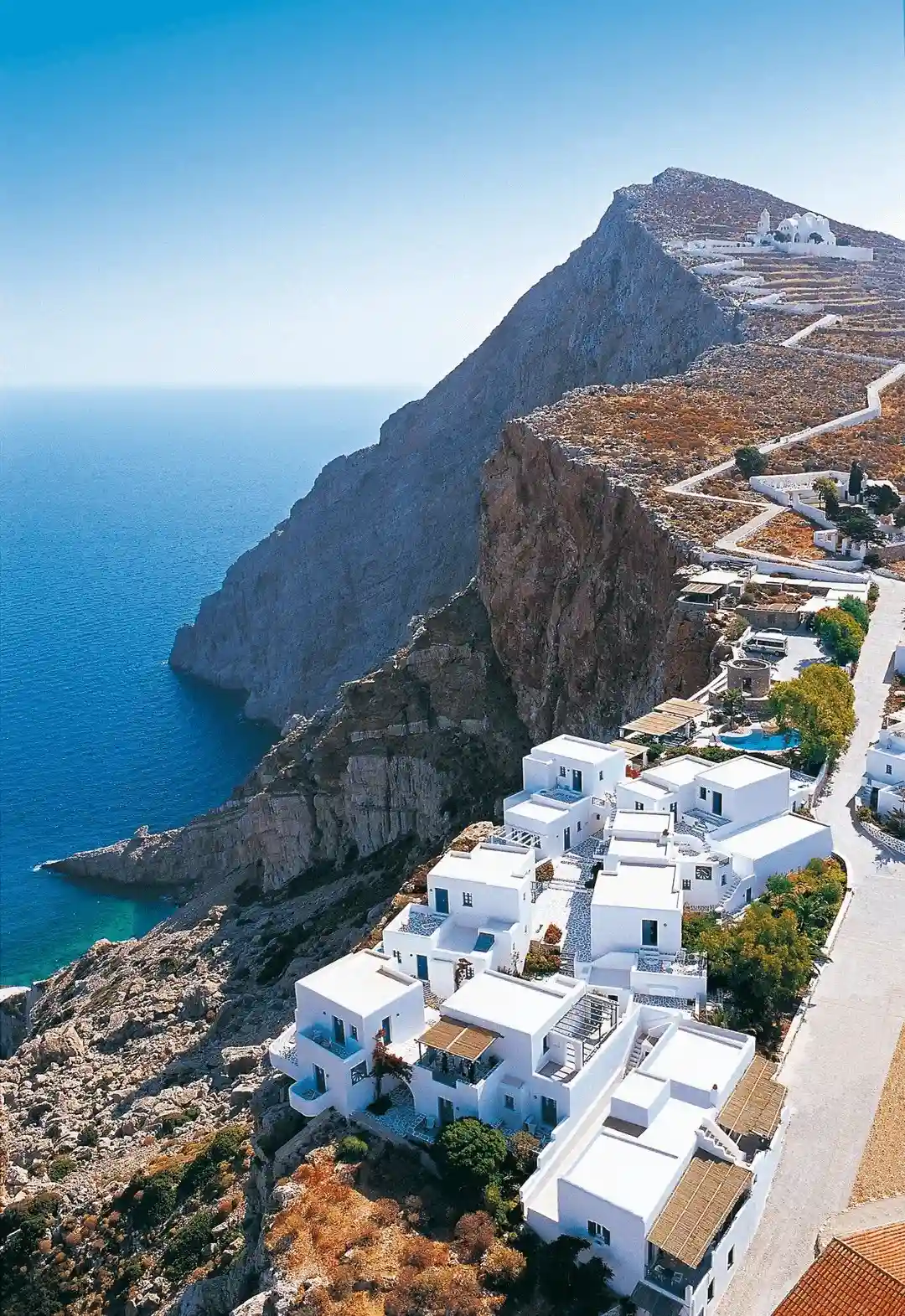
Folegandros is the Cyclades island that keeps its character by being slightly inconvenient to reach — no airport, limited connections, a small ferry schedule that enforces a certain commitment. The reward for that commitment is a lesser-known Greek island of jagged cliffs, pristine turquoise waters, gorgeous beaches, picturesque villages, and rolling hills that feels genuinely overlooked even in high summer. The capital — known as both Chora and Hora — is a masterclass in Cycladic style: squat whitewashed buildings, narrow winding streets, flowers spilling from dark blue doorways, and an oldest district called Kastro (a fortress neighborhood built in medieval times to confuse pirates) that requires a scooter or very willing legs to fully explore.
The Church of Panagia sits on a clifftop so dramatic that reaching it for sunset is its own event, and the Wine Bar Merkouri nearby catches the same golden light over glasses of local wine. Mornings work well at Pounta for a lazy breakfast or brunch (the eggs benedict in a garden setting is a surprisingly civilized island pleasure), and afternoons go to beach hopping by scooter between the island’s scattered coves and hidden swimming spots. For accommodation, Camares has budget-friendly options including a villa complex with kitchenette, double bed, and a small patio with church views that costs a fraction of what Santorini charges for a courtyard glimpse.
Kea
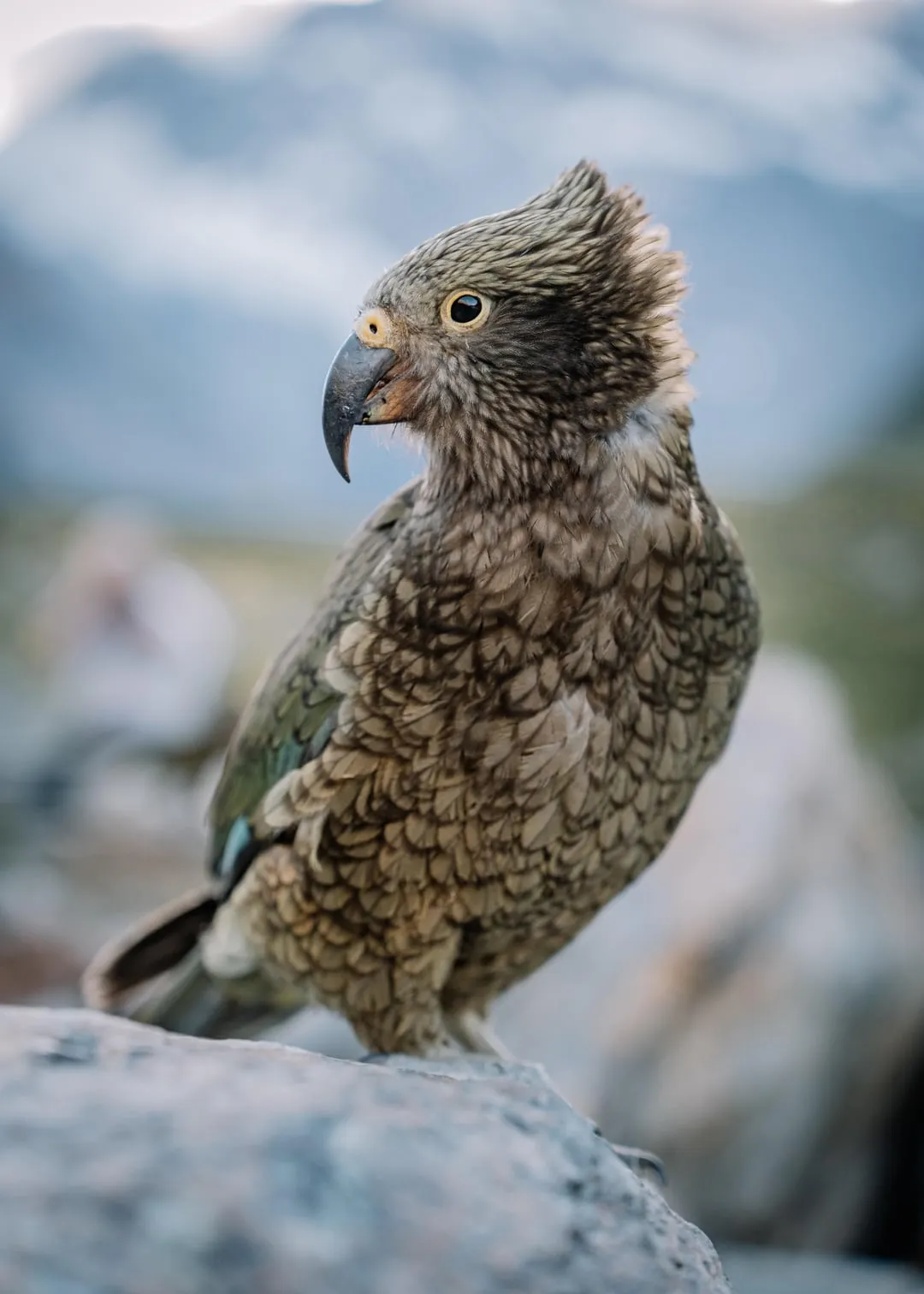
Kea is the Cyclades island that closest island to Athens geography turns into a quick getaway for city residents who’ve grown tired of committing to a full ferry journey — and yet most international visitors overlook it entirely, which means limited tourists and beaches that still feel like discoveries. The village of Ioulida perched above the sea is lovely in the old-fashioned sense: mountainous villages feel, stone lanes, and tucked into the hillside above town is the famous Lion of Kea — a massive ancient carved figure with a weathered face and a history wrapped in competing theories about its purpose and age, staring permanently across the Aegean Sea views below.
The Archaeological Museum of Kea holds artifacts and objects from local digs, including large vases and fragments connected to women’s ritual life in antiquity. Dinner at Vourkarian — a spot perched over the bay with a sunset backdrop — over beetroot salad, fava beans, and simple Greek dishes prepared with local ingredients is an evening that costs very little and lingers disproportionately long in memory. The Infinity White Complex (3-star hotel, spacious modern rooms) provides comfortable, unfussy accommodation for a two-night stay.
Ios
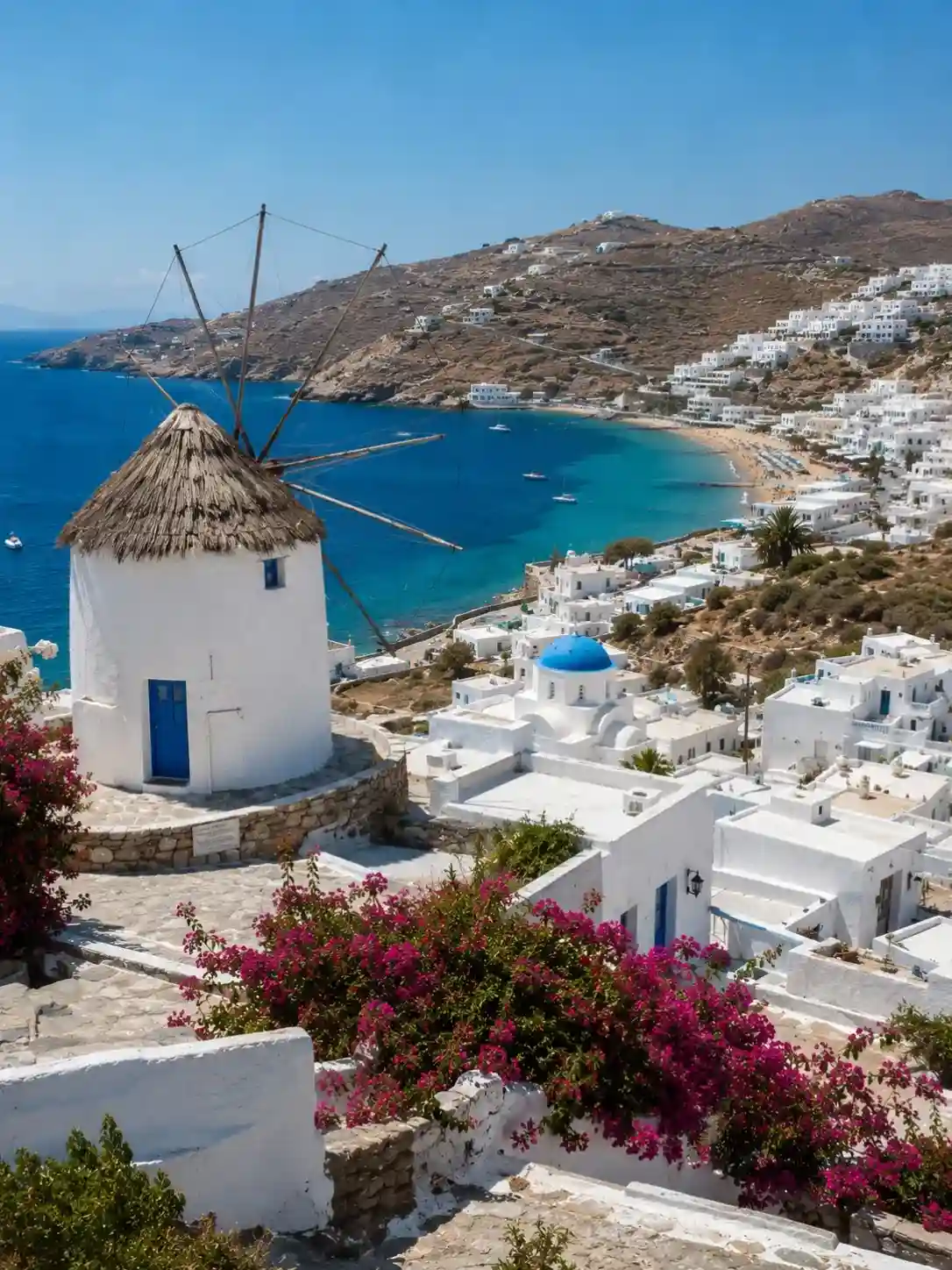
Ios is a Cycladic island tucked between Santorini and Naxos in the Aegean Sea — a place of beautiful beaches, clear blue waters, white buildings on steep hillsides, domed churches, and traditional windmills that draws younger travelers in mid-June through the end of August for what is unapologetically the most lively nightlife scene in the smaller Cyclades. Mylopotas — the main beach — runs a full spectrum from SCUBA diving and kayaking to windsurfing and jet skis through the beach clubs that line it; the blue-flag beach of Manganari on the southern tip is for quieter sunbathing when the main strip gets overwhelming.
What surprises most visitors is the historical sites hiding behind the party reputation. Ios claims to hold the burial site of the poet Homer, and the Bronze Age archaeological site of Skarkos — among the earliest complex settlements in the Cyclades — sits just outside Chora alongside a Byzantine era castle called Paleokastro and a decent archaeological museum. Eat at Katogi Restaurant for the feta chili dip and pear and cheese pasta, or settle into Pathos Lounge for sushi and a cocktail bar experience with swimming pool and sunset views attached. Local flavor comes from Skotyri goat cheese at Diaseli Traditional Cheesery, local honey, and the aged cheeses that make the island’s food scene more interesting than its reputation suggests. Accommodation runs from Far Out Beach Club Resort (which covers both hostel and camping-style accommodations within one complex) to the more polished Levantes Ios Boutique Hotel with its private pools.
Symi
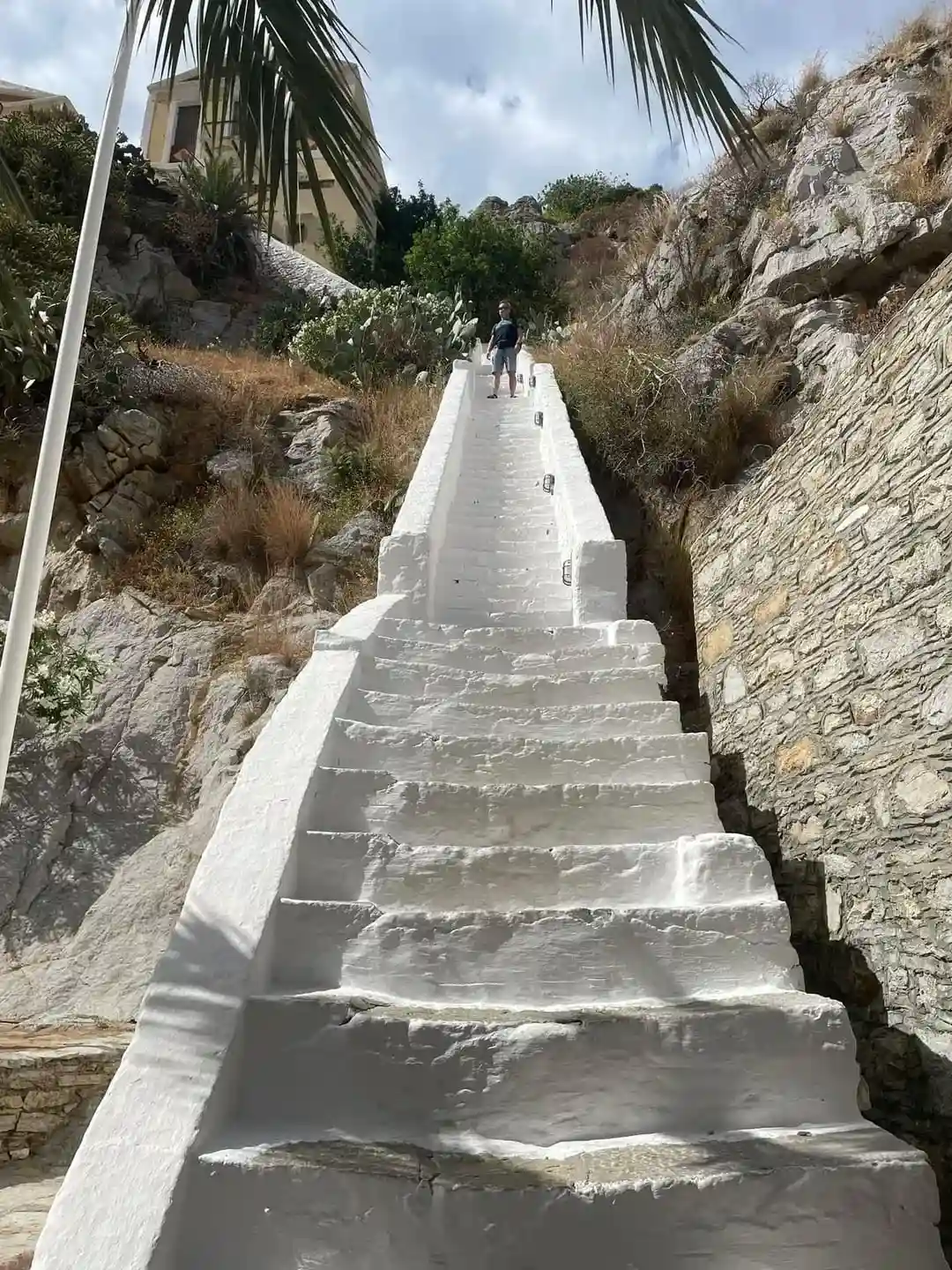
Symi is a short ferry ride from both Rhodes and Kos and is one of those Greek Island hopping discoveries that makes the whole multi-island logic feel worth it. The port hits you immediately: pastel-hued homes in primrose yellow, deep cornflower blue, and terracotta stacked up the hillside in a kaleidoscope of colors that somehow also carries the weight of Venetian heritage without feeling like a museum piece. It’s a relaxed trip island — lovely beaches, quaint tavernas, shady cobblestone streets — and it rewards those who stay long enough to take a water taxi into the quieter inlets where the water shifts to crystal clear turquoise.
Sponge diving is still practiced here, and the sponges and related goods sold at the harbor boutique are the most authentic souvenir purchase available. The Panormitis Monastery on the southern tip of the island is among the low-key sites worth the walk or taxi ride, and eating fresh fish, seafood, and the local Symi shrimp at a waterfront table — ideally at Paradise Nos Beach Bar with a harbor view — is the most straightforward pleasure the island offers. Iapetos Village provides self-contained maisonettes and self-catering facilities alongside stylish double rooms, an on-site pool, a bar, a dining area, and al fresco breakfast for those wanting a full base rather than just a bed.
Kastellorizo
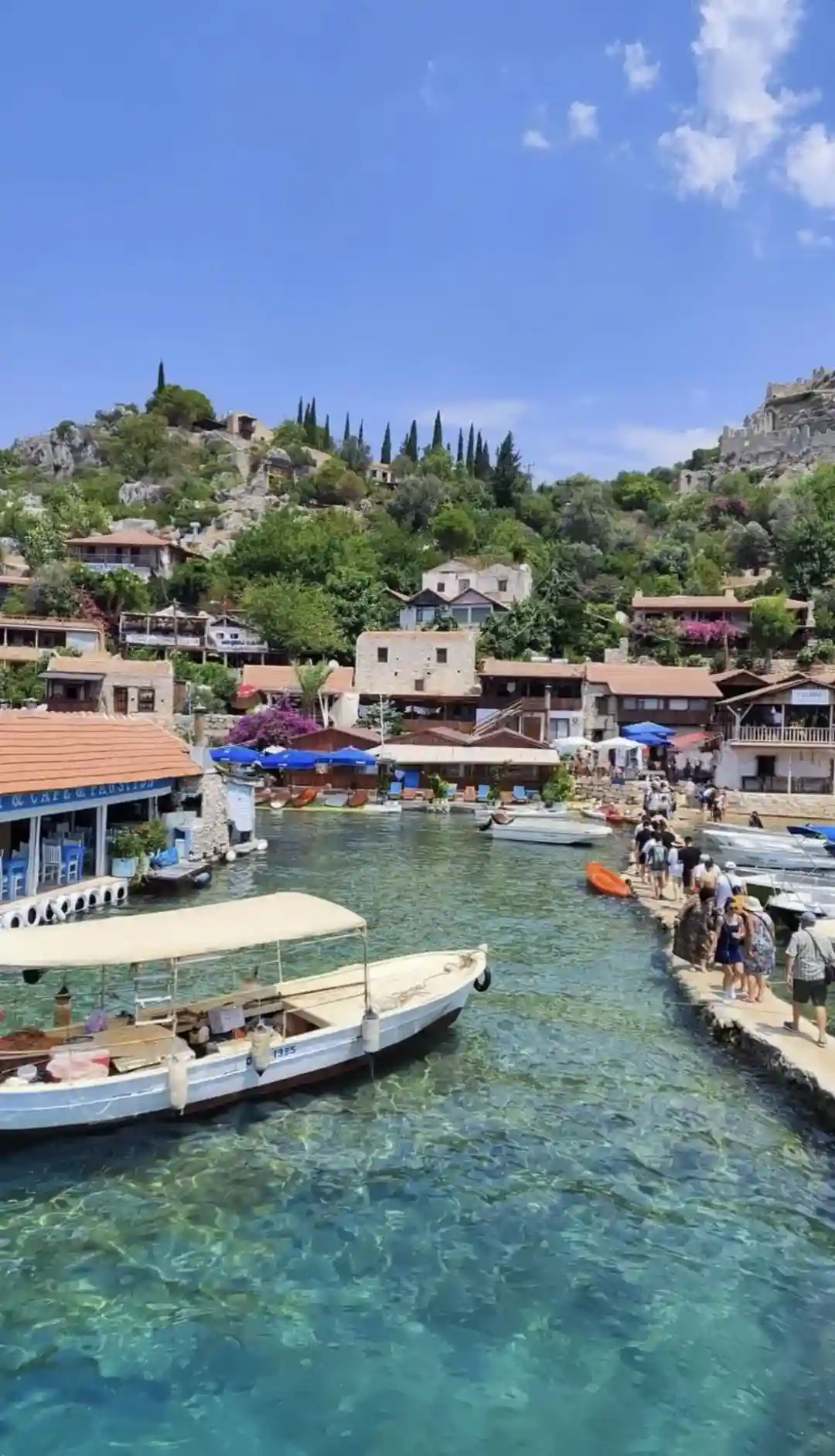
Kastellorizo is among the true hidden gems of the Greek islands — no airport, reached by ferry from Rhodes or occasionally from Turkey (close enough that you can see Turkish cars and headlights on the mainland from the harbor in the evening). Arriving by boat into the harbor at dusk, with the island’s picturesque village reflected in still water and locals gathered along the main street in cafes playing cards and chess over coffee and smoke, is one of the most quietly cinematic travel moments I’ve experienced. There’s a hustle and bustle to the harbor at arrival that gives way almost immediately to the island’s natural slow-paced way of life.
Stay at Poseidon Hotel for an authentic local experience and genuinely friendly staff, or try Meltemi for home-cooked food — their moussaka and calamari are straightforward and excellent. Days here go to scuba diving in water so clear it becomes almost surreal, snorkelling with sea turtles that treat you as furniture, and the kind of relax that happens only when there’s genuinely nothing demanding your attention.
Lemnos
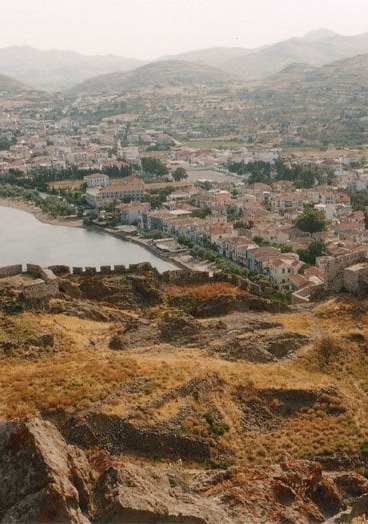
Lemnos is one of the prettiest places in the northern Aegean that almost no one outside Greece thinks about — and the town of Myrina, with its two shorelines, Byzantine castle, working taverns, and relaxed pedestrian shopping street winding through piazzas and cafes, makes an immediately convincing argument for visiting. The island carries ancient ruins at Ifestia and along a magical coast near the temple of Kavirio, while more unusual sights include the unroofed Panagia Kakaviotissa (a cave church unlike anything I’ve seen elsewhere), sand dunes, striking rock formations, and traditional windmills against the skyline. Some wine professionals argue that Lemnos produces some of the best wine in Greece, and an evening at a local ouzeri — specifically the family-run Ouzeri To 11 with its fresh seafood and authentic Greek cuisine — makes that claim feel entirely plausible.
Stay at Archontiko Hotel, or in the restored Limnos Windmills complex — converted one-bedroom homes inside actual windmills that are completely unique and memorable in the way that only genuinely unusual accommodation can be. The gorgeous beaches and general quiet of the island make it the kind of off-track destination that rewards travelers who’ve already done the Cyclades circuit and want something different. I came for two days and stayed five.
Rhodes
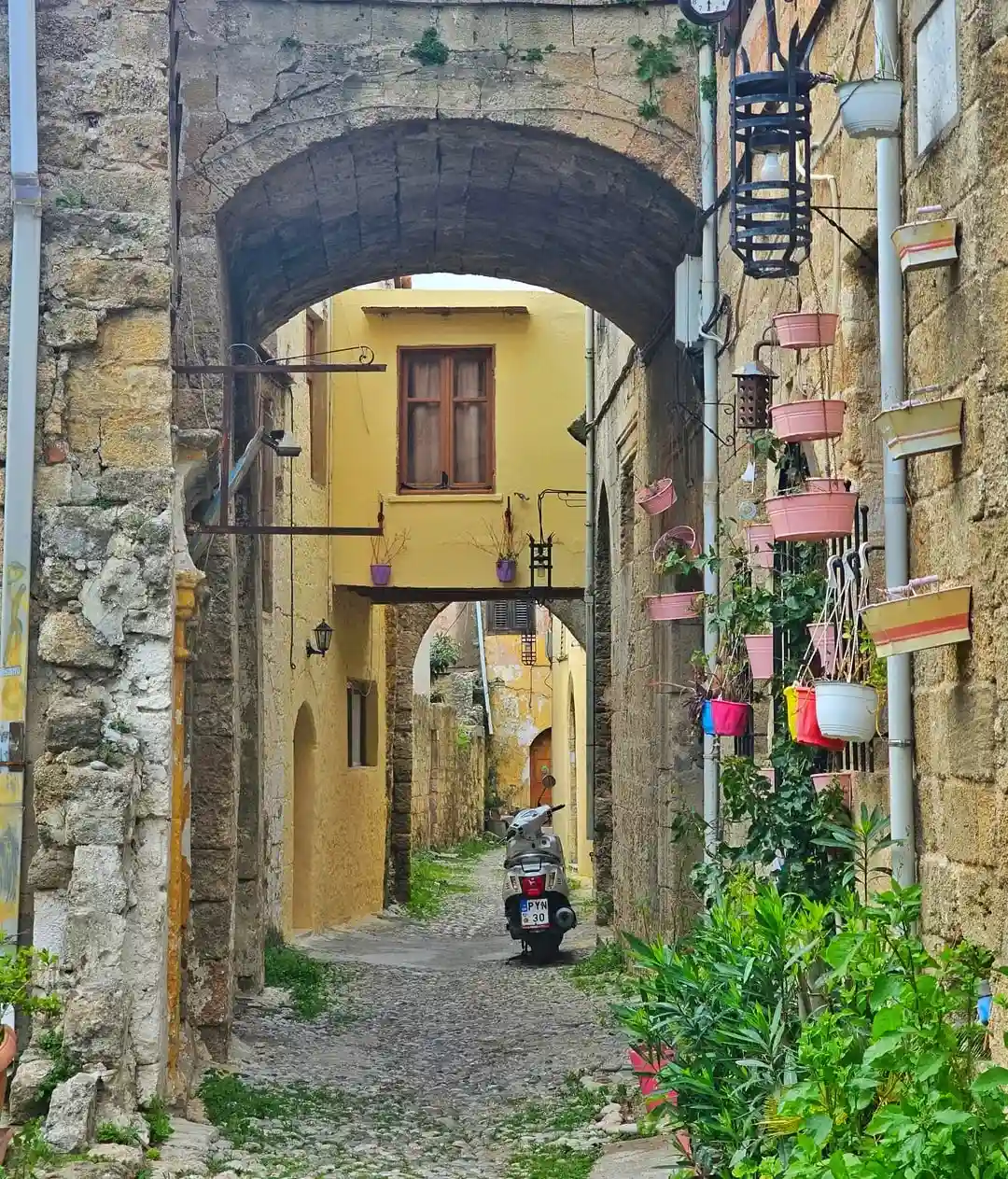
Rhodes carries the Roman Empire’s shadow and then layers a dozen subsequent civilizations on top — the result is Rhodes Town, an idyllic island capital centered on a historic fortified town and medieval city so well-preserved that UNESCO added it to the World Heritage list in 1988, recognizing it as one of the best-preserved medieval towns in Europe. The cobblestone streets and cute shops of the old town draw the crowds, and for good reason — the scale of the fortifications and the survival of structures from multiple eras in one walkable area is legitimately impressive. For accommodation, In Camera Art Boutique Hotel is a solid mid-range option with character to spare.
Eating in the old town requires navigation — Orfanidou street delivers vibrant nightlife with bars and clubs but the food is frequently mediocre and touristy; seek out Tamam for better results, and Stagna Kozas at Stegna is worth the drive out of town for their kolokythokeftedes (crispy zucchini ball fritters that are far more delicious than they sound). Beyond Rhodes Town, Monolithos Castle, the ancient city of Kameiros, Lindos, and Monte Smith (known locally as Monthe Smith) cover the archaeological wandering, while the beautiful beaches stretching down the coast cover everything else.
Arachova
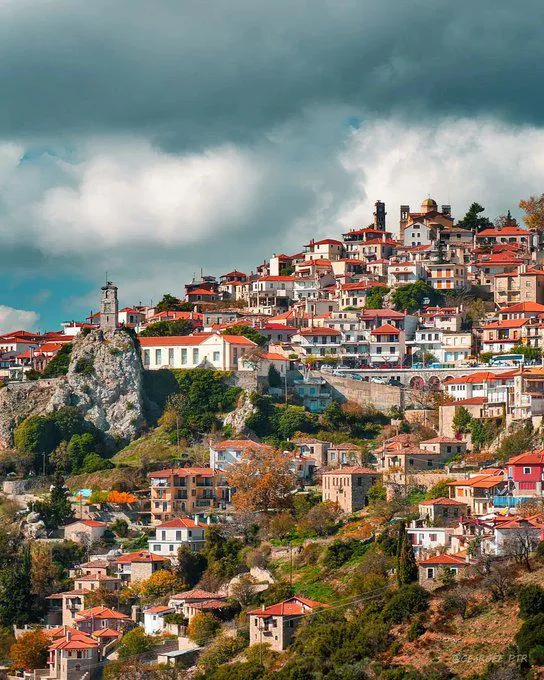
Arachova sits on the northern shore of the Gulf of Corinth at the foot of Mount Parnassus, a quaint village at 2,700 feet of elevation that functions as both a rural village and the primary home base for those who come to ski Mount Parnassus in winter. The clock tower and red-tile roofed homes on terraced hillsides give it the visual identity of a place that hasn’t needed to update its aesthetic in centuries — and the National Forest of Parnassus pressing in from all sides, with its 280 kinds of mushrooms (you’re officially allowed two pounds per person to forage), reinforces that sense of being somewhere genuinely connected to the land.
Artisanal cheese makers in the area produce Formaella cheese — a soft, slightly tangy local variety that candy shops and chocolate stores nearby serve alongside chocolate-covered pistachios, walnuts, and almonds as part of a snacking culture that is entirely its own thing. Eat a proper meal at Taverna Kaplanis, a farm-to-table restaurant serving Greek spinach pie and lamb chops with wine from a local wine producer whose goats and sheep roam the same hills that supply the kitchen. Stay at Skamnos Boutique Hotel — surrounded by forests, with an indoor pool and fireplace that make the winter visit feel like something from a storybook.
Vikos Aoos National Park
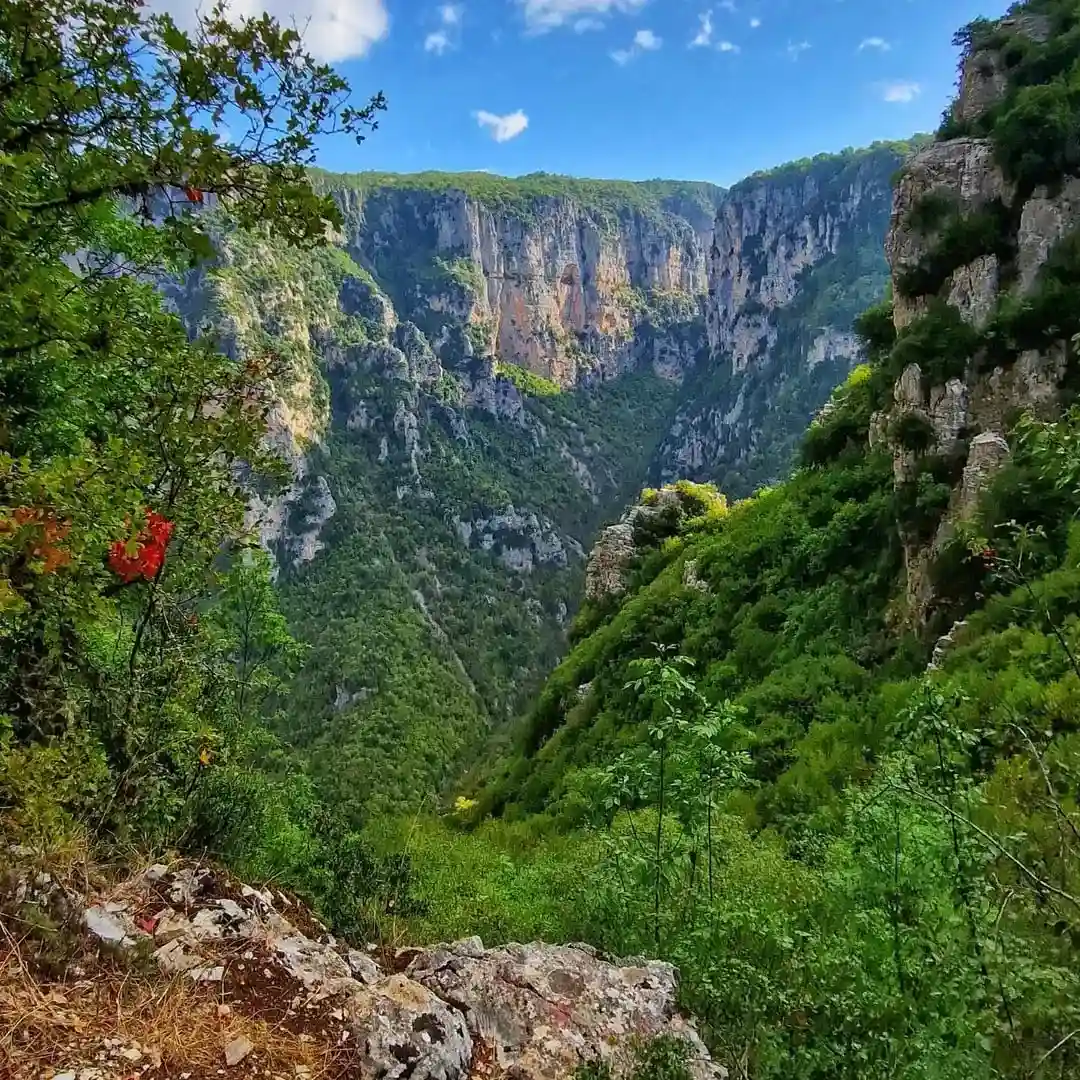
Vikos Aoos National Park sits in the mountainous northern region of Greece, a corner of the country that is genuinely neglected by tourists despite holding some of the best scenery and most biodiverse national parks in Europe. The centerpiece is the Vikos Aoos Gorge — a natural land formation that holds a Guinness World Record as the deepest gorge in the world relative to its width (the gorge walls rise over 1600 meters in places) — and hiking through it demands real stamina but rewards with scenic viewpoints, encounters with the Convent of Agia Paraskevi clinging to the cliffs, passages through stone villages connected by old bridges, and the knowledge that you’re moving through a UNESCO Geopark. Wildlife here includes brown bears, wolves, wild boar, lynx, golden eagles, and vultures — the most complete predator ecosystem in Greece.
The park is difficult to reach without a car, and most people base themselves in Ioannina — a city with a legitimately good cafe scene, a beautiful lake, a rich culinary experience, and accommodation at places like Saz City Life Hotel that make it a pleasant urban anchor for gorge day trips. The village of Monodrendri at the gorge’s edge deserves a stop specifically for Kikitsa’s Pie — a local shop producing roast pork and chicken pies that have developed something close to a cult following among hikers who’ve done the trail.
Cape Sounion
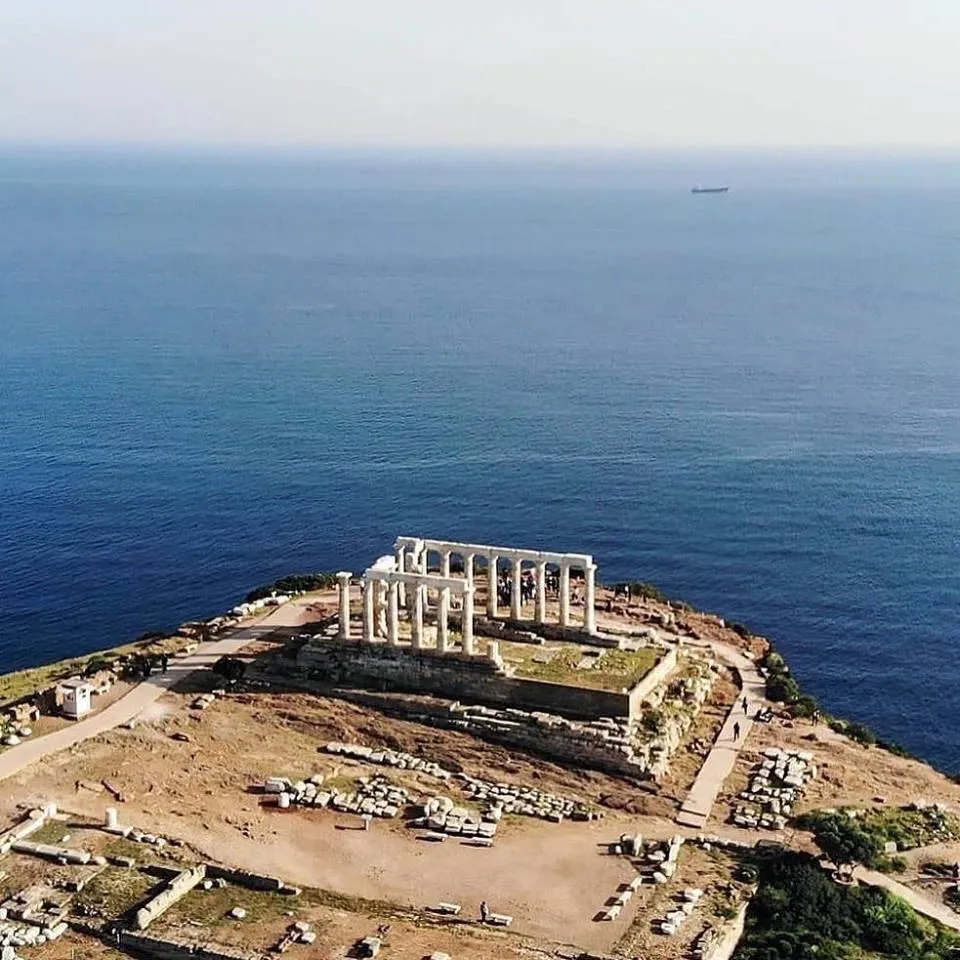
Cape Sounion — or Sounio — juts into the Aegean Sea from the tip of the Attica Peninsula, 70km south of Athens, and the Temple of Poseidon standing on its clifftop above breathtaking sea views and sweeping ocean panoramas is among the most dramatic ancient sites in all of Greece. Entry costs a few euros, the short hike from the car park to the temple is entirely manageable, and the view from the edge — the God of the sea honoured here, the Island of Aegina visible on clear days alongside the similarly sited Temple of Aphaia — puts the geographic logic of ancient Greek religion into immediate, physical perspective. Plan a half-day trip and eat a gyro plate for lunch at the cafe below the site before driving back.
On hot summer days, the calm clear blue waters below the cape are perfect for splashing around — the access road down requires care but the swimming spots reward the effort. A local bus from Athens runs here if you’d rather skip the drive, and Legrena Beach Villas (with sea views, gardens, kitchens, spacious bedrooms, play areas, and multiple bathrooms) is an option for those wanting a relaxing stay within reach of the cape across several days.
Monemvasia Castle
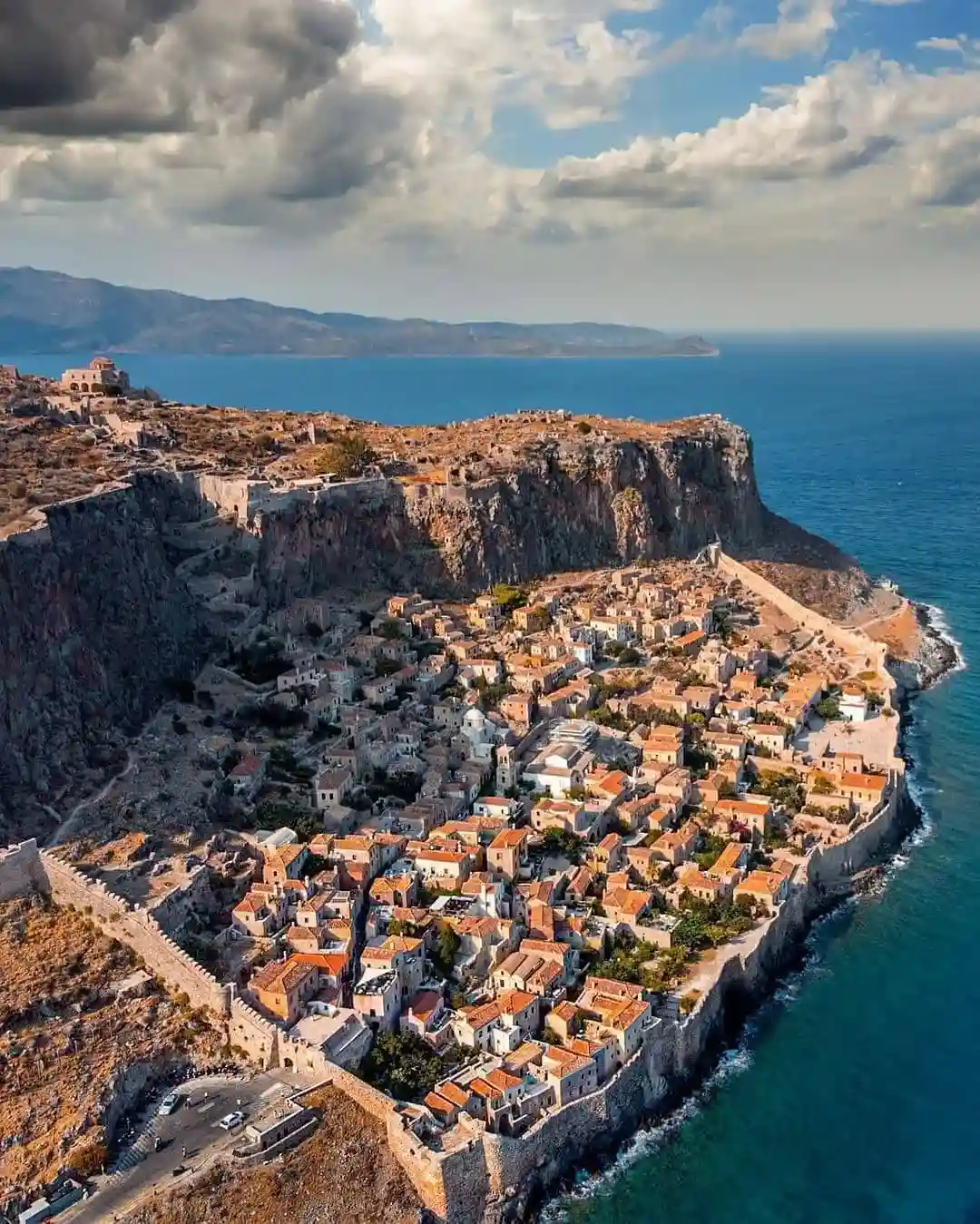
Monemvasia Castle is a medieval fortified town that time has treated with unusual generosity — a place untouched by time in spirit if not literally, its fairytale-like cobblestone streets, quaint alleys, and breathtakingly beautiful architecture occupying a giant rock tethered to the Peloponnese by a single causeway. Motorized vehicles not allowed inside — everything arrives on foot, and that enforced pedestrian pace gives the place its otherworldly charm. The Aegean Sea crashes against the castle walls below, sending huge waves over the rocks, and the town has been continually inhabited for centuries in a way that feels lived-in rather than preserved-for-tourists.
The ancient defensive architecture and expansive views from the upper citadel justify the climb, and eating at Matoula (a traditional restaurant operating since 1950) over tsaiti (also called saiti — a local pie filled with fresh cheese and herbs) and a glass of PDO Monemvasia Malvasia sweet wine is a complete cultural experience in a single meal. Byzantino Boutique Hotel offers traditional rooms and a breakfast buffet built on local ingredients — comfortable, atmospheric, and right inside the walls.
Methoni Castle
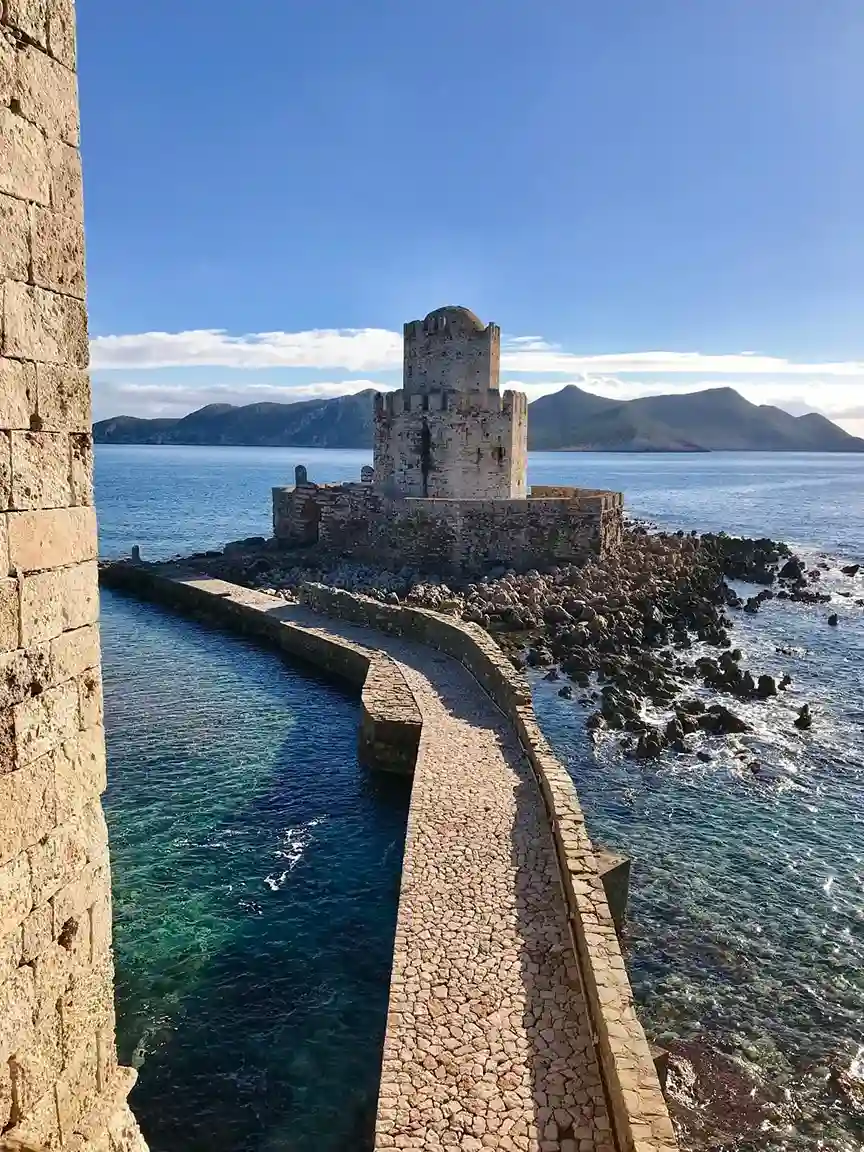
Methoni Castle is the kind of postcard-perfect medieval fortification that shows up in travel photography but rarely gets the dedicated visit it deserves. Located at southwestern Greece in the port town of Methoni, it’s about 177 miles (or four hours) from Athens — closer to the drive than many people realise — and the scale of the place is genuinely humbling: built by the Venetians in the 13th century, it’s considered one of the largest castles in the Mediterranean, with the Lion of St Mark above the castle gate and a fourteen arched stone bridge leading to the separate Bourtzi — an octagonal-shaped fortress on the water connected to the main walls by a stone causeway running along the southern edge of the headland.
The town architecture around it carries that same Venetian-style architecture character — enduring symbol of the long Venetian control before a Turkish assault in 1500 eventually changed hands. Beyond castle walls, a scenic boat ride out to the island of Sapientza for a swim at its local beaches is a genuinely perfect afternoon. This is history you can actually touch, walk through, and sit beside — the bygone era feeling is immediate and unmediated by excessive signage.
Naxos
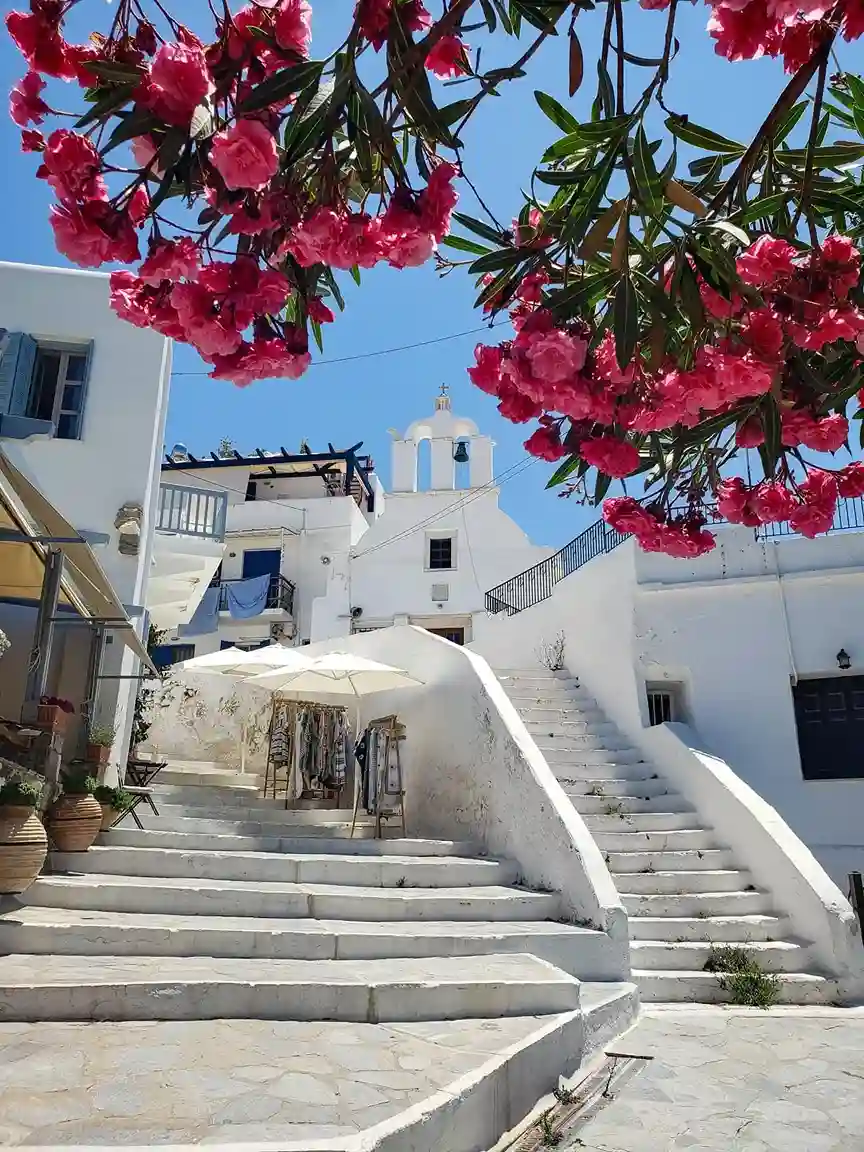
Naxos is the largest of the Cyclades and carries a quiet confidence about it — quieter than Mykonos, greenest among the Cycladic islands, with a lush landscape of small farming villages, mountainous landscape, and nutrient-rich lands producing the local produce (particularly the island’s famous potatoes and thyme honey) that makes its food culture genuinely distinct. The Tragea Valley in the interior — whitewashed town of Halki, narrow alleys, vine-shaded squares, art galleries, and the hamlet of Moni with its Byzantine church and 7th-century frescoes — is what separates Naxos from islands that are beautiful but one-dimensional.
Take a cooking class in a family home in Kaloxilos using Naxian ingredients to make traditional dishes, then visit a local distillery producing Kitron — a citron liqueur unique to the island — and end the afternoon with a slice of galaktoboureko (sweet custard pie) from a village bakery. The Venetian stronghold and Byzantine stronghold layers in the Kastro area of Naxos Town reveal a history of contested ownership echoed in the Venetian mansions still standing, while the marble village of Apiranthos in the hills offers panoramic views of surrounding mountains and a character distinct from the coastal towns. For something completely different, book a catamaran trip to the small Cyclades — Ano Koufonisi, Irakleia — where dolphins escort the boat and near-empty beaches and secluded coves are the destination rather than the reward.
Mainland Greece Travel Tips
Moving around mainland Greece is more straightforward than the island-hopping narrative suggests — a solid public transportation system of buses, trains, and ferries connects major cities and most tourist destinations, with direct links between Athens, the Peloponnese, Thessaloniki, and onward to Istanbul, Turkey for those continuing overland. That said, renting a car unlocks the remote areas and small villages that public transport skips entirely — particularly useful in the Peloponnese where narrow winding roads between ancient sites require either a car or a lot of patience with irregular bus schedules. Pack pita gyros for road food — the combination of flat bread, meat, tzatziki, french fries, and sometimes Greek salads on the go is both cheap and genuinely excellent — alongside Souvlaki, Mousaka, and Stifado made from traditional recipes for sit-down meals.
Peak tourist season runs mid-June to mid-September — hot and dry weather, crowds everywhere, and prices at their highest, particularly with climate change pushing temperatures higher than historical averages. The shoulder season windows of April to mid-June and mid-September to October offer pleasant weather genuinely suited to sightseeing, hiking, and outdoor activities without the summer heat and crowds — and for anyone whose travel preferences run toward thoughtful exploration over beach maximalism, these months are simply better.
Sustainable Travel in Mainland Greece
Tourism is a primary source of income across Greece, but its negative consequences for fragile ecosystems and local communities are well-documented, which makes conscious choices both more meaningful and more necessary here than in many destinations. Opting for small-scale sustainable hotels, locally-owned guesthouses, and homestays over large chain properties channels money directly into the local economy and has a measurably more positive impact on the environment — large hotels with their pools, air conditioning, and infrastructure demands consume resources at a rate that doesn’t show up in the room price but absolutely shows up in the landscape. Conserving water (Greece faces genuine water scarcity in summer), turning off lights and air conditioning when leaving rooms, and minimising reliance on heating where unnecessary are small behaviors that matter collectively.
Getting around by public transportation dramatically reduces carbon emissions compared to taxis and private cars, and the bus network between major sites is actually quite functional once you trust it. On trails and in natural areas, the Leave no Trace principle keeps the natural beauty that made hiking through hills and mountains on designated trails worthwhile in the first place — wildlife is abundant enough in places like Vikos that disturbing it by leaving designated trails, picking plants, or leaving trash has real consequences. Swap single-use plastics for reusable items — carrying a water bottle to refill rather than buying plastic at every stop — and choose biodegradable products and eco-friendly personal care products to keep pollution out of the water sources feeding both the landscape and the communities that depend on it.