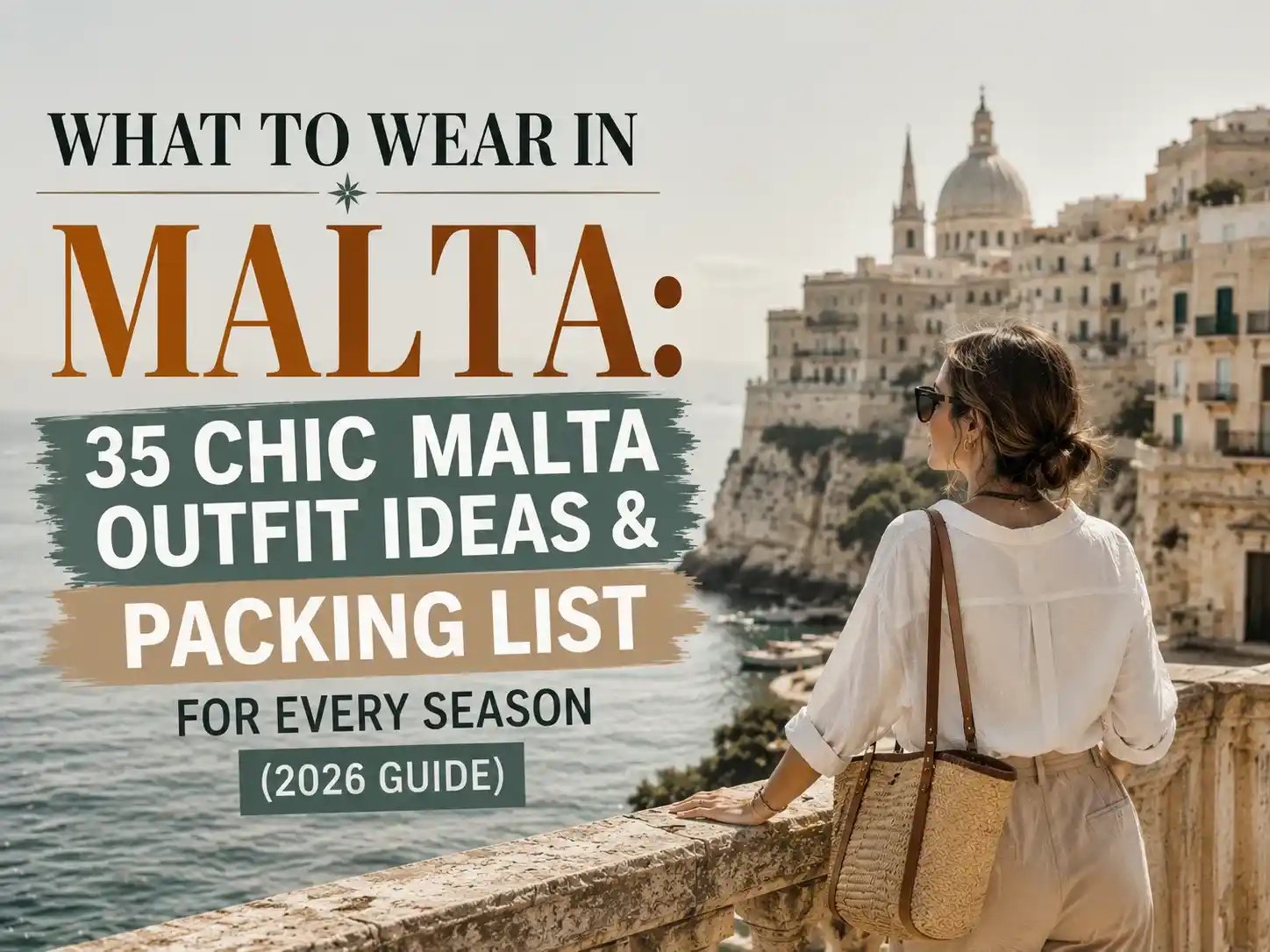
What to Wear in Malta: 35 Chic Malta Outfit Ideas & Packing List for Every Season (2026 Guide)
My first real lesson in Malta packing came the winter I flew out for Christmas instead of going home to New York. Thanks to my Maltese heritage and dual citizenship, I had extended family waiting at the airport, but nothing quite prepared me for the gusty winds that greeted me the moment I stepped off the plane. I’d assumed a Mediterranean winter would feel gentle, deep into autumn; instead, Maltese winter turned out to be its own strange animal — bright, blustery, and nothing like the European autumn weather I’d packed for on a different trip entirely. That’s the thing nobody tells you before your first visit: check the forecast obsessively, because the seasons here don’t behave the way you’d expect.
Since then I’ve used this trip, and every one after — from a breezy sun trip to a proper girls’ getaway — to build something closer to a packing guide I actually trust. A girls’ trip in October is a different beast than a solo December wander: you’re juggling sunny days, evening cocktails, and everything between, so your clothes need range. I lean on a loose capsule wardrobe — jeans, trainers, a few travel outfits that work from warm afternoons through breezy nights — rather than overpacking for every possible mood the island throws at me, though I always sneak in a couple of summer favourites just in case the sun cooperates.
What actually makes the difference isn’t the outfits themselves but the small things around them: the safety gear I never used to bother with, the body-care basics I now always toss in, the beach essentials I used to forget entirely. Respecting local customs matters too — Malta’s locals dress for comfort first, and once you’ve wandered seaside cafés near centuries-out cathedrals enough times, you pick up their styling tricks without even trying. Packing for any season, whether it’s peak Maltese summer or deep winter, comes down to the same instinct: sightseeing-ready, comfortable, and only ever bringing what you’ll actually wear.
Daytime & Everyday Outfits
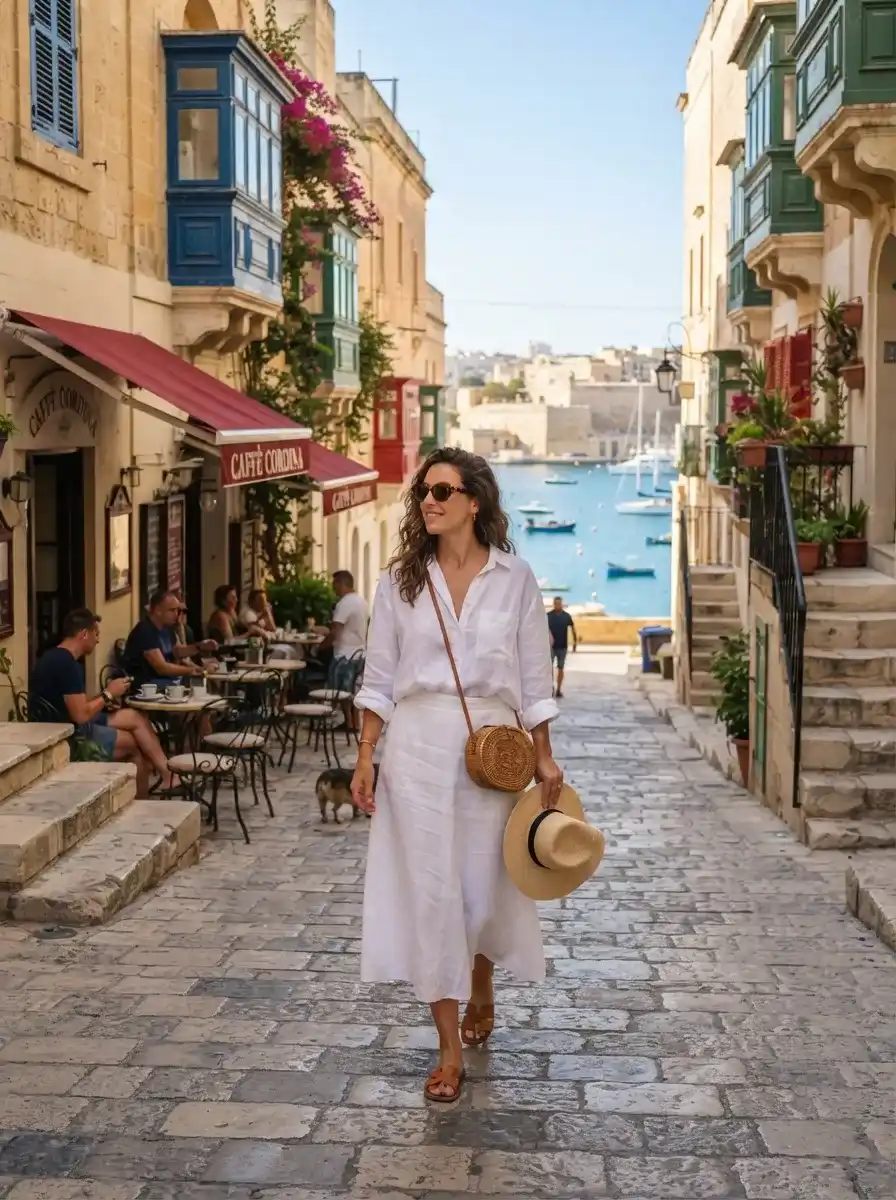
My daytime uniform in Malta barely changes no matter the trip: something that survives a coffee stop in Valletta, then holds up wandering to the ferry for Gozo later that afternoon. Flowy skirts, oversized linen shirts, and a pair of denim shorts stay on rotation — I still wear a Sienna Miller skirt from M&S that’s been through three Malta trips and counting, paired with tan sandals for waterside lunches by the harbour.
The real skill is dressing smart rather than dressing up: chinos, a breezy dress, and a handful of mix-and-match pieces get you through breakfast to dinner without a single outfit feeling wrong. National Geographic has pointed out that cotton and linen genuinely help regulate body heat, and after enough sweltering conditions on this island, I believe it — breathable fabrics aren’t a nice-to-have here, they’re the whole strategy.
Peak summer heat calls for its own rules. Baggy shorts are the move even for skirt-wearers on windy days, since jeans feel unbearable once the sun’s fully up; cotton t-shirts handle moisture far better than anything synthetic, and I always pack more than I think I’ll need because outfit changes happen more often than you’d expect — even a couple of cold showers a day doesn’t stop the sweat. Harem trousers have become my quiet favourite: enough sun protection for a hot afternoon, dressy enough with a nicer top for the evening.
For anything longer than a weekend, I test outfits the same way every time: lay out easy shorts, light shirts, and one breezy dress, and if they can move from beach walks to a proper dinner, they’ve earned a spot in the case. Wrinkle-resistant, quick-drying fabrics win over anything precious, and comfortable shorts paired with breathable pieces and a few loose pieces thrown in have become my personal summer staple — proof that a small rotation of pieces can genuinely carry an entire trip.
Beach & Poolside
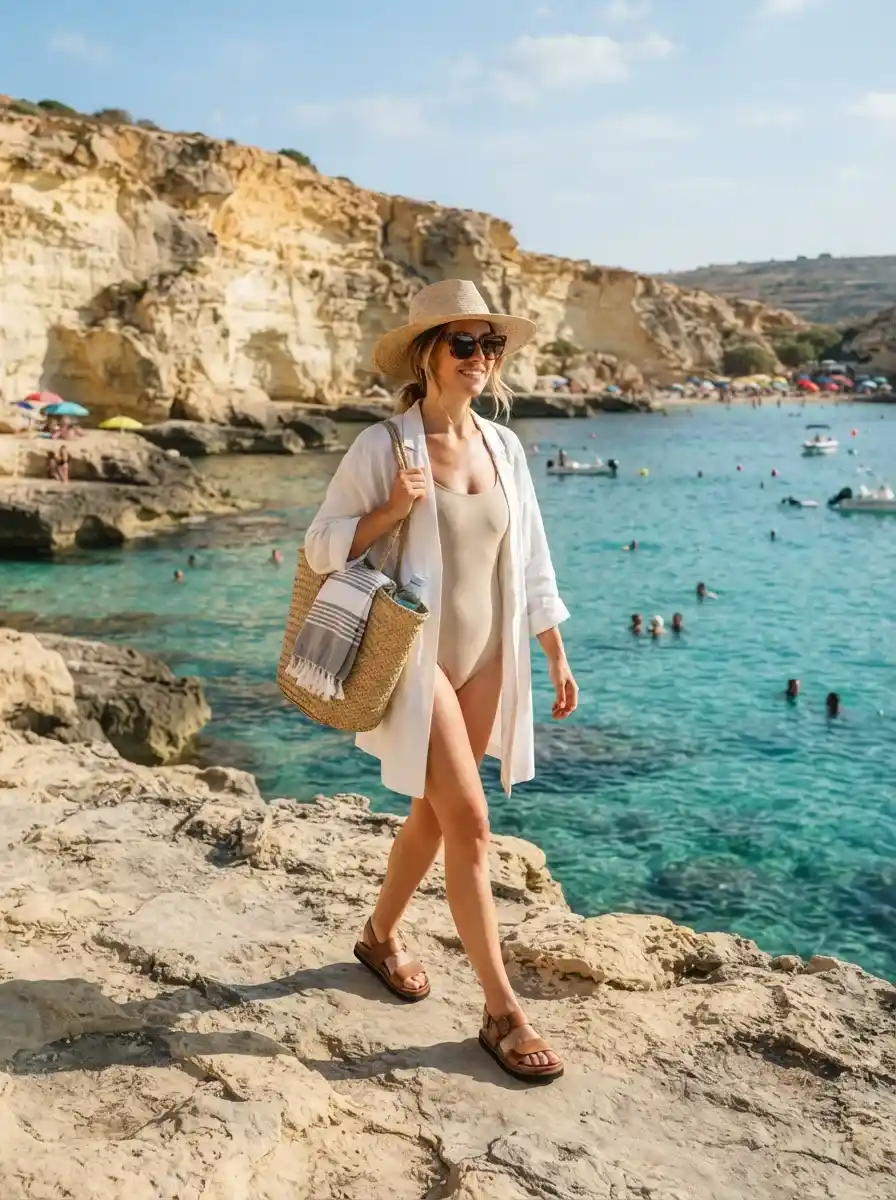
Malta’s beaches aren’t uniform, and packing for them shouldn’t be either. VisitMalta will tell you Golden Bay and Mellieħa Bay are soft-sand favourites, while St Peter’s Pool is all rocky terrain and rugged bay terrain — you’ll want proper water-friendly sandals with thick soles and non-slip soles, not flimsy flip-flops that slide the second they hit wet cobblestone near the rocks.
For the sand days, I keep it simple: a muted swim set under a breezy cover-up, or one of the light cotton cover-ups I’ve collected over the years, paired with a wide-brim hat and oversized sunglasses against the glare. A straw tote carries the essentials for beach-bar visits, and sand-free microfibre towels or quick-dry towels save you from lugging around something damp and gritty for the rest of the day — genuinely worth packing even in winter, on the rare occasion the weather allows a swim.
Rooftop-pool afternoons ask for a slightly more polished version of the same idea — think bright dresses in neutral tones over neutral swimwear, easy enough to go from the pool to a beachfront lunch without changing. That’s the whole point of a good warm-weather look: swimwear and sandals that move seamlessly from beach to bar without a second thought.
Evenings Out & Dressing Up
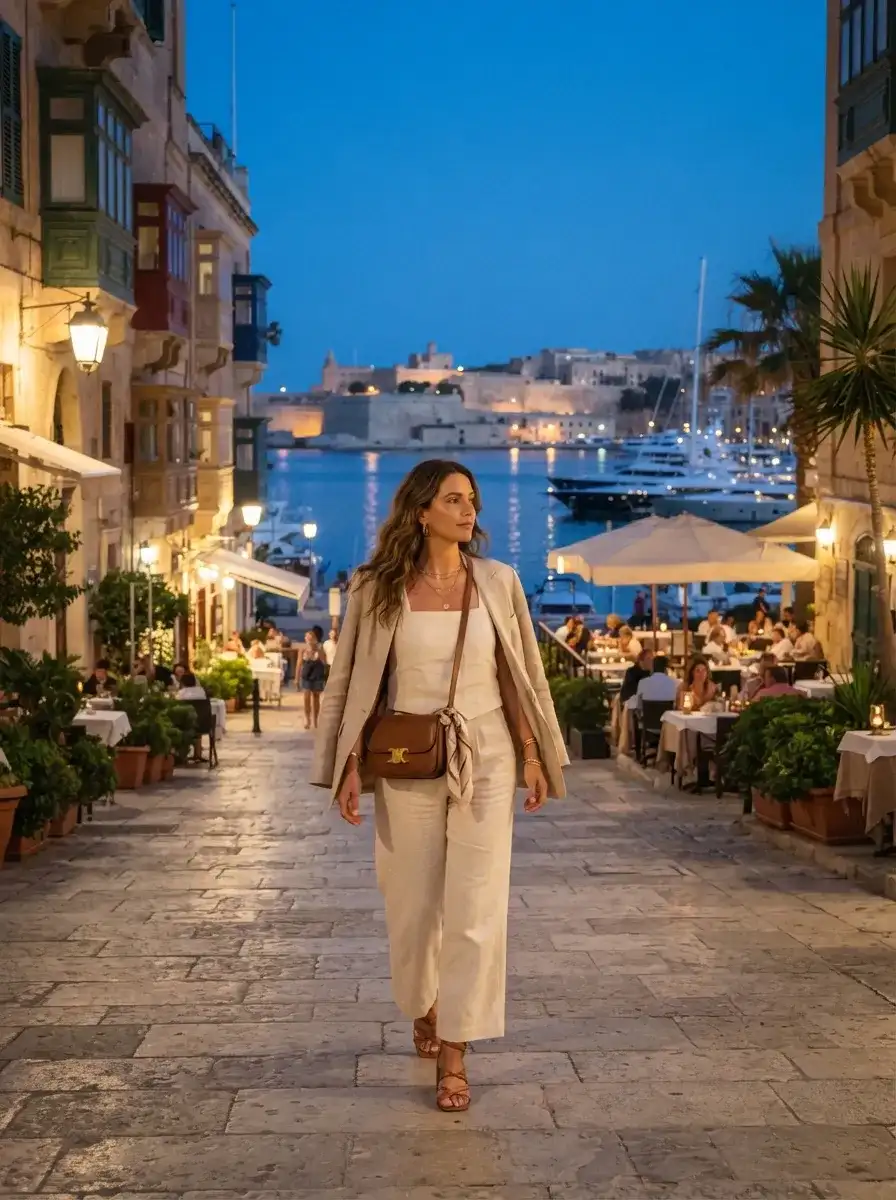
Temperature in Malta drops fast after sunset, faster than the pleasant daytime breeze ever suggests it will, and this is where most first-time visitors get caught out. I learned this the hard way at a rooftop dinner in Valletta, sweating through the walk over and shivering by dessert — after that, layering stopped being optional. REI’s general layering advice holds up surprisingly well on this tiny island: dress light for the day, add layers the moment the harbour wind picks up.
For a proper night at somewhere like Taste or drinks along the waterfront, I reach for mini dresses, a silk maxi dress, or linen co-ords, finished with tan sandals and a cotton-blend blazer or linen blazer once it cools off. A denim jacket works just as well if you want something more casual, and a crossbody bag keeps your hands free through cocktails and long dinners at nearby restaurants.
Holidays call for something a little more special — I still remember one Christmas Eve dinner in Valletta that ended with a walk past St. John’s Cathedral, and I was glad I’d packed an actual dress for the occasion. Dinners like that, or any proper dressed-up evening, are worth the extra hanger space, even on a short trip.
Mild winters mean you can usually skip a full winter coat — locals often still wear heavy puffer jackets out of habit, but a leather jacket layered over a sweater, or even just a lightweight jacket or light blazer, has kept me comfortable on every trip so far, including nights out near Kora Terrace.
Footwear
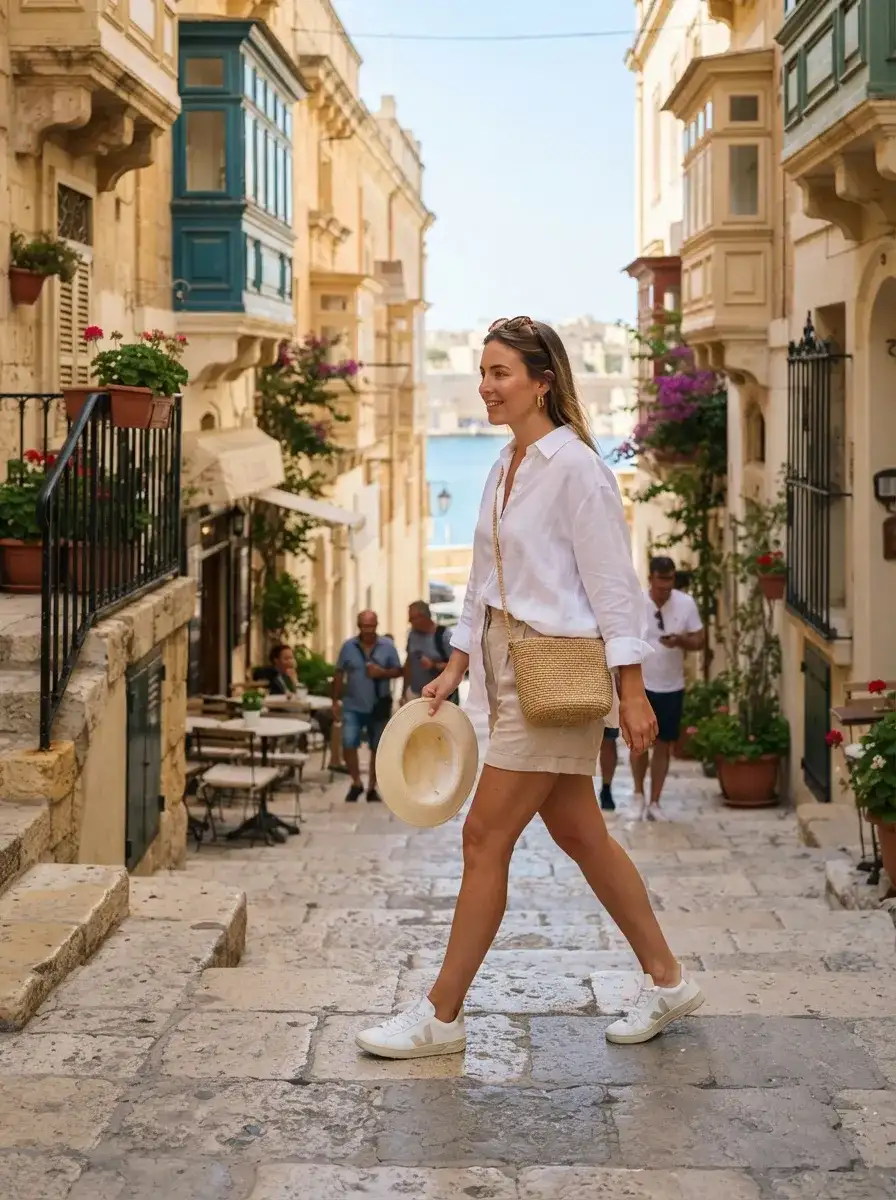
Lonely Planet isn’t exaggerating when it flags stilettos and thin flip-flops as the classic visitor mistake here — the narrow alleys, stairways, and polished stone in Valletta and Mdina look gorgeous in photos and are brutal underfoot. Cobblestone streets and uneven stairs mean heels carry a genuine ankle-twisting risk, and I say this as someone who learned it the slow way.
Breathable trainers, cushioned strappy sandals, or flexible-soled espadrilles are the better call for a day of sightseeing — but only if you’ve actually worn them in first, or you’re looking at blisters by day two. Flats or plain trainers (Converse, in my case) handle uneven ground just as well without sacrificing comfort.
Seasons change the calculation too: summer heat makes lightweight walking shoes essential so you’re not dealing with sweaty feet on top of everything else, while October through April, especially with the odd bout of rain, waterproof walking shoes earn their space in the case — Malta’s potholes don’t care what season it is, and neither does winter rain.
Accessories & Extras
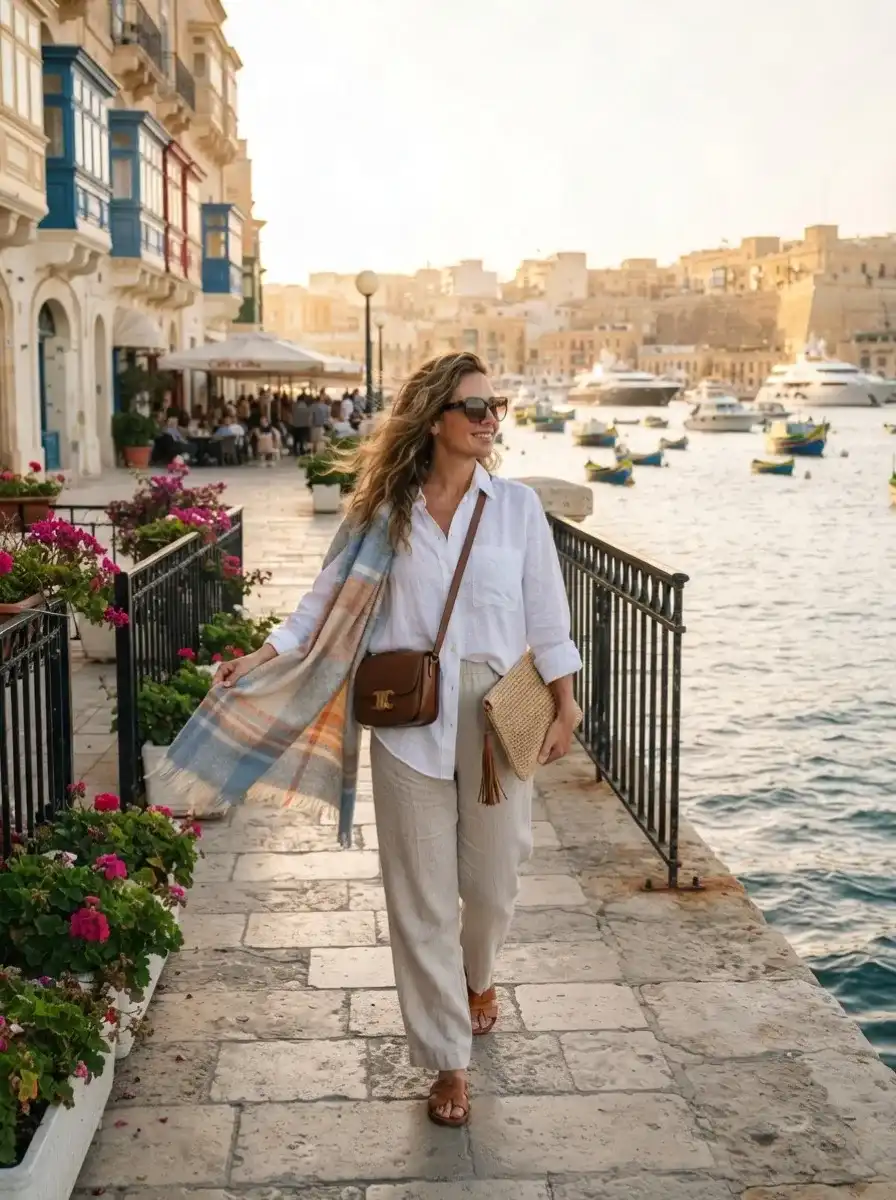
Small accessories do more work than people expect. A simple crossbody or crossbody bag keeps your hands free for eating, drinking, and photos during daytime exploring — I switch mine side to side on longer walking days without even thinking about it. A tassel shoulder bag or woven clutch takes over for evenings.
The wind here gets properly gusty, especially crossing on the Gozo ferry or wandering Valletta and Mdina, so I never travel without a blanket scarf that doubles as a layer, a makeshift pillow on the ferry, a knee cover, a shoulder cover, or, on one memorable occasion, an improvised dress. Strong sunglasses are non-negotiable given the Mediterranean sun, especially for meals by the water in Sliema.
A camera — I use a mirrorless model small enough for a bag but with real DSLR-quality output — is worth carrying for the scenery, and a detangling hairbrush or basic hair brush earns its space too, since knotted hair is guaranteed after a day in that wind. Chunky gold earrings dress up even the simplest outfit.
As for shoes, comfortable shoes matter more than anything else on this list: Tevas or Dr Martens sandals by day, flat leather sandals for evenings, all much kinder to your feet than anything stiff. Keep water on hand throughout — Malta’s heat catches people off guard more than they expect.
Fabric Choices
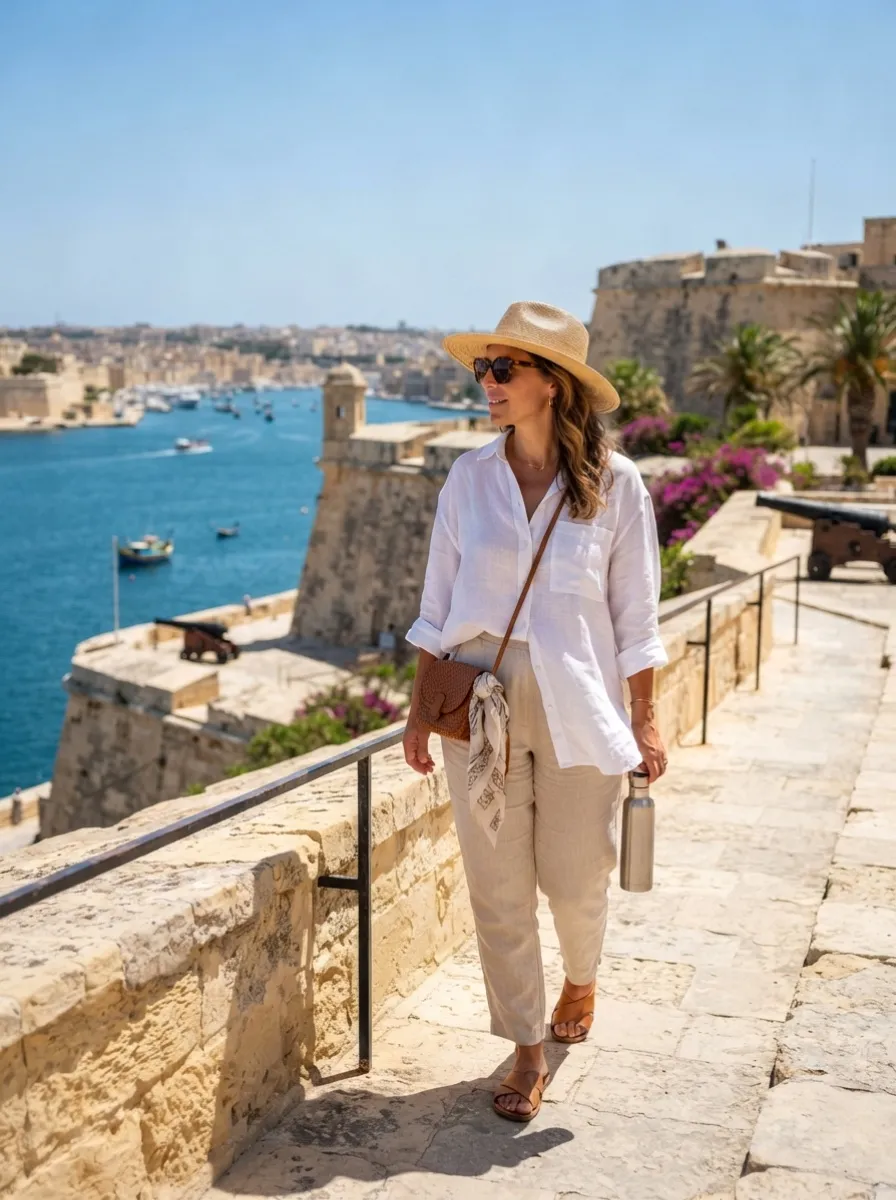
UV exposure is a real risk even under cloud cover — the WHO flags this often — and the Skin Cancer Foundation specifically recommends UPF 30+ clothing for reliable sun protection against direct sun. Natural fibers like cotton, linen, and rayon breathe far better than anything synthetic; I found that out the hard way wearing synthetic fabrics while touring Valletta’s fort walls and trapping every bit of heat the sun could throw at me. Never again.
Weather Overview & Seasonal Packing
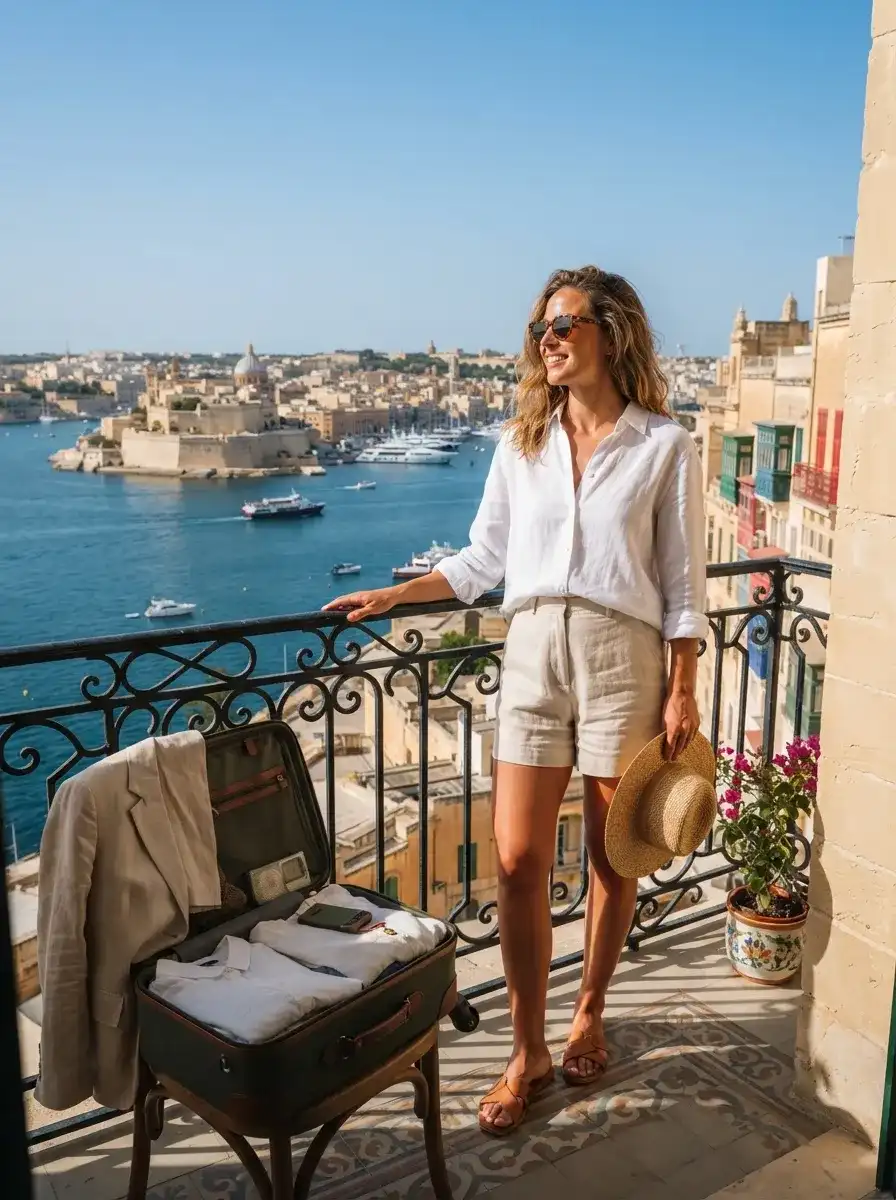
Maltese summers run properly hot, with cloudless skies, steady sea breeze, and the kind of Malta summer sun that the Met Office — or the Malta Airport MetOffice, if you’re checking right before a flight — describes as intense and reliably dry, thanks to low rainfall most of the year. Mornings start mild, afternoons warm up fast, and even evenings stay pleasant enough that a light layer, or just light clothing generally, is usually all you need against the midday sun.
I made the mistake once, on a late-September trip, of packing two button-downs and one linen blazer and assuming that would cover it — the sun had other plans, and lighter t-shirts won out for daytime, with the blazer saved for evening harbour cafés. That’s really the whole trick to a good daytime choice: check the forecast, then dress for actual average temperatures rather than what the calendar says the season should feel like.
Maltese winters, by contrast, are properly mild — think a loose warm coat, jacket, or thick waterproof jacket rather than anything heavy, since temperatures generally sit around 12–18°C even at the coldest. Expect a mix of sunshine and rain, sometimes both in the same afternoon, so a proper rain jacket or waterproof jacket earns its suitcase space far more than a bulky coat ever would.
The shoulder seasons are where the real planning happens, month by month: October still wants jeans and t-shirts with a jacket on standby, November adds long-sleeved tops and a light jacket, December brings out hoodies, cardigans, and a proper warm coat as sweating gives way to actual chill. By January and February you’re in warm leggings, tights, woollen tops, and cosy tops under a thick waterproof jacket, before March eases back into rain jacket territory and April and May return to spare t-shirts and light cardigans as mild weather creeps back in.
Malta Dress Code: Respectful & Still Stylish
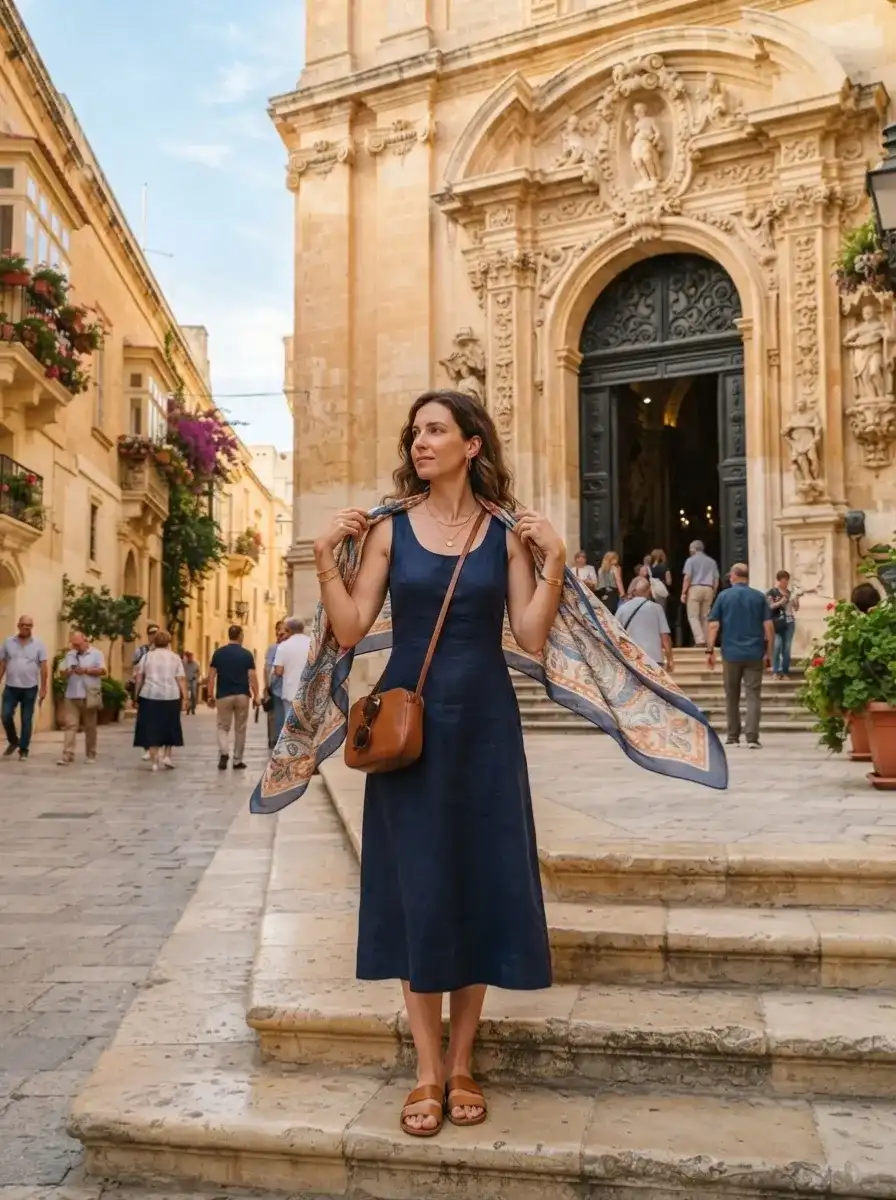
Malta looks casual on the surface, but plenty of churches and heritage sites genuinely expect modest dress — the visitor guide at St John’s Co-Cathedral literally asks guests to arrive decently dressed, and keeps wraps at the door for anyone who shows up underdressed. I learned this at Mdina’s Metropolitan Cathedral, wearing a sleeveless top and having to throw a borrowed shawl over my bare shoulders before I was allowed in.
The fix is simple: keep one lightweight scarf in your bag at all times. It covers you out of courtesy during sightseeing, then doubles as an accessory for dinner later that night — one item solving both the comfort side and the respect side of dressing for Malta.
Style Notes / Brand Callouts
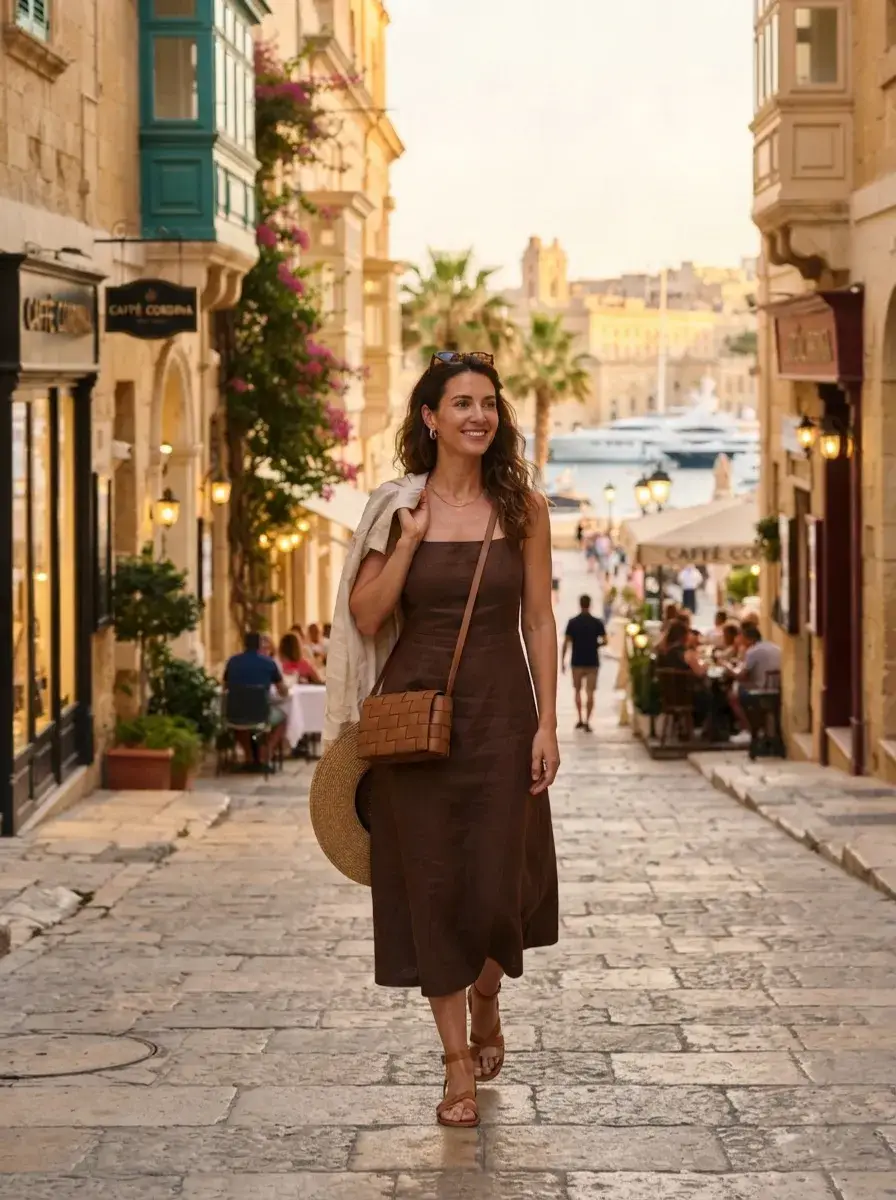
Certain pieces earn their spot in the suitcase trip after trip. M&S gets the credit for both Sienna Miller sandals and a pair of genuinely comfortable denim shorts, while Free People delivers on a little black dress that works day or night without a second thought. Accessorize covers the smaller stuff — gold earrings, a tassel clutch, even a cowboy hat for the beach — and H&M is reliable for relaxed cover-ups and easy linen shirts. For one proper night out in Valletta, a chocolate-toned dress from Reiss did more heavy lifting than anything else in my case.
The Verdict
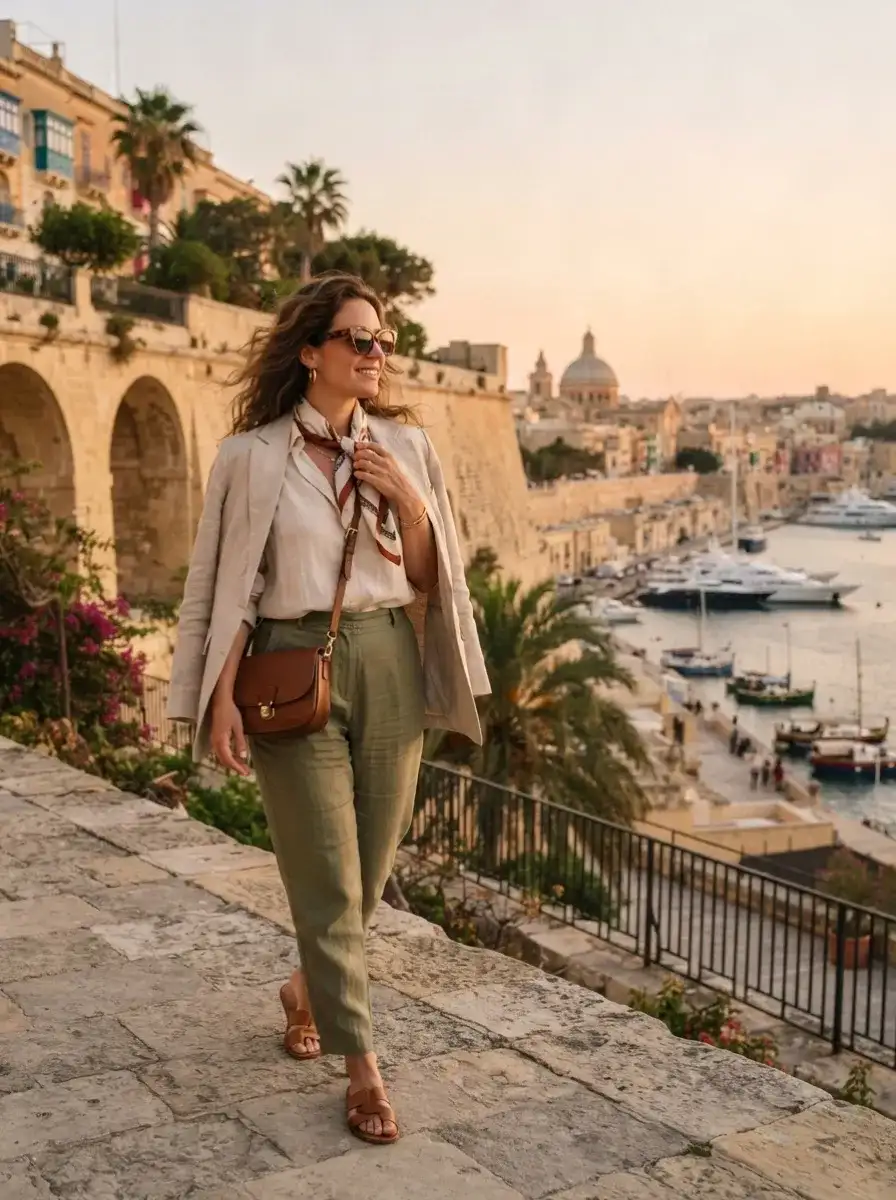
Looking back at what actually got worn on that autumn Malta trip, the answer was almost everything — and I credit that entirely to sticking to a simple palette: creams, rust, and olive that all mixed and matched without effort. Breathable fabrics and a few light layers did the rest, leaving me looking effortlessly put-together without trying particularly hard.
Comfy Sweaters
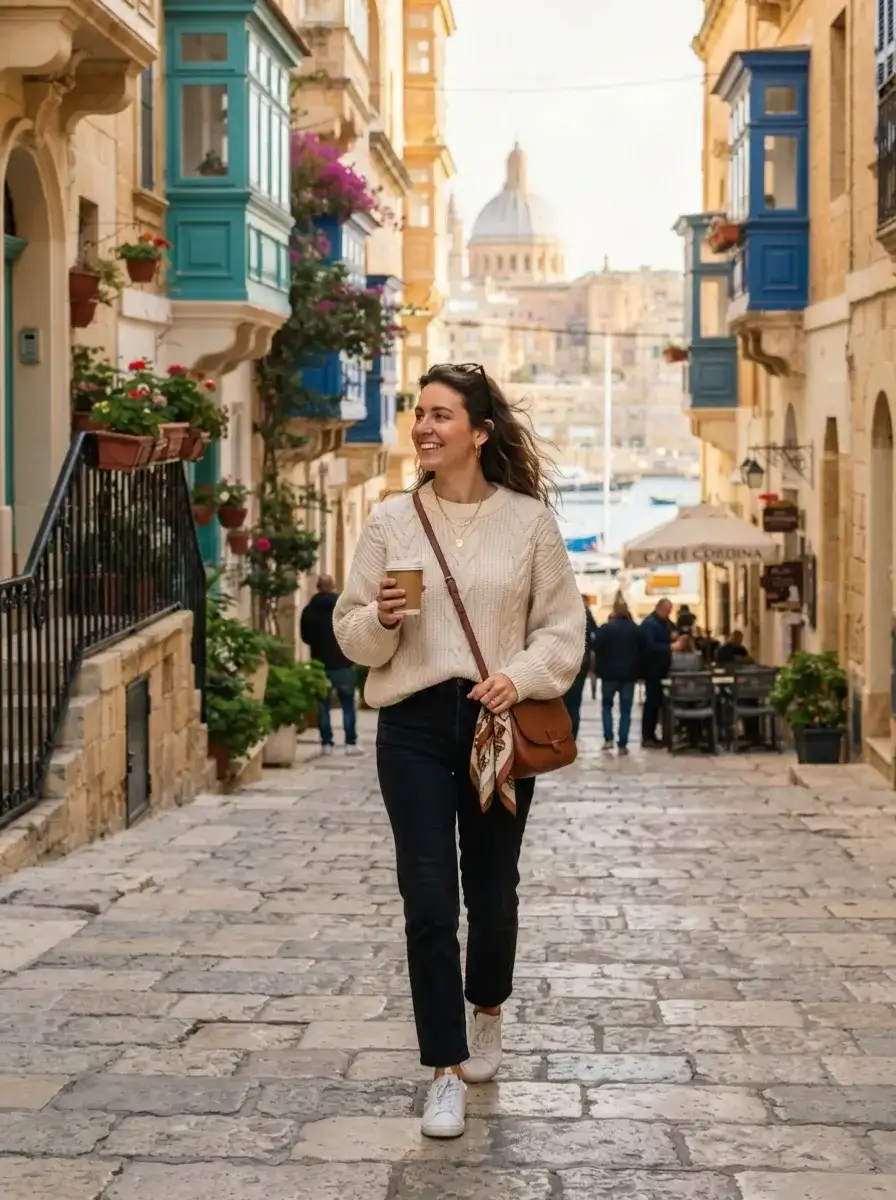
On the days mild enough to skip a jacket altogether, an oversized sweater on its own kept me plenty warm and still looked properly put-together — proof that smart layering is really the whole game while travelling through a Maltese winter.
Boyfriend Jeans
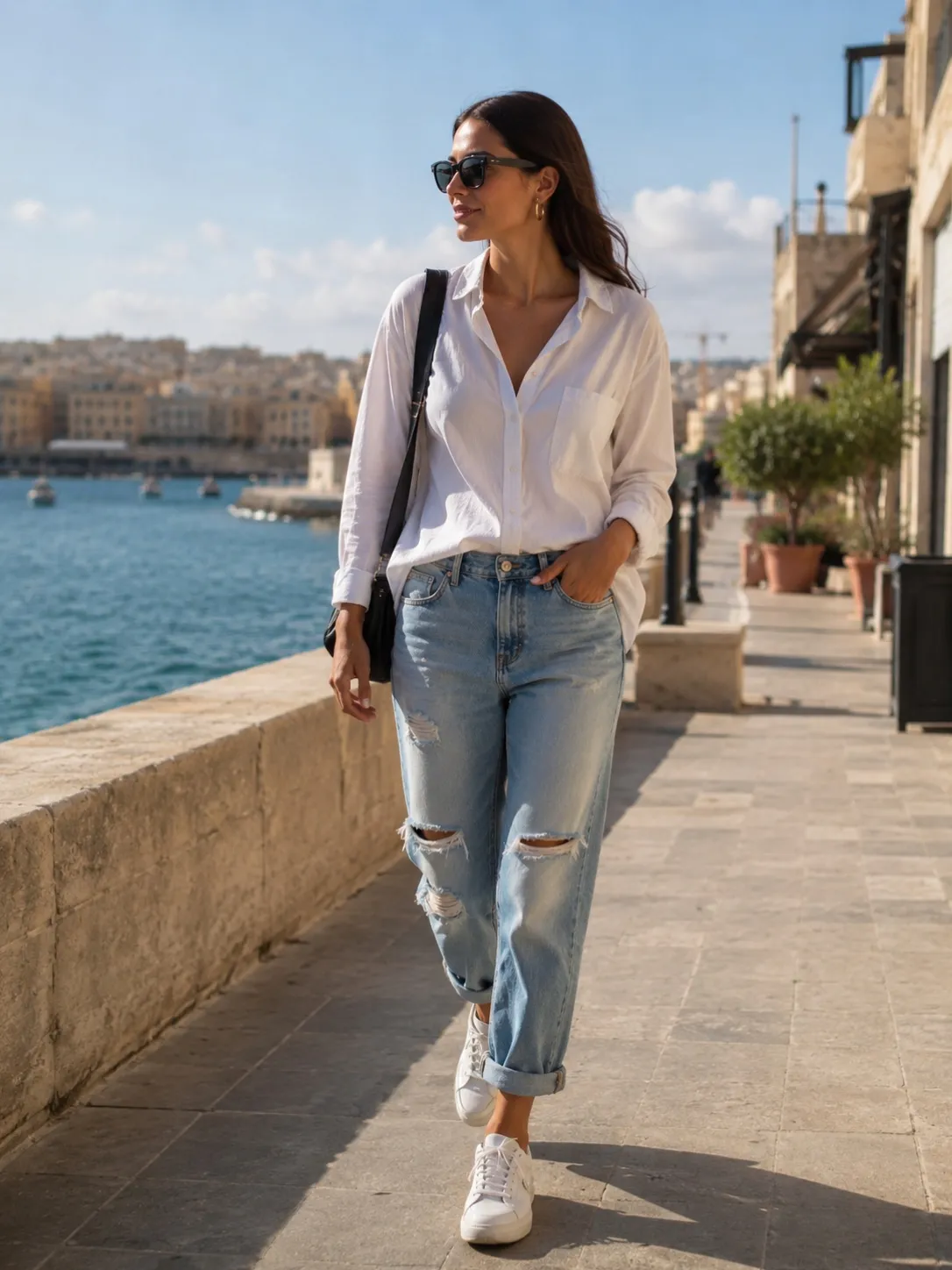
I’ve fully given up on skinny jeans for Malta in favour of boyfriend-style jeans — the extra comfort matters over long days of walking and eating, and a pair in distressed styles lets in a bit of ventilation for whenever the sun gets properly warm.
Safety & Practical Packing Items (Summer)
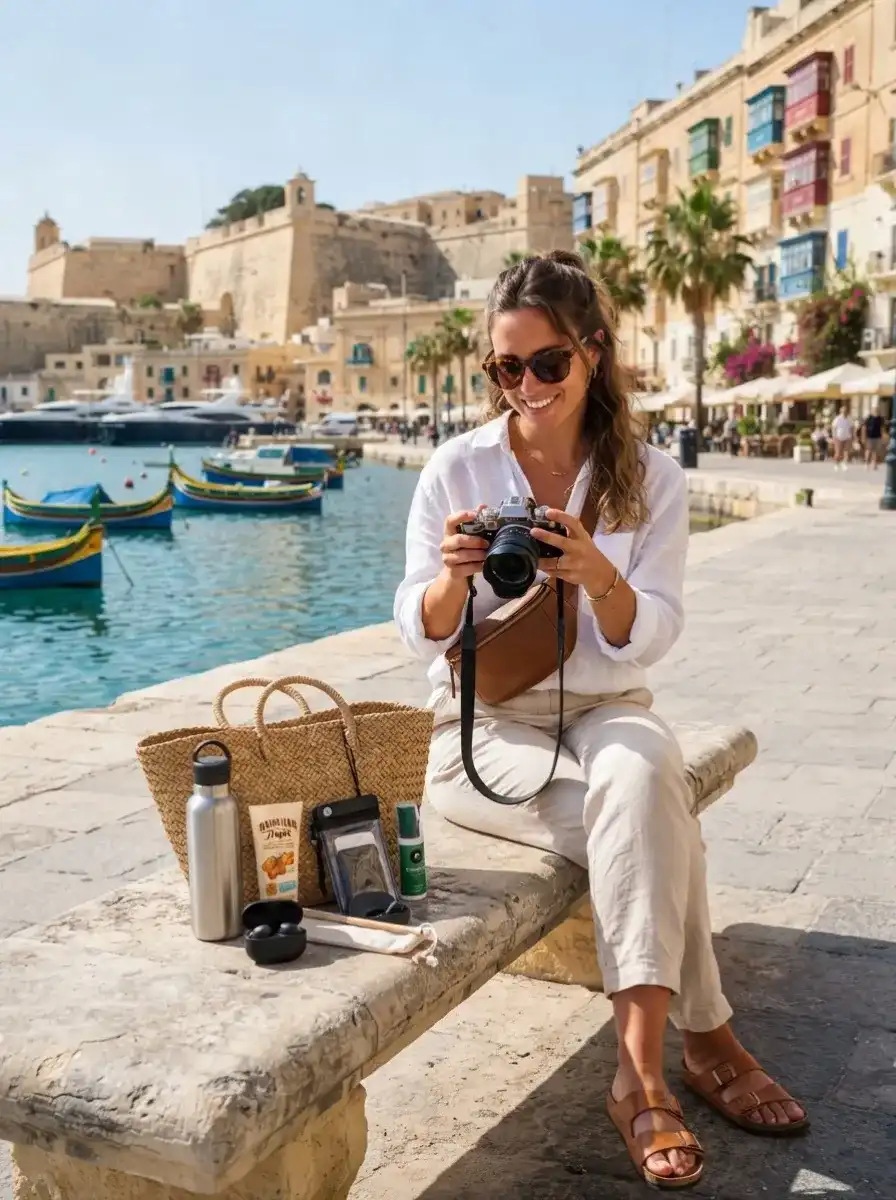
Malta’s summer heat can hit 40°C as early as June, so an insulated stainless steel water bottle has become non-negotiable, alongside proper SPF50 sun cream and polarised sunglasses to cut both the glare and the driving glare on brighter days. Mosquitoes and cockroaches are common enough that an ultrasonic pest repeller and mosquito spray are worth the suitcase space too.
Village festas bring fireworks most summer weekends, and they’re loud enough that noise-reduction earbuds genuinely help if you’re sensitive to noise. Areas like Valletta, Sliema, and St Julian’s see their share of pickpocket-prone areas, so a tank top with hidden pockets or an anti-theft crossbody bag is worth it, especially if you’re solo travelling — beach theft is a real enough issue that a waterproof bag or phone case earns its place too.
For photos, a camera lens hood cuts down on flare and glare, and on the sustainability side, reusable bamboo straws are an easy swap given how much of a problem plastic waste still is on the island.
Safety & Practical Packing Items (Winter)
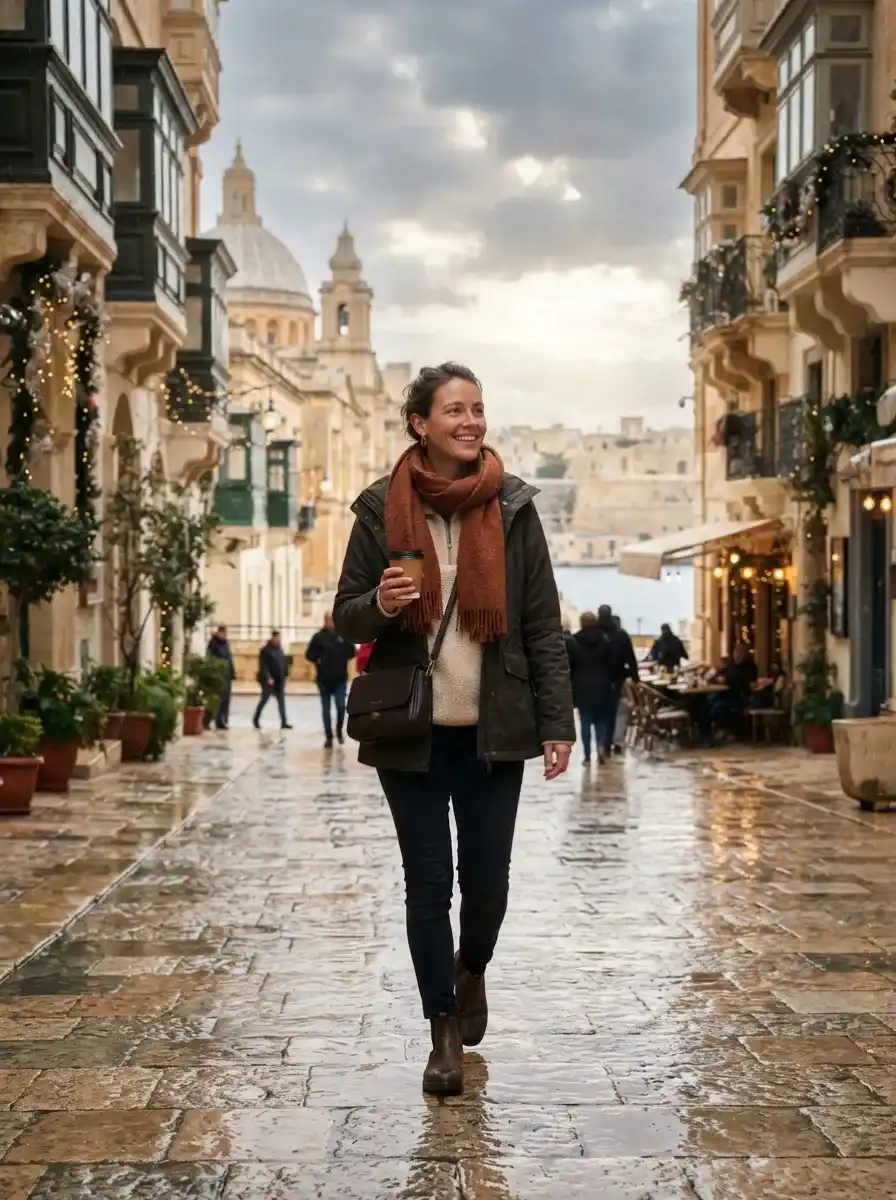
Thunderstorms are frequent between October and April, so a waterproof packable jacket and waterproof walking shoes earn their space for the uneven ground and potholes that come with the rain. A cosy fleece as a base layer helps more than you’d expect too, since Maltese buildings are often built to keep out heat, which means interiors can feel noticeably colder than the street outside.
A warm scarf with a hidden pocket is worth packing as well — pickpocket risk doesn’t disappear in winter, especially through a crowded Christmas-season Valletta
Fedora / Sun Hat
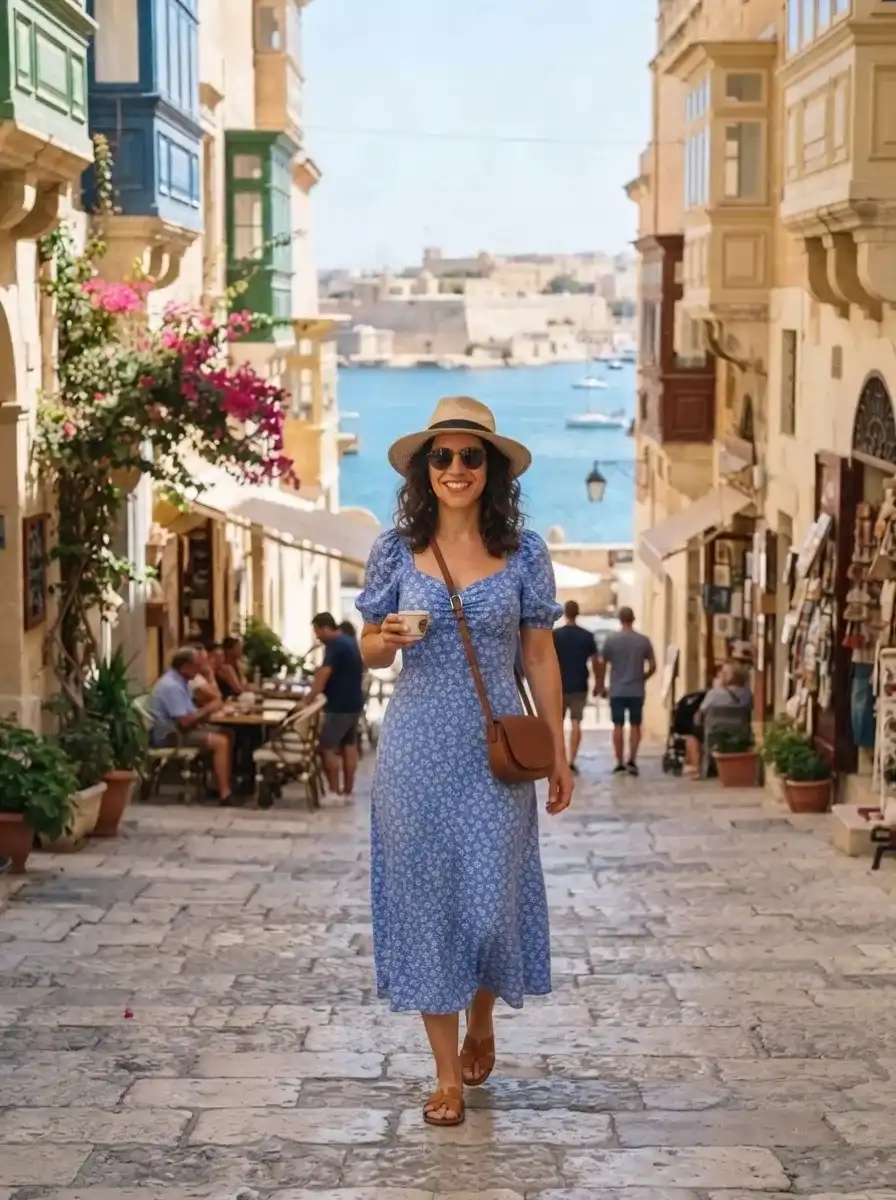
A foldable hat, or any lightweight hat with real UPF 30+ protection, shields you properly from direct sun while adding a nice styling touch to an otherwise simple summer outfit.