What to Wear in Sicily: 35 Chic Sicily Outfit Ideas & Packing List for Every Season (2026 Guide)
I learned the hard way that Mount Etna doesn’t care what the beach towns are doing weather-wise — I once stood shivering on the Ionian coast near Catania in a sundress while friends texted me about snow further up in altitude. Sicily’s climate shifts by sea level and by month, and if you’re chasing that Mt. Etna backdrop for photos, throw a jacket in your bag even in April when everyone else is trying to sunbathe. From January through December — February, March, May, June, July, August, September, October, November — the avg high, avg low, and rain days swing wildly, and the sea temp rarely matches what the sky is doing overhead. Almond blossoms show up when you least expect them, the season feels unpredictable one week and pleasant the next, and honestly the first beach days of the year sneak up faster than most guides admit.
If I had to pick the best month, I’d say late spring, when hiking feels good and the cities aren’t yet unbearably hot. Peak heat arrives with the sirocco, and by the hottest month — usually coinciding with Ferragosto — the island hits peak holiday mode and everything from restaurant hours to shop shutters changes. Some call September the best all-round month, and I agree; it’s variable enough to keep things interesting but never punishing. Autumn turns mild, closer to Northern European standards than people expect, and by December you’ll spot Christmas markets and even hear locals mention Etna skiing like it’s the most normal thing in the world.
What surprised me most was the temperature swing — a 15°C or 27°F gap between 2 PM and 8 PM isn’t rare, it’s basically Tuesday. I now travel with a light sweater, a cardigan, and a scarf folded into my bag, plus a waterproof jacket for the days that flip on me. Stick to natural fabrics, pack a wide-brimmed hat, and always carry one extra T-shirt — you’ll thank yourself walking out of air-conditioned restaurants and shops into the heat. My personal layering strategy is simple: dress for the moment the sea stays warm, but keep a swimsuit and a warm coat both within reach.
The rest of my seasonal notes read almost like a checklist scribbled in my travel journal: closed shoes for uneven ground, awareness that indoor heating in older buildings and holiday rentals often relies on air-conditioning units rather than central heating, and pyjamas packed regardless of month. I favor breathable fabrics, cotton, and linen over anything synthetic, paired with loose-fitting dresses, skirts, shorts, light trousers, and short-sleeved shirts. Don’t forget swimwear and real sun protection; t-shirts and a light-to-medium jacket cover the gaps, and a foldable umbrella has saved me more than once on cool, damp, windy afternoons. I keep warmer layers, sweaters, and long pants on standby since a proper coat matters once you head inland, where it runs colder. Sicily stays changeable, so check the weather forecast, expect anything from 40s-60s Fahrenheit to blazing weather, and treat spring as a season of layers: cooler days, warmer days, and chilly evenings all in one stretch. I pack a loose blouse, a long sleeve top, a short sleeve top, and dark colored pants, with proper outerwear ready for upscale shops and restaurants. A pair of tights under a dress works beautifully for wine-tasting among the vineyards, especially when the air turns humid near the beach or after swimming on a sunny afternoon.
Outerwear / Layers / Hiking Mt. Etna Gear
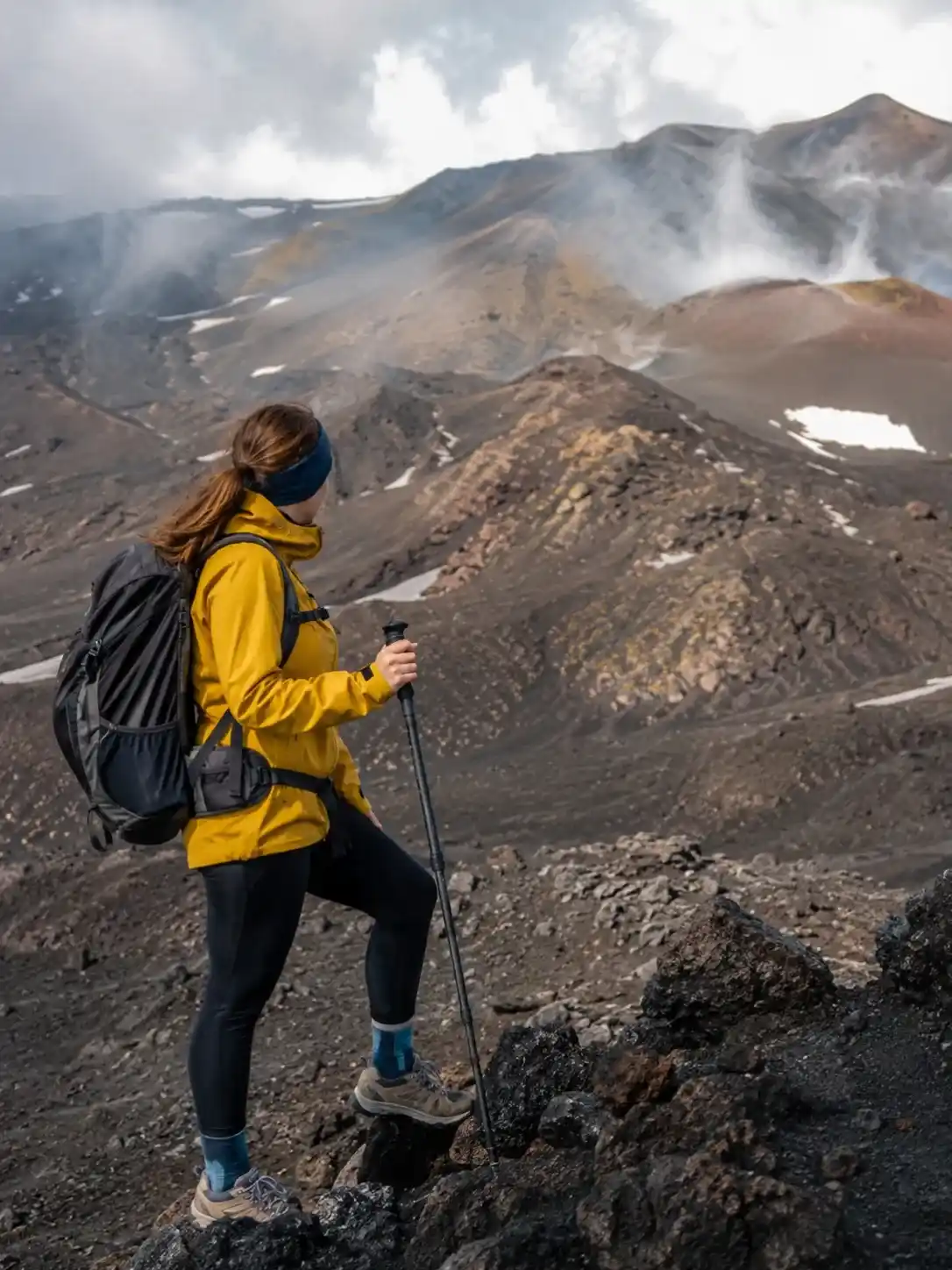
Climbing toward the crater taught me why locals laugh at tourists in flip-flops — pack a fleece for the colder days and evenings, plus a rain jacket and scarf, because the weather fluctuates dramatically the higher you go up the volcano. It gets extremely cold near the top, though you don’t need to overpack a heavy jacket; you can rent one cheap right at the cable-car station. They also rent boots for the hike, which I’d recommend over dragging your own leather boots — after a few hours, every loose rock finds your feet.
You genuinely don’t need mountaineering boots for a standard Etna excursion that only climbs to about 2,900 metres via the 4×4 bus; what you want instead is closed shoes with a grippy sole. I wore trail runners, and honestly approach shoes work just as well on the volcanic terrain, which is loose, abrasive, and brutal on thin-soled trainers. If you’re attempting longer treks — from Rifugio Sapienza toward the summit craters, or out near the lateral craters by Piano Provenzana — bring real hiking boots with solid ankle support, because that’s not a spot to learn a lesson the hard way.
What Locals / Sicilians Actually Wear & Blending In (Bella Figura)
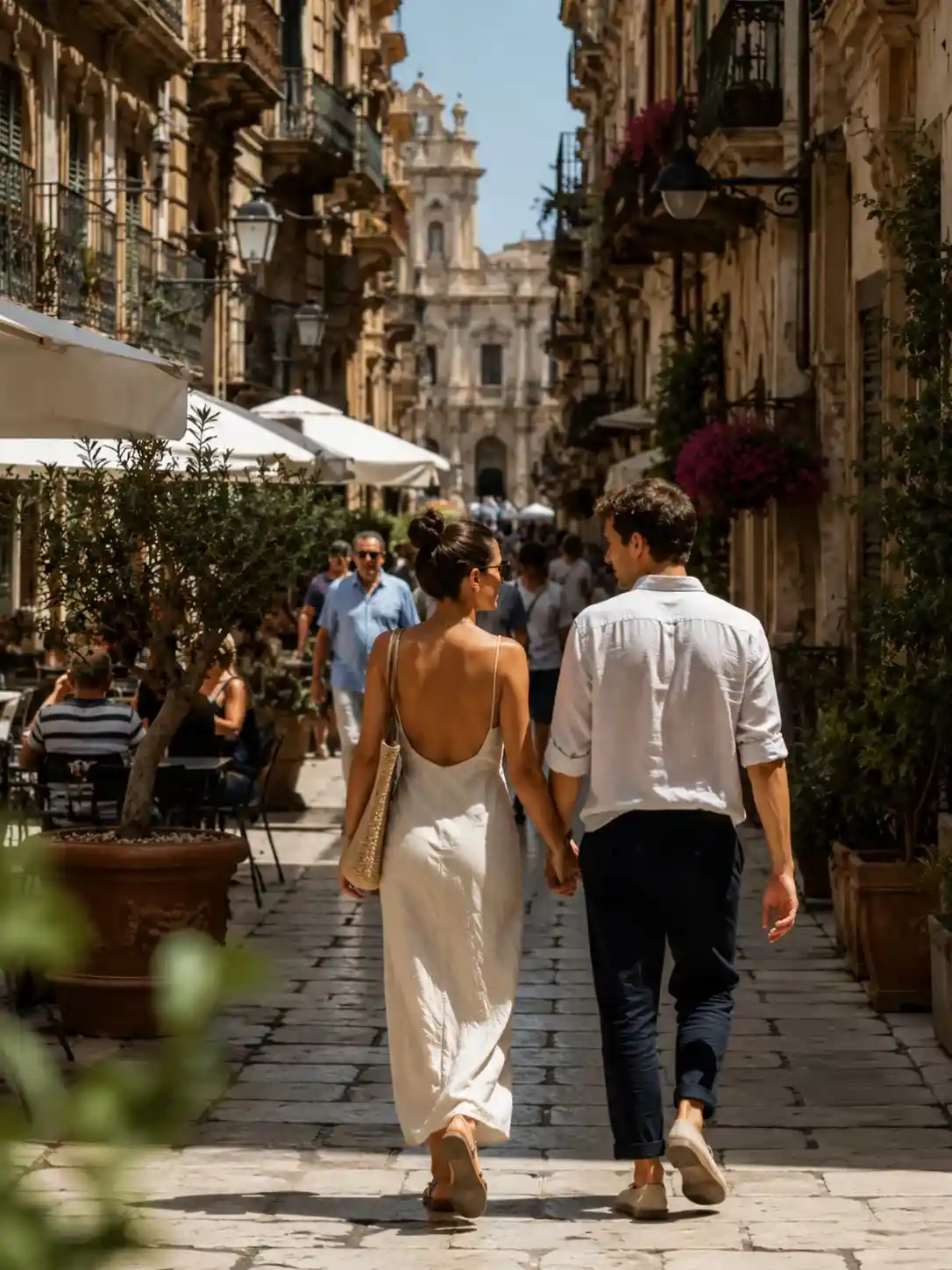
Nobody explained bella figura to me before my first trip, and I wish they had — it’s less about presentation through designer labels and more about looking clean, ironed, and coordinated. A wrinkled T-shirt paired with gym shorts marks you as a tourist instantly, especially come evening, when the passeggiata turns into a full social ritual. I stopped following any generic Mediterranean packing list I found on Pinterest the moment I realized eastern Sicily reads context completely differently than, say, Santorini. Italians aren’t expecting tuxedos, but they do notice sporty socks with sandals, or swimwear worn far past the flip-flops zone into a restaurant.
Compared to Milan, Sicily feels relaxed, but Palermo plays two different games depending on the street. Wander Via Maqueda or Via Vittorio Emanuele and you’ll see chaos — but duck into a side street restaurant, explore quieter neighborhoods outside the tourist center, and suddenly everyone looks neat, hair combed hair, wearing decent shirts. I’ve started calling the busy strips tourist zones, pure fashion chaos, while the local spots hold the real standard. Keep beachwear at the beach, gym clothes at the gym — nobody wants to see a bikini top near the churches, and definitely not hiking boots at a fancy dinner.
Consistency matters more than any single item: gym socks with elegant shoes, or running shoes under a nice dress, will out you as a foreigner faster than requesting pineapple on pizza. Skip the flashy jewelry, go easy on perfume, and avoid clashing neon colors or massive logos — what locals call tascio, meaning tacky. Subtle wins every time. By aperitivo time, the effort visibly increases; it’s daytime relaxed, nighttime sharper, and even age plays a small role, since older locals lean conservative rather than trendy, favoring what’s classic and unmistakably local.
Daytime / Sightseeing Outfits
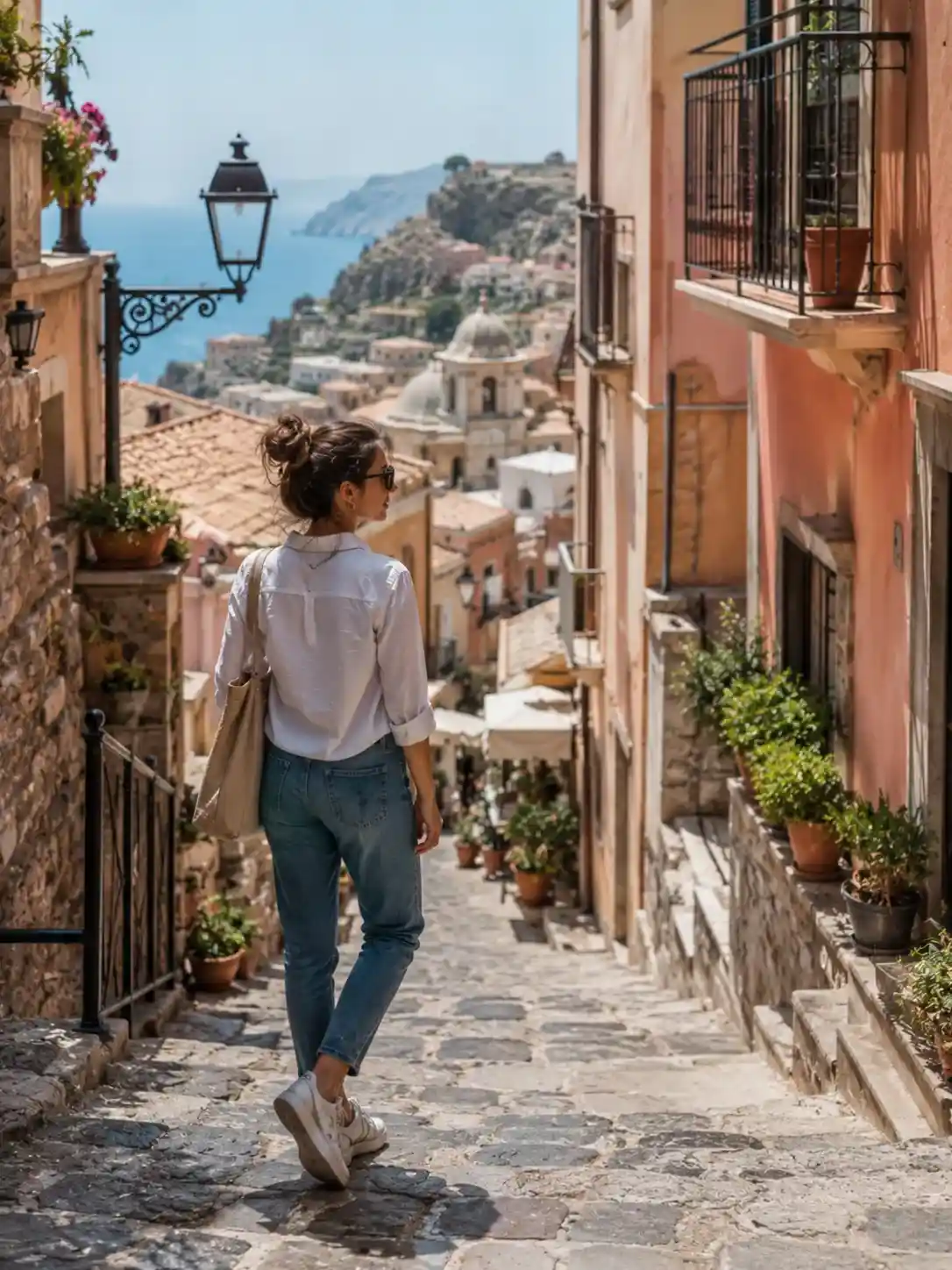
My go-to casual outfit for wandering ruins involves serious walking, so comfortable always wins: jeans and a shirt, or a casual dress with tights underneath, is my formula for outdoor sightseeing, with a rain jacket tucked in my bag just in case. Coastal towns like Taormina, home to that stunning ancient Greek theatre, sit on a hill, meaning endless stairs — ankle boots or good walking flats saved my knees more than once.
In Catania, the daytime vibe leans smart-casual: think fitted T-shirts or linen shirts paired with tailored shorts or chinos, never gym shorts. I reach for sundresses, linen trousers, or neat shorts with a blouse, always aiming for intentional over sloppy — ironed, colour-coordinated, nothing sagging or stained. Wandering markets or admiring Baroque balconies calls for comfort without sacrificing presentable, and covering the knees just makes spontaneous church visits easier. My tops and bottoms rotate around one long-sleeved shirt for sun protection, all in neutral tones I can mix and match without thinking. Modesty rules the day: cover shoulders, carry a scarf, skip tank tops, and show respect wherever you go.
Evening Wear / Passeggiata / Going Out
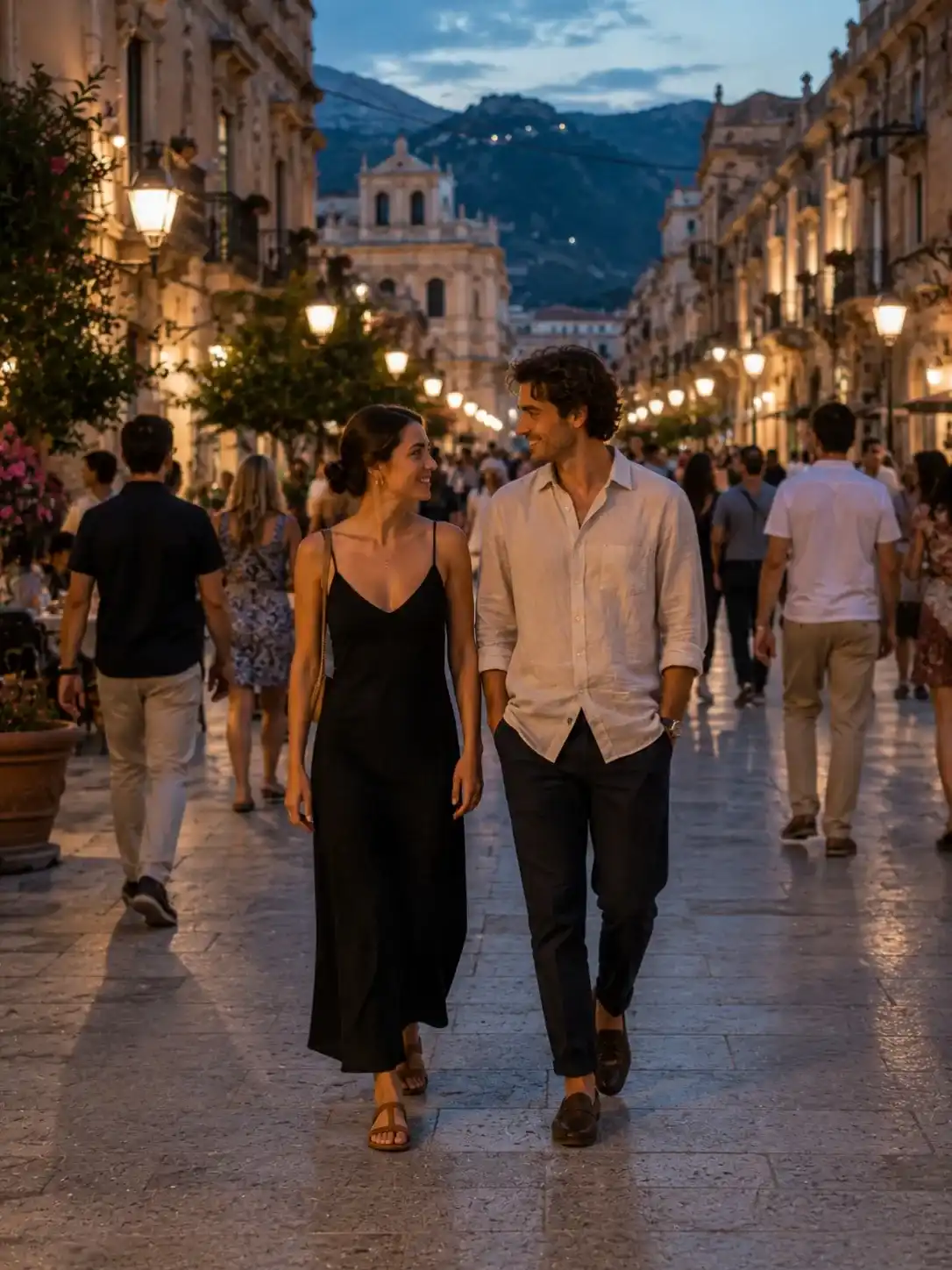
That same pair of tights and a good dress doubles beautifully for wine-tasting at the vineyards ringing Mt. Etna. But it’s the passeggiata, that unmistakable evening ritual along Via Etnea or Corso Umberto in Taormina, where outfits really matter — everyone’s walking, talking, seeing and being seen. Locals call the look elegante sportivo: smart jeans or trousers, a crisp shirt or blouse, and leather shoes. I wear a simple dress with flat sandals as my personal uniform, and for the men in my life, a linen shirt with chinos and loafers or clean sneakers never fails.
One solid evening outfit carries you through most nights; I only add a blazer or a smarter dress for a proper Michelin-starred restaurant or a rooftop terrace. For aperitivo at a neighborhood bar, local joints, or a cozy osteria, ditch the sportswear, shorts, and beach flip-flops entirely. I’ve watched women slide into dresses, skirts, or nice pants with stylish sandals, heels, or clean sneakers, while the men opt for a decent top, casual shoes, or smart sneakers.
Clubbing in Sicily means real makeup and genuinely stylish outfits — women lean into it, men reach for nice shirts, smart trousers, or dark jeans with proper shoes, since beach clubs and rooftop bars often enforce actual dress codes with bouncers at the door. Smart casual is my safest bet for dinner; I’ll wear a day dress most of the time, but I keep one sexy, longer dress for nights I want to feel a bit more conservative yet still glamorous.
Church & Religious Site Dress Code
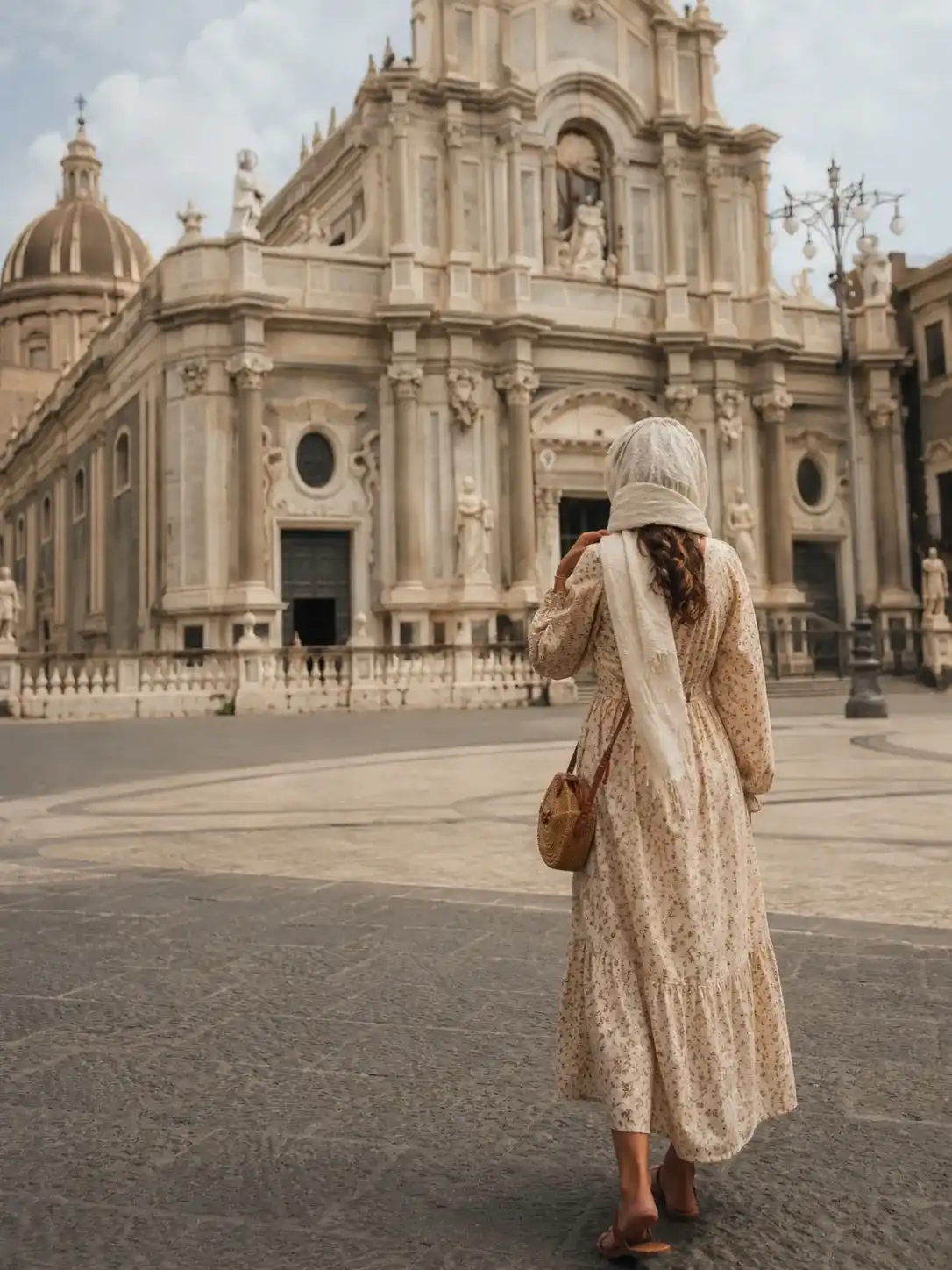
Cover your shoulders and knees — full stop. Sicilian churches enforce this, no exceptions, especially at grand sites like the Catania Duomo, the Monastery of San Nicolò l’Arena, and Noto’s cathedral. I keep a cotton scarf or linen scarf in every bag; it becomes a shoulder wrap, a knee cover, a makeshift headscarf, even a picnic blanket or an extra layer against the evening breeze. Men need long trousers, so I always suggest packing lightweight trousers to slip on right at the entrance if shorts are all you’ve got.
Modesty isn’t optional here — a light scarf solves most problems, and tank tops should stay in the suitcase out of basic respect. Sleeves aren’t mandatory everywhere in Italy, but I always travel with one sleeved option since so many sites expect it; a silk scarf thrown over strappy sundresses does the trick just as well. The dresses I gravitate toward for church visits feel quietly romantic, almost Shakespeare’s Juliet in mood, which flatters both women and the setting itself.
Beach & Swimwear
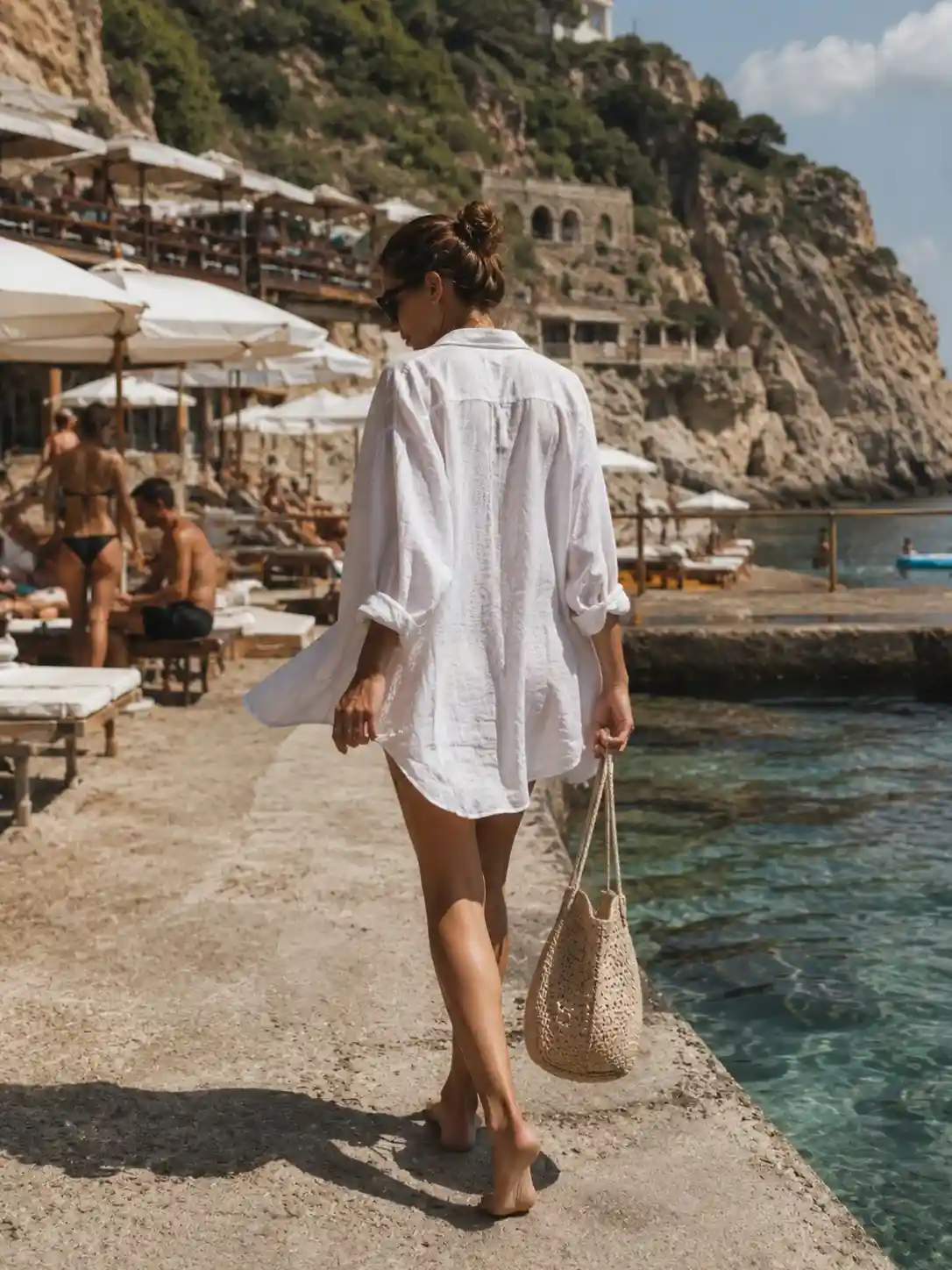
I never travel with fewer than two swimsuits — one can dry while the other’s in use — and a cover-up is genuinely non-negotiable the second you leave the sand for town. Even in relaxed beach towns, a linen shirt, kaftan, or sarong keeps you from feeling out of place grabbing granita at a bar. Men should swap board shorts for proper shorts or trousers before sitting anywhere. A bikini is completely standard here, and a two-piece won’t raise eyebrows, though topless sunbathing feels less common than in Spain or Greece, reserved mostly for quieter beaches.
Keep it simple: flip-flops, a simple sundress, swim trunks, or a plain t-shirt thrown back on before hitting the street — never athletic shoes at the shore. My own swim pieces lean nostalgic: high-waisted bottoms, playful ruffles, leopard prints, the occasional polka dot, worn while scrambling over rocks, jumping off swimming platforms, or lounging at a beach club. I once forgot my actual cover-up and borrowed a button-up from my husband’s bag instead — it somehow nailed that romantic Italian vibe better than anything I’d packed.
Practically speaking, water shoes are the one item I never skip anymore after an unpleasant run-in with sea urchins and hot sand. A microfibre towel, a dry bag or waterproof pouch for your phone, wallet, and keys, plus a mask and snorkel for the crystal-clear water and rocky seabeds, round out my beach bag completely.
Footwear
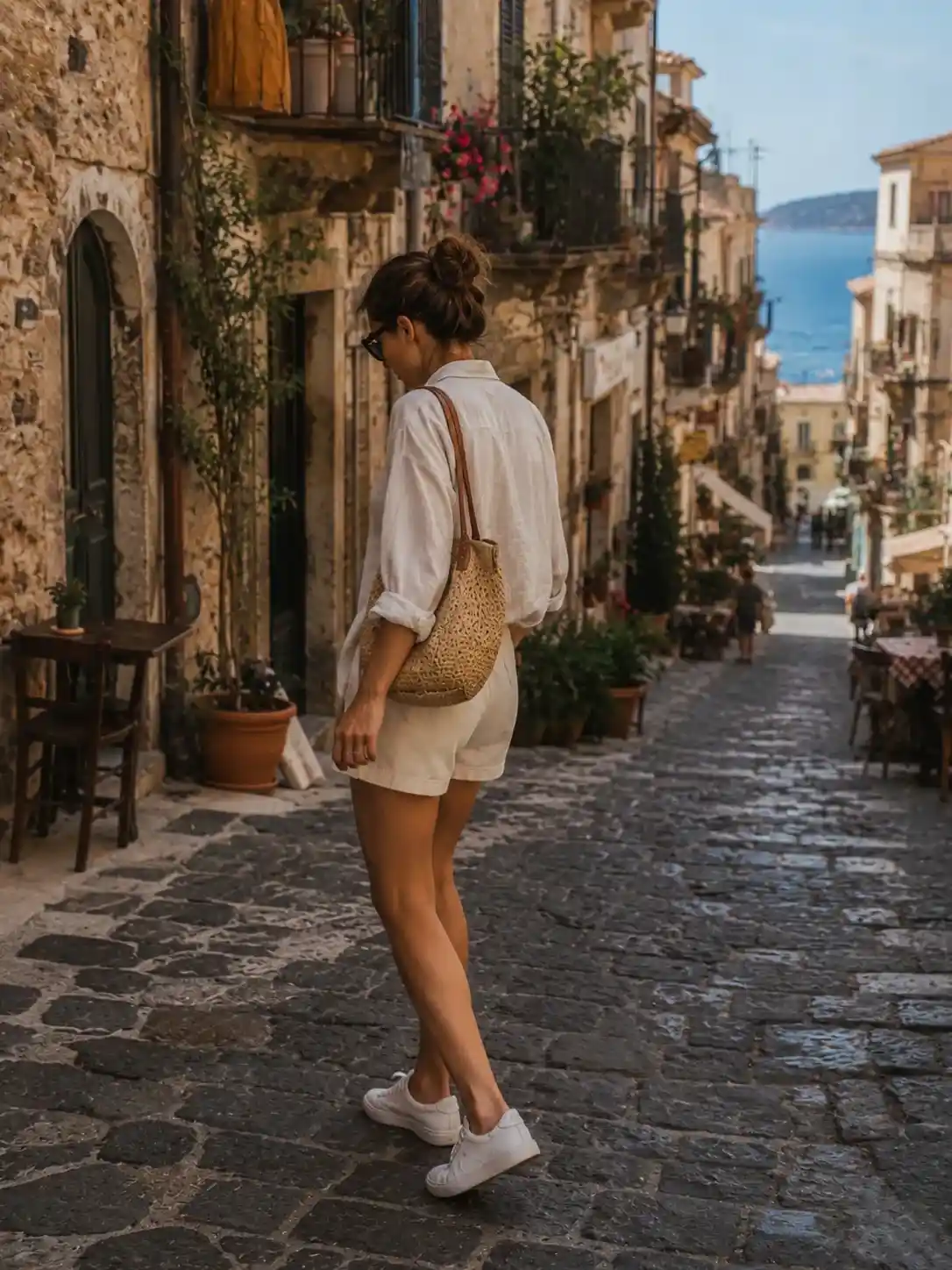
My ankle boots and walking flats have survived more Sicilian hills than I can count — bring your gym-strengthened thighs and calves, because the incline is real. Catania’s basalt cobblestones in the old town are gorgeous and genuinely merciless; I’ve switched almost entirely to leather sneakers, cushioned walking sandals with real ankle support, or lightweight loafers. Locals seem to live in white sneakers — stylish, comfortable, endlessly versatile.
The coastline is mostly rock and pebble, not the sandy expanses postcards promise, so water shoes matter more than any swimsuit choice for avoiding sharp stones barefoot. For evenings, smart sandals or leather loafers cover everything; leave the stilettos home, because uneven pavements and steep medieval streets turn high heels into a genuine liability. I now default to flat leather sandals, espadrilles, or elegant flat shoes, and for men, suede loafers in a dark colour always work.
Call it the shoe disaster if you must — flimsy sandals simply don’t survive Palermo’s streets, no matter how cute they look in photos. Comfortable walking shoes are truly non-negotiable, so break them in before you land. Round things out with sandals, stylish sneakers, closed-toe shoes, or boots for cooler seasons, and only bother with hiking boots optional for serious trails.