Ireland Travel Guide 2026: Ultimate 7-Day Itinerary, Road Trip & Planning Tips
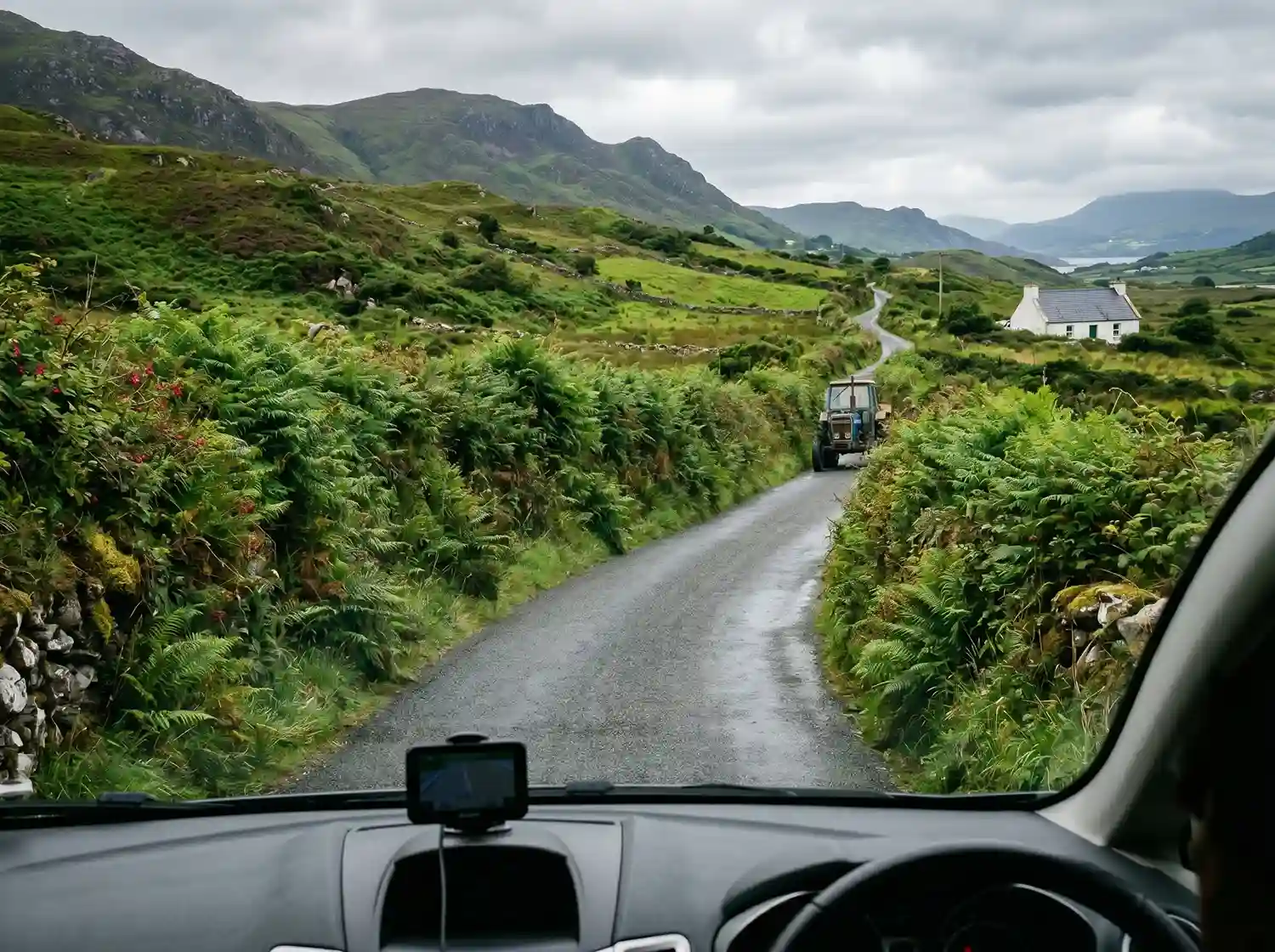
My first time behind the wheel on Irish roads was equal parts thrilling and nerve-wracking — a narrow road somewhere in Kerry with hedges brushing both mirrors while a tractor idled ahead. That small-town moment, oddly enough, became my trip highlight. Ireland has a way of doing that — the unplanned seconds stick harder than the world-famous attractions.
Whether you arrive chasing Irish heritage, drawn by the deep greens of Clare or the iconic pub culture of Dublin, the island rewards those who plan with intention. Most travelers gravitate toward a hub and spoke or base strategy — anchoring in 2-3 hub bases and radiating outward on regional legs and rural legs rather than moving hotels daily. This keeps daily driving manageable and leaves room for the live music that bleeds out of Irish pubs every evening.
Solo travel, families, siblings, friends — Ireland absorbs every group shape gracefully. Guided tour companies like Rabbie’s handle the narrow roads for those who’d rather not drive, while a rental car opens up Dingle, the southern half, and counties that no bus reaches on a convenient schedule. A good travel guide or travel advisor anchors the 7-day itinerary or nine days if you push it — either way, lead with quality over quantity and the friendliness of locals and lively music will fill every gap.
Is 7 Days Enough for Ireland?
Seven days is the minimum that earns you Ireland highlights without feeling like a cross-country dash. You can realistically cover Dublin, Killarney, and Galway — two cities, a handful of seaside towns, and half a dozen villages — if you resist the urge to cram everything into every afternoon.
Shauni, Tour Design and Operations Manager at a specialist operator, puts it plainly: aim for at least 7 days, lean on 2-3 hub bases, and use motorways to bridge multiple regions without burning half your driving legs on transfers. Eight days — 8 days — gives you the depth over breadth that turns a trip into something you’ll still talk about a decade later. The goal is to slow down, let Killarney National Park breathe, and treat hidden gems as the reward for route efficiency rather than an afterthought.
Driving in Ireland
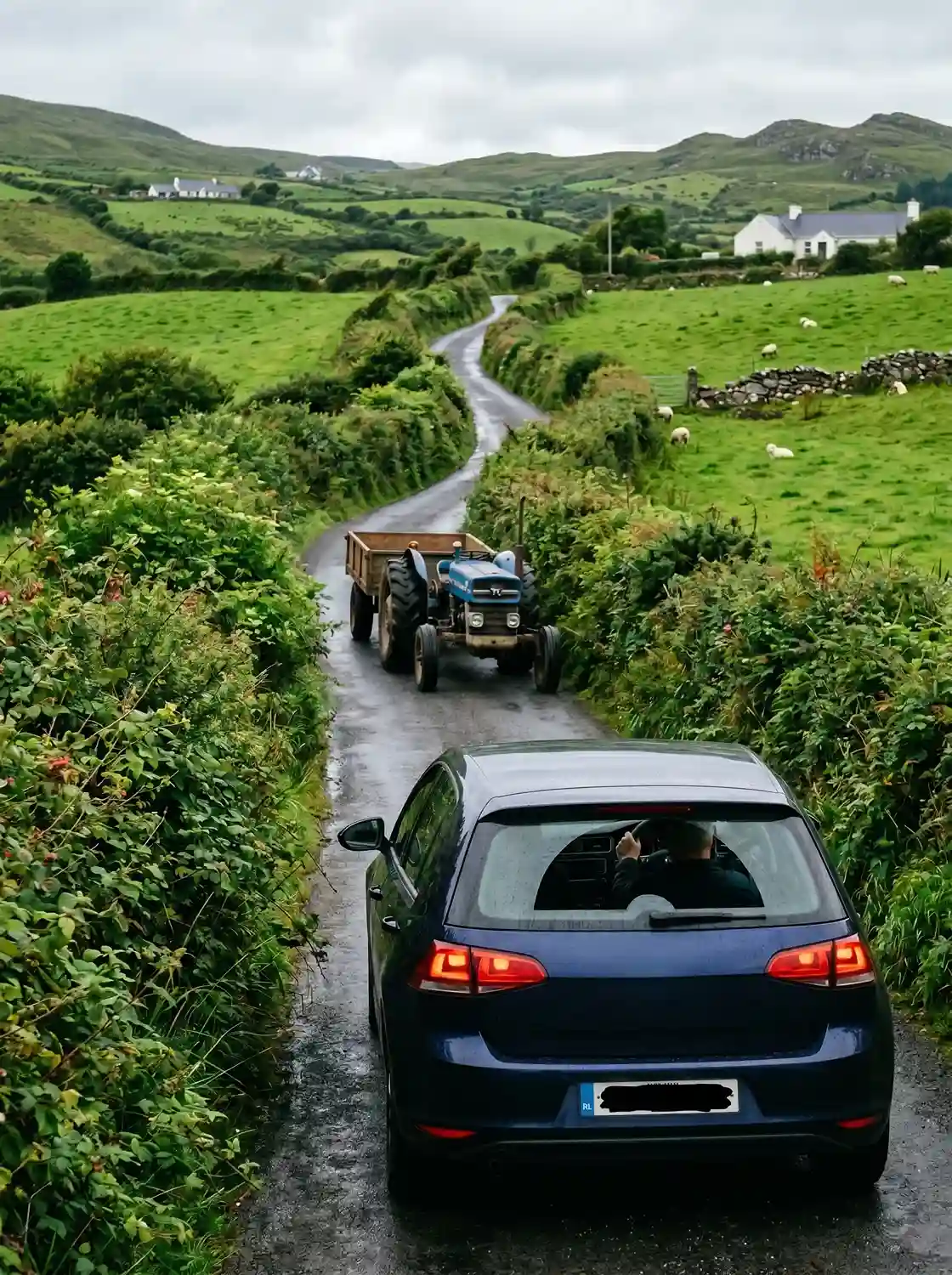
North American visitors hit the same wall on day one: driving on the left in right-hand-drive cars on roads that have a one-way feel even when they’re technically two-way lanes. That 70km drive you budgeted 70 minutes for? Add thirty, especially on R roads and zigzagging roads lined with bush-lined hedges.
Ireland breaks its network into three road types — M motorway (genuinely US-like roads), N roads (fast but occasionally quirky), and R roads (scenic, slow, humbling). New drivers should stick to motorways on arrival in Ireland and give themselves a full day before tackling anything narrow. Cheap rental rates rarely include meaningful coverage — basic rental insurance won’t save you from a hedge-scraping bill, and mandatory insurance add-ons can push the real cost toward $100 per day. Budget for it. Occasional tractors, sheep crossings, and an adjusting to driving curve make over-scheduling daily driving hours the most common rookie mistake. A slower pace fixes almost everything.
Where to Stay / Accommodation Strategy
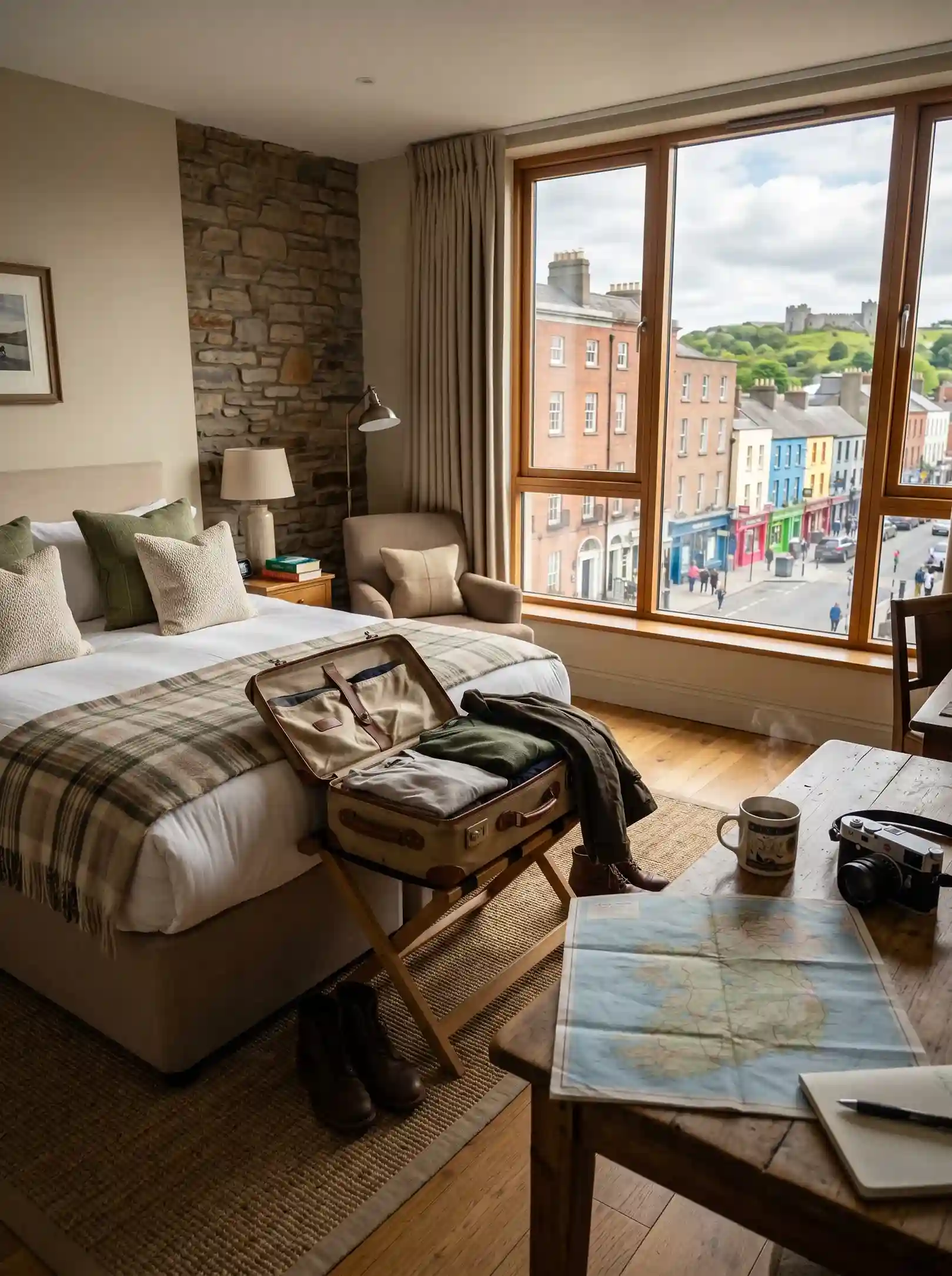
The Hub and Spoke method cuts through the chaos of changing hotels nightly. Base yourself in Dublin, Killarney, and Galway — three anchor points that cover the southern half and west — and run day-trip outward spokes from each. A return leg to the same bed each night means you unpack once and explore freely.
Dublin accommodation clusters around Temple Bar and Merrion Square — the Spencer Hotel and Moxy Dublin City suit mid-budget travelers, while Wren Urban Nest and The Mont lean boutique. Jacobs Inn and Generator serve the hostel crowd well, with social atmosphere, shared rooms, and nightly pub crawls built into the culture. College Green Hotel and Trinity-area mid-range chains land in the $225-330 per night range in peak season.
Down south, Killarney anchors Kerry beautifully — Dingle Bay Hotel in Dingle if you overnight there, or Quinlan & Cooke Boutique Hotel for something with character. Kinsale rewards an overnight too; Giles Norman Townhouse sits right on the cobblestone streets. In Galway, the Western Hotel near Eyre Square and Abbey Court hostel both work depending on budget, and the Long Walk riverfront strips offer mid-tier hotels with genuine atmosphere. B&Bs with breakfast included, farm stays with a working farm experience, and Airbnb fill the gaps in smaller towns — Cork’s Moxy Cork is solid for a city-center arrival hub night. Free parking, an on-site bar, and a co-working lobby are the practical details worth filtering by if you’re doing a solo traveler run.
Dublin
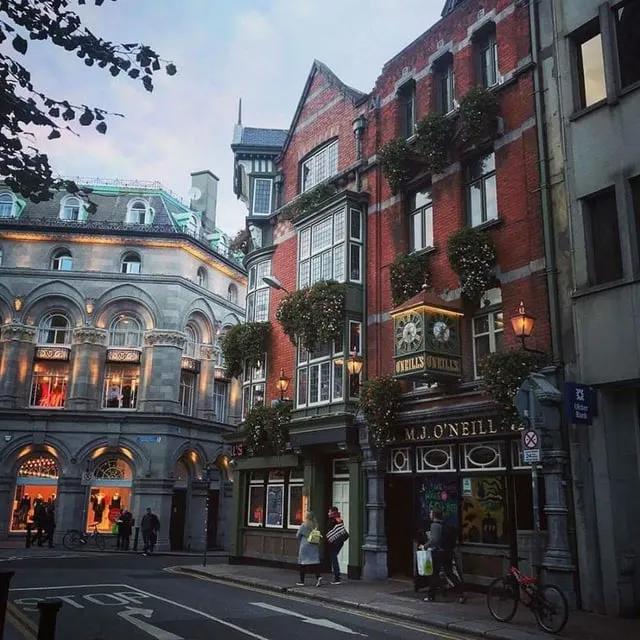
Day 1 hits differently when you walk straight from the airport shuttle into Temple Bar — the noise, the colour, the smell of Irish stew from a doorway. Give Dublin three full days if the itinerary allows, or at minimum a strong Day 0 arrival evening and a final day sweep before flying out.
Kilmainham Gaol is non-negotiable — book the guided tour early, the $33 USD ticket sells out days ahead and the experience earns every cent. Trinity College and the Book of Kells work best on a morning visit before crowds arrive; the exteriors alone justify the walk even if queues push you out. Pair the afternoon with 14 Henrietta Street (a genuine tenement museum), EPIC Irish Emigration Museum (a 7-story museum worth the 90 minutes), or the National Museum of Ireland Archaeology wing, which is free and criminally undervisited.
Guinness Storehouse earns its 2:45pm tickets slot — the seven levels culminate in the glass-walled Gravity Bar and a free pint with 360-degree bar views over the city. The Jameson Distillery Bow St, Irish Whiskey Museum, and Leprechaun Museum fill gaps depending on your vibe. For evenings, pub-hopping from Hairy Lemon toward PantiBar or catching live music near George’s Street Arcade beats any planned pub crawl. Grafton Street, St. Patrick’s Cathedral, St. Patrick’s Park, Christ Church (with its crypt), Dublin Castle, Merrion Square, St. Michan’s Church, and the Jeanie Johnston ship all sit within walking distance of each other — Day 6, Day 7, or Day 8 departures can each absorb a different cluster. The Powerscourt Townhouse Centre makes a good rain shelter with real shopping appeal, and Fitzsimmons handles nightlife if you need a loud end to the evening.
Wicklow Mountains / Glendalough / Rock of Dunamase
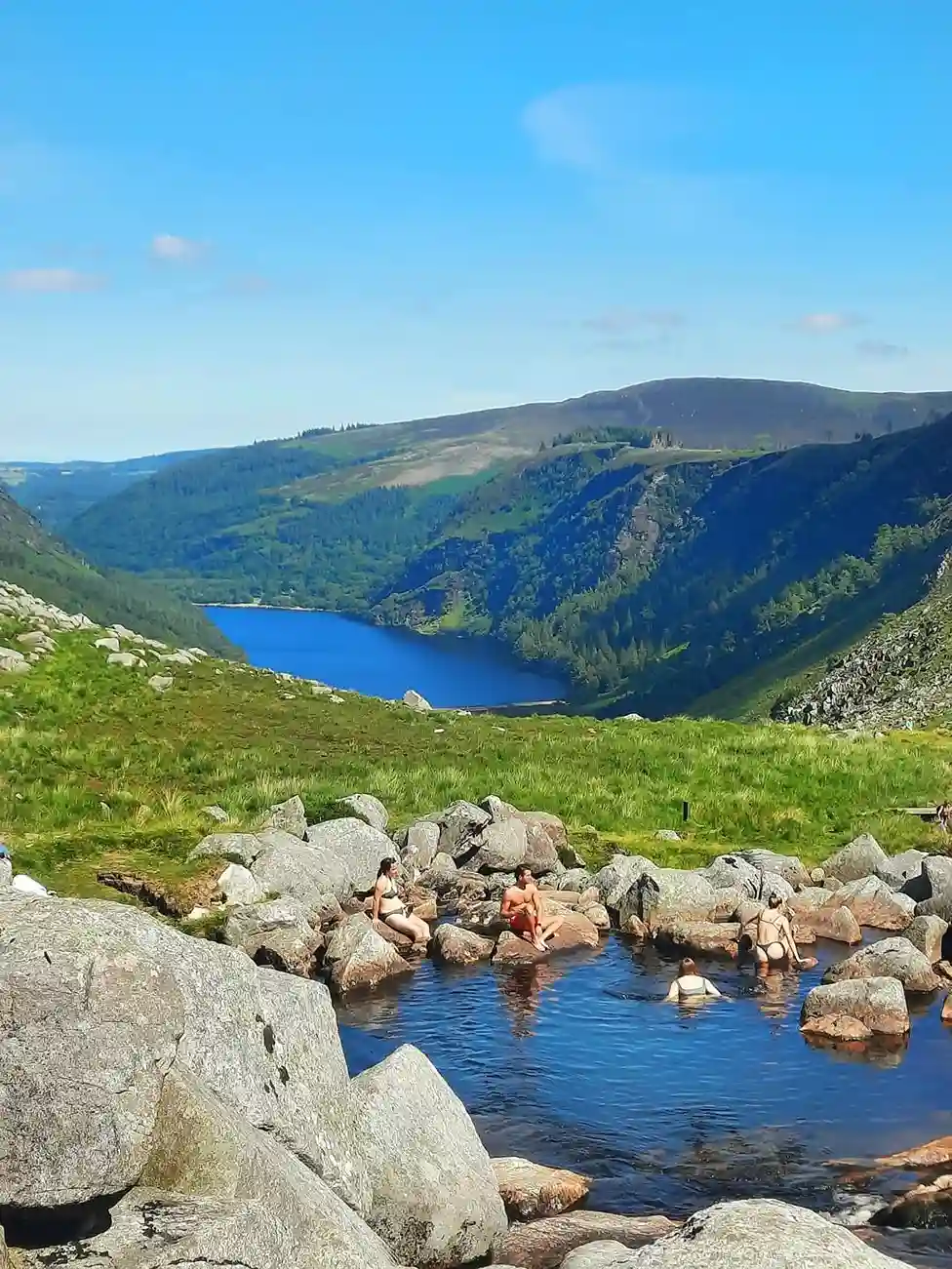
An hour south of Dublin, Wicklow Mountains National Park flips the city energy entirely. The drive up through Sally Gap past Lough Tay — black water ringed by pale grass — is one of those views that makes passengers go quiet. Day 1 out of Dublin ideally threads this route before dropping into Glendalough.
The 1,000-year-old Round Tower at Glendalough still stands because of a local legend about the protection it offered during Viking raids — an optional guide gives these stones a story that the monastery ruins alone don’t communicate. The Spinc Trail above the valley is the walk worth doing if legs are willing; Poulanass Waterfall sits at the far end as payoff. The road back via Glenmacnass Waterfall has a gravitational illusion stretch — an uphill road that reads visually downhill — that causes genuine argument between passengers. 1.5-car-width roads through this section feel more dramatic than they are. Adare and its 15th-century Franciscan Monastery pair well as an add-on if routing toward Cork or Kerry rather than returning to Dublin. Rock of Dunamase — a ruined castle atop a ridge — is a fifteen-minute stop that punches well above that weight.
Rock of Cashel
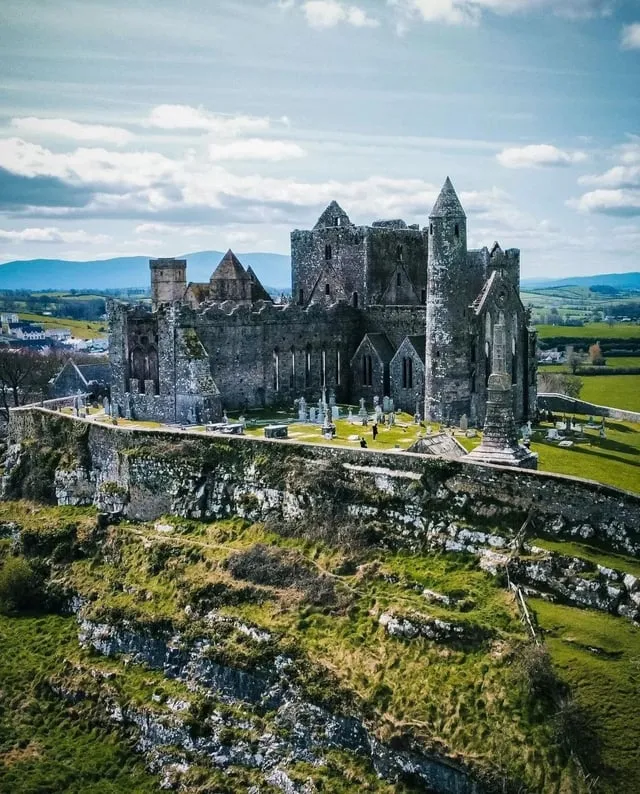
Day 2 routing south from Dublin toward Cork or Kerry passes close enough to Rock of Cashel that skipping it requires deliberate effort — and nobody who stops regrets it. This is an intact medieval fortress sitting on a limestone outcrop above the Golden Vale views, and unlike many Irish sites, the density of surviving structures rewards a full guided tour rather than a quick lap.
The complex holds a medieval church, a chapel, a medieval tower, and a 1,000-year-old round tower in one compact area — Hore Abbey ruins sit in the field below for those who want to extend the wander. One reader described it as the moment Ireland stopped being a checklist and became a country. That reaction is common. Morning light on the castle before tour buses arrive — morning stop pacing — is the move if you’re driving from Dublin toward Dingle or deeper into Kerry on Day 1 or Day 4.
Killarney National Park / Ring of Kerry / Dingle Peninsula / Slea Head Drive
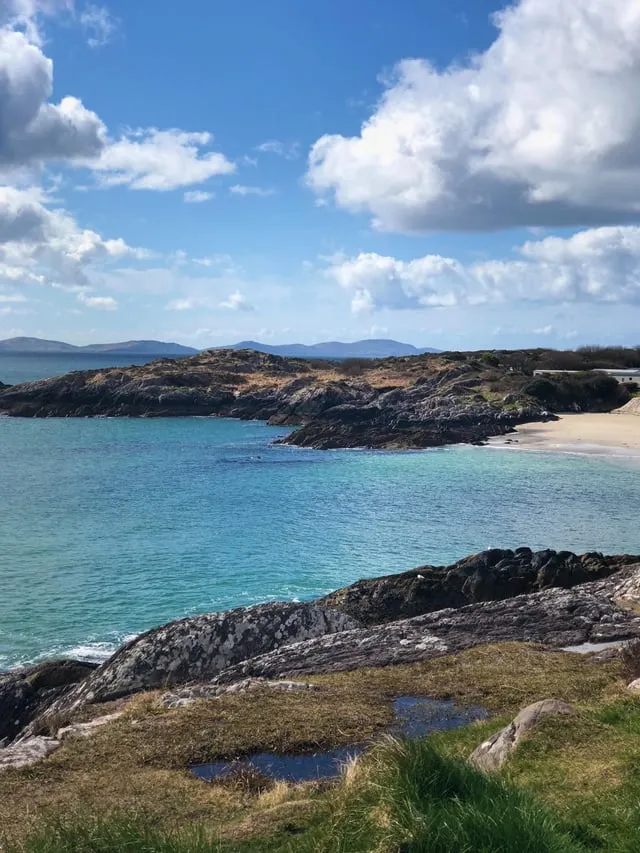
Days 2-4 in the southwest are where Ireland earns its reputation for dramatic scenery. Killarney National Park costs $9 USD entry and delivers Torc Waterfall, Ross Castle (with an optional boat cruise on the lake), the Owengarriff River walk, and Muckross House with its gardens — enough for a full day without touching the Ring of Kerry or Dingle at all.
The Ring of Kerry should be driven counter-clockwise to stay ahead of tour-bus traffic — the sequence flows better and the pull-off photo points hit at the right light. Ladies’ Viewpoint (also called Lady’s View), Moll’s Gap, Lough Barfinnihy, and Macgillycuddy’s Reeks backdrop make the Ring more than just a scenic loop. Gap of Dunloe runs parallel as a one-way alternative worth considering on Day 3. A jaunting car ride into the Gap is an underrated activity if the itinerary allows a half-day diversion.
Dingle Peninsula — specifically the Slea Head Drive — is the move for Days 3-5 if the Ring has been covered. The Conor Pass descent toward Dingle town is steeper and narrower than anything on the Ring, but the Atlantic panorama from the top justifies the nerve-wracking few minutes. Gallarus Oratory (standing for 4,000 years), the Beehive Huts above Coumeenoole Beach, Blasket Islands views from Dunquin Pier, and a stop at Tom Crean’s pub (honouring the polar explorer) fill the circuit meaningfully. Dingle Sea Safari offers dolphins, seals, and puffins on the water — book ahead in season. Dick Mack’s pub handles the evening. Inch Beach on the way in or out adds baby lamb holding in spring, fish and chips from the van, and a broad tidal flat that puts the deep greens of inland Kerry into contrast. Dingle Cliffs, the Tóchar Maothaithe pilgrimage path, Krugers Bar, and sheepdog demonstrations round out what becomes an embarrassingly full few days. Back issues or pregnancy considerations worth noting: the Dinis cottage tea rooms near Killarney offer the same landscape reward with virtually no walking required.
Cliffs of Moher
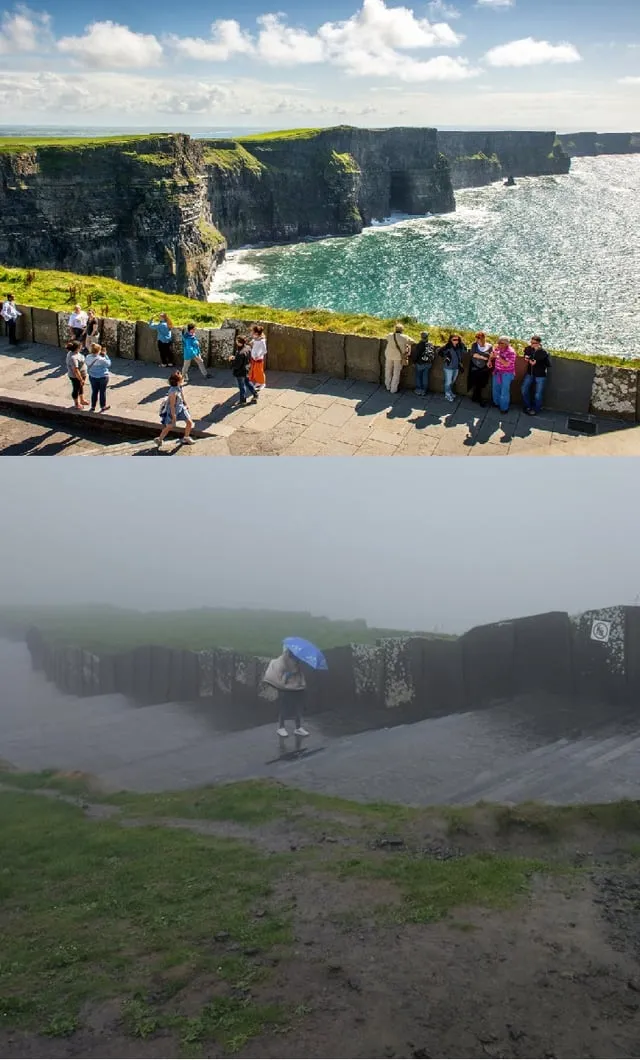
Pre-booked timed tickets are not optional here — the Cliffs of Moher absorb enormous daily visitor numbers and arriving without them means queuing or being turned away. Tickets run 15 euro per adult for Visitor Centre access; the cliff-edge walking tour (around 25 euro) extends the experience for those who want more than the paved path along the 4 miles of accessible edge.
The cliffs drop 214m at their highest and stretch long enough that the viewpoints at each end feel like different places. Clear-day views reach the Aran Islands; in May and June the ledges are active with nesting kittiwakes, puffins, and other bird life that makes even non-birders stop and watch. The site is largely handicap-accessible along the main path, and golf-cart shuttles serve visitors with poor balance or mobility needs. A 6:45am departure from Galway or Kerry catches the cliffs before the rain rolls in and well before tour groups arrive — this timing reliably lands in the week’s top highlights for everyone who tries it. Day 4, Day 5, or Day 6 all work depending on your base; pairing it with a Burren drive and an Aran Islands ferry makes a genuinely full combined day tour. 1.5 hours at the cliffs is the minimum; the interactive stop inside the Visitor Centre adds context to what you’re looking at from the edge.
Galway / Connemara
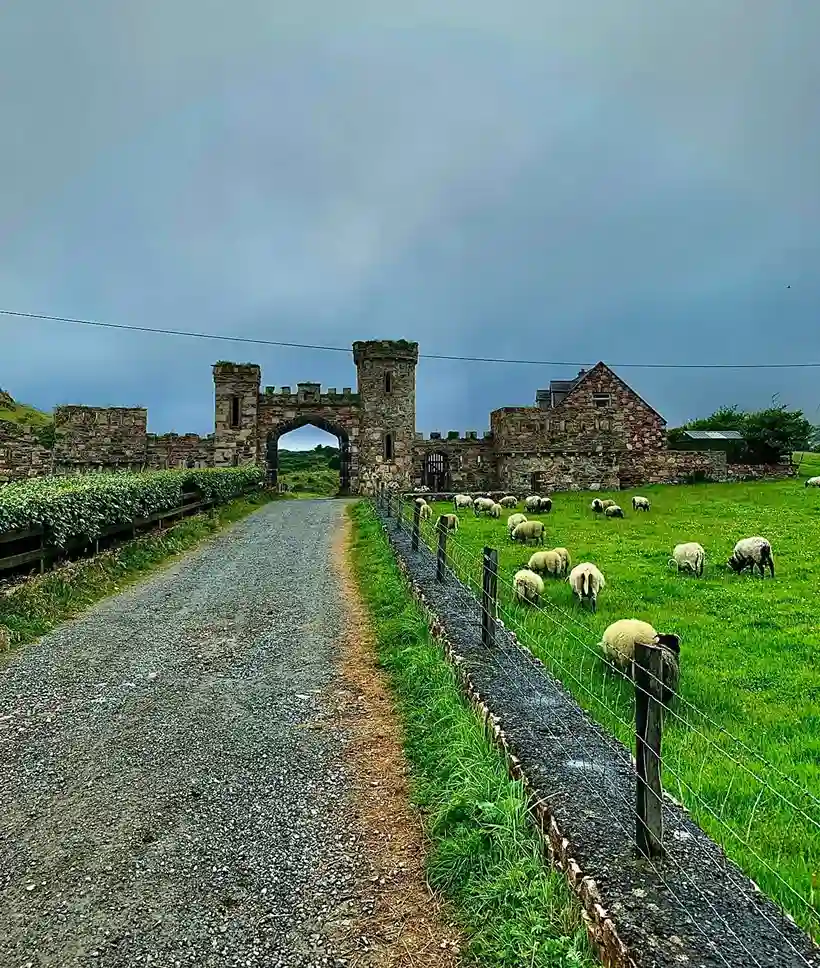
Galway works as both a first hub and a final stop — the Latin Quarter, Quay Street, and Shop Street deliver trad music, food, and character at any hour. Taaffes Bar and Tig Cóilí are the rooms for serious trad-music culture; Salt House handles craft beer without pretension. Eyre Square orients every arrival, and Spanish Arch and Claddagh Bay sit a short walk south along the water. Days 1-2, Days 4-5, or Days 6-7 all slot naturally depending on routing.
Connemara earns a full day out of Galway — the Atlantic coastal views between the city and Clifden are the visual reward for pushing past the suburbs. Kylemore Abbey absorbs an hour easily, and the drive back via a different coastal road loops the whole thing cleanly into a 2-hour day-trip extension. Murphy’s Ice Cream on Shop Street is the mandatory stop everyone initially resists. Ard Bia at Nimmo’s handles a serious dinner; The Dough Bros pizza or Magpie Bakery for something casual. Thomas Dillon’s Claddagh Ring shop on the old street is worth ten minutes for anyone interested in bringing something genuinely local home. Galway Cathedral, the Salthill Prom walk, and the energy of Galway Races (if timing aligns) fill the gaps in what is — across 18 hours on the ground — a city that keeps producing good moments. The busier restaurants on the pub strip book up fast in summer; overnight stay reservations made a week out are not premature.
Cork / Blarney Castle / Kinsale
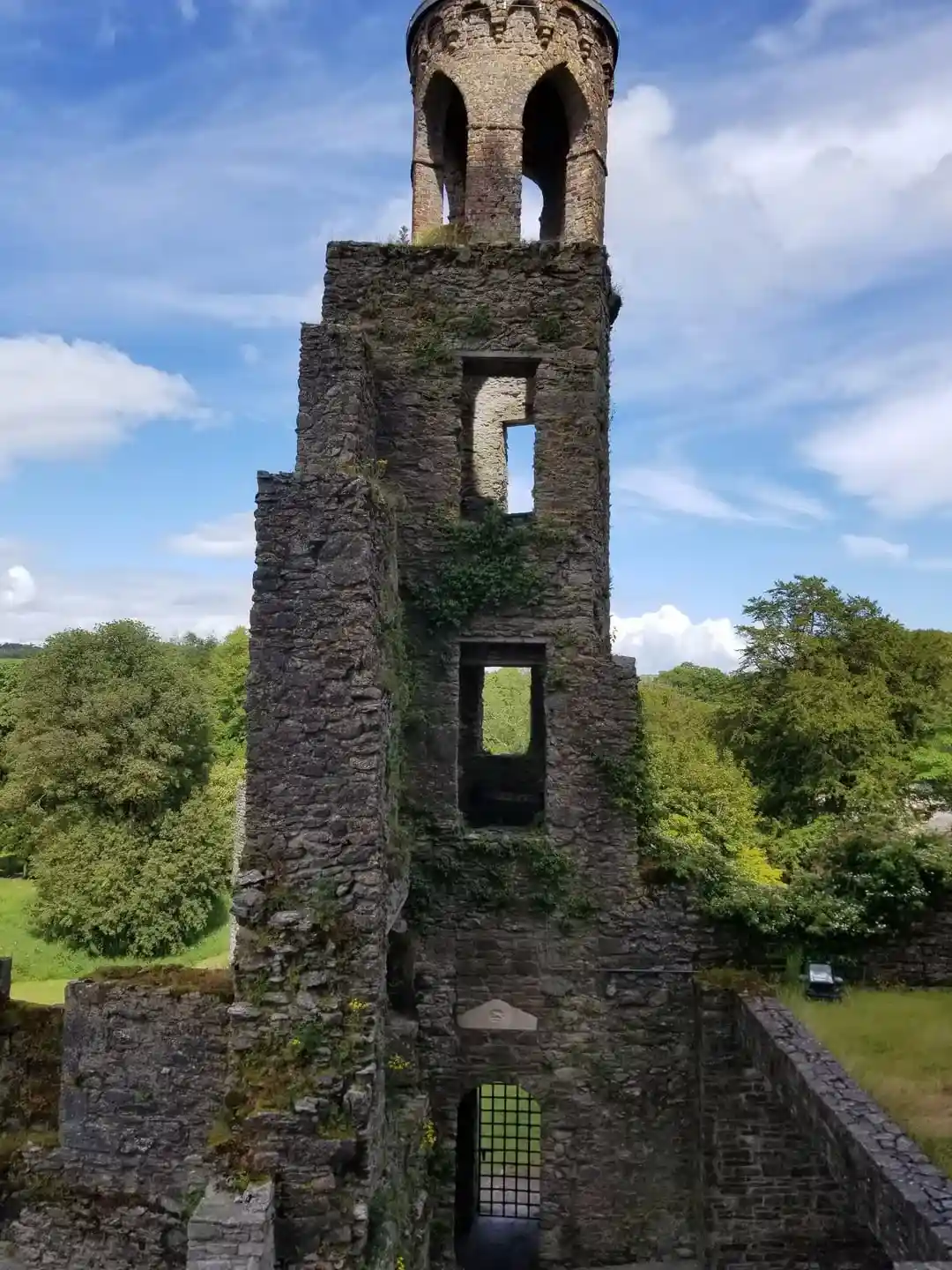
Cork functions best as an arrival hub — Days 1-2 landing here rather than Dublin gives the trip a slower opening rhythm and a more manageable first driving day. The English Market handles breakfast and context in one stop: it’s been trading since 1788 and the produce, Spiced Beef, and ambient noise make it more market than tourist attraction. St. Patrick Street runs the commercial spine; Sin É pub keeps the live music tradition as seriously as anywhere in the country.
Blarney Castle sits 20 minutes northwest — skipping the line requires early arrival (gates open at 9am) or accepting that the Blarney Stone queue moves slowly but steadily. The poison garden and caves below the castle get overlooked by most visitors, which is reason alone to explore them. Saint Anne’s Church bell tower climb in Shandon (bell tower climb access included in entry) earns views over the city and a slightly surreal opportunity to play the bells yourself. Jameson Distillery Midleton is a 30-minute drive east and pairs with a Cork city center evening without overextending the day.
Kinsale — Day 2, Day 3, or Day 4 depending on routing — is the cobblestone streets version of what Cork promises. Fishy Fishy is the lunch reservation worth making ahead; Dalton’s and Gallaghers gastropub handle the evening with less fuss. Kinsale Crystal shop and The Classic route through the harbour make the afternoon. Elbow Lane Brew & Smokehouse back in Cork rounds out Day 5 if the itinerary is pushing back north — a pint and a good meal before the overnight recommendation of Moxy Cork closes the loop on the southwest.
Guinness Storehouse
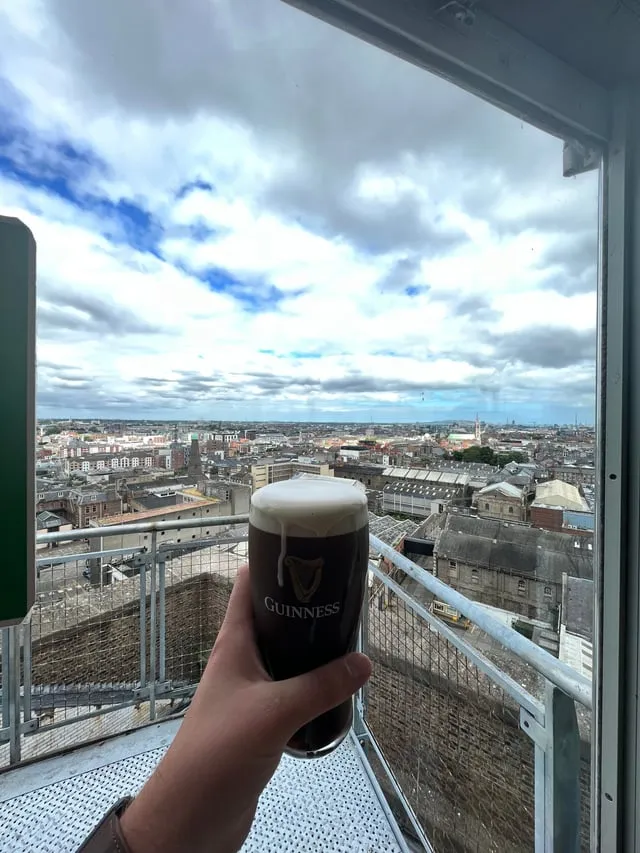
The Guinness Storehouse runs across seven levels — 7 floors of brewing history, advertising archives, and sensory displays that build deliberately toward the top. Allocate a 2 hours minimum; the 90 minutes suggested on the site undersells how much there is if you’re actually reading and engaging.
Pre-booked tickets are essential — walk-in availability disappears by mid-morning in peak season. The $33 USD ticket includes a free pint at the glass-walled Gravity Bar with its 360-degree bar panorama over Dublin’s rooftops. The autism-friendly accreditation the venue holds means sensory accommodations are available if needed — worth knowing before arrival. Morning visit timing reduces crowds on the upper floors significantly; 2:45pm tickets work if the morning is used elsewhere in the city. The final-floor bar is the payoff, but the archive floors and cooperage displays on the lower levels are what make this more than a branded photo opportunity.
Costs / Budget
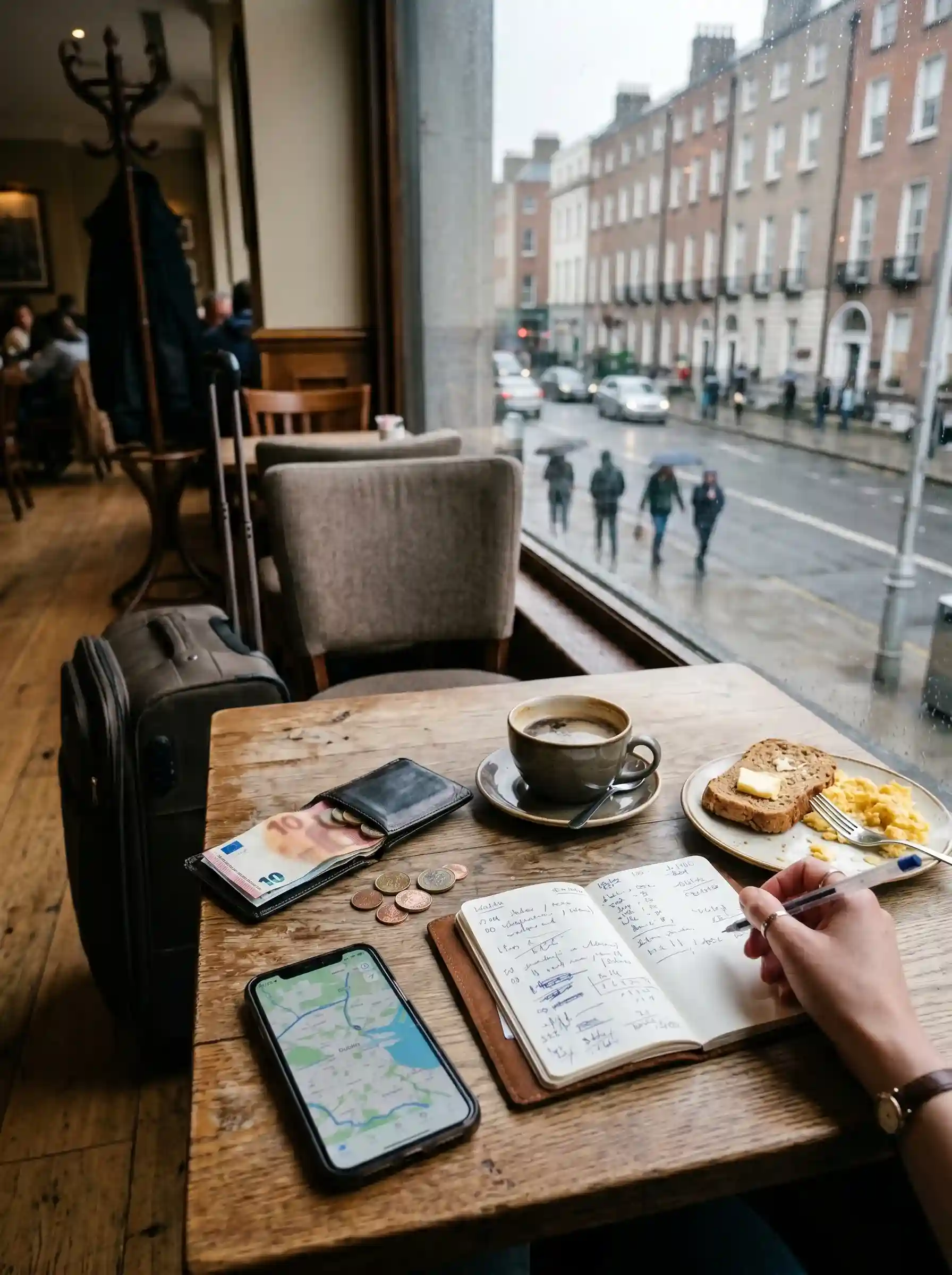
Ireland runs roughly a 10% cost premium over comparable Western European destinations for US travelers — the 1.13 EUR-USD exchange rate (fluctuating, always worth a currency converter check before departure) means mental math rounds up reliably. Mid-range hotels land at $225-330 per night in Dublin and the main tourist towns; B&Bs with breakfast included in smaller towns pull that number down meaningfully.
Rental car insurance is the expense most travelers underbudget — disclosed properly at pickup, mandatory add-ons push daily rates toward $100 per day in high season. Parking garages in Cork and Dublin add a few euro per night on top of lodging. Food costs track close to upscale US dining in city restaurants; accommodation in a hostel drops to around 18 euro per night for shared rooms. Build the budget around attractions, transport, and accommodation as the three main columns, and the cost guide reality rarely surprises anyone who plans honestly.
Best Time to Visit / Weather
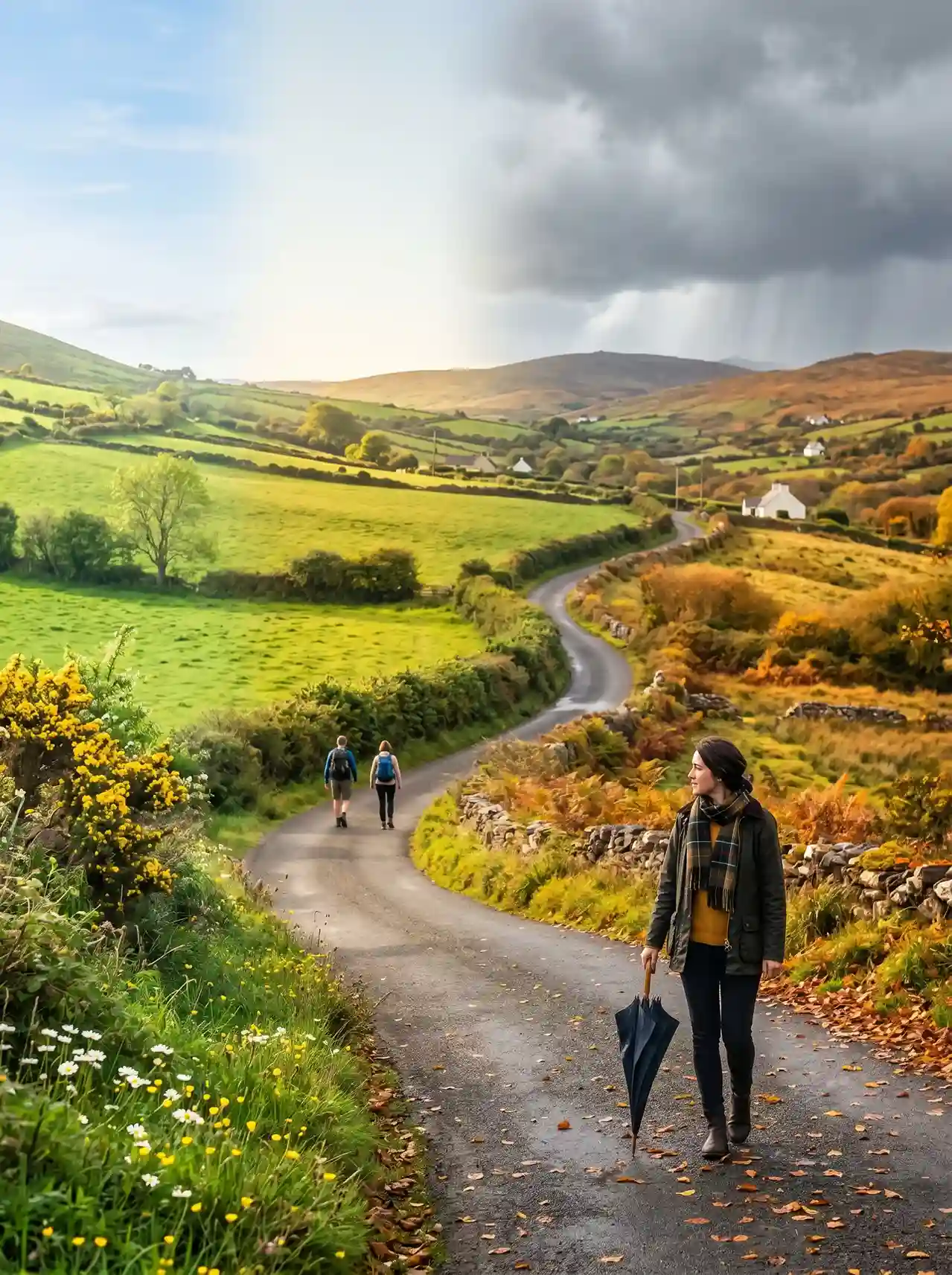
April-May is the move for most travelers — drier weather, good weather windows, fewer crowds, and long daylight that stretches toward 9pm by late May. July peaks at around 68°F and delivers the longest days, but summer brings full-price everything and the busiest sites. September offers a genuine shoulder season sweet spot: still dry enough, noticeably quieter, prices starting to ease.
January travel is entirely viable for the right kind of traveler — 50°F, 4:15-4:30pm sunsets, and a typical Irish winter feel, but lower prices and a version of the country that belongs to locals. Rainfall runs 40-70mm monthly through spring and climbs to 80-130mm through November, December, and March. October is genuinely atmospheric — golden light, moderate crowds, and the landscape at its most saturated. Pack for every season regardless of when you go: rain jacket, umbrella, hat, scarves, and light layers cover the range. The month-by-month rainfall table logic is less useful than simply accepting that April, May, June, and September tilt drier while everything else tilts wetter.
Food & Local Culture
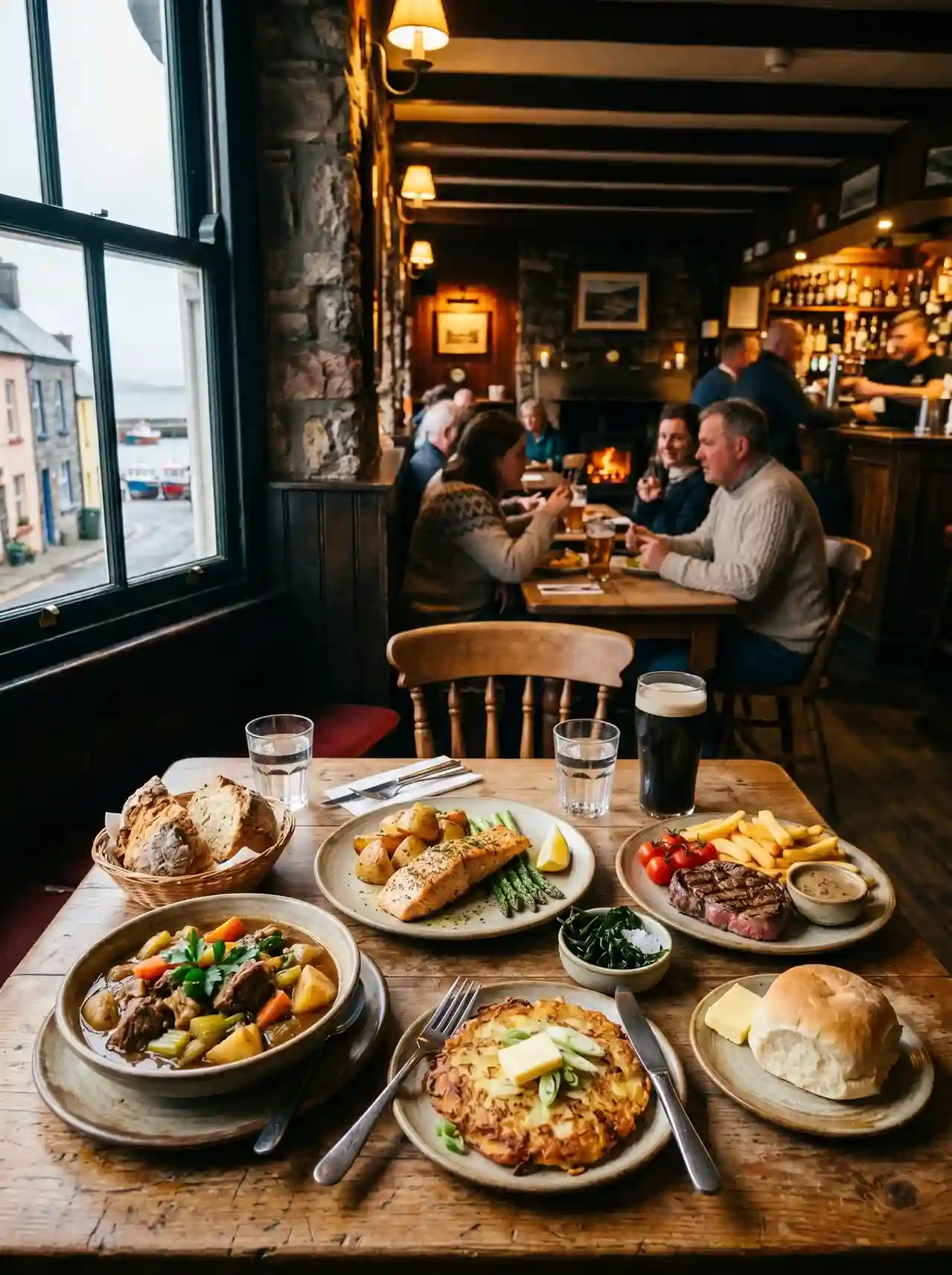
Irish restaurant food has moved well past its dated reputation — Dublin, Cork, and Galway each have restaurant cultures that hold up against upscale US dining without much effort. What’s more interesting is the hyper-local food specialties that emerge by county: Spiced Beef in Cork, Blaa bread roll in Waterford, Dulse seaweed in Antrim, Boxty potato pancake countrywide, and Fermanagh lamb and duck prepared with a regional directness that big cities can’t replicate.
Smaller towns are where local accents thicken, menus lean into seafood focus, and the gap between gluten-free options and vegan options narrows faster than expected — Irish hospitality extends to dietary needs more gracefully than the country’s culinary reputation suggests. Fish, steak, and lamb remain the proteins that Irish kitchens handle with the most confidence. The short distances between regions mean countrywide variety is accessible within a single itinerary without detour.
Packing
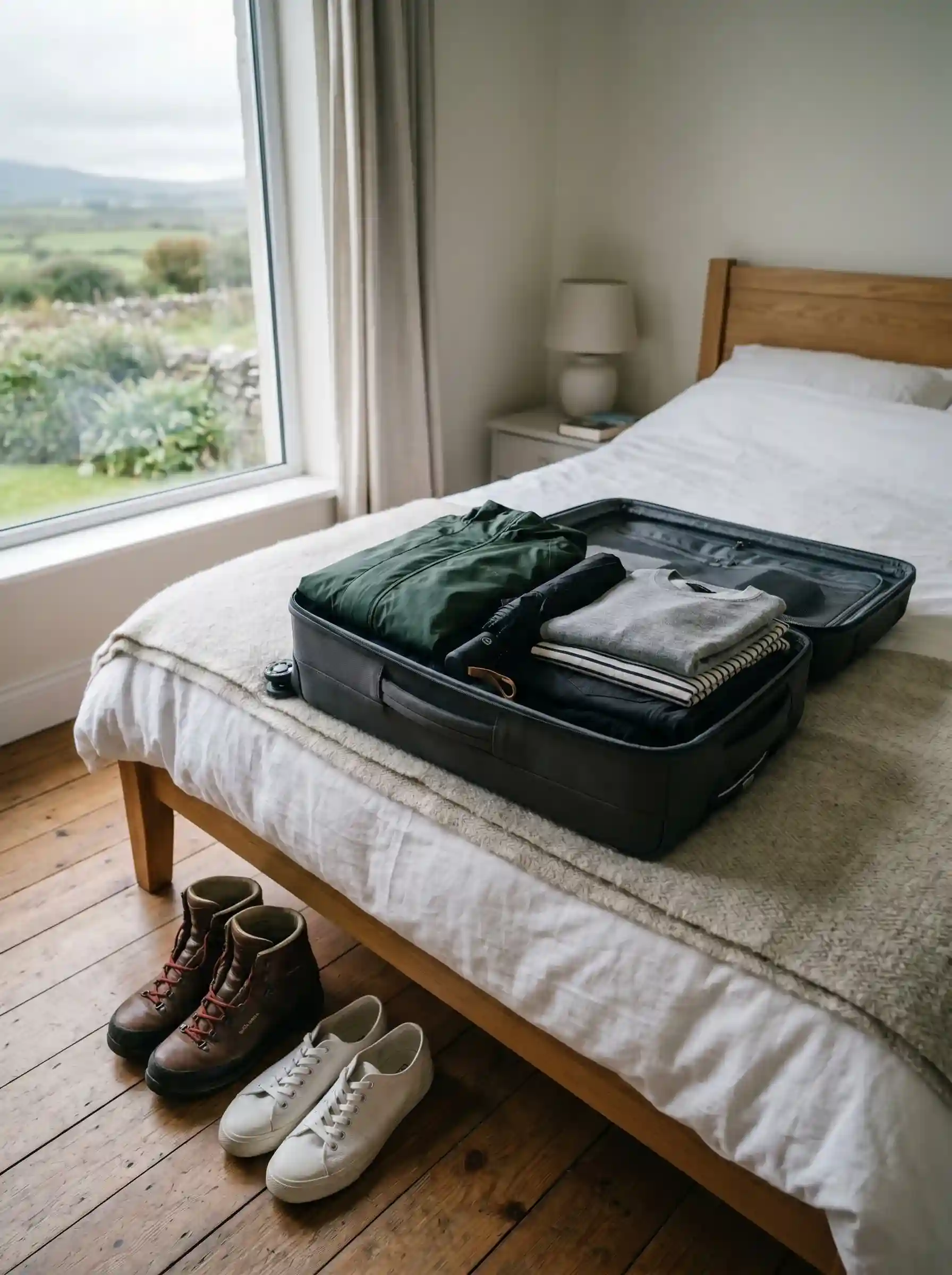
The packing list for Ireland runs shorter than most people build. A rain jacket and umbrella are non-negotiable regardless of season — treat them as fixed items, not weather-dependent calls. Hiking shoes for trails and city shoes for cobblestones cover the footwear split; trying to use one for both ends in sore feet by day three.
Clothing-wise: hoodies, light layers, clothing layers stacked rather than heavy single pieces, comfortable clothing that moves from a morning hike to an evening pub without requiring a full change. Sun shirts for May and June when the light runs long and deceptively warm. For a January trip, add hat and scarves to every day bag. Irish plug adapters are the same as standard EU adapters across most of the Republic — bring one per device or consolidate with packing cubes that keep the bag organised enough to find things in the dark of a Dingle B&B at midnight.