23 Instagrammable Spots in Portofino, Italy You Can’t Miss (Local Photo Guide)
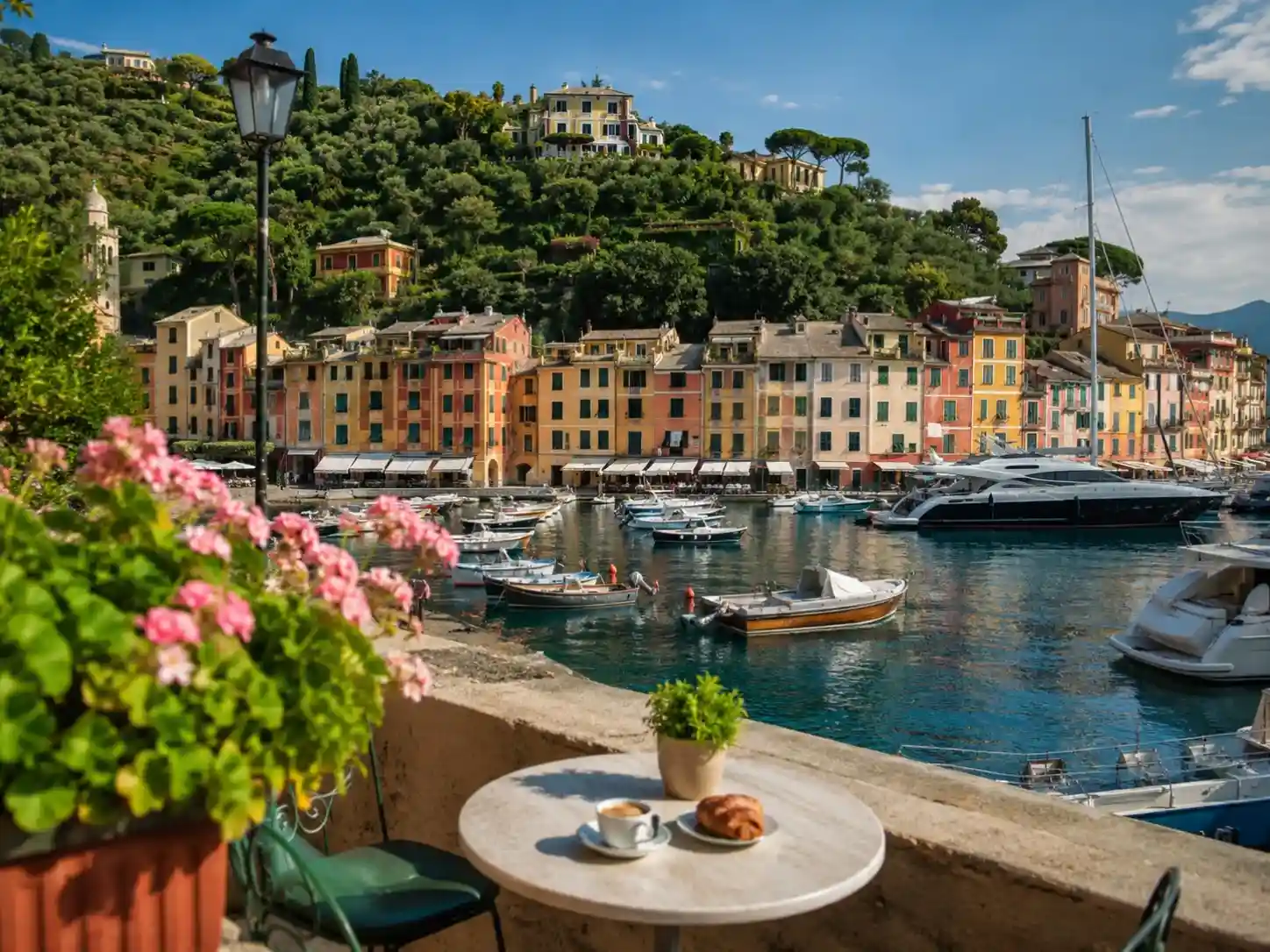
The first time I stepped off a ferry into Portofino, I caught that distinct smell of salt mixed with espresso drifting from a nearby café, and I understood immediately why this tiny corner of Liguria earns its reputation as one of Italy’s most Instagrammable beautiful places. Tucked along the Italian Riviera in northeast Italy, this old fishing village sits between the Ligurian Sea and green hills, and its picture-perfect harbor looks almost too sophisticated and glamorous to be real. I’ve made multiple personal visits here over the years, and each time I’m reminded that Portofino isn’t just a scenic region to pass through — it’s a genuine hotspot for travelers chasing that perfect postcard shot.
What hooked me on my very first day trip from Genoa was how the pastel buildings and colorful buildings seem to glow against the cypress-covered cliffs rising behind them. Around the round harbor, fishing boats bob beside expensive yachts and other yachts, creating a strange but beautiful contrast that captures exactly why locals call this a playground for the rich and famous — a place built for the rich and famous, yet open to anyone willing to wander. I spent a full afternoon wandering the sloping streets near Piazza Martiri dell’Olivetta, ducking into tiny boutiques and sitting at cafés that overlook the historic harbor, camera always within reach.
This guide pulls together everything I wish someone had told me before that first trip — real photo tips, best photo spots, and the kind of sweeping views that make a full day here feel like a mini escape, whether you’re arriving directly or treating it as a quick stop on the way to Cinque Terre. I’ve talked to local photographers who know this harbor better than anyone, asked questions most tourist crowds never think to ask, and tracked down the photo-worthy spots that actually deliver on the beauty everyone promises. From the waterfront restaurants lining the clear water to quiet corners most people miss entirely, here’s where to point your camera in Portofino.
The Harbor / Piazza Martiri dell’Olivetta
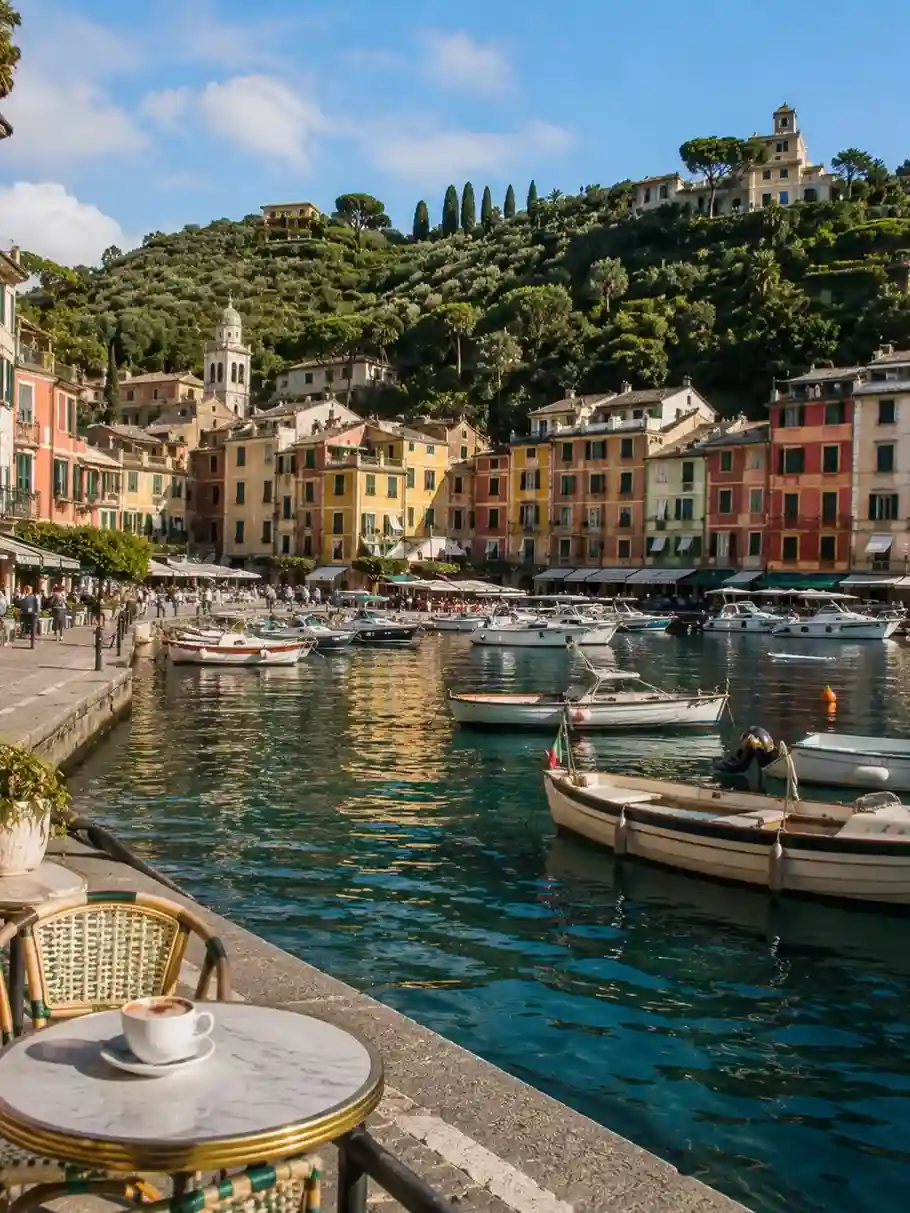
Piazza Martiri dell’Olivetta — what most people just call the Piazzetta — is the main square that anchors the entire town, and it’s genuinely the iconic photo spot everyone has in mind when they picture Portofino. The brightly painted houses ringing the colorful harbor look almost staged, the kind of classic shot you’ve scrolled past a hundred times on social media without realizing it’s a real place. According to the Comune di Portofino, this town square has functioned as the town center for centuries, and honestly, you can feel that weight the moment your shoes hit the stone.
I always tell people: come at sunrise. The light hits the water and turns it into something close to glass-like water, full of soft watercolor reflections bouncing off the hulls of moored boats and yachts in the bay. Walk the perimeter of the harborfront and you get a complete village view, with hill views and the Castello Brown view rising behind you. I like grabbing a cappuccino near the pier, then sitting at the dock edge — it’s the easiest way to get a wide angle shot without fighting crowds. A coffee here in Italy’s most photogenic harbor isn’t cheap, mind you; expect closer to €4 instead of the usual €1.50–2.50, but watching the fishing boats drift past makes it feel worth it.
By late afternoon light, things shift. The café tables along the ferry dock fill up, restaurants spill onto the narrow streets, and on one trip I genuinely watched a parade of luxury cars, from Ferraris to Lamborghinis, circle the small town before disappearing toward the hills — a strange but very Portofino moment. On warm days, the whole place gets busy with tourists, so if you’re after a clean frame, slip behind the waterfront buildings near the docks once the strolling crowds pour in.
This stretch of Italian Riviera coastline rewards patience. Sitting with your feet in the water, sipping coffee outside one of the small cafes, watching the sea views open up past the pastel houses and colorful buildings that make this whole scene look like a postcard — it’s simple, but it’s the kind of moment that makes the whole trip worth it.
Castello Brown
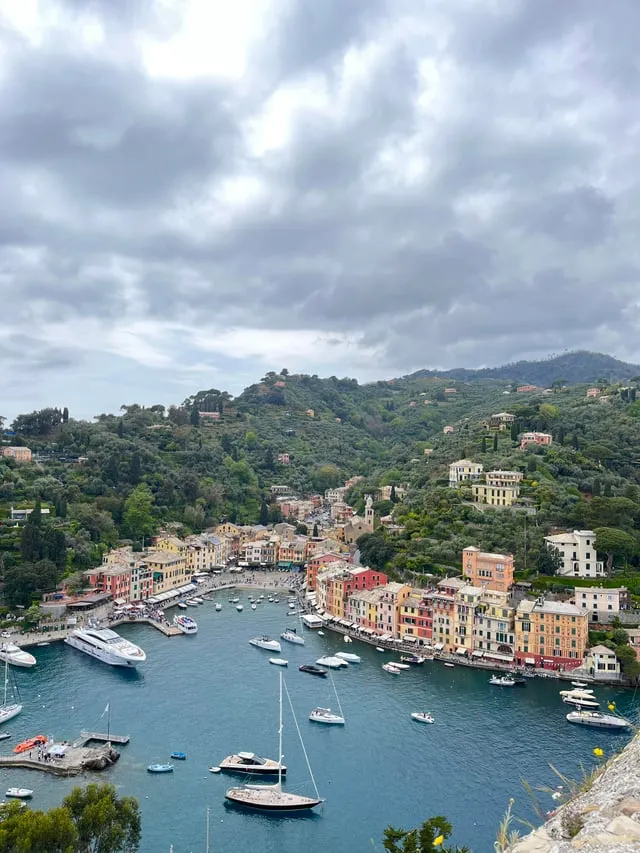
Climbing toward Castello Brown is, in my opinion, the single best thing you can do in Portofino, and I say that as someone who’s made the uphill path more than once. Wear sneakers — the uneven steps aren’t kind to sandals — and budget about a 10-minute walk from the harbor. The fortress traces its roots back to Roman times, originally built for coastal defense, before being expanded castle through the 15th century and later into the 16th century structure you see today perched on the hill above town.
What gets me every time is the morning light filtering through the pine trees and cypress, casting soft shadows across the gardens and fairytale gardens that frame sea views stretching across the Gulf of Portofino. There’s a shady bench about halfway up if you need a breather, and the panoramic views from the terrace at the top genuinely rival anything else on this coastline. Pay the small entry fee (around €5) and you’ll find grounds scattered with olive trees and crumbling Roman walls worth a slow wander before you even step inside.
Indoors, Castello Brown turns into something closer to a museum. Original furniture, gothic windows, a staircase lined with majolica tiles, and rooms showing off Genovese tiles alongside medieval ceiling paintings of saints and rulers under wooden roofs tell the story of Portofino history in a way that’s easy to absorb even on a quick visit. The “Dolcevita room” displays celebrity photography of past guests — Walt Disney, Hemingway, even Elizabeth Taylor, who’s said to have spent eight honeymoons along this stretch of Liguria. Climb the tower for the “Yesterday Today Tomorrow” multimedia installation, which walks you through the castle’s evolution far better than any plaque could.
It’s no surprise weddings and photo shoots happen here constantly — between the pergolas, the calm harbor below, and colorful houses dotting the hillside, every angle looks intentional, like a film set nobody had to dress.
Church of San Giorgio (St. George)
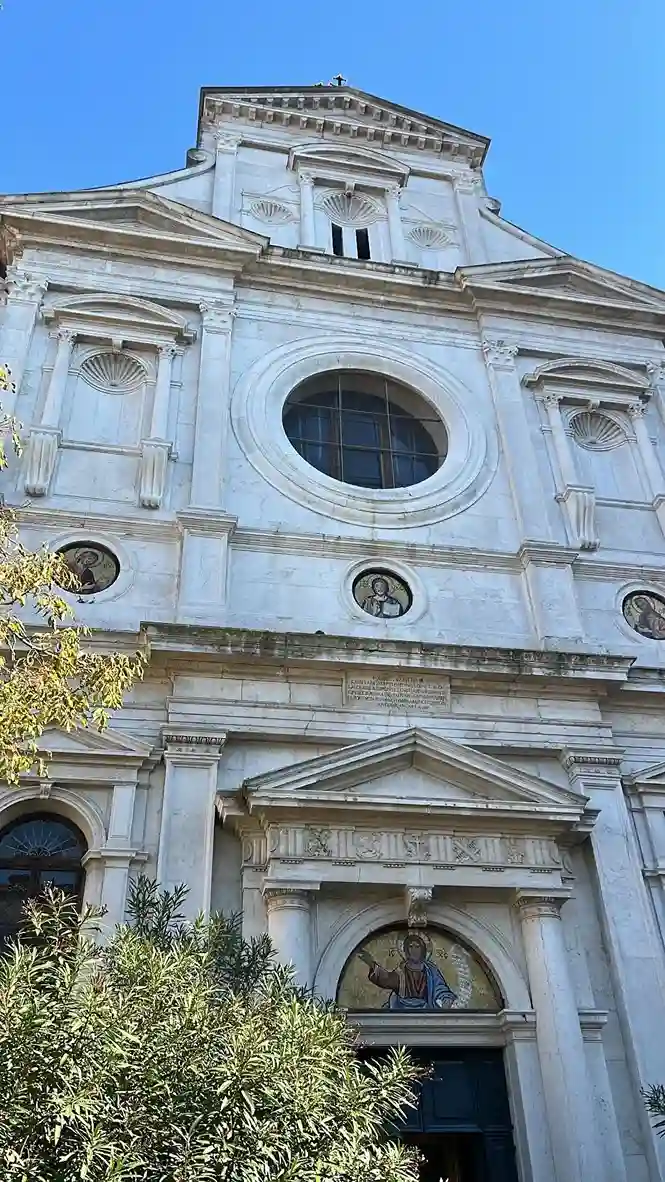
Tucked between Castello Brown and the lighthouse, the Church of San Giorgio is easy to underestimate from a distance, but the walk up is short — about 15 minutes along a narrow lane — and worth every step. Its yellow facade stands out against the rest of the town, and right out front you’ll find a black and white pebble mosaic floor that photographs beautifully in late light. According to Portofino.it, the church dates to the 12th century, built during the Middle Ages in honor of St. George, the town’s patron saint.
Legend says sailors carried his relics back after the Crusades, and the building has been damaged and rebuilt more than once since — including after a WWII bombing — which is part of why locals consider it a quiet symbol of resilience for the whole region. I’d argue this uphill walk is one of the most underrated panoramic views in Portofino: from the terrace, past mosaic tiles scattered along the path, the sea opens up below in sweeping views over the harbor, the rooftops, and the entire townscape, with gulls circling above a weathered cliffside cross and waves crashing against the rocks.
If hiking all the way to Castello Brown feels like too much, this yellow church is a genuinely solid alternative, offering a free view that rivals the paid one above it. Give yourself a few quiet minutes here before moving on — it’s a different energy than the busier corners of town.
Paraggi Beach
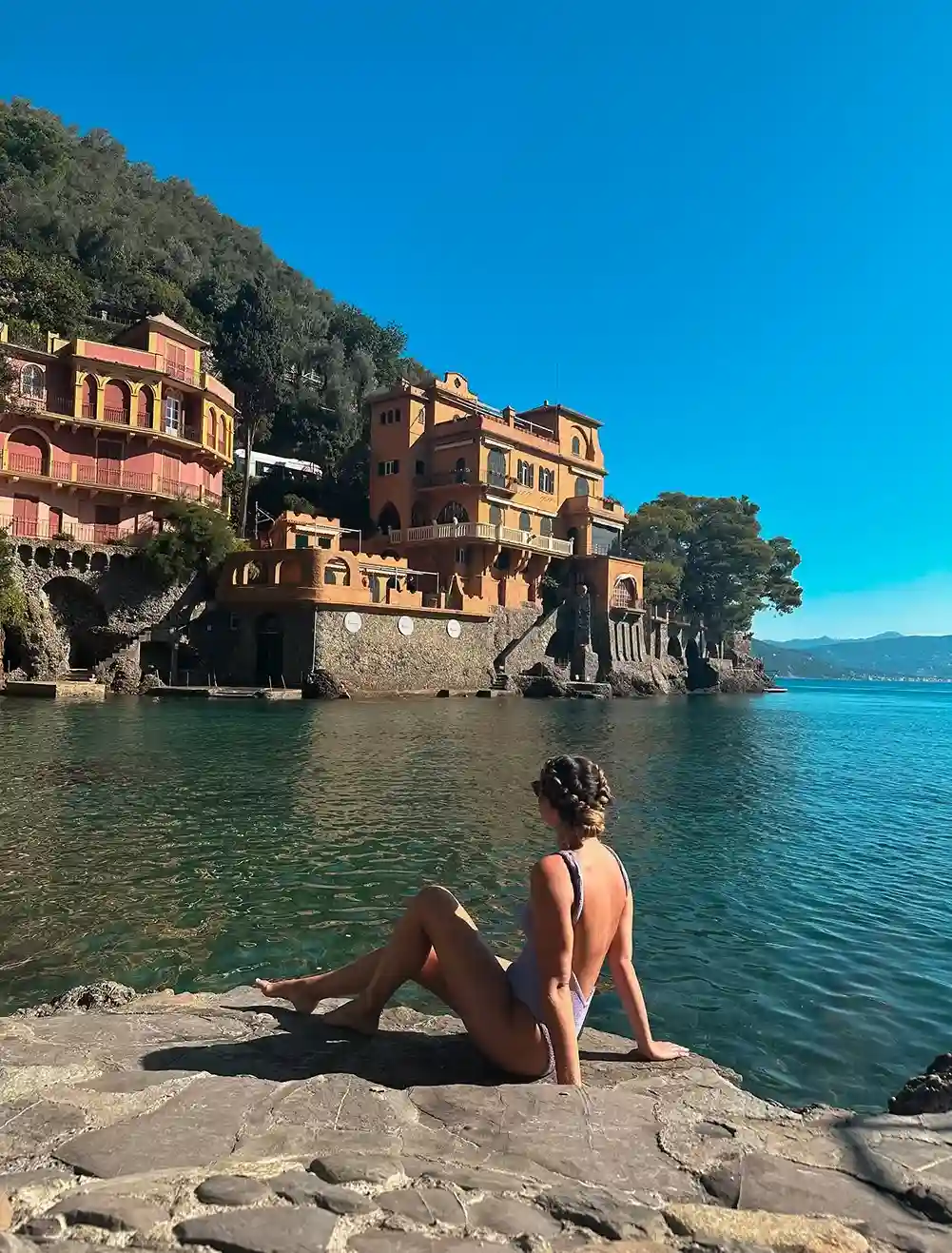
Paraggi Beach is, hands down, my favorite escape from Portofino’s crowds — it’s the only real sandy beach within walking distance, sitting in an emerald cove about a 20-minute walk away, where narrow wooden piers stretch out into the water. You can take the scenic coastal walk, following the Passeggiata, also locally called the Path of Kisses or Sentiero dei Baci, which runs near Via dell’Olivetta. If walking isn’t your thing, the #782 bus connects here too, though I’d argue the walk itself is half the experience.
The water is genuinely crystal-clear water, almost glowing under soft light — Italy Review isn’t exaggerating when they call it one of the prettiest stretches of the sea in this part of Liguria. It’s a known snorkeling spot, with coral visible close to shore, and a solid choice for sunbathing if you arrive on weekday mornings before the rocky spot gets crowded with day-trippers. Bring water shoes, since some rocky entry points are more comfortable navigated with them, plus a quick-dry towel for after.
The beach itself splits between the public area and the private Bagni Fiore beach club, where you’ll pay rental fees for loungers and umbrellas if you want them — not cheap, but the flat water and clear water make it worthwhile. Beach bars and restaurants line the back of the sand; Langosteria is the one I keep returning to. For a quieter alternative with fewer people, head to Spiaggia dell’Olivetta, a more remote beach near Castello Brown reached by a steep staircase — not exactly a polished beach, more of a rocky spot for cooling off. Either way, find a trailhead viewpoint along the path before you descend for a higher angle shot of the whole cove, then continue on toward Santa Margherita Ligure if you’ve got energy left.
Portofino Lighthouse (Faro di Portofino)
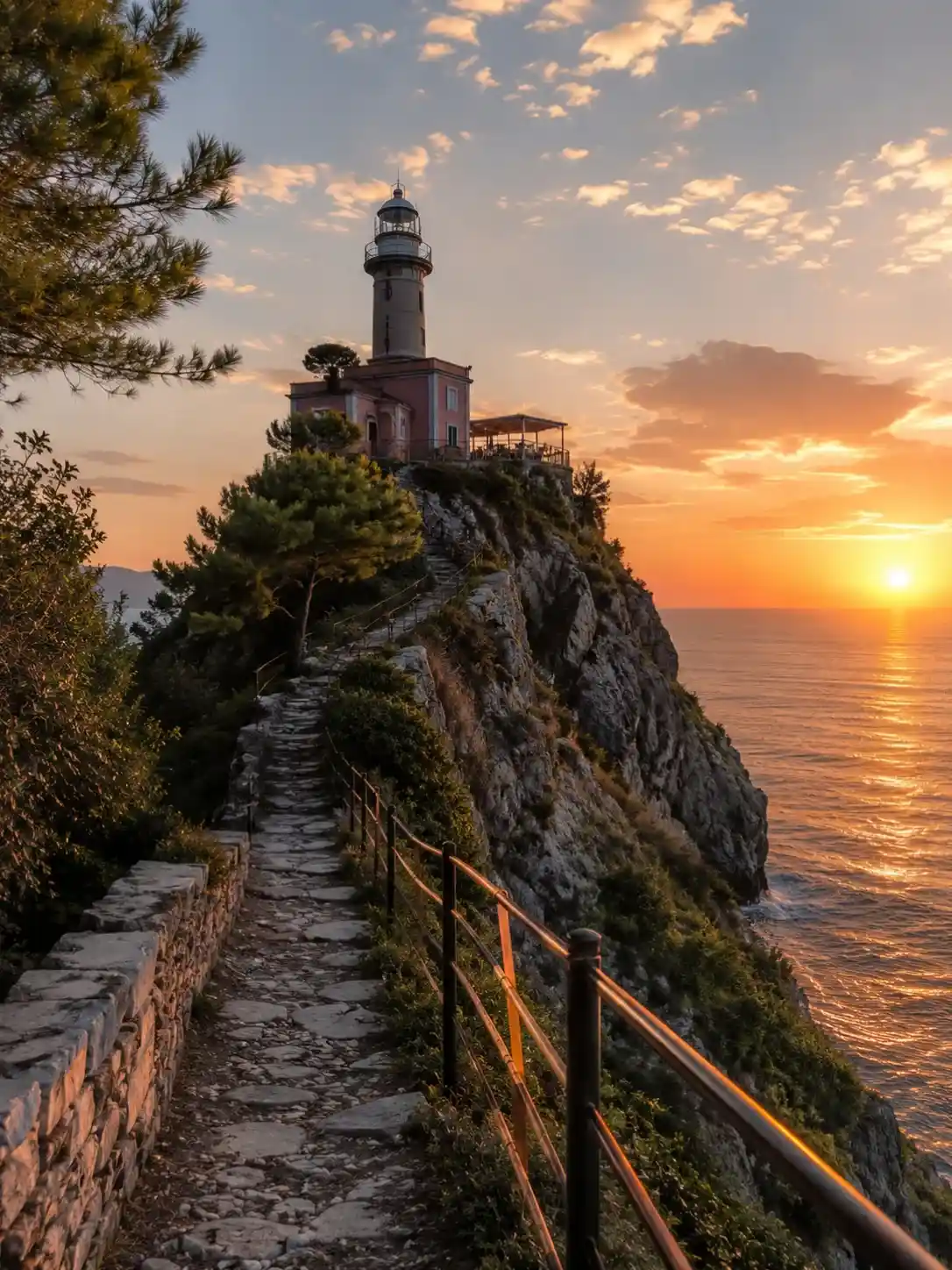
Not everyone makes it out to the Faro di Portofino, and honestly, that’s exactly why I love it. From the Church of St. George, it’s about a 15-minute walk along a pine-lined cliff path; coming from Castello Brown instead, it’s closer to a 10-minute walk to the edge of peninsula. Either route follows a quiet coast path with fresh ocean air and increasingly pebbly footing, so sturdy shoes matter more here than almost anywhere else in town.
La Portofinese describes this spot as where the sky and sea seem to dissolve into each other, and at the western tip of the peninsula, I genuinely believe it. Stick around for golden-hour sunsets — the orange sky stretching over the Gulf of Tigullio delivers some of the most unforgettable views in Liguria. There’s a small café and a terrace bar, Il Faretto, right beside the lighthouse, perfect for an aperitivo while you wait for sunset. Bring a light scarf, because the evening breeze picks up fast once the light starts to fade.
Portofino Marina & Yachts
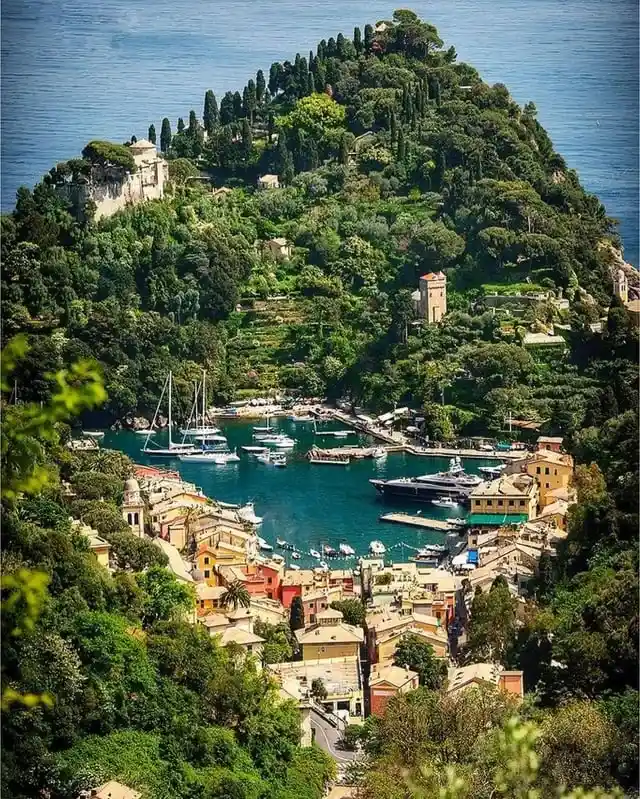
Back down at the Portofino Marina, the energy shifts completely. This is where luxury yachts rest beside working boats, and the whole harbor scene hums with linen shirts, clinking glasses, and quiet conversation drifting along the promenade. According to the Portofino Yacht Marina, this ancient harbour has welcomed travelers, artists, and royals for decades — and you can feel that layered history just standing at the pier.
You don’t need a deck pass to soak it in. I usually grab an ice cream and walk the length of the marina as the sky turns pink sky toward golden hour, watching boat reflections stretch into long light trails across the water. It’s the perfect follow-up to the Piazzetta photo spot, and a quieter way to close out the evening than fighting crowds elsewhere. Even the jet-setter yachts and fishing boats moored side by side somehow feel like part of the show rather than something separate from it.
Via Roma, Boutiques & Designer Shopping
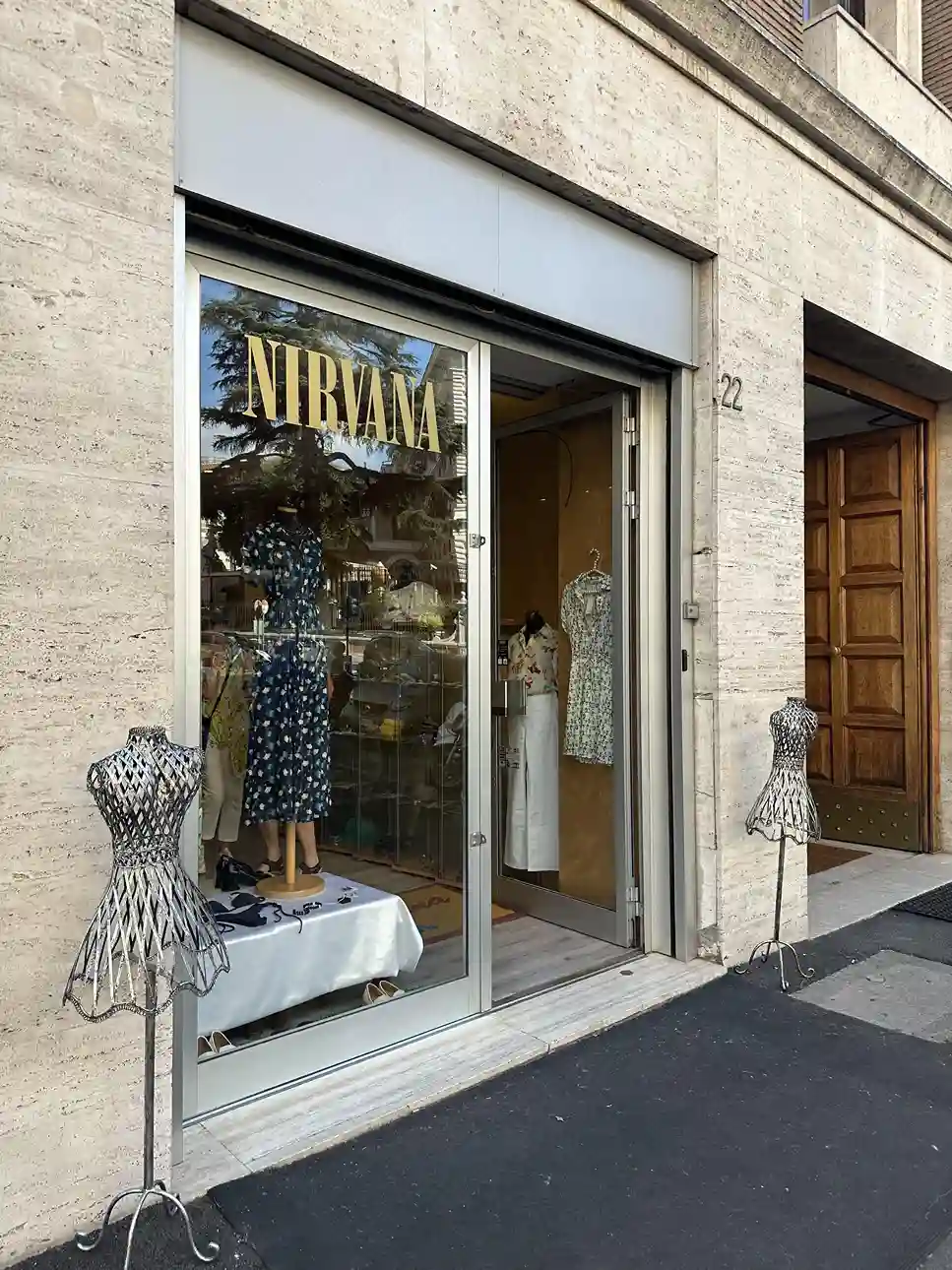
Step away from the seawall and onto Via Roma, the main road lined with glamorous boutiques that feel less like stores and more like small galleries. Flower boxes spill over pastel shutters, and the boutique windows for names like Dolce & Gabbana, Ferragamo, and Louis Vuitton make it clear this town earned its upscale reputation. Shopping here is firmly expensive, but window-browsing costs nothing.
In between the luxury brands, you’ll find souvenir shops selling hand-painted ceramics and bottles of Ligurian olive oil, plus a few custom jewelry shops tucked along the streets. Mix in seafood restaurants and wine restaurants for when you need a break, and stop at Bar Morena for a slow cappuccino — I always treat it as my checkpoint before heading back uphill.
Strolling the Streets / Alleyways
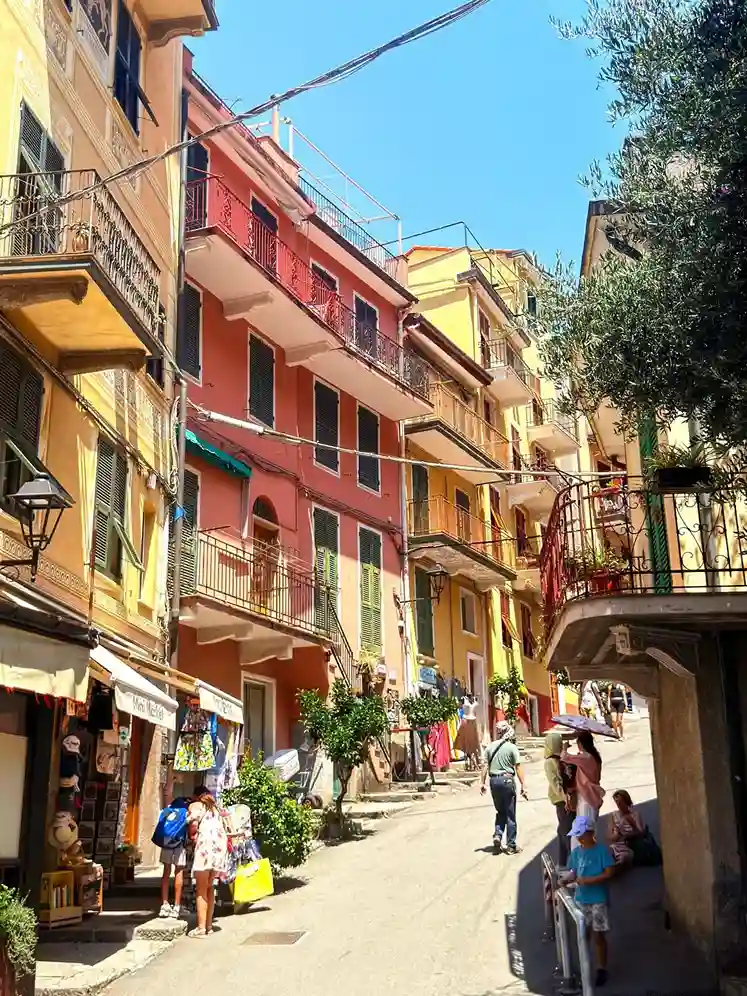
Turn away from the harbor instead of toward the castle, and you’ll stumble onto a maze of narrow lanes and narrow streets worth losing twenty minutes in. The alleys here open onto colorful storefronts and more boutique windows, and there’s no real way to get lost — Portofino is small enough that you’ll always find your way back to the water.
Church of San Martino
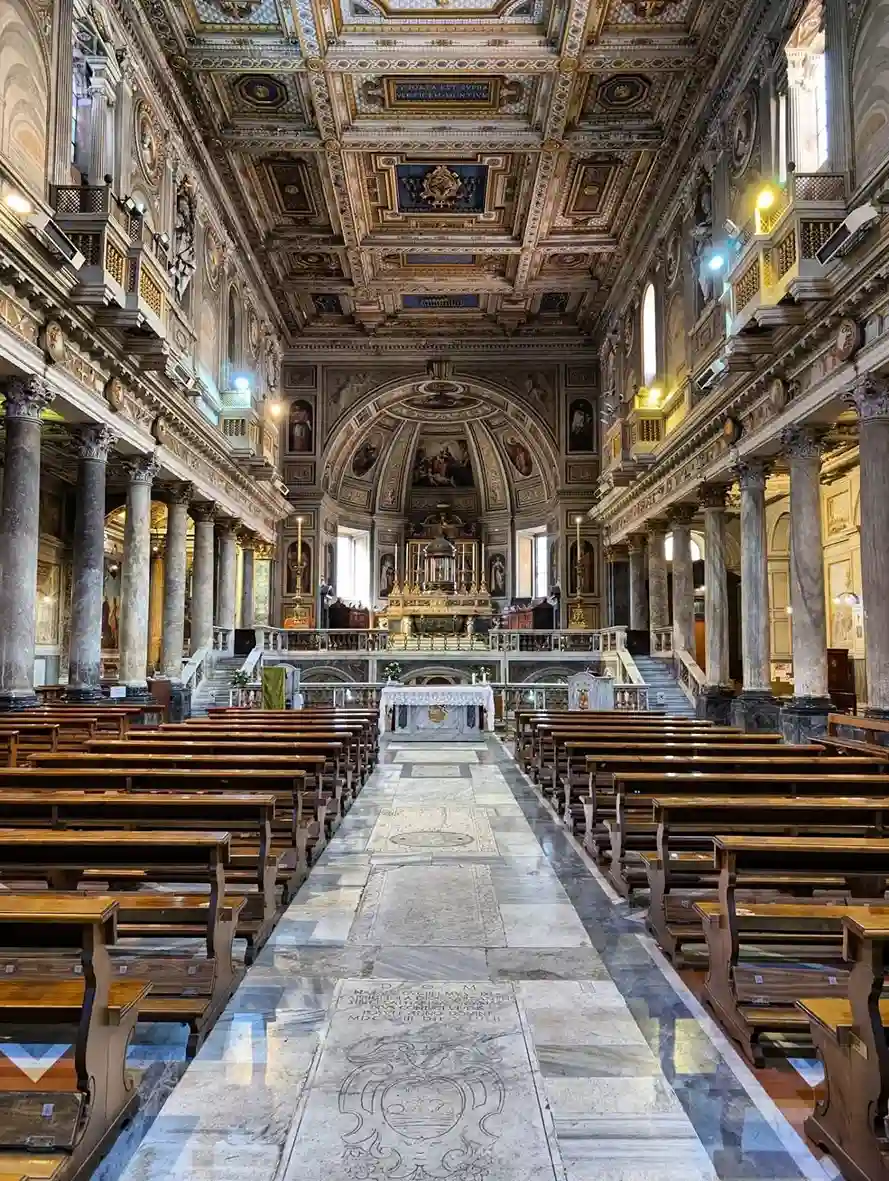
One of the first buildings you’ll spot from the harbor is the Church of San Martino, easy to identify by its bell tower and yellow-and-gray striped facade. It’s a centuries-old, Romanesque-Lombard church with 12th century roots, and while it’s pleasantly lovely outside, I’d actually argue it’s far more impressive inside.
Step through the doors and you’ll find marble columns, painted frescoes, and crystal chandeliers hanging beneath the striped facade you saw from the street. There’s a nice photo to be had on the stairwell out front too. Best of all, this Romanesque church has free entry — no ticket, no line, just a quiet five minutes inside one of the oldest buildings in town.
Dining with a Harbor View
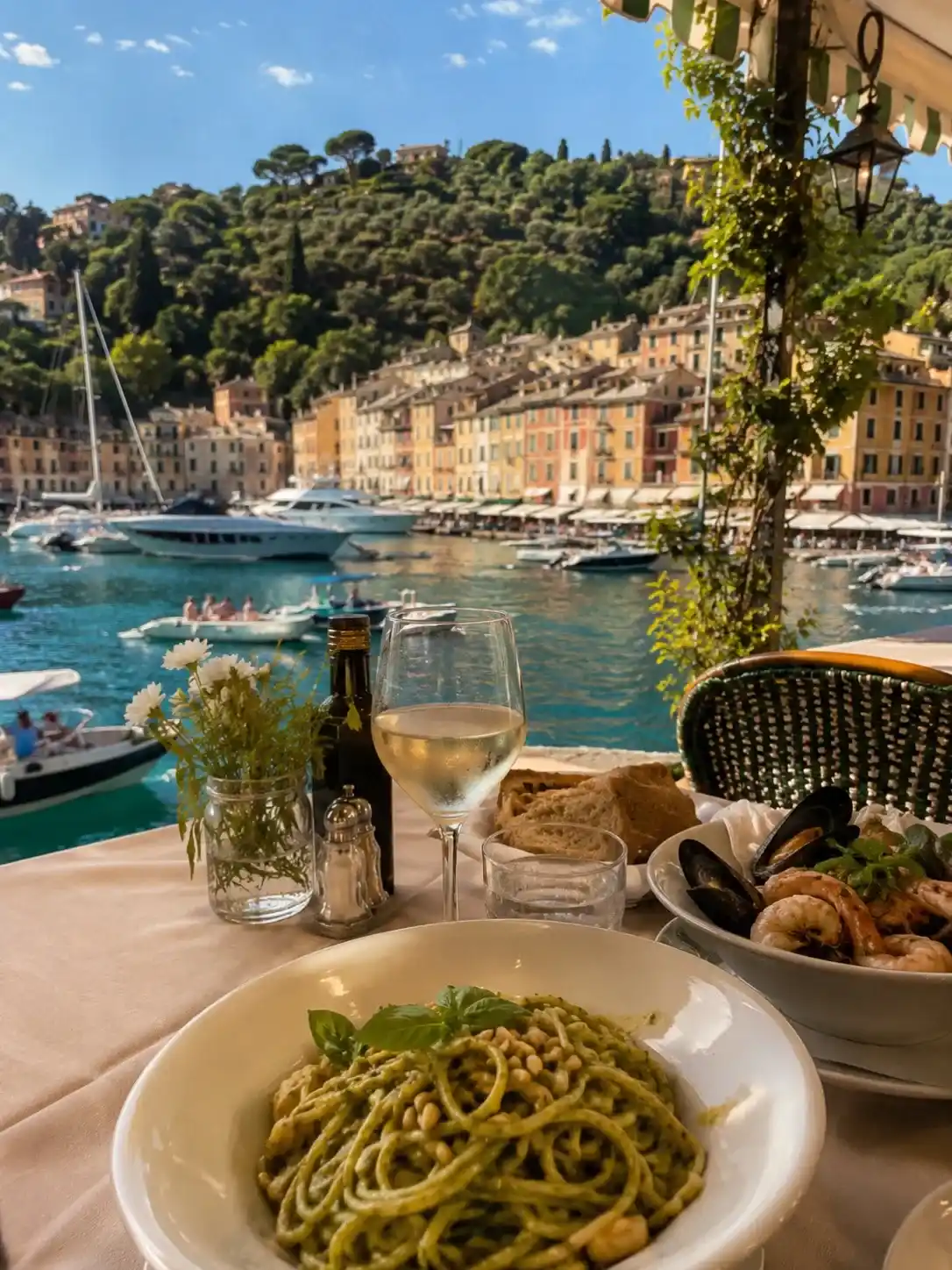
Eating at a waterfront restaurant with a harbor view is one of those experiences that’s worth the splurge at least once. The romantic seaside ambiance around the piazza is hard to fake anywhere else. I’d recommend Trattoria Tripoli or Taverna del Marinaio — both sit just far enough from the main foot traffic that you’re not eating in a parade of passersby. Always book reservations, especially through summer and on warm days, when restaurants and cafes fill up fast.
Order something built around pesto or fresh seafood — they’re the regional specialties here, and skipping them feels like a missed opportunity. Just know going in that this is expensive territory; even the cappuccino price acts as a reliable cost marker for everything else on the menu. For a more local feel without sacrificing the coastline, I’ll sometimes detour to Santa Margherita Ligure, Camogli, or Rapallo instead, where the same quality comes without the markup.
Hiking Trails & Portofino Natural Park
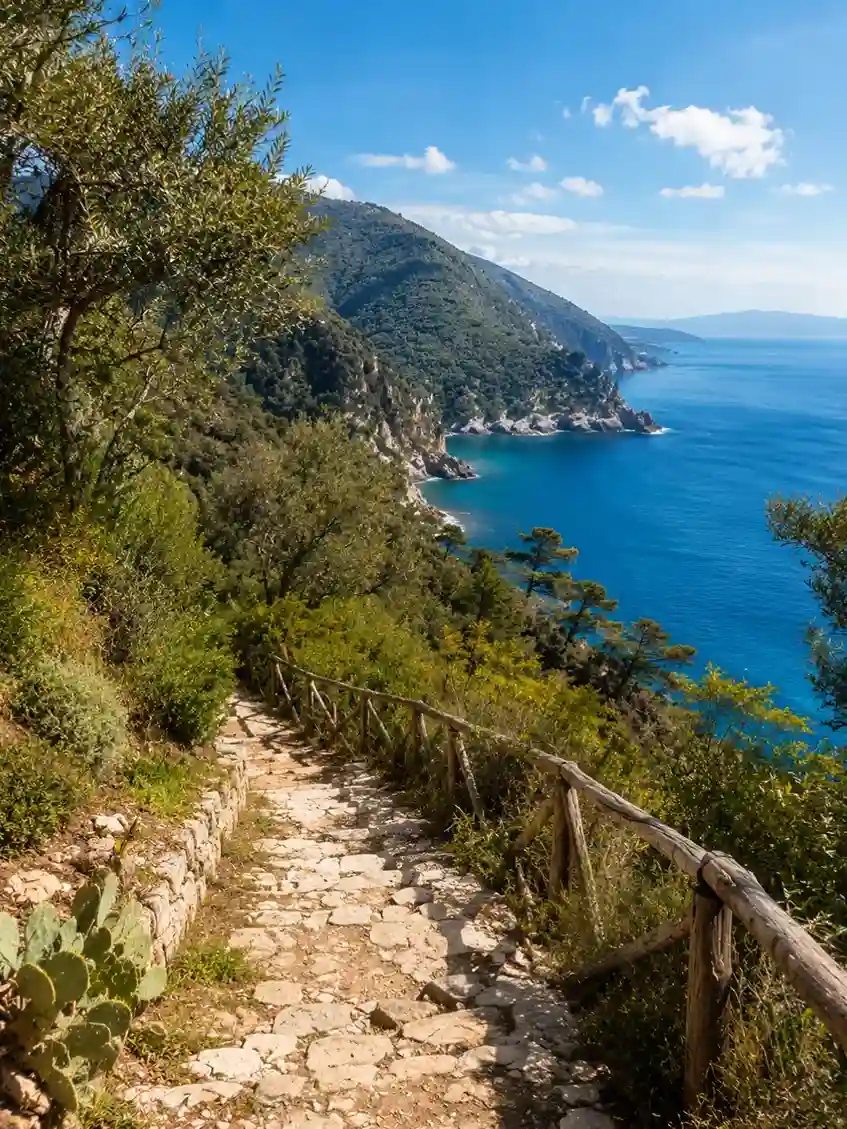
Beyond the marina, the Portofino Regional Natural Park (sometimes just called the Portofino Natural Park) opens into a quiet network of trails and sea paths weaving through olive groves. Parks.it lists several lookout itineraries leading to viewpoints that feel like private balconies over the water, and Travel + Leisure has described walking these old Ligurian routes as one of the most authentic ways to experience this coastline. Grab a trail map before you set out — the park covers roughly 50 miles connecting Portofino, Camogli, and Santa Margherita Ligure.
Wear real hiking shoes or at least sneakers; sandals and flip-flops won’t survive the steep sections, and you’ll want plenty of water for the shaded forested stretches along the way. The San Fruttuoso trail, also known as the San Fruttuoso hike, is the most popular route at around 2 hours, weaving past lookouts with sweeping sea views the entire way.
San Fruttuoso & Christ of the Abyss
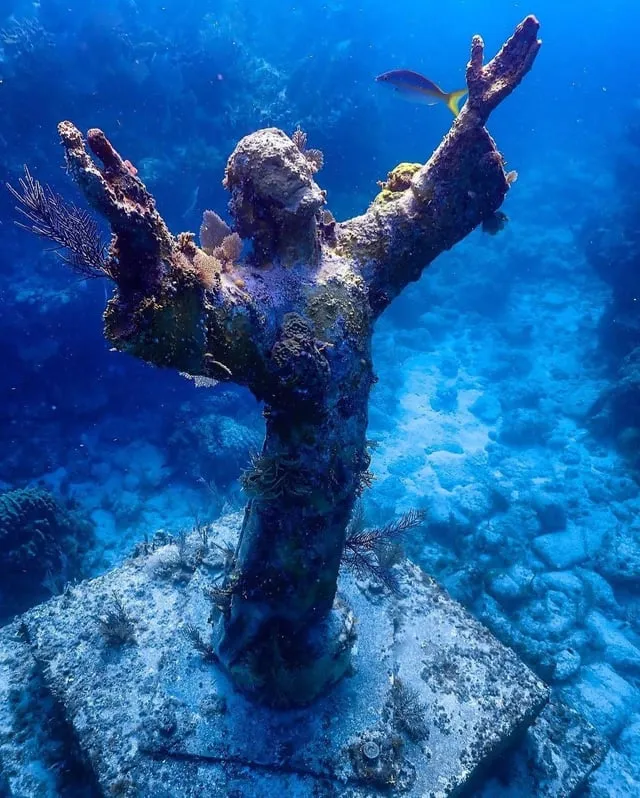
San Fruttuoso feels like a secret even though everyone technically knows about it — a hidden inlet between Portofino and Camogli with turquoise water so swimmable it almost doesn’t look real, set against a 10th-century monastery and forested cliffs. You can only reach it on foot or by boat, which keeps the crowds thinner than you’d expect.
While you’re there, visit the Abbey of San Fruttuoso, or go snorkeling to spot the submerged bronze statue known as the Christ of the Abyss resting just offshore. Diving here is a genuinely popular activity — I’m not much of a diver myself, but watching people gear up to find that statue is half the fun even from the surface.
Best Time to Visit
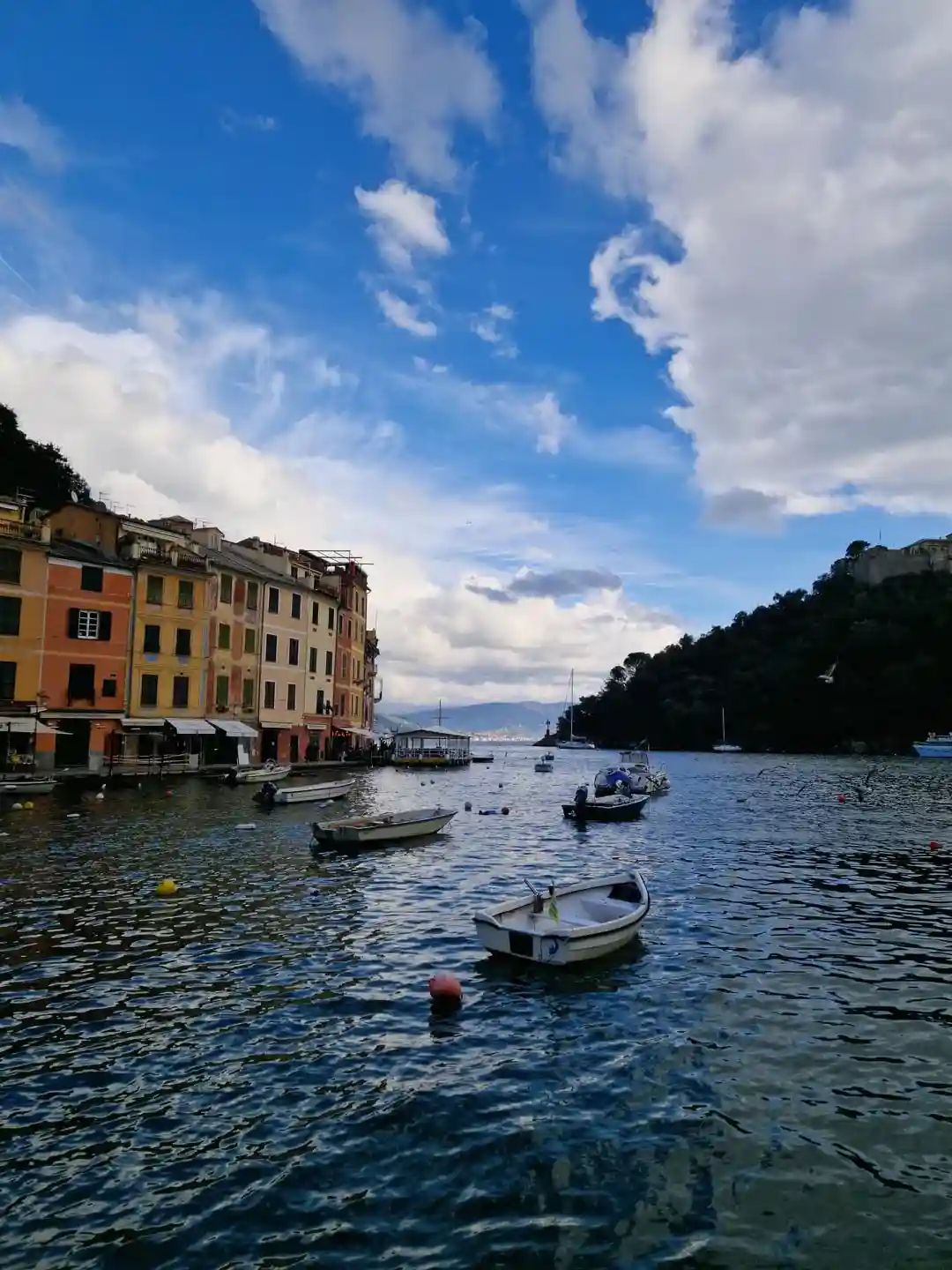
If you ask me, the shoulder seasons — spring and early fall — give you the best crowd balance in Portofino. May, early June, and September are about as ideal as it gets: flowers blooming, the warm sea still inviting, and quiet mornings perfect for photos before the day crowds arrive. Late April and early October work well too, with better hiking weather for the trails.
Summer weekends are a different story entirely — packed streets, overcrowded transport, and a generally busy harbor that’s tough to walk around. I always recommend early walks if you’re visiting during fall or summer peak months. Come winter, things go quiet fast — the weather turns chilly, and a handful of businesses closed for the season, which honestly makes it a strange but peaceful time to see the place stripped of its usual crowds.
How to Get to Portofino
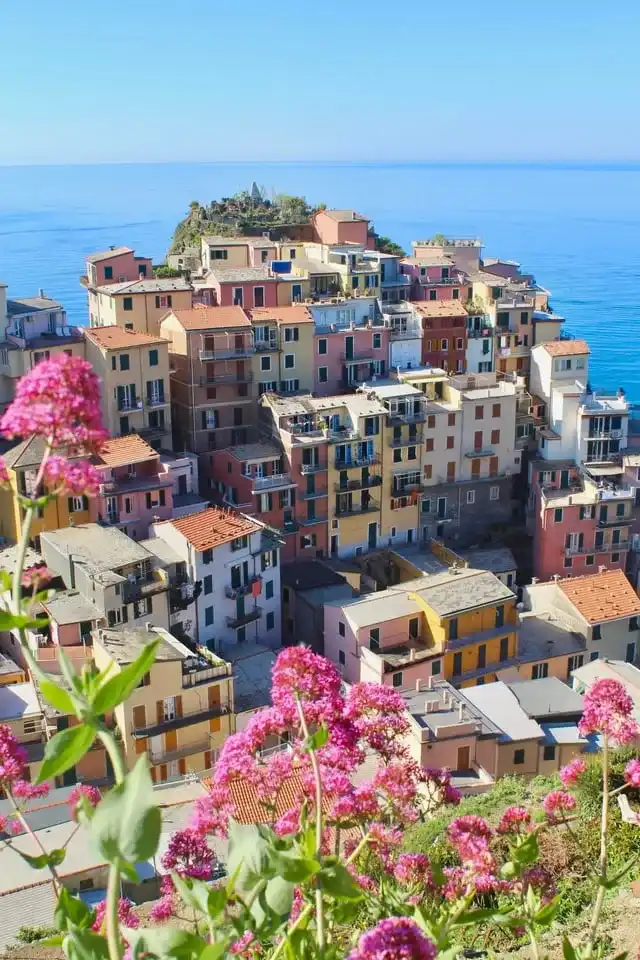
Portofino is essentially car-free, and I’d actively discourage driving anyway — the narrow streets weren’t built for it, and the single parking garage near Piazza della Libertà is almost always full, leaving you stuck searching for a parking lot elsewhere. If you do drive, expect to walk the last stretch on foot once you’ve parked.
Your best options are boat, train, public bus, or simply walking in. The nearest station is Santa Margherita Ligure-Portofino station — there’s no station in Portofino itself — from where it’s a short hop by ferry or bus. The #782 bus takes about 20-30 minutes; buy tickets onboard or at a tabaccheria. From Santa Margherita Ligure, expect 15-20 minutes by boat (around €12) or bus (closer to €5), or about an hour on foot if the hilly terrain doesn’t bother you — Santa Margherita is only 5 km from Portofino, after all. Once you arrive by boat, you’ll step off right onto the pier in the heart of the harbor, with the last stretch into town just a 5-minute walk and your shoes doing most of the work.
Ferry connections also run from Genoa (40 km away), Sestri Levante (75 km), Lavagna, Chiavari, Rapallo, and San Fruttuoso, with most lines connecting through Santa Margherita. A taxi from the train station is possible but pricey for the distance covered. You can even hike in via the regional park trails connecting nearby towns, or treat Portofino as a stop on a wider loop that includes Cinque Terre. Just remember: this is a town built for harbor photos, not for cars, with limited parking the trade-off for keeping it that way.
Where to Stay
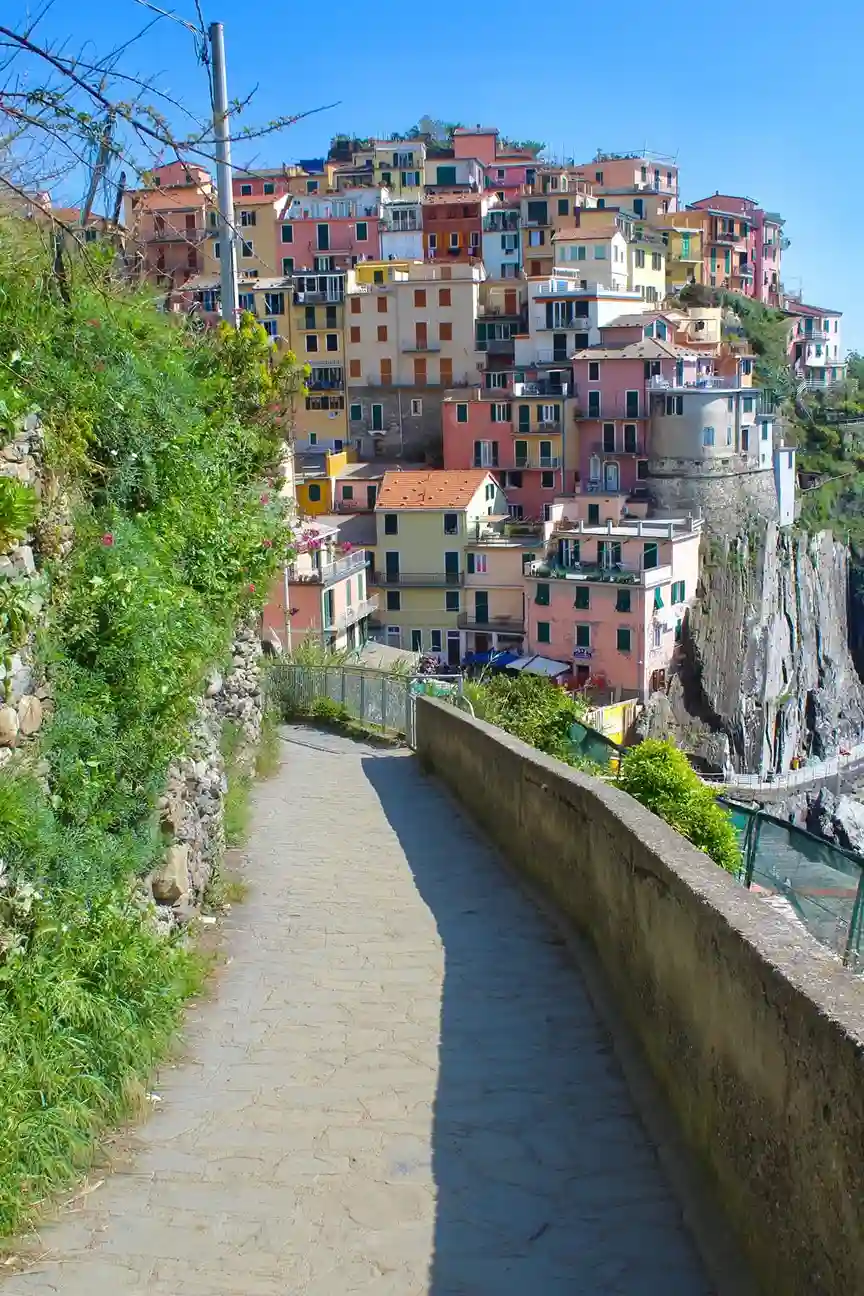
Staying overnight in Portofino is genuinely a splurge, and I say that without exaggeration. Accommodation here mostly caters to upscale travelers, with high prices the norm and limited budget options practically nonexistent — so booking early matters, especially during peak season. The Belmond Hotel group runs the two standout names: Hotel Splendido, a 5-star stay on the hillside with panoramic harbor views, and Splendido Mare, just steps from harbor, offering similar sea views at sea level instead.
If those feel out of reach, Hotel Piccolo Portofino is a solid 4-star boutique option that’s still central, while the Imperiale Palace Hotel in nearby Santa Margherita Ligure offers a more accessible price point without straying far. Even if you’re not staying at the top luxury pick in town, you can still book lunch or an aperitivo at Hotel Splendido just to experience the view firsthand.
How Much Time to Spend in Portofino
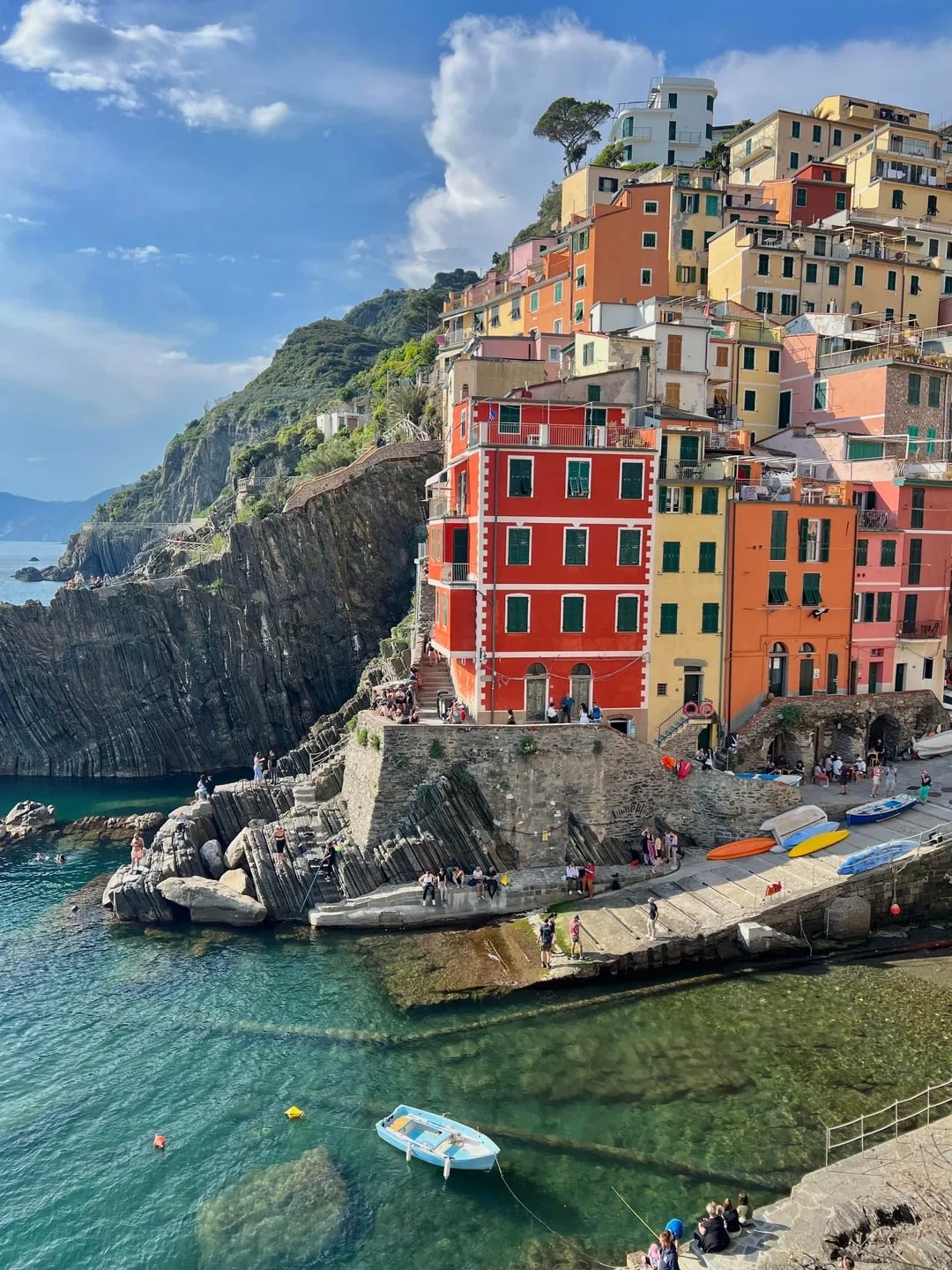
A couple of hours is enough to cover the main sights — the town, Castello Brown, and the lighthouse — if you’re moving efficiently and skipping a leisurely lunch. As a day trip from Genoa or Cinque Terre, that’s realistically all the travel time allows for a half-day visit.
Stretch it to one full day, though, and you can add the harbor, Paraggi Beach, and unhurried, slower afternoons by the water without rushing. For a true beach day plus hiking trails out to San Fruttuoso or Camogli, plan on two to three days, maybe even a full 3 days for a longer stay. Honestly, I’d cap it there — I’ve found myself genuinely bored after that point, and I’d rather base in Santa Margherita Ligure for cheaper lodging and dip back in for just a few hours at a time.
Museo Del Parco
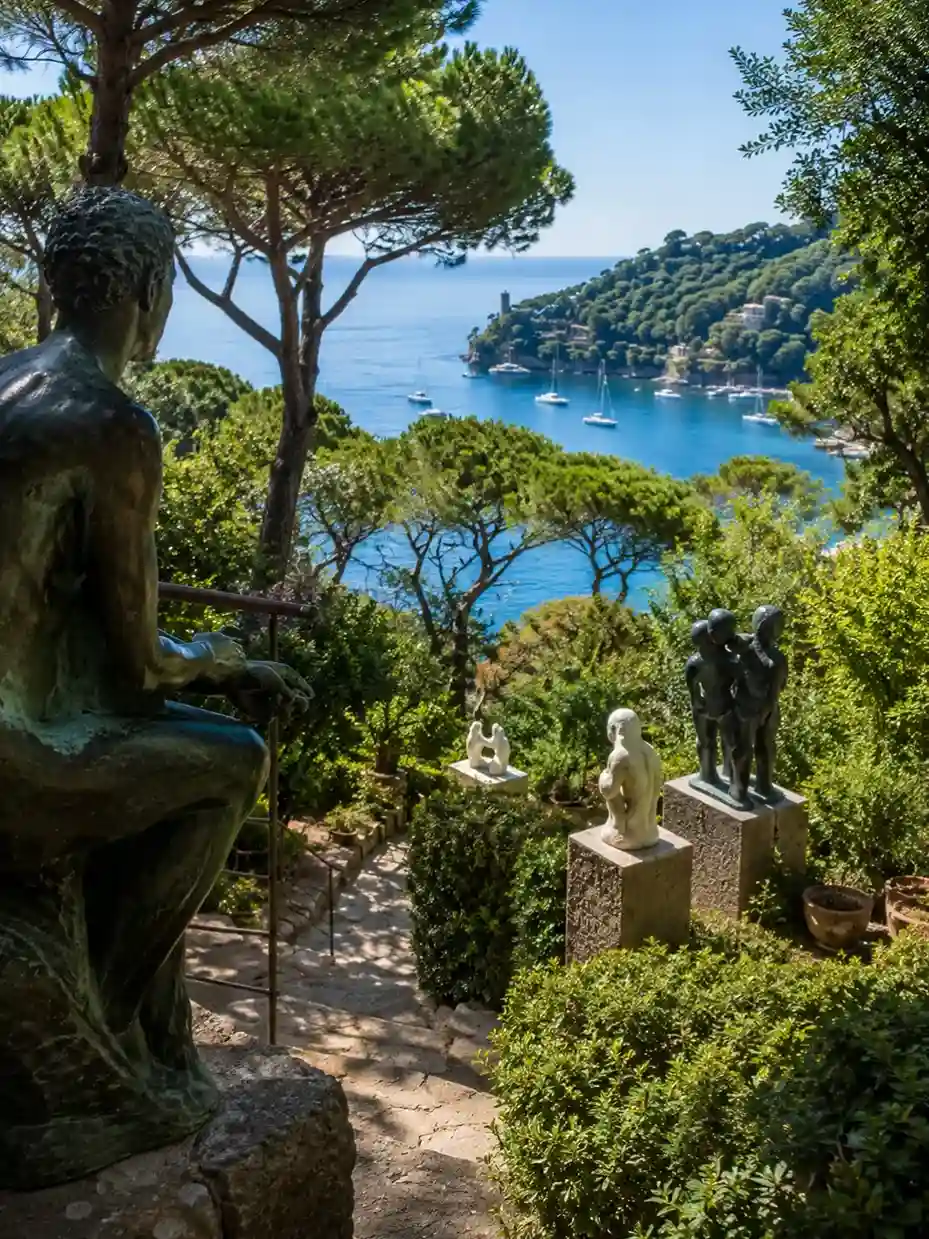
Just a few steps from the Piazzetta, the Museo Del Parco is a small, hillside open-air sculpture museum mixing classic works with contemporary works, all set against Mediterranean scenery that does half the work for you. It’s an easy, often-overlooked photo spot to add between the harbor and your next stop.
Camogli
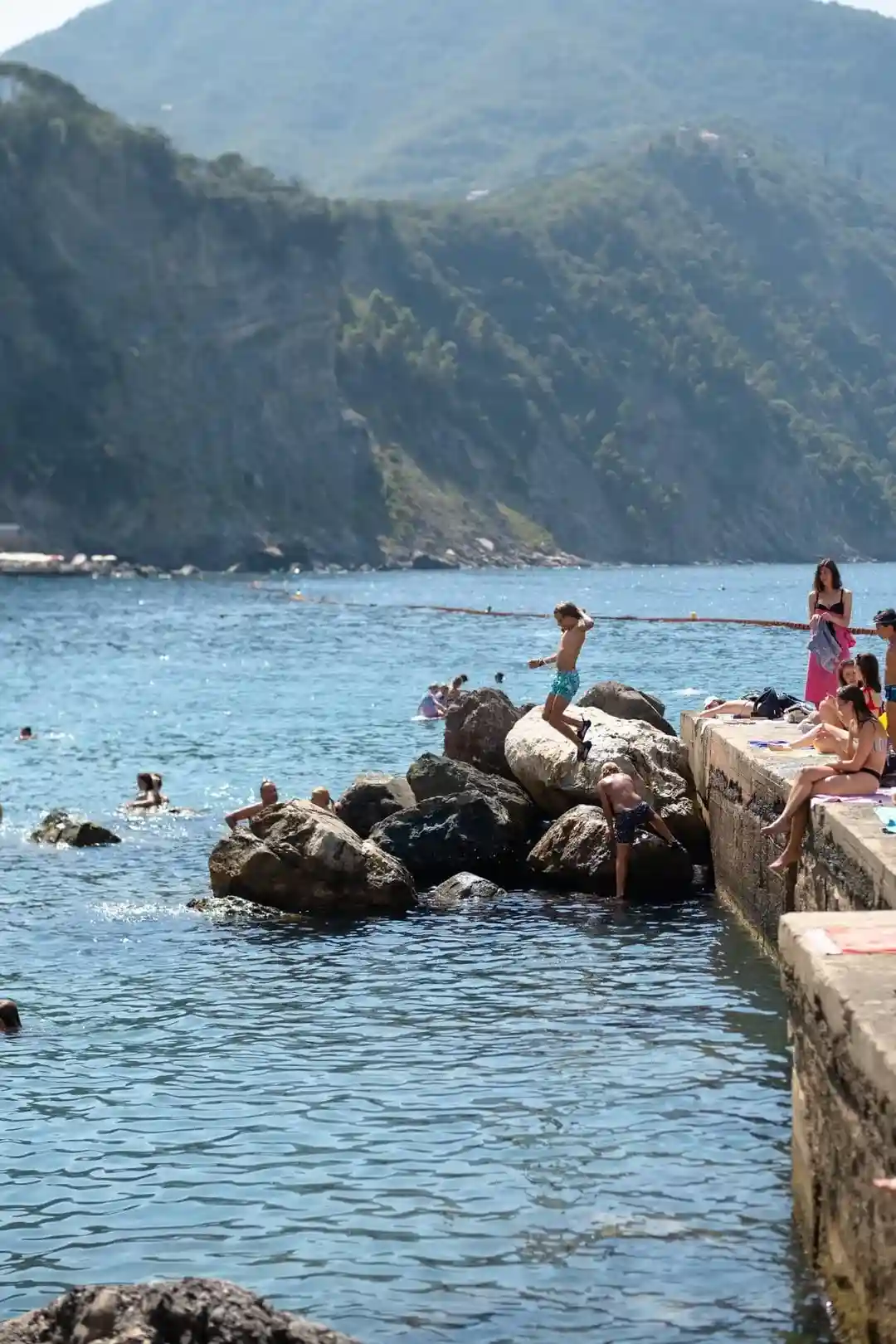
About a 30-minute drive away, Camogli is a seaside village worth the detour, with its own marina and pastel waterfront buildings lining the shore. The Church of Santa Maria Assunta, a baroque structure with 12th century roots, sits on a clifftop facing the sea and makes the best photo backdrop in town — shoot it from the rocky shoreline of Spiaggia Libera for the full effect.
Nearby, Castello della Dragonara (also called Castel Dragone) is a clifftop defense structure that doubles as a great sunset photo spot. If you’ve got energy left, the 3-hour trail connecting Portofino to Camogli winds through Mediterranean vegetation and olive groves — one of the more rewarding ways to arrive.