10 Days in Europe Itinerary: 8 Amazing Routes for First-Time Travelers (2026)
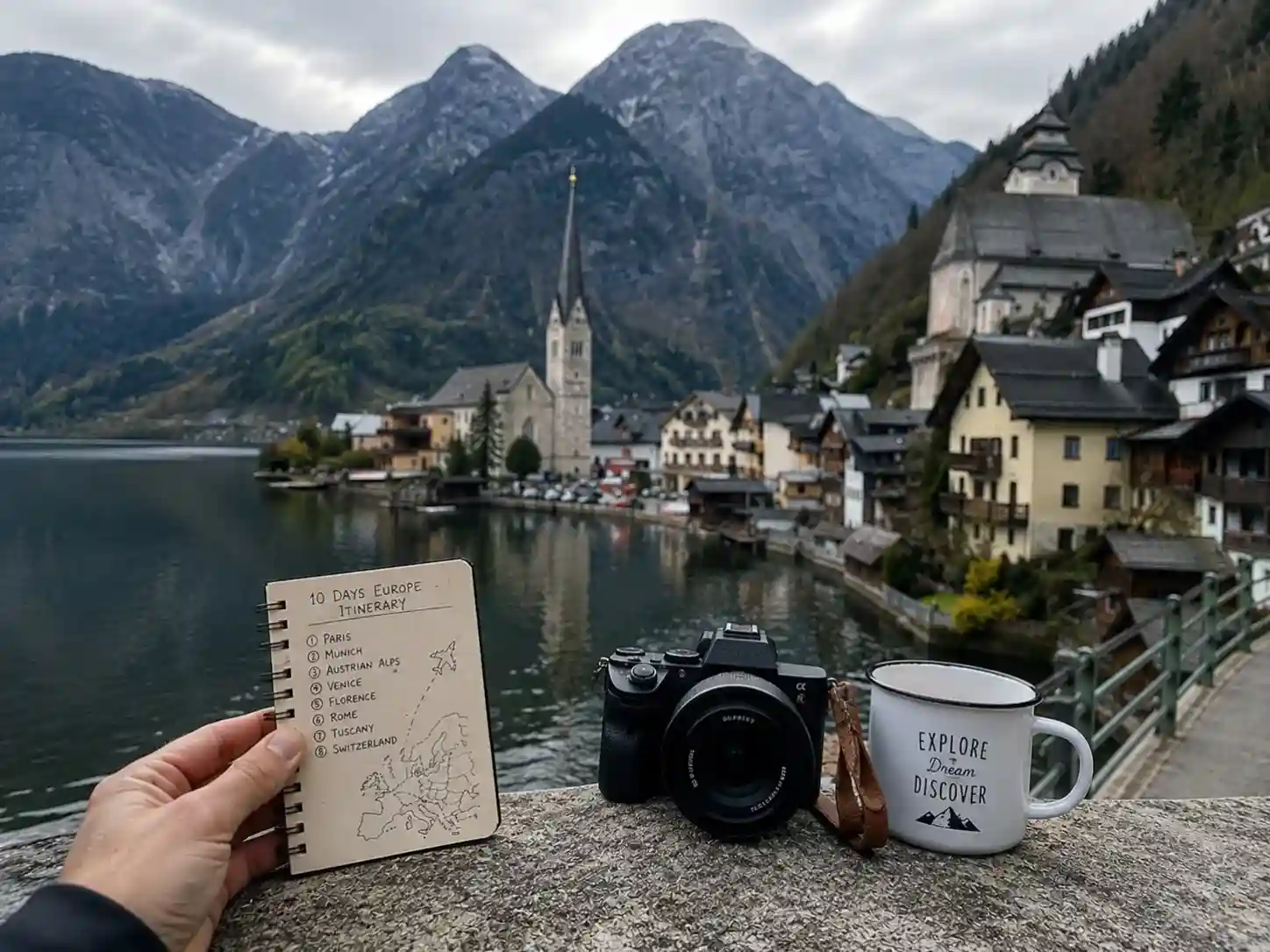
Spanning nearly 50 countries, Europe stands as one of the most rewarding destinations a traveler can choose — and honestly, after years of helping people plan these trips, I can say with confidence that 10 days is the sweet spot. You get enough time to feel genuinely immersed rather than just passing through. The continent’s magic lies in how effortlessly vibrant cities, dramatic landscapes, and layers of captivating history sit side by side — sometimes within a single afternoon’s journey. Whether you are drawn to old-world charm, natural wonders, or simply the thrill of ticking multiple bucket-list destinations off your wish list, a European getaway delivers on every front.
What makes a 10-day European trip genuinely exciting is the freedom it hands you. Picture standing beneath the Eiffel Tower as it sparkles against the night sky, wandering through Paris’ Latin Quarter with nowhere to be, then waking up two days later in Munich with a cold Bavarian beer in hand inside one of its legendary beer halls. Fly into Rome to walk through ancient ruins, sip wine among rolling vineyards of Tuscany, and ride up to Jungfraujoch — the highest railway station in the world tucked inside Switzerland. With the right itinerary, covering 4 countries — Germany, Italy, Austria, and Switzerland — is not only possible, it flows surprisingly naturally.
One thing I always remind first-time transatlantic travelers: timing matters more than the number of stops. Families traveling with kids of all ages, college students, and even kindergartners can all benefit from planning around spring break in March or April, when airfare, lodging, and tours are significantly cheaper than the summer high season. Round-trip tickets to Dublin or Rome can cost less than a domestic flight to Florida during those months, and crowds are noticeably smaller. Whether you’re going as a family group or solo, Europe in the spring offers the kind of breathing room that makes exploration feel effortless rather than exhausting.
When to Go to Europe / Best Time to Visit
Answering this tricky question honestly depends entirely on what type of trip you want to take. If watching the Alps buried under fresh snow while eating fondue sounds like a dream, winter is your season. If you would rather avoid crowds and score lower prices, early spring or late fall hit differently — the same iconic sights but without the queues. And if you want every outdoor café packed, festivals running back to back, and prime weather to match, summer is unbeatable — just mentally prepare yourself.
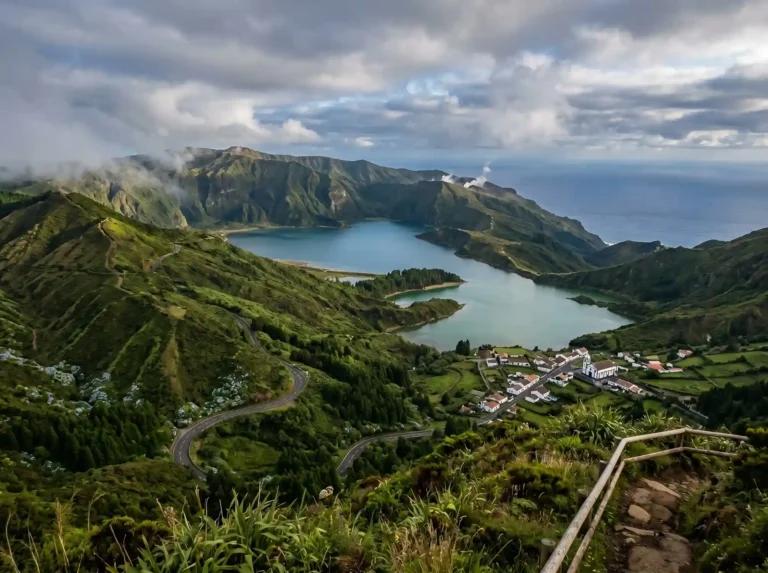
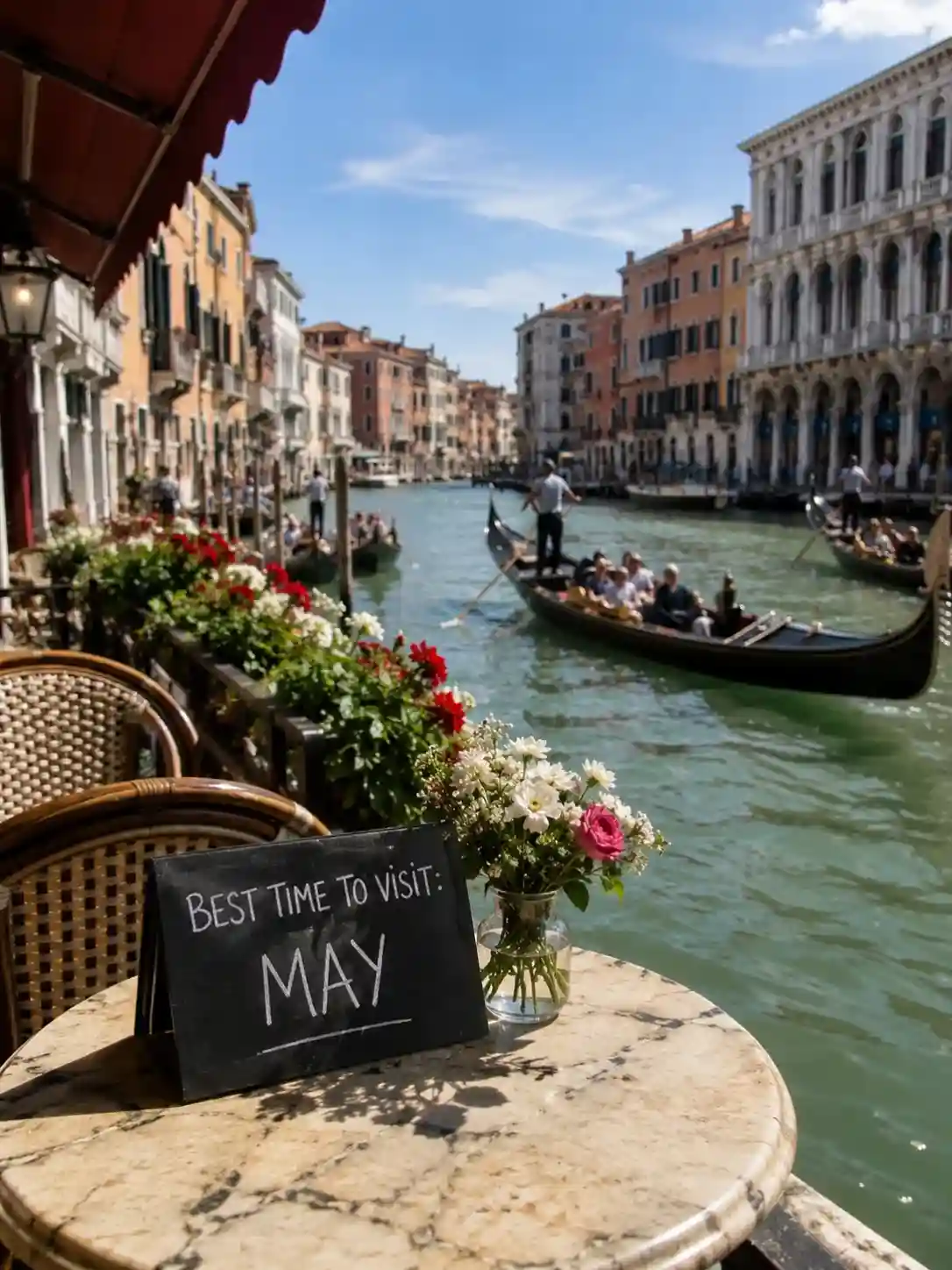
Traveling in late May is something I personally recommend to almost everyone. The weather ranges from a comfortable range of degrees depending on the country, and the difference in crowd density compared to June, July, or August is dramatic. Hot-spots like Venice become unbearably crowded during peak summer months — but in May, you can actually hear yourself think at a canal-side table. Shoulder season travel means prices for lodging and airfare to cities like Rome and Dublin drop considerably, while the experience itself barely changes. March can be a mixed bag weather-wise across the continent, though destinations like Madeira offer year-round mild temperatures — never too hot or too cold — with access to stunning trails, dramatic viewpoints, beautiful landscapes, and even hidden waterfalls off the beaten path.
Tour vs. Self-Guided Travel
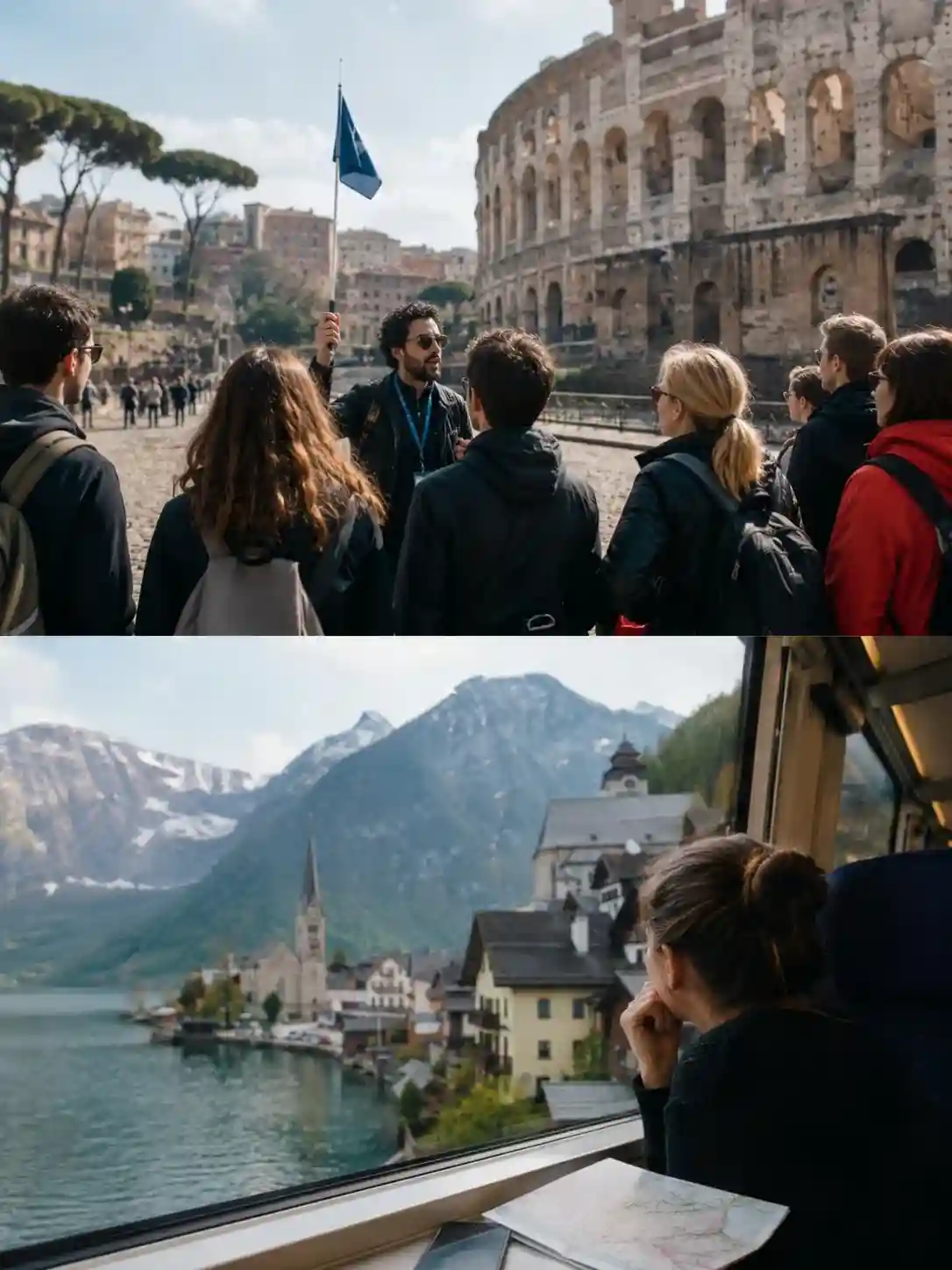
Choosing between a guided tour and self-guided travel really comes down to your budget, your comfort level, and whether you are traveling with someone or going it alone. Tour groups take the logistical stress off completely — no worrying about navigating trains, no second-guessing directions, and a built-in social environment where meeting like-minded travelers from around the world is practically guaranteed. They also typically include free time, which means you are not locked into a rigid schedule all day. For anyone not fully comfortable driving in Europe, especially at a younger age, joining a group tour is genuinely the smarter move.
That said, self-guided travel hands you something tours simply cannot — total flexibility. You can wake up as early as you want, mix and match sights based on your mood, and eat exactly when and where you please without waiting for the group. Yes, planning a trip abroad on your own comes with its share of stress, but most seasoned travelers will tell you the payoff far outweighs the cost. The best tool for self-guided European travel is the Eurail Global Pass — it gives you access to reliable trains across the continent with the freedom to travel on any day without locking in trip stop schedules in advance. You can even pass through Belgium and Luxembourg between major capitals without any added hassle.
10-Day Europe Itinerary: Iconic Capitals (Paris – Amsterdam – Berlin)
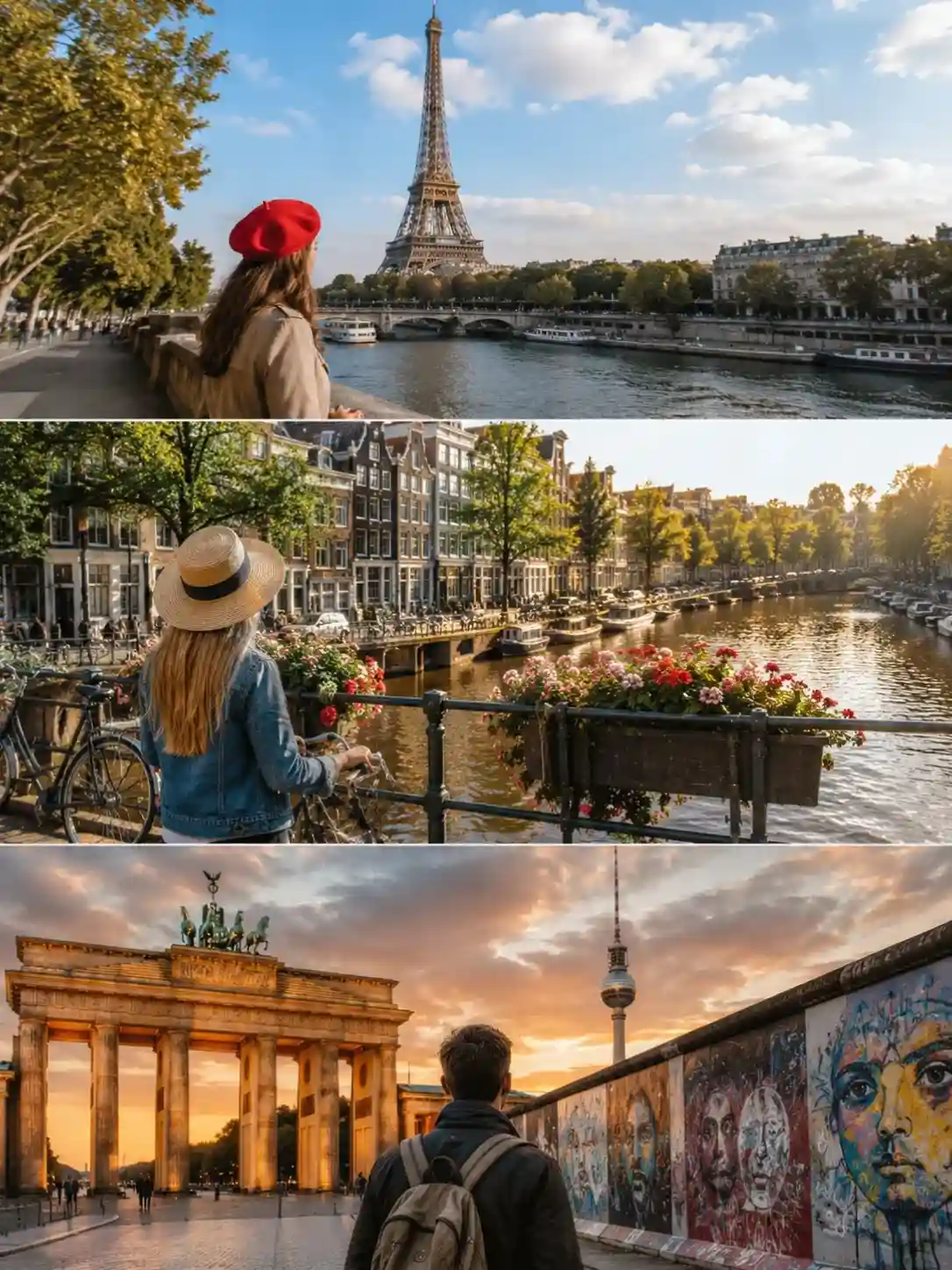
Few routes balance culture, history, and accessibility better than the classic Paris → Amsterdam → Berlin corridor. These three cities together form a kind of greatest-hits album of Western Europe, each with a completely distinct personality. In Paris, the obvious anchors are the Eiffel Tower — worth climbing all the way to the top for sweeping views across the city — and the Louvre Museum, whose glass pyramid entrance alone is worth the visit before you even get to the Mona Lisa and centuries of art inside. For dinner, commit fully to the experience and order escargots — snails in garlic butter — paired with a glass of red wine. The Thalys high-speed train gets you to Amsterdam in just 3.5 hours.
Amsterdam rewards the traveler who looks past the obvious. Yes, the Red Light District is worth a walk, but the real soul of the city lives in the Jordaan district — scenic streets, authentic Dutch pubs, and the quietly powerful Anne Frank House all packed into one neighborhood. Museum Square holds its own entirely, anchored by the Van Gogh Museum and the world-class Rijksmuseum. From Amsterdam Central Station, a direct train to Berlin takes under 6.5 hours. In Berlin, the emotional weight of the East Side Gallery — a preserved stretch of the Berlin Wall — hits harder than almost anything else on this route, especially early in the morning. Head there at 8 AM with a wide-angle lens before the crowds arrive. The 18th-century Brandenburg Gate is equally stunning, and the Friedrichshain neighborhood offers an evolving gallery of street art that spans decades. If Berlin’s world-famous nightclubs are on your radar, respect the door policies — they are notoriously strict.
10-Day Western Europe Itinerary (Rome – Venice – Paris – Swiss Alps)
This route is one of the most cinematically satisfying ways to spend 10 days in Europe — and one I’d argue hits harder as a road trip than any other format. Starting in Rome and heading toward Venice early means you arrive in time for the magical evening light that turns the Venetian islands gold. The water taxi ride in is worth every cent, and packing light is non-negotiable since luggage crosses countless bridges. From there, an early morning drive through the Brenner Pass into the Alps puts you in Innsbruck for a 2-hour stop — the Golden Roof and lunch in the Old Town make it far more than just a gas-station break — before arriving in Munich by afternoon for a proper Bavarian dinner near Marienplatz rather than the tourist-heavy Hofbräuhaus.
The stretch through the Rhine Valley is where this itinerary earns its drama. A 4-hour drive leads into a 90-minute river cruise past hilltop castles — sit on the right side of the boat for the best views — followed by ice wine tasting at a local winery near Boppard or Koblenz. The next morning, push through the Dutch countryside toward Amsterdam, stopping at the Riekermolen windmill and a cheese farm before an evening canal cruise (boats run every 30 minutes until 9pm). The Volendam fishing village add-on is one I always recommend — far more authentic than anything in the city center. A 2-hour stop in medieval Ghent breaks up the 4-hour drive into Paris beautifully, and an evening tour of the illuminated monuments makes for an unforgettable first night in the city.
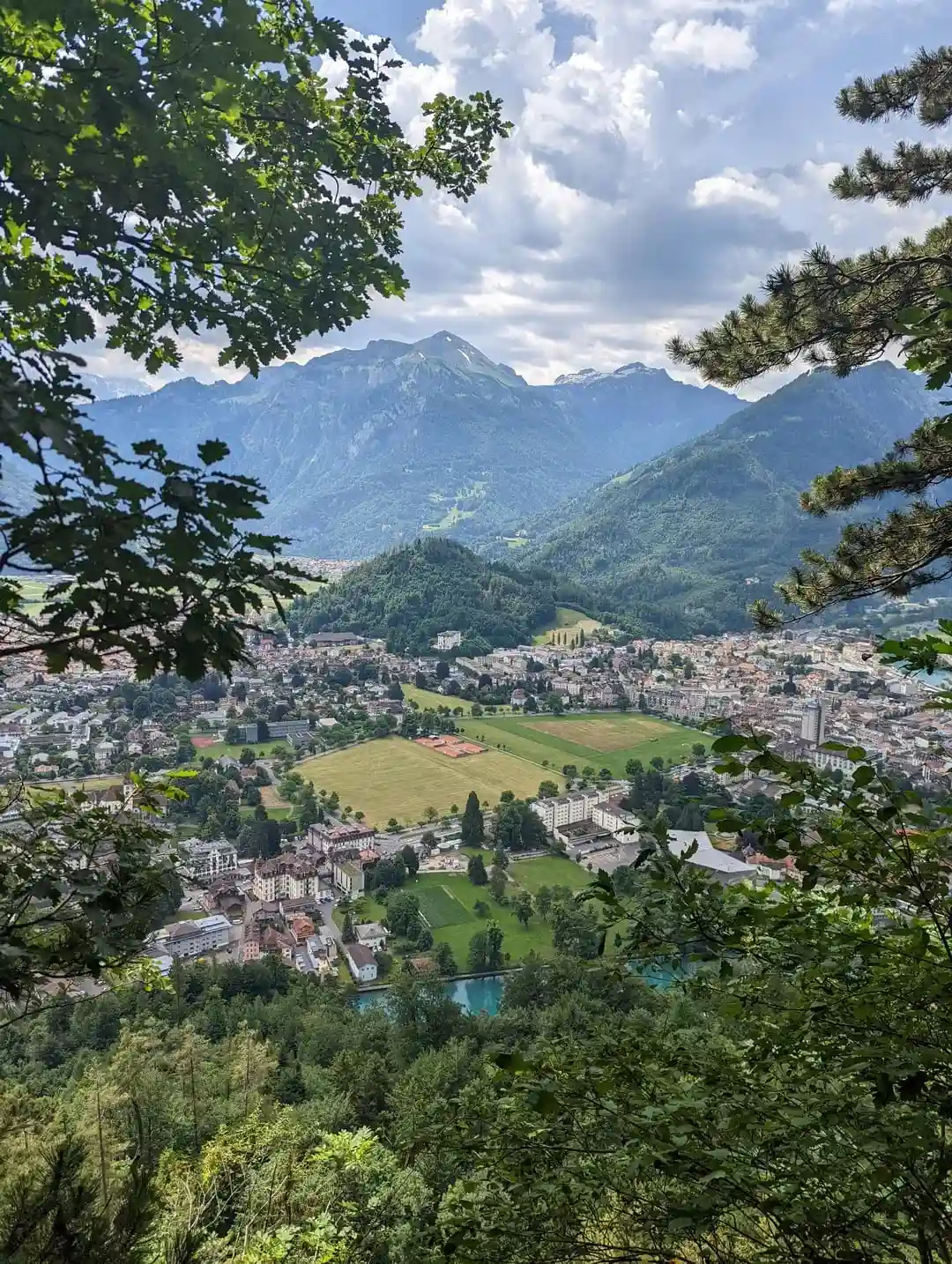
The Paris leg deserves its own rhythm: hit the Louvre at 9am before crowds arrive, spend an afternoon at Versailles, and book sunset Eiffel Tower tickets at least 2 months in advance. From Burgundy, the detour through Beaune to see the historic Hospices takes only 2 hours before the scenic 6-7 hour drive into the Swiss Alps rewards you with one of Europe’s most spectacular arrivals. Stay in Wilderswil and pay extra for a room facing the Jungfrau — that sunrise is genuinely one of the best things I have ever woken up to. The optional Jungfraujoch excursion runs around €190, but Interlaken’s hiking trails are a worthy free alternative. Pack warm layers even in summer — temperatures at the summit platforms hover near freezing. The final stretch through Lake Como for a 1-hour photo stop, then on to Montecatini Terme in Tuscany for its legendary thermal spas, sets up a perfect finale: the Leaning Tower of Pisa at dawn before Florence’s Duomo and Ponte Vecchio steal the afternoon, with a return drive to Rome in the evening. Note that many restaurants close between 3-7pm, so plan meals around those gaps.
10-Day Europe Itinerary: Rome to Amsterdam (Via Salzburg, Prague, Berlin)
This is arguably the most culturally layered 10-day route in Europe — moving from Rome through Venice, Salzburg, Prague, Berlin, and finally Amsterdam, with an optional leap to London at the end. Start with an early morning train from Rome to Verona (3.5 hours), where Juliet’s House and the ancient Roman Arena make for a punchy two-hour stop before continuing to Venice. Arrive at St. Mark’s Square before 9 AM to experience it without the wall of day-trippers that descend by mid-morning. For accommodation, Cannaregio consistently offers better value and a more local atmosphere than San Marco.
The 7-hour train through the Alps from Venice to Salzburg is one of those journeys that makes you remember why train travel exists. Once there, take the funicular up to Hohensalzburg Fortress and walk down for the best photo opportunities. Dinner at a local farm outside the city — reachable by a short bus ride through beautiful mountain scenery — is one of those unexpectedly perfect evenings. The onward 6-hour train to Prague’s historic center drops you into a city that still feels genuinely undiscovered in parts. Stay in Vinohrady for easy tram access and a real neighborhood feel, skip the obvious tourist traps, and head to Letná Beer Garden at sunset for city views and actual locals. The next day, get to Prague Castle early and spend the afternoon in the hidden gardens of Malá Strana.
Berlin arrives after a 4.5-hour train, with an optional 3-hour stop in Dresden to see the rebuilt Frauenkirche — absolutely worth it. Base yourself in Prenzlauer Berg or Friedrichshain for the most authentic experience the city offers. From there, the 6.5-hour train to Amsterdam deposits you in a city best explored from Jordaan or De Pijp, where Dutch life plays out far from the tourist crowds. Skip the standard canal boats entirely — rent an electric boat from Boaty, pack a picnic, and navigate the waterways on your own terms. If the trip ends here, great. If you want one more destination, the Eurostar to London’s St Pancras International takes 4.5 hours through Belgium — just book tickets at least 3 months out for the best fares.
10-Day Germany, Italy, Switzerland & Austria Itinerary (Road Trip)
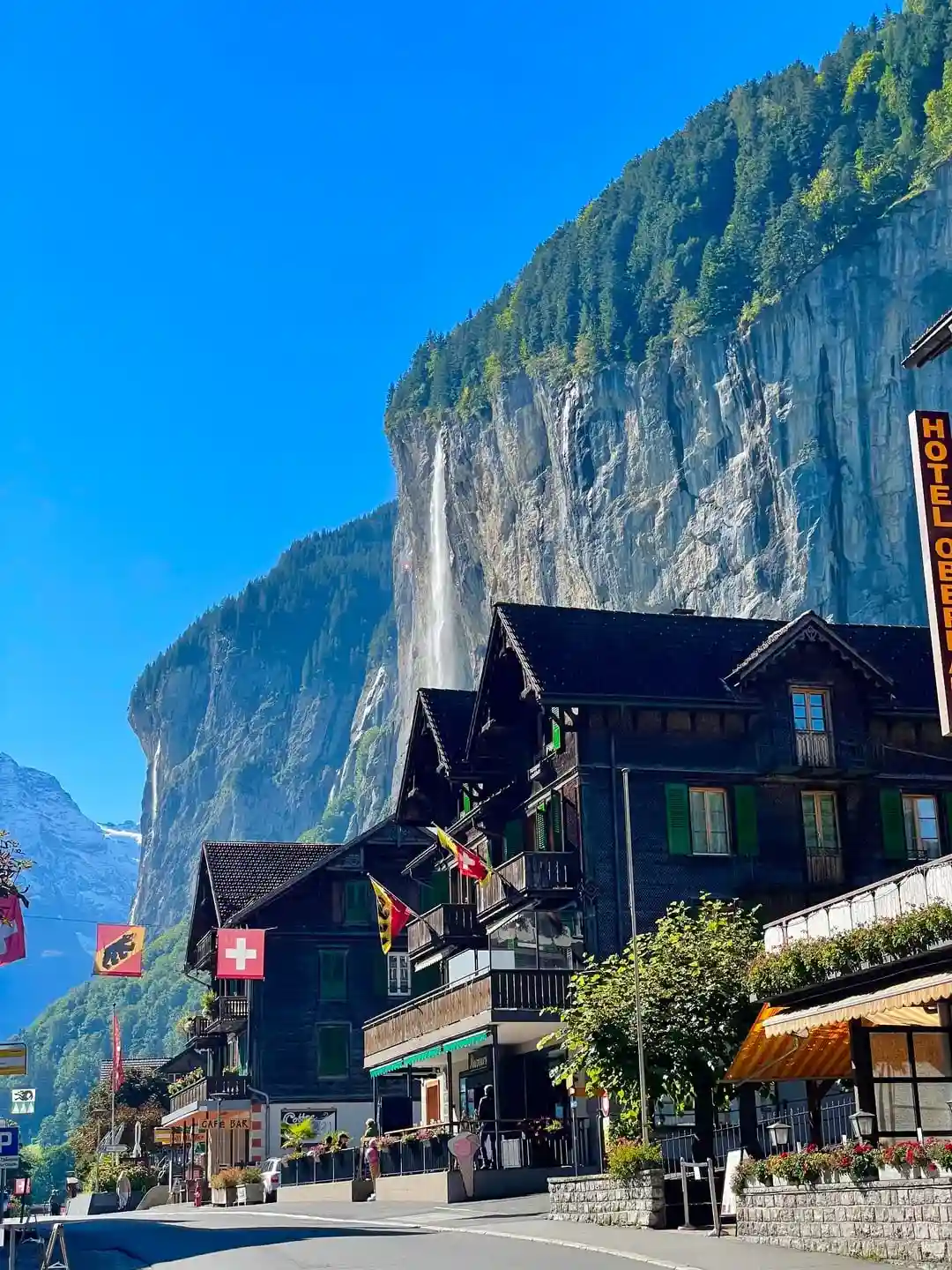
For anyone who has ever looked at a map of Central Europe and thought “I want all of that” — this road trip delivers. After an overnight flight into Munich, spend your first full day at ground level: watching surfers at the Eisbachwelle, drifting through the English Garden, grabbing lunch at the famous Hofbräuhaus (go early — it is always busy and you may need to wait to be seated), and wrapping the day with a Biergarten dinner at Zum Flaucher, where outdoor seating, twinkly lights, and a genuinely relaxed atmosphere make it feel nothing like a tourist stop.
Day three belongs entirely to Neuschwanstein Castle — less than 2 hours from Munich in the town of Hohenschwangau. The Disney connection is real: this is the literal inspiration for the Sleeping Beauty castle, and seeing it in person surrounded by German cottages, a glistening blue lake, and horse carriage rides makes that obvious. Walk the bridge to the viewpoint where the castle fills your entire frame, then rent a paddle boat on the lake for the afternoon. If you are staying another night in Munich, the clubs Harry Klein, Neuraum, and Rote Sonne are the spots worth knowing. The drive to Venice covers about 6 hours by car (or 7 by train), with Salzburg’s colorful cobblestone streets and riverside Austrian Alps setting making it the perfect pit-stop. Stay in a small beach town outside the island for an authentic experience away from the heavily tourist-trafficked center.
A full day in Venice means Saint Mark’s Basilica, the Murano Glass Museum, a gondola ride through smaller canals, gelato at every opportunity, and the colorful streets of Burano — or a day trip to the Prosecco Hills for wine tasting if that sounds more appealing. Pack appropriately for churches: shoulders must be covered, and skirt length matters — otherwise you will find yourself buying paper ponchos at the door. The drive from Venice to Lucerne runs just over 5 hours — stop in Verona to stand under Juliet’s balcony at a farmers market or pick up street food — and arrive in time for authentic fondue dinner. Mt. Pilatus the next day involves a Lake Lucerne ferry, a gondola climb to 7,000 ft (2,132 m), and the world’s steepest railroad on the descent. Do not wear sandals — the halfway adventure park with its alpine slide, zip line, and rope park will turn you away without closed-toe shoes. Spend the rest of the afternoon tracking down Swiss chocolate.
The drive to Frankfurt runs through Heidelberg, a charming German village built around a castle that houses the world’s largest wine barrel — worth every minute of the 3-hour detour plus 1-hour onward. In Frankfurt, the Museumsufer district alone holds 12 museums along the riverbank, alongside the Frankfurt Cathedral, Romerburg Square, the Palmengarten, and plenty of souvenir shopping before you fly home.
10-Day Scandinavia Itinerary (Norway, Sweden & Denmark)
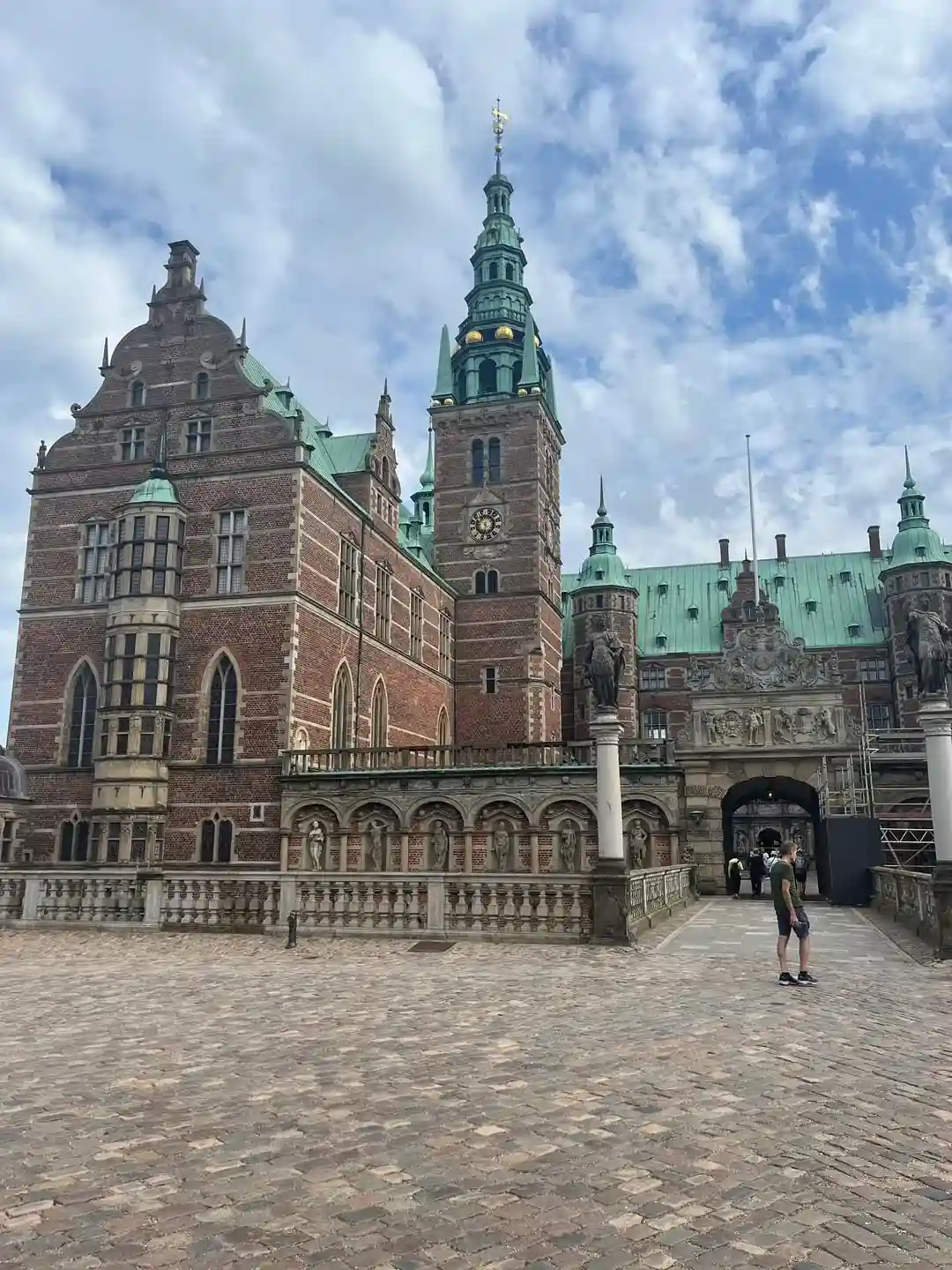
Scandinavia offers a completely different flavor of 10-days-in-Europe travel — less about ancient ruins and more about design, nature, and the quiet confidence of three kingdoms who have figured something out. Begin in Stockholm, Sweden’s undeniably chic capital, where the cobblestone streets of Gamla Stan (the Old Town) and the grandeur of the Royal Palace anchor your first day or two. From there, a short high-speed train or plane hop brings you into Copenhagen — a Danish city where canals and a deeply embedded coffee culture define the rhythm of daily life.
The transition into Norway via overnight cruise from Denmark is one of those travel moments that stays with you. Waking up in Oslo — the Norwegian capital — with deep fjords and Viking cities ahead feels like stepping into a different century. The journey from Oslo down to Bergen, known as the Gateway to the Fjords, is all majestic scenery and dramatic coastline, rounding out a Scandinavia loop that covers three distinct cultures without ever feeling rushed.
Munich / Bavaria
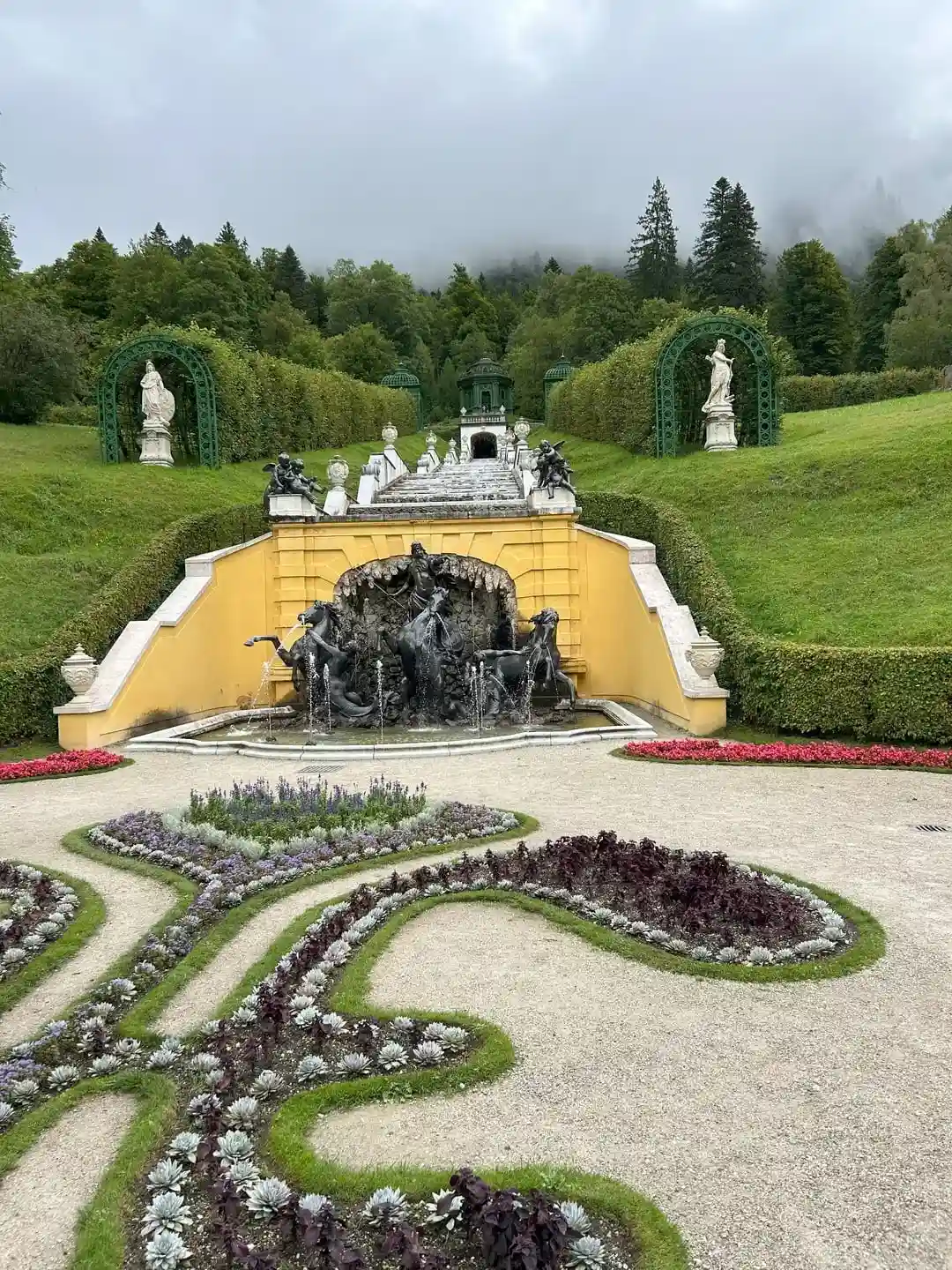
Munich operates as the perfect base for a 10-day Central European itinerary — particularly for anyone combining Germany, Austria, Switzerland, and Italy into one cohesive trip. The city rewards unhurried exploration: street performers near the city center, surfing competitions at the Eisbachwelle, long afternoon walks through the English Garden, and a lunch of German beer at the iconic Hofbräuhaus (just know going in that it is extremely touristy and always busy — wait times to be seated are common). End the day properly at Zum Flaucher’s Biergarten: outdoor seating, twinkly lights, picnic-style tables, and a genuinely relaxed atmosphere that feels miles away from the tourist circuit.
Neuschwanstein sits less than 2 hours from the city by drive or 2.5 by train, nestled above the town of Hohenschwangau in a setting of German cottages, a glistening blue lake, and horse carriage rides through the valley. The castle’s connection to Disney is not just trivia — Neuschwanstein was the direct inspiration for the Sleeping Beauty castle, and standing on the bridge at the viewpoint with the river canyon falling away beneath you makes that connection feel entirely earned. Rent a paddle boat on the lake after the tour to bring the day down to a gentler pace. For those staying an extra night, the clubs Harry Klein, Neuraum, and Rote Sonne represent Munich’s after-dark scene at its best — and the beer halls near Marienplatz are consistently less touristy than the famous Hofbräuhaus.
Venice, Italy
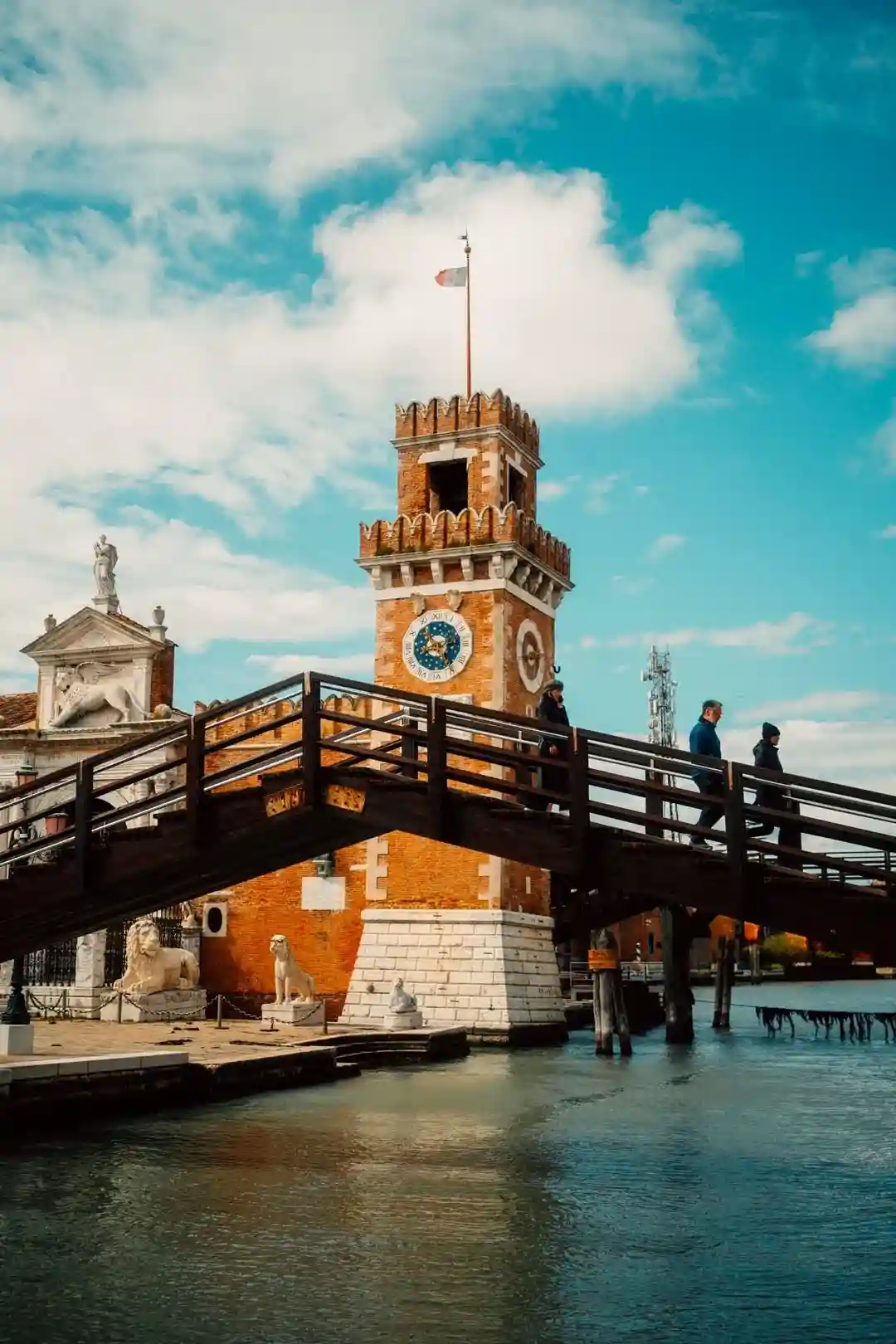
Venice sits on practically every traveler’s bucket list for good reason, but how you approach it makes all the difference. Take the ferry to the island rather than arriving by road, and get to St. Mark’s Square before 9 AM — before the day-trippers flood in — to see it at its most serene. A morning tour of Saint Mark’s Basilica followed by the Murano Glass Museum covers the essentials before you earn the right to get genuinely lost in the winding streets and canals. For accommodation, Cannaregio offers better value than the expensive San Marco area, and arriving by private water taxi makes that first impression even better.
The experiential highlights stack up fast: a private gondola ride through the smaller canals, lunch on the Grand Canal at De Pisis, a food tour through the backstreets, and a wander through the colorful streets of Burano. For something more indulgent, a day trip to the Prosecco Hills for wine tasting is one of the region’s best-kept secrets. One practical note that saves real embarrassment: dress appropriately for churches — shoulders covered, appropriate length bottoms — or you will be handed paper ponchos and skirts at the door. If you are driving in from Munich, the journey takes around 6 hours by car or 7 by train, and a stop in Salzburg, Austria — with its cobblestone streets threading along a river through the middle of the Austrian Alps — makes the distance feel easy. Staying in a small beach town outside the main island keeps you connected to a more authentic Italian experience, with local restaurants, actual beaches, and very few tourists in sight.
Switzerland (Lucerne / Swiss Alps / Jungfraujoch)
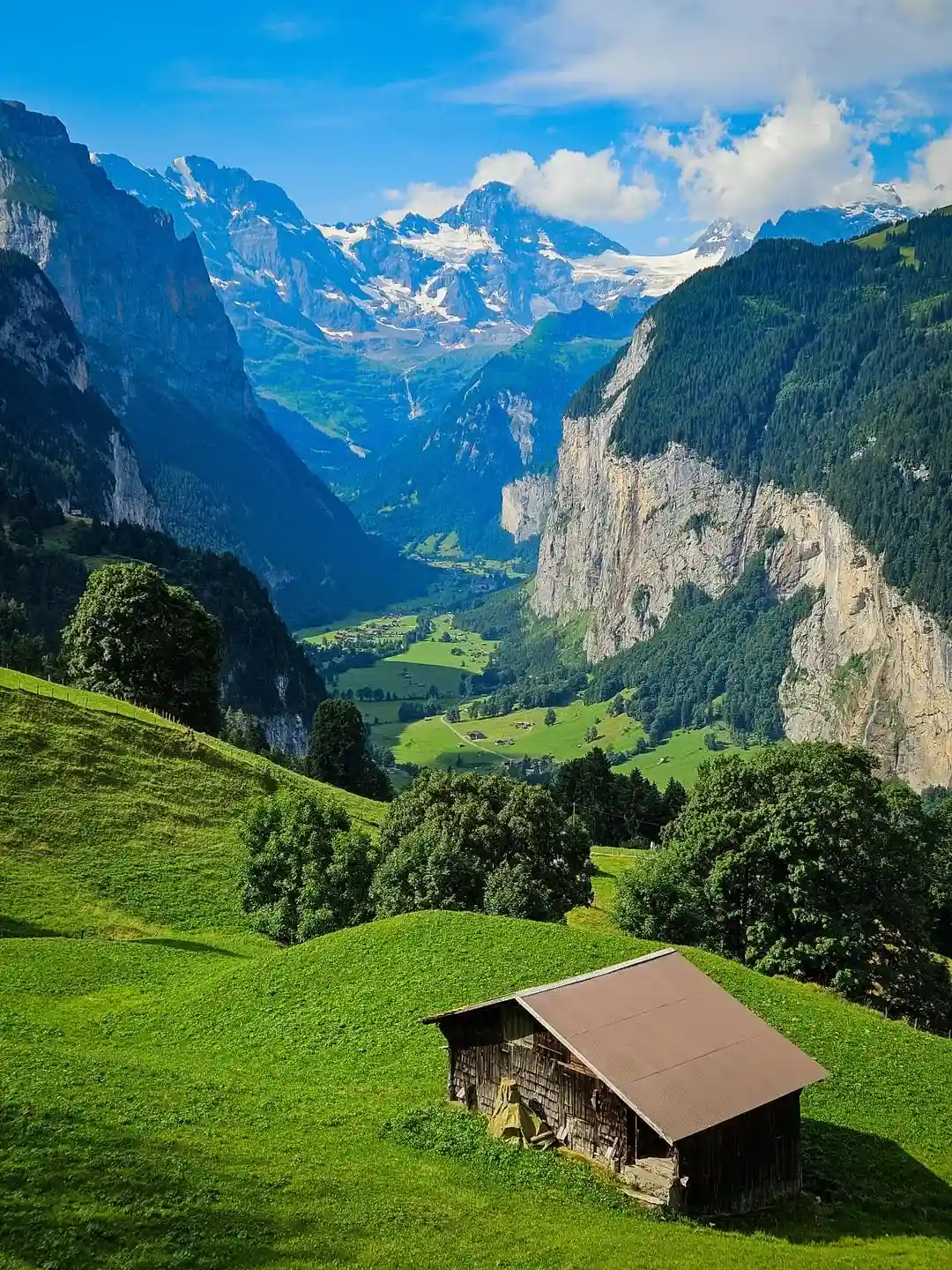
Getting from Venice to Lucerne takes just over 5 hours by drive or 6.5 by train, and the journey rewards patience. If you are driving, Verona makes an ideal stop — a genuinely charming city where Juliet’s balcony overlooks a busy farmers market and street vendors sell excellent street food. Milan is the other option for breaking the journey. Arriving in Lucerne in time for an authentic fondue dinner feels like the right introduction to Switzerland — warm, indulgent, and completely unhurried.
Mt. Pilatus is the crown jewel of a Lucerne day. Take the Lake Lucerne ferry to reach the gondola base, then ride up to 7,000 ft (2,132 m) where the Swiss Alps and lake spread out in every direction. The hiking trails at the top are worth exploring, and there is a souvenir shop and food stalls if you need a break. The descent on the world’s steepest railroad is an experience in itself. One hard-earned piece of advice: do not wear sandals. The midway adventure park — with an alpine slide, zip line, and rope park — turns away anyone without closed-toe shoes, no exceptions.
For the Jungfraujoch section, budget approximately €190 for the excursion, or swap it for Interlaken’s extensive hiking trails at no cost. Either way, pack warm layers even in peak summer — the summit viewing platforms sit near freezing temperatures year-round. Book a room with a Jungfrau-facing window if the budget allows — the sunrise over those peaks is genuinely one of the most breathtaking things I have ever seen. The Jungfraujoch Railway climbs to 3,463 metres (11,361 feet), offering breathtaking mountain views and a sense of scale that no photograph fully captures. For a slower pace, the turquoise lakes — Lake Geneva and Lake Thun in particular — offer their own kind of restorative beauty.
Amsterdam, the Netherlands
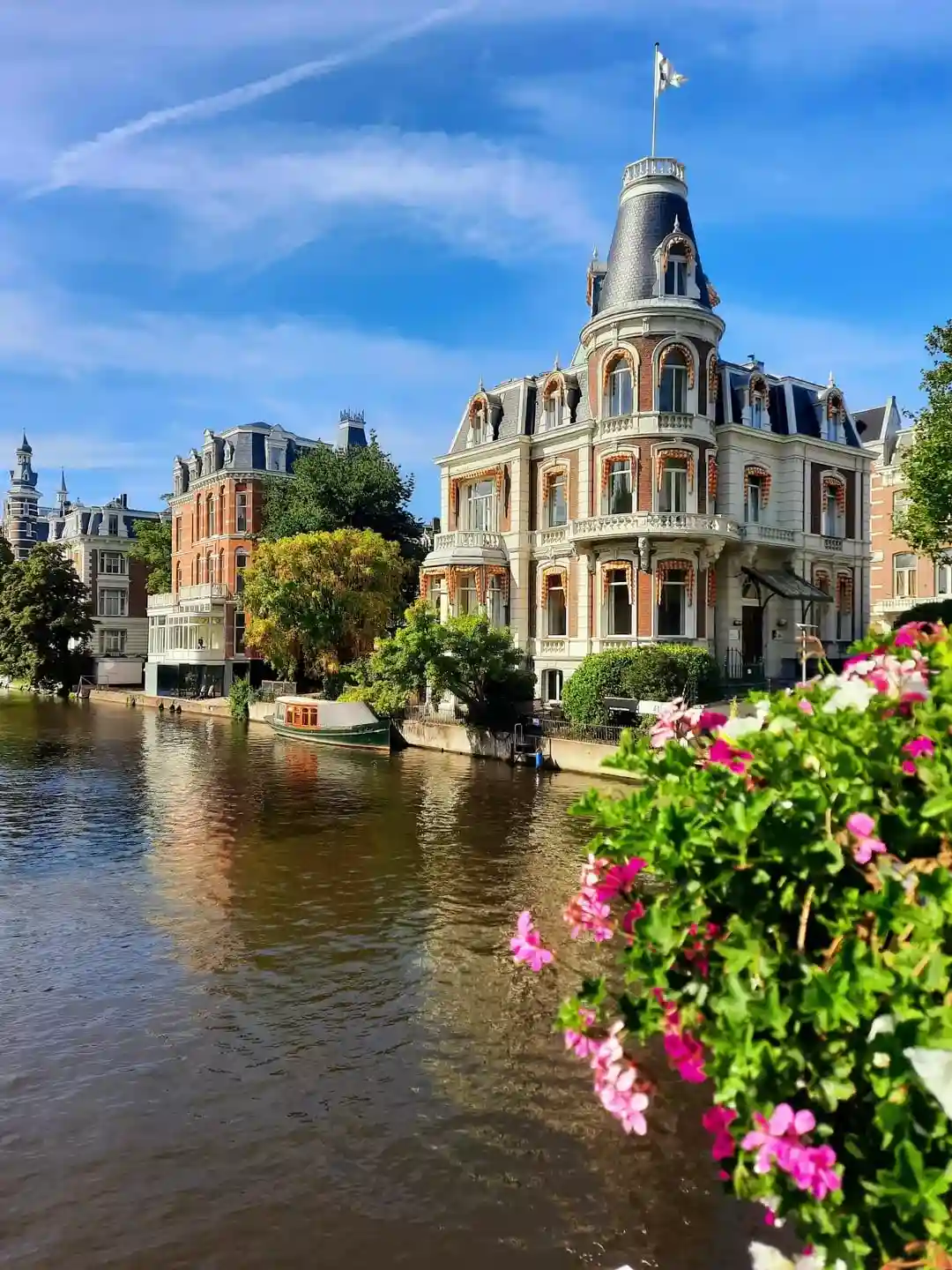
Amsterdam earns its place on nearly every Western Europe 10-day itinerary, and the city genuinely rewards travelers who resist the urge to follow the standard tourist circuit. The Jordaan district is where the real Amsterdam lives — scenic streets, authentic Dutch pubs, and the Anne Frank House all within walking distance of each other. Museum Square is an equally compelling half-day, anchoring the Van Gogh Museum and the Rijksmuseum in one of the city’s most elegant open spaces. The Red Light District is worth seeing for the architecture and the canals and crooked buildings alone, regardless of its reputation.
For a more local experience, skip the overpriced tourist canal boats entirely and rent an electric boat from Boaty instead — it is cheaper, you can bring your own picnic, and you set your own pace. Canal cruises run every 30 minutes until 9pm if you prefer a guided option. The Volendam fishing village day trip is something I push on almost everyone — far more authentic than anything on the main tourist drag. The Riekermolen windmill and a stop at a working cheese farm round out the Dutch countryside experience beautifully. Stay in Jordaan or De Pijp to experience genuine Dutch life away from the tourist crowds. If London is the next stop, the Eurostar covers the distance in 4.5 hours — book 3 months early and arrive at least 30 minutes before departure for check-in.
Paris, France
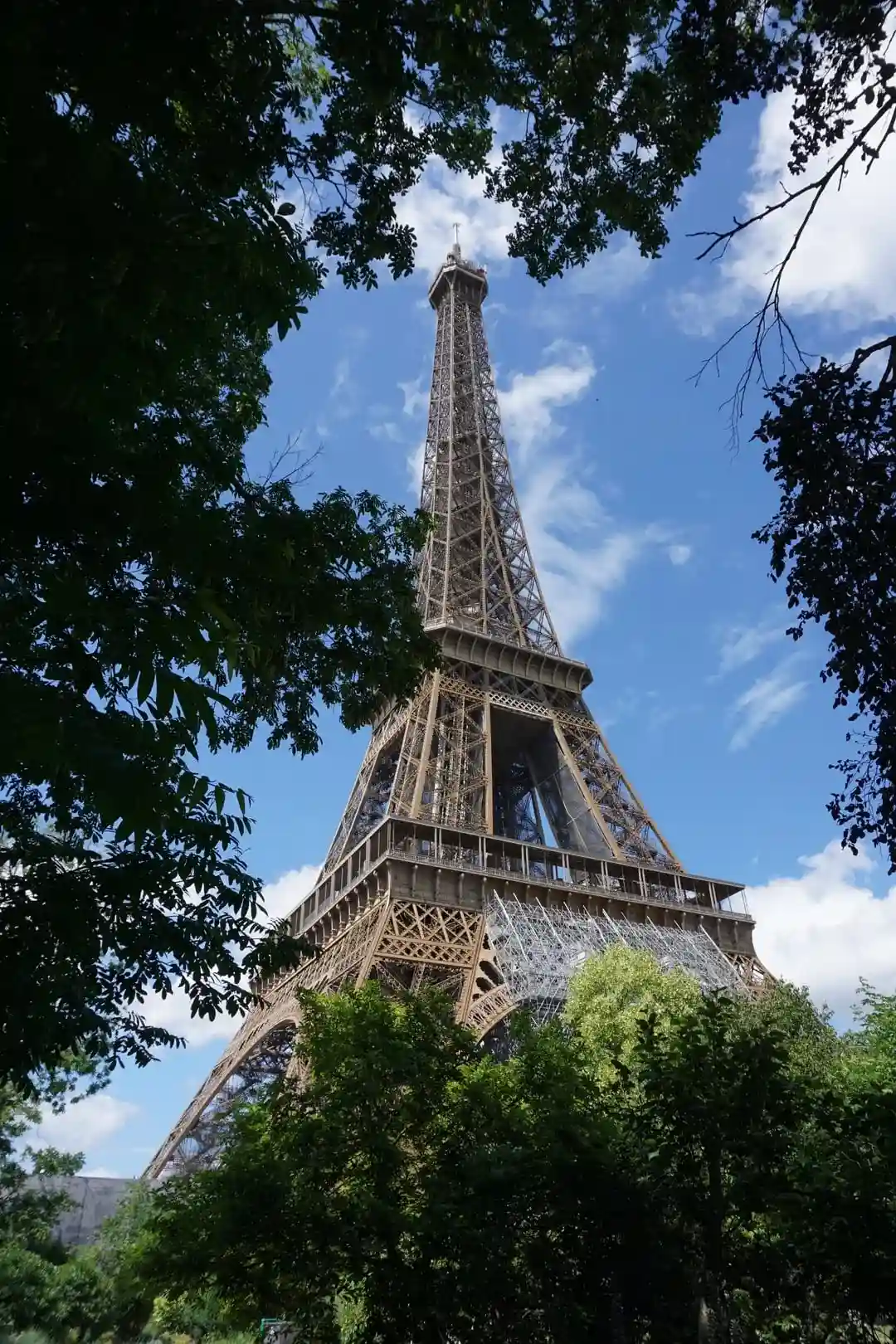
Paris earns its legendary status every single time, and no 10-day Europe itinerary is complete without it. The Eiffel Tower is the obvious opener — go to the top for the full panoramic views across the city, and book tickets at least 2 months in advance if you want a sunset visit rather than a long queue. The Louvre Museum deserves its own morning: arrive at 9am before the crowds build, admire the glass pyramid entrance, and work your way toward the Mona Lisa without being swept along by the masses. The Arc de Triomphe and Notre Dame are equally non-negotiable — each one layers a different chapter of French history onto the day.
Eating well in Paris is not hard, but eating smartly is a skill. Try escargots — snails in garlic butter — with a proper red wine pairing, and do not overlook dinner near Montmartre, where the duck confit at smaller neighborhood restaurants consistently outperforms anything in the heavily visited arrondissements. A half-day trip to Versailles to walk the palace and its stunning gardens is worth every minute. Book major sites in advance across the board — queues in Paris can be long even outside peak season. An evening tour that takes in the illuminated monuments is one of those experiences that makes people fall in love with this city all over again.
Prague, Czech Republic
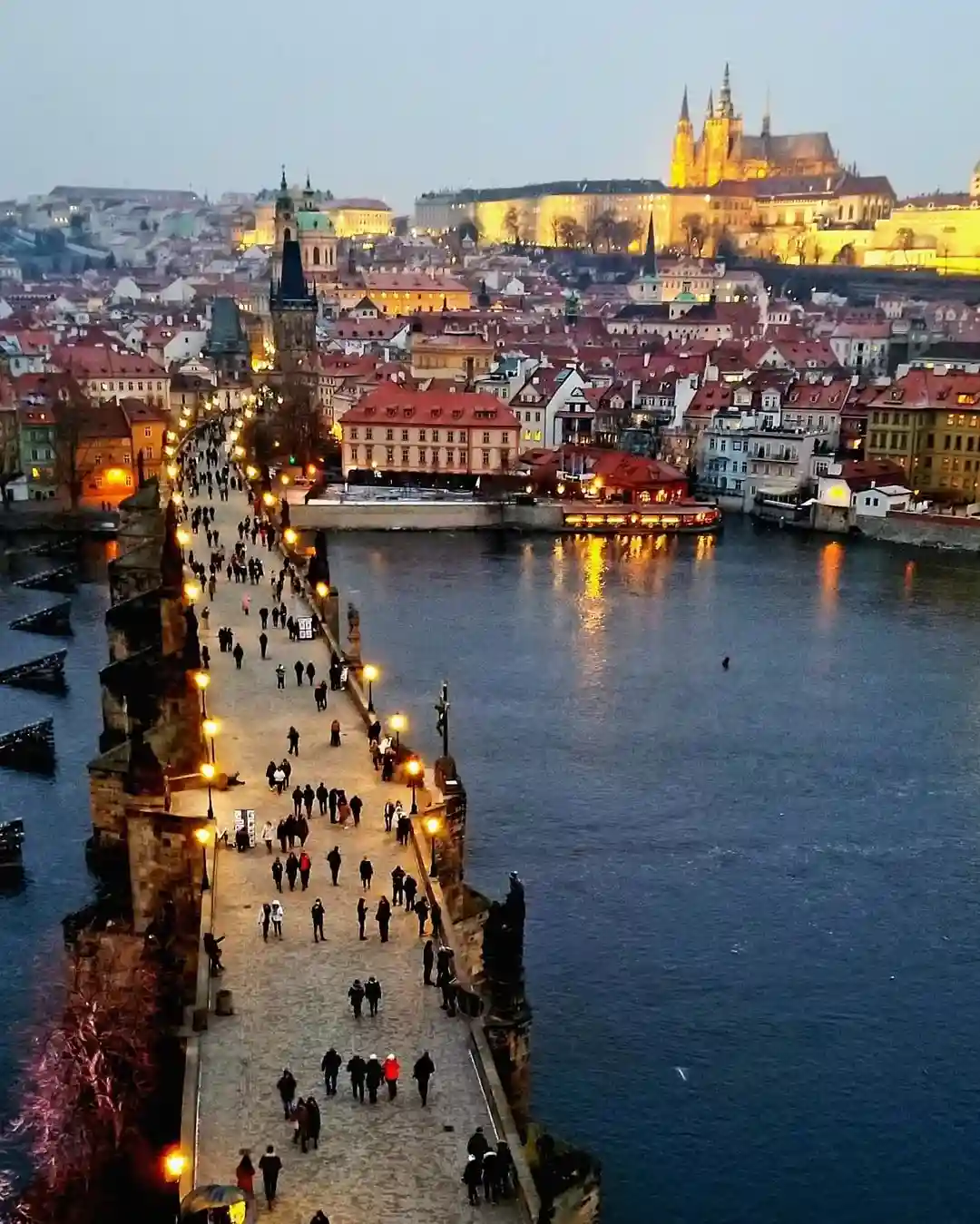
Prague is one of those cities that makes experienced travelers stop mid-sentence and reconsider everything they thought they knew about European beauty. Getting there from elsewhere on the route involves a 6-hour train into the historic center, and where you stay matters enormously: Vinohrady gives you tram access to everything while keeping you in a genuinely local feel neighborhood rather than the heavily tourist-trafficked center. The standard tourist traps are easy to avoid once you know to skip them and head instead to Letná Beer Garden at sunset — the city views from up there, surrounded by actual locals, are worth more than any guided tour.
Start Prague Castle early in the morning before the groups arrive, then spend the rest of the day exploring the hidden gardens of Malá Strana, one of the most quietly spectacular neighborhoods in Central Europe. The Old Town Square is essential — watch the Astronomical Clock’s hourly show as its mechanical figures perform, climb the Town Hall tower for panoramic city views that stretch in every direction, and walk Charles Bridge in the early morning light. The 14th-century Church of Our Lady stands as one of the most striking Gothic structures you will encounter on any European itinerary.
Salzburg, Austria
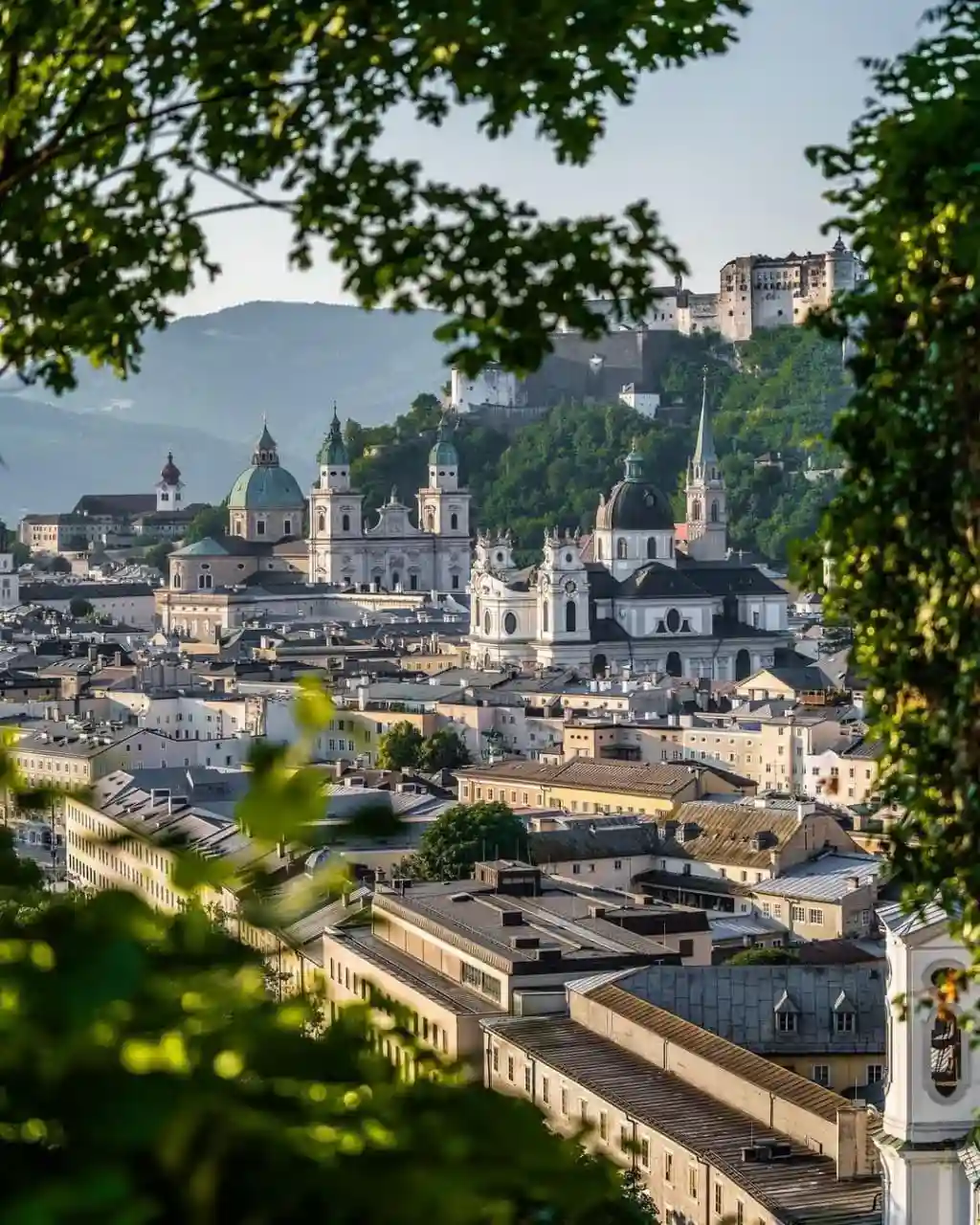
Salzburg is one of those places that consistently gets underestimated as a pit-stop on longer driving or training routes between Munich, Venice, and other destinations — and that underestimation is everyone else’s loss. The city unfolds along a river cutting through the heart of the Austrian Alps, lined with colorful cobblestone streets and more good restaurants than you can realistically work through in a short visit.
On the Rome-to-Amsterdam route, the 7-hour train ride through the Alps from Venice to Salzburg is one of the most scenic and relaxing journeys in all of Europe — the kind of ride where you genuinely forget to check your phone. In the city, use the funicular to ascend Hohensalzburg Fortress and walk back down for far better photo opportunities than the ride up provides. For dinner, a short 20-minute bus ride to a local farm outside the city serves Austrian meals against a backdrop of genuinely beautiful mountain scenery — one of those low-key evenings that ends up being a trip highlight.
Berlin, Germany
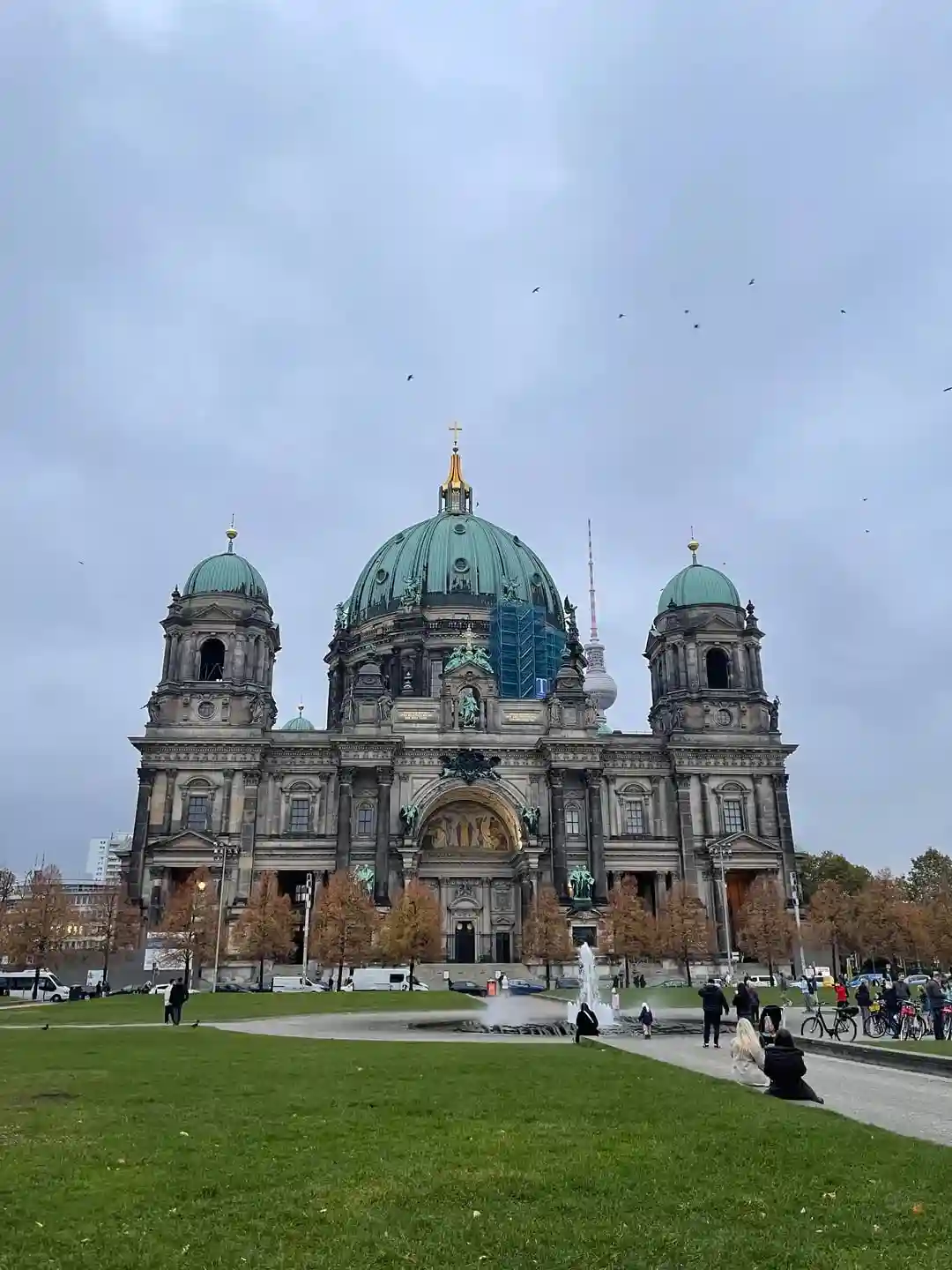
Berlin appears on more 10-day Europe routes than almost any other city, and for good reason — it operates on a completely different emotional frequency than Paris or Rome. The Brandenburg Gate, built in the 18th century, remains one of the most impressive landmarks on the continent, while the East Side Gallery — a preserved stretch of the Berlin Wall — hits with a kind of raw historical weight that museum exhibits rarely match. Go at 8 AM with a wide-angle lens before the crowds arrive, and take your time. The Friedrichshain neighborhood layers decades of street art on top of each other in ways that reward close attention.
Beyond the obvious, Berlin holds depth that reveals itself over multiple days. Checkpoint Charlie and the Topography of Terror document the history of Nazi Germany with unflinching honesty. Museum Island — a UNESCO World Heritage Site — gathers five world-class museums into a single peninsula. Boxhagener Platz keeps things lively with strong restaurants and a neighborhood energy that feels genuinely authentic. Order Currywurst from Currywurst 36 at some point — it is one of those small rituals the city takes seriously. Base yourself in Prenzlauer Berg or Friedrichshain for the most local experience, and if Berlin’s world-famous nightclubs are on the agenda, respect the door policies — they are enforced with zero negotiation.
Pisa & Florence (Tuscany), Italy
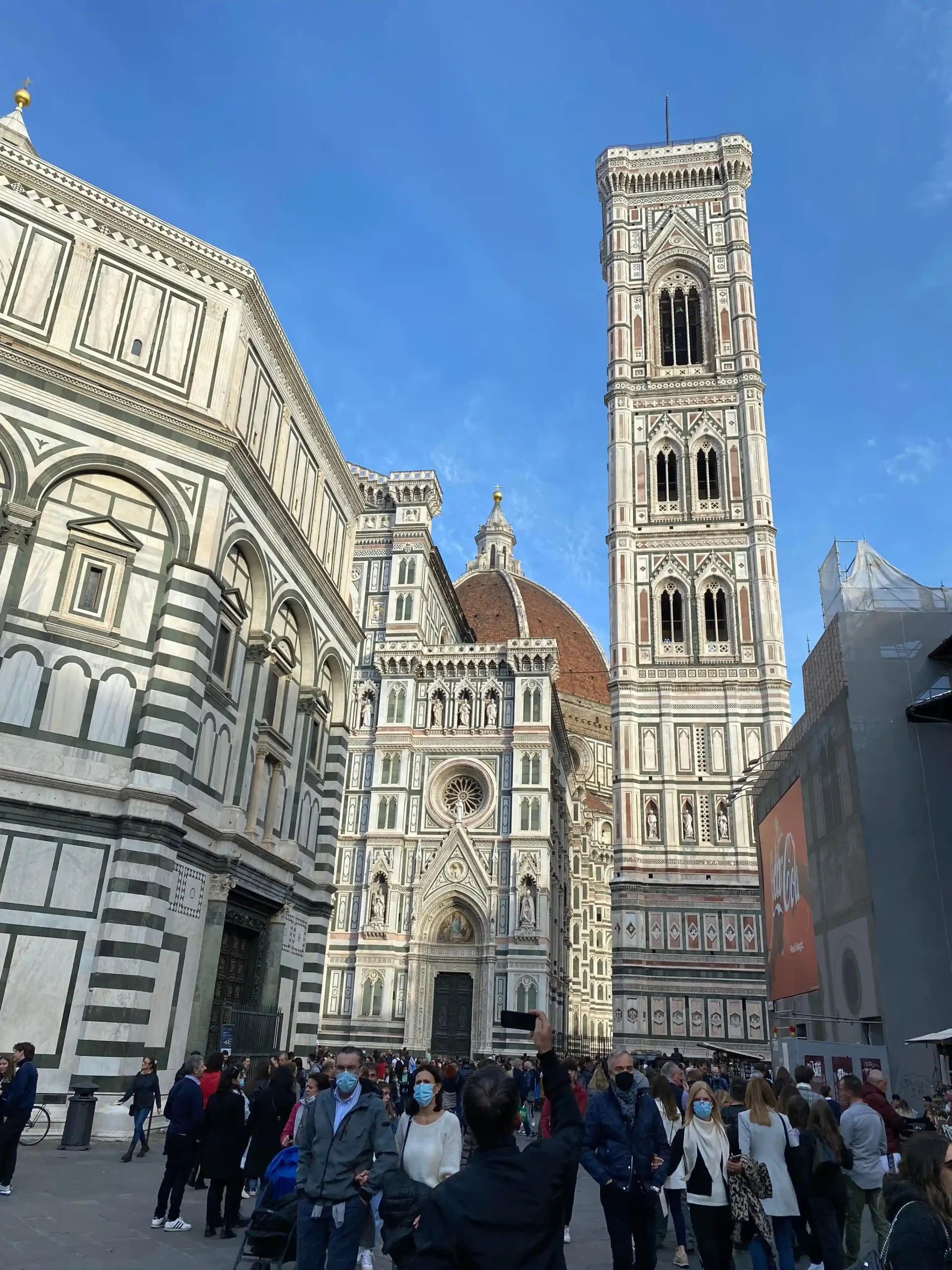
Pisa and Florence together form one of Tuscany’s most satisfying day combinations, particularly when positioned as a final Italian chapter before heading home. The Leaning Tower rewards early arrivals — the crowds that descend mid-morning are significant, and buying skip-the-line tickets online in advance is not optional, it is essential. While you are in the square, the Cathedral and Baptistery deserve far more attention than most visitors give them — they are extraordinary structures standing right next to one of the world’s most photographed novelties.
Florence is a city that punishes the under-prepared and rewards those who come with a plan. A guided walk to anchor the Duomo and Ponte Vecchio into their proper historical context sets up the rest of the visit beautifully. The Uffizi Gallery and David’s statue at the Academia Gallery are non-negotiable for art lovers, while Medici’s Boboli Gardens offer a slower, more contemplative counterpoint to the crowded museum floors. Save some energy — Florence involves considerable walking on uneven cobblestones that wear on you by mid-afternoon.
Rome, Italy
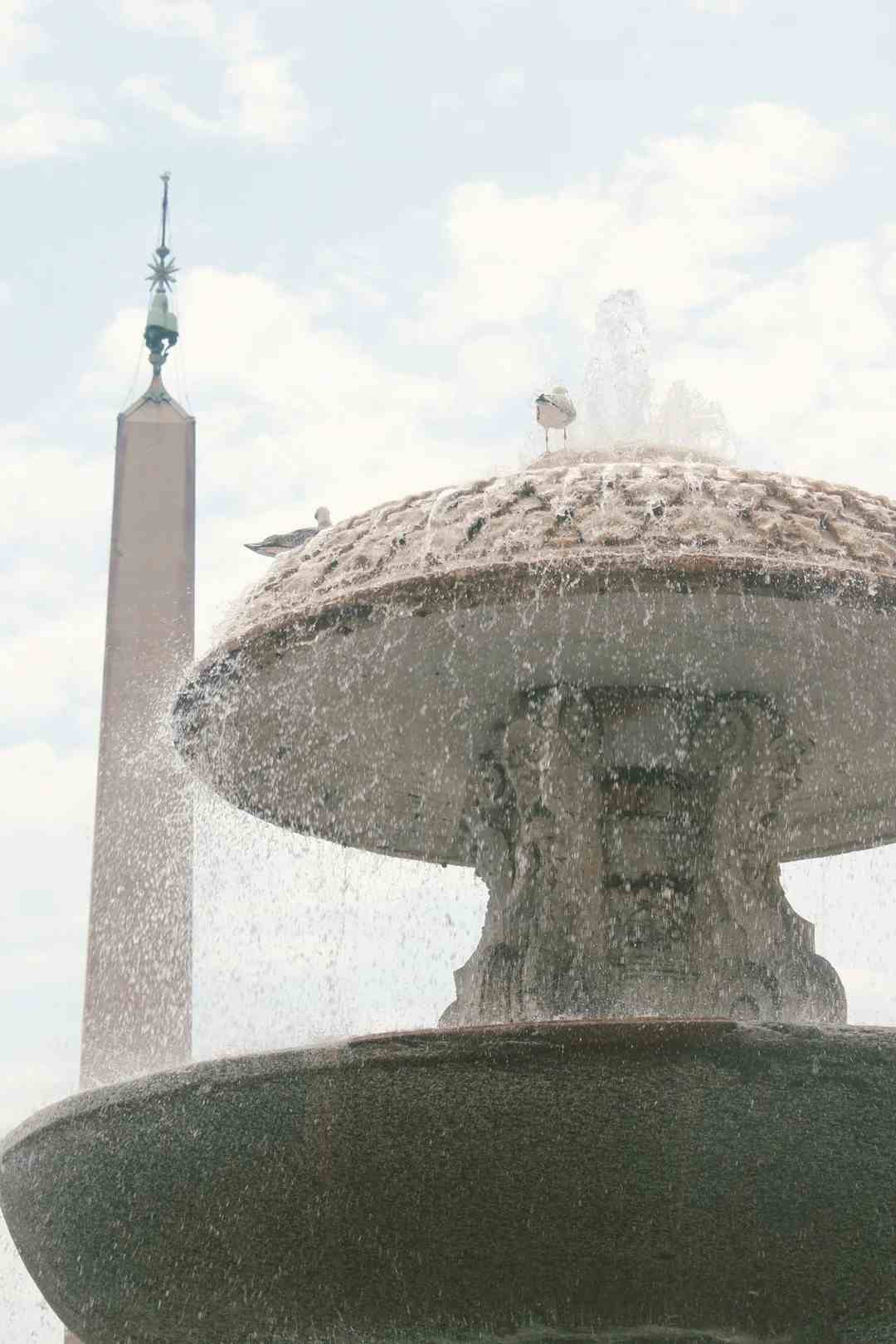
Rome works brilliantly as both a start and end point on multiple 10-day routes, and its density of unmissable experiences is unlike anywhere else in Europe. The Colosseum, Roman Forum, Pantheon, Trevi Fountain, Vatican Museums, Sistine Chapel, and Piazza Navona collectively represent centuries of human ambition concentrated into a walkable city — and yet the place never feels like a theme park. A guided tour of Ancient Rome brings the Colosseum and Forum into sharp focus with an expert overview that independent exploration simply cannot replicate. For something more active, bike the Appian Way — one of the oldest roads in the world — in the late afternoon when the light is right and the crowds thin.
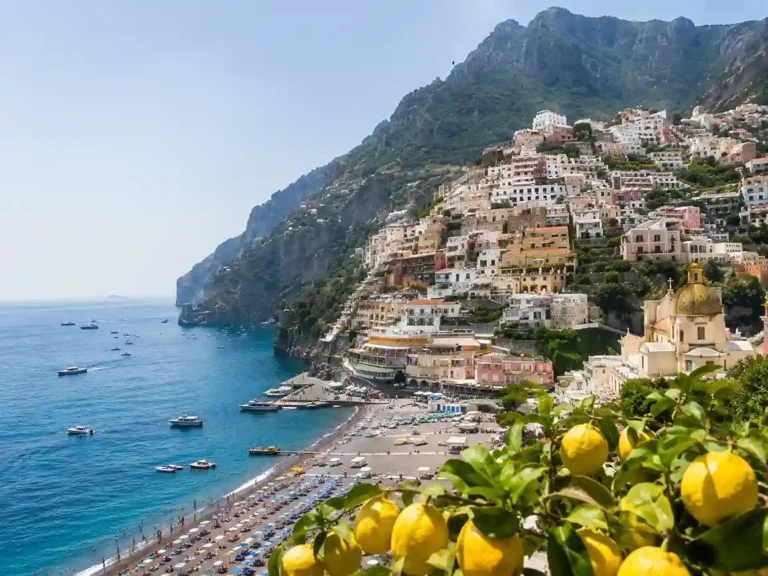
For first-timers especially, starting the Rome visit with a guided walking or food tour cuts through the sheer abundance of options and builds a mental map of the city quickly. If the itinerary extends toward the coast, the Rome–Amalfi Coast route is one of Europe’s most beautiful: Days 1-4 in Rome, Days 5-7 split between Positano and the dramatic clifftop roads of the Amalfi Coast, and Days 8-10 in Sorrento with a half-day excursion to Pompeii rounding out a genuinely unforgettable southern Italian chapter.
10-Day Itinerary: Central Europe — Prague, Budapest & Vienna
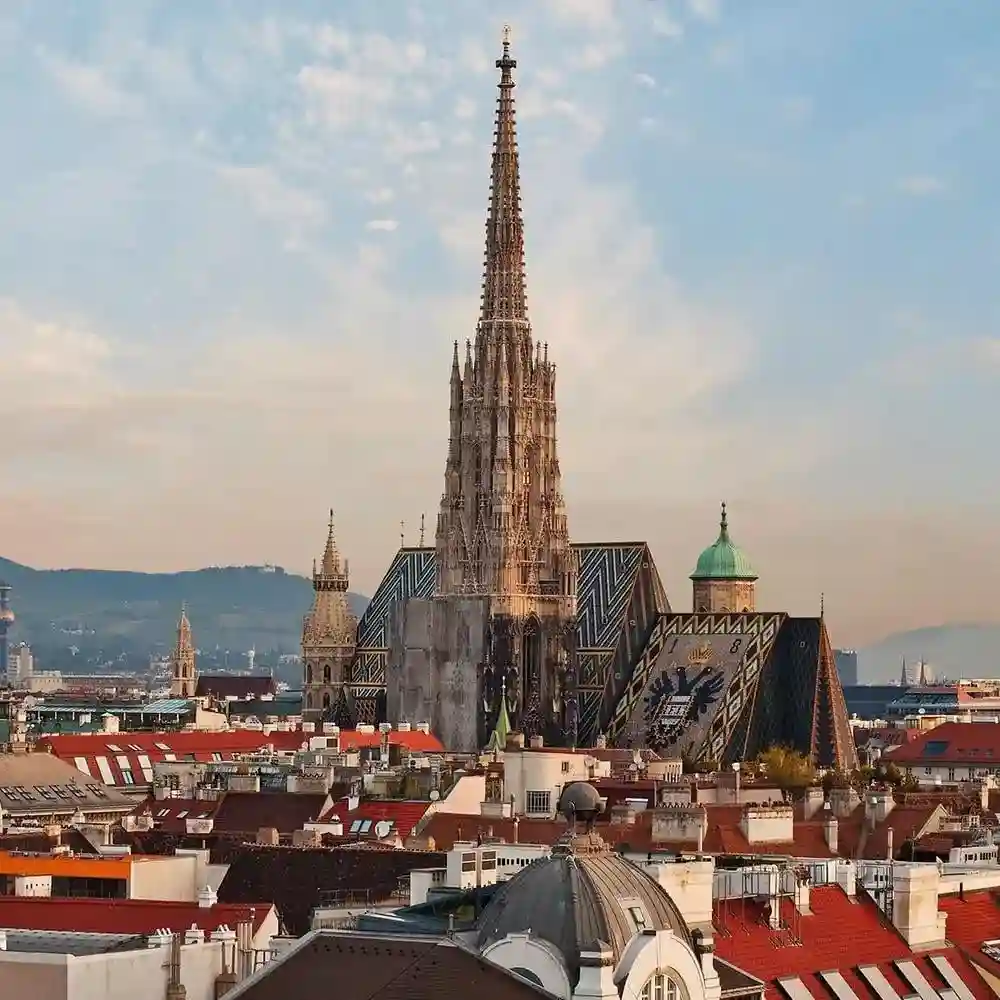
The Central Europe triangle of Prague, Budapest, and Vienna is one of the most cohesive and rewarding 10-day configurations available — three cities, each architecturally distinct, each carrying centuries of imperial weight. Spend Days 1-3 in Prague starting at Old Town Square to watch the Astronomical Clock’s hourly show, its mechanical figures emerging on schedule to the delight of everyone gathered below. Climb the Town Hall tower for panoramic views, walk Charles Bridge in the early hours, and spend an afternoon at Prague Castle with St. Vitus Cathedral as the anchor. Hotel Kings Court puts you right in the heart of the action.
Days 4-7 belong to Budapest — a city that earns its reputation at every turn. The Szechenyi Thermal Baths are a Budapest institution and the perfect antidote to days of walking. The famous ruin bars in the Jewish Quarter are unlike anything else in Europe — sprawling, eccentric, layered with found-object art and genuinely alive at all hours. Fisherman’s Bastion delivers some of the most photographed views of the Hungarian Parliament and the River Danube, and the Parliament building is even more spectacular inside than its exterior suggests. Kempinski Hotel Corvinus places you perfectly for everything.
Vienna fills Days 8-10 with an elegance that feels earned rather than performed. Schönbrunn Palace — a former imperial summer residence — unfolds across beautifully landscaped gardens that reward a full morning. The Belvedere Palace houses Gustav Klimt’s The Kiss, one of the most emotionally immediate paintings in any European collection. Strolling the Ringstrasse past grand buildings including the Vienna State Opera gives the city’s imperial ambitions a proper sense of scale. St. Stephen’s Cathedral anchors the old city, and no Vienna visit is complete without settling into Café Central for a Viennese coffee and a slice of apple strudel — a small ritual that this city has perfected over centuries.
What to Pack for Europe
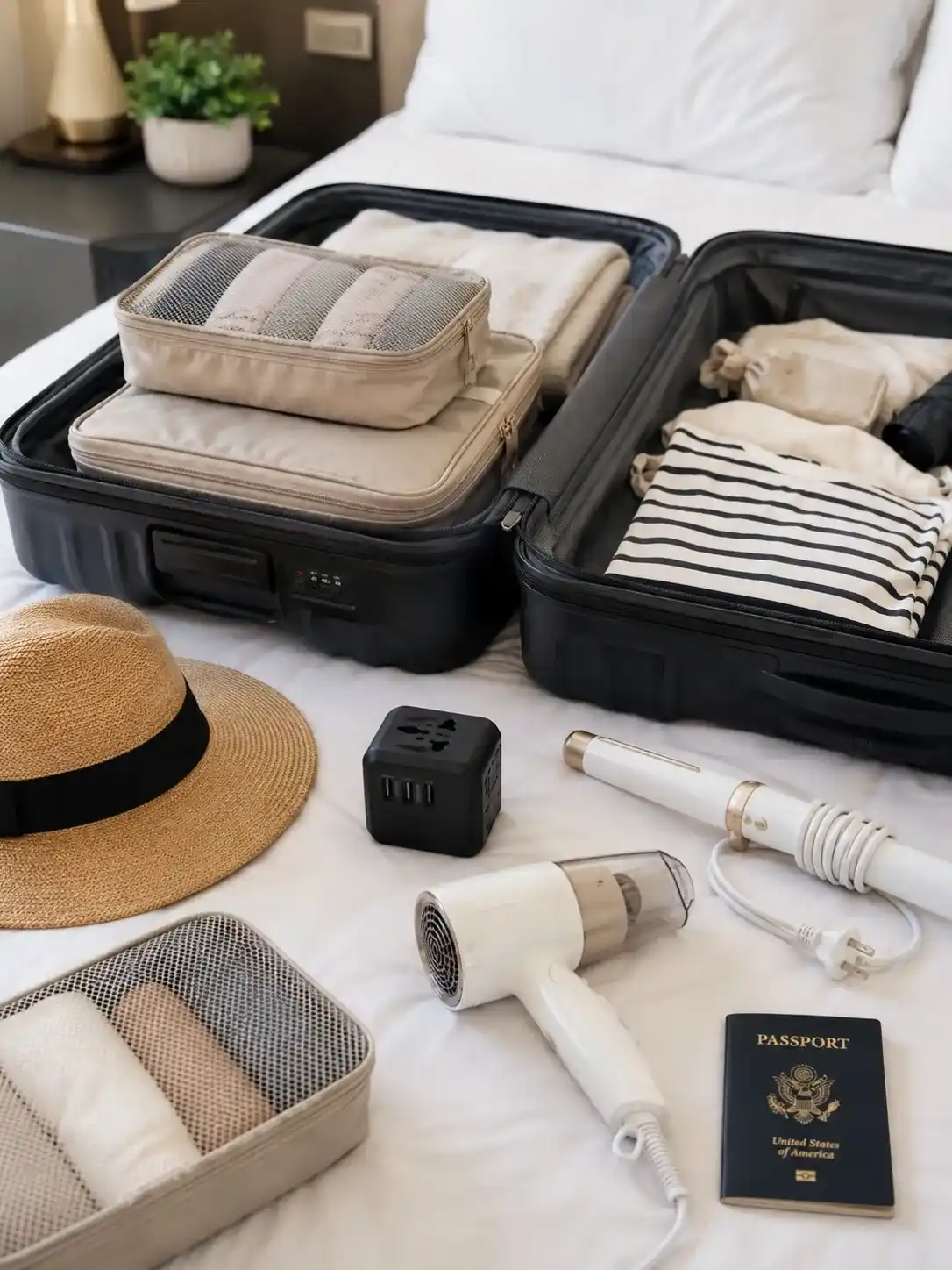
Packing for a 10-day multi-country Europe trip involves more strategy than most people anticipate, and a few specific items consistently make the difference between smooth sailing and daily frustration. First: a quality travel adapter — ideally an all-in-one model that covers every countries’ standard without needing multiple units. This matters more than it sounds because Switzerland uses a completely different plug from the rest of Europe, and getting caught without coverage for that leg is surprisingly common.
A dual voltage curling iron or blow dryer is worth sourcing before departure — plugging a standard appliance into European circuits without a proper converter can blow a fuse and leave you without power in a hotel room. A dual-voltage device eliminates the problem entirely. Finally, packing cubes are non-negotiable for a trip bouncing between multiple hotels — organize by city or hotel stop so that each cube comes out exactly when needed, saving significant time and sanity. Most hotels in Europe are genuinely tiny by North American standards, so maximizing room efficiency matters. Before any of this: get travel insurance. Europe is wonderful but it has its share of reckless driving, unexpected protests, and logistical surprises — having proper coverage in case of an emergency is one of those decisions that costs almost nothing but matters enormously when you need it.
Is This Itinerary for Me?

This itinerary works as a perfect introduction to Europe for first-timers and as a satisfying reset for returning travelers who want to move through the famous capitals without feeling rushed. 10 days is genuinely enough time to absorb each stop meaningfully rather than simply pass through. The Eurail Global Pass is the single most practical train pass for this kind of trip — reliable access to trains across the continent with the flexibility to travel on any day without committing to fixed departure times in advance. It also opens up detour possibilities: Belgium and Luxembourg both sit along major routes and reward even brief stop-overs between the bigger capitals.
Scandinavia: Adding Finland & Estonia
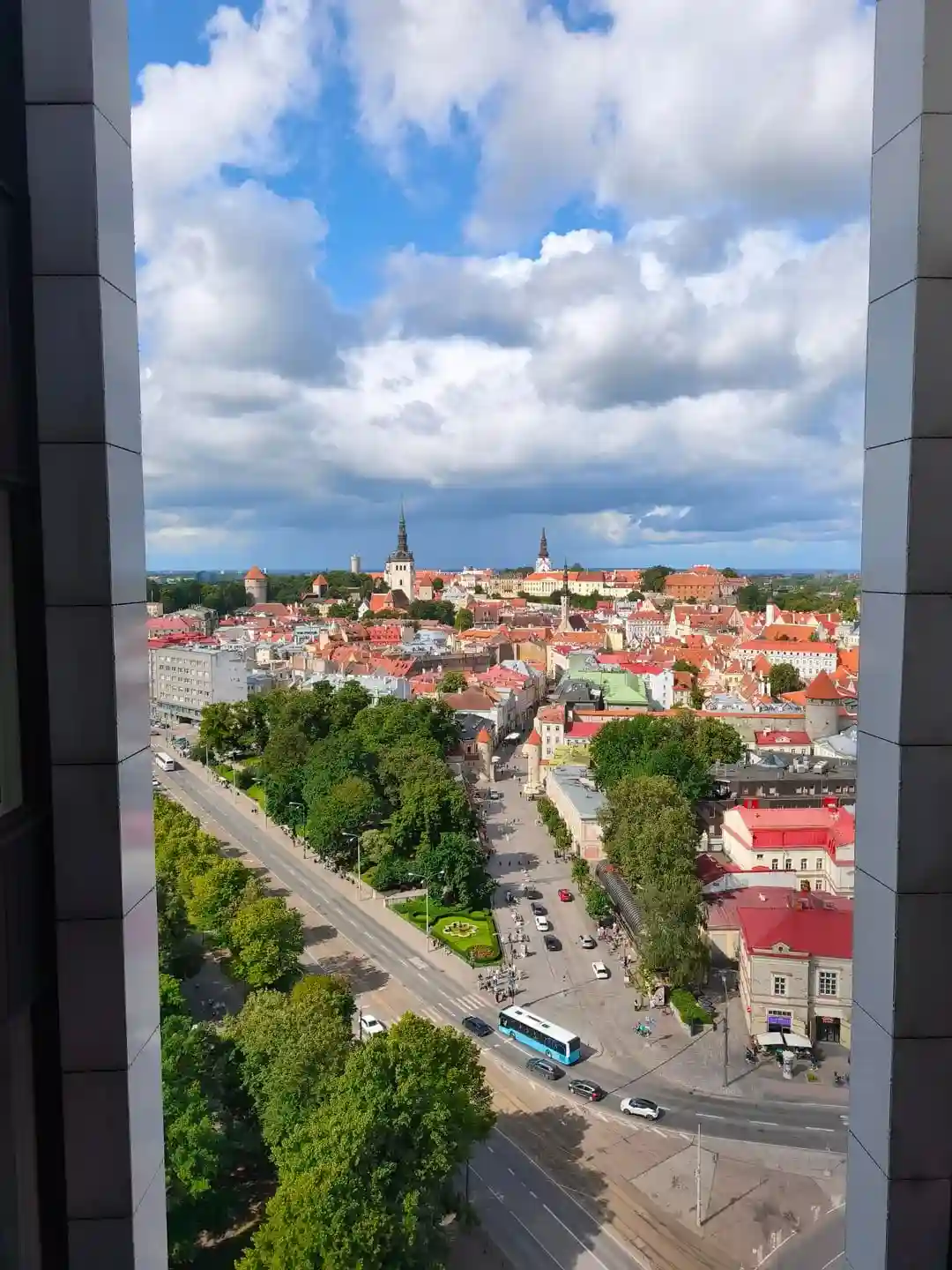
Extending a Scandinavian itinerary to 2 weeks opens up Finland and Estonia — two destinations that offer something genuinely different from the Norway-Sweden-Denmark circuit. Overnight ferries are the most practical and atmospheric way to connect the Baltics with Scandinavia: board in Helsinki and wake up pulling into the medieval harbor of Tallinn, having crossed the Baltic Sea while you slept. Helsinki itself carries the title of UNESCO City of Design, where sleek modern design sits directly alongside historical landmarks in a way that feels effortless rather than curated.
Hop Between Iceland & Greenland
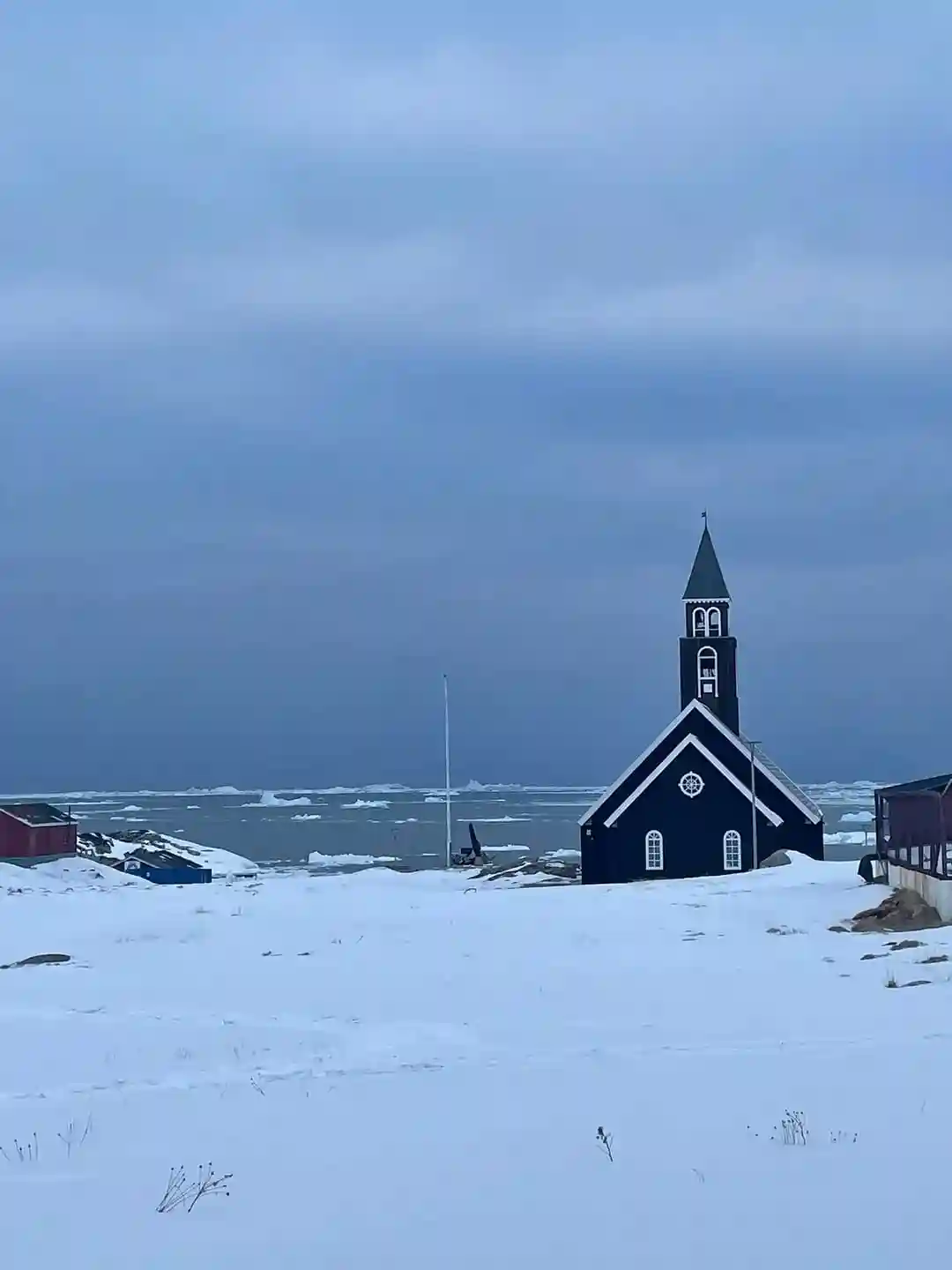
For travelers for whom 10 days in mainland Europe is not quite enough of an adventure, the combination of Iceland and Greenland offers something on an entirely different scale. Picture hiking along iceberg-strewn fjords, unwinding in natural hot springs with nothing but sky overhead, and going on whale-watching boat trips far from any crowd. 3 to 4 days in Greenland covers genuine depth: learning about Inuit culture in the UNESCO-listed town of Ilulissat, hiking to the edge of the Greenland Ice Sheet — which covers more than 80 percent of the country’s land surface — and standing in a silence that most travelers will never encounter anywhere else. The remaining days touring Iceland’s Ring Road deliver waterfalls, volcanoes, black sand beaches, and a landscape that changes character every few miles in a way that makes every drive feel like a new destination entirely.
Insider Tips from Real Travelers
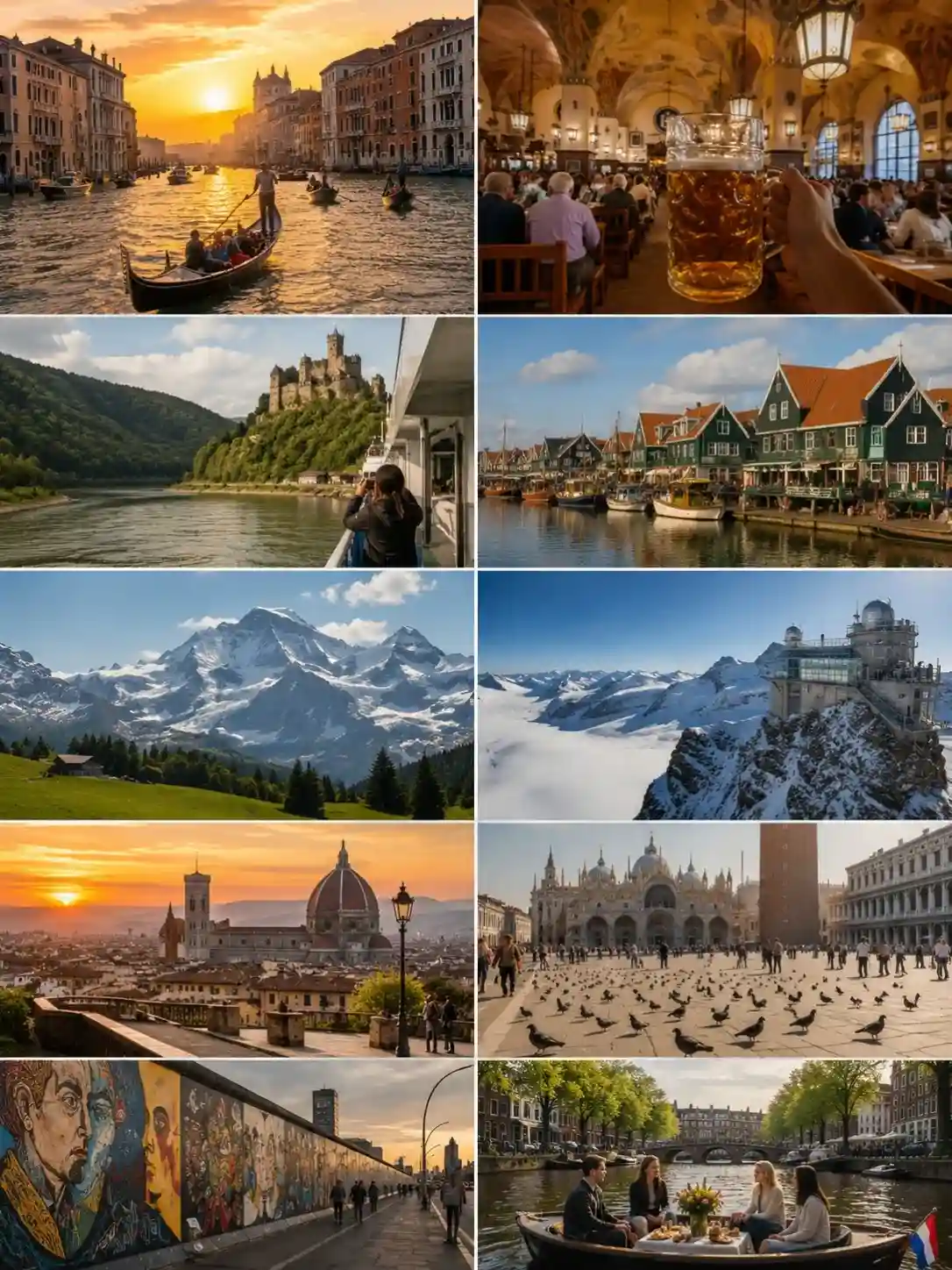
The most useful travel intelligence rarely makes it into guidebooks, and Venice is a perfect example: that early evening light — the way it turns the canals golden just before sunset — is what the best photos from this city are actually made of. Arrive with that window in mind. In Munich, resist the gravitational pull of the Hofbräuhaus and find one of the beer halls near Marienplatz instead — less touristy, better atmosphere, same beer. On the Rhine river cruise, position yourself on the right side of the boat from the beginning — the castle views are dramatically better from that angle. The Volendam fishing village near Amsterdam is one of the most consistently authentic experiences on any Western Europe route, and it almost never appears on first-draft itineraries.
For the Swiss Alps section, splurge on a room facing the Jungfrau if the budget allows — the sunrise from that window is a genuinely rare experience. Pack warm layers for the Jungfraujoch summit even in peak summer, because freezing temperatures at elevation are not an exaggeration. Florence saves its best for those who still have energy at the end of the day, so pace yourself — the cobblestones add up. At Venice’s St. Mark’s Square, 9 AM is the dividing line between a peaceful morning and a wall of day-trippers — there is no substitute for arriving on the early side. The East Side Gallery in Berlin operates by the same rule: 8 AM with a wide-angle lens means you get the art rather than other people’s shoulders. And in Amsterdam, that electric boat from Boaty with a picnic on board genuinely outperforms any tourist canal experience the city offers.
Spring European Itinerary Highlights

Choosing spring for a European trip is one of the smartest financial decisions a traveler can make — lower prices on airfare, lodging, and tours compared to summer high season are reason enough, but the dramatically reduced crowds seal it. March and April align with North American school spring break, making this window particularly well-suited for families traveling transatlantic. The options across the continent during this season are genuinely staggering.
Southern Europe in spring covers extraordinary ground: Croatia’s route from Zagreb through Split and Vis to Dubrovnik, the arc of Southern France connecting Montpellier, Marseille, and Nice, and the Greek island circuit of Athens, Mykonos, Santorini, Naxos, and Paros all shine in this season. Italy rewards spring travelers generously — Rome into the Amalfi Coast and Sorrento, the Tuscany route through Florence, Siena, and Pisa, and the Portuguese options of the Algarve (Faro to Lagos) and the northern route (Lisbon to Porto) are all dramatically more enjoyable in spring than summer. Southern Spain — Seville, Malaga, Granada, Cordoba — hits its stride before the summer heat arrives.
Central and Eastern Europe in spring means Prague → Budapest → Vienna at its most manageable, along with the Munich → Fussen → Hallstatt route and the northern German arc through Hamburg, Berlin, and Leipzig. For Northern Europe, spring opens up the Baltics — Vilnius, Riga, Tallinn — with far fewer visitors than summer, the culturally rich Paris → Bruges → Ghent corridor, and the classic London → Cotswolds → Bath → Stonehenge circuit. Adventure travelers will find Iceland — Reykjavik, the Golden Circle, the South Coast — at its most dramatic in spring, while Ireland (Dublin, Ashford Castle, Dingle, Kilkenny) and Scotland (Fort William, Skye, Oban) offer a green, uncrowded beauty that peak-season visitors rarely get to experience.