15 Best Lakes in Italy: Stunning Italian Lakes to Visit in 2026
Lake Como
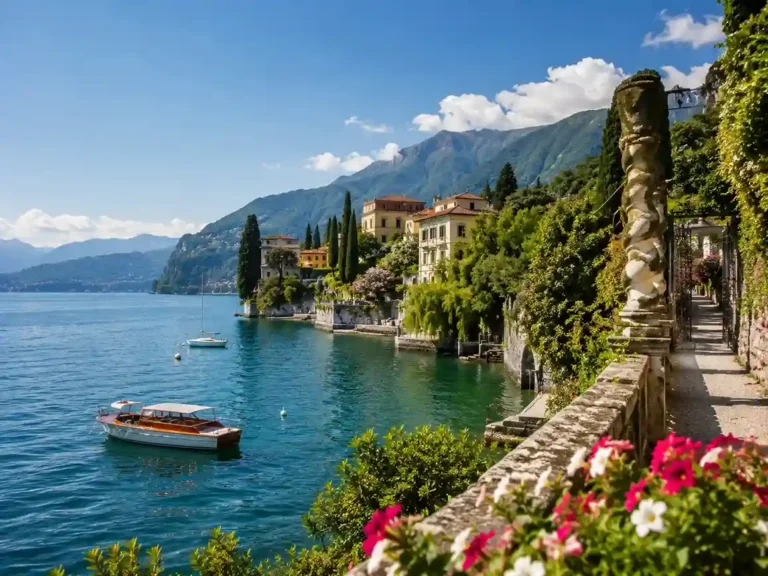
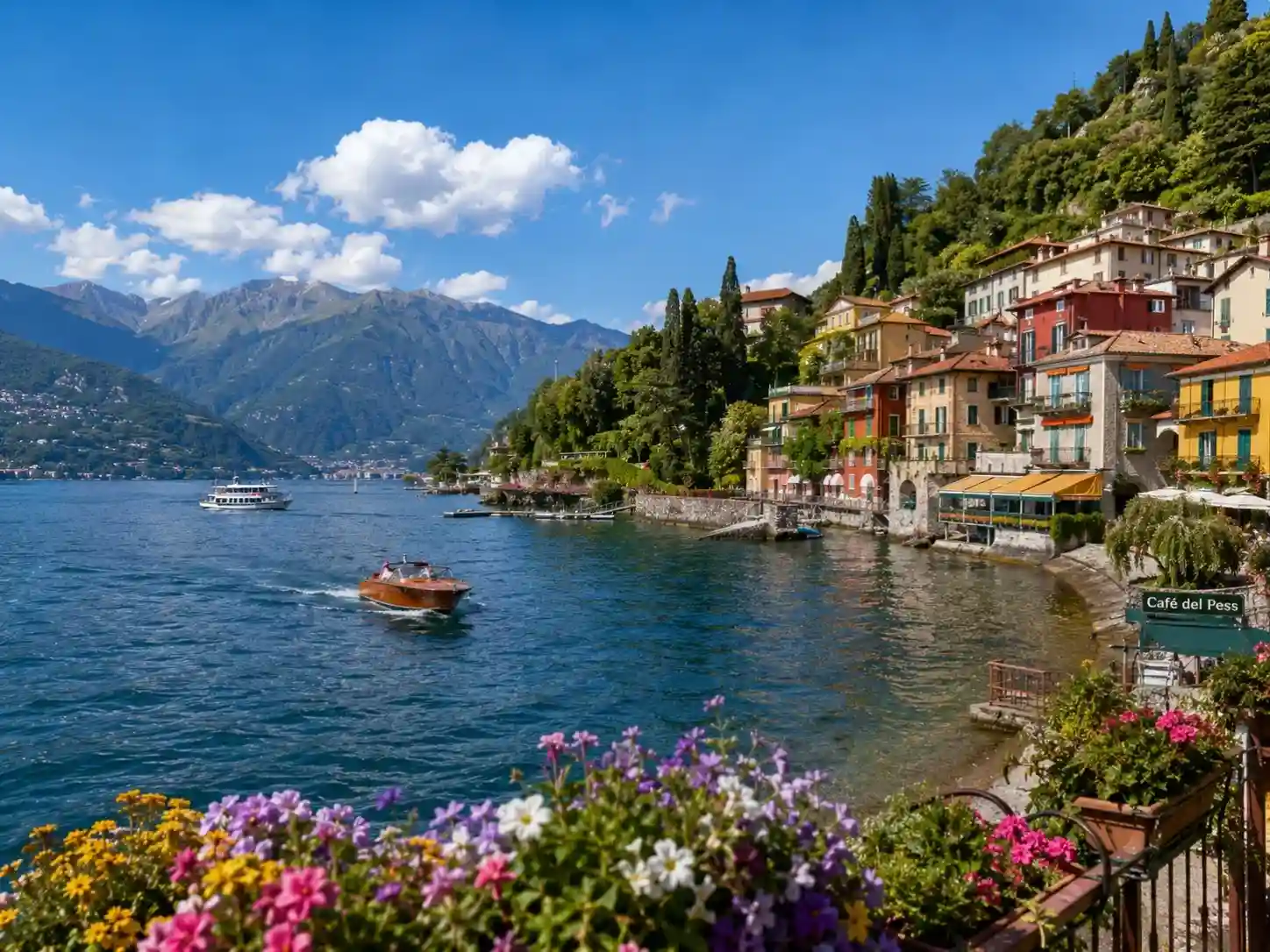
The lake’s geography — an inverted Y splitting into the Como arm at the southwestern end and the Lecco arm at the southeastern end — creates a triangle of water that rewards exploration by ferry or private boat tours. Colourful villages like Laglio, Argegno, Tremezzo, and Gravedona cling to the hillsides with the kind of charm that feels almost unfair. Then there’s Bellagio, the so-called Pearl of Lake Como, perched at the tip of that triangle with its cobblestone lanes, boutiques, wine bars, and terrace cafes — a place I’d return to every single year if I could. Varenna, Mandello, Menaggio, Domaso, and the Tremezzina stretch complete this ring of waterfront villages that feel pulled from an enchanting fable. The historical city of Como itself, with its Duomo di Como, Basilica di San Fedele, medieval churches, ramparts built in the Middle Ages, and a historical centre dense with gothic art, roman art, and Romanesque architecture dating to the 1100s, deserves far more than the hour most visitors spend rushing through it toward the boats.
The glam and glamour of the rich and famous — yes, George Clooney, Madonna, and the wider glitterati have all claimed corners of this lake — has shaped its reputation as a high-end destination, and the posh vibe is real: 5-star hotels, rooms running into the thousands of dollars during peak season, upscale dining, and shopping that rivals any European capital. But the lake holds plenty for those not chasing the luxurious end. Boutique hotels, accommodations in pastel-hued houses along narrow lanes, and the simple pleasure of sitting with a spritz at Cafè del Pess watching boats cross the water — these are equally valid ways in. The historic villas scattered along the shores deserve particular attention: Villa del Balbianello near Lenno, perched on a bluff and famous as a filming location for Casino Royale and Star Wars Episode II Attack of the Clones, is genuinely stunning. Villa Carlotta with its gorgeous gardens, Villa Melzi, and Villa Monastero round out an almost absurdly impressive collection of villas for such a relatively compact stretch of shoreline.
For active visitors, the lake delivers well beyond traditional sightseeing. The Sentiero del Viandante — the ancient Wayfarer’s Path — threads along the eastern shore, connecting villages with panoramic hikes and rewarding views. Via ferratas, cliffs, climbing, canyoning, mountain-biking, downhill routes, trekking, sailing, kitesurfing, windsurfing, SUP, kayaking, canoeing, and rental shops along multiple marinas mean you could spend two weeks here without running out of ways to move through the landscape. A 7-minute funicular ride from the waterfront town up to the mountaintop village of Brunate, sitting at 2300 feet, opens up hiking trails above the lake with views that flatten every expectation. The Chilometro della Conoscenza — the Kilometer of Knowledge — runs as a lakeside promenade past verdant gardens, Villa Olmo, Villa del Grumello, and Villa Sucota, offering shoreline views that feel almost theatrical in their perfection. Pebble beaches at Griante, Nesso, Colico, and various lidos with open-air swimming pools serve sun worshippers and swimmers through July and August, when the water sports scene reaches full intensity. Getting here is straightforward: Como San Giovanni and Varenna-Esino Station serve the lake from Milano Centrale, with Navigazione Laghi running reliable public boat rides between villages. From Paris, the Thello and TGV France-Italy connection gets you there in around 7 hrs for as little as €49, which feels like the best travel deal in Europe when you arrive and see what’s waiting.
Lake Garda
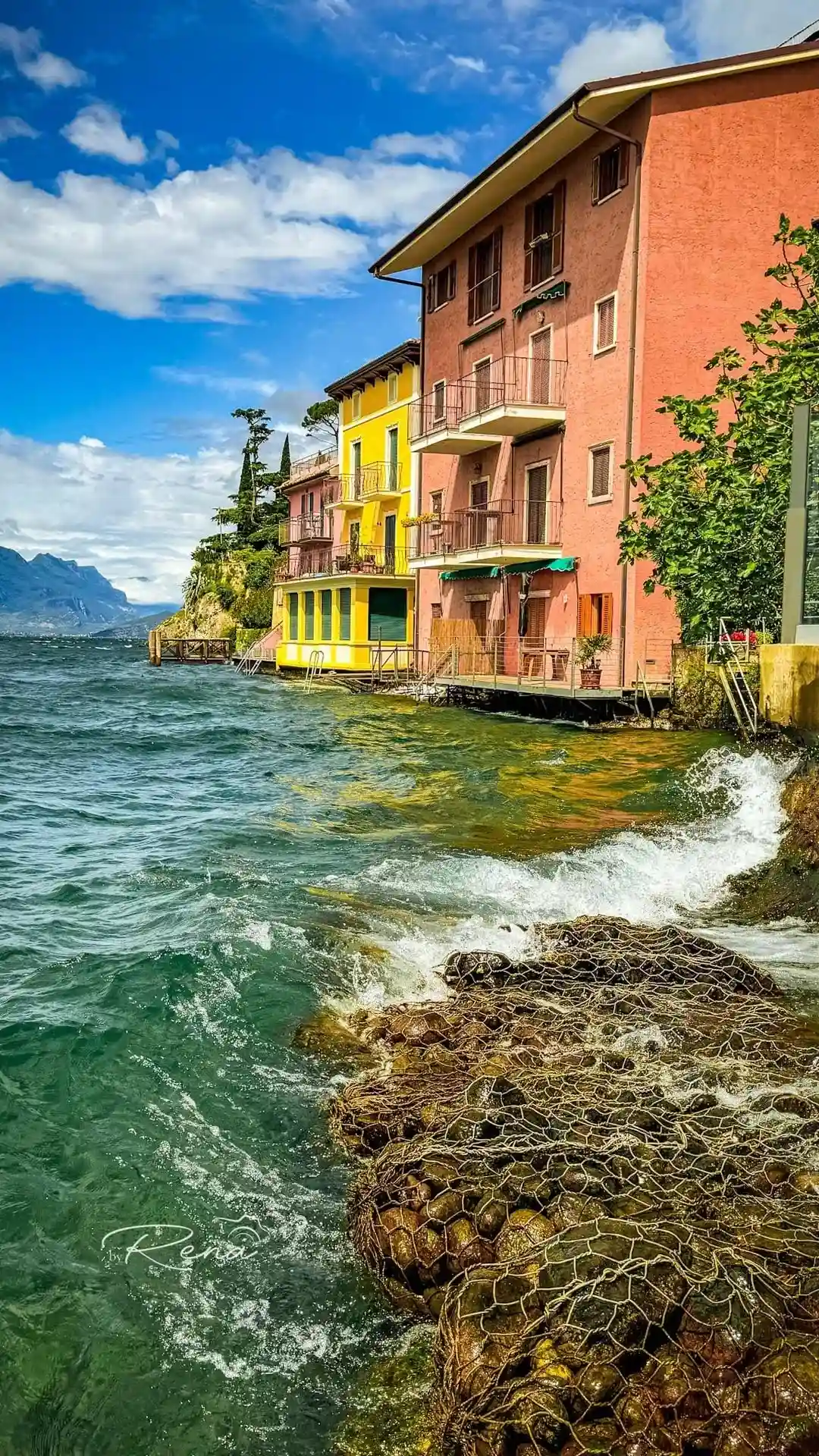
Lake Garda earns its title as the largest lake in Italy not just in size — straddling Lombardy, Veneto, and Trentino-Alto Adige across some 150m² of water — but in sheer range of experience. Writers and artists have always felt it. D.H. Lawrence, standing on these shores, wrote simply: “I think I will be happy here” — and Gustav Klimt painted it too, drawn by the same pull that still brings outdoor enthusiasts, families, and those chasing culinary delights through its waterfront villages today. I’ve found that no other Italian lake offers such a clean transition from Roman history to full-throttle adrenaline within the space of a single afternoon.
Start at Sirmione, that narrow peninsula jutting into the southern water with the kind of setting that makes you question whether it’s real. The Grottoes of Catullus — Grotte di Catullo — spread across a headland as the ruins of a Roman villa from the 1st century CE, and the Castello Scaligero, a 13th-century fortress rising straight from the lake with battlements intact, houses an archaeological museum worth an hour of anyone’s time. The Terme di Sirmione and the connected Aquaria Thermal Spa with its thermal baths, open-air pools, and thermal springs rising from the lakebed add a layer of genuine indulgence that earns Sirmione its devoted following. Nearby Verona — city of Romeo & Juliet — sits close enough for a half-day detour, making the southern end of the lake one of the most culturally loaded corners in the country.
The northern end of the lake operates on a completely different frequency. Riva del Garda, Torbole, and Gargnano have turned the strong, reliable winds funnelling down from the Alpine valleys into a windsurfing and kitesurfing playground that draws specialists from across Europe. Canoeing, water-skiing, wakeboarding, foiling courses, canyoning, climbing, paragliding, and mountain biking with e-bikes from outfitters like Happy Bike round out a programme that would exhaust most athletes. The Via Ponale — also called Strada del Ponale, a 10km dirt road carved into cliff faces and threading through tunnels — leads to the Ponale Alto Belvedere terrace with a jaw-dropping view of the lake and the quieter Lago di Ledro beyond. The Ciclabile dei Sogni — Cycle Lane of Dreams — between Limone and Riva runs along the water’s edge as one of the most scenic cycling experiences in the country, and the Campione del Garda loop and Monte Telegrafo trails push deeper into the hills above. For a truly elevated perspective, the Monte Baldo cable car from Malcesine delivers panoramic views that justify the queue.
Beyond the adventure, the lake’s gentler villages hold their own appeal. Desenzano and its old town, Bardolino with its wine tour and wine cellar circuit through fine wines, the quiet dignity of Torri del Benaco, the Tibetan Bridge at Villa Canale, the cypress-lined headland of Punta San Vigilio, and the small but perfectly formed Baia delle Sirene near Jamaica Beach all reward slower exploration. Limonaias — historic lemon houses — dot the western shore near Limone, where olive groves, olive trees, palm trees, oleanders, and vines create a Mediterranean atmosphere that surprises visitors expecting Alpine austerity. Peschiera del Garda and Lazise offer sunny beaches with lifeguards and easy swimming access, though water shoes are advisable on the rockier stretches. Mantua lies within easy reach for a cultural day trip. Getting to Lake Garda from Milan or Venice takes around 2 hours by direct trains or local buses, with ferries connecting the major towns on the lake itself. The southern gateway station Desenzano Del Garda-Sirmione is just 45 minutes from Milan, making this the most accessible of the major lakes for short visits.
Lake Maggiore
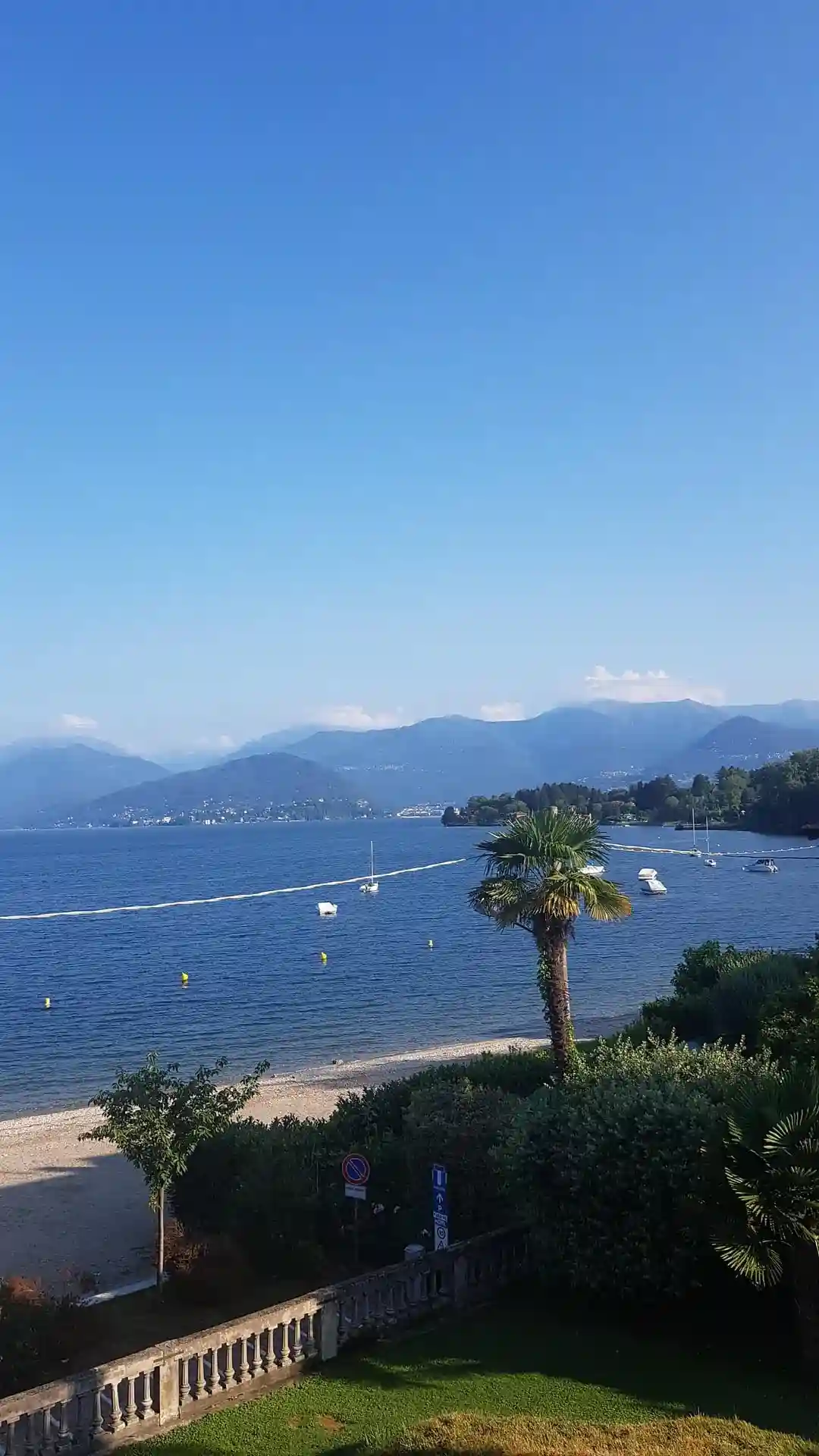
Lake Maggiore occupies a middle ground — smaller than Como, yes, but bigger than Garda — and at 40 miles long it feels genuinely expansive, its northern tip crossing into Switzerland while its banks stretch across Lombardy and Piedmont. Arriving from Milan airport or Milan Centrale via Milano Porta Garibaldi into Laveno or Stresa, you notice almost immediately that the atmosphere here is different from its neighbours: less glitzy, more Belle Époque, the kind of lake that draws people who want majestic mountains and rolling hills and scenic views without fighting for a lakefront table. The roads at water level make for extraordinary driving, with the milder climate keeping the vegetation lush and the small towns feeling lived-in and genuinely welcoming.
The Borromean Islands are the lake’s defining experience and one of the great surprises of Italian travel. This archipelago of five islands — three of them visitable: Isola Bella, Isola Madre, and Isola dei Pescatori — was shaped over centuries by the same 14th-century family who brought in architects and artists to build something extraordinary. Palazzo Borromeo, the 17th-century palace on Isola Bella, displays works by Van Dyck, Titian, and Rubens alongside exquisite tapestries and leads down into the famous shell grotto with its rococo confection of grottoes, rocks and shells. The baroque gardens surrounding it, populated by imperious white peacocks, are at their best from late March through late October. Isola Madre runs more quietly as an Italianate garden given over to exotic plant species, while Isola dei Pescatori functions as an actual fishing village — grab lunch at Casa Bella for creative Italian fare and watch the boats come in. Getting to the islands by boat services from Stresa or Baveno takes minutes and costs little, though limited parking in these towns means arriving early or by train is strongly advised.
Stresa remains the lake’s social centre — its Art Nouveau and Liberty villas lining the waterfront, its squares full of ice cream and coffee, its unrivalled view across to the islands from the promenade unchanged since the 19th century and 20th century when the stately hotels of the Belle Époque era were first built for European aristocracy. Towns like Verbania, Cannobio, Locarno, and Arona give the lake a wide arc of character, from Lavish hotels to simple quaint lakeside towns with art and history that rewards slower investigation. In Arona, the Colossus of St. Carlo Borromeo — at 35m tall one of the largest statues in the world — overlooks the southern lake with an authority that still catches you off guard. The cable car up to the peak of Mottarone opens in winter for skiing and downhill runs; in summer it’s a launchpad for mountain-biking and straightforward summit walks. The Giardini Botanici di Villa Taranto at Verbania — one of the more underrated gardens in Italy — carries a lotus collection, a dahlia maze, and over 1000 species of plants arranged with real horticultural ambition, open through the growing season for those on a botanical-themed trip.
For active travellers, the lake gives a lot: the Cadorna Line hiking route, Ciclabile del Toce along the river valley, the Sentiero dei Castagni chestnut trail, the Medieval Road between Cossogno and Cicogna, and the wilder edges of the Val Grande National Park — one of the most remote wilderness areas in northern Italy — all lie within reach. Canoes, paddle boats, rafting, and paragliding through the Ossola valleys cater to those who need water or air beneath them. The Blue Flag beaches at designated swimming areas guarantee clean water and safe conditions, and the lake’s nature reserves and national parks reward those who want to see the landscape rather than just photograph it. A UNESCO-listed highlight that most visitors miss entirely: the Sacro Monte of Ghiffa, one of nine 9 chapel complexes scattered across the Piedmontese foothills — this one reached by a mule track above the lake with views worth the climb. At Cannero Riviera, the lakeside promenade is one of the prettiest stretches of walking on the entire lake, with the ruined castles of Cannero sitting in the water just offshore like something from a northern European folktale. And at Laveno Mombello, a bucket cable car hauls passengers up to Mount Sasso del Ferro for the kind of view that reframes everything you thought you understood about how big this region is. The nearby Villa Della Porta Bozzolo, a rococo-style mansion set in terraced gardens above the lake, is the kind of place you stumble on by accident and remember forever. The Rocca di Angera, a medieval fortress with 14th-century frescoes and an unexpectedly delightful doll museum, closes the historical circuit. From Milan, the lake sits just 90 minutes away.
Lake Iseo
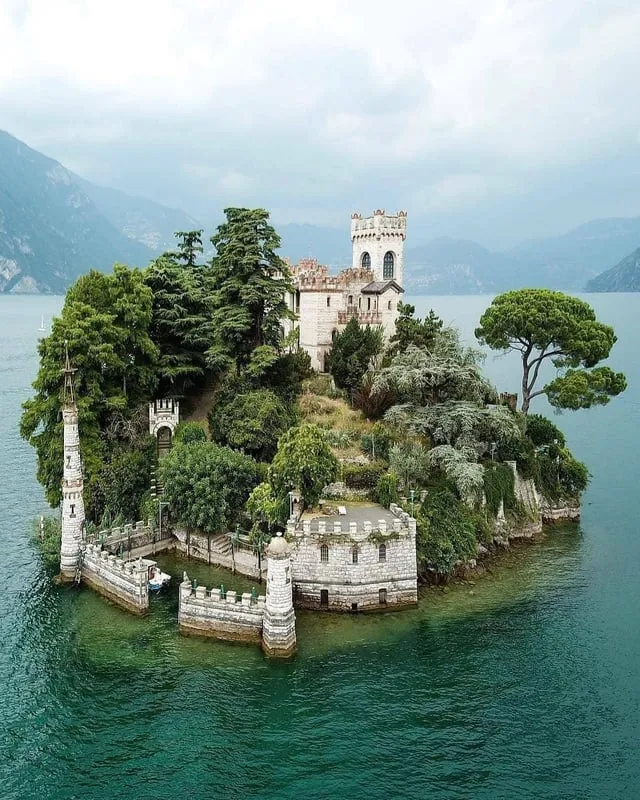
Most people driving between Milan and Brescia or Bergamo on the way to the more famous lakes don’t even glance toward Lake Iseo — locally called Lago d’Iseo or Sebino — and that, frankly, is their loss. This tranquil gem tucked in Lombardy offers the kind of authentic lakeside living and unspoiled environment that the bigger lakes have largely traded away for tourism infrastructure. Within an hour drive from Milan, it sits as a hidden gem, a quaint quieter neighbour to the famous ones, and a genuine retreat into natural beauty with clear water and lush green mountains rising sharply from the shore. I spent a long weekend here without a plan and left wishing I’d booked a week.
The lake’s biggest draw is Monte Isola — the largest car-free lake island in Europe, the largest inhabited island on any Italian lakes, and a place with real lively community energy despite its compact size. Narrow alleyways, stone villages, and colorful houses surround the hilltop Sanctuary of the Madonna della Ceriola — or Sanctuary of Ceriola — which dominates the island’s skyline. Getting there by boat or bus from Lovere or the other coastal towns takes minutes, but once you arrive, the absence of cars creates a stillness that’s almost startling. Back on the shore, Lovere carries architectural weight above its modest size: the 15th-century Basilica of S. Maria in Valvendra, the Civic Tower, and the Galleria dell’Accademia Tadini make up a historic buildings and art cluster worth a dedicated morning. The cafes, restaurants, shops, promenades, medieval lanes, and rambling hills of the other scenic small towns around the shore — places with 14th century churches and fresh-caught fish served in local restaurants — give the lake an unhurried rhythm that feels increasingly rare.
For hikers, the Ancient Valeriana Road — Via Valeriana — runs as a full-day hike covering 15 miles between Pilzone d’Iseo and Pisogne, tracing a route that predates the Roman road system beneath it. The geological oddities at Piramidi at Zone — earth pyramids topped by dinosaur footprints and accessed via the Passo Croce di Zone — are genuinely unlike anything else in the lakes region. The serious peaks of Corna Trentapassi and Monte Guglielmo satisfy those who want elevation. For water: sailing, canoeing, wakeboarding, kitesurfing, hydrofoil, windsurfing, paragliding, and SUP are all available, alongside solid cycling tourism infrastructure on the Vello-Toline Bicycle Path — the cycle-pedestrian lane between Toline and Vello — and the epic Ciclovia dell’Oglio, which stretches 280 km all the way to the Adamello Group. Swimming and beaches at Paratico, La Spiaggetta di Iseo, Sulzano, and Sale Marasino serve casual visitors well. Art lovers shouldn’t miss the Parish Church of San Zenone in Sale Marasino — Rococo style, dedicated to the patron saint of fishermen, with frescoes of Romanino that would be celebrated nationally if this lake got more attention — or the Romanesque Parish Church of San Pietro at Tavernola Bergamasca. And for a footnote that lends the lake a kind of contemporary mythology: in 2016, the artist Christo installed his famous floating piers art installation here, briefly making Lake Iseo the most talked-about place in Italy. The lake is served by regional train to Brescia, with parking available at several points around the shore for those arriving by car.
The lake’s other claim to fame — and one worth planning around — is Franciacorta. This wine region produces a Franciacorta sparkling wine with a complex flavor profile that goes head-to-head with Prosecco and, in the opinion of many Italian sommeliers, wins. The viewpoints, rambling hills, and vine-covered slopes surrounding the lake make it as natural a retreat for wine lovers as it is for hikers and water sports enthusiasts. This is the glimpse of local life that the bigger lakes rarely offer anymore.
Lake Orta
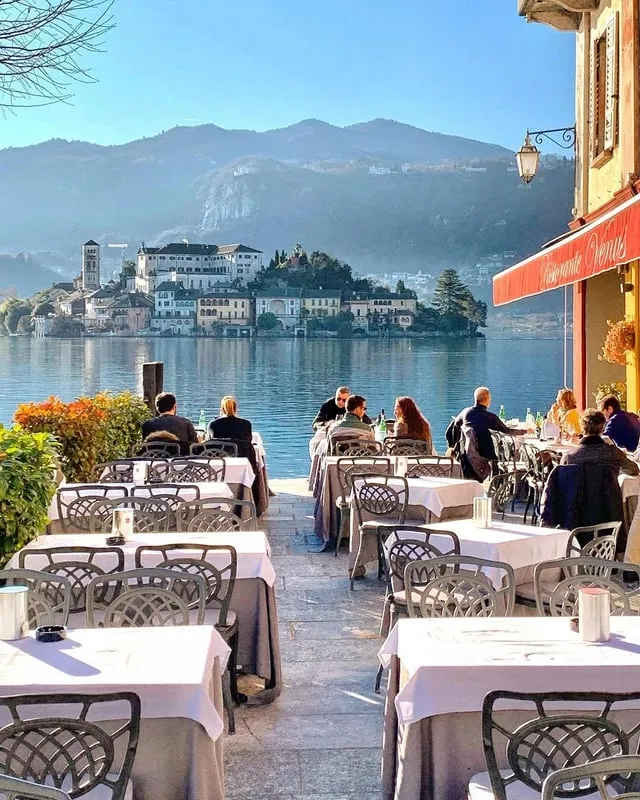
Everyone has a favourite Italian lake. Mine is Lake Orta. Technically a 30-minute jaunt from Lake Maggiore and about 90 minutes from both Lake Como and Milan, this small water body in the Piedmont region at the foothills of the Alps has appeared in literary works as the most romantic lake in Italy — and having spent time here, I’d say the description underestimates it. Its charm and relaxed atmosphere, framed by rolling hills and sparkling waters, make it feel more like a secret than a destination.
The village of Orta San Giulio is its beating heart: a medieval village of cobblestone lanes, small shops, and ancient churches where every narrow alley leads somewhere worth turning into. The Piazza Motta — the main square opening directly onto the lake — offers restaurants for a long lunch and bars for aperitivo, and the ambiance at golden hour is the kind that makes people rebook their return flights. A short boat ride from the square lands you on Isola San Giulio — the island of San Giulio — where the Basilica di San Giulio carries extraordinary frescoes and a quiet centuries-deep presence. The Benedictine monastery of nuns who inhabit the island have organized the circular walking path around it as the Way of Silence — signs asking for quiet reflection line the route — and the contrast with the animated piazza you just left is startling. Villa Motta nearby opens its gardens seasonally, displaying 250 varieties of camellias that bloom year-round in this sheltered private villa setting.
Climbing the hill behind the village brings you to the Sacro Monte di Orta — a UNESCO World Heritage Site of 9 chapel complexes tracing the life of St. Francis of Assisi through life-size sculptures and detailed frescoes in a sequence begun in the 16th century. The panoramic position delivers sweeping views over the water and village below that few places in the Italian lakes can match. Down the road, the village of Legro has reinvented itself as a painted village covered in outdoor painted murals referencing movies and cultural history — an eccentric and genuinely delightful detour. For eating at the highest level, Villa Crespi holds 3 Michelin stars and Locanda di Orta holds 1 star — both among the finest Michelin Star restaurants in the lakes region. Omegna, the largest town on the lake, sits at the northern end where the Nigoglia River meets the lake — or rather, where the Strona River drains north out of it, earning the local nickname “the river that runs upwards”. Getting here from Turin or Milan is easiest by train to Orta-Miasino station followed by a 25-minute walk, a bus (Line 5), or a taxi into the pedestrian-only historic town centre.
Lake Braies
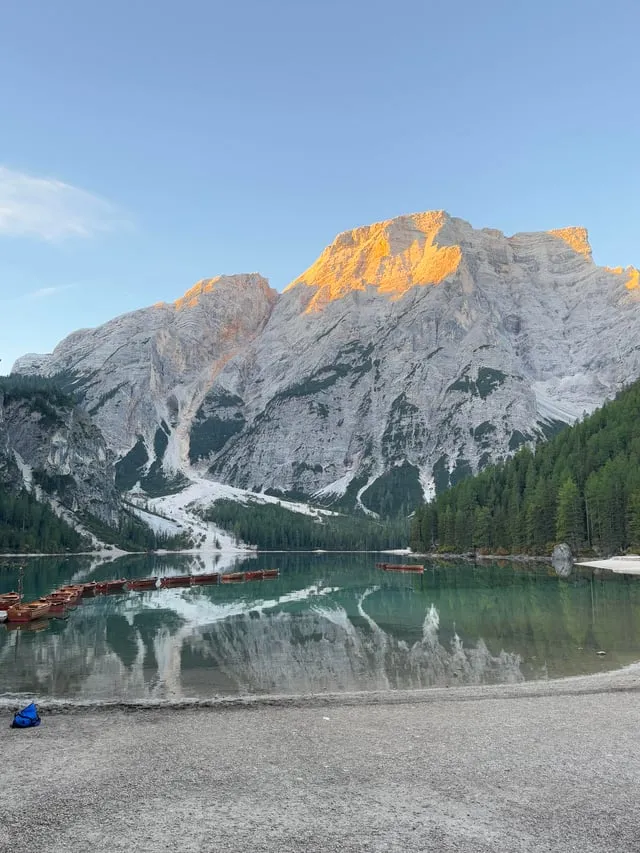
If there is one lake in Italy that has been genuinely transformed by social media, it’s Lake Braies — Lago di Braies, or Pragser Wildsee in its German name, also sometimes rendered as Lake Prags in older English references. The Dolomites assign places both Italian and German names, and this lake, sitting at almost 5000 feet — roughly 1500 meters — in the Puster Valley and Val di Braies, earns every name it carries. The turquoise-green water against snow-flecked mountains, the wooden dock, and the red canoes have made it one of the most photographed lakes in Italy and an outright Instagram celebrity. I’ll be honest: I arrived expecting disappointment and left planning a return.
The standard visit follows an easy trail that loops around the lake in 60-90 minutes — a gentle 1.5 hours of walking that earns the view from every angle. Boat rental for rowboats runs in summer; in winter, when the lake occasionally freezes solid, it hosts curling competitions and draws visitors for alpine skiing, cross-country skiing, and ski mountaineering in the surrounding mountains. The water is cold enough that swimming feels more like a dare than a swim, but people do it. For serious hikers, the trail to Croda del Becco at 2810 meters — signposted as trail number 1 — runs a demanding seven hours round trip through the Fanes-Senes-Braies Nature Park. The wider park contains enough hiking trails to fill several days, and the neighbouring lakes of Lago di Sorapis, Lake Dobbiaco, and Lake Misurina all sit close enough for a full day of lake outings linked by car or bike. A 2-hour hike in the surrounding valley gives a strong sample of the terrain without committing to the full summit push. The lake is reached most practically by car — parking fills early in summer — or by shuttle bike from the valley.
Lake Scanno
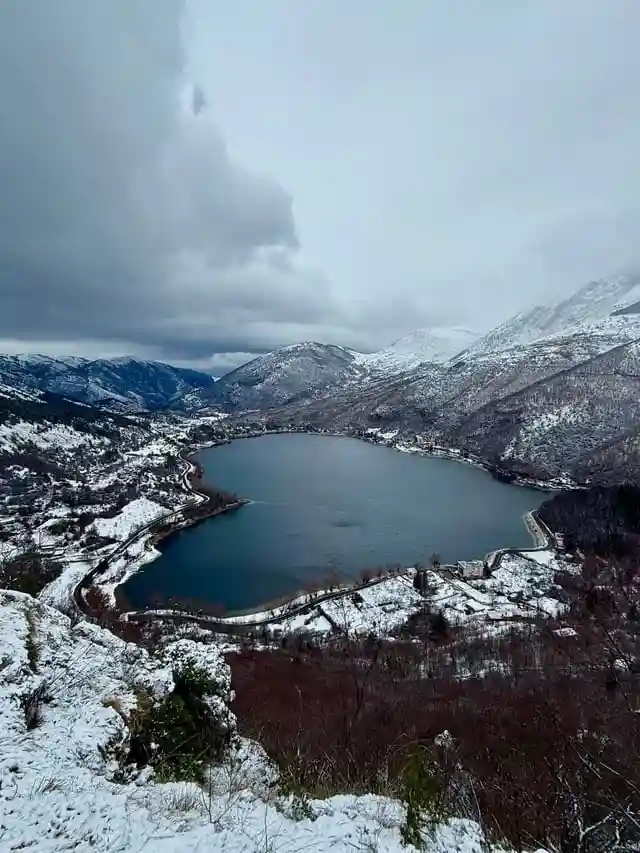
Lake Scanno, hidden in the Marsicani Mountains of Abruzzo at 922 meters above sea level, is the largest natural lake in the region and operates entirely outside the mainstream Italian lakes conversation — which is precisely what makes it interesting. Its green shores and mountain backdrop create a setting better suited to picnics and relaxation than Instagram performance, and the pace here is genuinely slow. Pedal boats, bicycles, city bikes, mountain-bikes, fat bikes, and tandems are all available for hire, and a tour of the lake by cycle takes around 40 minutes on the cycle lanes that ring the water. The nearby Regional Nature Reserve of Lake San Domenico, Lake Pio, and the village of Villalago extend the natural territory considerably. For those wanting a longer challenge, the Sentiero della Libertà — Path of Freedom — is a historically significant hike of 60 kilometres through the Majella mountains, completed in 3 stages over 3 days, tracing the route used by Allied prisoners of war escaping occupied Italy.
Lake Trasimeno
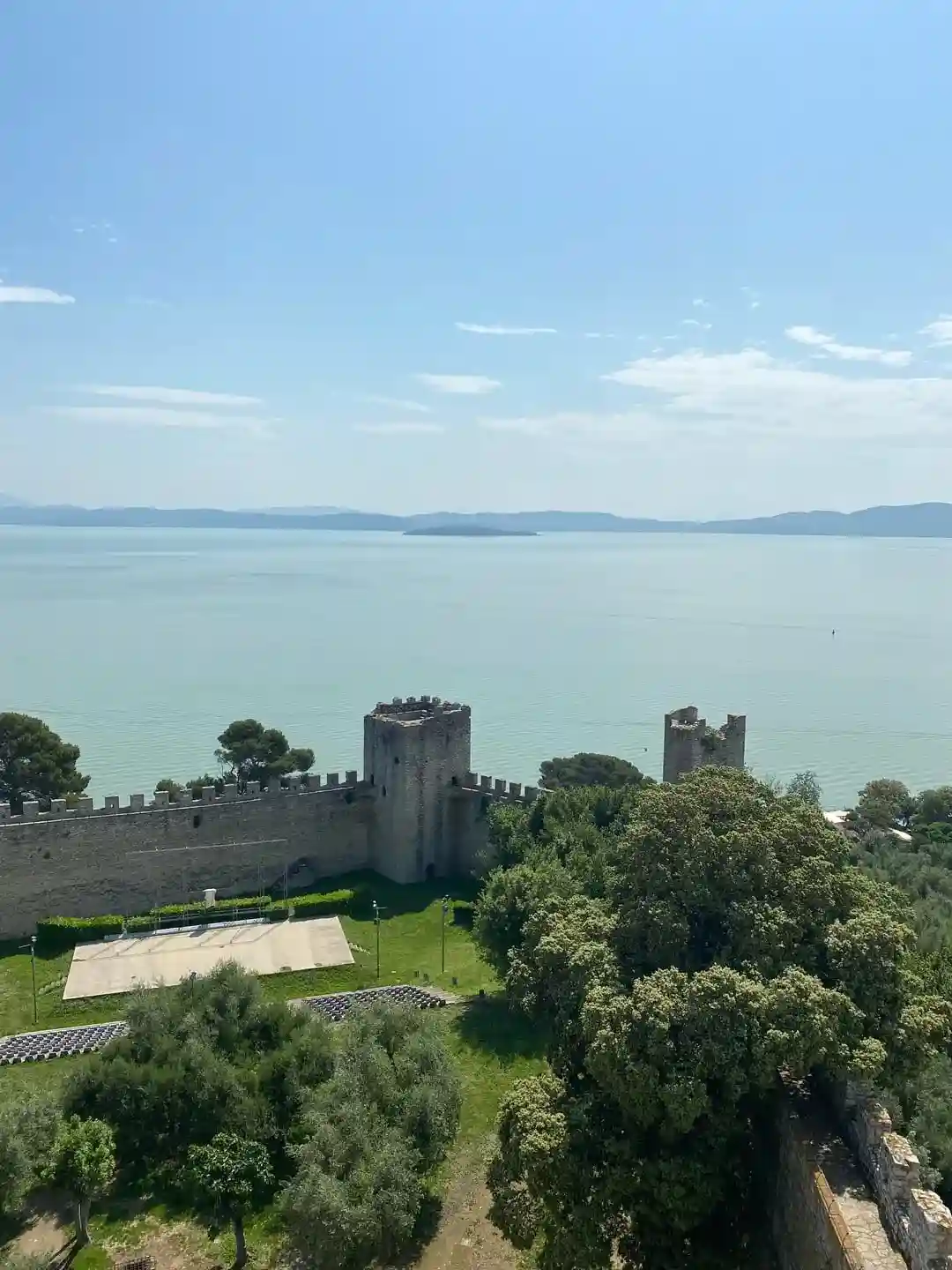
Lake Trasimeno — the largest lake in central Italy — sits in northern Umbria at the edge of the Val di Chiana, a wide shallow body of water that feels entirely unlike the deep Alpine lakes of the north. The activity menu leans toward the water: kayaking, sailing lessons, windsurfing, kitesurfing, wakeboarding, and water skiing are all available from the main towns of Castiglione del Lago, Passignano, and Tuoro sul Trasimeno, where sail boats and motorboats can be chartered or rented. Three islands — Polvese, Maggiore, and Minore — sit in the lake like full stops in the middle of the view. On land, the Trasimeno bicycle lane, a loop of 70 kilometers, circles the entire lake and makes for a superb half or full day by bike or foot. The longer Via del Trasimeno — 160 kilometers across seven stages — connects the wider surrounding landscape for those who want to turn a lake visit into a proper walking journey.
Lake Bolsena
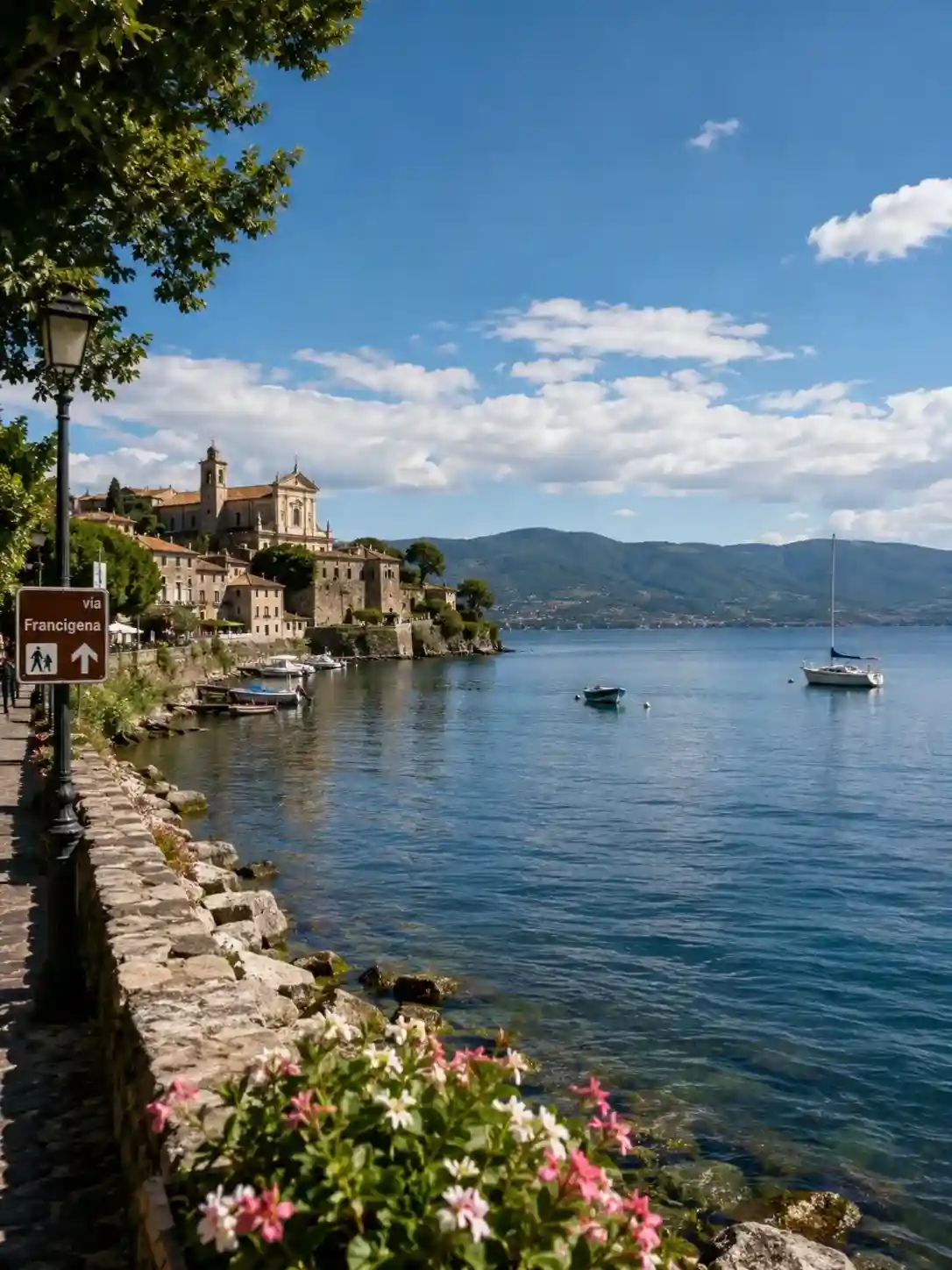
Lake Bolsena, sitting in a caldera in northern Lazio near Viterbo on the boundary of Umbria and Tuscany, is the largest volcanic lake in Europe — a fact that sits quietly beneath its thoroughly pleasant surface. The activity range here is impressively wide: kayaking, windsurfing, water skiing, diving, paragliding, fishing, horseback riding, archery, canoes, pedal boats, and sailboats with or without a skipper make it one of the more versatile outdoor destinations in central Italy. Pilgrims and walkers have a specific draw: the Via Francigena medieval pilgrimage route passes through the area, and leg 39 between Bolsena and Montefiascone — 18 km of climbing and descending through greenery with lake views — is one of the most scenic stages on the entire route. The Basilica of Santa Cristina in Bolsena anchors the town’s historical centre. The lake is reachable by foot, by bike, and easily from Rome for a day trip.
Lake Bracciano
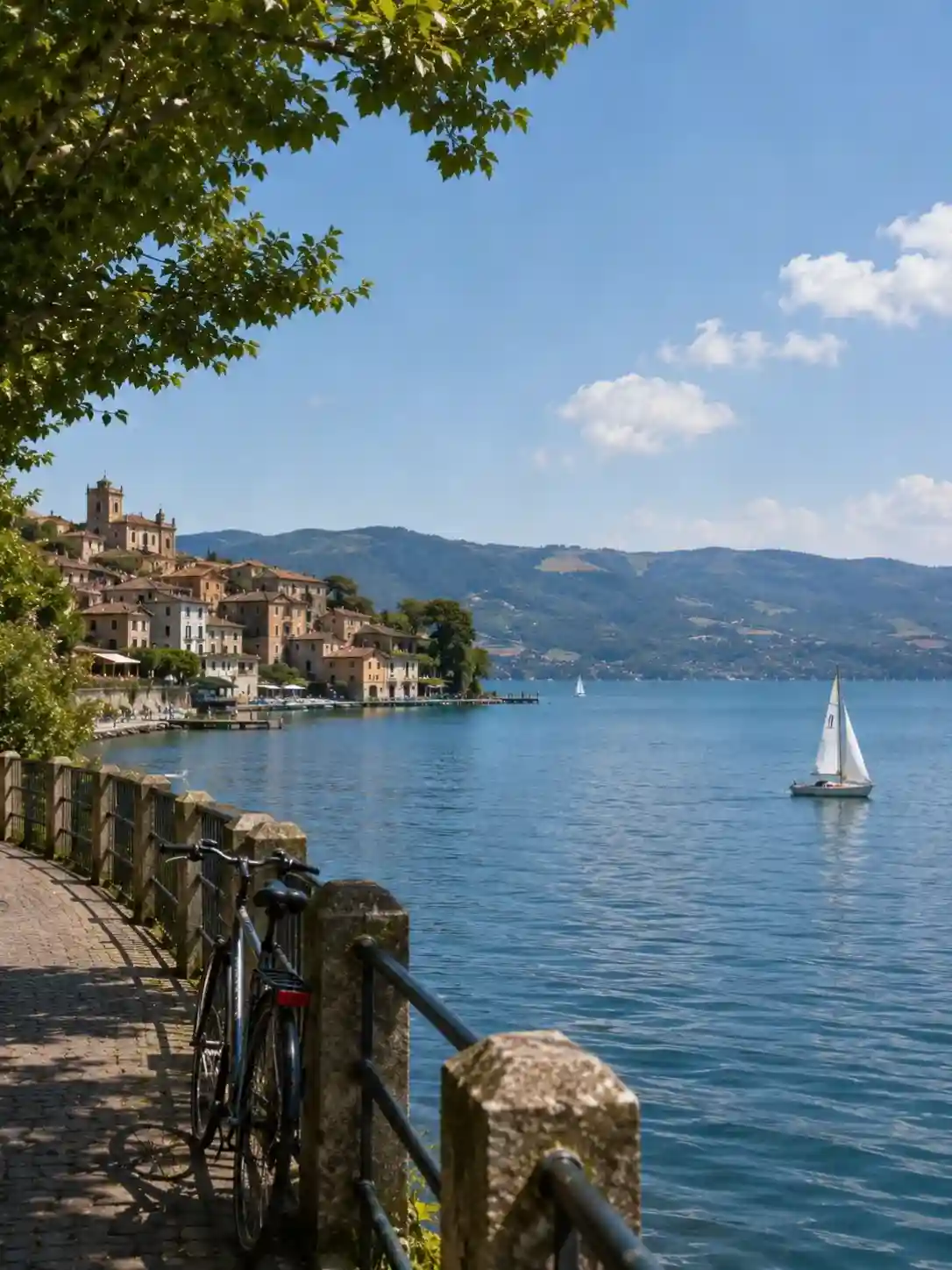
Lake Bracciano sits in central Lazio in the cradle of the ancient Sabatini volcanoes and has long functioned as Rome’s summer destination of choice for those who know where to go. The volcanic origin means the water is unusually clean — motor-boating is prohibited except for authorized fishermen and public service ferry routes — which keeps the shoreline quieter than comparable lakes closer to the capital. Permitted water activities include windsurfing, canoeing, sailing, fishing, and scuba diving, with excursions possible on foot or mountain-bike through the Natural Park of Bracciano-Martignano, which wraps around both Bracciano and the smaller Lake Martignano just 4 km away. The lakeside town of Anguillara Sabazia anchors the southern shore with genuine charm. Cyclists will find the Ciclovia dei laghi — a cycling loop of 8 kilometers — giving a manageable circuit with panoramic views over both the Sabatini Mountains and the Tolfa Mountains to the west.
Lake Lesina and Varano
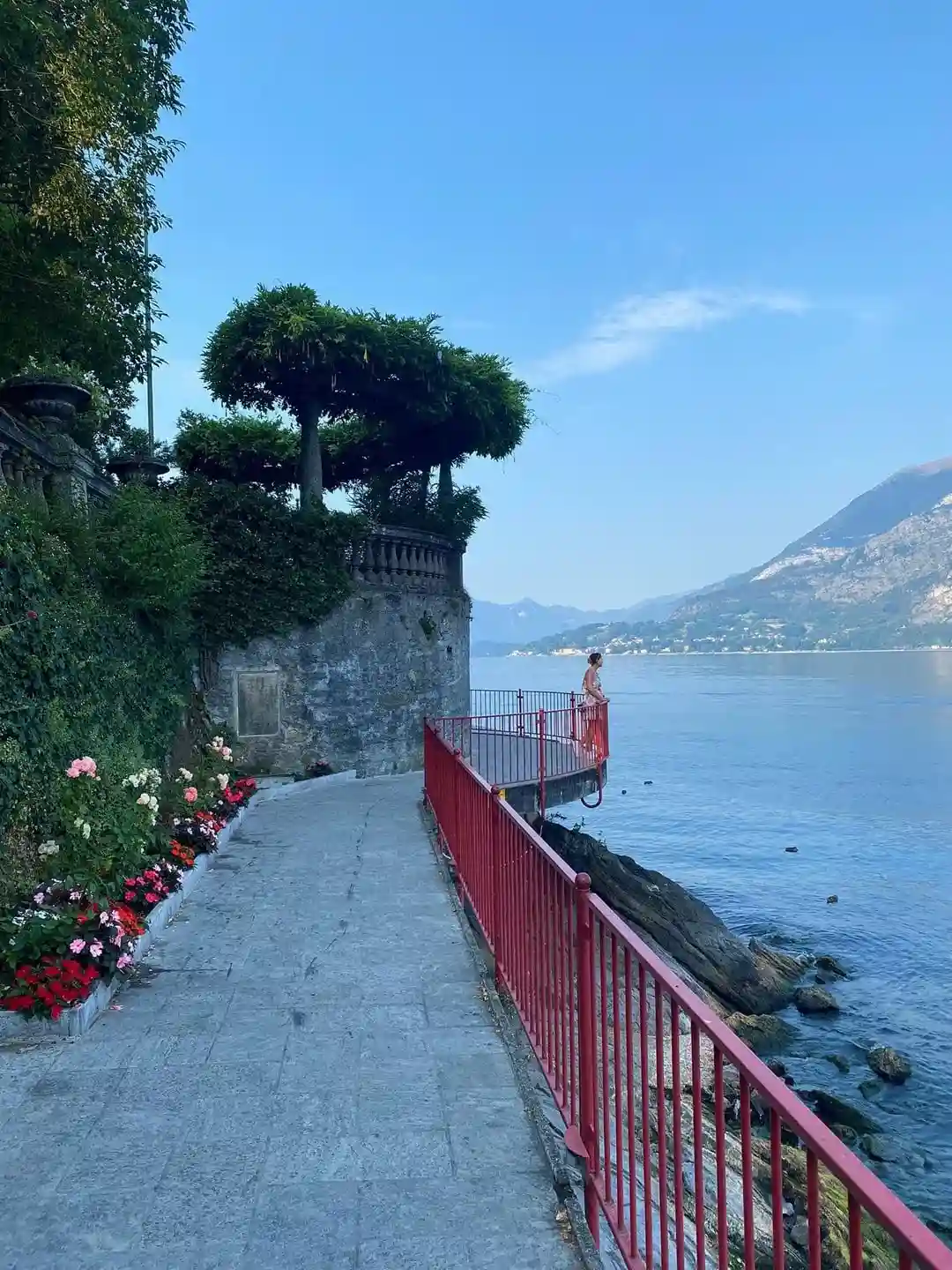
Down in Gargano National Park on the Adriatic Sea coast of Puglia, Lake Lesina and Lake Varano occupy a narrow coastal strip separated from the sea by nothing more than a thin line of dunes, holm oaks, and pine trees. As the largest lakes in southern Italy, these two bodies of water function primarily as exceptional fishing grounds — sea basses, gilthead breams, and eels are pulled from the water in a tradition that has defined the communities here for centuries. Fishing lovers come for night fishing and fishing tourism experiences that end with a tasting of the catch at lakeside restaurants. The real wildlife draw, though, is the bird-watching: pink seagulls, flamingos, kingfishers, and marsh harriers patrol the nature reserve on the coastal strip, a protected area with active restocking of animals programs. Guided excursions on foot or by catamaran explore the Bosco Isola nature area — about 15 km of protected woodland and wetland — while hiking, cycling, and an adventure park serve more active visitors.
Lake Resia
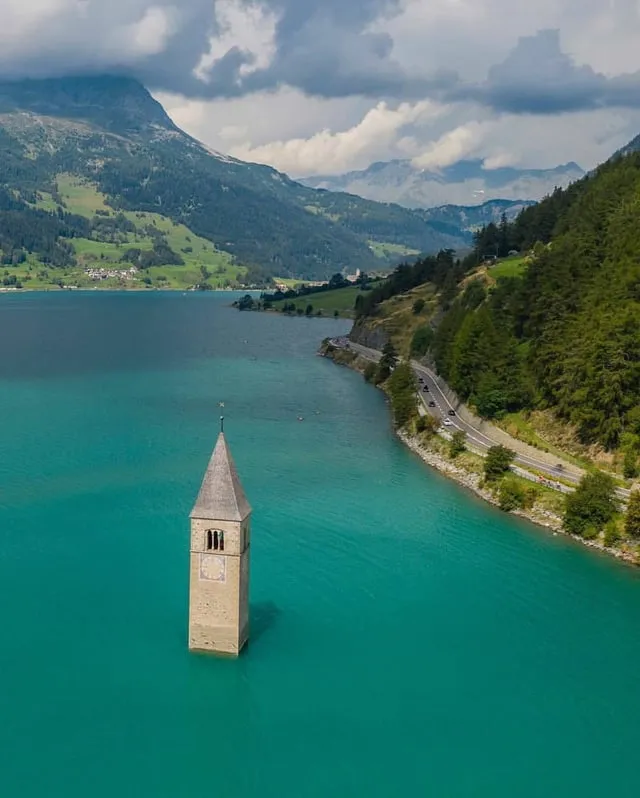
In Val Venosta near the Switzerland and Austria borders, Lake Resia — Reschensee in its German name — is one of the most genuinely unusual lakes in northern Italy, and for a reason with a dark history. This is a manmade lake, a reservoir created in the 1950s by flooding and combining two lakes, which submerged the medieval town of Curon beneath the water. All that remains visible is the steeple — a bell tower rising improbably from the middle of the lake, and local lore insists you can hear the chiming of bells from beneath the surface on cold mornings. The scenery alone justifies the journey. On and around the water: kayaks, paddle boats, kitesurf, windsurf, and fish from the shores, while a flat, paved, 9.6-mile trail circles the lake entirely on bikes or on foot at an easy pace.
Lake Misurina
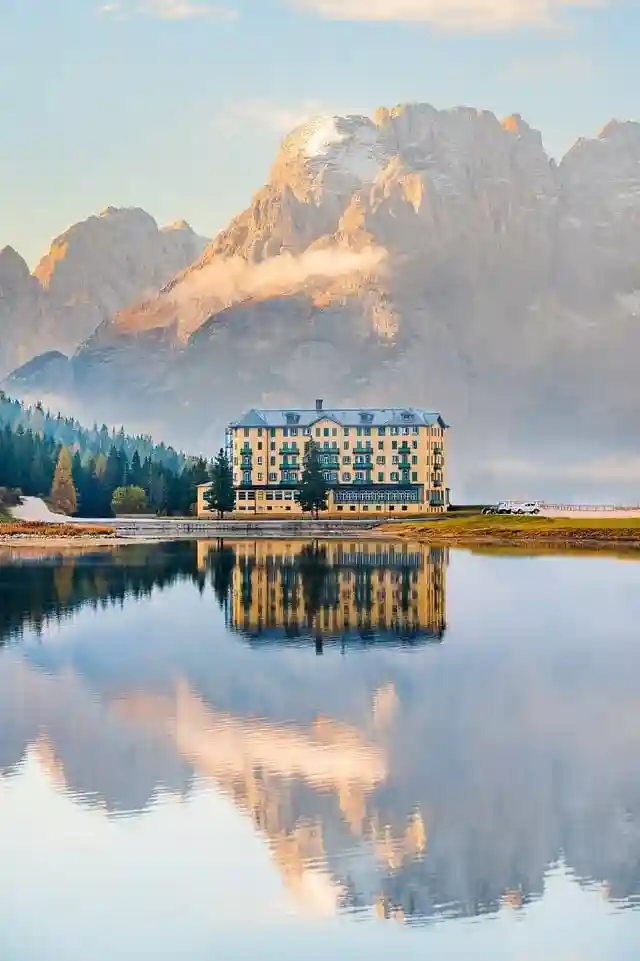
Lake Misurina — Misurinasee in the local bilingual naming tradition of the Dolomites — sits at 5700 feet above sea level and is reachable in 30 minutes from Cortina d’Ampezzo or about 40 minutes by car from Lake Braies, making it natural to combine the two in a single day of lake-hopping. A 1.5-mile loop trail circles the water in less than an hour and delivers the payoff: the Tre Cime peaks reflected in the lake’s surface on a sunny day, one of the defining images of the entire eastern Dolomites. The Col de Varda chairlift above the lake opens up access to a scenic overlook and a network of higher mountain trails for those wanting to go further than the lakeshore circuit.
Lake Dobbiaco
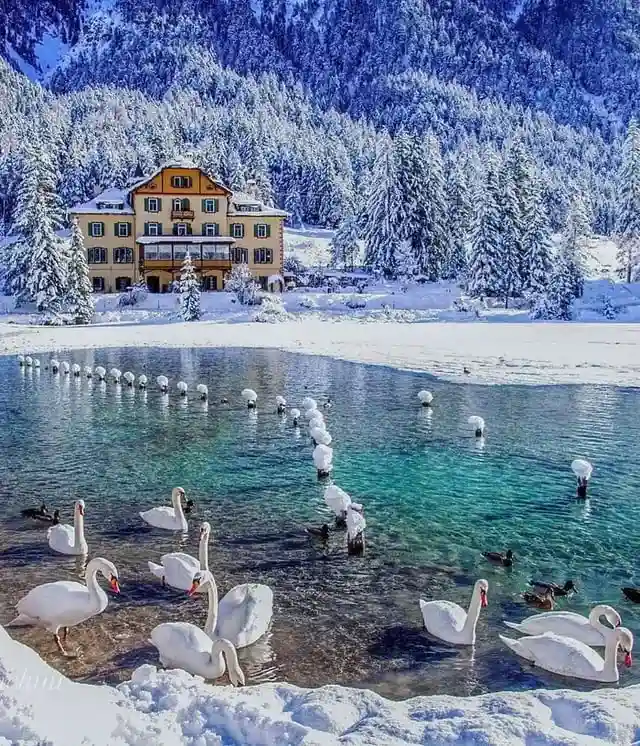
Lake Dobbiaco — Toblacher See — is a small mountain lake sitting just 20 minutes from Lake Braies with a character that’s entirely its own: emerald-colored water, a gentler mountain scenery, and an atmosphere of pure laid-back experience that makes it ideal as a breathing space in a Dolomites itinerary. A walking path runs flat and easy around the lake in about one hour, accessible from the parking area on the northern side. Pedal boats are available for time on the water, and a rocky beach area serves those who want to test the chilly waters or simply find a spot for sunbathing. Several restaurants nearby make a lunch stop easy. The surrounding greenery, mountain peaks, and the sheer sense of uncrowded natural beauty and beautiful landscape give Dobbiaco a relaxed vibe that acts as the perfect counterweight to the drama of Braies or the crowds of Misurina.
Lake Sorapis
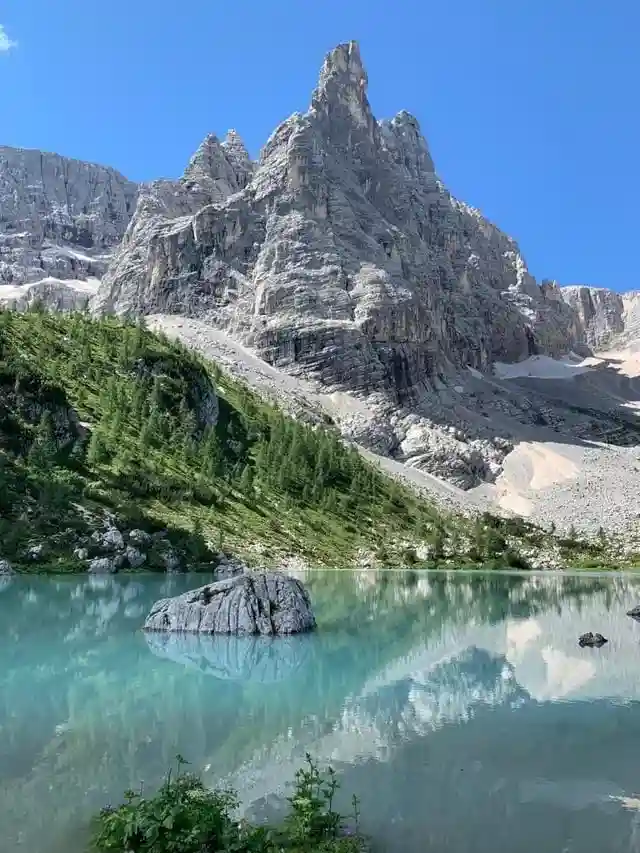
Lake Sorapis is not a lake you simply visit — it’s a lake you earn. The 7.5-mile round-trip hike on trail #215 from the Passo Tre Croci trailhead takes roughly 5 hours round trip and involves serious elevation climb, sections of metal stairs, wooden-planked walkways running along the edge of the mountain, and terrain that will genuinely challenge anyone who is afraid of heights. Hiking boots and hiking poles are not suggestions here — they’re requirements on the tricky terrain. But at the top: a mountain lake of such startling color and isolation that it justifies every step. The lake is popular on social media for good reason, but no swimming and no boating are permitted, preserving the water’s extraordinary clarity. A refuge along the route offers a snack and drink stop mid-hike. This is the kind of stunning place that reminds you why the word exists.
When Is the Best Time to Visit the Italian Lakes?
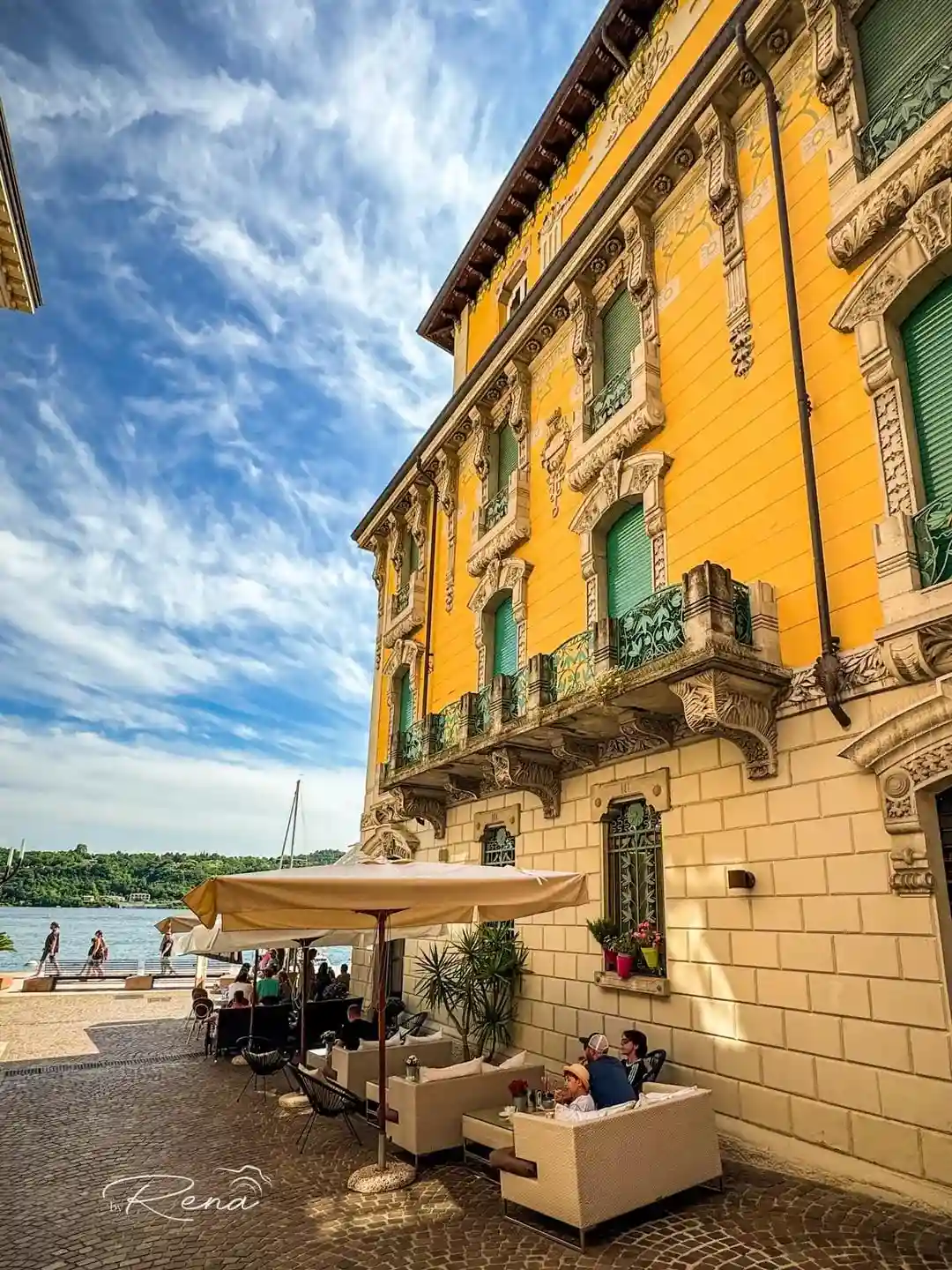
The best time to visit lands between June and early September, when warm summer temperatures, long days, and a packed festivals and events calendar make the lakes feel fully alive. The tradeoff is real though — crowds, higher prices for flights and accommodation, and congested roads at peak season in July and August are genuine deterrents, especially in the prettiest villages of Bellagio, Varenna, and Sirmione where tour groups arrive by the ferry-load. May and October offer a genuinely compelling alternative: beat crowds, pleasant weather, and full access to all outdoor activities without the infrastructure strain. Winter brings few visitors and a certain magical time quality — particularly around December when holiday lights, Christmas markets, and family activities create festive buzz in towns like Cernobbio on Lake Como and Riva del Garda on Lake Garda — though some restaurants, hotels, and key attractions close entirely for the off-season. One practical planning tip that applies regardless of when you go: book ahead, ideally six months in advance, for anywhere near Bellagio, Varenna, or Sirmione during busy peak season.
How Much Time Should I Spend at the Italian Lakes?
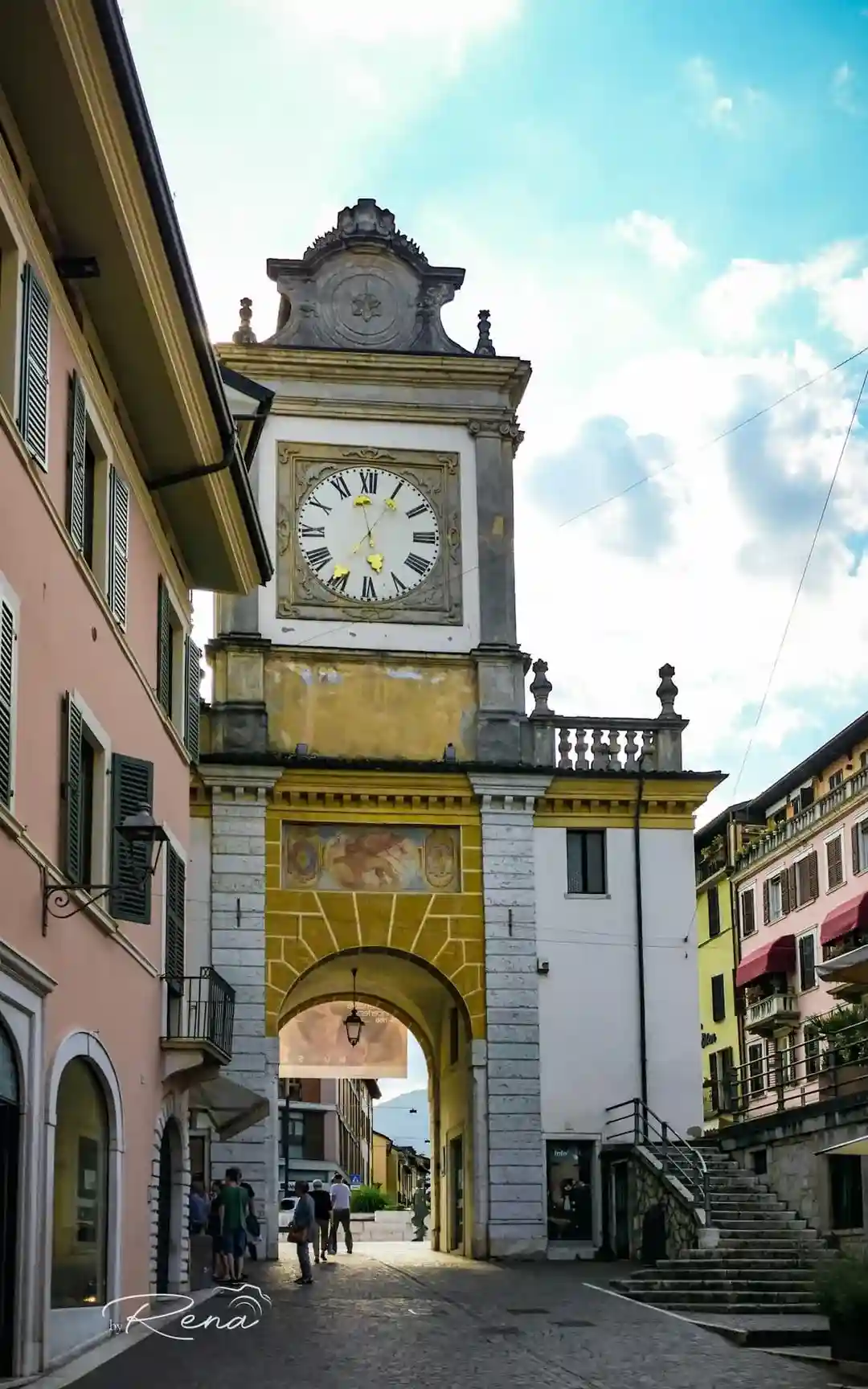
The lakes region is large enough — and diverse enough — that more than a month wouldn’t exhaust its wide range of attractions, but most visitors work with far less. A weekend focused on a single lake with a narrow focus is entirely satisfying: Riva del Garda for outdoor activities, or Bellagio and Varenna on Lake Como explored entirely on foot, or Stresa and Verbania on Lake Maggiore with the islands and villas as the day’s organising principle. A week opens up the ability to combine itineraries into a lake circuit, perhaps even crossing into a neighboring country — Switzerland and Lake Lugano in the pretty Swiss town of Lugano sit close enough to be incorporated naturally. The highlights of any manageable itinerary should include at least one northern lake, one less-visited lake like Iseo or Orta, and a day spent simply on a ferry watching the shore change.
How Do I Get to the Italian Lakes?
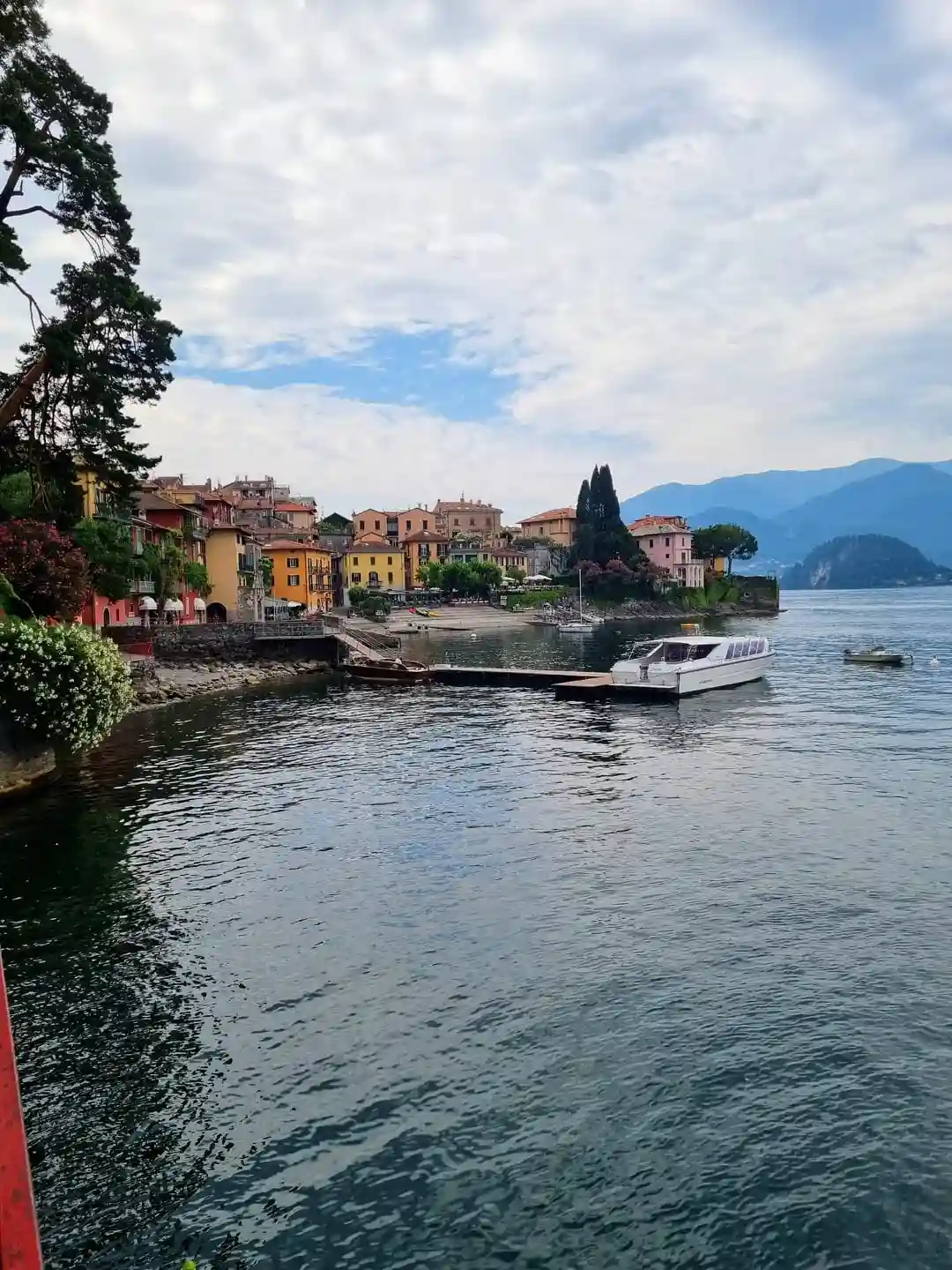
Milan functions as the air hub for the entire region — Milan airport (or more precisely Malpensa and Linate between them) serves international connections from across the world, and from Milano Centrale the local trains fan out to the lakeshores within one hour. Como town is reachable in that time, Laveno Mombello on Lake Maggiore in 1.5 hours, and Desenzano del Garda — gateway to the largest lake — in just 30 minutes. Verona serves as the closest airport for Lake Garda visitors approaching from the east. Green travel by train from elsewhere in Europe is increasingly practical: international connections through Switzerland and France feed directly into the gateway towns without needing to fly. For specific fare and scheduling information, the Trenitalia website allows you to book ahead and often rewards early purchase with significant savings. Arriving by car is possible but comes with complications that grow significantly in summer.
What’s the Best Way to Get Around the Italian Lakes?
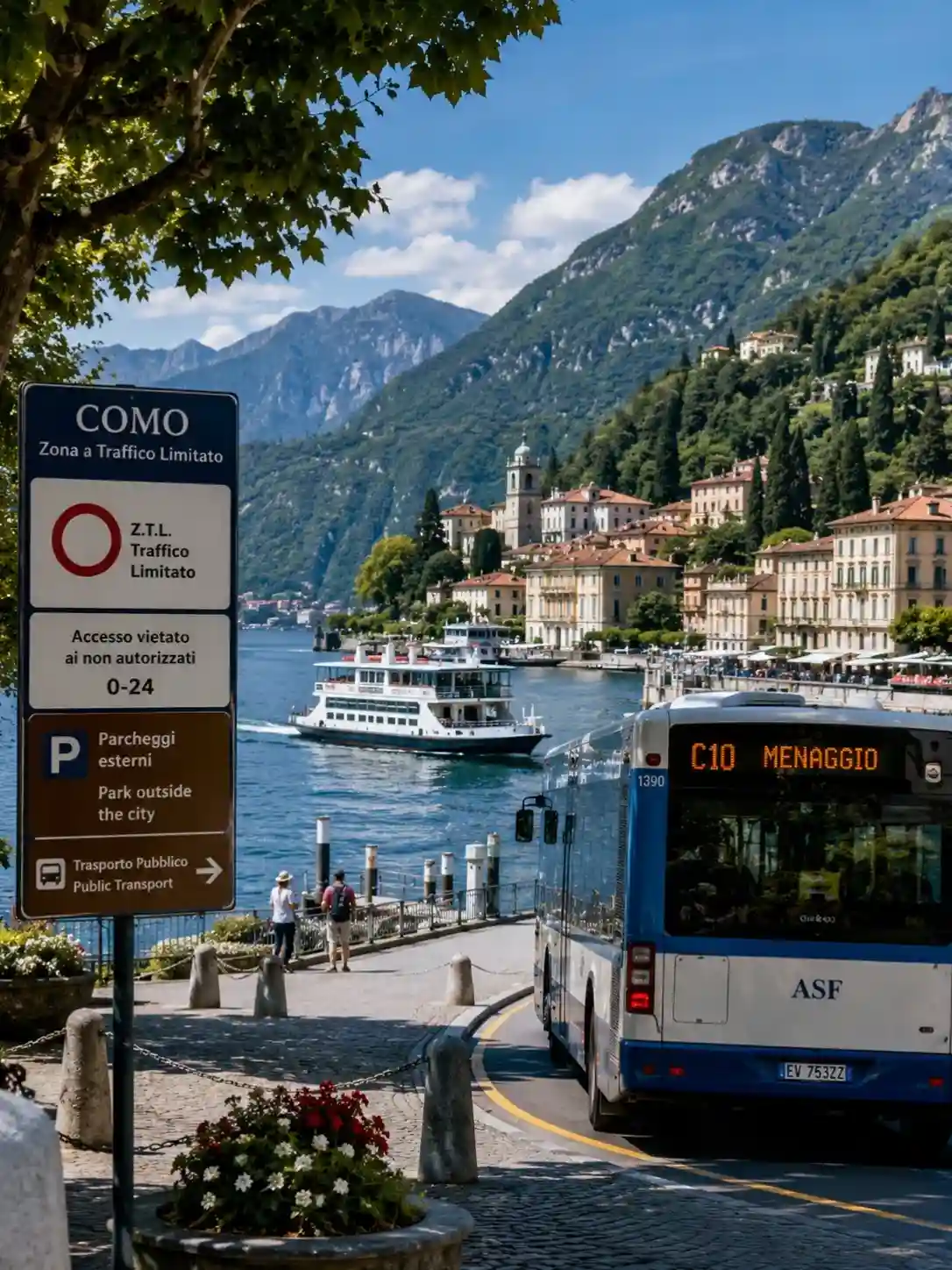
Local buses serve the lakeshore towns reliably, and the ferry system connecting places like Bellagio and Varenna on Lake Como is one of the genuine pleasures of the region — daytime boat services in summer run frequently and cheaply, though reduced schedules apply in winter and some routes stop entirely. For an ambitious itinerary that involves the mountains above the lakes, a car gives the freedom that public transport can’t match, though the trade-offs are real: narrow roads, genuinely difficult parking on summer weekends, and the constant risk of speed cameras and speed traps on the scenic routes. The old city of Como has restricted driving in its centre — the Zona a Traffico Limitato bans non-residents from driving in, requiring visitors to park outside and arrive by public transport. The simplest philosophy: take ferries between lakefront villages, buses for towns without ferry access, and save the rental car for excursions into the hills.
How Much Money Do I Need for the Italian Lakes?
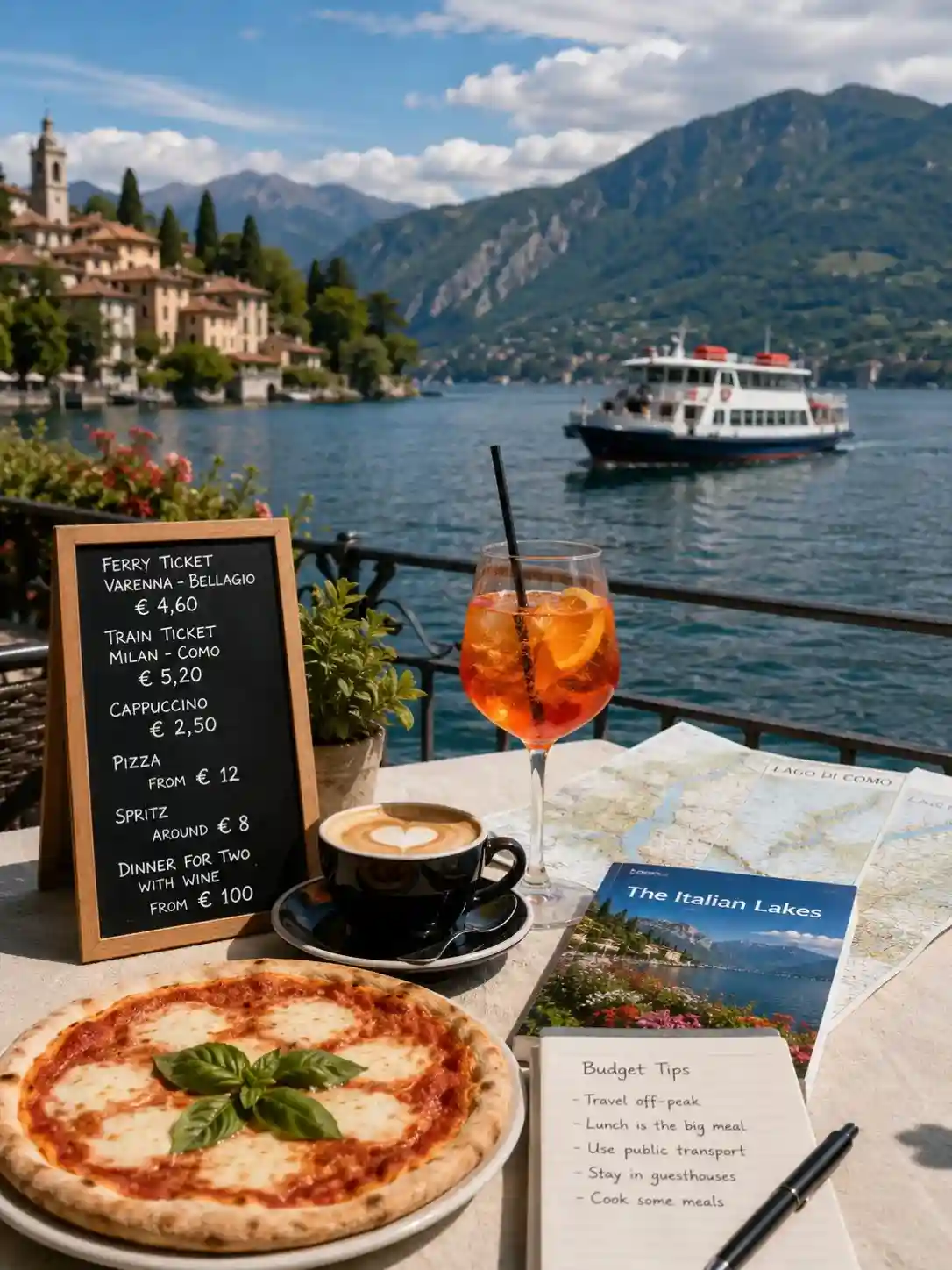
The Italian Lakes have a reputation for being expensive, particularly in summer between June and September when hotel prices hit a real premium. There are ways to save money: arrive with a rental car shared between a group, sleep in hostels or simple guesthouses from around €48 for a hostel room, Airbnb apartments from €110 for self-catering that allows you to economize meals around the big spend. A basic room for two starts around €140 — less in shoulder season, significantly more in peak. For eating: the trick is to make lunch the big meal — lunch deals and multi-course dining at midday cost a fraction of the same food at dinner. Markets and simpler cafes handle breakfast and snacks. Individual costs to benchmark: a Ferry ticket from Varenna to Bellagio costs just €4.60, a Train ticket from Milan to Como runs €5.20, a Cappuccino is about €2.50, Pizza from €12, a Spritz around €8, and Dinner for two with wine typically runs from €100 at a decent restaurant. Budget travelers can manage; the lakes simply reward those who plan their splurges deliberately.
Map of the Lakes in Northern Italy
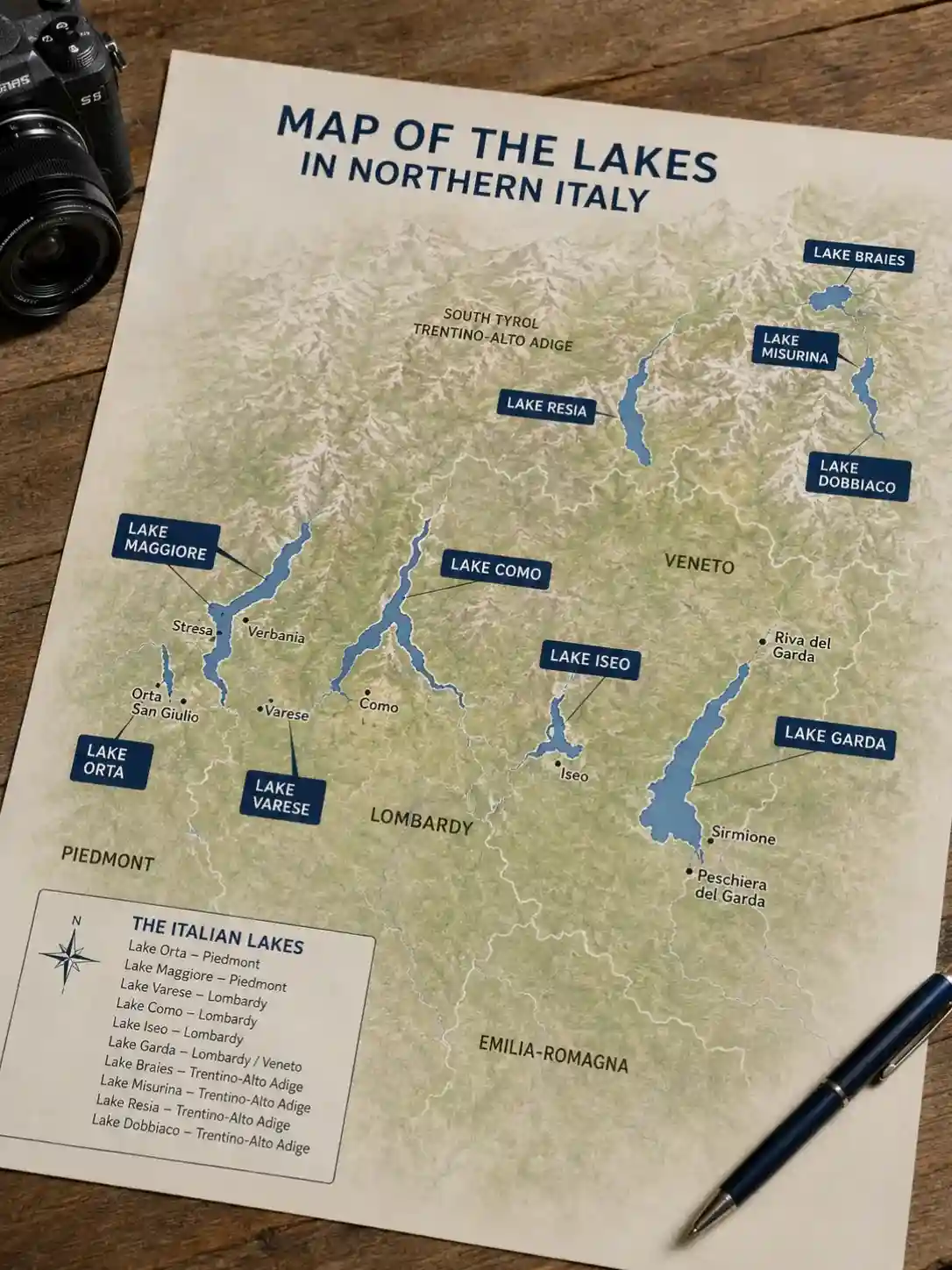
The Italian Lakes Region clusters in northern Italy around 4 of 8 regions, arranged roughly west to east: Lake Orta, Lake Maggiore, Lake Como, Lake Iseo, and Lake Garda form the 5 major lakes of the Italian Lakes Region in Piedmont and Lombardy. The map extends north into the Dolomites to include additional lakes that sit outside the classic circuit: Lake Braies, Lake Misurina, Lake Resia, and Lake Dobbiaco all cluster in the far north, while Lake Varese sits as a quieter addition between Maggiore and Como on the western edge.
Which Are the Best Italian Lakes for Boating?
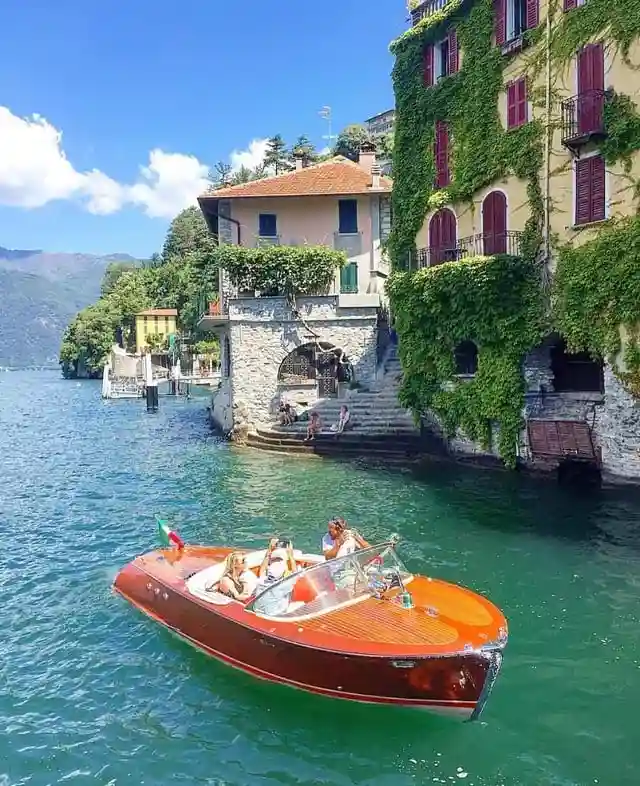
The big three — Como, Maggiore, and Garda — have the deepest infrastructure for boating, whether that means hopping on a ferry, booking a chartered speedboat for the afternoon, or picking up the keys to a motorboat from any of the dozens of rental companies scattered across the tourist hubs. Boats under 40hp don’t require a boat licence in Italy — just a driver’s licence — which opens up self-guided explorations to most visitors with basic boat-handling confidence. Rates typically run around €130 for two hours or €180 for four hours, with discounts available on longer rentals (fuel is usually additional). Como Lake Boats operating from the north end of the lake is among the more competitive on prices; around the tourist hubs of Bellagio and Menaggio, similar watercraft hire is widely available. The Borromean Islands on Maggiore are particularly well-suited to exploration by small boat, and Garda’s sheer size rewards anyone who wants to spend a full day on the water.
What Are the Beaches Like on the Italian Lakes?
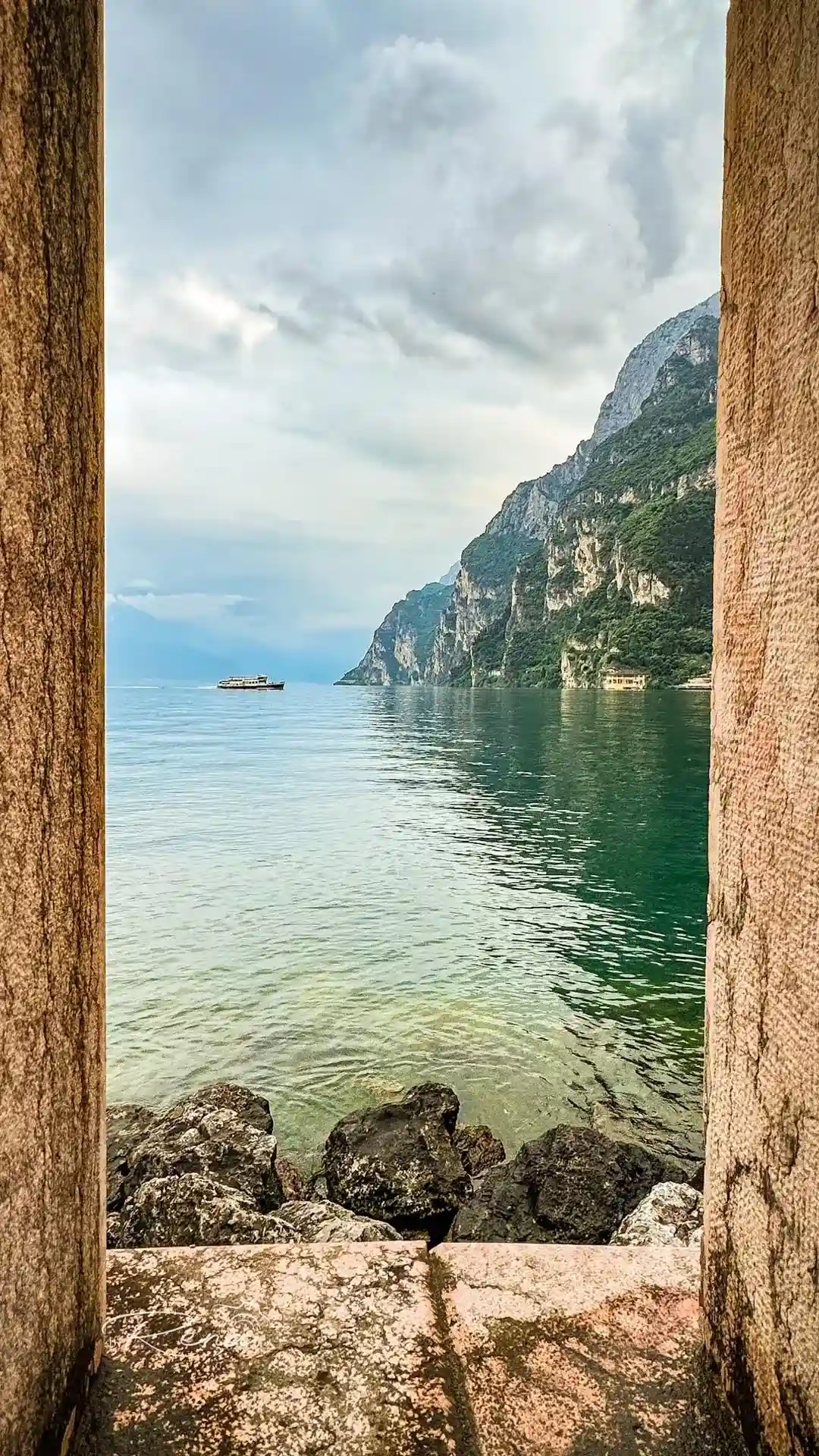
Arrive at most Italian lake beaches expecting what you’d find at a Mediterranean resort and you’ll be surprised — these are largely stony shores of pebbles and shingle, and wet shoes or swim shoes are genuinely recommended for comfortable access to the water. Grassy lawns and picnic areas supplement the pebble stretches at many established beach points, particularly around Garda and the northern lakes, offering a more comfortable base for a day of sun-seeking even when the shoreline itself is rocky underfoot.
What Are the Best Festivals in the Italian Lakes?
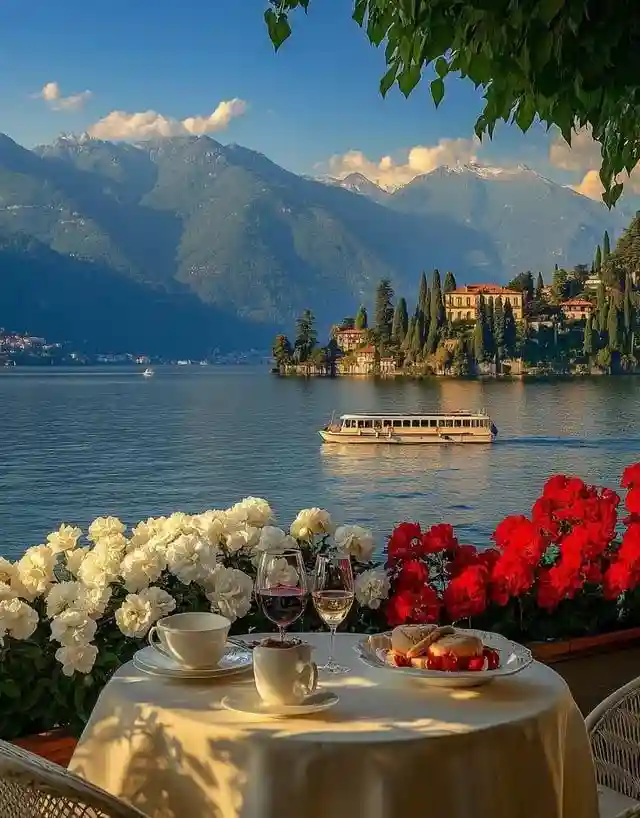
Festivals begin as early as January through March with Carnival celebrations on Lake Garda and Lake Como — music and color brought to the lakeside towns in ways that feel genuinely local rather than staged for tourists. The Sagra di San Giovanni in June is one of the most visually extraordinary: boat flotillas and fireworks over Lake Como in honor of the patron saint, visible from multiple shores simultaneously. Through July to September, the Stresa Festival of classical music uses Lake Maggiore and the extraordinary acoustic setting of island palaces and grand hotels as its stage — concerts at the Basilica di Sant’Abbondio in Como in August extend the season further. The spring shoulder season brings smaller but often more intimate music events tied to local feast days throughout the region.
Is Overtourism a Problem in the Italian Lakes?
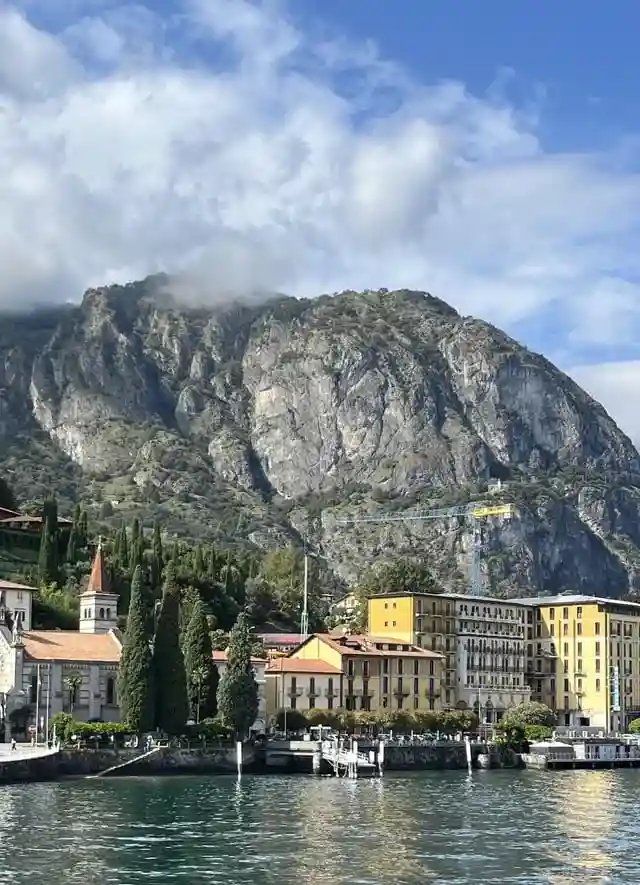
Overtourism is a real and documented issue on Lake Garda and Lake Como specifically — the volume of tourists arriving by car from across Europe during busy summer months creates genuine infrastructure strain on communities that were never designed for this scale of visitation. The honest answer is yes, in the most popular spots, it is a problem. The practical response: shoulder seasons — and particularly the smaller villages that sit just off the main tourist circuits — offer peaceful breaks that feel nothing like the congested highlights. The infrastructure of the lakes region is genuinely not built for the summer crowds it now receives, and choosing when and where to visit thoughtfully makes a significant difference to the experience for everyone.