Exploring Rome: The Ultimate Travel Guide for Every Kind of Traveler
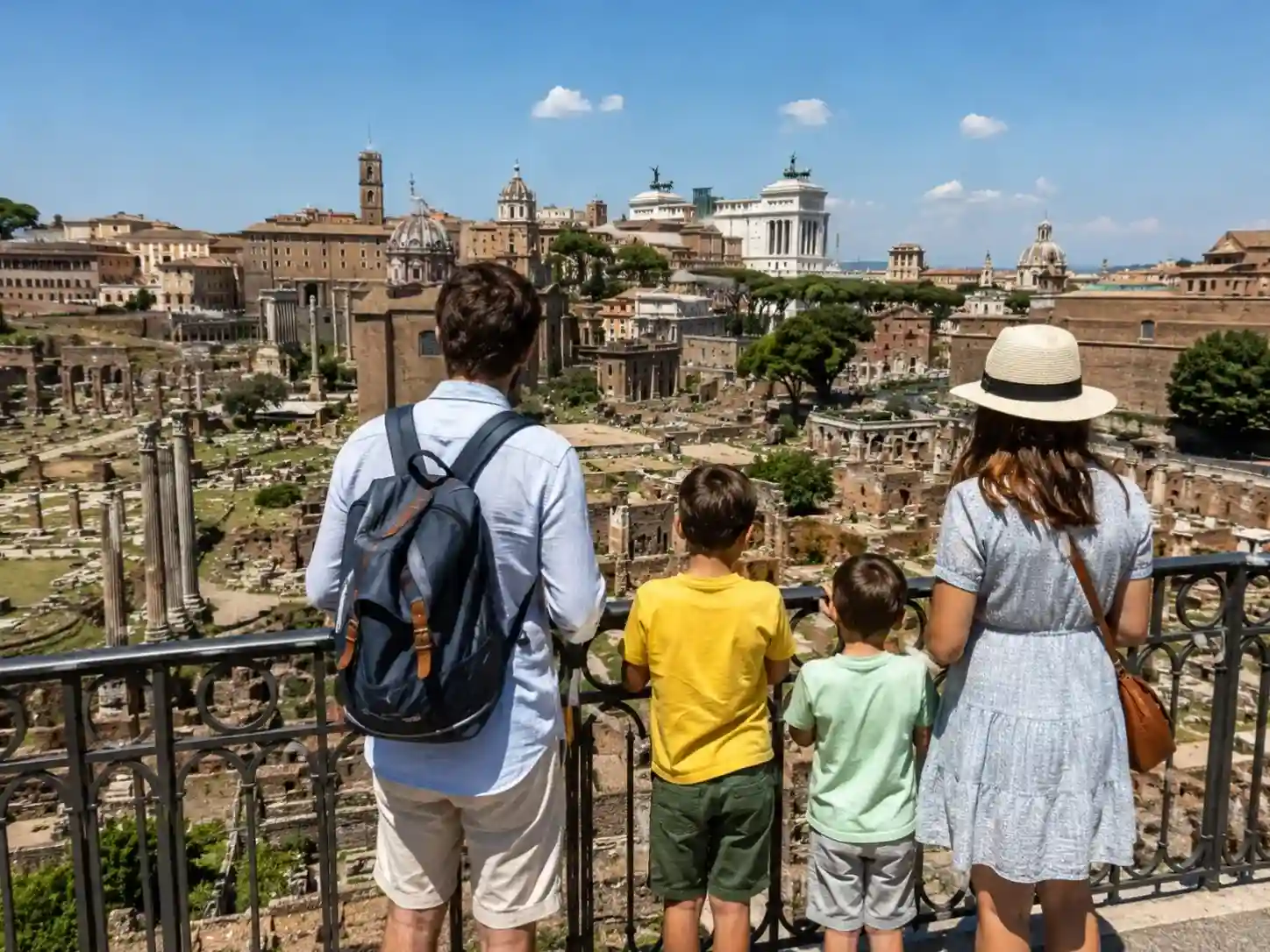
I always tell parents planning a Rome trip to build their first day around the city parks rather than the ruins — kids forgive a lot when there’s room to run. Borghese Gardens is where I send everyone first: grab one of the bike rentals near the entrance, drift the little lake with the paddle boats, and let the scattered playgrounds soak up whatever energy the flight didn’t. Tucked into that same green stretch is the zoo, properly called Bioparco di Roma, home to more than 1,000+ animals — my niece once refused to leave the reptile house for a solid hour.
Food turns into its own attraction here. Eataly in Ostiense runs kids’ workshops that somehow keep a toddler seated at a pasta table for twenty straight minutes, which is a food experience worth the trip alone. When the city itself gets overwhelming, forest bathing in Oriolo Romano — a genuinely train accessible UNESCO heritage forest — resets the whole group in an afternoon. Swap the trees for sand and you’re at the beach in Anzio, tied historically to Emperor Nero and blessed with a proper sandy coastline that doesn’t feel like a tourist afterthought.
Rainy days have their own answer. The theme park at Cinecittà World eats an entire afternoon happily, and its planetarium runs celestial shows alongside NASA missions material that makes science for kids feel like play rather than a lesson. Technotown, inside Villa Torlonia, pushes further with robotics, virtual reality, and 3D printing stations that older kids genuinely fight to get back to.
Dinosaurs reappear at the WWF Oasis in Macchiagrande, where life-sized dinosaur models stand among the trees like leftovers from a film shoot. And no family day here ends properly without gelato — Fassi, pouring cones since 1880, remains the yardstick every one of Rome’s local gelaterias gets measured against.
Authentic Rome
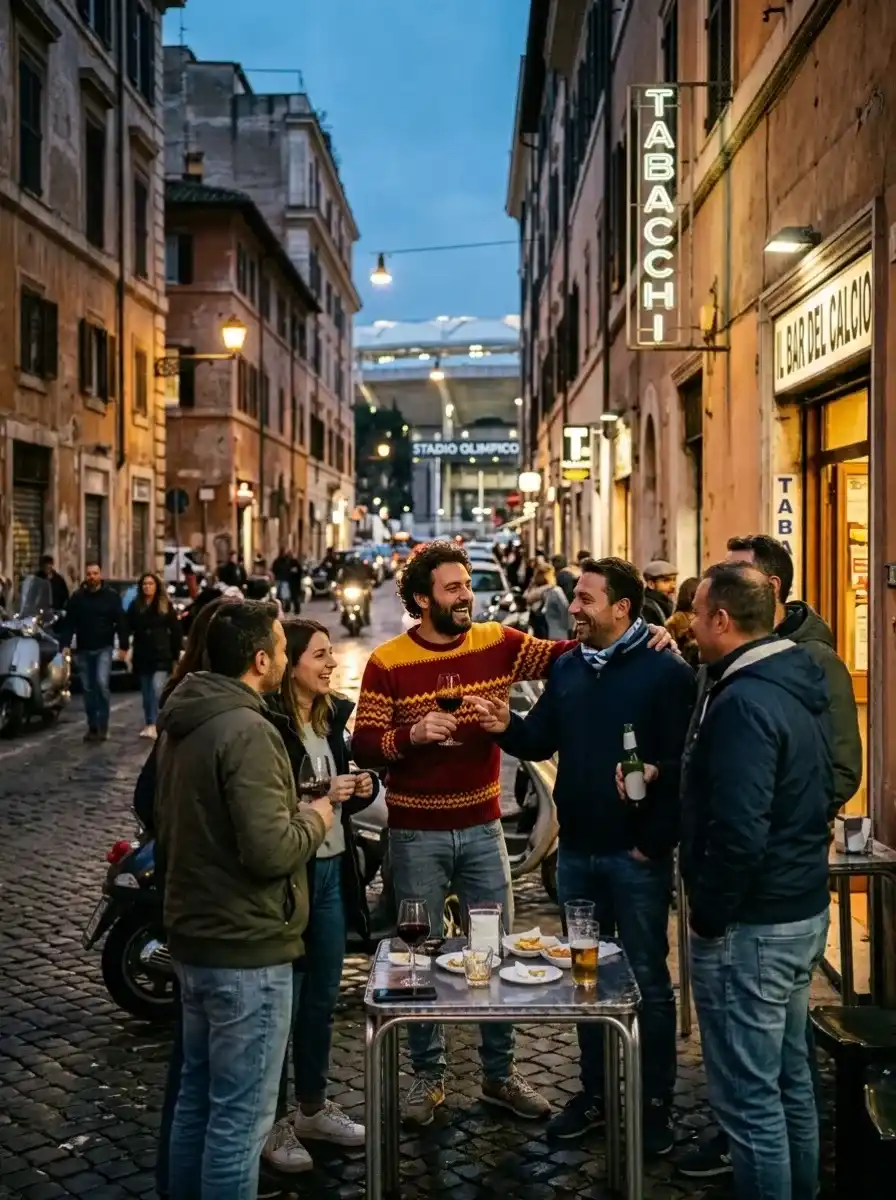
Skip the postcards for a night and go where Romans actually go. Sports run deep in this city’s identity — pick a side between AS Roma and SS Lazio, catch a match at Stadio Olimpico, and if you time it right, a Six Nations rugby weekend turns every Irish pub in the center into a genuine local scene, not a tourist trap wearing a shamrock.
For a day trip with more texture than the guidebooks admit, Tivoli and its gardens at Villa d’Este are worth the train ride, and Bracciano — that quiet town on Lake Bracciano where Tom Cruise and Katie Holmes married back in 2006 — still trades on that bit of trivia over an aperitivo at any enoteca on the square.
The city’s underground culture rarely makes it into travel articles, but it should. Centri Sociali, the network of social centers, and Forte Prenestino — a historic squat built inside a real military fort — host concerts, flea markets, film screenings, and urban gardening projects that show a Rome most visitors never see. If fitness is more your thing, Roger Gracie Roma teaches Brazilian Jiu-Jitsu, the outdoor gyms scattered through Caffarella Park draw a loyal crowd, and every autumn the Rome Marathon turns the entire historic center into one long finish line.
Youngsters’ Rome
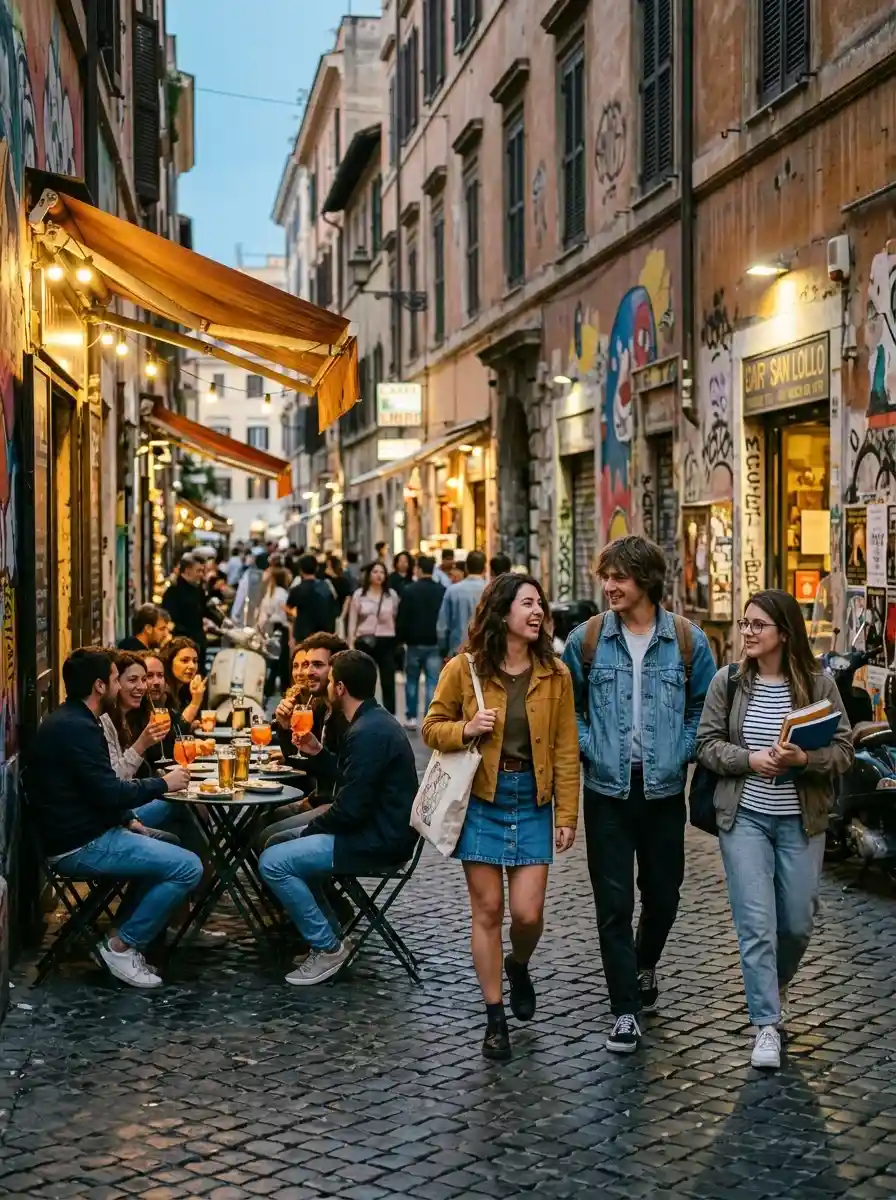
Trastevere is where the city’s street life actually happens after dark. Piazza Trilussa fills up every evening, the San Callisto bar crowd spills onto the cobbles, and the whole neighborhood has an Instagrammable charm that’s landed it all over TikTok — though honestly, the cobblestone streets and ivy-draped brick walls earned that reputation long before the app existed. The nightlife scene here still feels like something out of romantic old movies, and Piazza di Santa Maria is where I’d send anyone craving decent pizza al taglio without the tourist markup.
Across the river, San Lorenzo is students central — think eclectic cafes, live music joints, and street art covering nearly every wall, plus vintage stores and bookshops wedged between them. Evenings there run on aperitivos and enough underground culture and half-understood Italian slang to make you feel like a local by midnight. If clubs are the goal, Goa and Shari Vari deliver EDM and funky house with chart-topping hits dropping well past midnight.
For anyone traveling solo or light on a budget, Couchsurfing meetups, language exchanges, and free city tours turn into instant social calendars, alongside pub crawls, potluck dinners, and open mics at spots like The Fiddler’s Elbow and Lettere Caffè, where standup comedy and poetry nights run on rotation. Refuel on street food — supplì and a proper porchetta sandwich — then close the night at Gelateria dei Gracchi. And when the budget’s tight, remember the best of Rome is still free: the Roman Forum, the Colosseum, the Spanish Steps, Piazza di Spagna, St. Peter’s Basilica, and the Trevi Fountain, where the coin toss costs nothing but superstition.
A Tourist’s Rome
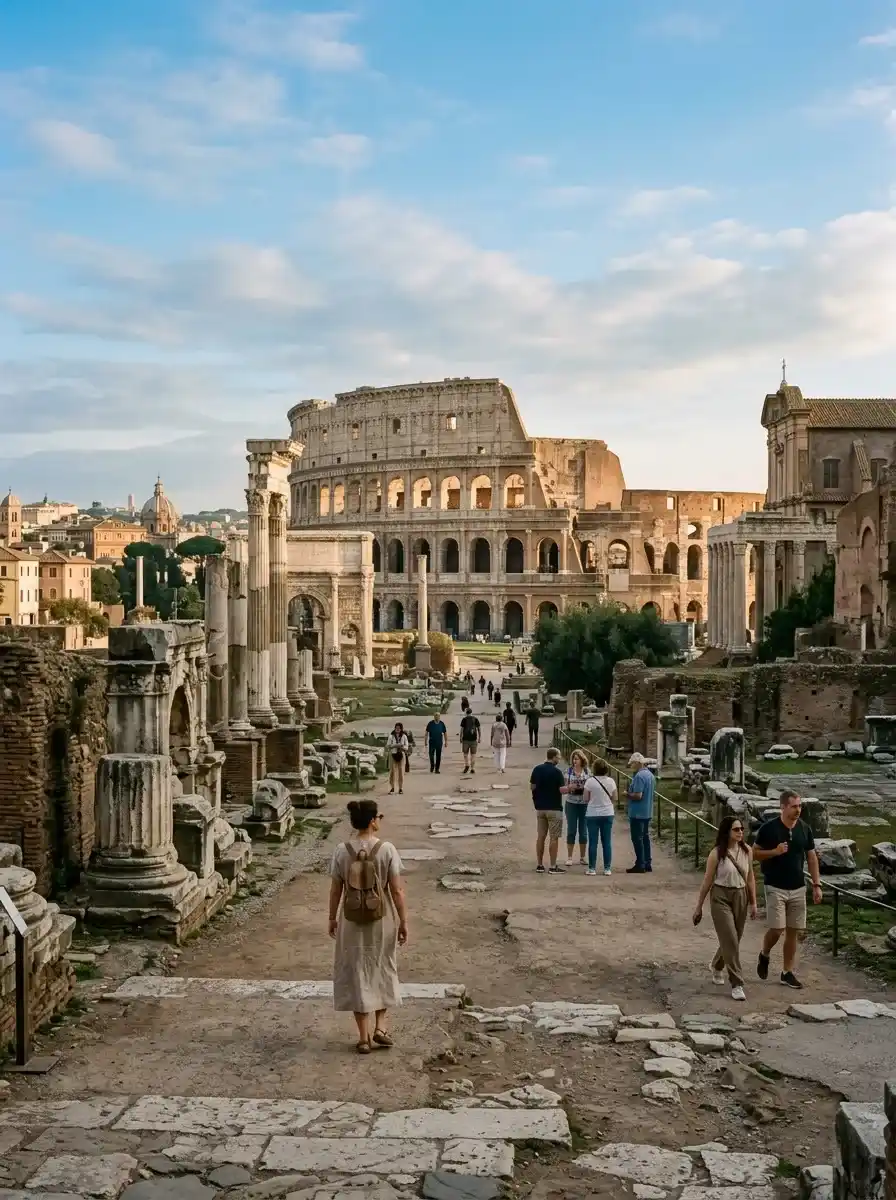
There’s no getting around the essentials, and I wouldn’t try to talk anyone out of them. The Colosseum, the Vatican, and the Roman Forum anchor most first trips, while the Spanish Steps pull in crowds mostly for the view. Art lovers should prioritize Musei Capitolini and Galleria Borghese, both stacked with Bernini and Caravaggio — and a few of Rome’s free museums rarely make anyone’s shortlist, which is exactly why they’re worth it. Villa di Massenzio, once a horse racing track, sits quietly near Circus Maximus, and the Museo delle Mura, built into the Aurelian Wall, is one of the better-kept secrets in the city.
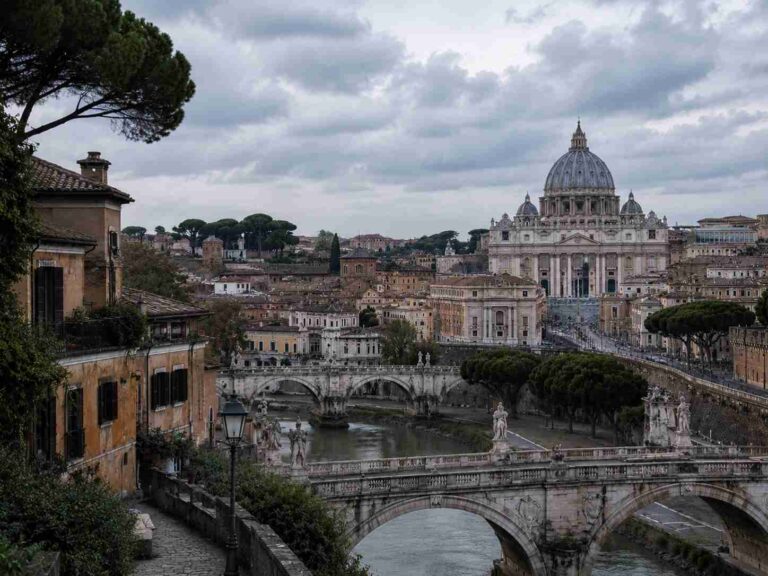
St. Peter’s Basilica inside Vatican City is a lesson in scale — genuinely Renaissance architecture at its most ambitious, and the world’s largest church by most measures. The dome climb runs 320 steps, entry is free entry, though there’s always a security check and a strict dress code waiting at the door. The Vatican Museums and Sistine Chapel, with Michelangelo’s ceiling as the obvious draw, genuinely need advance booking — ticket scarcity is real, and bots, scammers, and resellers all thrive on it. Book through the official channel at least 60 days out and watch for the midnight reset on availability, or let Get Your Guide handle a guided tour if patience isn’t your strength.
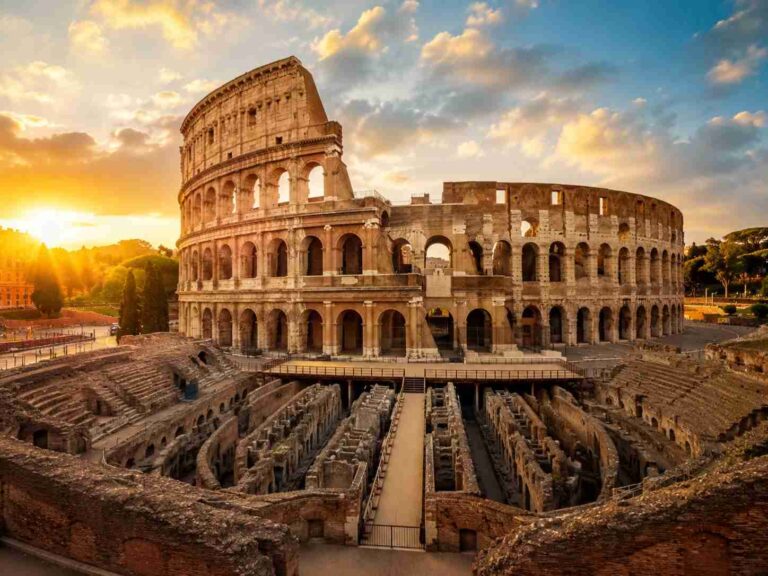
Toss a coin at the Trevi Fountain — that Baroque beauty earns every cliché written about it — then try the underground tour of the Aqueduct Virgo for something quieter. An urban hike through Aqueducts Park rewards early risers, and Piazza Navona, centered on the Fontana dei Quattro Fiumi, is another Bernini showcase worth lingering over, ideally with a cappuccino from the Chiostro del Bramante and whatever art exhibition happens to be running. Buy Colosseum tickets 30 days before if you can, since the 8:30am slot beats the crowds and the official ticket system rewards early planning. Arriving by train, know that Termini Train Station is the biggest station in Europe, and its hidden platforms — there are 9 secret platforms — trip up even seasoned visitors.
How can I avoid crowds while visiting Rome?
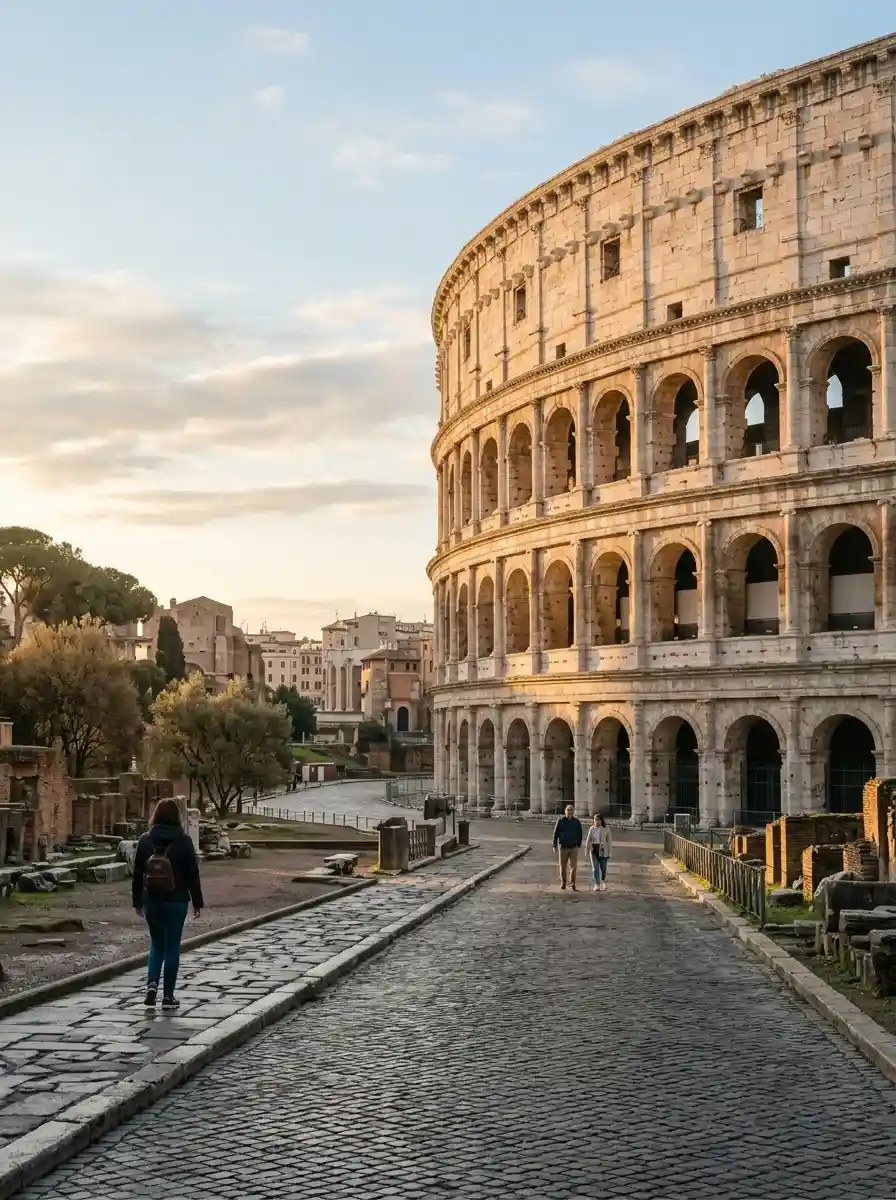
Timing beats tactics here. At the Vatican, early or late visits thin the lines dramatically, and a proper sunrise tour of the Colosseum at opening time gives you the ruins at a genuinely slower pace, without the tour-group traffic jams that build up by mid-morning. Once the monuments feel done, Rome’s green spaces offer real quiet — Giardini degli Angeli and Parco del Pineto barely register with tourists, and a day trip out to Castel Gandolfo or along the Appian Way trades crowds for actual breathing room.
Is Villa Medici worth visiting in Rome?
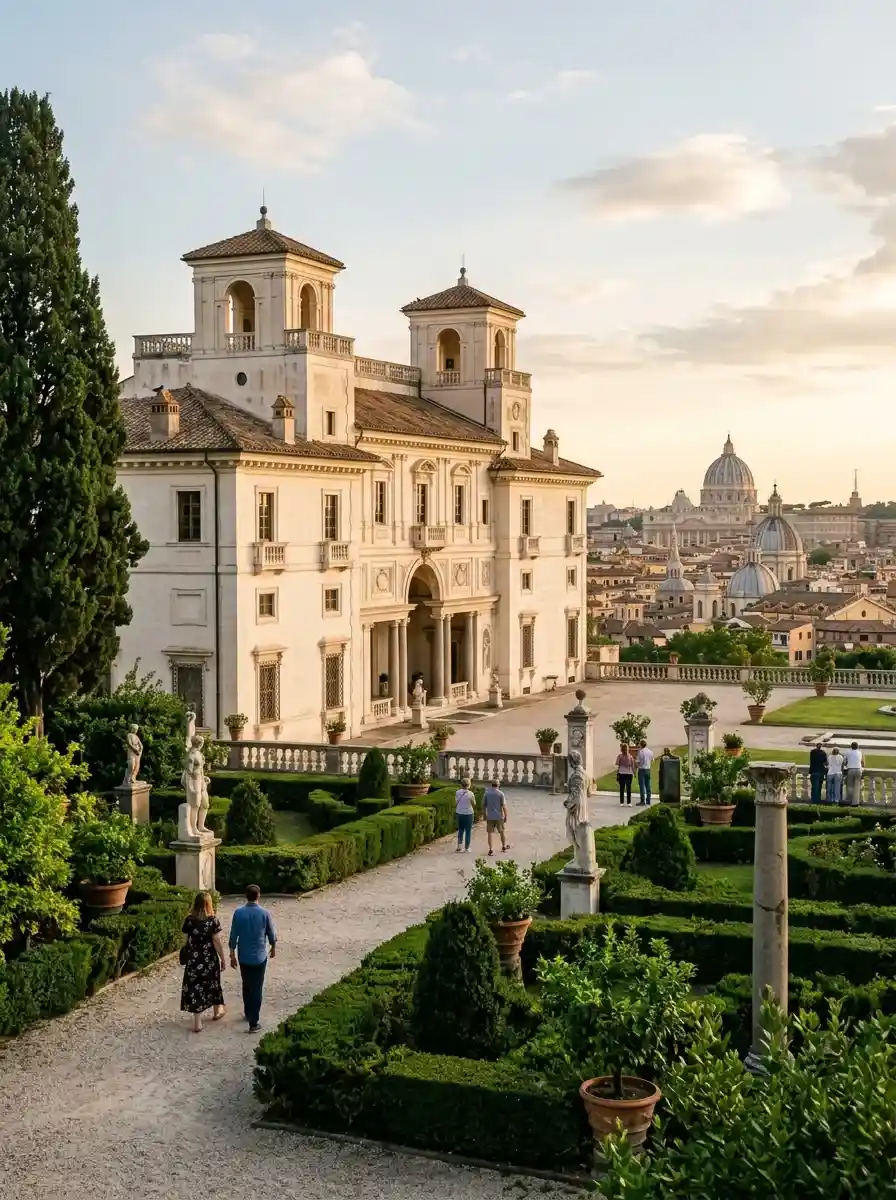
In a word, yes. Villa Medici offers a far quieter cultural experience than its famous neighbors, with Renaissance architecture and manicured gardens that open onto some of the best panoramic city views in Rome. It houses the French Academy in Rome, and its rotating exhibitions and events mean there’s usually a reason to come back a second time.
Are there any lesser-known neighborhoods in Rome worth exploring?
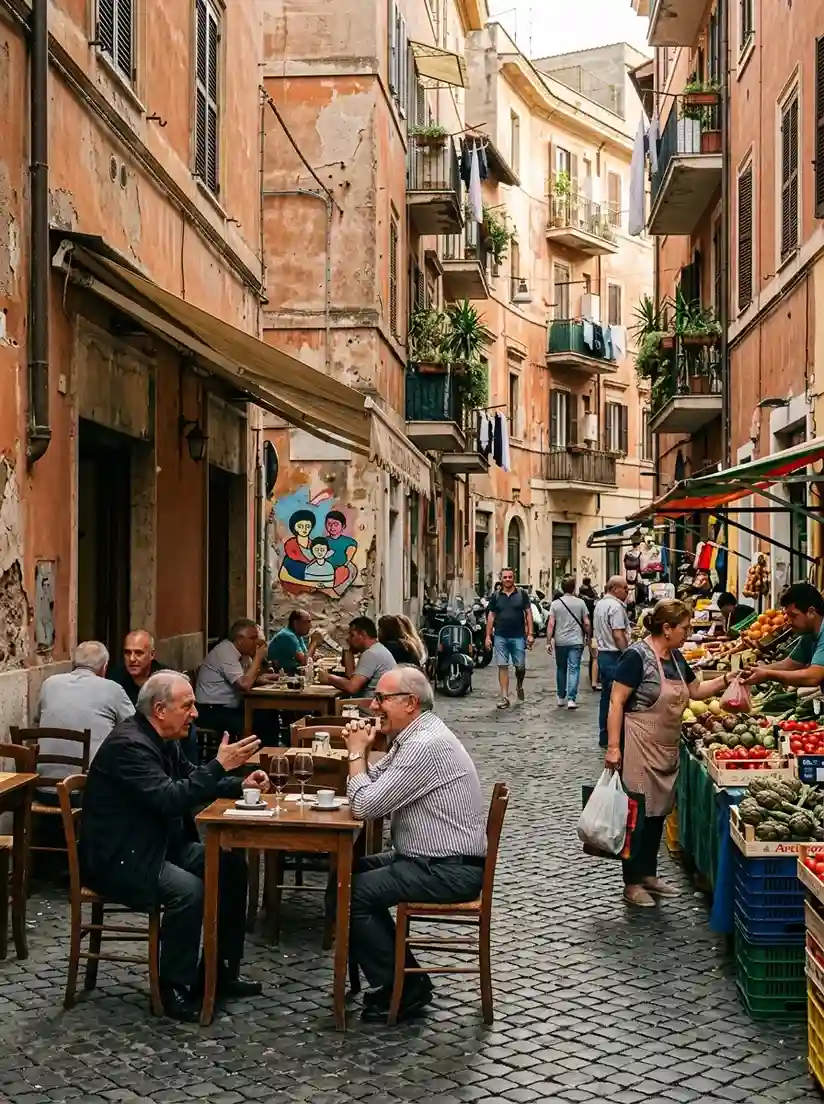
Testaccio is the answer I give most often — a genuinely under-the-radar neighborhood where local life still outnumbers the tourist hotspots. Its vibrant food market and string of local trattorias serve traditional Roman cuisine the way it’s meant to taste, and the contemporary art museum MACRO sits a short walk from both. Nearby, the ancient Pyramid of Cestius and the Protestant Cemetery offer a quieter, more reflective slice of Rome’s past.
Where can I find the secret keyhole in Rome?
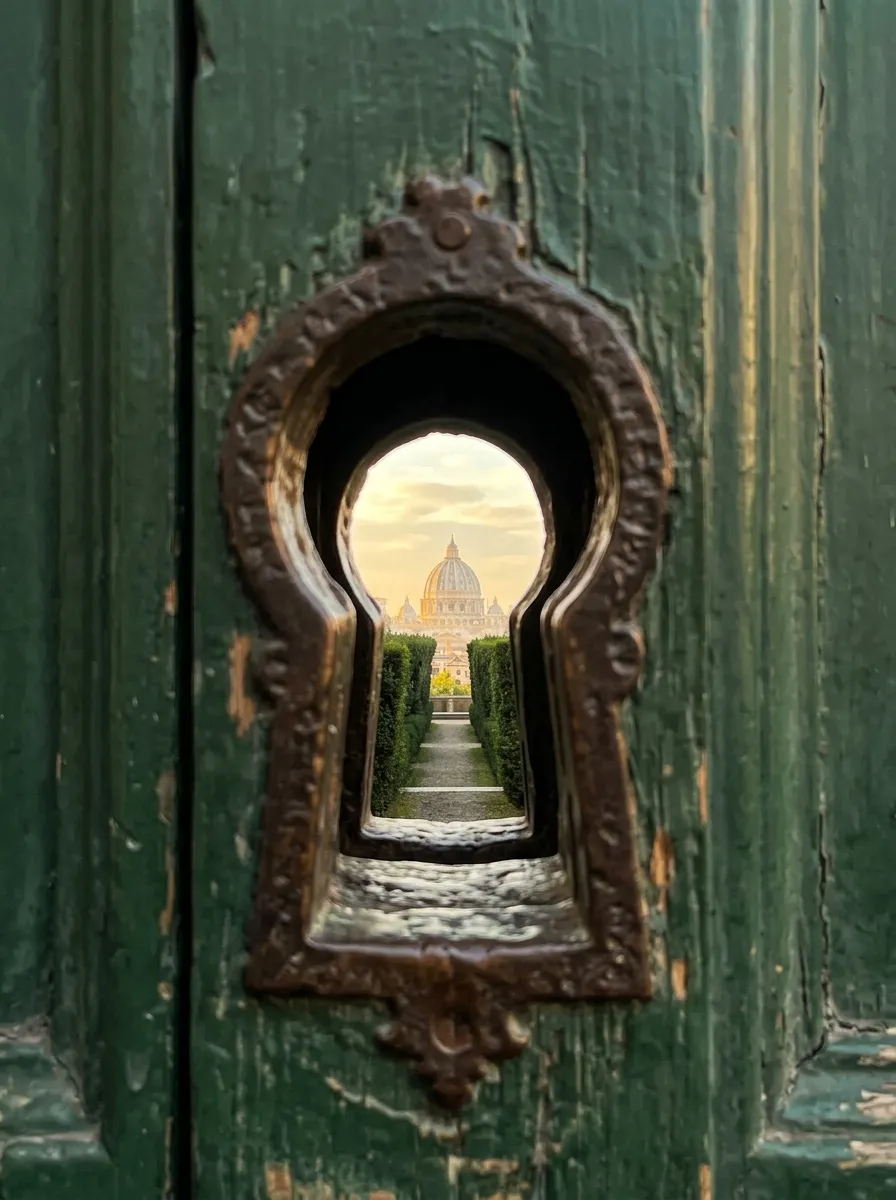
The secret keyhole sits on Aventine Hill, inside the Piazza dei Cavalieri di Malta — a genuinely picturesque square in its own right. The framing trick is credited to Giovanni Battista Piranesi, the architect behind it, dating back to 1765; peer through and you get a perfectly framed view of St. Peter’s Basilica through a small doorway that’s become a certified hidden gem. Social media has made sure there’s usually a hefty line, so treat it as a quick glance rather than a lingering stop.
What are some activities for people in their 20s to do in Rome?
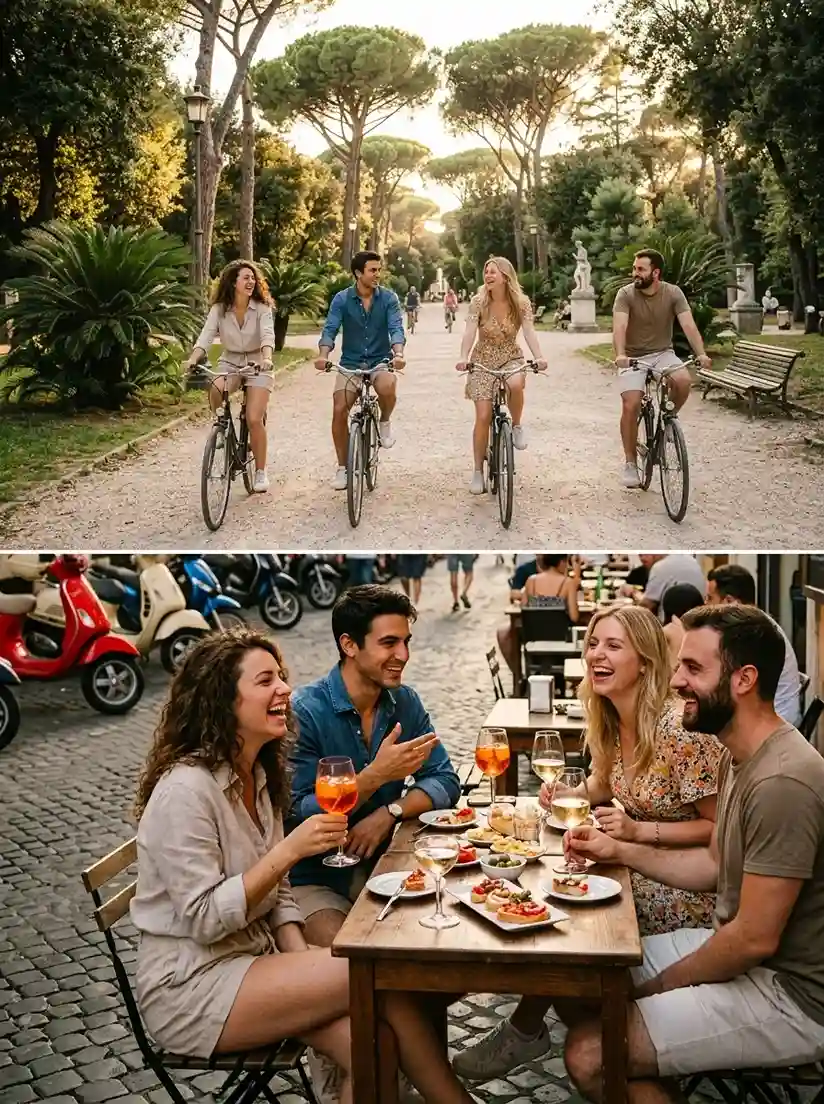
Rent a scooter for genuinely flexible sightseeing, or split a four-person bike with friends and cover Villa Borghese as a proper group activity. A cooking class teaching authentic Italian recipes makes for a good rainy-day plan, and there’s no better way to close things out than an evening in Monti with a bottle of wine, easing into aperitivo with friends.