7 Fairytale Towns in Germany for a Magical 3-Day Trip
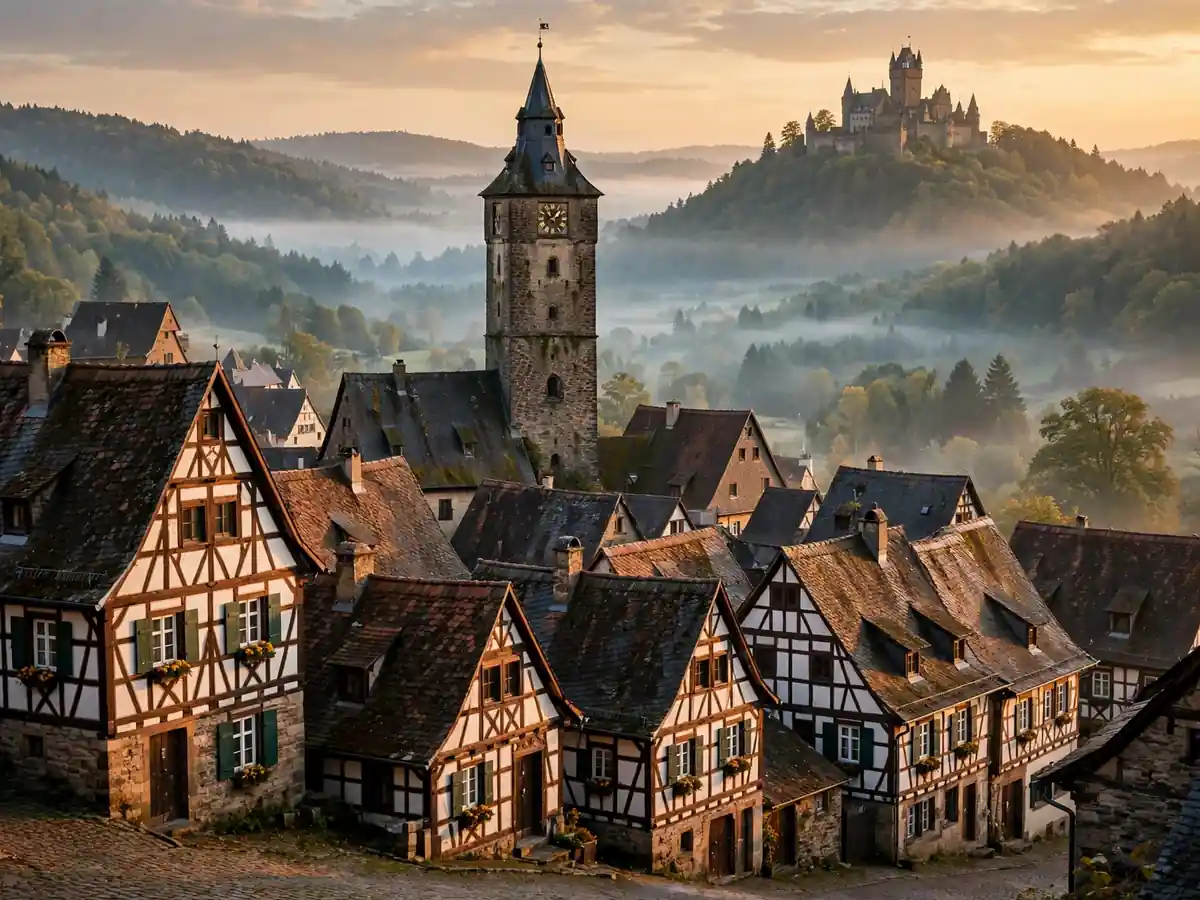
Half-timbered houses leaning over cobblestone lanes. Medieval walls with watchtowers. A castle on a hill that looks like it was drawn for a storybook. Germany’s fairytale towns are not a metaphor. They are real places, and the best of them sit close enough together to string into a single three-day route.
This guide covers seven storybook towns (Würzburg, Rothenburg ob der Tauber, Dinkelsbühl, Nördlingen, Bamberg, Landsberg am Lech, and Füssen), plus a realistic day-by-day 3-day itinerary with drive times, an honest car-vs-train breakdown, where to stay, and when to go.
The short version: Fly into Frankfurt, start in Würzburg, sleep in Rothenburg after the day-trippers leave, spend day two hopping between walled towns, and finish at Neuschwanstein Castle on day three. You need a car to do the full route properly. Bamberg, the UNESCO-listed beer town, works as a smart swap if you’d rather go north than south.
Why These Towns Feel Like Fairytales
The “fairytale” look comes down to a few very real architectural ingredients. Fachwerk (half-timbered construction with exposed wooden beams) gives streets their storybook texture. Complete medieval city walls and towers (Rothenburg has 46 of them, according to the German National Tourist Board) let you walk a town’s original perimeter. Add cobblestones, hilltop castles, and river valleys, and you get places the German National Tourist Board itself describes with words like “epitome of a medieval German town,” their description of Rothenburg ob der Tauber.
One honest note: not every old town is equally “original.” Rothenburg’s historic center was damaged in 1945 and carefully rebuilt; towns like Monschau in the west were spared by wars entirely. What matters for your trip is the experience on the ground, and these seven deliver it.
The 7 Fairytale Towns in Germany
1. Würzburg: The Baroque Gateway
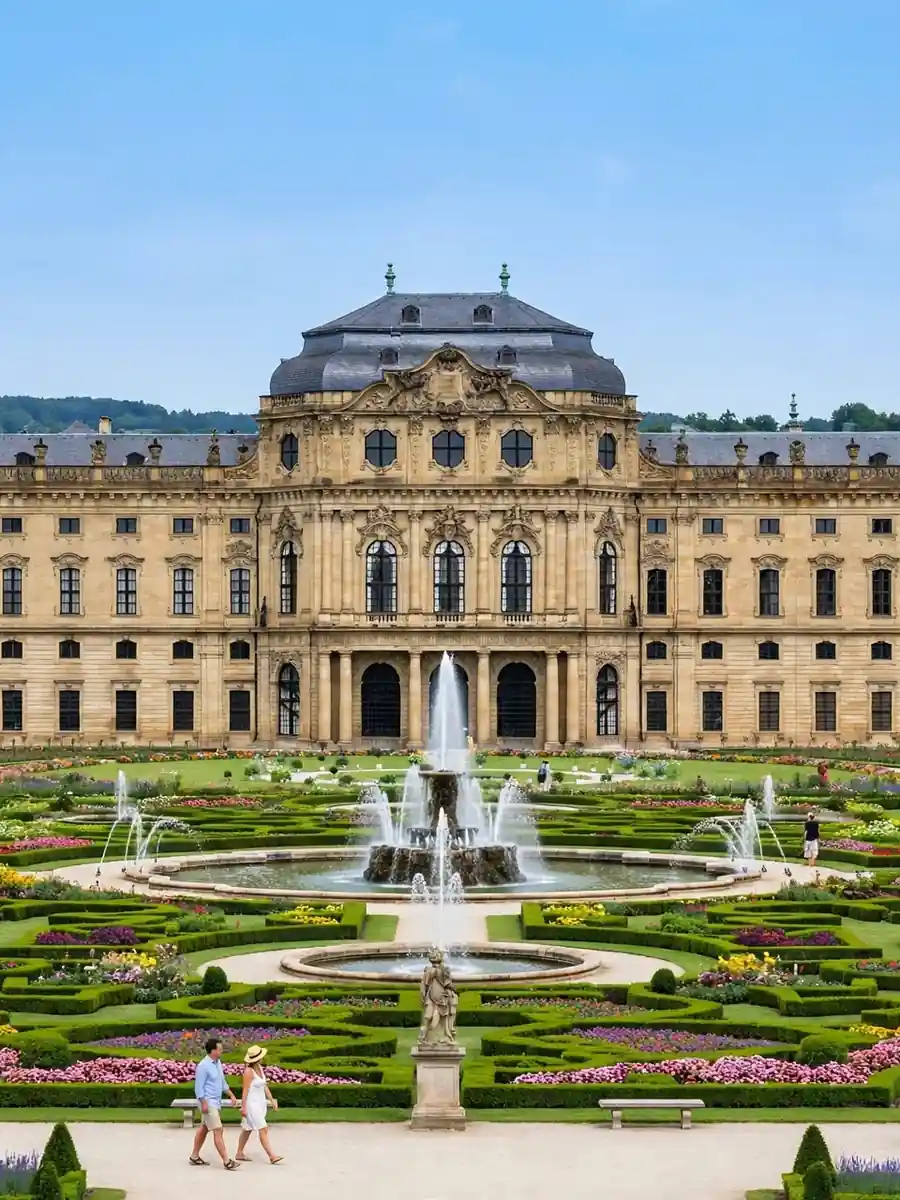
Start where the Romantic Road starts. Würzburg is the official northern gateway of Germany’s most famous scenic route, and it earns its place with the Würzburg Residence, a UNESCO World Heritage Site whose grand staircase is crowned by one of the largest ceiling frescoes in the world, painted by Tiepolo. The Court Gardens behind it are free and lovely for a morning stroll.
Walk down to the Alte Mainbrücke (Old Main Bridge), where locals gather with a glass of Franconian wine. The bridge is lined with statues and the Silvaner white wine of the region is the thing to try. Above the river, the Marienberg Fortress watches over it all.
How long you need: Half a day is enough to see the highlights. Würzburg sits roughly an hour’s drive southeast of Frankfurt Airport, which makes it the natural first stop.
2. Rothenburg ob der Tauber: The Icon
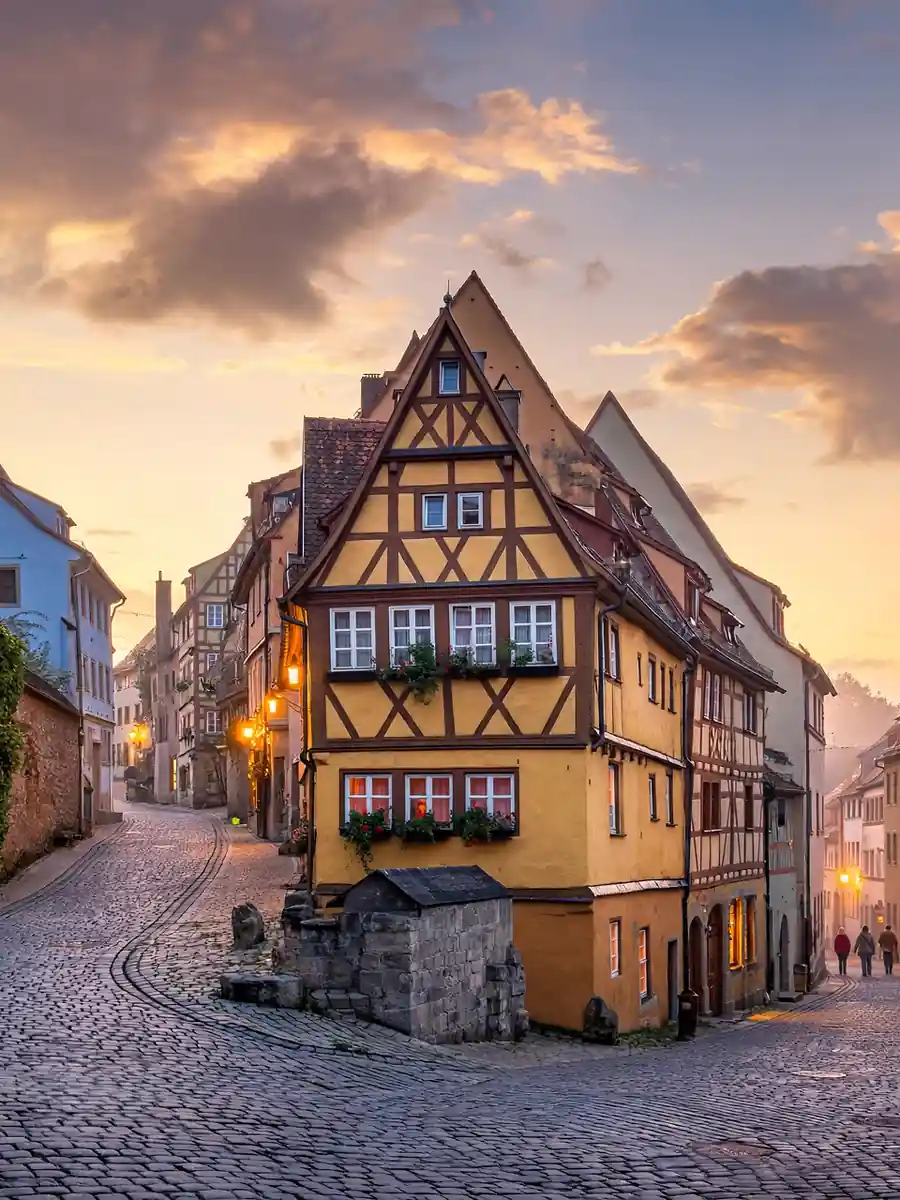
This is the town people picture when they hear “fairytale Germany.” Rothenburg’s Plönlein (the crooked yellow house framed by two towers at a fork in the road) is one of the most photographed corners in the country. The German National Tourist Board calls Rothenburg “internationally regarded as the epitome of a medieval German town,” and the 46 towers crowning its walls back up the claim.
Don’t just photograph the Plönlein and leave. Walk a stretch of the covered town walls, climb the Rathausturm (town hall tower) for the view over the Tauber Valley, visit St. Jakobskirche to see Tilman Riemenschneider’s carved altar, and try a Schneeball, the striped ball of shortcrust pastry the town is known for. The Night Watchman tour in the evening is the classic Rothenburg experience, and the Käthe Wohlfahrt Christmas shop is open year-round.
How long you need: Half a day for the highlights, but stay overnight. This is the single most repeated piece of advice from every guide to the town: Rothenburg after the day-trip buses leave is a different, quieter, more magical place.
Practical tip: Make sure you’re navigating to Rothenburg ob der Tauber. There are several places called Rothenburg in Germany.
3. Dinkelsbühl: The Insider’s Rothenburg
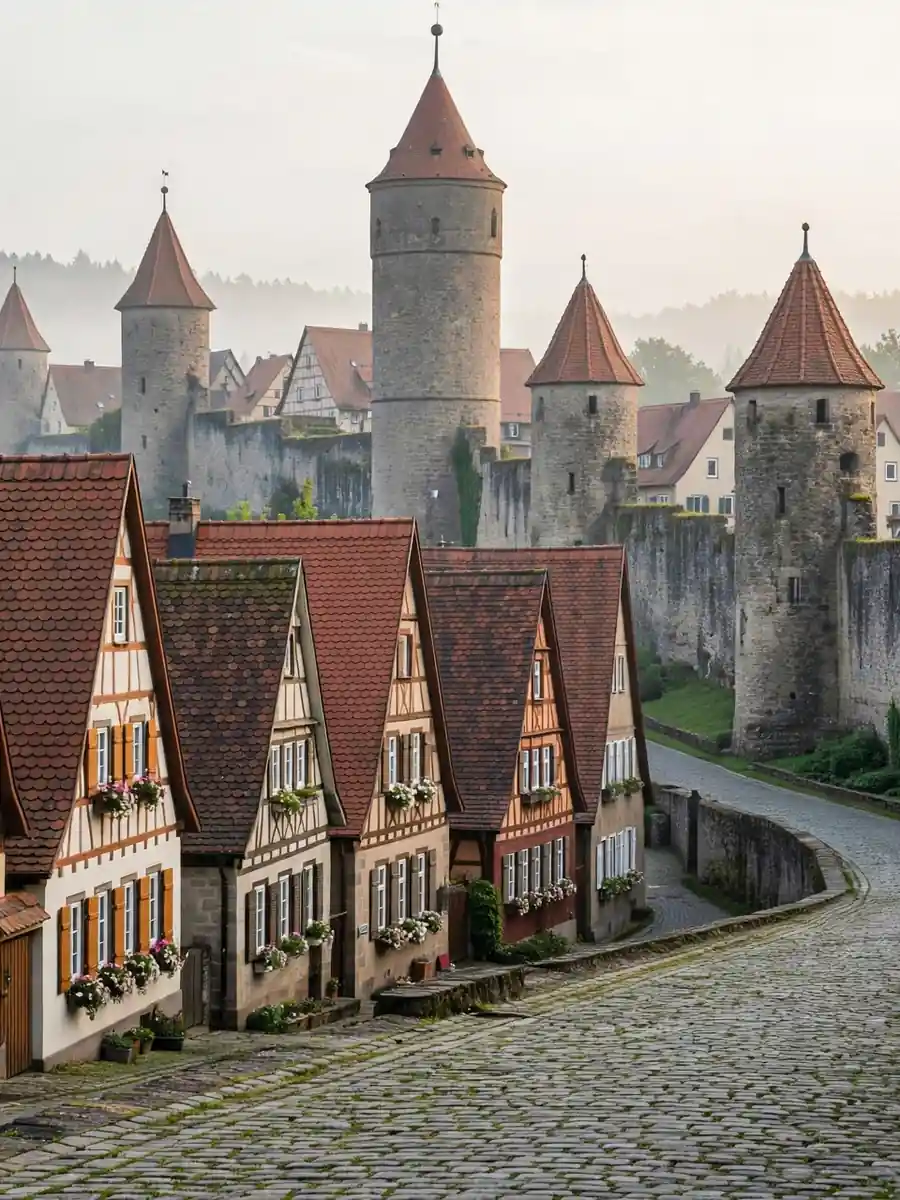
About 45–50 minutes south of Rothenburg by car sits Dinkelsbühl, which has one of Germany’s best-preserved medieval townscapes and a fraction of Rothenburg’s crowds. Its complete 14th–15th-century city walls are walkable, the late-Gothic St. George’s Minster dominates the skyline, and the funnel-shaped Weinmarkt is lined with patrician houses.
If your timing is lucky, the Kinderzeche children’s festival brings the town’s history to life each summer. Even on an ordinary day, Dinkelsbühl feels like the Rothenburg experience without the tour buses. Several travel writers call it exactly that.
How long you need: Two to three hours, including a wall walk.
4. Nördlingen: The Town Inside a Meteorite Crater
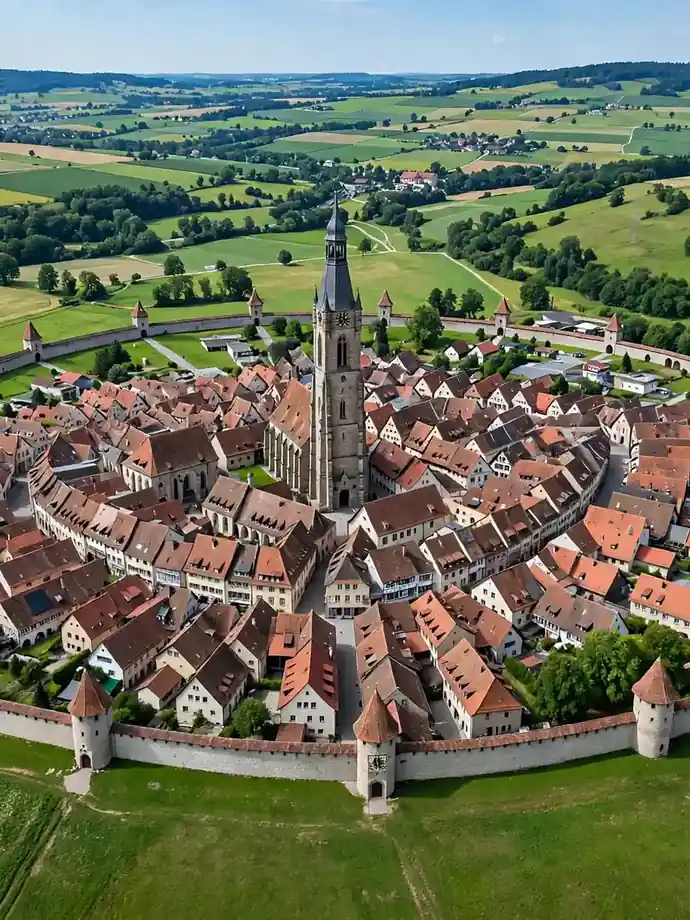
Nördlingen is the one town on this list your friends won’t have heard of, and it may be the most memorable. The entire old town sits inside a meteorite crater, and its medieval wall forms a near-perfect circle you can walk in full. It’s one of the few completely preserved, fully walkable wall circuits left in Germany.
Climb the “Daniel,” the 90-meter tower of St. Georgskirche, for the view that makes the crater’s round shape click. The Ries Crater Museum explains the geology without requiring a science degree.
How long you need: Two to three hours. It’s roughly 35–40 minutes’ drive from Dinkelsbühl, which makes the two a natural pair.
5. Bamberg: The UNESCO Island Town (Smart Swap Option)
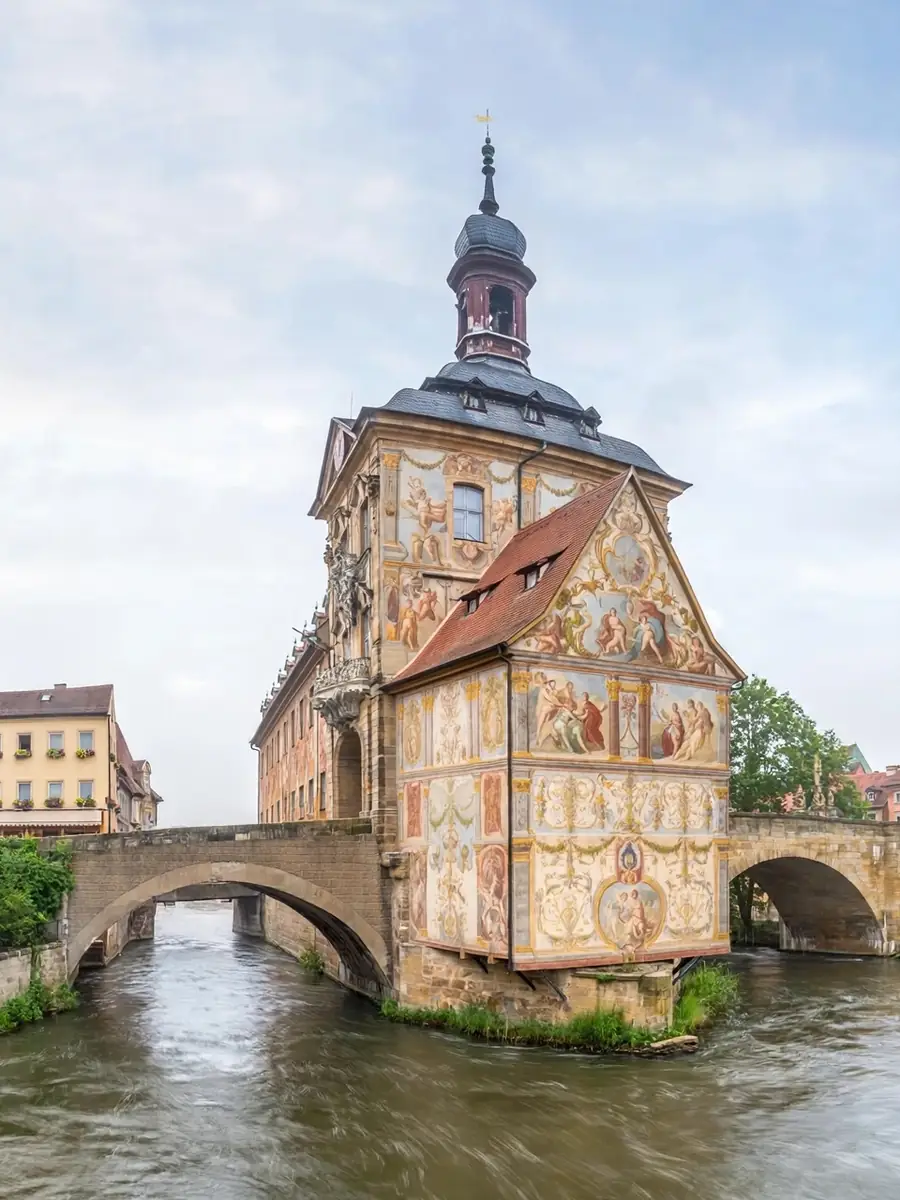
Bamberg is the outlier on this list, and that’s why it’s positioned as a swap rather than a fixed stop. Inscribed as a UNESCO World Heritage Site in 1993, Bamberg’s old town is built across islands in the Regnitz river. The Old Town Hall sits on its own island in the middle of the river, reached by two bridges. The Bamberg Cathedral holds the Bamberger Reiter (an enigmatic medieval equestrian statue) and the tomb of Pope Clement II, the only papal burial in Germany.
Then there’s the beer. Bamberg is the home of Rauchbier (smoked beer); the historic Schlenkerla tavern serves a version made with malt dried over open beechwood fire, and Klosterbräu claims brewing roots going back to 1533. Don’t miss Klein Venedig (“Little Venice”), the row of old fishermen’s houses along the river.
A few time-sensitive notes: parts of the cathedral facade were under scaffolding in 2026, the abbey church of St. Michael’s reopened to visitors in May 2026 (open Friday–Sunday and holidays, 11am–4pm), and the Rococo hall of the Old Town Hall is currently closed for renovation. Check current opening details before you go.
How long you need: A full day. See the itinerary below for how Bamberg slots in as a Franconia-variant Day 2/3.
6. Landsberg am Lech: The Perfect Small Stop
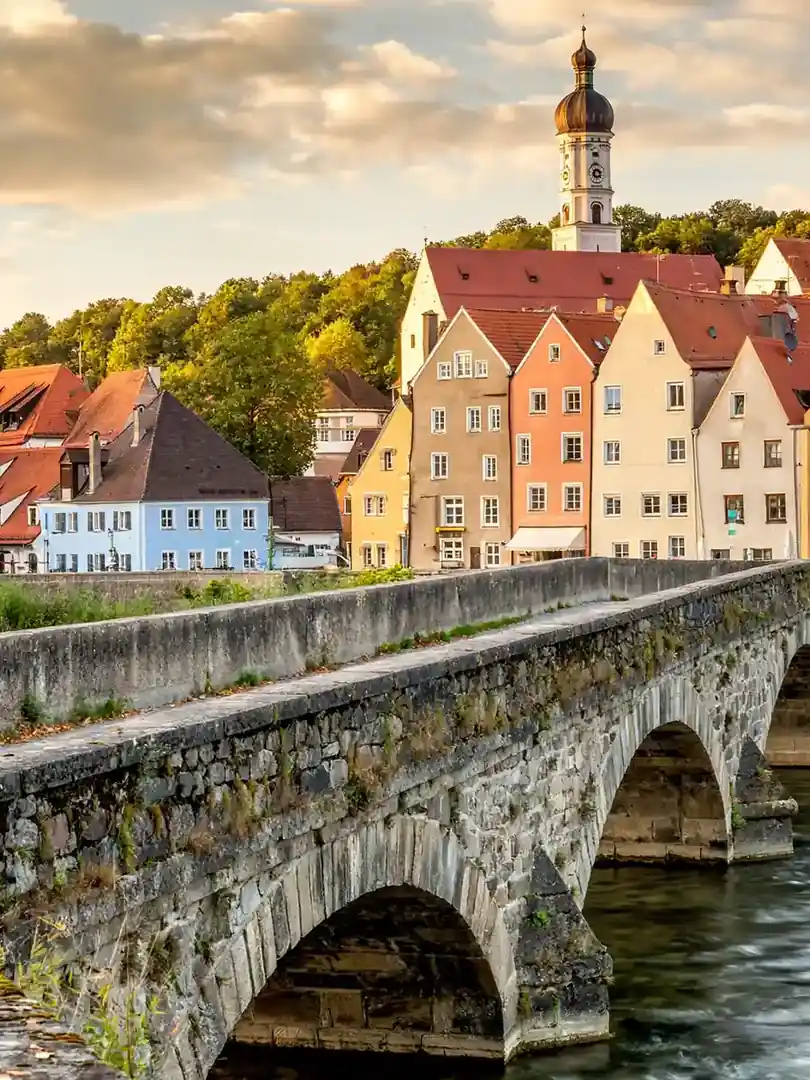
Straddling the Lech river, Landsberg is the quintessential small Romantic Road town: painted facades, a handsome historic town hall, and a riverside setting made for an unhurried coffee. It doesn’t demand a full day, and that’s the point. It breaks the southern leg beautifully between the walled towns and the Alps.
How long you need: One to two hours: ideal lunch stop.
7. Füssen & Neuschwanstein: The Castle Finale
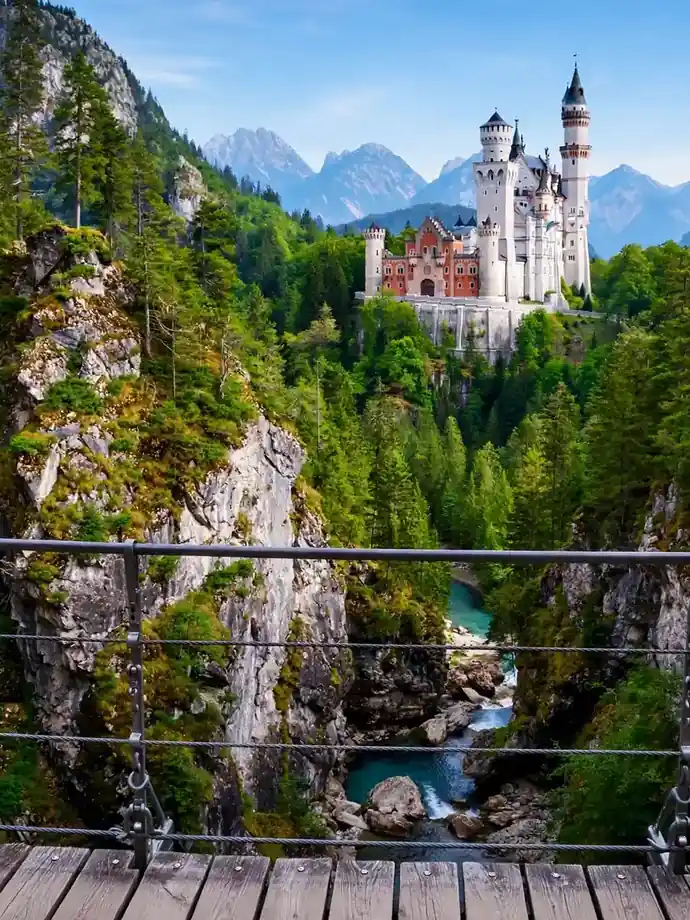
End with the payoff the word “fairytale” promises. Neuschwanstein Castle, Ludwig II’s hilltop fantasy above the village of Schwangau, is the single most-visited castle in Germany. Book your timed-entry tickets online well in advance. This is the one reservation on the whole trip you cannot wing in high season. Arrive 1.5 to 2 hours before your slot: the walk up (or shuttle/horse carriage) plus the Marienbrücke viewpoint over the gorge take time.
Pair it with Hohenschwangau Castle (Ludwig’s childhood home, right nearby), the turquoise Alpsee lake, and the Lechfall waterfall. The old town of Füssen itself, minutes away, is a pleasant place to end the day.
How long you need: A full day for the castles and Füssen. Munich Airport is about two hours from Füssen, which makes it the natural departure point.
The 7 Towns at a Glance: Side-by-Side Comparison
Short on time? Use this table to pick the towns that match your trip.
| Town | Best for | Time needed | Don’t miss |
|---|---|---|---|
| Würzburg | Baroque grandeur and Franconian wine | Half day | The Residence, Alte Mainbrücke |
| Rothenburg ob der Tauber | The classic fairytale photograph | Half day plus overnight | Plönlein, Night Watchman tour |
| Dinkelsbühl | Medieval magic without the crowds | 2 to 3 hours | Wall walk, Weinmarkt |
| Nördlingen | Something truly different | 2 to 3 hours | Daniel tower, Ries Crater Museum |
| Bamberg | UNESCO depth and beer culture | Full day | Old Town Hall, Schlenkerla |
| Landsberg am Lech | A relaxed riverside break | 1 to 2 hours | Lech promenade, old town |
| Füssen and Neuschwanstein | The castle finale | Full day | Neuschwanstein, Marienbrücke |
Quiz: Which Fairytale Town Matches Your Travel Style?
Pick the traveler that sounds most like you, then tap to reveal your match.
The Photographer: you plan trips around golden hour and that one perfect shot
Your match: Rothenburg ob der Tauber. The Plönlein at dusk is one of Germany’s most photographed corners, and staying overnight means you get the empty evening streets all to yourself.
The History Buff: you want UNESCO sites, old breweries, and stories with real depth
Your match: Bamberg. A UNESCO World Heritage old town, a cathedral with a pope’s tomb, and smoked beer brewed the medieval way. Take the Franconia swap in the itinerary below.
The Crowd Avoider: you want the magic without the tour buses
Your match: Dinkelsbühl. Complete medieval walls and a storybook old town with a fraction of Rothenburg’s visitors.
The Castle Dreamer: you came for the fairytale ending
Your match: Füssen and Neuschwanstein. Book the timed tickets, cross the Marienbrücke, and finish where every fairytale ends.
The 3-Day Itinerary: Day by Day
This route assumes a rental car picked up at Frankfurt Airport and a departure from Munich. Total driving is manageable because the towns cluster along the Romantic Road corridor (~460 km from Würzburg to Füssen).
The 3-Day Route at a Glance
| Day | Morning | Afternoon | Evening | Sleep in |
|---|---|---|---|---|
| Day 1 | Frankfurt arrival, Würzburg highlights | Rothenburg old town and walls | Night Watchman tour | Rothenburg |
| Day 2 | Slow Rothenburg morning | Dinkelsbühl, then Nördlingen | Lech riverside stroll | Landsberg am Lech |
| Day 3 | Neuschwanstein Castle (pre-booked) | Füssen, Alpsee, Lechfall | Drive to Munich | Munich (or late flight) |
Bamberg swap: Day 2 goes Rothenburg to Dinkelsbühl to Bamberg; Day 3 is all Bamberg, departing via Nuremberg.
Day 1: The Gateway and the Icon
- Morning: Land at Frankfurt, drive to Würzburg (~1 hour). See the Residence, Court Gardens, and Alte Mainbrücke. Lunch in the old town.
- Afternoon: Drive to Rothenburg ob der Tauber (~50–60 minutes). Walk the walls, find the Plönlein, climb the Rathausturm.
- Evening: Dinner in the old town, then the Night Watchman tour. Overnight in Rothenburg: the empty evening streets are the experience.
Day 2: The Walled-Town Run
- Morning: A slow Rothenburg morning: St. Jakobskirche, Schneeballen tasting, the Medieval Crime Museum if that appeals.
- Midday: Drive to Dinkelsbühl (~45–50 minutes). Walk the walls, see St. George’s Minster, lunch at the Weinmarkt.
- Afternoon: Drive to Nördlingen (~35–40 minutes). Climb the Daniel tower, visit the Ries Crater Museum.
- Late afternoon: Drive south through the Augsburg corridor to Landsberg am Lech (~1.5 hours). Evening stroll along the Lech.
- Overnight: Landsberg am Lech, or push on to the Füssen area (~1 hour further) to be close to Neuschwanstein for an early start.
Day 3: The Castle Finale
- Morning: Neuschwanstein Castle with pre-booked timed tickets. Arrive early, do the Marienbrücke viewpoint first, then the castle tour. Hohenschwangau if time allows.
- Afternoon: Füssen old town for lunch, then the Alpsee and Lechfall.
- Evening: Drive to Munich (~2 hours) for a late flight, or overnight in Munich.
The Bamberg Swap (Franconia Variant)
If beer culture and UNESCO depth appeal more than the castle finale, swap the southern leg: on Day 2, go Rothenburg → Dinkelsbühl → Bamberg (about 1h45–2h30 by train from Rothenburg, or ~1.5 hours by car) and overnight in Bamberg. Spend Day 3 exploring Bamberg properly (cathedral, Klein Venedig, Schlenkerla) and depart via Nuremberg (~40 minutes by train). You trade Neuschwanstein for Germany’s best beer town; there’s no wrong answer.
Getting Around: Car vs Train (Honest Answer)
Rent a car. The full route above only works by car: Dinkelsbühl, Nördlingen, and Landsberg am Lech have limited or no direct train connections, and the town-to-town legs are short, scenic drives along well-marked roads (follow the brown “Romantische Straße” signs). Several Romantic Road villages are effectively unreachable by train, so a rail-only version of this exact itinerary isn’t realistic.
The train variant covers the rail-accessible subset: Frankfurt → Würzburg (~1h10 by fast train), Würzburg → Rothenburg (~1h10), and Rothenburg → Bamberg (fastest around 1h44, typically 2–2h30 with transfers). Bamberg itself is a rail hub: roughly 55 minutes from Würzburg, 40 from Nuremberg, 1h45 from Munich, 2h30 from Frankfurt.
For tickets, look into the Bayern Ticket (Bavaria regional day ticket) and the Germany Ticket (monthly public-transport pass). Prices change, so check current rates on bahn.com before buying. The seasonal Romantic Road Coach bus runs between the route’s towns in the warmer months, but its schedule has been reduced in recent years; verify the current timetable before relying on it.
Driving tips: Park outside the town walls (Rothenburg’s P1–P5 lots, for example). The old towns are largely car-free. Prefer the signposted B-roads over the autobahn between stops; they’re slower but they’re the point.
Where to Stay
- Night 1: Rothenburg ob der Tauber. Non-negotiable. A guesthouse inside a half-timbered building, inside the walls, puts you on those empty evening streets.
- Night 2: Landsberg am Lech or Füssen. Landsberg is the relaxed choice; the Füssen area is the strategic one if you have an early Neuschwanstein slot. Book Füssen-area stays early in summer. Castle visitors fill them.
- Bamberg variant: Bamberg. Stay near the island old town to be within walking distance of the breweries.
Best Time to Visit
- May–June: Mild weather, long evenings, manageable crowds. Arguably the sweet spot.
- July–August: Peak season. Book Neuschwanstein tickets and accommodation well ahead; expect tour buses in Rothenburg by midday.
- September–October: Wine festivals in Franconia, fall color along the route, thinner crowds.
- December: Christmas markets transform Rothenburg (its Reiterlesmarkt is famous). But this is a different trip; the 3-day driving route above is a spring-to-fall plan.
- Off-season (Jan–Mar): Fewer crowds and lower prices, but shorter daylight, some attractions on reduced hours, and Alpine weather can complicate Day 3.
Practical Tips
- Neuschwanstein tickets are the one thing to book the moment your dates are fixed. Everything else on this route is walk-in friendly.
- Photograph the Plönlein early morning or evening. Midday it has a queue of tripods.
- Shops close on Sundays in Bavaria, including in the small towns. Plan groceries and shopping around it.
- Cards are widely accepted, but carry some cash for small bakeries, market stalls, and rural parking machines.
- Wear proper walking shoes. Cobblestones, town-wall stairs, and the uphill walk to Neuschwanstein punish flimsy footwear.
- Double-check “ob der Tauber” whenever you book or navigate. Germany has more than one Rothenburg.
FAQs
Is 3 days enough for Germany’s fairytale towns?
Yes, if you pick one cluster and accept you can’t see everything. The Würzburg-to-Füssen corridor packs seven storybook towns into three drivable days. Trying to add western towns like Cochem or Monschau, or eastern ones like Quedlinburg, would break the route; save those for a second trip.
What is the most beautiful fairytale town in Germany?
Rothenburg ob der Tauber is the consensus pick and the most visited, but Dinkelsbühl regulars argue it keeps the medieval magic with far fewer crowds. For something genuinely different, Nördlingen’s crater setting is unmatched.
Is Rothenburg ob der Tauber worth visiting, or is it too touristy?
It’s touristy at midday and absolutely worth it anyway. The trick is staying overnight: the town empties in the evening and the walls, lanes, and Plönlein feel like they belong to you.
Is Dinkelsbühl better than Rothenburg?
“Better” is personal, but Dinkelsbühl is quieter, its walls are among the most complete in Germany, and you won’t queue for a photo, which is exactly why this itinerary includes both.
Can you do the Romantic Road without a car?
The full route, no. Several towns on this list have limited or no train service. But a rail-based trip is very doable for the subset of Würzburg, Rothenburg, and Bamberg, all well connected by train.
How many days do you need in Rothenburg ob der Tauber?
One night: an afternoon and evening for the highlights, the Night Watchman tour, and the empty morning streets before checkout.
How many days do you need in Bamberg?
A full day at minimum: the island old town, cathedral, and breweries deserve unhurried time. Beer lovers happily spend two.
Where should you stay overnight on this route?
Rothenburg (night 1, for the evening magic), then Landsberg am Lech or the Füssen area (night 2, positioning for Neuschwanstein). On the Bamberg variant, overnight in Bamberg’s old town.
When is the best time to visit Germany’s fairytale towns?
May and June for the best balance of weather and crowds; September–October for wine season and fall color; December if Christmas markets are the goal.
Is the Romantic Road overrated?
It’s a 1950s tourism invention rather than an ancient trade route, but the towns on it are genuinely remarkable. The trick is curation: seven towns in three days beats trying to tick off all twenty-nine.
The Journey Is the Itinerary
Three days, seven towns, one castle, and a route that makes geographic sense instead of zigzagging across the country. Start in Würzburg, sleep in Rothenburg, hop the walled towns, and finish where every fairytale ends: at the castle on the hill.
If storybook Europe is your thing, keep exploring: our guides to fairytale villages in England, fairytale places in Switzerland, and hidden gem towns in Italy cover more of the continent’s most magical corners, and our 10-day Europe itinerary helps you fit Germany into a bigger trip.