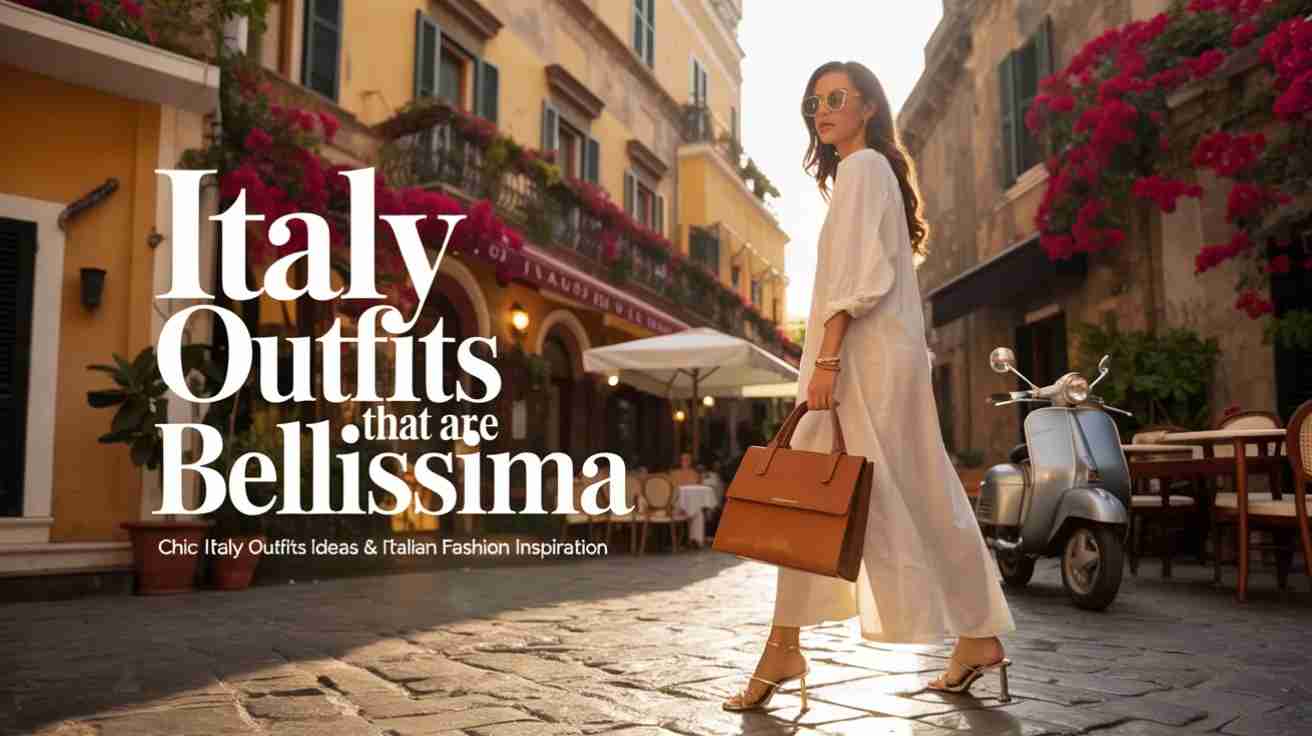
Italy Outfits That Are Bellissima: Chic Italy Outfit Ideas & Italian Fashion Inspiration
There is something almost cinematic about Italian fashion — a wonderful, living fabric of creativity, style, and identity that refuses to sit still. When you trace the extraordinary arc from 1945 to 1968, what unfolds is not just a history of clothes but a choral account of how an entire nation stitched its soul into every seam. The made in Italy label did not happen by accident — it was built on exemplary stories of ambition, artistry, and a relentless pursuit of defining an international brand unlike anything the world had ever seen. Having personally explored Italian fashion archives and walked through cobblestone streets observing how real Italian women carry themselves, I can tell you this: Italian style is less about following trends and more about wearing your identity with consistency.
What strikes me most is how the complex, ever-changing image of Italian fashion was reassembled through a sharp contemporary lens — not to glorify the past blindly, but to understand how extraordinary contributions shaped the appeal and success of the Bellissima spirit. The NSU Art Museum in Fort Lauderdale and the iconic MAXXI in Rome both hosted the eponymous touring exhibition, published in 2016, running from December 2014 through June of that year — a symphonic celebration of design where each catalog entry told a story of luxurious craft meeting everyday life. The publication itself became a tribute to founders whose significant contributions to design continue to interact with and shape how we understand dressing beautifully.
Now, if you are someone actually planning to wear outfits inspired by this legacy on a vacation in Italy, let me be honest with you the way I wish someone had been with me before my first trip. The web is drowning in suggested looks — ballgowns with slits at the waist, impossible necklines that would make you blush stepping into churches, and high heels practically engineered to deliver a broken ankle on Roman cobblestones. These are photo shoot fantasies, not daily basis dressing. A real Roman approach to Italian style is rooted in balance — comfort, versatility, appropriateness, and that quiet confidence that no blog trend can manufacture. As an Italian mama who has lived this firsthand, I encourage you to adjust your options to your own taste and lean into aesthetic fashion principles that actually work on the ground.
Artists and Designers Represented
The names that built Italian high fashion read like a roll call of visionaries — Carla Accardi, Alberto Burri, Lucio Fontana bringing fine art into dialogue with the clothes of Emilio Schuberth, Sorelle Fontana, Germana Marucelli, and Mila Schön. Then there were Sarli, Simonetta, Capucci, Gattinoni, Fendi, Balestra, Biki, Galitzine, Pucci, and the legendary Valentino — each bringing something fierce and original to the table. Their spectacular creations lit up the grand balls and foyers of theaters, casting glittering expressions of the finest jewelry against restrained elegance and bold chromatic explosion — a graphic visual look that felt both rigorous and electric. The sophisticated formal research behind these works was the fruit of intense collaboration between couturiers and artists, with inventions born for the actresses of Hollywood on the Tiber standing as some of the most daring pieces of the era.
Beyond clothing, Bulgari entered the conversation as the most celebrated Italian jeweller in the world, contributing a carefully curated selection of unique pieces that showcased remarkable experimentation and stylistic innovation. These were not decorative afterthoughts — they were statements. The exhibition features creations that display a kind of fearless dialogue between wearable art and works that belong in museums, which, fittingly, is exactly where many of them ended up.
Arty
Walk into any serious conversation about the ARTY movement in Italian fashion and you will quickly realize the atelier was never just a dressmaking space — it was a place where culture was actively produced. Through the 1960s, these studios hummed with the complicity between couturiers and artists, and names like Roberto Capucci, Germana Marucelli, and Mila Schön became visionary interpreters of contemporary forms. They used the design of an outfit as a space to reflect on the languages of contemporary art, choosing to cultivate dialogue rather than simply chase trends — transforming their age into something wearable and electric.
What made this movement remarkable was how traditional shapes were rethought entirely in terms of structure and materials — some pieces designed to echo artworks, others where the presence of the artist was not merely evoked but made physical and tangible, concretely woven into the couturier’s design. These collaborations launched a season in which fashion design was manifested as a rigorous discipline — stripping away the frivolous expression of the flair of any single absolute creator and replacing it with something far more intentional. Dresses by Valentino, Roberto Capucci, Germana Marucelli, and Mila Schön stand today as proof that fashion and fine art, when allowed to breathe together, produce something genuinely timeless.
Cocktail
The cocktail dress in Italian fashion has always occupied a fascinating middle ground — not quite the spectacle of a gala but far too important to treat casually. These dresses narrate the stages of a day built around elegance, where late afternoon bleeds into early evening and social events become an everyday occurrence for fashionable ladies whose look was always under quiet scrutiny. The success of Italian cocktail culture in fashion came precisely from this tension — between accessibility and aspiration, between the structured and the playful.
Italian creators took the cocktail silhouette as a stage for their boldest experiments: launching the corolle line with sharp pumps and stiletto heels, then pushing toward more complex architectures loaded with panels, dramatic bows, full sleeves, and puffy blouses that nobody had dared imagine before. As the decades shifted, the lines grew more relaxed — pants began to appear, toes went wider, heels dropped lower and grew thicker, and sometimes a single piece of costume jewelry paired with a bejeweled sandal became the defining star of the entire outfit. Dresses by Simonetta and Gigliola Curiel remain among the finest examples of this delicate, daring balance.
Gala Evening
There is a particular kind of fashion that exists only for the extraordinary — and the gala evening outfit in Italian couture was precisely that instrument. It was designed to mark the rhythm of a wearer’s steps on the red carpet, to breathe life into the grand foyers of the greatest theaters on opening night, and to fill the gilded rooms of an aristocratic palazzo during the most fancy balls of the season. The sartorial interpretation of these great events demanded nothing less than total uniqueness — each piece a personal monument to high fashion craftsmanship.
Between the 1940s and 1950s, exaggerated volumes of clothing served as elaborate surfaces for articulate, precious embroideries — quiet virtuosities of fine craftsmanship that rewarded closer inspection. Then came the 1960s, and everything transformed: those voluminous shapes gave way to sophisticated architectures of pure imagination, aimed at realization of an impossible construction — deliberately and obsessively crafted to be both unique and unrepeatable, as if each gown existed only once in the universe.
Black & White
Essential and unapologetically graphic — the black and white palette in Italian high fashion was never a safe choice. It was a design principle, a Manichean chromatic rhythm that alternates between shadow and light to expose the architecture of a garment rather than disguise it. The outfits on display from this era represent the most successful expressions of Italian couture between the 1950s and 1960s — not as celebrations of elite atmospheres, but as proof that fashion could function as an outstanding creative workshop. The poetics of these creators lived precisely in that stark contrast.
When you study these pieces closely, the colors work like an X-ray — letting you read the qualities of garments that dared to experiment with formal solutions nobody had tried before. Unexpected lengths, unprecedented combinations of materials, silhouettes that redesign the bodies that wear them — all of this traces an evolution of lines that crossed Italian high fashion through those remarkable years. Dresses by Valentino, Fendi, Fausto Sarli, Fernanda Gattinoni, and Gattinoni Couture remain the most eloquent proof that monochrome, when handled with conviction, speaks louder than any color.
Cinema
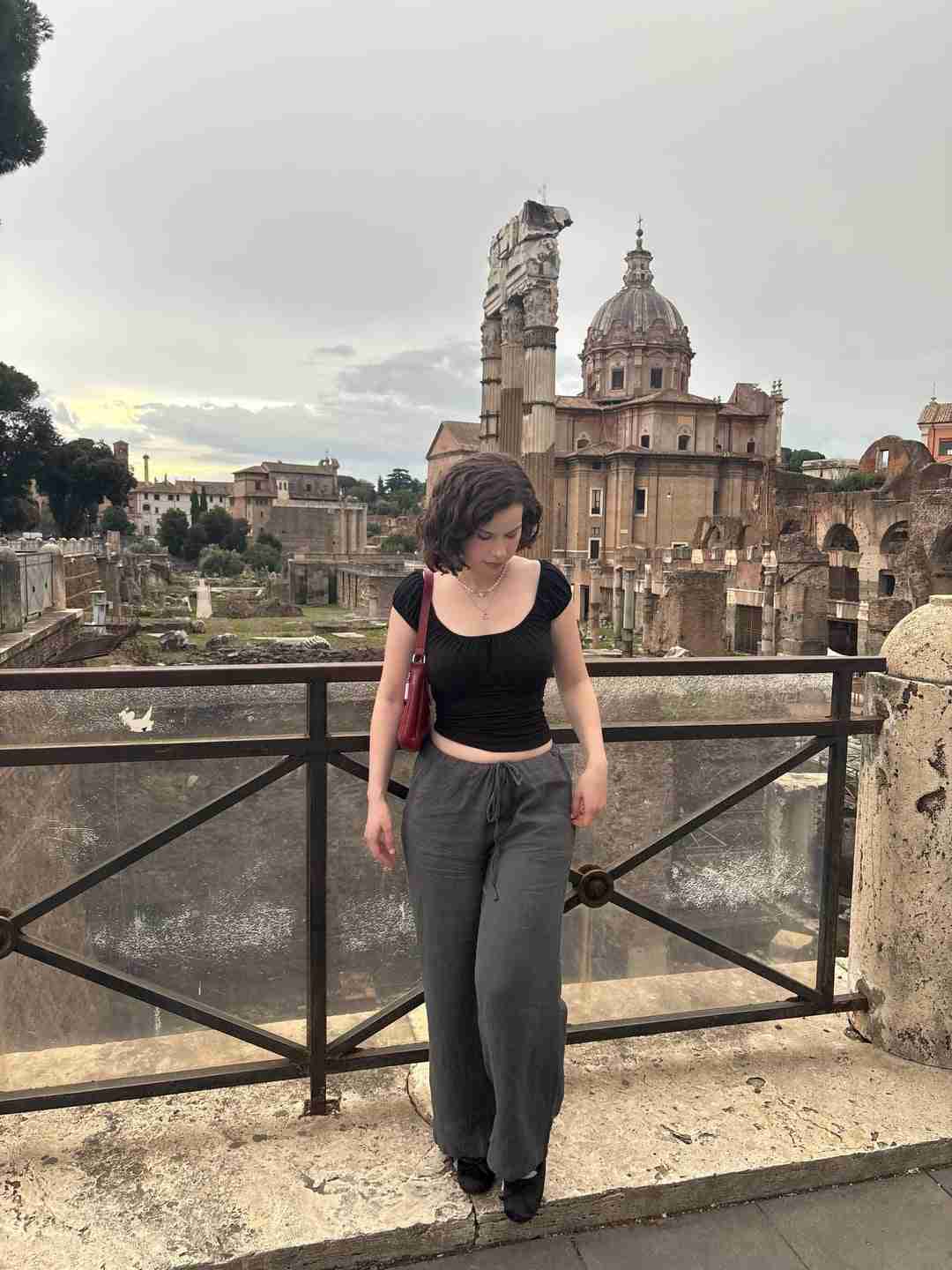
Cinecittà gave the world Hollywood on the Tiber — and between the 1950s and 1960s, no creative force fueled this golden machine more quietly or powerfully than Rome’s high fashion atmosphere. The Italian film industry and major international productions became deeply intertwined with the ateliers of the city, and the relationship between cinema and couture during this era was nothing short of symbiotic. The atelier of Sorelle Fontana literally became the scenario for Luciano Emmer’s Three Girls from Rome in 1952, and it was those same hands that dressed the Turinese world painted by Michelangelo Antonioni in The Girlfriends in 1955.
Names like Fernanda Gattinoni, Emilio Schuberth, and later Valentino, Fabiani, and Tiziani became permanently linked to the glamour of actresses embodying la dolce vita — not just through costumes, but through genuine personal loyalty. Italian and international actresses became devoted clients of the great Roman ateliers, and these couturiers became the privileged referents for the personal wardrobes of icons like Ingrid Bergman, Ava Gardner, Gina Lollobrigida, Sophia Loren, Audrey Hepburn, Anna Magnani, Silvana Mangano, Kim Novak, and Elizabeth Taylor — women whose referents shaped how the entire world imagined dressing well.
Daytime
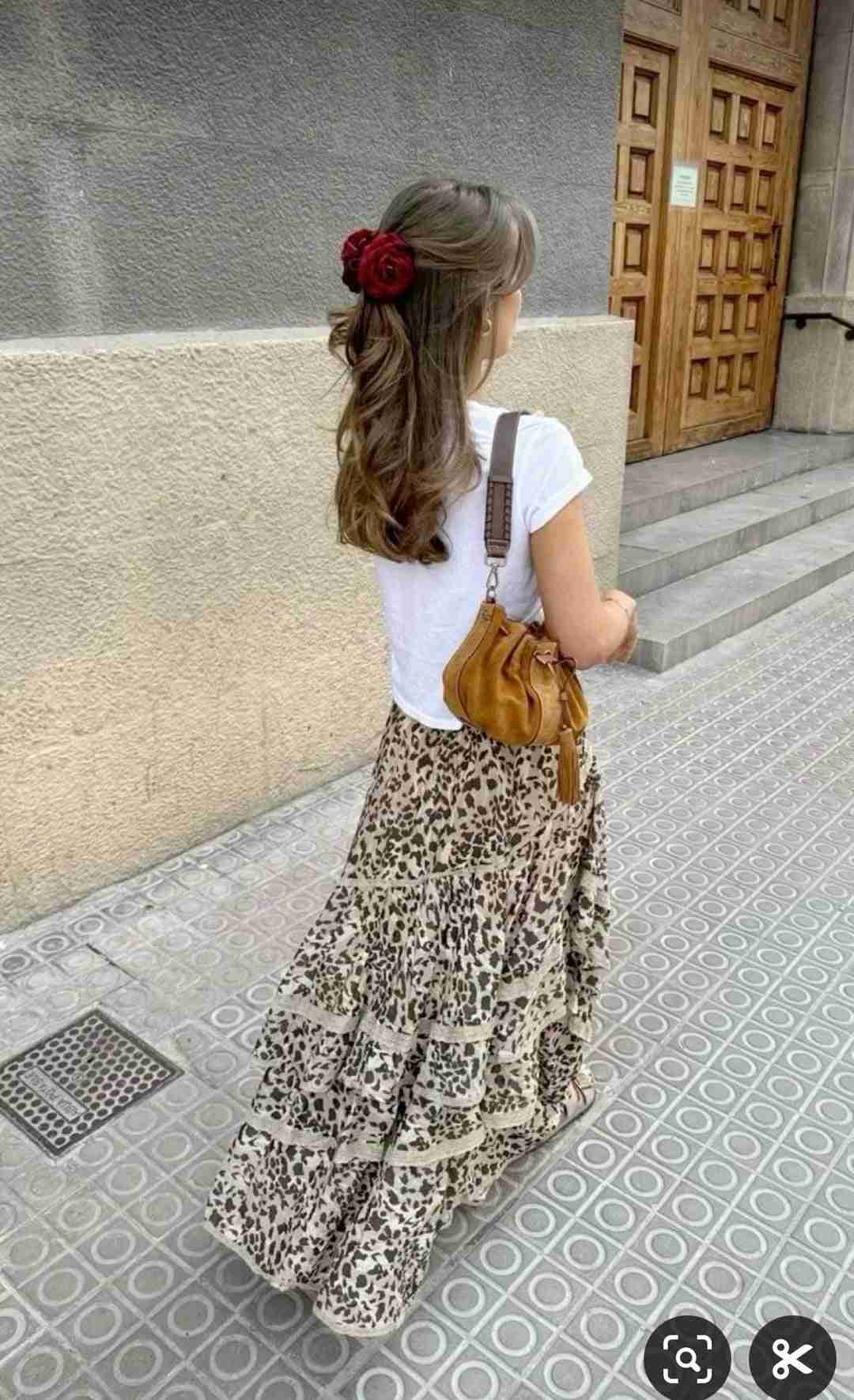
Italian high fashion has always had a quieter, less celebrated side — and daywear, suits, and coats are where its sophisticated luxury truly lives. These are not pieces waiting for unique events to justify themselves; they are the urban imaginaries of a modern age, designed to exist in the real world rather than remain suspended in rarefied, dream-like atmospheres built for the chosen few. I have always believed that the discipline required to make a coat extraordinary — with no sequin, no embroidery, no theatrical moment to hide behind — is the hardest test of any couturier’s fashion intelligence.
The construction of these pieces leaned entirely on the quality of Italian textiles, on craftsmanship juxtaposed beautifully against industrial work — a tension that produced formal solutions which continue to characterize the most enduring outfits of that era. The great Italian couturiers of the 1950s and 1960s took this challenge seriously, choosing to experiment and design fashion of genuine high quality without resorting to grandiose or exaggerated styles. That path led directly to ready made clothing and eventually to prêt-à-porter fashion — a quiet revolution. Coats by Delia Soldaini Biagiotti, Lancetti, and Enzo Sguanci stand as elegant proof of what restrained ambition can produce.
Exoticism
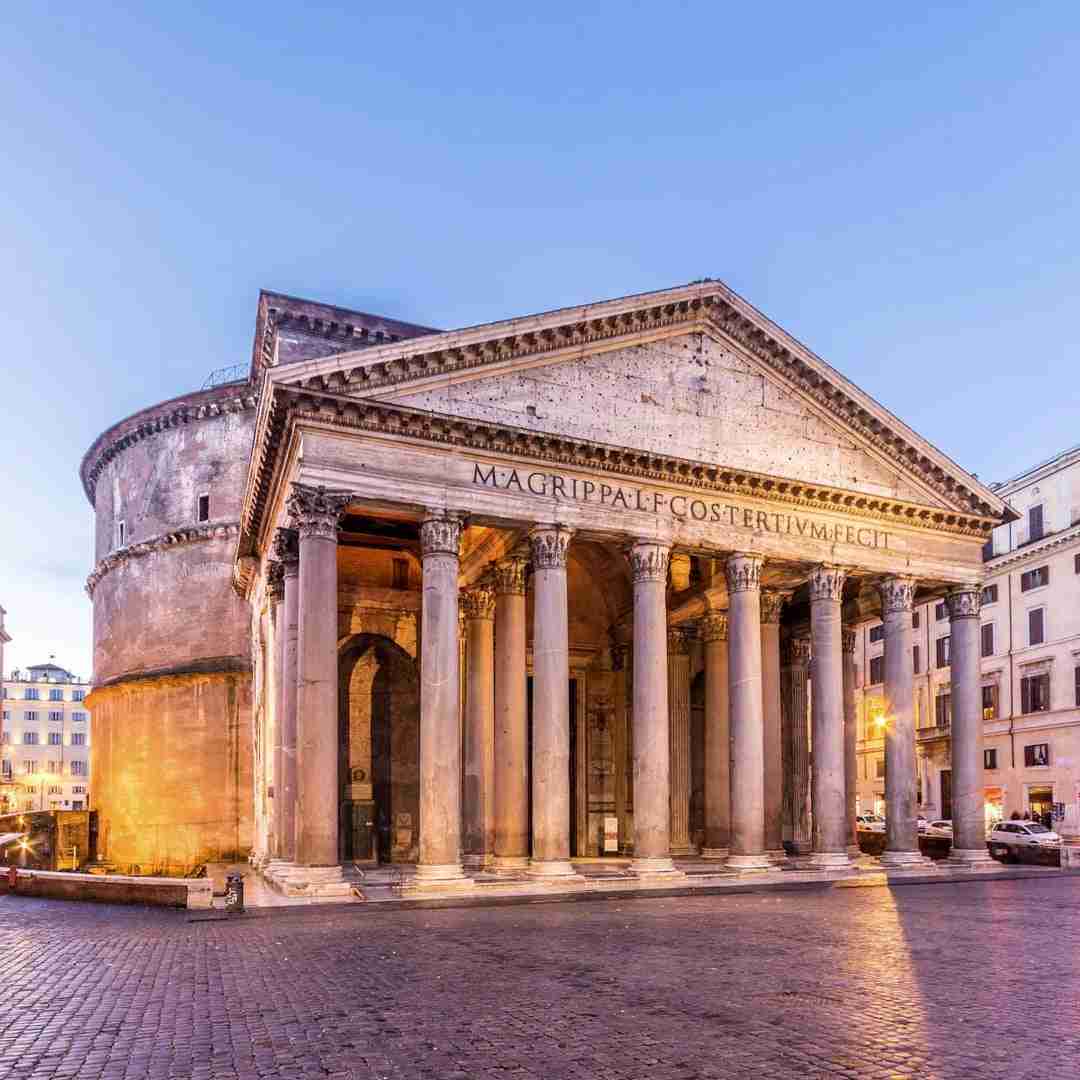
The East has always cast a long shadow over Italian high fashion, and in the hands of its greatest couturiers, exoticism never felt like appropriation — it felt like transformation. Elaborate and precious applications of embroidery turned floral motifs, arabesques, and geometric abstractions into living silhouettes — glittering at the collar, cuff, and hem, sometimes sprawling across the entire surface of a dress like a second skin. This wasn’t mere decoration; it was a philosophy of splendor that elevated the garment into something closer to ritual.
Perhaps no single piece captured this better than the Palazzo Pyjama conceived by Irene Galitzine alongside her young collaborator Federico Forquet in 1960 — a sensation at the Florentine fashion events that season. The pant and tunic ensemble conjured images of modern noblewomen reclining languidly in Roman palaces, a vision later immortalized through Henry Clarke’s lens for Vogue & Novità in November 1965. This was a distinctly Italian idea of luxury — one that married preciousness with genuine wearability, producing an invention that worked as a basic outfit equally suited to the mountains, a cruise, or the legendary piazzetta of Capri. Dresses by Jole Veneziani, Roberto Capucci, Mila Schön, and Germana Marucelli further expanded this exotic vocabulary into something uniquely, unmistakably Italian.
Space
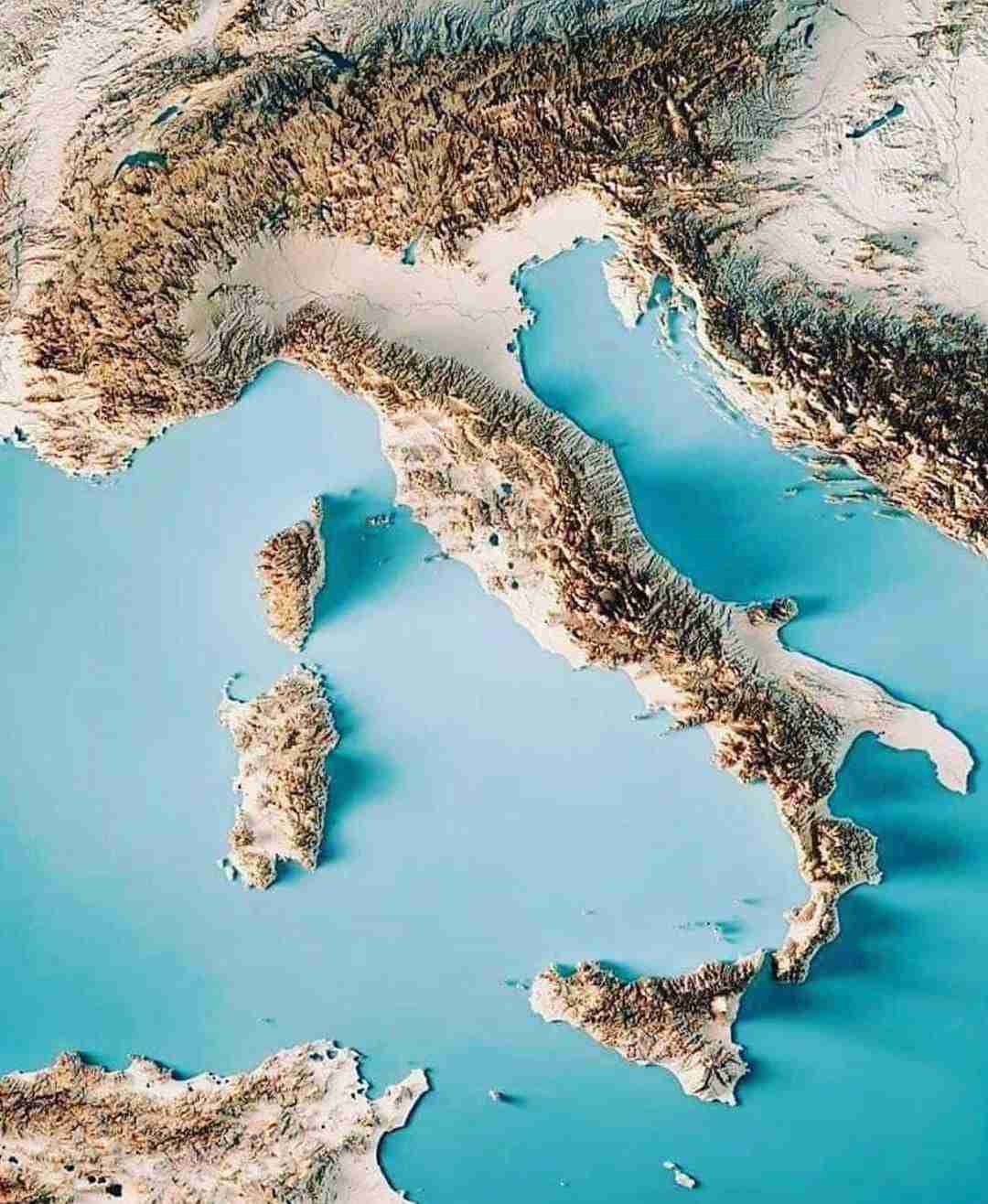
If Italian fashion of the early decades wore its luxury quietly, the Sixties aesthetic screamed it in chrome and light. Sequins, fringes, aluminum chainmail, and geometric designs in sharp relief worked together to modulate and enliven the synthetic shapes of a new kind of fashion — one where the gleam of metal became the emblem of visions of the future, a tomorrow that felt both thrilling and slightly dangerous. This was the world captured brilliantly in Elio Petri’s The 10th Victim in 1965 — and Italian couture was right there, projected alongside it.
Clothing shaped by Pop and Op Art ideas didn’t just reference culture — it foreshadowed the sidereal scenarios of Stanley Kubrick’s 2001: A Space Odyssey in 1968, making fashion feel genuinely prophetic. This was high fashion fully awake to the energy of the young — tracking the syncopated dances and hyper-graphic poses of Vogue models, moving fluidly from the Baroque palazzo of Roman nobility to the electric dance ring of the Piper Club and the stark black and white set designs of TV variety shows. It was fashion that refused to stand still — and it remains one of the most thrillingly alive chapters in the entire Italian story.
Italy Outfit Ideas – Jeans, Sneakers and Cute Top

Let’s start with the most honest Italy travel outfit confession I can make: jeans are your best friend, and anyone telling you otherwise has probably never actually walked the streets of Rome in August. Denim pants are not just acceptable — they are genuinely versatile, comfortable enough for long sightseeing days, and practical because you can wear them multiple times without needing to wash them, which means you can pack light without sacrificing style. Just steer clear of them if you have bookings at particularly upscale restaurants with a strict dress code — and if you are hitting real luxury places, always check ahead.
The secret is in the pairing: opt for a pair with a slight stretch and a soft hand so they don’t pull or dig during long stretches on a plane or train. I love pairing mine with fashion sneakers — and yes, barefoot shoes are wonderful but require some breaking in at home first. For evening, swap to ballerina flats and a nicer top and you’ve gone from sightseeing to dinner without changing a thing.
Italy Outfit Idea – Solid Color Dress
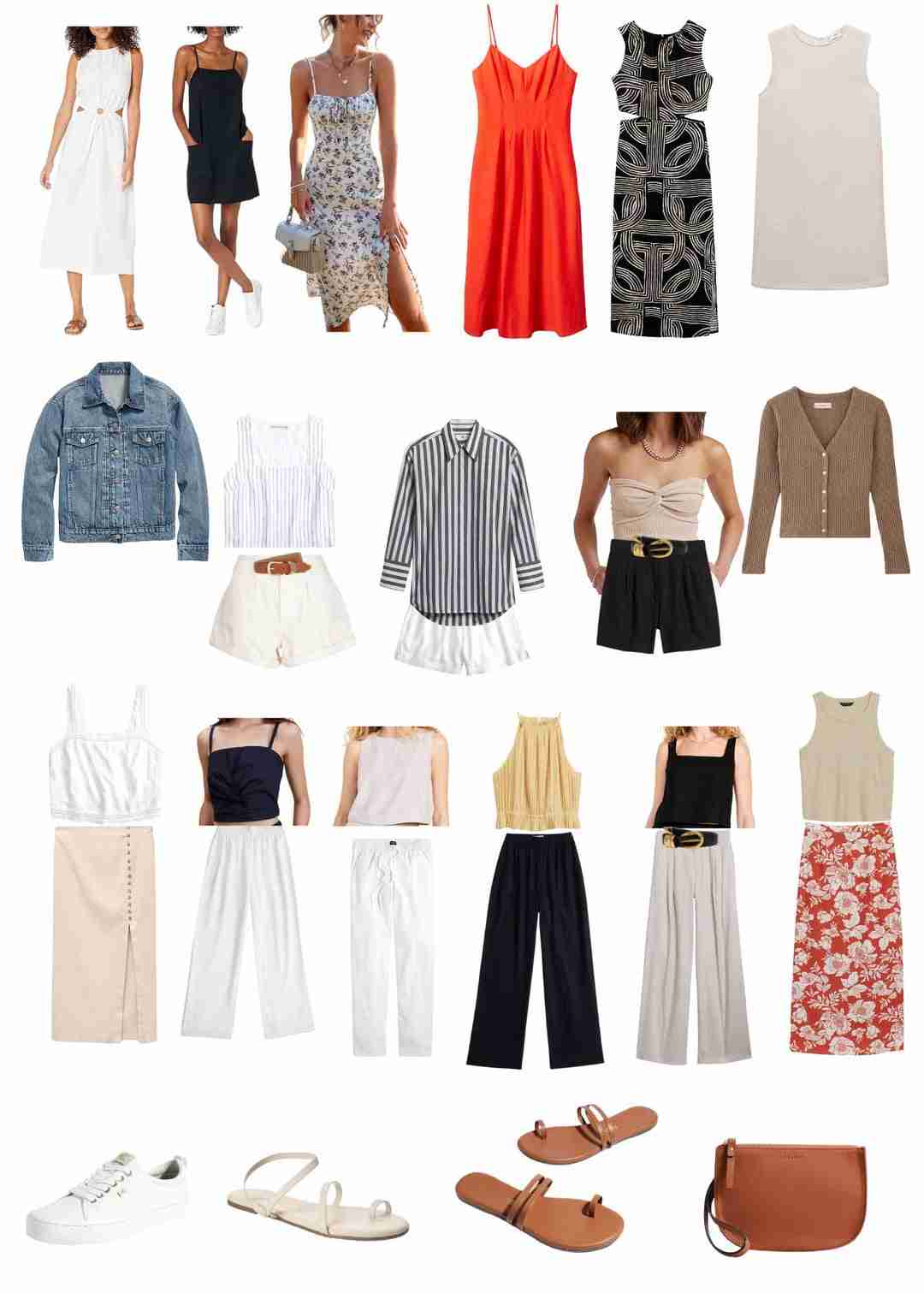
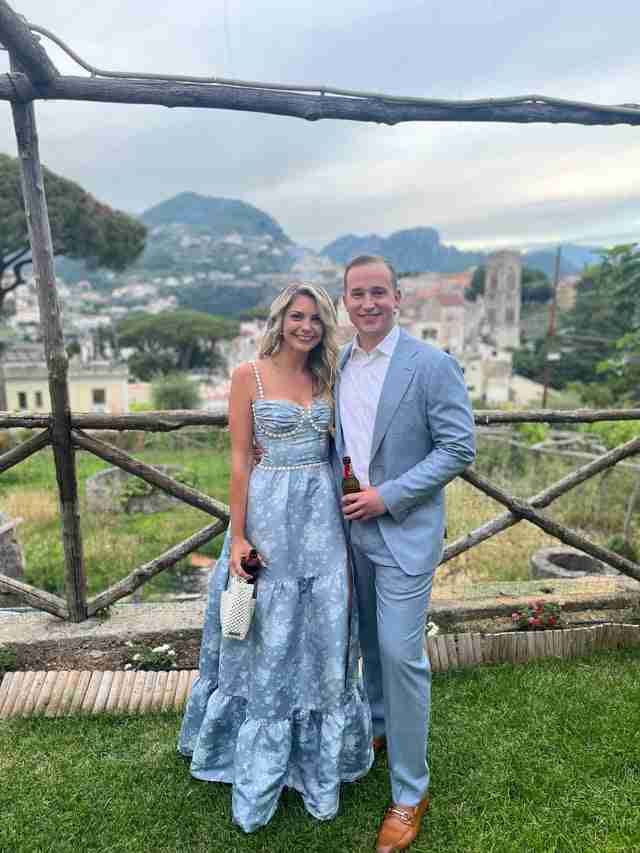
If I had to pick one item that has genuinely transformed how I pack for Italy, it would be the solid color dress — hands down. I now wear dresses almost exclusively on Italian trips because they are comfortable, easy to pack, and frankly more versatile than jeans when you factor in all the different ways you can style them. A solid color keeps your options open: in winter, pair with black tights and ankle boots for something comfy, walkable, and modest enough for churches, while still maintaining enough shape to feel polished.
Come spring and autumn, those same ankle boots still work beautifully, but you can also lean into sandals or ballerina shoes — and for evenings, even heels elevate the look entirely. In summer, I swap to lighter, non-stretchy material that stays breathable when the heat is relentless. My personal formula: below the knee, solid color, breathable materials — dress it up or down with cardigans, scarves, or wraps, and you can create dramatically different looks from just a few pieces. Choose quick dry fabrics and you can pack even lighter.
Mini Skirts
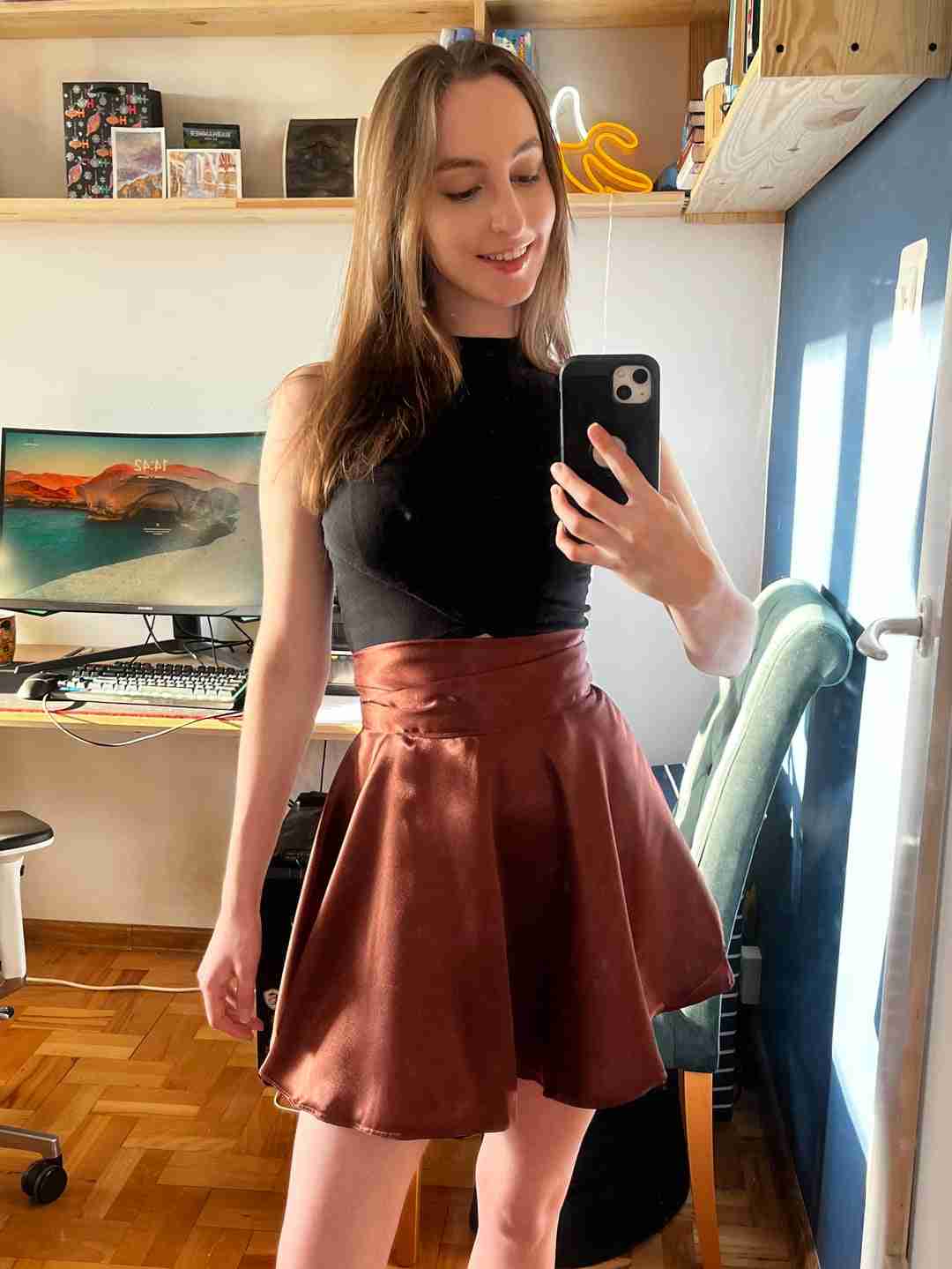
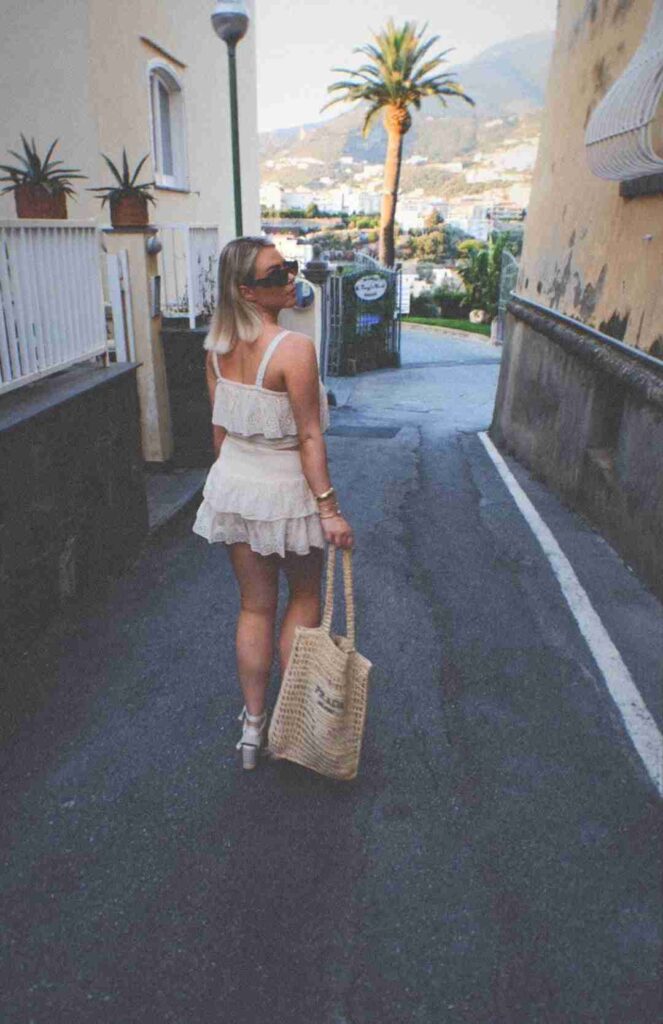
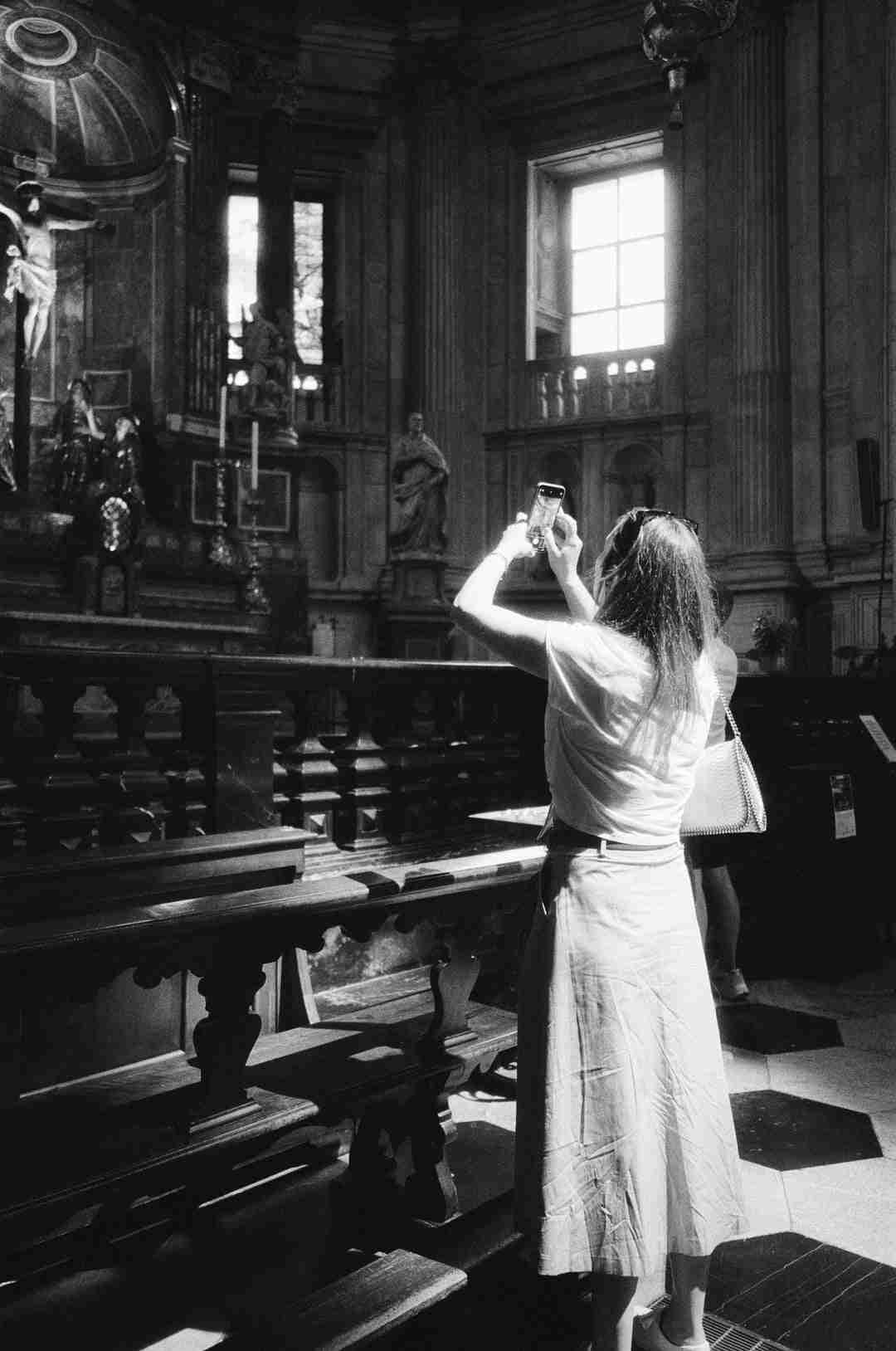
Here is something I wish more people knew before packing for Italy: a mini skirt with dark tights is one of the most underrated winter outfits you can bring — comfortable, genuinely cute, and endlessly adaptable. Full boots, ankle boots, or sneakers all work brilliantly with this combination in the cooler months, while summer opens up the option to go bare-legged with strappy sandals. The only real rule is straightforward — skip the mini near churches, where modest coverage is expected, but everywhere else in Italy it is entirely acceptable and widely worn.
Prints Summer Dresses for Italy
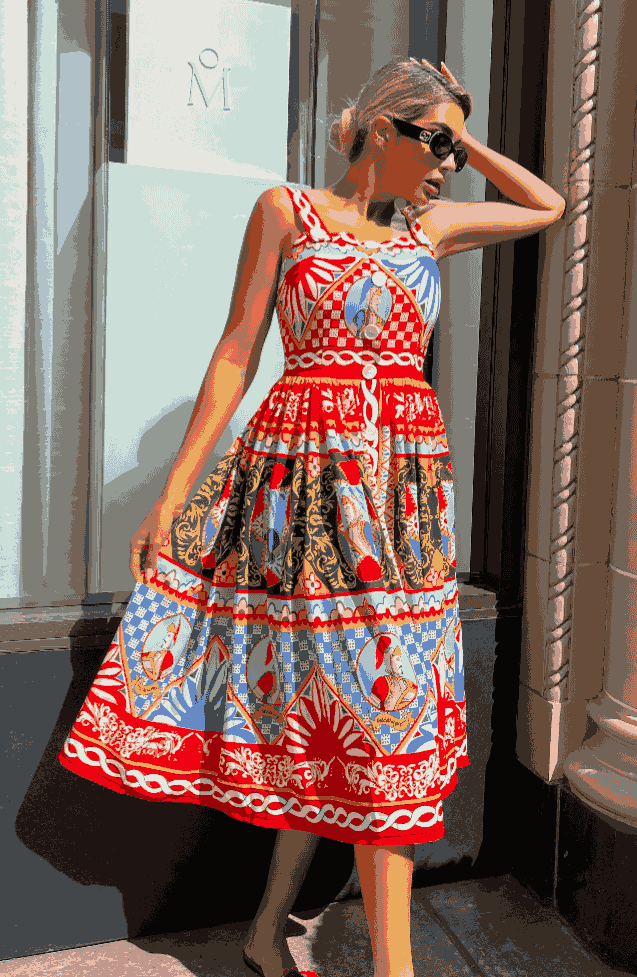
Prints occupy a slightly complicated space in an Italy packing strategy — beautiful, yes, but tricky if your goal is maximum versatility. The risk is simple: you can get tired of the same bold look faster than you’d expect when you’re living out of a suitcase. That said, a below the knee dress with a thoughtfully chosen lovely print is genuinely one of the most useful things you can pack for a summer outfit — it carries you from daytime sightseeing to evening dining with zero effort and zero costume changes.
Shorts and Athletic Wear
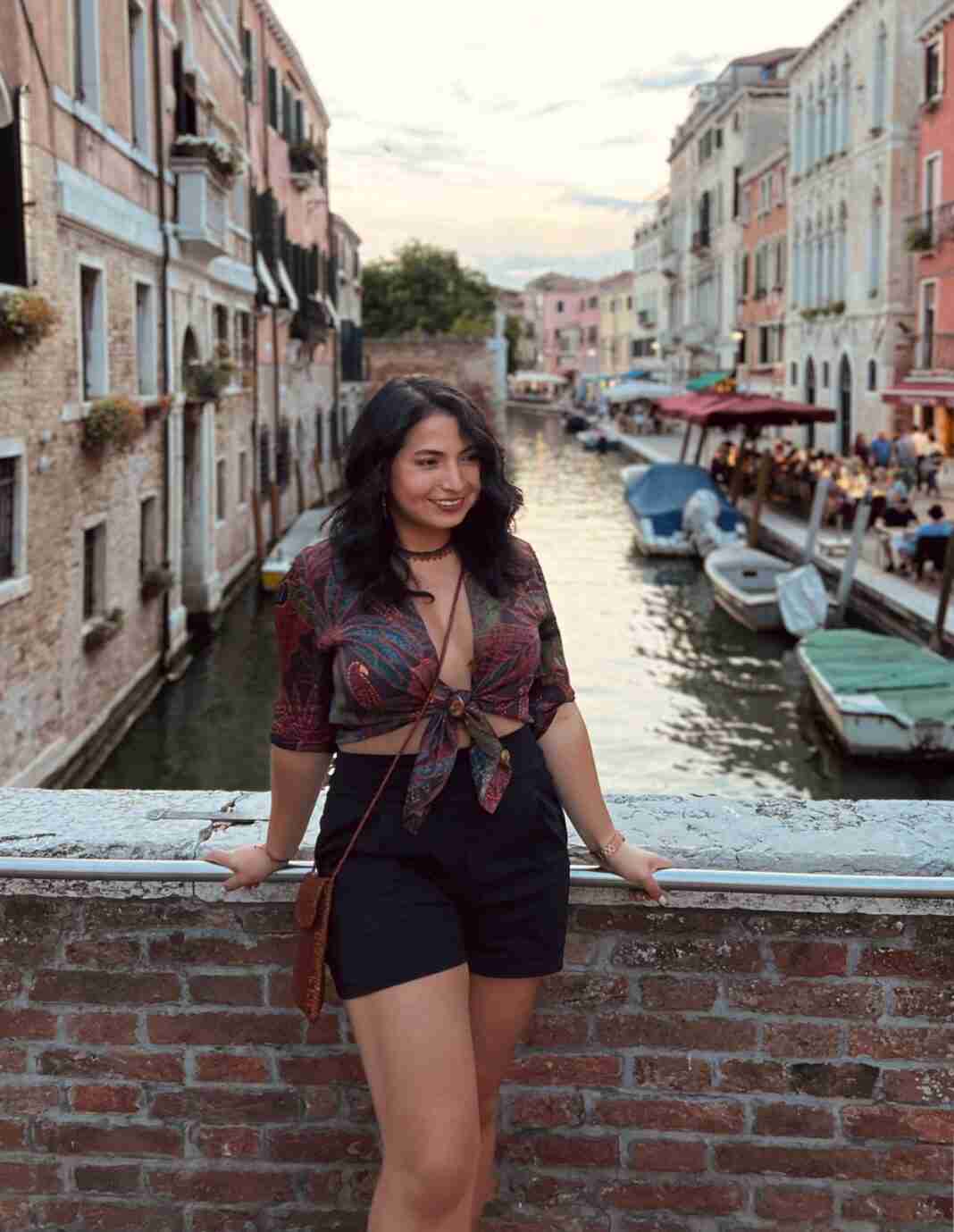
One of the most persistent myths about dressing in Italy is that Italian women never wear shorts — and while there is some truth to this as a city tendency, it is far from a universal rule. In practice, most women gravitate toward skirts over shorts in urban settings, but at the beach or up in the mountains, athletic wear and shorts are completely natural, expected, and worn without a second thought.
Trousers and Sneakers Look
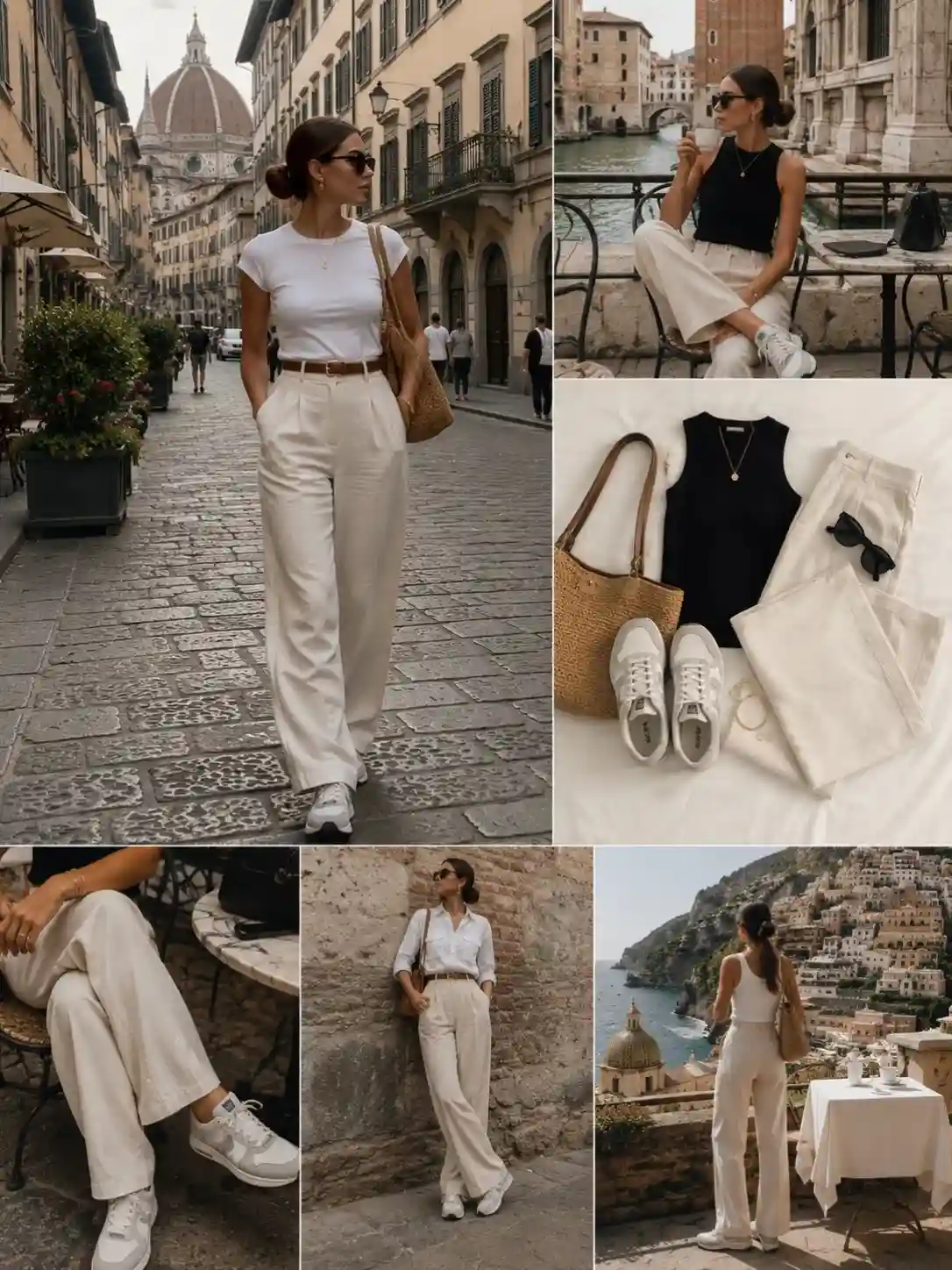
Let me put this myth to rest once and for all: Italians absolutely wear sneakers. The capri pants and sneakers combination is a perfectly legitimate choice for a day of sightseeing, and while running ones do lean toward a more casual look that might raise an eyebrow in a formal office setting, on the streets they are practical, common, and sensible. If you are comfortable in runners, wear them — your feet will thank you and no Italian is actually keeping score.
Scarves, Bags, Accessories
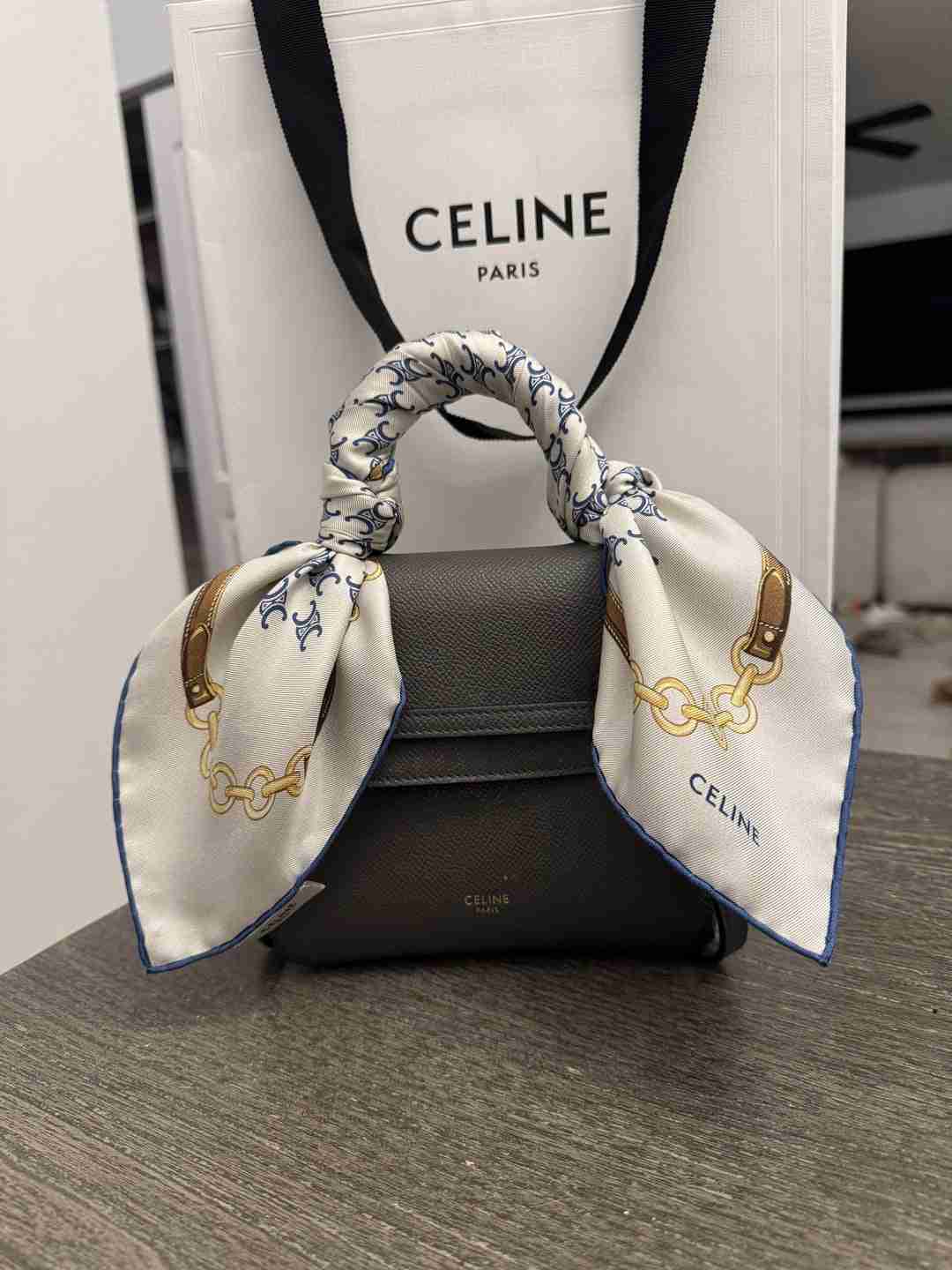
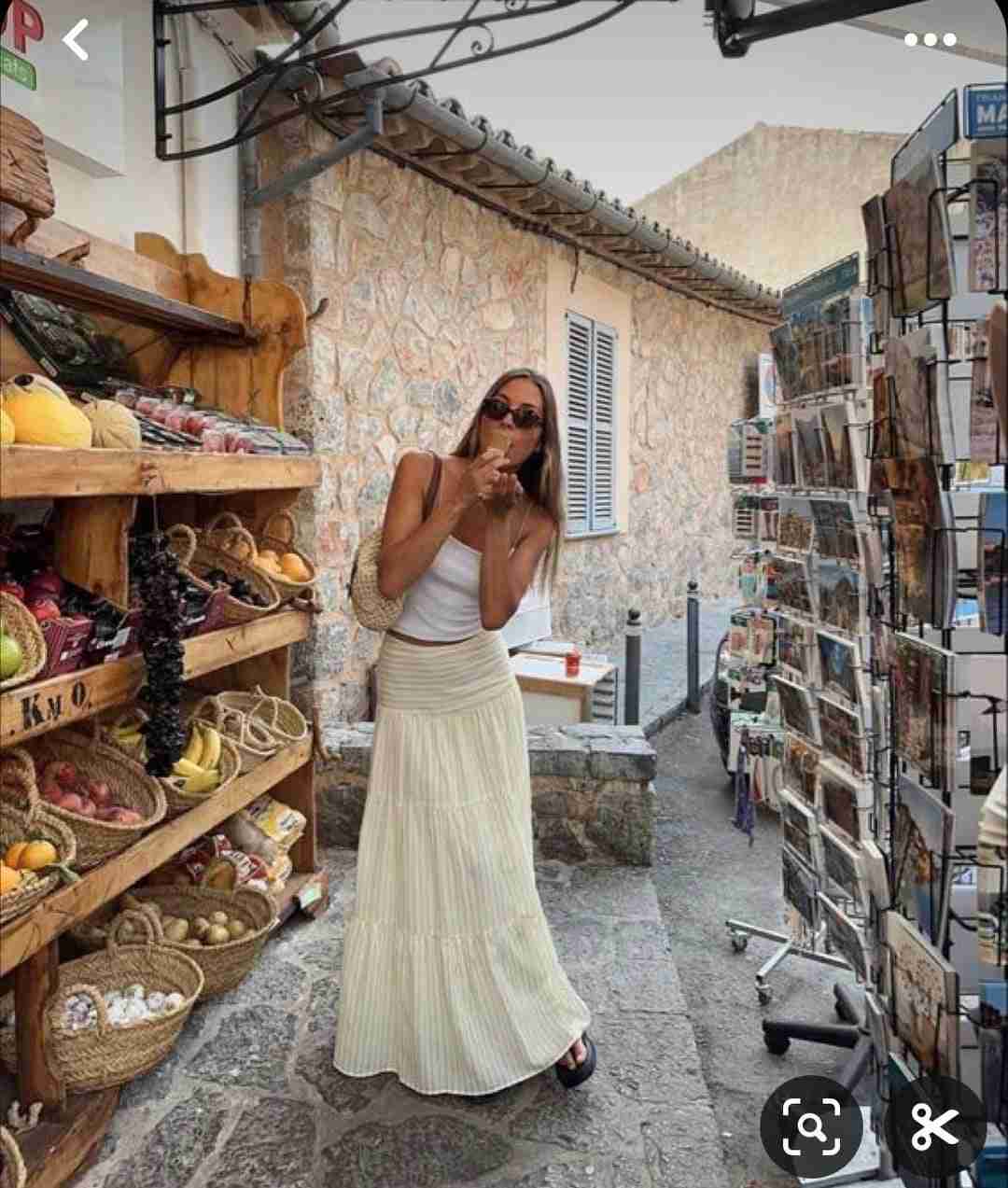
The three accessories I never travel through Italy without are a crossbody bag, a scarf, and good sunglasses — and each earns its place for very specific reasons. Crossbody bags are handy, genuinely safe against opportunistic theft, and pretty enough that you can carry more than one and change them to suit your outfit throughout the day, provided they are small enough to stay practical. I personally reach for scarves over jewelry every single time I travel — not because Italy isn’t safe, but because flashy jewelry in any country has a quiet way of attracting exactly the wrong attention, and a beautiful scarf adds just as much color and interest to an outfit without the risk.