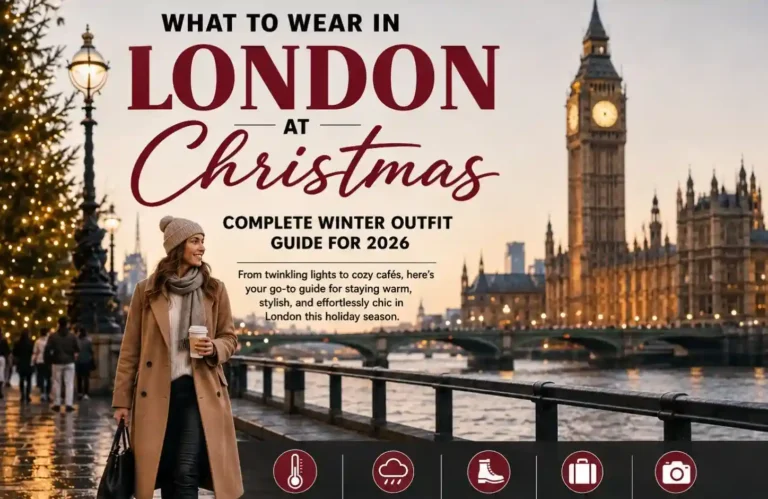
Europe Travel Outfits: The Ultimate Packing List & Capsule Wardrobe for Every Season
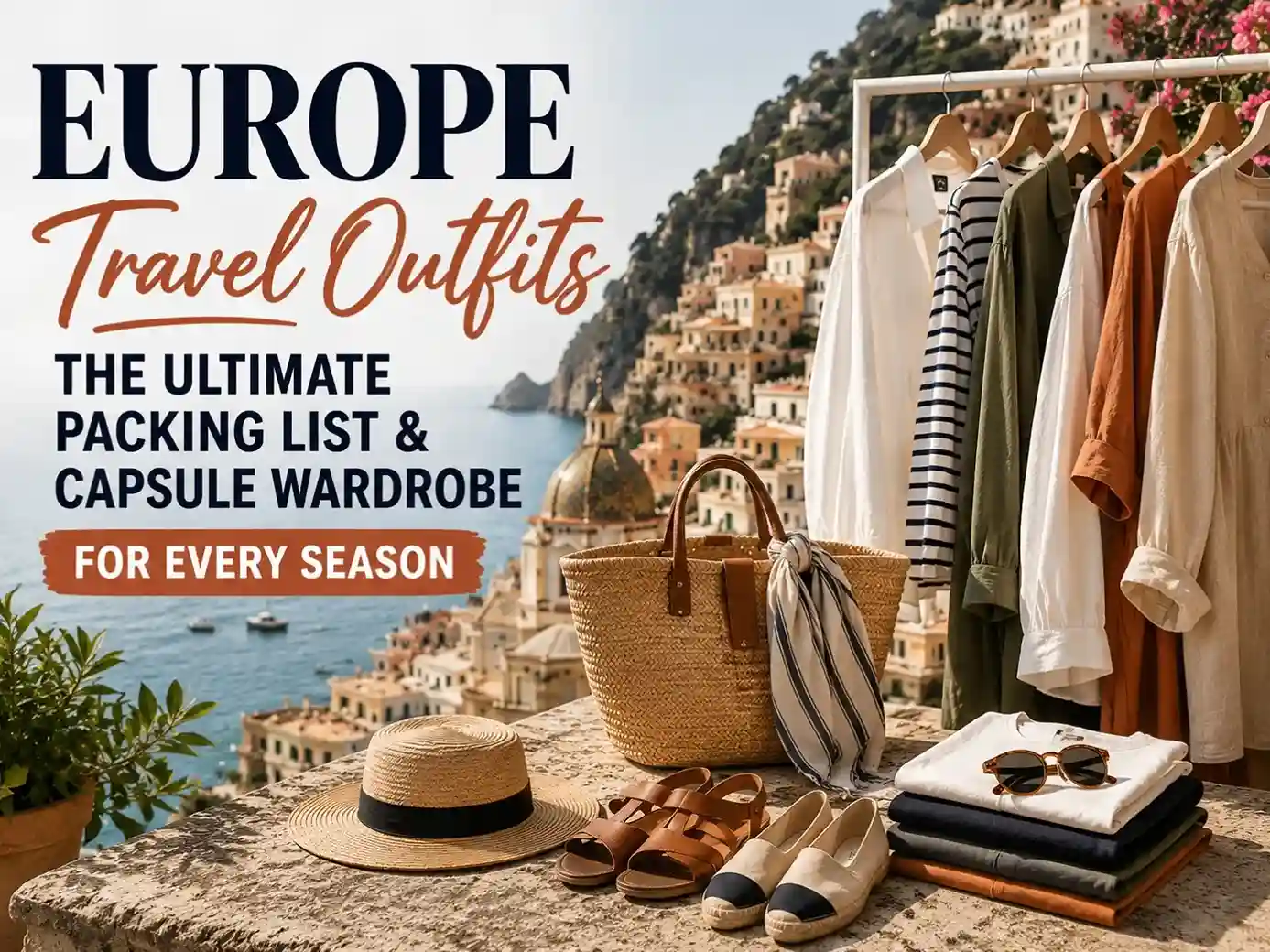
I’ve learned the hard way that dressing for Europe isn’t about a costume, it’s about instinct — what Italians call la bella figura, the quiet art of always looking assembled. The formula that keeps coming back to me trip after trip favors structured silhouettes over oversized casualwear, built from neutral palettes and an earth-tone palette punctuated by one statement accent piece. Think whites, navy, olive, and terracotta — what stylists now call the Mediterranean color language — worked in linen and cotton rather than anything synthetic. Natural fabrics simply behave better in the heat than synthetics ever will.
The pieces that earn a spot in my suitcase are always tailored shorts, never athletic shorts or cargo shorts — a small swap that changes how a whole outfit reads. Footwear leans on leather sandals and espadrilles, with rubber flip-flops reserved strictly for the pool deck. I also always pack modest layers, because religious sites and historical sites across the continent enforce dress codes you don’t want to discover at the door — a lightweight scarf solves it in seconds. The broader Mediterranean palette runs through creams, soft blues, and sandy neutrals, colors that were basically invented to match stone architecture.
Stand anywhere near the blue seas and sun-bleached landscapes of Santorini and you’ll understand why photographers chase the blue domes there, just as a warm Roman piazza makes a navy polo look intentional rather than boring. Where I allow myself a little drama is in one bold accent — a red handbag, a printed scarf, statement earrings, or a patterned skirt thrown over an otherwise quiet base. Lately I’ve been leaning into the quiet luxury tones trending everywhere: warm camel, sage green, dusty rose, and soft lavender feel elevated without trying too hard.
On the flip side, dopamine dressing still has its moment — a bright yellow bag or a cobalt blue sandal can carry an entire look on its own. Every region interprets this differently: the Amalfi Coast and Sicily favor coastal prints, Saint-Tropez made headscarves a uniform, and Mallorca and Milan each have their own read on what “put together” means. Oversized linen shirts thrown over swimwear, simple white dresses, and barely-there sandals show up again and again because they photograph beautifully and pack flat. It’s worth remembering that over 745 million international visitors land in European cities every year, all chasing that same effortless mood — which is exactly why a handful of versatile staples will always outperform a suitcase full of one-off outfits.
Fabrics & Materials
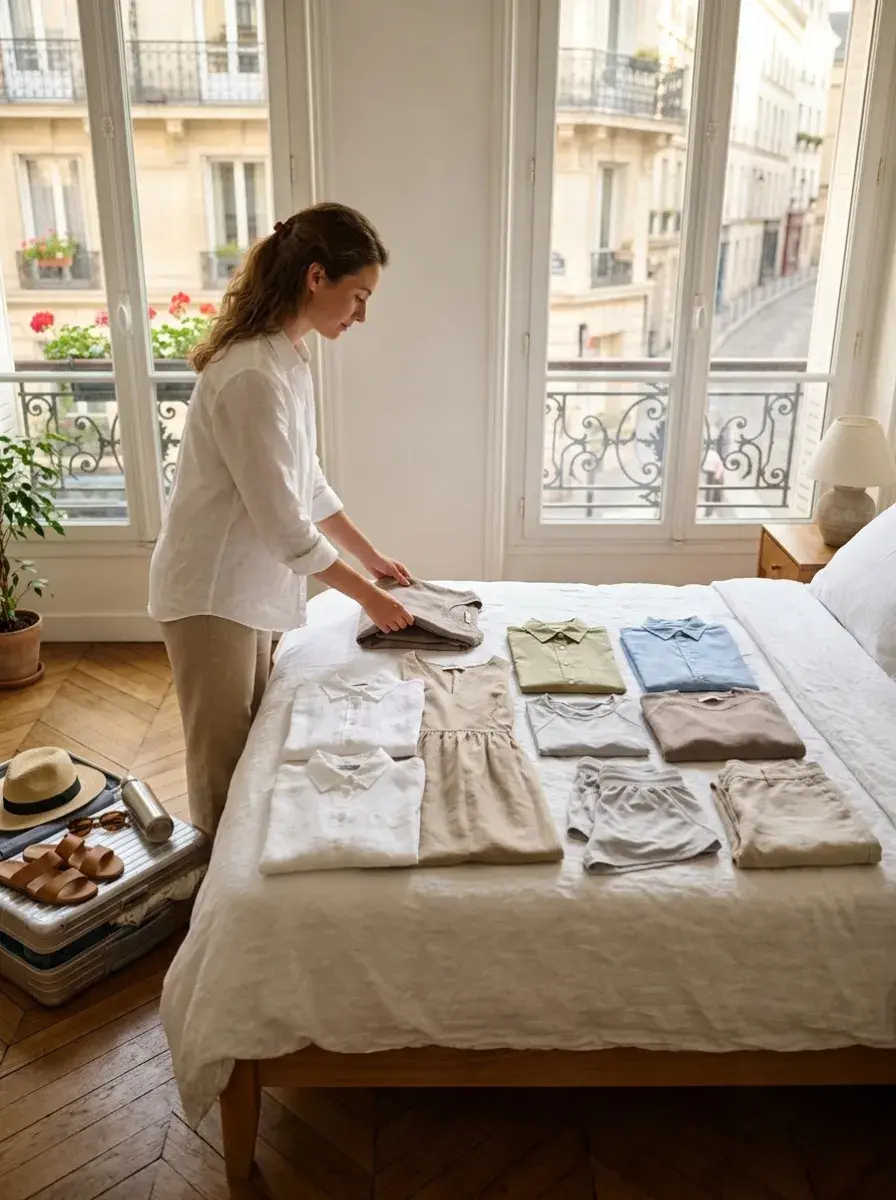
My fabric rule after two decades of packing for hot climates: linen wins every argument, but cotton poplin and chambray are the unsung heroes for pieces that need to hold their shape. On active days I reach for moisture-wicking blends — usually a cotton-polyester or merino wool knit — and I leave heavy denim at home entirely. Polyester, nylon, and thick jersey trap heat in a way that ruins an afternoon fast. This isn’t just personal preference either; the Copernicus Climate Change Service has confirmed that European heatwaves keep intensifying, so breathability and genuine moisture wicking aren’t optional anymore, whether you’re climbing toward Montmartre or hiking the Path of the Gods. A good linen-viscose blend gives you that airy drape without wrinkling into oblivion by lunchtime.
The specific pieces I keep circling back to include a halterneck top in tomato red (I found mine at Karen Millen, and it’s earned its keep), an embroidered cotton mini dress from Rixo that photographs beautifully in crisp cotton, and a simple jersey top from H&M that costs next to nothing but works with everything. For evenings, satin separates — a wide-leg trouser in hammered satin, or fluid silk separates — feel dressed-up without being fussy, and they pack down to nothing. Casual days call for flip-flops by the pool, a vintage-inspired T-shirt, or my well-worn Levi’s Perfect Tee in a faded wash that somehow looks better every summer. None of it matters, though, if the fabric can’t survive 35-degree heat without wilting you along with it.
Destination-Specific Outfits
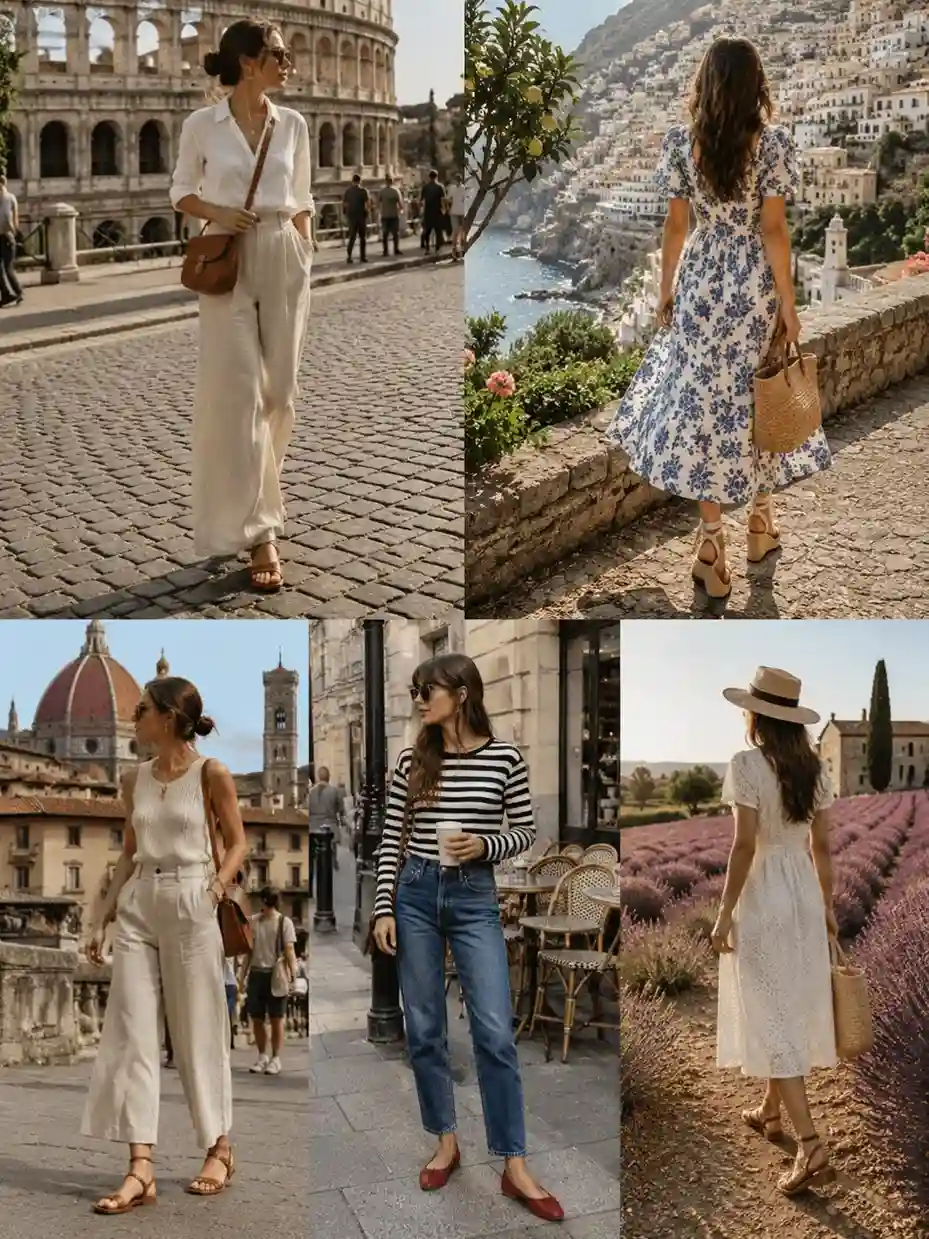
Rome taught me to slow down and dress with intention — a pair of flowing linen trousers or a midi skirt with a simple cotton blouse, finished with leather sandals, gets you through both cobblestones and the Vatican’s dress code without missing a beat, especially with a crossbody bag freeing up your hands for gelato. On the Amalfi Coast, I switch to a flowy midi dress in blue and white florals or lemon motifs, paired with espadrille wedges and a woven tote. Florence calls for something a little more art-walk practical: wide-leg cropped pants with a sleeveless knit top, comfortable enough for a full day between the Colosseum and every bridge in between. Cross into Paris and the South of France, and the mood shifts entirely — straight-leg jeans, a Breton stripe top, and ballet flats are basically the unofficial uniform, while Provence wants something softer and sun-warmed.
For lavender-field afternoons I reach for a cotton sundress in a small floral print, topped with a straw hat. The French Riviera is glamour without trying — high-waisted wide-leg trousers, a fitted camisole, oversized sunglasses, and full Brigitte Bardot energy, evenings finished with a block-heel sandal and that classic navy white red palette. Then there’s Greece: Santorini, Mykonos, and Athens each want something slightly different. A white linen dress or jumpsuit against the blue domes is the single most photographed outfit I own, while a swimsuit under a cover-up transitions easily into a sundress for dinner. Athens and the Acropolis are hotter and more urban, so I stick to cotton shorts and proper walking shoes, saving the drama for the islands. Barcelona rounds out my Spanish leg of the trip nicely too.
Spain itself splits nicely between Mallorca and Seville — relaxed linen shorts and a patterned short-sleeve shirt with canvas sneakers by day, a kaftan for the beach, then something with more structure for a late-night tapas crawl: a maxi dress, or chinos with a linen button-down. Portugal’s Lisbon and the Algarve lean into azulejo-blue accents and a slower coastal rhythm, while Croatia’s Dubrovnik and Split along the Adriatic coastline attract anyone chasing a Game of Thrones tour in comfortable shoes. Head north into Scandinavia — Copenhagen, Stockholm — and the whole wardrobe resets around minimalist silhouettes.
Northern Europe leans heavily on pale pastels and one genuinely useful lightweight jacket. London stays firmly smart-casual, ideally with a rain layer tucked in your bag, and Amsterdam rewards anything bike-friendly. My own most memorable stretch, though, was Salzburg, Austria, followed by Germany and Switzerland — doing the Sound of Music tour in a Staud top and skirt set was a genuine full-circle moment. Munich meant wiener schnitzel and a lot of walking in a blue cotton dress, a black silk slip dress, and striped pants; the train from Zurich into Grindelwald, Lauterbrunnen, and up to the Schilthorn and Mürren demanded total layering pivots, and reaching Jungfraujoch’s Ice Palace meant snow gear over sundresses within the same trip. Interlaken closed things out with paragliding, proof that “vacation outfit” can mean something completely different by lunchtime.
What NOT to Wear / Tourist Mistakes
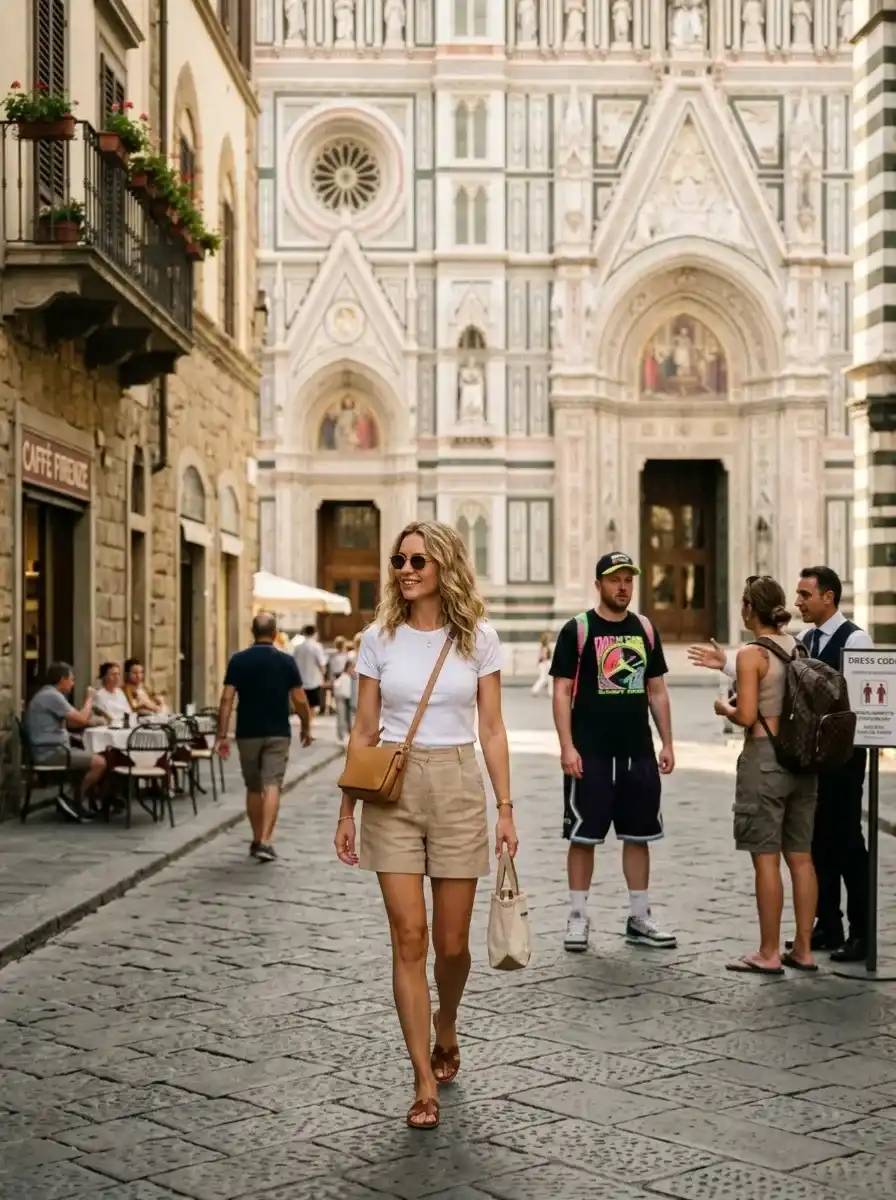
I’ve watched enough people get turned away from churches to know exactly which choices flag you as a tourist instantly. Athletic shorts and gym wear, graphic tees plastered with big logos, cargo shorts, and baggy basketball shorts all read the same way to a local: comfortable, but careless. Rubber flip-flops outside the pool, neon colors, and ultra-bright colors do the same thing, as do baseball caps covered in sports logos and oversized branded backpacks. Bare midriffs at cultural sites are the fastest way to get stopped at the door, which is why I always default to breathable modest layers. The fix is almost embarrassingly simple: swap in tailored chino shorts and solid cotton tees instead, and nobody blinks twice.
A few more swaps I make without thinking now: flat-front shorts instead of anything baggy, leather sandals or espadrilles instead of foam soles, and muted earth tones instead of anything loud. A proper sun hat or a folded linen bucket hat does more for your comfort than any accessory, and crossbody bags or minimal daypacks beat a bulky backpack every time. I keep a light shirt or scarf on hand for the same reason. On my feet, white leather sneakers have replaced everything else — never bulky running shoes with visible air pockets, never fluorescent athletic shoes, and never anything with heavily branded designs screaming across the side. Canvas slip-ons and suede low-top sneakers round out the rotation nicely.
Footwear
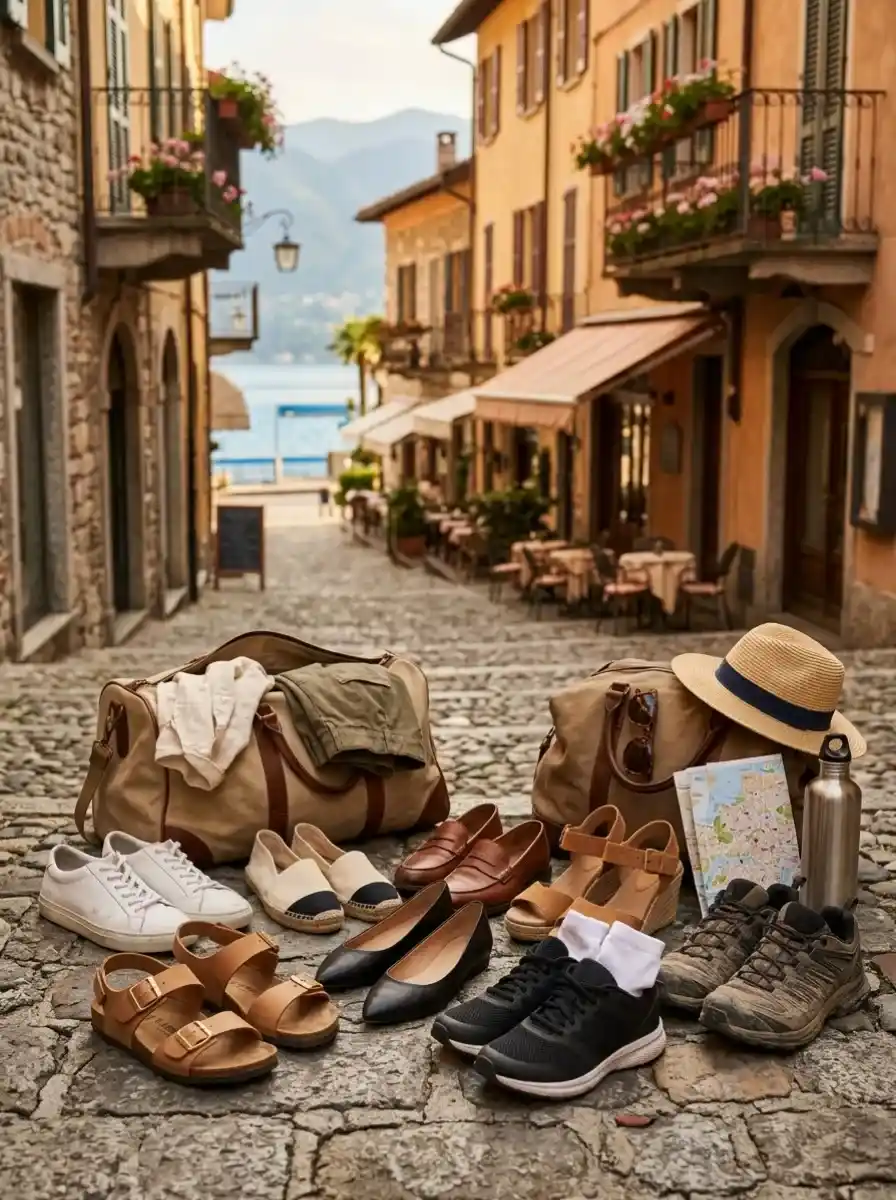
If there’s one lesson I never skip, it’s this: your shoes decide whether the trip feels magical or miserable. White leather sneakers and leather sandals with real arch support cover most days, with espadrilles as the dressier coastal option and a block-heel sandal or pointed flat for dinner. I rotate between minimalist white sneakers and leather loafers depending on the city, and save sport sandals strictly for boat days. Cobblestones are unforgiving, and nothing ends a trip faster than flip-flops on wet stone or a blister from shoes you never broke in.
High heels rarely survive a full day in Europe, so I lean on wedges whenever I want a little height. For genuine mountain terrain, my Salomon trail-runners double as reliable hiking sneakers, while platform sneakers and black mesh sneakers (yes, worn with socks — no shame) get me through long city days. At the end of it all, the goal is just comfortable walking shoes you’ve actually worn before you land.
Family / Coordinated Outfits
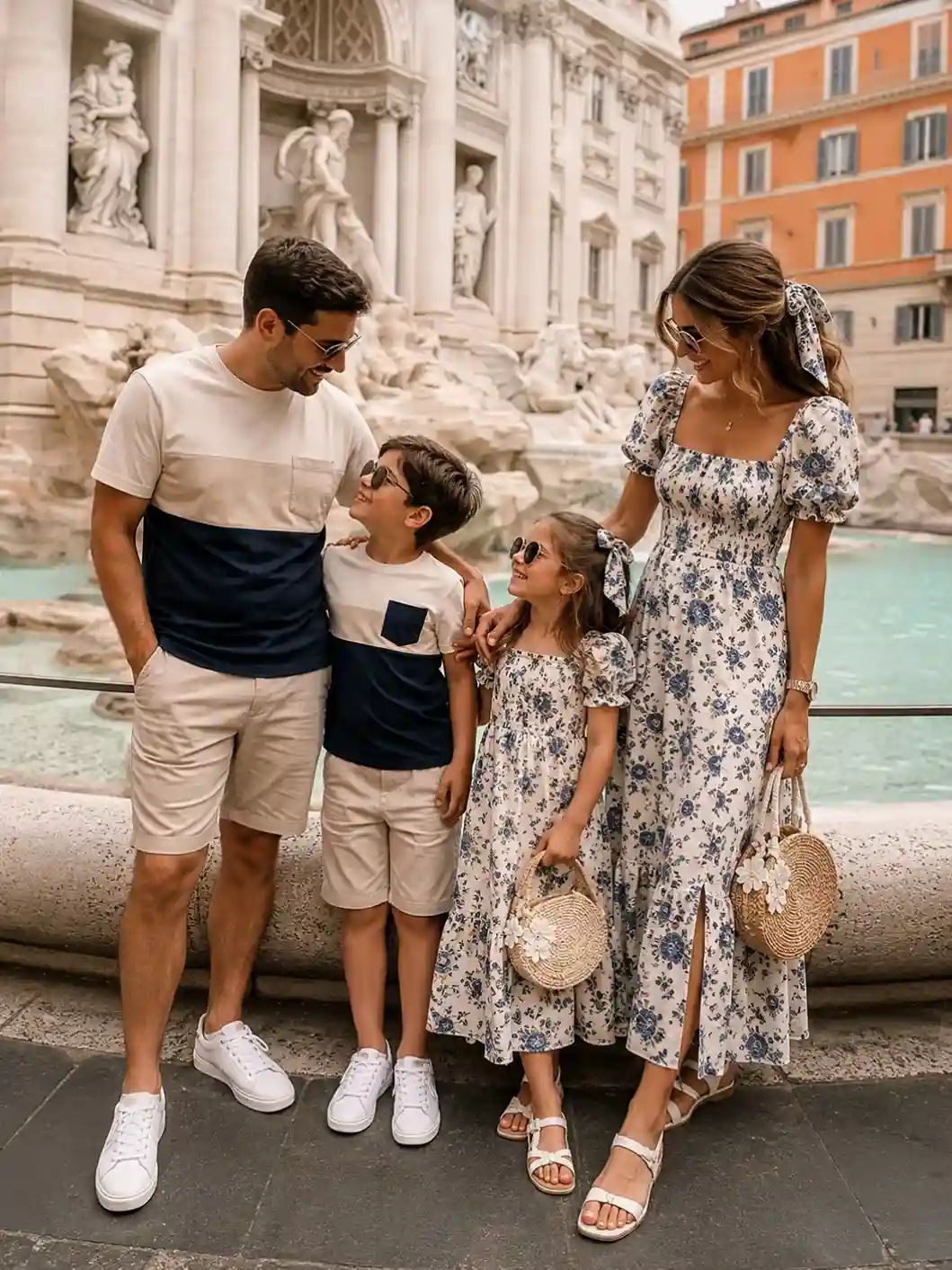
Matching family outfits have gone from niche to genuinely mainstream — search any hashtag built around coordinated looks and you’ll see millions of families doing it. There’s a real spectrum here, from identically matching sets (fun, a little costume-y) to more subtle color-coordinated looks and complementary patterns, which is the sweet spot most families actually land on. Mommy and me looks in floral dresses at the Trevi Fountain, on the Santorini cliffs, or under the Eiffel Tower are the photos everyone ends up framing. The trick is picking a shared pattern rather than identical pieces — a colorblock t-shirt for dad and son works just as well alongside something floral for mom and daughter, and the same logic extends to couple coordination.
For couples, a shared palette, a bit of pattern play, or straightforward material matching does the job without looking staged — think both partners in khaki, or her in a floral bodycon dress with him in a solid that pulls from the same tone. Honestly, affordable matching sets have saved me more packing stress than almost anything else, mostly because everything is guaranteed to work together: look for breathable cotton, genuinely wrinkle-resistant construction, and pieces built for real mix-and-match potential. A neutral Mediterranean palette keeps things flexible across countries, and specific pieces like a blue cotton colorblock tee or a smocking detail on a puff sleeve dress have become staples on repeat trips, useful for Mediterranean cruises too.
Occasion-Based Outfits (Sightseeing, Dining, Beach, Churches, Evening)
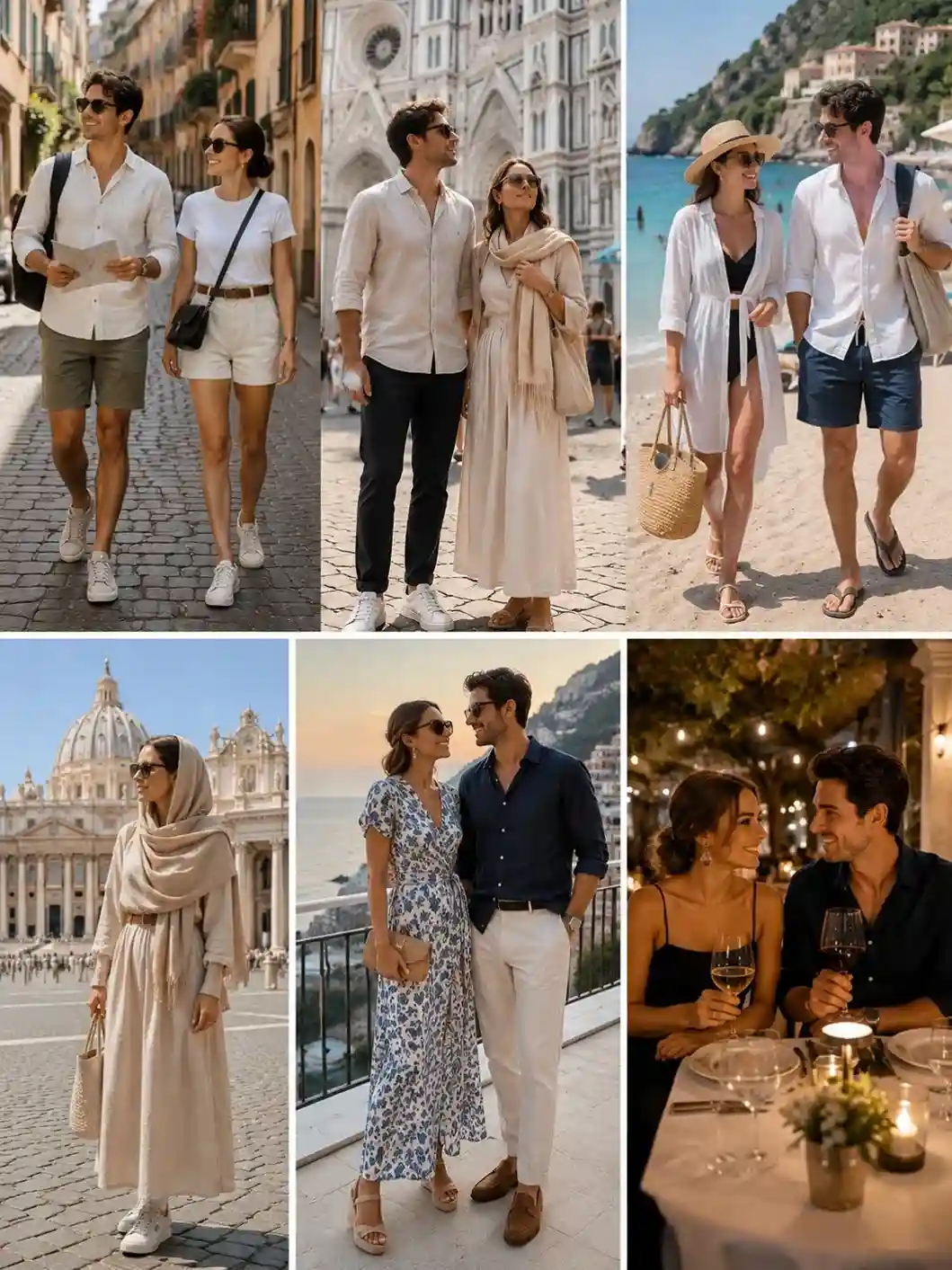
My all-day sightseeing formula exists because I once did 20,000 steps in the wrong shoes and paid for it for days. Now it’s always supportive walking shoes, tailored cotton shorts or a skirt with give, a breathable fitted tee, and a lightweight linen button-down or light cardigan tied on for air-conditioned interiors, plus a crossbody bag for hands-free days. Dress codes at churches and cathedrals genuinely catch people off guard — the modesty requirements mean shoulders covered and knees covered at places like the Vatican and St. Peter’s Basilica, no exceptions.
The same goes for the Duomo, the Sagrada Familia, and any Greek Orthodox churches you wander into — I never leave the hotel without a lightweight scarf that solves the problem in ten seconds flat. The beach-to-dinner transition is its own small art form: a swimsuit under a cover-up dress, flat sandals, and oversized sunglasses for the sand, then swap in a sundress or wrap dress with wedge sandals for the evening. For the men in my life, swim trunks that double as regular shorts and a linen shirt handle the same transition. European evening dining simply expects more effort than we’re used to back home.
My go-to dinner rotation includes a midi dress, a linen jumpsuit, or a blouse-trouser combination, while the men switch to chinos with a collared shirt or polo and swap sneakers for loafers. For genuinely special nights — concerts, or in my case one unforgettable Mozart concert — I’ll pack one bow dress purely for the drama of it. Other evenings lean simpler: an off-shoulder top with black trousers, or a full monochrome outfit that somehow still photographs as effortless. That’s really the whole point of dressing for Europe — building looks flexible enough for day-to-night without a full outfit change.
Capsule Wardrobe & Packing
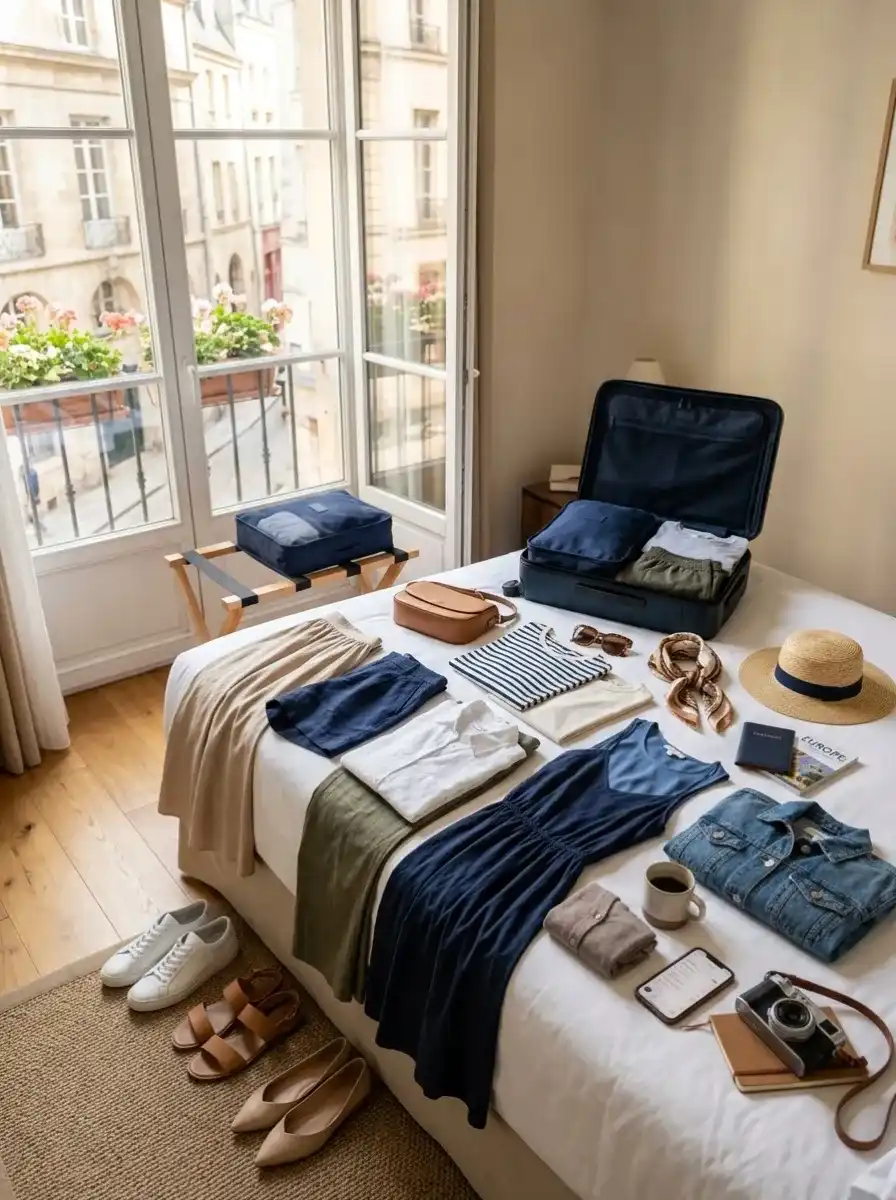
My capsule wardrobe has become non-negotiable, and it’s genuinely closer to a 12-piece capsule than anything bigger — the whole point is mix and match math, not a suitcase stuffed with one-day outfits. My women’s version rotates a midi skirt, tailored shorts, and linen trousers as bottoms, paired against solid tees, one linen button-down, and a sleeveless blouse. A cotton sundress covers both beach and dinner, a cardigan or denim jacket handles the layer gap, and shoes come down to white sneakers, leather sandals, and one dressy flat. Round it out with a scarf, a crossbody bag, sunglasses, and a hat, and you’ve genuinely got weeks of outfits from one bag.
The men’s version I pack is closer to a 10-piece packing list: chino shorts, a polo, a bomber jacket or blazer, and a watch to finish things off. Packing a kids travel wardrobe is its own game entirely — I lean on a mid-trip laundry strategy and lean hard into the mix-and-match multiplier, whether we’re traveling with just a carry-on or a full checked bag. Smart layering, genuinely versatile pieces, and neutral basics matter more than volume. Packing intentionally doesn’t always mean packing light — sometimes it just means packing smart.
Fashion Trends
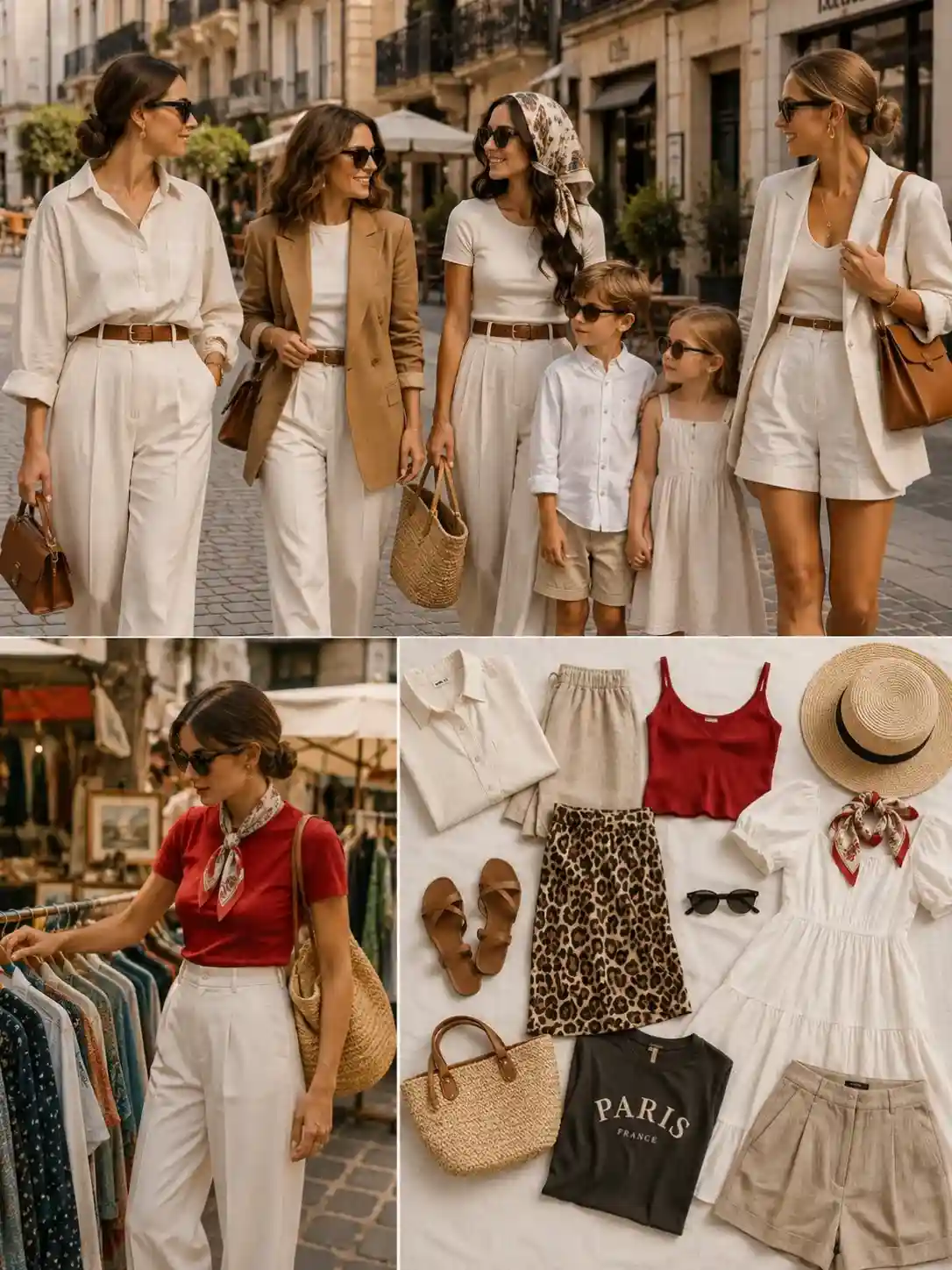
The quiet luxury movement and the whole old money aesthetic are basically just describing how well-dressed Europeans have quietly operated for decades — no visible logos, everything in cream and camel, nothing shouting for attention. What’s newer is how much this now overlaps with matching family sets on social media, where coordinated travel photos consistently outperform everything else. There’s a genuine shift toward sustainable fashion too — organic cotton, linen, Tencel, and Lyocell show up far more than they used to, and vintage shopping at European flea markets and charity shops has become part of the trip itself. On the color front, I keep reaching for a statement red top in tomato red, which somehow works with everything else I own.
A little white dress remains the summer equivalent of the LBD, and head scarves have had a real resurgence, both practical and photogenic. Long-sleeved T-shirts are quietly back for flights and over-air-conditioned restaurants, while Bermuda shorts feel smarter than cutoffs without losing the holiday ease. Every year seems to produce one viral summer dress — this year it’s the Cora dress from Realisation Par — alongside oversized shirts and tailored shorts as reliable workhorses. A statement midi skirt in animal print or zebra print can carry a whole outfit, and linen co-ords remove the guesswork entirely. Silky separates, satin trousers, and a stack of vintage T-shirts in a soft faded wash round out a wardrobe that never feels overthought.
Adventure / Outdoor Wear
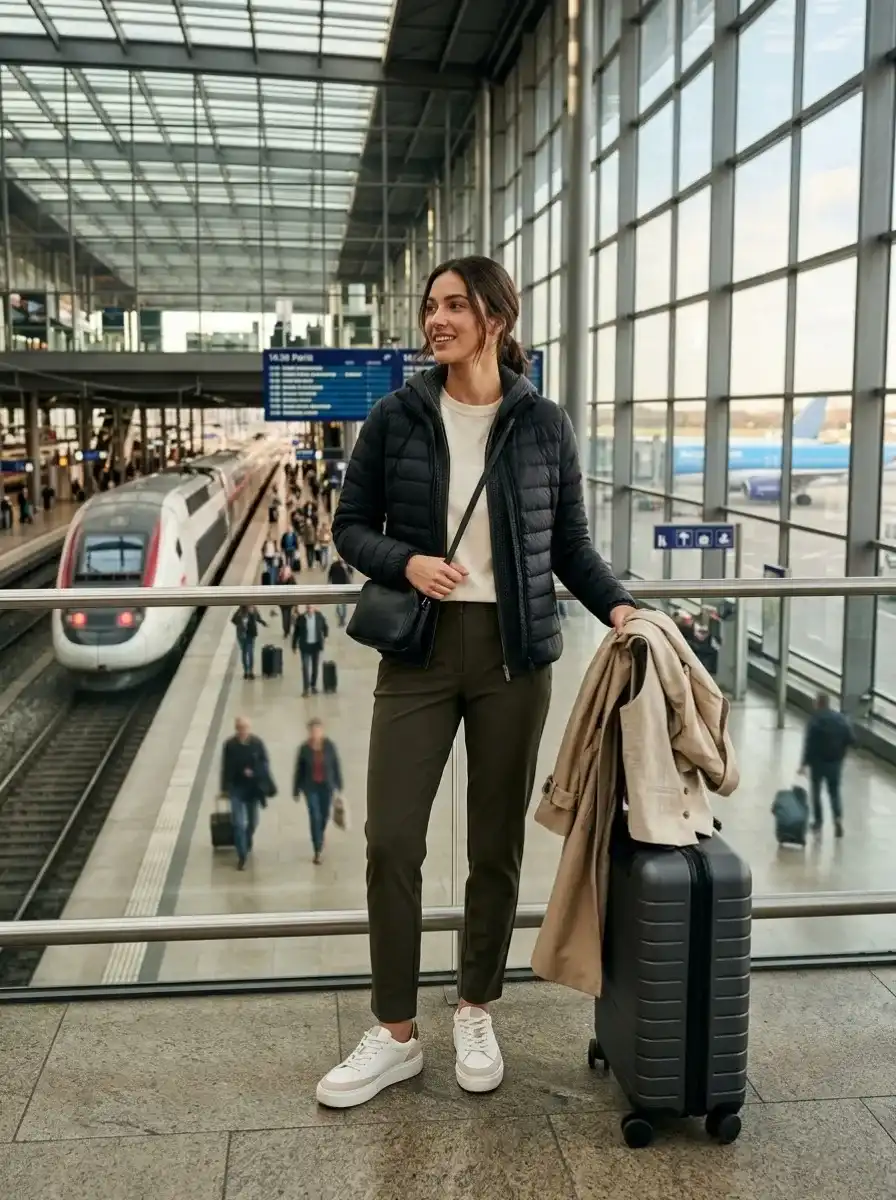
A good travel day outfit has to answer one question honestly: what’s an actual comfortable plane outfit? My answer, after a brutal 25-hour door-to-door trip, was a pair of Lululemon pants that somehow read as trousers, an elevated tee, and a lightweight open-knit hoodie for layering without overheating, finished with platform sneakers and a puffer jacket I could double as a pillow. My carry-on roller bag came along for the ride too. On a later train travel day — Munich to Zurich — I reached for a darker monochrome outfit: a vest and trouser set from Aritzia, black sneakers, and a trench coat from THEO the label layered over the top.
That combination has become my go-to travel formula because it delivers real comfort without ever sacrificing a polished look, whether I’m sitting on a plane for a day or switching trains three times before dinner.